Lincoln vs. Churchill: Who was the better man?
Talk History: On learning from and writing history
Join LibraryThing to post.
This topic is currently marked as "dormant"—the last message is more than 90 days old. You can revive it by posting a reply.
4Phlegethon99
Churchill had Bomber Harris and thus narrowly wins in the war criminal department.
5Rood
<4
"Bomber" Harris .... from Wikipedia
Harris returned to Britain in September 1939 to take command of No. 5 Group.32 Appointed a Companion of the Order of the Bath on 11 July 194033 he was made Deputy Chief of the Air Staff in November 1940 and promoted to the acting rank of air marshal on 1 June 1941.34
The Butt Report, circulated in August 1941, found that in 1940 and 1941 only one in three attacking aircraft got within five miles (eight kilometres) of their target.35 As part of the response Harris was appointed Commander-in-Chief (C-in-C) of Bomber Command in February 1942.36 He was advanced to Knight Commander of the Order of the Bath on 11 June 1942.37
Professor Frederick Lindemann (later ennobled as Lord Cherwell), appointed the British government's leading scientific adviser with a seat in the Cabinet by his friend Prime Minister Winston Churchill, in 1942 presented a seminal paper to Cabinet advocating the area bombing of German cities in a strategic bombing campaign. It was accepted by Cabinet and Harris was directed to carry out the task (Area bombing directive). It became an important part of the total war waged against Germany.38
Harris said at the start of the bombing campaign that he was unleashing a whirlwind on Germany.
"The Nazis entered this war under the rather childish delusion that they were going to bomb everyone else, and nobody was going to bomb them. At Rotterdam, London, Warsaw and half a hundred other places, they put their rather naive theory into operation. They sowed the wind, and now they are going to reap the whirlwind.N 2N 3"
At first the effects were limited because of the small numbers of aircraft used and the lack of navigational aids, resulting in scattered, inaccurate bombing. As production of better aircraft and electronic aids increased, Harris pressed for raids on a much larger scale, each to use 1,000 aeroplanes. In Operation Millennium Harris launched the first RAF "thousand bomber raid" against Cologne (Köln) on the night of 30 May/31 May 1942. This operation included the first use of a bomber stream, which was a tactical innovation designed to overwhelm the German night-fighters of the Kammhuber Line.40
Harris was promoted to temporary air marshal on 1 December 194241 and acting air chief marshal on 18 March 1943.42
Harris was just one of an influential group of high-ranking Allied air commanders who continued to believe that massive and sustained area bombing alone would force Germany to surrender. On a number of occasions he wrote to his superiors claiming the war would be over in a matter of months, first in August 1943 following the tremendous success of the Battle of Hamburg (codenamed Operation Gomorrah), and then again in January 1944. Winston Churchill continued to regard the area bombing strategy with distaste, and official public statements still maintained that Bomber Command was attacking only specific industrial and economic targets, with any civilian casualties or property damage being unintentional but unavoidable. In October 1943, emboldened by his success in Hamburg and increasingly irritated with Churchill's hesitance to endorse his tactics wholeheartedly, Harris urged the government to be honest with the public regarding the purpose of the bombing campaign:
the aim of the Combined Bomber Offensive...should be unambiguously stated as the destruction of German cities, the killing of German workers, and the disruption of civilised life throughout Germany.4344... the destruction of houses, public utilities, transport and lives, the creation of a refugee problem on an unprecedented scale, and the breakdown of morale both at home and at the battle fronts by fear of extended and intensified bombing, are accepted and intended aims of our bombing policy. They are not by-products of attempts to hit factories.45
However at this time many senior Allied air commanders still thought area bombing was less effective.46
In November 1943 Bomber Command began what became known as the Battle of Berlin: a series of massive raids on Berlin that lasted until March 1944. Harris sought to duplicate the victory at Hamburg, but Berlin proved to be a far more difficult nut to crack. Although severe general damage was inflicted, the city was much better prepared than Hamburg, and no firestorm was ever ignited. Anti-aircraft defences were also extremely effective and bomber losses were high; during this time the British lost 1,047 bombers, with a further 1,682 damaged, culminating in the disastrous raid on Nuremberg on 30 March 1944, when 94 bombers were shot down and 71 damaged, out of 795 aircraft.47
Harris was promoted to the substantive rank of air marshal on 1 January 194448 and awarded the Russian Order of Suvorov, First Class on 29 February 1944.49
Dresden in 1945
With the leadup to the D-Day invasions in 1944, Harris was ordered to switch targets for the French railway network, a switch he protested because he felt it compromised the continuing pressure on German industry and it was using Bomber Command for a purpose it was not designed or suited for. By September the Allied forces were well inland; at the Quebec Conference it was agreed that the Chief of the Air Staff, Royal Air Force (Portal), and the Commanding General, U.S. Army Air Forces (Arnold), should exercise control of all strategic bomber forces in Europe. Harris received a new directive to ensure continuation of a broad strategic bombing programme as well as adequate bomber support for General Eisenhower's ground operations. The over-all mission of the strategic air forces remained "the progressive destruction and dislocation of the German military, industrial and economic systems and the direct support of Land and Naval forces".51
After D-Day (6 June 1944), with the resumption of the strategic bomber campaign over Germany, Harris remained wedded to area bombardment. Historian Frederick Taylor argues that, because Harris lacked the necessary security clearance to know about Ultra, he had been given some information gleaned from Enigma, but not informed where it had come from. According to Taylor, this directly affected Harris's attitude concerning the effectiveness of the post-D-Day 1944 directives (orders) to target oil installations, as Harris did not know the Allied High Command was using high-level German sources to assess exactly how much Allied operations were impairing the German war effort. As a consequence Harris tended to see the directives to bomb specific oil and munitions targets as a high level command "panacea" (his word), and a distraction from the real task of making the rubble bounce in every large German city.52 Harris was promoted to the substantive rank of air chief marshal on 16 August 1944.53
Historian Alfred C. Mierzejewski argues that both area bombing and attacks against fuel plants were ineffective against Germany's coal- and rail-based economy and that the bombing campaign only took a decisive turn in late 1944 when the allies switched to targeting railway-marshalling yards for the coal gateways of the Ruhr.54 His summation is rejected by Sebastian Cox head of the Air Historical Branch (AHB). Cox notes that half of the oil was produced by Benzol plants located in the Ruhr. These areas were the primary target of Bomber Command in 1943 and the autumn of 1944. Cox concludes the targets were highly vulnerable to area attacks and suffered accordingly.55 The American official history notes that Harris was ordered to cease attacks on oil in November 1944, as the bombing had been so effective none of the synthetic plants were operating effectively. The American history also includes information from Albert Speer, in which he points out Bomber Command's night attacks were the most effective.56
Harris was awarded the American Legion of Merit on 30 January 1945.57
In February 1945, Harris wrote "I do not personally regard the whole of the remaining cities of Germany as worth the bones of one British Grenadier".58N 4 In his memoirs he writes, "In spite of all that happened at Hamburg, bombing proved a relatively humane method".60
The most controversial raid of the war took place in the late evening of 13 February 1945. The bombing of Dresden by the RAF and USAAF resulting in a lethal firestorm which killed a large number of civilians. Estimates vary but the city authorities at the time estimated no more than 25,000 victims, a figure which subsequent investigations, including one commissioned by the city council in 2010, support.61 Raids such as that on Pforzheim late in the war as Germany was falling have been criticised for causing high civilian casualties for little apparent military value. The culmination of Bomber Command's offensive occurred in March 1945 when the RAF dropped the highest monthly weight of ordnance in the entire war. The last raid on Berlin took place on the night of 21/22 April, just before the Soviets entered the city centre.62 After that, most of the rest of the attacks made by the RAF were tactical missions. The last major strategic raid was the destruction of the oil refinery in Tønsberg in southern Norway by a large group of Lancasters on the night of 25/26 April.63
Whenever the bombing campaign of World War II is considered it must be appreciated that the war was an "integrated process". As an example, quoting Albert Speer from his book Inside The Third Reich, "ten thousand 88mm anti-aircraft guns ... could well have been employed in Russia against tanks and other ground targets".64 The Soviet commanders clearly recognized Harris' efforts, as shown by the 29 February 1944 award of the Russian Order of Suvarov First Class to the air marshal.49
§Post-waredit
After the War, Harris was awarded the Polish Order of Polonia Restituta First Class on 12 June 1945,65 advanced to Knight Grand Cross of the Order of the Bath on 14 June 194566 and appointed a Knight Grand Cross of the Order of the Southern Cross of Brazil on 13 November
"Bomber" Harris .... from Wikipedia
Harris returned to Britain in September 1939 to take command of No. 5 Group.32 Appointed a Companion of the Order of the Bath on 11 July 194033 he was made Deputy Chief of the Air Staff in November 1940 and promoted to the acting rank of air marshal on 1 June 1941.34
The Butt Report, circulated in August 1941, found that in 1940 and 1941 only one in three attacking aircraft got within five miles (eight kilometres) of their target.35 As part of the response Harris was appointed Commander-in-Chief (C-in-C) of Bomber Command in February 1942.36 He was advanced to Knight Commander of the Order of the Bath on 11 June 1942.37
Professor Frederick Lindemann (later ennobled as Lord Cherwell), appointed the British government's leading scientific adviser with a seat in the Cabinet by his friend Prime Minister Winston Churchill, in 1942 presented a seminal paper to Cabinet advocating the area bombing of German cities in a strategic bombing campaign. It was accepted by Cabinet and Harris was directed to carry out the task (Area bombing directive). It became an important part of the total war waged against Germany.38
Harris said at the start of the bombing campaign that he was unleashing a whirlwind on Germany.
"The Nazis entered this war under the rather childish delusion that they were going to bomb everyone else, and nobody was going to bomb them. At Rotterdam, London, Warsaw and half a hundred other places, they put their rather naive theory into operation. They sowed the wind, and now they are going to reap the whirlwind.N 2N 3"
At first the effects were limited because of the small numbers of aircraft used and the lack of navigational aids, resulting in scattered, inaccurate bombing. As production of better aircraft and electronic aids increased, Harris pressed for raids on a much larger scale, each to use 1,000 aeroplanes. In Operation Millennium Harris launched the first RAF "thousand bomber raid" against Cologne (Köln) on the night of 30 May/31 May 1942. This operation included the first use of a bomber stream, which was a tactical innovation designed to overwhelm the German night-fighters of the Kammhuber Line.40
Harris was promoted to temporary air marshal on 1 December 194241 and acting air chief marshal on 18 March 1943.42
Harris was just one of an influential group of high-ranking Allied air commanders who continued to believe that massive and sustained area bombing alone would force Germany to surrender. On a number of occasions he wrote to his superiors claiming the war would be over in a matter of months, first in August 1943 following the tremendous success of the Battle of Hamburg (codenamed Operation Gomorrah), and then again in January 1944. Winston Churchill continued to regard the area bombing strategy with distaste, and official public statements still maintained that Bomber Command was attacking only specific industrial and economic targets, with any civilian casualties or property damage being unintentional but unavoidable. In October 1943, emboldened by his success in Hamburg and increasingly irritated with Churchill's hesitance to endorse his tactics wholeheartedly, Harris urged the government to be honest with the public regarding the purpose of the bombing campaign:
the aim of the Combined Bomber Offensive...should be unambiguously stated as the destruction of German cities, the killing of German workers, and the disruption of civilised life throughout Germany.4344... the destruction of houses, public utilities, transport and lives, the creation of a refugee problem on an unprecedented scale, and the breakdown of morale both at home and at the battle fronts by fear of extended and intensified bombing, are accepted and intended aims of our bombing policy. They are not by-products of attempts to hit factories.45
However at this time many senior Allied air commanders still thought area bombing was less effective.46
In November 1943 Bomber Command began what became known as the Battle of Berlin: a series of massive raids on Berlin that lasted until March 1944. Harris sought to duplicate the victory at Hamburg, but Berlin proved to be a far more difficult nut to crack. Although severe general damage was inflicted, the city was much better prepared than Hamburg, and no firestorm was ever ignited. Anti-aircraft defences were also extremely effective and bomber losses were high; during this time the British lost 1,047 bombers, with a further 1,682 damaged, culminating in the disastrous raid on Nuremberg on 30 March 1944, when 94 bombers were shot down and 71 damaged, out of 795 aircraft.47
Harris was promoted to the substantive rank of air marshal on 1 January 194448 and awarded the Russian Order of Suvorov, First Class on 29 February 1944.49
Dresden in 1945
With the leadup to the D-Day invasions in 1944, Harris was ordered to switch targets for the French railway network, a switch he protested because he felt it compromised the continuing pressure on German industry and it was using Bomber Command for a purpose it was not designed or suited for. By September the Allied forces were well inland; at the Quebec Conference it was agreed that the Chief of the Air Staff, Royal Air Force (Portal), and the Commanding General, U.S. Army Air Forces (Arnold), should exercise control of all strategic bomber forces in Europe. Harris received a new directive to ensure continuation of a broad strategic bombing programme as well as adequate bomber support for General Eisenhower's ground operations. The over-all mission of the strategic air forces remained "the progressive destruction and dislocation of the German military, industrial and economic systems and the direct support of Land and Naval forces".51
After D-Day (6 June 1944), with the resumption of the strategic bomber campaign over Germany, Harris remained wedded to area bombardment. Historian Frederick Taylor argues that, because Harris lacked the necessary security clearance to know about Ultra, he had been given some information gleaned from Enigma, but not informed where it had come from. According to Taylor, this directly affected Harris's attitude concerning the effectiveness of the post-D-Day 1944 directives (orders) to target oil installations, as Harris did not know the Allied High Command was using high-level German sources to assess exactly how much Allied operations were impairing the German war effort. As a consequence Harris tended to see the directives to bomb specific oil and munitions targets as a high level command "panacea" (his word), and a distraction from the real task of making the rubble bounce in every large German city.52 Harris was promoted to the substantive rank of air chief marshal on 16 August 1944.53
Historian Alfred C. Mierzejewski argues that both area bombing and attacks against fuel plants were ineffective against Germany's coal- and rail-based economy and that the bombing campaign only took a decisive turn in late 1944 when the allies switched to targeting railway-marshalling yards for the coal gateways of the Ruhr.54 His summation is rejected by Sebastian Cox head of the Air Historical Branch (AHB). Cox notes that half of the oil was produced by Benzol plants located in the Ruhr. These areas were the primary target of Bomber Command in 1943 and the autumn of 1944. Cox concludes the targets were highly vulnerable to area attacks and suffered accordingly.55 The American official history notes that Harris was ordered to cease attacks on oil in November 1944, as the bombing had been so effective none of the synthetic plants were operating effectively. The American history also includes information from Albert Speer, in which he points out Bomber Command's night attacks were the most effective.56
Harris was awarded the American Legion of Merit on 30 January 1945.57
In February 1945, Harris wrote "I do not personally regard the whole of the remaining cities of Germany as worth the bones of one British Grenadier".58N 4 In his memoirs he writes, "In spite of all that happened at Hamburg, bombing proved a relatively humane method".60
The most controversial raid of the war took place in the late evening of 13 February 1945. The bombing of Dresden by the RAF and USAAF resulting in a lethal firestorm which killed a large number of civilians. Estimates vary but the city authorities at the time estimated no more than 25,000 victims, a figure which subsequent investigations, including one commissioned by the city council in 2010, support.61 Raids such as that on Pforzheim late in the war as Germany was falling have been criticised for causing high civilian casualties for little apparent military value. The culmination of Bomber Command's offensive occurred in March 1945 when the RAF dropped the highest monthly weight of ordnance in the entire war. The last raid on Berlin took place on the night of 21/22 April, just before the Soviets entered the city centre.62 After that, most of the rest of the attacks made by the RAF were tactical missions. The last major strategic raid was the destruction of the oil refinery in Tønsberg in southern Norway by a large group of Lancasters on the night of 25/26 April.63
Whenever the bombing campaign of World War II is considered it must be appreciated that the war was an "integrated process". As an example, quoting Albert Speer from his book Inside The Third Reich, "ten thousand 88mm anti-aircraft guns ... could well have been employed in Russia against tanks and other ground targets".64 The Soviet commanders clearly recognized Harris' efforts, as shown by the 29 February 1944 award of the Russian Order of Suvarov First Class to the air marshal.49
§Post-waredit
After the War, Harris was awarded the Polish Order of Polonia Restituta First Class on 12 June 1945,65 advanced to Knight Grand Cross of the Order of the Bath on 14 June 194566 and appointed a Knight Grand Cross of the Order of the Southern Cross of Brazil on 13 November
6Muscogulus
It is hard to say which of these two is regarded with more worshipful reverence in the United States.
Not sure that either of them deserves apotheosis, but I'm sure Churchill is less deserving. I like to think he would agree.
Not sure that either of them deserves apotheosis, but I'm sure Churchill is less deserving. I like to think he would agree.
7Phlegethon99
At least after 1945 Churchill was a lot wiser than before WW2, but at that point it was already too late for the British Empire.
Lincoln on the other hand wasn't exactly the knight in shining armour. He was neither a real abolitionists nor a philantrope and the Homestead Act finally forced most native Americans into reservations. The South should have been entitled to secede as slavery would have been abolished without war only a few years later anyway and economic necessities would have forced the South into negotiations with the North before long, thus there was a chance for a Union without the foundation of more than half a million corpses. For most non-Americans the American Lincoln hagiography is both ridiculous and incomprehensible.
Lincoln on the other hand wasn't exactly the knight in shining armour. He was neither a real abolitionists nor a philantrope and the Homestead Act finally forced most native Americans into reservations. The South should have been entitled to secede as slavery would have been abolished without war only a few years later anyway and economic necessities would have forced the South into negotiations with the North before long, thus there was a chance for a Union without the foundation of more than half a million corpses. For most non-Americans the American Lincoln hagiography is both ridiculous and incomprehensible.
8Urquhart
"The South should have been entitled to secede as slavery would have been abolished without war only a few years later anyway"
Are you sure about that? I wonder if King Cotton would agree.
Are you sure about that? I wonder if King Cotton would agree.
9cpg
>7 Phlegethon99: "He was neither a real abolitionists"
(1) He didn't claim to be.
(2) You seem to be arguing below that abolitionism was wrong, so how would not being a real abolitionist count against him?
"nor a philantrope"
My reading of 1500 pages of Burlingame convinces me otherwise. After his 1849-1854 midlife crisis, there are few people whose words and actions make them more qualified to be considered a lover of humanity.
"slavery would have been abolished without war only a few years later anyway"
How odd, then, that Lincoln's gradual compensated emancipation plans had target dates around the year 1900 and that such plans were so unpopular among slave owners.
"For most non-Americans the American Lincoln hagiography is both ridiculous and incomprehensible."
I would find it fascinating if you could provide data that shows that the general opinion of Lincoln is lower outside the USA than inside.
(1) He didn't claim to be.
(2) You seem to be arguing below that abolitionism was wrong, so how would not being a real abolitionist count against him?
"nor a philantrope"
My reading of 1500 pages of Burlingame convinces me otherwise. After his 1849-1854 midlife crisis, there are few people whose words and actions make them more qualified to be considered a lover of humanity.
"slavery would have been abolished without war only a few years later anyway"
How odd, then, that Lincoln's gradual compensated emancipation plans had target dates around the year 1900 and that such plans were so unpopular among slave owners.
"For most non-Americans the American Lincoln hagiography is both ridiculous and incomprehensible."
I would find it fascinating if you could provide data that shows that the general opinion of Lincoln is lower outside the USA than inside.
10cpg
>9 cpg: "I would find it fascinating if you could provide data that shows that the general opinion of Lincoln is lower outside the USA than inside."
This looks relevant:
https://www.librarything.com/work/11420636
This looks relevant:
https://www.librarything.com/work/11420636
11dajashby
Well, considered as men, real men not sanctified images, they were both notably uxorious. Nothing to choose between them in that respect.
12ABVR
I can't claim anything like a specialist's grasp of either one of them, but . . .
Lincoln, on the whole, was more effective as a practical politician -- a manager of governments -- and had (again, on the whole) a more successful career. It's no stretch to imagine him succeeding, even flourishing, politically outside the secession crisis and the Civil War. Churchill, by contrast, was brilliant in wartime . . . less so before and afterward. He was ineffective and marginalized in opposition in the 20's and 30's, and (arguably) too much of a Victorian imperialist to effectively manage decolonization and shrinking national horizons in 1945-55.
It's hard to argue with Churchill as a war leader, but his brilliance tends to obscure the fact that he had two epic strategic blunders (one per war) on his ledger: the Dardanelles Campaign in WWI and his obsession with the Mediterranean (a sinkhole for men and materiel) in WWII. Lincoln avoided such lows,* but also Churchill's incandescent highs.
Both of them -- look at their cabinets -- were extraordinary judges of civilian talent. I'd give Lincoln the edge for having an eye for generals . . . but maybe that's just my American perspective showing: Grant, Sherman, and Sheridan resonating with me in ways that Montgomery, Harris, and Auchinlek don't.
One last thought: Lincoln, in the greatness sweepstakes, had it easier . . . he was in charge of a rising power, and Churchill of a declining one.
*To fault him for not letting the South secede is, I think, akin to faulting the watch officer of the Titanic for trying to avoid the iceberg . . . even if (in retrospect) it seems worse than the alternative, it was part of his job description to try.
Lincoln, on the whole, was more effective as a practical politician -- a manager of governments -- and had (again, on the whole) a more successful career. It's no stretch to imagine him succeeding, even flourishing, politically outside the secession crisis and the Civil War. Churchill, by contrast, was brilliant in wartime . . . less so before and afterward. He was ineffective and marginalized in opposition in the 20's and 30's, and (arguably) too much of a Victorian imperialist to effectively manage decolonization and shrinking national horizons in 1945-55.
It's hard to argue with Churchill as a war leader, but his brilliance tends to obscure the fact that he had two epic strategic blunders (one per war) on his ledger: the Dardanelles Campaign in WWI and his obsession with the Mediterranean (a sinkhole for men and materiel) in WWII. Lincoln avoided such lows,* but also Churchill's incandescent highs.
Both of them -- look at their cabinets -- were extraordinary judges of civilian talent. I'd give Lincoln the edge for having an eye for generals . . . but maybe that's just my American perspective showing: Grant, Sherman, and Sheridan resonating with me in ways that Montgomery, Harris, and Auchinlek don't.
One last thought: Lincoln, in the greatness sweepstakes, had it easier . . . he was in charge of a rising power, and Churchill of a declining one.
*To fault him for not letting the South secede is, I think, akin to faulting the watch officer of the Titanic for trying to avoid the iceberg . . . even if (in retrospect) it seems worse than the alternative, it was part of his job description to try.
13Phlegethon99
Secession by now has become an issue for Winston Churchill's political heirs. There may not be a risk of war these days, but the question of Scottish independence remains open. The SNP most likely will win almost all Scottish seats in the next general election which will sooner or later bring the issue back on the political agenda. And Catalonia is next. The inpending bankruptcy of Italy will further strengthen the Northern League and their Padania project.
It is interesting to watch how in retrospect slavery as a minor side issue has been made the core issue of the War of Secession and how Lincoln posthumously became the leader of the abolitionists which he never was and never wanted to be.
It is interesting to watch how in retrospect slavery as a minor side issue has been made the core issue of the War of Secession and how Lincoln posthumously became the leader of the abolitionists which he never was and never wanted to be.
14cpg
>13 Phlegethon99: ". . . slavery as a minor side issue . . ."
What books published by university presses agree with you on this?
What books published by university presses agree with you on this?
16cpg
>11 dajashby:
OED: "uxorious: Of persons: Dotingly or submissively fond of a wife; devotedly attached to a wife."
Lincoln was submissive to his wife, but (except perhaps at the start of their relationship) he was not fond of her.
OED: "uxorious: Of persons: Dotingly or submissively fond of a wife; devotedly attached to a wife."
Lincoln was submissive to his wife, but (except perhaps at the start of their relationship) he was not fond of her.
17Rood
<12 ABVR "It's hard to argue with Churchill as a war leader, but his brilliance tends to obscure the fact that he had two epic strategic blunders (one per war) on his ledger: the Dardanelles Campaign in WWI and his obsession with the Mediterranean (a sinkhole for men and materiel) in WWII. Lincoln avoided such lows,* but also Churchill's incandescent highs."
Churchill and the Admiralty had a third major blunder, when they went into an absolute panic after the Germans beat them into Norway on 9 April 1940.* Rather than carry out the (R4) scheme of occupying Norwegian cities, as had long been planned, the Admiralty, with Churchill's concurrence, abandoned the plan at the exact moment when conditions were most ideal, before German forces set foot on Norwegian soil. Had the Allied squadron departed with the embarked troops on the morning of 8 April, as originally planned, they would have been in Bergen and Stavanger several hours before the Germans arrived. That blunder gave control of the air to the Germans, after they occupied the airfield at Stavanger.
In panic the Admiralty also suddenly ordered the battleship Warspite and the aircraft carrier Furious to join the fleet at sea, but the departure of Furious was so hurried that its fighter squadron of Skuas was left behind, on orders of the Admiralty. The lack of sufficient air support all but doomed the Allied effort in Norway.
If that wasn't enough the Admiralty (under Churchill) ordered the 1st Cruiser Squadron of four heavy cruisers and escorts to disembark troops destined for Norway and for the Squadron to quickly join the fleet at sea. In the process those troops were separated from their equipment.
Several days later, when the Admiralty ordered a counterstroke against the by now German occupied Narvik, located in northern Norway, the equipment necessary for a successful landing on a hostile shore was stored deep beneath headquarter "comfort" items, which eventually cluttered the piers. Of course several of the battalions sent to Narvik had been separated from their equipment by the hurried departure of the 1st Cruiser Squadron, and they arrived at the Norwegian Harstad (headquarters of Norwegian Army North) to find not their equipment, but piers full of desks.
* A German spy working at the code room of the American Embassy in London, Tyler G. Kent, had been forwarding messages that came through on the deciphering machine to the German Embassy in Rome, and from hence to Berlin. The Germans knew exactly what the Allies were planning, with regard to Norway, Sweden, and Finland. It's why Hitler rushed the invasion of Denmark and Norway. http://en.wikipedia.org/wiki/Tyler_Kent
Churchill and the Admiralty had a third major blunder, when they went into an absolute panic after the Germans beat them into Norway on 9 April 1940.* Rather than carry out the (R4) scheme of occupying Norwegian cities, as had long been planned, the Admiralty, with Churchill's concurrence, abandoned the plan at the exact moment when conditions were most ideal, before German forces set foot on Norwegian soil. Had the Allied squadron departed with the embarked troops on the morning of 8 April, as originally planned, they would have been in Bergen and Stavanger several hours before the Germans arrived. That blunder gave control of the air to the Germans, after they occupied the airfield at Stavanger.
In panic the Admiralty also suddenly ordered the battleship Warspite and the aircraft carrier Furious to join the fleet at sea, but the departure of Furious was so hurried that its fighter squadron of Skuas was left behind, on orders of the Admiralty. The lack of sufficient air support all but doomed the Allied effort in Norway.
If that wasn't enough the Admiralty (under Churchill) ordered the 1st Cruiser Squadron of four heavy cruisers and escorts to disembark troops destined for Norway and for the Squadron to quickly join the fleet at sea. In the process those troops were separated from their equipment.
Several days later, when the Admiralty ordered a counterstroke against the by now German occupied Narvik, located in northern Norway, the equipment necessary for a successful landing on a hostile shore was stored deep beneath headquarter "comfort" items, which eventually cluttered the piers. Of course several of the battalions sent to Narvik had been separated from their equipment by the hurried departure of the 1st Cruiser Squadron, and they arrived at the Norwegian Harstad (headquarters of Norwegian Army North) to find not their equipment, but piers full of desks.
* A German spy working at the code room of the American Embassy in London, Tyler G. Kent, had been forwarding messages that came through on the deciphering machine to the German Embassy in Rome, and from hence to Berlin. The Germans knew exactly what the Allies were planning, with regard to Norway, Sweden, and Finland. It's why Hitler rushed the invasion of Denmark and Norway. http://en.wikipedia.org/wiki/Tyler_Kent
18dajashby
#16
Well, I suppose that if Lincoln stayed with his wife and did not keep a mistress, that would make him the better man.
Well, I suppose that if Lincoln stayed with his wife and did not keep a mistress, that would make him the better man.
19rolandperkins
Lincoln vs. Churchill (title):
No comparison!*
*(I hope I don't have to tell
anyone that this is a
pro-Lincoln vote.)
No comparison!*
*(I hope I don't have to tell
anyone that this is a
pro-Lincoln vote.)
20Muscogulus
> 7
> The South should have been entitled to secede as slavery would have been abolished without war only a few years later anyway(…)
Only if you believe what southern historians like U.B. Phillips (1877-1934) wrote in defense of the Confederacy (and of the South as a rightful "white man's country"). Phillips used extensive archival research to defend a partisan thesis, viz., that chattel slavery had been a moribund institution that was sustained only by the paternalism of the southern gentry, and modern exigencies would have forced it into obsolescence, war or no war.
This is not what southern intellectuals and scientists believed before or during the war, nor does it match the findings of present-day researchers into the pre-war southern economy, southern industrialization, and the use of slave labor in workshops and factories. There was always tension between the planters and the small class of southern industrialists, largely because planters mistrusted urbanization as creating spaces where anti-slavery sentiment could gain a foothold. The South's climate also gave an inherent advantage to investing in land and assigning slaves to field work, so far less capital was available for industrial ventures. Still, the South ca. 1860 had advanced further in indistrialization than most of Europe; it lagged only Britain, Germany, France, and of course the North. But Kentucky, the most industrialized slave state, refused to join the rebellion. (Tom Downey, Planting a Capitalist South; Bateman & Weiss, A Deplorable Scarcity; Delfino, Global Perspectives on industrial Transformation in the American South)
Then there's ideology: Southern nationalism (the force that split the mainline denominations along sectional lines, and so on) demanded and received an unquestioning loyalty to the South's "domestic institutions," and dissent was no longer tolerated as it had been ca. 1800. The southern middle class, although not all slaveholders themselves, bought into the argument that slavery was modern and progressive. As practiced in the South, they believed, slavery was preferable to wage labor in the "dark satanic mills" of England and the American North. The noblest civilizations of antiquity had held slaves; the South was upholding the true spirit of '76 by updating the institution for the modern age. Eventually the rest of the world would see and understand. (Jonathan Wells, The Origins of the Southern Middle Class, 1800-1861; John McCardell, The Idea of a Southern Nation)
Finally, the rush to secession in 1860-61 was spearheaded by young slaveholders anxious about the threat of having no new territories to expand plantation agriculture into. Southerners had already carried out a few abortive raids on Latin American territory to try to annex more slave territory to the Union, as an earlier generation had done with Spanish Florida. (This is the original meaning of "filibuster," BTW: an adventurer seeking to add Spanish or Latin American lands to the U.S. and get rich in the process.) The western lands conquered from Mexico in 1848 were considered mostly unsuitable for cotton. The rise of the Republicans threatened to box the South in, leading to a predictable increase in the price of slaves and land, with a loss of profit for the young southern elite. But if the South seceded, won recognition from Britain and France, and went to war in the Caribbean Basin, the future looked bright for slavery. (Channing, Crisis of Fear; Barney, The Secessionist Impulse)
Lincoln perceived that this agenda benefited only a small minority of the southern white population, so he and others anticipated that the southern rebellion would be short-lived. In fact, William Freehling argues that anti-Confederate partisans in the South played an unappreciated long-term role in bringing down the Confederacy. But volunteers for the Confederate armies, like their counterparts in the North, were motivated by ideas of honor, home defense, and loyalty to their friends more than by sectional politics. So the rebellion quickly fielded a formidable army.
It is intriguing to wonder what might have happened if the South had been allowed to secede and whether the schism would have lasted long. (Alternate history novelists all seem to assume it would have. Roger L. Ransom, in his more serious counterfactual The Confederate States of America: What Might Have Been, imagines a second war breaking out between the two countries in sync with World War I in Europe.)
Maybe the divorced couple would have been reconciled, but there is no reason to think that the southern partner would have been quick to give up slavery. Quite the contrary: A successful secession would have vindicated the slaveholding elite and encouraged them to pursue further military projects; Cuba probably would have been first. Britain and France, the two leading military powers of the era, would have had no sufficient motive to intervene.
Of course, there's cotton. Britain's mills were the customer that made cotton growing so lucrative and the southern states the wealthiest in the Union prior to the war. But the war itself gave Britain the occasion to discover other sources of cotton within its own Empire — India, for instance — and the South didn’t anticipate that. Had the South seceded but with its cotton no longer in such demand, the outcome would of course have been unpredictable. Maybe gradual compensated abolition, as industrialism outstripped agrarianism, say by around 1940? Enslavement of poor whites along with blacks, as George Fitzhugh of South Carolina suggested before the war? Or, if masters demanded crippling levels of compensation for their slaves, could a civil war over slavery have broken out within the Confederate States?
So a successful CSA could not have been expected to give up slavery in a hurry. I hope this also helps address your claim that slavery was "a minor side issue" that was "made the core issue" of the war "in retrospect." The fact is that slavery was always looming over the conflict, not least because preserving slavery (code name: "our domestic institutions") was always the chief war aim of the Confederacy.
> The South should have been entitled to secede as slavery would have been abolished without war only a few years later anyway(…)
Only if you believe what southern historians like U.B. Phillips (1877-1934) wrote in defense of the Confederacy (and of the South as a rightful "white man's country"). Phillips used extensive archival research to defend a partisan thesis, viz., that chattel slavery had been a moribund institution that was sustained only by the paternalism of the southern gentry, and modern exigencies would have forced it into obsolescence, war or no war.
This is not what southern intellectuals and scientists believed before or during the war, nor does it match the findings of present-day researchers into the pre-war southern economy, southern industrialization, and the use of slave labor in workshops and factories. There was always tension between the planters and the small class of southern industrialists, largely because planters mistrusted urbanization as creating spaces where anti-slavery sentiment could gain a foothold. The South's climate also gave an inherent advantage to investing in land and assigning slaves to field work, so far less capital was available for industrial ventures. Still, the South ca. 1860 had advanced further in indistrialization than most of Europe; it lagged only Britain, Germany, France, and of course the North. But Kentucky, the most industrialized slave state, refused to join the rebellion. (Tom Downey, Planting a Capitalist South; Bateman & Weiss, A Deplorable Scarcity; Delfino, Global Perspectives on industrial Transformation in the American South)
Then there's ideology: Southern nationalism (the force that split the mainline denominations along sectional lines, and so on) demanded and received an unquestioning loyalty to the South's "domestic institutions," and dissent was no longer tolerated as it had been ca. 1800. The southern middle class, although not all slaveholders themselves, bought into the argument that slavery was modern and progressive. As practiced in the South, they believed, slavery was preferable to wage labor in the "dark satanic mills" of England and the American North. The noblest civilizations of antiquity had held slaves; the South was upholding the true spirit of '76 by updating the institution for the modern age. Eventually the rest of the world would see and understand. (Jonathan Wells, The Origins of the Southern Middle Class, 1800-1861; John McCardell, The Idea of a Southern Nation)
Finally, the rush to secession in 1860-61 was spearheaded by young slaveholders anxious about the threat of having no new territories to expand plantation agriculture into. Southerners had already carried out a few abortive raids on Latin American territory to try to annex more slave territory to the Union, as an earlier generation had done with Spanish Florida. (This is the original meaning of "filibuster," BTW: an adventurer seeking to add Spanish or Latin American lands to the U.S. and get rich in the process.) The western lands conquered from Mexico in 1848 were considered mostly unsuitable for cotton. The rise of the Republicans threatened to box the South in, leading to a predictable increase in the price of slaves and land, with a loss of profit for the young southern elite. But if the South seceded, won recognition from Britain and France, and went to war in the Caribbean Basin, the future looked bright for slavery. (Channing, Crisis of Fear; Barney, The Secessionist Impulse)
Lincoln perceived that this agenda benefited only a small minority of the southern white population, so he and others anticipated that the southern rebellion would be short-lived. In fact, William Freehling argues that anti-Confederate partisans in the South played an unappreciated long-term role in bringing down the Confederacy. But volunteers for the Confederate armies, like their counterparts in the North, were motivated by ideas of honor, home defense, and loyalty to their friends more than by sectional politics. So the rebellion quickly fielded a formidable army.
It is intriguing to wonder what might have happened if the South had been allowed to secede and whether the schism would have lasted long. (Alternate history novelists all seem to assume it would have. Roger L. Ransom, in his more serious counterfactual The Confederate States of America: What Might Have Been, imagines a second war breaking out between the two countries in sync with World War I in Europe.)
Maybe the divorced couple would have been reconciled, but there is no reason to think that the southern partner would have been quick to give up slavery. Quite the contrary: A successful secession would have vindicated the slaveholding elite and encouraged them to pursue further military projects; Cuba probably would have been first. Britain and France, the two leading military powers of the era, would have had no sufficient motive to intervene.
Of course, there's cotton. Britain's mills were the customer that made cotton growing so lucrative and the southern states the wealthiest in the Union prior to the war. But the war itself gave Britain the occasion to discover other sources of cotton within its own Empire — India, for instance — and the South didn’t anticipate that. Had the South seceded but with its cotton no longer in such demand, the outcome would of course have been unpredictable. Maybe gradual compensated abolition, as industrialism outstripped agrarianism, say by around 1940? Enslavement of poor whites along with blacks, as George Fitzhugh of South Carolina suggested before the war? Or, if masters demanded crippling levels of compensation for their slaves, could a civil war over slavery have broken out within the Confederate States?
So a successful CSA could not have been expected to give up slavery in a hurry. I hope this also helps address your claim that slavery was "a minor side issue" that was "made the core issue" of the war "in retrospect." The fact is that slavery was always looming over the conflict, not least because preserving slavery (code name: "our domestic institutions") was always the chief war aim of the Confederacy.
21Phlegethon99
It all boils down to the question whether it was worth over 600,000 casualties to end by force an antiquated agricultural concept which would have collapsed from the inside anyway, if only one generation later at worst. The whole War of Secession was simply an economic war disguised by the propaganda of humanitarianism, abolitionism and claims of the moral high ground which is about as disgusting as the concept of slavery itself. One and a half century later that conflict is still mostly portrayed in this silly black-and-white dichotomy while there actually was a lot of grey - and much more so by the men in blue and not those in grey. Cut through the veil of propaganda and Lincoln becomes quite an average political leader of sanctimonious phrase and little substance just like Woodrow Wilson half a century later.
For some reason the U.S. are still a divided country today, just not at the Mason Dixon faultline of the 18th century.
For some reason the U.S. are still a divided country today, just not at the Mason Dixon faultline of the 18th century.
22Muscogulus
> 21
I'm always open to an argument that a war was unnecessary, and I fully agree with your criticism of analyzing the war in simplistic moral terms. The Civil War, War of Secession, or whatever you choose to call it was primarily a disaster that squandered lives and spread pain and terror.
But calling it "simply an economic war" seems like another kind of reductionism, and anyway I can't tell what you mean. I also can't agree with your assessment of Lincoln. For instance, if anything his oratory was quite free from sanctimony by the standards of his era.
I also notice that you still cling to the Phillips thesis that slavery "would have collapsed from the inside anyway." You have the right, I suppose, to simply discard the historical consensus of the last sixty-plus years — a consensus shared even by scholars who agree on little else. I just don't see why it's so important to you to believe this. Is it in scripture somewhere?
I'm always open to an argument that a war was unnecessary, and I fully agree with your criticism of analyzing the war in simplistic moral terms. The Civil War, War of Secession, or whatever you choose to call it was primarily a disaster that squandered lives and spread pain and terror.
But calling it "simply an economic war" seems like another kind of reductionism, and anyway I can't tell what you mean. I also can't agree with your assessment of Lincoln. For instance, if anything his oratory was quite free from sanctimony by the standards of his era.
I also notice that you still cling to the Phillips thesis that slavery "would have collapsed from the inside anyway." You have the right, I suppose, to simply discard the historical consensus of the last sixty-plus years — a consensus shared even by scholars who agree on little else. I just don't see why it's so important to you to believe this. Is it in scripture somewhere?
23BruceCoulson
Slaveholders had rejected 'compensated emancipation' when proposed by Clay (one of their own). So, there's no reason to suppose that the South would have accepted a similar proposal from a Northerner.
The legality of secession is a complex issue that the Founders had never anticipated. So, an argument can be made that the South's action was legal; however attacking Federal property is quite another matter.
Slavery would have persisted, even if it became more economically expensive, solely as a status symbol. The South's social identity was based around the concept of human property. (Not to mention guilt-free sex for wealthy men...)
If a State can secede from the Union, why can't a portion of a State secede and create its own State? This blatantly hypocrisy was another problem the South never solved.
Lincoln held a country together; Churchill kept his country (if not his Empire) free. Lincoln had to deal with internal dissension, as well as external agression. Lincoln, hands down.
The legality of secession is a complex issue that the Founders had never anticipated. So, an argument can be made that the South's action was legal; however attacking Federal property is quite another matter.
Slavery would have persisted, even if it became more economically expensive, solely as a status symbol. The South's social identity was based around the concept of human property. (Not to mention guilt-free sex for wealthy men...)
If a State can secede from the Union, why can't a portion of a State secede and create its own State? This blatantly hypocrisy was another problem the South never solved.
Lincoln held a country together; Churchill kept his country (if not his Empire) free. Lincoln had to deal with internal dissension, as well as external agression. Lincoln, hands down.
24Phlegethon99
I fail to see why anyone would believe that slavery somehow would have outlasted the 19th century. As a global historian without U.S.-centric myopia I simply cannot imagine a scenario where slavery would have been economically opportune except for a relatively small (and subsequently shrinking) group of plantation owners. History has shown slavery too be a bad long-term investment strategy because of the immense societal collateral damage and even starting from the premise of American exceptionalism I cannot imagine how the C.S.A. could have defied that logic.
Here's some food for thought:
http://www.economist.com/blogs/freeexchange/2013/09/economic-history-2
http://www.measuringworth.com/slavery.php
http://www.nber.org/chapters/c0606.pdf
http://eh.net/encyclopedia/the-economics-of-the-civil-war/
Churchill brought Great Britain close to bankruptcy and lost his Empire. The latter would most likely have happened without WW2, but probably at least one generation later. In this respect Lincoln's legacy had a longer life. But will there be a second Civil War if this time Vermont and Maine decide to secede because they do not want to fall into the hands of Tea Party nutcases and aluminum foil hat loonies?
Here's some food for thought:
http://www.economist.com/blogs/freeexchange/2013/09/economic-history-2
http://www.measuringworth.com/slavery.php
http://www.nber.org/chapters/c0606.pdf
http://eh.net/encyclopedia/the-economics-of-the-civil-war/
Churchill brought Great Britain close to bankruptcy and lost his Empire. The latter would most likely have happened without WW2, but probably at least one generation later. In this respect Lincoln's legacy had a longer life. But will there be a second Civil War if this time Vermont and Maine decide to secede because they do not want to fall into the hands of Tea Party nutcases and aluminum foil hat loonies?
25DinadansFriend
My vote is that Lincoln was the better person.
He would certainly be the better dinner companion, for WSC was a monologist of serious proportions. Churchill, according to the testimony of his children, wasn't a good parent, while Lincoln was a great daddy, quite concerned with preserving the dignity of his children even when they disputed with him. Churchill himself, quotes Lincoln in his fourth volume of the history of the English-speaking people. So, in spite of my investing the time to read Gilbert's Life of Churchill, and the volumes of supporting correspondence, I'm voting with Abe as the better person. Churchill also fails as a politician. In spite of often seeking for a "Ministry of All the Talents" for conducting WWII, or WWI for that matter, he wasn't as successful in herding cats as the Lincoln revealed in Godwin's book.
>21 Phlegethon99:: Butcher's bills are never known in advance, and are a poor indicator of the value of a policy, which must be pursued sequentially, one day at a time. One can only make predictions based on possible outcomes, and by trying to measure probabilities by bringing up cases that are never quite identical. While the balance of probability is that Churchill would have been against slavery, some of his statements in the "Government of India" debates might give pro-slavery advocates some evidence of another stance possible for WSC. Lincoln's attitude to slavery is well known, and in spite of the best effort's of the Texas Board of Education to misleadingly edit Lincoln's letter to Horace Greely, he always regarded it as a great evil, to be eradicated. Even more than spending blood, he was willing to spend money to end it.
Given the economic and sexual advantages of slavery for white males, I don't see slavery going quickly away.
He would certainly be the better dinner companion, for WSC was a monologist of serious proportions. Churchill, according to the testimony of his children, wasn't a good parent, while Lincoln was a great daddy, quite concerned with preserving the dignity of his children even when they disputed with him. Churchill himself, quotes Lincoln in his fourth volume of the history of the English-speaking people. So, in spite of my investing the time to read Gilbert's Life of Churchill, and the volumes of supporting correspondence, I'm voting with Abe as the better person. Churchill also fails as a politician. In spite of often seeking for a "Ministry of All the Talents" for conducting WWII, or WWI for that matter, he wasn't as successful in herding cats as the Lincoln revealed in Godwin's book.
>21 Phlegethon99:: Butcher's bills are never known in advance, and are a poor indicator of the value of a policy, which must be pursued sequentially, one day at a time. One can only make predictions based on possible outcomes, and by trying to measure probabilities by bringing up cases that are never quite identical. While the balance of probability is that Churchill would have been against slavery, some of his statements in the "Government of India" debates might give pro-slavery advocates some evidence of another stance possible for WSC. Lincoln's attitude to slavery is well known, and in spite of the best effort's of the Texas Board of Education to misleadingly edit Lincoln's letter to Horace Greely, he always regarded it as a great evil, to be eradicated. Even more than spending blood, he was willing to spend money to end it.
Given the economic and sexual advantages of slavery for white males, I don't see slavery going quickly away.
26wbf2nd
It is hard to believe that, even if slavery did "fade away" within a generation or so, that the situation of the blacks would have been at all improved. If the south had remained a separate country there would have been no moderating influence to prevent an even harsher apartheid than ended up developing there, and the blacks would have been trapped, since northern states would have little incentive to let them in, and a hostile border to prevent easy migration.
27Phlegethon99
Even without slavery you aren't automatically free. Not even today. But at least the iron cage turns into a gilded one.
28TLCrawford
Slavery as the largest source of wealth at the time of the War of Rebellion, how does claiming it was a "war of economics" differ from it being over slavery?
29Phlegethon99
Because there were slaves in the North as well?
30rolandperkins
". . . there were slaves in the North as well?" (29)
Edmund Ruffin who (by his request,
fired the first shot against the Union,
opined that northern
peasants and factory workers were as
BADLY off as southern slaves, so that a
Vermonter, of all people shouldnʻt be an
abolitionist and dissing the Southʻs social
system. (emphasis added).
At least he didnʻt try to claim (as some
secessionists did) that
the slaves were better off in slavery
than they would have been as free people.
Edmund Ruffin who (by his request,
fired the first shot against the Union,
opined that northern
peasants and factory workers were as
BADLY off as southern slaves, so that a
Vermonter, of all people shouldnʻt be an
abolitionist and dissing the Southʻs social
system. (emphasis added).
At least he didnʻt try to claim (as some
secessionists did) that
the slaves were better off in slavery
than they would have been as free people.
31DinadansFriend
>29 Phlegethon99:
Before the Civil War, I believe that slaves were allowed to visit the north, as the personal property of a visiting person, but not allowed to reside in the North, unsupervised by the presence of their owner, or his representative.
>3 theoria: Theora warning: Military pun ahead Churchill had both "Grants" and "Shermans", He also had "Lee"s. Sorry! And to be complete, there were "Churchill" tanks as well. No Lincoln tanks, as far as I have researched.
Before the Civil War, I believe that slaves were allowed to visit the north, as the personal property of a visiting person, but not allowed to reside in the North, unsupervised by the presence of their owner, or his representative.
>3 theoria: Theora warning: Military pun ahead Churchill had both "Grants" and "Shermans", He also had "Lee"s. Sorry! And to be complete, there were "Churchill" tanks as well. No Lincoln tanks, as far as I have researched.
32Rood
No, that's right. No Lincoln tanks .... only "Lincoln Logs"
http://en.wikipedia.org/wiki/Lincoln_Logs
http://en.wikipedia.org/wiki/Lincoln_Logs
33TLCrawford
#29 Because the wealth the slaves produced traveled well. The south and its slavery was an agricultural economy but it produce the raw materials, principally cotton, that fueled international trade. Thanks to the interruption in the supply of cotton from the American south Egypt moved to grow their cotton production. The American Civil War meant there were many empty looms across Europe and North America.
34DinadansFriend
The CSA, in a very short-sighted move, forbade the Southern businesses to sell their cotton to British and European manufacturers for the first year of the war. The theory was that this would speed up the intervention of the European powers on the side of the CSA . This was in the period when the USA's Navy was too small to stop the exports from CSA ports. When the South understood that this was the wrong idea, and had some ships to move the cotton, the USN was bigger, the Egyptian Cotton was arriving in Europe, and so was the newly founded Brazilian Cotton industry. Brazil still had legal slavery, by the way. The Indian Cotton Crop was also expanded rapidly to fill the gap . While there was some distress in Europe the British Cotton industry was back to speed by late 1863. Advancing Northern forces were also directing captured CSA cotton back into the market.
35BobH1
Who is this Lincoln guy? Never heard of him. Actually I have, there's a statue of him somewhere, isn't there? What did he do that's of any importance outside the USA?
36DinadansFriend
He set up a foreign policy that helped in the expulsion of the French from Mexico in 1866. He wrote a free verse poem, disguised as a political speech that has inspired the entire English speaking word, "The Gettysburg Address". His life inspired many politicians who in spite of starting with no money, or other obvious political advantages , to try and get things done. He invented the after-voting poll, which was very useful for political scientists since. He proved that you don't have to be pretty to get elected. :-)
what did Churchill do outside of England? I mean he argued and fought physically for the retention of India and Pakistan inside of the British Empire, wrote favourable reports of the Cuban rebels against Spain in 1898, but what else?
what did Churchill do outside of England? I mean he argued and fought physically for the retention of India and Pakistan inside of the British Empire, wrote favourable reports of the Cuban rebels against Spain in 1898, but what else?
38Rood
Goodness, Bob. You may not know 19th Century American history, but in more recent times, England and Ireland's Daniel Day-Lewis won the Academy Award as Best Actor for portraying Abraham Lincoln in the film: Lincoln. There's always the opportunity to Google the name, too, if you are uncertain about the importance (or lack of importance) of any person. But see:
http://en.Wikipedia.org/wiki/Daniel_Day_Lewis
http://en.Wikipedia.org/wiki/Daniel_Day_Lewis
39Phlegethon99
One Abraham Lincoln equals five George Washingtons, two-and-a-half Thomas Jeffersons, half an Alexander Hamilton, a quarter Andrew Jackson, a tenth Ulysses S. Grant and a twentieth Benjamin Franklin.
Winston Churchill in 2016 will be worth 1.476 Abraham Lincolns.
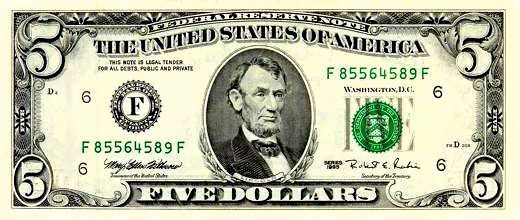

Winston Churchill in 2016 will be worth 1.476 Abraham Lincolns.

40cpg
Lucy: Everyone talks about how great Beethoven was. Beethoven wasn't so great.
Schroeder: What do you mean Beethoven wasn't so great?
Lucy: He never got his picture on bubblegum cards, did he? Have you ever seen his picture on a bubblegum card? Hmmm? How can you say someone is great who's never had his picture on bubblegum cards?
41BobH1
>38 Rood:: OK Rood, may be I exaggerated slightly. But I maintain my primary premise, Lincoln was an actor on the US stage, Churchill was an actor on the world stage.
42rolandperkins
"...actor on the US stage... (vs.)... actor on the world stage" (41)
Yes, but wouldnʻt you rather have played "Marc Antony" or "Othello"
on a local stage than "Decius Brutus" or "Roderigo" on
an international stage?
Yes, but wouldnʻt you rather have played "Marc Antony" or "Othello"
on a local stage than "Decius Brutus" or "Roderigo" on
an international stage?
43cpg
>42 rolandperkins:
'In King Lear there is a man who is such a minor character that Shakespeare has not given him even a name: he is merely "First Servant." All the characters around him--Regan, Cornwall, and Edmund--have fine long-term plans. They think they know how the story is going to end, and they are quite wrong. The servant has no such delusions. He has no notion of how the play is going to go. But he understands the present scene. He sees an abomination (the blinding of old Gloucester) taking place. He will not stand it. His sword is out and pointed at his master's breast in a moment: then Regan stabs him dead from behind. That is his whole part: eight lines all told. But if it were real life and not a play, that is the part it would be best to have acted.' --C. S. Lewis
'In King Lear there is a man who is such a minor character that Shakespeare has not given him even a name: he is merely "First Servant." All the characters around him--Regan, Cornwall, and Edmund--have fine long-term plans. They think they know how the story is going to end, and they are quite wrong. The servant has no such delusions. He has no notion of how the play is going to go. But he understands the present scene. He sees an abomination (the blinding of old Gloucester) taking place. He will not stand it. His sword is out and pointed at his master's breast in a moment: then Regan stabs him dead from behind. That is his whole part: eight lines all told. But if it were real life and not a play, that is the part it would be best to have acted.' --C. S. Lewis
44rolandperkins
Yes, a walk-on can be important, which
I didnʻt mean to deny (43). (Iʻm still not
convinced that
WSC was more important than AL.) But
thanks to you and CSL for an interesting
quote.
I didnʻt mean to deny (43). (Iʻm still not
convinced that
WSC was more important than AL.) But
thanks to you and CSL for an interesting
quote.
45TLCrawford
With science or civilization we stand on the shoulders of our predecessors. What Churchill achieved could not have been possible with out Lincolns achievements to build on. By that standard Lincoln is greater than Churchill but that would mean that Erishum I of Old Assyria was greater than almost any leader we know of.
46DinadansFriend
I've always pointed out the statement "I stand on the shoulders of Giants. is a rhetorical flourish. The truth is we stand on the shoulders of pygmies like ourselves, who have had that one or two moments of achievement. From a sufficient distance these heaps of pygmies appear to have the shape of giants. While we should respect the achievements of or predecessors and inspirations, we should not deify them.
Inspired to some degree by Lincoln, Churchill also had the example of his ancestors John and Sarah Churchill, the Duke and Duchess of Marlborough, and his father Randolph, who had made it all the way up the ladder to Minister of Finance. But he was a less attractive person in his manners and personal relationships, and therefore Lincoln, who had no family tradition to carry forward, seems to be the better, more rounded person. I am still voting for Abe here!
Inspired to some degree by Lincoln, Churchill also had the example of his ancestors John and Sarah Churchill, the Duke and Duchess of Marlborough, and his father Randolph, who had made it all the way up the ladder to Minister of Finance. But he was a less attractive person in his manners and personal relationships, and therefore Lincoln, who had no family tradition to carry forward, seems to be the better, more rounded person. I am still voting for Abe here!
47Phlegethon99
"When the sun of culture hangs low on the horizon, even dwarves cast long shadows."
- Karl Kraus
- Karl Kraus
48nisgolsand
>46 DinadansFriend: DinadansFriend
You might add to WSC' forebears his formidable American born mother. Without Jenny's help Winnie wouldn't have been able to even start his unbelievable career. Despite the magnificence of family titles, they weren't rich (by the standards of their world) and she helped Winnie to start making real money, even when he was still a subaltern. It was this ability which made him a rather independent thinker inside the political parties he changed a few times.
You might add to WSC' forebears his formidable American born mother. Without Jenny's help Winnie wouldn't have been able to even start his unbelievable career. Despite the magnificence of family titles, they weren't rich (by the standards of their world) and she helped Winnie to start making real money, even when he was still a subaltern. It was this ability which made him a rather independent thinker inside the political parties he changed a few times.

