1Conte_Mosca
It is now almost two years since I completed my review of the Society’s 1950 publications, having previously covered the years from 1947-1949. I now feel ready to take the journey forward into the Society’s fifth year, 1951! My aim is to build up over time a resource for interested fellow Devotees covering the first 100 FS publications, which covers the period from 1947 to 1957.
The previous retrospectives can be found here, and are also available via the FSD Wiki Page:
(1947-1949) - http://www.librarything.com/topic/157268
(1950) - http://www.librarything.com/topic/158385
1951 saw ten regular publications (excluding the Presentation Volume, which I shall come onto later). As a taster of what is to come in following posts, here is a picture of the full “Class of ‘51”.
EDIT: Image updated to include "Incognita", which I could not find when I created the original thread.

The previous retrospectives can be found here, and are also available via the FSD Wiki Page:
(1947-1949) - http://www.librarything.com/topic/157268
(1950) - http://www.librarything.com/topic/158385
1951 saw ten regular publications (excluding the Presentation Volume, which I shall come onto later). As a taster of what is to come in following posts, here is a picture of the full “Class of ‘51”.
EDIT: Image updated to include "Incognita", which I could not find when I created the original thread.

2Conte_Mosca
No 32 – 1951 – The Moonstone – Wilkie Collins
Book Description
Lithographs by Edwin La Dell. Printed by Mackay, the lithographs by the Chiswick Press. Bound by Mackay in full blue-grey embossed cloth with a repeat pattern in blind, and titling reversed on gold panel. White dust-jacket printed in green and pink. Medium Octavo. Type: Monotype Plantin (10 pt) with Thorne Shaded for display.
Charles Ede added in Folio 21:
“The illustrations seem a successful solution to a recurring problem with auto-lithographs. If two colours are used, the artist (and the reader) can consider them as tomes rather than colours, but if three or four colours are used they tend to be recognized as colours, yet without photographic separation cannot be used entirely naturalistically”.


Book Description
Lithographs by Edwin La Dell. Printed by Mackay, the lithographs by the Chiswick Press. Bound by Mackay in full blue-grey embossed cloth with a repeat pattern in blind, and titling reversed on gold panel. White dust-jacket printed in green and pink. Medium Octavo. Type: Monotype Plantin (10 pt) with Thorne Shaded for display.
Charles Ede added in Folio 21:
“The illustrations seem a successful solution to a recurring problem with auto-lithographs. If two colours are used, the artist (and the reader) can consider them as tomes rather than colours, but if three or four colours are used they tend to be recognized as colours, yet without photographic separation cannot be used entirely naturalistically”.


3Conte_Mosca
No 33 – 1951 – The Tragedy of Macbeth – William Shakespeare
Book Description
Introduction by Sir Lewis Casson. Designs by Michael Ayrton. Eight plates printed by lithography in black, red and grey by the Chiswick Press. Plantin type, text printed in red and black by Mackay. Bound by Mackay in red cloth with series design. White dust jacket printed in grey, red and black.
Charles Ede added in Folio 21
“Although they were based on theatre designs, these lithographs were specially produced for the book and so were a departure from the pattern which later appeared. When the second edition was issued in 1964 we returned to the original designs by Michael Ayrton and John Minton which were created for John Gielgud’s production at the Piccadilly Theatre in 1942”.


Book Description
Introduction by Sir Lewis Casson. Designs by Michael Ayrton. Eight plates printed by lithography in black, red and grey by the Chiswick Press. Plantin type, text printed in red and black by Mackay. Bound by Mackay in red cloth with series design. White dust jacket printed in grey, red and black.
Charles Ede added in Folio 21
“Although they were based on theatre designs, these lithographs were specially produced for the book and so were a departure from the pattern which later appeared. When the second edition was issued in 1964 we returned to the original designs by Michael Ayrton and John Minton which were created for John Gielgud’s production at the Piccadilly Theatre in 1942”.


4Conte_Mosca
No 34 – 1951 – Handley Cross – Robert Smith Surtees
This publication was the third in as many years by R.S. Surtees, following Jorrock’s Jaunts and Jollities (1949) and Mr Sponges’ Sporting Tour (1950).
Book Description
Colour plates by John Leech. Medium Octavo, 680 pages, plus 16 colour plates reproduced by collotype and coloured by hand. Imprint type (11 pt). Series binding as per Jorrock’s Jaunts and Jollities (No 18 – 1949) by Mackay (full red cloth). Printed by Mackay, the collotypes by the Chiswick Press. White dust jacket printed in grey and black. The plates are from the original edition of 1843 and were hand-coloured by pochoir by Maud Johnson.


This publication was the third in as many years by R.S. Surtees, following Jorrock’s Jaunts and Jollities (1949) and Mr Sponges’ Sporting Tour (1950).
Book Description
Colour plates by John Leech. Medium Octavo, 680 pages, plus 16 colour plates reproduced by collotype and coloured by hand. Imprint type (11 pt). Series binding as per Jorrock’s Jaunts and Jollities (No 18 – 1949) by Mackay (full red cloth). Printed by Mackay, the collotypes by the Chiswick Press. White dust jacket printed in grey and black. The plates are from the original edition of 1843 and were hand-coloured by pochoir by Maud Johnson.


5SimB
Well done,
I collected the first 100, all with a cover except the first. It didn't take too long to get them all. Some are wondrous gems, and its great to read Charles Ede's comments about them in Folio 21! I've even read some of them!
Thanks for taking the time to showcase them.
I collected the first 100, all with a cover except the first. It didn't take too long to get them all. Some are wondrous gems, and its great to read Charles Ede's comments about them in Folio 21! I've even read some of them!
Thanks for taking the time to showcase them.
6Conte_Mosca
No 35 – 1951 – Letters – Horace Walpole
Book Description
Selected by W.S. Lewis, with an introduction by R.W. Ketton-Cremer. Illustrated with contemporary engravings. Notes by M.E. Manisty. Medium Octavo. 284 pages, plus 8 plates reproduced by collotype. Type: Monotype Baskerville (11 pt), Printed by Mackay, the collotypes by the Chiswick Press. Bund by Mackay in quarter dark blue cloth with the title and a calligraphic design in silver, and pale blue cloth boards. White dust jacket printed in dark blue. The plates reproduce contemporary engraved portraits.
Charles Ede added in Folio 21:
“The texts used were those of the Yale Edition of Horace Walpole’s Correspondence, or the Toynbee edition where no Yale text was available”.


Book Description
Selected by W.S. Lewis, with an introduction by R.W. Ketton-Cremer. Illustrated with contemporary engravings. Notes by M.E. Manisty. Medium Octavo. 284 pages, plus 8 plates reproduced by collotype. Type: Monotype Baskerville (11 pt), Printed by Mackay, the collotypes by the Chiswick Press. Bund by Mackay in quarter dark blue cloth with the title and a calligraphic design in silver, and pale blue cloth boards. White dust jacket printed in dark blue. The plates reproduce contemporary engraved portraits.
Charles Ede added in Folio 21:
“The texts used were those of the Yale Edition of Horace Walpole’s Correspondence, or the Toynbee edition where no Yale text was available”.


7wcarter
>1 Conte_Mosca:
Michael, thank you. A very valuable and fascinating resource. I have again linked it to the FSD Group page wiki, but have moved it to the more appropriate section on the Index of Folio Society books.
Michael, thank you. A very valuable and fascinating resource. I have again linked it to the FSD Group page wiki, but have moved it to the more appropriate section on the Index of Folio Society books.
8drasvola
>1 Conte_Mosca:
Thank you so much, Michael, for continuing your remarkable and useful contribution to early Folio editions. It is so illustrative to see the evolution of choices, styles, bindings and presentations. I have some of those early books which are highly prized in both charm and consideration.
Thank you so much, Michael, for continuing your remarkable and useful contribution to early Folio editions. It is so illustrative to see the evolution of choices, styles, bindings and presentations. I have some of those early books which are highly prized in both charm and consideration.
9Conte_Mosca
No 36 – 1951 – Some People – Harold Nicolson
Book Description
Etchings by Philippe Jullian. Medium Octavo. 192 pages. Type: Monotype Centaur and Arrighi (12 pt) with Locarno (Koch Antiqua) for display on the dust jacket. Printed by R. and R. Clark, the collotypes by the Chiswick Press. Bound by Hunter and Foulis in full pale blue cloth. White dust-jacket printed in pale blue and black. In addition to the 9 collotype plates, the title page and frontispiece are a double-page etching by Jullian, incorporating the title lettering. The front endleaves are part of the first gathering (which includes the title-page and frontispiece).


Book Description
Etchings by Philippe Jullian. Medium Octavo. 192 pages. Type: Monotype Centaur and Arrighi (12 pt) with Locarno (Koch Antiqua) for display on the dust jacket. Printed by R. and R. Clark, the collotypes by the Chiswick Press. Bound by Hunter and Foulis in full pale blue cloth. White dust-jacket printed in pale blue and black. In addition to the 9 collotype plates, the title page and frontispiece are a double-page etching by Jullian, incorporating the title lettering. The front endleaves are part of the first gathering (which includes the title-page and frontispiece).


10Conte_Mosca
No 37 – 1951 – Mary Gresley And Other Stories- Anthony Trollope
Book Description
Selected and introduced by John Hampden. Wood-engravings by Joan Hassall. Demy Octavo. 182 pages, including frontispiece and eleven vignettes and head- and tail-pieces. Type: Monotype Bembo (12 pt). Printed by the Chiswick Press. Bound by Hunter and Foulis in full cream cloth with a repeat pattern in red by Hassall. Leather label. White dust-jacket printed in red with the same pattern used on the boards. This is the second collection of stories by Trollope with wood-engravings by Hassall, following ‘The Parson’s Daughter and Other Stories’ (No 17 – 1949).
Charles Ede added in Folio 21
“The other stories are: ‘The O’Conors of Castle Conor’, ‘The Journey to Panama’, ‘Katchen’s Caprice’, and ‘The Turkish Bath’”.


Book Description
Selected and introduced by John Hampden. Wood-engravings by Joan Hassall. Demy Octavo. 182 pages, including frontispiece and eleven vignettes and head- and tail-pieces. Type: Monotype Bembo (12 pt). Printed by the Chiswick Press. Bound by Hunter and Foulis in full cream cloth with a repeat pattern in red by Hassall. Leather label. White dust-jacket printed in red with the same pattern used on the boards. This is the second collection of stories by Trollope with wood-engravings by Hassall, following ‘The Parson’s Daughter and Other Stories’ (No 17 – 1949).
Charles Ede added in Folio 21
“The other stories are: ‘The O’Conors of Castle Conor’, ‘The Journey to Panama’, ‘Katchen’s Caprice’, and ‘The Turkish Bath’”.


11Conte_Mosca
No 38 – 1951 – The Complete Poems of Emily Bronte – Emily Bronte
Book Description
Edited with an introduction by Phiip Henderson. Crown Octavo. 304 pages including a portrait frontispiece engraved on wood by Sem Hartz. Perpetua type (12 pt). Printed by the Chiswick Press. Bound by Mackay in quarter red-brown leather, with dark green cloth boards. White dust-jacket printed in black and green. The dust-jacket include an advertisement for other books in the Folio Poets series, including ‘Rupert Brook’s (sic!) Poems’.


Book Description
Edited with an introduction by Phiip Henderson. Crown Octavo. 304 pages including a portrait frontispiece engraved on wood by Sem Hartz. Perpetua type (12 pt). Printed by the Chiswick Press. Bound by Mackay in quarter red-brown leather, with dark green cloth boards. White dust-jacket printed in black and green. The dust-jacket include an advertisement for other books in the Folio Poets series, including ‘Rupert Brook’s (sic!) Poems’.


12cronshaw
Well done and thank you for posting all these Michael, the several threads of 'Folio Society: the early years' are among my very favourites. They're a wonderful record for everyone to enjoy.
You deserve the highest FSD accolade: a limited edition, signed, all edge gilt, full vellum e-medal (with raised bands), presented in a gilt ornamented solander e-box.
You deserve the highest FSD accolade: a limited edition, signed, all edge gilt, full vellum e-medal (with raised bands), presented in a gilt ornamented solander e-box.
13Conte_Mosca
No 39 – 1951 – The Red Badge Of Courage – Stephen Crane
Book Description
Edited and introduced by John T. Winterich with Civil War photographs. 160 pages plus ten plates produced by collotype. Plantin type (11 pt) with Studio for display. Printed in red and black by Mackay, the lithographs by the Chiswick Press. Bound by Mackay in full grey cloth with a repeat pattern in dark blue, title on red panel. Dust-jacket printed in red and black (repeating the frontispiece photograph).
Charles Ede added in Folio 21
“The text of this edition was based on the original manuscript and contained a number of passages never before printed. The photographs were taken either by Matthew Brady or by his staff.”


Book Description
Edited and introduced by John T. Winterich with Civil War photographs. 160 pages plus ten plates produced by collotype. Plantin type (11 pt) with Studio for display. Printed in red and black by Mackay, the lithographs by the Chiswick Press. Bound by Mackay in full grey cloth with a repeat pattern in dark blue, title on red panel. Dust-jacket printed in red and black (repeating the frontispiece photograph).
Charles Ede added in Folio 21
“The text of this edition was based on the original manuscript and contained a number of passages never before printed. The photographs were taken either by Matthew Brady or by his staff.”


14Conte_Mosca
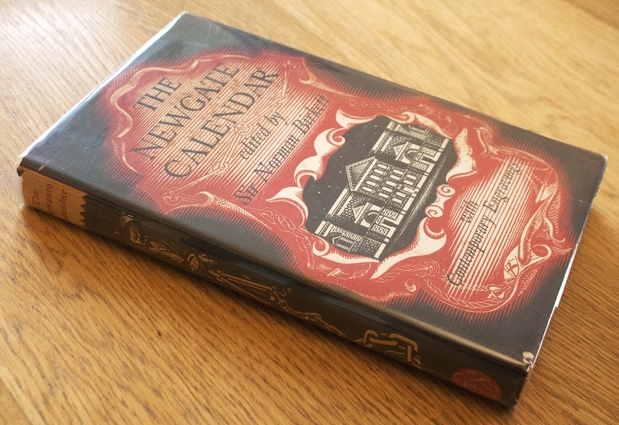
No 40 – 1951 – The Newgate Calendar
Book Description
Edited and selected by Sir Norman Birkett, with contemporary engravings. Medium Octavo, 260 pages plus 8 plates reproduced by collotype. Caslon Old Face type (12 pt). Printed by Mackay, the collotypes by Van Leer. Bound by Mackay in quarter red cloth with title and a design in silver, and marbled paper sides. White dust jacket printed in red and black. The text contains 28 trials drawn from the eighteenth century collection first published around 1773 as ‘The Newgate Calendar…’. The edition used here was the updated text of 1779, published in 50 weekly parts for binding in five volumes as The Malefactor’s Register; or, The Newgate and Tyburn Calendar. The plates were also reprinted from this edition, and the title-plate and frontispiece of one of the later volumes are reproduced as a facing pair of plates, with the recto of the title-plate bearing the fly-title to ’The Trials’. A further expanded edition of the text was compiled by William Jackson and published in 60 parts in 1795, and expanded new editions continued to be published well into the nineteenth century; some of these later editions were drawn on for the FS publication The New Newgate Calendar in 1960.
Charles Ede added in Folio 21
“Lord Birkett appended interesting passages of commentary to a number of the trials.”


Book Description
Edited and selected by Sir Norman Birkett, with contemporary engravings. Medium Octavo, 260 pages plus 8 plates reproduced by collotype. Caslon Old Face type (12 pt). Printed by Mackay, the collotypes by Van Leer. Bound by Mackay in quarter red cloth with title and a design in silver, and marbled paper sides. White dust jacket printed in red and black. The text contains 28 trials drawn from the eighteenth century collection first published around 1773 as ‘The Newgate Calendar…’. The edition used here was the updated text of 1779, published in 50 weekly parts for binding in five volumes as The Malefactor’s Register; or, The Newgate and Tyburn Calendar. The plates were also reprinted from this edition, and the title-plate and frontispiece of one of the later volumes are reproduced as a facing pair of plates, with the recto of the title-plate bearing the fly-title to ’The Trials’. A further expanded edition of the text was compiled by William Jackson and published in 60 parts in 1795, and expanded new editions continued to be published well into the nineteenth century; some of these later editions were drawn on for the FS publication The New Newgate Calendar in 1960.
Charles Ede added in Folio 21
“Lord Birkett appended interesting passages of commentary to a number of the trials.”


15Conte_Mosca
No 41 – 1951 – The Sofa, A Moral Tale – Crebillon FIls (Claude-Prosper Jolyot de Crebillon)
Book Description
Translated by Bonamy Dobree. Etchings by Robert Bonfils. Medium Octavo. 264 pages plus 7 plates reproduced by collotype. Bodoni type (12 pt). Printed by R. and R. Clark, the plates (probably) by the Chiswick Press. Bound by James Burn in full pink cloth. White dust jacket printed in pink and black. There is a variant binding of quarter pale blue cloth with pink cloth boards.


Book Description
Translated by Bonamy Dobree. Etchings by Robert Bonfils. Medium Octavo. 264 pages plus 7 plates reproduced by collotype. Bodoni type (12 pt). Printed by R. and R. Clark, the plates (probably) by the Chiswick Press. Bound by James Burn in full pink cloth. White dust jacket printed in pink and black. There is a variant binding of quarter pale blue cloth with pink cloth boards.


16Conte_Mosca
And that brings me to the end of the regular publications. There were, however, two further publications in 1951 which I will add shortly.
Firstly, the Presentation Volume for 1951, which was Incognita or Love and Duty Reconcil'd By William Congreve.
And then there is a special publication, which the Folio Society produced for The Studio Publications. It was entitled The Art of the Book, some record of work carried out in Europe and the U.S.A. 1939-1950, and was edited by the Folio Society founder himself, Charles Ede.
Pictures and descriptions of both will follow shortly.
>5 SimB:
>7 wcarter:
>8 drasvola:
>12 cronshaw:
Thanks for your kind words. Given how much enjoyment FSD has given me over the years, it is always a pleasure to make a contribution which I hope others will enjoy too.
Firstly, the Presentation Volume for 1951, which was Incognita or Love and Duty Reconcil'd By William Congreve.
And then there is a special publication, which the Folio Society produced for The Studio Publications. It was entitled The Art of the Book, some record of work carried out in Europe and the U.S.A. 1939-1950, and was edited by the Folio Society founder himself, Charles Ede.
Pictures and descriptions of both will follow shortly.
>5 SimB:
>7 wcarter:
>8 drasvola:
>12 cronshaw:
Thanks for your kind words. Given how much enjoyment FSD has given me over the years, it is always a pleasure to make a contribution which I hope others will enjoy too.
17Conte_Mosca
No 41.5 – 1951 – The Art of the Book – Edited by Charles Ede
Now we come to one of my favourites. Not strictly speaking a “Folio Society” publication, it was produced by The Folio Society for The Studio Publications. Rather than try and describe it myself, I will provide the descriptions from two sources: Folio 50 (the first FS bibliography to include this volume within the Society’s “oeuvre”); and the book’s own dust-jacket description.
Book Description – Dust Jacket
Previous works entitled The Art of the Book were published by The Studio in 1914 and 1938. Both are much sought after today, commanding high prices on their rare appearances in the Sale Room.
The present volume, covering the period since 1939, has been prepared by Charles Ede, founder of The Folio Society, and student of book-design. It has taken nearly three years to compile and has involved a correspondence running to over seven hundred letters.
The book provides a record of the work carried out in Europe and the United States, and contains some fifty separate contributions by authorities from the various countries concerned. These fall under five man headings:
- Type Design & Lettering
- Printing The Text
- Illustration & Graphic Reproduction
- Commercial Binding
- Hand Binding
A composite note on BOOK PAPERS is also included.
There are over two hundred illustrations, including many in full colour, two colours and monochrome collotype.
Book Description – Folio 50
Type: Monotype Perpetua (14 pt). Printed by Mackay, the collotypes and lithographs by the Chiswick Press. Bound by Mackay in full green-grey cloth. This work, a collection of essays on book design and production by 39 individuals from 10 countries, was edited by Ede and ‘Designed and produced by The Folio Society for The Studio…’ (as stated on the verso of the title-leaf). It was one of an occasional series of volumes with the title ‘The Art of the Book’, published by The Studio from 1914. There are 215 numbered figures in the text, reproducing typographical specimens, dust-jackets, bindings, and so forth, with 84 pages being printed in two or more colours by a combination of lithography and letterpress. Pages 107-108, 121-122 and 155-156 bear collotype reproductions of book illustrations. The work is an important contribution to the study of book design in the post-war years.


Now we come to one of my favourites. Not strictly speaking a “Folio Society” publication, it was produced by The Folio Society for The Studio Publications. Rather than try and describe it myself, I will provide the descriptions from two sources: Folio 50 (the first FS bibliography to include this volume within the Society’s “oeuvre”); and the book’s own dust-jacket description.
Book Description – Dust Jacket
Previous works entitled The Art of the Book were published by The Studio in 1914 and 1938. Both are much sought after today, commanding high prices on their rare appearances in the Sale Room.
The present volume, covering the period since 1939, has been prepared by Charles Ede, founder of The Folio Society, and student of book-design. It has taken nearly three years to compile and has involved a correspondence running to over seven hundred letters.
The book provides a record of the work carried out in Europe and the United States, and contains some fifty separate contributions by authorities from the various countries concerned. These fall under five man headings:
- Type Design & Lettering
- Printing The Text
- Illustration & Graphic Reproduction
- Commercial Binding
- Hand Binding
A composite note on BOOK PAPERS is also included.
There are over two hundred illustrations, including many in full colour, two colours and monochrome collotype.
Book Description – Folio 50
Type: Monotype Perpetua (14 pt). Printed by Mackay, the collotypes and lithographs by the Chiswick Press. Bound by Mackay in full green-grey cloth. This work, a collection of essays on book design and production by 39 individuals from 10 countries, was edited by Ede and ‘Designed and produced by The Folio Society for The Studio…’ (as stated on the verso of the title-leaf). It was one of an occasional series of volumes with the title ‘The Art of the Book’, published by The Studio from 1914. There are 215 numbered figures in the text, reproducing typographical specimens, dust-jackets, bindings, and so forth, with 84 pages being printed in two or more colours by a combination of lithography and letterpress. Pages 107-108, 121-122 and 155-156 bear collotype reproductions of book illustrations. The work is an important contribution to the study of book design in the post-war years.


19Conte_Mosca
Due to an error in my HTML code, I failed to include the referenced double-paged etching in post 9 above, which I have now corrected.
20AnnieMod
Some days I wonder why FS even try to do their marketing - leave it to the people around here and they won't have to come up with weird schemes.
Great post. Again. I had been resisting the early Folios but I am not sure how long that will last after this topic...
Great post. Again. I had been resisting the early Folios but I am not sure how long that will last after this topic...
21elenchus
I echo the accolades here, for your work and evident enthusiasm for the Society's publications.
As a relative newbie to Folio Society, I wasn't aware the FS ever included dust jackets with their publications! When did this cease to be standard practise? Are there any current publications with dust jackets?
As a relative newbie to Folio Society, I wasn't aware the FS ever included dust jackets with their publications! When did this cease to be standard practise? Are there any current publications with dust jackets?
22Conte_Mosca
>21 elenchus: The first FS publication to include a slip case wasn't until 1954, The Pastoral Loves of Daphnis & Chloe (publication no. 69). All of the other publications up to that point came with dust jackets, except for the presentation volumes which came without a cover. However, FS continued to publish most of their books with dust jackets for the following year or so, but by the late 1950s slip cases had become the norm, and with the exception of a few publications that came with glassine wrappers, slipcases have been used ever since. Early slipcases were of very poor quality though. They were not originally intended for any aesthetic purpose, but simply as a functional item to protect the book. For a few years, therefore, in my opinion the books were aesthetically worse following the disappearance of nice dust jackets.
23garyjbp
Conte,
love the pics of the 1951 volumes. I have many of them. But I noticed that you didn't post any of the presentation volume, Incognita. Was that by intent, or do you not have it? If the latter, I can post a few pics, if you have no objections.
love the pics of the 1951 volumes. I have many of them. But I noticed that you didn't post any of the presentation volume, Incognita. Was that by intent, or do you not have it? If the latter, I can post a few pics, if you have no objections.
24boldface
Thank you, Michael, for taking the time to post these photos. It's very nice (and useful!) to see the early Folios in all their glory. But with utility comes enablement, as ever!
25dbshee
>24 boldface: As Ever! I've just placed an order for The Art of The Book based solely on the images provided here. Thank you, Michael!
26Conte_Mosca
>24 boldface: If you have been enabled Jonathan, do let us know what you have been tempted by!
>25 dbshee: You will not be disappointed.
>23 garyjbp: You are quite right Gary. I did mention it in post 16 and promised to add the pics and info shortly. When I took the initial batch of photos, I couldn't find what I have done with the book (hence why it is not in the initial group photo) and unfortunately I still haven't been able to do so! I was planning to continue the hunt at the weekend, but I am more than happy to share the load, and for you to save me the trouble if you have the time and inclination to do so :-)
>25 dbshee: You will not be disappointed.
>23 garyjbp: You are quite right Gary. I did mention it in post 16 and promised to add the pics and info shortly. When I took the initial batch of photos, I couldn't find what I have done with the book (hence why it is not in the initial group photo) and unfortunately I still haven't been able to do so! I was planning to continue the hunt at the weekend, but I am more than happy to share the load, and for you to save me the trouble if you have the time and inclination to do so :-)
27garyjbp
The final piece of the puzzle, the presentation volume for 1951, No 31, Incognita, which might have been the first FS book with pictorial cloth, with a leather binding. Not done with the Conte_Mosca's style, but perhaps acceptable nevertheless.


by the way, Conte, I have many books from the early years also, so if there are others you can't find or don't have, let me know and I will be glad to send you pics, or upload them. And I sympathize with your inability to find them. It happens to me all the time.


by the way, Conte, I have many books from the early years also, so if there are others you can't find or don't have, let me know and I will be glad to send you pics, or upload them. And I sympathize with your inability to find them. It happens to me all the time.
28cronshaw
>27 garyjbp: Thanks Gary, beautiful colours there!
29cronshaw
>17 Conte_Mosca: I blame you entirely and thank you profusely, Michael, for enabling me to get The Art of the Book. My copy arrived today. It's far larger than I'd expected, and so copiously illustrated it's a veritable treasure trove. There are images of a couple of the earliest Folios, one of Edward Bawden's vibrant colour lithographs from Gulliver's Travels and the brilliant original binding design for Jekyll and Hyde. It's fascinating to glimpse the book world as it was when Folio began.
30HuxleyTheCat
>29 cronshaw: Russell, there are two other Studio 'Art of the Book' books. I have a 1990 reprint of the original 1914, and in between that and Ede's book was a 1938 publication by Bernard Newdigate (of the Shakespeare Head Press).
31cronshaw
>30 HuxleyTheCat: Kindly retract those sharp claws of enablement.
32HuxleyTheCat
>31 cronshaw: Well if I did, I'd expect the same from everyone else here, and then where would we all be! :)
33Polar_bear
>32 HuxleyTheCat: Solvent, for once! ...and not in FSD-induced penury as usual...
34HuxleyTheCat
>33 Polar_bear: Does your PC not have an off button? ;)
There's one thing for sure - it'll be far harder for Folio to persuade me to part with my hard-earned pennies, now that the subtly enabling skills of the softly spoken Scottish gentleman (and his nefarious ToE) have been dispensed with.
There's one thing for sure - it'll be far harder for Folio to persuade me to part with my hard-earned pennies, now that the subtly enabling skills of the softly spoken Scottish gentleman (and his nefarious ToE) have been dispensed with.
35Caroline_McElwee
These are wonderful to see, thank you Gary.
36Polar_bear
34> A tip: those same dulcet tones are still to be found on the answering machine!! Hands off the "change welcome message" button, mole!


39folio_books
>38 wcarter: I thought a copy of the 1951 prospectus should be shown here.
Fabulous! Could you add it to the prospectuses on the Wiki?
Fabulous! Could you add it to the prospectuses on the Wiki?
40wcarter
>39 folio_books:
Glenn, there is already a link to this thread on the wiki. I think that is probably sufficient.
Glenn, there is already a link to this thread on the wiki. I think that is probably sufficient.
41garyjbp
>38 wcarter:
I don't know how I know, but that is not actually the 1951 Prospectus. It is an advance listing of the "Programme". There was a real prospectus that year.
Anyway, good of you to post that. I actually have a copy myself, and it is posted in my member gallery, and I think I included it in some thread a long time ago. I wonder how you came by your copy. I got mine by accident, by having an English book-collecting friend who found it at an auction in London, and because he remembered that I had an interest in FS "ephemera", got it and sent it to me.
I don't know how I know, but that is not actually the 1951 Prospectus. It is an advance listing of the "Programme". There was a real prospectus that year.
Anyway, good of you to post that. I actually have a copy myself, and it is posted in my member gallery, and I think I included it in some thread a long time ago. I wonder how you came by your copy. I got mine by accident, by having an English book-collecting friend who found it at an auction in London, and because he remembered that I had an interest in FS "ephemera", got it and sent it to me.
42kdweber
>38 wcarter: Before decimalization!
44wcarter
>41 garyjbp:
Found it tucked into the back of a copy of "The Sofa" that I bought.
Now that book is an interesting and weird read - the experiences of a person who is turned into a sofa and what happens on that sofa.
Found it tucked into the back of a copy of "The Sofa" that I bought.
Now that book is an interesting and weird read - the experiences of a person who is turned into a sofa and what happens on that sofa.
45folio_books
>44 wcarter: the experiences of a person who is turned into a sofa and what happens on that sofa.
Whatever it was, it was "very French". according to the blurb ;)
Whatever it was, it was "very French". according to the blurb ;)
47Conte_Mosca
A bit of housekeeping means I have found my copy of "Incognita". I have updated the main image in the first post. garyjpb very kindly filled in for me, providing some images of the missing title. I will also add my "official" title entry below, providing some additional information and images.
48Conte_Mosca
No 31 - Incognita or Love and Duty Reconcil'd - William Congreve
Book Description
Introduction by Alan Pryce-Jones, engravings by van Rossen. Royal octavo. 72 pages plus six plates reproduced by drawn lithography. Monotype Garamond (12-pt). Printed in red and black by Mackay, the lithographs by the Chiswick Press. Bound by Mackay in quarter dark blue leather, cream cloth boards with a design in blue and orange by van Rossem. Issued without a dust-jacket or slipcase. The free members' presentation volume for 1951. The text was edited by William Henderson and was originally published in this form by Everyman.


Book Description
Introduction by Alan Pryce-Jones, engravings by van Rossen. Royal octavo. 72 pages plus six plates reproduced by drawn lithography. Monotype Garamond (12-pt). Printed in red and black by Mackay, the lithographs by the Chiswick Press. Bound by Mackay in quarter dark blue leather, cream cloth boards with a design in blue and orange by van Rossem. Issued without a dust-jacket or slipcase. The free members' presentation volume for 1951. The text was edited by William Henderson and was originally published in this form by Everyman.


49Son.of.York
>4 Conte_Mosca: On a seasonally-appropriate note, John Leech is most famous as the original illustrator of Dickens’ A Christmas Carol, also 1843. I think Fezziwig’s Ball bears some resemblance to The Handley Cross Fancy Ball.
50boldface
>48 Conte_Mosca:
Michael, I'm so glad you've revived these fascinating threads. Along with Warwick (wcarter)'s ongoing series, these illustrated guides to early Folio editions are a delight and an encouragement to seek out forgotten gems from the back catalogue.
Michael, I'm so glad you've revived these fascinating threads. Along with Warwick (wcarter)'s ongoing series, these illustrated guides to early Folio editions are a delight and an encouragement to seek out forgotten gems from the back catalogue.

