Rebeccanyc Reads from the TBR Again . . . or Does She? Volume 1
This topic was continued by Rebeccanyc Reads from the TBR Again . . . or Does She? Volume 2.
Talk Club Read 2016
Join LibraryThing to post.
This topic is currently marked as "dormant"—the last message is more than 90 days old. You can revive it by posting a reply.
1rebeccanyc
Currently Reading

Read in April
22. Wash This Blood Clean from My Hand by Fred Vargas
21. Reasons of State by Alejo Carpentier (started in March)
Read in March
20. Come to Me by Amy Bloom*
19. Dog Will Have His Day by Fred Vargas
18. Doctor Thorne by Anthony Trollope*
17. The Caller by Karin Fossum
16. Bad Intentions by Karin Fossum
15. Augustus by John Williams
Read in February
14. The Collected Tales of Nikolai Gogol by Nikolai Gogol*
13. Have Mercy on Us All by Fred Vargas
12. Massacre River by René Philoctète*
11. The Water's Edge by Karin Fossum
10. The Chase by Alejo Carpentier
9. The Three Evangelists by Fred Vargas
8. Barchester Towers by Anthony Trollope (started in January)*
Read in January
7. Peasants and Other Stories by Anton Chekhov
6. The Blizzard by Vladimir Sorokin
5. Seeking Whom He May Devour by Fred Vargas
4. Butcher's Crossing by John Williams*
3. The Chalk Circle Man by Fred Vargas
2. The Warden by Anthony Trollope
1. Just One Evil Act by Elizabeth George (started in December)

Read in April
22. Wash This Blood Clean from My Hand by Fred Vargas
21. Reasons of State by Alejo Carpentier (started in March)
Read in March
20. Come to Me by Amy Bloom*
19. Dog Will Have His Day by Fred Vargas
18. Doctor Thorne by Anthony Trollope*
17. The Caller by Karin Fossum
16. Bad Intentions by Karin Fossum
15. Augustus by John Williams
Read in February
14. The Collected Tales of Nikolai Gogol by Nikolai Gogol*
13. Have Mercy on Us All by Fred Vargas
12. Massacre River by René Philoctète*
11. The Water's Edge by Karin Fossum
10. The Chase by Alejo Carpentier
9. The Three Evangelists by Fred Vargas
8. Barchester Towers by Anthony Trollope (started in January)*
Read in January
7. Peasants and Other Stories by Anton Chekhov
6. The Blizzard by Vladimir Sorokin
5. Seeking Whom He May Devour by Fred Vargas
4. Butcher's Crossing by John Williams*
3. The Chalk Circle Man by Fred Vargas
2. The Warden by Anthony Trollope
1. Just One Evil Act by Elizabeth George (started in December)
2rebeccanyc
Best of 2015
This is the list I posted on the Favorites of the Year thread.
I might finish two more books before the end of the year, and one of them will be on my list of favorites. These are listed in reverse order of when I read them.
Reading this list, it sounds like I had a great reading year. But I don't feel that way, because it was a very stressful year, and I read a ton of mysteries, in fact 32.
Best of the Best
Fiction
Gabriela, Clove and Cinnamon (still reading) and Dona Flor and Her Two Husbands by Jorge Amado
The Earth by Emile Zola
The Wrong Side of Paris by Honore de Balzac
Pushkin Hills by Sergei Dovlatov
Clear Light of Day by Anita Desai
Russian Short Stories from Pushkin to Buida edited by Robert Chandler
The Way We Live Now by Anthony Trollope
Nonfiction
Island of the Lost bu Joan Druett
The Journalist and the Murderer by Janet Malcolm
Between You and Me by Mary Norris
The Best of the Rest
The War of the Saints by Jorge Amado
He Knew He Was Right by Anthony Tollope
The Palliser Novels by Anthony Trollope
Lights of Pointe-Noire by Alain Mabanckou
The Harp and the Shadow by Alejo Carpentier
Tyrant Banderas by Ramon del Valle-Inclan
The Dead Mountaineer's Inn by Boris Strugatsky and Arkady Strugatsky
The Suitcase by Sergei Dovlatov
The Three Leaps of Wang Lun by Alfred Doblin
The Manuscript Found in Saragossa by Jan Potocki
Honeydew by Edith Pearlman
Fun, Fun, Fun
The Wiki Coffin series by Joan Druett
The Hit Man series by Lawrence Block
Game of Mirrors and A Beam of Light by Andrea Camilleri
The Amsterdam Detectives series by Janwillem van de Wetering
Disappointments and Duds
Shadows of Carcosa edited by D. Thin (disappointment)
Notre Dame de Paris by Victor Hugo (disappointment)
Dark City Lights edited by Lawrence Block (disappointment)
Let Me Tell You: New Stories, Essays and Other Writings by Shirley Jackson (disappointment)
The Man Who Loved Books Too Much by Alison Hoover Bartlett (dud)
Discoveries
Anthony Trollope
Sergei Dovlatov
Joan Druett
Karin Fossum
This is the list I posted on the Favorites of the Year thread.
I might finish two more books before the end of the year, and one of them will be on my list of favorites. These are listed in reverse order of when I read them.
Reading this list, it sounds like I had a great reading year. But I don't feel that way, because it was a very stressful year, and I read a ton of mysteries, in fact 32.
Best of the Best
Fiction
Gabriela, Clove and Cinnamon (still reading) and Dona Flor and Her Two Husbands by Jorge Amado
The Earth by Emile Zola
The Wrong Side of Paris by Honore de Balzac
Pushkin Hills by Sergei Dovlatov
Clear Light of Day by Anita Desai
Russian Short Stories from Pushkin to Buida edited by Robert Chandler
The Way We Live Now by Anthony Trollope
Nonfiction
Island of the Lost bu Joan Druett
The Journalist and the Murderer by Janet Malcolm
Between You and Me by Mary Norris
The Best of the Rest
The War of the Saints by Jorge Amado
He Knew He Was Right by Anthony Tollope
The Palliser Novels by Anthony Trollope
Lights of Pointe-Noire by Alain Mabanckou
The Harp and the Shadow by Alejo Carpentier
Tyrant Banderas by Ramon del Valle-Inclan
The Dead Mountaineer's Inn by Boris Strugatsky and Arkady Strugatsky
The Suitcase by Sergei Dovlatov
The Three Leaps of Wang Lun by Alfred Doblin
The Manuscript Found in Saragossa by Jan Potocki
Honeydew by Edith Pearlman
Fun, Fun, Fun
The Wiki Coffin series by Joan Druett
The Hit Man series by Lawrence Block
Game of Mirrors and A Beam of Light by Andrea Camilleri
The Amsterdam Detectives series by Janwillem van de Wetering
Disappointments and Duds
Shadows of Carcosa edited by D. Thin (disappointment)
Notre Dame de Paris by Victor Hugo (disappointment)
Dark City Lights edited by Lawrence Block (disappointment)
Let Me Tell You: New Stories, Essays and Other Writings by Shirley Jackson (disappointment)
The Man Who Loved Books Too Much by Alison Hoover Bartlett (dud)
Discoveries
Anthony Trollope
Sergei Dovlatov
Joan Druett
Karin Fossum
3rebeccanyc
List by Country of Books Read (Nationality of Author)
Europe
England and the UK
Doctor Thorne by Anthony Trollope
Barchester Towers by Anthony Trollope
The Warden by Anthony Trollope
France
Wash This Blood Clean from My Hand by Fred Vargas
Dog Will Have His Day by Fred Vargas
Have Mercy on Us All by Fred Vargas
The Three Evangelists by Fred Vargas
Seeking Whom He May Devour by Fred Vargas
The Chalk Circle Man by Fred Vargas
Norway
The Caller by Karin Fossum
Bad Intentions by Karin Fossum
The Water's Edge by Karin Fossum
Russia
The Collected Tales of Nikolai Gogol by Nikolai Gogol
Peasants and Other Stories by Anton Chekhov
The Blizzard by Vladimir Sorokin
South America, Central America, and the Caribbean
Cuba
Reasons of State by Alejo Carpentier
The Chase by Alejo Carpentier
Haiti
Massacre River by René Philoctète
USA
Come to Me by Amy Bloom
Augustus by John Williams
Butcher's Crossing by John Williams
Just One Evil Act by Elizabeth George
Europe
England and the UK
Doctor Thorne by Anthony Trollope
Barchester Towers by Anthony Trollope
The Warden by Anthony Trollope
France
Wash This Blood Clean from My Hand by Fred Vargas
Dog Will Have His Day by Fred Vargas
Have Mercy on Us All by Fred Vargas
The Three Evangelists by Fred Vargas
Seeking Whom He May Devour by Fred Vargas
The Chalk Circle Man by Fred Vargas
Norway
The Caller by Karin Fossum
Bad Intentions by Karin Fossum
The Water's Edge by Karin Fossum
Russia
The Collected Tales of Nikolai Gogol by Nikolai Gogol
Peasants and Other Stories by Anton Chekhov
The Blizzard by Vladimir Sorokin
South America, Central America, and the Caribbean
Cuba
Reasons of State by Alejo Carpentier
The Chase by Alejo Carpentier
Haiti
Massacre River by René Philoctète
USA
Come to Me by Amy Bloom
Augustus by John Williams
Butcher's Crossing by John Williams
Just One Evil Act by Elizabeth George
4rebeccanyc
List by Time Written of Books Read
21st Century
Wash This Blood Clean from My Hand by Fred Vargas
The Caller by Karin Fossum
Bad Intentions by Karin Fossum
Have Mercy on Us All by Fred Vargas
The Water's Edge by Karin Fossum
The Blizzard by Vladimir Sorokin
Just One Evil Act by Elizabeth George
20th Century
Reasons of State by Alejo Carpentier
Come to Me by Amy Bloom
Dog Will Have His Day by Fred Vargas
Augustus by John Williams
Massacre River by René Philoctète
The Chase by Alejo Carpentier
The Three Evangelists by Fred Vargas
Seeking Whom He May Devour by Fred Vargas
Butcher's Crossing by John Williams
The Chalk Circle Man by Fred Vargas
19th Century
Doctor Thorne by Anthony Trollope
The Collected Tales of Nikolai Gogol by Nikolai Gogol
Barchester Towers by Anthony Trollope
Peasants and Other Stories by Anton Chekhov
The Warden by Anthony Trollope
21st Century
Wash This Blood Clean from My Hand by Fred Vargas
The Caller by Karin Fossum
Bad Intentions by Karin Fossum
Have Mercy on Us All by Fred Vargas
The Water's Edge by Karin Fossum
The Blizzard by Vladimir Sorokin
Just One Evil Act by Elizabeth George
20th Century
Reasons of State by Alejo Carpentier
Come to Me by Amy Bloom
Dog Will Have His Day by Fred Vargas
Augustus by John Williams
Massacre River by René Philoctète
The Chase by Alejo Carpentier
The Three Evangelists by Fred Vargas
Seeking Whom He May Devour by Fred Vargas
Butcher's Crossing by John Williams
The Chalk Circle Man by Fred Vargas
19th Century
Doctor Thorne by Anthony Trollope
The Collected Tales of Nikolai Gogol by Nikolai Gogol
Barchester Towers by Anthony Trollope
Peasants and Other Stories by Anton Chekhov
The Warden by Anthony Trollope
5rebeccanyc
Books Recommended by Others
(Idea for this stolen from Deebee's thread)
Carried Over from Previous Years
The Recognitions by William Gaddis Recommended by EnriqueFreeque
Arabian Sands and The Marsh Arabs by Wilfred Thesiger Recommended by Linda92007
The Exile Book of Yiddish Women Writers and Found Treasures edited by Frieda Johles Forman Recommended by Cyrel/torontoc
Mao's Last Revolution by Roderick MacFarquhar and Michael Schoenhals Recommended by Edwin
In the Beginning: A Short History of the Hebrew Language by Joel Hoffman Recommended by Jonathan
A Natural History of Latin by Tore Janson Recommended by Jonathan
Story of a Secret State by Jan Karski Recommended by Lisa
The Medusa Frequency by Russell Hoban Recommended by Suzanne/Poquette
The Dream of Scipio by Iain Pears Recommended by Suzanne/poquette
By Night the Mountain Burns by Juan Tomás Ávila Laurel Recommended by SassyLassy
The Fortunes of Africa by Martin Meredith Recommended by AnnieMod
Books Burn Badly by Manuel Rivas Recommended by charl08
Outlaws by Javier Cercas Recommended by Darryl
New Recommendations for 2016
(Idea for this stolen from Deebee's thread)
Carried Over from Previous Years
The Recognitions by William Gaddis Recommended by EnriqueFreeque
Arabian Sands and The Marsh Arabs by Wilfred Thesiger Recommended by Linda92007
The Exile Book of Yiddish Women Writers and Found Treasures edited by Frieda Johles Forman Recommended by Cyrel/torontoc
Mao's Last Revolution by Roderick MacFarquhar and Michael Schoenhals Recommended by Edwin
In the Beginning: A Short History of the Hebrew Language by Joel Hoffman Recommended by Jonathan
A Natural History of Latin by Tore Janson Recommended by Jonathan
Story of a Secret State by Jan Karski Recommended by Lisa
The Medusa Frequency by Russell Hoban Recommended by Suzanne/Poquette
The Dream of Scipio by Iain Pears Recommended by Suzanne/poquette
By Night the Mountain Burns by Juan Tomás Ávila Laurel Recommended by SassyLassy
The Fortunes of Africa by Martin Meredith Recommended by AnnieMod
Books Burn Badly by Manuel Rivas Recommended by charl08
Outlaws by Javier Cercas Recommended by Darryl
New Recommendations for 2016
6rebeccanyc
Project TBR Explanation and List (adapted from 2015 thread)
Last year, for my 9th Thingaversary in July, I decided to read 10 books from my TBR rather than buy 10 new books. In thinking about my Thingaversary, not only did I reflect on the enormous difference LT has made in my life, from "meeting" other booklovers to reading books I would otherwise not have tried or even heard of, but I also realized how enormous my TBR has grown. So I decided not to buy new books for my Thingaversary, as has become the tradition, but to look through my TBR (virtually) and identify 10 books that have been on my TBR for more than a year that I will try to read over the remainder of the year. I called this Project TBR and I achieved my goal (in fact, I read 11 books form my TBR). These are the books I read.
✓Dona Flor and Her Two Husbands or ✓War of the Saints or ✓Discovery of America by the Turks by Jorge Amado
✓The Invention of Morel by Adolfo Bioy Casares
✓The Real Life of Alejandro Mayta by Mario Vargas Llosa
✓Flaw by Magdalena Tulli
✓Notre Dame de Paris by Victor Hugo
✓Island of the Lost by Joan Druett
✓Hopscotch by Julio Cortazar
✓The Girl with the Golden Eyes and Other Stories by Honoré de Balzac
✓The Harp and the Shadow
Needless to say, it wasn't easy to narrow the books down. Today, I have 634 books in my Hope To Read Soon Collection, and this mostly includes books acquired since I joined LT; there are many more unread books on my shelves that predate LT. From these 634 books, I've put 154 into a Project TBR Possibilities, based on a feeling that I would like to read these sooner, rather than later. This was still too many, so I struggled and put 42 in a Project TBR collection, based on feeling that I would read these sooner than the others. (I kept the books I read in this collection, so the actual total is 52.) Of course, this was still too many, so I have narrowed it down to these 20 titles, all subject of course to how I feel at the moment that I need to choose a new book. I hope to read these -- or others -- over the course of this year. My "rule" is that I can substitute any book for any other one, as long as it has been on my TBR for over a year. (Nearly all of these titles are by authors I might not have read if it weren't for LT, and some are direct LT recommendations.)
Project TBR
✓Collected Tales or Taras Bulba by Nikolai Gogol
✓Reasons of State or ✓The Chase by Alejo Carpentier
Cousin Bette by Honore de Balzac
Heart of a Dog or Diaboliad Other Stories by Mikhail Bulgakov
The Cunning Man by Robertson Davies
My Happy Days in Hell by Gyorgy Faludy
The Land Breakers by John Ehle
the Heart of Midlothian by Walter Scott
Tono-Bungay by H. G. Wells
The Enchanted Wanderer and Other Stories by Nikolai Leskov
✓Butcher's Crossing or ✓Augustus by John Edward Williams
Anthills of the Savannah or A Man of the People by Chinua Achebe
The Birds of the Innocent Wood by Deirdre Madden
Why Translation Matters by Edith Grossman
The Third Tower by Antal Szerb
The Essential Tales of Chekhov or ✓Peasants and Other Stories by Anton Chekhov
The Bad Girl or The Way to Paradise by Mario Vargas Llosa
The Story of the Stone by Cao Xuegin
Cosmicomics by Italo Calvino
In the Freud Archives by Janet Malcolm
Runners-Up
The World of Odysseus by M. I. Finley
The Bog People by P. V. Glob
The Obscene Bird of Night by Jose Donoso
Palinuro of Mexico by Fernando del Paso
Therese Raquin by Emile Zola
Substitutes
✓ Come to Me by Amy Bloom
✓ Massacre River by René Philoctète
I am committed to making a (small) dent in my TBR this year.
Last year, for my 9th Thingaversary in July, I decided to read 10 books from my TBR rather than buy 10 new books. In thinking about my Thingaversary, not only did I reflect on the enormous difference LT has made in my life, from "meeting" other booklovers to reading books I would otherwise not have tried or even heard of, but I also realized how enormous my TBR has grown. So I decided not to buy new books for my Thingaversary, as has become the tradition, but to look through my TBR (virtually) and identify 10 books that have been on my TBR for more than a year that I will try to read over the remainder of the year. I called this Project TBR and I achieved my goal (in fact, I read 11 books form my TBR). These are the books I read.
✓Dona Flor and Her Two Husbands or ✓War of the Saints or ✓Discovery of America by the Turks by Jorge Amado
✓The Invention of Morel by Adolfo Bioy Casares
✓The Real Life of Alejandro Mayta by Mario Vargas Llosa
✓Flaw by Magdalena Tulli
✓Notre Dame de Paris by Victor Hugo
✓Island of the Lost by Joan Druett
✓Hopscotch by Julio Cortazar
✓The Girl with the Golden Eyes and Other Stories by Honoré de Balzac
✓The Harp and the Shadow
Needless to say, it wasn't easy to narrow the books down. Today, I have 634 books in my Hope To Read Soon Collection, and this mostly includes books acquired since I joined LT; there are many more unread books on my shelves that predate LT. From these 634 books, I've put 154 into a Project TBR Possibilities, based on a feeling that I would like to read these sooner, rather than later. This was still too many, so I struggled and put 42 in a Project TBR collection, based on feeling that I would read these sooner than the others. (I kept the books I read in this collection, so the actual total is 52.) Of course, this was still too many, so I have narrowed it down to these 20 titles, all subject of course to how I feel at the moment that I need to choose a new book. I hope to read these -- or others -- over the course of this year. My "rule" is that I can substitute any book for any other one, as long as it has been on my TBR for over a year. (Nearly all of these titles are by authors I might not have read if it weren't for LT, and some are direct LT recommendations.)
Project TBR
✓Collected Tales or Taras Bulba by Nikolai Gogol
✓Reasons of State or ✓The Chase by Alejo Carpentier
Cousin Bette by Honore de Balzac
Heart of a Dog or Diaboliad Other Stories by Mikhail Bulgakov
The Cunning Man by Robertson Davies
My Happy Days in Hell by Gyorgy Faludy
The Land Breakers by John Ehle
the Heart of Midlothian by Walter Scott
Tono-Bungay by H. G. Wells
The Enchanted Wanderer and Other Stories by Nikolai Leskov
✓Butcher's Crossing or ✓Augustus by John Edward Williams
Anthills of the Savannah or A Man of the People by Chinua Achebe
The Birds of the Innocent Wood by Deirdre Madden
Why Translation Matters by Edith Grossman
The Third Tower by Antal Szerb
The Essential Tales of Chekhov or ✓Peasants and Other Stories by Anton Chekhov
The Bad Girl or The Way to Paradise by Mario Vargas Llosa
The Story of the Stone by Cao Xuegin
Cosmicomics by Italo Calvino
In the Freud Archives by Janet Malcolm
Runners-Up
The World of Odysseus by M. I. Finley
The Bog People by P. V. Glob
The Obscene Bird of Night by Jose Donoso
Palinuro of Mexico by Fernando del Paso
Therese Raquin by Emile Zola
Substitutes
✓ Come to Me by Amy Bloom
✓ Massacre River by René Philoctète
I am committed to making a (small) dent in my TBR this year.
7AlisonY
No doubt you will do my wish list pile no good at all again this year! Will be following your reading with interest...
8qebo
>6 rebeccanyc: 634 books in my Hope To Read Soon Collection
Oh dear. That's an admirable effort at winnowing.
Happy 2016!
Oh dear. That's an admirable effort at winnowing.
Happy 2016!
9janeajones
Looking forward to your reviews. Happy New Year!
10NanaCC
I've placed my star. My wishlist is already trembling at the thought of the weight you will add to it.
11rebeccanyc
Thanks, Alison, Katherine, Jane, and Colleen. I'm sorry for my effects on your wishlists!
12sibylline
Your Thingaversary idea is utterly brilliant (if I haven't said so already) and I am going to do exactly the same thing for my 6th Thinga.
Happy New Year.
Happy New Year.
13FlorenceArt
I agree with all the wishlist comments. Especially since of all the books on your lists, I have only read a couple. I remember reading and enjoying The World of Odysseus at the university.
14mabith
LT does have horrifying impact on the TBR! I have more owned-but-unread books now than ever before and it's getting to me a bit (still a very small proportion, but high for me). 51% of last year's reads came from books on my (unowned) to-read list at least.
15deebee1
Lots of interesting titles on your lists, rebecca. I see you enjoyed Gabriela, Clove and Cinammon - I remember it being a fun read. Did you know that a film based on the book came out in 1983? It starred the famous Brazilian actress Sonia Braga. It can actually be viewed in full on youtube, https://www.youtube.com/watch?v=3pK1YBAQpmY. Seeing that you've enjoyed Jorge Amado, I have a feeling that you'll also like Aluisio Azevedo's The Slum. Azevado was a 19th century Brazilian author, and the book depicts the beginnings of the favelas. I highly recommend it.
Look forward to your thoughts on the Carpentier titles. Both are excellent reads, as usual from him, but in different ways. I prefer his writing in The Chase, though. A true political thriller.
Good luck on your Project TBR.
Look forward to your thoughts on the Carpentier titles. Both are excellent reads, as usual from him, but in different ways. I prefer his writing in The Chase, though. A true political thriller.
Good luck on your Project TBR.
16rebeccanyc
>12 sibylline: Thanks, Lucy!
>13 FlorenceArt: Thanks for the recommendation, Florence.
>14 mabith: Congratulations on reading 51% from your to-read list, Meredith.
>15 deebee1: Great to see you back in Club Read, deebee. I will check that link out -- Sonia Braga would be great as Gabriela. And I'll check that book out too. And I love everything I've read by Carpentier.
>13 FlorenceArt: Thanks for the recommendation, Florence.
>14 mabith: Congratulations on reading 51% from your to-read list, Meredith.
>15 deebee1: Great to see you back in Club Read, deebee. I will check that link out -- Sonia Braga would be great as Gabriela. And I'll check that book out too. And I love everything I've read by Carpentier.
17Oandthegang
Congratulations on achieving your 2015 goal. Looking forward to your reviews this year.
18cabegley
As usual, you are dangerous for my wish list, Rebecca! I love your Project TBR idea and look forward to seeing the results.
19rebeccanyc
Thanks, O and Chris.
20rebeccanyc
1. Just One Evil Act by Elizabeth George

As I said in my reviews of the previous two Lynley/Havers mysteries by George, this book was too long and had too many subplots, too many descriptions of locations and houses, and too many peripheral characters. As I also already said, I read these mainly to find out what happens to characters I have grown to like. And as I also already said, I guess George's editors are scared to take her in hand after all those best-sellers. I was skimming through much of this.
Basically, the plot deals with Barbara Havers' neighbors, Taymullah Azhar and his nine-year-old daughter Hadiyyah, of whom Barbara is very fond. In the previous novel, the mother, Angelina, had returned after abandoning the family years earlier. But at the start of this novel, she absconds with Hadiyyah and Azhar turns to Barbara in his grief and despair to find her. She finds a private detective, and Azhar hires him. Months later, Angelina and her new lover, Lorenzo, show up on Azhar's doorstep, furious at him because they believe he is behind the kidnapping of Hadiyyah from a market in Lucca, Italy. Of course, he denies it; he was at a microbiology conference in Germany at the time (he teaches microbiology and does research at a London college). They all fly to Lucca to search for her, and eventually Lynley is sent over as a liaison officer, because Barbara has connected with a tabloid journalist who stirs the pot.Barbara discovers that the private detective found out that Angelina had Haddiyah in Lucca earlier and told Azhar and that, indeed, Azhar may have arranged for someone to "kidnap" her while he was in Germany with an unimpeachable alibi, to keep her safe, and to deliver him to her after he went to Lucca. Many many many complications, some of a murderous nature, ensue.
There are subplots with the private detective and his assistant and a freelancer who they employ to remove computer trails, there are subplots with the search for other lovers Angelina had, there are numerous subplots with the tabloid journalist who unsurprisingly turns out to supremely sleazy, there are subplots with the various family members of Azhar and Angelina, there are subplots with the detective Havers is assigned to assist when Lynley goes to Italy, there are subplots with where Hadiyyah is hidden, and there are multiple other subplots and characters who don't need to be in this insanely bloated book. And to top it off, there is a lot in Italian -- OK, I get that the author is showing off her Italian but really, most of it could have been in English.
After three of these, I doubt I'll be reading any more Lynley/Havers mysteries.

As I said in my reviews of the previous two Lynley/Havers mysteries by George, this book was too long and had too many subplots, too many descriptions of locations and houses, and too many peripheral characters. As I also already said, I read these mainly to find out what happens to characters I have grown to like. And as I also already said, I guess George's editors are scared to take her in hand after all those best-sellers. I was skimming through much of this.
Basically, the plot deals with Barbara Havers' neighbors, Taymullah Azhar and his nine-year-old daughter Hadiyyah, of whom Barbara is very fond. In the previous novel, the mother, Angelina, had returned after abandoning the family years earlier. But at the start of this novel, she absconds with Hadiyyah and Azhar turns to Barbara in his grief and despair to find her. She finds a private detective, and Azhar hires him. Months later, Angelina and her new lover, Lorenzo, show up on Azhar's doorstep, furious at him because they believe he is behind the kidnapping of Hadiyyah from a market in Lucca, Italy. Of course, he denies it; he was at a microbiology conference in Germany at the time (he teaches microbiology and does research at a London college). They all fly to Lucca to search for her, and eventually Lynley is sent over as a liaison officer, because Barbara has connected with a tabloid journalist who stirs the pot.
There are subplots with the private detective and his assistant and a freelancer who they employ to remove computer trails, there are subplots with the search for other lovers Angelina had, there are numerous subplots with the tabloid journalist who unsurprisingly turns out to supremely sleazy, there are subplots with the various family members of Azhar and Angelina, there are subplots with the detective Havers is assigned to assist when Lynley goes to Italy, there are subplots with where Hadiyyah is hidden, and there are multiple other subplots and characters who don't need to be in this insanely bloated book. And to top it off, there is a lot in Italian -- OK, I get that the author is showing off her Italian but really, most of it could have been in English.
After three of these, I doubt I'll be reading any more Lynley/Havers mysteries.
21VivienneR
Excellent review, Rebecca. In my pre-LT days I tried one of Elizabeth George's book and didn't care for it so I've never picked up another. I worked in a public library at the time and was tempted by all the hype she was getting.
22qebo
>20 rebeccanyc: I felt much the same way, but in the throes of moving and wanting a comfortable mystery, I downloaded the next installment, and it's less gratuitously convoluted, though there's a high ick factor.
23wandering_star
I like the idea of Project TBR! I am making preparations to move at the start of April and have been going through my huge TBR and picking out only those books which I really want to read to take with me. They will serve the same purpose as your 42 books.
I haven't decided what will happen to the others yet... (most of them at least - I do have a discard pile but the 'not right now' pile is by far the biggest).
I haven't decided what will happen to the others yet... (most of them at least - I do have a discard pile but the 'not right now' pile is by far the biggest).
24rebeccanyc
>21 VivienneR: I started reading Elizabeth George when the Lynley/Havers series started (in the 80s?) so I have followed along with the characters over the years. It's only when I started catching up with the series that I've had this problem of excessive length and subplots. I think her editors are afraid of her!
>22 qebo: I didn't know there was a new one, Katherine.
>23 wandering_star: Glad I inspired you!
>22 qebo: I didn't know there was a new one, Katherine.
>23 wandering_star: Glad I inspired you!
25RidgewayGirl
I loved those Lynley/Havers mysteries, but eventually gave up on them when they seemed to focus on nothing but one character's sorrow about not having a baby. It just went on for so long that I gave up on the series. I did like Havers best. She was a welcome tonic to all that upper class angst.
26Caroline_McElwee
I'm going to try and only allow your reviews to tempt me to add books to a wish list this year Rebecca! I shall look forward to following your reading.
27rebeccanyc
>25 RidgewayGirl: I like Havers best too, although she's on a self-destructive path in this book.
>26 Caroline_McElwee: A worthy ambition! And thank you.
>26 Caroline_McElwee: A worthy ambition! And thank you.
28rebeccanyc
>15 deebee1: >16 rebeccanyc: I followed the link to YouTube but it doesn't have subtitles. I guess I can follow along with the action . . .
29Poquette
Hi Rebecca, Happy New Year! Sorry about dropping off the radar last year. Hope to do better in 2016! Looking forward to your ongoing account of books and reading.
30detailmuse
Good luck with Project TBR the Sequel! Your thread is such good exposure for me to fiction, looking forward to it.
31janeajones
29> Do you have a thread, Suzanne? I can't find it.
32rebeccanyc
Thanks for stopping by, Suzanne; I know you had a rough year so your dropping off the radar was understandable, and I echo Jane's question in >31 janeajones:. And thanks, MJ; I'll need the luck because I can't stop buying books!
33Poquette
>31 janeajones: >32 rebeccanyc: I don't have a thread yet. Just thought I would start off reading threads and participating before I get hopelessly behind again!
34charl08
Just saying hello and that I will be following along in 2016. Admire you re the TBR pile. I am hoping to clear a shelf this year, but am perfectly capable of filling another with acquisitions at the same time...
35laytonwoman3rd
Dropping in to keep track of you, as always.
36dchaikin
Stopping by to hi and happy new year and even happy new thread. I was very entertained by your step by step efforts to come up with those 20 books. Of course, I'm looking forward to what ever shows up here.
37reva8
>1 rebeccanyc: Hi Rebecca! Found your thread, starred it. Happy New Year!
38Caroline_McElwee
>5 rebeccanyc: Rebecca, I love The Marsh Arabs although the lives of these people was obliterated by Saddam Hussein, who had the marshes drained. In recent years, NGOs and charities have worked to make this area more fertile again, although most of the original occupants have dispersed now.
>6 rebeccanyc: wow. Just discovered this entry. I'm impressed.
I like Deirdre Madden's work, and Italo Calvino is a favourite. I've read few of those actual works, but some other works by those authors.
>6 rebeccanyc: wow. Just discovered this entry. I'm impressed.
I like Deirdre Madden's work, and Italo Calvino is a favourite. I've read few of those actual works, but some other works by those authors.
39rebeccanyc
Thanks for stopping by, char, Linda, and Reva. Thanks for the additional recommendation of The Marsh Araba, Caro, and I'm hoping I'll be successful with Project TBR. New books are always calling to me . . .
40rebeccanyc
2. The Warden by Anthony Trollope

I loved Trollope's Palliser series and so started the Barsethire series with eager anticipation, only to be initially disappointed. But I warmed to this book as I read it, seeing Trollope's talent for characterization at work.
Basically the story involves an elderly cleric, Septimus Harding, who has a cushy job as the warden of a "hospital," a residence for twelve old indigent men known as bedesmen. He has two daughters, one married to the archdeacon, who is the son of the bishop (an old friend of the warden and the reason he has the job), and one who is in love with and loved by a man named John Bold. And therein lies the rub. For Bold is a "radical" who has read the will establishing the hospital and has filed a lawsuit challenging the 800 pounds per year the warden earns as opposed to the paltry sums given to the bedesman. (In real life, several challenges to similar cushy jobs for clerics had been raised at the time Trollope wrote this book.) Needless to say, complications ensue.
The strength of this novel, which was an early one for Trollope, lies in the characterizations, primarily but not only of the warden, who has a crisis of conscience separate from the lawsuit and follows his conscience despite the disagreement of almost everyone around him. Other well-developed characters include the younger daughter, John Bold, and the archdeacon. But it is the warden who is the center of the tale, and when the reader follows him to London he has some almost amusing experiences because of his naivete. In addition to delineating church politics, Trollope explores the power of the press and satirizes Carlyle and Dickens.
My Oxford World Classics edition was enhanced by almost too many detailed notes. It also included a story called "The Two Heroines of Plumlington" which I didn't read because the introduction and the copy on the back of the book identified it as an addendum to the Barsethsire series. It seems odd to include it with the first novel in the series.
By the time this novel ended, I was looking forward to continuing the series.
I loved Trollope's Palliser series and so started the Barsethire series with eager anticipation, only to be initially disappointed. But I warmed to this book as I read it, seeing Trollope's talent for characterization at work.
Basically the story involves an elderly cleric, Septimus Harding, who has a cushy job as the warden of a "hospital," a residence for twelve old indigent men known as bedesmen. He has two daughters, one married to the archdeacon, who is the son of the bishop (an old friend of the warden and the reason he has the job), and one who is in love with and loved by a man named John Bold. And therein lies the rub. For Bold is a "radical" who has read the will establishing the hospital and has filed a lawsuit challenging the 800 pounds per year the warden earns as opposed to the paltry sums given to the bedesman. (In real life, several challenges to similar cushy jobs for clerics had been raised at the time Trollope wrote this book.) Needless to say, complications ensue.
The strength of this novel, which was an early one for Trollope, lies in the characterizations, primarily but not only of the warden, who has a crisis of conscience separate from the lawsuit and follows his conscience despite the disagreement of almost everyone around him. Other well-developed characters include the younger daughter, John Bold, and the archdeacon. But it is the warden who is the center of the tale, and when the reader follows him to London he has some almost amusing experiences because of his naivete. In addition to delineating church politics, Trollope explores the power of the press and satirizes Carlyle and Dickens.
My Oxford World Classics edition was enhanced by almost too many detailed notes. It also included a story called "The Two Heroines of Plumlington" which I didn't read because the introduction and the copy on the back of the book identified it as an addendum to the Barsethsire series. It seems odd to include it with the first novel in the series.
By the time this novel ended, I was looking forward to continuing the series.
41Caroline_McElwee
Thumbed.
I do have some Fred Vargas somewhere, hmmm. Set in Paris, I'm surprised I haven't read it yet.
I do have some Fred Vargas somewhere, hmmm. Set in Paris, I'm surprised I haven't read it yet.
42dchaikin
>40 rebeccanyc: more Trollope coming this year? Enjoying followibg your reviews of him.
45kac522
>6 rebeccanyc: Everything you said is so true, true, true! Because of LT, I love reading more, I read more widely, and I love the discussions of others. But the TBR shelf (make that SHELVES and the FLOOR and the TABLE next to my bed) are over-flowing since I've been here. Your idea is a great one. A few years back I joined the ROOTs group, where we all Read Our Own Tomes (ROOTs) and keep track and encourage each other. If you are interested, check us out here: https://www.librarything.com/topic/208668 Goals for the year can be as little or as large as you like.
>40 rebeccanyc: I think you will love the Barsetshire series. My favorites were The Warden, Barchester Towers and Dr. Thorne, although I think The Last Chronicle of Barset is the book in which Trollope's mastery of the personal/ethical dilemma was most compelling. I can still see old Septimus, playing away on his (imaginary) cello. I'm trying to make it through the Pallisers: I still have the last two The Prime Minister and The Duke's Children left, and I've never read The Way We Live Now. These are my Trollope goals for 2016. Lyzard (Liz) is going to lead a group read of The Prime Minister later this year. But first I have to get through Spinoza: a Life by Steven Nadler. Good, but exhausting. Then I can move on to other things!
>40 rebeccanyc: I think you will love the Barsetshire series. My favorites were The Warden, Barchester Towers and Dr. Thorne, although I think The Last Chronicle of Barset is the book in which Trollope's mastery of the personal/ethical dilemma was most compelling. I can still see old Septimus, playing away on his (imaginary) cello. I'm trying to make it through the Pallisers: I still have the last two The Prime Minister and The Duke's Children left, and I've never read The Way We Live Now. These are my Trollope goals for 2016. Lyzard (Liz) is going to lead a group read of The Prime Minister later this year. But first I have to get through Spinoza: a Life by Steven Nadler. Good, but exhausting. Then I can move on to other things!
46rebeccanyc
>41 Caroline_McElwee: Thanks, Caro. Florence recommended Vargas to me on my last 2015 thread when I was looking for a new mystery series.
>42 dchaikin: Thanks, Dan. Yes, I've started the Barsetshire series.
>43 Poquette: >44 baswood: Thanks, Suzanne and Barry.
>45 kac522: Thanks for the recommendation of the ROOT group, Kathy, but I can't keep up with the groups I'm already in! I loved The Way We Live Now and I hope you do too. Liz is amazing, isn't she?
>42 dchaikin: Thanks, Dan. Yes, I've started the Barsetshire series.
>43 Poquette: >44 baswood: Thanks, Suzanne and Barry.
>45 kac522: Thanks for the recommendation of the ROOT group, Kathy, but I can't keep up with the groups I'm already in! I loved The Way We Live Now and I hope you do too. Liz is amazing, isn't she?
47NanaCC
I'm glad that you finally warmed to The Warden, Rebecca. I loved that series. I'm looking forward to the Pallisers, but The Forsyte Saga is keeping me busy right now.
48rebeccanyc
3. The Chalk Circle Man by Fred Vargas
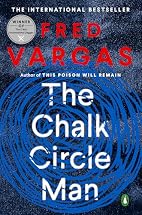
Oh, the delight of starting a new mystery series! Thanks to Florence, I was introduced to Commissaire Adamsberg, newly arrived in Paris, and confronting a series of blue chalk circles, each containing an object found on the street, sprouting up around Paris. Adamsberg is a fascinating character, as are the other characters in this novel, which I appreciate because I like character-driven mysteries. He is distracted and diffident, and says "I don't know" in answer to almost all questions, but he has a keen sense of character himself and that serves him well in solving crimes. Of course, it is only a matter of time before a dead body turns up in one of the chalk circles (and subsequently two more) -- and then everyone thinks Adamsberg was prescient because he alone among the police was interested in the chalk circles, thinking someone cruel was behind them. But did the chalk circle man murder the victims or was someone else taking advantage of the chalk circles? The novel is ingeniously plotted, but slightly marred by several coincidences. The strength of this mystery lies in the characters (one of whom says "I'm just having a little attack of metaphysics and it will pass"), and I will continue to read this series.
Oh, the delight of starting a new mystery series! Thanks to Florence, I was introduced to Commissaire Adamsberg, newly arrived in Paris, and confronting a series of blue chalk circles, each containing an object found on the street, sprouting up around Paris. Adamsberg is a fascinating character, as are the other characters in this novel, which I appreciate because I like character-driven mysteries. He is distracted and diffident, and says "I don't know" in answer to almost all questions, but he has a keen sense of character himself and that serves him well in solving crimes. Of course, it is only a matter of time before a dead body turns up in one of the chalk circles (and subsequently two more) -- and then everyone thinks Adamsberg was prescient because he alone among the police was interested in the chalk circles, thinking someone cruel was behind them. But did the chalk circle man murder the victims or was someone else taking advantage of the chalk circles? The novel is ingeniously plotted, but slightly marred by several coincidences. The strength of this mystery lies in the characters (one of whom says "I'm just having a little attack of metaphysics and it will pass"), and I will continue to read this series.
49FlorenceArt
>48 rebeccanyc: I'm so glad you like Fred Vargas! Yes, characters are definitely her strong point. I like Adamsberg, but as I said earlier I have never really forgiven him for replacing the three evangelists and their zany friends.
50NanaCC
>48 rebeccanyc:&>49 FlorenceArt: Another series for me to try! Thank you.
51baswood
>48 rebeccanyc: I have got one of Fred Vargas" books but its in in French and so it will probably remain a mystery to me even after I have read it. Think I had better stick with Maigret and Simenon.
52rebeccanyc
>49 FlorenceArt: I haven't gotten to the three evangelists yet . . .
>50 NanaCC: And I can thank you again for introducing me to Karin Fossum/
>51 baswood: Very funny.
>50 NanaCC: And I can thank you again for introducing me to Karin Fossum/
>51 baswood: Very funny.
53Oandthegang
>49 FlorenceArt: I feel the same. I read The Three Evangelists after reading a number of the Adamsberg books, really liked the characters, and wondered why she hadn't carried on with them. I then realised that they had made guest appearances in a couple of the Adamsberg books. I would have liked more of Vandoosler. I found the whole series - both Adamsberg and Evangelists - rather variable, as she seems to play with tone a lot, and some work better than others. They all need considerable suspension of disbelief. I'm not sure how concerned she is with the crimes themselves, but I love following the themes through, and as others have said, great characters. What other series would give a principle role to a cat?
54rebeccanyc
>49 FlorenceArt: >53 Oandthegang: I didn't know what you were talking about with The Three Evangelists until I clicked on the book touchstone because it doesn't show up on this series page, https://www.librarything.com/series/Chief+Inspector+Adamsberg. I guess I'll have to look for it in the bookstore/order it to see if I feel the same way.
55reva8
>40 rebeccanyc: Great review of Trollope. I'm tempted to begin these as well!
56rebeccanyc
On Saturday, I'm leaving for a week's trip in which my sweetie will be working and I will do my best to sleep and read! Here are the books I'm thinking of taking with me; not all of them will go, of course, and I may end up making substitutions.





57Caroline_McElwee
Well that lot should deprive you of some sleep Rebecca!
Have a lovely time.
Have a lovely time.
59rebeccanyc
Thanks, Caro and Charlotte
60sibylline
Looks like a lovely group of books, lots of variety.
The Vargas has gone on the WL, looks suitable for my mystery loving spouse.
The Vargas has gone on the WL, looks suitable for my mystery loving spouse.
61theaelizabet
Catching up here. Trollope is yet another gaping hole in my reading. I've always thought I should begin with his Barsetshire Chronicles (though I've watched the excellent BBC version with Alan Rickman), but the Palliser series looks interesting, too, and I managed to pick up the entire series at a used book sale.
I hope you have a terrific reading weekend!
I hope you have a terrific reading weekend!
62rebeccanyc
Thank you all. I don't know if I'll have time to post a review before I leave tomorrow, because I'm in that flurry of pre-trip busy-ness, but I finished Butcher's Crossing and I loved it (thank you, SassyLassy, for recommending it so strongly). I don't think I'll have a chance to check out all your threads before I go, but eventually I'll catch up with them when I get back.
64SassyLassy
>56 rebeccanyc: With the exception of Trollope, there seems to be some kind of undefined theme there: danger? the elements? I hadn't heard of The Blizzard but it sounds like a must.
>62 rebeccanyc: Relieved to hear your reaction to Butcher's Crossing!
>62 rebeccanyc: Relieved to hear your reaction to Butcher's Crossing!
65rebeccanyc
>63 NanaCC: Thanks, Colleen. I expect to.
>64 SassyLassy: Hmm, I hadn't thought of a theme but I see what you mean. I'm a Vladimir Sorokin fan so I snapped The Blizzard up. I loved his Ice Trilogy and admired The Queue, but was ambivalent about Day of the Oprichnik.
>64 SassyLassy: Hmm, I hadn't thought of a theme but I see what you mean. I'm a Vladimir Sorokin fan so I snapped The Blizzard up. I loved his Ice Trilogy and admired The Queue, but was ambivalent about Day of the Oprichnik.
67rebeccanyc
Project TBR: Book #1 (on TBR since 2/19/14)
4. Butcher's Crossing by John Williams

Part coming-of-age story, part a tale of an obsession, part a portrait of the beauty and horrors of the wilderness, part a how-to of all kinds of lost arts, part a paean to ingenuity, part western -- this novel is wonderful and I owe a debt to SassyLassy for her previous review of it.
It is the story of Will Andrews who heads out from Boston, inspired by Emerson to experience the west. He ends up in Butcher's Crossing, Kansas, because a man who knew his family in Boston had moved there. The man offers him a job in his buffalo skin business, but Will knows he wants to go out into he wilderness. He meets a man named Miller in the local tavern who spins him a tale of a distant valley, high in the Colorado mountains, where there are thousands of buffalo, ripe for the slaughter (there is a big business in buffalo skins), and convinces Will, who has an inheritance from an uncle, to bankroll the endeavor. Ultimately, there are three people in addition to Will on the trip: Miller, a one-handed man named Charley Hoge who is a follower of Miller, and a skinner named Schneider. They set off with oxen pulling a wagon driven by Charley Hoge, and the rest on horseback.
And so their adventures begin. They eventually reach the high valley, but not without hardships, including days without water and problems with the oxen. Once they reach it, it is everything Miller said, and they start an orgy of killing buffalo, with Schneider teaching Will how to skin them (a process that is described in detail). Miller's obsessiveness gradually becomes apparent: he wants to kill every last buffalo even though they would never be able to haul all of the skins out. Ultimately, the snow falls, and they are snowed in over the winter. How they survive is remarkable. Miraculously, the oxen and the horses survive too. But the men are changed. Schneider is even more bitter, Charley Hoge loses his mind, Miller saves them through his ingenuity but is completely obsessive, and Will grows up.
When they finally get back to Butcher's Crossing,after Schneider dies and they lose all the skins they were carrying in a river accident , everything has changed because the bottom has dropped out of the buffalo skin market . Will has changed views about Francine, a whore who he had previously spurned, and Miller is involved in a melodramatic incident. Of course, as you knew he would, Will eventually sets off for further experiences.
What makes this book so special is not just the excellent characterizations but also the vivid descriptions of everything from mountains to snow to herds of buffalo to how they are killed and skinned to survival tactics and much more. So far, this is my favorite book of the year.
4. Butcher's Crossing by John Williams

Part coming-of-age story, part a tale of an obsession, part a portrait of the beauty and horrors of the wilderness, part a how-to of all kinds of lost arts, part a paean to ingenuity, part western -- this novel is wonderful and I owe a debt to SassyLassy for her previous review of it.
It is the story of Will Andrews who heads out from Boston, inspired by Emerson to experience the west. He ends up in Butcher's Crossing, Kansas, because a man who knew his family in Boston had moved there. The man offers him a job in his buffalo skin business, but Will knows he wants to go out into he wilderness. He meets a man named Miller in the local tavern who spins him a tale of a distant valley, high in the Colorado mountains, where there are thousands of buffalo, ripe for the slaughter (there is a big business in buffalo skins), and convinces Will, who has an inheritance from an uncle, to bankroll the endeavor. Ultimately, there are three people in addition to Will on the trip: Miller, a one-handed man named Charley Hoge who is a follower of Miller, and a skinner named Schneider. They set off with oxen pulling a wagon driven by Charley Hoge, and the rest on horseback.
And so their adventures begin. They eventually reach the high valley, but not without hardships, including days without water and problems with the oxen. Once they reach it, it is everything Miller said, and they start an orgy of killing buffalo, with Schneider teaching Will how to skin them (a process that is described in detail). Miller's obsessiveness gradually becomes apparent: he wants to kill every last buffalo even though they would never be able to haul all of the skins out. Ultimately, the snow falls, and they are snowed in over the winter. How they survive is remarkable. Miraculously, the oxen and the horses survive too. But the men are changed. Schneider is even more bitter, Charley Hoge loses his mind, Miller saves them through his ingenuity but is completely obsessive, and Will grows up.
When they finally get back to Butcher's Crossing,
What makes this book so special is not just the excellent characterizations but also the vivid descriptions of everything from mountains to snow to herds of buffalo to how they are killed and skinned to survival tactics and much more. So far, this is my favorite book of the year.
68cabegley
>67 rebeccanyc: Great review, Rebecca! I have to get this one. Have a great trip!
70janeajones
Strong review, but I'm not sure I can read another book about the slaughter of buffalos.
71mabith
Butcher's Crossing is definitely going on my list. Great review.
73japaul22
>67 rebeccanyc: Is this the same John Williams who wrote Stoner? I'm hoping to finally get to that this year. Butcher's Crossing sounds excellent as well.
74Caroline_McElwee
Great review Rebecca, I'm going to have to find which pile it's in soonish.
75theaelizabet
Terrific review. I'm intrigued by the Emerson mention, but first...Stoner, which has been on my shelves longer than I care to admit.
76AlisonY
>67 rebeccanyc: looking forward to reading this some day - sounds great.
77kidzdoc
Great review of Butcher's Crossing, Rebecca.
78edwinbcn
Wonderful start of the new year, Rebecca. Butcher's Crossing will stay on my tbr a bit longer, but I enjoyed reading your review.
79Simone2
>73 japaul22: Yes he is. Stoner is even better, I think.
80rebeccanyc
Thank you all for your comments about my review of Butcher's Crossing. I will get to Stoner eventually, and I also have Williams' Augustus.
Amazingly, our flight home to LaGuardia was NOT canceled yesterday and so I'm home. I'm going to try to review the three books I read on the trip, but it will take me until later in the week before I can catch up with your threads.
Amazingly, our flight home to LaGuardia was NOT canceled yesterday and so I'm home. I'm going to try to review the three books I read on the trip, but it will take me until later in the week before I can catch up with your threads.
81rebeccanyc
5. Seeking Whom He May Devour by Fred Vargas
I'm glad I read the first in this series first, because it took a long time for Commissaire Adamsberg to show up in this mystery, and the story definitely picked up when he started actively taking part in the investigation. The mystery revolves around what or who is killing sheep in a remote mountainous region of France -- and then people too. It appears to be a large wolf. Or is it, as some suggest, a werewolf? Or is it an unpopular person who might have tamed a wolf? As in the previous mystery I read, Vargas excels at creating characters, and a dierse group of them starts investigating the unpopular man. They include Camille, Adamsberg's former girlfriend (for whom he pines) her Canadian wolf-studying boyfriend, the adopted African son of the first woman to be killed, and one of her elderly shepherds. This takes up the bulk of the book. Then, when they reach a dead end, Camille is persuaded, unwillingly, to call Adamsberg. The solution, when it comes, through Adamsberg's signature dreaminess, seems a little pulled out of thin air, but I didn't mind because of the fascinating characters.
I'm glad I read the first in this series first, because it took a long time for Commissaire Adamsberg to show up in this mystery, and the story definitely picked up when he started actively taking part in the investigation. The mystery revolves around what or who is killing sheep in a remote mountainous region of France -- and then people too. It appears to be a large wolf. Or is it, as some suggest, a werewolf? Or is it an unpopular person who might have tamed a wolf? As in the previous mystery I read, Vargas excels at creating characters, and a dierse group of them starts investigating the unpopular man. They include Camille, Adamsberg's former girlfriend (for whom he pines) her Canadian wolf-studying boyfriend, the adopted African son of the first woman to be killed, and one of her elderly shepherds. This takes up the bulk of the book. Then, when they reach a dead end, Camille is persuaded, unwillingly, to call Adamsberg. The solution, when it comes, through Adamsberg's signature dreaminess, seems a little pulled out of thin air, but I didn't mind because of the fascinating characters.
82rebeccanyc
6. The Blizzard by Vladimir Sorokin
A doctor sets off in a snowstorm, asking for fresh horses at a station, because he needs to bring a vaccine to a stricken village. Of course, there are none, and so far this seems like a classic Russian scene. But quickly, things turn weird, as only Sorokin can make them. For the stationmaster uses a telephone to call another man who might have a sled and horses. A telephone? Travel by horse? This is only the beginning of the weirdness. The other man, Zozma (known as Crouper from a childhood bout with the croup) has 50 tiny horses, the size of partridges, that fit under the hood of the sled, their hooves running the drive shaft. (it seems there are also giant horses, capable of pulling a carriage of a train or even a whole train.) The horses are almost pets for Crouper, each with its own personality, and he is reluctant to set off in a snowstorm but agrees because of the urgency -- and money -- of the doctor.
And so they set off for what should be less than a day's journey away. Calamity strikes when a runner of the sled hits a mysterious glass pyramid and cracks. Through ingenuity, and some of the doctor's supplies, they fix it, but eventually it breaks again. They must get out of the storm to fix it once more, and go to a miller's house even though Crouper has vowed to never stop there again. The miller turns out to be the size of a samovar and drinks vodka out of his wife's thimble (his wife is a normal size). The doctor lusts after the miller's wife and gives in to temptation, even thought he previously stressed the urgency of getting to the village that night, and they stay overnight and well into the next morning.
The next day it is still snowing, and they constantly lose contact with the road, and also their way. They end up lost and see a capacious tent that belongs to a group of Vitaminders. Among other activities, Vitaminders manufacture hallucinogens in geometric shapes; their newest one is in the shape of a pyramid. The doctor again yields to temptation and takes a pyramid with the Vitaminders, while Crouper and the horses wait in a newly, somewhat magically, built tent. Again, they lose time while Sorokin details the doctor's terrifying hallucination.
Later, they leave the Vitaminders with "directions" for how to get to the next village that Crouper remembers. Of course, hardships and calamities follow. It develops that there are giants as well as small people (comparable to the horses), and the sled encounters the nose of one (shades of Gogol) who has frozen by the wayside. It also develops that the illness in the village, which someone has brought from Bolivia, is that the people have become zombies; the vaccine is supposed to protect people who haven't yet been bitten. And it is further revealed, in passing, that the Stalin era was a long time ago, so this tale is set sometime in the future.
The ending of this story is somewhat ambiguous, but Sorokin has had fun parodying and honoring some classics of Russian fiction, with snowstorms and hardships and doctors.
A doctor sets off in a snowstorm, asking for fresh horses at a station, because he needs to bring a vaccine to a stricken village. Of course, there are none, and so far this seems like a classic Russian scene. But quickly, things turn weird, as only Sorokin can make them. For the stationmaster uses a telephone to call another man who might have a sled and horses. A telephone? Travel by horse? This is only the beginning of the weirdness. The other man, Zozma (known as Crouper from a childhood bout with the croup) has 50 tiny horses, the size of partridges, that fit under the hood of the sled, their hooves running the drive shaft. (it seems there are also giant horses, capable of pulling a carriage of a train or even a whole train.) The horses are almost pets for Crouper, each with its own personality, and he is reluctant to set off in a snowstorm but agrees because of the urgency -- and money -- of the doctor.
And so they set off for what should be less than a day's journey away. Calamity strikes when a runner of the sled hits a mysterious glass pyramid and cracks. Through ingenuity, and some of the doctor's supplies, they fix it, but eventually it breaks again. They must get out of the storm to fix it once more, and go to a miller's house even though Crouper has vowed to never stop there again. The miller turns out to be the size of a samovar and drinks vodka out of his wife's thimble (his wife is a normal size). The doctor lusts after the miller's wife and gives in to temptation, even thought he previously stressed the urgency of getting to the village that night, and they stay overnight and well into the next morning.
The next day it is still snowing, and they constantly lose contact with the road, and also their way. They end up lost and see a capacious tent that belongs to a group of Vitaminders. Among other activities, Vitaminders manufacture hallucinogens in geometric shapes; their newest one is in the shape of a pyramid. The doctor again yields to temptation and takes a pyramid with the Vitaminders, while Crouper and the horses wait in a newly, somewhat magically, built tent. Again, they lose time while Sorokin details the doctor's terrifying hallucination.
Later, they leave the Vitaminders with "directions" for how to get to the next village that Crouper remembers. Of course, hardships and calamities follow. It develops that there are giants as well as small people (comparable to the horses), and the sled encounters the nose of one (shades of Gogol) who has frozen by the wayside. It also develops that the illness in the village, which someone has brought from Bolivia, is that the people have become zombies; the vaccine is supposed to protect people who haven't yet been bitten. And it is further revealed, in passing, that the Stalin era was a long time ago, so this tale is set sometime in the future.
The ending of this story is somewhat ambiguous, but Sorokin has had fun parodying and honoring some classics of Russian fiction, with snowstorms and hardships and doctors.
83rebeccanyc
Project TBR: Book #2 (on TBR since 1999?)
7. Peasants and Other Stories by Anton Chekhov
This isn't my cover -- see below.
What's not to like about Chekhov? Nothing, at least as far as I'm concerned. What's not to like about this collection of Chekhov stories? A lot of irritating things, at least as far as I'm concerned, which I'll touch on later.
This, the first ever NYRB (and my edition is so early it even doesn't have their now-signature cover style!) was originally compiled by Edmund Wilson in 1956. In his introduction, he decries the fact that most collections of Chekhov mix up eras of his writing and so mix up different kinds of stories. He collects Chekhov's latest stories in this volume, noting that they were written when Chekhov was interested in exploring changes in Russian society. Each of these stories explores some aspect of society, whether it is a woman who has inherited a factory, or an aristocrat yearning to do manual labor, or the dregs of peasant society, or newly wealthy people interacting with peasants, or even the orthodox church. Of course, Chekhov bring his perceptiveness and compassion to the characters he creates.
But turning to the irritations. Nowhere is it listed who translated these stories, and maybe more than one translator did, for in several stories prices of things are given in shillings and pence (!!!), while in others they are given in rubles. And most of the stories cry out for notes identifying historical people or events -- but there are none. I guess, in 1999, NYRB hadn't gotten into its groove.
7. Peasants and Other Stories by Anton Chekhov
This isn't my cover -- see below.
What's not to like about Chekhov? Nothing, at least as far as I'm concerned. What's not to like about this collection of Chekhov stories? A lot of irritating things, at least as far as I'm concerned, which I'll touch on later.
This, the first ever NYRB (and my edition is so early it even doesn't have their now-signature cover style!) was originally compiled by Edmund Wilson in 1956. In his introduction, he decries the fact that most collections of Chekhov mix up eras of his writing and so mix up different kinds of stories. He collects Chekhov's latest stories in this volume, noting that they were written when Chekhov was interested in exploring changes in Russian society. Each of these stories explores some aspect of society, whether it is a woman who has inherited a factory, or an aristocrat yearning to do manual labor, or the dregs of peasant society, or newly wealthy people interacting with peasants, or even the orthodox church. Of course, Chekhov bring his perceptiveness and compassion to the characters he creates.
But turning to the irritations. Nowhere is it listed who translated these stories, and maybe more than one translator did, for in several stories prices of things are given in shillings and pence (!!!), while in others they are given in rubles. And most of the stories cry out for notes identifying historical people or events -- but there are none. I guess, in 1999, NYRB hadn't gotten into its groove.
84Caroline_McElwee
>81 rebeccanyc: >82 rebeccanyc: & >83 rebeccanyc: some good reading over the holidays then Rebecca. I bought the Folio Society 4 volume set of Chekhov stories a few years back, and they do wink at me.
86deebee1
The Sorokin sounds like a fun read. I'm totally with you there about Chekhov. Talking of lack of notes as an irritation -- well, it seems NYRB has not really done anything about it, not consistently anyway, and not even in recent editions. I just finished their edition of Magda Szabo's The Door, published in 2015, which cries out for notes on historical evens/people's/Greek mythology which the author loved alluding to. The omission made the reading experience less than satisfactory, in my view.
87theaelizabet
>83 rebeccanyc: No notes or explanation of translators would be irritating to be sure, yet that Edmund Wilson edition does sound enticing.
89rebeccanyc
Thanks for stopping by, everyone.
Chekhov is one of my favorite writers. In addition to this volume, I've read Stories, The Complete Short Novels, and The Prank: The Best of Young Chekhov. I still have another collection on my TBR.
Chekhov is one of my favorite writers. In addition to this volume, I've read Stories, The Complete Short Novels, and The Prank: The Best of Young Chekhov. I still have another collection on my TBR.
91rachbxl
I think I need to set up my own version of Project TBR. As I just said on my own thread, I'm sure there are lots of hidden treasures on my TBR shelves, if only I looked. But in the meanwhile, I definitely need to get me some Fred Vargas. It's a name I keep hearing, and you've convinced me.
92charl08
>83 rebeccanyc: I got Reading Chekhov for Christmas so keen to read him this year. Will avoid this edition though! I'd love some really detailed, footnoted editions (endnotes are too fiddly imho) with plenty of social context.
93rebeccanyc
>90 qebo: Thanks, Katherine.
>91 rachbxl: Good luck with your TBR project, Rachel; it's so much easier with LT!
>92 charl08: I enjoyed Reading Chekhov, but what really made me want to read him was Francine Prose's enthusiasm for him in Reading Like a Writer. I don't know any book that has footnotes anymore, Charlotte; they all seem to be endnotes. i keep a bookmark in the endnotes so I can access them easily.
>91 rachbxl: Good luck with your TBR project, Rachel; it's so much easier with LT!
>92 charl08: I enjoyed Reading Chekhov, but what really made me want to read him was Francine Prose's enthusiasm for him in Reading Like a Writer. I don't know any book that has footnotes anymore, Charlotte; they all seem to be endnotes. i keep a bookmark in the endnotes so I can access them easily.
94dchaikin
Enjoyed catching your last three reviews. How odd the Sorokin is. Very entertaining summary.
95charl08
I have come across them but suspect you are right, they are a dying breed. I am going to knock off Middlemarch from its current position as book I am most embarrassed about not having read, and then hit the Russians...
96rebeccanyc
8. Barchester Towers by Anthony Trollope
After feeling lukewarm about The Warden, I'm happy to report that I loved Barchester Towers and am totally on board with Trollope's Barsetshire series (after loving the Palliser series).
This novel brings back certain characters from the first book: Mr. Harding and his two daughters. Eleanor Bold, who got married at the end of the first novel, is now widowed with an infant child, and her much older sister, Susan, is still married to the archdeacon, Dr. Grantly, and living at Plumstead. But there is a new bishop in town, Dr. Proudie, who is anathema to the archdeacon because he holds a different view of the church's responsibilities, and who is married to a completely controlling woman, Mrs. Proudie, who is an amazing character. The chaplain to the bishop is Mr. Slope, a sleazy, lying, scheming man, who at the beginning thinks he can act as the bishop because the bishop and his wife are often in London. Then there are the Stanhopes: the father a churchman who has been living by Lake Como in Italy but is summoned home by the new bishop, the mother often ill, and three remarkable children. Charlotte runs the family, Bertie is a ne'er-do-well who is constantly in debt, and Madeline (known as the signora), a beauty, had been married to an Italian who apparently beat her so severely that she is crippled and has to be carried everywhere. This doesn't interfere with her purpose in life, which is getting men to fall in love with her and then tossing them out.
The plot revolves around much ecclesiastical scheming -- and much romantic scheming. The ecclesiastical scheming involves the wardenship of the hospital (a home for poor old men, not a hospital in our terms) featured in The Warden and the role of the dean, who falls ill in the novel and ultimately dies. It also involves a clash between the old-timers in Barchester, who seem (according to the copious notes in my Oxford World Classics edition) to be higher church than the newcomers (who seem to have an obsession with Sunday schools). Dr. Grantly enlists several outsiders to help him fight the bishop. The romantic scheming mostly involves Eleanor, who has inherited a sizable income from Mr. Bold. Mr. Slope, in his sleazy way, wants to marry her, and Charlotte encourages Bertie to make a play for her too, while inserting herself as Eleanor's new best friend. Everyone thinks Eleanor is going to marry Mr. Slope, which strikes horror into all of them, but Trollope tells us midway through the book that Eleanor won't marry either Mr. Slope or Bertie. There is another man, which this reader spotted as Eleanor's new husband early on, but Trollope takes us through so many twists and turns that I couldn't figure out how it would happen. Eventually, as I've come to realize is Trollope's habit, good triumphs and the bad fail.
Onward with the Barsetshire series!
After feeling lukewarm about The Warden, I'm happy to report that I loved Barchester Towers and am totally on board with Trollope's Barsetshire series (after loving the Palliser series).
This novel brings back certain characters from the first book: Mr. Harding and his two daughters. Eleanor Bold, who got married at the end of the first novel, is now widowed with an infant child, and her much older sister, Susan, is still married to the archdeacon, Dr. Grantly, and living at Plumstead. But there is a new bishop in town, Dr. Proudie, who is anathema to the archdeacon because he holds a different view of the church's responsibilities, and who is married to a completely controlling woman, Mrs. Proudie, who is an amazing character. The chaplain to the bishop is Mr. Slope, a sleazy, lying, scheming man, who at the beginning thinks he can act as the bishop because the bishop and his wife are often in London. Then there are the Stanhopes: the father a churchman who has been living by Lake Como in Italy but is summoned home by the new bishop, the mother often ill, and three remarkable children. Charlotte runs the family, Bertie is a ne'er-do-well who is constantly in debt, and Madeline (known as the signora), a beauty, had been married to an Italian who apparently beat her so severely that she is crippled and has to be carried everywhere. This doesn't interfere with her purpose in life, which is getting men to fall in love with her and then tossing them out.
The plot revolves around much ecclesiastical scheming -- and much romantic scheming. The ecclesiastical scheming involves the wardenship of the hospital (a home for poor old men, not a hospital in our terms) featured in The Warden and the role of the dean, who falls ill in the novel and ultimately dies. It also involves a clash between the old-timers in Barchester, who seem (according to the copious notes in my Oxford World Classics edition) to be higher church than the newcomers (who seem to have an obsession with Sunday schools). Dr. Grantly enlists several outsiders to help him fight the bishop. The romantic scheming mostly involves Eleanor, who has inherited a sizable income from Mr. Bold. Mr. Slope, in his sleazy way, wants to marry her, and Charlotte encourages Bertie to make a play for her too, while inserting herself as Eleanor's new best friend. Everyone thinks Eleanor is going to marry Mr. Slope, which strikes horror into all of them, but Trollope tells us midway through the book that Eleanor won't marry either Mr. Slope or Bertie. There is another man, which this reader spotted as Eleanor's new husband early on, but Trollope takes us through so many twists and turns that I couldn't figure out how it would happen. Eventually, as I've come to realize is Trollope's habit, good triumphs and the bad fail.
Onward with the Barsetshire series!
97RidgewayGirl
It took me some time to recover from the untimely death of John Bold, my favorite character in The Warden. And I adored Mrs. Proudie. What a fabulous character she is!
99thorold
>97 RidgewayGirl:
I sometimes wonder if it was Mrs Proudie who put the Anglican Communion off the idea of allowing women bishops for so long...
The Signora is quite something too, isn't she?
I sometimes wonder if it was Mrs Proudie who put the Anglican Communion off the idea of allowing women bishops for so long...
The Signora is quite something too, isn't she?
100rebeccanyc
I don't adore Mrs. Proudie, but she is a "fabulous character." And the signora is indeed quite something.
101dchaikin
I just got completely lost in a bunch of names, but I'm glad to know you enjoyed Barchester Towers.
103edwinbcn
With regard to the Trollope books (both Palliser and Barchester series), do you think it is essential to read them in the "correct" order? Or do you think they could be read and enjoyed as separate volumes?
104rebeccanyc
>101 dchaikin: >102 baswood: Thanks for stopping by, Dan and Barry.
>103 edwinbcn: Well, I don't think it's "essential," Edwin, but I do think it's highly desirable because the characters develop from book to book. There are several Trollopes that are stand-alone, and I read The Way We Live Now first to test the waters.
>103 edwinbcn: Well, I don't think it's "essential," Edwin, but I do think it's highly desirable because the characters develop from book to book. There are several Trollopes that are stand-alone, and I read The Way We Live Now first to test the waters.
105rebeccanyc
9. The Three Evangelists by Fred Vargas

This is a pre-Adamsberg Vargas, but it has the hallmarks of the series with Adamsberg: great characters -- and a solution to the mystery that makes sense but seems to come out of the blue. The three evangelists are young men with advanced degrees who are down on their luck and come to live in a house known in the neighborhood as "the disgrace." The uncle of one of them (a disgraced ex-cop), who also lives there, dubs them St. Mark, St. Matthew, and St. Luke, because they are named Marc, Matthias, and Lucien, Their neighbor on one side who is an opera singer who one day notices a tree in her yard that hadn't been there before -- and then disappears. The neighbor on the other side is a woman who owns and runs a restaurant. One day the niece of the opera singer turns up, with her young son, looking for her aunt who was expecting her. It turns out, of course, that the opera singer has been murdered, and the niece promptly becomes a suspect, along with her husband. The three evangelists and the uncle/ex-cop want to exonerate the niece and become involved with the investigation. Then another man is murdered. Many complications ensue, until the mystery is solved. I discovered this pre-Adamsberg mystery through Florence, who expressed her disappointment that the three evangelists didn't reappear in later mysteries. I warmed to them as the novel went on, but I am an Adamsberg fan, and while I would like to see them reappear, I am happy with Adamsberg.

This is a pre-Adamsberg Vargas, but it has the hallmarks of the series with Adamsberg: great characters -- and a solution to the mystery that makes sense but seems to come out of the blue. The three evangelists are young men with advanced degrees who are down on their luck and come to live in a house known in the neighborhood as "the disgrace." The uncle of one of them (a disgraced ex-cop), who also lives there, dubs them St. Mark, St. Matthew, and St. Luke, because they are named Marc, Matthias, and Lucien, Their neighbor on one side who is an opera singer who one day notices a tree in her yard that hadn't been there before -- and then disappears. The neighbor on the other side is a woman who owns and runs a restaurant. One day the niece of the opera singer turns up, with her young son, looking for her aunt who was expecting her. It turns out, of course, that the opera singer has been murdered, and the niece promptly becomes a suspect, along with her husband. The three evangelists and the uncle/ex-cop want to exonerate the niece and become involved with the investigation. Then another man is murdered. Many complications ensue, until the mystery is solved. I discovered this pre-Adamsberg mystery through Florence, who expressed her disappointment that the three evangelists didn't reappear in later mysteries. I warmed to them as the novel went on, but I am an Adamsberg fan, and while I would like to see them reappear, I am happy with Adamsberg.
106Trifolia
Trollope's book have been on my e-reader from the first day I bought one 7 years ago. I'm a bit daunted by series, but I keep hearing good things about the books, so maybe I'll give them a try sooner rather than later.
I've only read one Vargas-book (The Chalk Circle Man) and I rather liked it but I cannot see how I can add yet another crime-series to my ever-growing list. What a pity.
I've only read one Vargas-book (The Chalk Circle Man) and I rather liked it but I cannot see how I can add yet another crime-series to my ever-growing list. What a pity.
107edwinbcn
Thanks, Rebecca. Last year, I could not locate all copies of Trollope, while knowing I have quite many (I thought I would have almost all), but while moving last month, I discovered I miss several volumes in each series. In China, it is not so easy to just pick up what you miss.
108NanaCC
>107 edwinbcn: Edwin, do you have an e reader? I have a Complete Works of Trollope on my Kindle. It is formatted quite nicely, and I think it was free, or nearly so.
109edwinbcn
>108 NanaCC:
Yes, Colleen. I have an eReader, but I prefer reading paper books. Maybe I should consider your solution, and read the "missing" volumes on my Kindle. Thanks for the suggestion.
Yes, Colleen. I have an eReader, but I prefer reading paper books. Maybe I should consider your solution, and read the "missing" volumes on my Kindle. Thanks for the suggestion.
110Oandthegang
>105 rebeccanyc: Evangelist characters make guest appearances in Have Mercy On Us All and This Night's Foul Work. Possibly elsewhere too but as I came to this book late in my Vargas reading I might not have noticed them in books I'd read before.
111rebeccanyc
>110 Oandthegang: Good to know. Thanks, O.
112rebeccanyc
Project TBR: Book #3 (on TBR since 10/4/13)
10. The Chase by Alejo Carpentier

I'm glad I've read multiple books by Carpentier before I read this one because it's not one of my favorites, even though, according to the introduction writer, it was Sartre's favorite. It is the intense, claustrophobic, difficult to read story of a man fleeing from initially mysterious assassins. It is all of the above partly because the sections, three to ten pages long, are written without any paragraphing. The introduction writer also makes the point that Carpentier himself likened the structure of the novel to a work of music, with themes developed and intertwined.
The story begins in a concert hall in Havana where the Eroica Symphony of Beethoven is being played. At the last minute, a badly dressed man (emphatically not dressed like the other concert-goers) rushes in, throws some money at the ticket-seller (who has a minor role in the book) and hurries to his seat, where he undergoes pangs of anxiety. Gradually, the reader learns what brought him to this point, through flashbacks that are difficult to figure out. Basically, he was a student radical who was arrested and tortured; under torture, he gave up his fellow radicals and their plots, and now some anonymous radicals are out to kill him. He hides for a while in the apartment of an old black woman, who was his wet nurse, until she dies, and then enlists the help of a prostitute with whom he apparently has a relationship. Ultimately, of course, he is killed. Carpentier's writing is lush and atmospheric, creating vivid portraits of the sights, sounds, and smells of Havana in the 40s(?), including various groups of people and groups.
10. The Chase by Alejo Carpentier

I'm glad I've read multiple books by Carpentier before I read this one because it's not one of my favorites, even though, according to the introduction writer, it was Sartre's favorite. It is the intense, claustrophobic, difficult to read story of a man fleeing from initially mysterious assassins. It is all of the above partly because the sections, three to ten pages long, are written without any paragraphing. The introduction writer also makes the point that Carpentier himself likened the structure of the novel to a work of music, with themes developed and intertwined.
The story begins in a concert hall in Havana where the Eroica Symphony of Beethoven is being played. At the last minute, a badly dressed man (emphatically not dressed like the other concert-goers) rushes in, throws some money at the ticket-seller (who has a minor role in the book) and hurries to his seat, where he undergoes pangs of anxiety. Gradually, the reader learns what brought him to this point, through flashbacks that are difficult to figure out. Basically, he was a student radical who was arrested and tortured; under torture, he gave up his fellow radicals and their plots, and now some anonymous radicals are out to kill him. He hides for a while in the apartment of an old black woman, who was his wet nurse, until she dies, and then enlists the help of a prostitute with whom he apparently has a relationship. Ultimately, of course, he is killed. Carpentier's writing is lush and atmospheric, creating vivid portraits of the sights, sounds, and smells of Havana in the 40s(?), including various groups of people and groups.
113rebeccanyc
11. The Water's Edge bu Karin Fossum
This is a thoroughly creepy mystery and not one for people who can't read books about children who are killed. For a married couple (who have their own problems, which are explored in the novel and have a stunningly creepy ending), out for their Sunday walk in a woodsy area, find the body of a seven-year-old boy, and he isn't wearing his shorts. On their way into the woods, they had seen a man who acted suspiciously and got into a white car. Of course, they call the police, and when Inspector Sejer and his sidekick Jacob Skarre show up, the husband is in his element, radiating importance because he can tell the police about how they found the boy and the suspicious man. He in fact becomes obsessed with the case. Then a morbidly obese ten-year-old goes missing. Sejer and Skarre investigate, thinking the same man is involved in both cases. Fossum takes the reader inside the heads of the pedophile, the mothers of both boys, and the wife who found the first boy. Of course, eventually Sejer get his man, and in his skillful way gets him to confess to the rape and death of the first boy, but he steadfastly denies killing the second boy. What happened to him is eventually revealed and is truly ghastly. Fossum is an incredible writer, and I will go on reading this series, but this mystery truly creeped me out.
This is a thoroughly creepy mystery and not one for people who can't read books about children who are killed. For a married couple (who have their own problems, which are explored in the novel and have a stunningly creepy ending), out for their Sunday walk in a woodsy area, find the body of a seven-year-old boy, and he isn't wearing his shorts. On their way into the woods, they had seen a man who acted suspiciously and got into a white car. Of course, they call the police, and when Inspector Sejer and his sidekick Jacob Skarre show up, the husband is in his element, radiating importance because he can tell the police about how they found the boy and the suspicious man. He in fact becomes obsessed with the case. Then a morbidly obese ten-year-old goes missing. Sejer and Skarre investigate, thinking the same man is involved in both cases. Fossum takes the reader inside the heads of the pedophile, the mothers of both boys, and the wife who found the first boy. Of course, eventually Sejer get his man, and in his skillful way gets him to confess to the rape and death of the first boy, but he steadfastly denies killing the second boy. What happened to him is eventually revealed and is truly ghastly. Fossum is an incredible writer, and I will go on reading this series, but this mystery truly creeped me out.
114Trifolia
>113 rebeccanyc: Thank you for your excellent review of Fossum's book. I read the first six or seven in the series and I believe this would be my next one, but I can't remember the first one being ever so creepy. Would you say that Fossum is changing her tone?
115Caroline_McElwee
I've not read any Fossum Rebecca, though may have one somewhere, from when magazines gave away free novels once in a while!
116Linda92007
So much to catch up on here, Rebecca. As usual, visiting your thread has triggered my "couldn't wait, so I bought the e-books" habit. Your review of The Chase reminds me that I have several of Carpentier's other books waiting. My stepson's girlfriend is Cuban and I had promised her that I would let her know what I thought about them, so I should get busy!
117rebeccanyc
>114 Trifolia: I've read everything up to this one, and I can't say whether Fossum is changing her tone until I read the mysteries that follow this one. She has a gift for characterization, which is what draws me to a series.
>115 Caroline_McElwee: It was Colleen who introduced me to this series.
>116 Linda92007: What books by Carpentier do you have, Linda? I loved The Lost Steps the best, but I also enjoyed Explosion in a Cathedral, The Kingdom of This World, and The Harp and the Shadow. I still have Reasons of State on the TBR.
>115 Caroline_McElwee: It was Colleen who introduced me to this series.
>116 Linda92007: What books by Carpentier do you have, Linda? I loved The Lost Steps the best, but I also enjoyed Explosion in a Cathedral, The Kingdom of This World, and The Harp and the Shadow. I still have Reasons of State on the TBR.
118Linda92007
>117 rebeccanyc: I have The Lost Steps and Explosion in the Cathedral, both of which I bought after reading your excellent reviews.
119dchaikin
>113 rebeccanyc: I can imagine myself one day reading mysteries (blaming several in CR) but this Fossum sounds like it could be too much for me. The Carpentier (>112 rebeccanyc:) sounds interesting, if difficult.
121labfs39
Finally, I had a bit of time and got caught up on your 2016 thread, Rebecca. Sorry I've been AWOL.
>96 rebeccanyc: I loved Barchester Towers when I read it in college. I should read the series. Someday...
>93 rebeccanyc: Speaking of endnotes and multiple bookmarks, my daughter found my copy of Sakhalin Island by Chekhov and asked why it looked like a hedgehog. I explained about the difficulty of endnotes vs footnotes.
>82 rebeccanyc: I didn't realize Sorokin had come out with a new book. I don't know that I've recovered from the Ice Trilogy yet. Is The Blizzard as depressingly bleak?
>112 rebeccanyc: Hmm, The Chase sounds interesting actually. But I am trying desperately not to add to the tottering TBR. I am trying, like so many others, to read the ones I already own!
I just finished Darkness at Noon. AMAZING. I don't see your name listed as having this in your library, but I can't imagine that you haven't read it. Probably pre-LT. Anyway, I thought of you as I was reading it, and here I am. I'll try not to fall behind again...
>96 rebeccanyc: I loved Barchester Towers when I read it in college. I should read the series. Someday...
>93 rebeccanyc: Speaking of endnotes and multiple bookmarks, my daughter found my copy of Sakhalin Island by Chekhov and asked why it looked like a hedgehog. I explained about the difficulty of endnotes vs footnotes.
>82 rebeccanyc: I didn't realize Sorokin had come out with a new book. I don't know that I've recovered from the Ice Trilogy yet. Is The Blizzard as depressingly bleak?
>112 rebeccanyc: Hmm, The Chase sounds interesting actually. But I am trying desperately not to add to the tottering TBR. I am trying, like so many others, to read the ones I already own!
I just finished Darkness at Noon. AMAZING. I don't see your name listed as having this in your library, but I can't imagine that you haven't read it. Probably pre-LT. Anyway, I thought of you as I was reading it, and here I am. I'll try not to fall behind again...
122rebeccanyc
>119 dchaikin: >120 NanaCC: Thanks for stopping by, Dan & Colleen. (We mystery lovers will get you yet, Dan!)
>121 labfs39: Welcome, Lisa! Anytime you have time to visit is fine. The Blizzard is MUCH shorter than Ice Trilogy and not so depressing. It's actually funny in parts. As for The Chase, I loved other books by Carpentier much more. And I've never read Darkness at Noon, amazingly.
>121 labfs39: Welcome, Lisa! Anytime you have time to visit is fine. The Blizzard is MUCH shorter than Ice Trilogy and not so depressing. It's actually funny in parts. As for The Chase, I loved other books by Carpentier much more. And I've never read Darkness at Noon, amazingly.
123labfs39
>122 rebeccanyc: Hmm, maybe I'll add The Blizzard to the list then. I find it interesting that you are reading Gogol now. It seems like a dissertation germ might be buried in the comparison.
Get thee to a bookstore and purchase Darkness at Noon, my friend. It was a fascinating look at the psychology of an Old Guard Party member coming face to face with his role in what the Revolution had become. I thought it very well done. It's making an interesting companion read to House of Twenty Thousand Books, which I had put aside, but am now engrossed in again because of having read Darkness at Noon.
Get thee to a bookstore and purchase Darkness at Noon, my friend. It was a fascinating look at the psychology of an Old Guard Party member coming face to face with his role in what the Revolution had become. I thought it very well done. It's making an interesting companion read to House of Twenty Thousand Books, which I had put aside, but am now engrossed in again because of having read Darkness at Noon.
124rebeccanyc
>123 labfs39: Gogol is for my Project TBR. I'm glad I read Russian Magic Tales from Pushkin to Platonov first because the earlier stories are full of witches and sorcerers and devils.
As far as Darkness at Noon, yes ma'am!
As far as Darkness at Noon, yes ma'am!
125SassyLassy
Darkness at Noon would be on my all time top ten and would probably find a spot on any reading list I could ever devise, with the exception of books for children.
126Caroline_McElwee
Another fan of Darkness at Noon, though I suspect the last time I read it was in the 80s! I can see it on the shelf, maybe it will get a reread this year, now it has been mentioned.
127charl08
All this Russian fiction discussion is so tempting. Good job they're on the TBR list already.
129rebeccanyc
>125 SassyLassy: >126 Caroline_McElwee: Well, it seems like Darkness at Noon is in my future!
>127 charl08: I love Russian fiction!
>128 sibylline: That's why I included the warning, Lucy.
>127 charl08: I love Russian fiction!
>128 sibylline: That's why I included the warning, Lucy.
130rebeccanyc
Project TBR: Book #4 (on TBR since 8/25/13)
12. Massacre River by René Philoctète
Darryl's (kidzdoc) stunning review of this novel led me to buy it, and there is little I can add to his review which appears on the book page, so I'll just give a few of my impressions of it.
Mainly what struck me is the combination of poetic language with horrific atrocity. In 1937, the dictator of the Dominican Republic, Trujillo, set his soldiers to massacre the Haitians living in the country, especially those along the long border (Haiti is the smaller, western part of Hispaniola; the DR is the larger, eastern section). (Haiti is also much poorer than the Dominican Republic, so Haitians go there in search of largely menial work, then as now.) Trujillo was largely motivated by racism, given his belief that Haitians are blacker than Dominicans) and he was obsessed, as Philoctète describes, with a passion for whiteness. The story focuses on a husband and wife, he a Dominican, she a Haitian, living in a Dominican border town, and the reader learns of their meeting and falling in love and their continuing (and erotic) love for each other.
The story opens with a mysterious black bird of prey continuously circling over the border town, as rumors of the massacre to come also circulate. Pedro, the husband, sets off early in the morning for his job in a sugar factory, but is disturbed by the soldiers he sees along the way and takes a bus/taxi (with a mind of its own, literally) seemingly on an endless journey home. (Magical realism plays a big role in this novel.) Radio broadcasts on the bus detail the number of Haitians killed in various towns -- they are killed by machetes cutting their heads off. What Pedro finds when he finally gets back is that the heads have lives of their own, including that of his wife, Adèle, and are going around the border town talking and trying to reunite with their bodies. Another aspect of this novel is that soldiers test whether someone is Haitian or Dominican by having them try to say the Spanish word for parsley, perejil, which Haitians mangle; the book is filled with Dominicans trying to teach Haitians how to say the word correctly because the people in the border area get along with each other. In fact, Philoctète called his novel Le peuple des terres mêlées or "The people of the mixed lands;" in her note on the translation, the translator explains that she felt the title worked in French but not in English and she called the book after the river that partly separates Haiti from the Dominican Republic.
What I will remember most from this novel is Philoctète's poetic language and his love of listing things, as if the sheer reality of trees, market goods, or people could overcome the horror.
12. Massacre River by René Philoctète
Darryl's (kidzdoc) stunning review of this novel led me to buy it, and there is little I can add to his review which appears on the book page, so I'll just give a few of my impressions of it.
Mainly what struck me is the combination of poetic language with horrific atrocity. In 1937, the dictator of the Dominican Republic, Trujillo, set his soldiers to massacre the Haitians living in the country, especially those along the long border (Haiti is the smaller, western part of Hispaniola; the DR is the larger, eastern section). (Haiti is also much poorer than the Dominican Republic, so Haitians go there in search of largely menial work, then as now.) Trujillo was largely motivated by racism, given his belief that Haitians are blacker than Dominicans) and he was obsessed, as Philoctète describes, with a passion for whiteness. The story focuses on a husband and wife, he a Dominican, she a Haitian, living in a Dominican border town, and the reader learns of their meeting and falling in love and their continuing (and erotic) love for each other.
The story opens with a mysterious black bird of prey continuously circling over the border town, as rumors of the massacre to come also circulate. Pedro, the husband, sets off early in the morning for his job in a sugar factory, but is disturbed by the soldiers he sees along the way and takes a bus/taxi (with a mind of its own, literally) seemingly on an endless journey home. (Magical realism plays a big role in this novel.) Radio broadcasts on the bus detail the number of Haitians killed in various towns -- they are killed by machetes cutting their heads off. What Pedro finds when he finally gets back is that the heads have lives of their own, including that of his wife, Adèle, and are going around the border town talking and trying to reunite with their bodies. Another aspect of this novel is that soldiers test whether someone is Haitian or Dominican by having them try to say the Spanish word for parsley, perejil, which Haitians mangle; the book is filled with Dominicans trying to teach Haitians how to say the word correctly because the people in the border area get along with each other. In fact, Philoctète called his novel Le peuple des terres mêlées or "The people of the mixed lands;" in her note on the translation, the translator explains that she felt the title worked in French but not in English and she called the book after the river that partly separates Haiti from the Dominican Republic.
What I will remember most from this novel is Philoctète's poetic language and his love of listing things, as if the sheer reality of trees, market goods, or people could overcome the horror.
131janeajones
Catching up on your thread, Rebecca, and as always, enjoying your reviews.
132rebeccanyc
Thanks, Jane.
133dchaikin
>130 rebeccanyc: I remember this story line, could I remember Darryl's review from 2013? Anyway, sounds like quite an experience.
134charl08
>130 rebeccanyc: Wow, sounds like quite a read. I have asked the library for another book set in Haiti Dancing in the baron's shadow after a mention in a list posted to Darryl's thread.
135rebeccanyc
>133 dchaikin: >134 charl08: It was quite a novel, but redeemed by the poetic writing. I have since learned that the author was also a poet, which explains a lot. I'll be interested in your thoughts on the other book, Charlotte.
136mabith
Definitely putting Massacre River on my list.
137detailmuse
Pleasure to catch up on your reviews Rebecca. And >125 SassyLassy: puts Darkness at Noon on my wishlist, I'm familiar with Koestler from wanting to read his The Act of Creation and The Roots of Coincidence.
>83 rebeccanyc: most collections of Chekhov mix up eras of his writing and so mix up different kinds of stories
Interesting. Kudos to Wilson for doing it differently, disappointing it didn't work for other reasons.
>83 rebeccanyc: most collections of Chekhov mix up eras of his writing and so mix up different kinds of stories
Interesting. Kudos to Wilson for doing it differently, disappointing it didn't work for other reasons.
138kidzdoc
Great review of Massacre River, Rebecca. It was a remarkable and unforgettable book, and it sounds as though you enjoyed it as much as I did.
139rebeccanyc
As I said in my review, Darryl, it was your review that made me buy it and the Caribbean theme for Reading Globally that made me take it off the TBR. It was indeed a remarkable book.
140rebeccanyc
13. Have Mercy on Us All by Fred Vargas

Someone is sending mysterious messages to a man who has revived the practice of town crier, messages that seem, under investigation by a local who runs a sort of boarding house, to be foretelling the coming of the plague. Simultaneously, someone is painting reverse 4s with two crosses on the end (see the cover of the book) on doors. Commissioner Adamsberg, who now is running a murder squad, is disturbed when a woman comes in to tell him about these door paintings. He is disturbed enough to contact a medievalist who turns out to be none other than Vandoosler, one of the three evangelists from the book of that title; he tells Adamsberg that this was an ancient custom designed to thwart the plague. But one door in all the apartment buildings is left unpainted, and soon people in them start turning up dead. They have been strangled, but daubed with black markings meant to simulate the Black Death -- although it turns out that people didn't turn black with the plague. They also had ivory envelopes slit open containing rat fleas slipped under their doors (but the rat fleas turn out to be healthy, not plague carriers). This is just the start of a convoluted story that once again has unforgettable characters and that turns out to be a story of family traditions run amok, and families sticking together and wreaking vengeance on each other. At the end, I couldn't put this book down.

Someone is sending mysterious messages to a man who has revived the practice of town crier, messages that seem, under investigation by a local who runs a sort of boarding house, to be foretelling the coming of the plague. Simultaneously, someone is painting reverse 4s with two crosses on the end (see the cover of the book) on doors. Commissioner Adamsberg, who now is running a murder squad, is disturbed when a woman comes in to tell him about these door paintings. He is disturbed enough to contact a medievalist who turns out to be none other than Vandoosler, one of the three evangelists from the book of that title; he tells Adamsberg that this was an ancient custom designed to thwart the plague. But one door in all the apartment buildings is left unpainted, and soon people in them start turning up dead. They have been strangled, but daubed with black markings meant to simulate the Black Death -- although it turns out that people didn't turn black with the plague. They also had ivory envelopes slit open containing rat fleas slipped under their doors (but the rat fleas turn out to be healthy, not plague carriers). This is just the start of a convoluted story that once again has unforgettable characters and that turns out to be a story of family traditions run amok, and families sticking together and wreaking vengeance on each other. At the end, I couldn't put this book down.
141rebeccanyc
Project TBR: Book #5 (on TBR since 10/10/08)
14. The Collected Tales of Nikolai Gogol by Nikolai Gogol
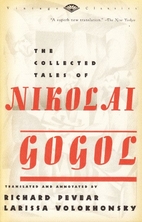
I really loved Dead Souls so I took this book off the TBR with a great deal of anticipation. And a suitably odd collection it is, suitable for Gogol that is to say. Divided into "Ukrainian Tales" and "Petersburg Tales," it of course includes his most famous stories (which I'd read before): "The Nose" and "The Overcoat". Beyond that, supernaturalism vies with surrealism, humor with tragedy, horror with love. I'm glad I read Russian Magical Tales from Pushkin to Platonov first because it introduced me to some of the witches and devils that inhabit Russian folklore -- and that Gogol does with what he will.
Some of the tales collected here are really creepy; "The Terrible Vengeance," "Viy," and "The Portrait" spring to mind, but others have elements of creepiness too. Some are humorous, such as "The Story of How Ivan Ivanovich Quarreled with Ivan Nikoforich" and "The Carriage." In the Petersburg stories especially, Gogol satirizes the rankings of clerks and skewers the pretensions of the general class consciousness of Petersburg society.
I read this book over several weeks, so what stands out in mind is a story I read last night, "The Portrait," which as I noted above is very creepy. It tells the tale of a struggling artist who buys (very cheaply) a portrait of a dark man clothed in Asian robes with piercing eyes that seem to follow him everywhere. Later, after a supernatural event, he acquires a bag of gold coins. This, as would seem obvious, changes his life. He squanders his talent and becomes a society portrait painter, gaining ever more wealth. Later, upon viewing the work of a painter who followed the true path of an artist, he questions his decision but finds he can no longer paint the way he used to. He goes mad and dies. In the second part, the true story of the portrait of the man with the piercing eyes comes out. He was a moneylender whose loans to people ended in madness or tragedy for them (and here a tad of antisemitism comes in, because a throwaway line reveals he was Jewish). His portrait was painted by a religious artist in search of a model for the devil. What happens to the artist, and subsequently to all who owned the painting, is horrifying.
But I enjoyed all the stories in this collection.
14. The Collected Tales of Nikolai Gogol by Nikolai Gogol
I really loved Dead Souls so I took this book off the TBR with a great deal of anticipation. And a suitably odd collection it is, suitable for Gogol that is to say. Divided into "Ukrainian Tales" and "Petersburg Tales," it of course includes his most famous stories (which I'd read before): "The Nose" and "The Overcoat". Beyond that, supernaturalism vies with surrealism, humor with tragedy, horror with love. I'm glad I read Russian Magical Tales from Pushkin to Platonov first because it introduced me to some of the witches and devils that inhabit Russian folklore -- and that Gogol does with what he will.
Some of the tales collected here are really creepy; "The Terrible Vengeance," "Viy," and "The Portrait" spring to mind, but others have elements of creepiness too. Some are humorous, such as "The Story of How Ivan Ivanovich Quarreled with Ivan Nikoforich" and "The Carriage." In the Petersburg stories especially, Gogol satirizes the rankings of clerks and skewers the pretensions of the general class consciousness of Petersburg society.
I read this book over several weeks, so what stands out in mind is a story I read last night, "The Portrait," which as I noted above is very creepy. It tells the tale of a struggling artist who buys (very cheaply) a portrait of a dark man clothed in Asian robes with piercing eyes that seem to follow him everywhere. Later, after a supernatural event, he acquires a bag of gold coins. This, as would seem obvious, changes his life. He squanders his talent and becomes a society portrait painter, gaining ever more wealth. Later, upon viewing the work of a painter who followed the true path of an artist, he questions his decision but finds he can no longer paint the way he used to. He goes mad and dies. In the second part, the true story of the portrait of the man with the piercing eyes comes out. He was a moneylender whose loans to people ended in madness or tragedy for them (and here a tad of antisemitism comes in, because a throwaway line reveals he was Jewish). His portrait was painted by a religious artist in search of a model for the devil. What happens to the artist, and subsequently to all who owned the painting, is horrifying.
But I enjoyed all the stories in this collection.
142ELiz_M
>141 rebeccanyc: I am so glad you read this book slowly and enjoyed it! I, too, thought "The Portrait" was the best, most haunting story in the collection.
143SassyLassy
>141 rebeccanyc: That sounds as if it has a Robert Louis Stevenson feel to it (The Portrait that is). Gogol is on my list for this year. I can't believe I have never read him other than in anthologies.
145charl08
>141 rebeccanyc: Great comments on the short stories. I picked up a Chekhov collection for my birthday book haul so looking forward to getting to that.
146Oandthegang
>140 rebeccanyc: Have you noticed biblical references scattered through the Vargas books? I don't think she is trying to get any religious message across, but it seemed to me that she was having fun with little references, almost like clues, turning up from time to time.
147rebeccanyc
>146 Oandthegang: I'm not that familiar with the bible, but of course I noticed the three evangelists. But more I couldn't say. I'll be on the lookout for them as I read more, but they may go right by me.
148Oandthegang
In my review of The Three Evangelists I made reference to some of the ones I noticed. There are little touches like the fact that Armand Vandoosler is the godfather of Marc and lives in the attic from where he looks down, observing and occasionally guiding, Adamsberg is called Jean-Baptiste and in one book makes reference to the fact that his surname refers to the first man, Armand Vandoosler's reference to the impossibility of dividing a five franc piece into twelve (the twelve apostles). If Adamsberg is John The Baptist the fourth evangelist should be out there somewhere. If not, why not? (etc.). As I didn't read The Three Evangelists til after I'd read a lot of the others I wasn't looking out for these things in my first reading.
I'm going to have to buy the wretched series again to track this stuff....
You'll encounter Matthias again in This Night's Foul Work.
I'm going to have to buy the wretched series again to track this stuff....
You'll encounter Matthias again in This Night's Foul Work.
149baswood
Enjoyed your review of the Gogol Tales The collected Tales of Nikolai Gogol. Are the tales short story length?
150rebeccanyc
>148 Oandthegang: Thanks, O. I'll look for other references as I read further . . .
>149 baswood: Some are short story length and some are a little longer than what I would think of as standard short story length.
>149 baswood: Some are short story length and some are a little longer than what I would think of as standard short story length.
151charl08
I finally finished Janet Malcolm's Reading Chekhov (not that it was long, just that I got distracted by other shiny books). Just a fascinating read, and I'll be reading a collection of Chekhov's short stories next. Thanks for the recommendation.
152rebeccanyc
>151 charl08: I'm a Malcolm fan so I am glad you enjoyed Reading Chekhov. Francine Prose, in Reading Like a Writer, is also a huge Chekhov fan and really got me started reading Chekhov, who is now one of my favorite writers.
153charl08
I've just added her to my favourites list. I had a look at the library and they have a copy of her book about Plath biographies, so I've put a request in for that.
154rebeccanyc
Project TBR: Book#6 (on TBR since 2004 and 8/29/14 -- because I forgot I had the book and bought it again)
15. Augustus by John Williams


This book is completely unlike the previous book by Williams I read, Butcher's Crossing, but equally compelling. It tells, fictionally, the tale of Octavius, later Augustus, from the time of the murder of Julius Caesar to his death, some 50 years later. As Williams says in his Author's Note, "But if there are truths in this work, they are the truths of fiction rather than of history. I shall be grateful to readers who will take it as it is intended -- as a work of the imagination." This is an epistolary work, with letters and reports and excerpts from histories and memoirs. Some of the writers are well known (Cicero, Livy, Maecenas, Ovid, Cleopatra, Mark Antony) and some unfamiliar, at least to me. One of the most interesting characters (who I didn't know) was Nicolaus of Damascus, a Jew who once tutored the children of Cleopatra and became an intimate of Herod and Octavius.
The first part is filled with plots and counterplots and military expeditions as it details how Octavius achieved power and became the first emperor of Rome. The second part also includes some military activities and plots, but it is anchored by the diary of Julia, Octavius's only child, in exile on an island, an exile her father sent her to. Eventually the reader learns why Octavius sent his beloved daughter into exile. Julia is an fascinating character; her father chose all three husbands for her, and she takes lovers, multiple lovers, with the third husband who is her step-brother and who she hates. Ultimately, a dangerous plot materializes.
In the third part, we hear from Augustus himself, nearing death, looking back in a letter to Nicolaus of Damascus. He waxes philosophical.
"The young man, who does not know the future, sees life as a kind of epic adventure, and Odyssey through strange seas and unknown islands, where he will test and prove his powers, and thereby discover his immortality. The man of middle years, who has lived the future he once dreamed, sees life as a tragedy; for he has learned that his power, however great, will not prevail against those forces of accident and nature to which he gives the names of gods, and has learned that he is mortal. But the man of age, if he plays his assigned role properly, must see life as a comedy. For his triumphs and his failures merge, and one is no more the occasion for pride or shame than the other; and he is neither the hero who proves himself against these force, nor the protagonist who is destroyed by them. Like any poor, pitiable shell of an actor, he comes to see that he has played so many parts that he is no longer himself." pp. 274-275
This book tells an exciting story, with insights into the nature of power and family and the choices power and family create for people. It is, in the end, even with all the action, a philosophical novel.
15. Augustus by John Williams


This book is completely unlike the previous book by Williams I read, Butcher's Crossing, but equally compelling. It tells, fictionally, the tale of Octavius, later Augustus, from the time of the murder of Julius Caesar to his death, some 50 years later. As Williams says in his Author's Note, "But if there are truths in this work, they are the truths of fiction rather than of history. I shall be grateful to readers who will take it as it is intended -- as a work of the imagination." This is an epistolary work, with letters and reports and excerpts from histories and memoirs. Some of the writers are well known (Cicero, Livy, Maecenas, Ovid, Cleopatra, Mark Antony) and some unfamiliar, at least to me. One of the most interesting characters (who I didn't know) was Nicolaus of Damascus, a Jew who once tutored the children of Cleopatra and became an intimate of Herod and Octavius.
The first part is filled with plots and counterplots and military expeditions as it details how Octavius achieved power and became the first emperor of Rome. The second part also includes some military activities and plots, but it is anchored by the diary of Julia, Octavius's only child, in exile on an island, an exile her father sent her to. Eventually the reader learns why Octavius sent his beloved daughter into exile. Julia is an fascinating character; her father chose all three husbands for her, and she takes lovers, multiple lovers, with the third husband who is her step-brother and who she hates. Ultimately, a dangerous plot materializes.
In the third part, we hear from Augustus himself, nearing death, looking back in a letter to Nicolaus of Damascus. He waxes philosophical.
"The young man, who does not know the future, sees life as a kind of epic adventure, and Odyssey through strange seas and unknown islands, where he will test and prove his powers, and thereby discover his immortality. The man of middle years, who has lived the future he once dreamed, sees life as a tragedy; for he has learned that his power, however great, will not prevail against those forces of accident and nature to which he gives the names of gods, and has learned that he is mortal. But the man of age, if he plays his assigned role properly, must see life as a comedy. For his triumphs and his failures merge, and one is no more the occasion for pride or shame than the other; and he is neither the hero who proves himself against these force, nor the protagonist who is destroyed by them. Like any poor, pitiable shell of an actor, he comes to see that he has played so many parts that he is no longer himself." pp. 274-275
This book tells an exciting story, with insights into the nature of power and family and the choices power and family create for people. It is, in the end, even with all the action, a philosophical novel.
155SassyLassy
>154 rebeccanyc: ...because I forgot I had the book and bought it again I've done that more than once. I forgive myself when the covers are as dramatically different as the two you are showing.
You confirm what I had been wondering about Augustus, which I have held off reading, possibly because it would be the end of his novels for me, possibly because of the period with which it deals, probably a combination of the two. I liked Stoner and Butcher's Crossing so much that I didn't want to be disappointed. You offer some encouragement.
You confirm what I had been wondering about Augustus, which I have held off reading, possibly because it would be the end of his novels for me, possibly because of the period with which it deals, probably a combination of the two. I liked Stoner and Butcher's Crossing so much that I didn't want to be disappointed. You offer some encouragement.
158baswood
I think I would prefer Augustus to Butchers Crossing. Enjoyed your reviews of both novels.
159charl08
>154 rebeccanyc: Fascinating review. I'd not heard of this at all.
I keep buying multiple copies of books I think I ought to read. Not good!
I keep buying multiple copies of books I think I ought to read. Not good!
160rebeccanyc
>158 baswood: I think you would too. Thank you.
>159 charl08: I do it less because of LT, but I had no recollection that I had another copy of Augustus when I saw the NYRB edition in the bookstore and so didn't check.
>159 charl08: I do it less because of LT, but I had no recollection that I had another copy of Augustus when I saw the NYRB edition in the bookstore and so didn't check.
161sibylline
I'm somewhat relieved to find what good company I am in for duplicate book buying. I am doing much much better since LT!
162dchaikin
Catching up Rebecca. Really enjoyed your review of Augustus. Love the quote. And it was nice to get your review of that Gogol collection. I have the exact book lying around somewhere.
163rebeccanyc
16. Bad Intentions by Karin Fossum
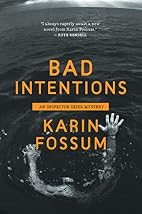
I couldn't put this book down even thought my adored Inspector Sejer plays an exceedingly minimal part in and even though Fossum broadly hints at what happened (although withholding the details until the end). Two friends in their early 20s sign a third friend out of a mental hospital for the weekend and head to a cabin by a lake. Something goes very wrong and the mentally unstable friend drowns. One of the remaining friends is a charismatic control freak and the other is always high or yearning to get high. The hint is that something happened some months ago when a younger man went missing and this is what sent the friend to the mental hospital and drove the other friend to getting high. What makes this book un-put-downable is, as always, Fossum's brilliant characterizations. I'm going on to the next one, which is the last that has been translated into English.
I couldn't put this book down even thought my adored Inspector Sejer plays an exceedingly minimal part in and even though Fossum broadly hints at what happened (although withholding the details until the end). Two friends in their early 20s sign a third friend out of a mental hospital for the weekend and head to a cabin by a lake. Something goes very wrong and the mentally unstable friend drowns. One of the remaining friends is a charismatic control freak and the other is always high or yearning to get high. The hint is that something happened some months ago when a younger man went missing and this is what sent the friend to the mental hospital and drove the other friend to getting high. What makes this book un-put-downable is, as always, Fossum's brilliant characterizations. I'm going on to the next one, which is the last that has been translated into English.
164NanaCC
>163 rebeccanyc: That was another good one, Rebecca, although I think they all were. I was so sad when I read all of the translated books. I still need to go back and read the first one, which wasn't translated when I read them several years ago.
ETA: I went looking to be sure I had the first book on my wishlist, and noticed that the book you will be reading is one that wasn't available when I read them. I'll try to get to both of them later this year. :)
ETA: I went looking to be sure I had the first book on my wishlist, and noticed that the book you will be reading is one that wasn't available when I read them. I'll try to get to both of them later this year. :)
165rebeccanyc
>162 dchaikin: Thanks, Dan.
>164 NanaCC: Glad I could help, Colleen, and thanks again for introducing me to this series. So far The Caller is up to the rest.
>164 NanaCC: Glad I could help, Colleen, and thanks again for introducing me to this series. So far The Caller is up to the rest.
166rebeccanyc
17. The Caller by Karin Fossum
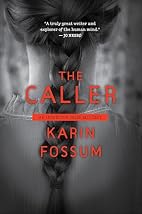
Well, this is my last Inspector Sejer mystery and as compelling and as psychologically astute as all the others. In this novel, the reader knows who is playing horrifying "pranks" (covering a baby in ox blood, calling for a hearse for a wheelchair-bound man, placing an obituary for a very much alive 70-year-old woman, etc.) early in the novel. He is an angry, intelligent, devious 17-year-old whose mother is routinely drunk and whose grandfather is the only person he cares for. Damaged goods. Sejer and Skarre suspect these "pranks" are all committed by the same person, but will they find him? They have clues, but not enough until certain terrible things happen, things not for the faint-hearted or people who don't like children being killed as a boy is torn apart by dogs that have been let out of their kennel . Ultimately, the teenager is found when his grandfather dies horrifically, indirectly as a result of something the teenager planned for his hated mother . This does not end well; in fact the very end is ambiguous.
Well, this is my last Inspector Sejer mystery and as compelling and as psychologically astute as all the others. In this novel, the reader knows who is playing horrifying "pranks" (covering a baby in ox blood, calling for a hearse for a wheelchair-bound man, placing an obituary for a very much alive 70-year-old woman, etc.) early in the novel. He is an angry, intelligent, devious 17-year-old whose mother is routinely drunk and whose grandfather is the only person he cares for. Damaged goods. Sejer and Skarre suspect these "pranks" are all committed by the same person, but will they find him? They have clues, but not enough until certain terrible things happen, things not for the faint-hearted or people who don't like children being killed
167SassyLassy
It's always a let down to come to the end of a series. You remind me it is time to pick it up again. Do you know yet who your next mystery (loose term) writer will be?
168charl08
>166 rebeccanyc: I can't cope with this series, although your comments make for the usual good reading. I have splurged on a couple of kindle Maigrets, newly translated for Penguin. They were 99p and I couldn't resist. Much more sedate than Sejer's adventures.
169rebeccanyc
>167 SassyLassy: I know. But I've already started the Fred Vargas Adamsberg and Three Evangelists series.
>168 charl08: Thanks, and I know they're not for everyone.
>168 charl08: Thanks, and I know they're not for everyone.
170NanaCC
FictFact (the site that helps keep track of series) sent an email yesterday, saying that Fossum's newest in the series is called Hell Fire. I'm so glad I have a couple more to read.
171rebeccanyc
Thanks, Colleen. Amazon tells me it will be released on August 30.
172rebeccanyc
18. Doctor Thorne by Anthony Trollope

This Barsetshire novel doesn't involve any of Trollope's previous novels but it does take place in Barsetshire and introduces a variety of interesting characters. Essentially, it is a tale of love, of class, and of family conflicts.
There is Dr. Thorne himself, a country doctor who has adopted his niece Mary. Mary has a sordid history, which Dr. Thorne keeps hidden. Long ago, his brother conceived a child out of wedlock and was killed by the woman's brother, Roger Scatcherd. That was Mary, and Dr. Thorne kept her out his town until she was 10, and then brought her to his house, having told Roger that she had died as an infant. At the time of the story, Mary is a young woman and Frank Gresham, the son of the most important family in the area, has fallen in love with her, much to the dismay of his mother, who is a DeCourcy (a noble family), and his father, who has mortgaged much of his land and indeed sold some, as they feel Frank needs to marry money. Roger Scatcherd, when he got out of jail for killing Dr. Thorne's brother, got into railroad construction and was so successful (making tons of money) that he, despite his low origins, was made a baronet, so he is now Sir Roger -- and a drunkard.
The stage is set for conflict! Dr. Thorne seems to have forgiven Sir Roger for killing his brother, for he is his doctor and "friend," constantly trying to get him to give up drinking, which is on the road to killing him. In fact, Sir Roger makes him the executor of his will and trustee for his son, Louis, until he is 25 (he is 22 or so) who will inherit all his money and property -- eventually. If Louis, who is also a drunkard without the strong constitution of Roger, dies before he is 25, the money will go to his sister's oldest child who, unbeknownst to Roger, is Mary. Dr. Thorne begs him to specify the name of the oldest child, but Roger refuses. At that point the reader knows what is going to happen. Eventually, as Roger is dying, Dr. Thorne tells him that Mary is alive and the oldest child, but Roger only adds a codicil stating that the only person who knows the sister's oldest child is Dr. Thorne.
While all this, and more is happening, the romance between Frank and Mary is heating up and they become engaged, much to the horror of his mother, who is disturbed by Mary's ambiguous birth and rank compared to hers, as a De Courcy, and the family of Gresham, as well as by her lack of money. Frank is encouraged to fall in love with a woman with money, despite the fact that her father was a successful merchant, and the oldest daughter is engaged to a man with money, who ultimately throws her over. Many many complications ensue.
This was a delightful book, made more entertaining by some of the names Trollope gives to people, including a law firm of Slow and Bideawhile! As always, Trollope has deep insight into character and tells a compelling tale. I missed some of the characters from the earlier novels, but I hope some of the characters from this novel will appear in future novels.

This Barsetshire novel doesn't involve any of Trollope's previous novels but it does take place in Barsetshire and introduces a variety of interesting characters. Essentially, it is a tale of love, of class, and of family conflicts.
There is Dr. Thorne himself, a country doctor who has adopted his niece Mary. Mary has a sordid history, which Dr. Thorne keeps hidden. Long ago, his brother conceived a child out of wedlock and was killed by the woman's brother, Roger Scatcherd. That was Mary, and Dr. Thorne kept her out his town until she was 10, and then brought her to his house, having told Roger that she had died as an infant. At the time of the story, Mary is a young woman and Frank Gresham, the son of the most important family in the area, has fallen in love with her, much to the dismay of his mother, who is a DeCourcy (a noble family), and his father, who has mortgaged much of his land and indeed sold some, as they feel Frank needs to marry money. Roger Scatcherd, when he got out of jail for killing Dr. Thorne's brother, got into railroad construction and was so successful (making tons of money) that he, despite his low origins, was made a baronet, so he is now Sir Roger -- and a drunkard.
The stage is set for conflict! Dr. Thorne seems to have forgiven Sir Roger for killing his brother, for he is his doctor and "friend," constantly trying to get him to give up drinking, which is on the road to killing him. In fact, Sir Roger makes him the executor of his will and trustee for his son, Louis, until he is 25 (he is 22 or so) who will inherit all his money and property -- eventually. If Louis, who is also a drunkard without the strong constitution of Roger, dies before he is 25, the money will go to his sister's oldest child who, unbeknownst to Roger, is Mary. Dr. Thorne begs him to specify the name of the oldest child, but Roger refuses. At that point the reader knows what is going to happen. Eventually, as Roger is dying, Dr. Thorne tells him that Mary is alive and the oldest child, but Roger only adds a codicil stating that the only person who knows the sister's oldest child is Dr. Thorne.
While all this, and more is happening, the romance between Frank and Mary is heating up and they become engaged, much to the horror of his mother, who is disturbed by Mary's ambiguous birth and rank compared to hers, as a De Courcy, and the family of Gresham, as well as by her lack of money. Frank is encouraged to fall in love with a woman with money, despite the fact that her father was a successful merchant, and the oldest daughter is engaged to a man with money, who ultimately throws her over. Many many complications ensue.
This was a delightful book, made more entertaining by some of the names Trollope gives to people, including a law firm of Slow and Bideawhile! As always, Trollope has deep insight into character and tells a compelling tale. I missed some of the characters from the earlier novels, but I hope some of the characters from this novel will appear in future novels.
173SassyLassy
Sounds wonderful, with echoes of Wilkie Collins. I will miss the cover at the top of your page, as I really like it, but can perhaps make it up by getting the actual book.
174baswood
Doctor Thorne is being televised at the moment on ITV and it looks like it is staying pretty close to the book. Excellent review
175NanaCC
>172 rebeccanyc: Dr Thorne and characters from the first two books do make appearances from time to time in future books, Rebecca. You have lots of good reading ahead of you. I loved Doctor Thorne.
176rebeccanyc
>173 SassyLassy: That's interesting that it has echoes of Wilkie Collins. I haven't read anything by him except The Moonstone decades ago when I was a teenager, but I have Hide and Seek on my TBR, I think in response to your review. And all the Oxford University Press editions of the Barsetshire novels have similar covers, so you'll see a nice cover when I start the next one.
>174 baswood: Thanks. I wonder if I can get ITV or see it on the internet.
>175 NanaCC: Great to know, Colleen.
>174 baswood: Thanks. I wonder if I can get ITV or see it on the internet.
>175 NanaCC: Great to know, Colleen.
177Caroline_McElwee
Haven't got to the book yet Rebecca, but did enjoy the four part dramatisation. What it told me was that despite it being part of a series, they aren't necessarily linked much. I hadn't realised that.
178rebeccanyc
19. Dog Will Have His Day by Fred Vargas
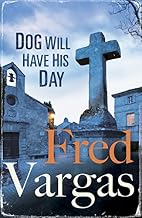
This is the second of the "three evangelist" novels but only two of the evangelists take part in it, Marc and Mathias. Instead, the main character is Louis (or Ludwig) Kehlweiler, who was booted out of some ministry and goes around investigating things that others wouldn't think anything of and keeping voluminous files of newspaper clippings from all over France; he also has a bevy of others who report on things to him. He is the son of a German soldier and a French woman and has been known all his life, not in a complimentary fashion, as "the German." At the end, his story, and it is a wild one, comes out.
But to get back to the plot, in the course of his just puttering around and noticing things, Louis discovers a toe joint, which turns out to be a woman's. He enlists Marc, who has been helping him file his newspaper clipping, in interviewing dog owners who come to the same enclosure where he found the toe because he has determined that a dog ate the bone and excreted it and the torrential rain washed it clean. Eventually, the trail leads to Brittany, where a cast of characters muddles the investigation. But eventually, of course, Louis discovers the killer, who it turns out has killed before, and a sordid tale it is.
As always, the characters make a Vargas mystery and not the plot, which is engaging but secondary.
This is the second of the "three evangelist" novels but only two of the evangelists take part in it, Marc and Mathias. Instead, the main character is Louis (or Ludwig) Kehlweiler, who was booted out of some ministry and goes around investigating things that others wouldn't think anything of and keeping voluminous files of newspaper clippings from all over France; he also has a bevy of others who report on things to him. He is the son of a German soldier and a French woman and has been known all his life, not in a complimentary fashion, as "the German." At the end, his story, and it is a wild one, comes out.
But to get back to the plot, in the course of his just puttering around and noticing things, Louis discovers a toe joint, which turns out to be a woman's. He enlists Marc, who has been helping him file his newspaper clipping, in interviewing dog owners who come to the same enclosure where he found the toe because he has determined that a dog ate the bone and excreted it and the torrential rain washed it clean. Eventually, the trail leads to Brittany, where a cast of characters muddles the investigation. But eventually, of course, Louis discovers the killer, who it turns out has killed before, and a sordid tale it is.
As always, the characters make a Vargas mystery and not the plot, which is engaging but secondary.
179NanaCC
>178 rebeccanyc: You really make me want to get to Vargas.
180rebeccanyc
>179 NanaCC: Start with the Adamsberg series, Colleen, with The Chalk Circle Man. There are only two of the Three Evangelist series that have been translated into English, and they're not as good.
181NanaCC
>180 rebeccanyc: You put that one on my wishlist a while ago. I just have to get to it. I appreciate the advice about where to start.
182rebeccanyc
Project TBR: Book #7 (on TBR since 1994)
20. Come to Me by Amy Bloom

Although I have come to be an Amy Bloom fan, I had inexplicably never read her first collection of stories despite the fact that I've owned it since 1994. In it, she once again (I guess for the first time) illustrates her psychological perceptiveness (she is, or was, a psychotherapist too), her excellent characterization, her humanity, and her ability to say a lot in a few words.
I especially enjoyed the linked stories which deal first with the horrifying childhood of a boy, looked back on when he is married and has two daughters; then with his wife when she is having an affair and contemplating leaving him; and then with one of the daughters looking at her sister who had a psychotic break as a teenager. Then there are two stories about the man the wife was having the affair with and his wife.
Some of the stories deal with love, and some with love and loss. There are several in which a woman's husband dies, and some in which the tale of love is unconventional. A quote:
I should have invited them. (Her parents, to her wedding.) I am almost thirty now, and I am coming to think that one should, when in doubt, invite them, whoever they are. The distant relatives, the cocktail party stalwarts, the friends who failed to send Christmas cards two years in a row. Invite them while you can.
This is Bloom's earliest work, and occasionally the psychotherapist shines brighter than the writer, but all in all I was glad I took it off the shelf and read it because I was mesmerized by most of the stories
20. Come to Me by Amy Bloom

Although I have come to be an Amy Bloom fan, I had inexplicably never read her first collection of stories despite the fact that I've owned it since 1994. In it, she once again (I guess for the first time) illustrates her psychological perceptiveness (she is, or was, a psychotherapist too), her excellent characterization, her humanity, and her ability to say a lot in a few words.
I especially enjoyed the linked stories which deal first with the horrifying childhood of a boy, looked back on when he is married and has two daughters; then with his wife when she is having an affair and contemplating leaving him; and then with one of the daughters looking at her sister who had a psychotic break as a teenager. Then there are two stories about the man the wife was having the affair with and his wife.
Some of the stories deal with love, and some with love and loss. There are several in which a woman's husband dies, and some in which the tale of love is unconventional. A quote:
I should have invited them. (Her parents, to her wedding.) I am almost thirty now, and I am coming to think that one should, when in doubt, invite them, whoever they are. The distant relatives, the cocktail party stalwarts, the friends who failed to send Christmas cards two years in a row. Invite them while you can.
This is Bloom's earliest work, and occasionally the psychotherapist shines brighter than the writer, but all in all I was glad I took it off the shelf and read it because I was mesmerized by most of the stories
184charl08
>182 rebeccanyc: I love Amy Bloom. Hope that this will turn up in a second hand shop at some point!
185rebeccanyc
>183 detailmuse: I'm trying to read one TBR for one new, but not succeeding!
>184 charl08: It's still in print, but I guess you prefer second-hand stores.
>184 charl08: It's still in print, but I guess you prefer second-hand stores.
186mabith
Your review of Come to Me has drawn me in. I've never read Bloom and have a bit of a block due to her book title A Blind Man Can See How Much I Love You, which is a big gift-book particularly for mothers to give to teenage daughters, or was when I worked at the bookstore. I have a feeling it was entirely because of the title vs anything to do with the content, but it is SUCH a sappy title.
187charl08
>185 rebeccanyc: Yes I do - and the last two I read I picked up that way so I am hoping my good luck will continue.
189rebeccanyc
>186 mabith: >188 sibylline: I enjoyed A Blind Man Can See How Much I Love You but I liked the later Where the God of Love Hangs Out more. It took me a while to warm to her novels because I think she's a great short story writer.
190charl08
I've picked up The Story of my teeth - really enjoying it although it's a bit bonkers. Fiction in translation continues to impress.
191rebeccanyc
Project TBR: Book #8 (on TBR since 1/20/13)
Reasons of State by Alejo Carpentier

This is the story of a dictator. The Head of State (we are never given his name) of an unnamed and imaginary Central American or South American nation is a Francophile, and the novel opens in his first person musings on awakening in Paris (this reader didn't realize it was in Paris until later in the book), quickly switches to the third person, and only reverts to the first person at the very end. Throughout, Carpentier's prose is dense, filled with images, and overloaded with lists of everything under the sun (an example, later).
While in Paris, the Head of State receives a telegram that a general has revolted against his rule, and he obviously needs to get back to his country, traveling through New York (which he compares, unfavorably, to Paris). He brutally quells that general's revolt, and eventually returns to Paris where he hangs out with the aristocrats and the Distinguished Academician. He is there when World War I breaks out and returns to his country, Throughout the war, the Head of State's country thrives, its banana and other fruit plantations flourishing and its mines booming (many of the plantations and mines are US-owned). But then, the war is over, and the economy falls apart. The Head of State gets the idea of building a Capitol building and he succeeds, but nothing can stop the forces determined to overturn him (a bomb goes off in his bathroom). The forces against him are multiple, including a provincial politician and someone known as The Student. The Head of State responds with terror, with the army killing professors, students, and a lot of other people. Eventually the US Marines arrive; the "Yankees" have switched their support from the Head of State to the provincial politician, and the Head of State has to flee to Paris, where none of his former friends will have anything to do with him because the press has reported on his massacres. Much more happens in this novel, but I can't tell everything.
Carpentier, as he mostly always does, digresses, into music (he was also a musicologist), art, architecture, and a lot more. As I noted above, the book is full of lists, often several per page, as seen in this example:
"That fire must not of course damage the frescoes of the Pantheon, the pink stone of the Place des Vosges, the windows of Notre-Dame, nor yet the chastity belts of the Abbaye de Cluny, the wax figures and illusions in the Musée Grévin, or the leafy chestnut trees of the avenue where the Comtesse de Noailles lived (although she was one of those who were cutting him) and still less the Trocadero, where as soon as the war was over our Mummy (now being fetched from Gothenburg by the Cholo Mendoza) would be displayed in a glass case."
The story of the Head of State is compelling, although he doesn't get his just desserts but dies, as so many dictators did, in Paris (or the south of France where several notorious 20th century dictators had villas). But Carpentier's style is the main reason I enjoyed this book, his digressions, his lists, and his glorious images.
Reasons of State by Alejo Carpentier

This is the story of a dictator. The Head of State (we are never given his name) of an unnamed and imaginary Central American or South American nation is a Francophile, and the novel opens in his first person musings on awakening in Paris (this reader didn't realize it was in Paris until later in the book), quickly switches to the third person, and only reverts to the first person at the very end. Throughout, Carpentier's prose is dense, filled with images, and overloaded with lists of everything under the sun (an example, later).
While in Paris, the Head of State receives a telegram that a general has revolted against his rule, and he obviously needs to get back to his country, traveling through New York (which he compares, unfavorably, to Paris). He brutally quells that general's revolt, and eventually returns to Paris where he hangs out with the aristocrats and the Distinguished Academician. He is there when World War I breaks out and returns to his country, Throughout the war, the Head of State's country thrives, its banana and other fruit plantations flourishing and its mines booming (many of the plantations and mines are US-owned). But then, the war is over, and the economy falls apart. The Head of State gets the idea of building a Capitol building and he succeeds, but nothing can stop the forces determined to overturn him (a bomb goes off in his bathroom). The forces against him are multiple, including a provincial politician and someone known as The Student. The Head of State responds with terror, with the army killing professors, students, and a lot of other people. Eventually the US Marines arrive; the "Yankees" have switched their support from the Head of State to the provincial politician, and the Head of State has to flee to Paris, where none of his former friends will have anything to do with him because the press has reported on his massacres. Much more happens in this novel, but I can't tell everything.
Carpentier, as he mostly always does, digresses, into music (he was also a musicologist), art, architecture, and a lot more. As I noted above, the book is full of lists, often several per page, as seen in this example:
"That fire must not of course damage the frescoes of the Pantheon, the pink stone of the Place des Vosges, the windows of Notre-Dame, nor yet the chastity belts of the Abbaye de Cluny, the wax figures and illusions in the Musée Grévin, or the leafy chestnut trees of the avenue where the Comtesse de Noailles lived (although she was one of those who were cutting him) and still less the Trocadero, where as soon as the war was over our Mummy (now being fetched from Gothenburg by the Cholo Mendoza) would be displayed in a glass case."
The story of the Head of State is compelling, although he doesn't get his just desserts but dies, as so many dictators did, in Paris (or the south of France where several notorious 20th century dictators had villas). But Carpentier's style is the main reason I enjoyed this book, his digressions, his lists, and his glorious images.
192baswood
Enjoyed your review of Reasons of State. Did you spend much time googling after reading those lists?
193deebee1
Glad you enjoyed Reasons of State, rebecca, I remember liking it too. Carpentier certainly got the image of the benevolent dictator down pat.
194rebeccanyc
>192 baswood: I meant to say in my review, Barry, that I spent a lot of time looking up words and using Wikipedia when I was reading until I gave up and just went with the flow!
>193 deebee1: I had bought (second-hand) Reasons of State before you reviewed it, but your review made me glad I had. Not so benevolent, though!
>193 deebee1: I had bought (second-hand) Reasons of State before you reviewed it, but your review made me glad I had. Not so benevolent, though!
195rebeccanyc
22. Wash This Blood Clean from My Hand by Fred Vargas
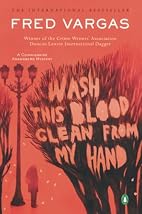
Wow! This is the first Vargas book I could hardly put down. After several panic attacks, Adamsberg recalls a serial murderer, a powerful judge, who has haunted him since his teenage brother was wrongfully accused of killing his pregnant girlfriend; the murderer gruesomely kills with a pitchfork with three prongs and has struck again, even though he supposedly died 16 years earlier. Adamsberg and his team are scheduled to go to Montreal for a course in DNA analysis and while there Adamsberg uncharacteristically gets drunk one night and blacks out, losing several hours. Back in France, he is hauled back to Canada, accused of killing -- with a pitchfork -- a young woman he had a fling with. Having blacked out for several hours, he even thinks he might have done it. He escapes back to France and goes into hiding with an old woman and her equally elderly friend who figured in an earlier novel. The friend is an expert hacker and helps Adamsberg with data. Of course, the characters make a Vargas novel, and there are many more than I can describe, but in this novel the plot is also compelling as, with many twists and turns, Adamsberg, with his old and newfound friends, discovers what really happened.
Wow! This is the first Vargas book I could hardly put down. After several panic attacks, Adamsberg recalls a serial murderer, a powerful judge, who has haunted him since his teenage brother was wrongfully accused of killing his pregnant girlfriend; the murderer gruesomely kills with a pitchfork with three prongs and has struck again, even though he supposedly died 16 years earlier. Adamsberg and his team are scheduled to go to Montreal for a course in DNA analysis and while there Adamsberg uncharacteristically gets drunk one night and blacks out, losing several hours. Back in France, he is hauled back to Canada, accused of killing -- with a pitchfork -- a young woman he had a fling with. Having blacked out for several hours, he even thinks he might have done it. He escapes back to France and goes into hiding with an old woman and her equally elderly friend who figured in an earlier novel. The friend is an expert hacker and helps Adamsberg with data. Of course, the characters make a Vargas novel, and there are many more than I can describe, but in this novel the plot is also compelling as, with many twists and turns, Adamsberg, with his old and newfound friends, discovers what really happened.
196charl08
Sounds good. I am almost tempted. Is there supernatural bits though? I'm not so keen on those.
197rebeccanyc
>196 charl08: No, nothing supernatural.
199charl08
>197 rebeccanyc: Thanks. Adding it to the list.
200rebeccanyc
>198 NanaCC: The Chalk Circle Man is the first in the Comissaire Adamsberg series (highly recommended) and The Three Evangelists is first in the three evangelist series (but that isn't as good and only two have been translated into English).
201VivienneR
>195 rebeccanyc: Sounds great! I've put a hold on it at the library!
202janeajones
Enjoying your TBR reviews -- great way to conquer some of those in waiting ;-)
203thorold
>195 rebeccanyc: This is the first Vargas book I could hardly put down.
Yes, she seems to step up a gear when she gets to this one. The others up to here are good, but they're a bit more detached emotionally, perhaps? There's definitely something different, anyway...
Yes, she seems to step up a gear when she gets to this one. The others up to here are good, but they're a bit more detached emotionally, perhaps? There's definitely something different, anyway...
204rebeccanyc
I've started a new thread because I had time this morning even though I haven't quite finished the book I'm reading. It is here: https://www.librarything.com/topic/221030
This topic was continued by Rebeccanyc Reads from the TBR Again . . . or Does She? Volume 2.

