This topic is currently marked as "dormant"—the last message is more than 90 days old. You can revive it by posting a reply.
1reva8

Happy New Year!
I hope I'll be able to keep this going, unlike the 2015 thread that I sadly abandoned midway through. I'm hopelessly late on my 2016 reading plans and resolutions, but I have some vague ideas that I'll put down here sooner or later. It's good to be back amongst my fellow readers!
The image is a simurgh: a mythical, benevolent flying creature (like a gryphon, perhaps) common in Iranian folklore, although its imagery has been seen in other parts of the world, including in my high school library in India.
2reva8
Books Read in 2016: Fiction and Poetry
Poetry
Fiction
Poetry
- Claudia Rankine - Citizen: An American Lyric
Review: http://www.librarything.com/topic/212146#5420788
- Ted Hughes - River
http://www.librarything.com/topic/212146#5420868
- W S Merwin - Moving Target
- WS Merwin - Opening the Hand
- TS Eliot - The Wasteland Facsimile and transcript (with annotations by Ezra Pound)
- Joseph Brodsky - Collected Poems in English
- Mark Doty - Fire to Fire (New and Selected Poems)
- Robert Hass - The Apple Trees at Olema
Fiction
- China Mieville - Three Moments of An Explosion
Review: http://www.librarything.com/topic/212146#5420820
- Haruki Murakami - Colorless Tsukuru Tazaki and his Years of Pilgrimage
Review: http://www.librarything.com/topic/212146#5453241
- Paul Beatty - The Sellout
3reva8
Reading List for 2016: NonFiction
Graphic novels
Julie Birmant and Clement Oubrerie - Pablo
- Alice Crawford(ed) - The Meaning of the Library
- Louis Menand - The Metaphysical Club
- Ronald Dworkin - Taking Rights Seriously
- Minae Mizumura - The Fall of Language in the Age of English
- Graham Greene - Yours Etc (letters)
Graphic novels
Julie Birmant and Clement Oubrerie - Pablo
4reva8
More than Books
Music
Sufjan Stevens - Carrie & Lowell (2015) Review: https://www.librarything.com/topic/212146#5425922
Pandit Hari Prasad Chaurasia and Pandit Shivkumar Sharma (accompanied by Pandit Bhavani Shankar and Ustad Shafaat Ahmad Khan) - Rasdhara (Navras Records, 2006)
Music
Sufjan Stevens - Carrie & Lowell (2015) Review: https://www.librarything.com/topic/212146#5425922
Pandit Hari Prasad Chaurasia and Pandit Shivkumar Sharma (accompanied by Pandit Bhavani Shankar and Ustad Shafaat Ahmad Khan) - Rasdhara (Navras Records, 2006)
6theaelizabet
The Metaphysical Club has been on my shelves for too long. I'll be interested in hearing what you think abou it. I need to get the Rankine. I hear wonderful things about it.
7janemarieprice
I also have had The Metaphysical Club on my shelves for years. Looking forward to your thoughts as well.
8rebeccanyc
Nice to see you back, Reva. How is graduate school going?
10dchaikin
Nice picture. I even like its name, simurgh. It's new to me. For a moment I thought you had already finished five books, including three apparently intense nonfiction books, and I was a bit wowed, but I see you are reading them now. Anyway, glad to see you back here.
12reva8
>6 theaelizabet: >7 janemarieprice: It was very highly recommended to me by a fellow student, and so far I'm quite enjoying it. I'm not as well-versed in American history or law as I am in Indian, so I suspect a lot of the subtleties are lost on me.
>8 rebeccanyc: it's going great! I'll finish this program in May, and now I'm wondering what comes next. Ah well, the eternal rollercoaster of life.
>10 dchaikin: I only wish I could read that fast, because I have only a little time but an endless list of books I want to read.
>11 avaland: Yes! I'm looking forward to it.
>8 rebeccanyc: it's going great! I'll finish this program in May, and now I'm wondering what comes next. Ah well, the eternal rollercoaster of life.
>10 dchaikin: I only wish I could read that fast, because I have only a little time but an endless list of books I want to read.
>11 avaland: Yes! I'm looking forward to it.
13reva8
1. Claudia Rankine - Citizen: An American Lyric
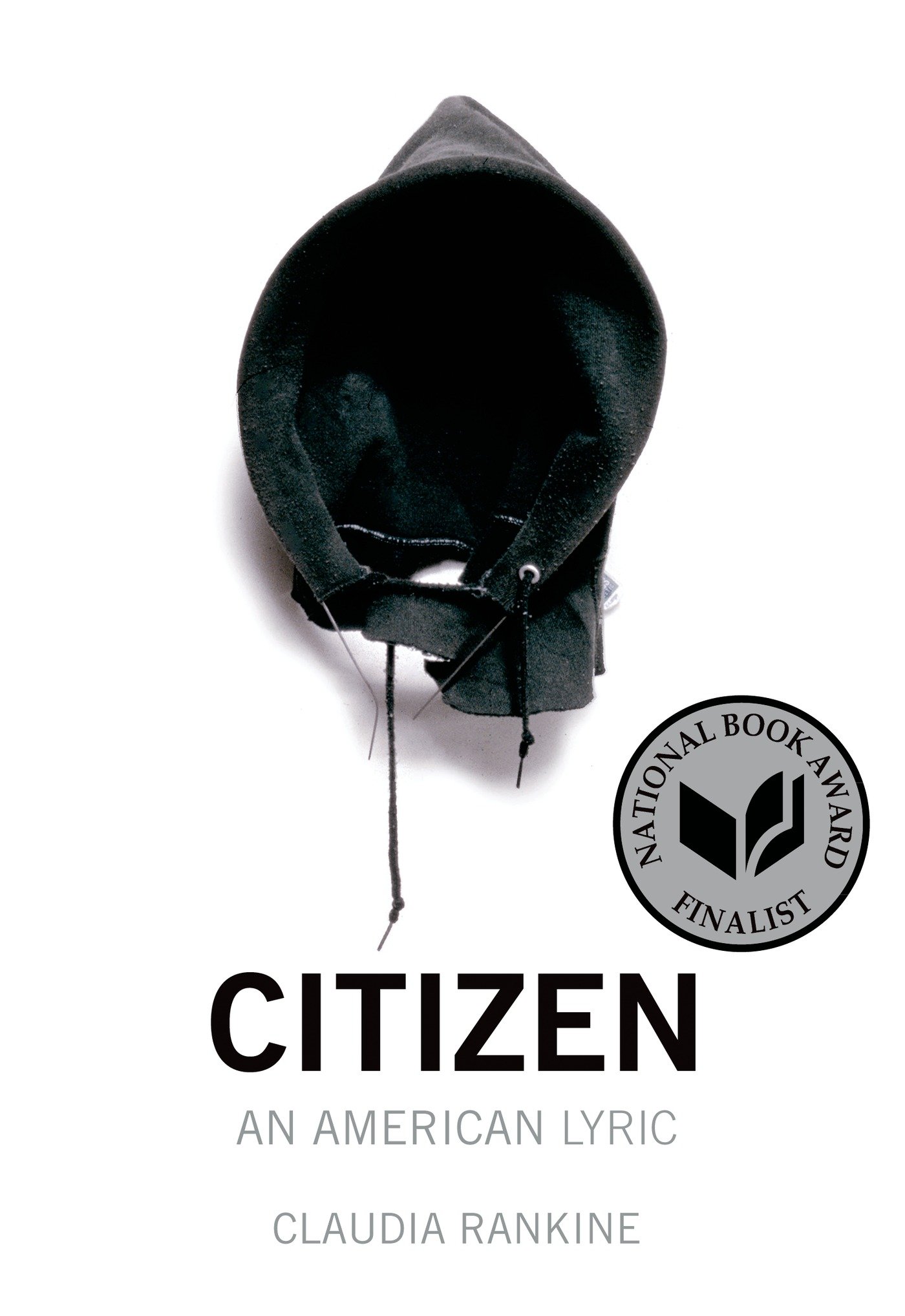
This is such an extraordinary, lyrical book. Claudia Rankine, who teaches at the University of Southern California and is a Chancellor of the American Academy of Poets has been receiving accolade after accolade for this book, and I have to admit, after reading it, that it not only deserves the hype but exceeds it. Citizen: An American Lyric is a meditation on race in America; it combines text and image to produce something that is not only shocking and powerful, but also very beautiful. I don't mean to say that the suffering of so many is beautiful, but rather that what Rankine creates out of misery attains the quality of beauty.
Here's a short excerpt, and then below, some links to reviews because I don't have the time or facility to convey how great this book is. I will only add that I have always respected Serena Williams' great talent, but Rankine doubled my respect for her through this book.
Dan Chiasson's review in the New Yorker: http://www.newyorker.com/magazine/2014/10/27/color-codes
Daniel Worden in LARB (they had a symposium on the book, I think) https://lareviewofbooks.org/essay/reconsidering-claudia-rankines-citizen-an-amer...
Lauren Berlant interviews Rankine for BOMB Magazine http://bombmagazine.org/article/10096/claudia-rankine
This is such an extraordinary, lyrical book. Claudia Rankine, who teaches at the University of Southern California and is a Chancellor of the American Academy of Poets has been receiving accolade after accolade for this book, and I have to admit, after reading it, that it not only deserves the hype but exceeds it. Citizen: An American Lyric is a meditation on race in America; it combines text and image to produce something that is not only shocking and powerful, but also very beautiful. I don't mean to say that the suffering of so many is beautiful, but rather that what Rankine creates out of misery attains the quality of beauty.
Here's a short excerpt, and then below, some links to reviews because I don't have the time or facility to convey how great this book is. I will only add that I have always respected Serena Williams' great talent, but Rankine doubled my respect for her through this book.
"When the stranger asks, Why do you care? you just stand there staring at him. He has just referred to the boisterous teenagers in Starbucks as niggers. Hey, I am standing right here, you responded, not necessarily expecting him to turn to you.
He is holding the lidded paper cup in one hand and a small paper bag in the other. They are just being kids. Come on, no need to get all KKK on them, you say.
Now there you go, he responds.
The people around you have turned away from their screens. The teenagers are on pause. There I go? you ask, feeling irritation begin to rain down. Yes, and something about hearing yourself repeating this stranger’s accusation in a voice usually reserved for your partner makes you smile.
Dan Chiasson's review in the New Yorker: http://www.newyorker.com/magazine/2014/10/27/color-codes
Daniel Worden in LARB (they had a symposium on the book, I think) https://lareviewofbooks.org/essay/reconsidering-claudia-rankines-citizen-an-amer...
Lauren Berlant interviews Rankine for BOMB Magazine http://bombmagazine.org/article/10096/claudia-rankine
14reva8
2. China Mieville -Three Moments of an Explosion: Stories
(Fiction)
I'm a fan of Mieville's Bas-Lag novels, which I read over last year, and I've read some of his other weird fiction (such as The City & the City) and greatly enjoyed it. Accordingly, I had high expectations from his first collection of short stories: while they were, for the most part, competently written, I didn't think they had the power and grace of his novels. If you ask me, Mieville's strength's lie largely in his gift for narrative, these wonderful grand sweeps of time and space that catch you up. It's hard to achieve that in a story: you have to scale down, and I don't think he's quite as adept at it.
Mieville does well when he writes complete stories, but he intersperses them with these fragmentary vignettish pieces that seem nothing more than notes that he tossed in with the rest (for instance, the titular story is literally three moments, written in three paragraphs and not particularly moving ones). He also does two (or three) or horror movie opening scenes in screenplay format, which I was not particularly interested in, but they seemed scary enough.
A few stories really stood out for me: 'Keep' is about the hunt for 'patient zero' suffering from an illness that causes the sudden formation of circular trenches around the person suffering it, and describes, quite terrifyingly, the sudden isolations and miseries that it produces. I loved 'Polynia' - about the sudden appearance of floating icebergs above the London sky, and 'Sacken' was terrifying in a very old-school way: a woman is subjected to a barbarous torture in a mysterious German lake (I was reminded of Heaney's bog-people).
This is a book worth reading, because Mieville is a skilled writer with a vivid imagination, and if you love weird fiction, you'll probably enjoy this. But I'm rather more excited about his upcoming novels, The Census Taker and The Last Days of New Paris.
(Fiction)
I'm a fan of Mieville's Bas-Lag novels, which I read over last year, and I've read some of his other weird fiction (such as The City & the City) and greatly enjoyed it. Accordingly, I had high expectations from his first collection of short stories: while they were, for the most part, competently written, I didn't think they had the power and grace of his novels. If you ask me, Mieville's strength's lie largely in his gift for narrative, these wonderful grand sweeps of time and space that catch you up. It's hard to achieve that in a story: you have to scale down, and I don't think he's quite as adept at it.
Mieville does well when he writes complete stories, but he intersperses them with these fragmentary vignettish pieces that seem nothing more than notes that he tossed in with the rest (for instance, the titular story is literally three moments, written in three paragraphs and not particularly moving ones). He also does two (or three) or horror movie opening scenes in screenplay format, which I was not particularly interested in, but they seemed scary enough.
A few stories really stood out for me: 'Keep' is about the hunt for 'patient zero' suffering from an illness that causes the sudden formation of circular trenches around the person suffering it, and describes, quite terrifyingly, the sudden isolations and miseries that it produces. I loved 'Polynia' - about the sudden appearance of floating icebergs above the London sky, and 'Sacken' was terrifying in a very old-school way: a woman is subjected to a barbarous torture in a mysterious German lake (I was reminded of Heaney's bog-people).
This is a book worth reading, because Mieville is a skilled writer with a vivid imagination, and if you love weird fiction, you'll probably enjoy this. But I'm rather more excited about his upcoming novels, The Census Taker and The Last Days of New Paris.
15reva8
3. Ted Hughes - River (1983) (poetry)

I've generally read Ted Hughes more as anthologised poet than through his own collections: an error that I've recently tried to remedy. I picked up a copy of the frightening, spare Crow back in my college days, and last week, came across this small volume called River in my favourite secondhand cafe/bookshop (now deserted, because everyone has gone home for the holidays).
In a letter to his son Nicholas, years after, Hughes quoted the Buddha, telling him to 'live like a river', to "take this new opportunity to look about and fill your lungs with that fantastic land, while it and you are still there." (http://www.lettersofnote.com/2012/09/live-like-mighty-river.html) Hughes, for me, has always stood for this combination of romanticism and earthiness, of bits of mystical wisdom spouted with his feet firmly planted in the ground. River is a cycle of poems that is about fishing in rivers, but also about living, about Ophelia and minks, and his odd passion-reverence for salmon (he describes one: "A god on earth for the first time/with the clock of death and love in his body").
I've read some comments describing Hughes as an 'eco-warrior' or these poems as some sort of 'biocentric' hymn, and I find these to be absurdly reductionist. Hughes isn't just documenting or loving the world around him, he's living in it, and that is what River is about, at least to me. He sees, and sees so clearly, the water, the stones, the fish, the cormorants, and he records, with his sure hand, so that I in my basement might see too.
Here's a fragment from the cycle, a poem called 'The Stump Pool in April':

I've generally read Ted Hughes more as anthologised poet than through his own collections: an error that I've recently tried to remedy. I picked up a copy of the frightening, spare Crow back in my college days, and last week, came across this small volume called River in my favourite secondhand cafe/bookshop (now deserted, because everyone has gone home for the holidays).
In a letter to his son Nicholas, years after, Hughes quoted the Buddha, telling him to 'live like a river', to "take this new opportunity to look about and fill your lungs with that fantastic land, while it and you are still there." (http://www.lettersofnote.com/2012/09/live-like-mighty-river.html) Hughes, for me, has always stood for this combination of romanticism and earthiness, of bits of mystical wisdom spouted with his feet firmly planted in the ground. River is a cycle of poems that is about fishing in rivers, but also about living, about Ophelia and minks, and his odd passion-reverence for salmon (he describes one: "A god on earth for the first time/with the clock of death and love in his body").
I've read some comments describing Hughes as an 'eco-warrior' or these poems as some sort of 'biocentric' hymn, and I find these to be absurdly reductionist. Hughes isn't just documenting or loving the world around him, he's living in it, and that is what River is about, at least to me. He sees, and sees so clearly, the water, the stones, the fish, the cormorants, and he records, with his sure hand, so that I in my basement might see too.
Here's a fragment from the cycle, a poem called 'The Stump Pool in April':
"Crack willows in their first pale eclosion
Of emerald. The long pool
Is simmering with oily lights. Deep labour
Embodied under filmy spanglings. Oxygen
Boils in its throat, and the new limbs
flex and loosen. It keeps
Making the effort to burst its glistenings
With sinewy bulgings, gluey splittings
All down its living length.
The river is trying
To rise out of the river."
In sum, highly recommended.
16valkyrdeath
>14 reva8: I really need to read something by Mieville this year. I say that every year, and maybe one year I'll finally do it. He sounds like exactly the sort of writer I'd enjoy but somehow I never get to him. Maybe this one isn't the place to start though.
17dchaikin
Great reviews Reva. I hadn't even heard of Citizen, now I would like to read it. But I think your comments on Hughes were really interesting, especially your criticism on the reductionist comments. I'm afraid Miéville may just be too hip for me.
18baswood
>15 reva8: Enjoyed your review of River, made me leap up and find those poems in my Collected Poems - Ted Hughes.
>13 reva8: Great link to Dan Chiasson's review in the New Yorker.
>13 reva8: Great link to Dan Chiasson's review in the New Yorker.
19reva8
>16 valkyrdeath: Yes, maybe the Bas-Lag series to start with?
>17 dchaikin: I'd recommend both, Hughes and Rankine. And I like Mieville generally, just not this one, so much.
>18 baswood: I thought Chiasson was very good, particularly this bit: "Rankine’s use of multiple negatives works here, as often in this book, to re-create the bizarro crisis of figuring out how to parse a moment that should never have occurred, a response that “doesn’t include acting like this moment isn’t inhabitable.”
>17 dchaikin: I'd recommend both, Hughes and Rankine. And I like Mieville generally, just not this one, so much.
>18 baswood: I thought Chiasson was very good, particularly this bit: "Rankine’s use of multiple negatives works here, as often in this book, to re-create the bizarro crisis of figuring out how to parse a moment that should never have occurred, a response that “doesn’t include acting like this moment isn’t inhabitable.”
20reva8
I know this is supposed to be my reading record, but I'm going slip in bits and pieces of other things as well, like music.
Sufjan Stevens - Carrie & Lowell (2015)
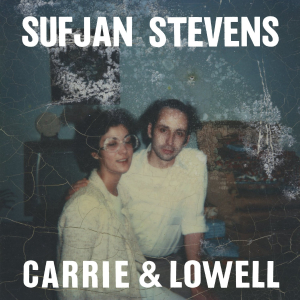
I usually get around to listening to album releases a year later, because I pick and choose off the end-of-year best of lists (someone else plows through the boring stuff to bring you the best), but some artists are exceptions to this rule. I enjoyed Sufjan Stevens' thoughtful slippery albums from this 50 states project (Michigan and Illinois) and thought he was a writer and singer worth keeping an eye on. His other work was nice, but this album is extraordinary feat of music and writing. I have been listening to it for a few months, but it hasn't run dry: I am still listening to it (except when I have papers to write, because it makes me sad).
Carrie & Lowell, to me, is the product of two factors combining with Stevens' inherent artistry. The first, and the genus of the title, is his past: his mother Carrie married Lowell when he was young, but her mental illness prevented her from being a parent , a role that Lowell was able to fulfil only in part. Carrie & Lowell was written after Carrie died, before which Stevens and she were briefly reunited. Her absence is a tremendous factor in his life: he says, in one of the tracks here, he says, "Since I was old enough to speak I've said it with alarm/Some part of me was lost in your sleeve
Where you hid your cigarettes/No I’ll never forget/I just want to be near you." The second factor is Stevens' faith: he is a Christian, and theological symbols and metaphors are strewn through his work. The song, 'John My Beloved' for instance, is balanced between a song for his lover, and a song for his god, filled with Biblical allusions. 'The Only Thing' describes his struggle with depression and how his faith enables him to overcome it ("The only thing that keeps me from cutting my arm/Cross hatch, warm bath, Holiday Inn after dark /Signs and wonders: water stain writing the wall/Daniel’s message; blood of the moon on us all..")
I have neither Stevens' history of grief nor his faith, but I cannot help being moved by the quality of his grief. He has an extraordinary voice: when he holds his notes, his breath in 'Should Have Known Better' you breathe with him, holding yours too. In the same song, he talks about his relationship with his mother and the grief that it brings, but also his relationship with his niece ("My brother had a daughter/the beauty that she brings/illumination"), neatly balancing grief and hope together.
There's a marvellous interview the notoriously reticent Stevens' did, with Pitchfork, where he explains the history and conception behind this album.
http://pitchfork.com/features/interviews/9595-true-myth-a-conversation-with-sufj...
I don't know whether I'd recommend this album generally, particularly to people who are grieving or depressed anyway. A friend said it made her cry and refused to listen to it again. Stevens himself notes this, saying in the same interview , "At worst, these songs probably seem really indulgent. At their best, they should act as a testament to an experience that's universal: Everyone suffers; life is pain; and death is the final punctuation at the end of that sentence, so deal with it. I really think you can manage pain and suffering by living in fullness and being true to yourself and all those seemingly vapid platitudes." But I will say that I was surprised at how good it was, and that if you want a sample, these are the tracks that I liked the best:
Sufjan Stevens - Fourth of July https://www.youtube.com/watch?v=JTeKpWp8Psw
Sufjan Stevens - John My Beloved https://www.youtube.com/watch?v=wVZUBMUekck
Sufjan Stevens - Should Have Known Better https://www.youtube.com/watch?v=lJJT00wqlOo
Sufjan Stevens - The Only Thing https://www.youtube.com/watch?v=adKEqin5SoI
Most of the album is on Youtube, if you want, and it is also on Spotify (if you're in the US) https://www.youtube.com/watch?v=dsGODTySH0E&list=PL67VKSNJdY_XBvoFECHFKyesxn...
Sufjan Stevens - Carrie & Lowell (2015)
I usually get around to listening to album releases a year later, because I pick and choose off the end-of-year best of lists (someone else plows through the boring stuff to bring you the best), but some artists are exceptions to this rule. I enjoyed Sufjan Stevens' thoughtful slippery albums from this 50 states project (Michigan and Illinois) and thought he was a writer and singer worth keeping an eye on. His other work was nice, but this album is extraordinary feat of music and writing. I have been listening to it for a few months, but it hasn't run dry: I am still listening to it (except when I have papers to write, because it makes me sad).
Carrie & Lowell, to me, is the product of two factors combining with Stevens' inherent artistry. The first, and the genus of the title, is his past: his mother Carrie married Lowell when he was young, but her mental illness prevented her from being a parent , a role that Lowell was able to fulfil only in part. Carrie & Lowell was written after Carrie died, before which Stevens and she were briefly reunited. Her absence is a tremendous factor in his life: he says, in one of the tracks here, he says, "Since I was old enough to speak I've said it with alarm/Some part of me was lost in your sleeve
Where you hid your cigarettes/No I’ll never forget/I just want to be near you." The second factor is Stevens' faith: he is a Christian, and theological symbols and metaphors are strewn through his work. The song, 'John My Beloved' for instance, is balanced between a song for his lover, and a song for his god, filled with Biblical allusions. 'The Only Thing' describes his struggle with depression and how his faith enables him to overcome it ("The only thing that keeps me from cutting my arm/Cross hatch, warm bath, Holiday Inn after dark /Signs and wonders: water stain writing the wall/Daniel’s message; blood of the moon on us all..")
I have neither Stevens' history of grief nor his faith, but I cannot help being moved by the quality of his grief. He has an extraordinary voice: when he holds his notes, his breath in 'Should Have Known Better' you breathe with him, holding yours too. In the same song, he talks about his relationship with his mother and the grief that it brings, but also his relationship with his niece ("My brother had a daughter/the beauty that she brings/illumination"), neatly balancing grief and hope together.
There's a marvellous interview the notoriously reticent Stevens' did, with Pitchfork, where he explains the history and conception behind this album.
“With this record, I needed to extract myself out of this environment of make-believe,” he says, pulling at his sneaker’s red tongue. “It's something that was necessary for me to do in the wake of my mother's death—to pursue a sense of peace and serenity in spite of suffering. It's not really trying to say anything new, or prove anything, or innovate. It feels artless, which is a good thing. This is not my art project; this is my life.”
http://pitchfork.com/features/interviews/9595-true-myth-a-conversation-with-sufj...
I don't know whether I'd recommend this album generally, particularly to people who are grieving or depressed anyway. A friend said it made her cry and refused to listen to it again. Stevens himself notes this, saying in the same interview , "At worst, these songs probably seem really indulgent. At their best, they should act as a testament to an experience that's universal: Everyone suffers; life is pain; and death is the final punctuation at the end of that sentence, so deal with it. I really think you can manage pain and suffering by living in fullness and being true to yourself and all those seemingly vapid platitudes." But I will say that I was surprised at how good it was, and that if you want a sample, these are the tracks that I liked the best:
Sufjan Stevens - Fourth of July https://www.youtube.com/watch?v=JTeKpWp8Psw
Sufjan Stevens - John My Beloved https://www.youtube.com/watch?v=wVZUBMUekck
Sufjan Stevens - Should Have Known Better https://www.youtube.com/watch?v=lJJT00wqlOo
Sufjan Stevens - The Only Thing https://www.youtube.com/watch?v=adKEqin5SoI
Most of the album is on Youtube, if you want, and it is also on Spotify (if you're in the US) https://www.youtube.com/watch?v=dsGODTySH0E&list=PL67VKSNJdY_XBvoFECHFKyesxn...
22kidzdoc
Nice book and album reviews, Reva, Citizen: An American Lyric was one of my top 10 books of 2015 so I'm glad that you enjoyed it as well.
23reva8
>21 baswood: Thank you! If you like Christmas music, he's done an album of Christmas songs too. Maybe in December, though...
>22 kidzdoc: Oh, great! I meant to read it last year, but I only got my copy in January. I lost track of LT towards the end of last year...
>22 kidzdoc: Oh, great! I meant to read it last year, but I only got my copy in January. I lost track of LT towards the end of last year...
24reva8
Haruki Murakami - Colorless Tsukuru Tazaki and His Years of Pilgrimage
I'm ambivalent about this novel by Murakami. It is probably the most conventional of his books: little to no magic realism and ordinary people, living their ordinary lives. Patti Smith seemed to likeit (see also Yukio Shimizu's beautiful art inspired by the book, in that link) but Mark Lawson in the Guardian suggests that there may have been trouble with the translation. I'm inclined to agree: part of the titular trick of the novel is that the name of main character, Tsukuru lacks a colour: it means, 'to build' - while all his four closest friends have colours in the names (for instance, Akamatsu, which means 'red pine', or Shirane which means 'white root'). I'd imagine this would be more subtle if the translator didn't have to laboriously work out each artful play of words, although a lot of effort has clearly been put in to make the novel flow.
Tsukuru Tazaki's life falls apart when his four closest friends suddenly cut off communication with him, providing no reason and leaving him alone and adrift. He grows through this isolation and abandonment, surviving until he meets a woman that he falls in love with. This woman, Sara, urges him to go back to this past and understand what it was that caused his friends to abandon him, so that he addresses the emotional consequences of this before embarking on a relationship with her. Murakami is at his best when he describes the agonizing grief and the slow acceptance of Tazaki's utter loneliness, and the small ways in which he tries to rebuild his life. He is not at his best when he tries to write sex scenes: they are absurdly laboured and faintly ridiculous (which, then again, might have been the intention, who knows?). This is not on par with books like Hard Boiled Wonderland and the End of the World or The Wind-up Bird Chronicle - like his later work, it lacks some of the light magic of his first novels. I was disappointed with 1Q84 and I'm not sure I love this one.
I'm ambivalent about this novel by Murakami. It is probably the most conventional of his books: little to no magic realism and ordinary people, living their ordinary lives. Patti Smith seemed to likeit (see also Yukio Shimizu's beautiful art inspired by the book, in that link) but Mark Lawson in the Guardian suggests that there may have been trouble with the translation. I'm inclined to agree: part of the titular trick of the novel is that the name of main character, Tsukuru lacks a colour: it means, 'to build' - while all his four closest friends have colours in the names (for instance, Akamatsu, which means 'red pine', or Shirane which means 'white root'). I'd imagine this would be more subtle if the translator didn't have to laboriously work out each artful play of words, although a lot of effort has clearly been put in to make the novel flow.
Tsukuru Tazaki's life falls apart when his four closest friends suddenly cut off communication with him, providing no reason and leaving him alone and adrift. He grows through this isolation and abandonment, surviving until he meets a woman that he falls in love with. This woman, Sara, urges him to go back to this past and understand what it was that caused his friends to abandon him, so that he addresses the emotional consequences of this before embarking on a relationship with her. Murakami is at his best when he describes the agonizing grief and the slow acceptance of Tazaki's utter loneliness, and the small ways in which he tries to rebuild his life. He is not at his best when he tries to write sex scenes: they are absurdly laboured and faintly ridiculous (which, then again, might have been the intention, who knows?). This is not on par with books like Hard Boiled Wonderland and the End of the World or The Wind-up Bird Chronicle - like his later work, it lacks some of the light magic of his first novels. I was disappointed with 1Q84 and I'm not sure I love this one.
25reva8
January - Updates
I haven't always had the time to review, but here's what I've read this month! (all the boring reading for class excluded, but I kept Dworkin in because that wasn't for class, that was for me)
Books
Poetry
Fiction
Graphic novels
Julie Birmant and Clement Oubrerie - Pablo
Non Fiction
Music
Pandit Hari Prasad Chaurasia and Pandit Shivkumar Sharma (accompanied by Pandit Bhavani Shankar and Ustad Shafaat Ahmad Khan) - Rasdhara (Navras Records, 2006) (Classical Indian - Hindustani)
This is a glorious album, containing two performances, on in Raag Jhinjhoti (which is now my favourite raag) and the other in Raag Kirwani. Having a pakhawaj accompanist on the Jhinjhoti was an inspired choice. I've had this on repeat every night for a week, what a superb recording.
Kamasi Washington - 'The Epic' (Jazz)
People are calling him the natural successor to Coltrane: I don't know about that but this was a wonderful, inspiring album (and his delicate cover of Claire de Lune is a nice little treat as well).
Sufjan Stevens - Carrie & Lowell
Review:http://www.librarything.com/topic/212146#5425922
I haven't always had the time to review, but here's what I've read this month! (all the boring reading for class excluded, but I kept Dworkin in because that wasn't for class, that was for me)
Books
Poetry
- Claudia Rankine - Citizen: An American Lyric
Review: http://www.librarything.com/topic/212146#5420788
- Ted Hughes - River
http://www.librarything.com/topic/212146#5420868
- W S Merwin - Moving Target
- WS Merwin - Opening the Hand
- TS Eliot - The Wasteland Facsimile and transcript (with annotations by Ezra Pound)
- Joseph Brodsky - Collected Poems in English
- Mark Doty - Fire to Fire (New and Selected Poems)
- Robert Hass - The Apple Trees at Olema
Fiction
- China Mieville - Three Moments of An Explosion
Review: http://www.librarything.com/topic/212146#5420820
- Haruki Murakami - Colorless Tsukuru Tazaki and his Years of Pilgrimage
Review: http://www.librarything.com/topic/212146#5453241
- Paul Beatty - The Sellout
Graphic novels
Julie Birmant and Clement Oubrerie - Pablo
Non Fiction
- Alice Crawford(ed) - The Meaning of the Library
- Louis Menand - The Metaphysical Club
- Ronald Dworkin - Taking Rights Seriously
- Minae Mizumura - The Fall of Language in the Age of English
- Graham Greene - Yours Etc (letters)
Music
Pandit Hari Prasad Chaurasia and Pandit Shivkumar Sharma (accompanied by Pandit Bhavani Shankar and Ustad Shafaat Ahmad Khan) - Rasdhara (Navras Records, 2006) (Classical Indian - Hindustani)
This is a glorious album, containing two performances, on in Raag Jhinjhoti (which is now my favourite raag) and the other in Raag Kirwani. Having a pakhawaj accompanist on the Jhinjhoti was an inspired choice. I've had this on repeat every night for a week, what a superb recording.
Kamasi Washington - 'The Epic' (Jazz)
People are calling him the natural successor to Coltrane: I don't know about that but this was a wonderful, inspiring album (and his delicate cover of Claire de Lune is a nice little treat as well).
Sufjan Stevens - Carrie & Lowell
Review:http://www.librarything.com/topic/212146#5425922
27kidzdoc
Nice review of Colorless Tsukuru Tazaki, Reva. I think I liked it more than you did, at least at the time I read it, but I certainly agree that it and 1Q84 aren't anywhere near as good as The Wind-Up Bird Chronicle or Hard-Boiled Wonderland and the End of the World.
Excellent summary of your month in reading. Thanks for mentioning Kamasi Washington; I hadn't heard of him before, but I'm listening to that album on Spotify now.
Excellent summary of your month in reading. Thanks for mentioning Kamasi Washington; I hadn't heard of him before, but I'm listening to that album on Spotify now.
28FlorenceArt
>25 reva8: I was curious about the first album you mentioned, but couldn't find it in the catalog of my online music provider. I searched for the names and found a live recording by Pandit Hari Prasad Chaurasia, which I am listening to right now. I like it.
I found Colorless Tsukuru Tazaki in my LT recommendations some time ago, and I think it's on my wishlist. I hadn't heard about Hard-Boiled Wonderland, I think I'll add it too.
ETA: oops, Hard-Boiled Wondeland is already in my wishlist, but I knew it by its French title and didn't recognize it.
I found Colorless Tsukuru Tazaki in my LT recommendations some time ago, and I think it's on my wishlist. I hadn't heard about Hard-Boiled Wonderland, I think I'll add it too.
ETA: oops, Hard-Boiled Wondeland is already in my wishlist, but I knew it by its French title and didn't recognize it.
29baswood
Interesting to read about what you are listening to reva8. Good to pick up on a young tenor sax player I am liking what I hear of him on youtube. I have some older recordings of Pandit Hari Prasad Chaurasia.
I enjoyed Norwegian Wood by Murakami, but have not been tempted to read anything else by him
I hope you had plenty of annotations beside you when you read The Wasteland. Did Ezra Pound help or hinder I wonder?
I enjoyed Norwegian Wood by Murakami, but have not been tempted to read anything else by him
I hope you had plenty of annotations beside you when you read The Wasteland. Did Ezra Pound help or hinder I wonder?
30reva8
>27 kidzdoc: I mentioned my thoughts to a colleague and he said that he thought it was unfair to measure Murakami by expectations created by his past novels:a comment that didn't make sense to me, and advocates a sort of passive uncritical reception of literature that I don't understand. In any case, that was my first meeting with the mad Murakami fanbase, who I learned, are quite devoted to icon.
Did you like Kamasi Washington? I think I have to listen to him a few more times.
>28 FlorenceArt: I should probably have added an explanatory note! It's difficult to find: I came across it at my university's music archives (I sometimes study in the music library although I'm not a music student because it is much quieter there: everyone is wearing massive headphones)
>29 baswood: I love Pandit Chaurasia's playing. I think he has expertise, but also a very delicate sensibility, which is what gives his music the edge that other classical flautists don't have. He's done another better known album called "Call of the Valley" which is semi-classical but more accessible to those unfamiliar with Hindustani traditions.
I'll write a review of the Pound-annotated volume: it was interesting because many of his edits and suggestions were ultimately incorporated into the version we know today (Eliot sent him drafts for comments).
Did you like Kamasi Washington? I think I have to listen to him a few more times.
>28 FlorenceArt: I should probably have added an explanatory note! It's difficult to find: I came across it at my university's music archives (I sometimes study in the music library although I'm not a music student because it is much quieter there: everyone is wearing massive headphones)
>29 baswood: I love Pandit Chaurasia's playing. I think he has expertise, but also a very delicate sensibility, which is what gives his music the edge that other classical flautists don't have. He's done another better known album called "Call of the Valley" which is semi-classical but more accessible to those unfamiliar with Hindustani traditions.
I'll write a review of the Pound-annotated volume: it was interesting because many of his edits and suggestions were ultimately incorporated into the version we know today (Eliot sent him drafts for comments).



32ursula
>24 reva8: I was also ambivalent about Colorless Tsukuru Tazaki. And as far as the translation goes, it's the same translator who did the third volume of 1Q84, and that was the weakest part of that novel. Which, of course, may be all Murakami's fault and none of the translator's, but ... it could have something to do with him, too! Murakami's works are tough with the translations anyway because he uses multiple ones and they all have very different approaches to translation. In any event, though, I found that book one of Murakami's least interesting to me - but I like the weird ones.
33wandering_star
>24 reva8: I own both 1Q84 and Colorless Tsukuru Tazaki but haven't been moved to pick either up, partly because I haven't loved any of Murakami's books since The Wind-Up Bird Chronicle - agree that that one and The Hard-Boiled Wonderland are the best.
34baswood
>30 reva8: You mean The Valley Recalls. My wife has pinched that Cd off me to use with her meditation programme. Beautiful restful music, but perhaps straying into "new age" territory.
35cabegley
>24 reva8: Colorless Tsukuru Tazaki has been on my borrow-from-the-library list for a while, but I was disappointed in 1Q84 (and it made my end-of-year list for "ickiest sex scenes"), so I've been hesitant. I think you may have pushed it off the list.
36reva8
>32 ursula: I like the weird ones too!
>33 wandering_star: I don't think he'll ever attain the level of The Wind Up Bird Chronicle. The last few novels, it feels like he's just going through the motions.
>34 baswood: No, I don't. Here's a very slightly informative Wikipedia page on The Call of the Valley. Perhaps it was marketed differently where you are, or that's a follow up album? https://en.wikipedia.org/wiki/Call_of_the_Valley. I wonder why you call it "New Age" though?
>35 cabegley: If you thought the sex scenes in 1Q84 were icky, you have no idea how bad the ones in Tazaki are. Sordid, is the word I would go with.
>33 wandering_star: I don't think he'll ever attain the level of The Wind Up Bird Chronicle. The last few novels, it feels like he's just going through the motions.
>34 baswood: No, I don't. Here's a very slightly informative Wikipedia page on The Call of the Valley. Perhaps it was marketed differently where you are, or that's a follow up album? https://en.wikipedia.org/wiki/Call_of_the_Valley. I wonder why you call it "New Age" though?
>35 cabegley: If you thought the sex scenes in 1Q84 were icky, you have no idea how bad the ones in Tazaki are. Sordid, is the word I would go with.
37wandering_star
>36 reva8: I must say you're not pushing either book up my wishlist!
38reva8
There's no possible way I'm going to catch up on anyone's reading lists (the last time I was here was February! It's been a crazy year so far,and will only get crazier!) but here's what I read recently.
Ann Patchett - Bel Canto - Slightly overblown plot, but lovely and precise prose. A novel based on the Japanese embassy hostage crisis in Lima, in 1996.
Ann Patchett - State of Wonder - In terms of plot, even less plausible than Bel Canto, but I do like her prose very much. She does get details and facts wrong, it's a little distracting.
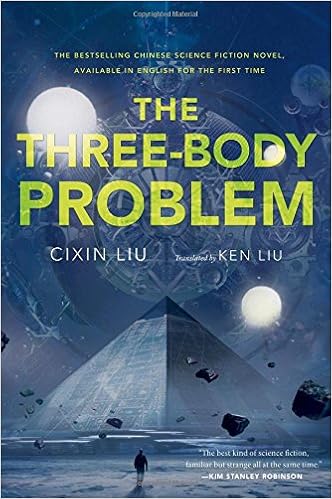
Cixin Liu - The Dark Forest - I read the first book of this trilogy, The Three-Body Problem earlier this year and loved it. The Dark Forest loses some of the pace, but it is still gripping. This is science fiction that is at once very traditional (in terms of genre - aliens, advanced scientific discoveries, global pandemonium) and yet very new. Definitely recommended.
Jeffrey Eugenides - The Virgin Suicides - I read Middlesex by the same author a little while ago and didn't particularly care for it, and I cared for this book even less. It felt likely a weirdly prurient book (that seemed to be part of the intention) but in a very unappealing way. The characters of the girls he depicts remain flat, and I know more about the faceless narrators than I do about them. It made me want to have a shower and read Keats when I was done, just to cleanse the palate.
David Foster Wallace - The Broom of the System - I've heard so much about DFW that I finally had to try something by him. The Broom of the System is alright; it reminded me very much of Vonnegut.
Carlos Fuentes -Myself with Others - Nonfiction - essays (and one lecture) on literature. Very much worth it, would recommend.
Jenny Diski - The Sixties - fun content, slightly tedious at times but worth reading.
Ann Patchett - Bel Canto - Slightly overblown plot, but lovely and precise prose. A novel based on the Japanese embassy hostage crisis in Lima, in 1996.
Ann Patchett - State of Wonder - In terms of plot, even less plausible than Bel Canto, but I do like her prose very much. She does get details and facts wrong, it's a little distracting.
Cixin Liu - The Dark Forest - I read the first book of this trilogy, The Three-Body Problem earlier this year and loved it. The Dark Forest loses some of the pace, but it is still gripping. This is science fiction that is at once very traditional (in terms of genre - aliens, advanced scientific discoveries, global pandemonium) and yet very new. Definitely recommended.
Jeffrey Eugenides - The Virgin Suicides - I read Middlesex by the same author a little while ago and didn't particularly care for it, and I cared for this book even less. It felt likely a weirdly prurient book (that seemed to be part of the intention) but in a very unappealing way. The characters of the girls he depicts remain flat, and I know more about the faceless narrators than I do about them. It made me want to have a shower and read Keats when I was done, just to cleanse the palate.
David Foster Wallace - The Broom of the System - I've heard so much about DFW that I finally had to try something by him. The Broom of the System is alright; it reminded me very much of Vonnegut.
Carlos Fuentes -Myself with Others - Nonfiction - essays (and one lecture) on literature. Very much worth it, would recommend.
Jenny Diski - The Sixties - fun content, slightly tedious at times but worth reading.
39FlorenceArt
Glad to see you back! I hope you'll have time to check in once in a while, but no pressure :-)
40rebeccanyc
Ditto. And I loved Bel Canto.
41AlisonY
Interesting reads. I loved Middlesex - one of my favourite reads. I think I enjoyed The Virgin Suicides (it was quite a long time ago), but really didn't get into The Marriage Plot.
42dchaikin
Nice list of books, Reva. I enjoyed Bel Canto too. DFW wrote Broom of the System as a college student trying to prove to the world he was genius. I haven't read it, but I think it's unlikely to be his best work. He could have tried too hard to impress.
Nice to hear from you!
Nice to hear from you!
43reva8
>39 FlorenceArt: Hi! I'll do my best. The next academic year should be more flexible in terms of schedule. I love the vacations.
>40 rebeccanyc: Yes, I rather enjoyed it.
>41 AlisonY: I haven't read The Marriage Plot: it was on my list but now has slid to the bottom, for a while atleast.
>42 dchaikin: hello! I've been told his journalism is better than his fiction, so I'll give DFW's nonfiction a shot next.
>40 rebeccanyc: Yes, I rather enjoyed it.
>41 AlisonY: I haven't read The Marriage Plot: it was on my list but now has slid to the bottom, for a while atleast.
>42 dchaikin: hello! I've been told his journalism is better than his fiction, so I'll give DFW's nonfiction a shot next.
44reva8
Updates:
Sophie Hannah - The Carrier
Halfway through this book I realised that I'd read it before, but I had forgotten who the murderer was (evidently it left little impact). I find Hannah's main characters more interesting than her detective stories and I'll probably pick up the next one too, just to see the progress (or lack thereof) of Waterhouse and Zailer's marriages. I tend to skip the more gory parts anyhow.
Meanwhile, here's what I'm currently reading:
Roberto Bolano - The Savage Detectives (I'm finding this very difficult going)
Patricia Highsmith - Carol
MC Setalvad - My Life: Law and Other Things
Sophie Hannah - The Carrier
Halfway through this book I realised that I'd read it before, but I had forgotten who the murderer was (evidently it left little impact). I find Hannah's main characters more interesting than her detective stories and I'll probably pick up the next one too, just to see the progress (or lack thereof) of Waterhouse and Zailer's marriages. I tend to skip the more gory parts anyhow.
Meanwhile, here's what I'm currently reading:
Roberto Bolano - The Savage Detectives (I'm finding this very difficult going)
Patricia Highsmith - Carol
MC Setalvad - My Life: Law and Other Things
45ursula
>38 reva8: I didn't like Middlesex at all (in fact, I gave up on it somewhere around 30-50 pages from the end because I just could not bring myself to pick it up again. However, I really liked The Virgin Suicides. I liked its examination of the male gaze. I think you're right - it's absolutely supposed to make you uncomfortable that we only get to know the sisters through the narrators.
46rebeccanyc
>44 reva8: I struggled through The Savage Detectives too but it ended up being one of my favorite books of the year.
47reva8
>45 ursula: Oh, I'm glad you agree. I thought I was being unduly harsh, or perhaps missing the point.
>46 rebeccanyc: I'll keep at it, then!
>46 rebeccanyc: I'll keep at it, then!
48reva8

A S Byatt - Angels and Insects
I read AS Byatt's Frederica quartet some years ago and remembered being (perhaps unfairly?) annoyed by its overwrought, hand-wringing sort of narration, and particularly so by a completely unrealistic and slightly fantastic custody trial scene that sort of capped the general unreality of the books. I picked up Angels and Insects therefore, without any great expectations and found that I was neither surprised, nor delighted, and if anything, moderately interested. I wouldn't go as far as John Barrell, who described Byatt's attempt at recreating the Victorian novel in these two stories (somewhat harshly) as "...labour in vain in order to establish that the labour is vain.." but I will say that I found them interesting (in parts) and stultifying (in parts).
Morpho Eugenia, the first novella, focuses on a young explorer and entomologist who loses his entire collection and belongings in a shipwreck. Having survived the shipwreck, he finds himself the guest of a wealthy, titled man who hires him to organise a collection of natural specimens. Living in his host/employer's house, unsure of his position (somewhat above a servant, somewhat below a guest) he falls in love with the eldest daughter, Eugenia. They marry, but the marriage is threatened by Eugenia's secrets. Present through the novel is a young woman, a 'poor relation' who also lives in the house, helps with the children's education, and shares his passion for entomology. The plot seems trite enough, an old love story, but is rescued by the fascinating detail of the protagonist's entomological work. The parables that Byatt establishes, between the lives of ants and the lives of man are heavy-handed and graceless, and you might be inclined to skip those portions entirely. It was, however, an interesting enough tale.
The second story, The Conjugal Angel has a faint link (through one minor character) to Morpho Eugenia but takes an entirely different turn, focusing on Victorian high society's fascination with the supernatural. A group of women (and one man) conduct seances, engage in automatic writing, communicate with ghosts and so on. More interesting than the (again, somewhat trite) plot is Byatt's treatment of poetry: a key character is the fictionalised fiance of Arthur Hallam, on whose death Tennyson wrote 'In Memoriam'. Byatt works 'In Memoriam' into the plot, deftly exploring through her characters the meaning of the poem. I found her exposition of Tennyson more interesting than the story (and interesting, despite the narration).
49dchaikin
Enjoyed your review. It sounds, well, interesting. It's hard to get past the critique as a "...labour in vain in order to establish that the labour is vain.." Such a great line.
50baswood
>48 reva8: I found her exposition of Tennyson more interesting than the story (and interesting, despite the narration). She can be a very clever writer.

