1916: Jackson - We Have Always Lived in the Castle
Talk Literary Centennials
Join LibraryThing to post.
This topic is currently marked as "dormant"—the last message is more than 90 days old. You can revive it by posting a reply.
1edwinbcn
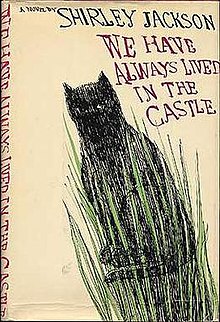
We Have Always Lived in the Castle is the final novel by Shirley Jackson, published in 1962.
The theme of persecution of people who exhibit "otherness" in small-town New England, by small-minded villagers, is at the forefront of We Have Always Lived in the Castle and is a repeated theme in Jackson's work. The main characters live in a house that stands alone on many acres, and is entirely separate physically, socially, as well as ideologically, from the main inhabitants of the town.
All of Jackson's work creates an atmosphere of strangeness and contact with what Lethem calls "a vast intimacy with everyday evil..." and how that intimacy affects "a village, a family, a self." In We Have Always Lived in the Castle, though, is there also a deep exploration of love and devotion despite the pervasive unease and perversity of character that runs through the story.
The novel was described by Jackson's biographer, Judy Opphenheimer, as "a paean to agoraphobia," with the author's own agoraphobia and nervous conditions having greatly informed its psychology.
Written in deceptively simple language, by an entirely unreliable narrator, the novel implies that the two heroines may choose to live forever in the remaining three rooms of their house, since they prefer each other's company to that of any outsiders.
2rebeccanyc
My brief review of this book.
How I have managed not to read this brilliantly creepy novel until now is a mystery to me. The world Jackson creates through the eyes of the utterly compelling narrator, Merricat, is so convincingly portrayed, and the sense of impending doom so subtly but insistently evoked, that I, as a reader, could not help but see everything from Merricat's seriously disturbed perspective. This beautifully written book will haunt me for a long time.
How I have managed not to read this brilliantly creepy novel until now is a mystery to me. The world Jackson creates through the eyes of the utterly compelling narrator, Merricat, is so convincingly portrayed, and the sense of impending doom so subtly but insistently evoked, that I, as a reader, could not help but see everything from Merricat's seriously disturbed perspective. This beautifully written book will haunt me for a long time.
4elenchus
I'm considering ordering the LOA omnibus of Jackson's novels and short fiction, on the strength of this book's reviews and the few short stories I've read.
5edwinbcn
We have always lived in the castle
Finished reading: 3 February 2016

The best claim of We have always lived in the castle as a literary masterpiece is that it is a fairly simple story that is nonetheless far from straightforward, and keeps readers puzzled long after finished reading. There is not much of a story, and some of the action in the book is quite absurd. The sisters, Mary Katherine ('Merricat') and Constance, and their uncle Julian are somewhat unusual, but not in the extreme.
Readers who find the novel spooky or stange, are in fact on a par with the villagers in the novel, who see things that are not there. The novel presents a fine example of the suspicion of a small-town community in the United States of that time, harking back to the witch-hunt episode in Salem, but also casting long shadows into our time, as it seems a part of human nature to be attracted and repelled by the unusual, to reject it and venture to gloat and look into it. The visit of Mrs Wright and Helen Clarke is nothing very unusual, and in as far as anything looks out of the ordinary neighbours' visit, it should be remembered that the whole episode is related by Merricat who cannot be taken as a reliable narrator.
The home of the Blackwood family is not a castle, but does stand within its own grounds, somewhat removed from the village. After the fire, which destroys a large part of the house, the home is said to resemble as castle. The perceptual transformation of the house into a castle, that is to say, when it is revealed to resemble a castle after parts have burnt away, suggests that the true state of things should be looked for underneath reality.
Merricat is by far the most intriguing character in the novel. Although she is described as being 18 years old, she appears a bit younger, and the ambivalence between the ages of 15/16 and 18 casts doubt on the innocent nature of her interests in magic, or rather witch craft. For sure, she has an interest in poisonous plants, charms, and rituals to avert events. There is an element on compulsion in her actions. In a novel with relatively little action, it seems significant that the major events were precipitated by Merricat, whether consciously or unconsciously. The fire seems the result of an unconscious act, but is should be remembered that the outcome of the event is what Merricat had apparently originally hoped to achieve with that other evil act, namely to remain alone with her older sister in the home.
Highly recommended.

Finished reading: 3 February 2016

The best claim of We have always lived in the castle as a literary masterpiece is that it is a fairly simple story that is nonetheless far from straightforward, and keeps readers puzzled long after finished reading. There is not much of a story, and some of the action in the book is quite absurd. The sisters, Mary Katherine ('Merricat') and Constance, and their uncle Julian are somewhat unusual, but not in the extreme.
Readers who find the novel spooky or stange, are in fact on a par with the villagers in the novel, who see things that are not there. The novel presents a fine example of the suspicion of a small-town community in the United States of that time, harking back to the witch-hunt episode in Salem, but also casting long shadows into our time, as it seems a part of human nature to be attracted and repelled by the unusual, to reject it and venture to gloat and look into it. The visit of Mrs Wright and Helen Clarke is nothing very unusual, and in as far as anything looks out of the ordinary neighbours' visit, it should be remembered that the whole episode is related by Merricat who cannot be taken as a reliable narrator.
The home of the Blackwood family is not a castle, but does stand within its own grounds, somewhat removed from the village. After the fire, which destroys a large part of the house, the home is said to resemble as castle. The perceptual transformation of the house into a castle, that is to say, when it is revealed to resemble a castle after parts have burnt away, suggests that the true state of things should be looked for underneath reality.
Merricat is by far the most intriguing character in the novel. Although she is described as being 18 years old, she appears a bit younger, and the ambivalence between the ages of 15/16 and 18 casts doubt on the innocent nature of her interests in magic, or rather witch craft. For sure, she has an interest in poisonous plants, charms, and rituals to avert events. There is an element on compulsion in her actions. In a novel with relatively little action, it seems significant that the major events were precipitated by Merricat, whether consciously or unconsciously. The fire seems the result of an unconscious act, but is should be remembered that the outcome of the event is what Merricat had apparently originally hoped to achieve with that other evil act, namely to remain alone with her older sister in the home.
Highly recommended.

6elenchus
I'm even more intrigued now, and hope the Library of America send the Jackson title along soon, as part of my subscription.
7pamelad
Merricat, her sister Constance, and her Uncle Julian are the only survivors of the Blackwood family. The rest of the Blackwoods were poisoned , and Constance has been acquitted of their murder. The Blackwood house is an old mansion on the edge of a village, but the Blackwoods were never a part of the village - too rich, too standoffish - and now that the villagers are convinced that Constance is a murderer, the surviving Blackwoods are even more isolated. Julian is too ill to go out, and Constance never leaves the house, so Merricat must brave the jeering villagers to do the shopping. The more you learn of Merricat, the more you wonder who really murdered the family. When Cousin Charles arrives and tries to separate Constance from Merricat, you just wait to find out what Merricat will do.
When Jackson wrote We Have Always Lived in the Castle she was confined to her room by agorophobia, and you can see that in the book. Constance and Merricat feel secure in their house, safe from outsiders. They are right to be fearful: their cousin Charles breaches their security by trying to separate the sisters and take the money he thinks is in the safe; the children taunt Merricat with cruel rhymes whenever she leaves the grounds; the villagers incite one other to destroy the Blackwood house. In the end though, Constance and Merricat are happy in what remains of their house, and they never have to leave it again.
This is my favourite of Shirley Jackson's books. She writes with such lightness and humour and creates Merricat's odd, eerie world so well that you accept it and sympathise with Merricat, although she is clearly insane.
When Jackson wrote We Have Always Lived in the Castle she was confined to her room by agorophobia, and you can see that in the book. Constance and Merricat feel secure in their house, safe from outsiders. They are right to be fearful: their cousin Charles breaches their security by trying to separate the sisters and take the money he thinks is in the safe; the children taunt Merricat with cruel rhymes whenever she leaves the grounds; the villagers incite one other to destroy the Blackwood house. In the end though, Constance and Merricat are happy in what remains of their house, and they never have to leave it again.
This is my favourite of Shirley Jackson's books. She writes with such lightness and humour and creates Merricat's odd, eerie world so well that you accept it and sympathise with Merricat, although she is clearly insane.
Join to post

