The 2016 Nonfiction Reading Challenge Part VII: Current Affairs in July
This is a continuation of the topic The 2016 Nonfiction Reading Challenge Part VI: Natural History/the Environment in June.
This topic was continued by The 2016 Nonfiction Reading Challenge Part VIII: Science/Technology/Medicine in August.
Talk 75 Books Challenge for 2016
Join LibraryThing to post.
This topic is currently marked as "dormant"—the last message is more than 90 days old. You can revive it by posting a reply.
1Chatterbox
... and what a lot of current affairs there are!
Fresh off the Brexit vote, and with the U.S. presidential election campaign moving into full gear, there are all kinds of related political topics that could engage your attention, from income inequality to race relations and political gerrymandering, or the history of the EU. With summer moving into full gear in the Northern hemisphere, and water shortages and questions of drinking water quality afoot, climate change and environmental questions are always topical. War is a constant, especially in the Middle East. Religious conflicts, whether outright or implicit, spark culture wars and rifts over topics as diverse as free speech and abortion. Is the use of drones acceptable in warfare and what does unmanned combat mean for war? What does the rising cost of education mean for society? What is happening in the world of genetically modified foods? Basically, if you can link a book to a topic that is of topical interest -- that is likely to end up being discussed in the newspapers or over a dinner table as affecting our lives today -- go for it. That means a biography of Picasso or Queen Victoria probably won't count, but something about the colonial legacy of Victorian England might?
Tell us all what you want to read and why and then please don't forget to come back and tell us whether it's living up to your hopes. Book bullets are VERY welcome; that's half the fun.
What we're reading:







And for purposes of your future planning...
August: Science and Technology/Healthcare
September: Philosophy/History of Ideas
October: Politics/Economics & Business/Commentary
November: Essays
December: Quirky/Who Knew?
If you've got any more questions, about this month's challenge or about what lies ahead, just post them below, or shoot me a PM (this may be fastest) and I'll get back to you as soon as I can.
Happy reading!!
Fresh off the Brexit vote, and with the U.S. presidential election campaign moving into full gear, there are all kinds of related political topics that could engage your attention, from income inequality to race relations and political gerrymandering, or the history of the EU. With summer moving into full gear in the Northern hemisphere, and water shortages and questions of drinking water quality afoot, climate change and environmental questions are always topical. War is a constant, especially in the Middle East. Religious conflicts, whether outright or implicit, spark culture wars and rifts over topics as diverse as free speech and abortion. Is the use of drones acceptable in warfare and what does unmanned combat mean for war? What does the rising cost of education mean for society? What is happening in the world of genetically modified foods? Basically, if you can link a book to a topic that is of topical interest -- that is likely to end up being discussed in the newspapers or over a dinner table as affecting our lives today -- go for it. That means a biography of Picasso or Queen Victoria probably won't count, but something about the colonial legacy of Victorian England might?
Tell us all what you want to read and why and then please don't forget to come back and tell us whether it's living up to your hopes. Book bullets are VERY welcome; that's half the fun.
What we're reading:


And for purposes of your future planning...
August: Science and Technology/Healthcare
September: Philosophy/History of Ideas
October: Politics/Economics & Business/Commentary
November: Essays
December: Quirky/Who Knew?
If you've got any more questions, about this month's challenge or about what lies ahead, just post them below, or shoot me a PM (this may be fastest) and I'll get back to you as soon as I can.
Happy reading!!
2katiekrug
I plan to listen to The Other Wes Moore: One Name, Two Fates for this month.
4rosalita
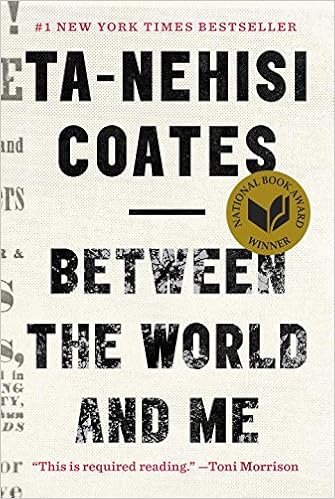
I'm planning to read Between the World and Me by Ta-Nehisi Coates.
>2 katiekrug: I liked that one quite a bit, Katie.
>2 katiekrug: I liked that one quite a bit, Katie.
5charl08
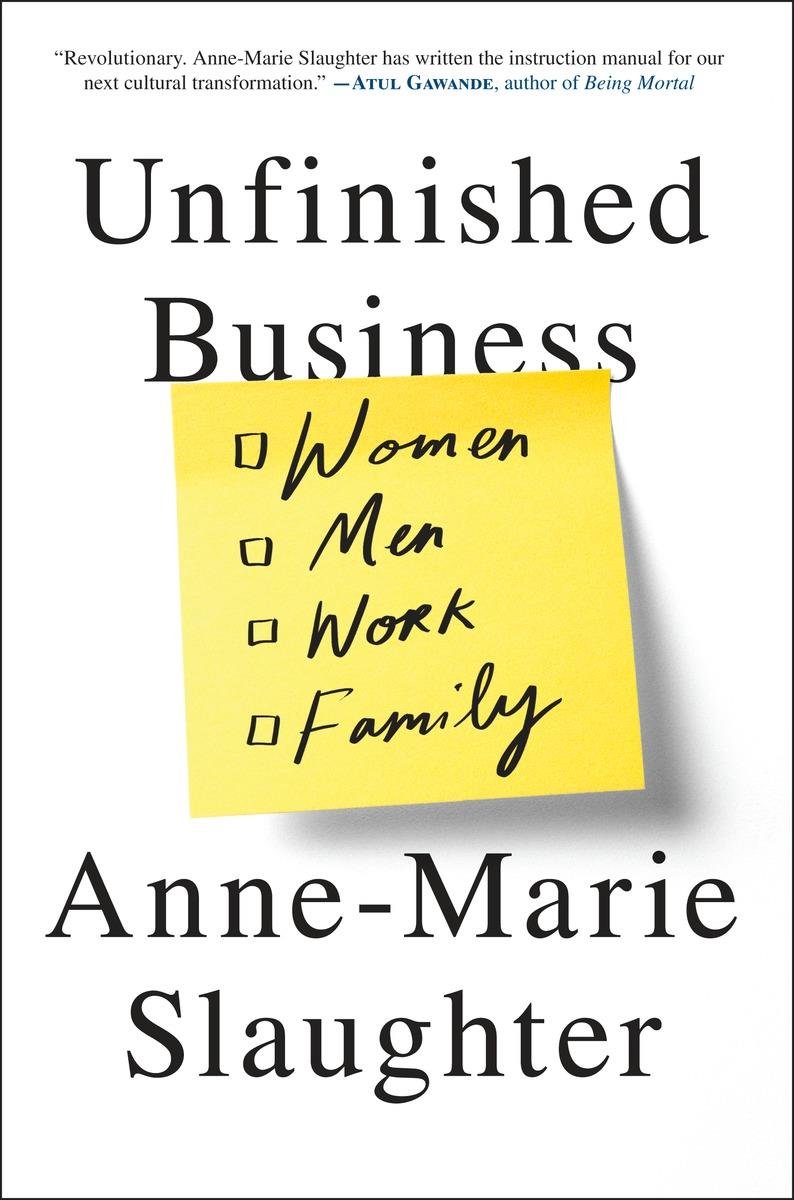
I've got Unfinished Business by Anne Marie Slaughter from the library so this'll be a good impetus to get me reading. I've not had much luck with feminist / social analysis reading so hoping this will be a more readable one.
I also want to read something about ISIS but will see what the library offers / what comes in time!
I also want to read something about ISIS but will see what the library offers / what comes in time!
6charl08
>4 rosalita: I want to read this one as well though. Really liked his book about his own childhood.
7katiekrug
>4 rosalita: - Good to know!
8jessibud2
My plan is for The Myth of the Muslim Tide. Its subtitle, "Do Immigrants Threaten the West" is most certainly topical every which way you turn these days, goodness knows...
9Chatterbox
OK, I've listed the following:
Who is Charlie by Emmanuel Todd -- an ARC that I definitely will read, a sociological critique.
Invisible Man, Got the Whole World Watching by Mychal Denzel Smith -- almost certainly will read.
Days of Destruction, Days of Revolt by Chris Hedges -- probable, but he's very polemical and can irritate me, so it could end up a DNF.
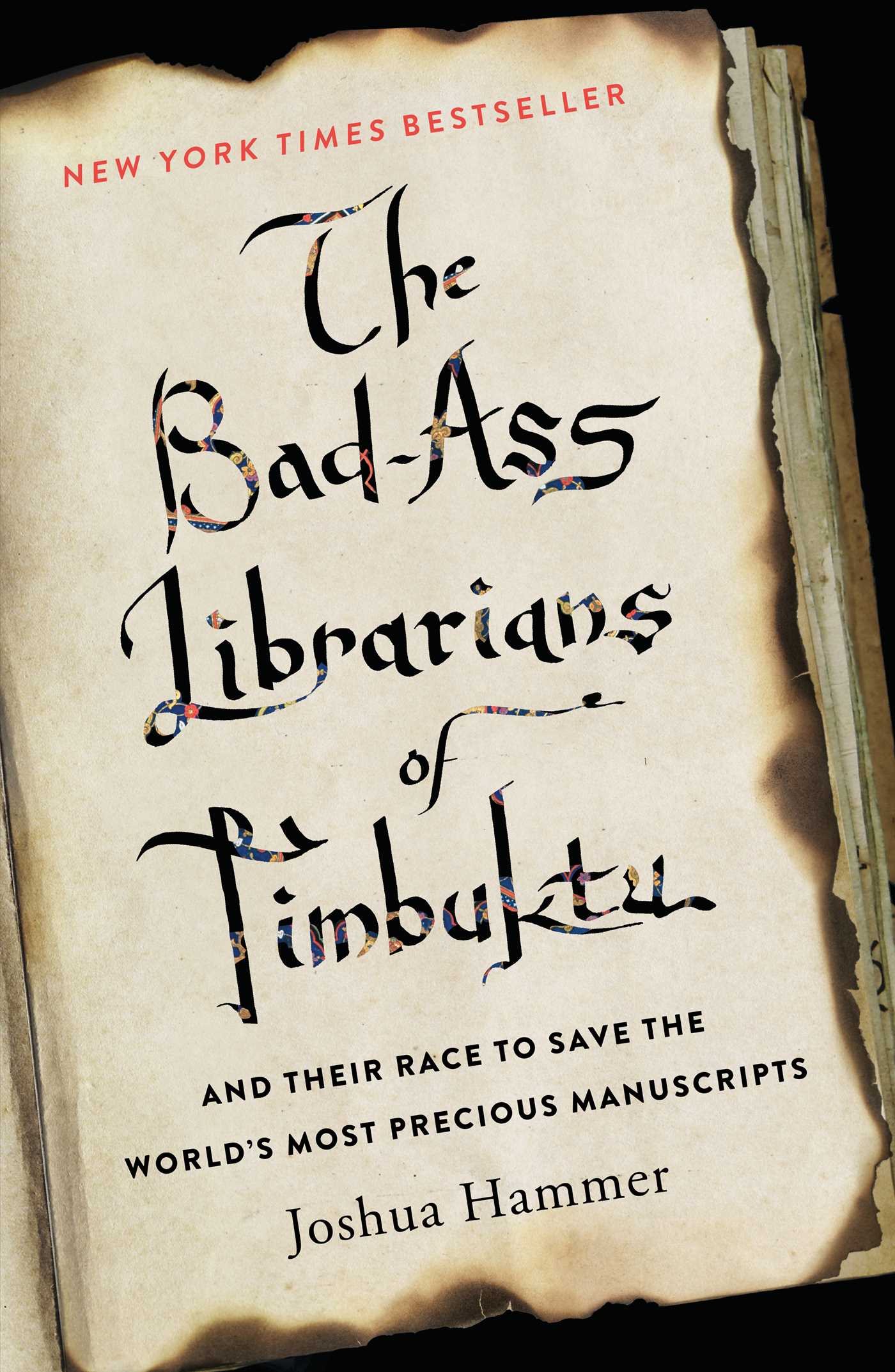
The Bad-Ass Librarians of Timbuktu has been on my TBR list since January and I definitely want to read it!
The Invention of Russia has been waiting for me even longer... I definitely want to try to get to this, but it's longer and will require more attention.
The Terror Years by Lawrence Wright is the outlier. He is an excellent storyteller, but I've read a reasonable amount on this subject already so feel less driven to pick this up.
Who is Charlie by Emmanuel Todd -- an ARC that I definitely will read, a sociological critique.
Invisible Man, Got the Whole World Watching by Mychal Denzel Smith -- almost certainly will read.
Days of Destruction, Days of Revolt by Chris Hedges -- probable, but he's very polemical and can irritate me, so it could end up a DNF.
The Bad-Ass Librarians of Timbuktu has been on my TBR list since January and I definitely want to read it!
The Invention of Russia has been waiting for me even longer... I definitely want to try to get to this, but it's longer and will require more attention.
The Terror Years by Lawrence Wright is the outlier. He is an excellent storyteller, but I've read a reasonable amount on this subject already so feel less driven to pick this up.
10Chatterbox
>8 jessibud2: Heavens, yes!!
11jessibud2
>9 Chatterbox:- The Bad-Ass Librarians of Timbuktu - I know nothing about this book but the title is fantastic! (I've always been a sucker for great titles even when the contents of the books don't live up to them, lol)
12amanda4242
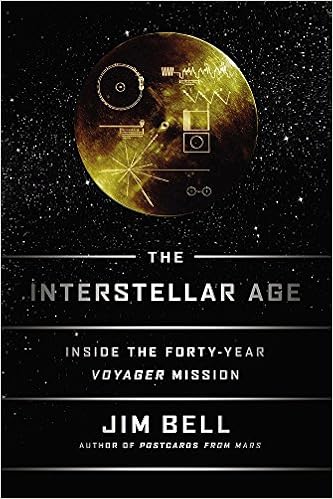
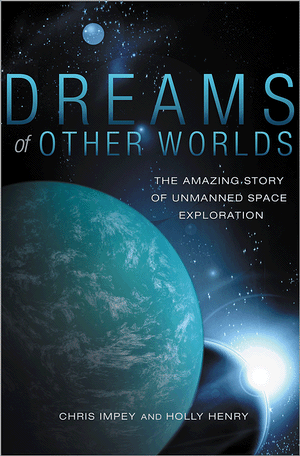
I'm sticking to space exploration for this month's topic and have requested Red rover : inside the story of robotic space exploration, from Genesis to the Mars rover Curiosity, The interstellar age : inside the forty-year Voyager mission, and Dreams of other worlds : the amazing story of unmanned space exploration from the library.
13Chatterbox
>11 jessibud2: It's about the (largely successful) efforts by the librarians in Timbuktu to save ancient and priceless manuscripts in the city when the ISIS affiliated groups swept through and occupied it two or three years ago. They date back to the days when it was a famous trading entrepot and center of religious study. It was, at one time, another Damascus, Cairo and Granada, a hub of scholarship.
14cbl_tn
I put a hold on The Bad-Ass Librarians of Timbuktu last week, but I'm not sure I'll get it in time to finish it in July. I'm also planning to read The Bloomsbury Reader on Islam in the West since I have a review due for it August 1!
15katiekrug
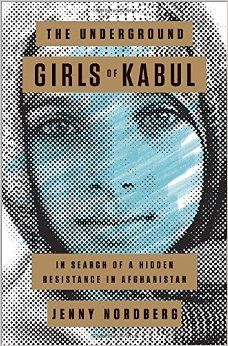
I forgot I also have the audio of The Underground Girls of Kabul, so I might try to get to that one, too.
16benitastrnad
I picked up a book at the ALA conference Smartest Places on Earth: Why Rustbelts Are the Emerging Hotspots of Global Innovation that has caught my interest. I wanted to read David Maraniss's book on Detroit Once in a Great City: A Detroit Story but since I have this other book, I think I will read it.
17avatiakh
I have from the library Exit Right: the people who left the left and reshaped the American century by Daniel Oppenheimer.
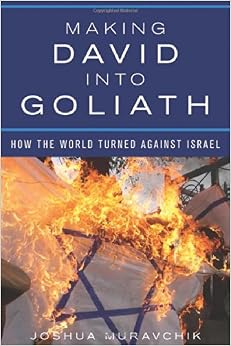
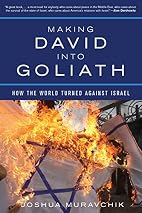
I'll also try for Making David into Goliath: how the world turned against Israel by Joshua Muravchik.
I'll also try for Making David into Goliath: how the world turned against Israel by Joshua Muravchik.
18EBT1002
Would Missoula count for this month's category? I have been meaning to force myself to listen to it....
19kac522
I hope to get to The Devil's Highway: A True Story by Luis Alberto Urrea--a story of Mexican immigration.
20Chatterbox
>18 EBT1002: Absolutely. After the debate over rape penalties following the Stanford rapist case recently, I can't think of anything that is a more current current affair, Ellen.
>19 kac522: Another very topical topical affair, in light of the election issues on immigration, and the global debate about migration! I'll be very interested to see what you think, as this is a book that I could be convinced to use some of my massive Amazon e-book settlement to purchase, if it's good, or to track down at the library.
>19 kac522: Another very topical topical affair, in light of the election issues on immigration, and the global debate about migration! I'll be very interested to see what you think, as this is a book that I could be convinced to use some of my massive Amazon e-book settlement to purchase, if it's good, or to track down at the library.
21katiekrug
>19 kac522: - I have that one on my library WL... very tempted to join you but may have already over-booked myself for the month. We'll see!
22Oberon
I am struggling with this month's selection which is odd since I read a lot of current affairs books. I am leaning toward One Billion Hungry but might read Hard Choices instead or maybe something else entirely.
Ironically, I completed two very good current affairs books in June - Our Kids and Red Notice so if others are struggling with finding books I would recommend either one.
Ironically, I completed two very good current affairs books in June - Our Kids and Red Notice so if others are struggling with finding books I would recommend either one.
24weird_O
I've already read my current affairs book: Garrison Keillor's Homegrown Democrat. It was written and published in 2004, when Dubya was running for re-election. Twelve years old, but still relevant. A few quotes:
"I became a Democrat because I was eager and hopeful, not because I was angry. Anger makes for amusing radio shows but it's got a short shelf life. It's a crummy way to live. Your mother was right: forgive and forget. Live in the present and you'll be happier."
" …[I]f lower taxes are your priority over human life, then we know what sort of person you are."
"You can't suddenly change the rules to suit yourself. You can't stop the train and kick off the people you don't like. You can't tower over people and roar and screech and spray saliva on them. You can't prey on the preoccupied and slip in a 2% surcharge on the electric bill and thereby filch a billion dollars a few cents at a time. You can't sell bad meat or water the beer or charge 25% interest or piss in the public water supply. You can't put a quarter in the collection plate and take a dollar out. Democrats thought that this was understood."
"Liberalism is the politics of kindness."
25benitastrnad
After reading about Paul's travails in his thread I am thinking that I should find a copy of Thieves of State: Why Corruption Threatens Global Security by Sarah Chayes and read that for our current affairs topic.
26jessibud2
Wow. Sounds good. Book bullet for sure.
I just finished listening to and watching live, Barack Obama speak to our Parliament in Ottawa. What a rock star of a man. I have never heard so much applause, seen so many people on their feet so many times during one speech. Funny, charming but genuine, grounded and clear-thinking. What a loss he will be for not only your country but for the world.
http://www.ctvnews.ca/politics/obama-delivers-speech-to-packed-cheering-parliame...
Sorry to hijack this thread but this is so relevant to *current affairs*. I don't know if the link gives the full speech but it's worth a listen regardless.
I just finished listening to and watching live, Barack Obama speak to our Parliament in Ottawa. What a rock star of a man. I have never heard so much applause, seen so many people on their feet so many times during one speech. Funny, charming but genuine, grounded and clear-thinking. What a loss he will be for not only your country but for the world.
http://www.ctvnews.ca/politics/obama-delivers-speech-to-packed-cheering-parliame...
Sorry to hijack this thread but this is so relevant to *current affairs*. I don't know if the link gives the full speech but it's worth a listen regardless.
27Smiler69
I'm still trying to find a book that'll fit in this month's current affairs theme. Would Neurotribes fit? Seems to me autism and neuroscience is often being talked about in the media. It's a long book and this challenge would encourage me to tackle it. Plus, Ellen and Joe apparently liked it, so I'm extra motivated.
29Chatterbox
>27 Smiler69: Sure, I would think so. The bonus is that if it spills over into August, it would fit there, too...
31Smiler69
>26 jessibud2: I saw bits of that speech via FB yesterday. I too wish he could stay and he will be missed, though as a Canadian I had nothing to do with him becoming president in the first place.
>29 Chatterbox: Glad I found something in my tbr that fits!
>29 Chatterbox: Glad I found something in my tbr that fits!
32nittnut
I am reading Syria Burning, which is on my shelf and though it was published a year ago, the conflict in Syria continues and the effects are ongoing...
33witchyrichy
I know what I am reading for current events: Just Mercy: A Story of Justice and Redemption and Evicted: Poverty and Profit in the American City. Both books have been part of the One Book, One Richmond project at the University of Richmond, the former for 2015-2016 and the latter for this coming year. The university encourages professors like me to integrate themes from the book into my courses.
34Chatterbox
>33 witchyrichy: I'll be a nitpicky pedant, because of the passive voice construction of "I am encouraged to integrate themes..." -- does that mean that you feel encouraged because of the books, or that the institution encourages you to make use of them? (Sorry, the perils of the passive voice lends itself to confusion of this kind, and I genuinely am curious!) I have a copy of "Evicted", but thanks for flagging the other book for my attention.
35laytonwoman3rd
I may read Between the World and Me, which I have my daughter's copy of languishing here. My husband is currently reading Playing to the Edge, about the "war on terror", which he recommends, but I don't think I want to go there right now.
36witchyrichy
>34 Chatterbox: Sorry about the passive confusion: the university encourages professors to make use of the themes. My students are grad students, however, and my not be connected to the One Book, One Richmond initiative. My course is about educational technology so I already talk about digital equity and how to close what is sometimes called the "homework gap" to refer to those students who can't afford either computers or Internet access at home.
37Chatterbox
>36 witchyrichy: Thanks for the clarification! I was curious. (And I loathe the passive voice; this is just one of those cases where it does actually make a difference to one's understanding of a sentence...) Shall be keeping an eye open for your thoughts on the books. I have overcommitted to this theme already, and just added Rebecca Traister's book as well, so I probably won't read Evicted but shall be curious to see what you think of it. I've been monitoring a lot of these "gap" issues, generally speaking.
38charl08
In caw anyone is still thinking about what to read -
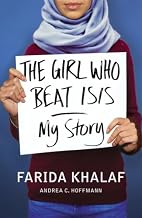
The Girl Who Beat ISIS by Farida Khalaf and Andrea C Hoffman reviewed by Rachel Aspden
"...a compelling testament to the suffering of ordinary people caught up in violence far beyond their control - and to the particularly terrible price it exacts from women"
(From www.guardian.co.uk/books )
The Girl Who Beat ISIS by Farida Khalaf and Andrea C Hoffman reviewed by Rachel Aspden
"...a compelling testament to the suffering of ordinary people caught up in violence far beyond their control - and to the particularly terrible price it exacts from women"
(From www.guardian.co.uk/books )
39charl08
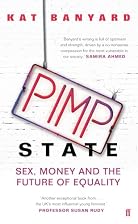
Pimp State: Sex, Money and the Future of Equality by Kat Banyard reviewed by Sarah Ditum
"...a detailed account of the case against the sex industry..."
I ordered this from the library, not sure if it will come in time for the month's read
40Chatterbox
>38 charl08: I saw that... Sadly, not available in the US yet, and a bit too pricey still on Kindle in the UK, so may pass on it for now. We'll see.
41Smiler69
>40 Chatterbox: I see it's available July 7th, so not much longer to wait.
43Chatterbox
>41 Smiler69: Not here, alas -- there's an International edition that has a September date, and something else with an August date, but both seem to have the same UK publisher, so I think it's just a way to enable US customers to order the book remotely, eventually. Right now, not available at all.
May have been on NetGalley in the past, but it's not there now. Oh well, if I really want it, I can pay the price for the UK Kindle book -- or wait for that price to fall.
May have been on NetGalley in the past, but it's not there now. Oh well, if I really want it, I can pay the price for the UK Kindle book -- or wait for that price to fall.
44banjo123
I will probably join the crowd reading Evicted. If I get time, I may look for something on the EU as well.
45LoisB
I finished The ISIS Crisis. The first 75% of this book was an informative look at ISIS - good information about its roots and the history of the Middle East. The last 25% is a Christian sermon relating biblical prophesies to world affairs.
46Chatterbox
>45 LoisB: Good heavens re the last 25%. Not sure that that is what I would need or expect. Did they give you fair warning before you dove in that that is what you'd find between the covers?
47LoisB
>46 Chatterbox: The book was recommended by some friends - they belong to a bible study group, so I should have thought more about it! I just downloaded it to my kindle, so I never saw the cover or any write-ups. I skimmed through that last 25%!
48Chatterbox
>47 LoisB: hmmm, yes. I would refrain from seeking further book suggestions from them, but that's just me...
I'm launching into my first read, Invisible Man, Got the Whole World Watching. Kind of a younger Ta-Nehisi Coates? Interesting, and very well written, though I'm still only two or three chapters into it.
I'm launching into my first read, Invisible Man, Got the Whole World Watching. Kind of a younger Ta-Nehisi Coates? Interesting, and very well written, though I'm still only two or three chapters into it.
49ronincats
I have an ER book, Unfair: The new science of criminal injustice, that I think will fit.
50Chatterbox
I finished reading Invisible Man, Got the Whole World Watching by Mychal Denzel Smith. It's an intriguing counterpoint to Ta-Nehisi Coates' latest book, written in reaction to what the author refers to as "respectability politics", as personified by Barack Obama, which he describes as the art of drawing moral equivalencies between what white people need to do to bring racial justice to the US and what black people "should" do in areas like improving black on black violence and ensuring all black families have fathers, etc. He makes some very important points and draws attention to what I think is a noteworthy generation gap that helps to explain the force behind the Black Lives Matter movement. This doesn't have the same thoughtful philosophical underpinnings that Coates' book does, but it's well worth reading simply to understand how and why someone from an affluent background, with a good education and on track to "succeed" (with success, of course, being defined by white society) would be angry, anxious, depressed and fearful for their own future. If you are white, and can suspend judgment while reading it, it will help you understand what people mean when they talk about "privilege" -- the automatic assumptions that we make when we leave the house each day, about how we are seen by others around us. The irony, I sometimes fear, is that a lot of this means that we risk becoming more and more self conscious about how we interact with each other. Anyway, 4.5 stars; 4 stars for its absolute merits and the extra half star for the importance of its content.
51nittnut
>50 Chatterbox: Sounds like a useful read Suzanne. I do agree, however, that we are at a high risk for becoming not only self-conscious but also having people interpreting and policing each others thoughts and words to the detriment of society. It's something that bears thinking about and some civil discussion as well. One can only hope.
52Chatterbox
>51 nittnut: Language as minefield... I do think we need to have a degree of self awareness. I was thinking to myself while reading this, that I never have to think about what color my skin is -- it's simply skin. If I were black, I wouldn't have that luxury or privilege. Because inevitably, someone would make a judgment about me based on that. I grew up with the knowledge that I am the "norm" in my world and it wasn't until I was living in Japan that I became aware of what it's like to be not the norm and to be looked down on just because I was a visible minority. (And even there I sometimes got a break, though not always, because some Japanese thought I smelled strange or bad, because of my diet.) I would come home at the end of the day, look in the mirror and feel odd that I wasn't Japanese. I definitely felt like a misfit. It was a very small taste of what it might feel to get a subtle message constantly that my skin tone is "wrong" or second class. So what must it be like to feel like that every time you leave your home and engage with the broader society, knowing that it places you at a disadvantage?
53witchyrichy
As I write this post, the news is reporting two more deadly shootings.
I finished Just Mercy: A Story of Justice and Redemption. Hard to read but also hard to put down. Bryan Stevenson describes his work to free Walter McMillan, falsely accused and convicted of a murder in a small Alabama town. He also digs more deeply into a dangerously flawed legal system where poverty and race have more to do with the outcomes of trials than actual guilt or innocence. The most devastating stories for me were those describing juveniles sentenced to life without parole in adult prisons. I wrote a longer review here.
I haven't read either Coates' or Smith's books, but I think they might be useful next reads. Stevenson tells his own story of being accosted by police near his apartment when he first moved to Atlanta. He was able to calmly defuse the situation as he fought the urge to run but wondered how another scared black man might have reacted when a gun was held to his head. We can't know if race played a role in the incident (would the police have treated a white man the same way?) but it seems likely. I simply can't imagine living with that kind of fear and anxiety every day. Coates and Smith, it seems, can help provide that insight just as Stevenson did.
I finished Just Mercy: A Story of Justice and Redemption. Hard to read but also hard to put down. Bryan Stevenson describes his work to free Walter McMillan, falsely accused and convicted of a murder in a small Alabama town. He also digs more deeply into a dangerously flawed legal system where poverty and race have more to do with the outcomes of trials than actual guilt or innocence. The most devastating stories for me were those describing juveniles sentenced to life without parole in adult prisons. I wrote a longer review here.
I haven't read either Coates' or Smith's books, but I think they might be useful next reads. Stevenson tells his own story of being accosted by police near his apartment when he first moved to Atlanta. He was able to calmly defuse the situation as he fought the urge to run but wondered how another scared black man might have reacted when a gun was held to his head. We can't know if race played a role in the incident (would the police have treated a white man the same way?) but it seems likely. I simply can't imagine living with that kind of fear and anxiety every day. Coates and Smith, it seems, can help provide that insight just as Stevenson did.
54Chatterbox
>53 witchyrichy: Yes, it's hard to read the news fresh after reading Smith's book. It makes me so, so angry. Yes, I have more insight, but it doesn't bring me any peace of mind. More context, perhaps, but no peace of mind.
55Fourpawz2
I read Black Flags: The Rise of ISIS for this challenge. Some of it is not strictly speaking 'current' but I feel that it got me current on a subject I hear about every day and have often felt that I did not know enough about. Feel more informed now.
56Chatterbox
I've finished reading The Terror Years by Lawrence Wright, which is a collection of articles by the author (who wrote the excellent The Looming Tower about 9/11). There's a significant degree of overlap between several of the first pieces in the book, which gets a bit annoying, but the second half offers more variety and several in-depth pieces that, while covering not-unfamiliar territory, were still fresh, moving and intriguing. Particularly noteworthy were a piece about Wright's three months living in Saudi Arabia and working as an advisor to an English-language newspaper, and one about the families of the American hostages held by ISIS in Syria, as they banded together behind the scenes, including Jim Foley's parents, dealing with broader themes of what US hostage rescue policy should be, and the ineptitude of law enforcement vs a single individual acting out of humanitarian impulse simply in providing support to these isolated and helpless families during their long ordeal while waiting for some kind of news. Other pieces are more plain vanilla or repeat what Wright has written elsewhere, so how much you'd value this depends on your level of knowledge of the issues. 4.25 stars.
I'm still looking for a good book about ISIS in particular, not the Joby Warrick book, which gives an overview of US mideast policy and what lead to ISIS's rise, but about its campaigns, about how it governs and recruits, etc. What I have picked up so far seems to have been 2/3 about the cause and effect "why ISIS was born", about which I've read a great deal already, and then some stuff about the Iraqi civil war. ISIS itself gets a footnote, despite being in the title. Gah. Black Flags: The Rise of ISIS was an example of that. Sure, it's fine for what it is, but it's about US policy, about Egyptian policy, about al-Qaeda -- there is so much history that there was no room for what it is about ISIS that distinguishes it from other groups. It has actually declared a caliphate, which is why it executes prisoners, but how does it try to build/rebuild a caliphate?
My next read for this challenge will be either All the Single Ladies -- the connection to current affairs being the ongoing debate over gender equity -- or The Bad-Ass Librarians of Timbuktu, with the current affairs connection once again being to terrorism, in this case in Mali. Then it will be on to Who is Charlie?, which will combine the themes of terrorism and inequality, with specific reference to France. Emmanuel Todd, the author, apparently has written a critique of the movement as being privileged in some way. Incidentally, Wright notes in passing in the book that I just finished that while an estimated 10% of French citizens are Muslim (the secular nation bans religious questions on its census), 70% of its prison population is Muslim. That's an intriguing ration, non?
I'm still looking for a good book about ISIS in particular, not the Joby Warrick book, which gives an overview of US mideast policy and what lead to ISIS's rise, but about its campaigns, about how it governs and recruits, etc. What I have picked up so far seems to have been 2/3 about the cause and effect "why ISIS was born", about which I've read a great deal already, and then some stuff about the Iraqi civil war. ISIS itself gets a footnote, despite being in the title. Gah. Black Flags: The Rise of ISIS was an example of that. Sure, it's fine for what it is, but it's about US policy, about Egyptian policy, about al-Qaeda -- there is so much history that there was no room for what it is about ISIS that distinguishes it from other groups. It has actually declared a caliphate, which is why it executes prisoners, but how does it try to build/rebuild a caliphate?
My next read for this challenge will be either All the Single Ladies -- the connection to current affairs being the ongoing debate over gender equity -- or The Bad-Ass Librarians of Timbuktu, with the current affairs connection once again being to terrorism, in this case in Mali. Then it will be on to Who is Charlie?, which will combine the themes of terrorism and inequality, with specific reference to France. Emmanuel Todd, the author, apparently has written a critique of the movement as being privileged in some way. Incidentally, Wright notes in passing in the book that I just finished that while an estimated 10% of French citizens are Muslim (the secular nation bans religious questions on its census), 70% of its prison population is Muslim. That's an intriguing ration, non?
57PaulCranswick
Well it is Scottish independence which is a current affair topic interesting me at the moment. Just finished Andrew Marr's book on the subject:
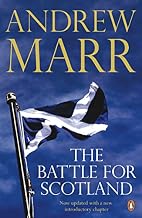
The Battle for Scotland by Andrew Marr
Scottish independence is very much a hot topic in British politics at the moment and Andrew Marr, a leading Scots current affairs broadcaster, anticipated the arguments wonderfully in this overview of the issues and the history of the debate.
To nail my own colours to the mast I am in favour of Scotland remaining in the United Kingdom. That said I am nothing like a traditional Unionist in my views. I am very much in favour of Britain becoming a republic and organised on federal lines with powers to Wales, Scotland, Northern Ireland and five regions of England. The Union as it is composed at the moment is failing too many people - the english nether regions just as much, if not more, than Scotland and this should be righted by taking real powers away from Westminster and placing it closer to the people it impacts.
Marr's book is thought provoking and certainly makes interesting reading when one considers the colourful characters who peopled the SNP (Scottish Nationalists) in their early days - the poets, lairds, novelists and actors. It also confirms what political opportunists the SNP are. In the 1970s they were staunchly anti-european and, at best, centrist. Nowadays with Salmond and Sturgeon (it seems that you have to have a name that sounds like a fish as well as a cod-like countenance to get along in their leadership) they have stolen the clothes of the Labour Party North of the Border and with it their support base. Untrustworthy and unscrupulous the lot of them.
Cameron made an enormous error by allowing Salmond to set the terms for the recent referendum on Scotland wherein the Union was retained by a whisker. Salmond is a clever fish and knew well that younger voters are by nature more radically minded so he lowered the voting age to 16 from 18. He also knows that Scots living in other parts of the United Kingdom and elsewhere are more likely to favour retaining the UK so he allowed them no say.
The UK has to learn from this and the EU referendum that to effect what is a momentous change in national status a clear majority of the populace ought to say so. That means 50% of registered voters should vote in favour of change. That means that on a turn out of 70% more than 70% of those that vote must vote for change. This stops the fickle minded forcing through a change on Britain which is irreversible.
The Battle for Scotland by Andrew Marr
Scottish independence is very much a hot topic in British politics at the moment and Andrew Marr, a leading Scots current affairs broadcaster, anticipated the arguments wonderfully in this overview of the issues and the history of the debate.
To nail my own colours to the mast I am in favour of Scotland remaining in the United Kingdom. That said I am nothing like a traditional Unionist in my views. I am very much in favour of Britain becoming a republic and organised on federal lines with powers to Wales, Scotland, Northern Ireland and five regions of England. The Union as it is composed at the moment is failing too many people - the english nether regions just as much, if not more, than Scotland and this should be righted by taking real powers away from Westminster and placing it closer to the people it impacts.
Marr's book is thought provoking and certainly makes interesting reading when one considers the colourful characters who peopled the SNP (Scottish Nationalists) in their early days - the poets, lairds, novelists and actors. It also confirms what political opportunists the SNP are. In the 1970s they were staunchly anti-european and, at best, centrist. Nowadays with Salmond and Sturgeon (it seems that you have to have a name that sounds like a fish as well as a cod-like countenance to get along in their leadership) they have stolen the clothes of the Labour Party North of the Border and with it their support base. Untrustworthy and unscrupulous the lot of them.
Cameron made an enormous error by allowing Salmond to set the terms for the recent referendum on Scotland wherein the Union was retained by a whisker. Salmond is a clever fish and knew well that younger voters are by nature more radically minded so he lowered the voting age to 16 from 18. He also knows that Scots living in other parts of the United Kingdom and elsewhere are more likely to favour retaining the UK so he allowed them no say.
The UK has to learn from this and the EU referendum that to effect what is a momentous change in national status a clear majority of the populace ought to say so. That means 50% of registered voters should vote in favour of change. That means that on a turn out of 70% more than 70% of those that vote must vote for change. This stops the fickle minded forcing through a change on Britain which is irreversible.
58avatiakh
>56 Chatterbox: I read ISIS: Inside the Army of Terror by Michael Weiss and Hassan Hassan and while it does the background stuff, I felt it gave a pretty good overview of how the group operates, how they moved in and took over new territory so easily. Looks like they've already updated it as well.
59Chatterbox
>58 avatiakh: Thanks for the suggestion!
60benitastrnad
I am plugging away at Smartest Places on Earth: Why Rustbelts Are the Emerging Hotspots of Global Innovation and I am not sure that I agree with all of the authors points at this time. I will reserve judgement until I finish the book. I really should read Once in a Great City but if I finish Smartest Places... I will start on Thieves of State. I heard this one referred to this weekend on a talk radio show.
"Smartest Places ..." caught my eye because at my university the emphasis is now on "cluster hiring." This is to prevent research silos from developing. Of course, both of these terms have already made an appearance in the first 100 pages of the book.
"Smartest Places ..." caught my eye because at my university the emphasis is now on "cluster hiring." This is to prevent research silos from developing. Of course, both of these terms have already made an appearance in the first 100 pages of the book.
61charl08
Pimp State came in at the library - relieved to see its not a brick so I should get through it this month!
62labwriter
>60 benitastrnad: What is cluster hiring? Research silos?
63banjo123
Evicted by Matthew Desmond
This is a well reviewed sociological book, about people experiencing evictions and homelessness in Milwaukee. I was not overly impressed by the book. I think maybe because I have worked in social work, with people living in poverty, for so many years, nothing in the book surprised me. Perhaps for people without that background, the book would be enlightening.
Desmond follows a group of individuals experiencing poverty and housing insecurity, and most of the book tells about their individual stories. Rough stuff all around. I wished he had spent more time putting the stories into context, so that we had a better idea of how representative (or not) these individuals were. Most of that information was in the foot-notes, cumbersome to get to, and the last chapter.
The last chapter was the most interesting to me. Desmond highlights the number of social problems that are made worse be housing instability. (disruption to children's education; inability to focus on other long-term goals, vocational, educational, or addiction recovery.) I thought he made a good case, but then, with me he was preaching to the choir. He advocates for creating a right to housing; and recommends housing vouchers as the way to do this. Apparently this has worked well in other countries. I would have liked more details on how this could work.
This is a well reviewed sociological book, about people experiencing evictions and homelessness in Milwaukee. I was not overly impressed by the book. I think maybe because I have worked in social work, with people living in poverty, for so many years, nothing in the book surprised me. Perhaps for people without that background, the book would be enlightening.
Desmond follows a group of individuals experiencing poverty and housing insecurity, and most of the book tells about their individual stories. Rough stuff all around. I wished he had spent more time putting the stories into context, so that we had a better idea of how representative (or not) these individuals were. Most of that information was in the foot-notes, cumbersome to get to, and the last chapter.
The last chapter was the most interesting to me. Desmond highlights the number of social problems that are made worse be housing instability. (disruption to children's education; inability to focus on other long-term goals, vocational, educational, or addiction recovery.) I thought he made a good case, but then, with me he was preaching to the choir. He advocates for creating a right to housing; and recommends housing vouchers as the way to do this. Apparently this has worked well in other countries. I would have liked more details on how this could work.
64EBT1002
>50 Chatterbox: You totally got me with Invisible Man, Got the Whole World Watching. I was much affected by Between the World and Me and I'm interested in the counterpart.
65amanda4242
I've just finished Jamie Bell's The Interstellar Age, an exiting look inside the Voyager mission. Bell covers its inception, the fly-byes of the outer planets, and its ongoing gathering of data as the probes leave our solar system in an engaging way. Highly recommended.

image of Saturn taken by Voyager 2
http://voyager.jpl.nasa.gov/index.html

image of Saturn taken by Voyager 2
http://voyager.jpl.nasa.gov/index.html
66benitastrnad
#62
Sorry to take so long to get back to LT, but the week has been busy.
Cluster Hiring - hiring a group of people who do different kinds of research on the same topic. For instance, a cluster hire in Cancer research might involve a geneticist, an immunologist, a psychologist, a physical therapist, a virologist, a chemist, etc. The idea being that all of these different people would work in close proximity to each other and "cross pollinate" ideas between researchers. The idea is that it opens up research to new ideas from different disciplines. These hires are usually free-lance people on short term contracts. The contracts are good for the life of the grant that funds the research.
In my case, since I work in a College of Education, a hypothetical situation would be a departmental grant to study ways to combat obesity in elementary school. A cluster hire could be a pedagogy expert to figure out how best to do the teaching; a nutritionist to figure out what fourth graders eat that would best accomplish the goals of good nutrition; a biochemist who specializes in metabolic chemistry; a medical person who could address medical concerns, etc.
This kind of hiring is project oriented not research oriented.
Research silos - single researchers who fund their own research group and research one thing in isolation from other researchers who might be doing parallel research. They are proprietary in that they "own" their own research and don't share it with others unless they get paid for doing so. An example of this kind of research would be Thomas Edison and Alexander Graham Bell, typical genius researchers who did their own thing by themselves. They would be considered Research Silo today.
Sorry to take so long to get back to LT, but the week has been busy.
Cluster Hiring - hiring a group of people who do different kinds of research on the same topic. For instance, a cluster hire in Cancer research might involve a geneticist, an immunologist, a psychologist, a physical therapist, a virologist, a chemist, etc. The idea being that all of these different people would work in close proximity to each other and "cross pollinate" ideas between researchers. The idea is that it opens up research to new ideas from different disciplines. These hires are usually free-lance people on short term contracts. The contracts are good for the life of the grant that funds the research.
In my case, since I work in a College of Education, a hypothetical situation would be a departmental grant to study ways to combat obesity in elementary school. A cluster hire could be a pedagogy expert to figure out how best to do the teaching; a nutritionist to figure out what fourth graders eat that would best accomplish the goals of good nutrition; a biochemist who specializes in metabolic chemistry; a medical person who could address medical concerns, etc.
This kind of hiring is project oriented not research oriented.
Research silos - single researchers who fund their own research group and research one thing in isolation from other researchers who might be doing parallel research. They are proprietary in that they "own" their own research and don't share it with others unless they get paid for doing so. An example of this kind of research would be Thomas Edison and Alexander Graham Bell, typical genius researchers who did their own thing by themselves. They would be considered Research Silo today.
67Chatterbox
I've been reading Rebecca Traister's book about single women, but got bogged down in what is, to me, the well-known history section in its early chapters. I'll see if it picks up some momentum. The premise is interesting -- political and economic power of this demographic.
68mdoris
>67 Chatterbox: There is an interesting article in NYer June 27, 2016 by Jill Lepore The Woman Card. You might find it interesting.
69Chatterbox
>68 mdoris: Thanks for the heads-up on that!! I will go back and look for it. (I have a Kindle subscription, which actually has proved WORSE for keeping on my NY-er reading). I like Lepore's writing, and that sounds as if it would be fun -- clearly a riff on Trump's comment on Clinton's supporters
?
?
70mdoris
>69 Chatterbox:, Yes the NYer hard copy sits and stacks up and stares back and urges reading and pressure beyond the fun of the cartoons. I really like Jill Lepore's writing too.
71charl08
>68 mdoris: Another fan of Jill Lepore here. Will have a look for this article.
I've started Pimp State - after introducing her book with a story about how male a porn industry conference is, Banyard is setting up to challenge the idea that the sex trade can be reformed, and is compatible with feminism. Hoping for good things from this book. Several years ago was left sputtering when a (female) student tried to make the case for empowerment via lapdancing. I'm hoping for some good ammunition for why the sex industry really isn't a great solution to that.
I've started Pimp State - after introducing her book with a story about how male a porn industry conference is, Banyard is setting up to challenge the idea that the sex trade can be reformed, and is compatible with feminism. Hoping for good things from this book. Several years ago was left sputtering when a (female) student tried to make the case for empowerment via lapdancing. I'm hoping for some good ammunition for why the sex industry really isn't a great solution to that.
72Smiler69
A bit (or a lot) of a stretch, but I started listening to Notes on a Small Island, and thought there was a small chance this book might qualify for this month's theme. Granted, it was published over 20 years ago now, but of course, the 'small island' in question has been much in the news lately. What say you, Suz?
73jessibud2
I am about one third of the way through The Myth of the Muslim Tide and while it is interesting, I just need a break from the news and the politics for now. I also just finished a novel (taking a break from non-fiction) about an Israeli Arab and the issues there (The Attack by Yasmina Khadra) and it's all just a bit much for me. My mind doesn't shut off easily at night and I just hate thinking about all this all the time.
Incidentally, I see that one of the books you have up there on the list of books, is Trump's Art of the Deal. I just came across this excellent article today. It is terrifying:
http://www.newyorker.com/magazine/2016/07/25/donald-trumps-ghostwriter-tells-all
The last paragraph says it all. And if the electorate of the United States (the non-Democratic electorate, that is) doesn't open their eyes and smarten up, I honestly believe they are in for some very rude shocks.
No offense to any Americans here but I am thankful every day that I live in Canada...
Incidentally, I see that one of the books you have up there on the list of books, is Trump's Art of the Deal. I just came across this excellent article today. It is terrifying:
http://www.newyorker.com/magazine/2016/07/25/donald-trumps-ghostwriter-tells-all
The last paragraph says it all. And if the electorate of the United States (the non-Democratic electorate, that is) doesn't open their eyes and smarten up, I honestly believe they are in for some very rude shocks.
No offense to any Americans here but I am thankful every day that I live in Canada...
74Chatterbox
>72 Smiler69: Brexit makes England a current affair, methinks!! As long as there is something about people musing about what makes the English, well, English.
>73 jessibud2: Yes, this year has just been too much. And that New Yorker article, which I read yesterday, is stunning and utterly terrifying. Trump's ghostwriter nails what worries me most: it's not about the process of ordinary governing, but the fact that he doesn't trust this guy with the nuclear codes. He's too volatile. Who is going to say no to him? Who is going to rein him in? Who does he really consult and listen to? When has he ever listened to anyone or sought out advice (vs someone just telling him what he wants to hear?)
This has been an unusually "good" month for current affairs, but that's not necessarily "good" for the world, sadly. At least I have the cats to turn to for consolation.
>73 jessibud2: Yes, this year has just been too much. And that New Yorker article, which I read yesterday, is stunning and utterly terrifying. Trump's ghostwriter nails what worries me most: it's not about the process of ordinary governing, but the fact that he doesn't trust this guy with the nuclear codes. He's too volatile. Who is going to say no to him? Who is going to rein him in? Who does he really consult and listen to? When has he ever listened to anyone or sought out advice (vs someone just telling him what he wants to hear?)
This has been an unusually "good" month for current affairs, but that's not necessarily "good" for the world, sadly. At least I have the cats to turn to for consolation.
75charl08
Not exactly light reading but good to read a book that ends with a call for positive action.
Pimp State: Sex, Money and the Future of Equality
I thought this was a really worthwhile read. However it made me pull awful faces as some of the stuff is just grim reading. It's also made me rethink one of the key texts I used to teach, which is not as awkward as it would be if I was still teaching (which is handy!).
Banyard uses a mix of interviews and policy research to argue for a change in thinking in attitudes to prostitution.* Simply put, she argues that consent is essential for all sexual relationships, that consent can't be bought, and thus all forms of paying for sex, including pornography and lap dancing where men pay women for sexual contact should be dealt with by the Swedish Model. This means criminalising buyers, and giving women ways out of prostitution. She discusses what (on her evidence) is the awful situation in Germany where buyers in some megabrothels can legally buy a timed ticket for access to how ever many women they wish. Rather than improving the working conditions for women, she argues that legalisation has meant better conditions for pimps and sex traffickers.
For me the most powerful parts of the book were the interviews with women who had sold sex. They're heartbreaking. Women who were abused by their families, trapped by pimps, and not supported by the state. At the same time, inspiring. People taking such a horrendous experience and going on to campaign in the hope of change.
Worth reading.
*She argues 'sex work' is inaccurate labelling as all sex for money is a form of abuse, so can't be work.
Pimp State: Sex, Money and the Future of Equality
I thought this was a really worthwhile read. However it made me pull awful faces as some of the stuff is just grim reading. It's also made me rethink one of the key texts I used to teach, which is not as awkward as it would be if I was still teaching (which is handy!).
Banyard uses a mix of interviews and policy research to argue for a change in thinking in attitudes to prostitution.* Simply put, she argues that consent is essential for all sexual relationships, that consent can't be bought, and thus all forms of paying for sex, including pornography and lap dancing where men pay women for sexual contact should be dealt with by the Swedish Model. This means criminalising buyers, and giving women ways out of prostitution. She discusses what (on her evidence) is the awful situation in Germany where buyers in some megabrothels can legally buy a timed ticket for access to how ever many women they wish. Rather than improving the working conditions for women, she argues that legalisation has meant better conditions for pimps and sex traffickers.
For me the most powerful parts of the book were the interviews with women who had sold sex. They're heartbreaking. Women who were abused by their families, trapped by pimps, and not supported by the state. At the same time, inspiring. People taking such a horrendous experience and going on to campaign in the hope of change.
Worth reading.
*She argues 'sex work' is inaccurate labelling as all sex for money is a form of abuse, so can't be work.
76benitastrnad
#75
That is not light reading, but sounds like there were some powerful arguments in the book that will make people think. It always amazes me - the power of language. Like your example of the term "sex work." How is it that giving something that name makes it less than what it is. It takes a good wordsmith to just parse out the language and get to the essential meaning in the words. Like you said, a worthwhile read.
That is not light reading, but sounds like there were some powerful arguments in the book that will make people think. It always amazes me - the power of language. Like your example of the term "sex work." How is it that giving something that name makes it less than what it is. It takes a good wordsmith to just parse out the language and get to the essential meaning in the words. Like you said, a worthwhile read.
77avatiakh
I've just finished Making David into Goliath: how the world turned against Israel by Joshua Muravchik (2014). Still thinking about it, it was a valuable read, and although not quite about current affairs, it gives the reader an understanding into how the current mostly hostile view of Israel in the media, at the UN and in many countries has grown to be. The book takes as the turning point the unexpected Israeli victory in the Six Day War which was fought on three sides against Egypt, Syria and Jordan.
Each chapter builds a background on a particular topic and then discusses how this has built the animosity towards Israel. Until and including the Six Day War, Israel was seen as up against the Arab World, but soon after the view pivoted to the Palestinians vs Israel, a completely different dynamic hence the title.
There's chapters on terrorism, the power of Arab oil in world politics, the Arab bloc's influence at the United Nations, European socialism, Edward Said and academia, the consequences of Israel's swing from socialist Labour to conservative Likud in the 1970s, Israel's homegrown leftist activists, academics, journalists, and new historians, the new Left in the world and how it moved from class struggle to an ethnic focus and intersectionality, international reporting on Israel and international organisations.
Very impressed with Muravchik's ability to add clarity to all this, he seems to have covered a lot of ground and there are several reports, articles and books I've noted for future reading. He's probably not everyone's flavour of the month, an ex-liberal now neo-conservative but I always think it pays to read from a wide range of viewpoints.
I'll definitely be reading more of his books, he has one on socialism, Heaven on Earth: The Rise and Fall of Socialism and another The Next Founders: Voices of Democracy in the Middle East both look like really interesting reads.
Each chapter builds a background on a particular topic and then discusses how this has built the animosity towards Israel. Until and including the Six Day War, Israel was seen as up against the Arab World, but soon after the view pivoted to the Palestinians vs Israel, a completely different dynamic hence the title.
There's chapters on terrorism, the power of Arab oil in world politics, the Arab bloc's influence at the United Nations, European socialism, Edward Said and academia, the consequences of Israel's swing from socialist Labour to conservative Likud in the 1970s, Israel's homegrown leftist activists, academics, journalists, and new historians, the new Left in the world and how it moved from class struggle to an ethnic focus and intersectionality, international reporting on Israel and international organisations.
Very impressed with Muravchik's ability to add clarity to all this, he seems to have covered a lot of ground and there are several reports, articles and books I've noted for future reading. He's probably not everyone's flavour of the month, an ex-liberal now neo-conservative but I always think it pays to read from a wide range of viewpoints.
I'll definitely be reading more of his books, he has one on socialism, Heaven on Earth: The Rise and Fall of Socialism and another The Next Founders: Voices of Democracy in the Middle East both look like really interesting reads.
78avatiakh
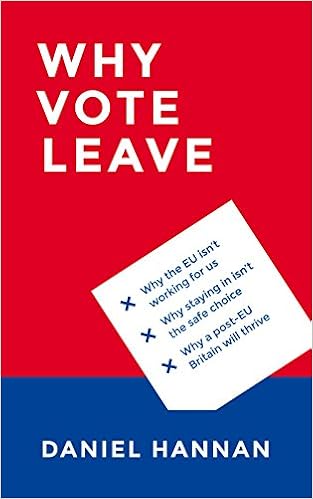
I've got Why Vote Leave by Daniel Hannan out from the library at present. Hoping that it will help with my understanding about Brexit. Hannan is a Conservative MEP and I recently saw him on CNN in a heated exchange with Christiane Amanpour.
79laytonwoman3rd
I finished Between the World and Me yesterday. Although it's a relatively short book, it has taken me most of the month to deal with it--I found it emotionally very difficult to read, and I don't feel at all qualified to comment on Coates's perceptions as a black man who grew up in Baltimore's inner city in the '70's. Although ostensibly written as a "letter" to his adolescent son, I think it's important reading for every American, probably most especially for those who, as he says repeatedly (quoting James Baldwin) "think they are white". It is full of hard truths about living in a black body in the U.S.A., and belongs on the shelf with the writings of Baldwin and other potent black voices.
80cbl_tn
I just finished The Bad-Ass Librarians of Timbuktu. Lots of detail about the rise of the fundamentalist jihadi terrorist groups in northern Mali, with connections to Osama bin Laden and Al Qaeda, Gaddafi, and ISIS. The background information about the jihadis comprises about half of the book, but the jacket blurb won't tell you that. It's necessary context for understanding the danger facing the manuscript collections in Mali. As a bonus for any world music fans, there's also some information about the Festival in the Desert and groups and musicians including Tinariwen, Amanar, and Khaira Arby. And, of course, Bono, who seems to show up everywhere.
81witchyrichy
>80 cbl_tn: I was sort of surprised by all the background information about the terrorist groups but as you point out, it was necessary to understand why saving the manuscripts was so important.
82cbl_tn
>81 witchyrichy: Thanks to your review and a couple of others, I was expecting it. I think I would have mentioned the terrorism content if I had written the jacket blurb.
83ronincats
Finally finished my targeted book for the month.
Book #74 Unfair: The New Science of Criminal Injustice by Adam Benforado (289 pp.)
This is my nonfiction read for the Current Affairs Challenge for July, as well as an ER book I received late last year--so it's also a Book off My Shelves!
I gave this book 5 stars for its relevance, importance and readability. Since my field is cognitive psychology, there were studies that were familiar, but not only were these applied to a novel setting, there was a whole new field of research with which I had been unfamiliar. The result is compelling, highly readable and totally disturbing. I want to send copies to the chief of police, city attorney, lawyers, and judges and demand that they read it. Without being polemical, Benforado clearly identifies where the issues are and some possible initial steps to address them.
And now I'll move on to another ER book, Listen, Liberal by Thomas Frank.
Book #74 Unfair: The New Science of Criminal Injustice by Adam Benforado (289 pp.)
This is my nonfiction read for the Current Affairs Challenge for July, as well as an ER book I received late last year--so it's also a Book off My Shelves!
I gave this book 5 stars for its relevance, importance and readability. Since my field is cognitive psychology, there were studies that were familiar, but not only were these applied to a novel setting, there was a whole new field of research with which I had been unfamiliar. The result is compelling, highly readable and totally disturbing. I want to send copies to the chief of police, city attorney, lawyers, and judges and demand that they read it. Without being polemical, Benforado clearly identifies where the issues are and some possible initial steps to address them.
And now I'll move on to another ER book, Listen, Liberal by Thomas Frank.
84charl08
>83 ronincats: Sounds interesting. Wish there was a British version!
I'm really tempted by the Timbuktu book too, but no sign at the library so far. I've got the Boko Haram book, but will fit it to my reading next month I think.
I'm really tempted by the Timbuktu book too, but no sign at the library so far. I've got the Boko Haram book, but will fit it to my reading next month I think.
85Chatterbox
Time to start ramping up the posting rate so we can get to 150 posts by the end of the month...
I have finished All the Single Ladies by Rebecca Traister for this challenge, all about the rise of independent, unmarried women as a political, social and economic force. It's good, if a bit predictable; it feels too much like a series of interesting magazine articles sandwiched together, though. Worth reading if you're interested, but I bogged down in the overly familiar (to me) history.
Moving on to Who is Charlie?, a provocative sociological analysis by Emmanuel Todd of contemporary France and xenophobia.
I have finished All the Single Ladies by Rebecca Traister for this challenge, all about the rise of independent, unmarried women as a political, social and economic force. It's good, if a bit predictable; it feels too much like a series of interesting magazine articles sandwiched together, though. Worth reading if you're interested, but I bogged down in the overly familiar (to me) history.
Moving on to Who is Charlie?, a provocative sociological analysis by Emmanuel Todd of contemporary France and xenophobia.
86charl08
Well, in the interests of the post count (!) I'm wondering if my current book might lead to some current affairs reading. It's A fortunate man: the story of a country doctor. The current affairs link is that (although written in the 1960s) the book is an exploration of life as a gp (general practitioner) in a rural area. The reason it has any claim to current affairs is that this crucial part of the NHS is struggling to recruit, and many of those currently in post are approaching retirement age. So this ideal (already under threat from contracting out out of hours service) of a local person who knows you and your family and can provide good first point care quickly is one that is not functioning in many places across the country (where I am, pretty lucky though).
I'm thinking I'll track down something more recent, perhaps autobiographical, on working in the field.
I'm thinking I'll track down something more recent, perhaps autobiographical, on working in the field.
87Oberon
It took me a bit but I settled on my current affairs book: The Roberts Court. While the book does not go through the recent death of Justice Scalia, the book discusses in detail the importance of how closely divided the Court is right now. It felt especially current last night as I was finishing the book while watching Bernie Sanders call for the overturning of Citizens United, the decision by the Court that eliminated restrictions on corporate funds in political campaigns. The Roberts Court has entire section devoted to Citizens United, how it came up through the lower courts, and how the majority came to their hostility of campaign finance reform. Very timely.
The Roberts Court by Marcia Coyle
If you are interested in the U.S. Supreme Court, Coyle has written an excellent book examining the rightward turn that the Court has taken since the appointment of Chief Justice John Roberts. The book looks at major decision in the areas of affirmative action, gun control, campaign finance reform and health care and traces how the Court has changed since Roberts became Chief Justice.
Coyle is a veteran reporter who focuses on the Supreme Court and her access to the justices, the advocates arguing the cases, and her deep knowledge of the subject matter shows. I would easily rank the book with The Brethern, Bob Woodward's seminal book about the Supreme Court. That said, this is pretty deep in the weeds on the inner working of one of the three branches of government. As an appellate lawyer, I found the book easy to navigate but I wonder if someone without similar legal training would find the book as readable or interesting.
The Roberts Court by Marcia Coyle
If you are interested in the U.S. Supreme Court, Coyle has written an excellent book examining the rightward turn that the Court has taken since the appointment of Chief Justice John Roberts. The book looks at major decision in the areas of affirmative action, gun control, campaign finance reform and health care and traces how the Court has changed since Roberts became Chief Justice.
Coyle is a veteran reporter who focuses on the Supreme Court and her access to the justices, the advocates arguing the cases, and her deep knowledge of the subject matter shows. I would easily rank the book with The Brethern, Bob Woodward's seminal book about the Supreme Court. That said, this is pretty deep in the weeds on the inner working of one of the three branches of government. As an appellate lawyer, I found the book easy to navigate but I wonder if someone without similar legal training would find the book as readable or interesting.
88Helenliz
In the interest of the posts count, I will say I'm not reading a current afairs book. None of the ones on the shelf that were calling to me seemed to fit. So instead I'm reading Into the Silence dealing with the attempts on Mount Everest in the 1920s. Not seasonal, not local, not topical, not small and not really an easy read.
89rosalita
I have been on the library waiting list for Between the World and Me for nearly two months, but I just picked up a sale e-copy at Kobo so I'm going to try to get to it soon. It probably won't be before the end of July, but I'll come back and post my thoughts after I've read it.
90charl08
>89 rosalita: Thanks for the reminder. A bit gobsmacked my library still doesn't have a copy, so I've put an order (sorry, request!) in.
92amanda4242
I just saw an article about NASA digitizing the Viking data, which shows that forty-year-old missions are still current events!
93Smiler69
Contributing to thread count... I'm very pleased that the book I wanted to read this month, Neurotribes will be a great fit for August.
94benitastrnad
I am close to finishing my book Smartest Places on Earth: Why Rustbelts Are the Emerging Hotspots of Global Innovation. The last two chapters have been really relevant for my as they pertain to what is happening at my place of work. The blurb on the front book flap said it was about academe, but until these last two chapters I was having trouble finding that link. But now it is there.
95nittnut
I've finished Syria Burning. At less than 200 pages, this can't be considered more than an overview, and the main thing this book did for me was leave me with the feeling that I know less than I did before I read it. It's well written, there's a good general historical overview and a good general synopsis of the current issues. It's a tragic situation, made even more so by the self-interested interference by other nations (specifically, the US, Russia, France, Britain, Iran, Saudi Arabia and Turkey). I agree with the author's conclusion that a unified strategy would be more effective, but I am uncertain that it will be enough. Mostly I feel like I need to read a lot more on the subject to begin to have a coherent opinion.
96jessibud2
I had set aside the book I was reading for this month but will try to get back to it before the end of the month.
97avatiakh
Also adding to thread count - I've started reading Vote Leave and finding it interesting reading. It's a good background into how the EU has changed over the years, about the situation at the time of Britain's entry. Germany & France, postwar, especially were doing well, recovering from the WW2 due to American help and the Marshall Plan whereas the UK was hampered by their GBP 21 billion war debt mostly owed to the US (only finished paying back in 2006). So entry to the EEC was appealing at the time and yet it was also at a pivotal time, the European growth spurt was about to head into decline while the UK economy was just beginning to recover.
Was there a similar book published for the Vote Remain crowd? I'd love to read the other side of the argument. I hadn't realised quite how much the EU interferes/regulates the decisions that a sovereign nation state within the union can take.
Was there a similar book published for the Vote Remain crowd? I'd love to read the other side of the argument. I hadn't realised quite how much the EU interferes/regulates the decisions that a sovereign nation state within the union can take.
98charl08
I was pretty sure about what I wanted with the referendum so didn't read a book about it, but there is a list of books about Europe here
http://fivebooks.com/interview/philippe-legrain-on-europe/
which includes a book by Hugo Dixon, The In/Out Question
"Hugo Dixon is actually trying to reach out to those people who might, currently, be persuaded by anti-EU arguments."
http://fivebooks.com/interview/philippe-legrain-on-europe/
which includes a book by Hugo Dixon, The In/Out Question
"Hugo Dixon is actually trying to reach out to those people who might, currently, be persuaded by anti-EU arguments."
99avatiakh
>98 charl08: Thanks, I'll check that link out.
101Chatterbox
I'm starting to read Who is Charlie? by Emmanuel Todd, a sociological analysis of xenophobia in Europe. Very timely, in light of the most recent spate of attacks.
102Chatterbox
A reminder that August will shift to books about science, technology and healthcare (with an emphasis on the scientific part of that -- i.e. the medical dimensions.) So if you want to start thinking about what you'll read for that theme... this is a good point to start lining 'em up!
103laytonwoman3rd
>102 Chatterbox: (Workin' on the thread count here) Yup...I've been thinking about that today. This will be a bit of a toughie for me.
104charl08
Would Bad Pharma fit? I've been meaning to read this for a while. I'd also like to read something about the more recent discoveries in DNA, but no real knowledge about what that might be.
105Smiler69
I'm thinking of switching from NeuroTribes to The Age of Wonder: How the Romantic Generation Discovered the Beauty and Terror of Science. Ideally I'd read (or listen) to both, but they are both long and I also want to read a selection of longlisted Booker Prize books I've just gotten from the library. Tough choices.
106cbl_tn
>104 charl08: Siddhartha Mukherjee has a new book out - The Gene: An Intimate History.
107Smiler69
>106 cbl_tn: Oh yes, I knew I had something on that topic!
108charl08
>106 cbl_tn: Great! I'll have a look to see if I can get hold of it. I'm wondering if another book Don't Fence Me In a book about how treatment and understanding of leprosy has changed over time.
109benitastrnad
Ellen, Karen, and I (Benita) will be meeting at the Amazon Bookstore in University Village in Seattle when it opens at 11:00 a.m. on Sunday, July 31, 2016. I am excited to see this store and try to figure out what Amazon is doing with a brick and mortar store. Plus it will be great fun to see Karen and Ellen. Anybody who lives in the Seattle area is welcome to join us.
110cbl_tn
I finally finished my other book for this topic, The Bloomsbury Reader on Islam in the West. It's a collection of excerpts from books and reprints of journal articles, without the footnotes or endnotes that I'm sure were present in at least some of the originals. Some of the readings about immigrant Muslims in France and Germany were particularly timely. This isn't a collection for casual readers. Most of its readers will likely be graduate students using it as a course textbook.
111nittnut
>106 cbl_tn: Oh excellent! I loved Emperor of All Maladies. I'm adding that to the possibles.
114charl08
I quite fancy this book about whats going on with solar power -
The Switch by Chris Goodall
https://www.theguardian.com/books/2016/jul/28/the-switch-chris-goodall-review-so...
The Switch by Chris Goodall
https://www.theguardian.com/books/2016/jul/28/the-switch-chris-goodall-review-so...
115benitastrnad
Would Colony: The Harrowing True Story of the Exiles of Molokai by John Tayman work for the August topic? It is the story about the Leper colony in Hawaii. I was also thinking that I want to read Tubes: A Journey to the Center of the Internet by Andrew Blum and that is almost totally the opposite of the first title, but I know it would be on target for August.
I forgot to mention that I will be done with Smartest Places on Earth before the end of the month - but not yet there. I have about 30 pages to get read.
I forgot to mention that I will be done with Smartest Places on Earth before the end of the month - but not yet there. I have about 30 pages to get read.
116Chatterbox
>115 benitastrnad: There's still time! And sure, if there's some science about leprosy, that works...
117charl08
The more I look at books in this area the more I am swamped with choice. (Probably because I don't read in this area very much, if at all).
A 'best of' list of tech books here -
http://www.techworld.com/picture-gallery/personal-tech/13-best-technology-books-...
The one that currently appeals to me is future crimes. Just the idea that you can predict what people might do with things that aren't available yet!

A 'best of' list of tech books here -
http://www.techworld.com/picture-gallery/personal-tech/13-best-technology-books-...
The one that currently appeals to me is future crimes. Just the idea that you can predict what people might do with things that aren't available yet!

118Chatterbox
Given all the stuff about WikiLeaks and the various forms of cyber-hacking, I may well look for something on cyber-security as a national security issue. Or about big data in general. These are technology topics that intrigue me and that I don't know enough/much about, relative to their importance.
119charl08
I wondered about This Machine Kills Secrets - published a while ago now though.
120Chatterbox
I read The Shallows a while ago, and it was quite good.
I might read Chaos Monkeys, about the technology world and Silicon Valley; it's a newish book.
I might read Chaos Monkeys, about the technology world and Silicon Valley; it's a newish book.
121Chatterbox
Ideally, we still need about 30 more posts, but I'll create a new thread for the August group tomorrow anyway, whether or not we reach that target.
122amanda4242
Adding to the post count
123cbl_tn
I got a lot out of The Shallows when I read it a few years ago.
I have Lotions, Potions, and Deadly Elixirs in my TBRs and I think it will work for August. It appears to have a lot of pharmacological information.
I have Lotions, Potions, and Deadly Elixirs in my TBRs and I think it will work for August. It appears to have a lot of pharmacological information.
124avatiakh
I finished Why Vote Leave and doubt I'll have time for Exit Right as I've been focusing on a rather interesting book discussing philosophy and reading by Australian Damon Young.
Why vote leave was interesting, and as I posted above I'll be looking out for a book about the EU itself.
Why vote leave was interesting, and as I posted above I'll be looking out for a book about the EU itself.
125laytonwoman3rd
>118 Chatterbox: My husband recently finished a book about national security issues---don't know if it would fit the bill entirely, but there must have been some cyber-security topics in there. Playing to the Edge by Michael Hayden
126amanda4242
I picked up Dava Sobel's The Planets and Alex Boese's Elephants on Acid and Other Bizarre Experiments from the library today for next month's theme.
127weird_O
>117 charl08: Thanks for the link to the techno book list, Charlotte. A couple of years ago, I was pumped to read The Information. I got partway in and it hit me that that I had no idea what Gleick was writing about. To me, 'twas very abstract, and I got lost.
A friend was talking (enthusiastically, I might add) about reading The Innovators , and I know she would lend it to me. That might be a way to go for August.
A friend was talking (enthusiastically, I might add) about reading The Innovators , and I know she would lend it to me. That might be a way to go for August.
128charl08
That made me laugh Bill. Embarrassingly after I posted I realised I had a copy of The Information. It sits on my kindle, unread and forgotten.
129weird_O
Here are URLs to science book lists. I have had some of the books on wish lists, so maybe I'll look closer at one or five of them.
http://www.listchallenges.com/goodreads-general-science-books
http://www.listchallenges.com/science-news-favorite-books-of-2015
http://www.listchallenges.com/discover-magazines-25-greatest-science-books
http://www.listchallenges.com/demets-social-science-books
http://www.listchallenges.com/goodreads-general-science-books
http://www.listchallenges.com/science-news-favorite-books-of-2015
http://www.listchallenges.com/discover-magazines-25-greatest-science-books
http://www.listchallenges.com/demets-social-science-books
130charl08
How to clone a Mammoth sounds like fun: "The book is laid out as a step-by-step guide on how to clone an animal".
131Helenliz
>130 charl08: maybe start with something smaller?!
132Chatterbox
Still reading Who is Charlie? by Emmanuel Todd for this month's challenge; should finish it by the end of the weekend.
133Chatterbox
Another idea for August is The Net Delusion: The Dark Side of Internet Freedom by Evgeny Morozov. I think he has written other books, as well, on similar subjects.
134Chatterbox
>129 weird_O: thanks for those lists!!!
>130 charl08: I refuse to clone a mammoth. Think of the food bills.
>130 charl08: I refuse to clone a mammoth. Think of the food bills.
136rosalita
Seeing someone mention Emperor of All Maladies upthread reminds me that I had to return it to the library unfinished last year. I think it's time to check it out again for next month's challenge.
141brenpike
I read some interesting, informative and insightful books this month based on our current affairs theme:
The Hundred Year Walk: An Armenian Odyssey
Dawn Anahid McKeen
City of Thorns: Nine Lives in the World's Largest Refugee Camp Ben Rawlence
Evicted: Poverty and Profit in the American City Matthew Desmond
The Devil's Highway Luis Alberto Urrea
and am finishing,
Bully Nation: How the American Establishment Creates a Bullying Society Charles Derber & Yale Magrass
10
The Hundred Year Walk: An Armenian Odyssey
Dawn Anahid McKeen
City of Thorns: Nine Lives in the World's Largest Refugee Camp Ben Rawlence
Evicted: Poverty and Profit in the American City Matthew Desmond
The Devil's Highway Luis Alberto Urrea
and am finishing,
Bully Nation: How the American Establishment Creates a Bullying Society Charles Derber & Yale Magrass
10
142avatiakh
>141 brenpike: City of Thorns looks interesting. How was it?
143avatiakh
Just adding to the thread count.
>141 brenpike: The cover of The Hundred-Year Walk: An Armenian Odyssey is quite striking. I'm taking a BB on this one.
>141 brenpike: The cover of The Hundred-Year Walk: An Armenian Odyssey is quite striking. I'm taking a BB on this one.
144jessibud2
There are a couple of days left in the month and I will try to get back to the book I began earlier this month for this theme. Hopefully, I will finish it on time.... I think I have just been feeling fed up with the *current affairs* going on in the world these days! I've been hiding out in fiction lately....
145katiekrug
Helping with the thread count...
I have no clue yet what I'll read for next month, but I may enlist the help of my household engineer in finding something :)
I have no clue yet what I'll read for next month, but I may enlist the help of my household engineer in finding something :)
148katiekrug
>145 katiekrug: - And he's already come through. I might go with To Engineer is Human: The Role of Failure in Successful Design by Henry Petroski.
149avatiakh
Bernard Beckett has written an examination of the relationship between science and story telling in Falling for Science: asking the big questions, he's also one of the ANZAC challenge writers so I guess I can kill two birds with one stone by choosing this for next month.
150avatiakh
>148 katiekrug: That looks interesting
152brenpike
>142 avatiakh:. Hi Kerry. . .I'm glad I read City of Thorns. Naively, I had no knowledge of Dadaab, a 25yr old refugee camp in Northern Kenya. It has grown to the size of New Orleans and is inhabited, now, by second and third generations of refugees from surrounding countries. Astounding information, sometimes confusing because of the way he switches from individual to individual, but overall a good read.
>143 avatiakh: The Hundred-Year Walk is also about refugees, in this case focusing on the journey of one particular Armenian man. His granddaughter, based on notebooks he kept, wrote of his ordeal and retraced his steps 100 years later. Interesting and saddening. Glad you are thinking about reading it.
>143 avatiakh: The Hundred-Year Walk is also about refugees, in this case focusing on the journey of one particular Armenian man. His granddaughter, based on notebooks he kept, wrote of his ordeal and retraced his steps 100 years later. Interesting and saddening. Glad you are thinking about reading it.
153Chatterbox
Valiantly done!! The new thread is up...
>141 brenpike: I picked up The Devil's Highway from the library today; got them to order it based on your description.
>141 brenpike: I picked up The Devil's Highway from the library today; got them to order it based on your description.
154witchyrichy
>63 banjo123: I just completed Evicted: Poverty and Profit in the American City and Rhonda's review summarizes my attitude towards the book pretty well. The stories were compelling and I think Desmond's goal as an ethnographer was to get the reader into the lives of the people without a lot of commentary. Then, in the final chapter he steps back from that process to give a wider view of the problems and possible solutions. He also adds on a section about his process, admitting that he was "the friend" who provided rides and sometimes money. I think I might have preferred to know that up front; I don't think it would have changed my reaction, but knowing that I was reading an ethnography might have helped give the stories some context.
In a way, the most powerful part of the book for me was the resilience of the people who, even as they fall further into the pit, keep trying to better themselves. I just felt such despair for them and real sadness for their children.
In a way, the most powerful part of the book for me was the resilience of the people who, even as they fall further into the pit, keep trying to better themselves. I just felt such despair for them and real sadness for their children.
155benitastrnad
I finished Smartest Places on Earth: Why Rustbelts Are the Emerging Hotspotsof Global Innovation by Antoine van Agtmael. This was a professional title for me. I purchased it at the American Library Association conference because the interdisciplinary "cluster hires" concept is a current hot topic on our campus. "Cluster hires" are a direct result of some of the innovation trends that are being pushed on academe, particularly by industry and politicians without the corresponding support of monetary resources that are needed in order to make this kind of innovation happen. The main idea of these rustbelt hotspots is that "connectors" are able to bridge academe and industry in such a way that the two can come together and form laboratory incubators that create the innovative products of tomorrow. This gathering of creative minds create spin-off cultural atmosphere that attracts more of the creative minds and money needed to create more innovative products that attract creative minds who create spinoff cultural atmosphere that attracts more creative individuals who want to live in exciting and creative places, ... You get the picture. The authors talk about these new places found in old rustbelt areas of the U.S. and Northern Europe and explain what happened there and why.
My problem with this book - all the innovative places, profiled except one, are centered on medical science technology. The one exception - Stuttgart, Germany, with its emphasis on custom manufacturing. Surely, there is more to innovative creation of new products than medical technology?
My problem with this book - all the innovative places, profiled except one, are centered on medical science technology. The one exception - Stuttgart, Germany, with its emphasis on custom manufacturing. Surely, there is more to innovative creation of new products than medical technology?
156Familyhistorian
I had a hard time coming up with something for this challenge and when I did find something it took over a month to read it. The Age of Aging: How Demographics are Changing the Global Economy and Our World is about a very timely subject, the aging of our world. There are many populations that are aging especially in the more affluent nations were fertility rates are low. This will not only affect those nations that will struggle to support their burgeoning elderly populations but it will also affect the balance of power. It was an interesting book and the author touched upon many affects that I hadn't thought about.
This topic was continued by The 2016 Nonfiction Reading Challenge Part VIII: Science/Technology/Medicine in August.

