This topic is currently marked as "dormant"—the last message is more than 90 days old. You can revive it by posting a reply.
2thorold
...but I've still got a few Germans in my queue. The next one required me to re-read a book I haven't touched since schooldays, so it's two for the price of one time again...
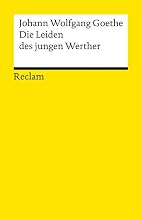
Die Leiden des jungen Werther (The sorrows of young Werther, 1774) by Johann Wolfgang von Goethe (Germany (Hesse, Weimar, etc.), 1749–1832)

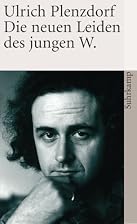
Die neuen Leiden des jungen W. (The new sorrows of young W., 1972) by Ulrich Plenzdorf (DDR, Germany, 1934–2007)
Although much more recent and much more of a polymath than the rest, Goethe occupies the kind of iconic place in German literature that is reserved for Shakespeare, Dante, Cervantes and Camoes in their respective languages. So he's not mocked lightly...
Werther was one of the first cult novels in European history, arguably the book that put the novel solidly in place as the dominant literary form for the next couple of centuries. It was condemned by the older generation, provoked a new trend in men's fashion, was blamed for a wave of teenage suicides, and generally had all the attributes we now attach to fads like Pokemon Go and self-driving cars...
It's probably a book you need to read in your teens. Re-reading it in later life, it's difficult to feel much sympathy for Werther, who insists on falling in love with a young woman who is already engaged to someone else, makes a nuisance of himself by stalking her, and then makes everyone's life even more miserable by killing himself. In the final pages of the novel, he acts like a tenor in the last act of an opera - every time you think he's finished and is about to pull the trigger, he steps back and adds a couple more paragraphs to his already voluminous suicide note. "Enough already!", readers have been wanting to shout for the last two centuries.
It's an exasperating and profoundly foolish book in many ways, but it also has some very beautiful passages, so not a complete waste of time, but it's definitely best-read when you're in the mood for the love-lorn.
In the 70s cult hit Die neuen Leiden des jungen W., the East German author Ulrich Plenzdorf cleverly wove together elements of the plots of Werther and Robinson Crusoe to create East Berlin's comic answer to The catcher in the rye. The 17-year-old engineering apprentice Edgar Wibeau drops out of his training in a boring provincial small town and runs away to Berlin where he hopes to become an undiscovered genius. Unfortunately, he has no talent for painting, and what's more, he finds that he has forgotten to bring any books. After a long search, all he can find are the remains of a Reclam paperback hanging on a nail in the privy. The title page has already been used, but the book turns out to be an epistolary novel about some guy called Werther. Not a patch on his old friend J.D. Salinger, but it will have to do, and after a while, despite coming to the conclusion that Werther is a blithering idiot, Edgar finds himself captivated by the story. And then the plot of Werther starts inveigling its way into his own life, but not quite in the way we are expecting it to.
Again, this is probably a book you would enjoy most if you read it when you're young, but it's still a lot of fun even later in life (part of the joke is that Edgar takes it for granted that Salinger is a teenager like himself , but we know that both Salinger and Plenzdorf are writing as grown-ups...). Reading both books back to back, I particularly enjoyed the way Edgar makes liberal (mis-)use of quotations from Goethe throughout the book, but no-one ever recognises them.
Die Leiden des jungen Werther (The sorrows of young Werther, 1774) by Johann Wolfgang von Goethe (Germany (Hesse, Weimar, etc.), 1749–1832)

Die neuen Leiden des jungen W. (The new sorrows of young W., 1972) by Ulrich Plenzdorf (DDR, Germany, 1934–2007)
Although much more recent and much more of a polymath than the rest, Goethe occupies the kind of iconic place in German literature that is reserved for Shakespeare, Dante, Cervantes and Camoes in their respective languages. So he's not mocked lightly...
Werther was one of the first cult novels in European history, arguably the book that put the novel solidly in place as the dominant literary form for the next couple of centuries. It was condemned by the older generation, provoked a new trend in men's fashion, was blamed for a wave of teenage suicides, and generally had all the attributes we now attach to fads like Pokemon Go and self-driving cars...
It's probably a book you need to read in your teens. Re-reading it in later life, it's difficult to feel much sympathy for Werther, who insists on falling in love with a young woman who is already engaged to someone else, makes a nuisance of himself by stalking her, and then makes everyone's life even more miserable by killing himself. In the final pages of the novel, he acts like a tenor in the last act of an opera - every time you think he's finished and is about to pull the trigger, he steps back and adds a couple more paragraphs to his already voluminous suicide note. "Enough already!", readers have been wanting to shout for the last two centuries.
It's an exasperating and profoundly foolish book in many ways, but it also has some very beautiful passages, so not a complete waste of time, but it's definitely best-read when you're in the mood for the love-lorn.
In the 70s cult hit Die neuen Leiden des jungen W., the East German author Ulrich Plenzdorf cleverly wove together elements of the plots of Werther and Robinson Crusoe to create East Berlin's comic answer to The catcher in the rye. The 17-year-old engineering apprentice Edgar Wibeau drops out of his training in a boring provincial small town and runs away to Berlin where he hopes to become an undiscovered genius. Unfortunately, he has no talent for painting, and what's more, he finds that he has forgotten to bring any books. After a long search, all he can find are the remains of a Reclam paperback hanging on a nail in the privy. The title page has already been used, but the book turns out to be an epistolary novel about some guy called Werther. Not a patch on his old friend J.D. Salinger, but it will have to do, and after a while, despite coming to the conclusion that Werther is a blithering idiot, Edgar finds himself captivated by the story. And then the plot of Werther starts inveigling its way into his own life, but not quite in the way we are expecting it to.
Again, this is probably a book you would enjoy most if you read it when you're young, but it's still a lot of fun even later in life (part of the joke is that Edgar takes it for granted that Salinger is a teenager like himself , but we know that both Salinger and Plenzdorf are writing as grown-ups...). Reading both books back to back, I particularly enjoyed the way Edgar makes liberal (mis-)use of quotations from Goethe throughout the book, but no-one ever recognises them.
3thorold
And the first Swiss writer in the current batch of Germans and Austrians:
Agnes (1998) by Peter Stamm (Switzerland, 1963 - )
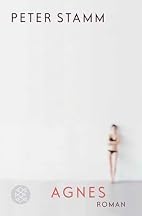

Peter Stamm is a well known Swiss journalist and novelist, many of whose books have been translated into English.
Agnes marked Stamm's breakthrough after three unsuccessful attempts to publish a novel. It's an account of a relationship between the narrator, a Swiss author researching a non-fiction book in Chicago, and Agnes, a postgraduate mathematician working on crystal symmetries. They get into conversation during a cigarette-break at the library, and soon find themselves living together. Agnes turns out to be fascinated by the idea of literary creation, and persuades the narrator to write the story of their relationship, which is fine until he "catches up" and has to write about what hasn't happened yet, when the story starts to interfere with reality in bad ways.
An interesting idea, and nicely done, but neither the characters nor Stamm's very pared down, simple prose really drew me in. It all felt a bit too American, which is not really what I read German writers for. I had the same problem with Judith Hermann.
Agnes (1998) by Peter Stamm (Switzerland, 1963 - )

Peter Stamm is a well known Swiss journalist and novelist, many of whose books have been translated into English.
Agnes marked Stamm's breakthrough after three unsuccessful attempts to publish a novel. It's an account of a relationship between the narrator, a Swiss author researching a non-fiction book in Chicago, and Agnes, a postgraduate mathematician working on crystal symmetries. They get into conversation during a cigarette-break at the library, and soon find themselves living together. Agnes turns out to be fascinated by the idea of literary creation, and persuades the narrator to write the story of their relationship, which is fine until he "catches up" and has to write about what hasn't happened yet, when the story starts to interfere with reality in bad ways.
An interesting idea, and nicely done, but neither the characters nor Stamm's very pared down, simple prose really drew me in. It all felt a bit too American, which is not really what I read German writers for. I had the same problem with Judith Hermann.
4thorold
It was a somewhat lazy, rainy weekend, and I managed to fit in another pairing of a classic with a book that responds to it:
L'Étranger (The Stranger, 1942) by Albert Camus (Algeria, France, 1913-1960)


Meursault, contre-enquête (The Meursault investigation, Algeria 2013, France 2014) by Kamel Daoud (Algeria, 1970 - )


I'm not going to attempt to post a proper review of L'Ètranger: there are enough on the work page to keep anyone going for a lifetime (including a very good and thorough one by @baswood). Anyway, the previous time I read it, a couple of decades ago, it was in order to write an essay about it. Suffice it to say that I was struck this time by what a very good writer Camus was. To file this book away as nothing more than a case-study in existentialist philosophy is to do him a serious disservice. There is a lot of very clever and exact use of language going on, and a remarkable number of passages that stick in your mind simply for the cleanness and elegance of their phrasing.
Algerian writer Kamel Daoud's first novel Meursault, contre-enquête has stirred up a lot of dust. It was shortlisted for the 2014 Goncourt (and won the 2015 Goncourt premier roman); both the French original and the English translation have received large numbers of rave reviews, as well as a handful of very hostile ones, in the press and here on LT. I came to the book with rather mixed feelings: it sounded from the reviews I've seen as though it could equally well turn out to be a valuable new insight or a gratuitous rant by someone who had missed the point of a great piece of literature.
What Daoud does is to pretend to take L'Ètranger literally, as the report of a murder, and re-examine it from an Algerian point of view. The man Meursault kills has essentially no identity in Camus's story: all we are told is that he is "an Arab", who is seeking revenge on his sister's pimp, Meursault's neighbour Raymond. Daoud gives him the name Moussa, writes the girl out of the story, and gives him a younger brother, Haroun, who is telling a long-suffering PhD candidate the story of his life in one of the few remaining bars in post-independence Oran.
It soon becomes obvious that we aren't meant to take Haroun's postcolonial rant entirely literally, any more than Camus wants us to take Meursault as a simple projection of his own views. For one thing, Haroun lives in a language-space that is almost entirely defined by Camus's French prose. Practically every phrase in the book is an echo of something from L'Ètranger, often inverted or bizarrely repurposed. True to his rhetoric, Haroun never mentions Camus by name, and talks about him as though he and Meursault are one and the same, but nonetheless he never fails to acknowledge him as "votre {the listener's} génie". For another, Haroun is himself at odds with modern Algeria in much the same way that Meursault was with its colonial predecessor. His real crime is that he has also killed someone (a Frenchman, in the closing stages of the war of independence), but what he is condemned for by his neighbours is his consumption of alcohol and refusal to conform to the outward norms of Islamic society.
There's also obviously a lot of Biblical symbolism going on in the background too. The brothers are Moussa and Haroun, i.e. Moses and Aaron - Moussa being the one associated with a rock and a spring, Haroun the one who gets to see the promised land of independent Algeria; Haroun's sometime girlfriend is Meriem, the Arabic counterpart of Marie, the name of Meursault's young lady; the Frenchman Haroun kills is Joseph, who is symbolically put in a well...
So, I'm not completely convinced, but this is certainly a very clever book, and one that is rather more respectful of Camus's text than might appear at first sight, and I think it also adds some non-obvious prespectives to the cultural legacy of colonialism.
L'Étranger (The Stranger, 1942) by Albert Camus (Algeria, France, 1913-1960)


Meursault, contre-enquête (The Meursault investigation, Algeria 2013, France 2014) by Kamel Daoud (Algeria, 1970 - )


I'm not going to attempt to post a proper review of L'Ètranger: there are enough on the work page to keep anyone going for a lifetime (including a very good and thorough one by @baswood). Anyway, the previous time I read it, a couple of decades ago, it was in order to write an essay about it. Suffice it to say that I was struck this time by what a very good writer Camus was. To file this book away as nothing more than a case-study in existentialist philosophy is to do him a serious disservice. There is a lot of very clever and exact use of language going on, and a remarkable number of passages that stick in your mind simply for the cleanness and elegance of their phrasing.
Algerian writer Kamel Daoud's first novel Meursault, contre-enquête has stirred up a lot of dust. It was shortlisted for the 2014 Goncourt (and won the 2015 Goncourt premier roman); both the French original and the English translation have received large numbers of rave reviews, as well as a handful of very hostile ones, in the press and here on LT. I came to the book with rather mixed feelings: it sounded from the reviews I've seen as though it could equally well turn out to be a valuable new insight or a gratuitous rant by someone who had missed the point of a great piece of literature.
What Daoud does is to pretend to take L'Ètranger literally, as the report of a murder, and re-examine it from an Algerian point of view. The man Meursault kills has essentially no identity in Camus's story: all we are told is that he is "an Arab", who is seeking revenge on his sister's pimp, Meursault's neighbour Raymond. Daoud gives him the name Moussa, writes the girl out of the story, and gives him a younger brother, Haroun, who is telling a long-suffering PhD candidate the story of his life in one of the few remaining bars in post-independence Oran.
It soon becomes obvious that we aren't meant to take Haroun's postcolonial rant entirely literally, any more than Camus wants us to take Meursault as a simple projection of his own views. For one thing, Haroun lives in a language-space that is almost entirely defined by Camus's French prose. Practically every phrase in the book is an echo of something from L'Ètranger, often inverted or bizarrely repurposed. True to his rhetoric, Haroun never mentions Camus by name, and talks about him as though he and Meursault are one and the same, but nonetheless he never fails to acknowledge him as "votre {the listener's} génie". For another, Haroun is himself at odds with modern Algeria in much the same way that Meursault was with its colonial predecessor. His real crime is that he has also killed someone (a Frenchman, in the closing stages of the war of independence), but what he is condemned for by his neighbours is his consumption of alcohol and refusal to conform to the outward norms of Islamic society.
There's also obviously a lot of Biblical symbolism going on in the background too. The brothers are Moussa and Haroun, i.e. Moses and Aaron - Moussa being the one associated with a rock and a spring, Haroun the one who gets to see the promised land of independent Algeria; Haroun's sometime girlfriend is Meriem, the Arabic counterpart of Marie, the name of Meursault's young lady; the Frenchman Haroun kills is Joseph, who is symbolically put in a well...
So, I'm not completely convinced, but this is certainly a very clever book, and one that is rather more respectful of Camus's text than might appear at first sight, and I think it also adds some non-obvious prespectives to the cultural legacy of colonialism.
5rachbxl
>4 thorold: It sounds like you got much more out of it by re-reading L'Etranger first, which I wish I had done. I intended to but couldn't find my copy; I should have waited instead of diving in.
>3 thorold: I recently discovered Peter Stamm. I enjoyed the novel I read (All Days Are Night) more than you did Agnes, I think, and Stamm's spare prose does work for me, but you're right about it feeling American. All Days Are Night is set in Switzerland (I presume), but it could have been anywhere that allows a good standard of living for the cool, educated middle classes - which doesn't necessarily mean America, granted, but I'd have liked a bit more Switzerland.
>3 thorold: I recently discovered Peter Stamm. I enjoyed the novel I read (All Days Are Night) more than you did Agnes, I think, and Stamm's spare prose does work for me, but you're right about it feeling American. All Days Are Night is set in Switzerland (I presume), but it could have been anywhere that allows a good standard of living for the cool, educated middle classes - which doesn't necessarily mean America, granted, but I'd have liked a bit more Switzerland.
6thorold
>5 rachbxl: I was taking unfair advantage of not being first: from what you and Barry and several of the press reviews said, I realised that it wouldn't be very interesting to read it without having L'étranger fresh in my mind. Reading them both in one day was perfect, from that point of view. I went back to Camus several times to trace what Daoud had done with the passages he was not-quite-quoting.
7thorold
Since last weekend's reading followed on quite closely from what I've been reading over the past few weeks, I didn't get around to starting this thead with a "what I plan to do in Q4" post. Probably pointless, anyway, as I never stick to those...
General ideas:
- German lit - I want to carry on a bit further with my gap-filling exercise, perhaps taking in a few pre-1945 authors as well as reading more works by some of those I've tried in the last weeks. I plan to read Ostende 1936 at some point, and will probably try to (re-)read a bit of Zweig and Roth before that to get into the mood. And there are several other major German authors lurking on the TBR shelf...
- Reading Globally has a theme-read on Dictators coming up, I have a few things on the pile that might fit with that
- English women writers - I still have a couple of Elizabeth Taylors to read, and want to dig a bit deeper into Ivy Compton-Burnett and Nina Bawden, amongst others
- French classics - I keep reading other people's reviews of Zola, Proust, etc., and thinking I ought to get back to exploring those too.
- French crime - I've more or less run out of Vargas and Izzo, but there's plenty of other stuff on the pile. I started a Léo Malet yesterday...
General ideas:
- German lit - I want to carry on a bit further with my gap-filling exercise, perhaps taking in a few pre-1945 authors as well as reading more works by some of those I've tried in the last weeks. I plan to read Ostende 1936 at some point, and will probably try to (re-)read a bit of Zweig and Roth before that to get into the mood. And there are several other major German authors lurking on the TBR shelf...
- Reading Globally has a theme-read on Dictators coming up, I have a few things on the pile that might fit with that
- English women writers - I still have a couple of Elizabeth Taylors to read, and want to dig a bit deeper into Ivy Compton-Burnett and Nina Bawden, amongst others
- French classics - I keep reading other people's reviews of Zola, Proust, etc., and thinking I ought to get back to exploring those too.
- French crime - I've more or less run out of Vargas and Izzo, but there's plenty of other stuff on the pile. I started a Léo Malet yesterday...
8baswood
>4 thorold: Very interested to read your reviews of L'Etranger and The Meursault Investigation - thumbed.
Two books that really need to be read together to appreciate what Daoud is doing. I agree that Douad's book is clever and while he "plays" with Camus' text quite intriguingly at times, I could not get past the feeling that he was challenging Camus 'political correctness' in such a way as to be disrespectful. I realise that this makes me a little blinkered in my appreciation of Daoud's achievement.
Reading the two books made for a very interesting discussion within our book club.
Two books that really need to be read together to appreciate what Daoud is doing. I agree that Douad's book is clever and while he "plays" with Camus' text quite intriguingly at times, I could not get past the feeling that he was challenging Camus 'political correctness' in such a way as to be disrespectful. I realise that this makes me a little blinkered in my appreciation of Daoud's achievement.
Reading the two books made for a very interesting discussion within our book club.
9RidgewayGirl
I like your rigor in reading the originals before reading the adaptations. I'll admit that I loved The Sorrows of Young Werther so much, and that I read it at twenty, while living in Europe for the first time - I read it during a Christmas break in Strasbourg and the architecture made me long to moon about in a cape. I'm adding Die neuen Leiden des jungen W. to my wishlist as it sounds fun, although forgetting to bring any books seems like a fatal flaw to me.
10thorold
>8 baswood: >9 RidgewayGirl:
Perhaps I read Werther when I was too young and Camus when I was too old for either of them to have the real magic effect. How you react to that kind of parody or reworking is always going to be affected by your emotional investment in the original. With Daoud, I can easily see how you would hate what he's doing, but I don't think the "political correctness" is the point. He's saying something like "Camus belongs to us Algerians as well as to you metropolitans", and Haroun's postcolonial ranting is one aspect of that, but he's also pointing out that it's Camus who has given him the rhetorical and philosophical tools for dealing with the problems he's faced with in modern Algeria.
Edgar W. has plenty of fatal flaws, some more literal than others...
Perhaps I read Werther when I was too young and Camus when I was too old for either of them to have the real magic effect. How you react to that kind of parody or reworking is always going to be affected by your emotional investment in the original. With Daoud, I can easily see how you would hate what he's doing, but I don't think the "political correctness" is the point. He's saying something like "Camus belongs to us Algerians as well as to you metropolitans", and Haroun's postcolonial ranting is one aspect of that, but he's also pointing out that it's Camus who has given him the rhetorical and philosophical tools for dealing with the problems he's faced with in modern Algeria.
Edgar W. has plenty of fatal flaws, some more literal than others...
11thorold
Back to French crime, to rest the brain a little bit... This is the second of the Nouveaux mystères de Paris series, the first of which I read a few months ago:
Des kilomètres de linceuls (1955; Miles of shrouds) by Léo Malet (France 1909-1996)
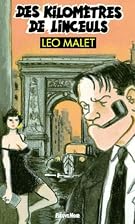
Second in the geographical series, this one is logically enough set in the 2nd Arondissement, which - at least in the early fifties - seems to have been an area rich in warehouses, newspaper offices, illegal brothels and cheap hotels: perfect for a detective story. Nestor Burma is called in by a Jewish brother and sister who have a wholesale textile business there. The woman is an old acquaintance - back in the thirties, Burma had known her as the girlfriend of an anarchist friend, whom he believes to have been killed in the Spanish Civil War. Now she claims that the boyfriend has re-appeared, and it soon becomes apparent that her brother is being blackmailed. The body count soon becomes as extravagant as the language, Nestor has to be extracted from several perilous situations by his sensible secretary Hélène, and all in all we get exactly what we're entitled to expect from a tongue-in-cheek noir thriller at the high end of the market. Excellent fun!
Des kilomètres de linceuls (1955; Miles of shrouds) by Léo Malet (France 1909-1996)
Second in the geographical series, this one is logically enough set in the 2nd Arondissement, which - at least in the early fifties - seems to have been an area rich in warehouses, newspaper offices, illegal brothels and cheap hotels: perfect for a detective story. Nestor Burma is called in by a Jewish brother and sister who have a wholesale textile business there. The woman is an old acquaintance - back in the thirties, Burma had known her as the girlfriend of an anarchist friend, whom he believes to have been killed in the Spanish Civil War. Now she claims that the boyfriend has re-appeared, and it soon becomes apparent that her brother is being blackmailed. The body count soon becomes as extravagant as the language, Nestor has to be extracted from several perilous situations by his sensible secretary Hélène, and all in all we get exactly what we're entitled to expect from a tongue-in-cheek noir thriller at the high end of the market. Excellent fun!
12FlorenceArt
I read a couple of Léo Malet years ago, now you're making me want to read some more. In my mind he is associated with Tardi's drawings because that's how I first met him. Brouillard au pont de Tolbiac is one of their collaborations, and the title has always stayed with me because I lived on or around the rue de Tolbiac for a long time. But I still haven't read it!
And Hélène is the best, isn't she!
And Hélène is the best, isn't she!
13thorold
>12 FlorenceArt: I should try to do something about my BD blindspot and look at one of the Tardis...
Hélène seems to be the thing that gives the books the foot on the ground that keeps them from being mere pastiche. Or something. We need her, anyway.
Hélène seems to be the thing that gives the books the foot on the ground that keeps them from being mere pastiche. Or something. We need her, anyway.
14thorold
At school, we sometimes got "educational" German films from the Goethe-Institut. I've forgotten most of these, but one programme I still remember was a double-bill of short documentaries: "The Spider" and "Stefan Zweig in exile". Somehow the two must have got mixed up in my subconscious, so I can't think of Zweig any more without visualising those giant, scratchy, black-and-white arachnids chasing him through the Brazilian rain-forest...
I don't think that's why this particular book has been on my shelf for more than twenty years without being read: that was almost certainly a simple oversight. And easy to correct:
Sternstunden der Menschheit (1927, 1943; Decisive moments in history, 1940) by Stefan Zweig (Austria, 1881-1942 )
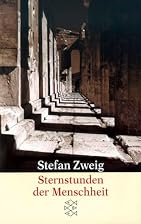


Stefan Zweig came from a middle-class, secular-Jewish, Viennese background. His highly-readable biographies and narrative history books and his tragic, slightly melodramatic novellas made him a popular and well-loved author in his time, but some critics continue to attack what they see as his insincerity. His apolitical pacifism also made him something of a misfit among the exiled German writers of the thirties.
Sternstunden der Menschheit is probably Zwieg's best-known work among German readers - it's a collection of anything from five to fourteen (depending on which edition you read) short sketches of "critical moments" in human history. The subjects are quite freely chosen: political/military moments (Lenin's sealed train, Waterloo, the fall of Constantinople), moments of discovery (Scott in the Antarctic, Nuñez de Balboa in Darien, Suter in California), moments of artistic creation (Goethe coming home from Marienbad, Handel writing Messiah, Rouget de Lisle writing the song that would become the Marseillaise), personal moments (Dostoievsky's reprieve from execution, Tolstoy's escape from his wife).
The collection seems to be mostly about the sheer pleasure of story-telling: there is no obvious didactic or political purpose. Zweig obviously doesn't have a lot of sympathy with Men of Destiny, but does have a soft spot for heroic failures like Rouget de Lisle, Suter and Capt. Scott. I found his free-verse account of Dostoievsky in front of the firing squad a bit cold and generic, but his sympathy and engagement with the misbehaving elderly geniuses Goethe and Tolstoy is completely convincing. Goethe was already in the 1927 edition, whilst Tolstoy was added in 1940, so this clearly isn't entirely an autobiographical sympathy.
Enjoyable, but a bit fluffy.
I don't think that's why this particular book has been on my shelf for more than twenty years without being read: that was almost certainly a simple oversight. And easy to correct:
Sternstunden der Menschheit (1927, 1943; Decisive moments in history, 1940) by Stefan Zweig (Austria, 1881-1942 )

Stefan Zweig came from a middle-class, secular-Jewish, Viennese background. His highly-readable biographies and narrative history books and his tragic, slightly melodramatic novellas made him a popular and well-loved author in his time, but some critics continue to attack what they see as his insincerity. His apolitical pacifism also made him something of a misfit among the exiled German writers of the thirties.
Sternstunden der Menschheit is probably Zwieg's best-known work among German readers - it's a collection of anything from five to fourteen (depending on which edition you read) short sketches of "critical moments" in human history. The subjects are quite freely chosen: political/military moments (Lenin's sealed train, Waterloo, the fall of Constantinople), moments of discovery (Scott in the Antarctic, Nuñez de Balboa in Darien, Suter in California), moments of artistic creation (Goethe coming home from Marienbad, Handel writing Messiah, Rouget de Lisle writing the song that would become the Marseillaise), personal moments (Dostoievsky's reprieve from execution, Tolstoy's escape from his wife).
The collection seems to be mostly about the sheer pleasure of story-telling: there is no obvious didactic or political purpose. Zweig obviously doesn't have a lot of sympathy with Men of Destiny, but does have a soft spot for heroic failures like Rouget de Lisle, Suter and Capt. Scott. I found his free-verse account of Dostoievsky in front of the firing squad a bit cold and generic, but his sympathy and engagement with the misbehaving elderly geniuses Goethe and Tolstoy is completely convincing. Goethe was already in the 1927 edition, whilst Tolstoy was added in 1940, so this clearly isn't entirely an autobiographical sympathy.
Enjoyable, but a bit fluffy.
15kidzdoc
I enjoyed reading your comparisons of Werther with The new sorrows of young W., and The Stranger with The Meursault Investigation, Mark. I also re-read the Camus just before I read the Daoud, and I got much more out of it that way, and enjoyed the Algerian perspective.
I believe you said that you would not recommend reading Look Who's Back by Timur Vermes for the new Reading Globally theme? Why is that? I have a copy of it, and I was considering getting to it in November or December.
I believe you said that you would not recommend reading Look Who's Back by Timur Vermes for the new Reading Globally theme? Why is that? I have a copy of it, and I was considering getting to it in November or December.
16thorold
>15 kidzdoc:
Don't worry, Darryl, I'm just dodging responsibility...
It's a very clever, very funny book, but as I said, it's in very poor taste. I enjoyed it, but I didn't feel very comfortable about having enjoyed it.
You'll have to decide for yourself whether you think the message about the way we can be taken in by buffoonery and miss the real horror behind it is enough excuse for a book that turns the greatest horror of the last century into buffoonery. I felt when I read it that it is - just about - a valid excuse, but other people have told me they found it nasty and offensive.
Don't worry, Darryl, I'm just dodging responsibility...
It's a very clever, very funny book, but as I said, it's in very poor taste. I enjoyed it, but I didn't feel very comfortable about having enjoyed it.
You'll have to decide for yourself whether you think the message about the way we can be taken in by buffoonery and miss the real horror behind it is enough excuse for a book that turns the greatest horror of the last century into buffoonery. I felt when I read it that it is - just about - a valid excuse, but other people have told me they found it nasty and offensive.
17kidzdoc
Thanks for your comments about Look Who's Back, Mark. I will read it this quarter, so that I can form my own opinion of it.
18thorold
Regular readers of this thread will remember Brody in Galicia, the town fought over in Red cavalry and the source of stetl décor in the first part of Aller Tage Abend. Well, of course that's not Brody's real claim to fame: it was the birthplace of Joseph Roth, another Austrian Jew, and a rather more colourful character than Zweig. Time to re-read what might well be the most famous German novel by a non-Nobelist...
Radetzkymarsch (1932; The Radetzky March) by Joseph Roth (Austria, etc., 1894-1939)
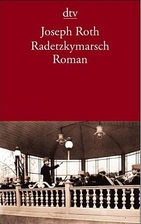
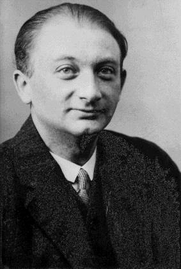
Roth's epic is a kind of Brideshead revisited for Hapsburg Austria, an unlikely mix of satire and sentiment that comes together to create a glorious epic in which the rise and fall of the Trotta family - raised from insignificance to the nobility by the chance of one military defeat and extinguished by another - is set against the decline and fall of the improbable and heterogeneous empire ruled over by Franz-Joseph. Roth has a penetrating eye for the absurdities of official an military life and the peculiar deformation of language that goes with them. When District-governor Trotta is explaining his worries about his son to a friend, Roth notes how he presents them like an official report: "Er teilte gewissermaßen seine Sorgen in Haupt- und Untersorgen." (He essentially divided his troubles into main and sub-troubles). And the scene where Captain Trotta goes to the Emperor to complain about a distorted patriotic pastiche of his little act of heroism that has found its way into the official schoolbooks is as brilliant and memorable as the descriptions of the appalling Sunday lunches at the District-governor's house. But Roth clearly has a very deep affection for the stubborn older generations of the Trotta family and for the old Emperor whose life theirs seem to parallel in so many ways, and uses the background of stultifying formality to make their little moments of humanity stand out more.
The youngest Trotta, the cynical army lieutenant Carl Joseph, isn't quite as engaging a character as his father and grandfather, only coming to vivid life in the moments when Roth projects his own alcoholism onto him. He's there mostly to give us a sceptical point of view on the other characters, and to illustrate the paradox that the Austrian army, which is still one of the most important elements uniting the country, exists only to fight the war which everyone knows will destroy the country and the imperial family.
A wonderful, beautifully written, absorbing book, that almost makes you want to be able to believe in Roth's quixotic Habsburgophilia...
Radetzkymarsch (1932; The Radetzky March) by Joseph Roth (Austria, etc., 1894-1939)
Roth's epic is a kind of Brideshead revisited for Hapsburg Austria, an unlikely mix of satire and sentiment that comes together to create a glorious epic in which the rise and fall of the Trotta family - raised from insignificance to the nobility by the chance of one military defeat and extinguished by another - is set against the decline and fall of the improbable and heterogeneous empire ruled over by Franz-Joseph. Roth has a penetrating eye for the absurdities of official an military life and the peculiar deformation of language that goes with them. When District-governor Trotta is explaining his worries about his son to a friend, Roth notes how he presents them like an official report: "Er teilte gewissermaßen seine Sorgen in Haupt- und Untersorgen." (He essentially divided his troubles into main and sub-troubles). And the scene where Captain Trotta goes to the Emperor to complain about a distorted patriotic pastiche of his little act of heroism that has found its way into the official schoolbooks is as brilliant and memorable as the descriptions of the appalling Sunday lunches at the District-governor's house. But Roth clearly has a very deep affection for the stubborn older generations of the Trotta family and for the old Emperor whose life theirs seem to parallel in so many ways, and uses the background of stultifying formality to make their little moments of humanity stand out more.
The youngest Trotta, the cynical army lieutenant Carl Joseph, isn't quite as engaging a character as his father and grandfather, only coming to vivid life in the moments when Roth projects his own alcoholism onto him. He's there mostly to give us a sceptical point of view on the other characters, and to illustrate the paradox that the Austrian army, which is still one of the most important elements uniting the country, exists only to fight the war which everyone knows will destroy the country and the imperial family.
A wonderful, beautifully written, absorbing book, that almost makes you want to be able to believe in Roth's quixotic Habsburgophilia...
19thorold
...and linking together >14 thorold: >18 thorold: and no doubt a few others to come (including the book I'm reading at the moment), here's Mr Weidermann again:
Ostende 1936, Sommer der Freundschaft (2014; Ostend: Stefan Zweig, Joeph Roth and the summer before the dark) by Volker Weidermann (Germany, 1969-)
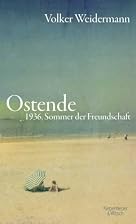
Weidermann gives us a charming, intelligent vignette of the life of the complicated, diverse community of writers exiled from Nazi Germany from the perspective of the group that came together to spend the summer of 1936 in the Flemish resort of Oostende. Maybe not the first place we would pick for a holiday, but it was apparently a lot nicer before it was bombed in WWII; and it seems to have been a convenient spot for them, not far from the exile publishing centre of Amsterdam, and only a short hop from both London and Paris. In any case, there was a formidable array of German literary and political talent assembled there, including the two writers who most interest Weidermann, the urbane, wealthy and popular Stefan Zweig and the touchy, impoverished and alcoholic Joseph Roth.
At the heart of the story is the unlikely friendship and literary collaboration between Zweig and Roth and the perhaps equally unlikely love affair that developed between the jaded Roth the bright young novelist Irmgard Keun, an author of frivolous "chicklit" novels thrown together with the heavyweights of German Lit only by the quirks of Nazi censorship, but apparently well able to keep up with Roth's drinking. From reading their books, it would be hard to see what Roth and Zweig might have had in common apart from race and nationality, but clearly they each had a great deal of respect for the other's work, and they trusted each other far enough to work on rewriting unpublished texts together. Weidermann describes Roth solving a difficult problem of composition in one of Zweig's stories by writing a complete new scene for him.
Although it's presented like a novel, this doesn't really seem to be a work of fiction in the usual sense - it's more like a piece of imaginative biography. Where Weidermann attributes thoughts or statements to his characters, he always seems to have a letter, diary entry or memoir to back it up, although he doesn't go to the length of providing footnotes. The novelist's freedom of invention seems to be exercised more in identifying patterns in the random events of his characters' lives than in interpolating fictional events between those in the historical record. It's obviously not meant as a profound piece of scholarship, but it gives us a few interesting insights into how literature copes with the idea of exile and it brings a generation of writers it's all too easy to overlook back into the limelight for a moment or two.
Ostende 1936, Sommer der Freundschaft (2014; Ostend: Stefan Zweig, Joeph Roth and the summer before the dark) by Volker Weidermann (Germany, 1969-)
Weidermann gives us a charming, intelligent vignette of the life of the complicated, diverse community of writers exiled from Nazi Germany from the perspective of the group that came together to spend the summer of 1936 in the Flemish resort of Oostende. Maybe not the first place we would pick for a holiday, but it was apparently a lot nicer before it was bombed in WWII; and it seems to have been a convenient spot for them, not far from the exile publishing centre of Amsterdam, and only a short hop from both London and Paris. In any case, there was a formidable array of German literary and political talent assembled there, including the two writers who most interest Weidermann, the urbane, wealthy and popular Stefan Zweig and the touchy, impoverished and alcoholic Joseph Roth.
At the heart of the story is the unlikely friendship and literary collaboration between Zweig and Roth and the perhaps equally unlikely love affair that developed between the jaded Roth the bright young novelist Irmgard Keun, an author of frivolous "chicklit" novels thrown together with the heavyweights of German Lit only by the quirks of Nazi censorship, but apparently well able to keep up with Roth's drinking. From reading their books, it would be hard to see what Roth and Zweig might have had in common apart from race and nationality, but clearly they each had a great deal of respect for the other's work, and they trusted each other far enough to work on rewriting unpublished texts together. Weidermann describes Roth solving a difficult problem of composition in one of Zweig's stories by writing a complete new scene for him.
Although it's presented like a novel, this doesn't really seem to be a work of fiction in the usual sense - it's more like a piece of imaginative biography. Where Weidermann attributes thoughts or statements to his characters, he always seems to have a letter, diary entry or memoir to back it up, although he doesn't go to the length of providing footnotes. The novelist's freedom of invention seems to be exercised more in identifying patterns in the random events of his characters' lives than in interpolating fictional events between those in the historical record. It's obviously not meant as a profound piece of scholarship, but it gives us a few interesting insights into how literature copes with the idea of exile and it brings a generation of writers it's all too easy to overlook back into the limelight for a moment or two.
20thorold
And a book by another writer who plays a central role in Ostende 1936 :
Das kunstseidene Mädchen (1932; The artificial silk girl) by Irmgard Keun (Germany, 1905-1982)


Irmgard Keun grew up in Köln, trained as an actress, and started to write mostly as a way of filling up the large amounts of time spent sitting around in cafés that that profession entails. She published two enormously successful novels in her mid-twenties, but her period as a best-selling author was brief: the Nazis banned all her current and future works as soon as they came to power. After a few brushes with the authorities (she was angry enough to attempt to sue the Gestapo for loss of earnings) she decided that it would be wise to go into exile, which was how she came to meet Joseph Roth in Oostende.
Keun and Roth lived, wrote and drank together, mostly in Paris, for a couple of years before she left him and moved to Amsterdam, where her publisher was. When the Germans arrived there in May 1940, she escaped arrest by arranging a false report of her own suicide, and returned to Germany under a false name. After the war she stayed in Köln, writing radio scripts, but never completed another novel. She remained in relative poverty and obscurity until the mid-1970s, when her early novels were re-published and she suddenly became something of a star again.
Das kunstseidene Mädchen was Keun's second novel, published shortly before she was banned in Germany, and is still her best-known work. Like Gentlemen prefer blondes, it's in the form of a diary-style first-person account by a working-class young woman on the make. Doris has been taught by the cinema to expect more from life than invisibility as an office worker or the downtrodden existence of a working-class housewife, and she's got a pretty good idea of how to achieve the glamour she longs for (she's a brunette, so her role model is Colleen Moore, rather than Lorelei Lee). And she gets pretty close, several times. But this isn't the comic world of Anita Loos or Helen Fielding; Doris lives in the Germany of Berlin Alexanderplatz and Brecht's "Erst kommt das Fressen, dann kommt die Moral", where unemployed people run a very real risk of starving to death and there's only the finest of lines separating a young woman on the make from prostitution and violent crime. We realise pretty soon that Doris is operating without a safety net. Whatever she does, she is always living on her nerves, and one wrong answer, one lie that is found out, will send her back - at best - to spending the night in a railway waiting-room.
This may be a very funny book, and it's one you could easily shelve under "chicklit", but it's also a book with tough messages about class and gender and what happens when illusions meet hard social realities. The view of the world it transmits is definitely not one that the Nazis would have been comfortable with.
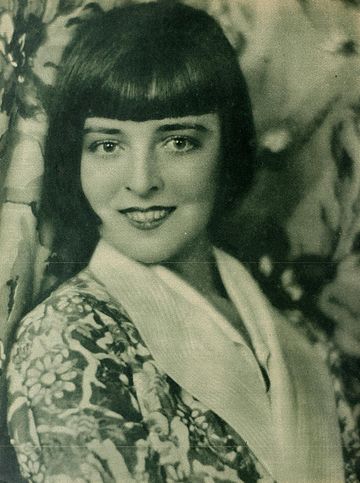
Colleen Moore, star of the silent screen:
Das kunstseidene Mädchen (1932; The artificial silk girl) by Irmgard Keun (Germany, 1905-1982)


Irmgard Keun grew up in Köln, trained as an actress, and started to write mostly as a way of filling up the large amounts of time spent sitting around in cafés that that profession entails. She published two enormously successful novels in her mid-twenties, but her period as a best-selling author was brief: the Nazis banned all her current and future works as soon as they came to power. After a few brushes with the authorities (she was angry enough to attempt to sue the Gestapo for loss of earnings) she decided that it would be wise to go into exile, which was how she came to meet Joseph Roth in Oostende.
Keun and Roth lived, wrote and drank together, mostly in Paris, for a couple of years before she left him and moved to Amsterdam, where her publisher was. When the Germans arrived there in May 1940, she escaped arrest by arranging a false report of her own suicide, and returned to Germany under a false name. After the war she stayed in Köln, writing radio scripts, but never completed another novel. She remained in relative poverty and obscurity until the mid-1970s, when her early novels were re-published and she suddenly became something of a star again.
Das kunstseidene Mädchen was Keun's second novel, published shortly before she was banned in Germany, and is still her best-known work. Like Gentlemen prefer blondes, it's in the form of a diary-style first-person account by a working-class young woman on the make. Doris has been taught by the cinema to expect more from life than invisibility as an office worker or the downtrodden existence of a working-class housewife, and she's got a pretty good idea of how to achieve the glamour she longs for (she's a brunette, so her role model is Colleen Moore, rather than Lorelei Lee). And she gets pretty close, several times. But this isn't the comic world of Anita Loos or Helen Fielding; Doris lives in the Germany of Berlin Alexanderplatz and Brecht's "Erst kommt das Fressen, dann kommt die Moral", where unemployed people run a very real risk of starving to death and there's only the finest of lines separating a young woman on the make from prostitution and violent crime. We realise pretty soon that Doris is operating without a safety net. Whatever she does, she is always living on her nerves, and one wrong answer, one lie that is found out, will send her back - at best - to spending the night in a railway waiting-room.
This may be a very funny book, and it's one you could easily shelve under "chicklit", but it's also a book with tough messages about class and gender and what happens when illusions meet hard social realities. The view of the world it transmits is definitely not one that the Nazis would have been comfortable with.
Colleen Moore, star of the silent screen:
21thorold
...and back to Ilse Aichinger, who cropped up in my Q3 thread:
Die größere Hoffnung (1948, rev. 1960; Herod's children) by Ilse Aichinger (Austria, 1921 - )
Die größere Hoffnung was Aichinger's only novel, developed out of her first published story, "Das vierte Tor" (1945 - included as an appendix in the 1991 edition of the novel). Aichinger was never really comfortable with long-form texts - she revised and considerably shortened the book in 1960, and she's quoted as saying that she wished she could have condensed the book into a single sentence. We should probably be grateful that her publishers stopped her from going so far: it's a magnificent, beautifully written and very moving novel, a book that follows its own rules in a kind of spare, abstract, nightmarish modernism that resembles nothing else I know of. If you could imagine how Kafka might have rewritten Emil and the detectives after reading Mrs Dalloway you would have a vague sort of idea, perhaps...
The book deals with the experiences of children of Jewish descent in Nazi Vienna, obviously drawing to a large extent on Aichinger's own experience (she was a teenager at the time of the Anschluss, and remained in Vienna with her Jewish mother and grandmother while her twin sister was able to get away to England on a Kindertransport). The children in the novel - obviously a bit younger than Aichinger was herself - have to learn to deal with a world in which they are hated, feared, humiliated, and excluded from most aspects of normal life merely because they have "the wrong kind of grandparents". Ellen, who has enough of the wrong sort of grandparents for her life to be messed up, but not enough to qualify to wear a star and share her friends' fate, has to struggle to win the trust and friendship of the other excluded children. At first they plot exotic schemes to get "over the frontier" or "over the sea", but as the story goes on they come to see that these plans for physical escape will not free them, but that there is a "greater hope" that they can aspire to through a kind of Christian-Existentialist understanding of their own humanity. As long as they know that they are able to love and be loved, to renounce what they have willingly, and to forgive, they have nothing to fear from their oppressors. I'm not sure how an Auschwitz survivor like Primo Levi would have felt about this, but Aichinger clearly believes that this is how she managed to live through the horror herself, and she makes a convincing case. And you don't need to agree with her to find that the book tells you something very direct about what it must have felt like to be a child in those times.
Die größere Hoffnung (1948, rev. 1960; Herod's children) by Ilse Aichinger (Austria, 1921 - )
Die größere Hoffnung was Aichinger's only novel, developed out of her first published story, "Das vierte Tor" (1945 - included as an appendix in the 1991 edition of the novel). Aichinger was never really comfortable with long-form texts - she revised and considerably shortened the book in 1960, and she's quoted as saying that she wished she could have condensed the book into a single sentence. We should probably be grateful that her publishers stopped her from going so far: it's a magnificent, beautifully written and very moving novel, a book that follows its own rules in a kind of spare, abstract, nightmarish modernism that resembles nothing else I know of. If you could imagine how Kafka might have rewritten Emil and the detectives after reading Mrs Dalloway you would have a vague sort of idea, perhaps...
The book deals with the experiences of children of Jewish descent in Nazi Vienna, obviously drawing to a large extent on Aichinger's own experience (she was a teenager at the time of the Anschluss, and remained in Vienna with her Jewish mother and grandmother while her twin sister was able to get away to England on a Kindertransport). The children in the novel - obviously a bit younger than Aichinger was herself - have to learn to deal with a world in which they are hated, feared, humiliated, and excluded from most aspects of normal life merely because they have "the wrong kind of grandparents". Ellen, who has enough of the wrong sort of grandparents for her life to be messed up, but not enough to qualify to wear a star and share her friends' fate, has to struggle to win the trust and friendship of the other excluded children. At first they plot exotic schemes to get "over the frontier" or "over the sea", but as the story goes on they come to see that these plans for physical escape will not free them, but that there is a "greater hope" that they can aspire to through a kind of Christian-Existentialist understanding of their own humanity. As long as they know that they are able to love and be loved, to renounce what they have willingly, and to forgive, they have nothing to fear from their oppressors. I'm not sure how an Auschwitz survivor like Primo Levi would have felt about this, but Aichinger clearly believes that this is how she managed to live through the horror herself, and she makes a convincing case. And you don't need to agree with her to find that the book tells you something very direct about what it must have felt like to be a child in those times.
22thorold
The next book is also set in Vienna around the time of the Anschluss, but it's a recent historical novel, by the author of the wonderful Ein ganzes Leben, which I read a couple of weeks ago. The book is due to appear in English translation this month:
Der Trafikant (2012; The Tobacconist) by Robert Seethaler (Austria 1966 - )

In the autumn of 1937, Franz, a country boy from the depths of the Salzkammergut, comes to the big city to work in Otto Trsnjek's newspaper kiosk (a Trafik in Austrian German) in the Währingerstraße. Just round the corner is what might well be Vienna's most famous street address, Berggasse 19, where the well-known Deppendoktor, Prof. Dr. Freud, lives. And, naturally enough, the professor himself pops in from time to time for 20 Virginias and the Neue Freie Presse. As we are all expecting, an unlikely friendship develops between the elderly Freud and our Franzl, who manages to extract a certain amount of grandfatherly advice from the great man in exchange for the occasional Hoyo de Monterrey ("...harvested by bold men and tenderly rolled by beautiful women on the sunny, fertile banks of the Rio San Juan y Martínez", as Franz has learnt).
Franz meets a girl, the political situation worsens, there is an Anschluss, Otto is arrested by the Gestapo, and various other bad things happen, also more or less as we would expect. What we perhaps don't quite expect so much is the cleverly indirect way that Franz's talks with Freud lead him to discover more about himself, and incidentally to come up with an ingenious marketing strategy exploiting the subconscious to get customers into the shop...
An entertaining, competent and intelligent historical novel, with some nice bits of descriptive writing and a few really good scenes, but let down by a rather too predictable plot and a little bit of clumsiness in balancing the different threads of the plot. And at least one puzzling anachronism (in a newspaper report that's only relevant to the story as background colour, Hitler, in early 1938, is said to be inspecting an Atombunker). Worth a look, probably, but all routine stuff compared to Ein ganzes Leben.

Der Trafikant (2012; The Tobacconist) by Robert Seethaler (Austria 1966 - )
In the autumn of 1937, Franz, a country boy from the depths of the Salzkammergut, comes to the big city to work in Otto Trsnjek's newspaper kiosk (a Trafik in Austrian German) in the Währingerstraße. Just round the corner is what might well be Vienna's most famous street address, Berggasse 19, where the well-known Deppendoktor, Prof. Dr. Freud, lives. And, naturally enough, the professor himself pops in from time to time for 20 Virginias and the Neue Freie Presse. As we are all expecting, an unlikely friendship develops between the elderly Freud and our Franzl, who manages to extract a certain amount of grandfatherly advice from the great man in exchange for the occasional Hoyo de Monterrey ("...harvested by bold men and tenderly rolled by beautiful women on the sunny, fertile banks of the Rio San Juan y Martínez", as Franz has learnt).
Franz meets a girl, the political situation worsens, there is an Anschluss, Otto is arrested by the Gestapo, and various other bad things happen, also more or less as we would expect. What we perhaps don't quite expect so much is the cleverly indirect way that Franz's talks with Freud lead him to discover more about himself, and incidentally to come up with an ingenious marketing strategy exploiting the subconscious to get customers into the shop...
An entertaining, competent and intelligent historical novel, with some nice bits of descriptive writing and a few really good scenes, but let down by a rather too predictable plot and a little bit of clumsiness in balancing the different threads of the plot. And at least one puzzling anachronism (in a newspaper report that's only relevant to the story as background colour, Hitler, in early 1938, is said to be inspecting an Atombunker). Worth a look, probably, but all routine stuff compared to Ein ganzes Leben.

23thorold
...and another short novel, Irmgard Keun again, but now writing from exile about what was going on in Nazi Germany. And oddly enough it turns out to be about someone who wants to be a tobacconist!
Nach Mitternacht (1937; After Midnight) by Irmgard Keun (Germany, 1905-1982)
Nach Mitternacht was Keun's fourth novel, her second to be published in Amsterdam after the Nazis banned her books in Germany, and the first she wrote in exile.
Sanna, the 19-year-old narrator, is an unremarkably, sane, prudent, young woman whose modest, conventional aims in life - to marry her boyfriend and set up in business with him in a small shop - are clearly not going to work out the way she hoped, as the world they live in seems to have gone mad around them. The action of the book takes place in Frankfurt over two days in 1936, with a series of scenes set in various prominent Frankfurt drinking-establishments and at a private party. (Maybe the extreme booziness of this novel has something to do with the collaboration with her lover Joseph Roth?) Hitler himself makes a brief cameo appearance, as his motorcade arrives at the opera house for him to give a speech, and Sanna watches him from a balcony of the pub.
The main aim of the book seems to be to explain and to satirise the effect of the Nazi dictatorship on ordinary Germans. There is a lot about the absurdities of the racial laws, the climate of fear and the enthusiastic way ordinary people took to the possibilities of denunciation (of neighbours, annoying family-members, business rivals...), the suppression of open criticism that left everyone bubbling over with dangerous political jokes they could hardly resist sharing, the suppression of any literature except uplifting Heimat-fiction and odes to the Führer, etc.
Tellingly, Sanna's drinking companion, the cynical journalist Heini, tells her that there's no point in literature in an authoritarian society. By definition, everything the authorities do is perfect, so there's no reason to write about it, any more than you would want to write articles about the sizes of wings the angels are wearing this year if you were in Paradise...
As we would expect, there are plenty of jokes, but also plenty that is very black indeed. In the final chapters we meet three British journalists who have come to Germany for a couple of days to interview Sanna's brother, a novelist who has tried to accommodate himself to the new régime. Their brief experience has left them impressed with how hospitable, cheerful and optimistic their German hosts are under their new leaders: Keun is making very sure that the reader won't fall into the same error. And we don't.
As a novel, it's a quick and lively read: Keun was a pro, and she knew she had something important to say and had a clear idea how to say it. Factually, it probably doesn't tell you anything about Nazi society that isn't in all the history books, but that's not really the point. There are very few direct contemporary accounts like this of what it felt like to be living in Nazi Germany as a German, written whilst it was still going on. Keun had only been away for a few months when she wrote this, and there are lots of really telling little details that stop you and make you think about things in a new way.
Nach Mitternacht (1937; After Midnight) by Irmgard Keun (Germany, 1905-1982)
Nach Mitternacht was Keun's fourth novel, her second to be published in Amsterdam after the Nazis banned her books in Germany, and the first she wrote in exile.
Sanna, the 19-year-old narrator, is an unremarkably, sane, prudent, young woman whose modest, conventional aims in life - to marry her boyfriend and set up in business with him in a small shop - are clearly not going to work out the way she hoped, as the world they live in seems to have gone mad around them. The action of the book takes place in Frankfurt over two days in 1936, with a series of scenes set in various prominent Frankfurt drinking-establishments and at a private party. (Maybe the extreme booziness of this novel has something to do with the collaboration with her lover Joseph Roth?) Hitler himself makes a brief cameo appearance, as his motorcade arrives at the opera house for him to give a speech, and Sanna watches him from a balcony of the pub.
The main aim of the book seems to be to explain and to satirise the effect of the Nazi dictatorship on ordinary Germans. There is a lot about the absurdities of the racial laws, the climate of fear and the enthusiastic way ordinary people took to the possibilities of denunciation (of neighbours, annoying family-members, business rivals...), the suppression of open criticism that left everyone bubbling over with dangerous political jokes they could hardly resist sharing, the suppression of any literature except uplifting Heimat-fiction and odes to the Führer, etc.
Tellingly, Sanna's drinking companion, the cynical journalist Heini, tells her that there's no point in literature in an authoritarian society. By definition, everything the authorities do is perfect, so there's no reason to write about it, any more than you would want to write articles about the sizes of wings the angels are wearing this year if you were in Paradise...
As we would expect, there are plenty of jokes, but also plenty that is very black indeed. In the final chapters we meet three British journalists who have come to Germany for a couple of days to interview Sanna's brother, a novelist who has tried to accommodate himself to the new régime. Their brief experience has left them impressed with how hospitable, cheerful and optimistic their German hosts are under their new leaders: Keun is making very sure that the reader won't fall into the same error. And we don't.
As a novel, it's a quick and lively read: Keun was a pro, and she knew she had something important to say and had a clear idea how to say it. Factually, it probably doesn't tell you anything about Nazi society that isn't in all the history books, but that's not really the point. There are very few direct contemporary accounts like this of what it felt like to be living in Nazi Germany as a German, written whilst it was still going on. Keun had only been away for a few months when she wrote this, and there are lots of really telling little details that stop you and make you think about things in a new way.
24thorold
...and just because it's Sunday evening and I didn't feel like starting anything serious, another old Maigret:
La danseuse du Gai-Moulin (1931; At the "Gai-Moulin") by Georges Simenon (Belgium, France, etc., 1903-1981)

The tenth Maigret novel to be published, and it's already the Commissaire's second visit to Simenon's home-town of Liège. And his pretext for operating over the border in Belgium more than fifty years before the Schengen Agreement is even flimsier than it was last time. And some of his actions once he's there are distinctly odd. But it's an agreeably atmospheric little story, featuring a couple of would-be juvenile delinquents, a night-club dancer, an exotic corpse in a wicker basket, and a bunch of Belgian detectives who seem to be more interested in an opportunity to order briar pipes at cost-price than they are in the murder case they are supposed to be working on. Simenon takes the chance to dig a bit further into his favourite theme, the flimsiness of the boundaries between crime and respectability, and he manages to keep the reader interested despite the silliness of the plot. So why not?
(ETA: Just realised, looking back up the page, that Simenon and Keun were born and died within a couple of years of each other, and Keun's first two novels appeared about the same time as the first batch of Maigrets. It's strange to think that two so very different worlds of experience could be so close together in time and space...)
La danseuse du Gai-Moulin (1931; At the "Gai-Moulin") by Georges Simenon (Belgium, France, etc., 1903-1981)

The tenth Maigret novel to be published, and it's already the Commissaire's second visit to Simenon's home-town of Liège. And his pretext for operating over the border in Belgium more than fifty years before the Schengen Agreement is even flimsier than it was last time. And some of his actions once he's there are distinctly odd. But it's an agreeably atmospheric little story, featuring a couple of would-be juvenile delinquents, a night-club dancer, an exotic corpse in a wicker basket, and a bunch of Belgian detectives who seem to be more interested in an opportunity to order briar pipes at cost-price than they are in the murder case they are supposed to be working on. Simenon takes the chance to dig a bit further into his favourite theme, the flimsiness of the boundaries between crime and respectability, and he manages to keep the reader interested despite the silliness of the plot. So why not?
(ETA: Just realised, looking back up the page, that Simenon and Keun were born and died within a couple of years of each other, and Keun's first two novels appeared about the same time as the first batch of Maigrets. It's strange to think that two so very different worlds of experience could be so close together in time and space...)
25RidgewayGirl
I'm going to have to read something by Irmgard Keun. Excellent reviews.
26thorold
I realised I'd never read anything by one of the most important writers banned by the Nazis:
Professor Unrat, oder das Ende eines Tyrannen (1905; The Blue Angel) by Heinrich Mann (Germany, etc. 1871-1950)
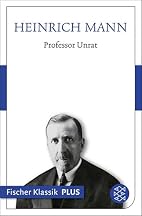


Heinrich Mann was the elder brother of Thomas, and for a while in the early 1900s had one of the most interesting moustaches in German literature.
The brothers grew up in a merchant family in Lübeck. Heinrich was initially intended for a business career, but was able to devote himself to writing after his father died in 1891 and the family moved to Munich. Compared to his brother, he was a much more politically-engaged but perhaps rather less experimental writer. In exile in France from 1933 onwards (America after 1940), he was active in trying to bring together German political and cultural resistance to the Nazis. At the time of his death in 1950, he had just accepted an invitation to return to live in East Germany, but he never actually made the journey.
If you've seen the film, you'll know Professor Unrat as a story about an authoritarian middle-aged schoolmaster who makes a fool of himself by falling in love (or rather - four-link in luff-again...) with a music hall singer. It turns out that there's a lot more to it than that. After twenty-six years in a small, provincial town indoctrinating middle-class boys with the authoritarian values of Wilhelm II's Prussia, the lonely, widowed Dr Raat has lost all sense of proportion. For him, the struggle to maintain his authority and fight against the hated nickname "Unrat" (=rubbish) has become a life-and-death matter. Everyone in town is either a current or former pupil or one of their family members, and he imagines that all of them are fuming over the unconcluded schoolroom battles of twenty years ago as much as he is. It never occurs to him that they might now think of the punishments and humiliations he inflicted with affectionate nostalgia...
What happens when Unrat visits the Blaue Engel and meets the singer Rosa Fröhlich is thus not just about sex: more importantly for Unrat, it's the first time in decades that he's talked to someone who is completely outside the closed world of the small town and the school. It gives him the liberating opportunity to realise sides of himself that have been locked up by the overriding concern for authority and appearances, and it lets him see that behind all that repressive force there is a huge anger at the community he's been living in for so long, and a corresponding desire for revenge. Rosa turns out to be the instrument he can use to strike back at them, to reveal the hypocrisy and double standards in the respectable pillars of the local establishment and to use it to push them over. Unfortunately, he is also in love with her, and he finds himself torn between his desire for absolute possession and his strategic need to use her as a disturbing influence. The book moves slightly oddly from vicious classroom satire via backstage realism into Balzac-style black revenge, but then at the last minute seems to escape back to a slightly unconvinced moralism. Very strange, but interesting.
You can't help feeling a little sorry for Lübeck's 500-year-old grammar school, the Katherineum, which managed to appear (unnamed, but quite recognisable) in the worst possible light in two of the best-known German novels of the 20th century before we were even halfway through that century's first decade. Apart from being the school where Unrat taught, it's of course also the one where Hanno Buddenbrook spends what might well have been the worst schoolday in literary history. But I suppose that's the risk any school runs with famous pupils.
The book was used as the basis for the film Der blaue Engel by Josef von Sternberg in 1930. The film is supposed to be a classic of German cinema, but it doesn't have all that much to do with the book, and is only really interesting (unless you're a big fan of early talkies) because of Marlene Dietrich's brilliant performance and a couple of memorable songs. Emil Jannings is wooden and unconvincing as Unrat, and the three schoolboys have obviously been kept back for 15 to 20 years, rather than the one or two called for in the book.
Professor Unrat, oder das Ende eines Tyrannen (1905; The Blue Angel) by Heinrich Mann (Germany, etc. 1871-1950)


Heinrich Mann was the elder brother of Thomas, and for a while in the early 1900s had one of the most interesting moustaches in German literature.
The brothers grew up in a merchant family in Lübeck. Heinrich was initially intended for a business career, but was able to devote himself to writing after his father died in 1891 and the family moved to Munich. Compared to his brother, he was a much more politically-engaged but perhaps rather less experimental writer. In exile in France from 1933 onwards (America after 1940), he was active in trying to bring together German political and cultural resistance to the Nazis. At the time of his death in 1950, he had just accepted an invitation to return to live in East Germany, but he never actually made the journey.
If you've seen the film, you'll know Professor Unrat as a story about an authoritarian middle-aged schoolmaster who makes a fool of himself by falling in love (or rather - four-link in luff-again...) with a music hall singer. It turns out that there's a lot more to it than that. After twenty-six years in a small, provincial town indoctrinating middle-class boys with the authoritarian values of Wilhelm II's Prussia, the lonely, widowed Dr Raat has lost all sense of proportion. For him, the struggle to maintain his authority and fight against the hated nickname "Unrat" (=rubbish) has become a life-and-death matter. Everyone in town is either a current or former pupil or one of their family members, and he imagines that all of them are fuming over the unconcluded schoolroom battles of twenty years ago as much as he is. It never occurs to him that they might now think of the punishments and humiliations he inflicted with affectionate nostalgia...
What happens when Unrat visits the Blaue Engel and meets the singer Rosa Fröhlich is thus not just about sex: more importantly for Unrat, it's the first time in decades that he's talked to someone who is completely outside the closed world of the small town and the school. It gives him the liberating opportunity to realise sides of himself that have been locked up by the overriding concern for authority and appearances, and it lets him see that behind all that repressive force there is a huge anger at the community he's been living in for so long, and a corresponding desire for revenge. Rosa turns out to be the instrument he can use to strike back at them, to reveal the hypocrisy and double standards in the respectable pillars of the local establishment and to use it to push them over. Unfortunately, he is also in love with her, and he finds himself torn between his desire for absolute possession and his strategic need to use her as a disturbing influence. The book moves slightly oddly from vicious classroom satire via backstage realism into Balzac-style black revenge, but then at the last minute seems to escape back to a slightly unconvinced moralism. Very strange, but interesting.
You can't help feeling a little sorry for Lübeck's 500-year-old grammar school, the Katherineum, which managed to appear (unnamed, but quite recognisable) in the worst possible light in two of the best-known German novels of the 20th century before we were even halfway through that century's first decade. Apart from being the school where Unrat taught, it's of course also the one where Hanno Buddenbrook spends what might well have been the worst schoolday in literary history. But I suppose that's the risk any school runs with famous pupils.
The book was used as the basis for the film Der blaue Engel by Josef von Sternberg in 1930. The film is supposed to be a classic of German cinema, but it doesn't have all that much to do with the book, and is only really interesting (unless you're a big fan of early talkies) because of Marlene Dietrich's brilliant performance and a couple of memorable songs. Emil Jannings is wooden and unconvincing as Unrat, and the three schoolboys have obviously been kept back for 15 to 20 years, rather than the one or two called for in the book.
27SassyLassy
>26 thorold: There is that "oder" construction in the title again, which I've only seen in Christa Wolf. Do you suppose she was paying homage to Mann?
I should read this, never having read this Mann either.
I should read this, never having read this Mann either.
28thorold
>27 SassyLassy: Possibly, she does talk about the Manns in Stadt Der Engel, but I think it's a fairly standard way of introducing a subtitle, e.g.
Sansibar oder der letzte Grund
Die verlorene Ehre der Katharina Blum: oder: Wie Gewalt entstehen und wohin sie führen kann
Minna von Barnhelm oder Das Soldatenglück
Sansibar oder der letzte Grund
Die verlorene Ehre der Katharina Blum: oder: Wie Gewalt entstehen und wohin sie führen kann
Minna von Barnhelm oder Das Soldatenglück
29thorold
And another very funny Irmgard Keun:
Das Mädchen, mit dem die Kinder nicht verkehren durften (1936; UK:Grown-ups don't understand / US:The bad example) by Irmgard Keun (1905-1982)
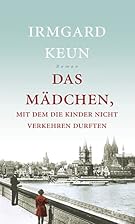
This was the manuscript that Keun took with her in her suitcase when she went into exile, and it's the first of her books to have been published in Amsterdam. Contrary to what you might expect in the circumstances and with that title (literally: The girl the children weren't allowed to associate with) it's not a critique of the current political situation in Germany, but a comic children's book, whose only explicit political content harks back to before 1918.
The (never-named) narrator of the stories is that archetype of children's fiction, the child who does everything for the best possible reasons but somehow always ends up causing unintended and very comical mayhem and getting herself into trouble. The book is set in a middle-class suburb of Köln in the years around the end of the Great War, and the narrator is about nine or ten in the first story, thirteen in the last, so roughly the same age as the author. Keun is - of course - a specialist in comic first-person narrators. The little girl's voice is entirely convincing, and she very effectively draws us into her frustration with the condition of childhood and the grown-ups' failure to appreciate her real good qualities. The inevitable escalation of the minor bits of mischief into major disasters is handled very cleverly as well. I suspect that a child reading along with an adult would be a little bit annoyed to find how many surreptitious grown-up jokes the author has buried in the text, but conversely the adult reader would be horrified at the dangerous and anti-social ideas a child might get from the book, so the two things probably cancel each other out. Anyway, I don't think a modern child would be able to track down a source of laundry blue, so we're probably safe!
I wondered at first whether Keun had set out to write a children's book in the hope of circumventing the Nazi ban on her work, but with a general theme that definitely doesn't reflect the Nazi ideal of womanhood and two explicitly anti-war chapters (in one the narrator writes a letter to the Kaiser urging him to abdicate and end the war, in the other she tries to help soldiers on leave to infect themselves with her little brother's scarlet fever germs so they won't have to return to the trenches), this obviously isn't a book that could have been published in Germany at the time. However, unlike her novels for adults, it was re-published in Germany shortly after the war, and there was even an English translation as early as 1955.
(BTW: notice the totally inappropriate cover art - all the previous editions seem to have Astrid-Lindgren-inspired pictures of subversive little girls on their covers, but the publishers of the most recent edition have obviously decided that they have a better chance pitching it at fans of "burnt books" than at kids...)
Das Mädchen, mit dem die Kinder nicht verkehren durften (1936; UK:Grown-ups don't understand / US:The bad example) by Irmgard Keun (1905-1982)
This was the manuscript that Keun took with her in her suitcase when she went into exile, and it's the first of her books to have been published in Amsterdam. Contrary to what you might expect in the circumstances and with that title (literally: The girl the children weren't allowed to associate with) it's not a critique of the current political situation in Germany, but a comic children's book, whose only explicit political content harks back to before 1918.
The (never-named) narrator of the stories is that archetype of children's fiction, the child who does everything for the best possible reasons but somehow always ends up causing unintended and very comical mayhem and getting herself into trouble. The book is set in a middle-class suburb of Köln in the years around the end of the Great War, and the narrator is about nine or ten in the first story, thirteen in the last, so roughly the same age as the author. Keun is - of course - a specialist in comic first-person narrators. The little girl's voice is entirely convincing, and she very effectively draws us into her frustration with the condition of childhood and the grown-ups' failure to appreciate her real good qualities. The inevitable escalation of the minor bits of mischief into major disasters is handled very cleverly as well. I suspect that a child reading along with an adult would be a little bit annoyed to find how many surreptitious grown-up jokes the author has buried in the text, but conversely the adult reader would be horrified at the dangerous and anti-social ideas a child might get from the book, so the two things probably cancel each other out. Anyway, I don't think a modern child would be able to track down a source of laundry blue, so we're probably safe!
I wondered at first whether Keun had set out to write a children's book in the hope of circumventing the Nazi ban on her work, but with a general theme that definitely doesn't reflect the Nazi ideal of womanhood and two explicitly anti-war chapters (in one the narrator writes a letter to the Kaiser urging him to abdicate and end the war, in the other she tries to help soldiers on leave to infect themselves with her little brother's scarlet fever germs so they won't have to return to the trenches), this obviously isn't a book that could have been published in Germany at the time. However, unlike her novels for adults, it was re-published in Germany shortly after the war, and there was even an English translation as early as 1955.
(BTW: notice the totally inappropriate cover art - all the previous editions seem to have Astrid-Lindgren-inspired pictures of subversive little girls on their covers, but the publishers of the most recent edition have obviously decided that they have a better chance pitching it at fans of "burnt books" than at kids...)
31thorold
This is another book that's been sitting on my shelf untouched for far too long (since sometime in the mid-1990s, I would guess), but it fits in here quite remarkably well, since it's not only a 1930s book by a German exile, but also another 20th century response to Goethe's Werther (see >2 thorold: above) and by the little brother of Heinrich Mann (see >26 thorold:). Moreover, I realised when I opened it that the events described had happened exactly two hundred years and one month earlier (22 September 1816). An anniversary to be marked :-)
Lotte in Weimar (1939) by Thomas Mann (Germany, etc., 1875-1955)


The premise for this book is the recorded fact that Charlotte Kestner, the woman who was famously the original of the heroine of Werther, made a visit to Weimar in the autumn of 1816, during which she met Goethe again for the first time in 44 years. Mann ingeniously uses this rather flimsy hook as the support for a complicated historical novel exploring Goethe and his relationships with his creative talent, with his family and entourage, with the court and people of Weimar, and with German politics and culture. Like all historical novels, it seems to be as much about the time it is written in as the time it is set in: Mann's strong identification with Goethe's role as a literary and political celebrity, his ageing and ill-health, and his troublesome family, are very obvious, whilst the reflections on Germanness Mann puts into Goethe's mouth sometimes risk turning him into the prophet who foretold the rise of Hitler. (This element of the book notoriously got Mann into trouble later on, when the prosecutor at the Nuremberg Trials, Sir Hartley Shawcross, quoted one of Goethe's prescient speeches from the novel thinking he was quoting Goethe's own words.)
As you would expect from Mann, the form of the book is far from conventional. It's written, quite literally, in the language of Goethe: not only does Mann choose to use early-19th-century idioms, spelling, and grammatical forms throughout, but most of the time he also has his characters talk like characters in an early-19th-century novel - only more so. The speeches are long-winded, theatrical (in a good way), and deeply thoughtful. Worthy of Weimar, in every way. Fortunately, Mann has the very un-Weimarish and practical widow Lotte on hand to interrupt them and pull them back to earth when they get too full of their own hot air.
We only meet Goethe face to face about two-thirds of the way through the book: before that, Lotte has had long conversations with several peripheral figures: the Irish celebrity-hunter "Miß Cuzzens", the secretary Dr Riemer, Adele Schopenhauer, and Goethe's son August. And missed her lunch with the sister she has come to visit. So we get to see Goethe in the first place through the eyes of the people (including Lotte) whose lives take place largely in his shadow. When we do actually meet him, Mann surprises us by shifting to a modernist stream-of-consciousness style (though more than ever sticking to Goethe's own language - he constantly seems to be paraphrasing his own work) as we encounter the great man waking up, itemising his old man's aches and pains, launching into his duties of the day, and studiously avoiding showing any excitement about the sudden reappearance of his long-lost love.
Not exactly light reading, but fascinating, very clever, and unexpectedly modest and witty at the same time.
Adele Schopenhauer is someone it might be interesting to follow up further: I vaguely remember her name from the days when we used to get all those wonderful lists of "great LGBT figures in history", but I had to look her up on Wikipedia. She was the sister of the philosopher, and later became known as a novelist and collector of folk-tales, friend of Annette von Droste-Hülshoff and long-term partner of the archaeologist Sibylle Mertens-Schaaffhausen. Mann brings her in here, in her late teens, in her role as the best friend of Goethe's future daughter-in-law Ottilie von Pogwisch, to tell us the story of the Ottilie/August courtship in the form of an interpolated, full-length pastiche novella (I think we're supposed to work out that the reason she wants to save Ottilie from marrying August is that she's secretly in love with her...).
Charlotte Kestner (née Buff):

Lotte in Weimar (1939) by Thomas Mann (Germany, etc., 1875-1955)


The premise for this book is the recorded fact that Charlotte Kestner, the woman who was famously the original of the heroine of Werther, made a visit to Weimar in the autumn of 1816, during which she met Goethe again for the first time in 44 years. Mann ingeniously uses this rather flimsy hook as the support for a complicated historical novel exploring Goethe and his relationships with his creative talent, with his family and entourage, with the court and people of Weimar, and with German politics and culture. Like all historical novels, it seems to be as much about the time it is written in as the time it is set in: Mann's strong identification with Goethe's role as a literary and political celebrity, his ageing and ill-health, and his troublesome family, are very obvious, whilst the reflections on Germanness Mann puts into Goethe's mouth sometimes risk turning him into the prophet who foretold the rise of Hitler. (This element of the book notoriously got Mann into trouble later on, when the prosecutor at the Nuremberg Trials, Sir Hartley Shawcross, quoted one of Goethe's prescient speeches from the novel thinking he was quoting Goethe's own words.)
As you would expect from Mann, the form of the book is far from conventional. It's written, quite literally, in the language of Goethe: not only does Mann choose to use early-19th-century idioms, spelling, and grammatical forms throughout, but most of the time he also has his characters talk like characters in an early-19th-century novel - only more so. The speeches are long-winded, theatrical (in a good way), and deeply thoughtful. Worthy of Weimar, in every way. Fortunately, Mann has the very un-Weimarish and practical widow Lotte on hand to interrupt them and pull them back to earth when they get too full of their own hot air.
We only meet Goethe face to face about two-thirds of the way through the book: before that, Lotte has had long conversations with several peripheral figures: the Irish celebrity-hunter "Miß Cuzzens", the secretary Dr Riemer, Adele Schopenhauer, and Goethe's son August. And missed her lunch with the sister she has come to visit. So we get to see Goethe in the first place through the eyes of the people (including Lotte) whose lives take place largely in his shadow. When we do actually meet him, Mann surprises us by shifting to a modernist stream-of-consciousness style (though more than ever sticking to Goethe's own language - he constantly seems to be paraphrasing his own work) as we encounter the great man waking up, itemising his old man's aches and pains, launching into his duties of the day, and studiously avoiding showing any excitement about the sudden reappearance of his long-lost love.
Not exactly light reading, but fascinating, very clever, and unexpectedly modest and witty at the same time.
Adele Schopenhauer is someone it might be interesting to follow up further: I vaguely remember her name from the days when we used to get all those wonderful lists of "great LGBT figures in history", but I had to look her up on Wikipedia. She was the sister of the philosopher, and later became known as a novelist and collector of folk-tales, friend of Annette von Droste-Hülshoff and long-term partner of the archaeologist Sibylle Mertens-Schaaffhausen. Mann brings her in here, in her late teens, in her role as the best friend of Goethe's future daughter-in-law Ottilie von Pogwisch, to tell us the story of the Ottilie/August courtship in the form of an interpolated, full-length pastiche novella (I think we're supposed to work out that the reason she wants to save Ottilie from marrying August is that she's secretly in love with her...).
Charlotte Kestner (née Buff):

32thorold
>31 thorold: Just noticed that that was my 991st review on LT - I'd better start keeping count so that I can do something special for the 1000th. Not sure what would be appropriate...
Books with "1000" in the title (http://www.librarything.com/search.php?search=1000&searchtype=other&searchtype=other&sortchoice=0 or http://www.librarything.com/search.php?search=thousand&searchtype=other&... are mostly obvious Christmas-present bait - "1000 X's to Y before you Z". With disappointingly few different possible values for Z...
Among the handful of cliché bestsellers, Jacob de Zoet I read a while ago and wasn't impressed by, but I haven't read either A thousand acres or A thousand splendid suns, so one of those might be an option. But not very original.
Most interesting hit in the "Reading globally" category so far looks like Mil Cretins by the Catalan writer Quim Monzó (but I don't read Catalan, so it would be a translation...). Or Kawabata's Thousand cranes.
In the silly category, 1000 Reasons Never to Kiss a Boy would be a fun title, but it looks like a generic teen-girl novel, so probably not what I'm looking for.
Martin Sixsmith's Russia: A 1000-Year Chronicle of the Wild East looks to be one of the more interesting history books in the list, but I've already heard his radio series with the same title, so it's probably redundant.
Any suggestions?
Books with "1000" in the title (http://www.librarything.com/search.php?search=1000&searchtype=other&searchtype=other&sortchoice=0 or http://www.librarything.com/search.php?search=thousand&searchtype=other&... are mostly obvious Christmas-present bait - "1000 X's to Y before you Z". With disappointingly few different possible values for Z...
Among the handful of cliché bestsellers, Jacob de Zoet I read a while ago and wasn't impressed by, but I haven't read either A thousand acres or A thousand splendid suns, so one of those might be an option. But not very original.
Most interesting hit in the "Reading globally" category so far looks like Mil Cretins by the Catalan writer Quim Monzó (but I don't read Catalan, so it would be a translation...). Or Kawabata's Thousand cranes.
In the silly category, 1000 Reasons Never to Kiss a Boy would be a fun title, but it looks like a generic teen-girl novel, so probably not what I'm looking for.
Martin Sixsmith's Russia: A 1000-Year Chronicle of the Wild East looks to be one of the more interesting history books in the list, but I've already heard his radio series with the same title, so it's probably redundant.
Any suggestions?
33baswood
Well you could start by placing ticks against this list https://www.theguardian.com/books/2009/jan/23/bestbooks-fiction.
34thorold
>33 baswood: Hmm. I'm looking for one book, not a thousand!
Looks as though I've read just under half the books on that list. As such lists go, it's quite a good one, but there's still a lot of stuff there that I wouldn't necessarily want to read if I knew then what I know now...
Looks as though I've read just under half the books on that list. As such lists go, it's quite a good one, but there's still a lot of stuff there that I wouldn't necessarily want to read if I knew then what I know now...
35SassyLassy
>32 thorold: Ten different approaches to One Hundred Years of Solitude?
36thorold
>35 SassyLassy: Now, that's a thought. Maybe not precisely that, but multiple reviews in one could be an interesting way to go. I've only tried that once before, and it went down very well. I'll have to think about that.
37ELiz_M
>36 thorold: Skip a fitting review for 1000 and review The Arabian Nights for review 1001.
38thorold
>37 ELiz_M: ...and if I overshoot that like @bragan, there's always Pirandello's Uno, nessuno e centomila :-)
39thorold
...meanwhile, not much might seem to be happening here, because I'm on a long, slow trip to Italy (sadly, only a virtual one...) with the above-mentioned Johann Wolfgang von G.
But I did finish an interpolated book that our reading club pushed to the top of the queue - as it happens, I was glad to get a little push to read some more Alice Munro:
Friend of my youth (1990) by Alice Munro (Canada, 1931- )

Ten Alice Munro stories from the eighties, all of them written for either the Atlantic or the New Yorker. That's probably all you need to say to make it clear that this is a book we should all read...
As you would expect, the stories are mostly about people - mainly middle-aged women from the more provincial parts of Canada - whose businesses, houses, lovers, husbands, children (and often also their own bodies) have not performed as they would have hoped. But they also often seem to be stories about the processes through which life turns into story, and where we learn about the narrator or viewpoint character through a story they are telling or trying to uncover. Not to mention guest appearances by the Border ballad "Tam Lin" and a chunk of Walter Savage Landor...
There's also lots of nice rural/small town Canadian atmosphere, much of it apparently from the forties and fifties, and typically we are in a world of small shopkeepers, schoolteachers, farmers and nurses, only rarely moving into the "professional classes".
But I did finish an interpolated book that our reading club pushed to the top of the queue - as it happens, I was glad to get a little push to read some more Alice Munro:
Friend of my youth (1990) by Alice Munro (Canada, 1931- )

Ten Alice Munro stories from the eighties, all of them written for either the Atlantic or the New Yorker. That's probably all you need to say to make it clear that this is a book we should all read...
As you would expect, the stories are mostly about people - mainly middle-aged women from the more provincial parts of Canada - whose businesses, houses, lovers, husbands, children (and often also their own bodies) have not performed as they would have hoped. But they also often seem to be stories about the processes through which life turns into story, and where we learn about the narrator or viewpoint character through a story they are telling or trying to uncover. Not to mention guest appearances by the Border ballad "Tam Lin" and a chunk of Walter Savage Landor...
There's also lots of nice rural/small town Canadian atmosphere, much of it apparently from the forties and fifties, and typically we are in a world of small shopkeepers, schoolteachers, farmers and nurses, only rarely moving into the "professional classes".
40thorold
Time to catch up a bit, after a trip to Munich gave me the chance to finish a couple of books (and acquire a few more German novels for the TBR pile...).
I was there to work, but I got to spend some time in the Alte Pinakothek, and my friends somehow managed to get us front row seats for Prokofiev's Romeo and Juliet at the Nationaltheater. I know nothing about ballet, but it was obviously a production aimed at people who know nothing about ballet (choreography, costumes and sets all set in stone somewhere around 1958) and it turned out to be great fun. And if ballet involves watching people like Gouneo Osiel (the gorgeous Cuban dancer who played Romeo) leaping about in tights, I'm all for it...!
Anyway, back to the book I've been dipping into and out of for several weeks:
Italienische Reise 1786-1788 (published 1816-1829) by Johann Wolfgang von Goethe (1749-1832)

(I read a generic free ebook edition with a boring cover, so we might as well have the famous portrait of Goethe in the Roman Campagna by his friend Tischbein instead)
The title-page was enough to correct a couple of my misconceptions about this book: I had the idea that this would be the young Goethe backpacking around Italy with the 18th-century equivalent of an Inter-Rail pass, amazed to discover the richness of classical and renaissance art, and rushing his experiences into print to encourage a generation of young poets to do the same. Totally wrong: he was in his late thirties, a famous literary figure and securely established in his ministerial post in Weimar. And he had already spent a lot of time and effort learning about Roman and Italian art in German collections before he set off, and he took with him the works of previous travellers like Winckelmann. So he knew what he was looking at.
Moreover, these travel-diaries weren't prepared for publication until Goethe got to the age where writers are expected to produce memoirs, about thirty years on (the description of the second stay in Rome didn't appear until 1829). Europe had changed quite a bit between 1786 and 1816 - this is probably the ultimate "don't mention the war" book. Goethe obviously did a fair bit of tidying up to prepare it for publication, but at no point does he make any reference (even indirect) to the intervening wars and revolutions. You'd have to be a pretty stony conservative to get away with that. Just imagine someone publishing a travel diary from 1913 in 1946 and pretending that the world was still the same...
Having said that, Goethe is mostly an entertaining travel-companion, because he's interested in absolutely everything from geology and botany to street-cleaning (predictably, he seems to think the last of these is better organised in Germany than Italy...). In Sicily he takes time off from art and architecture to visit the family of a famous bandit; in Naples he parties with Lady Hamilton and an unnamed princess; he climbs Vesuvius and is disappointed not to be able to climb Etna as well. There is a great description of the Roman Carnival, and entertaining looks at street-life in Naples.
Of course the trip is mostly about art, and there's a lot of description of the things he's seen and his reaction to them. Some of this is just lists, and he's often careful not to sound as though he's giving objective critical opinions - at one point he has a rant about "English-style" guidebooks that classify all artworks as good or bad, and have the temerity to point out "faults" in the work of Raphael and Michelangelo. That doesn't stop him giving his own reactions to what he sees, of course, but he doesn't set himself up as anything more than an amateur art-historian.
Sometimes there are interesting glimpses into the practicalities of tourism in the age before photography and electric light - Goethe can sketch reasonably well, but still takes pains to find an artist to travel with him to make sure that he can get a visual record of the things he has seen. And there are descriptions of how the interest of sculptures changes when you get to see them in torchlight.
I was also struck by the difference between Goethe's approach to the Italian Church and what I've seen in travel writings by British writers of the 18th or early 19th century. His comments about what he sees are simply those of a curious, Enlightened observer: he never adopts a partisan position, as British writers would have felt their readers expected them to. Sketching in the Sistine Chapel he enjoys telling us that he took a nap on the Papal throne, but when he is there for an Easter service he is impressed by the pomp and Palestrina.
Fun, and a nice book to dip in and out of, but it's a bit too random and unstructured to read in one go.
I was there to work, but I got to spend some time in the Alte Pinakothek, and my friends somehow managed to get us front row seats for Prokofiev's Romeo and Juliet at the Nationaltheater. I know nothing about ballet, but it was obviously a production aimed at people who know nothing about ballet (choreography, costumes and sets all set in stone somewhere around 1958) and it turned out to be great fun. And if ballet involves watching people like Gouneo Osiel (the gorgeous Cuban dancer who played Romeo) leaping about in tights, I'm all for it...!
Anyway, back to the book I've been dipping into and out of for several weeks:
Italienische Reise 1786-1788 (published 1816-1829) by Johann Wolfgang von Goethe (1749-1832)

(I read a generic free ebook edition with a boring cover, so we might as well have the famous portrait of Goethe in the Roman Campagna by his friend Tischbein instead)
The title-page was enough to correct a couple of my misconceptions about this book: I had the idea that this would be the young Goethe backpacking around Italy with the 18th-century equivalent of an Inter-Rail pass, amazed to discover the richness of classical and renaissance art, and rushing his experiences into print to encourage a generation of young poets to do the same. Totally wrong: he was in his late thirties, a famous literary figure and securely established in his ministerial post in Weimar. And he had already spent a lot of time and effort learning about Roman and Italian art in German collections before he set off, and he took with him the works of previous travellers like Winckelmann. So he knew what he was looking at.
Moreover, these travel-diaries weren't prepared for publication until Goethe got to the age where writers are expected to produce memoirs, about thirty years on (the description of the second stay in Rome didn't appear until 1829). Europe had changed quite a bit between 1786 and 1816 - this is probably the ultimate "don't mention the war" book. Goethe obviously did a fair bit of tidying up to prepare it for publication, but at no point does he make any reference (even indirect) to the intervening wars and revolutions. You'd have to be a pretty stony conservative to get away with that. Just imagine someone publishing a travel diary from 1913 in 1946 and pretending that the world was still the same...
Having said that, Goethe is mostly an entertaining travel-companion, because he's interested in absolutely everything from geology and botany to street-cleaning (predictably, he seems to think the last of these is better organised in Germany than Italy...). In Sicily he takes time off from art and architecture to visit the family of a famous bandit; in Naples he parties with Lady Hamilton and an unnamed princess; he climbs Vesuvius and is disappointed not to be able to climb Etna as well. There is a great description of the Roman Carnival, and entertaining looks at street-life in Naples.
Of course the trip is mostly about art, and there's a lot of description of the things he's seen and his reaction to them. Some of this is just lists, and he's often careful not to sound as though he's giving objective critical opinions - at one point he has a rant about "English-style" guidebooks that classify all artworks as good or bad, and have the temerity to point out "faults" in the work of Raphael and Michelangelo. That doesn't stop him giving his own reactions to what he sees, of course, but he doesn't set himself up as anything more than an amateur art-historian.
Sometimes there are interesting glimpses into the practicalities of tourism in the age before photography and electric light - Goethe can sketch reasonably well, but still takes pains to find an artist to travel with him to make sure that he can get a visual record of the things he has seen. And there are descriptions of how the interest of sculptures changes when you get to see them in torchlight.
I was also struck by the difference between Goethe's approach to the Italian Church and what I've seen in travel writings by British writers of the 18th or early 19th century. His comments about what he sees are simply those of a curious, Enlightened observer: he never adopts a partisan position, as British writers would have felt their readers expected them to. Sketching in the Sistine Chapel he enjoys telling us that he took a nap on the Papal throne, but when he is there for an Easter service he is impressed by the pomp and Palestrina.
Fun, and a nice book to dip in and out of, but it's a bit too random and unstructured to read in one go.
41thorold
...and one I bought in Munich and finished on the way home:
"Das Beste, was ich über Musik zu sagen weiss" (anthology published 2015) by Robert Walser (1878-1956), edited by Roman Brodbeck and Reto Sorg

Up to now, I've known the Swiss writer Robert Walser only as the author of the wonderful Jakob von Gunten and the hero of Enrique Vila-Matas's celebration of "the literature of the no", Bartleby & Co.. It turns out that, although he only published three novels, he left behind a large body of essays and poems, including a quantity of "micrograms" - texts that he wrote in tiny script in pencil after his withdrawal to a mental hospital in 1929.
This selection of Walser's essays, poems and short stories touching on the subject of music caught my eye particularly because I was curious to find out more about Walser's influence on Thomas Bernhard, for whom the relationship between literature and music was enormously important. In that sense, I'm not sure if it really answered any more questions than it raised, and in some ways it turned out to be a frustratingly random selection. Its real raison-d'etre as a book seems to be to act as a set of illustrations to the extended essay on Walser and Music by Brodbeck and Sorg that closes the book. Which is interesting, but doesn't really make it a book with wide general appeal. All the material is already published elsewhere, they haven't included any previously unknown texts.
The conclusion seems to be that Walser had a rather ambivalent relationship with music. Unlike Bernhard, he wasn't musically trained, and he didn't have any composers or performers in his circle of friends. He obviously did find music enormously important, and - not as much as Bernhard, but still conspicuously - he uses structures and patterns derived from music in a lot of his writing. But he clearly has a strong negative feeling about the bourgeois glorification of art-music and its performance - in the pieces collected here he is often very sarcastic about trained performers, concerts, and drawing-room music. He loves the accordion (which he confusingly refers to by his own word, Handharfe, hand-harp), but he mocks opera singers and virtuosi as much as he teases middle-class daughters-who-play. He seems to be passionate about opera, especially Mozart, but he doesn't quite like to admit to it: there are several essays in this collection where he comically tears apart the plot of an opera whilst clearly having a very intimate knowledge of its music. Whenever he is writing about a performance and detects himself getting sentimental about music, he changes the subject and tells us about how he is using the opportunity to make love to the servant-girl sitting next to him in the gallery. Or he damps our ardour and takes us back to the real world with a sentence saying something like "after the concert, it is usual to go home as quickly as possible, sometimes stopping for refreshment at a café on the way".
"Das Beste, was ich über Musik zu sagen weiss" (anthology published 2015) by Robert Walser (1878-1956), edited by Roman Brodbeck and Reto Sorg
Up to now, I've known the Swiss writer Robert Walser only as the author of the wonderful Jakob von Gunten and the hero of Enrique Vila-Matas's celebration of "the literature of the no", Bartleby & Co.. It turns out that, although he only published three novels, he left behind a large body of essays and poems, including a quantity of "micrograms" - texts that he wrote in tiny script in pencil after his withdrawal to a mental hospital in 1929.
This selection of Walser's essays, poems and short stories touching on the subject of music caught my eye particularly because I was curious to find out more about Walser's influence on Thomas Bernhard, for whom the relationship between literature and music was enormously important. In that sense, I'm not sure if it really answered any more questions than it raised, and in some ways it turned out to be a frustratingly random selection. Its real raison-d'etre as a book seems to be to act as a set of illustrations to the extended essay on Walser and Music by Brodbeck and Sorg that closes the book. Which is interesting, but doesn't really make it a book with wide general appeal. All the material is already published elsewhere, they haven't included any previously unknown texts.
The conclusion seems to be that Walser had a rather ambivalent relationship with music. Unlike Bernhard, he wasn't musically trained, and he didn't have any composers or performers in his circle of friends. He obviously did find music enormously important, and - not as much as Bernhard, but still conspicuously - he uses structures and patterns derived from music in a lot of his writing. But he clearly has a strong negative feeling about the bourgeois glorification of art-music and its performance - in the pieces collected here he is often very sarcastic about trained performers, concerts, and drawing-room music. He loves the accordion (which he confusingly refers to by his own word, Handharfe, hand-harp), but he mocks opera singers and virtuosi as much as he teases middle-class daughters-who-play. He seems to be passionate about opera, especially Mozart, but he doesn't quite like to admit to it: there are several essays in this collection where he comically tears apart the plot of an opera whilst clearly having a very intimate knowledge of its music. Whenever he is writing about a performance and detects himself getting sentimental about music, he changes the subject and tells us about how he is using the opportunity to make love to the servant-girl sitting next to him in the gallery. Or he damps our ardour and takes us back to the real world with a sentence saying something like "after the concert, it is usual to go home as quickly as possible, sometimes stopping for refreshment at a café on the way".
42thorold
...and another short one I brought back with me:
Eine blaßblaue Frauenschrift (Buenos Aires 1941, Frankfurt 1955; Pale blue ink in a lady's hand) by Franz Werfel (1890-1945)


Franz Werfel also belongs to the "burnt books" thread I've been following, but he's someone I always find hard to place: Jewish, Viennese, lover and later third husband of Alma Mahler, friend of the Manns in exile, but also the author of Song of Bernadette and a book about the Armenian genocide. It all sort of fits together, but not very straightforwardly...
This novella was written in exile during the war, and it's a surprisingly delicate satirical view of the Austrian ruling classes in the years immediately before the Anschluss. Leonidas, son of an impoverished schoolmaster, is now a middle-aged senior civil servant with a villa in Hietzing and a beautiful wife from a patrician family, but still very conscious of the fact that he owes his membership of the élite to an improbable stroke of good luck (inheriting a suit of evening clothes from a student colleague who killed himself). When a letter addressed in a lady's hand in pale blue ink appears on the breakfast table one day in the autumn of 1936, he knows his past is about to catch up with him. And it does.
Obviously Werfel is showing off a bit, by taking what may well be the corniest of all possible plot-lines and turning it into something clever, charming and original. Despite the tenderness and finesse with which he handles poor old Leonidas, we can't fail to see the analogy between the political situation of Austria and Leonidas's cowardice and failure to grasp the slim chance of redemption he has been offered. You finish the book with a wry smile, but there is a shiver going down the back of your neck at the same time.
I couldn't help wondering how much of the description of Leonidas's relationship with his high-maintenance wife Amelie reflects the home-life of the Werfels, but I suspect that Alma must have been in a league of her own...
Eine blaßblaue Frauenschrift (Buenos Aires 1941, Frankfurt 1955; Pale blue ink in a lady's hand) by Franz Werfel (1890-1945)

Franz Werfel also belongs to the "burnt books" thread I've been following, but he's someone I always find hard to place: Jewish, Viennese, lover and later third husband of Alma Mahler, friend of the Manns in exile, but also the author of Song of Bernadette and a book about the Armenian genocide. It all sort of fits together, but not very straightforwardly...
This novella was written in exile during the war, and it's a surprisingly delicate satirical view of the Austrian ruling classes in the years immediately before the Anschluss. Leonidas, son of an impoverished schoolmaster, is now a middle-aged senior civil servant with a villa in Hietzing and a beautiful wife from a patrician family, but still very conscious of the fact that he owes his membership of the élite to an improbable stroke of good luck (inheriting a suit of evening clothes from a student colleague who killed himself). When a letter addressed in a lady's hand in pale blue ink appears on the breakfast table one day in the autumn of 1936, he knows his past is about to catch up with him. And it does.
Obviously Werfel is showing off a bit, by taking what may well be the corniest of all possible plot-lines and turning it into something clever, charming and original. Despite the tenderness and finesse with which he handles poor old Leonidas, we can't fail to see the analogy between the political situation of Austria and Leonidas's cowardice and failure to grasp the slim chance of redemption he has been offered. You finish the book with a wry smile, but there is a shiver going down the back of your neck at the same time.
I couldn't help wondering how much of the description of Leonidas's relationship with his high-maintenance wife Amelie reflects the home-life of the Werfels, but I suspect that Alma must have been in a league of her own...
43thorold
Two more business trips since I last posted (and still two to come before the end of the year...). Whilst I have fewer opportunities to post when I'm travelling, hanging around in airports and hotels is great for finishing long books. This is one I started to read about three years ago, but didn't really manage to get into for ages, despite it falling nicely into various theme reads on German literature, Nobelists, etc., and of course it also fits nicely into my current "burned books" thread:
Die Blendung (1935; Auto-da-fé) by Elias Canetti (UK, Germany, Bulgaria, Switzerland, etc., 1905-1994)


Elias Canetti is one of those writers who moved around so much that it's difficult to "place" him in a particular literary tradition. He was born into a Sephardic Jewish family in Bulgaria, with Ladino as his mother-tongue, but he was educated mostly in German, the language in which he wrote. He spent much of his early childhood in Manchester, moving around (mostly) between Vienna, Frankfurt and Zürich as a student and young man. After 1938 he lived mainly in Zürich and London. He was awarded the Nobel Prize for literature in 1981, but his real interest seems to have been more for philosophy than for literature...
Die Blendung (originally planned as first book in a cycle of eight novels) is Canetti's first novel and his best-known work. It was written around 1931, set in Vienna and with many references to the political violence of the late 20s, especially the burning of the Justizpalast in October 1927, which Canetti witnessed. However, it was obviously also strongly influenced by Canetti's stays in Weimar Republic Berlin. Canetti particularly mentions Grosz, Brecht and Isaac Babel as friends from his time in Berlin; in Vienna, the only writer who really grabbed his attention at this period was the satirist Karl Kraus.
Dr Peter Kien, leading the quiet, settled life of a bachelor bibliophile and amateur scholar of Asian languages, unwisely decides to prevent his reliable housekeeper Therese from leaving by marrying her, and as a result finds himself dragged down into a nightmareish low-life world that could have come straight out of Otto Dix or George Grosz. It's a savagely funny book, but also an incredibly bleak one, in which civilised, humanist values and selfish ambitions are trampled indiscriminately into the dirt by the brutish forces of human nature. The only person who seems to be able to pass through the global shitstorm unscathed is Kien's brother, a clinical psychiatrist who is so insulated from reality in his lunatic asylum that he never really perceives the full horror of what is going on around him.
When people finally started to take notice of this book, thirty or forty years after it was written, it's obvious why it caught their attention: Canetti's view of Europe in the early thirties leaves us in no doubt that there is something seriously bad on the way, and with hindsight we can only see it as prescient. But it seems to be more than a book about one particular historical mooment: despite the bleakness, despite the folly of both Kien brothers' attempts to escape from the world into their intellectual pursuits, Canetti is evidently writing from a humanist perspective - rather like Kafka, he wants to show us the importance of our values by showing us what happens when we lose them.
Worth reading, but a very emotionally draining book - especially for those of us who happen to own large libraries. Canetti meant it to be "merciless towards both the writer and the reader", and I think he achieved that...
(Edited a bit after reading Canetti's afterword to the novel)
Die Blendung (1935; Auto-da-fé) by Elias Canetti (UK, Germany, Bulgaria, Switzerland, etc., 1905-1994)


Elias Canetti is one of those writers who moved around so much that it's difficult to "place" him in a particular literary tradition. He was born into a Sephardic Jewish family in Bulgaria, with Ladino as his mother-tongue, but he was educated mostly in German, the language in which he wrote. He spent much of his early childhood in Manchester, moving around (mostly) between Vienna, Frankfurt and Zürich as a student and young man. After 1938 he lived mainly in Zürich and London. He was awarded the Nobel Prize for literature in 1981, but his real interest seems to have been more for philosophy than for literature...
Die Blendung (originally planned as first book in a cycle of eight novels) is Canetti's first novel and his best-known work. It was written around 1931, set in Vienna and with many references to the political violence of the late 20s, especially the burning of the Justizpalast in October 1927, which Canetti witnessed. However, it was obviously also strongly influenced by Canetti's stays in Weimar Republic Berlin. Canetti particularly mentions Grosz, Brecht and Isaac Babel as friends from his time in Berlin; in Vienna, the only writer who really grabbed his attention at this period was the satirist Karl Kraus.
Dr Peter Kien, leading the quiet, settled life of a bachelor bibliophile and amateur scholar of Asian languages, unwisely decides to prevent his reliable housekeeper Therese from leaving by marrying her, and as a result finds himself dragged down into a nightmareish low-life world that could have come straight out of Otto Dix or George Grosz. It's a savagely funny book, but also an incredibly bleak one, in which civilised, humanist values and selfish ambitions are trampled indiscriminately into the dirt by the brutish forces of human nature. The only person who seems to be able to pass through the global shitstorm unscathed is Kien's brother, a clinical psychiatrist who is so insulated from reality in his lunatic asylum that he never really perceives the full horror of what is going on around him.
When people finally started to take notice of this book, thirty or forty years after it was written, it's obvious why it caught their attention: Canetti's view of Europe in the early thirties leaves us in no doubt that there is something seriously bad on the way, and with hindsight we can only see it as prescient. But it seems to be more than a book about one particular historical mooment: despite the bleakness, despite the folly of both Kien brothers' attempts to escape from the world into their intellectual pursuits, Canetti is evidently writing from a humanist perspective - rather like Kafka, he wants to show us the importance of our values by showing us what happens when we lose them.
Worth reading, but a very emotionally draining book - especially for those of us who happen to own large libraries. Canetti meant it to be "merciless towards both the writer and the reader", and I think he achieved that...
(Edited a bit after reading Canetti's afterword to the novel)
44thorold
I needed a bit of light relief after that, so I picked up another Maigret story:
La guinguette à deux sous (1931; The bar on the Seine) by Georges Simenon
Simenon seems to be trying to win back a bit of market share from Agatha Christie with this one: the central characters are a flashy, art-deco set of young professionals - one of them an English expat - who have made a run-down riverside café just outside Paris the centre of their weekends of bridge, adultery and boating. Maigret meets them whilst following up a lead in a "cold case" investigation (just to prove that there's nothing new under the sun in the crime-fiction business!). He thus happens to be on the spot when there's another violent death, which is lucky for him, as it gives him the perfect excuse to postpone joining Mme Maigret and her sister for the family summer holiday in Alsace. Rather unusually, he seeks the help of some forensic scientists during this investigation, but don't worry - as usual, the final identification of the guilty party comes from the Commissaire's psychological intuition. So everything is as it should be, but this one still doesn't really have anything to make it stand out from the crowd of Simenon novels...
...and now I know what a guinguette is! (https://en.wikipedia.org/wiki/Guinguette)
(997th review)
La guinguette à deux sous (1931; The bar on the Seine) by Georges Simenon
Simenon seems to be trying to win back a bit of market share from Agatha Christie with this one: the central characters are a flashy, art-deco set of young professionals - one of them an English expat - who have made a run-down riverside café just outside Paris the centre of their weekends of bridge, adultery and boating. Maigret meets them whilst following up a lead in a "cold case" investigation (just to prove that there's nothing new under the sun in the crime-fiction business!). He thus happens to be on the spot when there's another violent death, which is lucky for him, as it gives him the perfect excuse to postpone joining Mme Maigret and her sister for the family summer holiday in Alsace. Rather unusually, he seeks the help of some forensic scientists during this investigation, but don't worry - as usual, the final identification of the guilty party comes from the Commissaire's psychological intuition. So everything is as it should be, but this one still doesn't really have anything to make it stand out from the crowd of Simenon novels...
...and now I know what a guinguette is! (https://en.wikipedia.org/wiki/Guinguette)
(997th review)
45thorold
And then I destroyed all that carefully built-up optimism by returning to Thomas Bernhard!
Up to now I've only looked at his prose works, so it was about time for a play, and this is by far the most famous/notorious:
Heldenplatz (1988) by Thomas Bernhard

Vienna's Heldenplatz, apart from being an important large open space next to a lot of important government buildings, still used for parades and similar public demonstrations of power, is known to most of us because of Hitler's speech there on the 15th of March 1938, when he welcomed the jubilant Austrian crowds home into the German Reich.
When Claus Peymann, director of the Burgtheater, commissioned Bernhard to write a piece for the 1988 "year of reflection" on the 50th anniversary of the Anschluss, he presumably expected to get something controversial, but in the event both Bernhard's piece and the reactions it let loose must have exceeded his wildest dreams. In the run-up to the première on 4 November 1988, various journalists got hold of sensational excerpts from the text and held them under the noses of political leaders, who almost without exception reacted in precisely the way intended, calling for censorship, deportation, withdrawal of subsidies, etc., and generally giving the rest of the world the impression that Austria was precisely the philistine nest of intolerant old Nazis that the Kurt Waldheim scandal had made everyone suspect it was already.
The right-wing press gleefully fanned the flames, and the whole thing turned into a major scandal, with the Burgtheater under police protection and all sorts of outrages threatened. As the Austrian critic Sigrid Löffler pointed out in the Spiegel, it can't have made the attackers any more comfortable with themselves when they actually saw the play and understood the context of the leaked lines - they are spoken by the members of a family of returned Jewish exiles driven to desperation (and in the case of the absent central character of the play, Professor Josef Schuster, suicide) by the continuing and unrepentant antisemitism and hatred they find in modern Austria: the play ends with the louder and louder roaring of Hitler's Heldenplatz audience in the background.
In the event, the first performance was a triumph, despite the hecklers and wavers of Austrian flags, and the news footage shows a jubilant Bernhard (who was already very frail and died a few months later) taking curtain calls with the cast.
As always, the energy and conviction of Bernhard's language is magnificent and overwhelming. This is a play you could quite easily read for the sheer pleasure of the text, whether or not you care about Austrian politics or agree with the attitudes expressed by the characters. Moreover, it's not really a play about actual politics, but rather about the way our perception of the social and political reality around us can have extreme effects on our moral and emotional state. And I think that's what makes it more than a bit of obsolete Waldheim-bashing.
Reading it now, 28 years later, you can only reflect on how we can see the kind of political and popular Stumpfsinnigkeit Bernhard talks about gaining more and more ground every day. Without, so far, the imminent global catastrophe Bernhard's characters expected, although perhaps we've lost a lot more on the way than we're aware of.
I was struck by the way Bernhard also makes it clear - in what he probably knew was his final message to the public - that literature is not actually capable of expressing the real awfulness of reality:
Sigrid Löffler's Spiegel article on the Heldenplatz scandal: http://www.spiegel.de/spiegel/print/d-13531490.html
(998th review)
Up to now I've only looked at his prose works, so it was about time for a play, and this is by far the most famous/notorious:
Heldenplatz (1988) by Thomas Bernhard
Vienna's Heldenplatz, apart from being an important large open space next to a lot of important government buildings, still used for parades and similar public demonstrations of power, is known to most of us because of Hitler's speech there on the 15th of March 1938, when he welcomed the jubilant Austrian crowds home into the German Reich.
When Claus Peymann, director of the Burgtheater, commissioned Bernhard to write a piece for the 1988 "year of reflection" on the 50th anniversary of the Anschluss, he presumably expected to get something controversial, but in the event both Bernhard's piece and the reactions it let loose must have exceeded his wildest dreams. In the run-up to the première on 4 November 1988, various journalists got hold of sensational excerpts from the text and held them under the noses of political leaders, who almost without exception reacted in precisely the way intended, calling for censorship, deportation, withdrawal of subsidies, etc., and generally giving the rest of the world the impression that Austria was precisely the philistine nest of intolerant old Nazis that the Kurt Waldheim scandal had made everyone suspect it was already.
The right-wing press gleefully fanned the flames, and the whole thing turned into a major scandal, with the Burgtheater under police protection and all sorts of outrages threatened. As the Austrian critic Sigrid Löffler pointed out in the Spiegel, it can't have made the attackers any more comfortable with themselves when they actually saw the play and understood the context of the leaked lines - they are spoken by the members of a family of returned Jewish exiles driven to desperation (and in the case of the absent central character of the play, Professor Josef Schuster, suicide) by the continuing and unrepentant antisemitism and hatred they find in modern Austria: the play ends with the louder and louder roaring of Hitler's Heldenplatz audience in the background.
In the event, the first performance was a triumph, despite the hecklers and wavers of Austrian flags, and the news footage shows a jubilant Bernhard (who was already very frail and died a few months later) taking curtain calls with the cast.
As always, the energy and conviction of Bernhard's language is magnificent and overwhelming. This is a play you could quite easily read for the sheer pleasure of the text, whether or not you care about Austrian politics or agree with the attitudes expressed by the characters. Moreover, it's not really a play about actual politics, but rather about the way our perception of the social and political reality around us can have extreme effects on our moral and emotional state. And I think that's what makes it more than a bit of obsolete Waldheim-bashing.
Reading it now, 28 years later, you can only reflect on how we can see the kind of political and popular Stumpfsinnigkeit Bernhard talks about gaining more and more ground every day. Without, so far, the imminent global catastrophe Bernhard's characters expected, although perhaps we've lost a lot more on the way than we're aware of.
I was struck by the way Bernhard also makes it clear - in what he probably knew was his final message to the public - that literature is not actually capable of expressing the real awfulness of reality:
Was die Schriftsteller schreiben
ist ja nichts gegen die Wirklichkeit
jaja sie schreiben ja daß alles fürchterlich ist
daß alles verdorben und verkommen ist
daß alles katastrophal ist
und daß alles ausweglos ist
aber alles das sie schreiben
ist nichts gegen die Wirklichkeit
die Wirklichkeit ist so schlimm
daß sie nicht beschrieben werden kann
noch kein Schriftsteller hat die Wirklichkeit so beschrieben
wie sie wirklich ist
das ist das Fürchterliche
(Professor Robert at the end of Scene 2)
Sigrid Löffler's Spiegel article on the Heldenplatz scandal: http://www.spiegel.de/spiegel/print/d-13531490.html
(998th review)
46RidgewayGirl
>40 thorold: Munich! How was the Alte Pinakothek? There were renovations going on during most of my three years there, but there was still plenty to see! Was it all finished?
47thorold
>46 RidgewayGirl: They're still busy renovating - another year or so to go, I think. It's good how they manage to keep most of the collection accessible while they're doing it. The one euro admission on Sundays is something the Dutch museums could learn from too :-)
I should go and look at some of the other museums in Munich - I keep going back to the Alte because it's so good and there's a bit I had to rush last time I was there, but it's a bit strange going from Holland to Bavaria to look at Dutch paintings. And the Dürer self-portrait, of course.
Note to self: Lenbachhaus next time (well, not next time, that's in early December and I'll only be there for long enough to sleep and give a presentation, but maybe the time after that...)
BTW - my friends dragged me to Munich zoo, where I'd never been before: the new elephant house they've just opened is magnificent - did you get to see that before you left?
I should go and look at some of the other museums in Munich - I keep going back to the Alte because it's so good and there's a bit I had to rush last time I was there, but it's a bit strange going from Holland to Bavaria to look at Dutch paintings. And the Dürer self-portrait, of course.
Note to self: Lenbachhaus next time (well, not next time, that's in early December and I'll only be there for long enough to sleep and give a presentation, but maybe the time after that...)
BTW - my friends dragged me to Munich zoo, where I'd never been before: the new elephant house they've just opened is magnificent - did you get to see that before you left?
48RidgewayGirl
Yes, we had enough visitors with children to have visited the zoo a few times. I like that they have a good capybara enclosure. I like capybaras. It's also a pleasant zoo just for walking around.
The Lenbachhaus is my favorite of the Munich museums. The collection is small enough to be enjoyed in a single visit, although I recommend skipping the main floor and going directly upstairs to the expressionists and the Blue Rider stuff. There's a space across the street that has good temporary shows, so see if what's showing there interests you when you go. The Neue Pinakothek, across the street from the Alte, is lovely inside and the small courtyard cafe is worthwhile for a cup of coffee. In any case, I have too many strong opinions on the museums of Munich! It really is a great city for art.
The Lenbachhaus is my favorite of the Munich museums. The collection is small enough to be enjoyed in a single visit, although I recommend skipping the main floor and going directly upstairs to the expressionists and the Blue Rider stuff. There's a space across the street that has good temporary shows, so see if what's showing there interests you when you go. The Neue Pinakothek, across the street from the Alte, is lovely inside and the small courtyard cafe is worthwhile for a cup of coffee. In any case, I have too many strong opinions on the museums of Munich! It really is a great city for art.
49thorold
It's been a couple of weeks since I posted here, and I've been to Munich again in the meantime (no time for museums, but plenty of time to read at airports and on the S-Bahn...).
I decided that, rather than setting up some elaborate oulipian joke (I'm not really in the mood for that...), I would celebrate the "1000th review" moment by re-reading some daunting literary milestones I haven't touched since the days when I never went to bed in good time. A clumsy way of leading into the first part of this project, which also ties in with the theme of "great literary moustaches of the 20th century" that I opened with Heinrich Mann a few weeks ago:
Du côté de chez Swann (1913; Swann's Way, 1922) by Marcel Proust (France, 1871-1922)

(At this point I feel an almost overwhelming urge to open with a barbershop rendition of "Prowst in his first book wrote about, wrote about, wrote about...", but that's been done before - see https://www.youtube.com/watch?v=uwAOc4g3K-g)
It's probably a rather banal thing to say, but what I really noticed when I picked up the first volume of À la recherche du temps perdu again after a long Proust-free period was that I'd completely forgotten how good he is at getting his complicated ideas about art, society, nature and mind across. The story might be frustratingly slow in getting anywhere, but on just about every page there was a phrase that seemed exactly to capture something I could relate to my own experience and give it an extra dimension. One part of you wants to tell the narrator not to fret and reassure him that his mother is going to come up to say good night to him after all in about 500 pages from now, but at the same time you're surfing the ideas as they roll towards you with a reassuringly predictable rhythm that's modulated just enough to keep you alert and focussed as they come at you.
The first-person sections are more immediately and obviously appealing than "Un amour de Swann", of course - I even caught myself checking "that most erotic of books, the railway timetable", to see whether I might be able to fit in a trip to Normandy next year to have a look at "Combray" and "Balbec" in real life. It's much easier to identify with the narrator-as-a-small-boy than with Swann the Parisian sophisticate falling for the courtesan Odette, but even so there is a remarkable amount in the development of his affection, need, jealousy and mistrust that strikes a chord. And the Duchess is magnificent!
I don't think I could read all seven volumes straight through without a break - I need a bit of laughter and flippancy from time to time, and that's something Proust would dismiss as the unworthy province of the small-minded Verdurins. But now that I've started the re-read, I am in the mood again, and the other volumes are going to have to follow sooner or later. As a pastime, re-reading Proust certainly beats "strangling animals, golf and masturbating"...
(999th review)
I decided that, rather than setting up some elaborate oulipian joke (I'm not really in the mood for that...), I would celebrate the "1000th review" moment by re-reading some daunting literary milestones I haven't touched since the days when I never went to bed in good time. A clumsy way of leading into the first part of this project, which also ties in with the theme of "great literary moustaches of the 20th century" that I opened with Heinrich Mann a few weeks ago:
Du côté de chez Swann (1913; Swann's Way, 1922) by Marcel Proust (France, 1871-1922)

(At this point I feel an almost overwhelming urge to open with a barbershop rendition of "Prowst in his first book wrote about, wrote about, wrote about...", but that's been done before - see https://www.youtube.com/watch?v=uwAOc4g3K-g)
It's probably a rather banal thing to say, but what I really noticed when I picked up the first volume of À la recherche du temps perdu again after a long Proust-free period was that I'd completely forgotten how good he is at getting his complicated ideas about art, society, nature and mind across. The story might be frustratingly slow in getting anywhere, but on just about every page there was a phrase that seemed exactly to capture something I could relate to my own experience and give it an extra dimension. One part of you wants to tell the narrator not to fret and reassure him that his mother is going to come up to say good night to him after all in about 500 pages from now, but at the same time you're surfing the ideas as they roll towards you with a reassuringly predictable rhythm that's modulated just enough to keep you alert and focussed as they come at you.
The first-person sections are more immediately and obviously appealing than "Un amour de Swann", of course - I even caught myself checking "that most erotic of books, the railway timetable", to see whether I might be able to fit in a trip to Normandy next year to have a look at "Combray" and "Balbec" in real life. It's much easier to identify with the narrator-as-a-small-boy than with Swann the Parisian sophisticate falling for the courtesan Odette, but even so there is a remarkable amount in the development of his affection, need, jealousy and mistrust that strikes a chord. And the Duchess is magnificent!
I don't think I could read all seven volumes straight through without a break - I need a bit of laughter and flippancy from time to time, and that's something Proust would dismiss as the unworthy province of the small-minded Verdurins. But now that I've started the re-read, I am in the mood again, and the other volumes are going to have to follow sooner or later. As a pastime, re-reading Proust certainly beats "strangling animals, golf and masturbating"...
(999th review)
50SassyLassy
>49 thorold: "Oulipian" just got me back for capelin.
Oh for those days when I never went to bed in good time. My reading desperately needs them.
I must confess to never having read Proust, let alone reread him, but know I should make that move. You do capture the joy of rereading and that wonderful sense of falling into a book. Congratulations on this enterprise and on 999. Do make that trip to Normandy.
Oh for those days when I never went to bed in good time. My reading desperately needs them.
I must confess to never having read Proust, let alone reread him, but know I should make that move. You do capture the joy of rereading and that wonderful sense of falling into a book. Congratulations on this enterprise and on 999. Do make that trip to Normandy.
51thorold
This is probably my last chance this year to post some stats, and it doesn't look as though there will be more than two or three more books finished before the end of the year anyway. So, here we go:
Q4 reading by genre and language
Did I really only read one English book in three months? (it will probably be 2 in the end, I've got an Irish one on the go now...)

2016 reading by month and genre

2016 reading by genre and language

Q4 reading by genre and language
Did I really only read one English book in three months? (it will probably be 2 in the end, I've got an Irish one on the go now...)

2016 reading by month and genre

2016 reading by genre and language

52dchaikin
Mark - you had quite the October...and November. I'm finally catching up with your thread and, still, anticipating review 1000. Your stat charts are quite elegant.
53thorold
>52 dchaikin: I had quite the December, too, but not in terms of number of books... anyway, here it is at last, the long-heralded 1000th review. In case anyone's wondering why I picked this particular book to be the 1000th, it's for the very dull reason that it happens to have almost exactly 1000 pages in my paperback.
There should be some flashing clipart here, but I couldn't find anything quite cheesy enough in a 10 second browse on Google, so you'll have to imagine it:
Der Zauberberg (1924; The magic mountain) by Thomas Mann
Hans visits his cousin in a TB sanatorium. 1000 pages later he's still there when the Great War breaks out.
That's arguably all you really need to know about this book, if you haven't read it, and it was pretty much all I remembered from the first time I read it (quite some time ago). Mann himself encourages readers to read it twice. More than twice would probably be better, but there are limits to how many times you can plough through a work this long. I certainly hope it won't be my last time...
So what is it really about? As usual with Mann, you can take your pick. It's a book with a lot of discussions of serious political and philosophical topics, with characters who explicitly argue for and are obviously meant to represent abstract principles and schools of thought, but it's also a book full of apparently trivial superficial detail about the everyday life of the sanatrium. The international clientele of the sanatorium is obviously sometimes parodying the clumsy process by which Edwardian/Wilhelmite Europe lurched towards war, but at other times the symbolism is more existential than political, as the patients step back from the real world to flirt with the seductive attractions of illness and death.
Basically, it's a book where you can find just about anything discussed to just about any depth, with no apparent rule to fix how much analysis should go on - say - the best way of wrapping yourself in blankets, as opposed to the utility of revolutions, the physics of the gramophone, the history of Freemasonry, or tonight's menu. Endlessly fascinating, occasionally infuriating (no-one but Mann could take over a hundred words to tell us that a record was the last act of Verdi's Aida), always magnificent.
There should be some flashing clipart here, but I couldn't find anything quite cheesy enough in a 10 second browse on Google, so you'll have to imagine it:
Der Zauberberg (1924; The magic mountain) by Thomas Mann
Hans visits his cousin in a TB sanatorium. 1000 pages later he's still there when the Great War breaks out.
That's arguably all you really need to know about this book, if you haven't read it, and it was pretty much all I remembered from the first time I read it (quite some time ago). Mann himself encourages readers to read it twice. More than twice would probably be better, but there are limits to how many times you can plough through a work this long. I certainly hope it won't be my last time...
So what is it really about? As usual with Mann, you can take your pick. It's a book with a lot of discussions of serious political and philosophical topics, with characters who explicitly argue for and are obviously meant to represent abstract principles and schools of thought, but it's also a book full of apparently trivial superficial detail about the everyday life of the sanatrium. The international clientele of the sanatorium is obviously sometimes parodying the clumsy process by which Edwardian/Wilhelmite Europe lurched towards war, but at other times the symbolism is more existential than political, as the patients step back from the real world to flirt with the seductive attractions of illness and death.
Basically, it's a book where you can find just about anything discussed to just about any depth, with no apparent rule to fix how much analysis should go on - say - the best way of wrapping yourself in blankets, as opposed to the utility of revolutions, the physics of the gramophone, the history of Freemasonry, or tonight's menu. Endlessly fascinating, occasionally infuriating (no-one but Mann could take over a hundred words to tell us that a record was the last act of Verdi's Aida), always magnificent.
54thorold
And, while I'm here, No.1001. Not the Arabian Nights, but a first collection of poems from someone whose writing I've admired since we were members of the same poetry group about 15 years ago. ("Have you seen my new book?" seems to be one of the more unexpected hazards of reconnecting with people over the internet, but in this case I didn't mind a bit!)
A Gap in the Rain (2015) by Barbara Cumbers (UK)
This is a very enjoyable and rewarding collection of poems, mostly dealing in one way or another with the natural world and the way we interact with it, written from the point of view of someone who has a clear, purposive understanding of the way that natural world is put together (Barbara Cumbers is a geologist), and applies the same kind of scientific exactness to her use of language as she does to her observation of the habits of rocks, birds and spiders. Not that these are in any way dry and academic poems: there is lots of moisture about, and there is always an unexpected twist in the way the speaker of the poem is involved with the subject-matter. The poems I particularly enjoyed included two about apparently trivial subjects - walking in the rain (the title poem); a pastiche-sonnet on first looking through varifocal spectacles. But the big subjects come off well too.
A Gap in the Rain (2015) by Barbara Cumbers (UK)
This is a very enjoyable and rewarding collection of poems, mostly dealing in one way or another with the natural world and the way we interact with it, written from the point of view of someone who has a clear, purposive understanding of the way that natural world is put together (Barbara Cumbers is a geologist), and applies the same kind of scientific exactness to her use of language as she does to her observation of the habits of rocks, birds and spiders. Not that these are in any way dry and academic poems: there is lots of moisture about, and there is always an unexpected twist in the way the speaker of the poem is involved with the subject-matter. The poems I particularly enjoyed included two about apparently trivial subjects - walking in the rain (the title poem); a pastiche-sonnet on first looking through varifocal spectacles. But the big subjects come off well too.
55dchaikin
A wonderful 1000th book reviewed. Congrats. Quite an achievement. (I'm hiding my eyes from the flashing clipart that isn't actually there)
56kidzdoc
Great review of The Magic Mountain, Mark! I'll get to it, one of these days...
57thorold
>56 kidzdoc: I'm sure all the discussions about the philosophy of illness and medical treatment would appeal to you, Darryl.
58thorold
...and what I've been listening to in an attempt to cure my indifference to audiobooks, ignorance of Beckett, and reluctance to read translations. A tall order, maybe, but it seems to have had at least some effect.
Molloy (French 1951; author's English translation 1955) by Samuel Beckett (Ireland, France 1906-1989)
Audiobook read by Sean Barrett and Dermot Crowley
The first part of the "Trilogy" which is generally considered Beckett's most important prose work. A strange, puzzling, and captivating book, and a great performance by both Barrett and Crowley (who read one part of the book each). I think I would want to read this again on paper some time to look more closely at the way Beckett's language works, but clearly it is a very theatrical work, and it comes across very effectively as audio.
One reason I've been wanting to get to grips with Beckett is that I've been reading a lot of Thomas Bernhard lately, and I was curious to find out how much the two of them really do connect. There obviously is a lot of overlap: both of them are playwrights whose prose is meant to be heard as well as seen on the page; both share an interest in patterns and repetitions, both are fascinated by various kinds of negativity, and both have a tendency to indulge in bitter, sarcastic jokes.
What Bernhard doesn't really share with Beckett is the latter's interest in the absurd. Bernhard's texts exist in a world which the narrator is always trying to force into a logical pattern: Beckett's characters seem to accept that the world cannot and will not let meaning be imposed on it, and their attempts to reason don't go beyond what they can see in front of their noses. Always assuming that they still have noses.
That is reflected in the way Beckett's characters are radically disconnected from conventional society. To the extent that we are often left unsure where and when the story is set, and whether there even still is such a thing as conventional society. In this case, Molloy is a deranged, crippled homeless person - although the fragments of "high" language he occasionally uses with such scathing irony make us wonder if he might have had an education at some point - whilst his pursuer Moran manages to break most of his links with the bourgeois world in the course of his unexplainable quest.
Malone Dies (French 1951; author's English translation 1956) by Samuel Beckett (Ireland, France 1906-1989)
Audiobook read by Sean Barrett
The second part of the trilogy feels if anything even bleaker than the first. Malone is in bed awaiting death, with an exercise book and a stub of pencil to record his thoughts, but no clear idea of where he is beyond the room he can see, or of how he got there. At first there's someone who brings him food and takes away his filled chamber pots, but at a certain point even that stops and he's left alone with his reflections, which alternate between his descriptions of his current state and episodes from a story (perhaps several stories) he is telling us about a character confined in what seems to be some kind of asylum. Unpleasant, disturbing, but strangely gripping. And even occasionally very funny.
Molloy (French 1951; author's English translation 1955) by Samuel Beckett (Ireland, France 1906-1989)
Audiobook read by Sean Barrett and Dermot Crowley
The first part of the "Trilogy" which is generally considered Beckett's most important prose work. A strange, puzzling, and captivating book, and a great performance by both Barrett and Crowley (who read one part of the book each). I think I would want to read this again on paper some time to look more closely at the way Beckett's language works, but clearly it is a very theatrical work, and it comes across very effectively as audio.
One reason I've been wanting to get to grips with Beckett is that I've been reading a lot of Thomas Bernhard lately, and I was curious to find out how much the two of them really do connect. There obviously is a lot of overlap: both of them are playwrights whose prose is meant to be heard as well as seen on the page; both share an interest in patterns and repetitions, both are fascinated by various kinds of negativity, and both have a tendency to indulge in bitter, sarcastic jokes.
What Bernhard doesn't really share with Beckett is the latter's interest in the absurd. Bernhard's texts exist in a world which the narrator is always trying to force into a logical pattern: Beckett's characters seem to accept that the world cannot and will not let meaning be imposed on it, and their attempts to reason don't go beyond what they can see in front of their noses. Always assuming that they still have noses.
That is reflected in the way Beckett's characters are radically disconnected from conventional society. To the extent that we are often left unsure where and when the story is set, and whether there even still is such a thing as conventional society. In this case, Molloy is a deranged, crippled homeless person - although the fragments of "high" language he occasionally uses with such scathing irony make us wonder if he might have had an education at some point - whilst his pursuer Moran manages to break most of his links with the bourgeois world in the course of his unexplainable quest.
Malone Dies (French 1951; author's English translation 1956) by Samuel Beckett (Ireland, France 1906-1989)
Audiobook read by Sean Barrett
The second part of the trilogy feels if anything even bleaker than the first. Malone is in bed awaiting death, with an exercise book and a stub of pencil to record his thoughts, but no clear idea of where he is beyond the room he can see, or of how he got there. At first there's someone who brings him food and takes away his filled chamber pots, but at a certain point even that stops and he's left alone with his reflections, which alternate between his descriptions of his current state and episodes from a story (perhaps several stories) he is telling us about a character confined in what seems to be some kind of asylum. Unpleasant, disturbing, but strangely gripping. And even occasionally very funny.
59ELiz_M
>58 thorold: Huh. I have been reading your Bernhard reviews this past year with interest, trying to figure out what appeals. This review come closest to making sense to me. :)
(I have read and seen a few of Beckett's play, most of which I've enjoyed tremendously. I've attempted to read Murphy and Wittgenstein's Nephew and would prefer a slow, excruciating teeth cleaning at the dentist. Perhaps I should try a play by Bernhard instead?)
(I have read and seen a few of Beckett's play, most of which I've enjoyed tremendously. I've attempted to read Murphy and Wittgenstein's Nephew and would prefer a slow, excruciating teeth cleaning at the dentist. Perhaps I should try a play by Bernhard instead?)
60SassyLassy
Congratulations on your 1000th review and it certainly sounds like a worthy book. Looking forward to the next thousand, but no pressure!
61thorold
>59 ELiz_M: The only Bernhard play I've looked at properly so far is Heldenplatz (>45 thorold: above), so I'm not in a very good position to advise. Generally I think it's best to get to know a playwright through stage productions first if you can. I started with Bernhard's memoirs, which are possibly a bit more approachable than W's Nephew.
If your reaction to Bernhard was as negative as that, maybe the best thing is to put him aside for a year or two. I certainly had several unsuccesful goes at Beckett before seeing Endgame on stage (...and studying it for a course).
If your reaction to Bernhard was as negative as that, maybe the best thing is to put him aside for a year or two. I certainly had several unsuccesful goes at Beckett before seeing Endgame on stage (...and studying it for a course).
62thorold
The old year still has a few hours to run, so time for at least one more (I started a Maigret this morning, but I'll probably save that for the 2017 thread).
Continuing my ET thread from earlier this year, and following Nicola Beaumann's advice to look at the short stories:
You'll enjoy it when you get there (2014) by Elizabeth Taylor (Edited by Margaret Drabble)

It doesn't look as though Margaret Drabble had a huge amount of selecting to do, as this NYRB collection manages to pack in almost all of Taylor's published short stories. But we get a nice introduction from her, anyway.
Taylor was writing at a time (1940s-1960s) when the Anglo-American short story market was incredibly competitive, but usually had no trouble at all placing her work in the top American magazines, mostly the New Yorker. And it's pretty obvious when you read these stories why that was. All the qualities that are there in her novels are still present here: the sentences that say extraordinary things in very ordinary words, her ability to engage emotionally with her characters at the same time as making fun of them, to point out the devastating sadness that lies just under the surface of trivial things. And in the short format she doesn't have to deal with the boring business of exposition and chronology: she can leap right in, show us something that we would never have spotted for ourselves, and then start again with a new set of characters.
As you would expect, most of these stories are set against the background of middle-class Home Counties life, whilst others presumably reflect Taylor's childhood experiences as the less-fortunate child who gets invited to the homes of her rich schoolfriends. And three or four mine the endlessly fertile territory of the British on holiday, most memorably one in which the viewpoint character is a woman staying in a Greek hotel who enjoys a glorious vicarious holiday through the conversations of two elderly ladies she overhears from the next room through a flimsy partition wall. Until she sneezes and the spell is broken...
A real pleasure: a book to keep on the bedside table and dip into over a period of weeks or months.
Continuing my ET thread from earlier this year, and following Nicola Beaumann's advice to look at the short stories:
You'll enjoy it when you get there (2014) by Elizabeth Taylor (Edited by Margaret Drabble)
It doesn't look as though Margaret Drabble had a huge amount of selecting to do, as this NYRB collection manages to pack in almost all of Taylor's published short stories. But we get a nice introduction from her, anyway.
Taylor was writing at a time (1940s-1960s) when the Anglo-American short story market was incredibly competitive, but usually had no trouble at all placing her work in the top American magazines, mostly the New Yorker. And it's pretty obvious when you read these stories why that was. All the qualities that are there in her novels are still present here: the sentences that say extraordinary things in very ordinary words, her ability to engage emotionally with her characters at the same time as making fun of them, to point out the devastating sadness that lies just under the surface of trivial things. And in the short format she doesn't have to deal with the boring business of exposition and chronology: she can leap right in, show us something that we would never have spotted for ourselves, and then start again with a new set of characters.
As you would expect, most of these stories are set against the background of middle-class Home Counties life, whilst others presumably reflect Taylor's childhood experiences as the less-fortunate child who gets invited to the homes of her rich schoolfriends. And three or four mine the endlessly fertile territory of the British on holiday, most memorably one in which the viewpoint character is a woman staying in a Greek hotel who enjoys a glorious vicarious holiday through the conversations of two elderly ladies she overhears from the next room through a flimsy partition wall. Until she sneezes and the spell is broken...
A real pleasure: a book to keep on the bedside table and dip into over a period of weeks or months.
63thorold
...all of which brings me to a tally of 172 books read in 2016, a bit more than average, but probably within the limits of statistical variation. A lot of them were thin crime novels, and I didn't really get onto the heavy stuff until Q4, when Proust, Canetti and Mann slowed me down to a much more sensible pace.
More to the point, I had fun reading and posting about it, and I'm grateful to all the people who stopped by to wave, comment or quibble.
As from tomorrow, I'll move to the 2017 thread, which is this way: https://www.librarything.com/topic/243644
Happy New Books to all!
More to the point, I had fun reading and posting about it, and I'm grateful to all the people who stopped by to wave, comment or quibble.
As from tomorrow, I'll move to the 2017 thread, which is this way: https://www.librarything.com/topic/243644
Happy New Books to all!
64RidgewayGirl
Happy New Year's Eve! I've enjoyed following your reading this year, and expect to enjoy it just as much next year.

