The 2016 Nonfiction Reading Challenge Part XI: Essays/Non-fiction anthologies
This is a continuation of the topic The 2016 Nonfiction Reading Challenge Part X: Politics, Economics & Business, Commentary.
This topic was continued by The 2016 Nonfiction Reading Challenge Part XII: Quirky, Uncategorizable or "Who Knew?" .
Talk 75 Books Challenge for 2016
Join LibraryThing to post.
This topic is currently marked as "dormant"—the last message is more than 90 days old. You can revive it by posting a reply.
1Chatterbox
And, with the clock ticking down toward the end of the year, we're back! As planned/proposed, this is a month to turn to your shelves and pull out any kind of non-fiction anthologies. I had originally labeled it essays, but realized that what I really meant was any collection of non-fiction writings -- magazine pieces, etc. The key thing is that they should be a collection whose individual pieces should never have been intended to have been published together. A great way to think about this is to consider anthologies like The Best American Sports Writing -- an anthology that is published annually, and accompanied by ones about travel, crime writing, etc., as well as one dedicated to essays that dates back to 1986 (at least). I have every single one in my possession! So, this wouldn't be a good place to read a collection of diary entries, since a diary (by definition) is a single book designed to be read (or at least written) as such, but any other collection of writings on any other subject, written by a single author or a group of writers, with a theme or not, is fair game.
This month is also the last chance to make your voices heard with any thoughts about how you'd like the 2017 non-fiction challenge to look/to change, as by the end of the month I'll have the categories finalized.
As always, please do share what you plan to read, and come back and tell us all how it's going. Half the fun is the book bullets that people fire off in all directions!
What we are reading:






For the final month, December, I've suggested that people read books that could be labeled "quirky" or "who knew?", categories I use in my own library when a non-fiction book defies easy categorization or could fit into three or four different categories. Like that book about the yellow rubber duckies washed overboard from a container ship that turned out to be about oceanography, global trade, the people who scavenge stuff that washes up on the ocean's edge, the shipping industry, weather, etc. Or maybe Jill Lepore's book about Wonder Woman.
If you've got questions about this month's challenge or in general, post them below, or shoot me a PM (this may be fastest) and I'll get back to you as rapidly as I can.
This month is also the last chance to make your voices heard with any thoughts about how you'd like the 2017 non-fiction challenge to look/to change, as by the end of the month I'll have the categories finalized.
As always, please do share what you plan to read, and come back and tell us all how it's going. Half the fun is the book bullets that people fire off in all directions!
What we are reading:


For the final month, December, I've suggested that people read books that could be labeled "quirky" or "who knew?", categories I use in my own library when a non-fiction book defies easy categorization or could fit into three or four different categories. Like that book about the yellow rubber duckies washed overboard from a container ship that turned out to be about oceanography, global trade, the people who scavenge stuff that washes up on the ocean's edge, the shipping industry, weather, etc. Or maybe Jill Lepore's book about Wonder Woman.
If you've got questions about this month's challenge or in general, post them below, or shoot me a PM (this may be fastest) and I'll get back to you as rapidly as I can.
2cbl_tn
I had pkanned to read The Labyrinth of Solitude this month but it sounds like it may not actually fit? I'll read it next month whether it fits this challenge or not since I'm going to Mexico in December.
And Would Hey, America, Your Roots Are Showing fit? Some of the chapters/essays were previously published as columns or on the author's blog.
And Would Hey, America, Your Roots Are Showing fit? Some of the chapters/essays were previously published as columns or on the author's blog.
3Chatterbox
>2 cbl_tn: You are good to go with the Paz book, since all or most of the nine components of which it is made up were originally written as independent articles, and later combined under the classic The Labyrinth of Solitude. But the Smolenyak book is only partly made up of independent content, and is clearly a coherent book-length work...
4cbl_tn
>3 Chatterbox: Well, it's actually a collection of case studies, any of which could stand on their own. Book length, yes, but I wouldn't use the term "coherent" to describe it since there is no overarching narrative or thesis. I'm reading it for a different November challenge and thought I'd see if it would fit here, too.
5banjo123
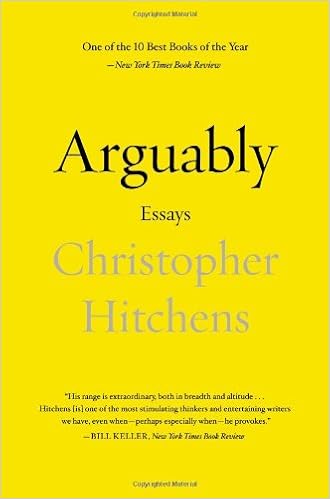
I have been planning to read Christopher Hitchens's Arguably for this, as it is a collection of essays. I have had it for some time, I have never read anything by Hitchens, and wanted to because Salman Rushdie liked him so much. However, now I am not sure about this because there is an essay in there about why women aren't funny. I may be too annoyed.
6avatiakh
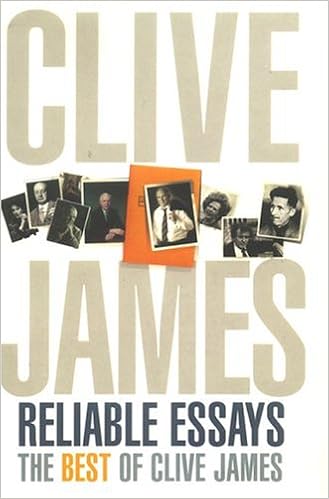
I'm going to try for Reliable Essays: the best of Clive James as he is one of the ANZAC challenge writers for Nov/Dec, so a 2 birds with 1 stone approach.
I did also consider The Faber Book of Reportage but I doubt I'd get through it in a month, looks more like a dip into and read here and there type of book.
The other book I have is The Awa Book of New Zealand Science which I've been interested in getting to and which didn't fit the criteria for the science month. It's a collection of science writing, natural history, astronomy etc by New Zealanders or about New Zealand. Quite a bit of historical stuff from early European visitors.
Editor Priestley has also done another interesting anthology with Awa Press, Dispatches from Continent Seven: An Anthology of Antarctic Science.
I did also consider The Faber Book of Reportage but I doubt I'd get through it in a month, looks more like a dip into and read here and there type of book.
The other book I have is The Awa Book of New Zealand Science which I've been interested in getting to and which didn't fit the criteria for the science month. It's a collection of science writing, natural history, astronomy etc by New Zealanders or about New Zealand. Quite a bit of historical stuff from early European visitors.
Editor Priestley has also done another interesting anthology with Awa Press, Dispatches from Continent Seven: An Anthology of Antarctic Science.
7Chatterbox
>4 cbl_tn: I thought that they all kind of revolved around the theme of the Mexican quest for identity? Perhaps not a thesis or narrative, but... ??? In any event, they definitely qualify for this challenge!
>5 banjo123: If you get annoyed with Hitchens, just don't take it out on the book itself. FWIW, his daughter Sophia used to work at the Brooklyn bakery near me at about the same time that he was dying. She was delightful -- and very intelligent AND humorous. So I suspect he may have been being somewhat provocative?
>6 avatiakh: I read a lot of Clive James back in the mists of time -- the 80s. And you're right about the Faber book of reportage, which I have on my shelves. It's one of those mega-tomes that you dip into -- like giant poetry anthologies.
By the way, if anyone is looking for anything novel to read for this challenge, and lives in North America, one option might be to pick up a copy of Lapham's Quarterly. Lewis Lapham was editor of Harper's during its heyday and while he's a pain in the posterior as a human being, he's very erudite and clever, as witness his new concept. He takes a theme -- luck, foreigners, the sea, family, foreigners, the future -- and then explores how that theme has been tackled by thinkers and writers from the very earliest times to the present, in poetry, literature, philosophy, etc. You can pick up back issues from them online, and probably find them via interlibrary loans as well. They are eclectic. Definitely anthologies, and for the most part non-fiction.
>5 banjo123: If you get annoyed with Hitchens, just don't take it out on the book itself. FWIW, his daughter Sophia used to work at the Brooklyn bakery near me at about the same time that he was dying. She was delightful -- and very intelligent AND humorous. So I suspect he may have been being somewhat provocative?
>6 avatiakh: I read a lot of Clive James back in the mists of time -- the 80s. And you're right about the Faber book of reportage, which I have on my shelves. It's one of those mega-tomes that you dip into -- like giant poetry anthologies.
By the way, if anyone is looking for anything novel to read for this challenge, and lives in North America, one option might be to pick up a copy of Lapham's Quarterly. Lewis Lapham was editor of Harper's during its heyday and while he's a pain in the posterior as a human being, he's very erudite and clever, as witness his new concept. He takes a theme -- luck, foreigners, the sea, family, foreigners, the future -- and then explores how that theme has been tackled by thinkers and writers from the very earliest times to the present, in poetry, literature, philosophy, etc. You can pick up back issues from them online, and probably find them via interlibrary loans as well. They are eclectic. Definitely anthologies, and for the most part non-fiction.
8cbl_tn
>7 Chatterbox: I was talking about Hey, America, Your Roots Are Showing. It's a collection of genealogical case studies, any of which could stand on its own. There's no thesis for the book - just a collection of stories about some of the author's research projects. Several have been previously published. The chapters don't need to be read in any particular order.
9Chatterbox
Some other ideas:
The Fire This Time by Jesmyn Ward (editor) -- essays about race
Jackson, 1964 by Calvin Trillin -- New anthology of articles from New Yorker by this author
The Abundance by Annie Dillard -- new and old narrative essays
Love and Other Ways of Dying by Michael Paterniti
The Memory Chalet by Tony Judt -- warbled about this endlessly when it was published several years ago.
Discontent and Its Civilizations by Mohsin Hamid -- essays and tidbits from the author of several good novels.
Incendiary Circumstances by Amitav Ghosh -- another novelist; a lot of political essays in this anthology
The Empathy Exams by Leslie Jamison -- nominee for numerous prizes; great writing
Garlic, Mint, and Sweet Basil by Jean-Claude Izzo -- from Europa, a collection focused on Marseilles and the Mediterranean, where the author sets his noir crime novels. Very short and flavorful, as the title suggests.
This is the Story Of a Happy Marriage by Ann Patchett -- if you can't lay hands on the new novel yet, these are very good essays.
Living, Looking, Thinking by Siri Hustvedt -- worthwhile, if you like her novels
Second Reading by Jonathan Yardley -- critical essays
Hopes and Impediments by Chinua Achebe
In Wartime: Stories from Ukraine by Tim Judah -- I think this is out now. I got an ARC. Worthwhile, if you're curious about what's happening there. Written as short pieces of reportage.
The Devil and Sherlock Holmes: Tales of Murder, Madness and Obsession by David Grann -- true crime
Silk Parachute by John McPhee (or many of his other works...)
All Art is Propaganda by George Orwell (there are several other collections of his essays now, as well as big four-volume complete work edition.
Video Night in Kathmandu by Pico Iyer (or other travel books written primarily as collections of articles, rather than as single long travel pieces.)
Through the Window by Julian Barnes
Changing My Mind by Zadie Smith
Twenty-eight Artists and Two Saints by Joan Acocella
The View from the Ground or The Face of War by Martha Gelhorn
Cleopatra's Nose by Daniel Boorstin
On Grief and Reason by Joseph Brodsky
The White Album by Joan Didion (and some of Didion's other books clearly are anthologies)
Sesame and Lilies by John Ruskin
Practicing History by Barbara Tuchman (and I think Margaret Macmillan has written a book of short, historical pieces that would qualify, too.)
More Matter by John Updike
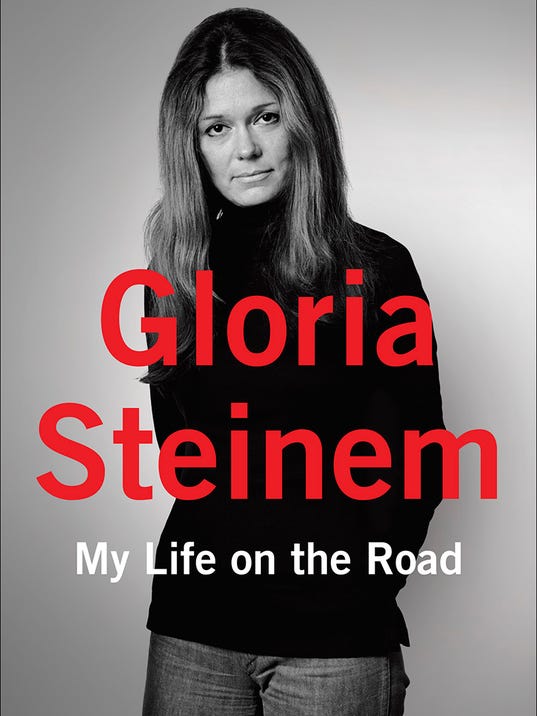
Outrageous Acts and Everyday Rebellions by Gloria Steinem
Lyrical and Critical Essays by Albert Camus
The Bullfighter Checks her Makeup: My Encounters with Extraordinary People by Susan Orlean
Anatomy of Criticism by Northrop Frye
Giants and Dwarfs by Allan Bloom (anthology 1960-1990)
Biographical Essays by Lytton Strachey
The Oldest Dead White European Males by Bernard Knox
The Hogarth Letters -- compiled by Virginia and Leonard Woolf while they were running the Hogarth Press.
What Am I Doing Here? by Bruce Chatwin
Look for writers like David Foster Wallace, Clive James, Joseph Epstein and Anne Fadiman, as well as some of the above (eg Annie Dillard.) Others include Timothy Garton Ash (journalism from the 80s, 90s, etc); Mencken, whose works have been collected into anthologies large and small; the English writer, Bernard Levin, especially Enthusiasms and, for music lovers, Conducted Tour. MFK Fisher wrote about food, and her work has been anthologized.
Pick out an anthology (selected works by...) of some of the great essayists. Virginia Woolf. George Orwell. Montaigne. Charles Lamb. Samuel Johnson. Hazlitt., etc.
In Canada -- look at the Massey Lectures series. Usually these are five speeches reprinted as de facto series of five essays (eg Adam Gopnik and five essays on winter.)
As mentioned, there is the "Best American Essay..." series, an annual publication. Also -- best American Travel/Science/Mystery/ etc writing anthologies. And another anthology focused on this is the Best American Non-required reading. In the UK, there is Granta. Just pick one that is non-fiction in nature. (Some are dominated by fiction.)
The Fire This Time by Jesmyn Ward (editor) -- essays about race
Jackson, 1964 by Calvin Trillin -- New anthology of articles from New Yorker by this author
The Abundance by Annie Dillard -- new and old narrative essays
Love and Other Ways of Dying by Michael Paterniti
The Memory Chalet by Tony Judt -- warbled about this endlessly when it was published several years ago.
Discontent and Its Civilizations by Mohsin Hamid -- essays and tidbits from the author of several good novels.
Incendiary Circumstances by Amitav Ghosh -- another novelist; a lot of political essays in this anthology
The Empathy Exams by Leslie Jamison -- nominee for numerous prizes; great writing
Garlic, Mint, and Sweet Basil by Jean-Claude Izzo -- from Europa, a collection focused on Marseilles and the Mediterranean, where the author sets his noir crime novels. Very short and flavorful, as the title suggests.
This is the Story Of a Happy Marriage by Ann Patchett -- if you can't lay hands on the new novel yet, these are very good essays.
Living, Looking, Thinking by Siri Hustvedt -- worthwhile, if you like her novels
Second Reading by Jonathan Yardley -- critical essays
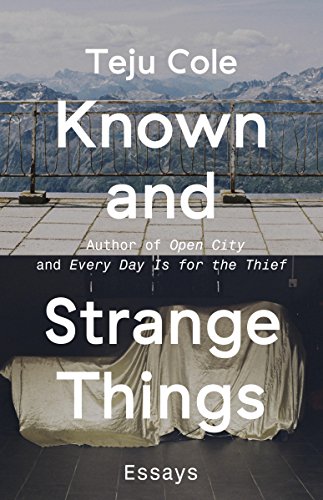
Hopes and Impediments by Chinua Achebe
In Wartime: Stories from Ukraine by Tim Judah -- I think this is out now. I got an ARC. Worthwhile, if you're curious about what's happening there. Written as short pieces of reportage.
The Devil and Sherlock Holmes: Tales of Murder, Madness and Obsession by David Grann -- true crime
Silk Parachute by John McPhee (or many of his other works...)
All Art is Propaganda by George Orwell (there are several other collections of his essays now, as well as big four-volume complete work edition.
Video Night in Kathmandu by Pico Iyer (or other travel books written primarily as collections of articles, rather than as single long travel pieces.)
Through the Window by Julian Barnes
Changing My Mind by Zadie Smith
Twenty-eight Artists and Two Saints by Joan Acocella
The View from the Ground or The Face of War by Martha Gelhorn
Cleopatra's Nose by Daniel Boorstin
On Grief and Reason by Joseph Brodsky
The White Album by Joan Didion (and some of Didion's other books clearly are anthologies)
Sesame and Lilies by John Ruskin
Practicing History by Barbara Tuchman (and I think Margaret Macmillan has written a book of short, historical pieces that would qualify, too.)
More Matter by John Updike
Outrageous Acts and Everyday Rebellions by Gloria Steinem
Lyrical and Critical Essays by Albert Camus
The Bullfighter Checks her Makeup: My Encounters with Extraordinary People by Susan Orlean
Anatomy of Criticism by Northrop Frye
Giants and Dwarfs by Allan Bloom (anthology 1960-1990)
Biographical Essays by Lytton Strachey
The Oldest Dead White European Males by Bernard Knox
The Hogarth Letters -- compiled by Virginia and Leonard Woolf while they were running the Hogarth Press.
What Am I Doing Here? by Bruce Chatwin
Look for writers like David Foster Wallace, Clive James, Joseph Epstein and Anne Fadiman, as well as some of the above (eg Annie Dillard.) Others include Timothy Garton Ash (journalism from the 80s, 90s, etc); Mencken, whose works have been collected into anthologies large and small; the English writer, Bernard Levin, especially Enthusiasms and, for music lovers, Conducted Tour. MFK Fisher wrote about food, and her work has been anthologized.
Pick out an anthology (selected works by...) of some of the great essayists. Virginia Woolf. George Orwell. Montaigne. Charles Lamb. Samuel Johnson. Hazlitt., etc.
In Canada -- look at the Massey Lectures series. Usually these are five speeches reprinted as de facto series of five essays (eg Adam Gopnik and five essays on winter.)
As mentioned, there is the "Best American Essay..." series, an annual publication. Also -- best American Travel/Science/Mystery/ etc writing anthologies. And another anthology focused on this is the Best American Non-required reading. In the UK, there is Granta. Just pick one that is non-fiction in nature. (Some are dominated by fiction.)
10katiekrug
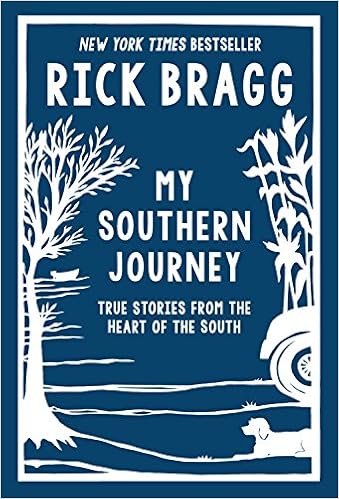
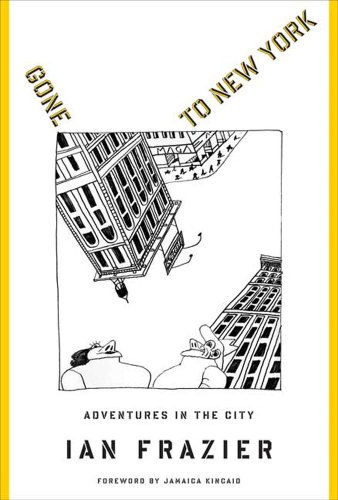
In honor of my current major life change, I was thinking of listening to My Southern Journey and reading Gone to New York :-)
11Chatterbox
>8 cbl_tn: I still don't think that the book is in the spirit of what the goal is here. Case studies really aren't reasoned and argued pieces of prose. I'm pretty familiar with the author's work (having come within inches of writing a book about all the folks that do genealogy work) and I wouldn't classify this as either an anthology or an essay. Of course, read it! I just wouldn't think it fitted in with the spirit of this challenge -- and you'll see a lengthy list of the books and general collections (like Granta and the "best" series) that I think do fit the bill, and there probably are lots of others, too. Genealogy case studies just strikes me as an odd fit. On the other hand, next month's challenge is designed explicitly for those odd fits...
12Chatterbox
>10 katiekrug: Katie, the former would definitely fit; just take a look at the latter and make sure it isn't a single seamless narrative, but more of an anthology!
And welcome to your new life!! Selfishly, very glad to see you so nearby. I'll be down in NYC around the 9th if not before.
And welcome to your new life!! Selfishly, very glad to see you so nearby. I'll be down in NYC around the 9th if not before.
13rosalita
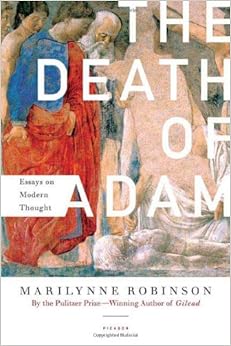
The first book that came to mind for this theme was The Death of Adam: Essays on Modern Thought by Marilynne Robinson, but I can't put my hands on the book at the moment and I can't remember whether the essays were previously published elsewhere individually before being collected in this volume. I think they were, but I can't find any definitive information here on LT.
14rosalita
>9 Chatterbox: That's a great list to be going on with, Suzanne! I spy several that have been on my wishlist for a while.
15katiekrug
>12 Chatterbox: - I think I'm okay:
"This is a collection of essays that Frazier wrote over the period 1975 to 2005, a number of which originally appeared in The New Yorker. As the title suggests, they’re mostly about New York City."
"This is a collection of essays that Frazier wrote over the period 1975 to 2005, a number of which originally appeared in The New Yorker. As the title suggests, they’re mostly about New York City."
16cbl_tn
>11 Chatterbox: As I said, I'm reading the book for a different challenge in November. I won't count it here if you don't think it fits. I have to say, though, that genealogical case studies should be well reasoned and argued, meeting the genealogical proof standard. But you are right that these case studies won't be as rigorous as the ones I more often read in the National Genealogical Society Quarterly and other peer-reviewed genealogical journals. Megan Smolenyak's target audience is really beginning or amateur genealogists.
17Chatterbox
>13 rosalita: I think if they are written as essays -- as distinct pieces of writing -- that's fine. At least some of them def. were published elsewhere, as I've seen them. And they are collections of narrative pieces of non-fiction writing, which is the other basic criterion.
18Oberon
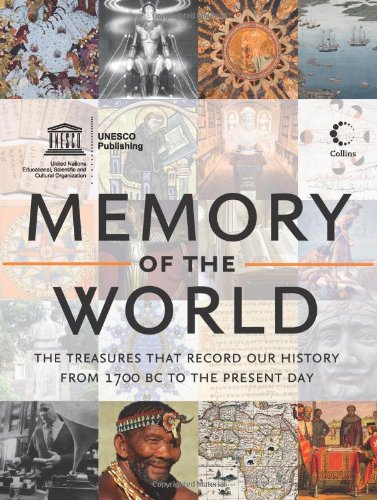
So I have Memory of the World sitting on my shelves. It is a collection of brief histories/explanations that document places, documents and so on that UNESCO considers significant for human culture. Does that count?
19Chatterbox
>18 Oberon: Hoist with my own petard. I had originally hoped for narrative writings, but since I suggested Lapham's Quarterly, which is original source documents, I have to agree to Memory of the World, which is an anthology of precisely the same kind of documents. So, knock yourself out, enjoy, and report back!!
20Chatterbox
>15 katiekrug: Go for it, Katie! I'll look forward to hearing about it. I think I've got a copy of that (unread) lurking around here. Somewhere. On a shelf. Somewhere. Maybe...
21Smiler69
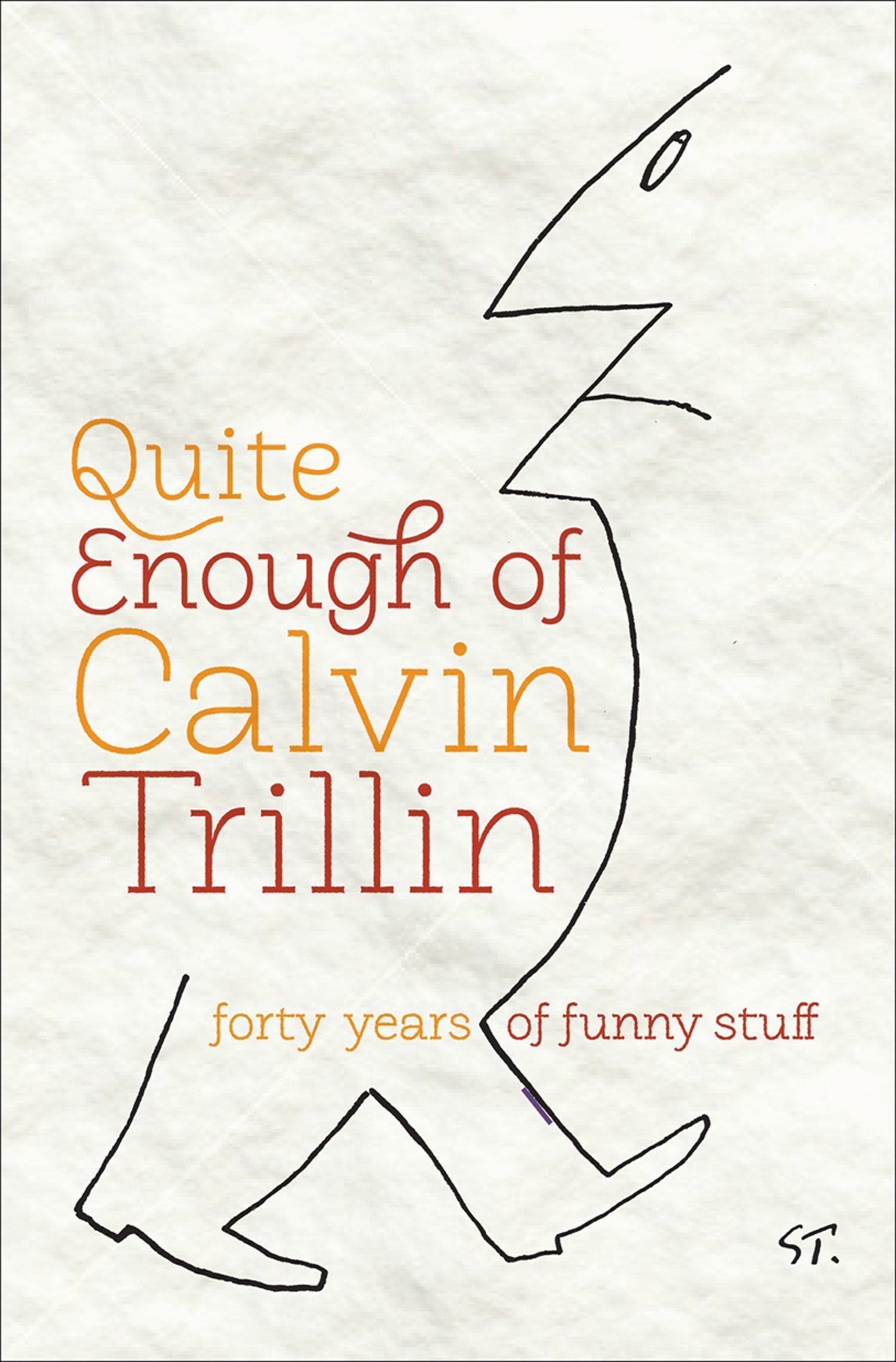
I've been browsing and really enjoying Quite Enough of Calvin Trillin, but let it slide along with all my reading this last month, so would be happy to pick it up again and finish it by month's end. I've got several essay collections I will look into. One book I'm thinking of reading this month is The Bedside Book of Birds by Graeme Gibson, does that fit? It's a mix of essays and poems and short stories, I guess. I'd read his Bedside Book of Beasts for another NF challenge month...
22Chatterbox
>21 Smiler69: If the essays make up more than half of it, sure. Remember -- non-fiction challenge... :-) I think we had the same discussion over the last one, too! The Calvin Trillin collection sounds interesting. After reading his (admittedly somewhat mixed in quality) most recent anthology, I had been wanting to seek out more of his work, so that may be something I look for in a library later on.
23nittnut
After reading over the criteria, I am pretty sure I can use The Miss Tutti Frutti Contest by Graeme Lay, which is a collection of travel essays. They are all in the South Pacific, but span about 10 years. I believe some were published in travel magazines prior to being put in this collection.
I'd love to splash out for The Awa Book of New Zealand Science, but it's not in the budget this month.
I'd love to splash out for The Awa Book of New Zealand Science, but it's not in the budget this month.
24Chatterbox
>23 nittnut: That sounds hilarious -- just the title is great! The Awa Book of New Zealand Science seems to be getting a lot of love, too...
25EBT1002
I've got a few things teed up for this month. I won't get to all of them but I'll keep them close at hand to see what progress I can make:
The Fire This Time: A New Generation Speaks about Race edited by Jesmyn Ward
Known and Strange Things by Teju Cole
The Best American Essays 2015 edited by Ariel Levy
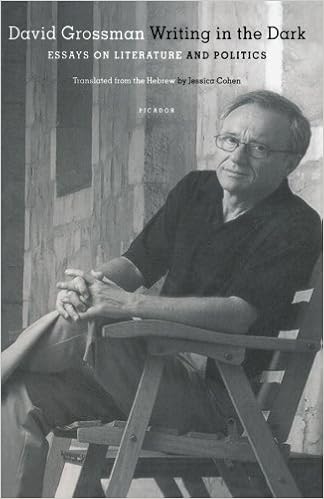
Writing in the Dark: Essays on Literature and Politics by David Grossman
The Fire This Time: A New Generation Speaks about Race edited by Jesmyn Ward
Known and Strange Things by Teju Cole
The Best American Essays 2015 edited by Ariel Levy
Writing in the Dark: Essays on Literature and Politics by David Grossman
26Smiler69
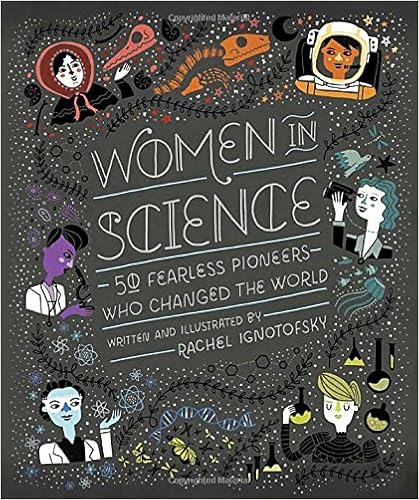
Another book that fits this challenge and which I've had underway for quite a while: Women in Science: 50 Fearless Pioneers Who Changed the World by Rachel Ignotofsky. It's a graphic novel format, richly illustrated and probably geared to the YA market, but a fun read and informative if you don't know much about the topic.
27Chatterbox
>25 EBT1002: Great selection!
>26 Smiler69: There are some good images from that book on the web -- they are very lush/lavish.
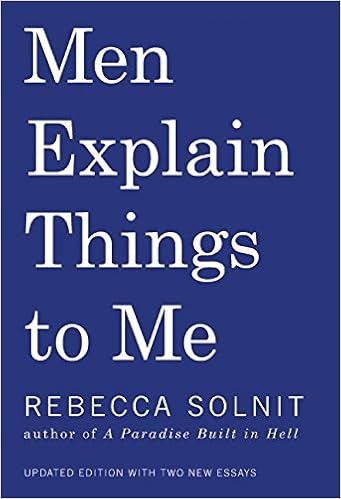
I've already started reading Men Explain Things to Me by Rebecca Solnit, and while I don't always share her politics, these are amazing, amazing essays, and she is a wonderful stylist. (Few of them are political essays -- she is an "Occupy" supporter, and I tend to find that POV lacks nuance with respect to economic issues, although her essays show plenty of thoughtfulness and intellect in other areas.) Can't wait to read the remaining essays in the collection. The title essay is, deservedly, a classic, and it's one of the catalysts for the term "mansplaining".
>26 Smiler69: There are some good images from that book on the web -- they are very lush/lavish.
I've already started reading Men Explain Things to Me by Rebecca Solnit, and while I don't always share her politics, these are amazing, amazing essays, and she is a wonderful stylist. (Few of them are political essays -- she is an "Occupy" supporter, and I tend to find that POV lacks nuance with respect to economic issues, although her essays show plenty of thoughtfulness and intellect in other areas.) Can't wait to read the remaining essays in the collection. The title essay is, deservedly, a classic, and it's one of the catalysts for the term "mansplaining".
28kidzdoc
I didn't get around to The Fire This Time in October, so I've added it to my list of books to read in November.
29fuzzi
I think I actually have the perfect read for this challenge, and it's already on my shelves:
Lambs In March and Other Essays by Anne Bosworth Greene
It's been gathering dust, so...why not?
Lambs In March and Other Essays by Anne Bosworth Greene
It's been gathering dust, so...why not?
30torontoc
I went through my book piles and I will read one of the following
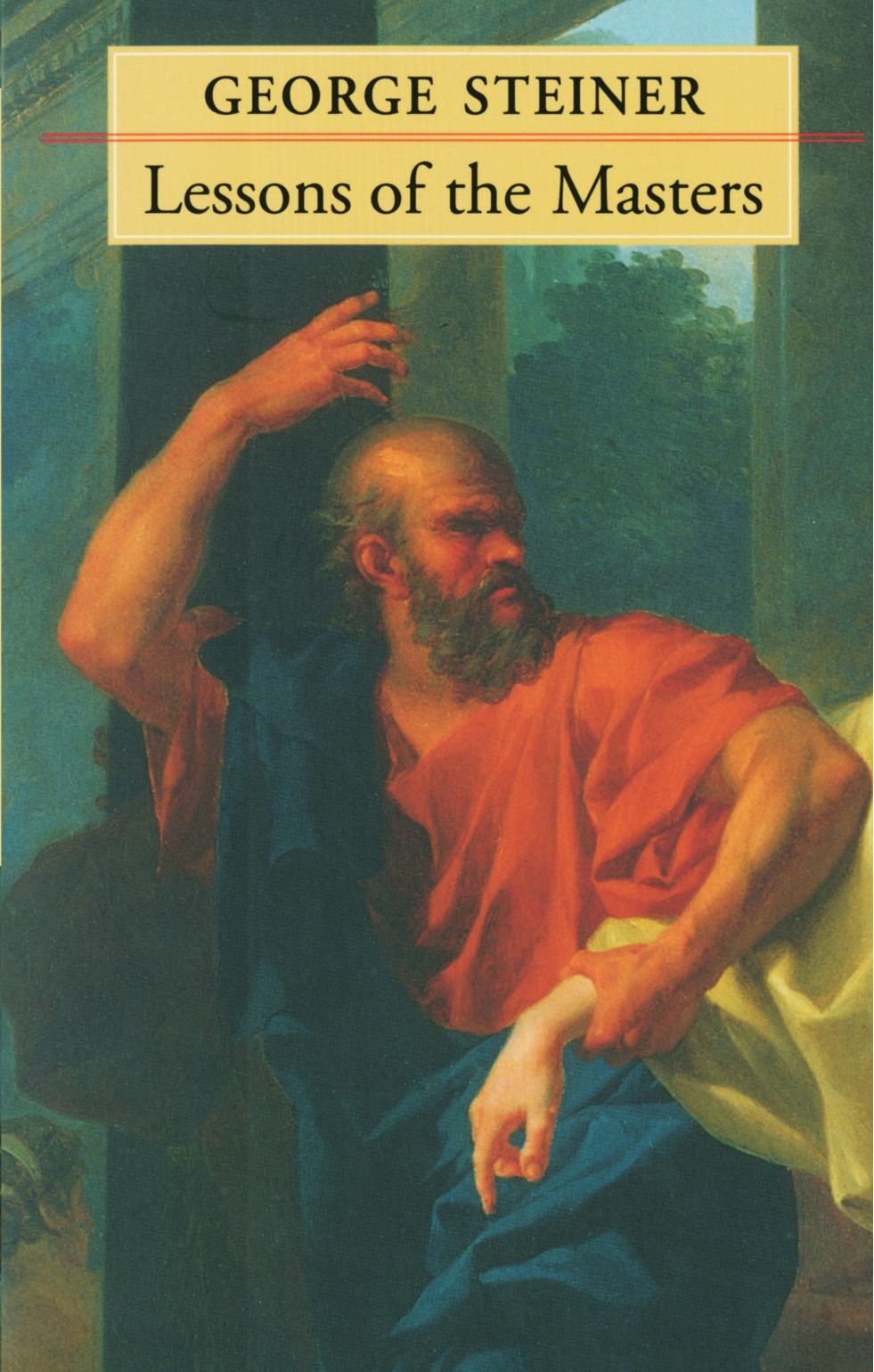
Lesson of the Masters by George Steinerthese were the Charles Eliot Norton lectures in 2001-2 or Granta 109 the theme of Work
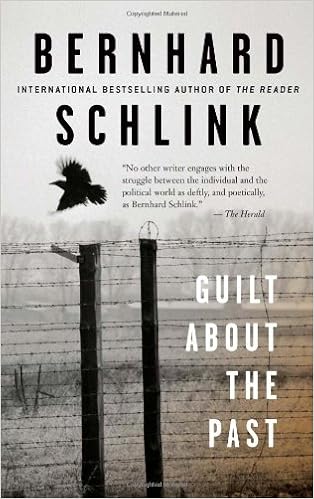
or Guilt About the Past by Bernhard Schlink Weidenfeld Lectures at Oxford
Lesson of the Masters by George Steinerthese were the Charles Eliot Norton lectures in 2001-2 or Granta 109 the theme of Work
or Guilt About the Past by Bernhard Schlink Weidenfeld Lectures at Oxford
31Chatterbox
>29 fuzzi: I cannot think of a single reason why not... :-)
32amanda4242
I just received my September ER book, The Gothic Tradition in Supernatural: Essays on the Television Series, So that's what I'll be reading for November.
33nittnut
>27 Chatterbox: Must pause to show admiration of the line she is an "Occupy" supporter, and I tend to find that POV lacks nuance with respect to economic issues. How very nuanced and apt. *grin* I think I'd pick the book up just for the title essay though.
34Chatterbox
>33 nittnut: Actually, the only thing worth admiration is the fact that I composed that at the end of a long, difficult day, and without editing! :-) And yes, the title essay is a gem: both the title, and the substance of the essay, which is powerful...
35fuzzi
Upon reflection, I'd highly recommend Hooking Up by Tom Wolfe to others for this month's challenge.
36Smiler69
Looking up Rebecca Solnit right now.
37benitastrnad
Would the books by Alain De Botton work? Like Art of Travel or How Proust Can Change Your Life? I haven't read anything by him, but would like to do so. However, if he is not on the list, I will move on to another author.
38brenpike
I finished The Fire This Time and think it is well worth the expectations it holds. I would suggest (re)reading Baldwin's The Fire Next Time before reading these essays by a generation who is shaped by James Baldwin's work and legacy.
39rosalita
>38 brenpike: Thanks for that tip, Brenda! I just checked out Baldwin's book from the library with the idea of doing that very thing, but I was wondering if it was necessary for context.
40weird_O
I will join in this month's reading, but I don't know who or what I'll settle on. Got time. I have two books I am reading now and two others on deck. Trying not to look too far ahead.
41Chatterbox
>37 benitastrnad: These really aren't essays. They feel like it, sometimes, as the books are written in short snippets, but they are conceived as books, with a single narrative arc, and written as a single entity, so no, they wouldn't qualify. None of the individual components are stand-alone pieces -- I'm not even sure that many would make sense outside the structure of the whole. That said, they would be fun to read, and would be great choices for next month's challenge, as they really are great examples of books that defy easy categorization!
>38 brenpike: Excellent suggestion... It may mean that I don't end up reading these books this month, but... Hopefully there will be plenty more time to tackle both??
>40 weird_O: Wise resolution. I should try that for life as a whole, and not just reading...
>38 brenpike: Excellent suggestion... It may mean that I don't end up reading these books this month, but... Hopefully there will be plenty more time to tackle both??
>40 weird_O: Wise resolution. I should try that for life as a whole, and not just reading...
42benitastrnad
#41
I also have a couple of books by John McPhee on my shelves, but somehow I think of him as more natural history and I wanted to read something different. I will look at some of the Rebecca Solnit titles. I think we have Wanderlust here in the library. However, the subtitle for it is "A history of Walking" and that makes me wonder if it really is essays? I also have Christopher Hitchens book Arguably and might try that one. I will see what speaks to me tonight when I start looking at my shelves.
I also have a couple of books by John McPhee on my shelves, but somehow I think of him as more natural history and I wanted to read something different. I will look at some of the Rebecca Solnit titles. I think we have Wanderlust here in the library. However, the subtitle for it is "A history of Walking" and that makes me wonder if it really is essays? I also have Christopher Hitchens book Arguably and might try that one. I will see what speaks to me tonight when I start looking at my shelves.
43nittnut
I finished The Miss Tutti Frutti Contest. It's a good, quick read. This is a collection of travel essays about the islands of the South Pacific. Some are light and funny stories, others have a more historical or political tone, all of them paint a pretty realistic picture of the islands that isn't always pretty. A great read.
44katiekrug
If anyone is looking for a two-fer with the AAC this month, Annie Dillard's The Abundance: Narrative Essays Old and New is on sale for $1.99 for Kindle.
45charl08
I picked up a collection of Bolaño's essays and journalism. I'm not sure I'll get through it all, but it looks to contain lots of interesting commentary on literature in translation, apart from anything else.
46The_Hibernator
I have The Souls of Black Folk on Audible. Will read that.
47Chatterbox
>42 benitastrnad: Wanderlust is perhaps less essays than any other of Solnit's books -- it's not so much an anthology as a complete book with a narrative arc. But I think you'd enjoy Men Explain Things to Me...
Some great choices here!
I will be around as much as possible, but it now seems that I will be in NYC for much of the month, abandoning my hapless cats and most of my other responsibilities.
Some great choices here!
I will be around as much as possible, but it now seems that I will be in NYC for much of the month, abandoning my hapless cats and most of my other responsibilities.
48torontoc
Lesson of the Masters by George Steiner ( touchstone doesn't work this morning) Have you ever been to a lecture or read a book ( this book ) where you don't understand 70% of the references and have a hard time following the argument? However what I did retain is fascinating. Steiner wrote and lectured on this topic as part of the Charles Eliot Norton Lectures at Harvard University in 2001-2. Each chapter covers a different aspect of the topic. Steiner explores the very nature of teaching and begins with the Greek scholars. He talks about the ability to impart great ideas and the intense relationship between what he calls Master and disciple. Steiner covers the idea of rebelling or surpassing the Master and knowing when to leave. The references cover such a wide group -Abelard and Heloise, Faust, ( I did know this reference well having seen many operas) Virgil and Dante, Socrates and Alcibiades, the gifted piano teacher and master- Nadia Boulanger, Saul Bellow and the Baal Shem Tov Rabbi and his disciples. There are many more. Steiner really examines the nature of teaching and the importance of oral discourse in addition to the written word. This is a volume that I can return to again.
The chapters are all linked closely- I have time this month to look for a book of more " unrelated essays" as well.
The chapters are all linked closely- I have time this month to look for a book of more " unrelated essays" as well.
49laytonwoman3rd
I'm a bit puzzled by "The key thing is that they should be a collection whose individual pieces should never have been intended to have been published together." That seems unnecessarily restrictive. I'm reading Loren Eiseley's Collected Essays on Evolution, Nature and the Cosmos, published this month by the Library of America. It contains three previously published works, each of which contains individual pieces that were surely intended to be published together, but having made my selection before reading >1 Chatterbox: above, I will carry on.
50ctpress
I'm reading a Danish e-book - a translation of two essays on walking by Thoreau: Walking by Thoreau (1862) and "A Winter Walking" (1843). I've read "Walking" before, but as I'm currently reading A philosophie of Walking I decided to mix it up with Thoreau.
51The_Hibernator
>49 laytonwoman3rd: I felt a bit puzzled by this rule, too, but decided to interpret it as "essays which were not originally published together" so that The Souls of Black Folk fit in.
52AnneDC
I'm planning to read The Unwinding by George Packer--I think it fits, as the publication information suggests some of the essays either appeared elsewhere or are based largely on articles that were published elsewhere, but it does seem to be intended as a coherent work and thus may not fit. But I am reading it anyway! :) I headed into this month thinking more about essays and not so much about anthologies. Given enough time, I might also read The Abundance or Changing My Mind or The White Album, since I have those on hand.
53Oberon
>52 AnneDC: Not sure it fits but The Unwinding is an excellent book.
54EBT1002
>38 brenpike: It's been a while since I read The Fire Next Time but I'm glad The Fire This Time worked for you. I will start reading it soon.
55Chatterbox
>49 laytonwoman3rd:
>51 The_Hibernator:
Sorry if you felt that rule was restrictive. The idea was to have this month devoted to non-fiction anthologies -- so, books that are composed of smaller, individual pieces, rather than books that were written as a single piece, intended to be read as a single narrative piece. Most often, these anthologies are assemblages of pieces that are brought together to showcase an author's works. Even when they revolve around a single theme, like Roxane Gay's Bad Feminist, many often were published elsewhere first, and pulled together later, sometimes with additional pieces written expressly for the anthology. I think there are a lot (a tremendous number) of anthologies that fall into this category, just as there have been numerous books that aren't anthologies that are easily readable for other challenges, where essay anthologies (because they can cover so much varied ground) really don't fit in readily.
Also, for those who feel disgruntled, please remember that (a) you can certainly read your chosen book! (b) next month is a free-for-all category, basically -- or at least one where the creativity element is significant.
>51 The_Hibernator:
Sorry if you felt that rule was restrictive. The idea was to have this month devoted to non-fiction anthologies -- so, books that are composed of smaller, individual pieces, rather than books that were written as a single piece, intended to be read as a single narrative piece. Most often, these anthologies are assemblages of pieces that are brought together to showcase an author's works. Even when they revolve around a single theme, like Roxane Gay's Bad Feminist, many often were published elsewhere first, and pulled together later, sometimes with additional pieces written expressly for the anthology. I think there are a lot (a tremendous number) of anthologies that fall into this category, just as there have been numerous books that aren't anthologies that are easily readable for other challenges, where essay anthologies (because they can cover so much varied ground) really don't fit in readily.
Also, for those who feel disgruntled, please remember that (a) you can certainly read your chosen book! (b) next month is a free-for-all category, basically -- or at least one where the creativity element is significant.
56laytonwoman3rd
>55 Chatterbox: I wouldn't say "disgruntled"....And I do get the distinction you're making. I'm not stressing over it in any way. ;>)
57AnneDC
>55 Chatterbox: Not a bit "disgruntled"--just a bit confused initially. I've been faithfully reading in all the categories, though not necessarily finishing in the proper month, and would like to pick up something for this category too. My chosen book fits well into October as well as December, so I will both read it and count it, somewhere.
58Chatterbox
Apologies for poor word choice; please ascribe it to acute fatigue. Happy reading to all...
59charl08
>58 Chatterbox: Hope you are able to get some sleep Suzanne.
I'm reading Between Parentheses - the first article referenced about four Latin American authors I'd never heard of, so was a bit intimidated, but skipped to a lovely piece about writers and the idea of exile. He argued that writers are never truly exiled (despite his own experience of being forced to leave his home country). I'll keep reading, but may well continue to cherry pick.
I'm reading Between Parentheses - the first article referenced about four Latin American authors I'd never heard of, so was a bit intimidated, but skipped to a lovely piece about writers and the idea of exile. He argued that writers are never truly exiled (despite his own experience of being forced to leave his home country). I'll keep reading, but may well continue to cherry pick.
60witchyrichy
I have started two books of essays this year--Where I've Been and Where I'm Going and The View From the Cheap Seats and not gotten past the first essay or two. Not bad reading, really great writing, just not the kind that makes for a monthly challenge, I think. I need time to dive in and savor.
That's true for the book I picked as well--Essays After Eighty--it's just that the essays are shorter and more personal. Plus the book itself is shorter, perhaps testament to Hall's sense of time as he records the wonders and vagaries of getting old.
That's true for the book I picked as well--Essays After Eighty--it's just that the essays are shorter and more personal. Plus the book itself is shorter, perhaps testament to Hall's sense of time as he records the wonders and vagaries of getting old.
61fuzzi
I did not intend to read more than one book for this challenge, but for another reason I read At Wit's End by Erma Bombeck, and just realized it fits.
While this book may have been written 50 years ago, much of what is contained within is quite pertinent to the people and times of today.
While this book may have been written 50 years ago, much of what is contained within is quite pertinent to the people and times of today.
62Chatterbox
>61 fuzzi: Oh, Erma Bombeck! I used to lover her stuff... And it feels somehow comfortingly witty, at least thinking back on it now. I must remember to pick up my volume of Gloria Steinem when I'm at home (briefly) this coming weekend.
63nittnut
>61 fuzzi: and >62 Chatterbox: Erma Bombeck! I have a quote of the day off a calendar that my Grandma sent me years ago. I keep it on my fridge. It says: I worry that scientists will discover that lettuce has been fattening all along.
It makes me smile, and it's a memory of my Grandma - always fussed that I ate so much salad. Lol
It makes me smile, and it's a memory of my Grandma - always fussed that I ate so much salad. Lol
64kac522
I finished A Story Larger Than My Own: Women Writers Look Back on Their Lives and Careers, edited by Janet Burroway. Very interesting essay collection of 20 women writers over 60, including Margaret Atwood, Erica Jong and Jane Smiley.
65fuzzi
>63 nittnut: there are a lot of those kind of quotes from Bombeck. She was a treasure.
66banjo123
I finished Arguably It's a wide-ranging collection of Hitchens essays. I did have some major disagreements with Hitchens, and some other times where I really liked him. And many, many times when I had no opinion because he was just over my head, because he knew way more about history, literature and current affairs than I ever will. I found myself reading in-depth articles about authors I barely knew existed (CLR James, JG Ballard) for example. But there were some great things that I learned, for example from the essay on Isaac Newton:
"...wen he listed the seven colors sof the spectrum--having carefully separated these from their formerly all-enveloping white light--he did so by an analogy with the seven notes of the musical sclae. Any other conclusion, he felt, would violate the Pythagorean principle of harmony. He was probably wrong in this glimpse of the unified field theory that was to elude even Einstein, but one has to admire someone who could dare to be wrong in such a beautiful way."
"...wen he listed the seven colors sof the spectrum--having carefully separated these from their formerly all-enveloping white light--he did so by an analogy with the seven notes of the musical sclae. Any other conclusion, he felt, would violate the Pythagorean principle of harmony. He was probably wrong in this glimpse of the unified field theory that was to elude even Einstein, but one has to admire someone who could dare to be wrong in such a beautiful way."
67Chatterbox
So, I've spent a lot of time considering categories for 2017, and I've opted to do things more thematically, partly to allow for more flexibility in how people approach the topics, and partly to have more fun.
To allow some time for discussion, here they are:
January: Prizewinners
Non-fiction books that have won, or been short-listed for, any kind of literary prize.
February: Voyages of Exploration
You define it. It can be a literal voyage (travel) or an imaginary voyage into one's own psyche. The key words here are exploration and voyage -- the book must have some kind of journey, real or rhetorical, toward some kind of goal.
March: Heroes and Villains
People you admire or people you hate. Or people others admire or hate, and that you're just curious about.
April: Hobbies, Pastimes and Passions
Anything you want. People suggested categories about gardening, cooking, animals, sports, etc. Whatever excites and interests you. See if you can get the rest of us excited, too...
May: History
Pretty self explanatory. One of a few holdovers.
June: The Natural World
Another holdover. Anything about rocks, logs, the sea, the air we breathe, what grows around us, animal life, etc. And the pollution of same...
July: Creators and Creativity
Rather than just a category about the arts, I've broadened this. So, writing, books about books would qualify.
August: I’ve Always Been Curious About….
A catch-all category. If the topic of the book can complete the sentence, you can add it to the challenge.
September: Gods, Demons and Spirits
Religion, spirituality of al kinds; read about the Salem witch trials or animism in West Africa if you want.
October: The World We Live In: Current Affairs
It will be a year after Brexit; a year after Trump's election. What does the world look like? What forces are driving us? Find a book about some of the themes and issues that are at the top of the news by then.
November: Science and Technology
Probably self-explanatory, another holdover.
December: To Be Announced
I'm still pondering a Grand Finale.
To allow some time for discussion, here they are:
January: Prizewinners
Non-fiction books that have won, or been short-listed for, any kind of literary prize.
February: Voyages of Exploration
You define it. It can be a literal voyage (travel) or an imaginary voyage into one's own psyche. The key words here are exploration and voyage -- the book must have some kind of journey, real or rhetorical, toward some kind of goal.
March: Heroes and Villains
People you admire or people you hate. Or people others admire or hate, and that you're just curious about.
April: Hobbies, Pastimes and Passions
Anything you want. People suggested categories about gardening, cooking, animals, sports, etc. Whatever excites and interests you. See if you can get the rest of us excited, too...
May: History
Pretty self explanatory. One of a few holdovers.
June: The Natural World
Another holdover. Anything about rocks, logs, the sea, the air we breathe, what grows around us, animal life, etc. And the pollution of same...
July: Creators and Creativity
Rather than just a category about the arts, I've broadened this. So, writing, books about books would qualify.
August: I’ve Always Been Curious About….
A catch-all category. If the topic of the book can complete the sentence, you can add it to the challenge.
September: Gods, Demons and Spirits
Religion, spirituality of al kinds; read about the Salem witch trials or animism in West Africa if you want.
October: The World We Live In: Current Affairs
It will be a year after Brexit; a year after Trump's election. What does the world look like? What forces are driving us? Find a book about some of the themes and issues that are at the top of the news by then.
November: Science and Technology
Probably self-explanatory, another holdover.
December: To Be Announced
I'm still pondering a Grand Finale.
68katiekrug
Oh, goodness, I am LOVING this!
*copies and pastes into master reading spreadsheet to start brainstorming books to read....*
*copies and pastes into master reading spreadsheet to start brainstorming books to read....*
72benitastrnad
I like this idea, but then I liked the way you did this last year. I just like to read, and I know that I won't read every category but I will try to get books off my shelves to read for some of these. I like to discuss books, and see what others write about the books they have read. That is the only thing I wish were different - that more people would de-lurk and write about the books they are reading here on this thread. I know that these lists you have put together help to inspire people to read, so all of that adds up to a good thing.
73benitastrnad
I have a good start on Age of Abundance which was a book I selected for last month, but I won't finish it until next month. I will be reading on it this week, but not enough to finish it.
74Chatterbox
>71 charl08: And of course, one person's hero could well be someone else's villain, life being what it is... :-)
77Chatterbox
>75 charl08: I've actually got about six different ideas, tossing around in my head. If we put them up for a vote and each got about three votes, it might be tough. I realize that might not happen, but... By the time January rolls around, I'll have made a decision, and unless there are howls of protest...
78karspeak
>67 Chatterbox: Fantastic!! Thanks, as always, for organizing us all!
79cushlareads
Thanks for organising us, Suzanne. This looks great. As usual I have fantastic intentions!! Next year is going to be the year I hit 75 books again and read lots of non-fiction...
80Chatterbox
Well, since I can't seem to organize myself, I might as well try to organize others, right?
Back in Providence briefly, and have remembered to pack Steinem's book of essays AND the 2016 Best American Essays. Let's see how well I fare. I also nabbed the Annie Dillard collection.
Back in Providence briefly, and have remembered to pack Steinem's book of essays AND the 2016 Best American Essays. Let's see how well I fare. I also nabbed the Annie Dillard collection.
81brenpike
>67 Chatterbox: Looking forward to these categories! Thanks Suzanne :)
82drneutron
Wow, this is a great category set! Maybe I can get it in gear next year to actually follow along... :)
83charl08
>77 Chatterbox: I was thinking for the heroes and villains theme, posters could end their reviews with
"And so I'm suggesting that.
The more I think about it the more this is Not a Good Idea though!!
"And so I'm suggesting that
Vote: x is a hero...
Current tally: Yes 0, No 0
The more I think about it the more this is Not a Good Idea though!!
85Chatterbox
It would be fun -- we could tally up the # of books devoted to heroes and those devoted to villains at the end of the month...
88Chatterbox
Finished Gloria Steinem's book of biographical essays. Good, but not nearly as good (IMHO) as Outrageous Acts and Everyday Rebellions.
97charl08
Yikes indeed. I have been derailed from my Bolaño essays but clearly should do something about that.
98katiekrug
I don't think I ever commented here about what I read. I listened to the audio of My Southern Journey by Rick Bragg, read by the author.
Here is what I wrote on my thread right after finishing it:
"I finished listening to My Southern Journey which was a bit long on the cutesy vignettes written for a regular feature in Southern Living to really hold my attention. There were some longer pieces written for other magazines that better showcased Bragg's talent. I especially liked one towards the end, written for Sports Illustrated about the first black head coach hired by an SEC football program."
Thinking about it more, I really have mixed feelings. I sometimes find these affectionate paeans to the deep South uncomfortable given the history (and even to some extent, current issues) of the region. When mentioned, the racial history is often dealt with in a sentence or two. I get that that's not what the book is about, but I find the easy dismissal or separation of "that" from "this" a little too neat and easy. But then, the longer piece I mentioned above was very good in its exploration of what the hiring of this black coach at Mississippi State meant actually and symbolically. So definitely a mixed bag...
Here is what I wrote on my thread right after finishing it:
"I finished listening to My Southern Journey which was a bit long on the cutesy vignettes written for a regular feature in Southern Living to really hold my attention. There were some longer pieces written for other magazines that better showcased Bragg's talent. I especially liked one towards the end, written for Sports Illustrated about the first black head coach hired by an SEC football program."
Thinking about it more, I really have mixed feelings. I sometimes find these affectionate paeans to the deep South uncomfortable given the history (and even to some extent, current issues) of the region. When mentioned, the racial history is often dealt with in a sentence or two. I get that that's not what the book is about, but I find the easy dismissal or separation of "that" from "this" a little too neat and easy. But then, the longer piece I mentioned above was very good in its exploration of what the hiring of this black coach at Mississippi State meant actually and symbolically. So definitely a mixed bag...
99benitastrnad
#98
I understand what you mean about the glossing over of history in the South. I find it somewhat disconcerting and sometimes it is even confounding. I felt much the same way when I read The Help. People in Tuscaloosa loved that book and I couldn't figure out why when it painted such a bleak picture of hypocrisy. When I asked my book discussion group about why they liked the book they said it wasn't about them. It was about "those rich people." Nobody they knew had Help and they certainly didn't. Only one woman out of a group of 6 native Southerners said they had Help. I know that isn't true or the Bus Boycott wouldn't have been so effective.
Oh well - it is collective amnesia. The same thing that Lisa Lim ran into in China regarding the Tienamin Massacre.
I understand what you mean about the glossing over of history in the South. I find it somewhat disconcerting and sometimes it is even confounding. I felt much the same way when I read The Help. People in Tuscaloosa loved that book and I couldn't figure out why when it painted such a bleak picture of hypocrisy. When I asked my book discussion group about why they liked the book they said it wasn't about them. It was about "those rich people." Nobody they knew had Help and they certainly didn't. Only one woman out of a group of 6 native Southerners said they had Help. I know that isn't true or the Bus Boycott wouldn't have been so effective.
Oh well - it is collective amnesia. The same thing that Lisa Lim ran into in China regarding the Tienamin Massacre.
100benitastrnad
#98
I forgot to tell you. I know Rick Bragg. He works in the building across the street from me at The University of Alabama and we park in the same parking deck so I see him several days out of the week. He is a very popular speaker around the state and is a celebrity in Alabama. He is a very engaging speaker and always has something provocative to say even if there is this underlying hero worship of The Old South. Not the Antebellum type Old South, but the "Woolyheads," Richard Petty, Nascar Nation and SEC Football South. Of course, all of those have their roots in the Antebellum Old South, but Southerner's will never admit that.
I forgot to tell you. I know Rick Bragg. He works in the building across the street from me at The University of Alabama and we park in the same parking deck so I see him several days out of the week. He is a very popular speaker around the state and is a celebrity in Alabama. He is a very engaging speaker and always has something provocative to say even if there is this underlying hero worship of The Old South. Not the Antebellum type Old South, but the "Woolyheads," Richard Petty, Nascar Nation and SEC Football South. Of course, all of those have their roots in the Antebellum Old South, but Southerner's will never admit that.
101Chatterbox
I've just started reading the Teju Cole collection of essays. Hoping to finish that anthology before the month's end.
(I had wondered how on earth we had ended up with a dozen new posts in a single evening...)
(I had wondered how on earth we had ended up with a dozen new posts in a single evening...)
102Chatterbox
Amusingly, the Teju Cole essays (several of them, at least) refer to W.G. Sebald, whose books I'm reading for one of my reading groups at the Providence Athenaeum. It's great, because we're meeting next week to discuss The Emigrants, so reading what Cole says about Sebald is driving home some of the themes. Incidentally, and perhaps relevant to this challenge, Cole isn't a fan of a rigid distinction between fiction and non-fiction. He (and Sebald, to an even greater extent) focus on narrative, with the reader challenged to discern how much is "fictional".
103cbl_tn
I'm not going to finish my book by the end of the month. The time change and dark evenings have cut into my reading time. I sit down to read in the evening and end up nodding off to sleep. This is particularly a problem with non-fiction. I will keep plugging away at these essays, but I'll be doing well to finish the book by the end of the year.
104kidzdoc
I finished The Fire This Time: A New Generation Speaks About Race this evening. I'll review it by this coming weekend.
105Chatterbox
So, I think the final challenge for 2017
will be:
December: Out of Your Comfort Zone
A nonfiction book that isn't something that you would normally gravitate to, about a subject you'd never normally read about, or that is a "book bullet" you'd never previously heard about from another LT reader.
OK....
Can we reach 150 posts so that people don't lose track of the December thread when I post it tomorrow morning???
will be:
December: Out of Your Comfort Zone
A nonfiction book that isn't something that you would normally gravitate to, about a subject you'd never normally read about, or that is a "book bullet" you'd never previously heard about from another LT reader.
OK....
Can we reach 150 posts so that people don't lose track of the December thread when I post it tomorrow morning???
111nittnut
This is really about November, but I may finish my Economics book by the end of the year. Which is exciting for me.
112nittnut
>104 kidzdoc: Looking forward to your review of that. It's on my pile, recommended by a friend of mine who is trying to promote real and productive conversations about real issues between black and white people, particularly, but also everyone. She's brave and amazing.
113The_Hibernator
Speaking of essays, anyone read Hope in the Dark? Trying to decide whether to read it for an online book club.
114Chatterbox
>106 katiekrug: d'uh, yes I do...
115Chatterbox
>113 The_Hibernator:, Nope, but I love anything else I've ever read by Rebecca Solnit.
119The_Hibernator
>115 Chatterbox: Thanks. I see it's supposed to be good, and it's short. Maybe I can fit it in in addition to The Unwinding group read here.
120The_Hibernator
In January that is. Y'all are welcome to join the group read!
121The_Hibernator
*blatant advertising on top of trying to boost posts
122The_Hibernator
It won the National Book Award in 2013 which means it fits into January's category.
123The_Hibernator
Does Ten Days in the Madhouse count as quirky? I didn't even manage to start my book of essays this month! I'll try to participate more next year.
124The_Hibernator
Oooh. Nonfiction out of my comfort zone? That's a difficult topic. Seems I'd have to be disinterested in a topic for that to fit. Like celebrity bios? Ack!
125The_Hibernator
Maybe I'll worry about it in December?
126The_Hibernator
Of next year, that is. Not the one coming up in two days.
127The_Hibernator
Oh, and on top of the group read of The Unwinding, we're group reading 5 other books. One every two months:
128The_Hibernator
Strangers in Their Own Land in March and April.
129The_Hibernator
Hillbilly Elegy in May and June.
130The_Hibernator
Listen Liberal in July and August
131The_Hibernator
The Populist Explosion in September and October
132The_Hibernator
WHITE TRASH: The 400-Year Untold History of Class in America in November and December
133The_Hibernator
In case you'd like to plan ahead
134The_Hibernator
I do
135The_Hibernator
Helllllooooo?
136The_Hibernator
You know what IS quirky, though? Severed: A History of Heads Lost and Heads Found. Y'all totally need to read it.
137The_Hibernator
Ok. I give up. Going back to reading about Renzi's referendum.
138The_Hibernator
Ok. I finished that article in The Economist and can't pay attention to another.
139The_Hibernator
Brain fried
140The_Hibernator
I feel like I'm talking to myself
141The_Hibernator
Am I talking to myself?
143The_Hibernator
Yay!
144katiekrug
Suz, would Cold: Adventures int he World's Frozen Places count as "quirky" for December? IIRC, you read this one and enjoyed it, but I'm wondering if it's not odd enough....
145The_Hibernator
You know, we're almost there
146The_Hibernator
Only five more
147The_Hibernator
How about Furiously Happy anybody think it counts as quirky?
148The_Hibernator
(Trying to pick books that are short.)
149The_Hibernator
(I've already got a busy December schedule.)
150The_Hibernator
Mary Roach would count as quirky, but I don't have any of her books on hand
151The_Hibernator
Isn't that it?
152The_Hibernator
You're welcome
154The_Hibernator
Thank you. By the way, I just discovered that Packing For Mars is on sale at Audible for $4.95 through tomorrow.
155Chatterbox
>144 katiekrug: Yes, it would!
And Packing for Mars definitely would count as quirky...
OK, toddling off to set up December. You guys are aces.
Sorry for letting you talk to yourselves... I've been a wee bit busy!
And Packing for Mars definitely would count as quirky...
OK, toddling off to set up December. You guys are aces.
Sorry for letting you talk to yourselves... I've been a wee bit busy!
156fuzzi
Aw, I'm to late to help...
>105 Chatterbox: Question: I had December listed already as "Quirky/Who Knew?" Hmm..is that the same as "Out of Your Comfort Zone"?
>105 Chatterbox: Question: I had December listed already as "Quirky/Who Knew?" Hmm..is that the same as "Out of Your Comfort Zone"?
157katiekrug
>156 fuzzi: - I'm not Suz, but I can answer that. Out of Your Comfort Zone" is for December 2017 (it had still been up in the air...). December 2016 is "Quirky/Who Knew?"
See >106 katiekrug: and >114 Chatterbox:.
See >106 katiekrug: and >114 Chatterbox:.
158fuzzi
>157 katiekrug: okay, I saw "2016" and was confused.
159Chatterbox
I have amended the date, above. Apologies for any confusion, due to my own confuddled brain...
Yes, December 2016 remains books that are quirky, uncategorizable or fall into a category that I loosely refer to as "wow, who would ever have thought it?"
Yes, December 2016 remains books that are quirky, uncategorizable or fall into a category that I loosely refer to as "wow, who would ever have thought it?"
160Familyhistorian
I knew that I was going to have a problem with this challenge. I have a hard time reading short stories. It is the start and stop style that makes it so tempting to just stop and hard to start up again. It is taking me a while to read Gendered pasts: historical essays in femininity and masculinity in Canada so I won't finish the book by the end of November. I hope that I will be able to finish it by the end of the year along with a few other challenge books that I have left tangling for a while.
This topic was continued by The 2016 Nonfiction Reading Challenge Part XII: Quirky, Uncategorizable or "Who Knew?" .

