This topic is currently marked as "dormant"—the last message is more than 90 days old. You can revive it by posting a reply.
1msf59

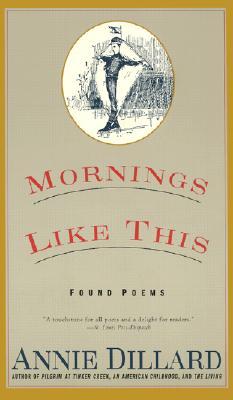
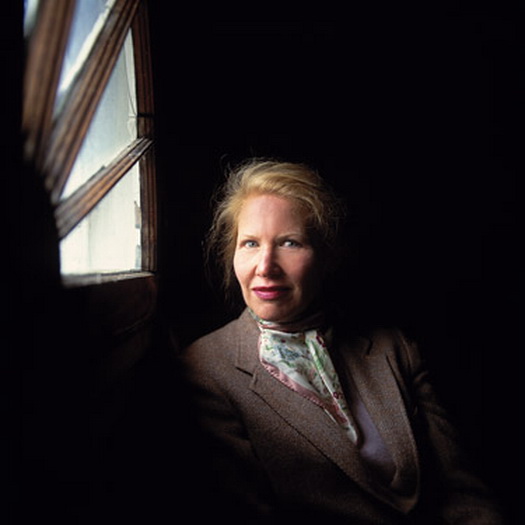
Annie Dillard was born April 30th, 1945, in Pittsburgh, Pennsylvania. She is best known for her narrative prose in both fiction and non-fiction. She has published works of poetry, essays, prose, and literary criticism, as well as two novels and one memoir.
At age 28, Dillard became the youngest American woman to win the Pulitzer Prize, which she was awarded for her collection of essays Pilgrim at Tinker Creek (1974). The book, often compared with Henry David Thoreau’s Walden, collected her meditations during a year spent living on the shores of a creek. She also wrote a collection of poetry, Tickets for a Prayer Wheel, the same year.
Dillard taught for 21 years in the English department of Wesleyan University.
**This is part of our American Author Challenge 2016. This author will be read in November. The general discussion thread can be found right here:
http://www.librarything.com/topic/209611


3msf59
Can you believe this our penultimate AAC author? Where does the time go? I read Pilgrim at Tinker Creek about 3 years ago, thanks to LT encouragement. It was excellent and I really want to revisit it at some point. If you have not read it, I think this would be a perfect place to start. I plan on reading An American Childhood and possibly The Maytrees, if I can bookhorn it in.
What is everyone else going to read?
What is everyone else going to read?
4Caroline_McElwee
I just pulled The Abundance from the pile, and put I by my reading chair, and I shall probably re-read Pilgrim at Tinker Creek too.
5banjo123
Hooray for Dillard! I loved Pilgrim at Tinker Creek, and haven't read anything else. I picked up a copy of For the Time Being at a used bookstore, and will read it in November.
6katiekrug
I read Pilgrim at Tinker Creek in my high school junior year English class when we had a section on nature writing. I loved parts of it. I am planning to read The Maytrees for this month. And maybe An American Childhood if I can fit it in.
7laytonwoman3rd
I have read Pilgrim, The Maytrees, and An American Childhood. Annie Dillard is a favorite of mine. I may read Teaching a Stone to Talk, or The Living for the challenge.
8lindapanzo
I haven't been doing well with the AAC challenge this year but I'm hoping to get to Pilgrim at Tinker Creek and The Writing Life.
9Caroline_McElwee
>8 lindapanzo: The Writing Life is a very fine book IMO, I've returned to it a number of times, and I think was the first book of Dillard's I read.
10Familyhistorian
There were not many Annie Dillard books at the library. I ended up with Encounters with Chinese Writers. Seems appropriate since I am in Vancouver and it has the advantage of being short, I might even be able to finish it this month!
11katiekrug
One of the Kindle monthly deals for November is The Abundance: Narrative Essays Old and New by Annie Dillard...
12laytonwoman3rd
>10 Familyhistorian: "not many Annie Dillard books at the library" I'd protest!
13countrylife
I started The Maytrees four years ago, didn't really like it, put it down, picked it up a few years later, put it down. Decided to abandon that one altogether and so chose her short The Writing Life. I guess she's just not my cup of tea. But at least I finished it.
14msf59

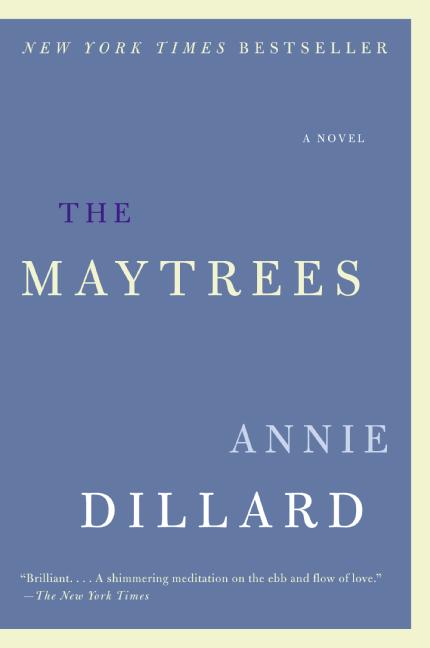
The Maytrees by Annie Dillard 3.6 stars
Toby and Lou Maytree, meet, fall in love and marry, in post-war Cape Cod. The second half of the novel, shows them drifting apart. Much of Dillard's prose is lovely but the tone of the book feels cool and aloof. The characters are kept at a distance. Silhouettes. I wanted more depth and feeling. This may work better in poetry but I don't think it fits here, although other readers have praised this novel highly.
I loved Pilgrim at Tinker Creek, so I wonder if she writes better nonfiction. I did not dislike it. I just wanted more.
**I still plan on reading An American Childhood later in the month.
15lindapanzo
I read something that Dillard wrote a Western. Does anyone know which book that is?
I think it was the brief bio to one of the Dillard books I've got, The Writing Life or Pilgrim at Tinker Creek.
I think it was the brief bio to one of the Dillard books I've got, The Writing Life or Pilgrim at Tinker Creek.
16laytonwoman3rd
Annie Dillard wrote a Western? Maybe you're thinking of Annie Proulx?
17lindapanzo
>16 laytonwoman3rd: I'll pull out my Kindle later and doublecheck. It was in the bio of one of her two books I own.
ETA: I wonder if it's The Living. Now that I think of it, it may have said "a novel of the American West" and not a Western.
ETA: I wonder if it's The Living. Now that I think of it, it may have said "a novel of the American West" and not a Western.
18laytonwoman3rd
Hmmmm....The Living is set in the Pacific Northwest, I think. "the American West" suggests something else entirely, to me.
19katiekrug
The Living is what I thought of when I first read >15 lindapanzo:.
It's supposed to be very good. I remember my sister loving it. I have a copy, but like most of my books, it's packed up....
It's supposed to be very good. I remember my sister loving it. I have a copy, but like most of my books, it's packed up....
20Familyhistorian
The choices for Annie Dillard at my library were pretty limited. I was going for fiction but ended up with her Encounters with Chinese Writers. This was her account of meeting with Chinese writers both in China and the US a little time after The Cultural Revolution was over. There were stark cultural differences between the Chinese and American writers and also in the way they are treated by their own nations. It was a very interesting book.
21banjo123
For the Time Being by Annie Dillard
This book is, I think, a long essay, non-fiction, exploring the question of why does God allow bad things to happen. I really like Dillard's writing, and she manages to tie a number of ideas together. However, the topic is overall not that compelling for me, so this probably wasn't the best choice for my Dillard read. My favorite part was her discussion of birds mating over Galilee:
"How do birds mate in midair? They start high. Their beating wings tilt them awkwardly sometimes and part those tiny places where they join; often one of the pair stops flying and they lose altitude. They separate, rest in a tree for a minute, and fly again. Alone they rise fast, tensely, until you see only motes that chase, meet---you, there, here, out of all this air! --and spiral down; breaks your heart. At dusk, I learned later, they climb so high that at night they actually sleep in the air."
This book is, I think, a long essay, non-fiction, exploring the question of why does God allow bad things to happen. I really like Dillard's writing, and she manages to tie a number of ideas together. However, the topic is overall not that compelling for me, so this probably wasn't the best choice for my Dillard read. My favorite part was her discussion of birds mating over Galilee:
"How do birds mate in midair? They start high. Their beating wings tilt them awkwardly sometimes and part those tiny places where they join; often one of the pair stops flying and they lose altitude. They separate, rest in a tree for a minute, and fly again. Alone they rise fast, tensely, until you see only motes that chase, meet---you, there, here, out of all this air! --and spiral down; breaks your heart. At dusk, I learned later, they climb so high that at night they actually sleep in the air."
22lindapanzo
I haven't read as much as I'd like this month but expect to finish Dillard's The Writing Life soon.
23msf59

^I started An American Childhood, it is a memoir and my second Dillard of the month. Her writing grabbed me immediately. Not crazy about The Maytrees, but I think this will be a whole new ballgame.
24Caroline_McElwee
Started The Abundance, her most recent collection of Essays, which I think include a lot of earlier pieces, these are the pieces she wants to be remembered by. Only nibbled two so far.
25msf59
"I began reading books, reading books to delirium. I began by vanishing from the known world into the abyss of reading, but soon found myself engaged with surprising vigor because the thing in books, or even the things surrounding the books, roused me from my stupor."
"Books swept me away, one after the other, this way and that; I made endless vows according to their lights, for I believed them."
-An American Childhood
I think young Dillard liked books. What do you think?

"Books swept me away, one after the other, this way and that; I made endless vows according to their lights, for I believed them."
-An American Childhood
I think young Dillard liked books. What do you think?

26msf59
>24 Caroline_McElwee: Since I much prefer her NF, Caroline, I want to find a copy The Abundance.
27laytonwoman3rd
I'm reading Teaching a Stone to Talk. It is alternately brilliant, boring (I've had it with tales of polar expeditions---it's not really her fault), and bewildering. Her prose can be gorgeous, but it can also be baffling, and sometimes I just don't get what she's talking about. That last bit is almost a direct quote from Eudora Welty, who said the same thing upon reading some of Dillard's early work. She was referring to Dillard's personification of inanimate objects, I believe, but I sort of get that part. Where she loses me is in her deeper philosophical musings, which are sometimes so personal that I doubt if anyone understands all of them. But when she touches a chord, it vibrates right down to the soles of my feet.
28msf59
"I opened books like jars. Here between my hands, here between some book's front and back covers, whose corners poked dents in my palm, was another map to the neighborhood I had explored all my life, and fancied I knew, a map depicting hitherto invisible landmarks."
-An American Childhood
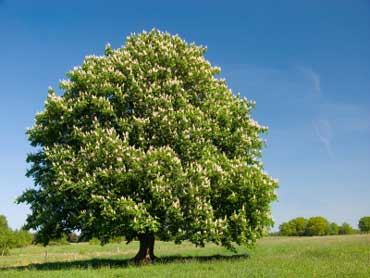
^The Buckeye tree, which seemed to be the tree of Dillard's youth.
-An American Childhood
^The Buckeye tree, which seemed to be the tree of Dillard's youth.
29lindapanzo
I just finished Dillard's The Writing Life and it makes me want to read more from her.
30nittnut
I have An American Childhood requested at the library, I'm only a little behind. I'll get it done though. I am excited to see so many positive comments about it.
31msf59
>30 nittnut: I just finished An American Childhood, Jenn and cannot recommend it high enough. Learned a lot about Pittsburgh too.
32katiekrug
I've started The Maytrees but won't have it finished before the end of the month. I find her narrative style interesting, and I'm loving the descriptions of Provincetown and the Cape, as I'm familiar with the location.
33msf59

An American Childhood by Annie Dillard 4.5 stars
"What can we make of the inexpressible joy of children? It is a kind of gratitude, I think—the gratitude of the ten-year-old who wakes to her own energy and the brisk challenge of the world. You thought you knew the place and all its routines, but you see you hadn’t known. Whole stacks at the library held books devoted to things you knew nothing about. "
“Private life, book life, took place where words met imagination without passing through the world.”
I could just pack this little review with quotes. I flagged so many. What a joy this memoir is and it really captures the wonder of childhood, unlike anything else I have read. A rock, a leaf, a moth, a baseball mitt and of course the mystical discovery of books and all the doors and windows that are flung open.
Dillard can dip into the metaphysical at times, leaving the reader, somewhat confounded but she always returns to the narrative, with lovely abandon.
34laytonwoman3rd
Well worth 8 minutes or so of listening, An NPR interview with Annie Dillard from last March. Touching, among other things, upon why she isn't writing much anymore. (Not good enough, Ms. Dillard....please reconsider!) I've posted my full review of Teaching a Stone to Talk, and it's on the book page, as well as on my own thread.
35msf59
>34 laytonwoman3rd: Thanks you, Linda. The Dillard interview was wonderful. The potbelly comment cracked me up. Have you read this essay collection?
If you don't mind, could you post your review of Teaching a Stone to Talk over here? It might inspire a few folk.
If you don't mind, could you post your review of Teaching a Stone to Talk over here? It might inspire a few folk.
36laytonwoman3rd
>35 msf59: I have not read Dillard's latest collection, Mark, but it contains, almost exclusively, previously published work, most of which I have in other volumes, and much of which I've read. I believe it is her "this is my best" collection, and would probably be a very fine choice for anyone who hasn't read her before.
I'm happy to oblige your request. I was totally chuffed this afternoon to receive an e-mail from my "other daughter", Holly Wendt, who teaches creative writing at Lebanon Valley College in PA, and who is a long-time fan of Annie Dillard. She had read my review, and said, in part: "These weeks--these months--are a time in which even a few paragraphs about something good and strong and inspired (even if too polar-expeditiony in places) makes so much difference." Here is my full review of Teaching a Stone to Talk:
~~Annie Dillard sees things others don't see; she also sees things differently than the rest of us, sometimes. Her prose can be gorgeous, but it can also be baffling, and I just don't get what she's talking about all the time. That last bit is almost a direct quote from Eudora Welty, who said the same thing upon reading some of Dillard's early work. She was referring to Dillard's personification of inanimate objects, I believe, but I sort of get that part. (Rocks, after all. Seriously. "It is all, God help us, a matter of rocks." )
Where she loses me is in her deeper philosophical musings, which are sometimes so personal (like poetry) that I doubt if anyone understands all of them. But when she touches a chord, it vibrates right down to the soles of my feet. And she makes some very pertinent observations regarding God, spirituality and nature. This, in particular: "God does not demand that we ...lose ourselves and turn from all that is not him. God needs nothing, asks nothing, and demands nothing, like the stars....You do not have to sit outside in the dark. If, however, you want to look at the stars, you will find that darkness is necessary. But the stars neither require nor demand it."
This collection of essays, published several years after her Pulitzer Prize winning Pilgrim at Tinker Creek, is alternately brilliant, boring (I've had it with tales of polar expeditions---it's not really her fault), entertaining and enlightening. I loved her unexpected mind meld with a weasel; her inability to tear herself away from the spectacle of sea birds diving for the openings of their nests in crevices of a sheer lava cliff face in the Galapagos Islands (she missed the boat back); her description of the sense of disorientation even an educated 20th century human can experience in the face of a total solar eclipse. In fact, with the exception of "An Expedition to the Pole", there is not a single selection in this volume that I do not look forward to revisiting, often.~~
I'm happy to oblige your request. I was totally chuffed this afternoon to receive an e-mail from my "other daughter", Holly Wendt, who teaches creative writing at Lebanon Valley College in PA, and who is a long-time fan of Annie Dillard. She had read my review, and said, in part: "These weeks--these months--are a time in which even a few paragraphs about something good and strong and inspired (even if too polar-expeditiony in places) makes so much difference." Here is my full review of Teaching a Stone to Talk:
~~Annie Dillard sees things others don't see; she also sees things differently than the rest of us, sometimes. Her prose can be gorgeous, but it can also be baffling, and I just don't get what she's talking about all the time. That last bit is almost a direct quote from Eudora Welty, who said the same thing upon reading some of Dillard's early work. She was referring to Dillard's personification of inanimate objects, I believe, but I sort of get that part. (Rocks, after all. Seriously. "It is all, God help us, a matter of rocks." )
Where she loses me is in her deeper philosophical musings, which are sometimes so personal (like poetry) that I doubt if anyone understands all of them. But when she touches a chord, it vibrates right down to the soles of my feet. And she makes some very pertinent observations regarding God, spirituality and nature. This, in particular: "God does not demand that we ...lose ourselves and turn from all that is not him. God needs nothing, asks nothing, and demands nothing, like the stars....You do not have to sit outside in the dark. If, however, you want to look at the stars, you will find that darkness is necessary. But the stars neither require nor demand it."
This collection of essays, published several years after her Pulitzer Prize winning Pilgrim at Tinker Creek, is alternately brilliant, boring (I've had it with tales of polar expeditions---it's not really her fault), entertaining and enlightening. I loved her unexpected mind meld with a weasel; her inability to tear herself away from the spectacle of sea birds diving for the openings of their nests in crevices of a sheer lava cliff face in the Galapagos Islands (she missed the boat back); her description of the sense of disorientation even an educated 20th century human can experience in the face of a total solar eclipse. In fact, with the exception of "An Expedition to the Pole", there is not a single selection in this volume that I do not look forward to revisiting, often.~~
37msf59
>36 laytonwoman3rd: Thanks, Linda! I really like your review. I will look for the new essay collection and I am totally in agreement with Ms. Wendt!

