William Styron: American Author Challenge
Talk 75 Books Challenge for 2017
This group has been archived. Find out more.
Join LibraryThing to post.
1msf59

"William Styron was born on June 11, 1925, in Newport News, Virginia. He published his first novel, Lie Down in Darkness, in 1952. In 1968 he won a Pulitzer Prize for The Confessions of Nat Turner. In 1979 he published Sophie’s Choice, which was made into a film in 1982 and an opera in 2002. Styron continued to write throughout the 1990s. He died November 1, 2006 on Martha’s Vineyard, Massachusetts."

**This is part of our American Author Challenge 2017. This author will be read in March. The general discussion thread can be found right here:
http://www.librarything.com/topic/244600



3msf59
I have heard of William Styron for most of my reading life and I saw and loved the film Sophie's Choice but, sadly, I have never read him. I also noticed he is rarely mentioned anymore and I can not remember seeing any LT activity on this acclaimed author. So, I think it is time, to give him a try and put him in the spotlight for the next few weeks.
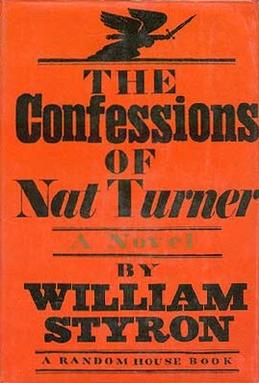
I plan on reading Nat Turner. I would also like to squeeze in Sophie's Choice, at some point, along with Darkness Visible.
What is everyone else going to read?
I plan on reading Nat Turner. I would also like to squeeze in Sophie's Choice, at some point, along with Darkness Visible.
What is everyone else going to read?
4laytonwoman3rd
I will probably read Lie Down in Darkness. I have read Sophie, which is briliant, Tidewater Morning, which is beautiful, and Nat Turner, which I don't remember very well.
5Caroline_McElwee
Yay. I'm going to be reading The Confessions of Nat Turner and hoping to squeeze in my fourth reread of Sophie's Choice too Mark.
I came to Styron in the early 80s I think, via my love of James Baldwin's work, they were great friends. I'm sure I said elsewhere, I got to hear Styron speak a couple of years before he died, and had my copy of Sophie's Choice made even more precious with his signature. He was physically frail, but intellectually and vocally very sound,
I came to Styron in the early 80s I think, via my love of James Baldwin's work, they were great friends. I'm sure I said elsewhere, I got to hear Styron speak a couple of years before he died, and had my copy of Sophie's Choice made even more precious with his signature. He was physically frail, but intellectually and vocally very sound,
6katiekrug
I have a paperback copy of Tidewater Morning, and Sophie's Choice and Nat Turner on my Kindle -- not sure which one I'll go with, but I am looking forward to *finally* reading Styron!
7amanda4242
I've requested Sophie's Choice from the library.
8klobrien2
My library has a collection of stories by Styron: The Suicide Run: Five Tales of the Marine Corps. The catalog blurb says: Best known for his ambitious novels, Styron also created personal but no less powerful tales based on his real-life experiences as a U.S. Marine. This book collects five of these meticulously rendered narratives, one published here for the first time, bringing to life the drama, inhumanity, absurdity, and heroism that forever changed the men who served in the Marine Corps.--From publisher description.
Sounds like a winner to this Styron-newbie!
Karen O.
Sounds like a winner to this Styron-newbie!
Karen O.
9kac522
I have A Tidewater Morning and Sophie's Choice (saw the movie) on the shelf. May only have time (and emotional energy) for the former.
10msf59

"'Confess, that all nations may know.'"
^I started The Confessions of Nat Turner. I am very impressed with the writing. Sometimes, you think that the writing may be a bit out-dated, after nearly 50 years but Styron is sure and steady, in the early going.
I noticed some of the reviews for this novel- How divisive! Lots of love and lots of hate. Very interesting.
12Familyhistorian
There were a number of Stryon books to choose from at the library. I picked up The Confessions of Nat Turner because it sounded like the most interesting one for my introduction to his writing.
13benitastrnad
#10
Confessions of Nat Turner was a very controversial book when it was published. People loved it and people hated it. It was published in 1967 and consider what was going on in the USA that year. In that context it is easy to understand why the book received the notice it did.
Nat Turner failed in the 1830's but the fictionalized account of his life and the failed slave rebellion he led was on the direct road to the Civil War and to the Civil Rights rebellions of the 20th Century. In 1967, the book had real relevance. The rebellion was what white Southerner's feared and the reason for the harsh suppression of blacks in the South that included the mandates of no education for Blacks.
It is interesting that one person saw the brilliance of Nat Turner's plan and acted on it later. That person was John Brown.
Confessions of Nat Turner was a very controversial book when it was published. People loved it and people hated it. It was published in 1967 and consider what was going on in the USA that year. In that context it is easy to understand why the book received the notice it did.
Nat Turner failed in the 1830's but the fictionalized account of his life and the failed slave rebellion he led was on the direct road to the Civil War and to the Civil Rights rebellions of the 20th Century. In 1967, the book had real relevance. The rebellion was what white Southerner's feared and the reason for the harsh suppression of blacks in the South that included the mandates of no education for Blacks.
It is interesting that one person saw the brilliance of Nat Turner's plan and acted on it later. That person was John Brown.
14weird_O
I read the 25th anniversary edition of ...Nat Turner and Styron wrote a new introduction for that edition that responded to the criticism of the book by black scholars, critics, and gadflies.
I've started reading Sophie's Choice. I've never seen the movie, but I did look at the cast on IMDB. Peter McNichol as Bill Styron!??!!? The Biscuit?! Can't picture it.
I've started reading Sophie's Choice. I've never seen the movie, but I did look at the cast on IMDB. Peter McNichol as Bill Styron!??!!? The Biscuit?! Can't picture it.
15msf59

The Confessions of Nat Turner by William Styron 4.5 stars
Nat Turner was a negro preacher, an educated slave, born and raised in Virginia. He felt he had been ordained by God, to fight a cause and start an insurrection against the horrors of slavery.
This is a fictionalized account of this story, narrated by Turner, as he lies in his cell, shackled, awaiting his execution.
There was rampant controversy surrounding this novel, on it's release in 1967. America was in revolt at the time, over civil rights issues and having a white southerner pen this story, caused an uproar. I can not address those allegations, with any authority but I found this to be a deep, ambitious examination of a man, fighting against injustice. He did not get the results he hoped and many people were brutally killed, but I think this planted the seeds that led to the events, thirty years later.
This was my first book by Styron and I was impressed by his vision and his craft.

17Nickelini
I just want to jump in and say that Styron was the first writer I read as an adult (Sophie's Choice, which I read in the late 80s) that awed me with the writing ability and finesse. I have Confessions of Nat Turner in my TBR but won't have time for it this month. Hope you all enjoy your Styron read.
18weird_O
Finished Sophie's Choice Interesting book.
19Caroline_McElwee
Starting on The a Confessions of Nat Turner today.
20EBT1002
Well, the month is more than half over and I have been slowly working my way through The Confessions of Nat Turner. I'm about 60% through and should finish it during my trip along the Mississippi this week.
It's very well-written.
It's very well-written.
21laytonwoman3rd
I hope to begin Lie Down in Darkness this afternoon. I tried last night before supper, but that's music time around here, and trying to deal with Styron and Bach at the same time taxed my wee brain! Neither one would take a back seat.
22nittnut
I had thought I'd read Sophie's Choice, but my library has one copy that is not available to check out. Wierd.
I finished The Long March today.
Six years after the end of WWII, the Marine Reserves are called up and sent with a bunch of regulars to South Carolina to train for the Korean conflict. Many of the reserves are ambivalent at best. This novella centers around a 36 mile forced march, for which none of them are prepared.
I was impressed with Styron's ability to evoke the tension, fear, anxiety, and other emotions experienced by men who knew what war was, and how the forced march affected each man differently.
I finished The Long March today.
Six years after the end of WWII, the Marine Reserves are called up and sent with a bunch of regulars to South Carolina to train for the Korean conflict. Many of the reserves are ambivalent at best. This novella centers around a 36 mile forced march, for which none of them are prepared.
I was impressed with Styron's ability to evoke the tension, fear, anxiety, and other emotions experienced by men who knew what war was, and how the forced march affected each man differently.
23amanda4242
I've Pearl ruled Sophie's Choice and read The Long March & The Clap Shack instead. I didn't enjoy it any more than I did my original choice, but at least it was short enough to get through in a couple of hours.
24weird_O

 William Styron at about Stingo's age
Sophie's Choice is a deservedly famous novel by William Styron. Most obviously it is an examination of the Holocaust, in which "undesirables" of all stripes--but most prominently Jews--were rounded up by the Nazis and exterminated. But it's also the author's own "coming-of-age" story. Not every reader has embraced Styron's novel; some are angry that its story centers on the suffering of a non-Jewish victim, others that Styron, a southerner, seems to be mitigating the sins of southern slavery through juxtaposition with Nazi slavery and genocide, and still others that the narrator's efforts to shed his virginity are so explicitly presented.
Stingo, the narrator, is Styron's alter-ego, a native of Virginia's tidewater region, recently graduated from Duke following a stint in the Marines. It is 1947. He wants to be a writer, and he's moved to New York City. Settling into a rented room in Brooklyn, he's greeted by seismic activity over his head; it can only be energetic sex. Thus he meets Sophie Zawistowska and Nathan Landau. Sophie is a Polish immigrant, beautiful and shy, while Nathan is an American Jew, handsome and charming and gracious and brilliant. They are in LOVE. But then Nathan explodes in a fury against Sophie, calling her vile, profane, despicable names, accusing her of unfaithfulness, swearing he's through with her, that he's moving out. As he rages from her room to his room to her room, he pours out his rage for all to hear. A few days later, he's back, contrite, apologetic, sorry.
The full story of Sophie and Nathan comes out bit by bit. Not simply an immigrant, Sophie is a survivor of Auschwitz. She conceals the twists and turns of her experience as much as she can, as long as she can. She fabricates, she minimizes, she dissembles, she withholds details large and small. In time, we learn that her father was a virulent anti-Semitic and believed the Nazis would embrace him for his views, but the Nazis rounded up all the academics (including Sophie's father and her husband) and summarily executed them. Sophie tries to keep a low profile but ultimately is swept up with members of the Polish underground. In Auschwitz she is spared immediate extermination because she's fluent in German as well as Polish, and administration of the camp requires typists and stenographers. Her proficiency wins her assignment to the camp commandant's staff. Her proximity to the commandant prompted her attempt at a barter of her body for her son's life through a program called Lebensborn. Her offer's scorned, and she never sees her son again, never finds out what happened to him.
All of these revelations are interspersed with episodes in Sophie and Nathan's relationship, and in Stingo's relationship with them, with his father, and with his sexual desires.
Sophie's Choice is NOT a book you love, it's a book you admire, one you recognize as important, one you think about and talk about. It's the marvelous accomplishment of an extraordinary and important American writer.
25msf59
>22 nittnut: The Long March sounds interesting, Jenn. I had not heard of that one.
>24 weird_O: Great review, Bill. I hope I can get to Sophie's Choice, sometime this year. Did you ever see the film?
>24 weird_O: Great review, Bill. I hope I can get to Sophie's Choice, sometime this year. Did you ever see the film?
26weird_O
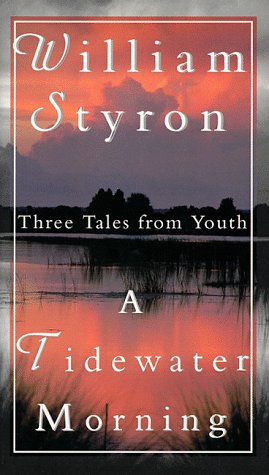
I figured that upon completion of Sophie's Choice, I be done with Styron. But this afternoon I hit the Bethlehem Public Library for its bi-month book sale. A book that found its way into my big L. L. Bean tote is A Tidewater Morning: Three Tales from Youth, a Styron work I hadn't heard of. So I'm reading it; it's less than 150 pages long.
27Caroline_McElwee
>24 weird_O: I do love it Bill, though its fourth reread will fall into next month. It's a hard story, but the prose are like honey off the back of a spoon, and the characters so fully drawn.
28laytonwoman3rd
I remember that I read A Tidewater Morning years ago (pre-LT), but have nothing recorded in either memory or elsewhere as to what I thought of it. I kept the book---that might mean something!
29Caroline_McElwee
Yes, I too read it Linda. Sometimes you are so involved in a book that it doesn't leave any real trace, or no more than a sensation.
About a quarter into The Confessions of Nat Turner, and having the sensation of having read this before, although I thought I hadn't. As ever, fine writing.
About a quarter into The Confessions of Nat Turner, and having the sensation of having read this before, although I thought I hadn't. As ever, fine writing.
30laytonwoman3rd
I'm Pearl-ruling Lie Down in Darkness. He may be working toward something, but nearly 50 pages in he has given me no reason to care about or sympathize in any way with the drunken philandering husband who now simply cannot face the loss of his pampered daughter. On to something else.
31Caroline_McElwee
It's on the shelf, but may remain unread Linda!
32banjo123
The Confessions of Nat Turner by William Styron
I decided to read this for the AAC, and then I had second thoughts. First of all, it's about Nat Turner, who led an unsuccessful and violent slave rebellion in Virginia in 1831. So you know it's going to be unpleasant, and then end badly. Plus, I read that it had been critiqued for being racist, even though it won the Pulitzer in 1967, and was praised by James Baldwin and Ralph Ellison. So I was worried I would have to decide whether or not it was racist when I reviewed it, and I wasn't sure I was up for that. But I did read it anyway, because Mark read it, and Mark wanted me to read it, and so, here I am.
And it was difficult, but a good book. . I can't say there was anything really redeeming about the story, it's story about slavery, and slavery was just plain horrible. I think that's Styron's point. And unfortunately, the idea of retributive African American violence was still relevant in 1967 when Styron wrote the book. And, sadly, the themes fo the book are still relevant today.
I don't think that the book is racist. Some of the critics had a problem with Styron, a white southerner,writing from the point of view of a black man. I believe, however, that a writer should have the freedom to write from outside his/her experience (otherwise all we'd have would be autobiography!) Other writers had a problem with the way that Styron presented Turner's sexuality. (I am being vague to avoid spoilers.) I can understand the concerns, but I thought it made sense in the context of the book. Another concern I read was that the white slave owner were too positively portrayed. I can't agree with that--- the slave owners weren't all brutal, but Styron's point was about the brutality that is inherent in the idea of slavery.
Styron describes this book as a meditation on history, rather than a historical novel. He doesn't try to be historically accurate in his description of Turner. What he gives us is a Turner who is magnificent and awful; miserable and brilliant, and very human.
I decided to read this for the AAC, and then I had second thoughts. First of all, it's about Nat Turner, who led an unsuccessful and violent slave rebellion in Virginia in 1831. So you know it's going to be unpleasant, and then end badly. Plus, I read that it had been critiqued for being racist, even though it won the Pulitzer in 1967, and was praised by James Baldwin and Ralph Ellison. So I was worried I would have to decide whether or not it was racist when I reviewed it, and I wasn't sure I was up for that. But I did read it anyway, because Mark read it, and Mark wanted me to read it, and so, here I am.
And it was difficult, but a good book. . I can't say there was anything really redeeming about the story, it's story about slavery, and slavery was just plain horrible. I think that's Styron's point. And unfortunately, the idea of retributive African American violence was still relevant in 1967 when Styron wrote the book. And, sadly, the themes fo the book are still relevant today.
I don't think that the book is racist. Some of the critics had a problem with Styron, a white southerner,writing from the point of view of a black man. I believe, however, that a writer should have the freedom to write from outside his/her experience (otherwise all we'd have would be autobiography!) Other writers had a problem with the way that Styron presented Turner's sexuality. (I am being vague to avoid spoilers.) I can understand the concerns, but I thought it made sense in the context of the book. Another concern I read was that the white slave owner were too positively portrayed. I can't agree with that--- the slave owners weren't all brutal, but Styron's point was about the brutality that is inherent in the idea of slavery.
Styron describes this book as a meditation on history, rather than a historical novel. He doesn't try to be historically accurate in his description of Turner. What he gives us is a Turner who is magnificent and awful; miserable and brilliant, and very human.
33laytonwoman3rd
>32 banjo123: "I believe, however, that a writer should have the freedom to write from outside his/her experience (otherwise all we'd have would be autobiography!)" I agree with you. An author can do a bad job of writing from another perspective, but that doesn't mean he/she should never try to do it.
34EBT1002
>32 banjo123: Good comments, Rhonda, and thoughtful. My reactions were similar and I'm going to try to put them into words this evening, but you pretty much captured it for me. :-)
35Caroline_McElwee
I've had to set Nat Turner aside in order to read the book for my local reading group on Friday, but I'll finish it a couple of days late, over the weekend.
I shall then re-read Sophie's Choice next month.
I shall then re-read Sophie's Choice next month.
36jnwelch
>32 banjo123: Well said, Rhonda. I thought The Confessions of Nat Turner was excellent, and the critics of it have puzzled me. What he gives us is a Turner who is magnificent and awful; miserable and brilliant, and very human. Yes.
37msf59
>30 laytonwoman3rd: Sorry to hear that about Lie Down in Darkness, Linda. I had plans on reading it this year.
>32 banjo123: "because Mark read it, and Mark wanted me to read it, and so, here I am." Whew! I am so glad you liked the novel. LOL. I may have gotten in trouble.
Good review of Nat Turner, Rhonda. I appreciate you addressing the controversy. That has become such a big part of the book's history. And I agree with your comments in regards to those allegations.
>32 banjo123: "because Mark read it, and Mark wanted me to read it, and so, here I am." Whew! I am so glad you liked the novel. LOL. I may have gotten in trouble.
Good review of Nat Turner, Rhonda. I appreciate you addressing the controversy. That has become such a big part of the book's history. And I agree with your comments in regards to those allegations.
38nittnut
>32 banjo123: Wow. Great review.
40laytonwoman3rd
>37 msf59: I hope you do give it a try. Mark. I'd be interested in your take on it. Could be I just wasn't in the mood...
41weird_O
>30 laytonwoman3rd: >37 msf59: You were probably trying to read one of the newer editions of Lie Down in Darkness. Back in the day, it had more...ah...piquancy.

Did you meet the rigid frigid wife and mother? Whole family is...ah...disfunctional.

Did you meet the rigid frigid wife and mother? Whole family is...ah...disfunctional.
42Nickelini
> ooooh, I'm always on the lookout for "a great novel that reveals the innermost secrets of a woman's life." Do tell!
43EBT1002
I know we've moved onto Poetry for April, but I just got around to writing this today.
+++++++++++++++++++++++++++++++++++++++++++++++++
The Confessions of Nat Turner by William Styron

"Though it is a painful fact that most Negroes are hopelessly docile, many of them are filled with fury, and the unctuous coating of flattery which surrounds and encases that fury is but a form of self-preservation."
"Not since the day years before when I was first sold had I felt such rage, intolerable rage, rage that echoed a memory of Isham's fury as he howled at Moore, rage that was a culmination of all the raw buried anguish and frustration growing inside me since the faraway dusk of childhood, on a murmuring veranda, when I first understood that I was a slave and a slave forever."
This controversial novel is the fictionalized story of Nat Turner, a slave who led a rebellion in southeast Virginia in 1831. Though ultimately unsuccessful, this is apparently the most sustained slave revolt, at least as documented. Styron's novel starts in a jail near the eve of Turner's anticipated execution as he is being interviewed by his defense attorney who is depicted as trying to understand one particular fact of the rebellion: that Turner's own hands murdered but one of the several victims, that he left most of the murdering to his compatriots. The narrative gradually shifts to an uninterrupted first-person telling of Nat's life as a slave, his experiences at the hands of a variety of owners, and the impact of his intelligence and the willingness of one owner to teach him to read.
Published to much critical praise in 1967, the novel quickly came under fire from the African American community, in particular, for (in Styron's words in my edition's afterword) "...having unwittingly created one of the first politically incorrect texts of our time." He decided to tackle the story, one that provided a benefit for a novelist: an intriguing historical event about which we know very little. Styron says he held fast to what seems incontrovertible, that Nat Turner was a brilliant madman with a delusional and grandiose sense of his place in God's universe. Then he took broad liberties with Turner's childhood and young adulthood, creating a historical narrative that was inconsistent with time and place (the kind of plantation on which Styron placed Nat simply did not exist in that region). Anyway, his novel came under tremendous criticism and, according to him, it became essentially novel-non-grata in college literature classes all across the country while the critical essays regarding the novel were widely read.
Essentially, Styron was tagged as racist. I can't argue one way or the other on this. As I read the novel, I was aware that a white man was writing about an experience, perhaps the ultimate American experience of abasement, degradation, and oppression, with which he could probably not really empathize. He was writing from the distance not only of time but the distance of history; had he been born in America in a different century, he would not have been enslaved. I was also aware that his novel was falling short of communicating the despair, rage, helplessness, terror, and numbness that must have lived within the souls of the Black men and women held in chains in our country's early existence. Who could ever capture what it may or must or could have felt like? I know that I can't, truly can not imagine. It is beyond my privileged capacity. And perhaps it is beyond the capacity of anyone living just far enough away from it. Reading first-person accounts of slaves themselves is the only way to truly hear their stories.
And perhaps it is because of my privileged location in our society that I can say this: setting aside those inevitable failings, the novel was brilliant. Styron's Nat Turner is a character who emerges richly from the pages. He is cold and distant as he tells his story but he evokes compassion and warmth. Perhaps one can only tell a story like this by adopting a voice as close to a reporter as possible; "I'm just telling you this story." When he describes his rage, it is not much different than when he describes the heat and the mosquitoes in the fields in which he worked or the bland food on which he usually survived. But somehow it all comes together into a compelling story and one which has stuck with me over the weeks since I finished reading it.
+++++++++++++++++++++++++++++++++++++++++++++++++
The Confessions of Nat Turner by William Styron

"Though it is a painful fact that most Negroes are hopelessly docile, many of them are filled with fury, and the unctuous coating of flattery which surrounds and encases that fury is but a form of self-preservation."
"Not since the day years before when I was first sold had I felt such rage, intolerable rage, rage that echoed a memory of Isham's fury as he howled at Moore, rage that was a culmination of all the raw buried anguish and frustration growing inside me since the faraway dusk of childhood, on a murmuring veranda, when I first understood that I was a slave and a slave forever."
This controversial novel is the fictionalized story of Nat Turner, a slave who led a rebellion in southeast Virginia in 1831. Though ultimately unsuccessful, this is apparently the most sustained slave revolt, at least as documented. Styron's novel starts in a jail near the eve of Turner's anticipated execution as he is being interviewed by his defense attorney who is depicted as trying to understand one particular fact of the rebellion: that Turner's own hands murdered but one of the several victims, that he left most of the murdering to his compatriots. The narrative gradually shifts to an uninterrupted first-person telling of Nat's life as a slave, his experiences at the hands of a variety of owners, and the impact of his intelligence and the willingness of one owner to teach him to read.
Published to much critical praise in 1967, the novel quickly came under fire from the African American community, in particular, for (in Styron's words in my edition's afterword) "...having unwittingly created one of the first politically incorrect texts of our time." He decided to tackle the story, one that provided a benefit for a novelist: an intriguing historical event about which we know very little. Styron says he held fast to what seems incontrovertible, that Nat Turner was a brilliant madman with a delusional and grandiose sense of his place in God's universe. Then he took broad liberties with Turner's childhood and young adulthood, creating a historical narrative that was inconsistent with time and place (the kind of plantation on which Styron placed Nat simply did not exist in that region). Anyway, his novel came under tremendous criticism and, according to him, it became essentially novel-non-grata in college literature classes all across the country while the critical essays regarding the novel were widely read.
Essentially, Styron was tagged as racist. I can't argue one way or the other on this. As I read the novel, I was aware that a white man was writing about an experience, perhaps the ultimate American experience of abasement, degradation, and oppression, with which he could probably not really empathize. He was writing from the distance not only of time but the distance of history; had he been born in America in a different century, he would not have been enslaved. I was also aware that his novel was falling short of communicating the despair, rage, helplessness, terror, and numbness that must have lived within the souls of the Black men and women held in chains in our country's early existence. Who could ever capture what it may or must or could have felt like? I know that I can't, truly can not imagine. It is beyond my privileged capacity. And perhaps it is beyond the capacity of anyone living just far enough away from it. Reading first-person accounts of slaves themselves is the only way to truly hear their stories.
And perhaps it is because of my privileged location in our society that I can say this: setting aside those inevitable failings, the novel was brilliant. Styron's Nat Turner is a character who emerges richly from the pages. He is cold and distant as he tells his story but he evokes compassion and warmth. Perhaps one can only tell a story like this by adopting a voice as close to a reporter as possible; "I'm just telling you this story." When he describes his rage, it is not much different than when he describes the heat and the mosquitoes in the fields in which he worked or the bland food on which he usually survived. But somehow it all comes together into a compelling story and one which has stuck with me over the weeks since I finished reading it.
44laytonwoman3rd
>41 weird_O: OMG, I love those vintage Signet covers. Yeah, I got that about the wife, who wouldn't even go the station to meet the train bringing home her daughter's body---not from grief, obviously, but from lack of interest. If you tell me the family was dysfunctional in an eventually interesting way, I might take another crack at it sometime.
45tymfos
I finally finished The Confessions of Nat Turner. I don't feel I can add much to what's already been said, and my posting time is limited. I'll just say that it wasn't an easy book to read; the subject matter is obviously unpleasant, but the writing is excellent. I'm glad I read it, but it's not one that I'd reread.

