Folio Archives 81 : The Nun by Denis Diderot 1972
Talk Folio Society Devotees
Join LibraryThing to post.
This topic is currently marked as "dormant"—the last message is more than 90 days old. You can revive it by posting a reply.
1wcarter
The Nun by Denis Diderot 1972
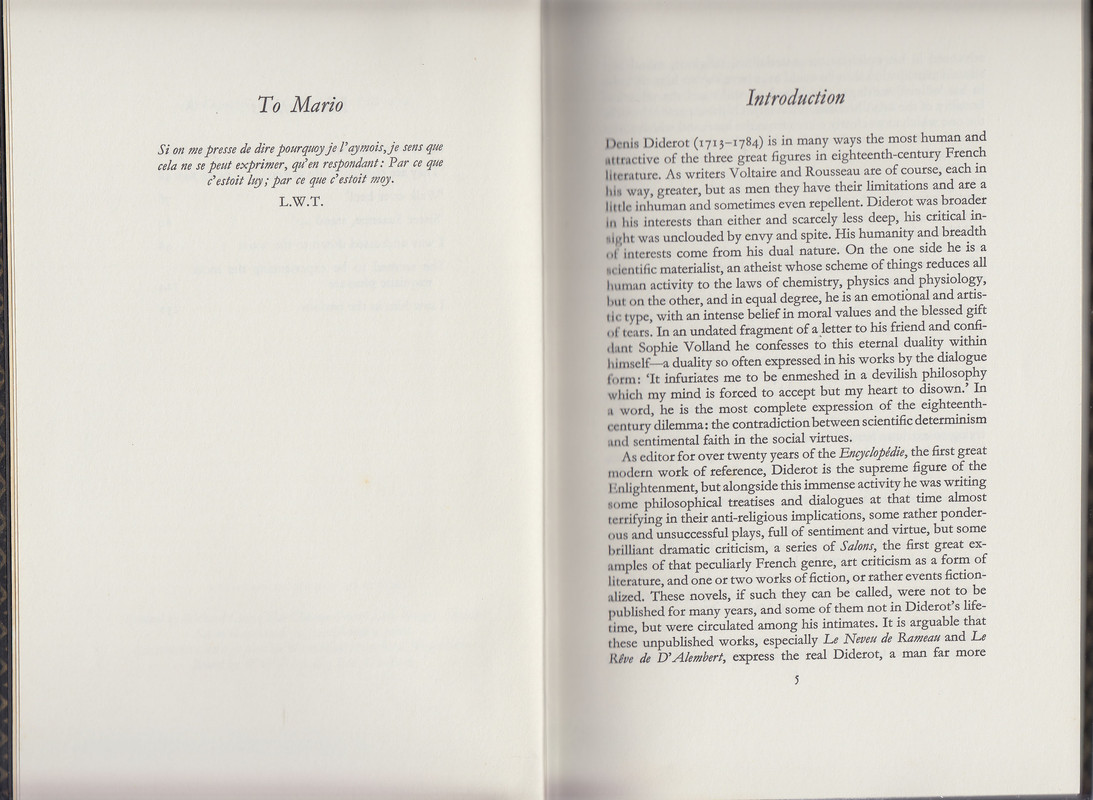
Denis Diderot was a prominent French writer during the “Enlightenment” in the middle of the 18th.C. He is most famous for being a significant contributor to the French Encyclopédie.
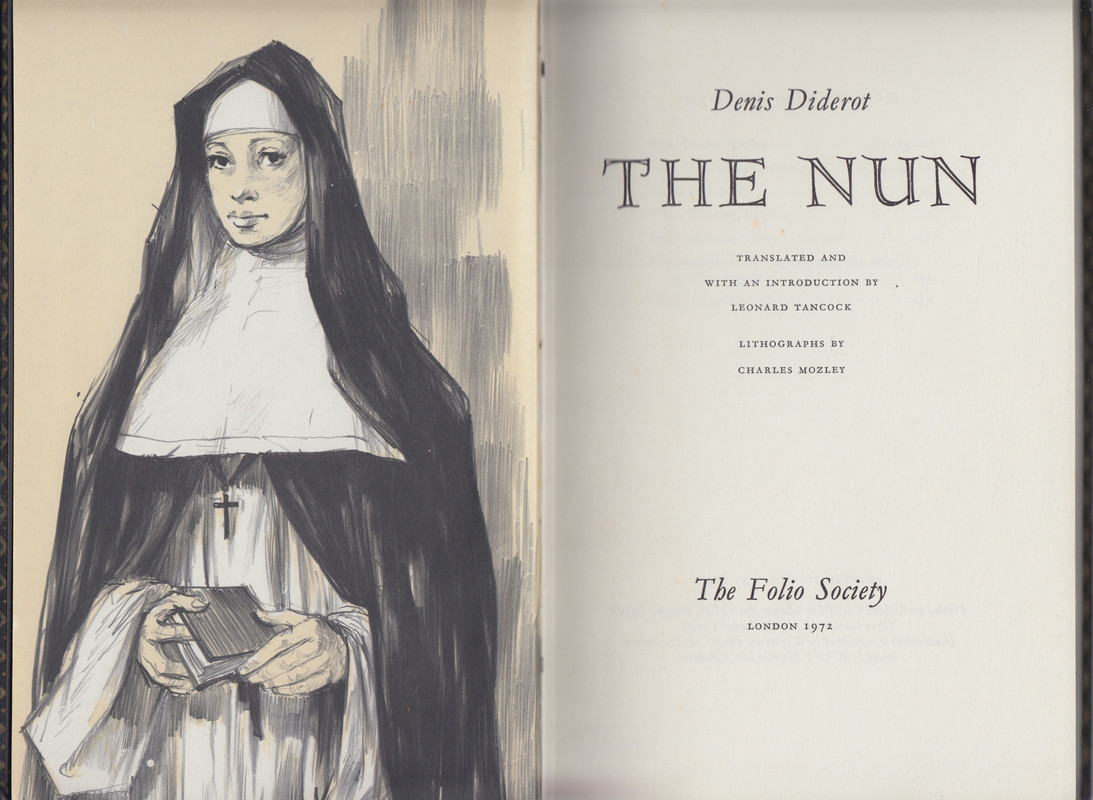
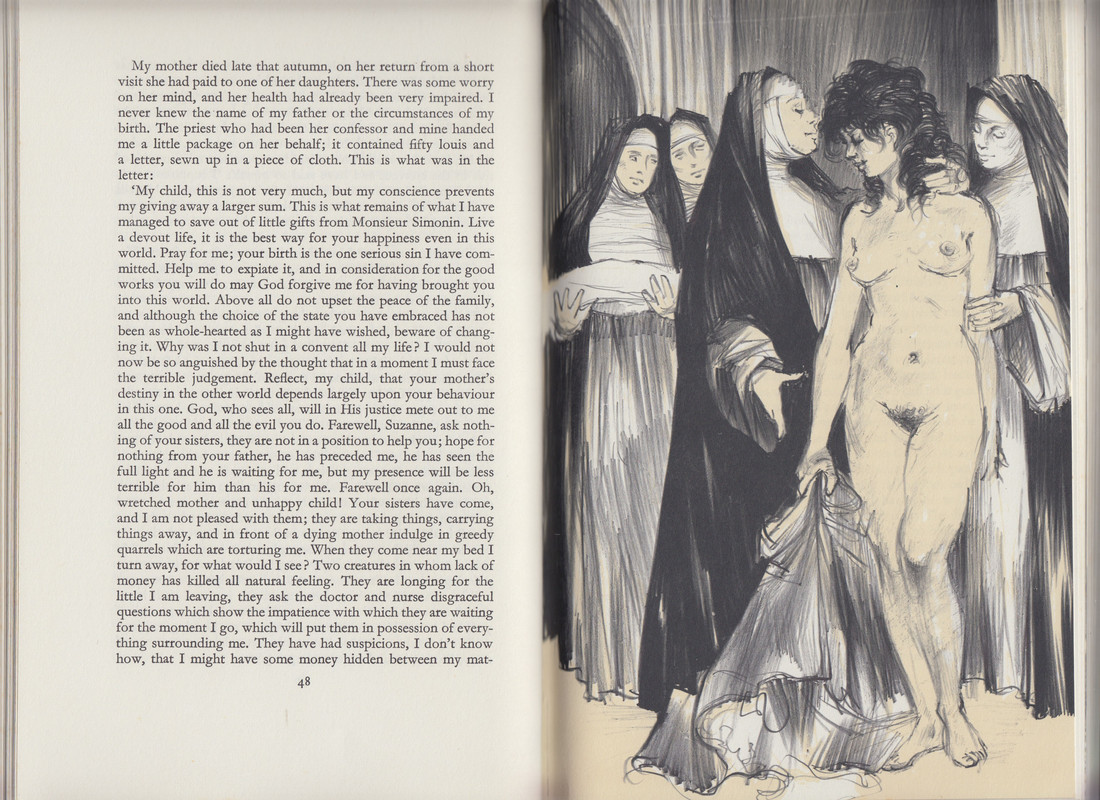
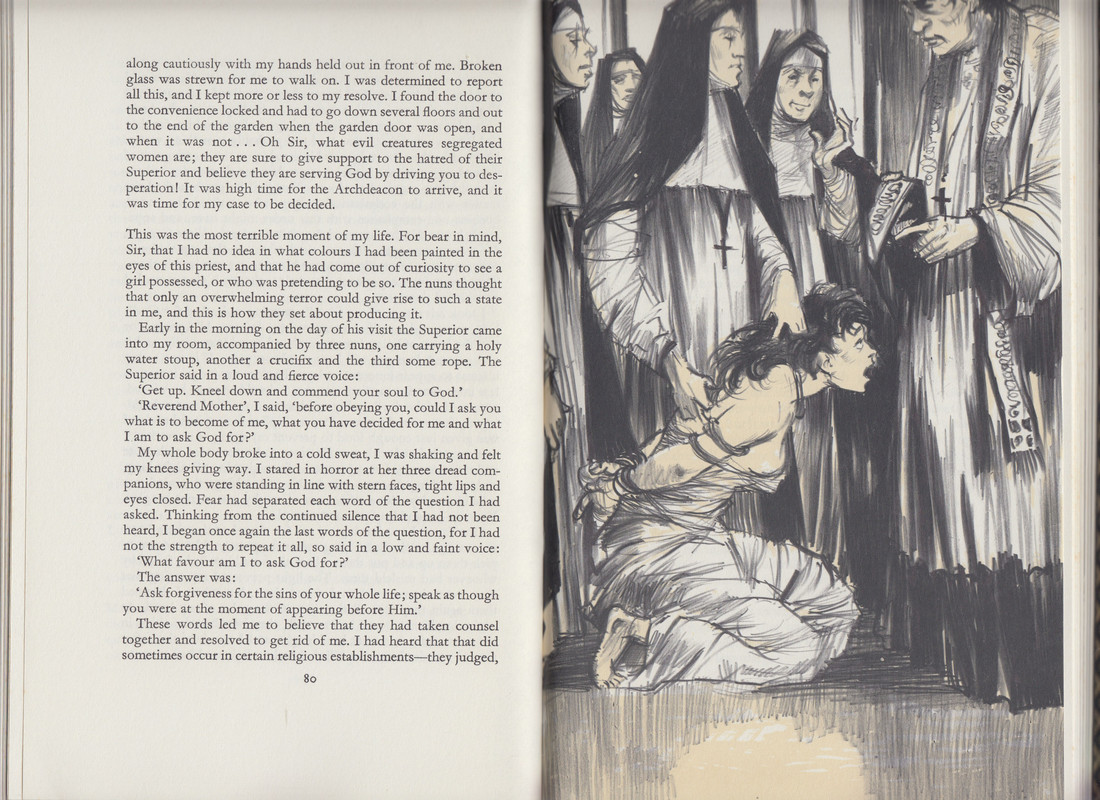
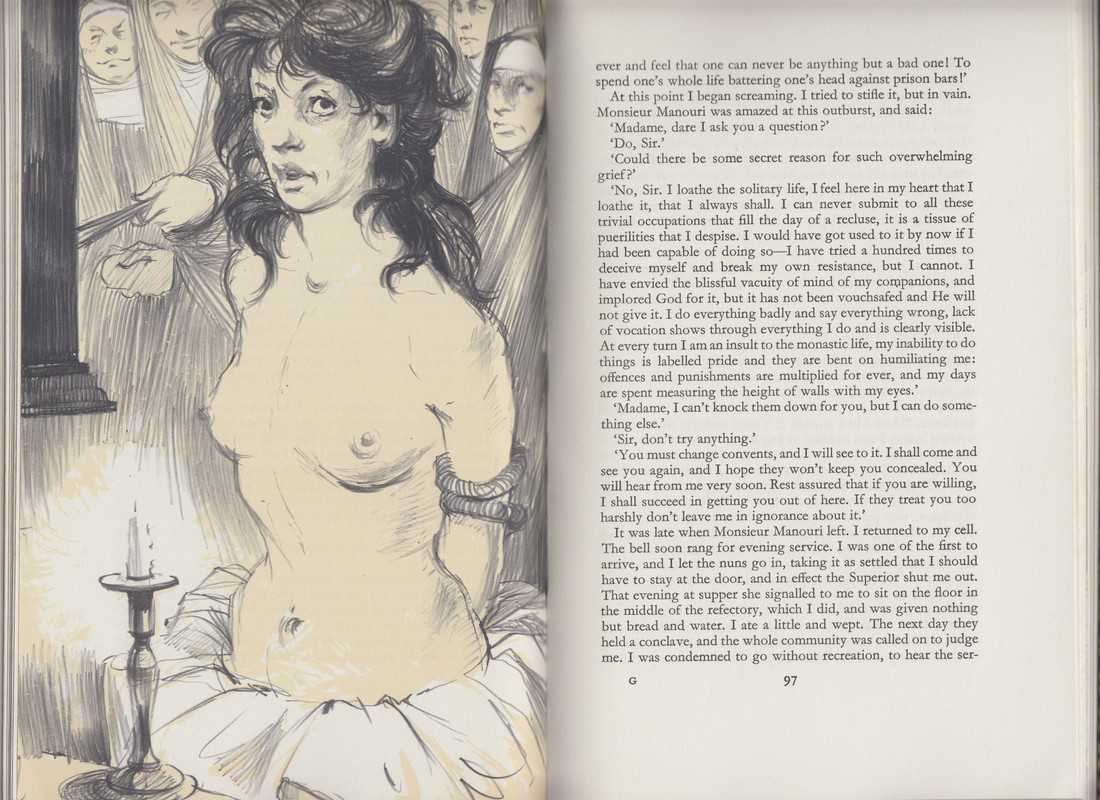
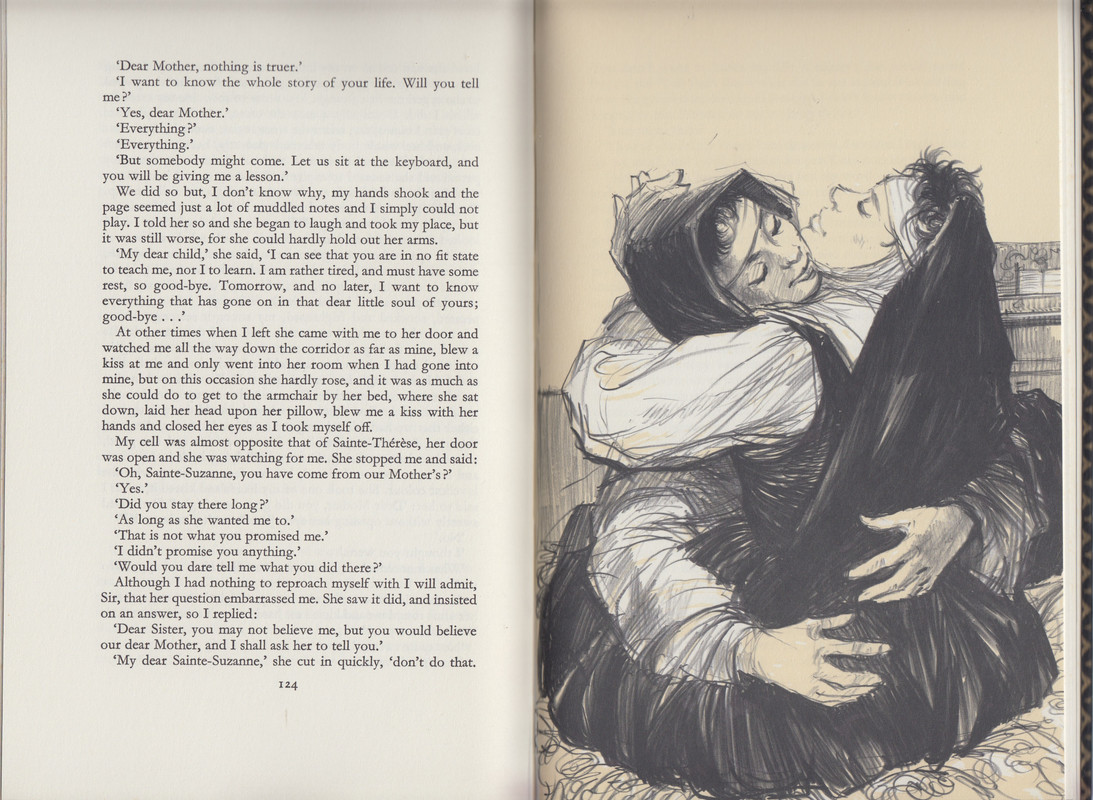
Diderot wrote this novel in 1760, initially as a practical joke, but in due course it became a form of investigate journalism as in a series of letters, purportedly from a nun who is begging for help, it describes the life of a young illegitimate woman who is forced into a nunnery, and tries repeatedly to escape. It highlights the poor treatment and intolerable lifestyle of many young women, unwanted by their family, who are banished to this form of religious imprisonment. The nun of the title was punished repeatedly for her misdeeds, and some of the punishments appear to be more homoerotic escapes for those who inflicted them than genuine penances.
The book also highlights corruption in the clergy, but was not published in its present form until 1796.
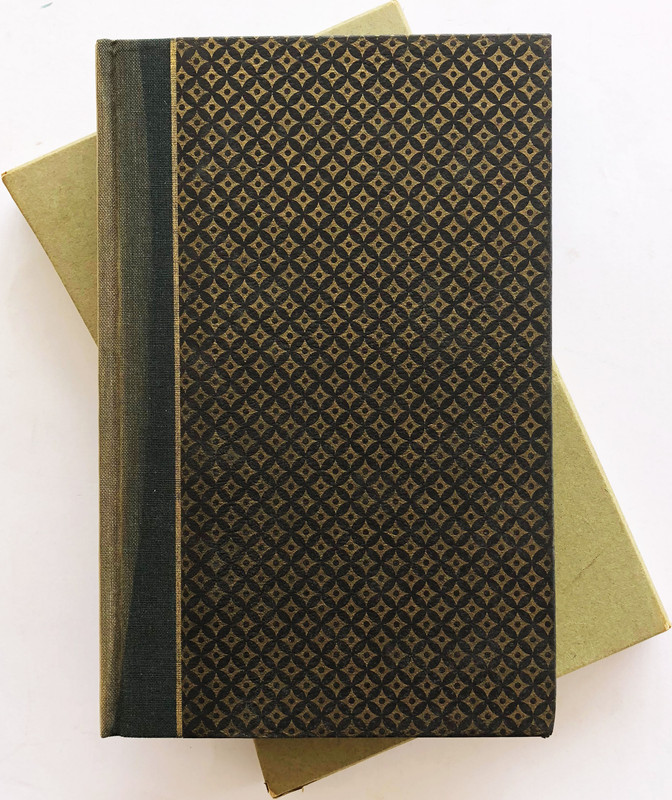
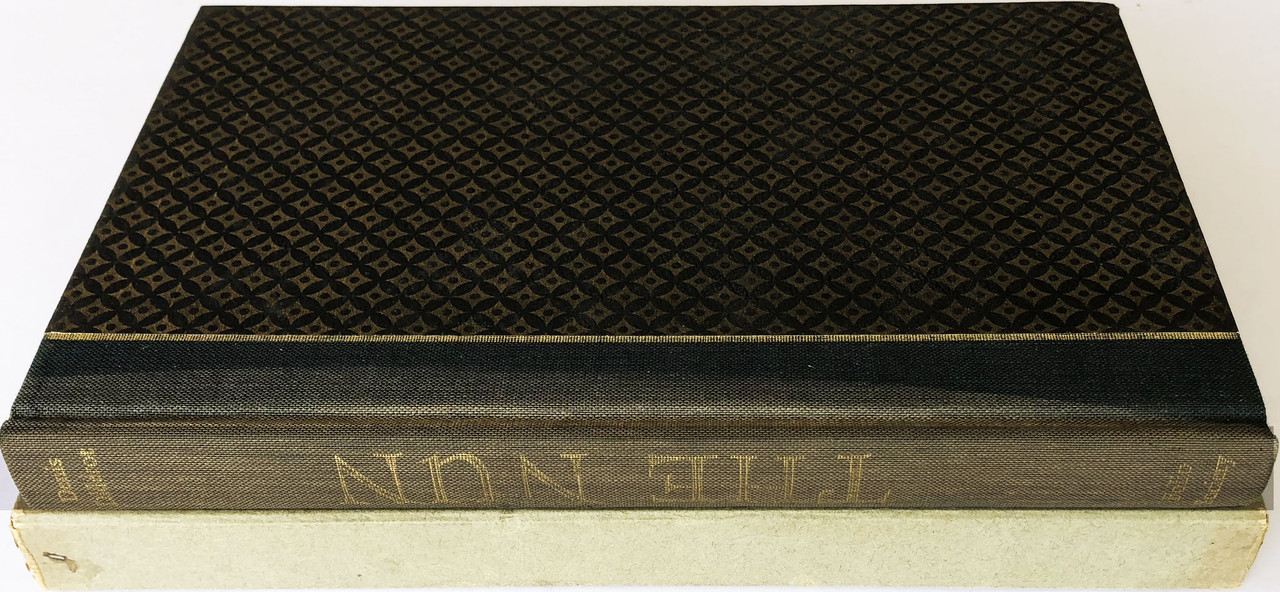
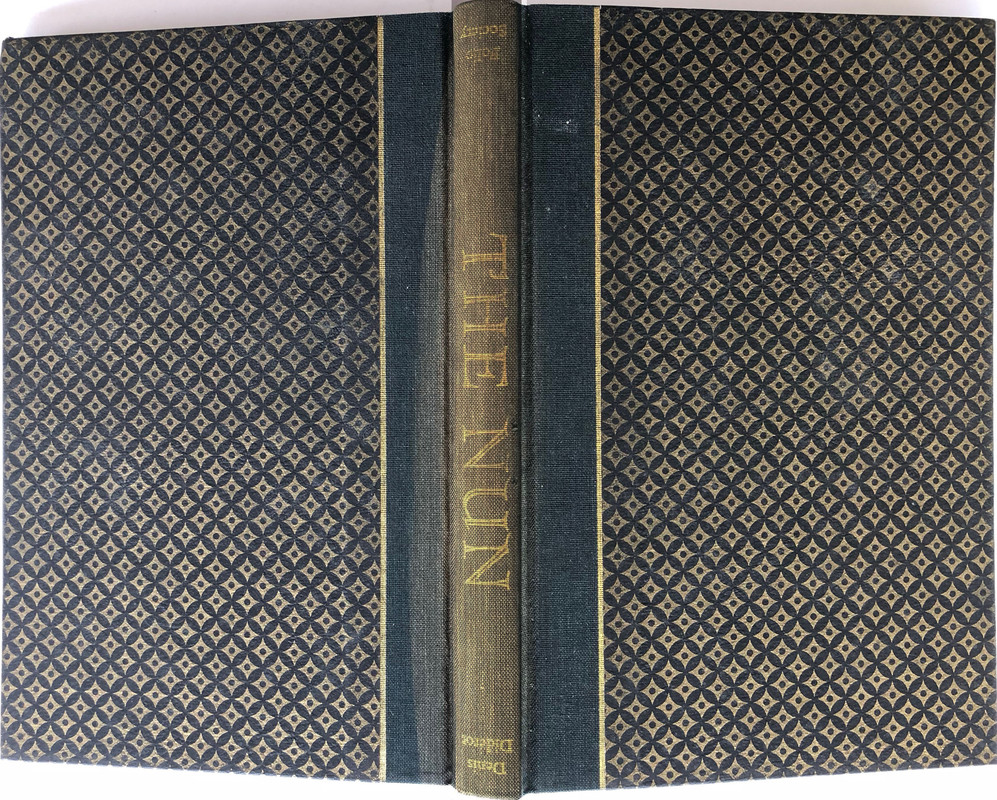
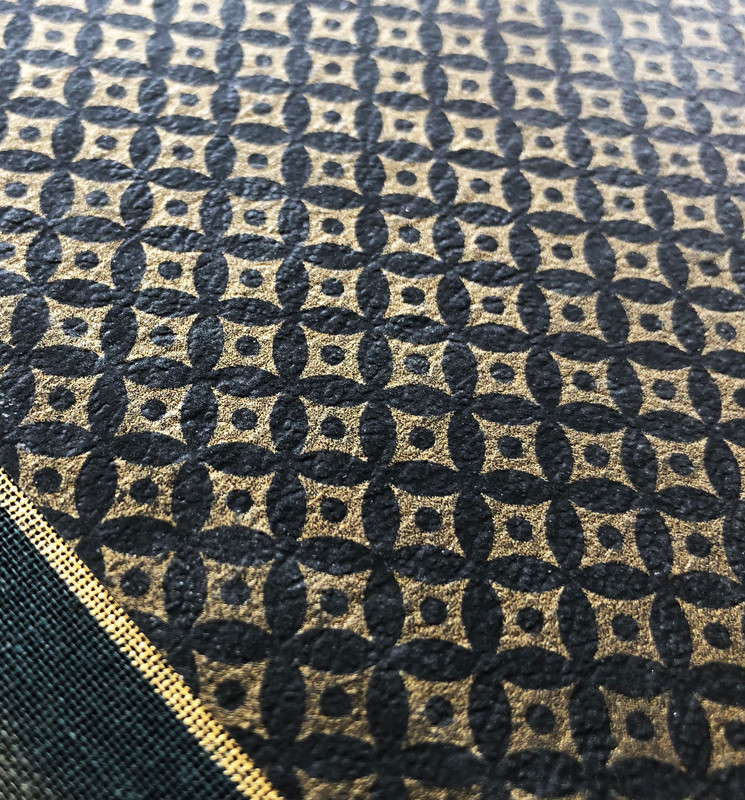
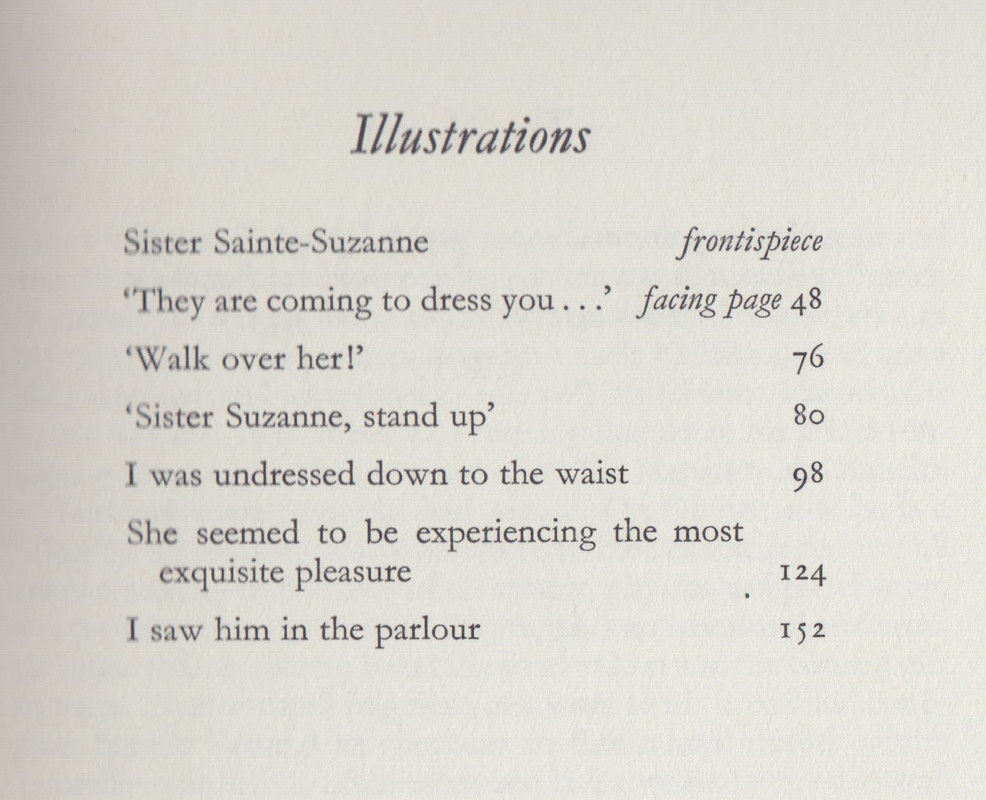
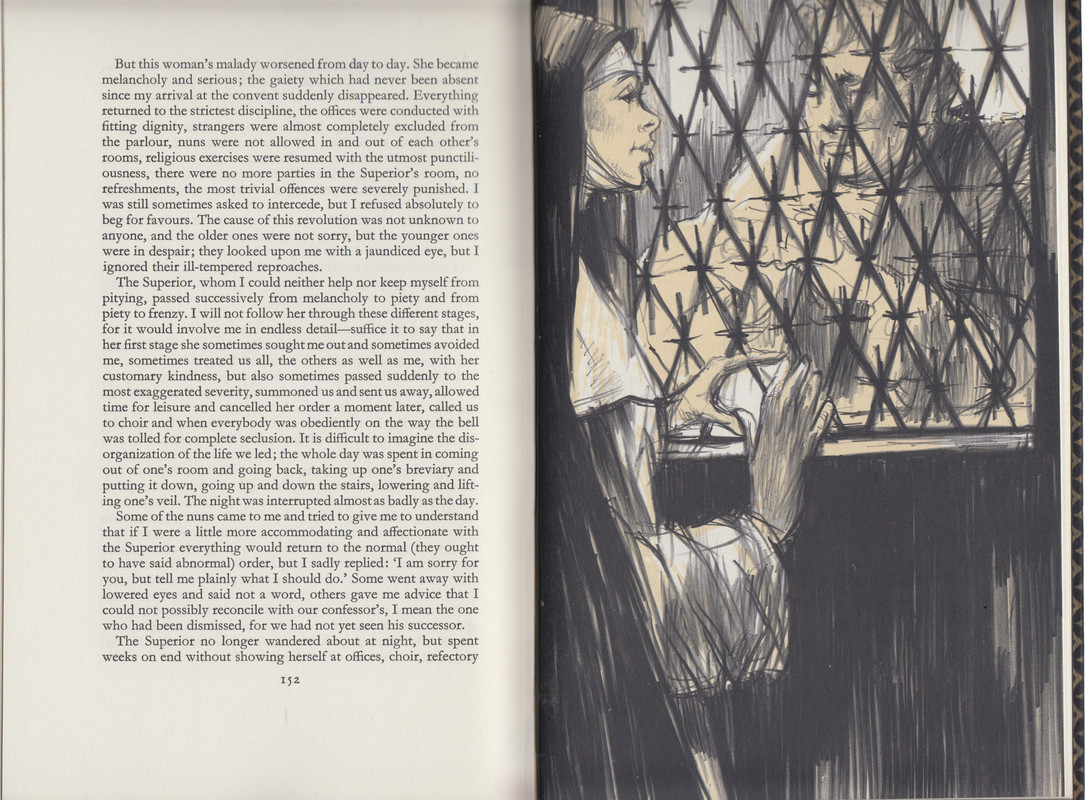
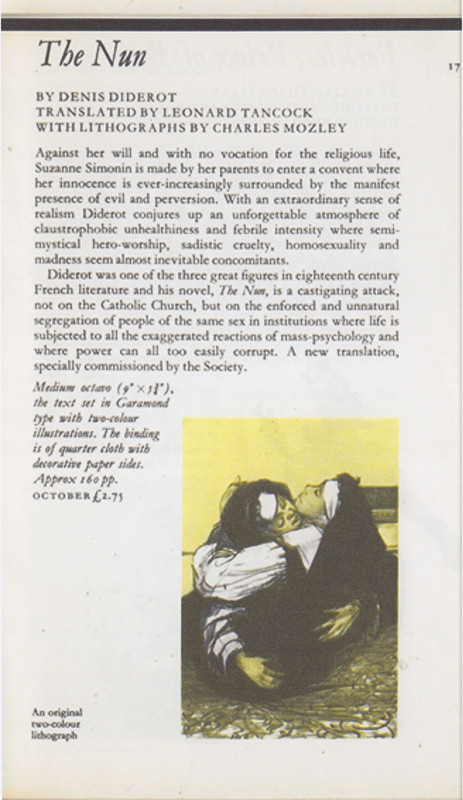
Translated from the French and introduced by Leonard Tancock, this small 168 page book has seven two-colour lithographs by Charles Mozley. It is quarter-bound in dark green cloth with a gilt spine title, while the paper boards are printed with a repetitive decoration. The slipcase is plain light green and 23.5x15cm.
It is a fascinating and easy read, and although a novel, the background truth makes you squirm at times when you realise how badly these women were treated.

Clipping from FS prospectus
An index of the other illustrated reviews in the "Folio Archives" series can be viewed here.
Denis Diderot was a prominent French writer during the “Enlightenment” in the middle of the 18th.C. He is most famous for being a significant contributor to the French Encyclopédie.
Diderot wrote this novel in 1760, initially as a practical joke, but in due course it became a form of investigate journalism as in a series of letters, purportedly from a nun who is begging for help, it describes the life of a young illegitimate woman who is forced into a nunnery, and tries repeatedly to escape. It highlights the poor treatment and intolerable lifestyle of many young women, unwanted by their family, who are banished to this form of religious imprisonment. The nun of the title was punished repeatedly for her misdeeds, and some of the punishments appear to be more homoerotic escapes for those who inflicted them than genuine penances.
The book also highlights corruption in the clergy, but was not published in its present form until 1796.
Translated from the French and introduced by Leonard Tancock, this small 168 page book has seven two-colour lithographs by Charles Mozley. It is quarter-bound in dark green cloth with a gilt spine title, while the paper boards are printed with a repetitive decoration. The slipcase is plain light green and 23.5x15cm.
It is a fascinating and easy read, and although a novel, the background truth makes you squirm at times when you realise how badly these women were treated.
Clipping from FS prospectus
An index of the other illustrated reviews in the "Folio Archives" series can be viewed here.
2scratchpad
Without knowing any detail beyond your summary I couldn’t help recognising this book’s 20th century significance - fascinating - one to look out for.

