
Folio Archives 101: Doctor Zhivago by Boris Pasternak 1997
Talk Folio Society Devotees
Join LibraryThing to post.
This topic is currently marked as "dormant"—the last message is more than 90 days old. You can revive it by posting a reply.
1wcarter
Dr. Zhivago by Boris Pasternak 1997
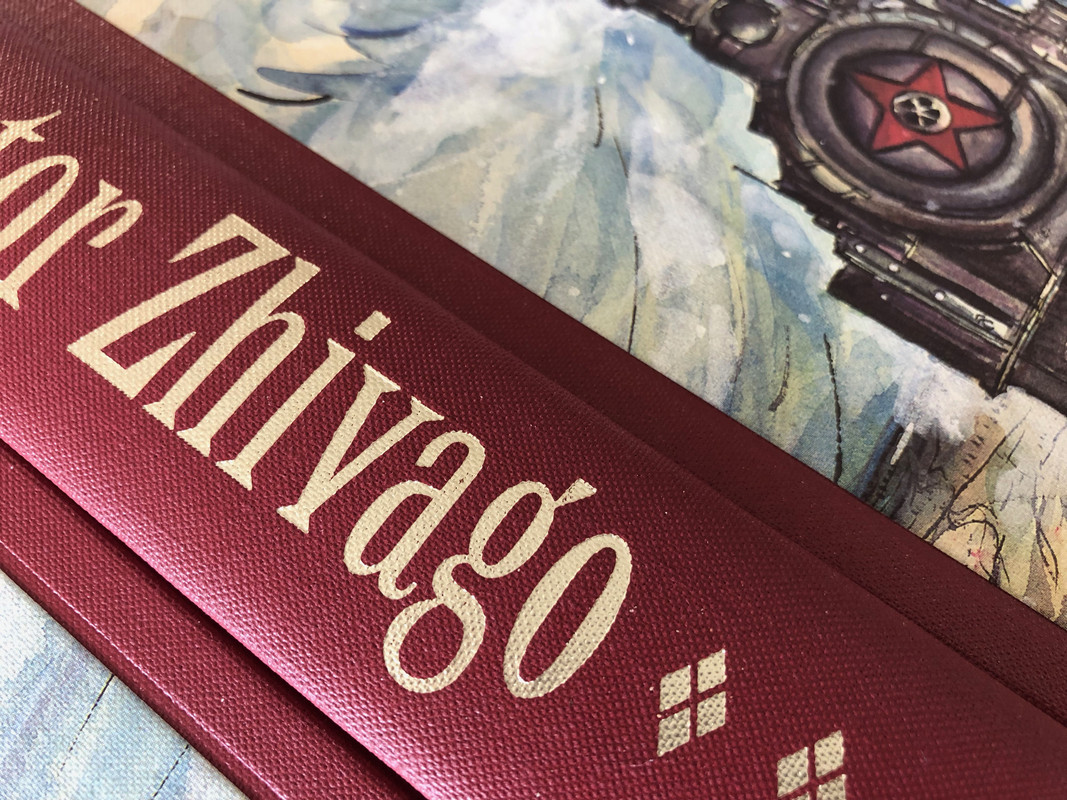
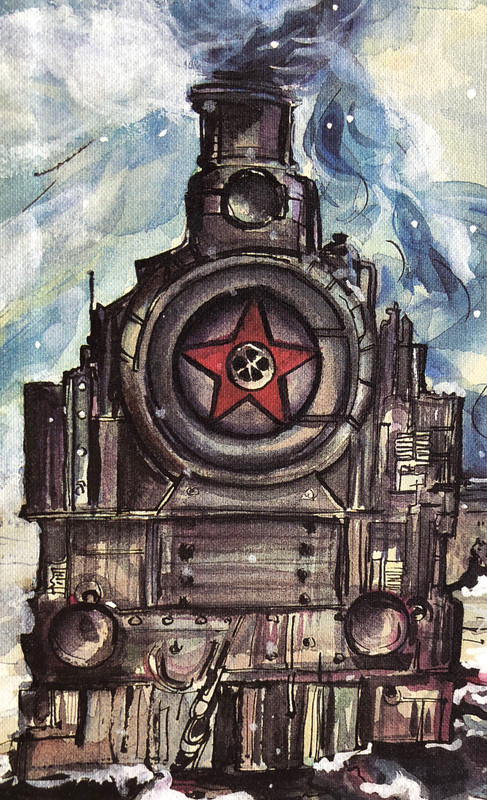
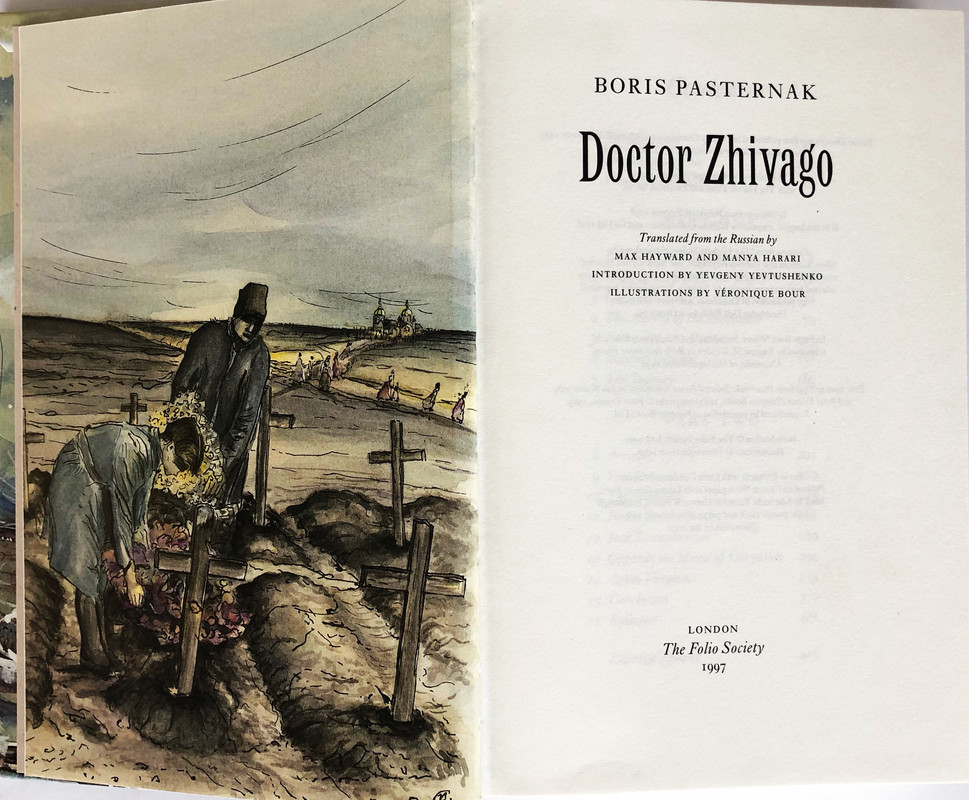
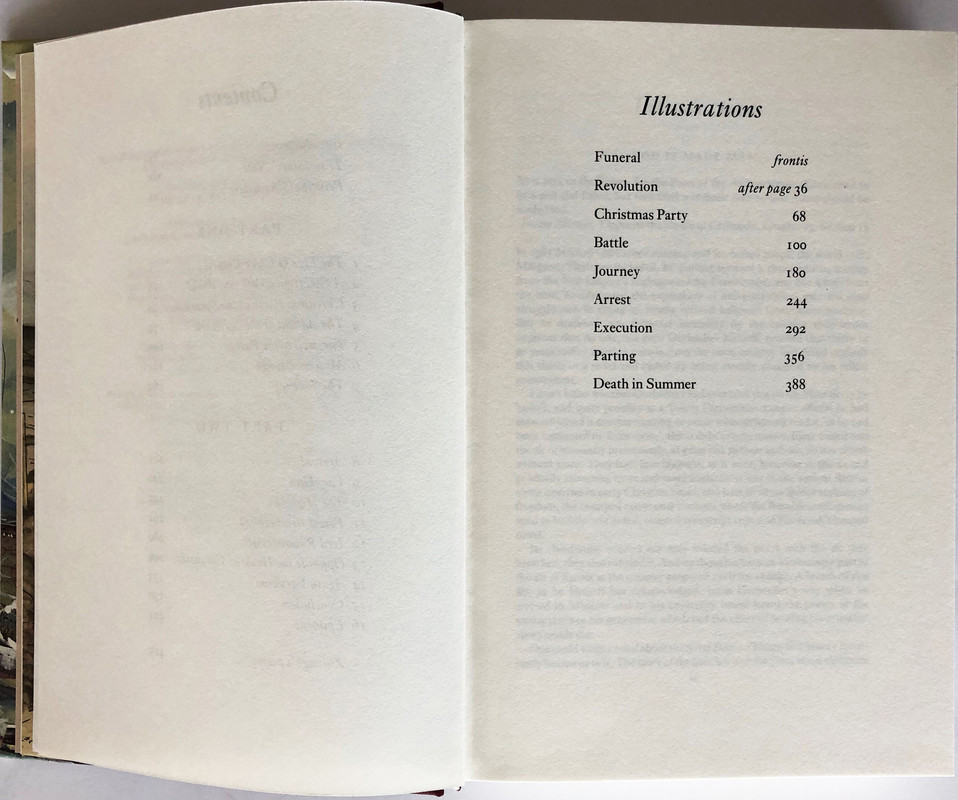
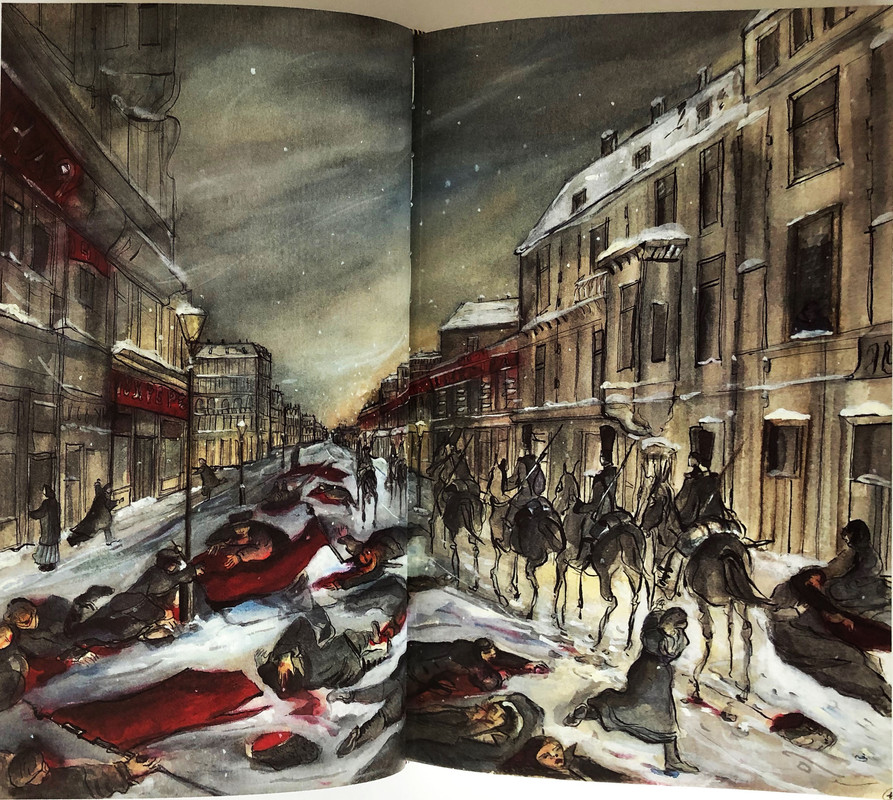
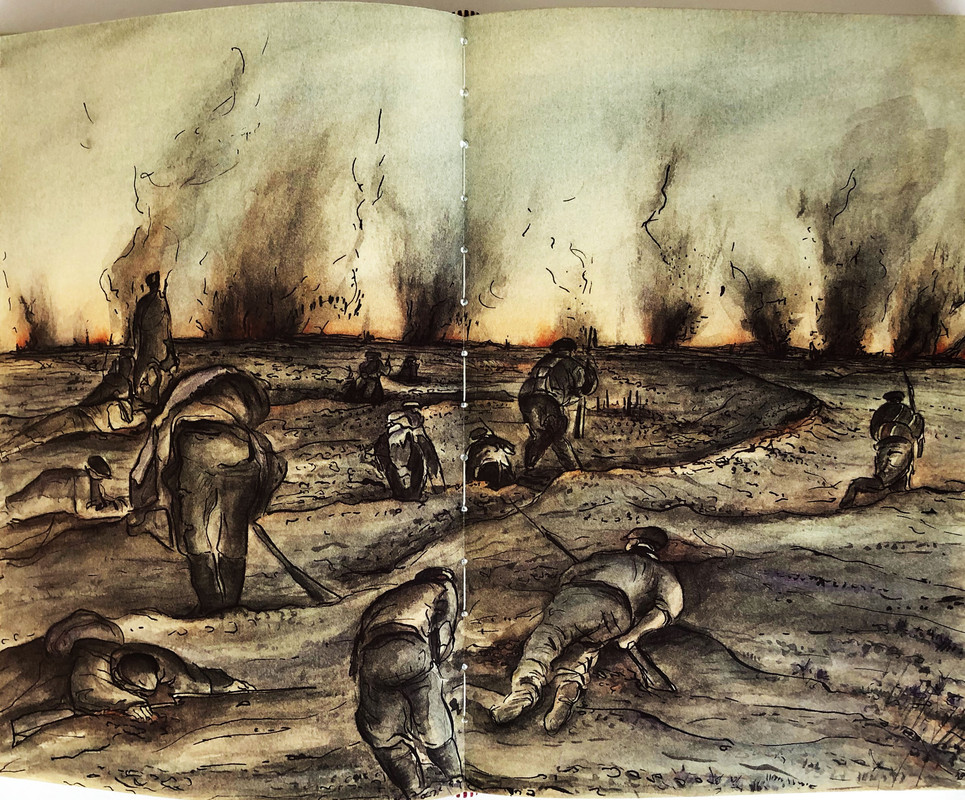
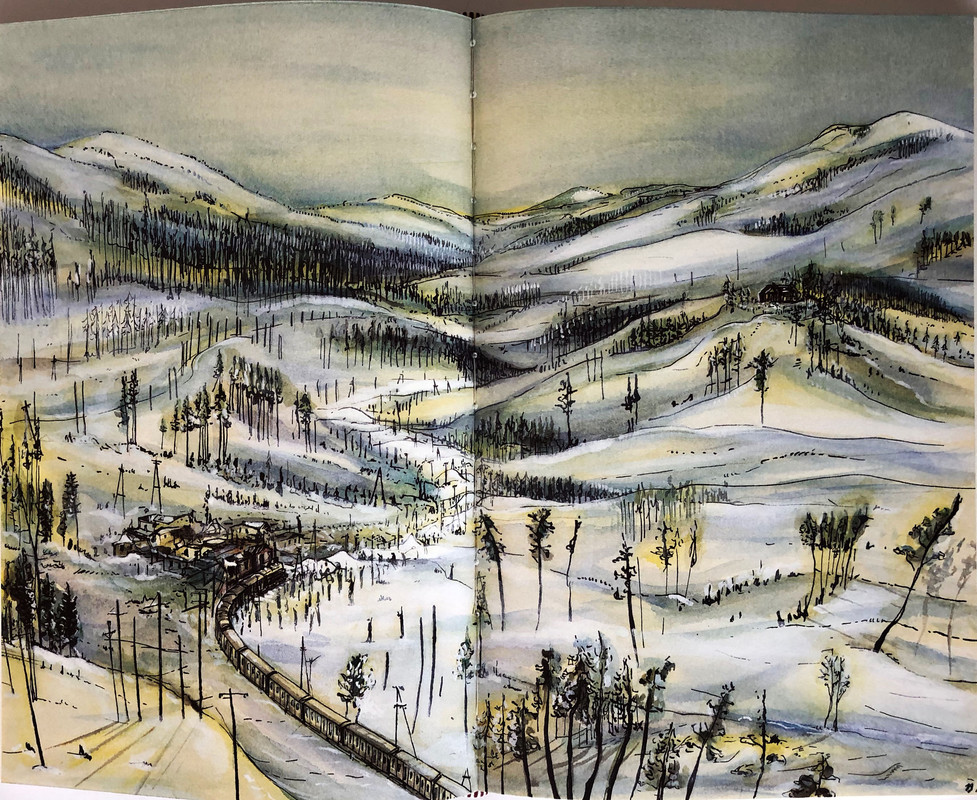
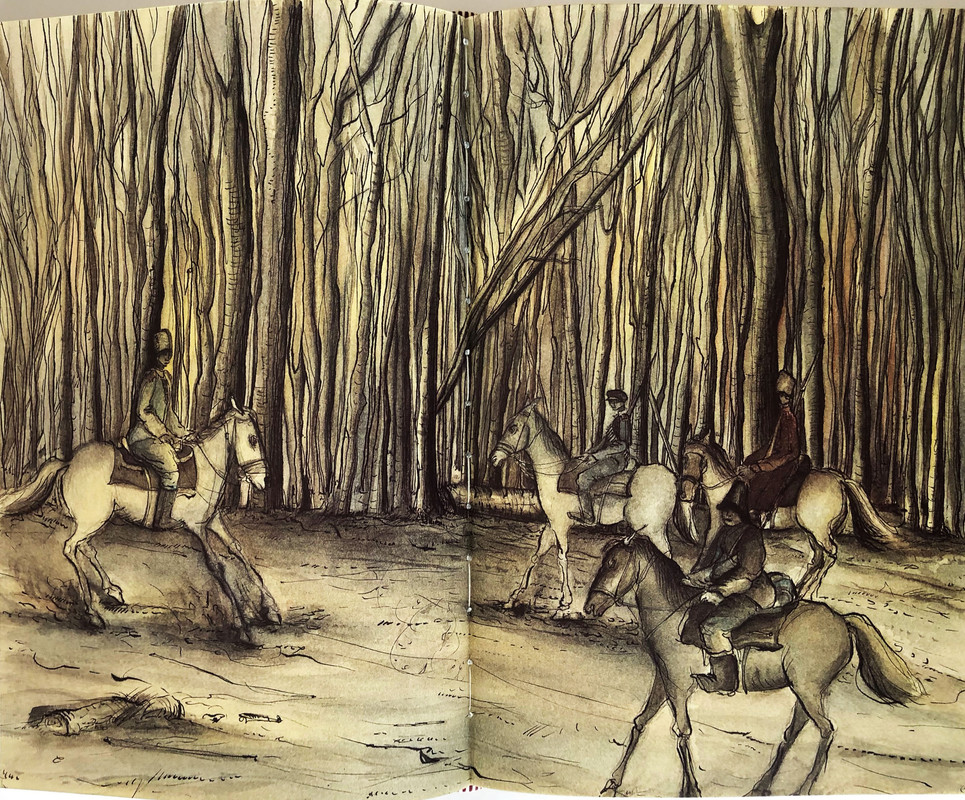
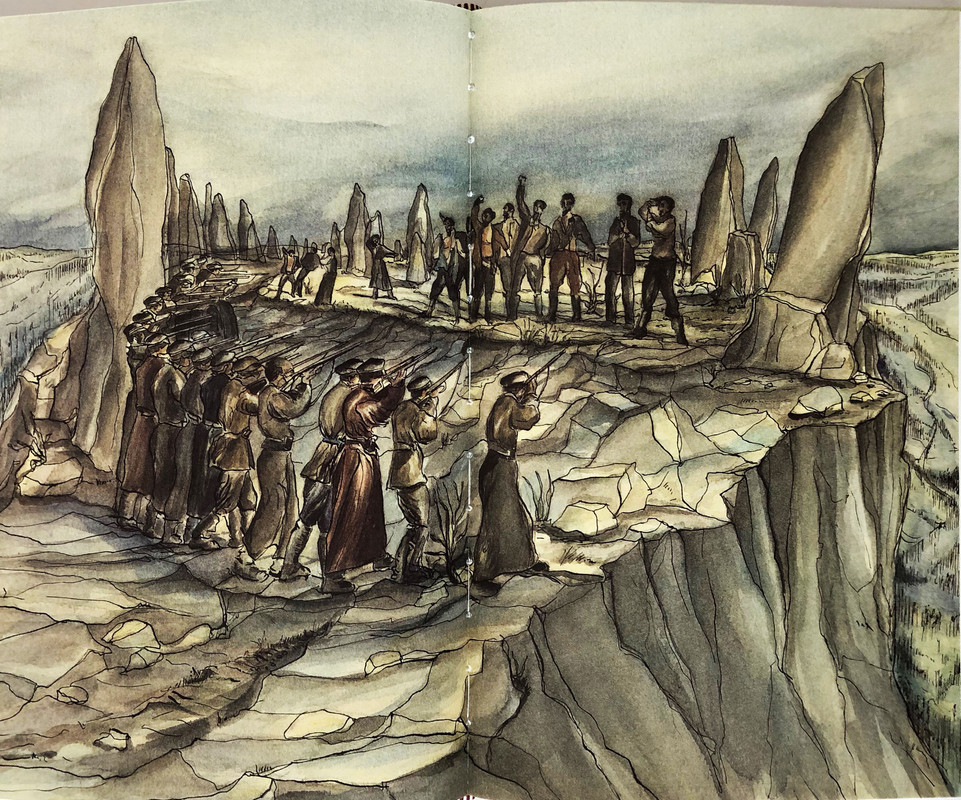
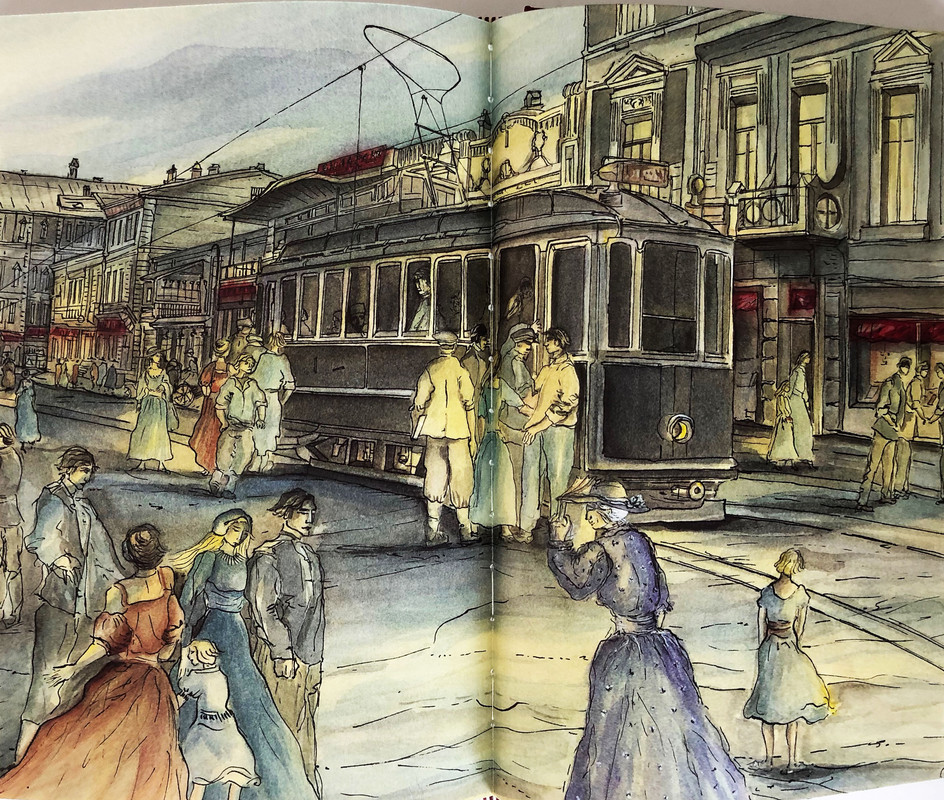
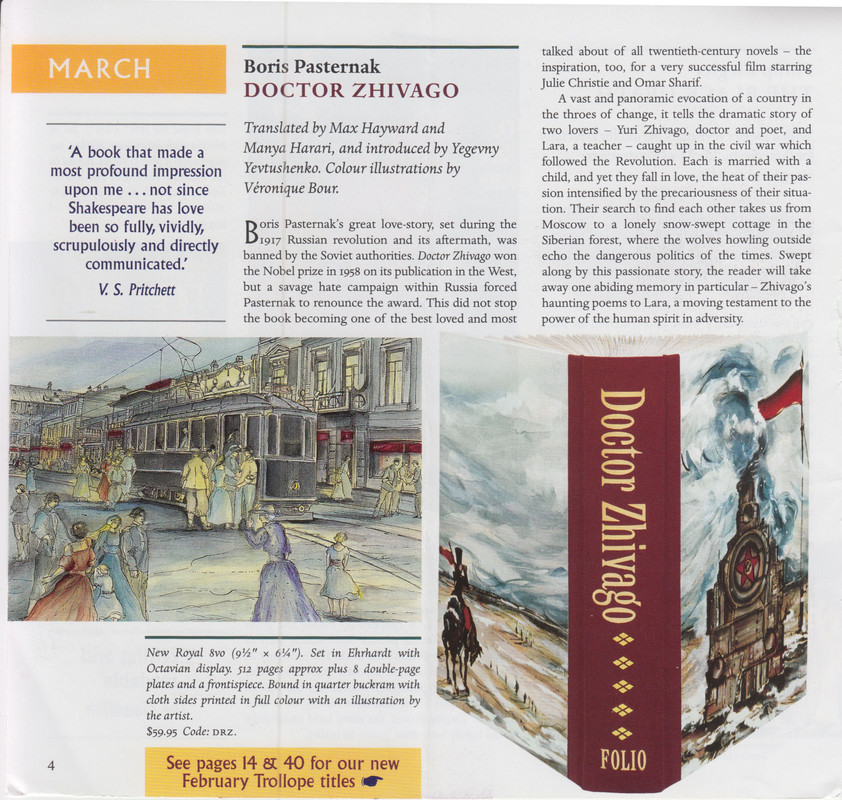
The Folio Society edition of Boris Pasternak’s classic novel is beautiful. There are only nine full colour illustrations by Véronique Bour, but all except the frontispiece are double page spreads, and the dramatic images are all located at the centre of a gathering, so that none of the picture is lost in the gutter.
Pasternak won the Nobel Prize for Literature with this love and adventure story set during the 1917 Russian revolution. The protagonists, Zhivago and Lara, cross Russia by train to be together, and are eventually united in the Siberian wilderness after experiencing many dramatic episodes along the way.
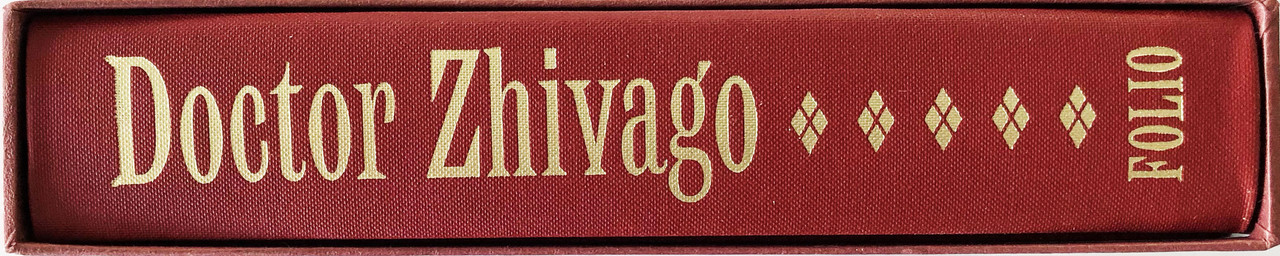
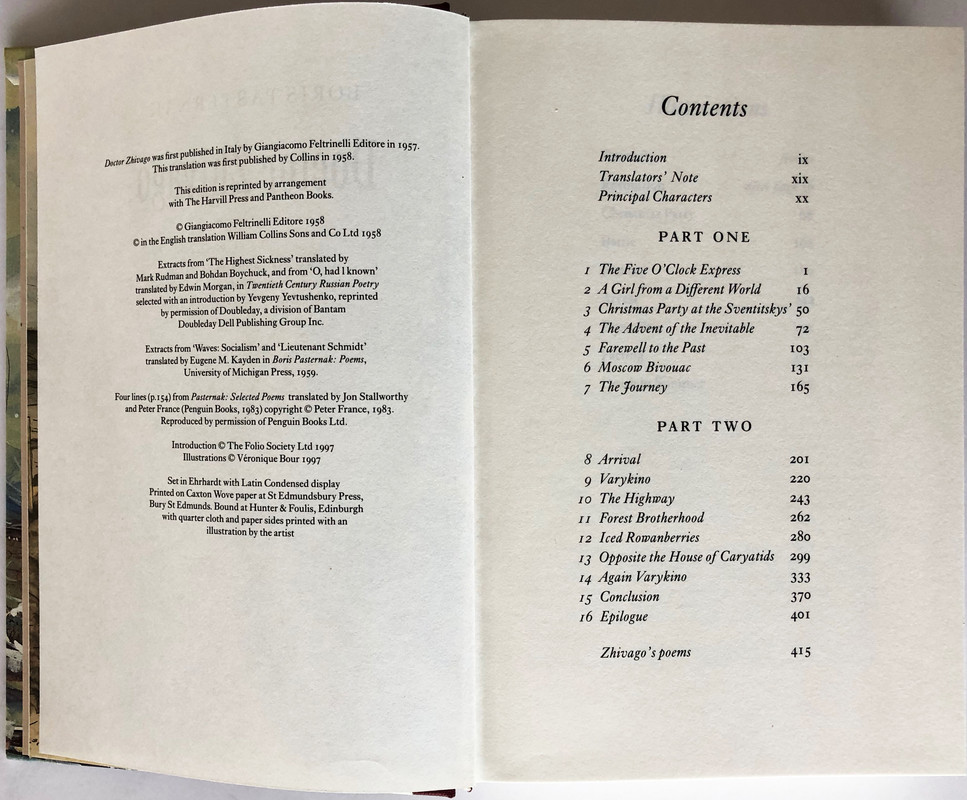
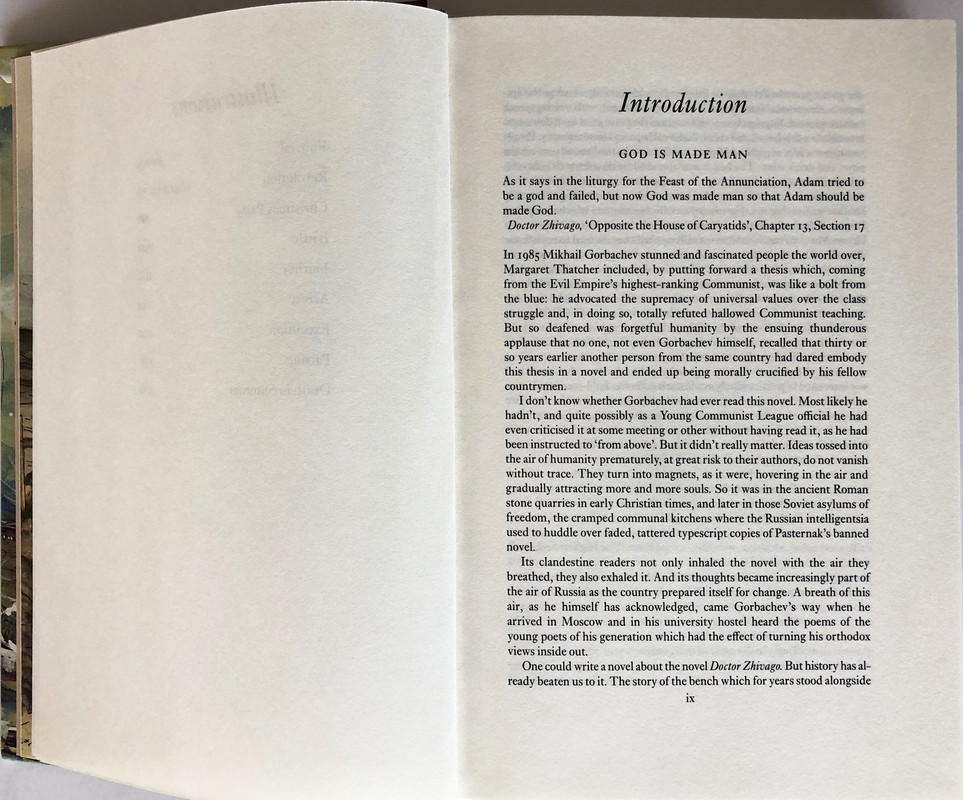
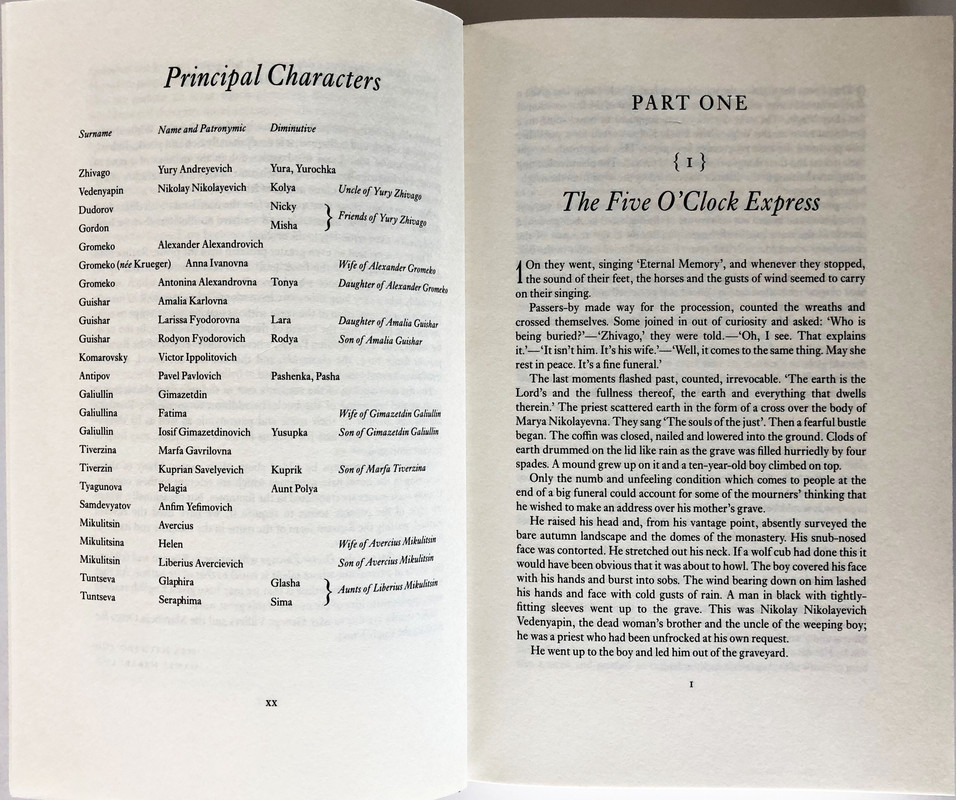
The 460 page book is housed in a plain maroon slipcase 24.7x16.8cm. It has been translated by Max Hayward and Manya Harari, and there is a ten page introduction by Yevgeny Yevtushenko.
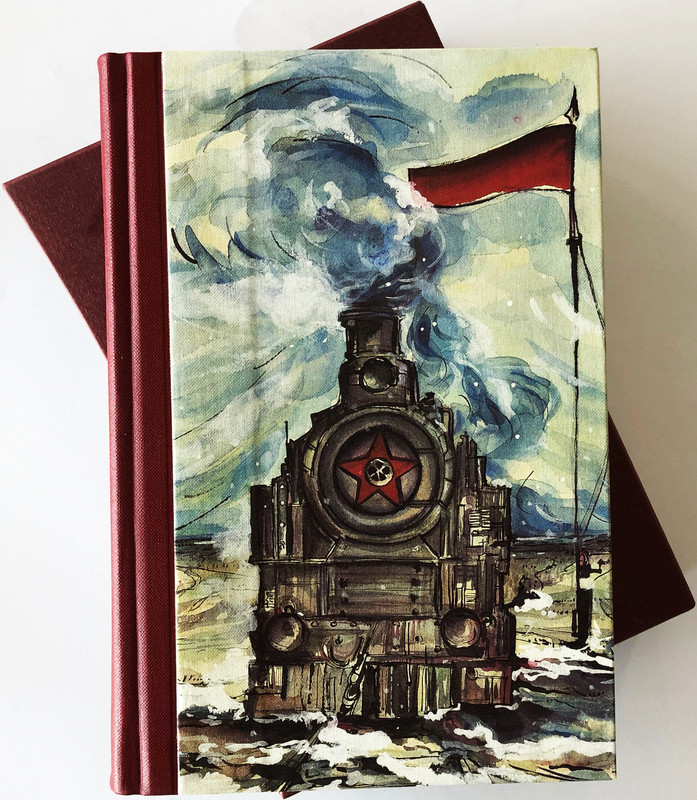
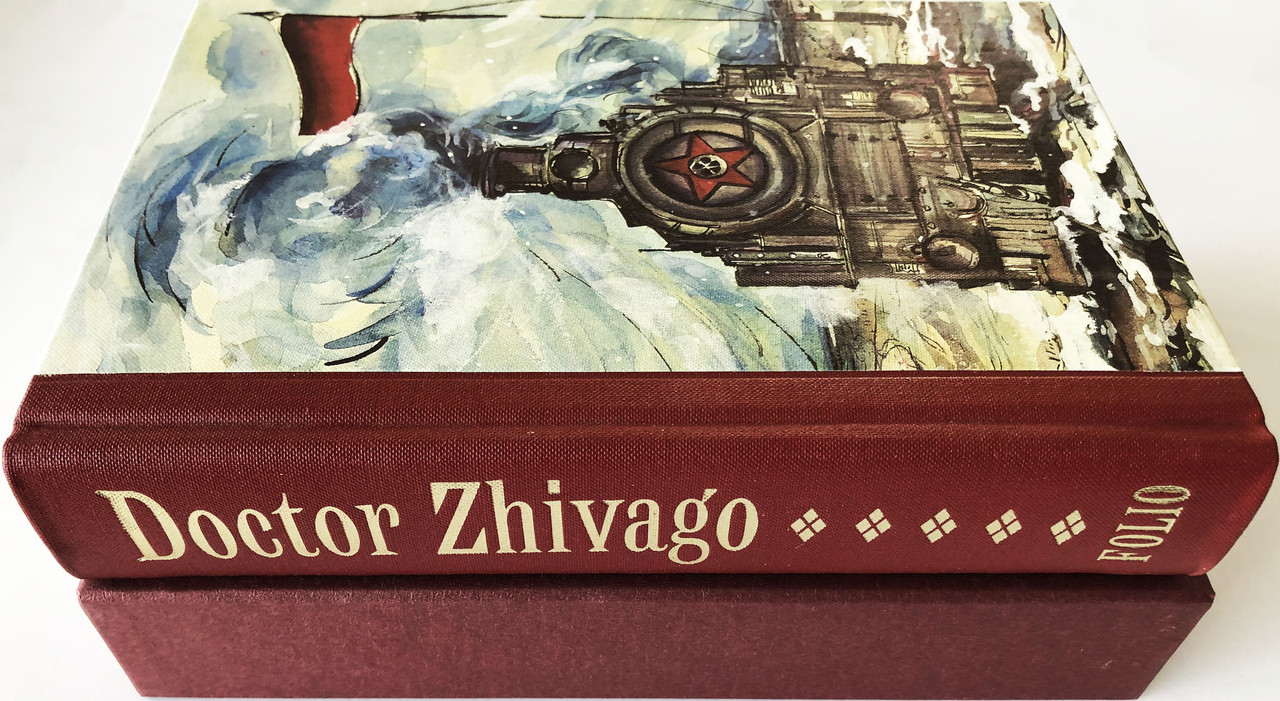
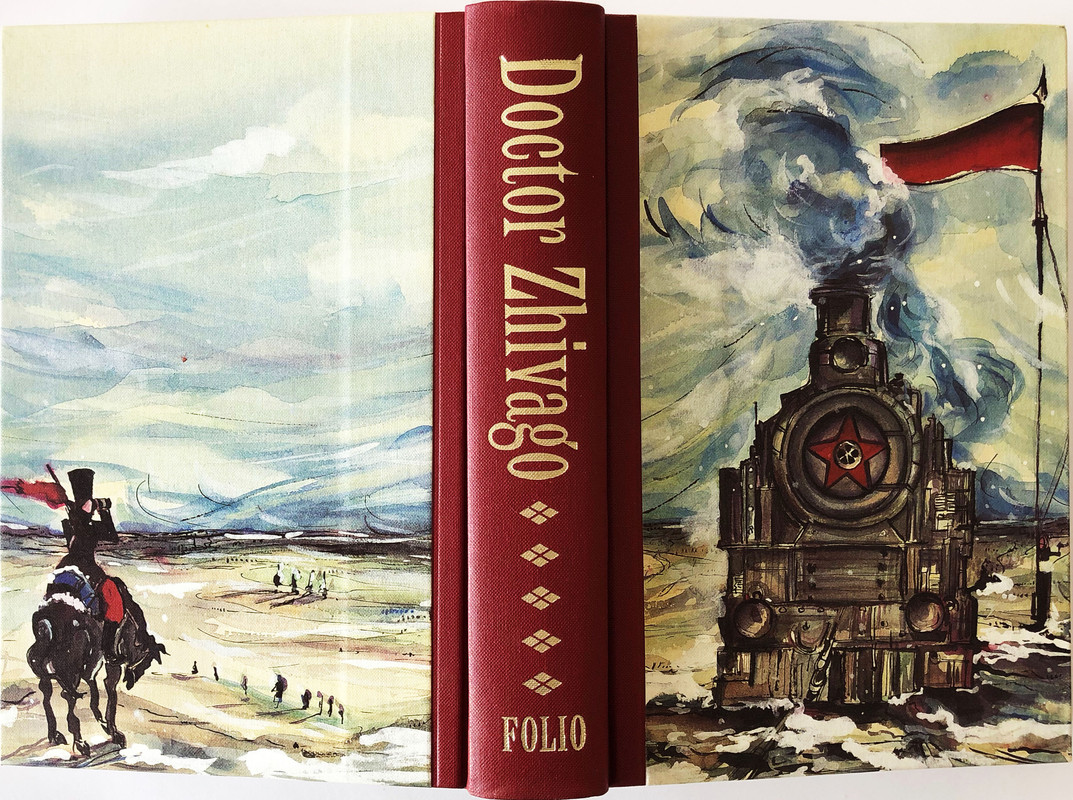
The book is quarter bound in maroon cloth with paper boards printed with a colour picture by Bour front and back. The endpapers are speckled fawn.
Prospectus clipping
An index of the other illustrated reviews in the "Folio Archives" series can be viewed here.
The Folio Society edition of Boris Pasternak’s classic novel is beautiful. There are only nine full colour illustrations by Véronique Bour, but all except the frontispiece are double page spreads, and the dramatic images are all located at the centre of a gathering, so that none of the picture is lost in the gutter.
Pasternak won the Nobel Prize for Literature with this love and adventure story set during the 1917 Russian revolution. The protagonists, Zhivago and Lara, cross Russia by train to be together, and are eventually united in the Siberian wilderness after experiencing many dramatic episodes along the way.
The 460 page book is housed in a plain maroon slipcase 24.7x16.8cm. It has been translated by Max Hayward and Manya Harari, and there is a ten page introduction by Yevgeny Yevtushenko.
The book is quarter bound in maroon cloth with paper boards printed with a colour picture by Bour front and back. The endpapers are speckled fawn.
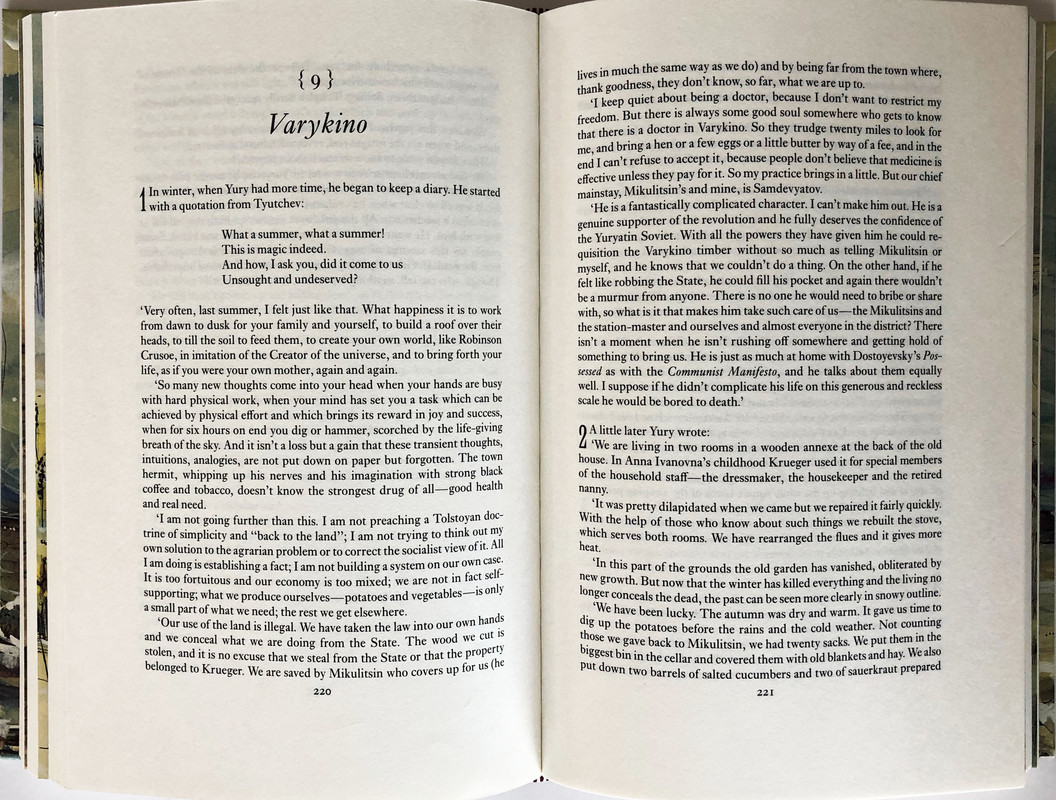
Prospectus clipping
An index of the other illustrated reviews in the "Folio Archives" series can be viewed here.
2folio_books
Superb illustrations, As ever, deeply impressed by your photography, Did you notice the advert claims "cloth sides"?
3boldface
Time for a re-read, I think. Staring at the spine on the shelf for many years I'd forgotten just how colourful an edition this is. The epic illustrations match the sweep of the story perfectly.
Incidentally, this was also issued in a box-set of four volumes, with War & Peace (2 vols. with the Topolski illustrations) and Crime and Punishment illustrated by Hilary Brockway.
Incidentally, this was also issued in a box-set of four volumes, with War & Peace (2 vols. with the Topolski illustrations) and Crime and Punishment illustrated by Hilary Brockway.
4NLNils
I own the two volume War&Peace and Crime&Punishment (new spine) of these series. I still need to add this easily available one and the much harder to find matching Brothers Karamazov. It looks pretty on the photos. And the story isn’t half bad either.
5wcarter
>2 folio_books:
Well picked up! Colophon states paper sides, and that is certainly what it appears to have.
I have often noticed that the number of pages is exaggerated in the prospectus compared to the final product, as is the case here.
Well picked up! Colophon states paper sides, and that is certainly what it appears to have.
I have often noticed that the number of pages is exaggerated in the prospectus compared to the final product, as is the case here.
6folio_books
>5 wcarter:
Mine has paper sides, too. The number of pages was always dubious because in most cases they were describing books that were months away from being printed. Not at all like these days.
Mine has paper sides, too. The number of pages was always dubious because in most cases they were describing books that were months away from being printed. Not at all like these days.

