
Folio Archives 112: The Travels of Marco Polo by Ronald Latham 1968
Talk Folio Society Devotees
Join LibraryThing to post.
This topic is currently marked as "dormant"—the last message is more than 90 days old. You can revive it by posting a reply.
1wcarter
The Travels of Marco Polo translated by Ronald Latham 1968
The text of this book dates from ten years earlier when it was translated by Ronald Latham in 1958. It details Marco Polo’s two decades long journey, starting at the age of 17, when in company with his father and uncle, he travelled from Italy to Cathay (modern China) and back, as dictated by him in 1298 to a fellow prisoner in Genoa.
The tale describes the royal court, journeys around China, expeditions to southeast Asia, and the remarkable return of the Polo brothers by sea while accompanying a Chinese bride to the Arghum, Khan of the Levant (who had died by the time they arrive). Initially considered to be legend, the journey is now accepted by most experts as being substantially true, although “poetic licence” may have been used in the description of some of Marco’s adventures.
The tale is chronologically arranged, and quite easy reading for most part, although it does become bogged down with detail in some chapters. That such a journey could be completed over 700 years ago is in itself remarkable, but there were probably other adventurers who undertook the trip, but did not live to tell the tale, or their stories have been lost.
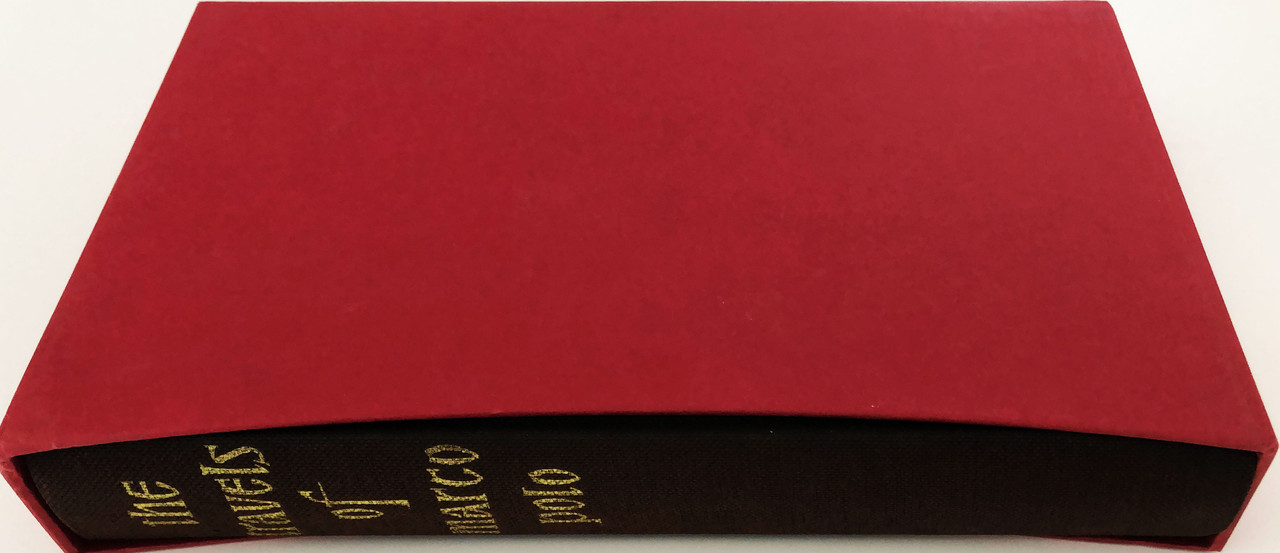
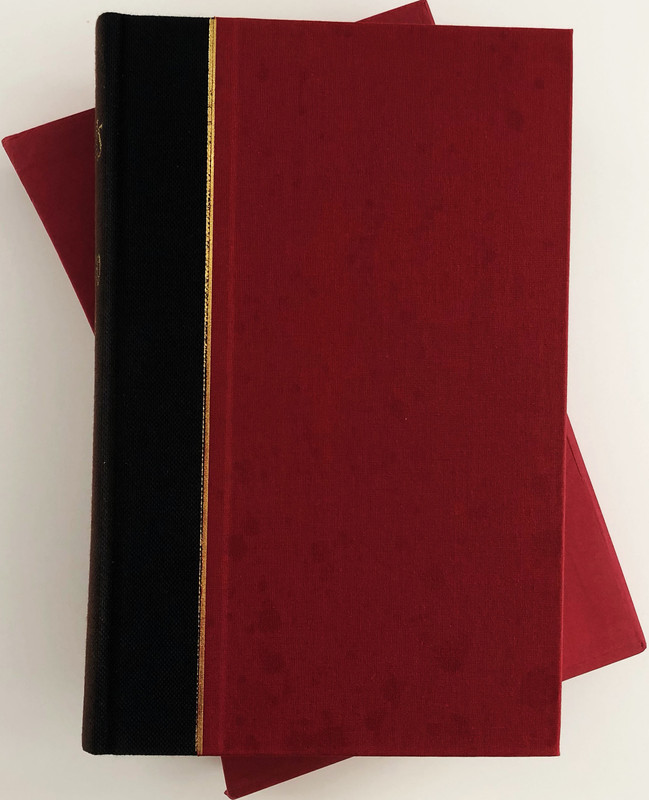
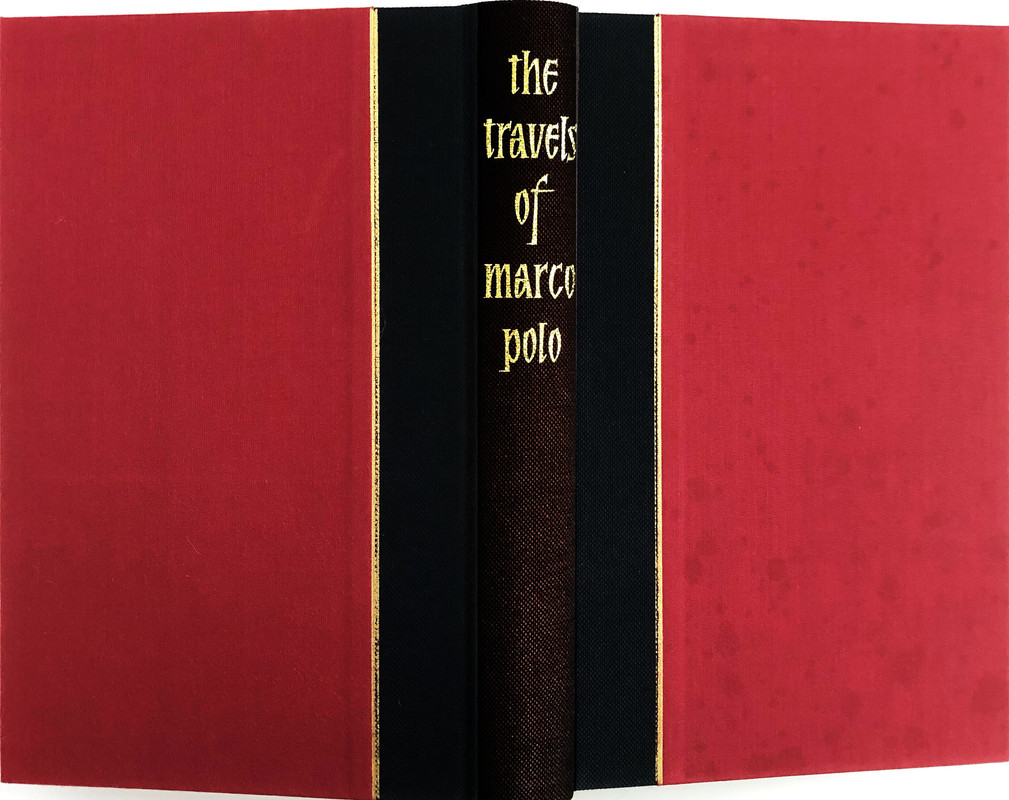
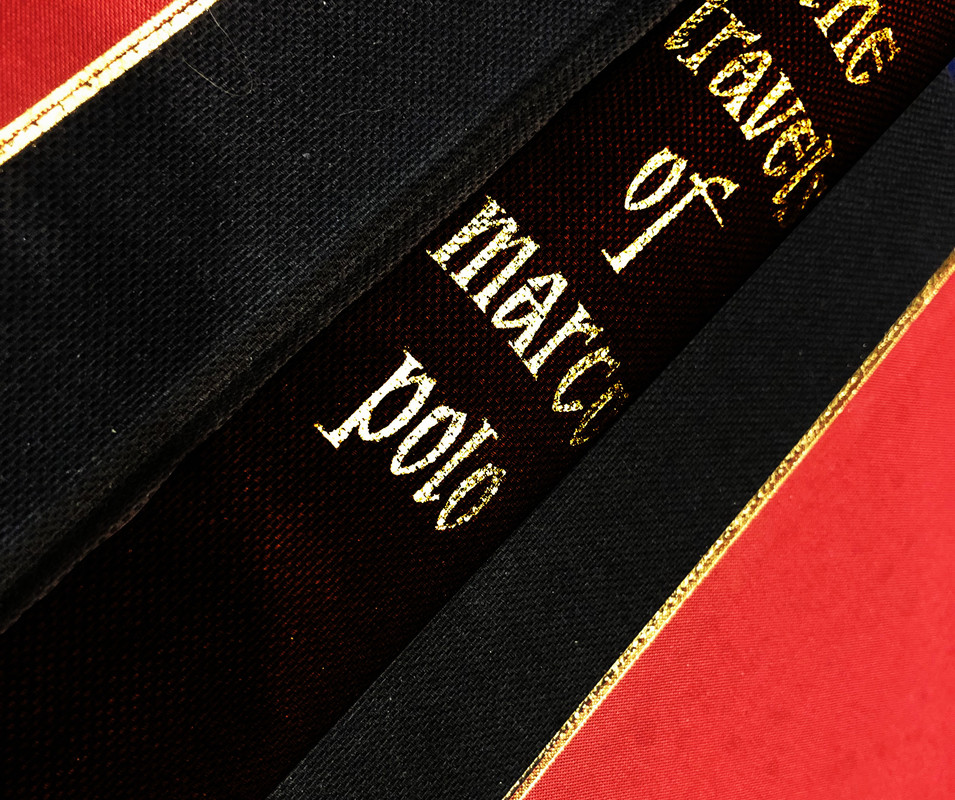
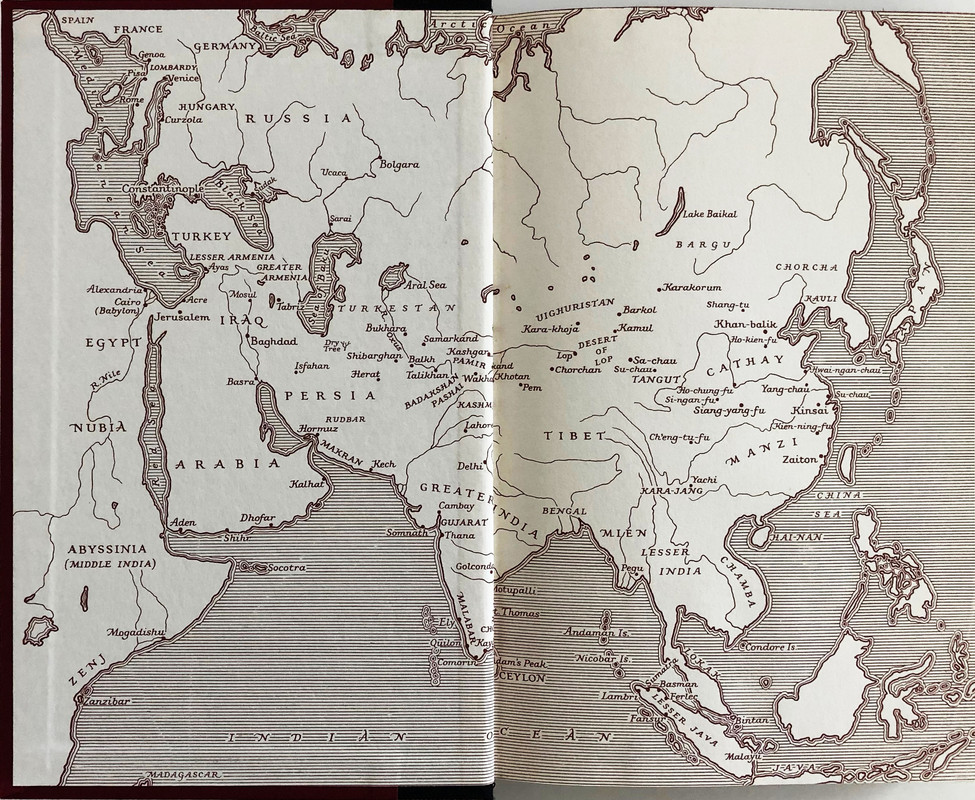
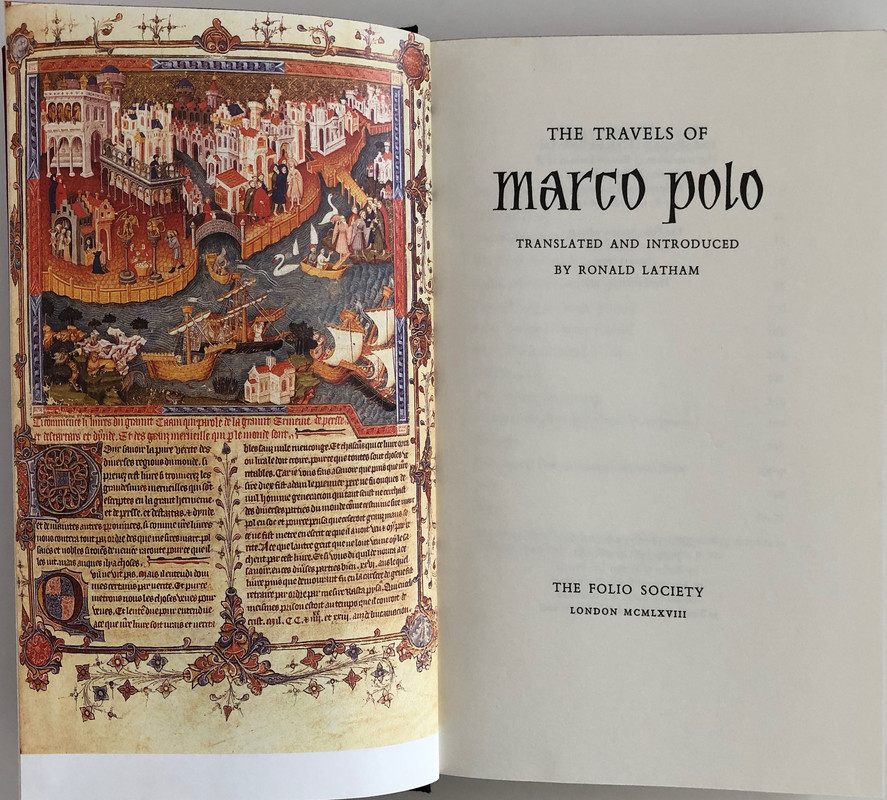
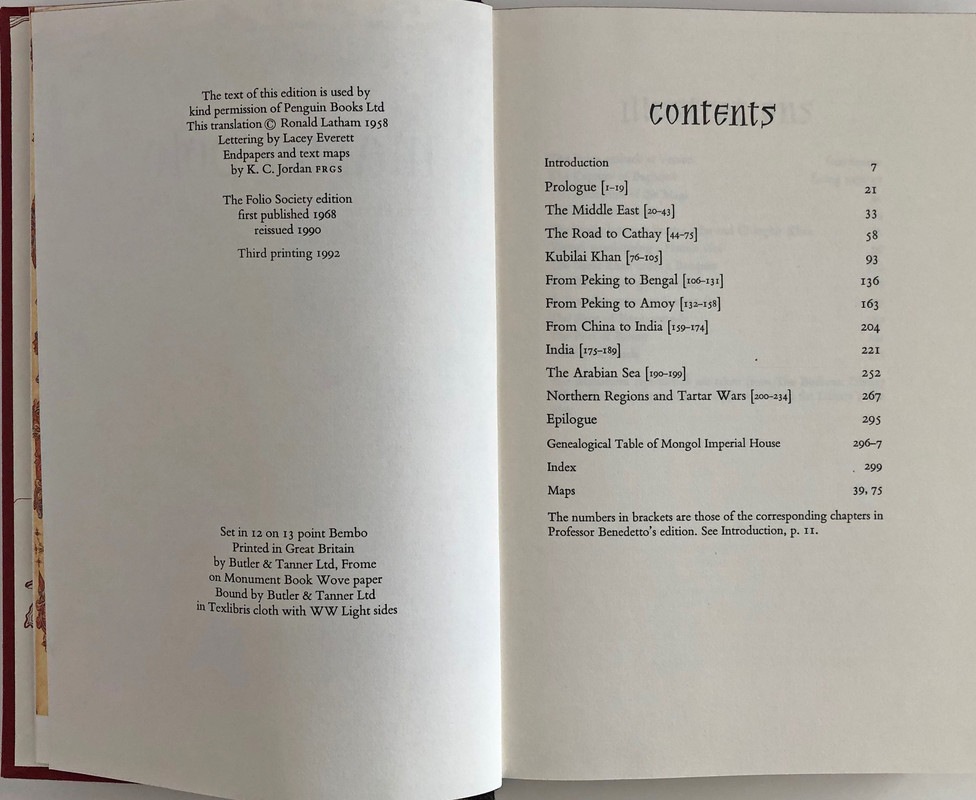
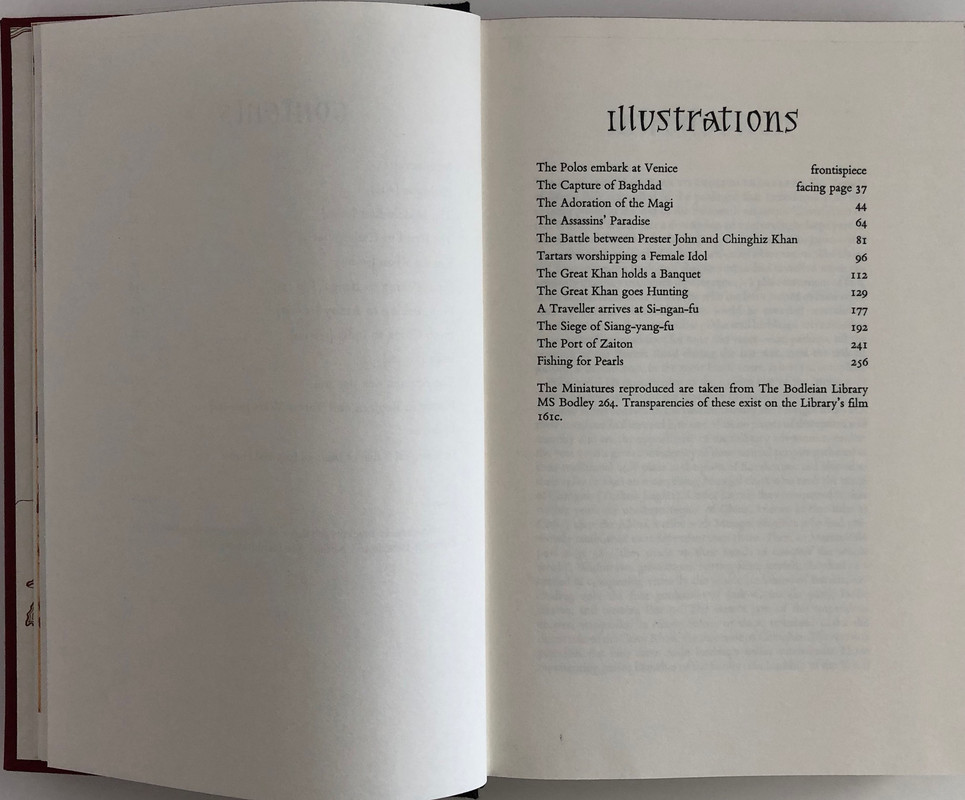
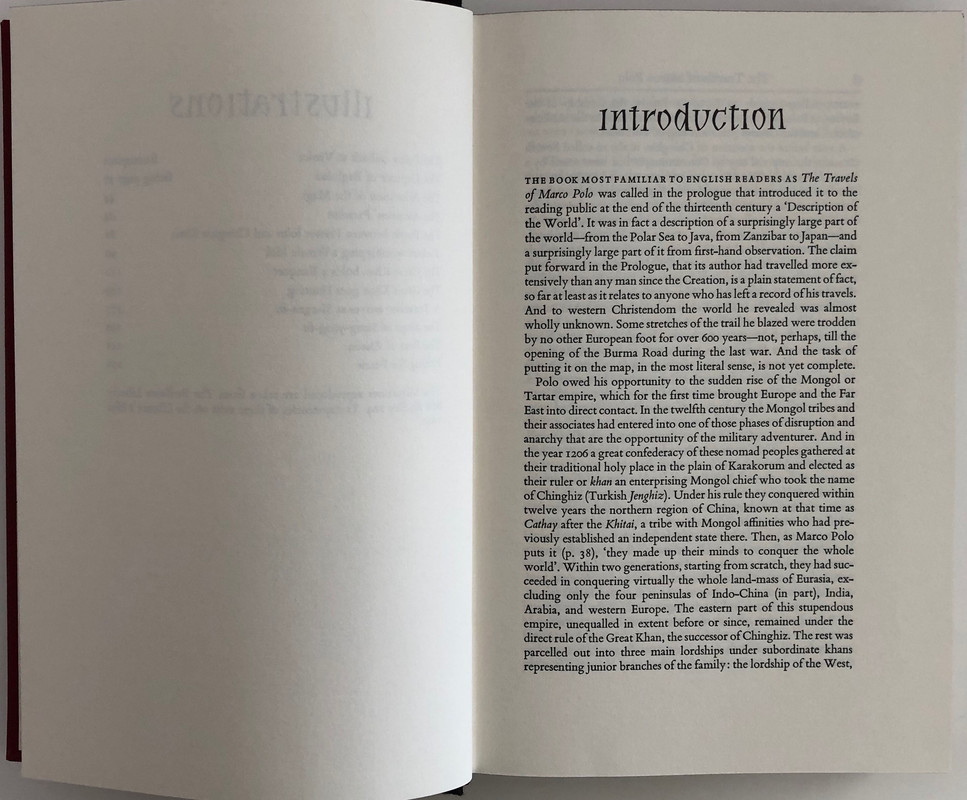
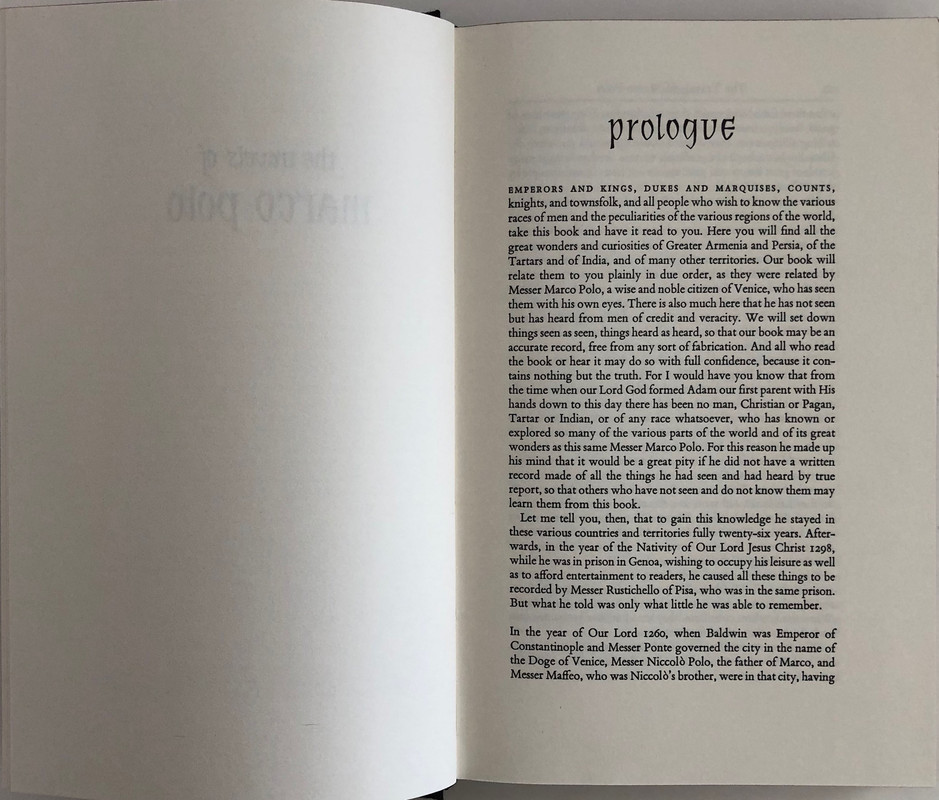
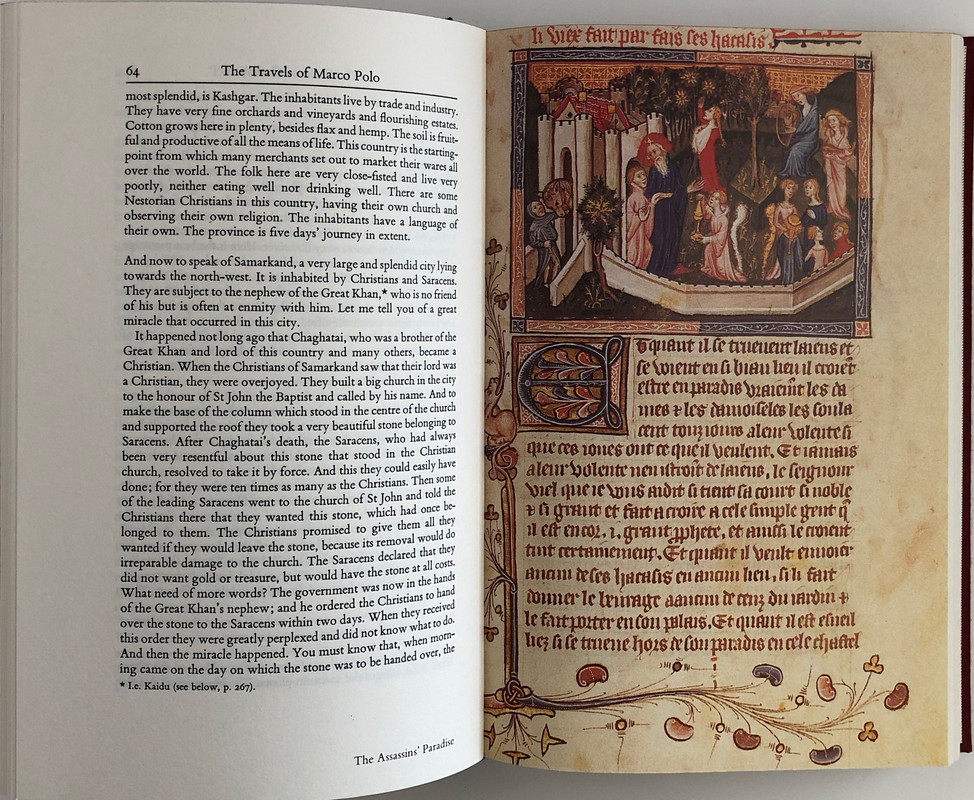
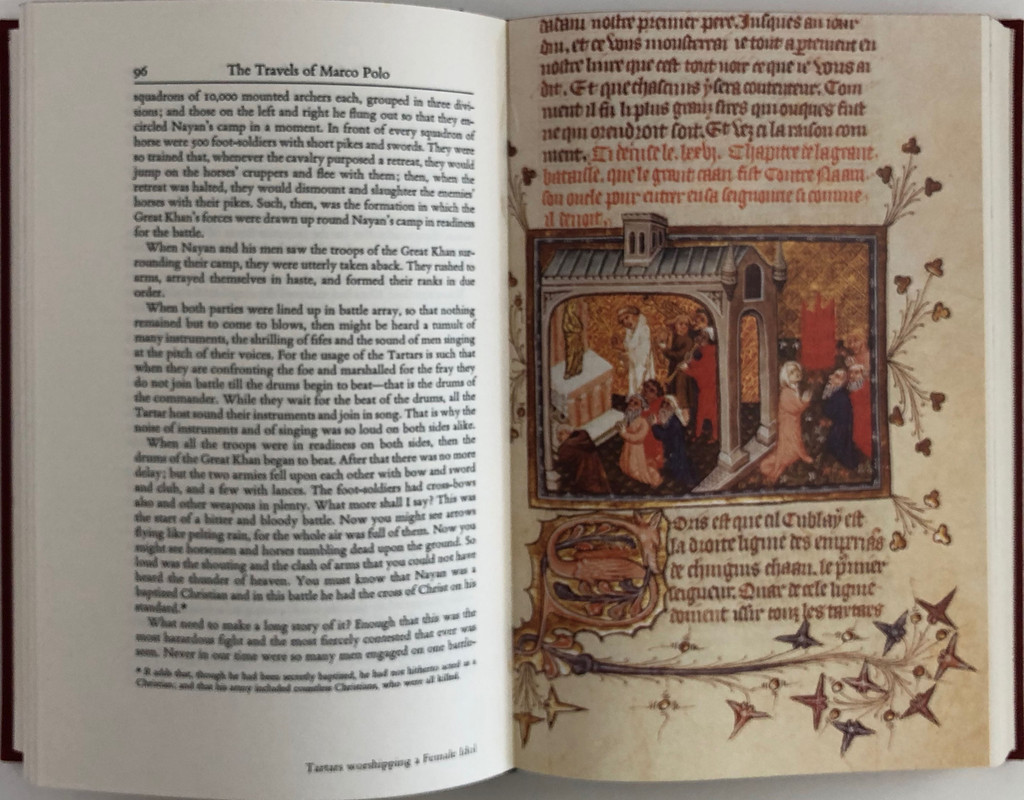
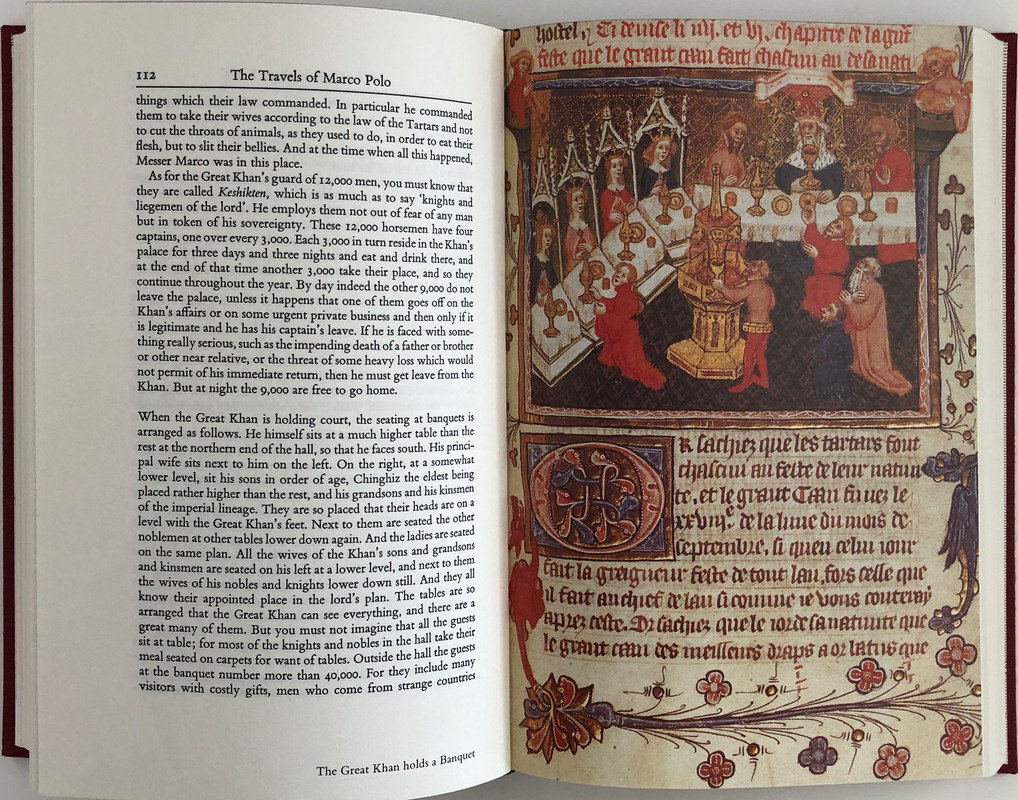
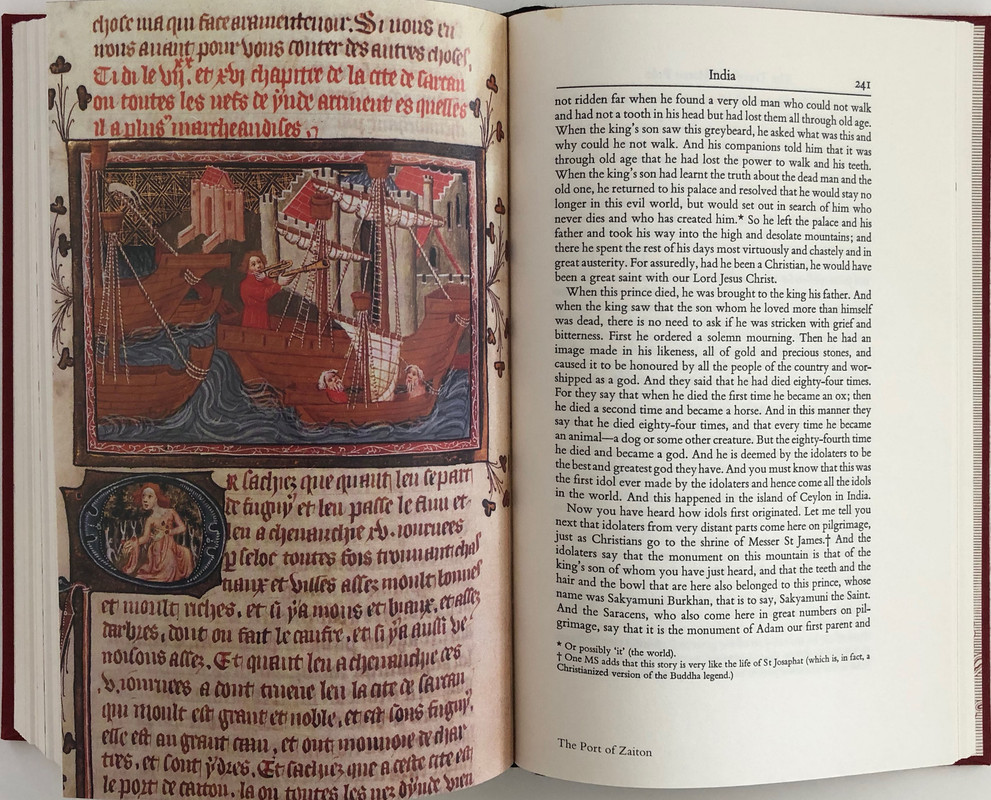
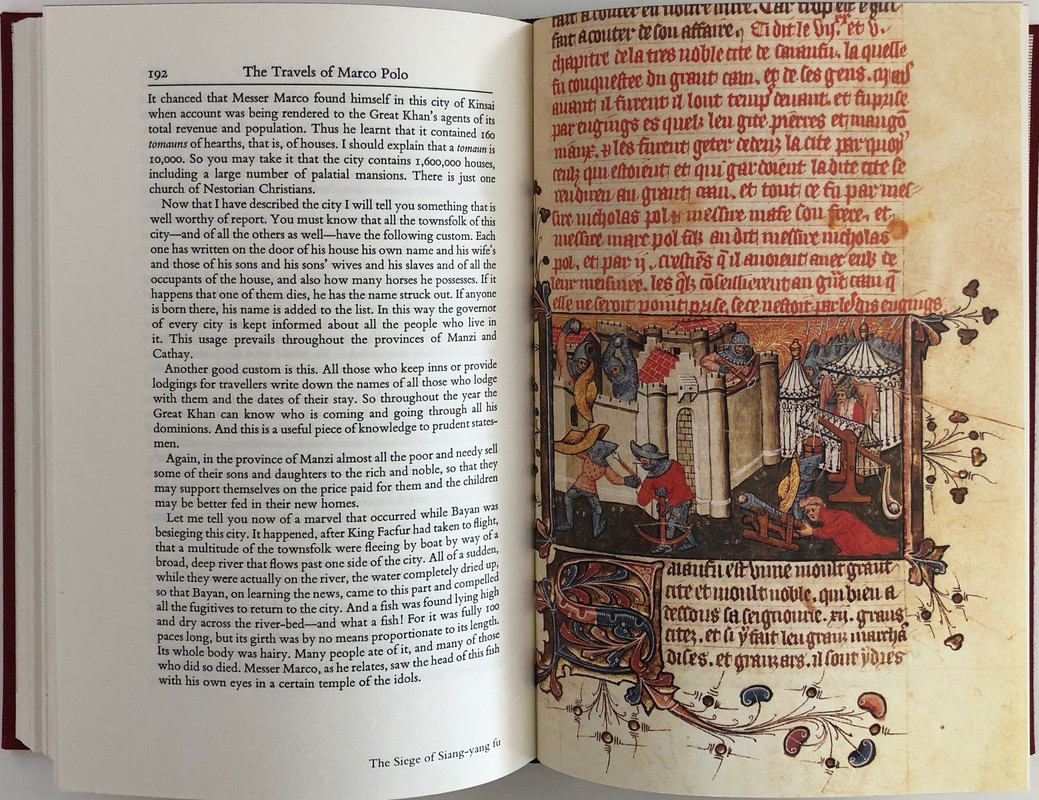
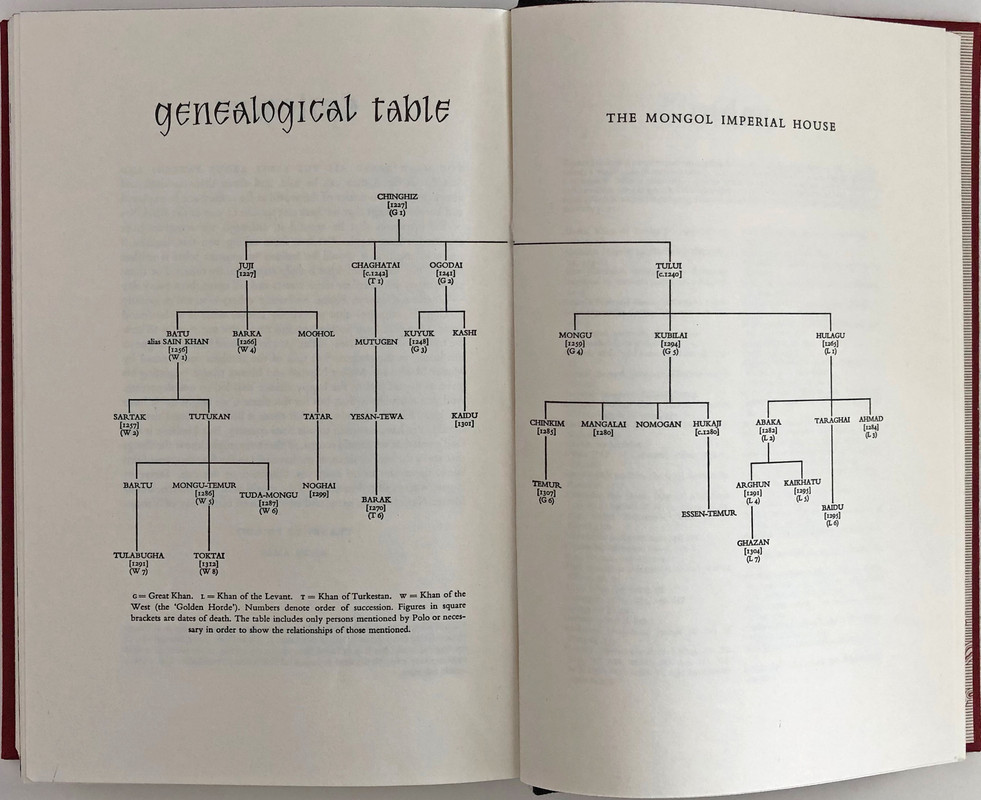
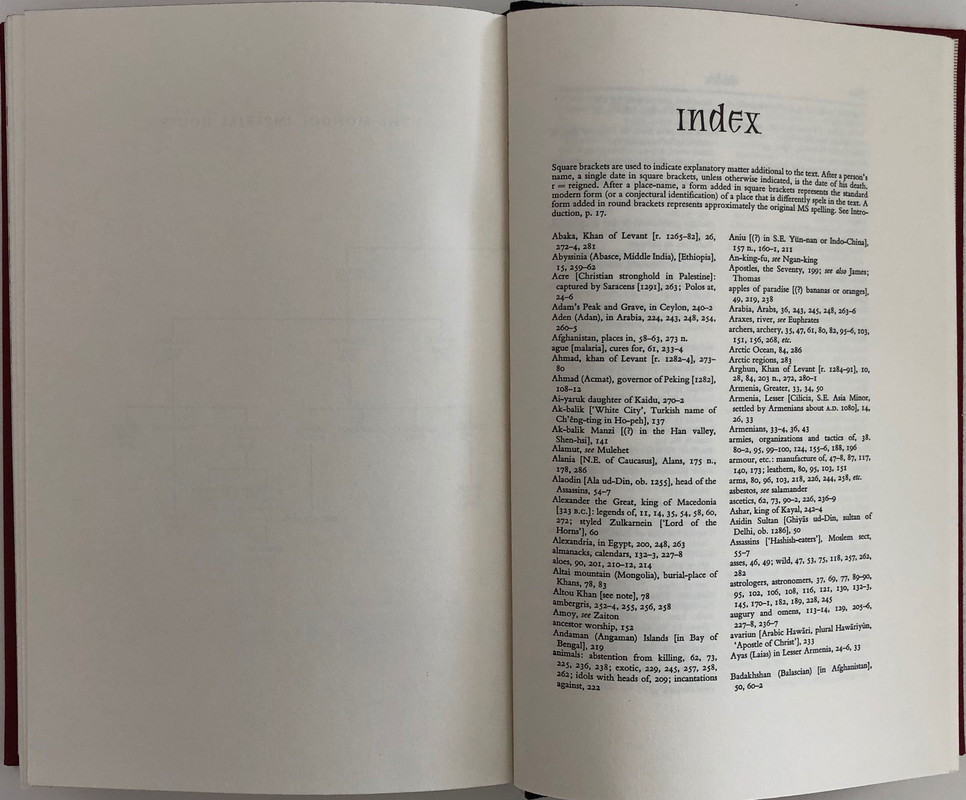
The book has 310 pages, map endpapers and an introduction by the translator Ronald Latham. There are 12 colour plates tipped into the book that are reproductions of a medieval manuscript of Marco Polo’s journey. The 28x16.7cm. slipcase is plain red, and the book is bound in two types of cloth – quarter bound in black cloth with a gilt edge and spine title, and red lighter cloth plain covers.
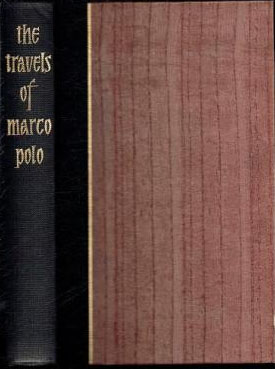
My copy is a reissue from 1990. As mentioned by >2 cronshaw: and >3 folio_books: below, the original 1968 edition had a wooden veneer cover.

Endpapers
Original issue with wood veneer boards. Image from internet.
An index of the other illustrated reviews in the "Folio Archives" series can be viewed here.
The text of this book dates from ten years earlier when it was translated by Ronald Latham in 1958. It details Marco Polo’s two decades long journey, starting at the age of 17, when in company with his father and uncle, he travelled from Italy to Cathay (modern China) and back, as dictated by him in 1298 to a fellow prisoner in Genoa.
The tale describes the royal court, journeys around China, expeditions to southeast Asia, and the remarkable return of the Polo brothers by sea while accompanying a Chinese bride to the Arghum, Khan of the Levant (who had died by the time they arrive). Initially considered to be legend, the journey is now accepted by most experts as being substantially true, although “poetic licence” may have been used in the description of some of Marco’s adventures.
The tale is chronologically arranged, and quite easy reading for most part, although it does become bogged down with detail in some chapters. That such a journey could be completed over 700 years ago is in itself remarkable, but there were probably other adventurers who undertook the trip, but did not live to tell the tale, or their stories have been lost.
The book has 310 pages, map endpapers and an introduction by the translator Ronald Latham. There are 12 colour plates tipped into the book that are reproductions of a medieval manuscript of Marco Polo’s journey. The 28x16.7cm. slipcase is plain red, and the book is bound in two types of cloth – quarter bound in black cloth with a gilt edge and spine title, and red lighter cloth plain covers.
My copy is a reissue from 1990. As mentioned by >2 cronshaw: and >3 folio_books: below, the original 1968 edition had a wooden veneer cover.
Endpapers
Original issue with wood veneer boards. Image from internet.
An index of the other illustrated reviews in the "Folio Archives" series can be viewed here.
2cronshaw
Sterling service again, Warwick. The first printings had wood-grain effect boards (I don't know how this design was produced but the grain pattern appears to vary from book to book). The last printing came in a colourful pictorial slipcase.
3folio_books
>1 wcarter:
Very topical, Warwick. Well done!
>2 cronshaw: The first printings had wood-grain effect boards (I don't know how this design was produced but the grain pattern appears to vary from book to book).
Described in Folio 60 as quarter black cloth with wood-veneer boards. They did the same thing with The Tudor Venturers (1970).
Very topical, Warwick. Well done!
>2 cronshaw: The first printings had wood-grain effect boards (I don't know how this design was produced but the grain pattern appears to vary from book to book).
Described in Folio 60 as quarter black cloth with wood-veneer boards. They did the same thing with The Tudor Venturers (1970).
4The_Toad_Revolt_of84
Thanks Warwick! For anyone that has this version, I wouldn't upgrade. That's a pretty nice book. I will say that the latest version is nicer and the paper probably thicker, but certainly not worth the price of admission if you have the version above.
If I get some time, I'll try and post a few reasonable photos.
If I get some time, I'll try and post a few reasonable photos.
5wcarter
>2 cronshaw:, >3 folio_books:
Thanks for that information.
I have added a picture of the wood veneer edition to the original post above.
Thanks for that information.
I have added a picture of the wood veneer edition to the original post above.
6Redshirt
>1 wcarter:: As always, thanks for the ongoing tour through past Folios. These are always among my favorite posts to read. The Travels is a possible future purchase for me and it is good to know that there is an excellent alternative in the used book marketplace.

