Folio Archives 116: La Dame aux Camelias by Alexandre Dumas the Younger 1975
Talk Folio Society Devotees
Join LibraryThing to post.
This topic is currently marked as "dormant"—the last message is more than 90 days old. You can revive it by posting a reply.
1wcarter
La Dame aux Camelias by Alexandre Dumas the Younger 1975
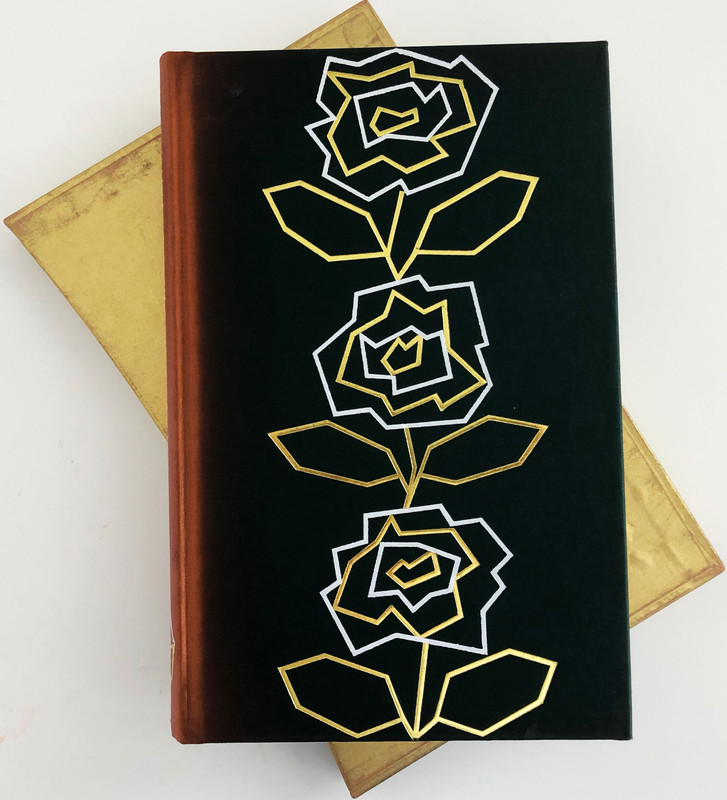
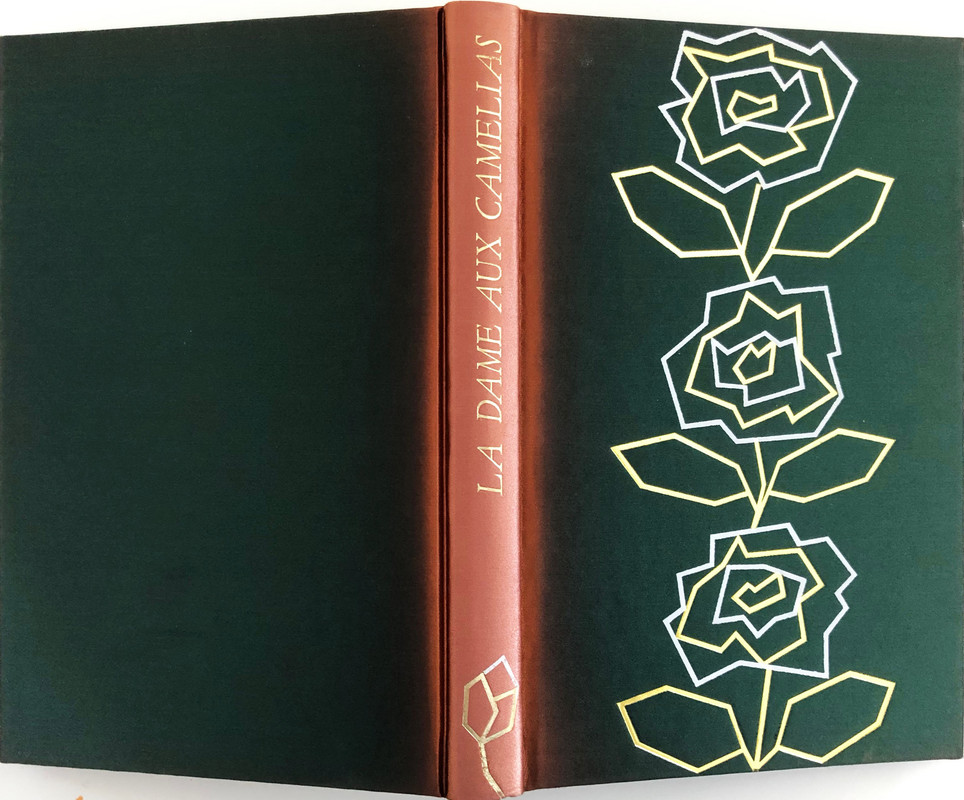
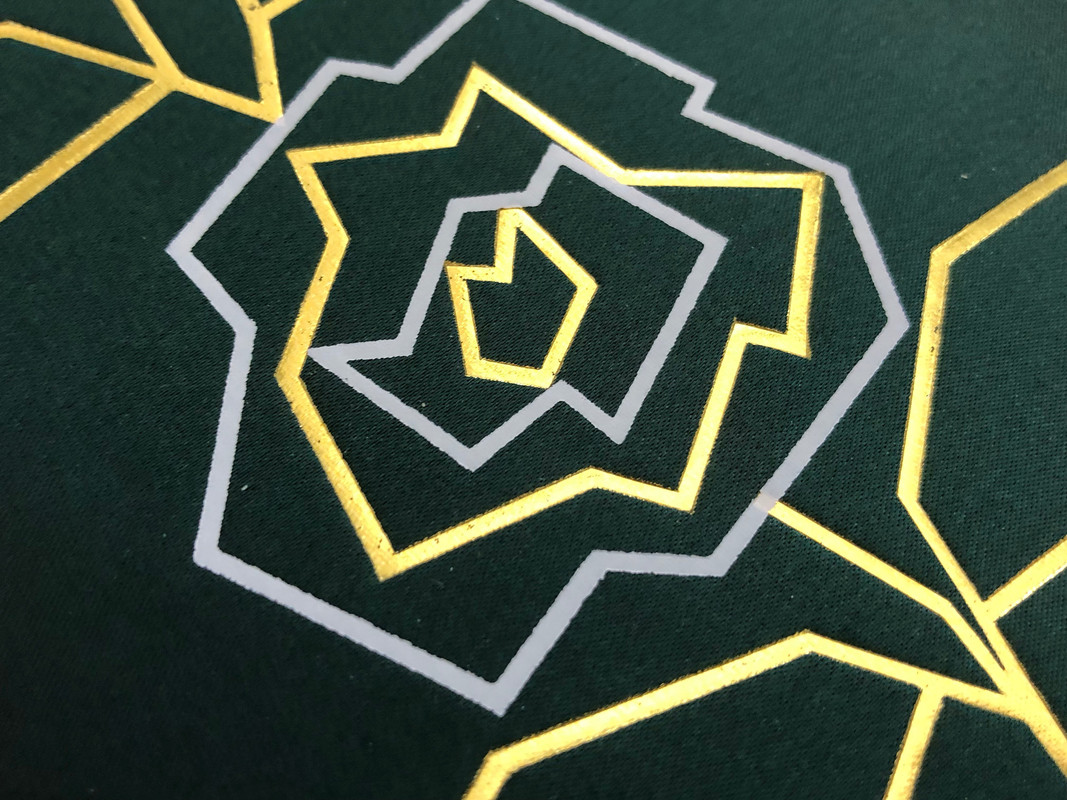
This is an exquisite little book that is sensuous to hold, as it is bound in dark green silk blocked with stylised camellias in gilt and silver. This is a very appropriate sensation, as the book is also sensual in its content as it is a novel based on the life of the famous Parisian courtesan Marie Duplessis who from the age of 16 until her premature death from consumption (tuberculosis) at the age of 24 in 1848, enthralled the city with her beauty and her romances.
She had the habit of always carrying camellias, white ones for 25 days a month, and red for 5 days - a signal that her intimate friends well understood - and for this she received her widely used nickname of La Dame aux Camelias.
The novel follows her life through the eyes of an adoring young man of the same age, as she slowly succumbs to her illness while maintaining a facade of gay life in high society with visits to the theatre and opera almost every evening, teasing older men while significantly lightening their pocketbooks and surreptitious liaisons with her lover every night.
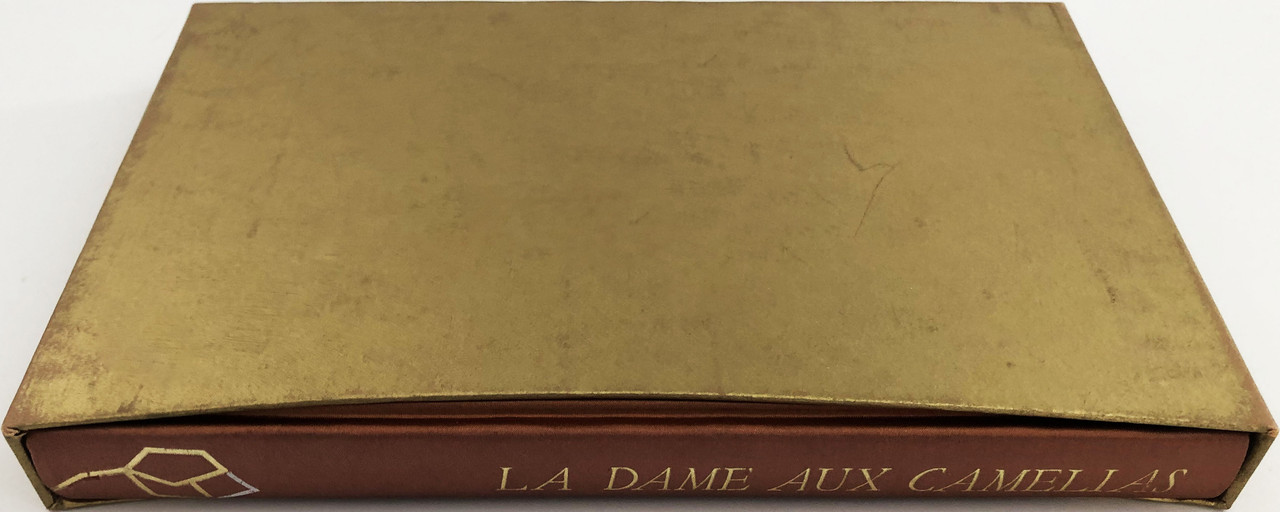
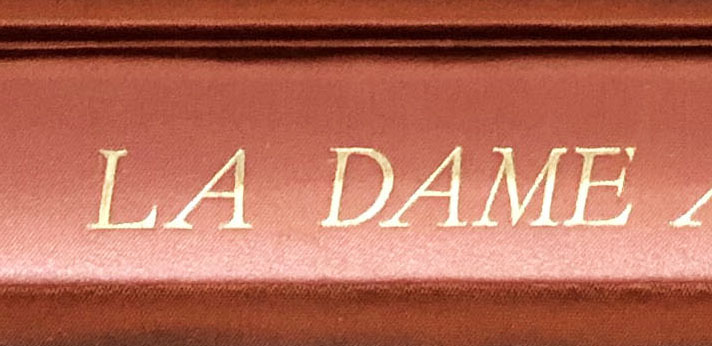
My copy suffers the same fate as many of the older silk bound books from the Folio Society in that the spine has faded from sun damage to a golden bronze colour, but in my eyes, this actually enhances the appearance of the 219 page book.
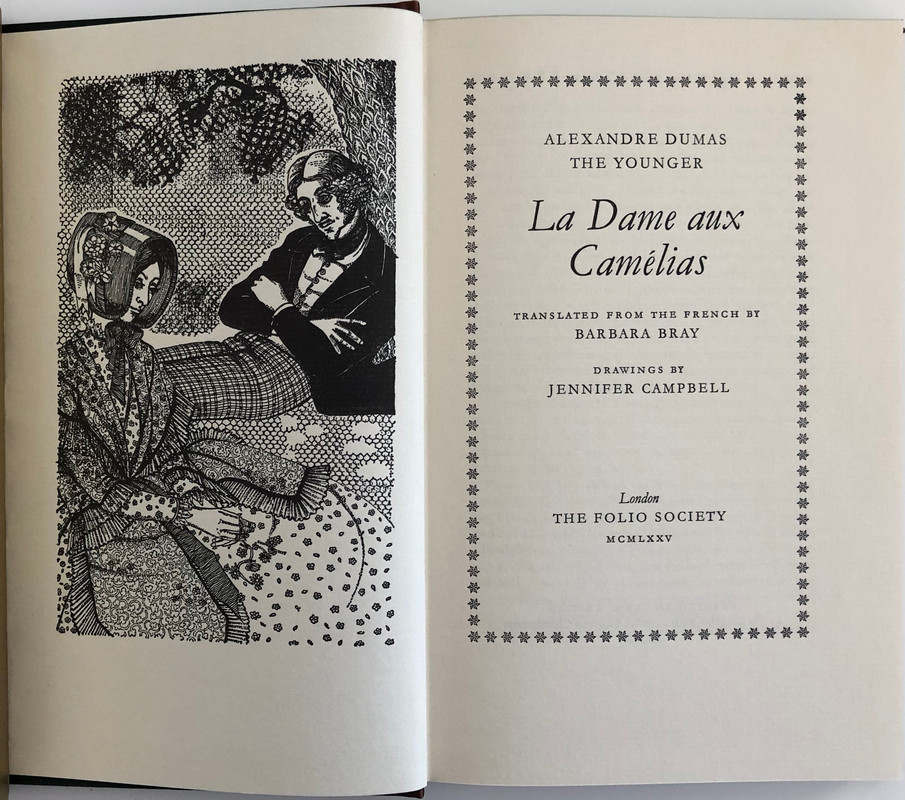
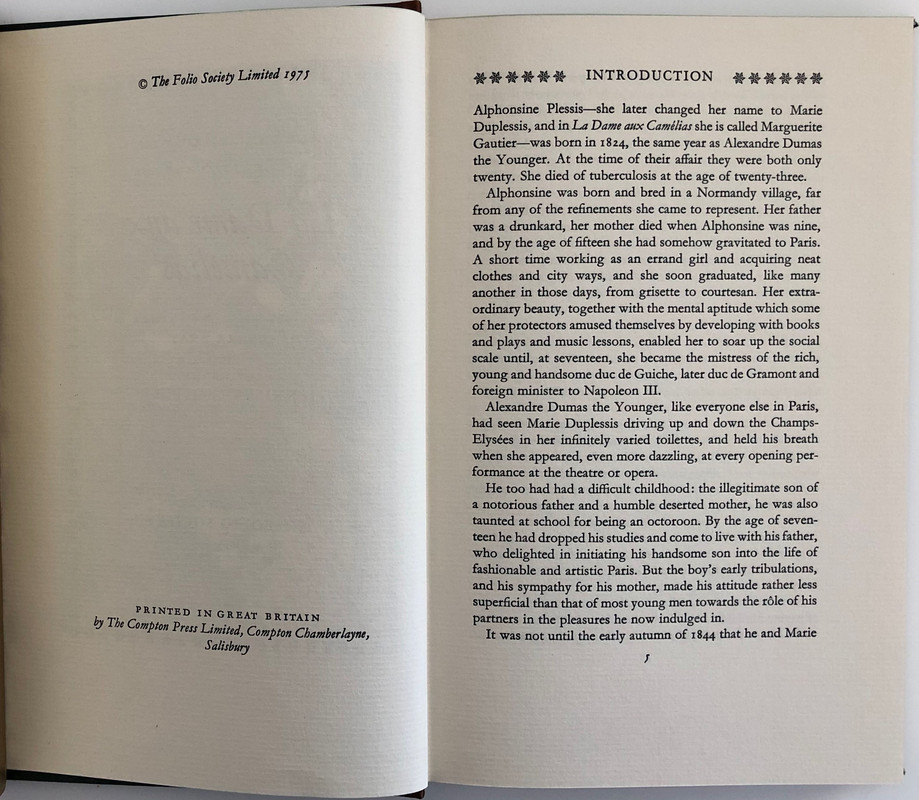
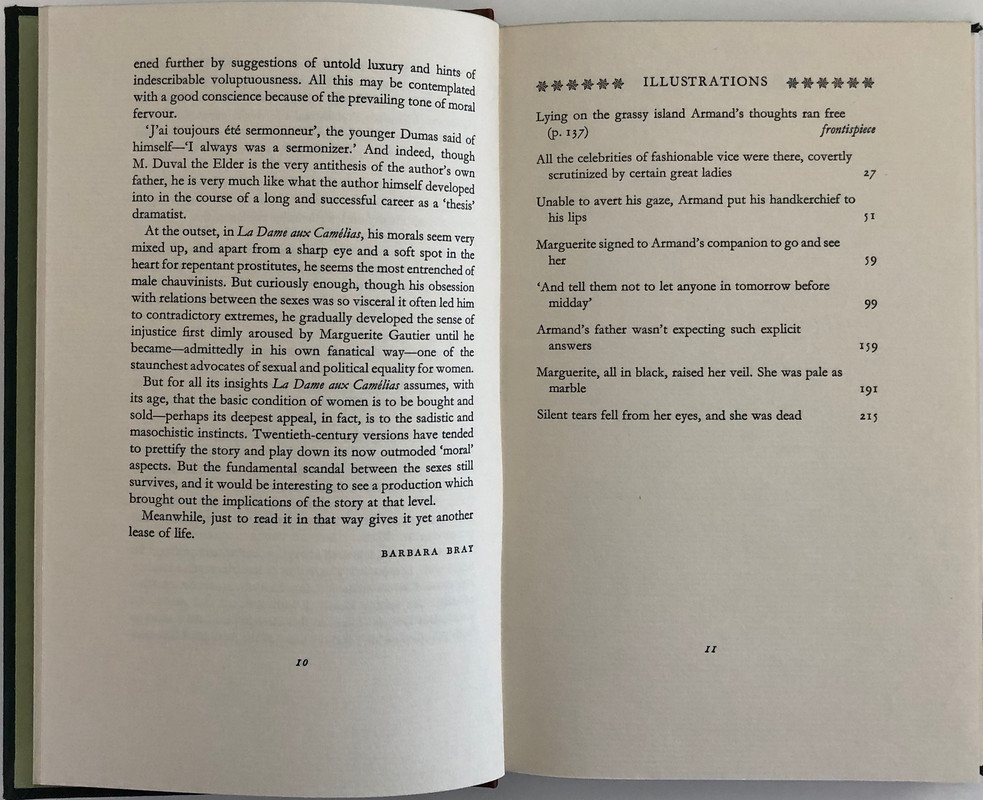
It contains eight delightful drawings by Jennifer Campbell, and there is a six page introduction by Barbra Bray. The endpapers are pale green and the 22.7x14.7 cm. slipcase is plain gold. Even the Dalmore laid paper on which it is printed, has a sensual feel to it.
One of the early gems from the Folio Society.

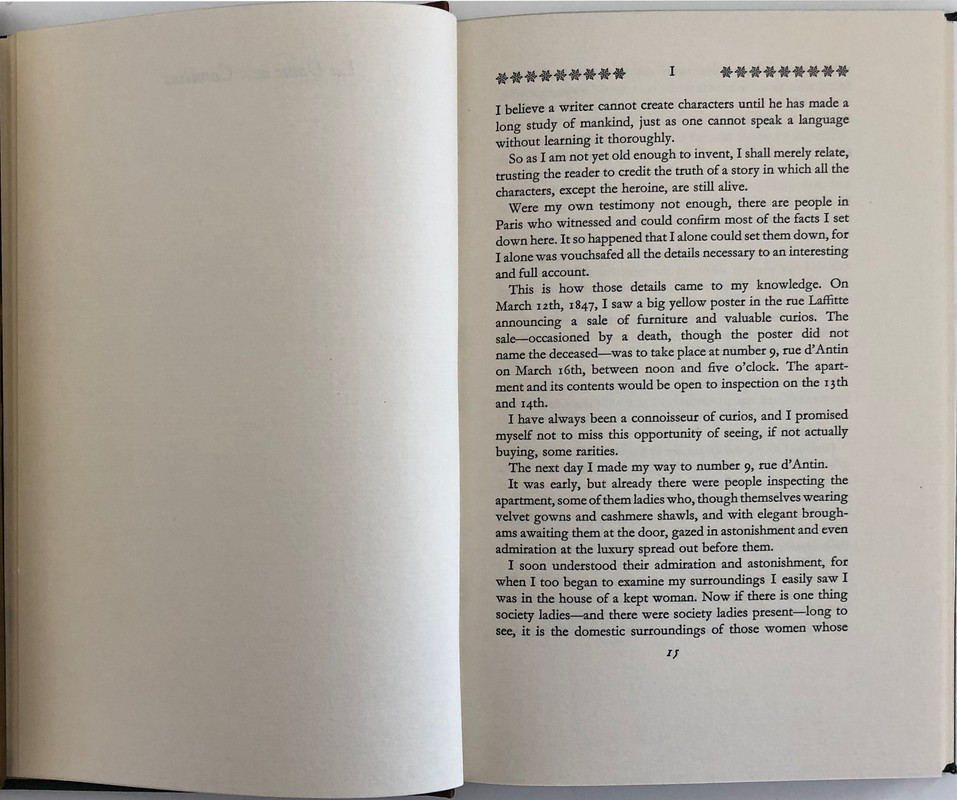
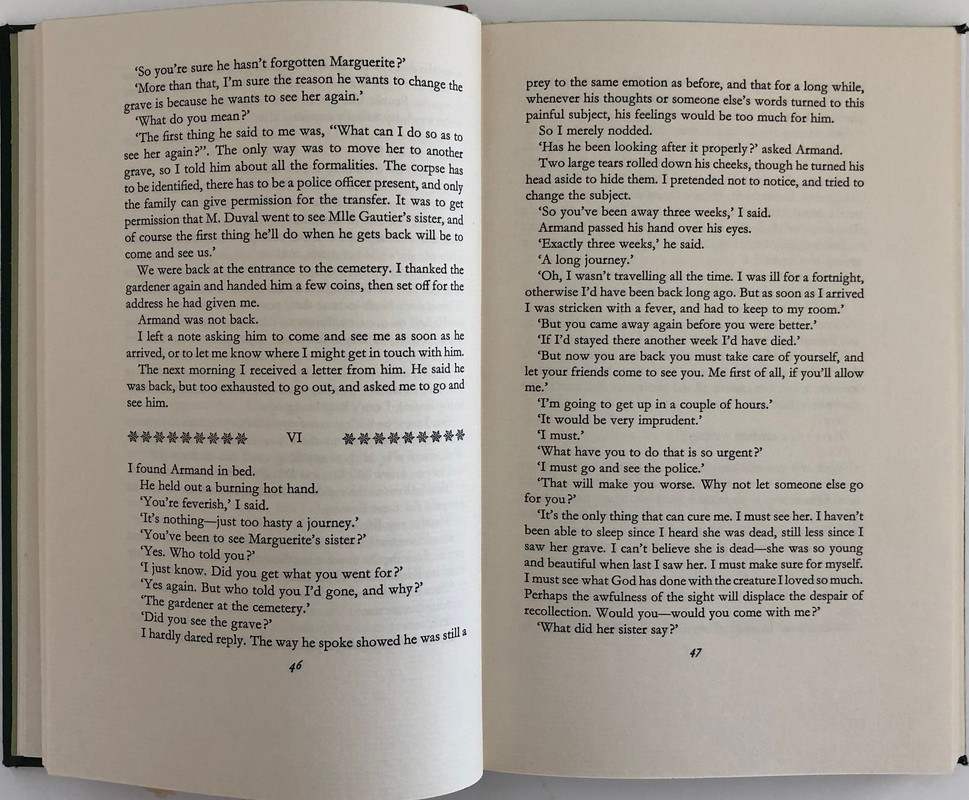
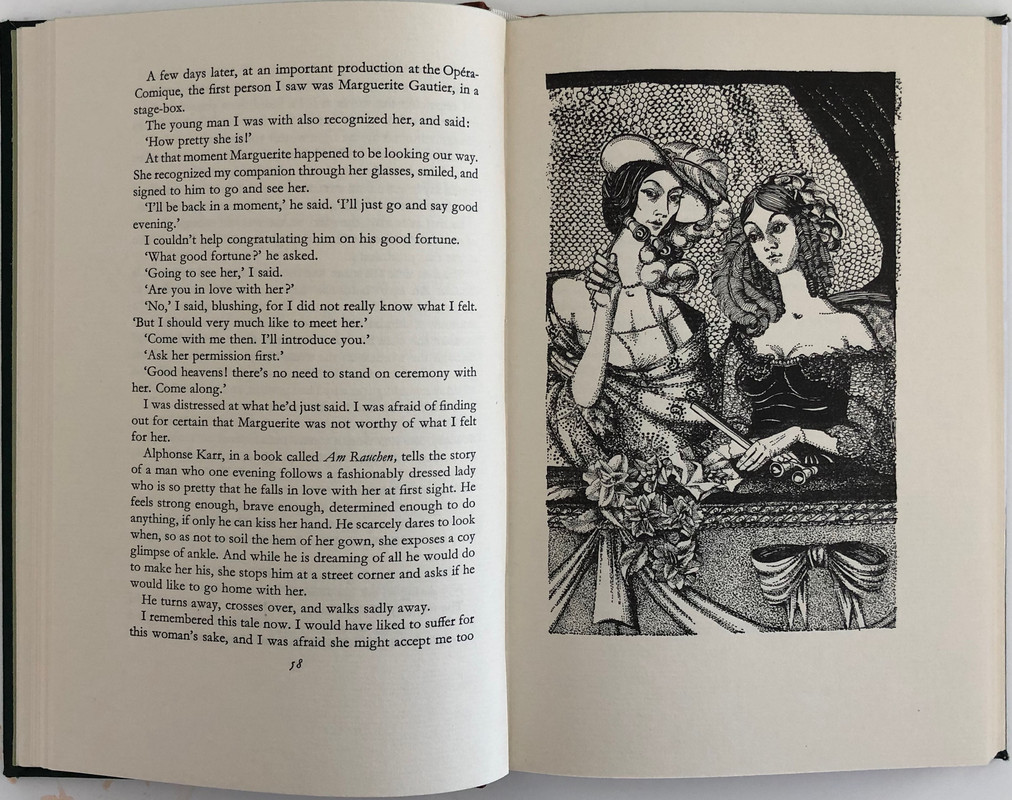
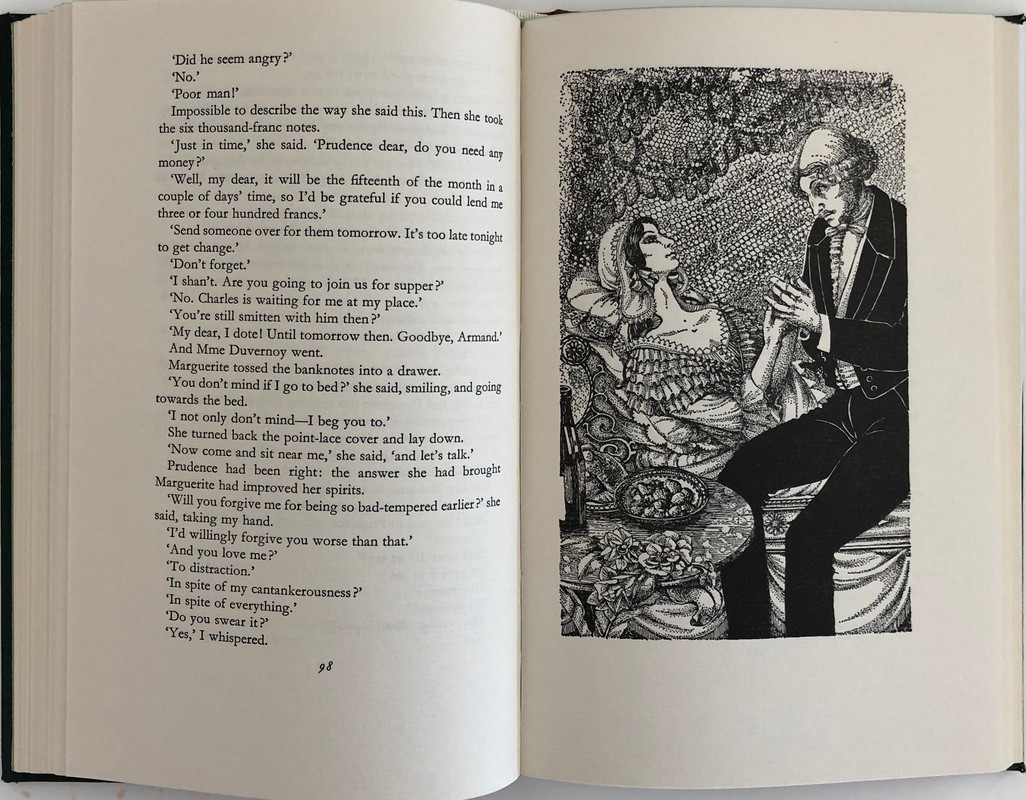
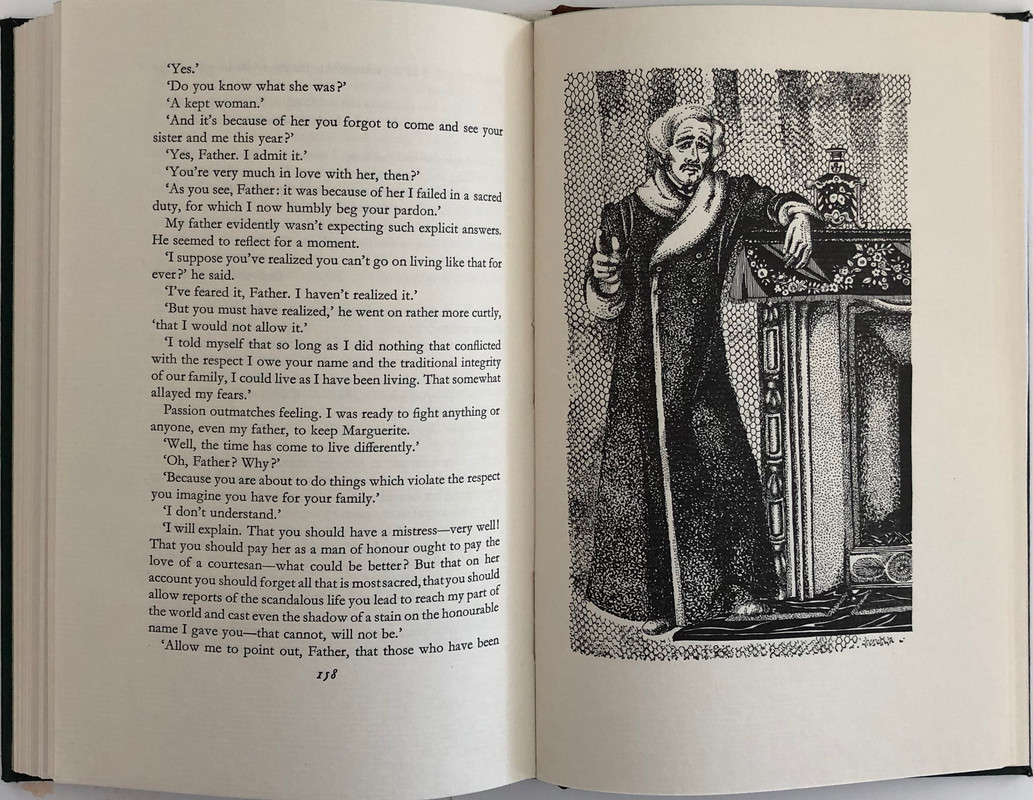
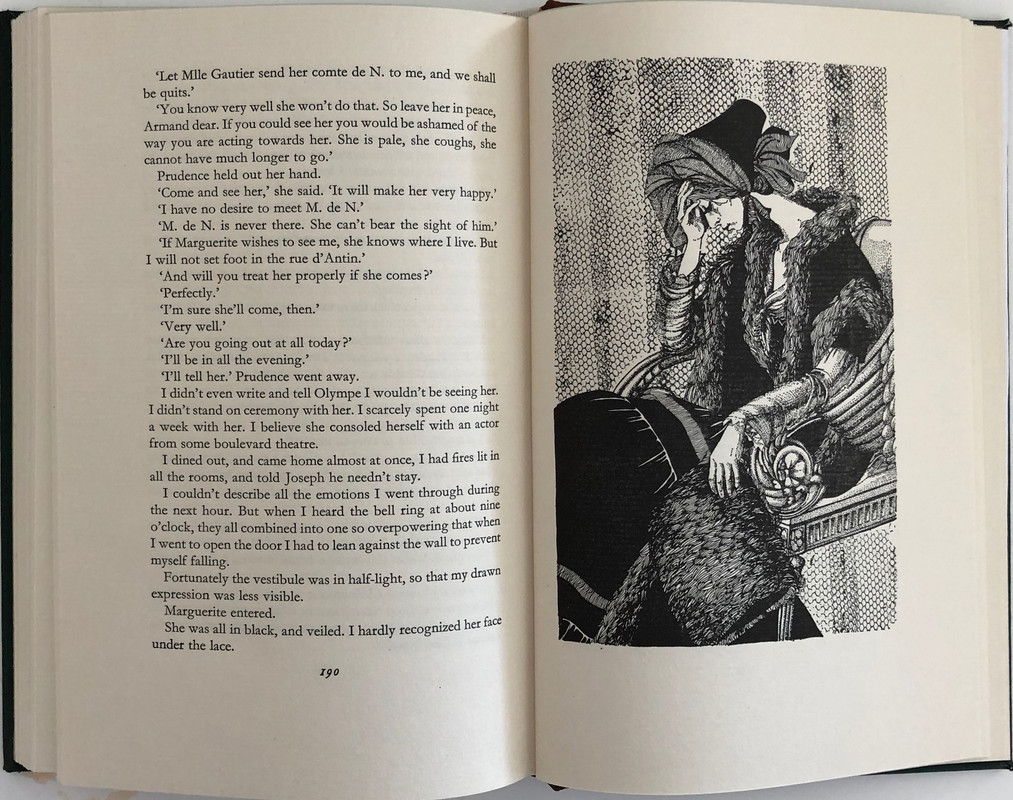
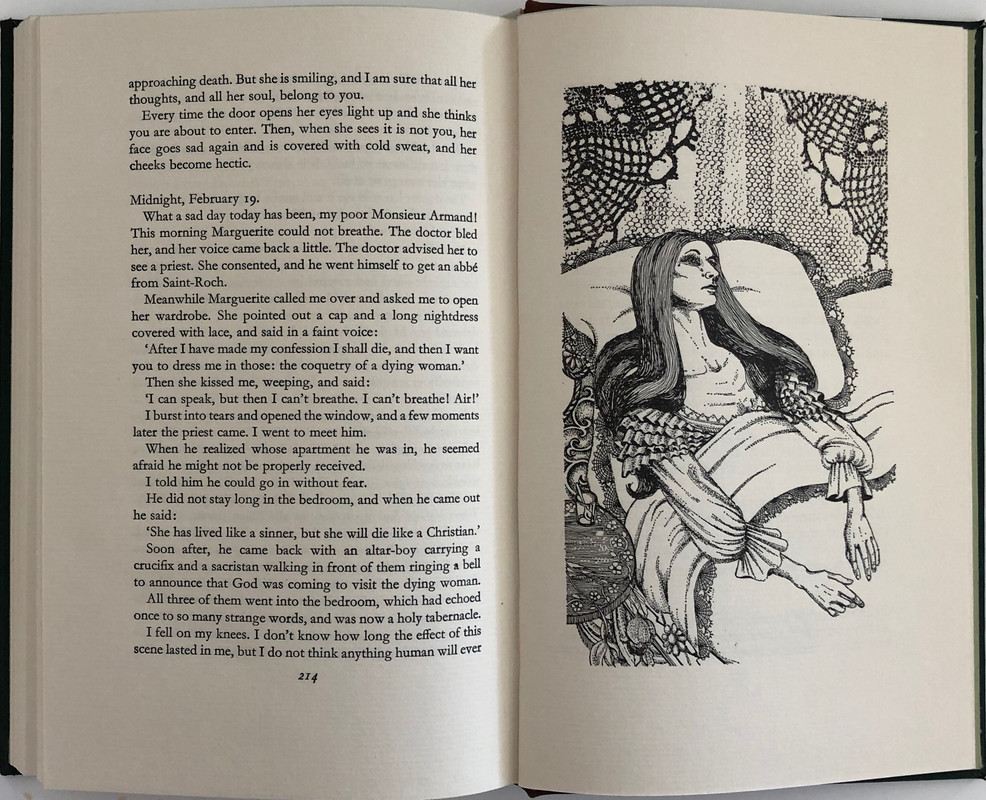

An index of the other illustrated reviews in the "Folio Archives" series can be viewed here.
This is an exquisite little book that is sensuous to hold, as it is bound in dark green silk blocked with stylised camellias in gilt and silver. This is a very appropriate sensation, as the book is also sensual in its content as it is a novel based on the life of the famous Parisian courtesan Marie Duplessis who from the age of 16 until her premature death from consumption (tuberculosis) at the age of 24 in 1848, enthralled the city with her beauty and her romances.
She had the habit of always carrying camellias, white ones for 25 days a month, and red for 5 days - a signal that her intimate friends well understood - and for this she received her widely used nickname of La Dame aux Camelias.
The novel follows her life through the eyes of an adoring young man of the same age, as she slowly succumbs to her illness while maintaining a facade of gay life in high society with visits to the theatre and opera almost every evening, teasing older men while significantly lightening their pocketbooks and surreptitious liaisons with her lover every night.
My copy suffers the same fate as many of the older silk bound books from the Folio Society in that the spine has faded from sun damage to a golden bronze colour, but in my eyes, this actually enhances the appearance of the 219 page book.
It contains eight delightful drawings by Jennifer Campbell, and there is a six page introduction by Barbra Bray. The endpapers are pale green and the 22.7x14.7 cm. slipcase is plain gold. Even the Dalmore laid paper on which it is printed, has a sensual feel to it.
One of the early gems from the Folio Society.
An index of the other illustrated reviews in the "Folio Archives" series can be viewed here.
2affle
Thanks once again, Warwick, for your splendid archival work. I have a remarkably unfaded copy of this one, and it's one of only two books that I shelve spine inwards because of extreme sensitivity to sunlight.
Your photograph of the colophon identifies the printer, and I wonder if there are not some interesting byways among the early FS printers. This is the only book that the Compton Press printed for the FS, and this company must be among the smallest printers they ever used. Compton Chamberlayne, where the press was then located, is a seriously tiny village some twenty miles from where I live - 25 private houses says Wikipedia - and the business was still village located when it upscaled to the Old Brewery, Tisbury a year or two later. The Press mostly produced trade editions of books of local Wiltshire interest, but a very small number of books of fine press interest too. I have a copy of A shepherd's life in a leather- and marbled paper-bound, Zerkall mould-made paper printed edition of just 100 with Reynolds Stone wood engravings and a set of artist's proofs of the engravings. Reynolds Stone was the designer of the original FS logo back in 1947. If I get around to having acceptable photographs, I'll post to the Fine Press group about this, and another Compton piece of work.
Your photograph of the colophon identifies the printer, and I wonder if there are not some interesting byways among the early FS printers. This is the only book that the Compton Press printed for the FS, and this company must be among the smallest printers they ever used. Compton Chamberlayne, where the press was then located, is a seriously tiny village some twenty miles from where I live - 25 private houses says Wikipedia - and the business was still village located when it upscaled to the Old Brewery, Tisbury a year or two later. The Press mostly produced trade editions of books of local Wiltshire interest, but a very small number of books of fine press interest too. I have a copy of A shepherd's life in a leather- and marbled paper-bound, Zerkall mould-made paper printed edition of just 100 with Reynolds Stone wood engravings and a set of artist's proofs of the engravings. Reynolds Stone was the designer of the original FS logo back in 1947. If I get around to having acceptable photographs, I'll post to the Fine Press group about this, and another Compton piece of work.
3elladan0891
>2 affle:
What's the other book you shelve spine in?
A couple of years ago I bought a perfect copy of the White Nile/Blue Nile set, and I wish I knew it was one of those sensitive books. After about a year of sitting on my shelves, the spines faded...
What's the other book you shelve spine in?
A couple of years ago I bought a perfect copy of the White Nile/Blue Nile set, and I wish I knew it was one of those sensitive books. After about a year of sitting on my shelves, the spines faded...
4affle
>3 elladan0891:
Sonnets from the Portuguese - it's one of the very few FS books with the slipcase titled on the spine, and I'd really hate that brocade to fade. Sympathies over the Nile set; mine were already a bit faded when I got them - a lot faded now. Look out for the green Brontë set, it very easily becomes the brown Brontë set. The Folio miniature set of seven, The Raven etc, are very prone to fading but they're so small I don't shelve them in the ordinary way at all. And no doubt there are others that don't immediately come to mind that fade badly too.
Sonnets from the Portuguese - it's one of the very few FS books with the slipcase titled on the spine, and I'd really hate that brocade to fade. Sympathies over the Nile set; mine were already a bit faded when I got them - a lot faded now. Look out for the green Brontë set, it very easily becomes the brown Brontë set. The Folio miniature set of seven, The Raven etc, are very prone to fading but they're so small I don't shelve them in the ordinary way at all. And no doubt there are others that don't immediately come to mind that fade badly too.

