
12wonderY
I get regular emails from Timber Press and usually find something that catches my eye. My practice is to borrow from the library anymore, as I'm trying to downsize my collections.
Will collect my impressions of them here.
Join in, if you'd like.
Two titles from today's email I will explore -
The Less is More Garden
Garden Renovation
Will collect my impressions of them here.
Join in, if you'd like.
Two titles from today's email I will explore -
The Less is More Garden
Garden Renovation
22wonderY
Ground Rules by Kate Frey is a pretty book, but other than the photos doesn't offer much in the way of substance. Each page spread offers a photo on one side and a paragraph on the other, titled on the order of "Pick the right tree." I'm not sure what audience they are aiming for. Thankfully, when an interesting plant is pictured, there is a caption that generally identifies it.


32wonderY
I do generally very much like Timber Press publications. They have published some serious and radical books.
That's why this recent crop is so disappointing.
A Garden Miscellany, by Suzanne Staubach, is an encyclopedia, with entries from Allée to Yard. The text may hold some interest, but the overall effect of the book is BORING! Can you imagine - no photographs.
I don't have a problem with the cover; it is very pleasant.

But the entire book is illustrated with bland and generic drawings by Julia Yellow, much more suitable to a children's picture book. What a complete waste.

That's why this recent crop is so disappointing.
A Garden Miscellany, by Suzanne Staubach, is an encyclopedia, with entries from Allée to Yard. The text may hold some interest, but the overall effect of the book is BORING! Can you imagine - no photographs.
I don't have a problem with the cover; it is very pleasant.

But the entire book is illustrated with bland and generic drawings by Julia Yellow, much more suitable to a children's picture book. What a complete waste.

42wonderY
Just from curiosity to see whether it'd work, I searched my library for Timber Press and came up with 49 titles. Most of them are, as I had indicated above, excellent, excellent books:
HERE
HERE
52wonderY
Michael A. Dirr has an illustrious publication history as an arborist. So I wanted to see his newest, The Tree Book, co-written with Keith S. Warren. He has done encyclopedias before, but possibly not so exhaustively. At 940 pages, this would have benefited by binding into several volumes. Oy!
I haven't examined the written content yet, but these are my first impressions. The photos range in illustrative quality. Most are excellent, some do not serve their intent as well as they could.
The table of contents is way too brief, they've substituted an index that serves in the same fashion. The index could be greatly improved with varying type, size, bolding, etc. The entire book is alphabetized by Latin genus and species names. Common names are in the index, but difficult to even notice. The print is very small for my old eyes.
Because of these aspects, I doubt this will be a book purchased or used by the typical homeowner/gardener. It's much more suited for professional use.
It would have been a handy reference back in college when I took landscaping id classes, though it's not one we'd have carried into the field.
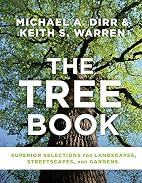
I haven't examined the written content yet, but these are my first impressions. The photos range in illustrative quality. Most are excellent, some do not serve their intent as well as they could.
The table of contents is way too brief, they've substituted an index that serves in the same fashion. The index could be greatly improved with varying type, size, bolding, etc. The entire book is alphabetized by Latin genus and species names. Common names are in the index, but difficult to even notice. The print is very small for my old eyes.
Because of these aspects, I doubt this will be a book purchased or used by the typical homeowner/gardener. It's much more suited for professional use.
It would have been a handy reference back in college when I took landscaping id classes, though it's not one we'd have carried into the field.
62wonderY
It's overdue, so must be returned today.
Nature Into Art: The Gardens of Wave Hill is new this year.
If I had to review it with just one word, it would be "Luscious."
I've only been able to browse briefly, but if you love garden tours where you can wander, taking in the vistas as well as the details, you will like this book.

The photographer, Ngoc Minh Ngo, seems to have dwelt there, her eye to the camera, most of a year.
And her camera loves what it sees.
Wave Hill is a 28 acre estate in the Bronx borough of NYC, donate to the public in 1960. The first chapter is a history of the property and it explains one of the subtle and yet dominant charms of the views. The Perkins family who owned the estate also managed to make the property directly opposite them across the Hudson River, into a wooded preserve. So there is no other development visible on the property.
The endpapers display an aerial diagram of the whole, with a numbered legend.
Each chapter features a different section or style.
The Flower Garden, The Gold Border, The Monocot and Aquatic Gardens, The Shade Border, The Wild Garden, The Alpine House & Troughs, The Herb & Dry Gardens, Annual Plantings, The Elliptical Garden, The Conservatory, The Edges of Everything, and Wave Hill Through the Seasons.
See. I knew you'd find something you want to explore. Something for everybody.
Interestingly, even in the Annual Plantings, masses of bright colors do not appear. There are lots of humble plants used effectively and the beds exhibit mixed species.
Recommended.
Nature Into Art: The Gardens of Wave Hill is new this year.
If I had to review it with just one word, it would be "Luscious."
I've only been able to browse briefly, but if you love garden tours where you can wander, taking in the vistas as well as the details, you will like this book.

The photographer, Ngoc Minh Ngo, seems to have dwelt there, her eye to the camera, most of a year.
And her camera loves what it sees.
Wave Hill is a 28 acre estate in the Bronx borough of NYC, donate to the public in 1960. The first chapter is a history of the property and it explains one of the subtle and yet dominant charms of the views. The Perkins family who owned the estate also managed to make the property directly opposite them across the Hudson River, into a wooded preserve. So there is no other development visible on the property.
The endpapers display an aerial diagram of the whole, with a numbered legend.
Each chapter features a different section or style.
The Flower Garden, The Gold Border, The Monocot and Aquatic Gardens, The Shade Border, The Wild Garden, The Alpine House & Troughs, The Herb & Dry Gardens, Annual Plantings, The Elliptical Garden, The Conservatory, The Edges of Everything, and Wave Hill Through the Seasons.
See. I knew you'd find something you want to explore. Something for everybody.
Interestingly, even in the Annual Plantings, masses of bright colors do not appear. There are lots of humble plants used effectively and the beds exhibit mixed species.
Recommended.
72wonderY
I like garden books that go into great depth on just one genus.
Timber Press came out with Peony in 2017.

It is visually stunning, and I want all 200+ varieties that are featured.
There is a brief section on history and the basics. There are herbaceous, tree and intersectionals, which are hybrids between the two basic forms.
The flower forms are
Single
Japanese
Anemone
Bomb (from the French “bombe” ice cream dessert)
Semidouble
Double
There are no detailed care directions, it’s all pretty basic. 2 inches of soil over top of the root bundle is what is recommended.
Unless you are a fiend for this plant, the book is worth just a casual look.
Found at the Lexington library.
Timber Press came out with Peony in 2017.

It is visually stunning, and I want all 200+ varieties that are featured.
There is a brief section on history and the basics. There are herbaceous, tree and intersectionals, which are hybrids between the two basic forms.
The flower forms are
Single
Japanese
Anemone
Bomb (from the French “bombe” ice cream dessert)
Semidouble
Double
There are no detailed care directions, it’s all pretty basic. 2 inches of soil over top of the root bundle is what is recommended.
Unless you are a fiend for this plant, the book is worth just a casual look.
Found at the Lexington library.
Join to post

