TIOLI challenge #10 March 2020: Tour de Suisse
Talk 75 Books Challenge for 2020
Join LibraryThing to post.
This topic is currently marked as "dormant"—the last message is more than 90 days old. You can revive it by posting a reply.

2paulstalder
Lausanne VD

sunset in Lausanne, looking over the Lac Leman to the French alps
Lausanne hosts the Federal Supreme Court of Switzerland, International Olympic Committee, and the Swiss Film Archive. around 150'000 inhabitants. French-speaking


sunset in Lausanne, looking over the Lac Leman to the French alps
Lausanne hosts the Federal Supreme Court of Switzerland, International Olympic Committee, and the Swiss Film Archive. around 150'000 inhabitants. French-speaking

3paulstalder
Montbrelloz FR

a small village, the lake of Neuchatel in the background
There are Roman remains, so an ancient village. In the 13th century the order of Malta built a monastery there, to day there are only parts of the church left.
over 300 inhabitants. French-speaking


a small village, the lake of Neuchatel in the background
There are Roman remains, so an ancient village. In the 13th century the order of Malta built a monastery there, to day there are only parts of the church left.
over 300 inhabitants. French-speaking

4paulstalder
Rennaz VD


veterans meeting
Rennaz lies in the valley of the Rhone, near the Lac Leman. The village is first mentioned in 1255 under the name 'Raina', probably from old French reine, frog. But they have a fox in the coat of arms :)
over 800 inhabitants. French-speaking


veterans meeting
Rennaz lies in the valley of the Rhone, near the Lac Leman. The village is first mentioned in 1255 under the name 'Raina', probably from old French reine, frog. But they have a fox in the coat of arms :)
over 800 inhabitants. French-speaking

5paulstalder
Wavre NE

excavations done in 1907 under the supervision of William Wavre
Wavre (Wabern) was a small village between the lakes of Neuchatel and Biel. Nearby they did archaeological diggings in La Tène, and the findings gave the name to the La Tène Culture (during the Iron Age). Wavre belonged to Neuchatel, the to Prussia, then to Napoleon, and then, since 1815, to Switzerland
105 inhabitants (1880 when it was merged with other villages, Thielle-Wavre, and today La Tène). French and German speaking (the German name Wabern is not used anymore)

coat of arms of Thielle-Wavre

excavations done in 1907 under the supervision of William Wavre
Wavre (Wabern) was a small village between the lakes of Neuchatel and Biel. Nearby they did archaeological diggings in La Tène, and the findings gave the name to the La Tène Culture (during the Iron Age). Wavre belonged to Neuchatel, the to Prussia, then to Napoleon, and then, since 1815, to Switzerland
105 inhabitants (1880 when it was merged with other villages, Thielle-Wavre, and today La Tène). French and German speaking (the German name Wabern is not used anymore)

coat of arms of Thielle-Wavre
6paulstalder
Saint-Sulpice NE
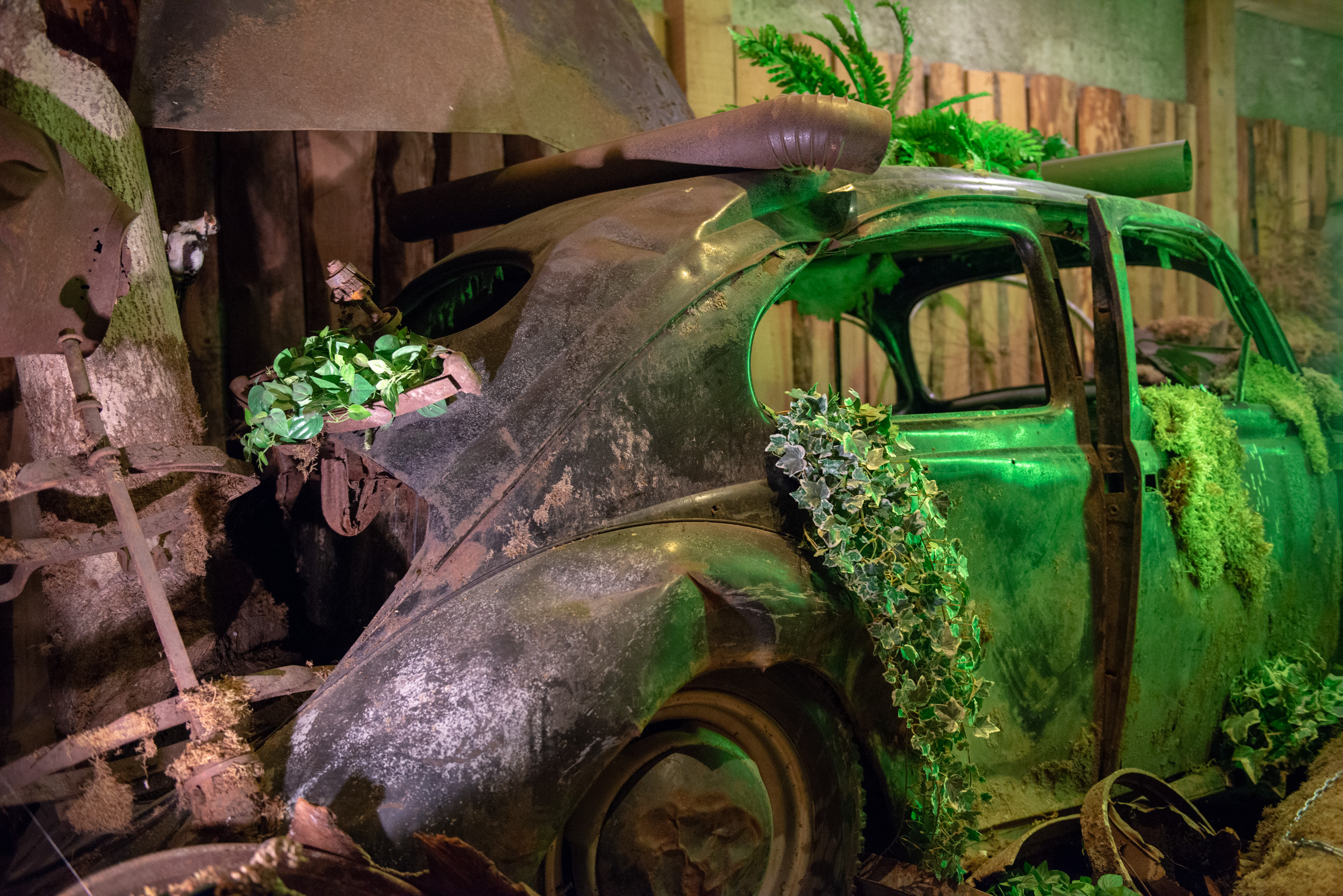
a re-modelled VW
Saint-Sulpice NE was a small village near the French border. They found there an necropolis from the Iron Age. The power of the water was used from early times on, they found several mills in the area. Also famous for the Volkswagen-oldtimer-wreckage-museum https://www.musee-vw.ch/
644 inhabitants (2007)

a re-modelled VW
Saint-Sulpice NE was a small village near the French border. They found there an necropolis from the Iron Age. The power of the water was used from early times on, they found several mills in the area. Also famous for the Volkswagen-oldtimer-wreckage-museum https://www.musee-vw.ch/
644 inhabitants (2007)

7paulstalder
Mörigen BE

an old picture from the lake dwellings

moon horns from the bronze age
Mörigen (French: Morenges, a minority of 6% are French speaking) is a small village at the lake of Bienne. There they found old lake-dwellings (stilt houses) from the bronze age. A full handed sword type became the name 'Mörigen-Sword' (you may seen such swords in middle-age-festivals), other interesting finds there were many so called 'moon horns'.
879 inhabitants (2018)


an old picture from the lake dwellings

moon horns from the bronze age
Mörigen (French: Morenges, a minority of 6% are French speaking) is a small village at the lake of Bienne. There they found old lake-dwellings (stilt houses) from the bronze age. A full handed sword type became the name 'Mörigen-Sword' (you may seen such swords in middle-age-festivals), other interesting finds there were many so called 'moon horns'.
879 inhabitants (2018)

8paulstalder
Tavannes BE

the source of the river Birs, which joins the Rhine in Basel

Roventa-Henex watches are produced here
Tavannes (German: Dachsfelden, not used anymore) is a village in the French speaking part of the canton of Bern. The name can be traced back either to the Celtic word 'tavan' (tree trunk) or old German-Germanic 'dahs' (badger) and 'venjô' (pasture). The village was an important place during the Roman time at the border of the Raurici and the Helvetians. 1530 the refomer Guillaume Farel (a co-worker of Jean Calvin) brought the reformation to Tavannes. The town belonged to France till 1815 when it became Swiss.
3586 inhabitants (2018)


the source of the river Birs, which joins the Rhine in Basel

Roventa-Henex watches are produced here
Tavannes (German: Dachsfelden, not used anymore) is a village in the French speaking part of the canton of Bern. The name can be traced back either to the Celtic word 'tavan' (tree trunk) or old German-Germanic 'dahs' (badger) and 'venjô' (pasture). The village was an important place during the Roman time at the border of the Raurici and the Helvetians. 1530 the refomer Guillaume Farel (a co-worker of Jean Calvin) brought the reformation to Tavannes. The town belonged to France till 1815 when it became Swiss.
3586 inhabitants (2018)

9paulstalder
Alle JU

Alle in winter time

the church John the Baptist
Alle (old German: Hall) is a town in the canton of Jura, in the mountainous region of the Jura, close to the French border. The river Allaine (Celtic: small river) is the main river in the Ajoie, the spring is in Switzerland, then it flows into the Doubs in France.
Industrie: Econox: 'the World leaders in high temperature measurement and control systems for carbon and oxygen'. Atokalpa: cogs for luxury watches
1850 inhabitants (2018)


Alle in winter time

the church John the Baptist
Alle (old German: Hall) is a town in the canton of Jura, in the mountainous region of the Jura, close to the French border. The river Allaine (Celtic: small river) is the main river in the Ajoie, the spring is in Switzerland, then it flows into the Doubs in France.
Industrie: Econox: 'the World leaders in high temperature measurement and control systems for carbon and oxygen'. Atokalpa: cogs for luxury watches
1850 inhabitants (2018)

10paulstalder
Allmendingen bei Bern BE

the castle of Allmendingen

Winston Churchill visiting Allmendingen 17th Septembre 1946, talking with our federal president Karl Kobelt
Allmendingen is a very small village close to Bern, today it has 10 farmers and some small industries, most people work in Bern. There was a railway station Allmendingen 1922 till 1982, now buses connect the village to Bern and Thun.
In September 1946 Sir Winston Churchill with wife and daughter visited the castle of Allmedingen and had dinner with the Swiss government, General Guisan, other Swiss dignitaries, and the ambassadors of France and Britain. The Swiss federal president held his speech in French, Winston Churchill held his in English. Churchill was quite fond of Switzerland and in his speech he congratulated and thanked Switzerland for their love to freedom ('that you cherish freedom and respect the right of others') and he said: 'patriotism must not be confused with nationalistic aggression'.
590 inhabitants (2018)


the castle of Allmendingen

Winston Churchill visiting Allmendingen 17th Septembre 1946, talking with our federal president Karl Kobelt
Allmendingen is a very small village close to Bern, today it has 10 farmers and some small industries, most people work in Bern. There was a railway station Allmendingen 1922 till 1982, now buses connect the village to Bern and Thun.
In September 1946 Sir Winston Churchill with wife and daughter visited the castle of Allmedingen and had dinner with the Swiss government, General Guisan, other Swiss dignitaries, and the ambassadors of France and Britain. The Swiss federal president held his speech in French, Winston Churchill held his in English. Churchill was quite fond of Switzerland and in his speech he congratulated and thanked Switzerland for their love to freedom ('that you cherish freedom and respect the right of others') and he said: 'patriotism must not be confused with nationalistic aggression'.
590 inhabitants (2018)

11paulstalder
Walkringen BE

church and vicarage (coloured aquatinta, March 1827, by Jakob Samuel Weibel (1771–1846))

800-year-anniversary of Walkringen
Walkringen is first mentioned in a document of 1220 under the name 'Walchenringin', meaning 'with the people of Walheri (an Old High German name)'. The village is located in marsh land (there was a lake here in the Middle Ages), which later was drained and became cultivated land for agriculture.
1767 inhabitants (2018)


church and vicarage (coloured aquatinta, March 1827, by Jakob Samuel Weibel (1771–1846))

800-year-anniversary of Walkringen
Walkringen is first mentioned in a document of 1220 under the name 'Walchenringin', meaning 'with the people of Walheri (an Old High German name)'. The village is located in marsh land (there was a lake here in the Middle Ages), which later was drained and became cultivated land for agriculture.
1767 inhabitants (2018)

12paulstalder
Bruderholz BS and BL

water tower, built 1826

panorama from the water tower, the hospital to the left
The Bruderholz is first a hill south of Basel, belonging to the canton of Basel-Land, secondly, a part of the village of Binningen BL with the hospital, and, thirdly, a district of the city of Basel, canton of Basel-Stadt. The legend goes that a monk from Barfüsser (bare footed = Discalced) monastery left the city and lived in these forests, hence the name 'Bruder' (brother), Holz meaning forest. Later there was a battle in the area, where the Helvetians defeated the Swabians despite being in the minority. Part of the Bruderholz was a small village which fell to the city when the cantons split, so the Bruderholz became a district of th city of Basel, we name it the 'Better-Off-District' since there many rich people live. Till 2019 the Swiss radio had a station there, the Karl Barth-Archives are located here. On the side of the canton of Basel-Land, there is a large hospital (the Bruderholzspital, built 1973-1975), today being the main center for CORVID-19 patients of the region, even some patients from the Alsace are treated here.
9357 inhabitants (2018) -> Basel

coat of arms of Binningen BL, since the postal code 4101 belongs here

water tower, built 1826

panorama from the water tower, the hospital to the left
The Bruderholz is first a hill south of Basel, belonging to the canton of Basel-Land, secondly, a part of the village of Binningen BL with the hospital, and, thirdly, a district of the city of Basel, canton of Basel-Stadt. The legend goes that a monk from Barfüsser (bare footed = Discalced) monastery left the city and lived in these forests, hence the name 'Bruder' (brother), Holz meaning forest. Later there was a battle in the area, where the Helvetians defeated the Swabians despite being in the minority. Part of the Bruderholz was a small village which fell to the city when the cantons split, so the Bruderholz became a district of th city of Basel, we name it the 'Better-Off-District' since there many rich people live. Till 2019 the Swiss radio had a station there, the Karl Barth-Archives are located here. On the side of the canton of Basel-Land, there is a large hospital (the Bruderholzspital, built 1973-1975), today being the main center for CORVID-19 patients of the region, even some patients from the Alsace are treated here.
9357 inhabitants (2018) -> Basel

coat of arms of Binningen BL, since the postal code 4101 belongs here
13paulstalder
Oftringen AG
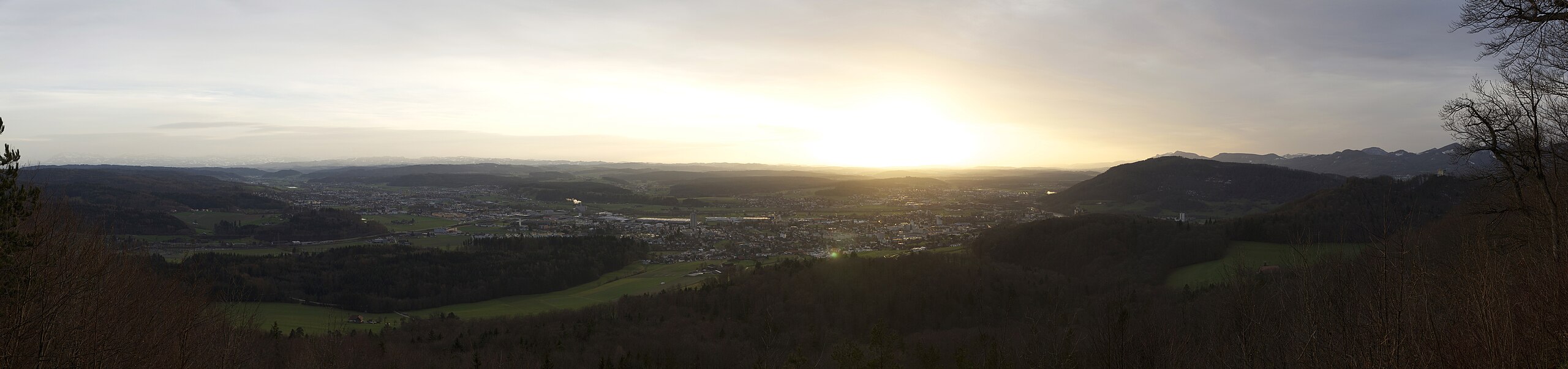

Oftringen 1967
Oftringen is mentioned in 893 (the Old High German name Oftharingun means 'with the people of Ofthar). The people there mostly work in the service sector, there is some little industry (production of industrial minerals and metal construction). Paul Haupt (1889-1978) , the founder of the Swiss publisher 'Verlag Paul Haupt' was born in Oftringen.
13'792 inhabitants (2018)

(in blue three (2, 1) rising white half moons)

Oftringen 1967
Oftringen is mentioned in 893 (the Old High German name Oftharingun means 'with the people of Ofthar). The people there mostly work in the service sector, there is some little industry (production of industrial minerals and metal construction). Paul Haupt (1889-1978) , the founder of the Swiss publisher 'Verlag Paul Haupt' was born in Oftringen.
13'792 inhabitants (2018)

(in blue three (2, 1) rising white half moons)
14paulstalder
Glashütten AG

restaurant Löwen (lion)

the Lion of Glashütten

the new Reformed church in Glashütten
Glashütten (glassworks) is a part of the community of Murgenthal. There is not much information I found. There was an old Reformed church there, built 1852-1854. The church was replaced by a modern building in 1962-1963 by the architect Benedikt Huber (1928-2018) (he built churches in Basel, too).
2987 inhabitants (2018) (Murgenthal as a whole)

Murgenthal (none found for Glashütten)

restaurant Löwen (lion)

the Lion of Glashütten

the new Reformed church in Glashütten
Glashütten (glassworks) is a part of the community of Murgenthal. There is not much information I found. There was an old Reformed church there, built 1852-1854. The church was replaced by a modern building in 1962-1963 by the architect Benedikt Huber (1928-2018) (he built churches in Basel, too).
2987 inhabitants (2018) (Murgenthal as a whole)

Murgenthal (none found for Glashütten)
15paulstalder
Neuenhof AG

view from Baden AG across the river Limmat

the river Limmat
Neuenhof started off as the 'New Farm' (der Neue Hof) built by the monastery of Wettingen just across the river in the 13th century. It stayed a farmer's village till the time of industrialization when the hydropower of the river Limmat was used for weaving mills. The footballer players Mladen Petrić (* 1981), and Boris Smiljanić (* 1976) started their careers here, both won Swiss championships with the Grasshoppers Zürich and the FC Basel.
8783 inhabitants (2018)

the monastery of Wettingen is a teacher training's college nowadays. I studied there and often went over to Neuenhof for having ice cream (there was a nice ice cream parlor there, we students often visited)

view from Baden AG across the river Limmat

the river Limmat
Neuenhof started off as the 'New Farm' (der Neue Hof) built by the monastery of Wettingen just across the river in the 13th century. It stayed a farmer's village till the time of industrialization when the hydropower of the river Limmat was used for weaving mills. The footballer players Mladen Petrić (* 1981), and Boris Smiljanić (* 1976) started their careers here, both won Swiss championships with the Grasshoppers Zürich and the FC Basel.
8783 inhabitants (2018)

the monastery of Wettingen is a teacher training's college nowadays. I studied there and often went over to Neuenhof for having ice cream (there was a nice ice cream parlor there, we students often visited)
16paulstalder
Buttwil AG

chapel of St. James (Jakobskapelle)

the airfield
First mentioned 1160, the Old High German name Putinwilari means 'the farm estate of Puto'. It was always a small village of farmers, nowadays its a residential area with no industry. There is small airfield nearby. The coat of arms shows a scallop, indicating that Buttwil was along the way of St. James to Santiago. Willi Melliger (1953-2018), a Swiss equestrian, was born here. He won silver at the olympic games in Atlanta (show jumping) and silver in team jumping in Sydney, both with his horse Calvaro.
1229 inhabitants (2018)


chapel of St. James (Jakobskapelle)

the airfield
First mentioned 1160, the Old High German name Putinwilari means 'the farm estate of Puto'. It was always a small village of farmers, nowadays its a residential area with no industry. There is small airfield nearby. The coat of arms shows a scallop, indicating that Buttwil was along the way of St. James to Santiago. Willi Melliger (1953-2018), a Swiss equestrian, was born here. He won silver at the olympic games in Atlanta (show jumping) and silver in team jumping in Sydney, both with his horse Calvaro.
1229 inhabitants (2018)

17paulstalder
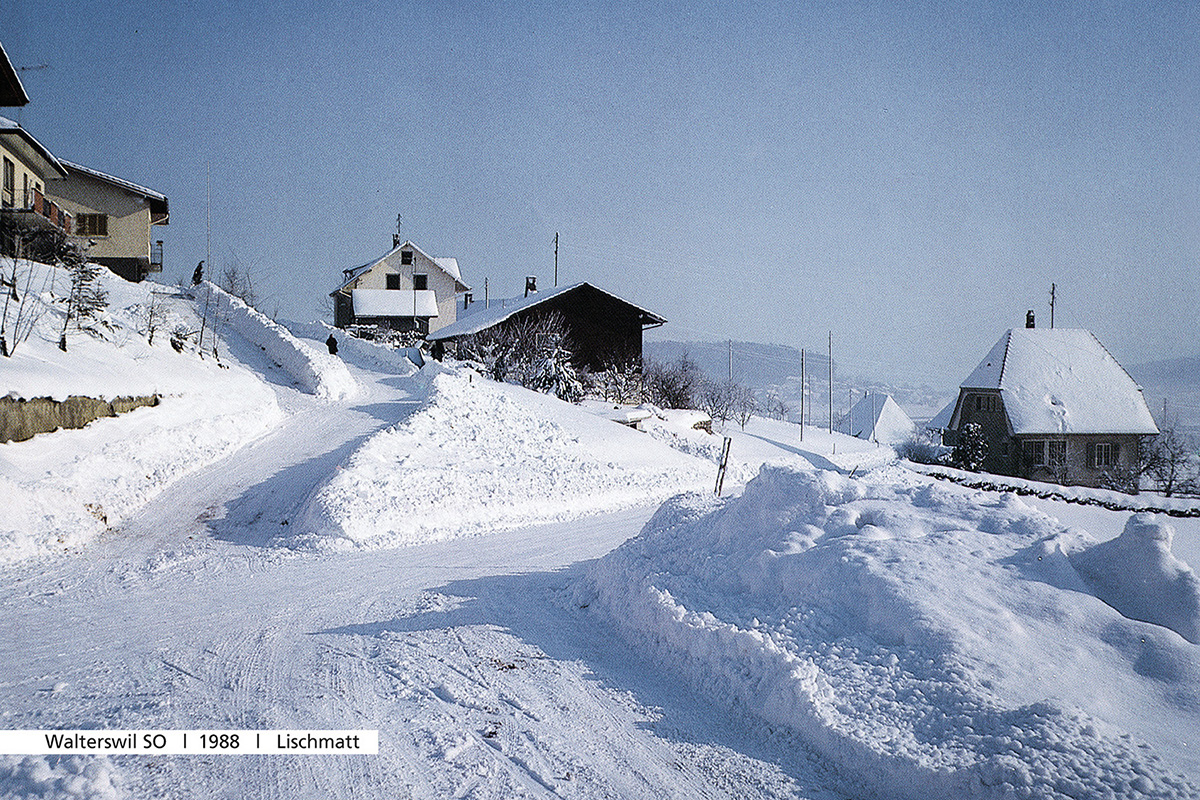
Walterswil SO
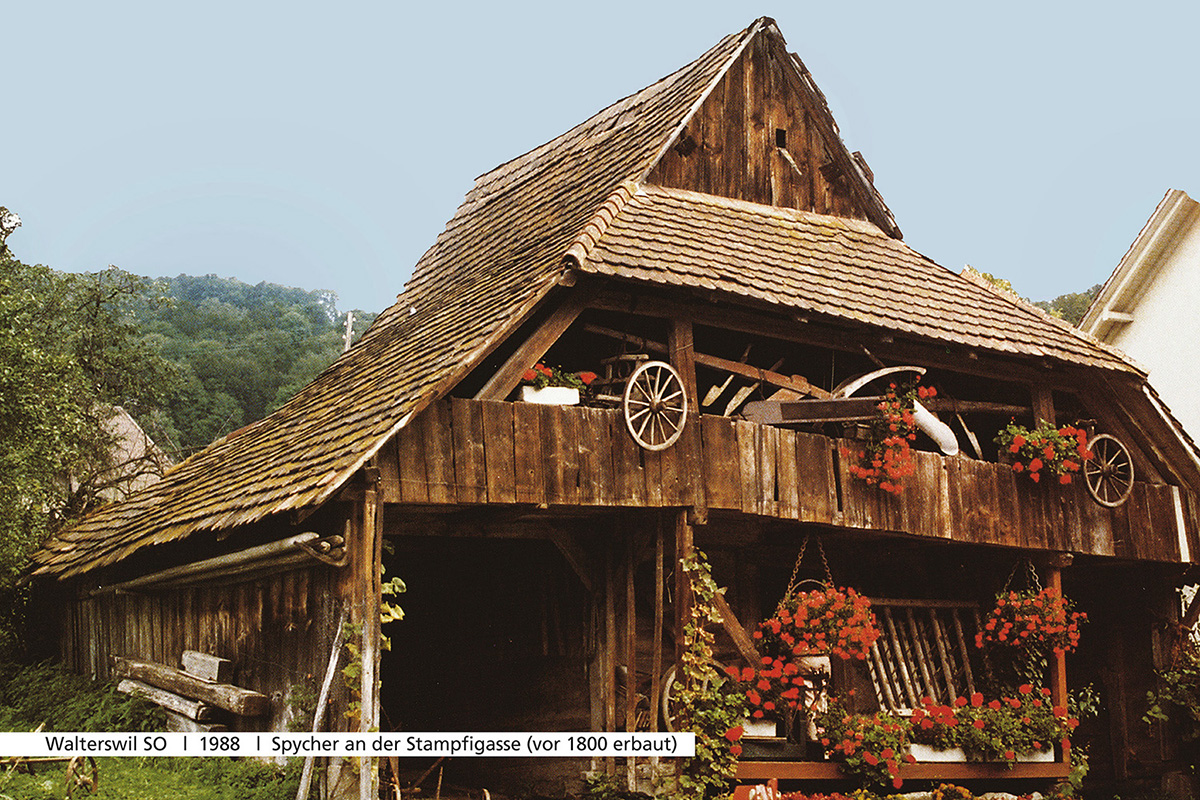
storehouse, built around 1800
First mentioned 1257 as Walderswile (the farm of Waltheri). A farm village, today a residential area.
724 inhabitants (2018)

(a juniper branch with three black fruits)
storehouse, built around 1800
First mentioned 1257 as Walderswile (the farm of Waltheri). A farm village, today a residential area.
724 inhabitants (2018)

(a juniper branch with three black fruits)
18paulstalder
Dagmersellen LU

1948

the Tempelhof Uffikon (with the farmer who owns the land)
First mentioned 1076 as Tagmarsellen (the dwellings of Dagemar). A farm village, later some small industries (passementerie, mills, cotton weaving). The artist Wetz (Werner Alois Zihlmann, *1961) built a large tempel on farm ground as 'artistic architecture' which had later to be removed (it was built on farm land). The journalist Guido Mingels (*1970) was born here, he was correspondent in New York and Los Angeles (since 2018) for the Spiegel.
5504 inhabitants (2018)
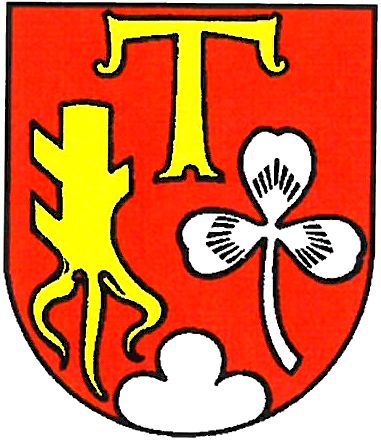
A pulled out tree trunk on the right and a shamrock on the left above a mount (trefoil), both topped by a T
-----------
my daughter worked as a secretary for the artist Wetz some years ago

1948

the Tempelhof Uffikon (with the farmer who owns the land)
First mentioned 1076 as Tagmarsellen (the dwellings of Dagemar). A farm village, later some small industries (passementerie, mills, cotton weaving). The artist Wetz (Werner Alois Zihlmann, *1961) built a large tempel on farm ground as 'artistic architecture' which had later to be removed (it was built on farm land). The journalist Guido Mingels (*1970) was born here, he was correspondent in New York and Los Angeles (since 2018) for the Spiegel.
5504 inhabitants (2018)
A pulled out tree trunk on the right and a shamrock on the left above a mount (trefoil), both topped by a T
-----------
my daughter worked as a secretary for the artist Wetz some years ago
19paulstalder
Zug ZG

1547/48, from the chronic of Johannes Stumpf (1500-1578)


Zytturm (time tower) built in th 13th century, with a 'normal' and an astronomical clock (4 hands, for week days, moon phases, months, and for leap year)
The name Zug stems from the Old High German word for 'pulling in fishing nets', 'fishing justice', and 'place where one is allowed to fish'. So, Zug started as a fishing village, became an important market place and a hub for the service sector. Today is well known as a tax haven for international companies. There has been a jazz festival since 1996. Born or living here: Elise Ruepp (1790-1873) a pioneer in girls' education in Switzerland, movie actor Walo Lüönd (1927-2012), writer Thomas Hürlimann (*1950), Simonetta Sommaruga (*1960), the acting President of the Swiss Confederation, Carlo Meier (*1961) writer, Patrick Fischer (1975) ice hockey player (Phoenix Coyotes, HC Davos, SKA Saint Petersburg) now coach of the Swiss national team.
30'542 inhabitants (2018)
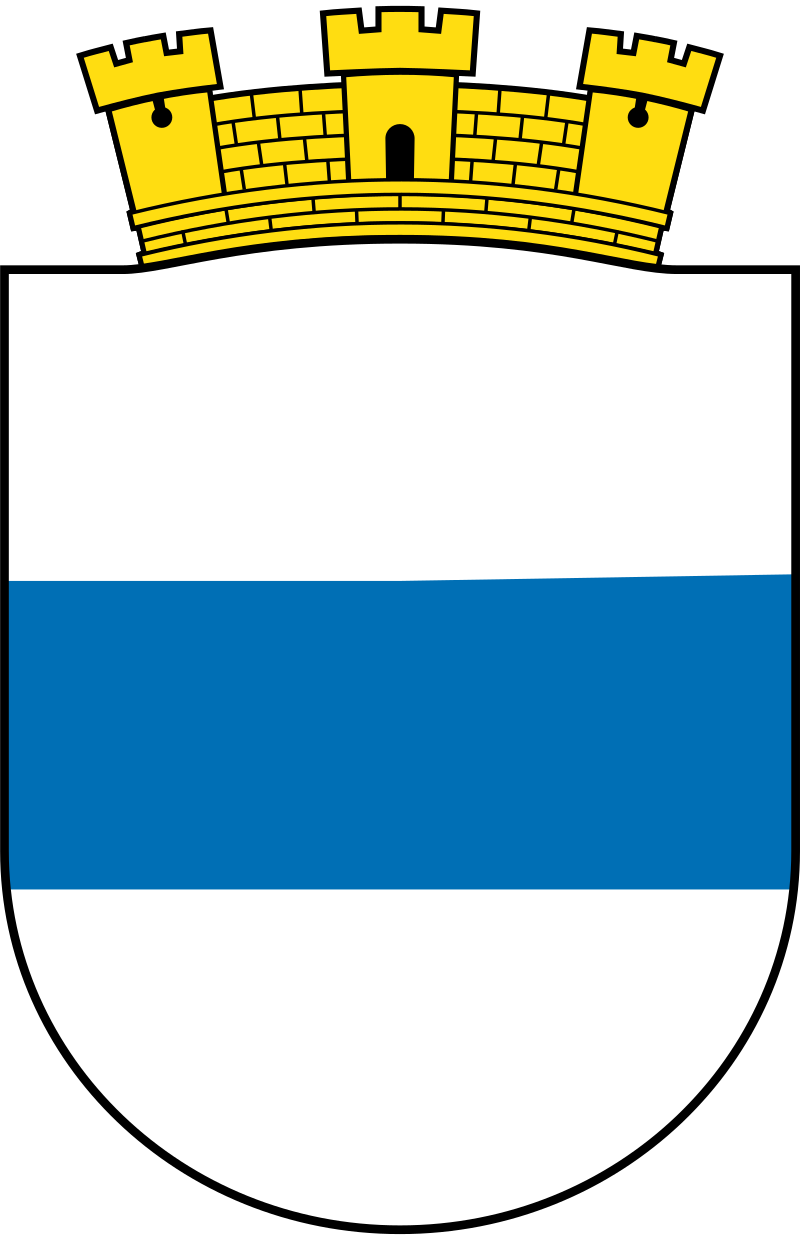

1547/48, from the chronic of Johannes Stumpf (1500-1578)


Zytturm (time tower) built in th 13th century, with a 'normal' and an astronomical clock (4 hands, for week days, moon phases, months, and for leap year)
The name Zug stems from the Old High German word for 'pulling in fishing nets', 'fishing justice', and 'place where one is allowed to fish'. So, Zug started as a fishing village, became an important market place and a hub for the service sector. Today is well known as a tax haven for international companies. There has been a jazz festival since 1996. Born or living here: Elise Ruepp (1790-1873) a pioneer in girls' education in Switzerland, movie actor Walo Lüönd (1927-2012), writer Thomas Hürlimann (*1950), Simonetta Sommaruga (*1960), the acting President of the Swiss Confederation, Carlo Meier (*1961) writer, Patrick Fischer (1975) ice hockey player (Phoenix Coyotes, HC Davos, SKA Saint Petersburg) now coach of the Swiss national team.
30'542 inhabitants (2018)
20paulstalder
Orselina TI

Madonna del Sasso
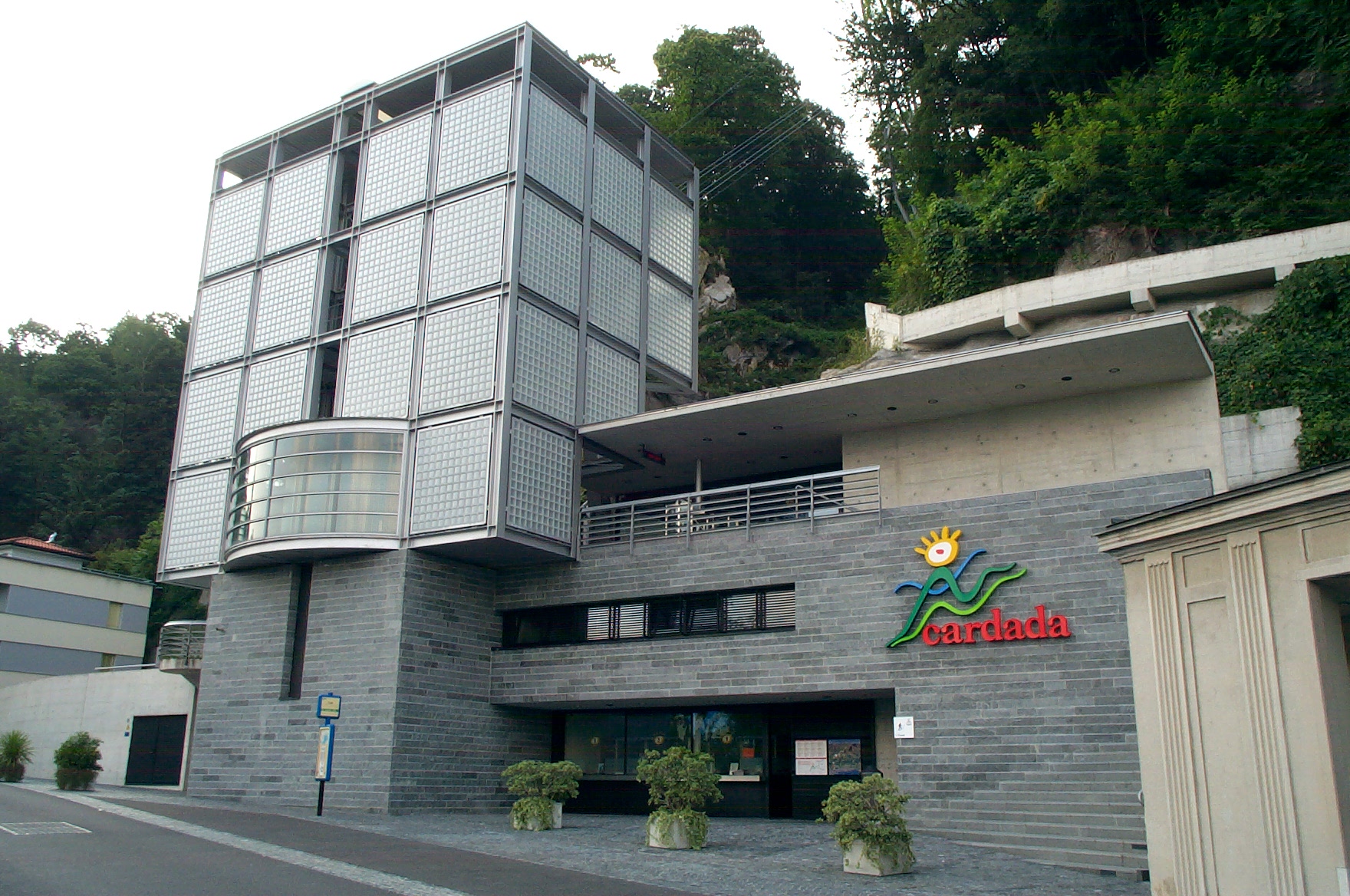
the aerial cableway from Orselina up to the Cardada (1332 m high), the valley station was built by the architect Mario Botta
First mentioned 1182 as 'Concilio Meziano', then in 1323 as 'Orsarina'. The famous church Madonna del Sasso was built in 1480.
727 inhabitants (2018)


Madonna del Sasso
the aerial cableway from Orselina up to the Cardada (1332 m high), the valley station was built by the architect Mario Botta
First mentioned 1182 as 'Concilio Meziano', then in 1323 as 'Orsarina'. The famous church Madonna del Sasso was built in 1480.
727 inhabitants (2018)

21paulstalder
Brontallo TI


Brontallo is very small village in the Ticino, it is the first village in a side valley of the river Maggia. In order to grow vegetables, fruits, vine, they had to build terraces because of the steep and rocky mountain slopes. The village as a whole is under protection because of its unique Ortsbild (image of location).
50 inhabitants (2018)


Brontallo is very small village in the Ticino, it is the first village in a side valley of the river Maggia. In order to grow vegetables, fruits, vine, they had to build terraces because of the steep and rocky mountain slopes. The village as a whole is under protection because of its unique Ortsbild (image of location).
50 inhabitants (2018)

22countrylife
Thank you for posting these, Paul. I enjoyed the journey!
PS:
>17 paulstalder:. Looks like the wrong shield.
PS:
>17 paulstalder:. Looks like the wrong shield.
23paulstalder
>22 countrylife: Thanks, Cindy. I enjoyed it, especially learning things about places I never heard of before :)
you're right, that was the wrong coat of arms. I changed it now, thanks for the hint.
you're right, that was the wrong coat of arms. I changed it now, thanks for the hint.

