
1wcarter
Nana by Émile Zola 1956
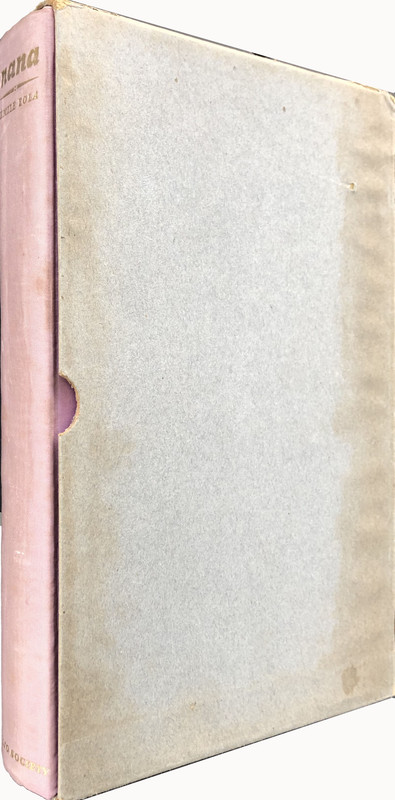
My copy of Nana is rather forlorn with a stained slipcase and faded spine (all FS books bound in silk have faded spines eventually) but as I paid only $4 for it, I am not complaining, and all the pages are in good order. When issued, the book would have had a glassine dust jacket as well as a slipcase.
The novel Nana was written in French in 1880 and tells the story of a beautiful young woman’s rise from streetwalker and second-rate actress at the age of 15 to high-class courtesan and leading opera singer during the last years of the French Second Empire. Along the way she destroys every man who pursues her. It is considered to be one of Zola’s finest works.
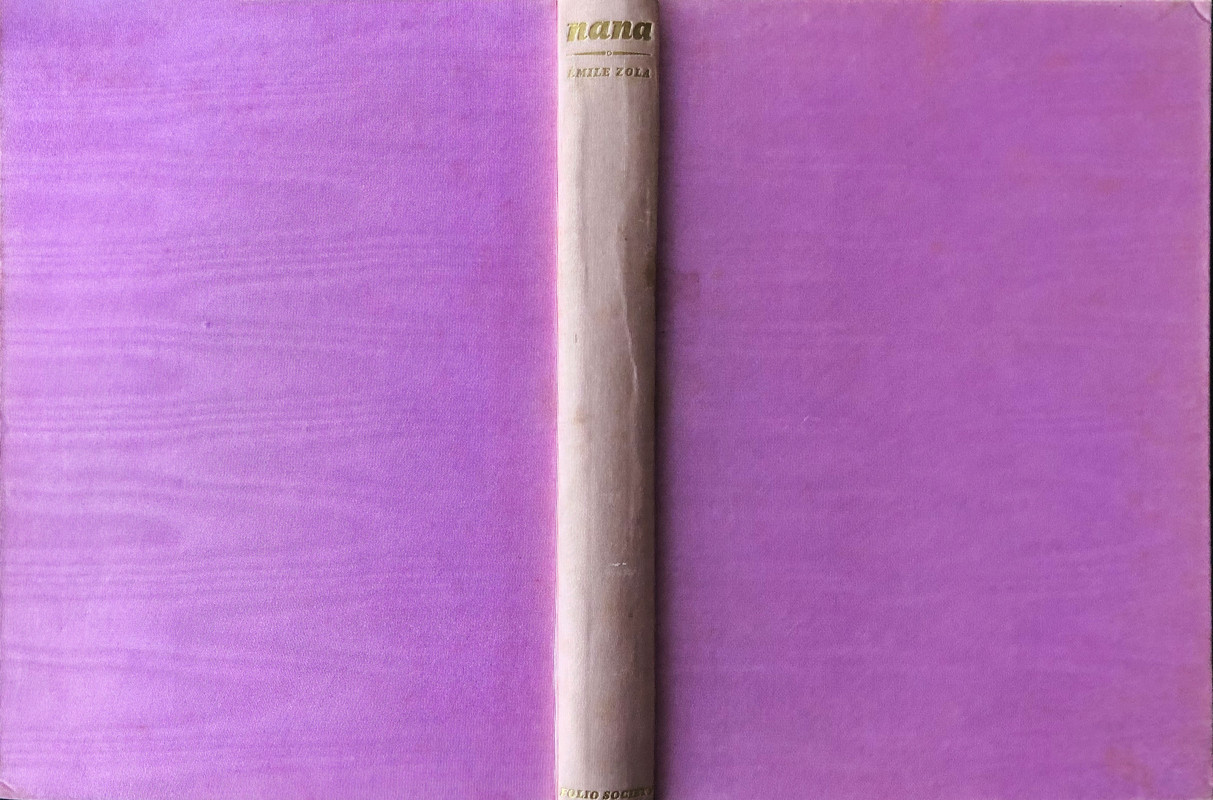
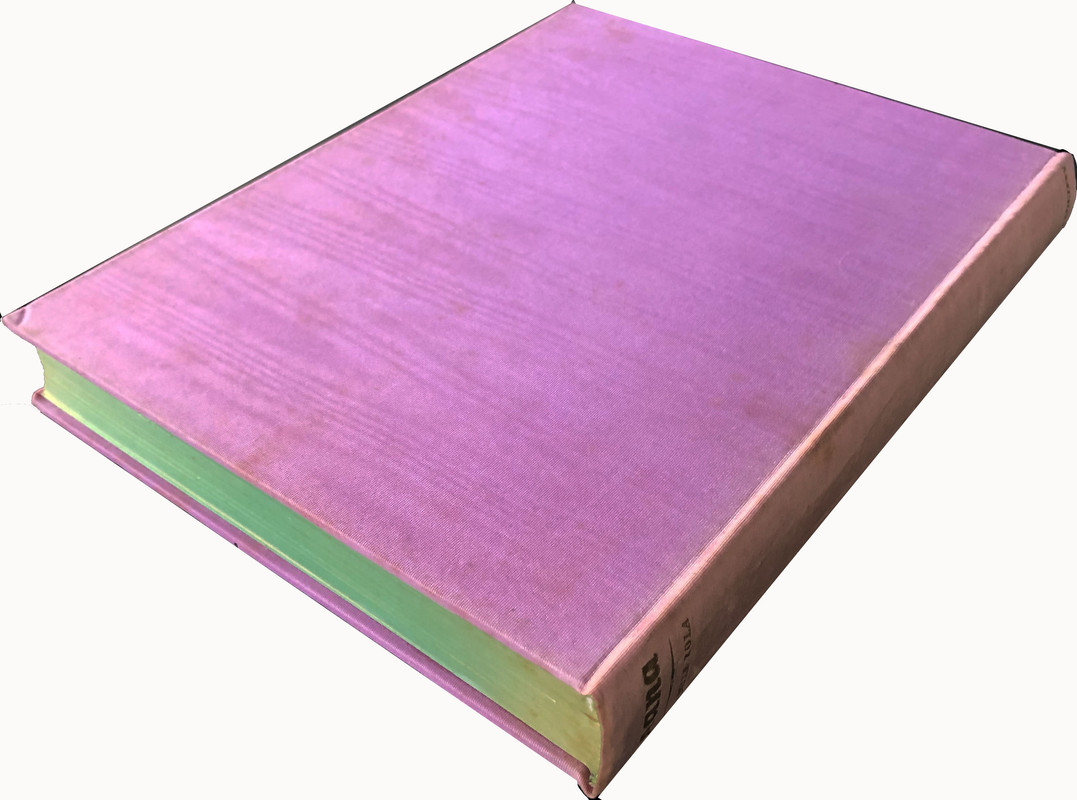
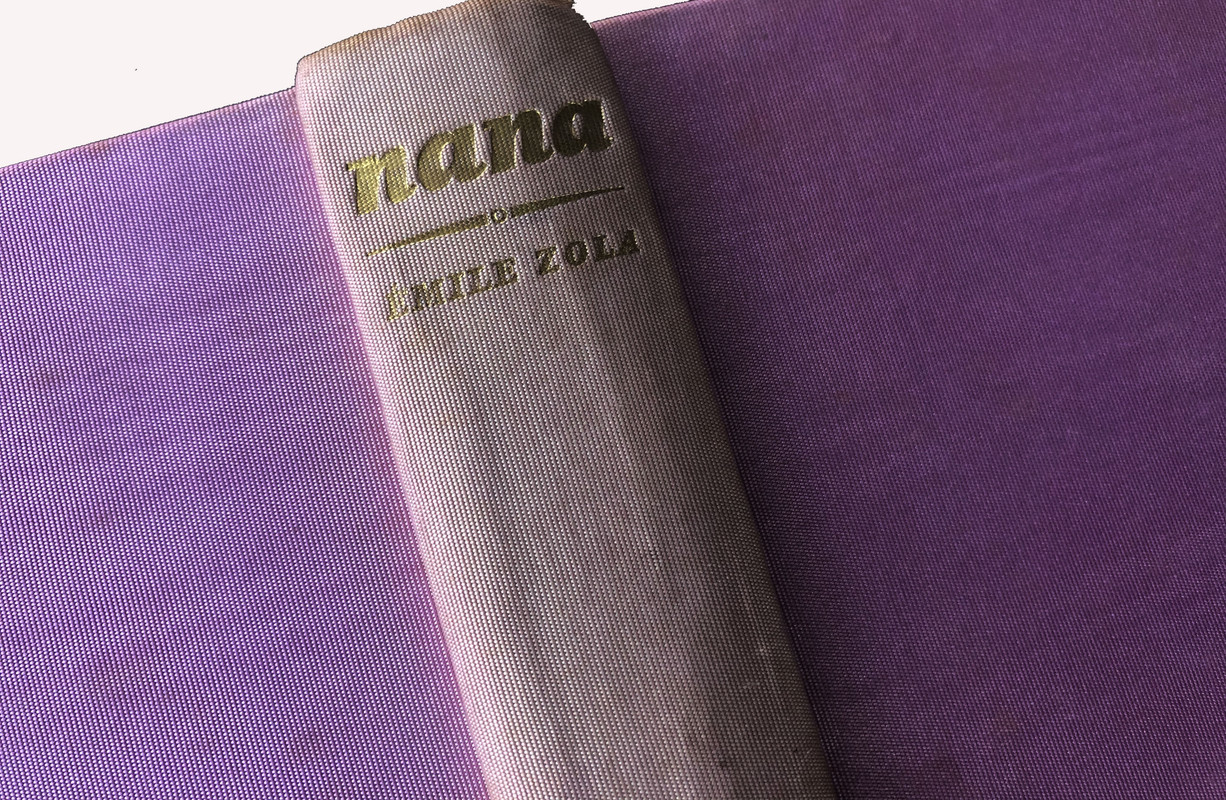
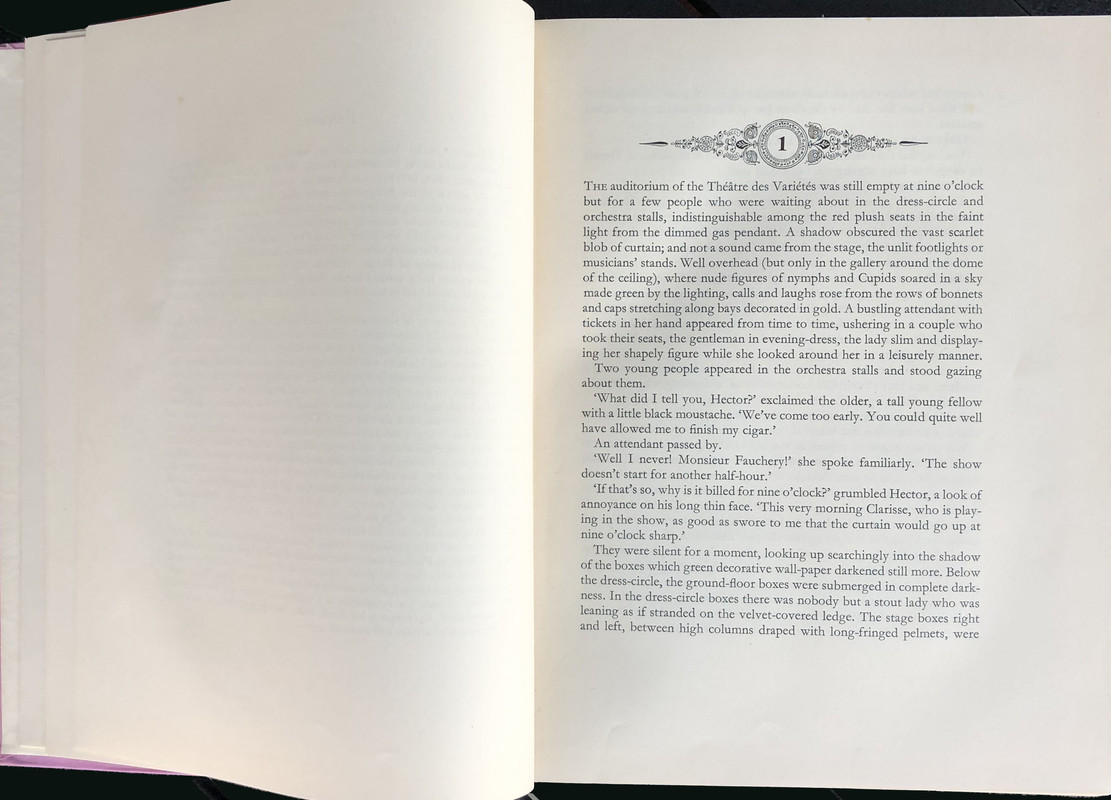
The 387 page book is bound in undecorated vivid violet silk that is sensuous to the touch, but for some unknown reason the page tops have been stained green in order to clash as much as possible with the binding. The gilt title and author on the spine are the only decorations. The endpapers are plain white.
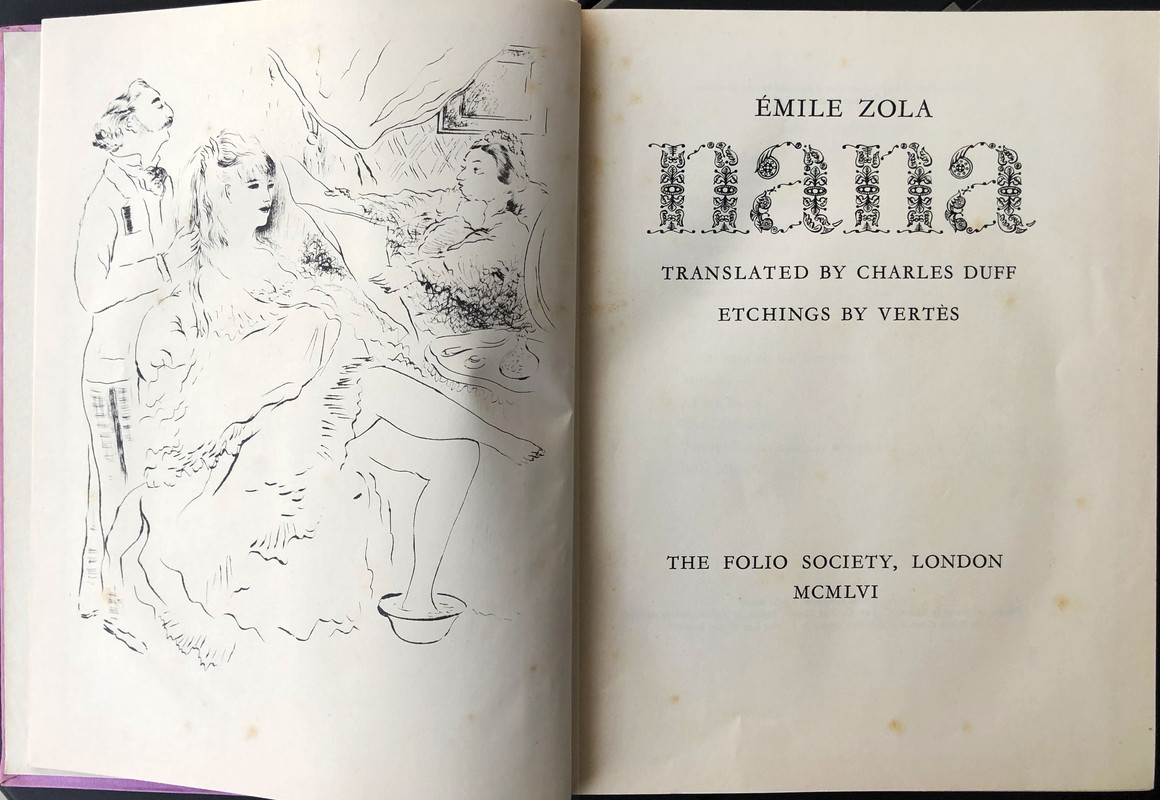
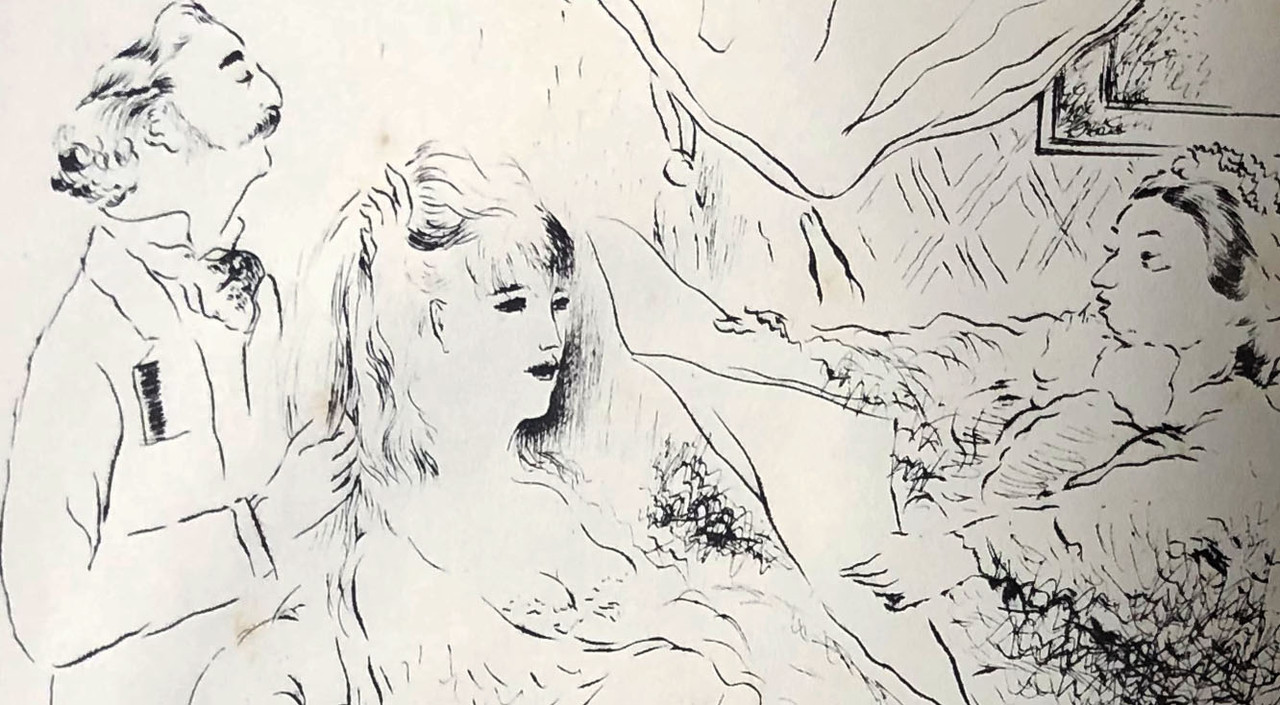
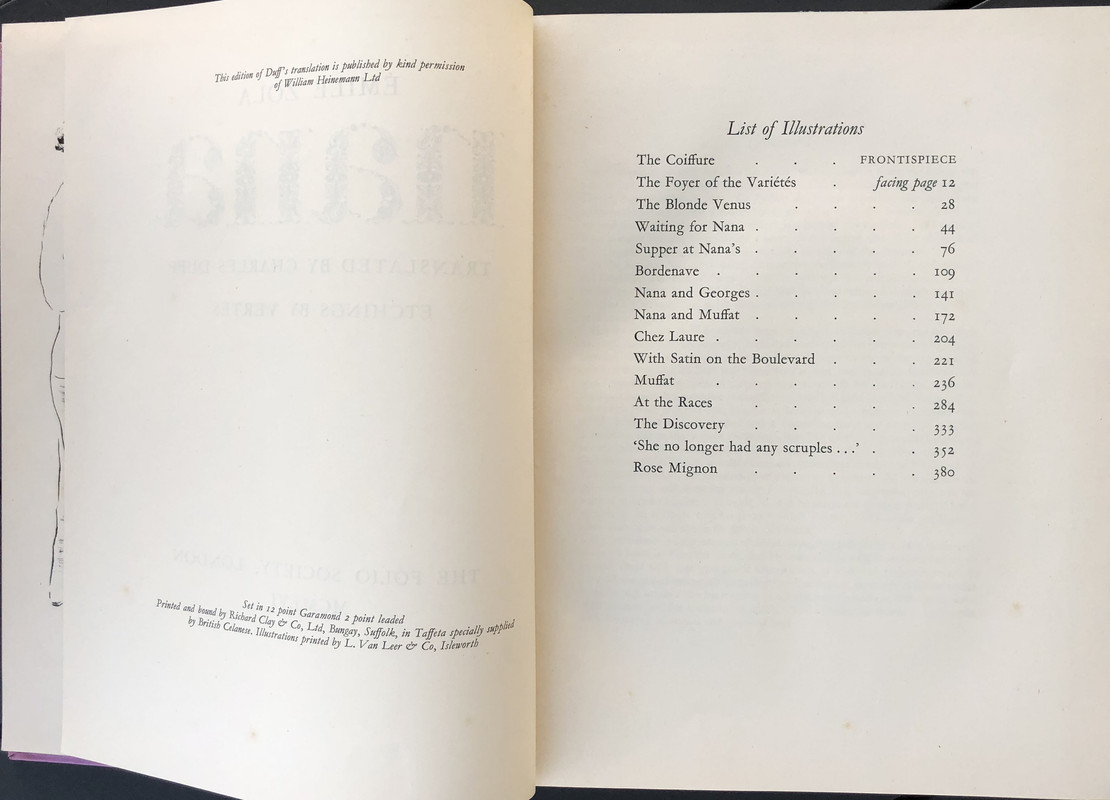
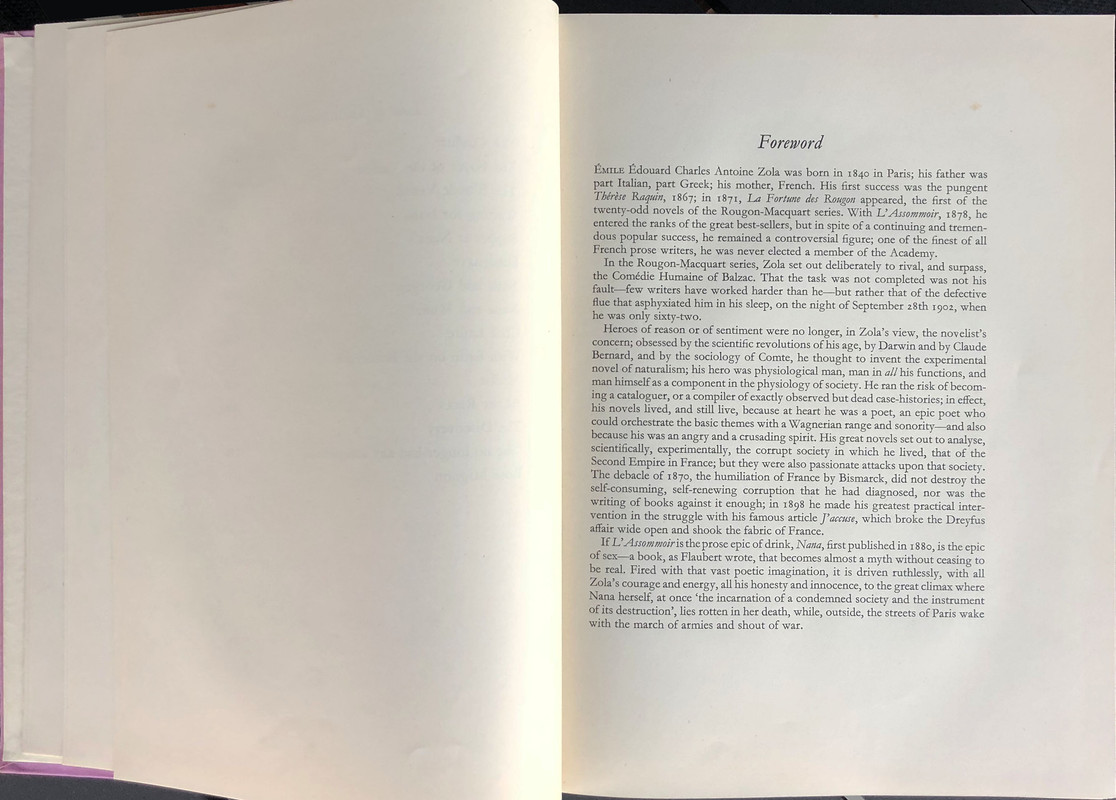
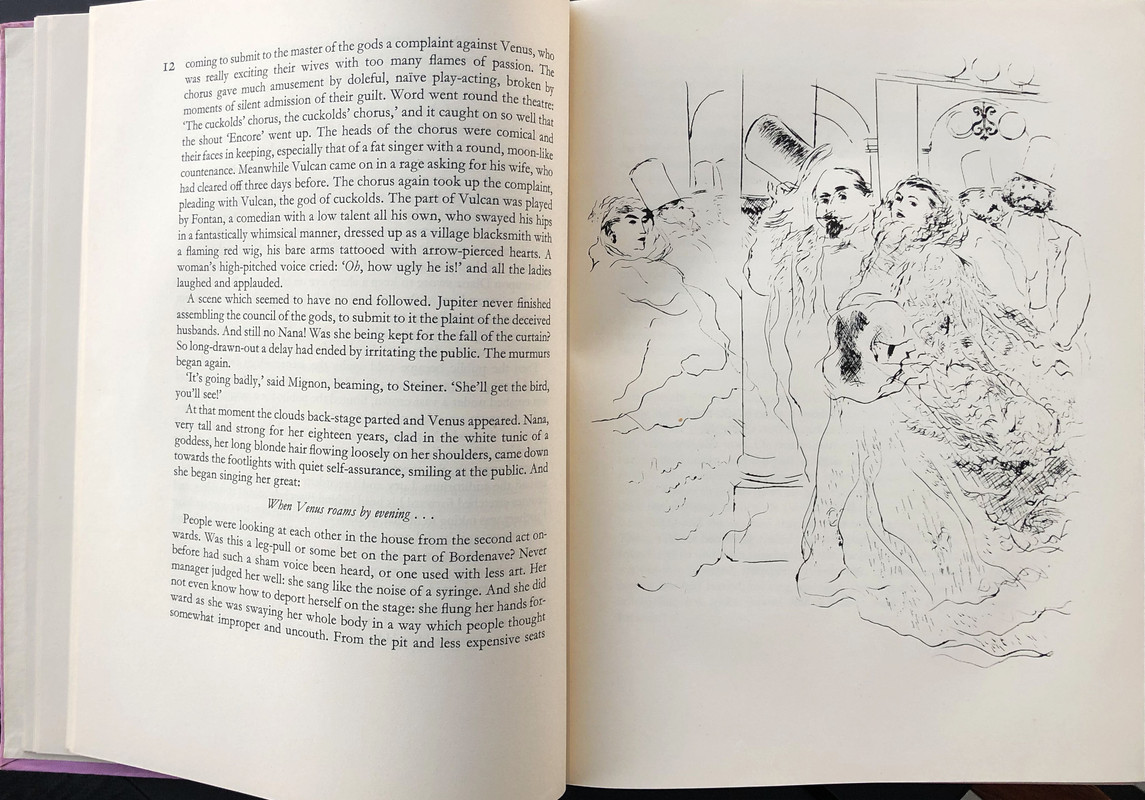
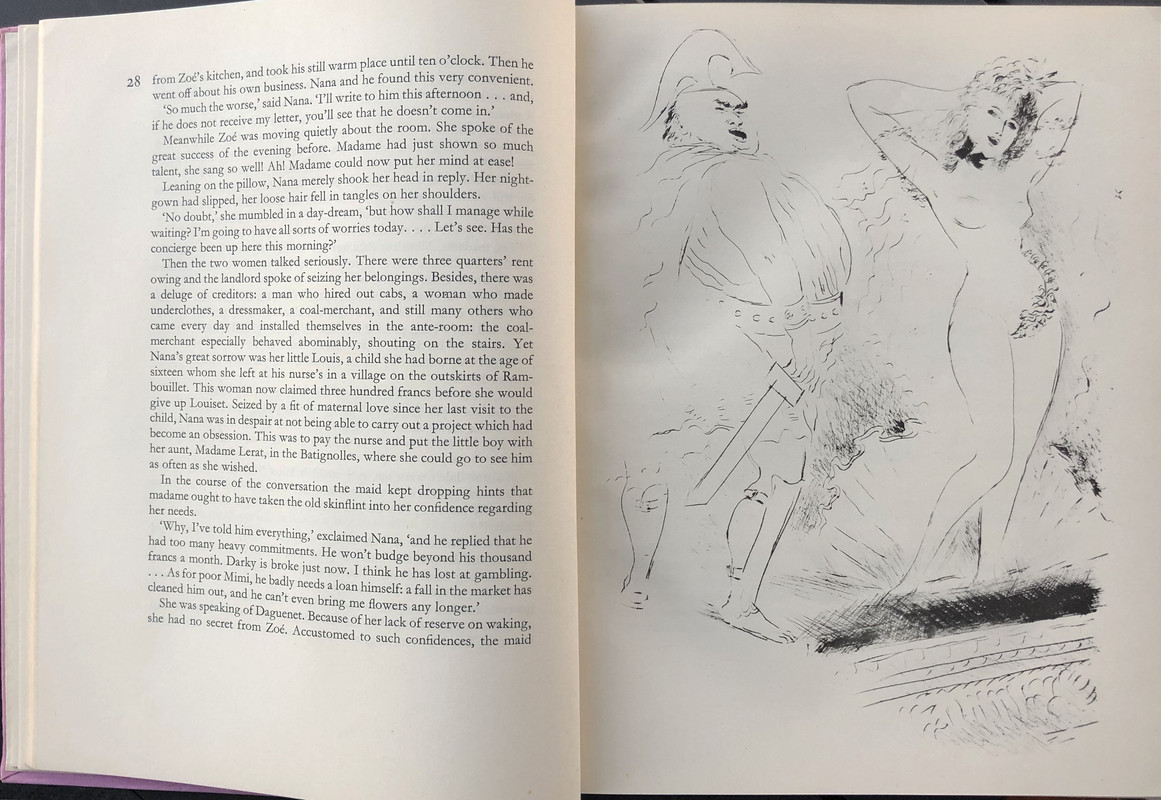
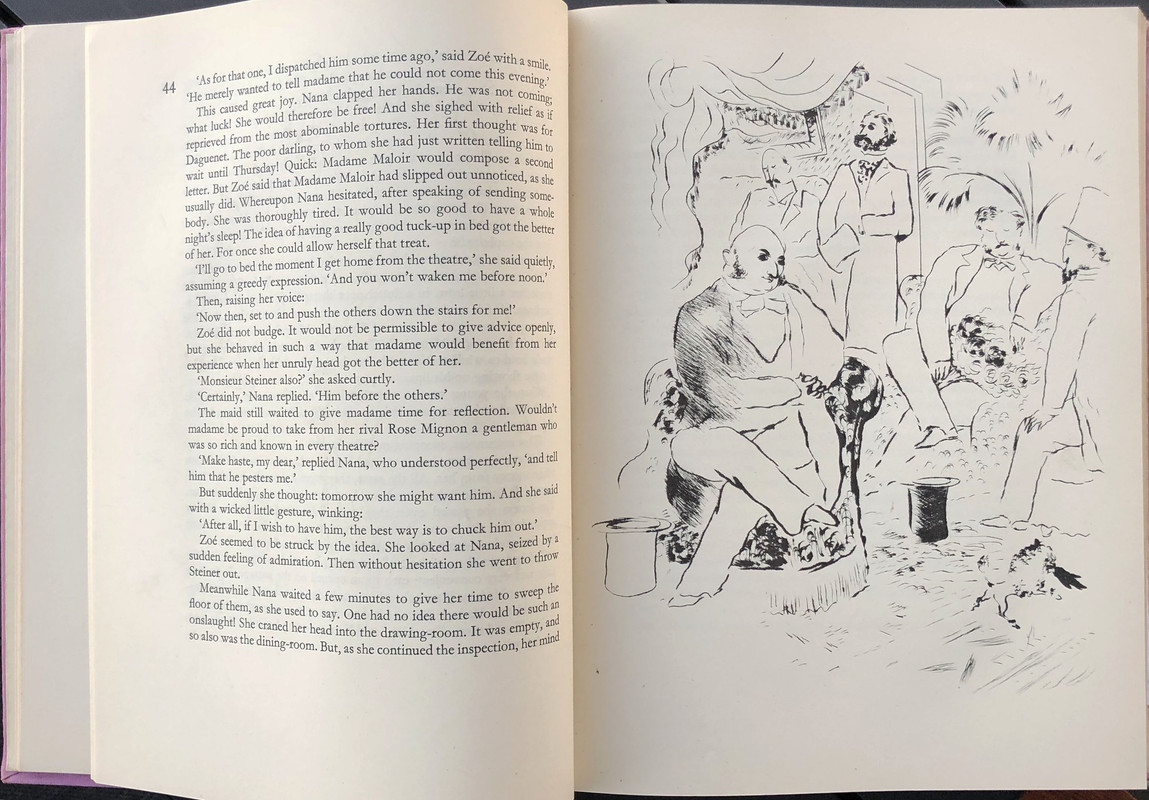
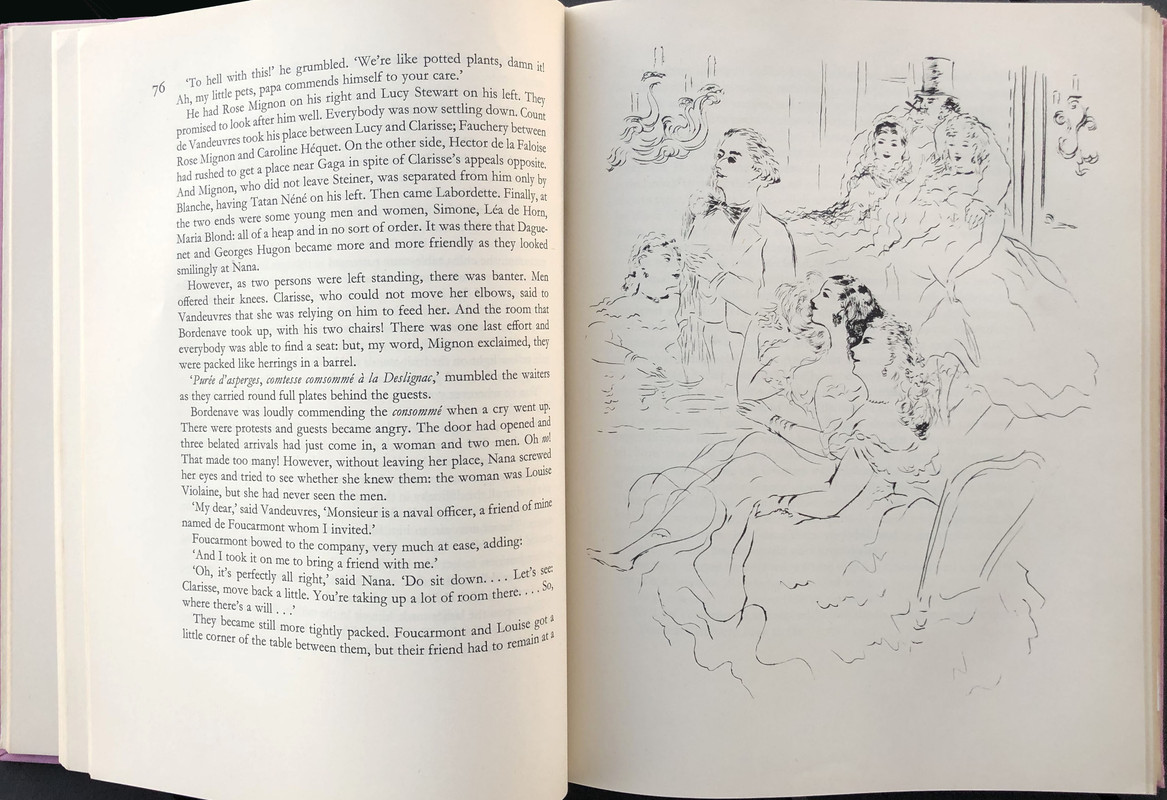
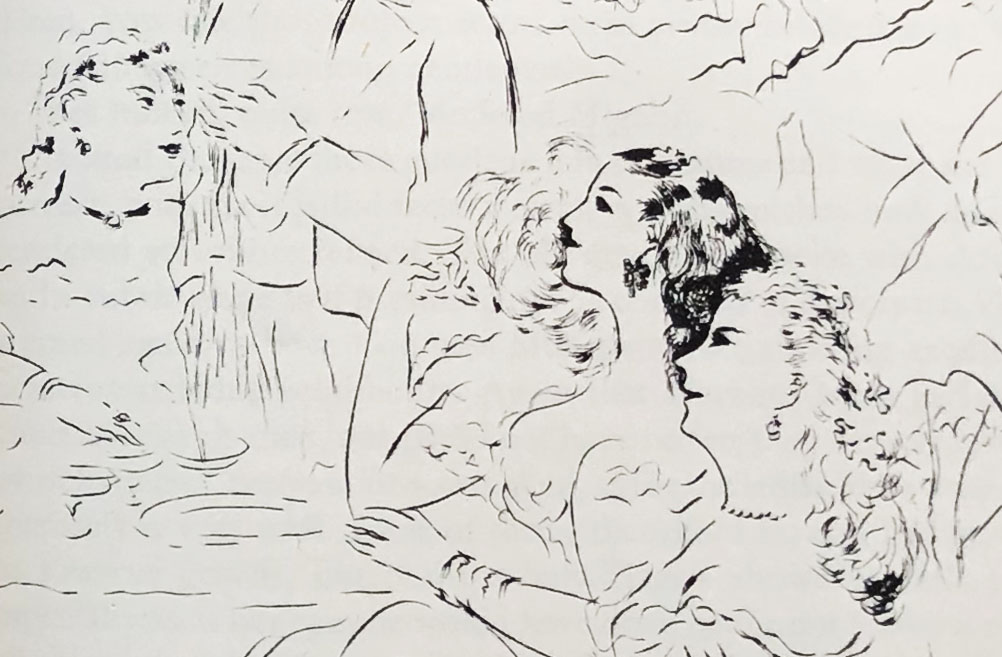
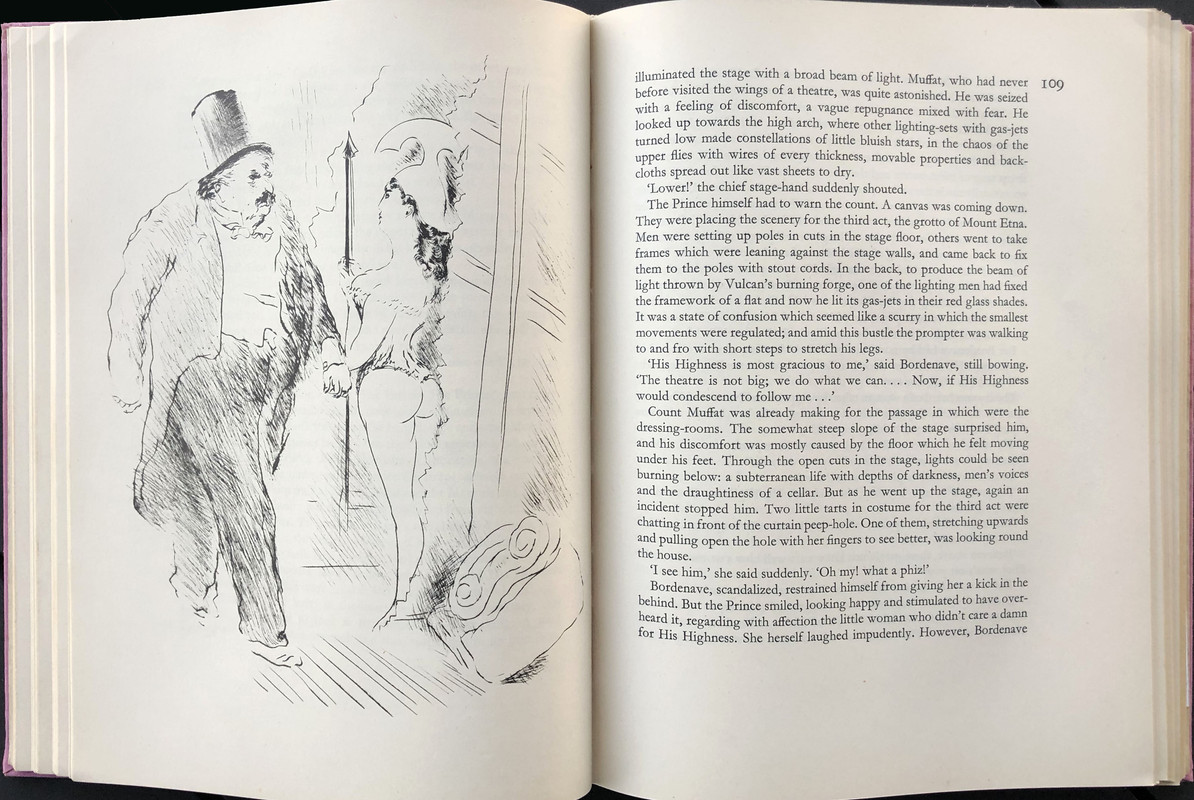
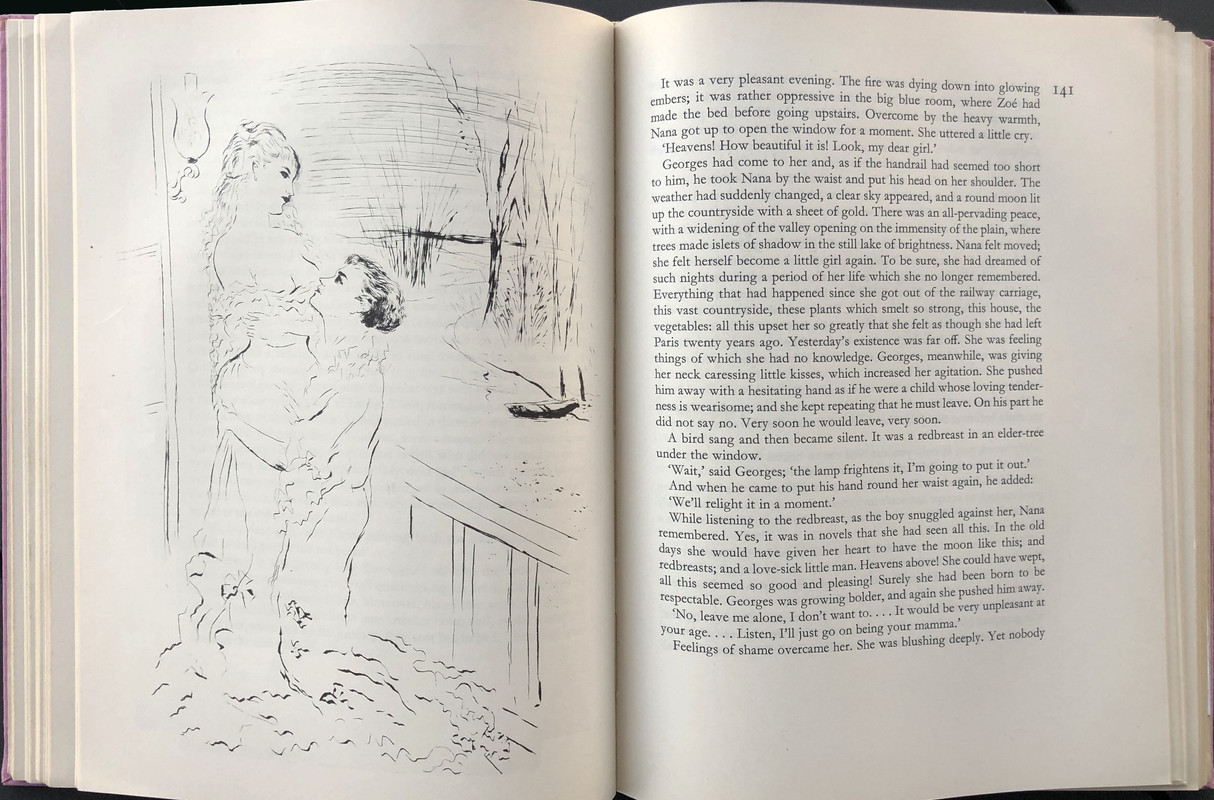
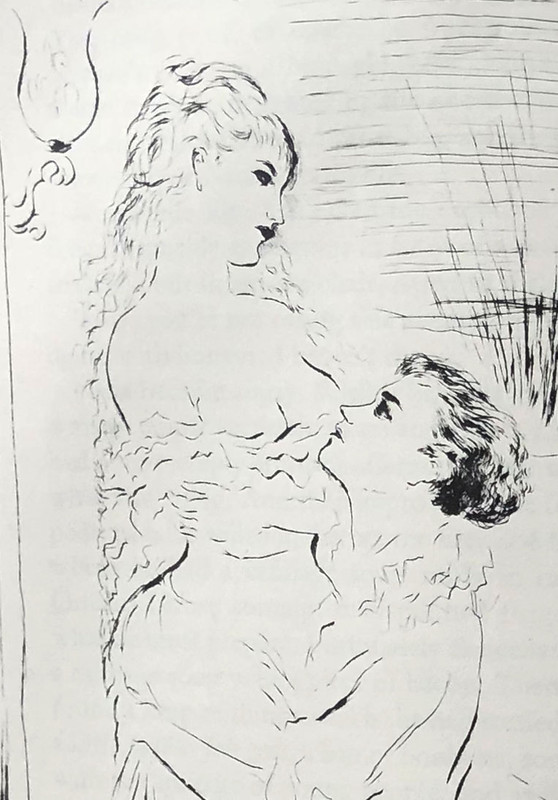
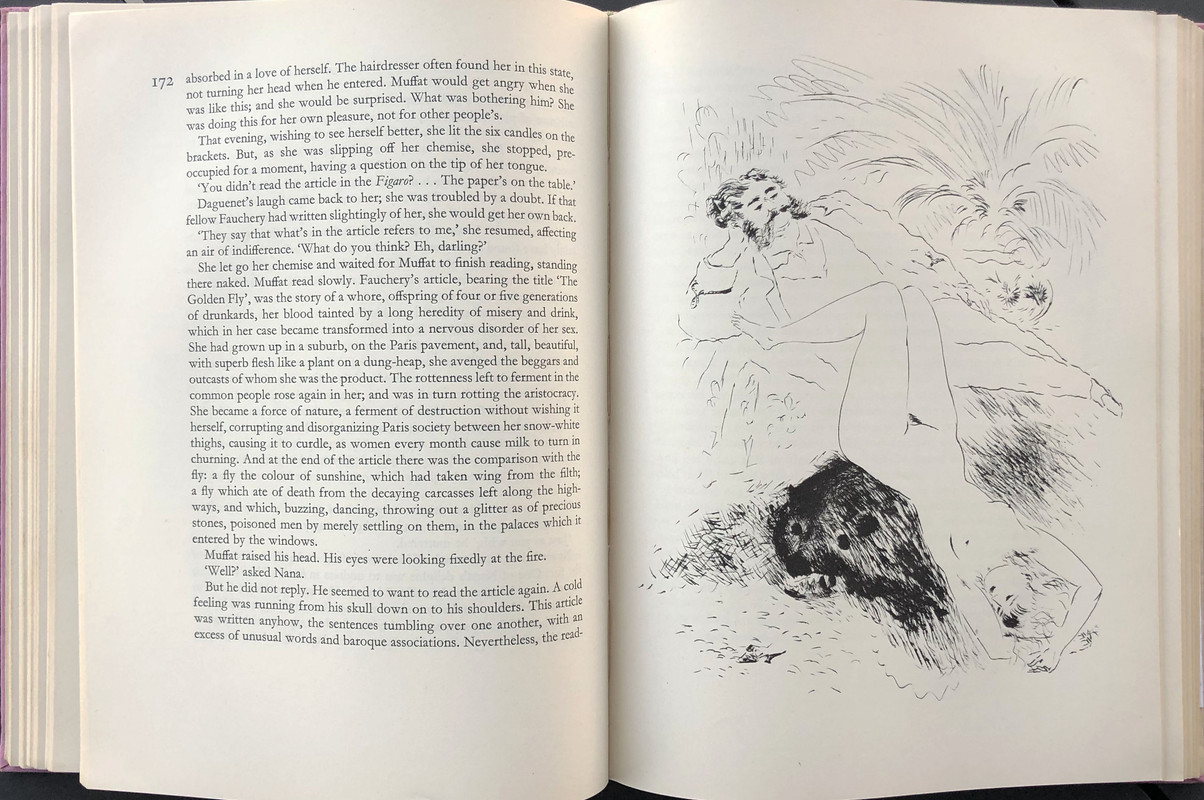
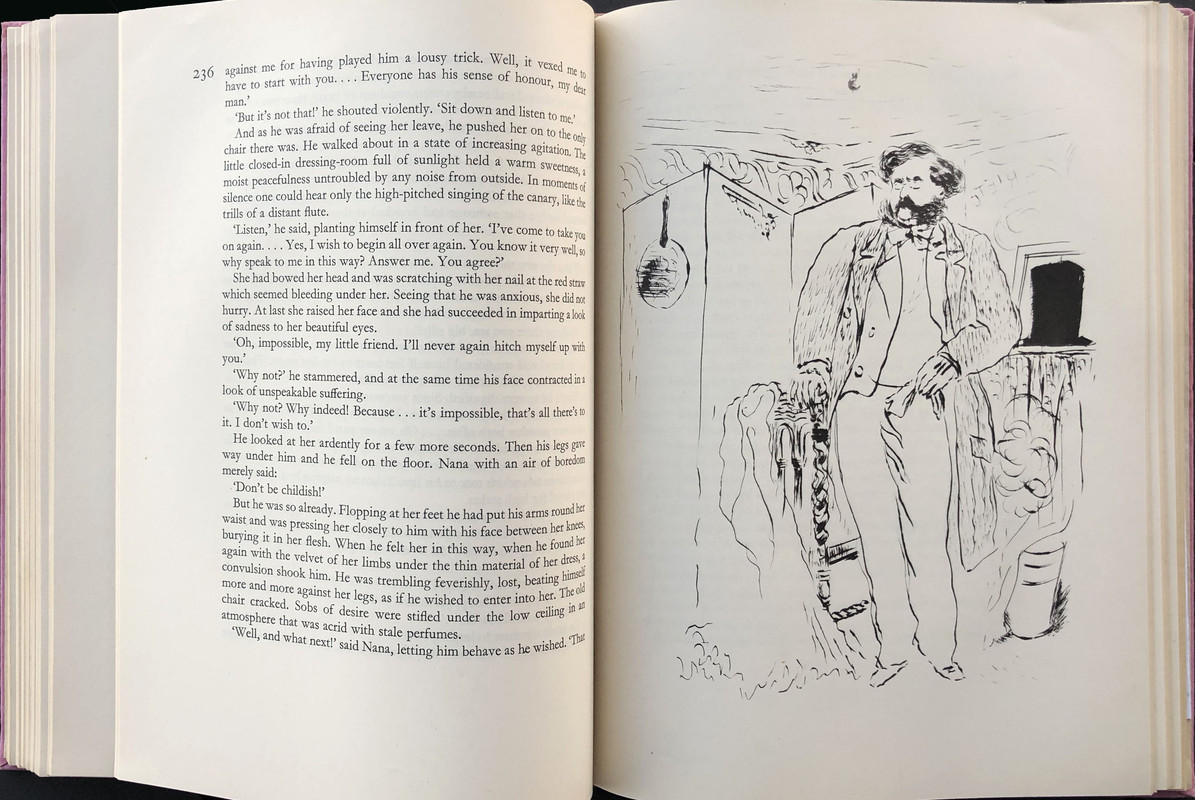
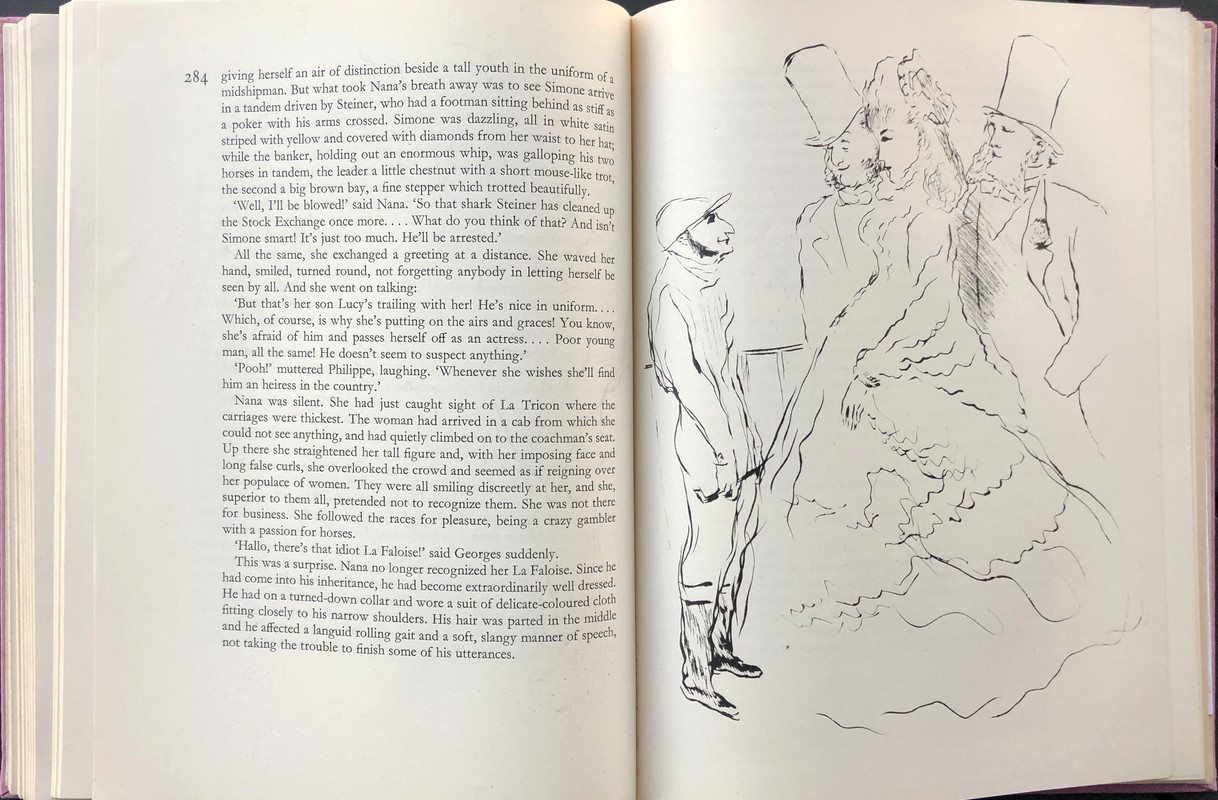
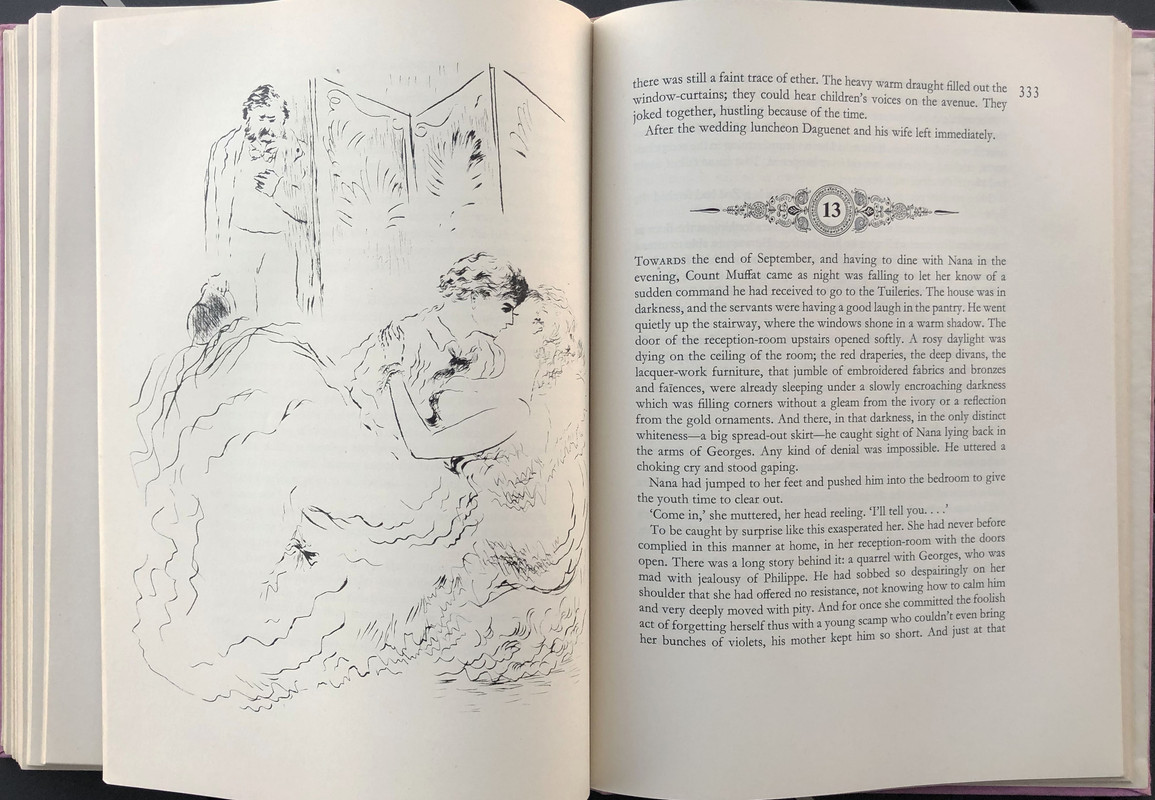
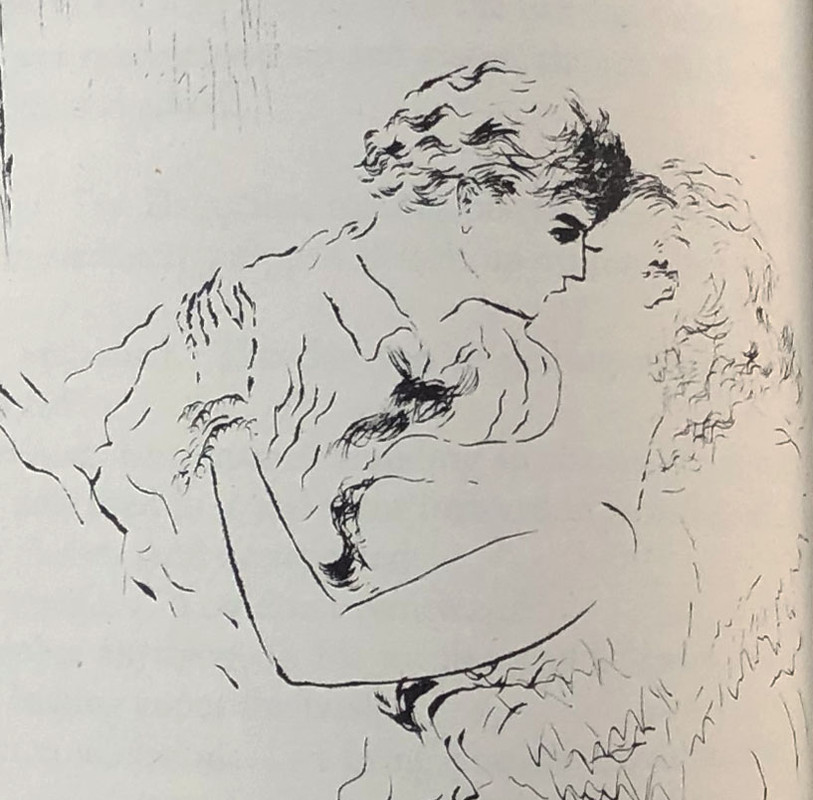
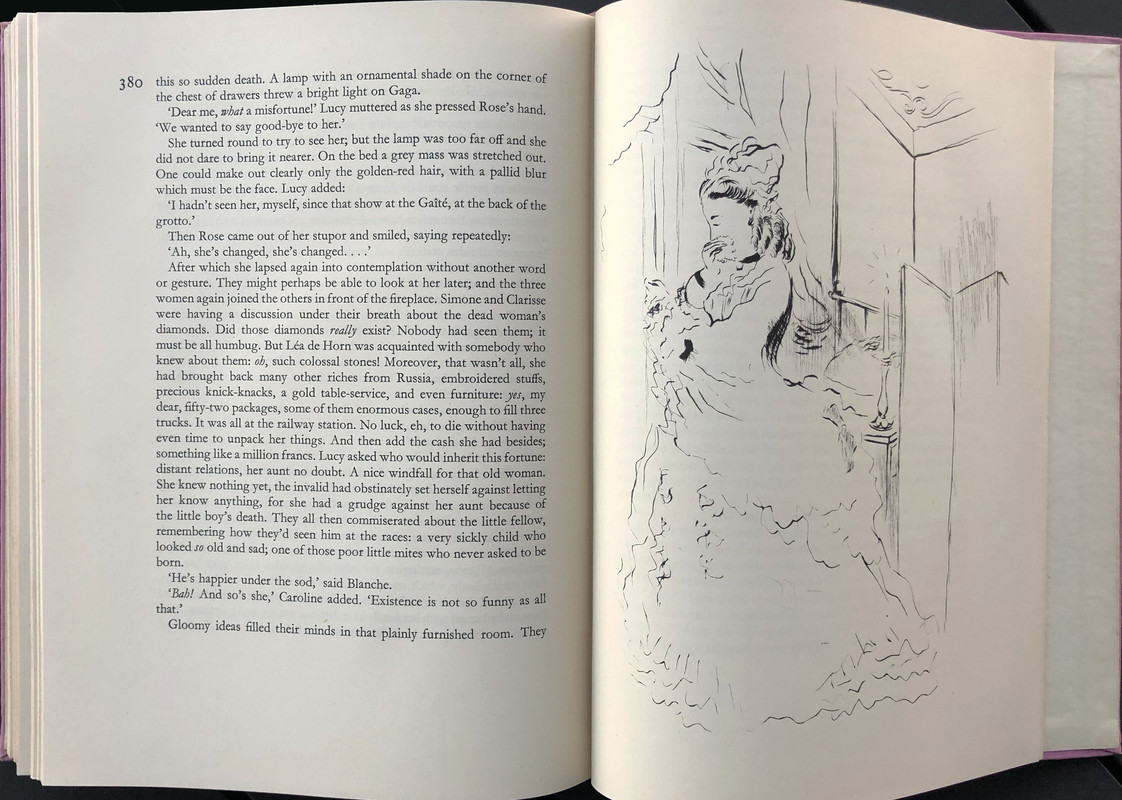
The text was translated by Charles Duff, there is an unattributed one page forward, but a liberal 15 etchings by Vertés.
The 25.9x18.9cm. slipcase is plain grey cardboard, and even the unstained parts of mine look cheap and nasty, which was the FS style of the time.
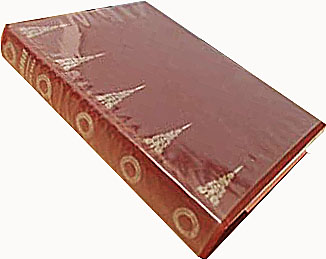
In 1973, a photolithographic reprint of the 1956 edition was produced by Folio Press. This was bound in red-brown cloth with a design in gold, had orange endleaves and a transparent plastic dust-jacket.
 ….
…. 


1973 edition
An index of the other illustrated reviews in the "Folio Archives" series can be viewed here.
My copy of Nana is rather forlorn with a stained slipcase and faded spine (all FS books bound in silk have faded spines eventually) but as I paid only $4 for it, I am not complaining, and all the pages are in good order. When issued, the book would have had a glassine dust jacket as well as a slipcase.
The novel Nana was written in French in 1880 and tells the story of a beautiful young woman’s rise from streetwalker and second-rate actress at the age of 15 to high-class courtesan and leading opera singer during the last years of the French Second Empire. Along the way she destroys every man who pursues her. It is considered to be one of Zola’s finest works.
The 387 page book is bound in undecorated vivid violet silk that is sensuous to the touch, but for some unknown reason the page tops have been stained green in order to clash as much as possible with the binding. The gilt title and author on the spine are the only decorations. The endpapers are plain white.
The text was translated by Charles Duff, there is an unattributed one page forward, but a liberal 15 etchings by Vertés.
The 25.9x18.9cm. slipcase is plain grey cardboard, and even the unstained parts of mine look cheap and nasty, which was the FS style of the time.
In 1973, a photolithographic reprint of the 1956 edition was produced by Folio Press. This was bound in red-brown cloth with a design in gold, had orange endleaves and a transparent plastic dust-jacket.
 ….
…. 
1973 edition
An index of the other illustrated reviews in the "Folio Archives" series can be viewed here.
2Willoyd
Ah, Emile Zola, one of those classic authors almost completely ignored of 'late' by the Folio Society: just three of his books ever published by them, and only one (Germinal) in the past fifty years, apart from a reprint of Nana 47 years ago. Thank goodness for Oxford World Classics.
3kdweber
It's interesting that the 1948 LEC edition of Nana was also bound in Burgundy moire silk which also usually looks pink now.
>2 Willoyd: The FS did a better job than the LEC which only published Nana. The HP published Germinal.
>2 Willoyd: The FS did a better job than the LEC which only published Nana. The HP published Germinal.
4Willoyd
>3 kdweber:
I wonder why so little interest, at least by publishers.
I wonder why so little interest, at least by publishers.
5kdweber
>4 Willoyd: Great author, I'd certainly love to see more of his oeuvre in nice English editions.

