
Folio Archives 193: The Apocrypha fine edition 2006
Talk Folio Society Devotees
Join LibraryThing to post.
1wcarter
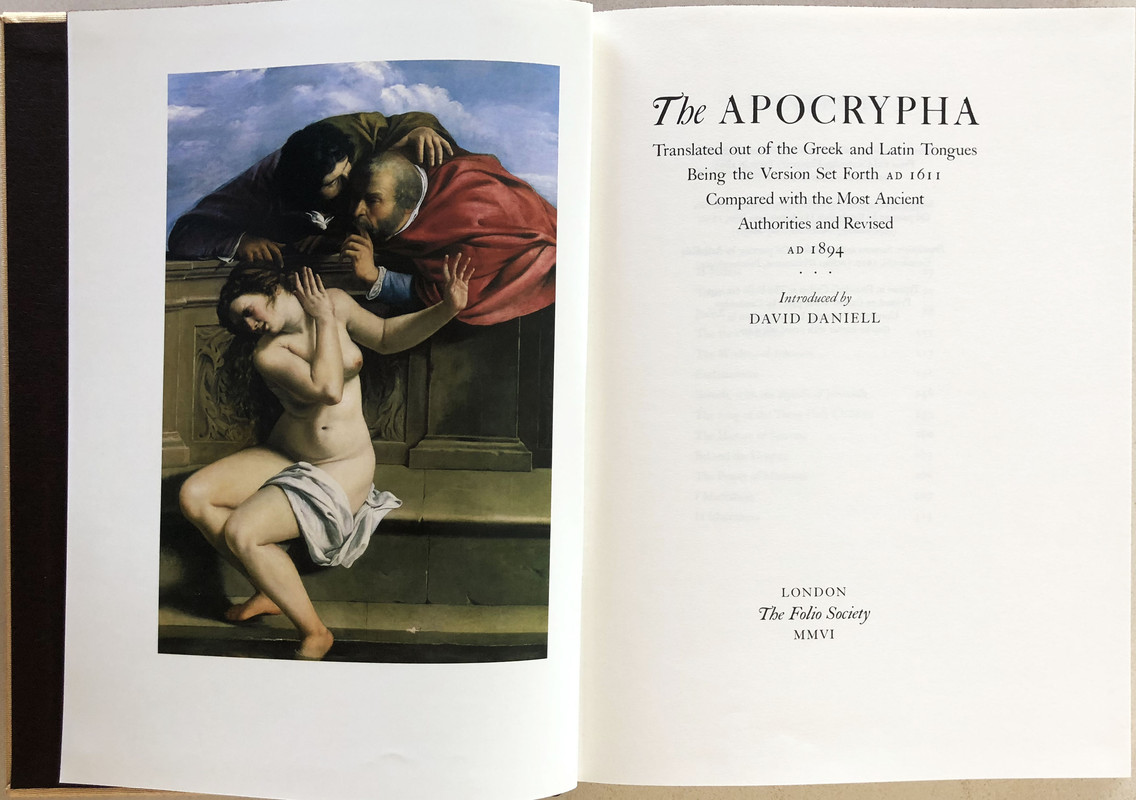
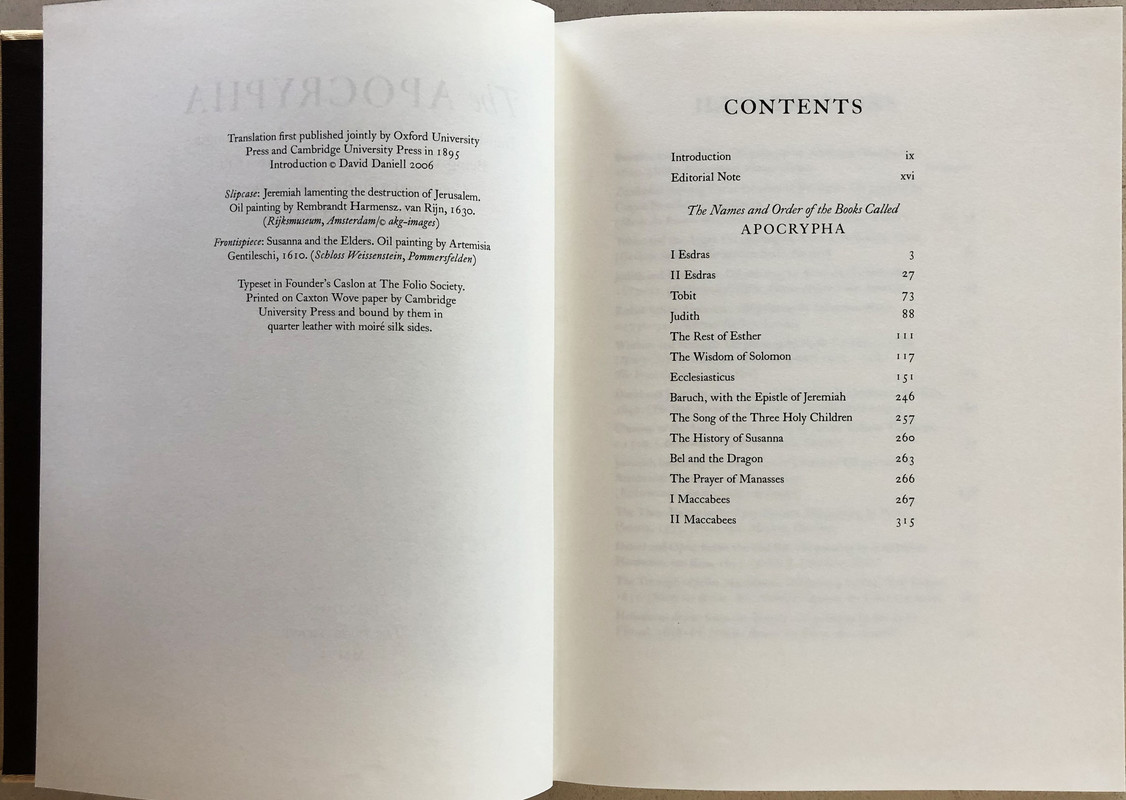
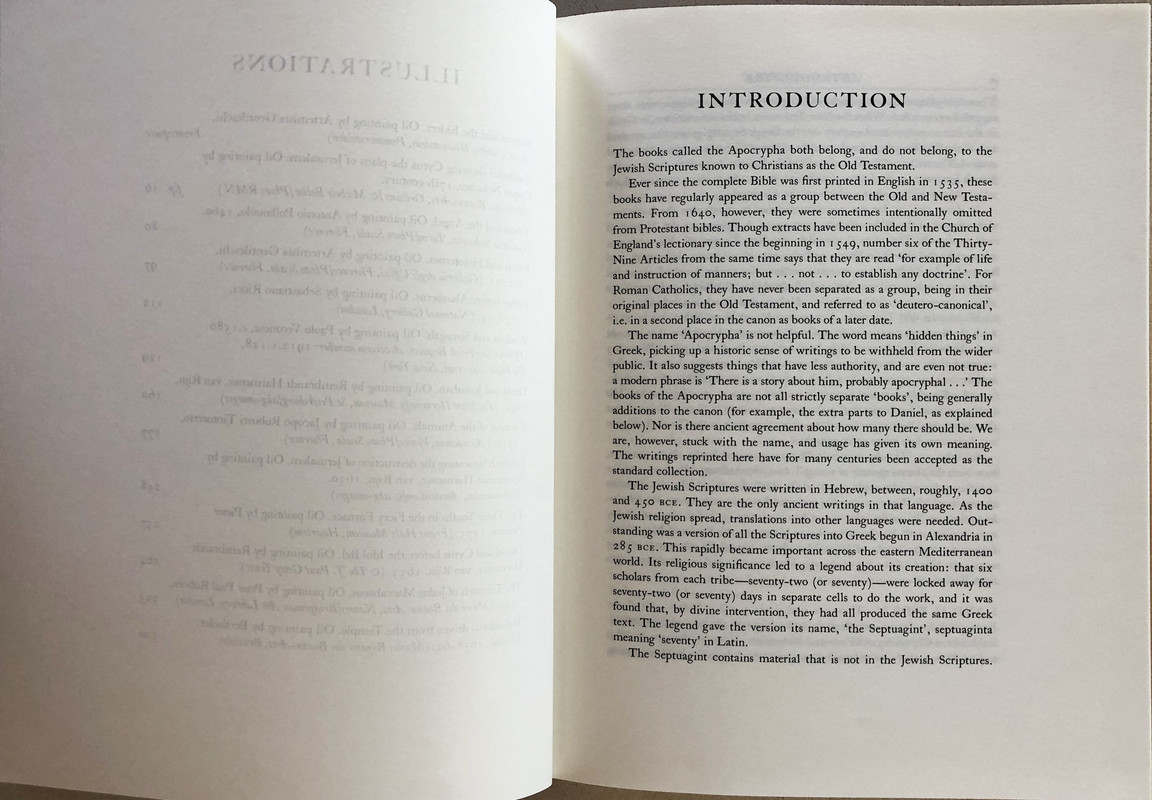
The Apocrypha, Translated out of the Greek and Latin Tongues, Being the Version Set Forth AD 1611, Compared with the Most Ancient Authorities and Revised AD 1894. 2006
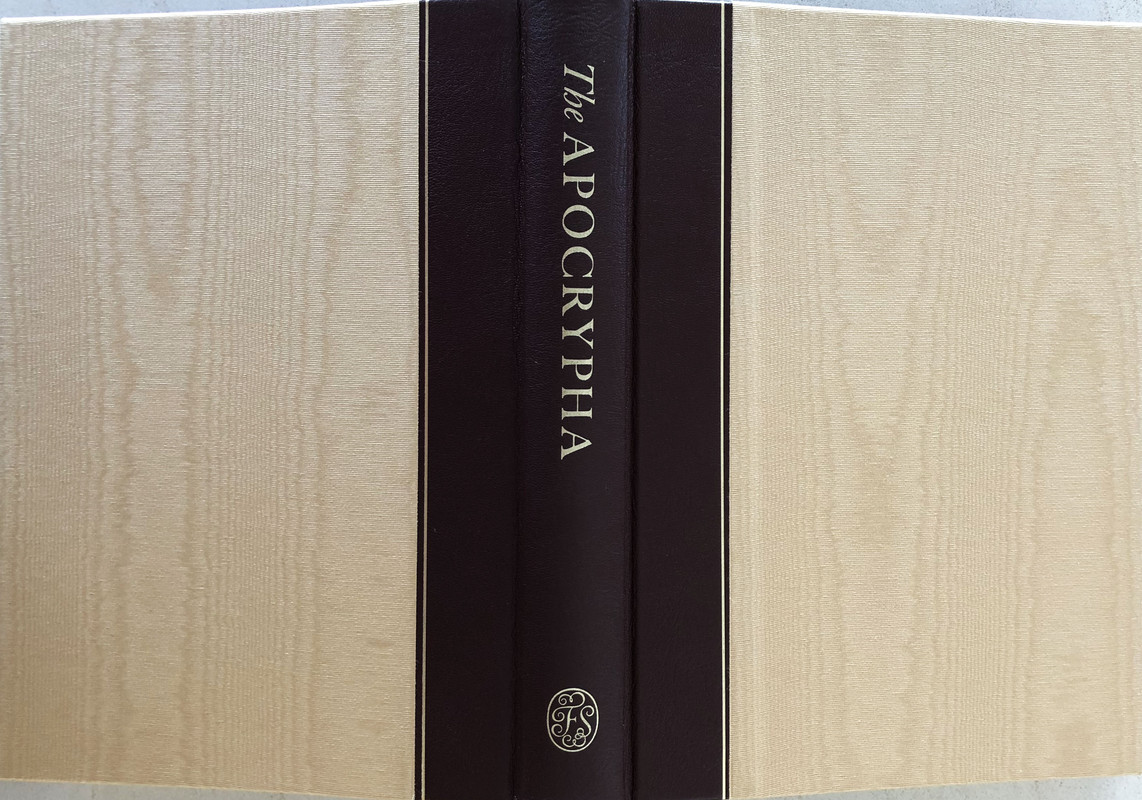
This is a large magnificent volume that has only one flaw – it is a stand-alone book. If the Old and New Testaments had also been published by the Folio Society in this format, it would have made a superb three-volume set. As it is, it is one of the most beautiful non-limited editions published by the FS.
The Apocrypha are a collection of ancient Jewish texts that were initially excluded from the Bible as being unnecessary for an understanding of Christianity. Some of the books within the Apocrypha are included in the Bibles of different branches of Christianity, and not others. There are a lot of theological arguments about the importance or influence of these books, and even which ones should be even considered for inclusion within this addendum to the Bible. Some were considered to contain knowledge that was too esoteric or heretical for everyone to read, and were restricted to the clergy.
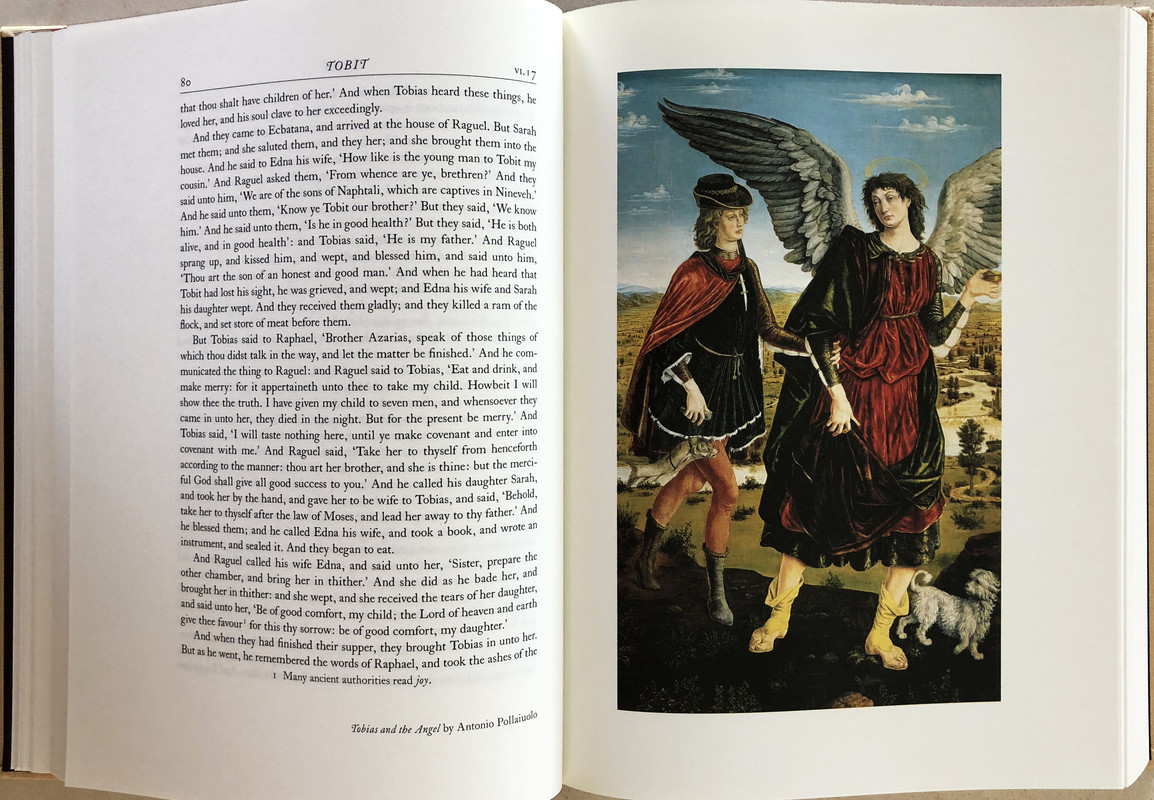
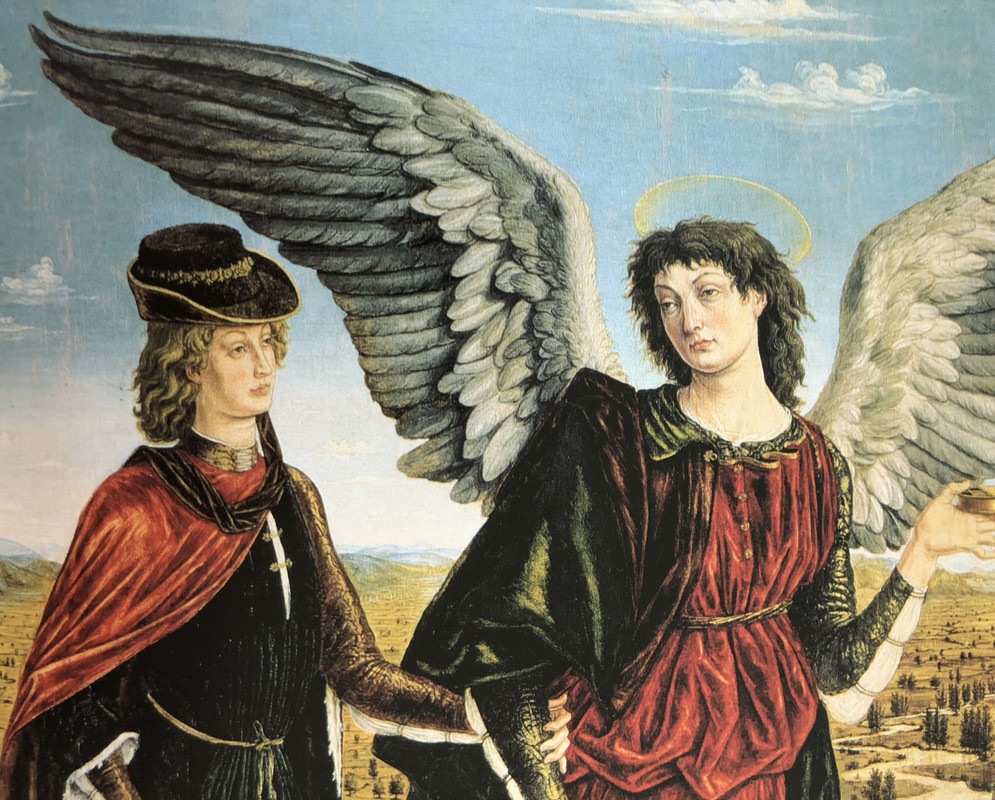
Despite the discussions, there are some good Old Testament style stories here (eg. Tobit), that were probably written between 200BC and 400AD.
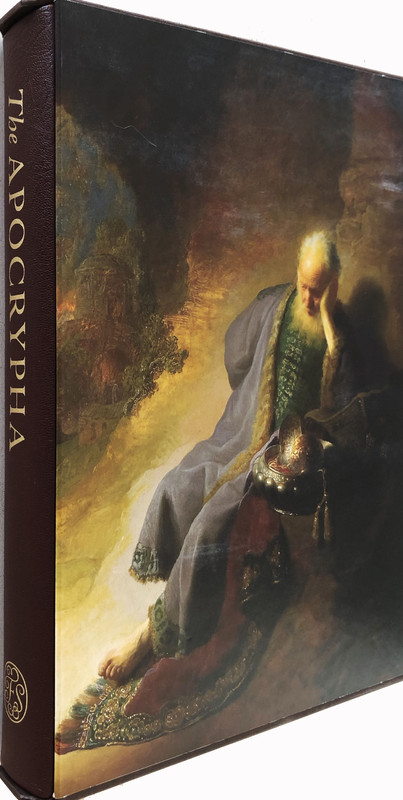
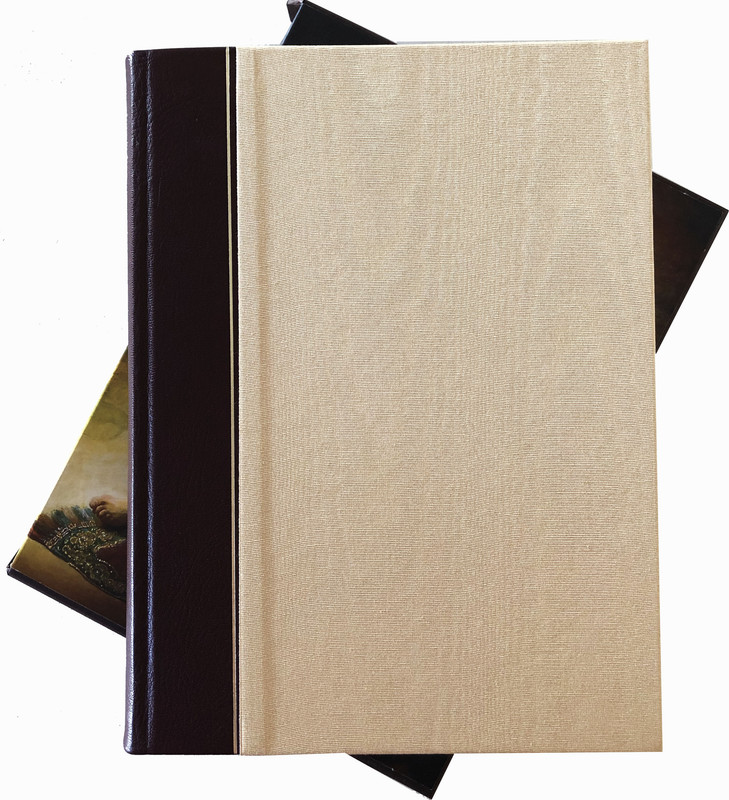
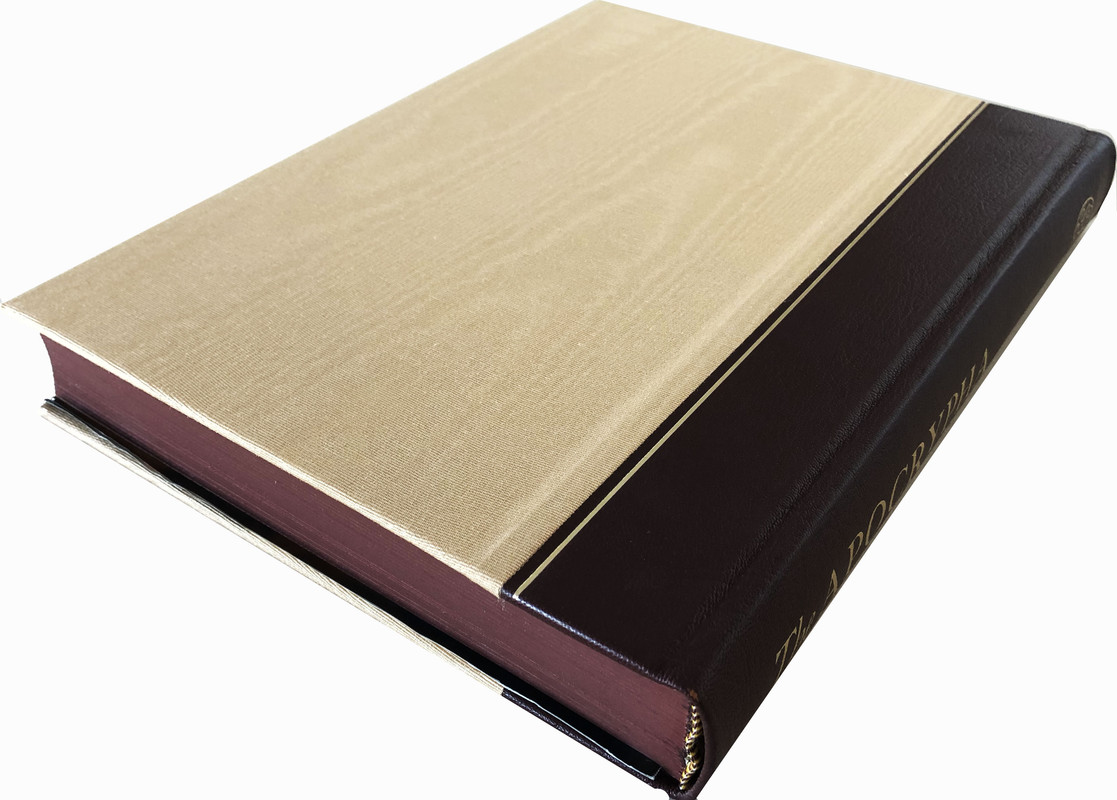
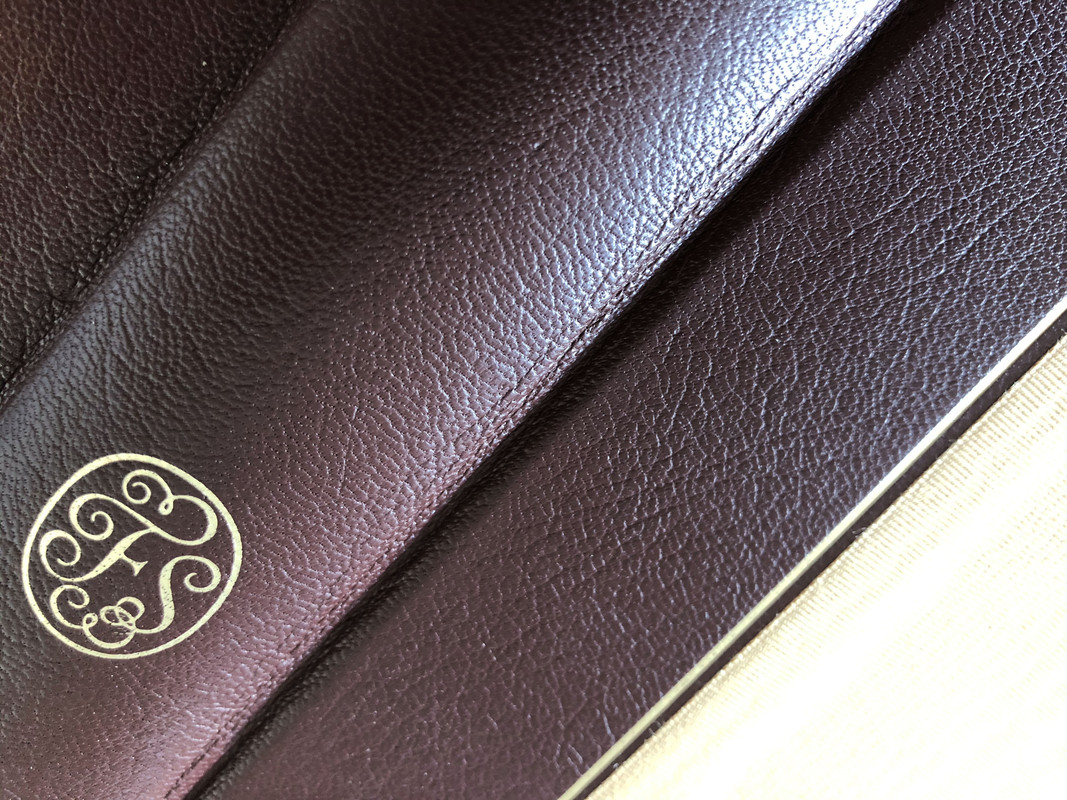
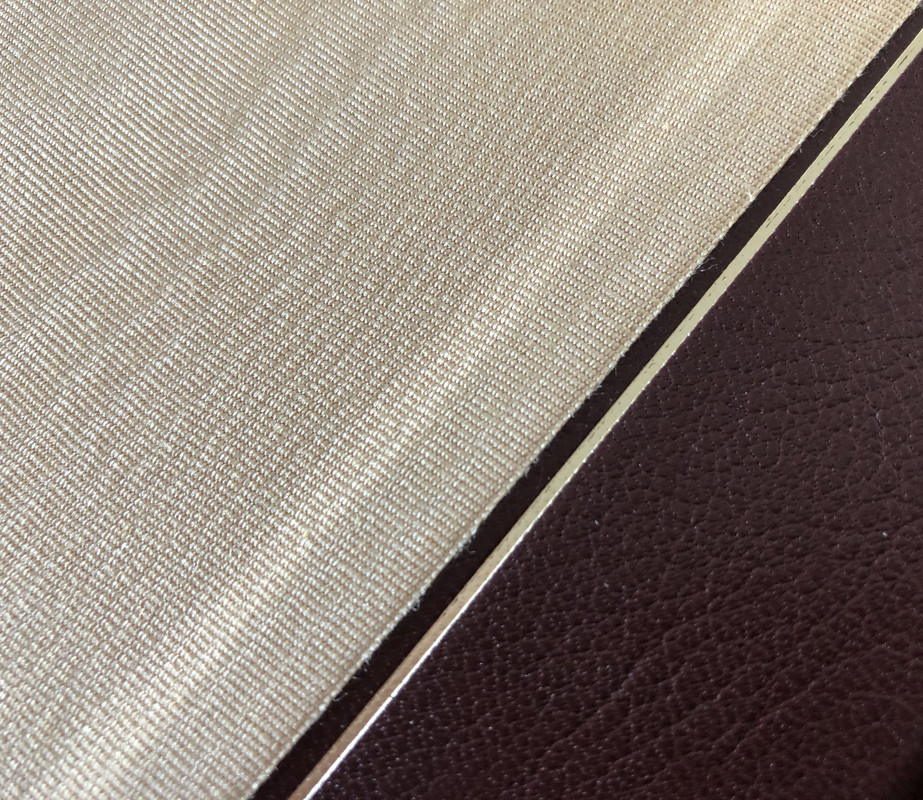
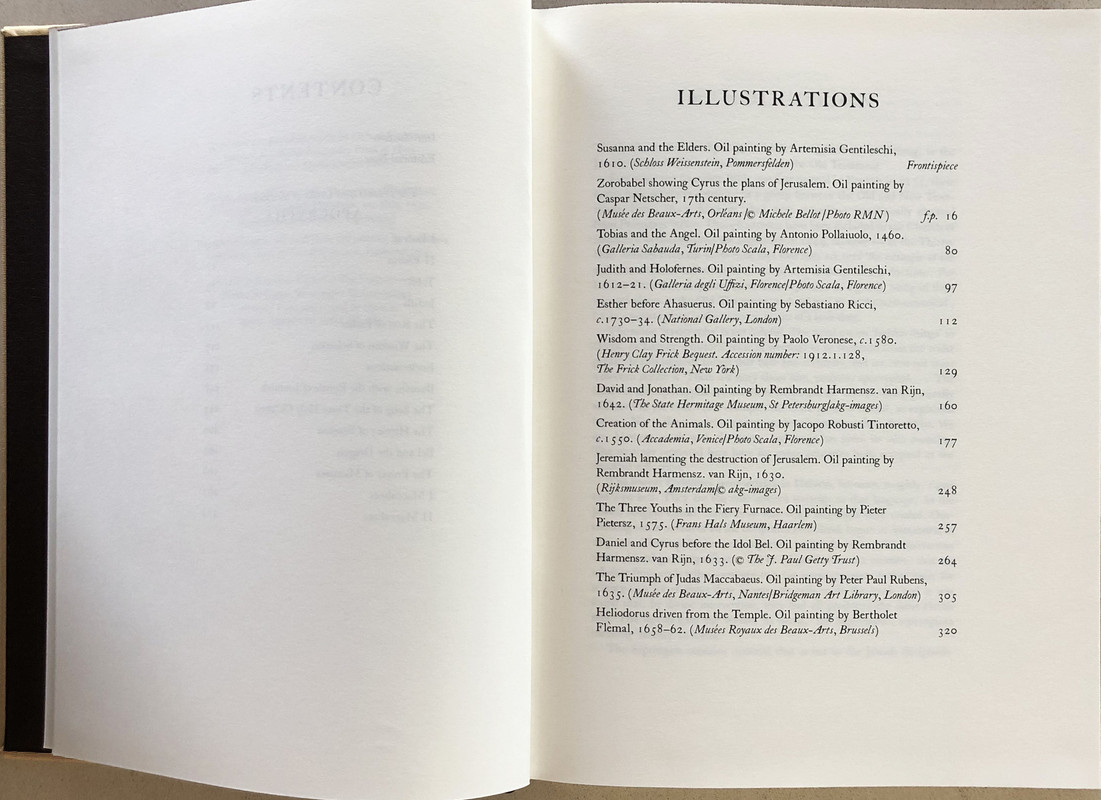
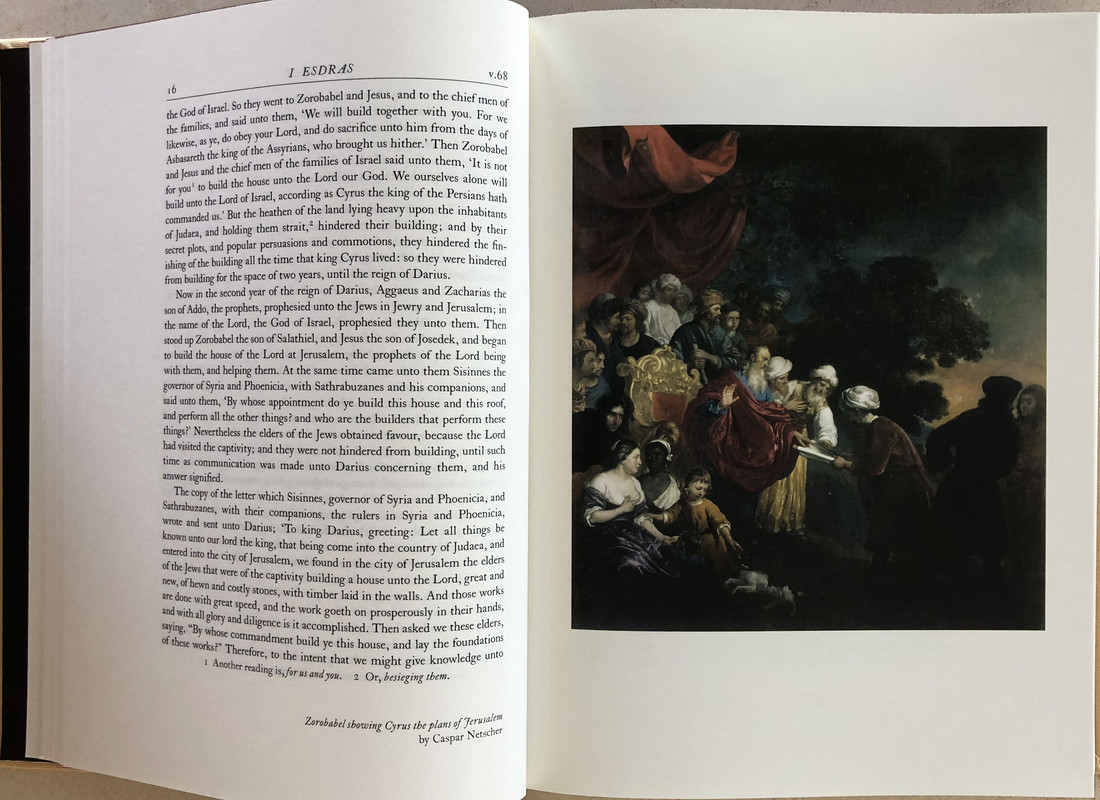
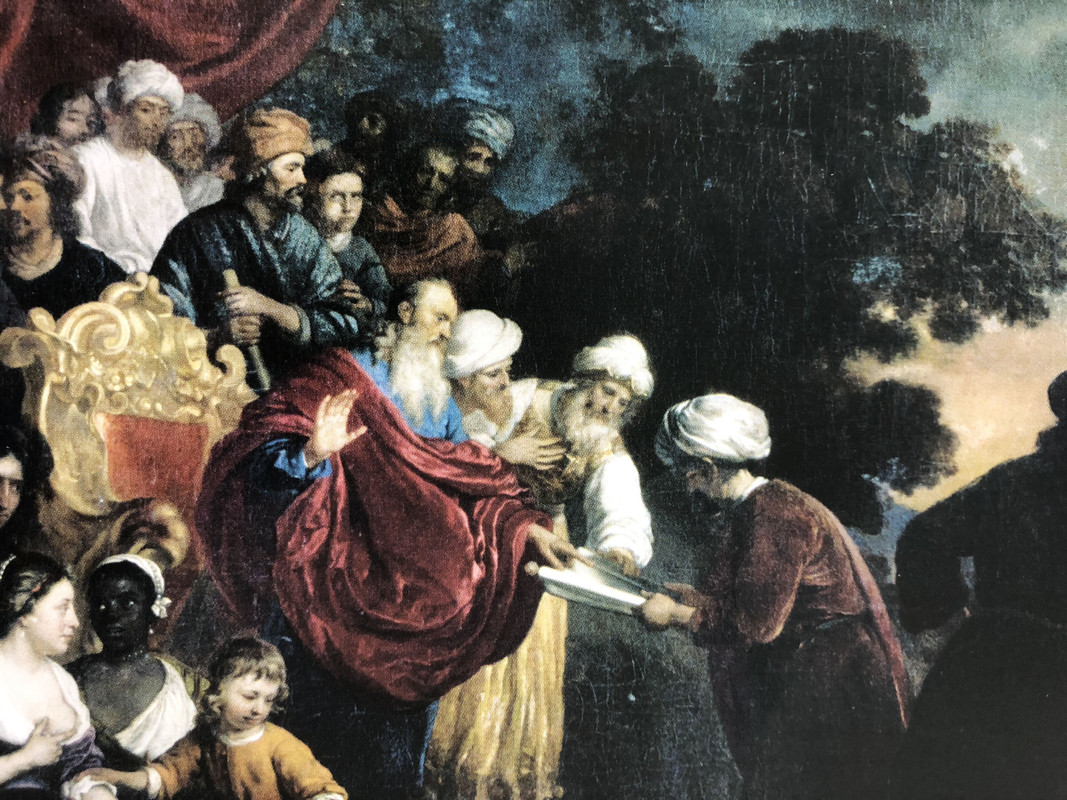
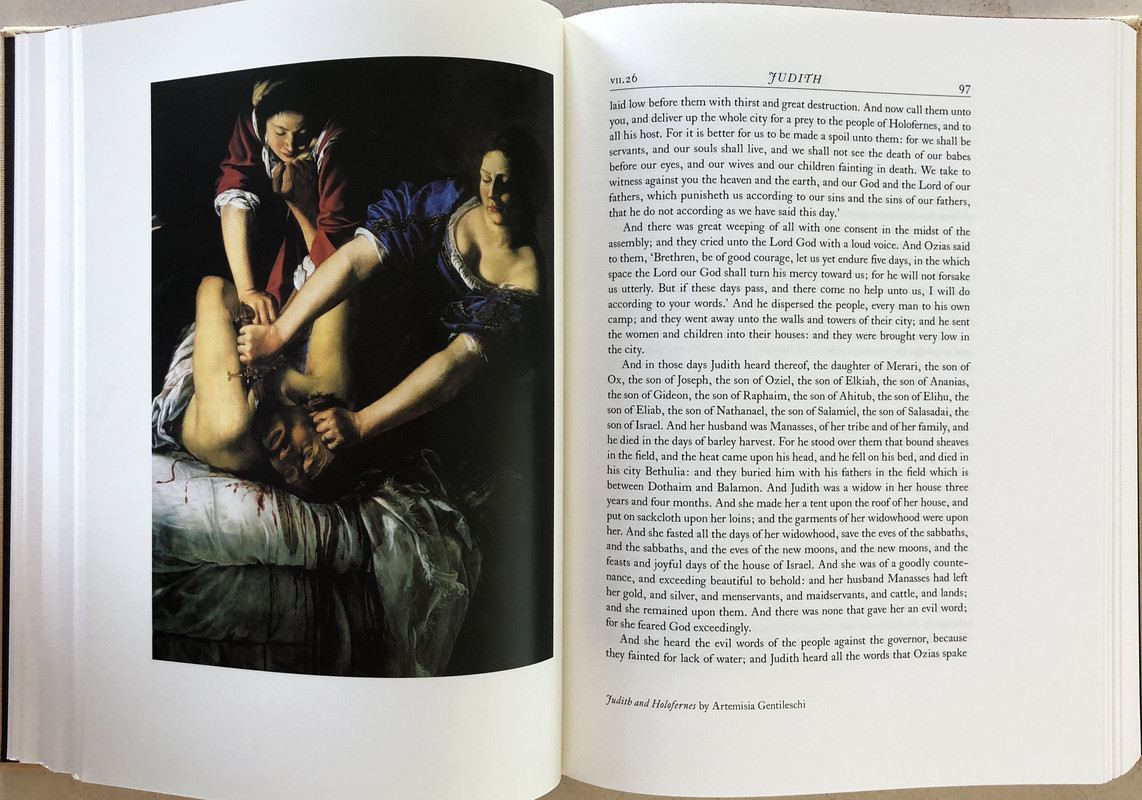
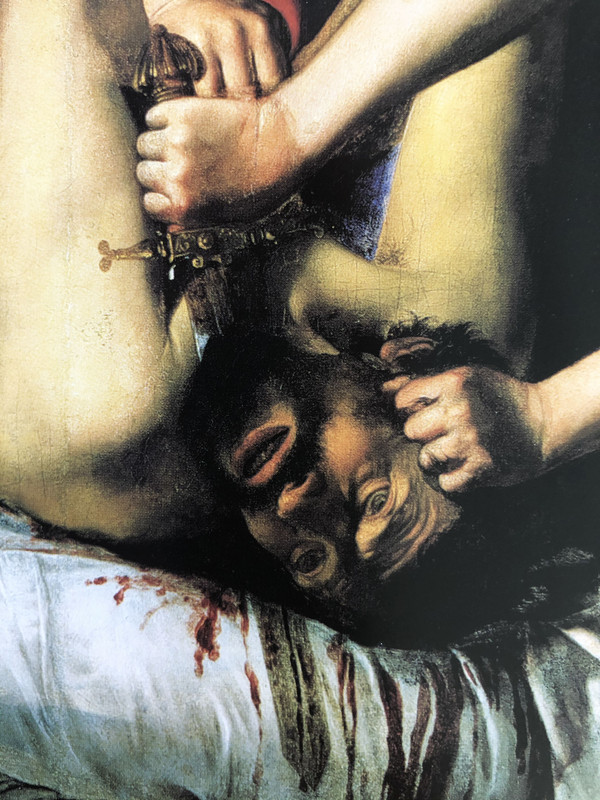
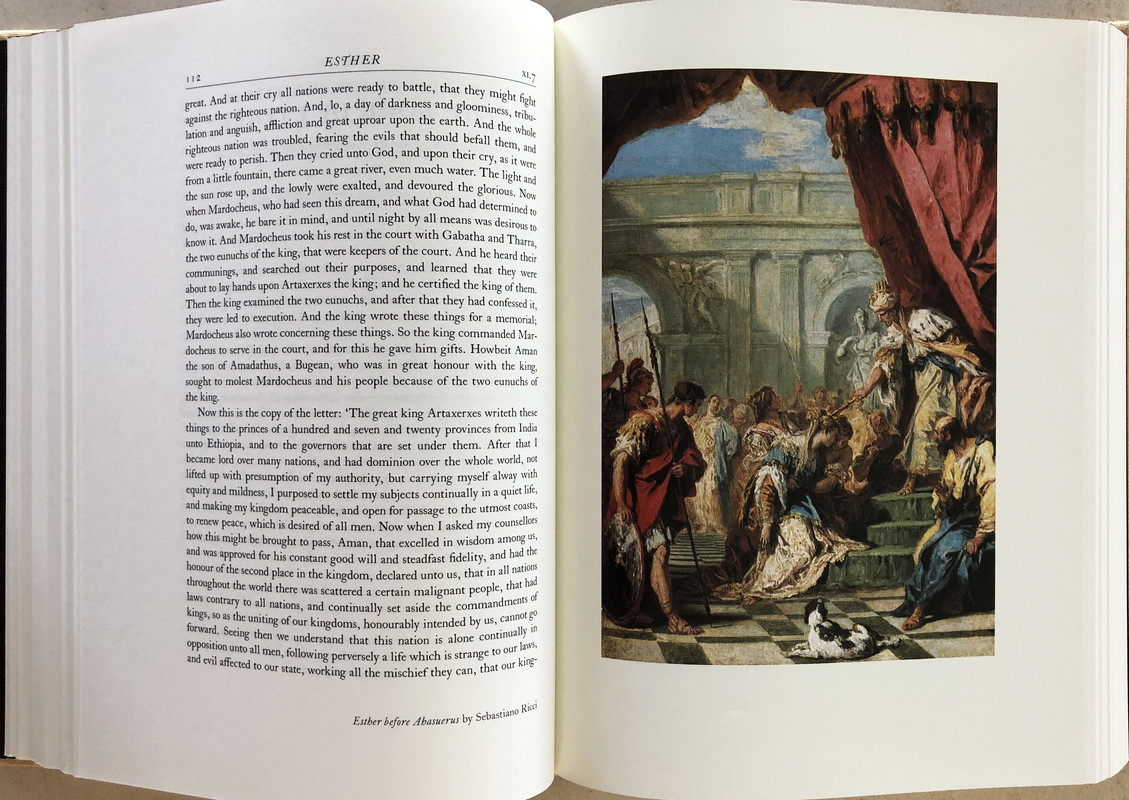
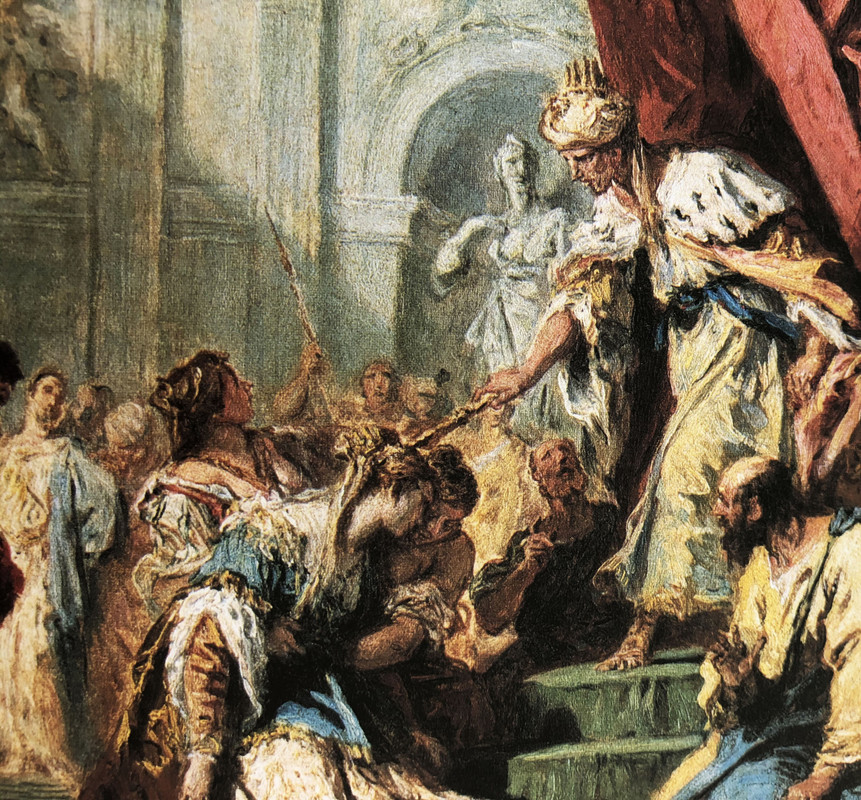
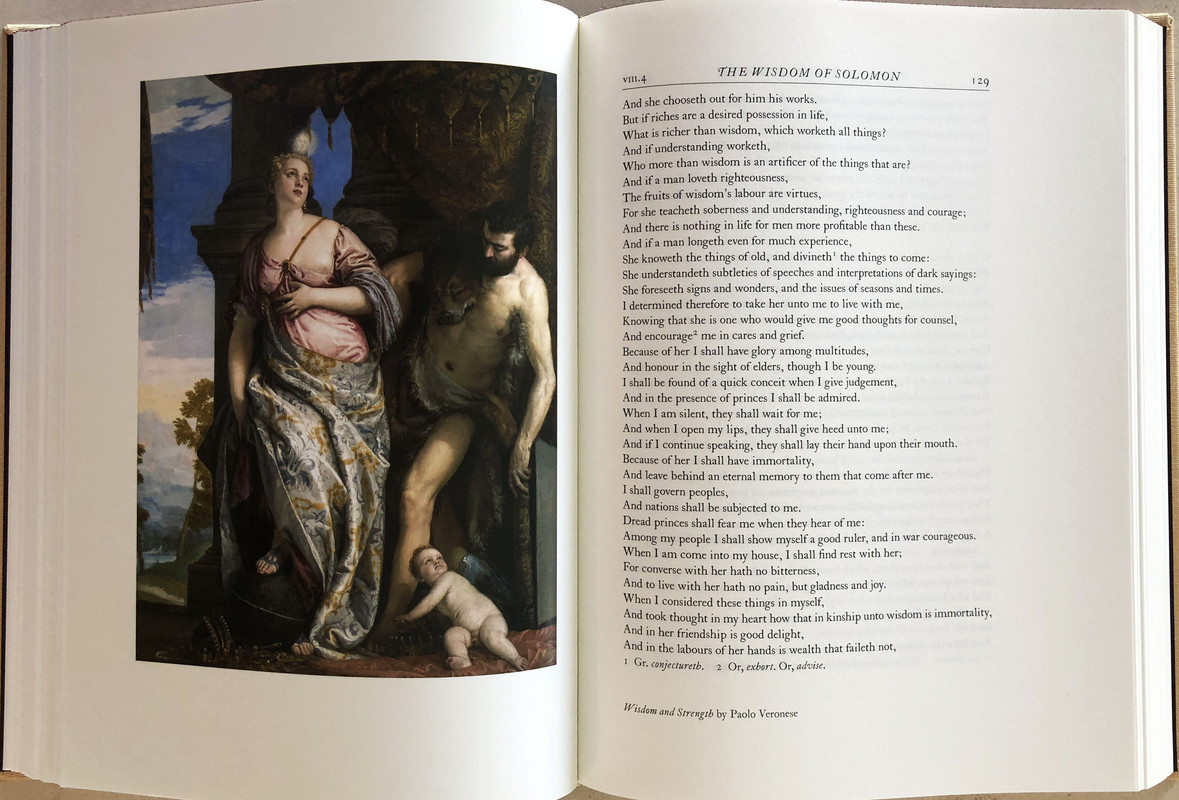
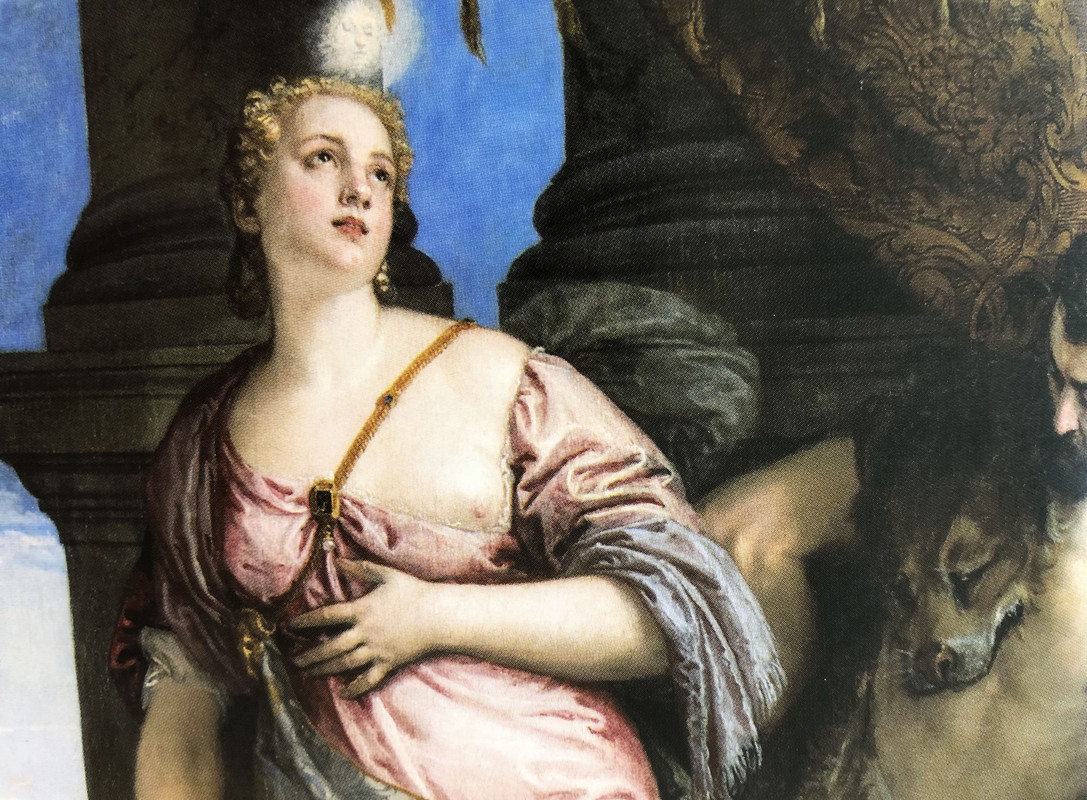
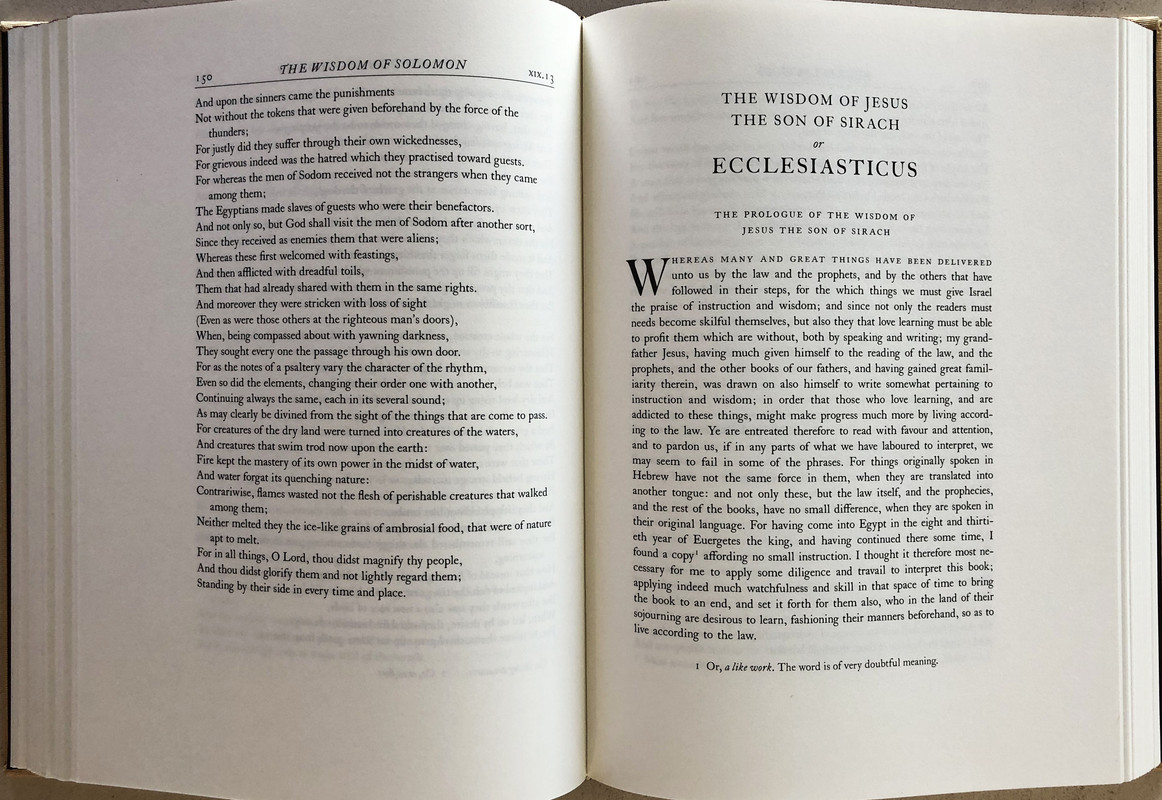
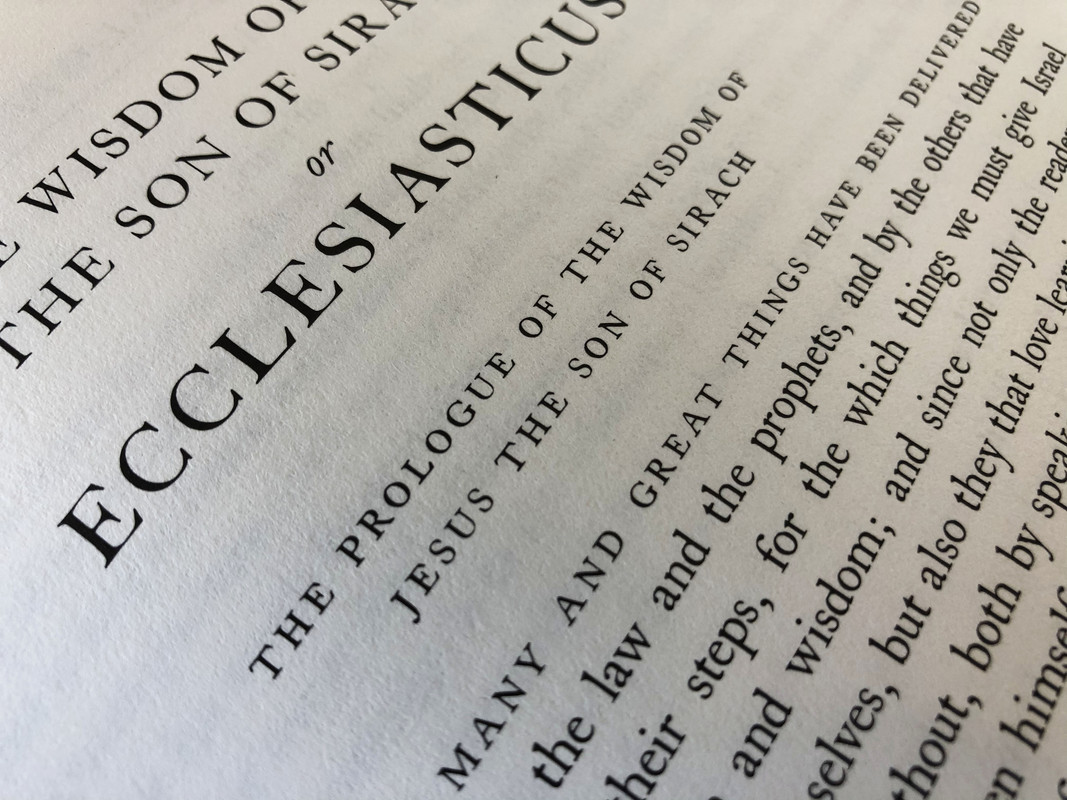
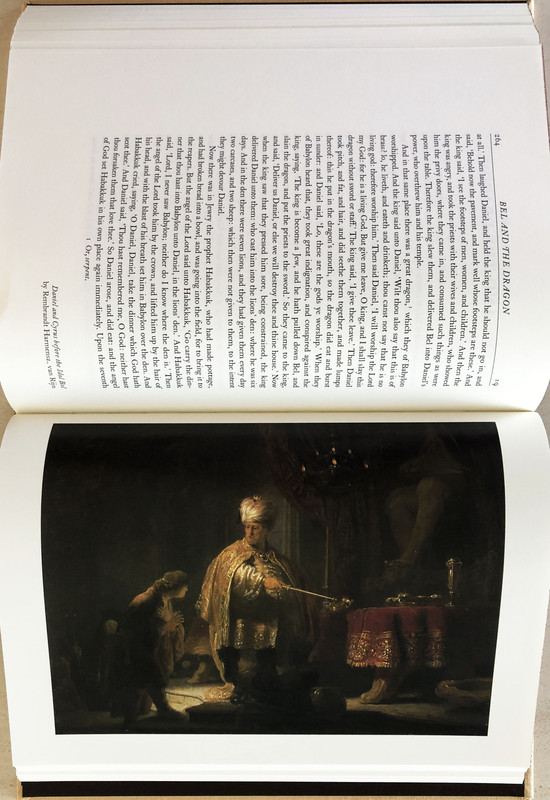
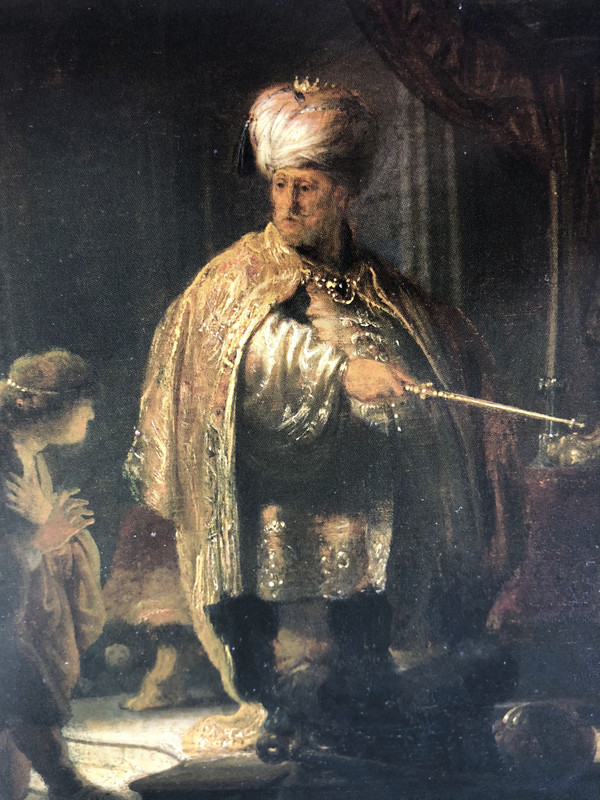
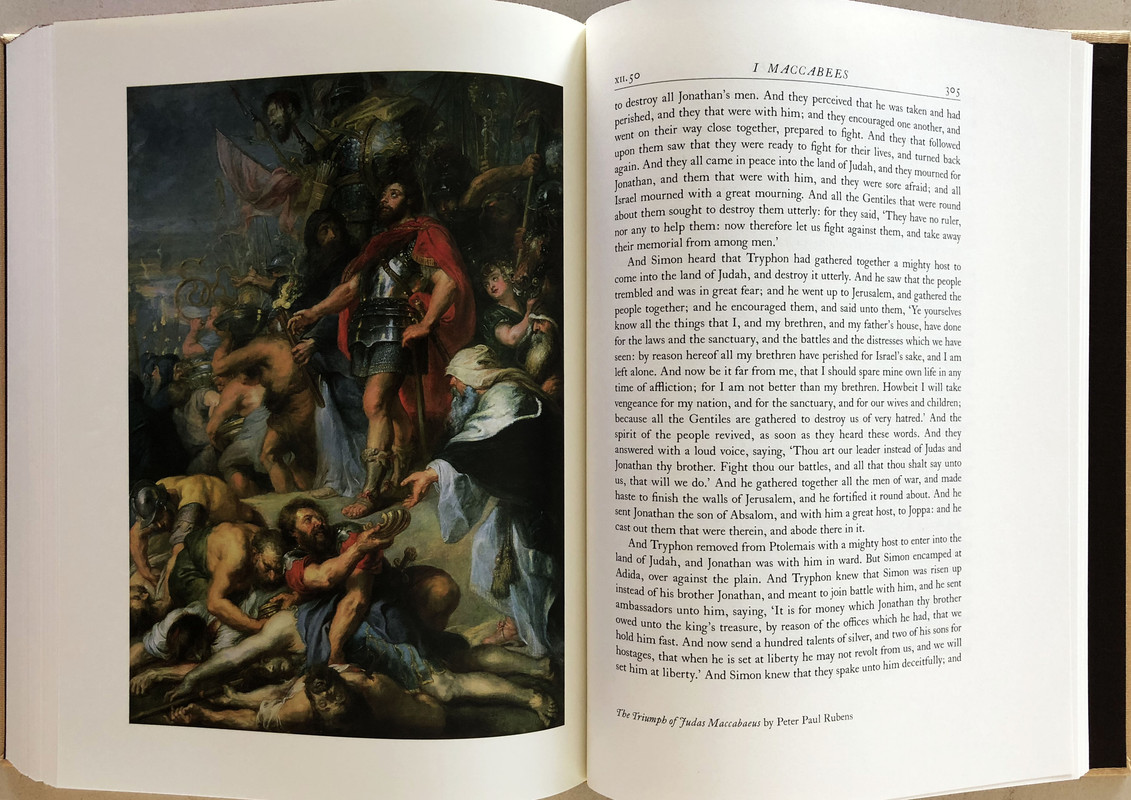
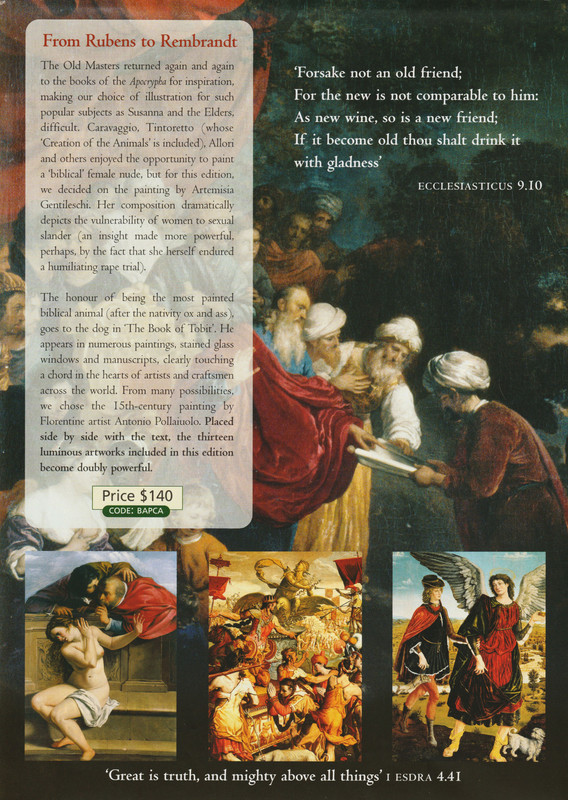
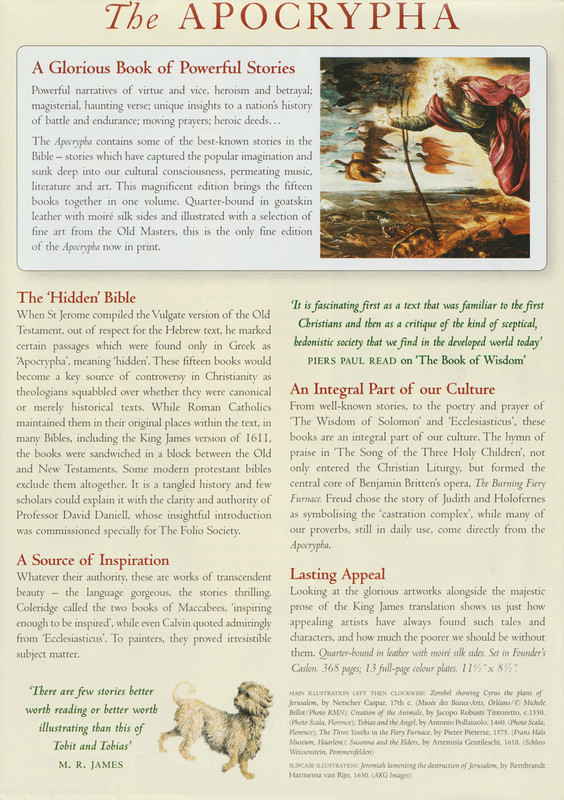
Quarter bound in brown leather with gilt spine titling, the boards are covered in cream coloured moire silk that shimmers in changing light. The xvi + 351 page book is introduced by David Daniell and contains all the texts that have (and have not) been included in various editions of the Apocrypha. There are 13 bound in colour plates of old paintings that match the different stories.
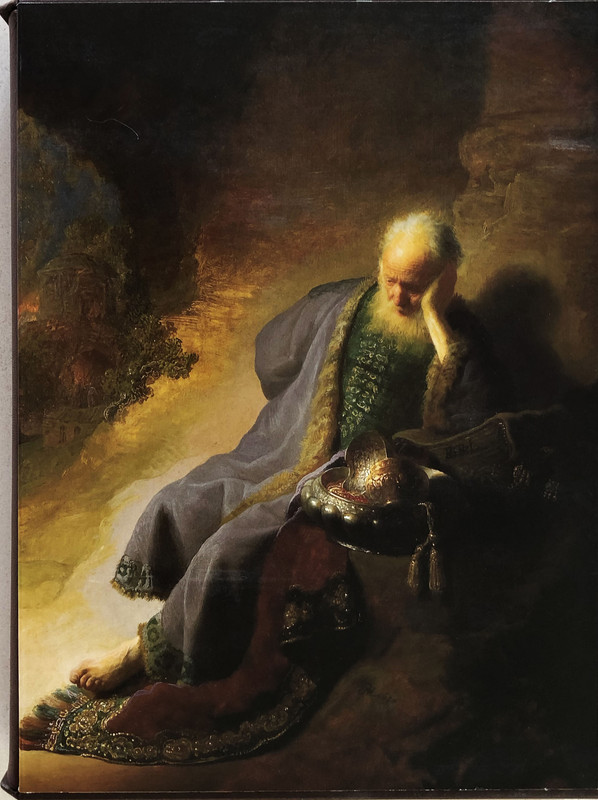
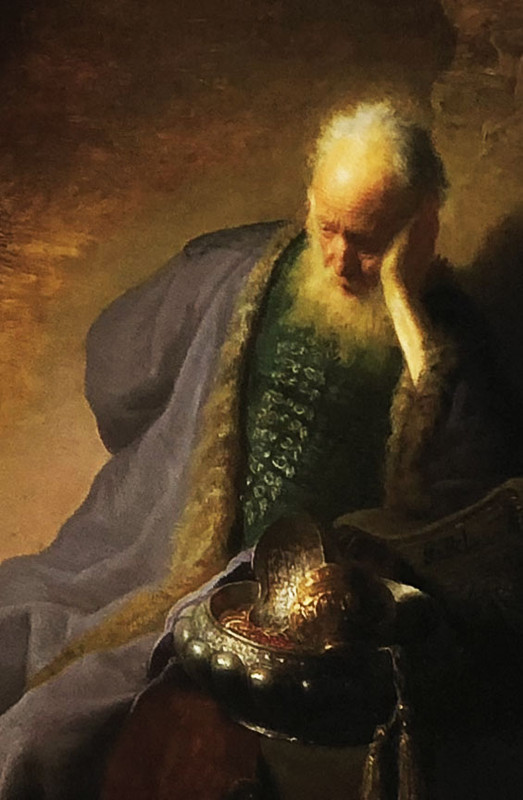
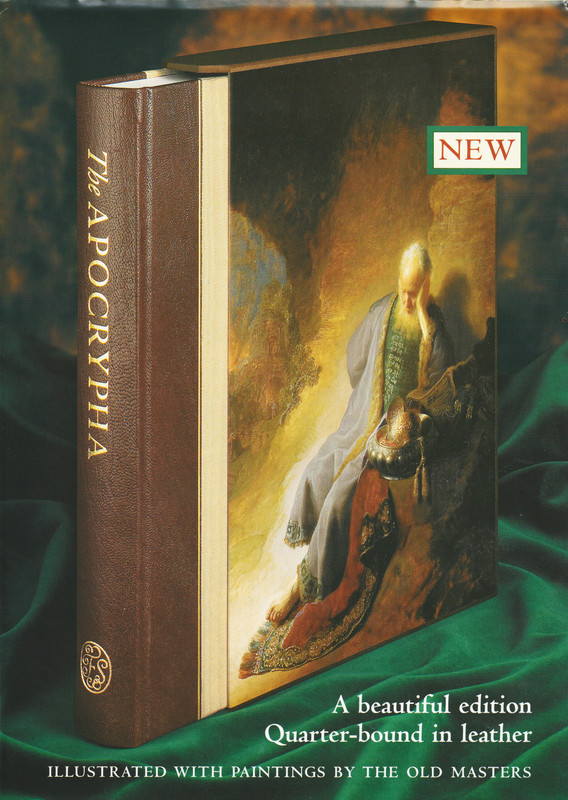
The endpapers are plain dark brown, but the sturdy dark brown slipcase (30.4x23.2cm.) is lipped at top and bottom, and has a full colour front picture being a copy of Jeremiah Lamenting the Destruction of Jerusalem by Rembrandt Harmensz van Rijn (1630). The top page edges are stained brown but there is no ribbon page marker.



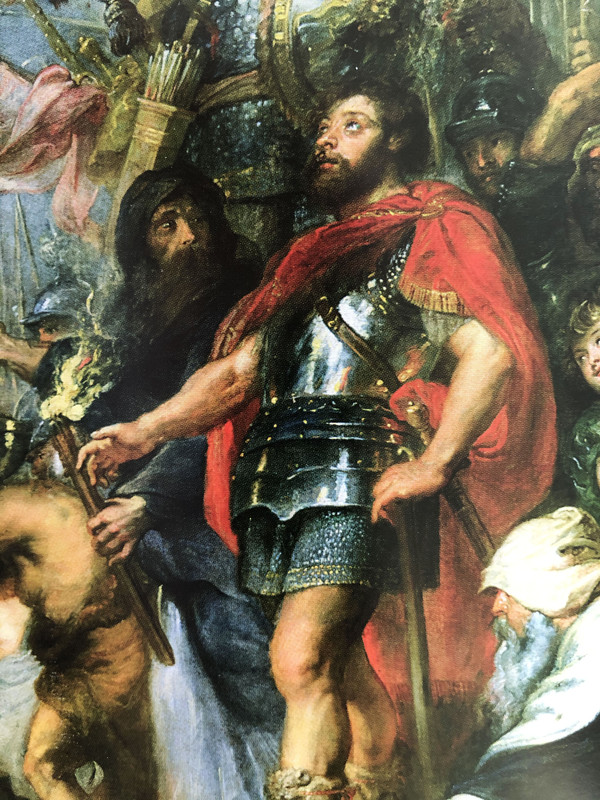
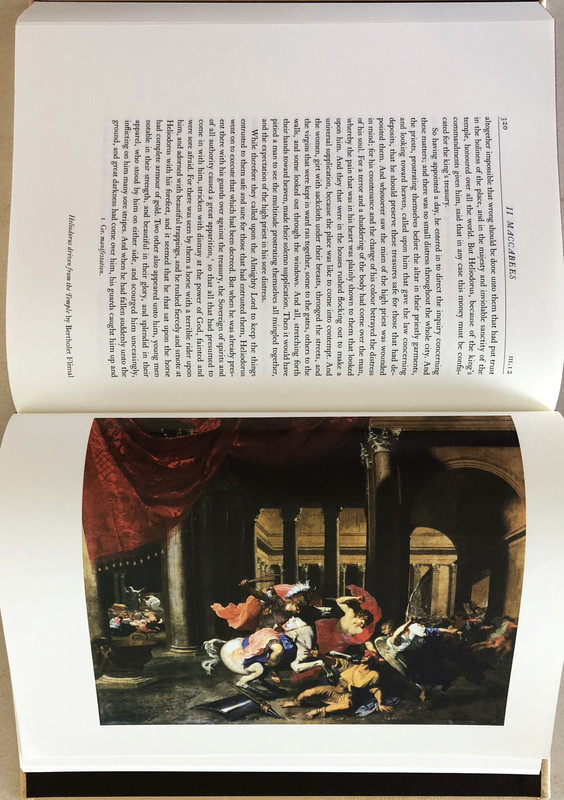
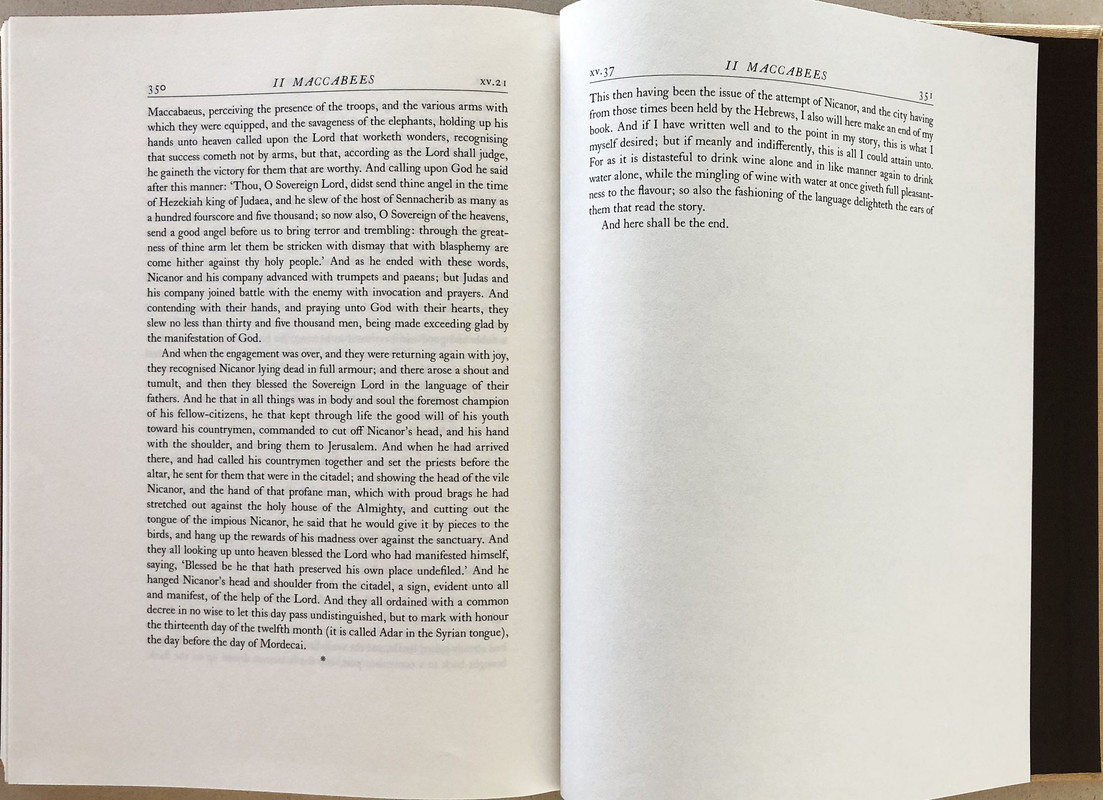
Promotional leaflet
An index of the other illustrated reviews in the "Folio Archives" series can be viewed here.
This is a large magnificent volume that has only one flaw – it is a stand-alone book. If the Old and New Testaments had also been published by the Folio Society in this format, it would have made a superb three-volume set. As it is, it is one of the most beautiful non-limited editions published by the FS.
The Apocrypha are a collection of ancient Jewish texts that were initially excluded from the Bible as being unnecessary for an understanding of Christianity. Some of the books within the Apocrypha are included in the Bibles of different branches of Christianity, and not others. There are a lot of theological arguments about the importance or influence of these books, and even which ones should be even considered for inclusion within this addendum to the Bible. Some were considered to contain knowledge that was too esoteric or heretical for everyone to read, and were restricted to the clergy.
Despite the discussions, there are some good Old Testament style stories here (eg. Tobit), that were probably written between 200BC and 400AD.
Quarter bound in brown leather with gilt spine titling, the boards are covered in cream coloured moire silk that shimmers in changing light. The xvi + 351 page book is introduced by David Daniell and contains all the texts that have (and have not) been included in various editions of the Apocrypha. There are 13 bound in colour plates of old paintings that match the different stories.
The endpapers are plain dark brown, but the sturdy dark brown slipcase (30.4x23.2cm.) is lipped at top and bottom, and has a full colour front picture being a copy of Jeremiah Lamenting the Destruction of Jerusalem by Rembrandt Harmensz van Rijn (1630). The top page edges are stained brown but there is no ribbon page marker.


Promotional leaflet
An index of the other illustrated reviews in the "Folio Archives" series can be viewed here.
2UK_History_Fan
The Folio Society just doesn’t make them like this anymore. It saddens me. But happy to own a copy of this beautiful and historically important tome.
3joco30
>2 UK_History_Fan: The Folio Society just doesn’t make them like this anymore.
I don't think that's true. Maybe not as often anymore as they used to, or maybe they use more cloth instead of leather. But the Essays of Montagne for example is a fine edition that is comparable to this one:
Quarter bound in blocked leather
Cloth sides
Cloth slipcase
Gilded page edges
Printed in two colors.
Wagner's Ring is another example, although that one is fully cloth bound sadly enough.
I don't think that's true. Maybe not as often anymore as they used to, or maybe they use more cloth instead of leather. But the Essays of Montagne for example is a fine edition that is comparable to this one:
Quarter bound in blocked leather
Cloth sides
Cloth slipcase
Gilded page edges
Printed in two colors.
Wagner's Ring is another example, although that one is fully cloth bound sadly enough.
4JacobKirckman
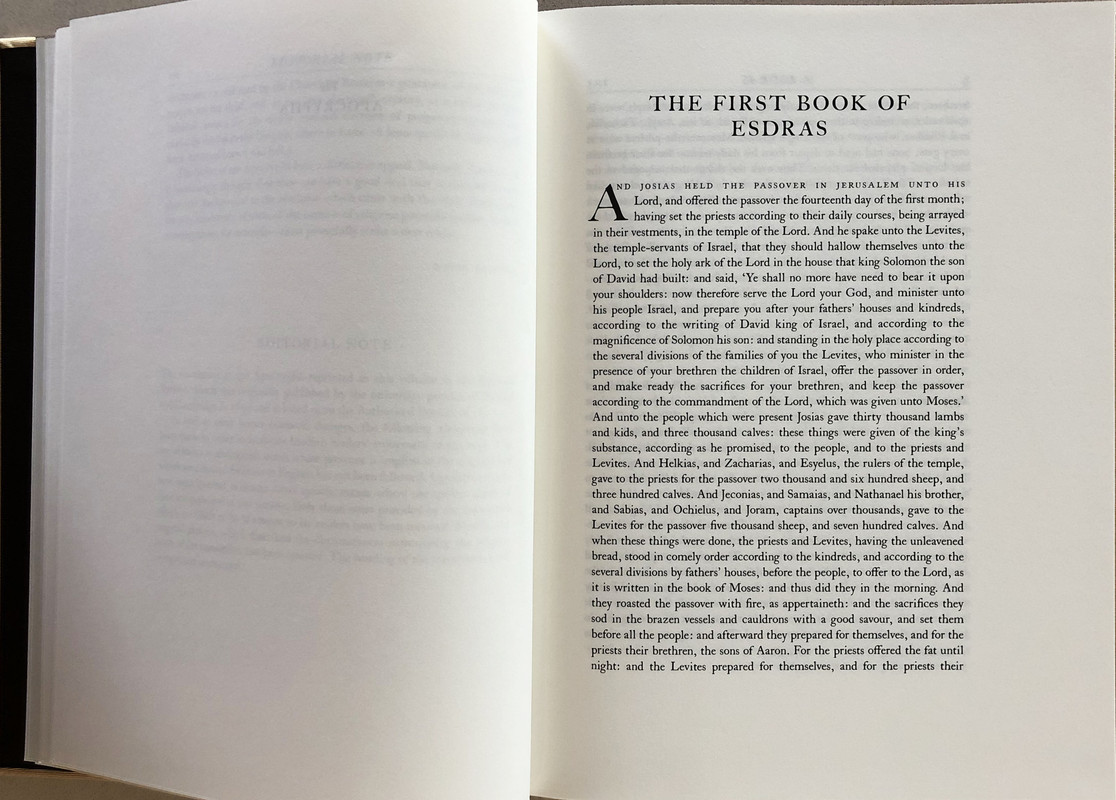
To me the Apocrypha is a 'working book'. My little Oxford version is much more suited to my needs - pocket sized and handy, and useful for those moments when OT Lessons aren't taken from the Bible proper. Returning to the Folio Apocrypha - where are the verses marked? And the great slab of text (no paragraphs for instance) seen in the photograph of the Book of Baruch (p.248) is totally ridiculous. The verse 'O Lord our God, we have sinned etc' is a mere four lines verse-wise (2.12): indeed the page illustrated is actually made up of nineteen verses. My pocket Oxford copy is, in fact, much, much more readable despite the small typeface. Another example of Folio putting appearance before usability.
5N11284
A beautiful book to hold and read. And I'm not at all talking from a religious point of view. The paper is lovely and thick, the overall experience fantastic. And a number of copies available on eBay for around £35.00. An absolute bargain.
Edited for typos:
Edited for typos:
6ultrarightist
>4 JacobKirckman: "And the great slab of text (no paragraphs for instance)..."
I see paragraphs...
And of course, chapters and verses are later phenomena.
I see paragraphs...
And of course, chapters and verses are later phenomena.
7JacobKirckman
>6 ultrarightist: Verses were in the 1611 King James Version, and therefore are authentic for the Folio translation.
8U_238
Thank you for sharing, this is such a beautiful book. It really is a lesson to those purchasing FS books as an investment - it sold for what appears to be $140 14 years ago, and can now be had for $50.
I am quite tempted to purchase it, but would never read it for sure.
I am quite tempted to purchase it, but would never read it for sure.
9wcarter
>8 U_238:
Please note, that because I am in Australia, the prices I get are in Australian Dollars. The exchange rate has varied widely over the last decade from USD105 = AUD100 to USD58=AUD100, and to the present rate of USD73 = AUD100.
Please note, that because I am in Australia, the prices I get are in Australian Dollars. The exchange rate has varied widely over the last decade from USD105 = AUD100 to USD58=AUD100, and to the present rate of USD73 = AUD100.
10U_238
>9 wcarter: Ah okay, the $140 would have been Australian. Complicates things for sure. Suffice it to say, this one didn't turn into a Beowulf.
11RRCBS
Your archive posts are my favourite thing about this group! Thank you for introducing me to so many unique and wonderful FS books that I would likely otherwise have overlooked!
12U_238
It looks like this would match very closely with the philosopher’s set (Plato, Cicero, Aristotle, etc.); is that right?
13kdweber
>10 U_238: I bought the 3rd edition in 2008 for $100 US direct from the FS. Well worth it even if one can buy it for half that on the used market.
14N11284
>12 U_238: It's much larger that Plato. Dimensions are 298 x 227 x 37
15Jobasha
>12 U_238:
This is pretty much in a set with the Divine Comedy, Paradise Lost and Jerusalem all of which are illustrated by Blake. Jerusalem and the Apocrypha are a tad shorter though.
This is pretty much in a set with the Divine Comedy, Paradise Lost and Jerusalem all of which are illustrated by Blake. Jerusalem and the Apocrypha are a tad shorter though.
16terebinth
>15 Jobasha:
Yes, those are its natural company in terms of presentation: Goethe's Faust too. A sign of the times at Folio perhaps that the Pilgrim's Progress LE doesn't look too out of place beside them.
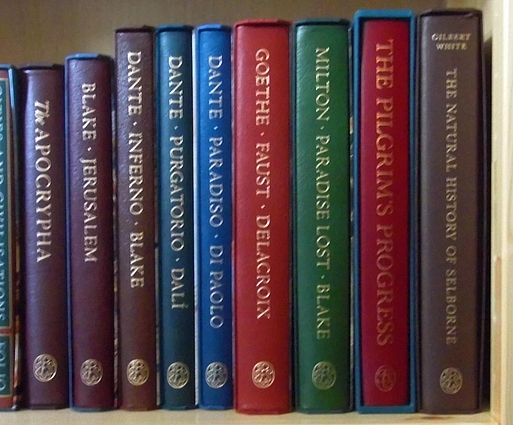
I bought all those on release except the Apocrypha, which was £29.95 in a 2011 Advent offer, and Faust, a secondary market purchase for probably a little less than that.
Yes, those are its natural company in terms of presentation: Goethe's Faust too. A sign of the times at Folio perhaps that the Pilgrim's Progress LE doesn't look too out of place beside them.
I bought all those on release except the Apocrypha, which was £29.95 in a 2011 Advent offer, and Faust, a secondary market purchase for probably a little less than that.
17N11284
> I'm envious of the Dante Paradiso. I can't believe that I let that pass , but at the time I had not seen Inferno or Purgatorio.
So where do these stand in relation to the most recent LE's?, as in how do they compare to Pilgrim's Progress?
So where do these stand in relation to the most recent LE's?, as in how do they compare to Pilgrim's Progress?
18NLNils
>16 terebinth: Terrific picture! I always like to see the books side by side where you can compare dimensions. As Inch measurements are foreign to me..
19JacobKirckman
>8 U_238: Profit from a religious text? Oh dear.
20terebinth
>17 N11284: ...how do they compare to Pilgrim's Progress?
Pilgrim's Progress has a better slipcase, stronger and cloth-covered. Offhand I think it may have more illustrations than any of the other volumes above, though Faust probably runs it close: the portion of the boards covered by leather is reduced, and the leather is of a different, I don't think better, quality; and the top edge is gilt rather than stained. PP unlike most (any?) of the others has smooth reflective paper throughout, something I don't welcome on the text pages. To me, then, the slipcase is its only point of clearly superior production.
Pilgrim's Progress has a better slipcase, stronger and cloth-covered. Offhand I think it may have more illustrations than any of the other volumes above, though Faust probably runs it close: the portion of the boards covered by leather is reduced, and the leather is of a different, I don't think better, quality; and the top edge is gilt rather than stained. PP unlike most (any?) of the others has smooth reflective paper throughout, something I don't welcome on the text pages. To me, then, the slipcase is its only point of clearly superior production.
21kdweber
>16 terebinth: You left out the gray leather spined Walden (2009), larger than the Blake but ever so slightly smaller than the Dante.
22RRCBS
>16 terebinth: enabling picture! Very much regret not being a member at the time these were released!

24terebinth
>21 kdweber:
Yes, I just took a photo of the shelf as it stands, and for no particular reason other than running out of space Walden is on the next shelf along. The two remaining Folio versions of Paradise Lost are there with it, after which the shelf becomes a chaos of tall books that didn't fit anywhere else.
Yes, I just took a photo of the shelf as it stands, and for no particular reason other than running out of space Walden is on the next shelf along. The two remaining Folio versions of Paradise Lost are there with it, after which the shelf becomes a chaos of tall books that didn't fit anywhere else.
25U_238
>19 JacobKirckman: You're right. I had forgotten the LE Bible the FS were giving away at cost.
26booksaplenty1949
Too bad they use the Revised Version of 1894. I suppose the fact that it is out of copyright led to that decision.
27ultrarightist
>26 booksaplenty1949: Which translation would you prefer?
28JacobKirckman
This message has been deleted by its author.
29JacobKirckman
1611 is all that's required. Forget any religious thoughts - the KJV, 1662 Common Prayer, and Shakespeare basically sum up up the English language at its greatest. As works of literature, nothing in English has never matched them.
30NLNils
>29 JacobKirckman: You left little wiggle room to argue.
31JacobKirckman
:-)

