
Folio Archives 198: A Pedestrian Journey by Cpt. John Dundas Cochrane 1983
Talk Folio Society Devotees
Join LibraryThing to post.
1wcarter
A Pedestrian Journey Through Russia and Siberian Tartary to the Frontiers of China, the Frozen Sea and Kamchatka by Cpt. John Dundas Cochrane 1983
In 1820, aged 39, the Naval captain, John Cochrane set off from London, and walked 6000 miles across Europe, Russia and Siberia to the Pacific Ocean at Okotsk – an extraordinary journey.
He usually walked 20 to 40 miles a day, but once walked 96 miles in an unbroken forced march of 36 hours. Along the way he accepted occasional lifts on local carts and gentlemen’s carriages, river barges and in Siberia used horses, dog sleds and canoes, but the vast majority of the trip was on foot. He experienced rough robbery that left him almost naked, great generosity and hospitality, was present at the destruction by fire of one of the Czar’s palaces, lived rough sleeping in freezing conditions in the open and slept in governor’s mansions.
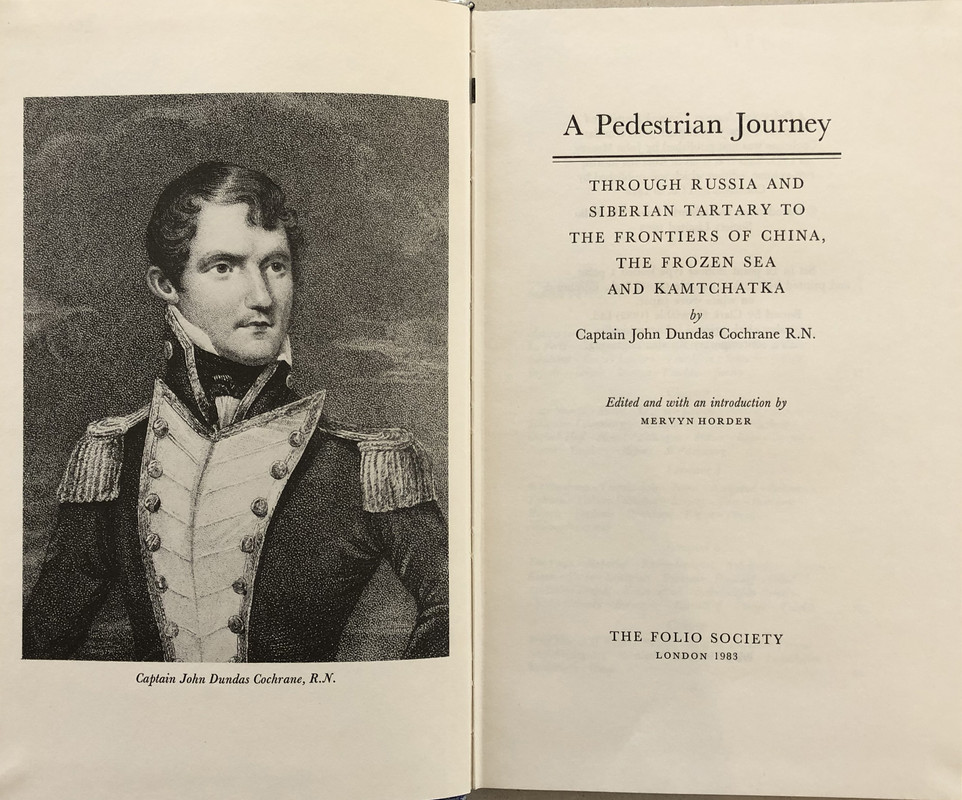
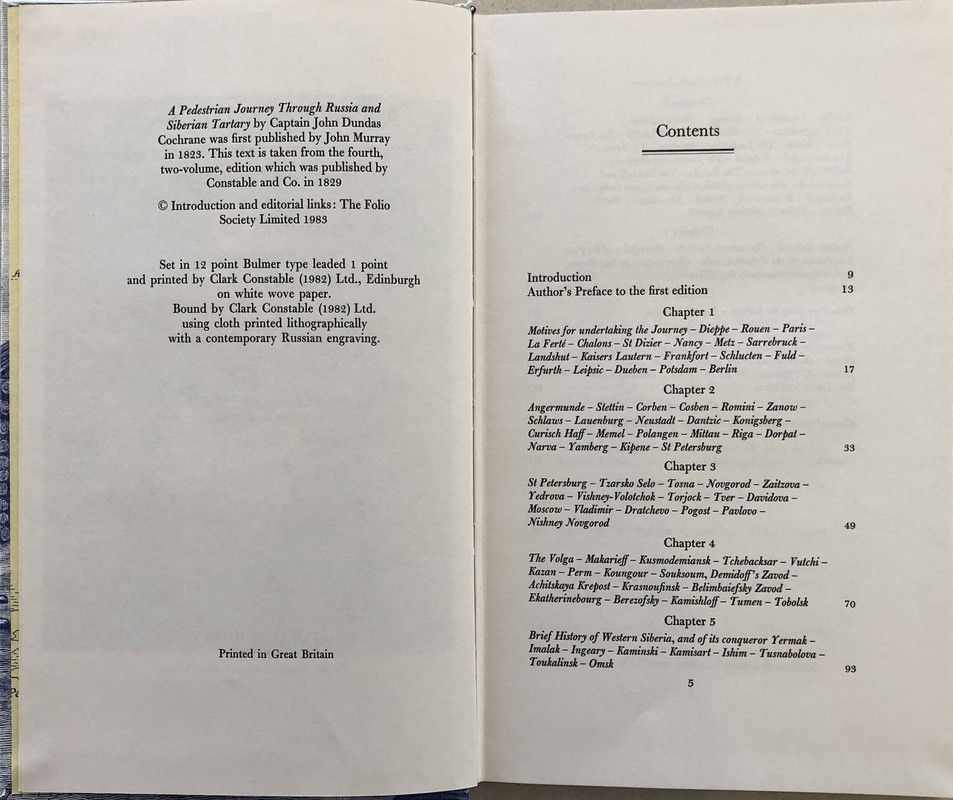
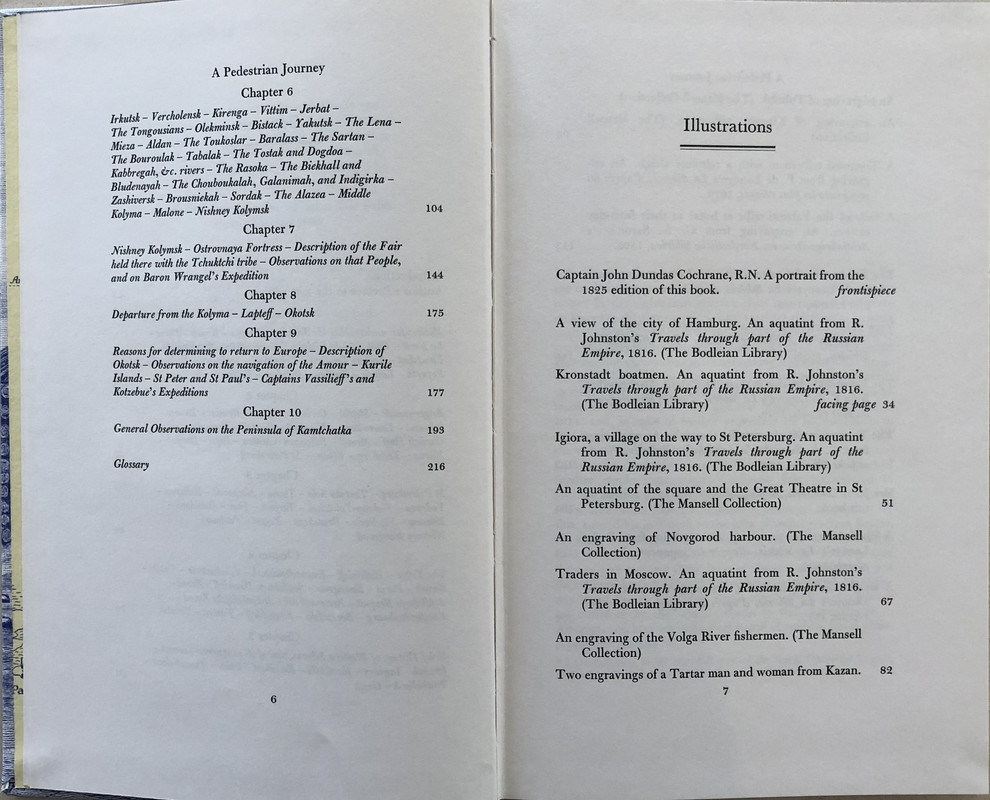
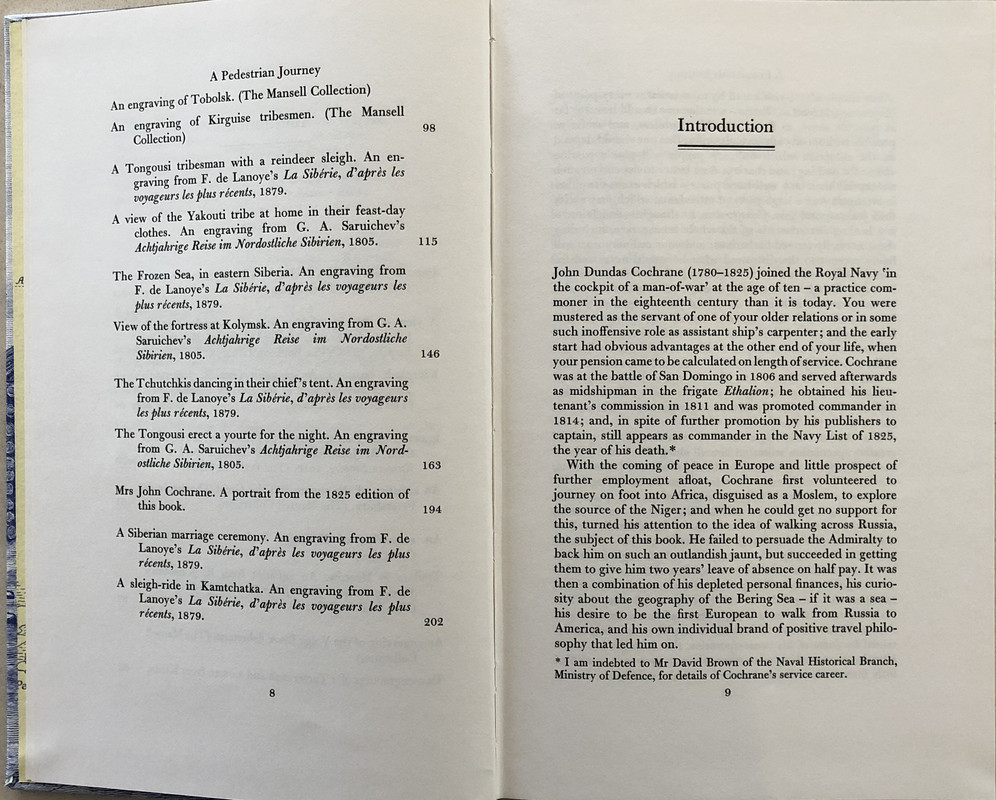
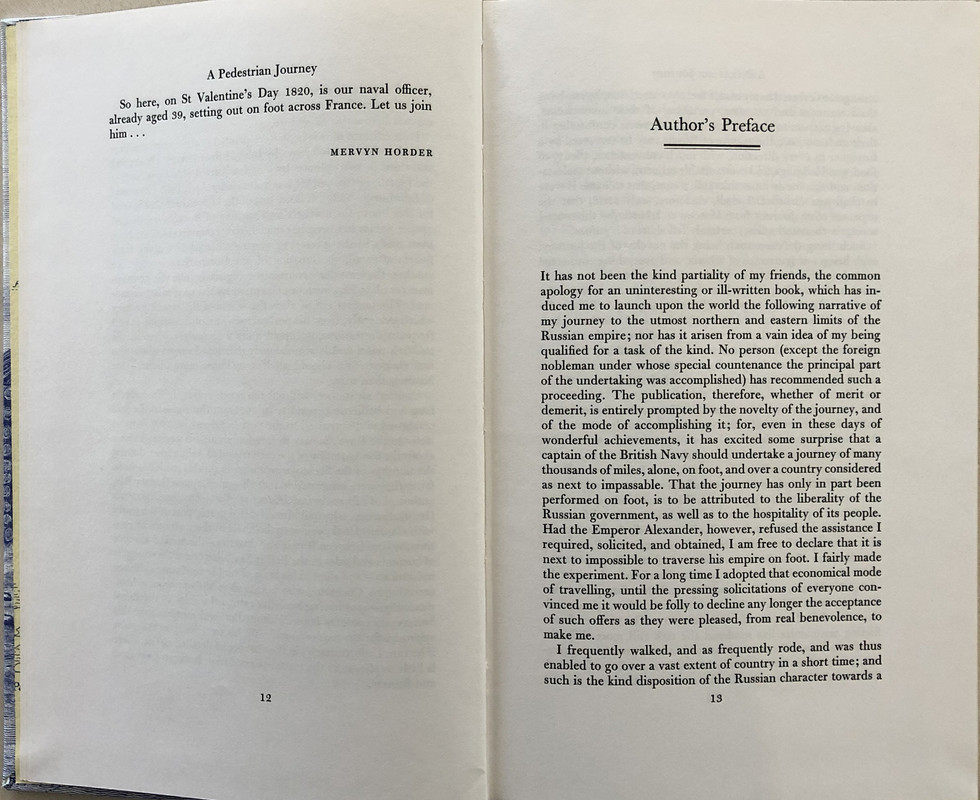
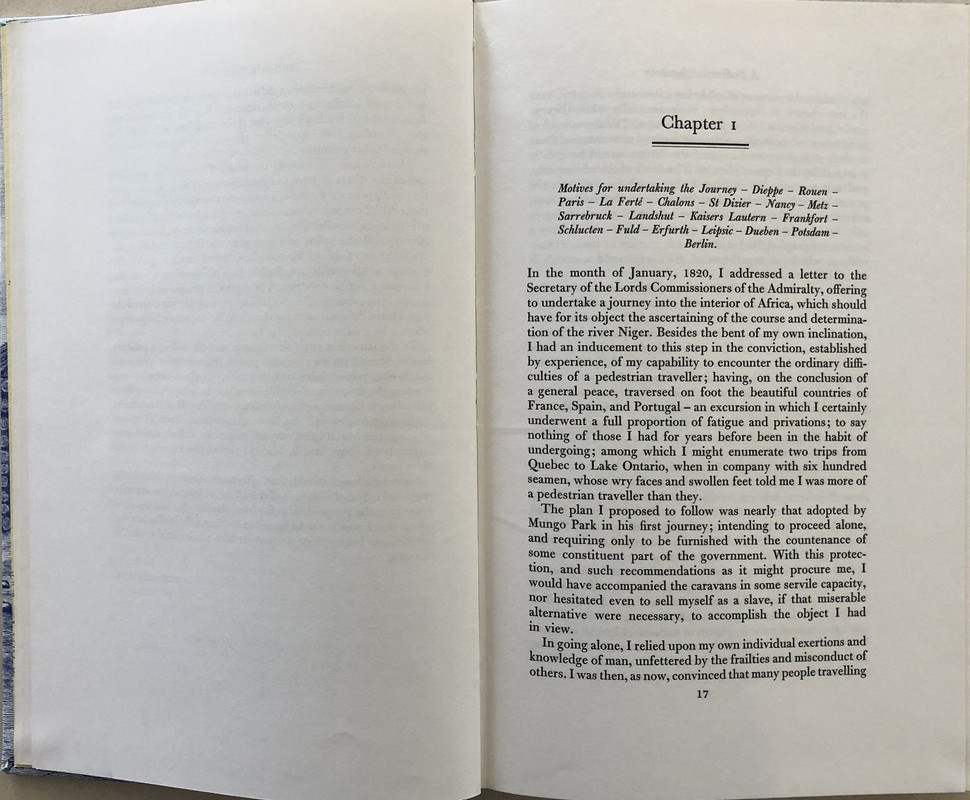
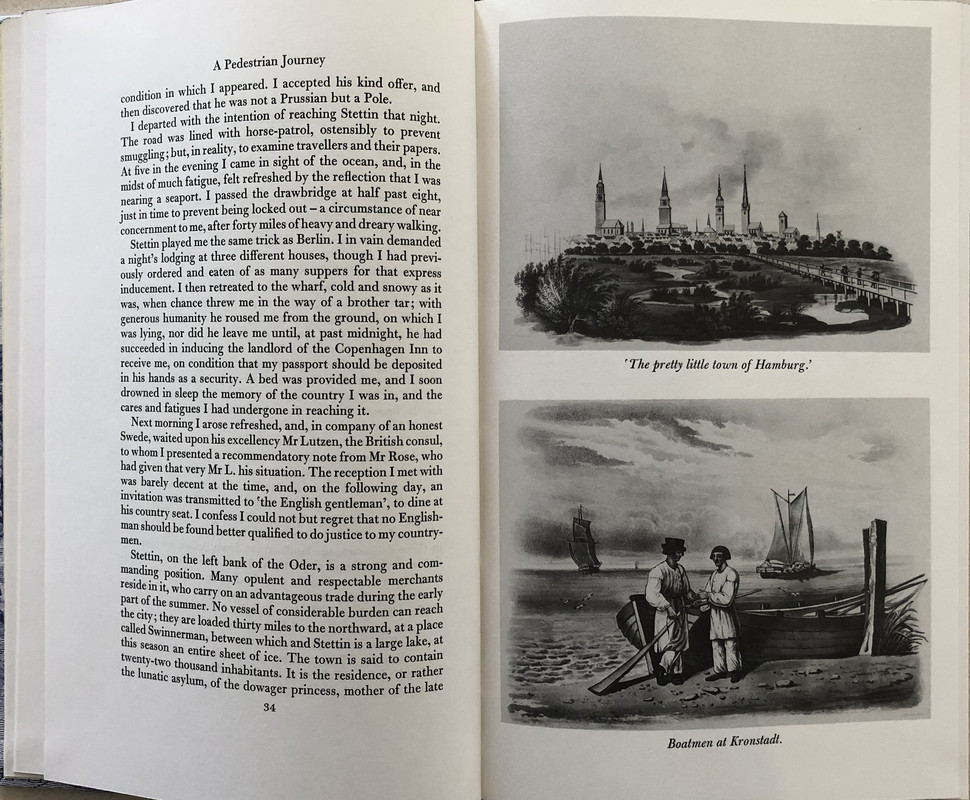
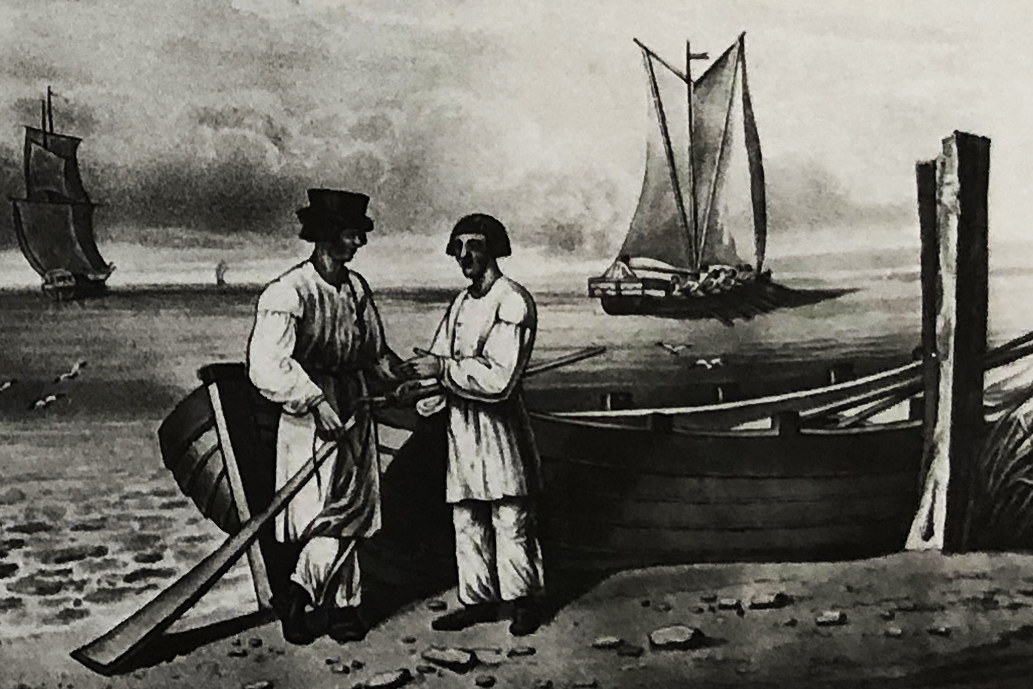
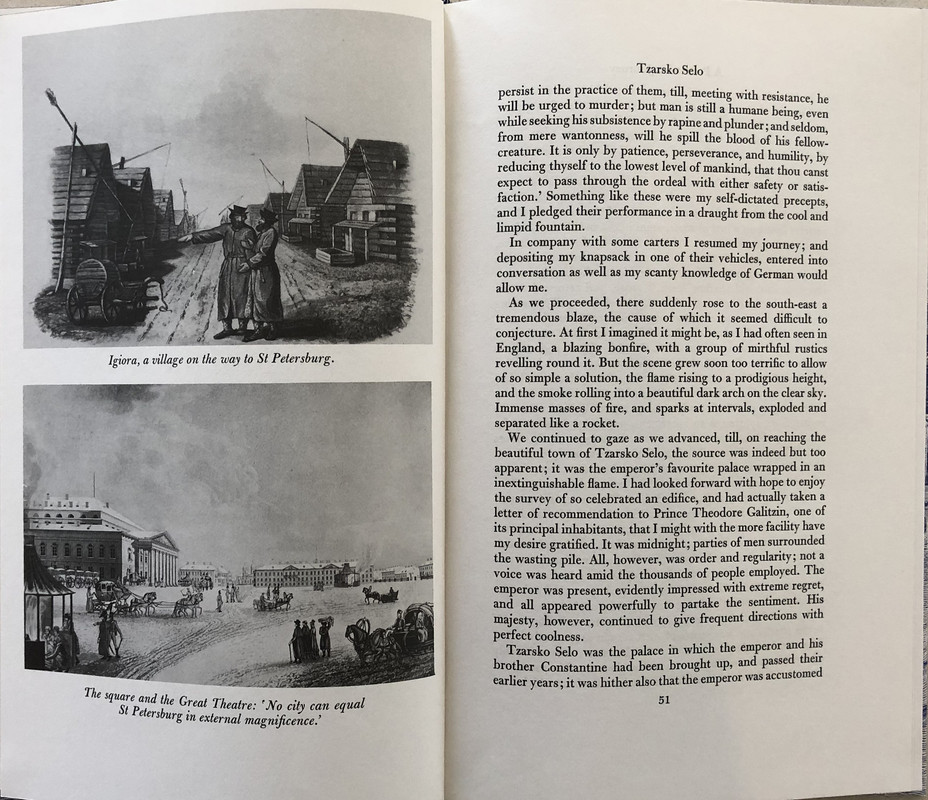
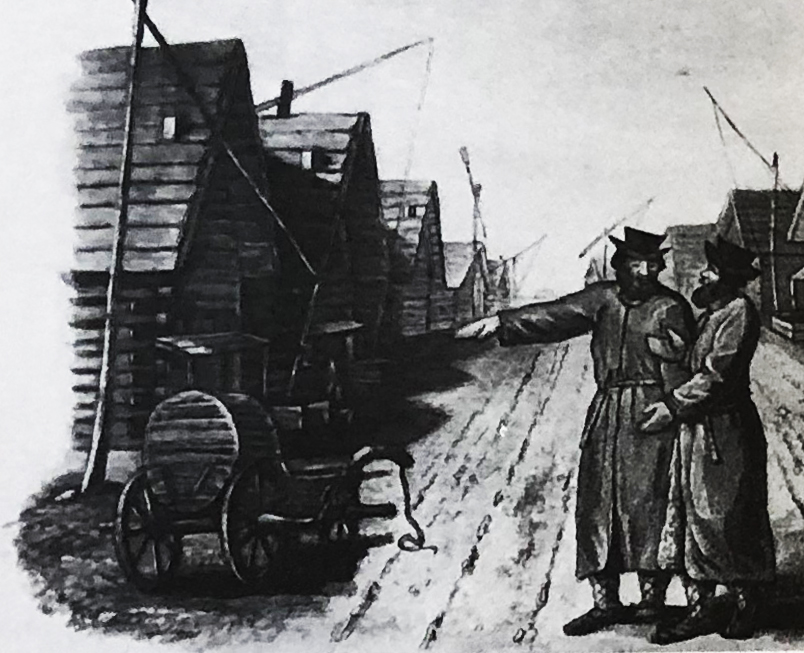
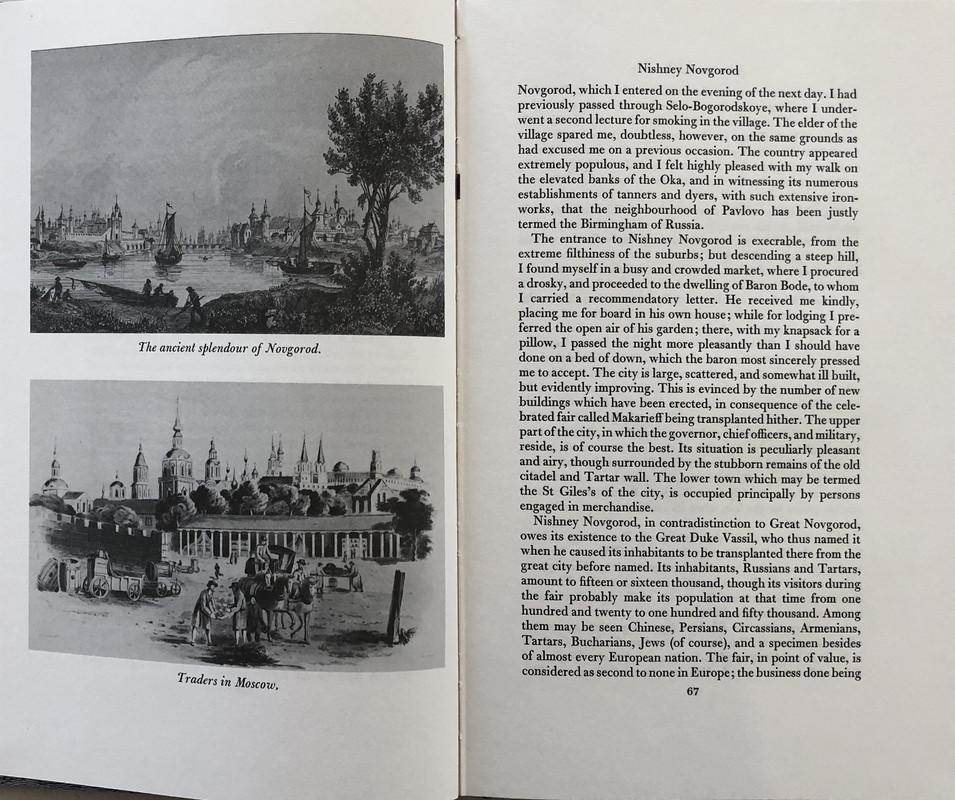
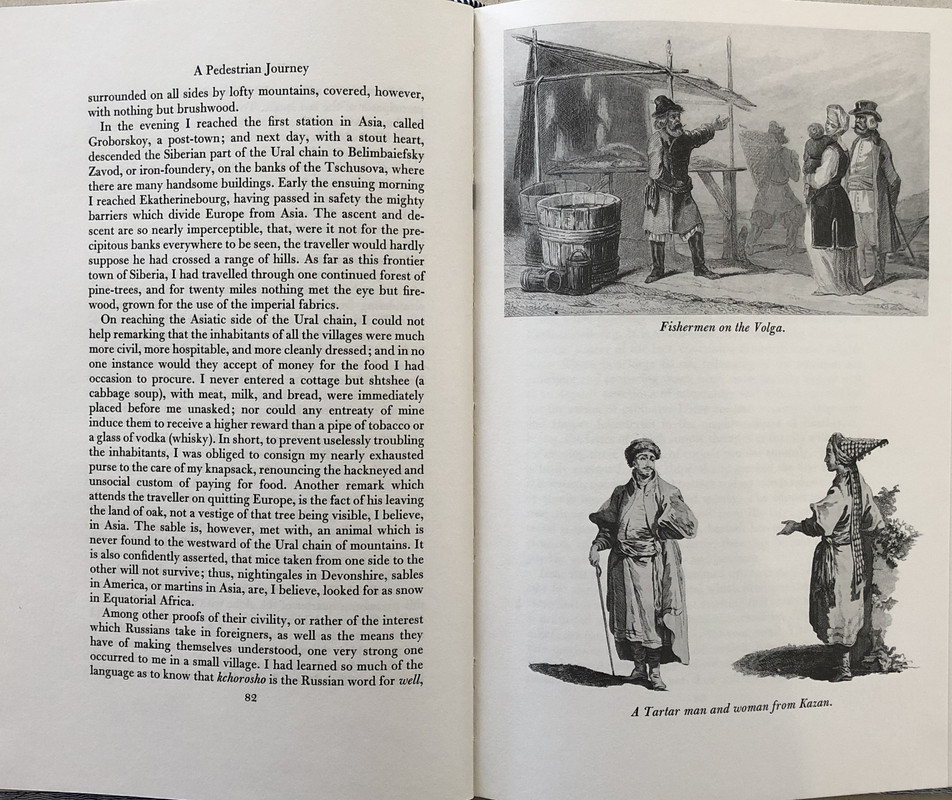
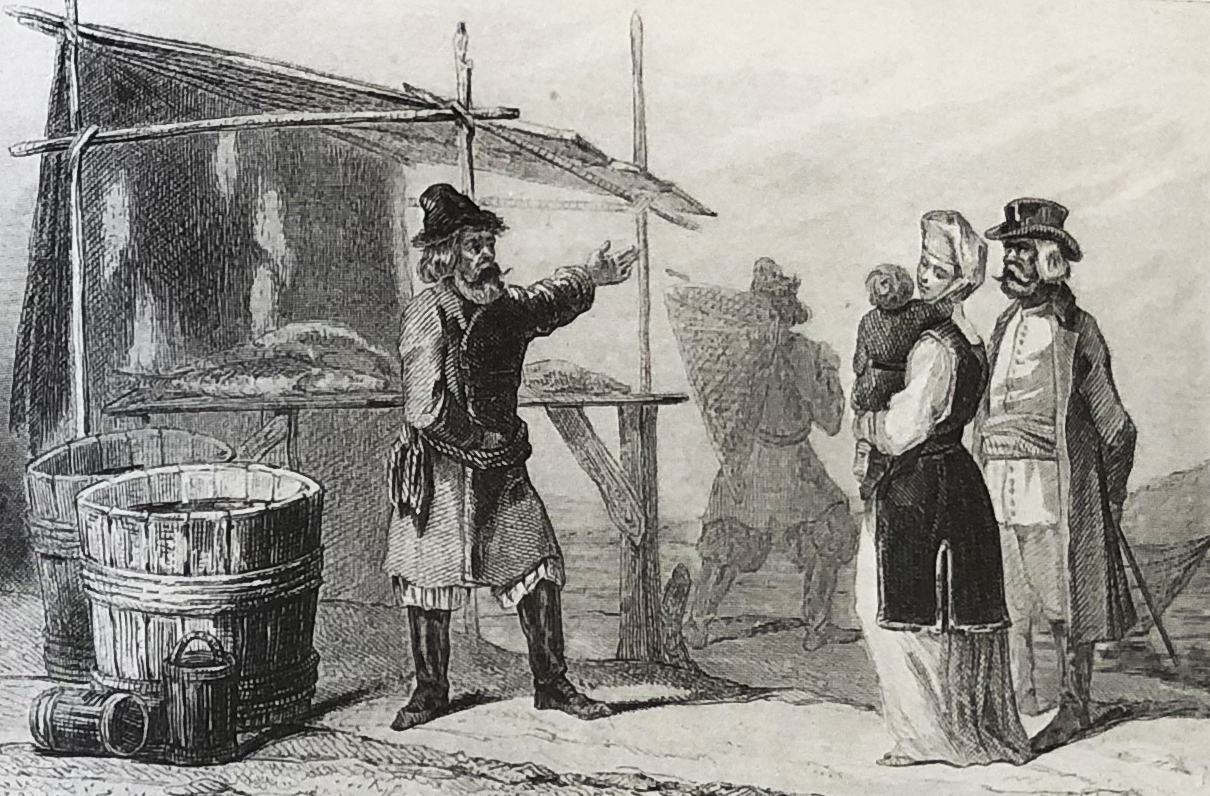
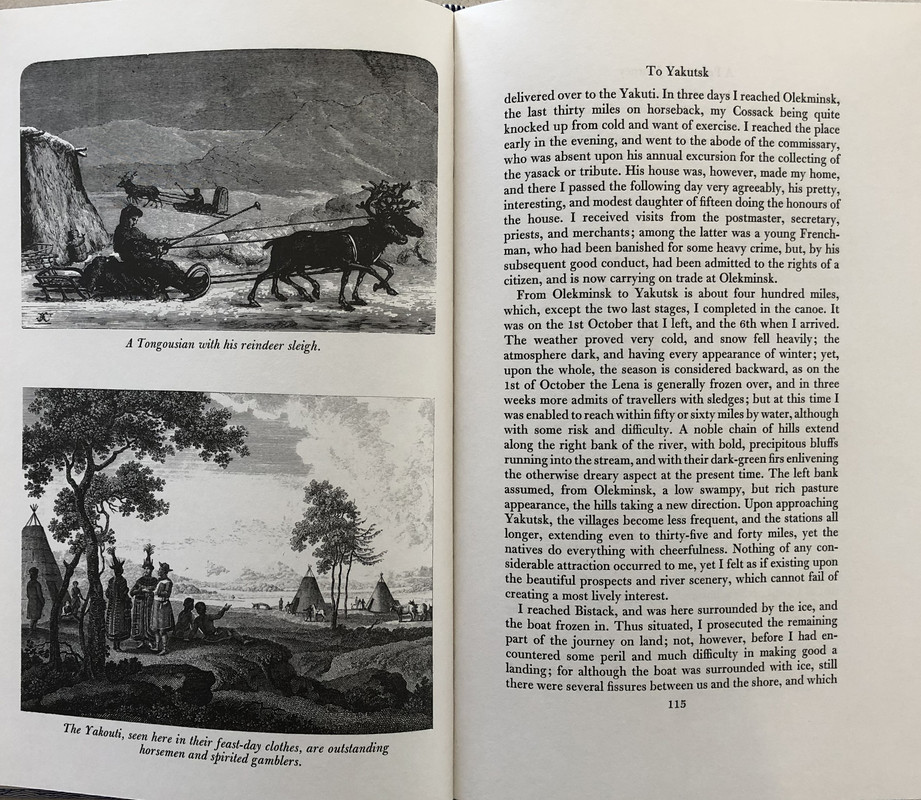
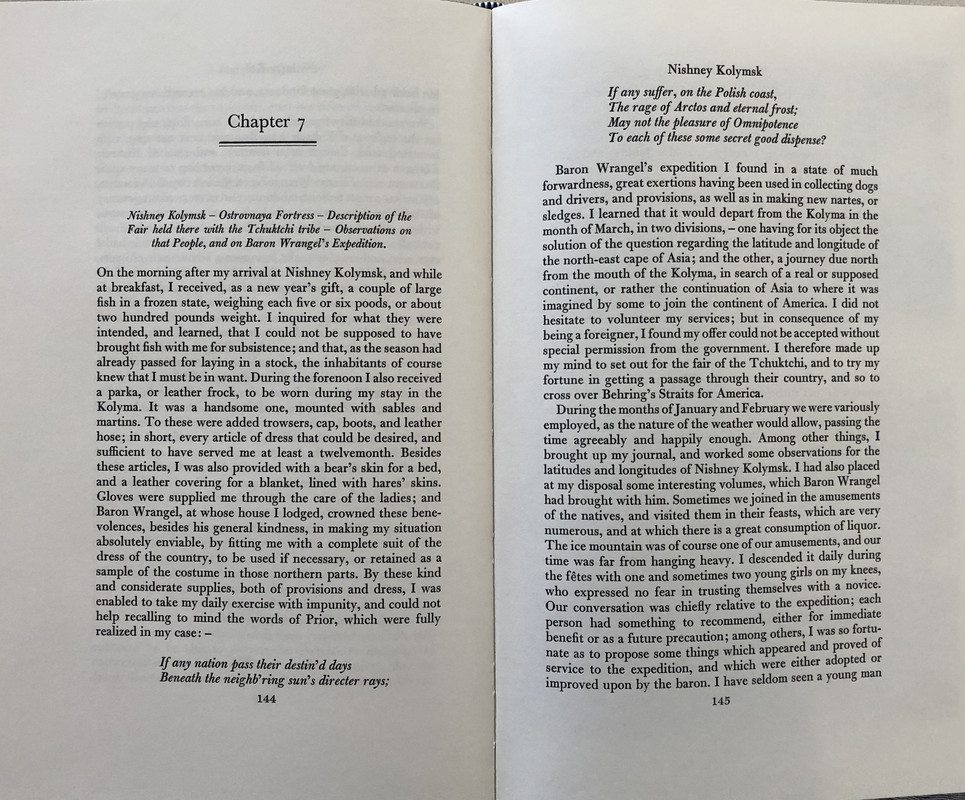
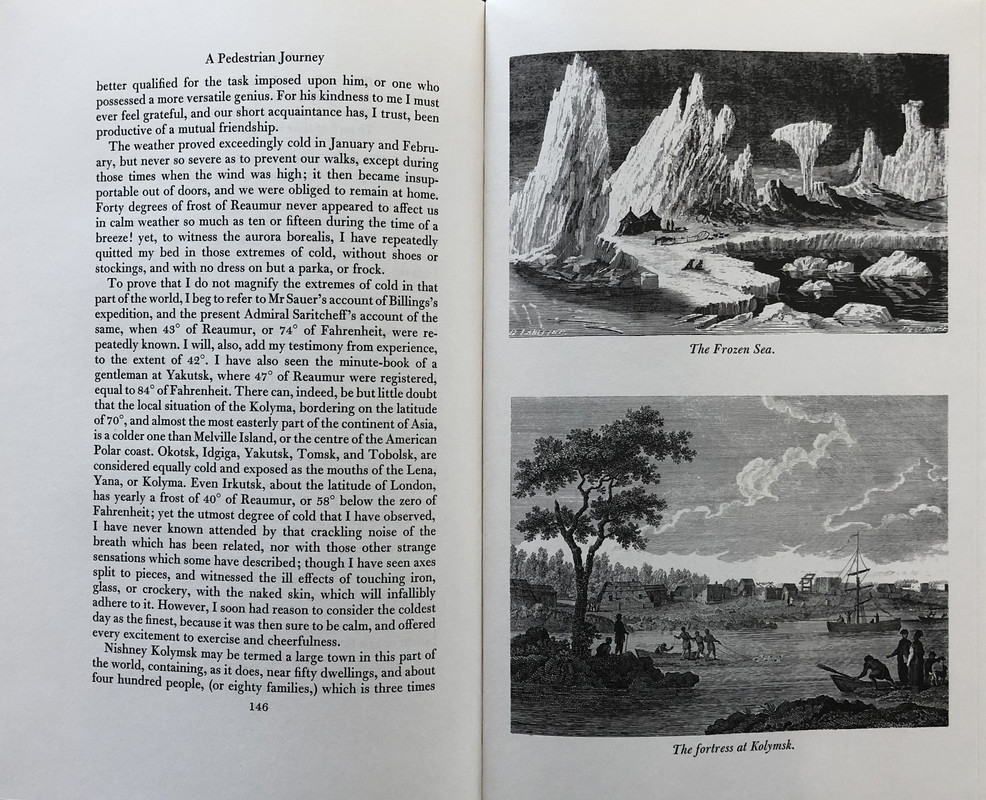
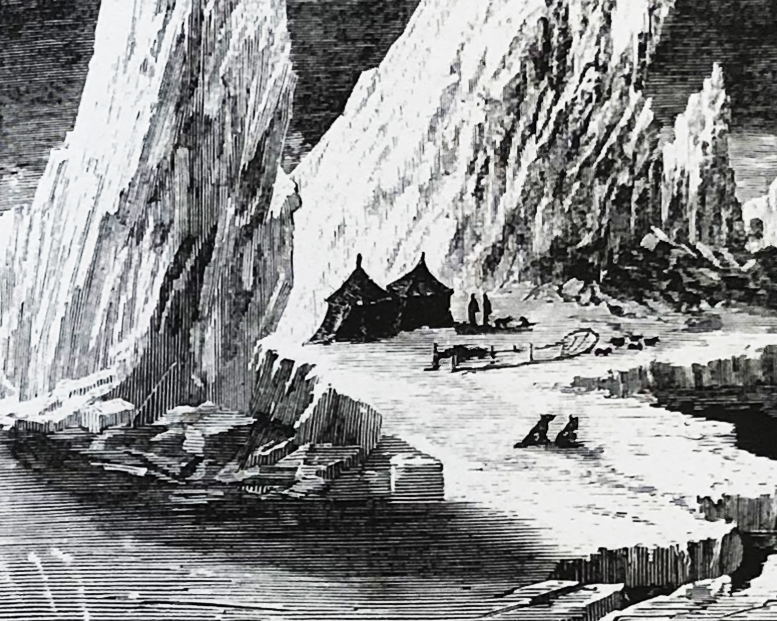
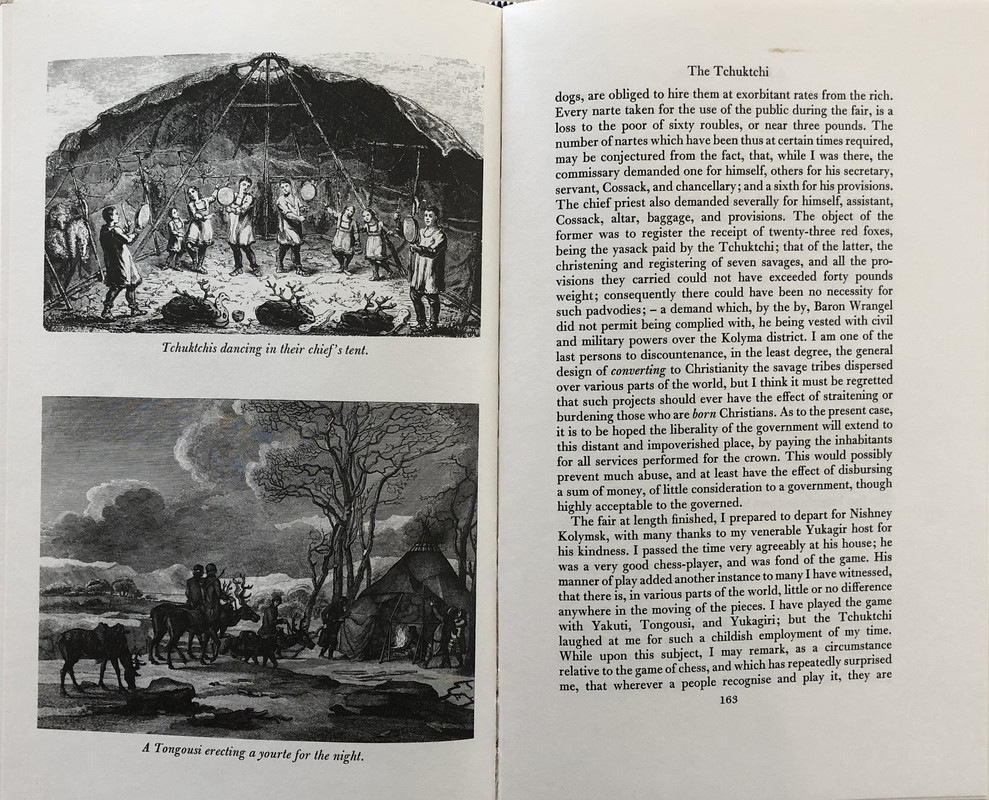
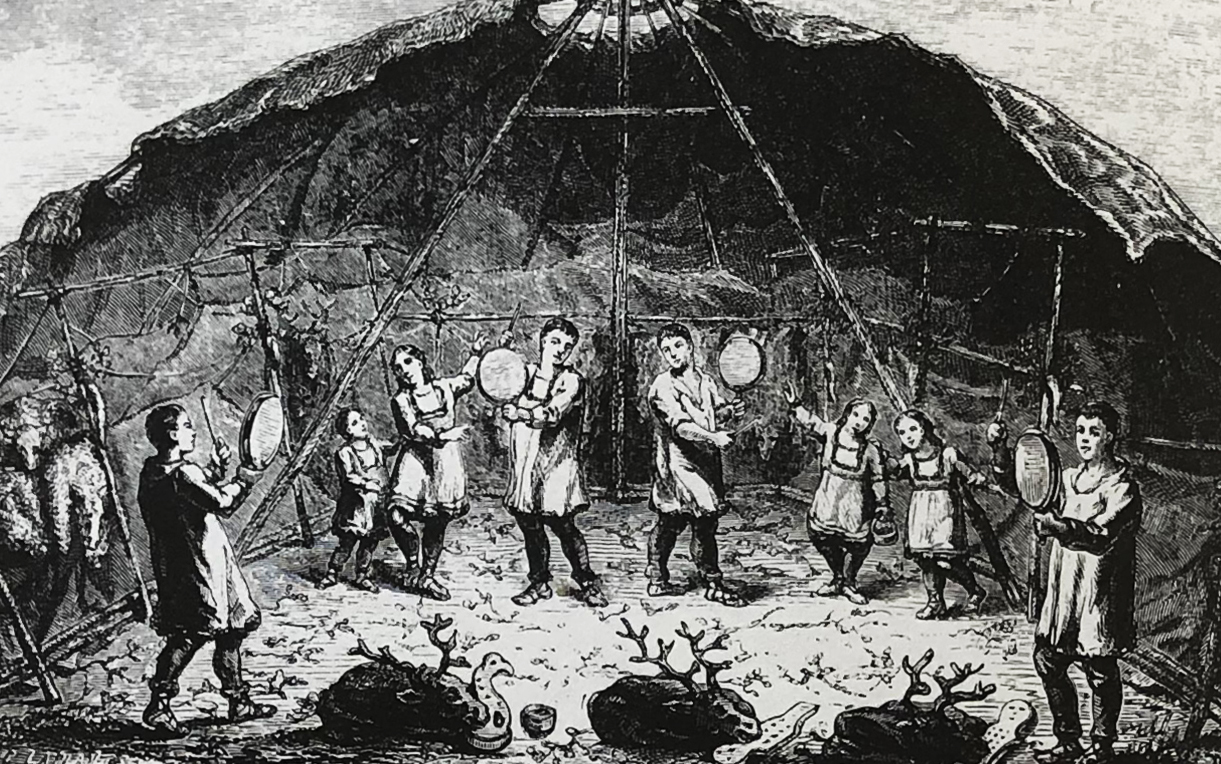
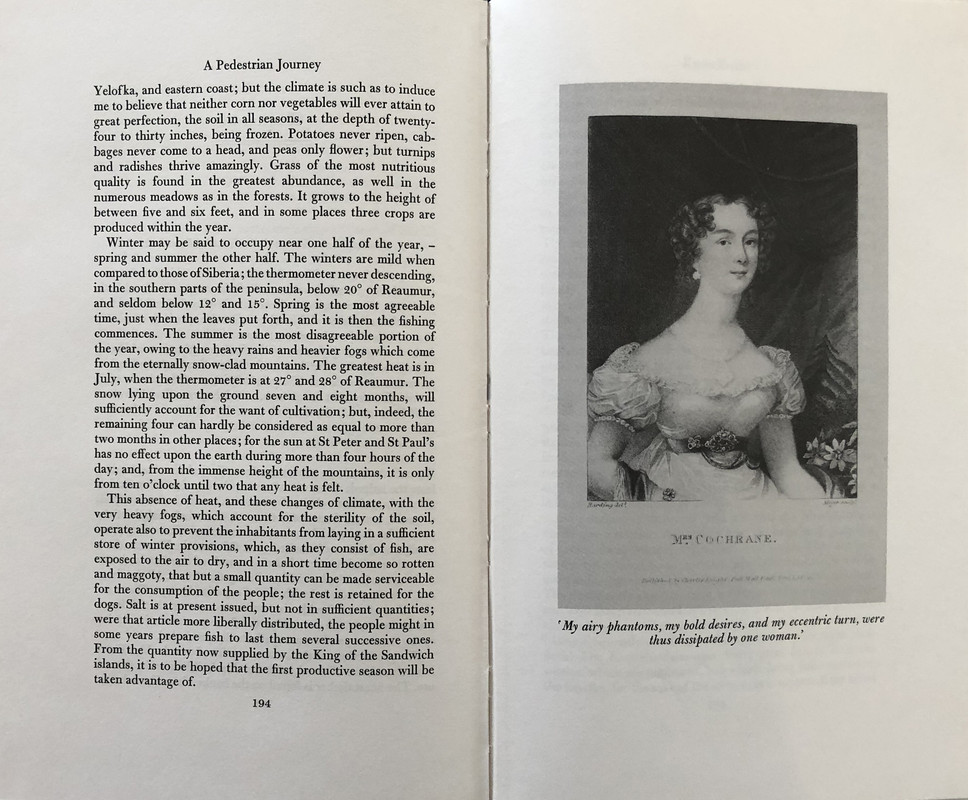
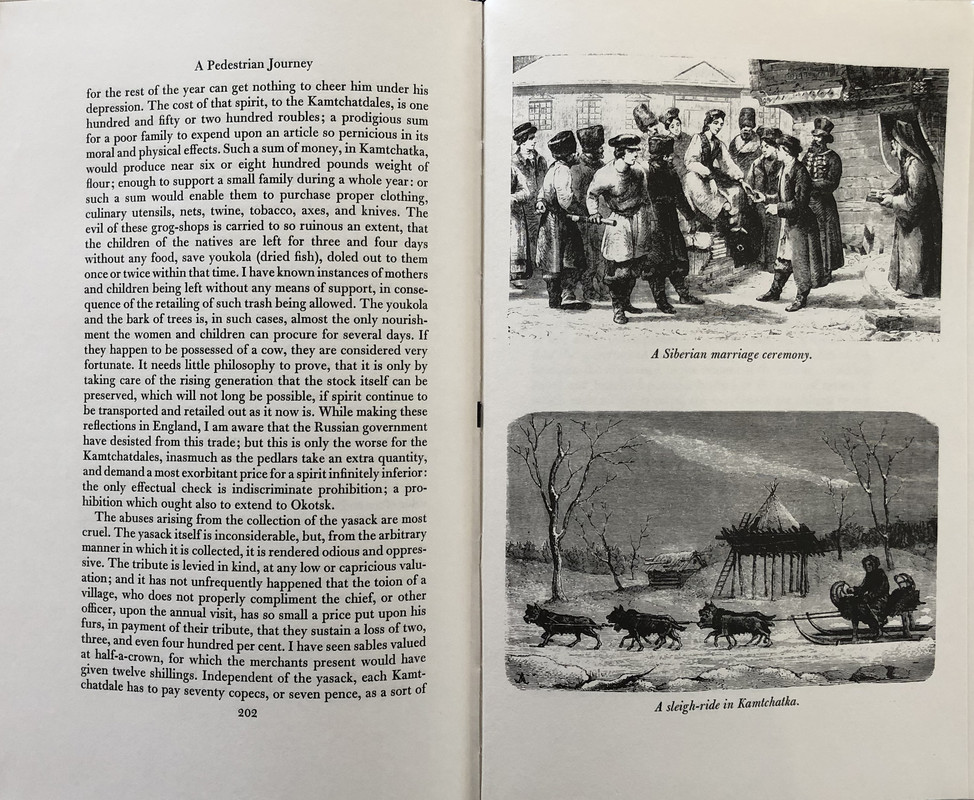
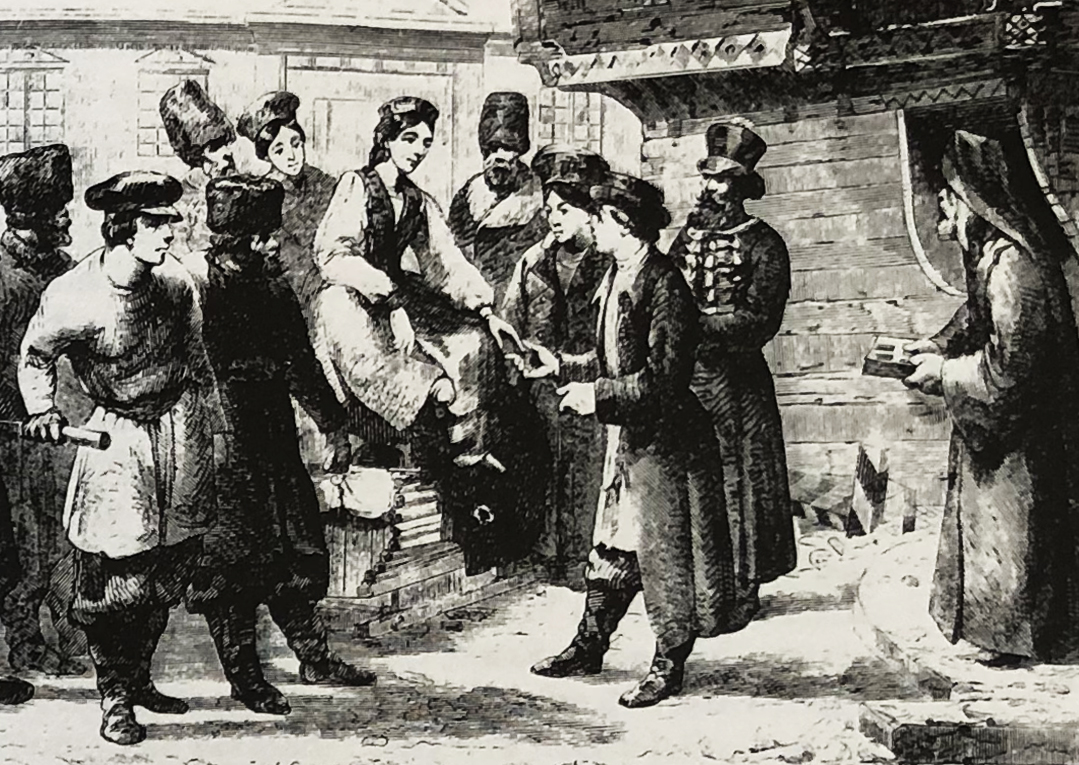
This 217 page book is an edited narrative of his extraordinary journey through almost unknown territories over a period of 18 months. There is a four page introduction by Mervyn Horder, a frontispiece of the author and ten bound-in pages of monochrome contemporary drawings showing scenes along the route.
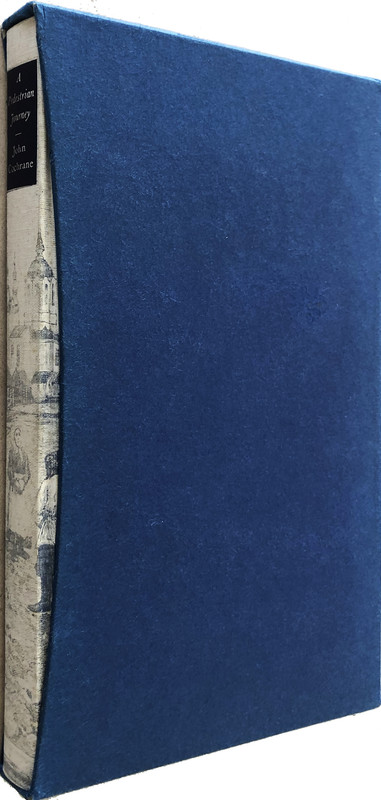
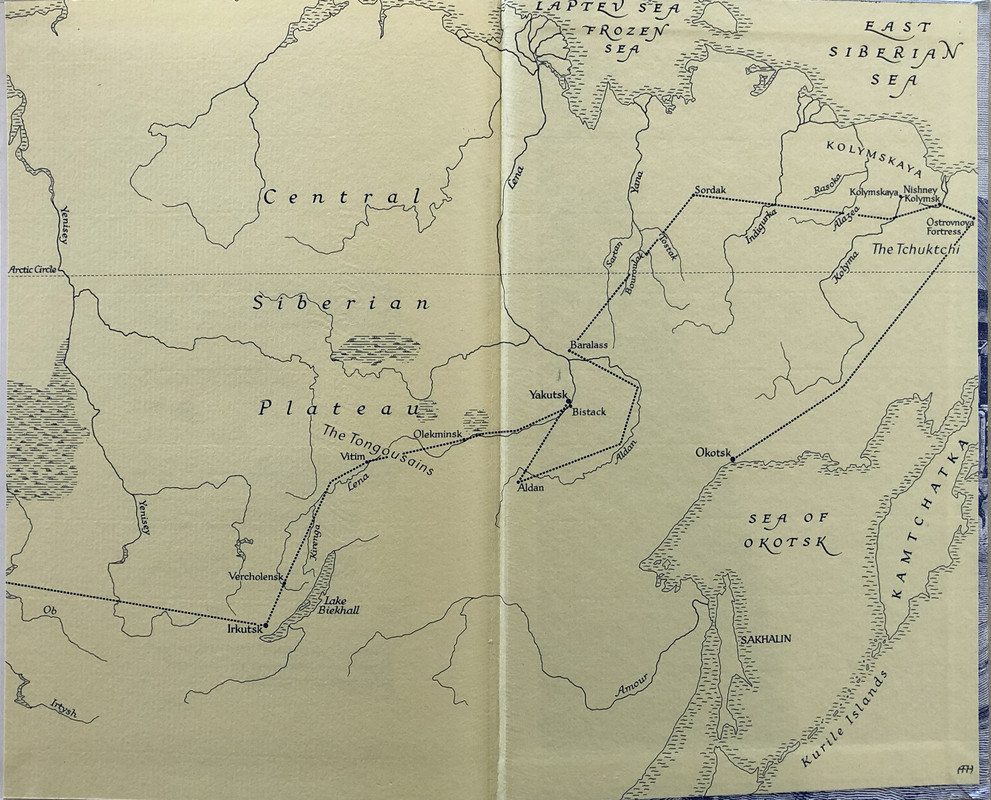
The endpapers are maps of Northern Europe and Russia (front) and Siberia (back) marked with the route and printed dark blue on cream. The top page edges are stained dark blue. The book is bound in grey cloth blocked in dark blue with a wrap-around Russian engraving of village life. There is a spine label printed silver on black. The slipcase (25.9x16.7cm.) is a plain dark blue.
My copy unfortunately shows significant sunning of the spine.
 . . . .
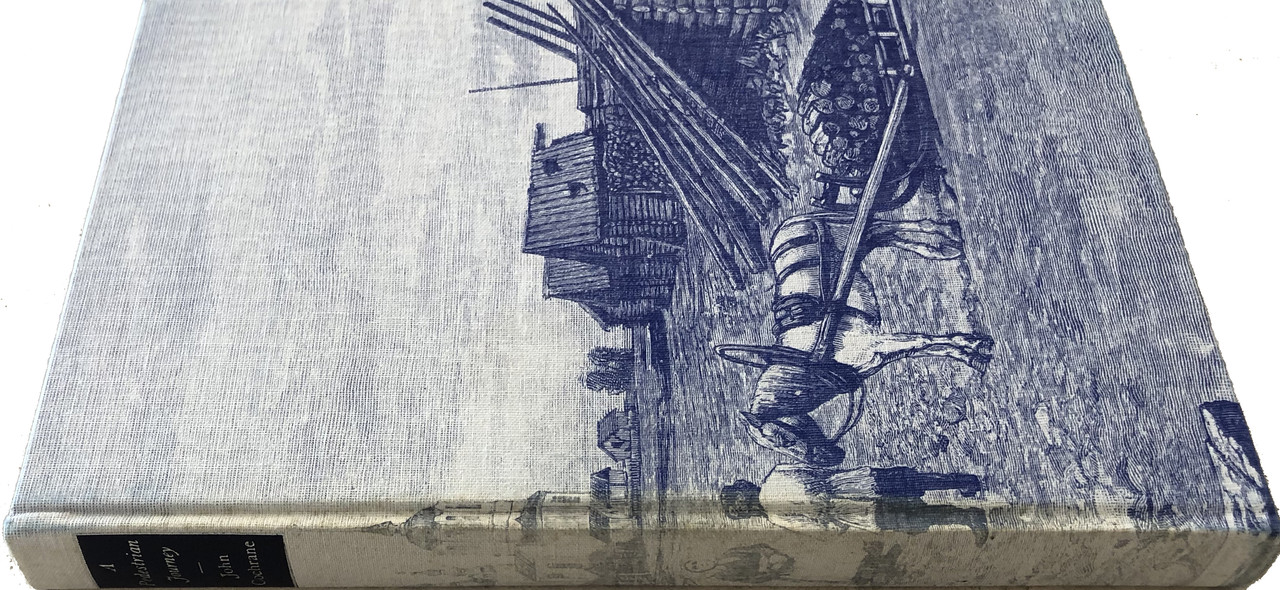
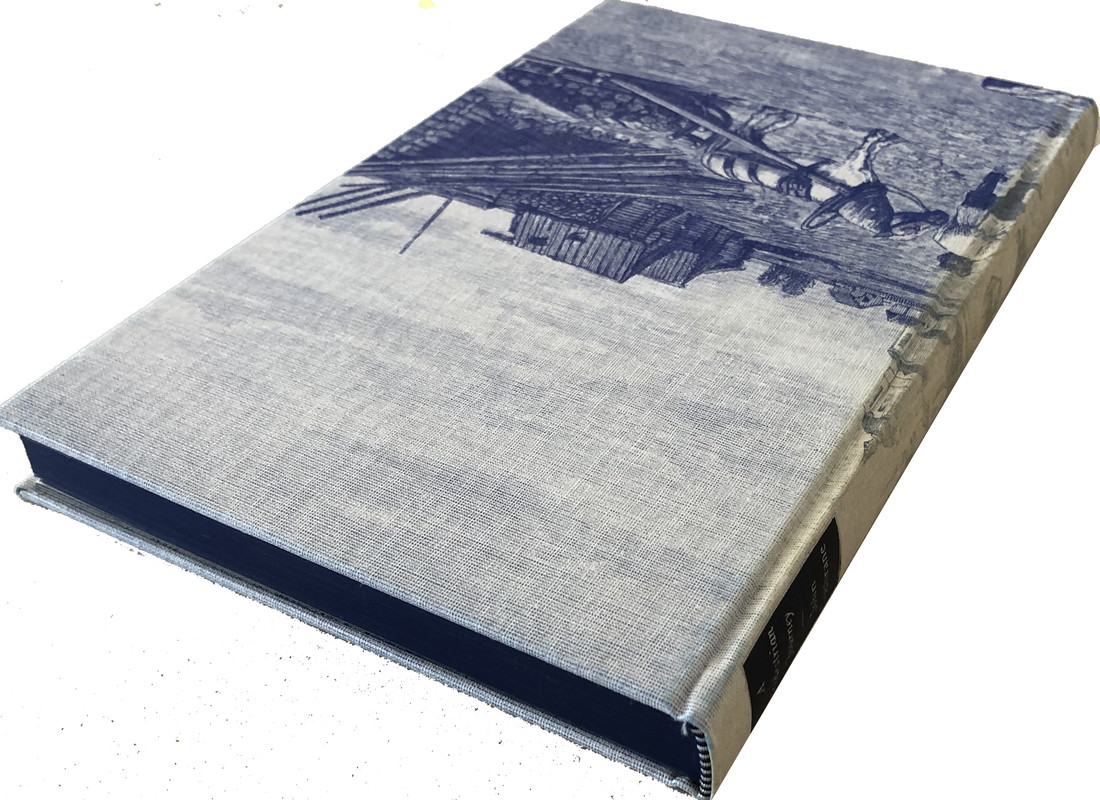
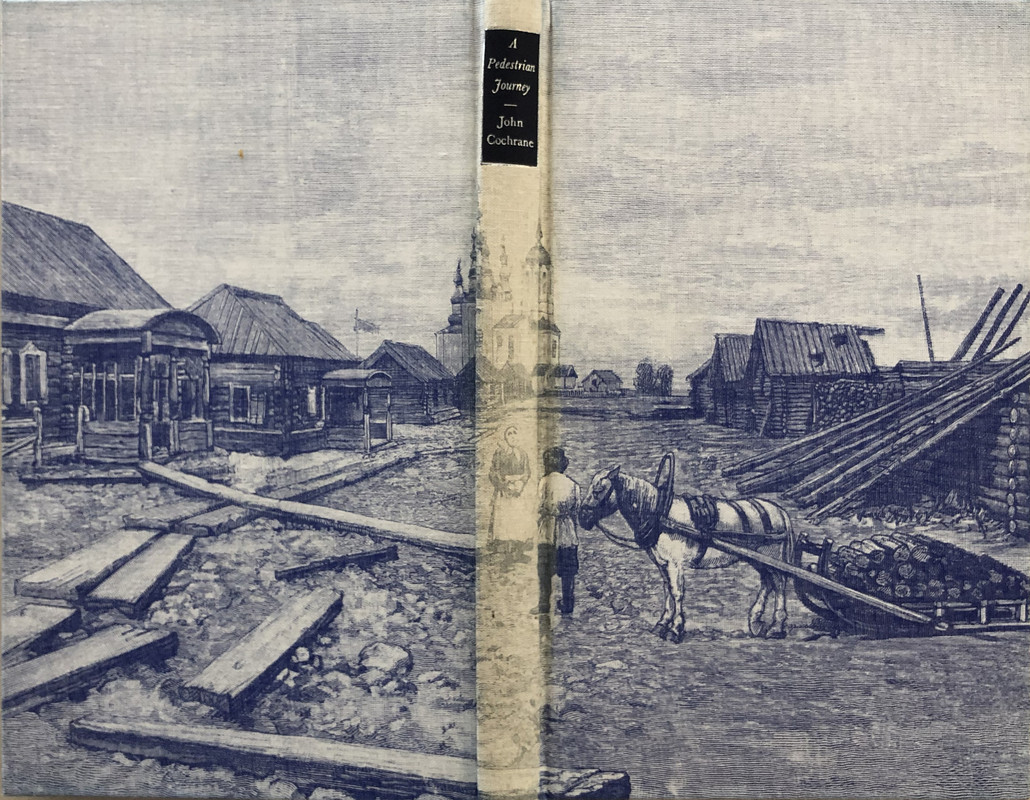
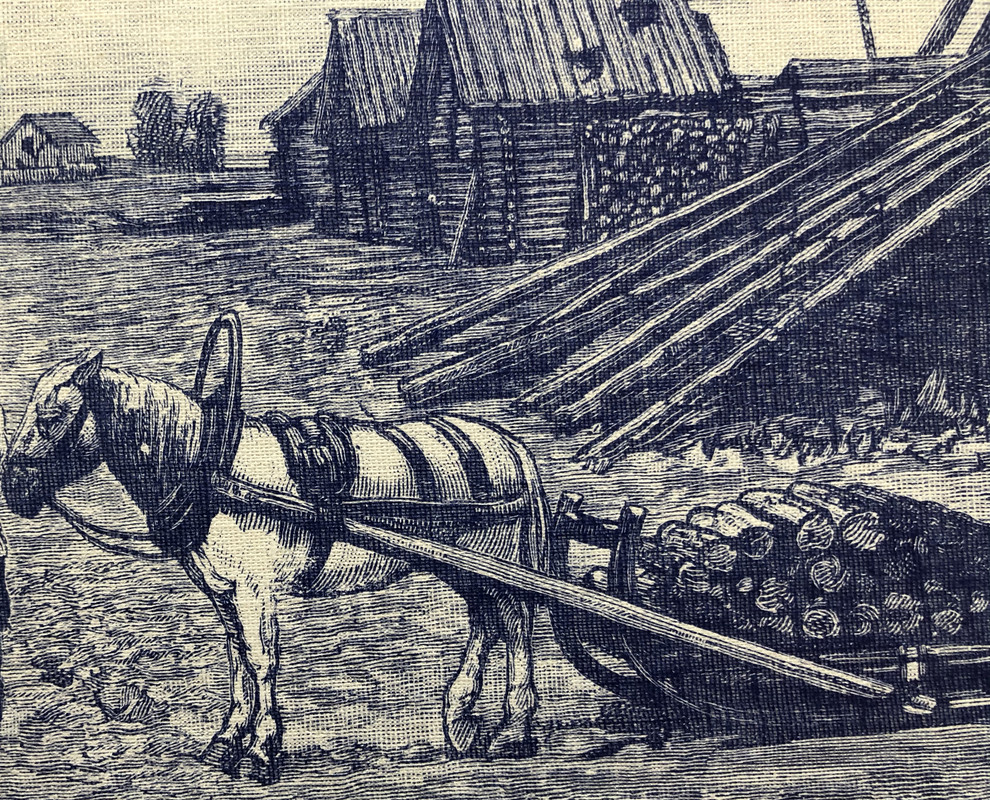
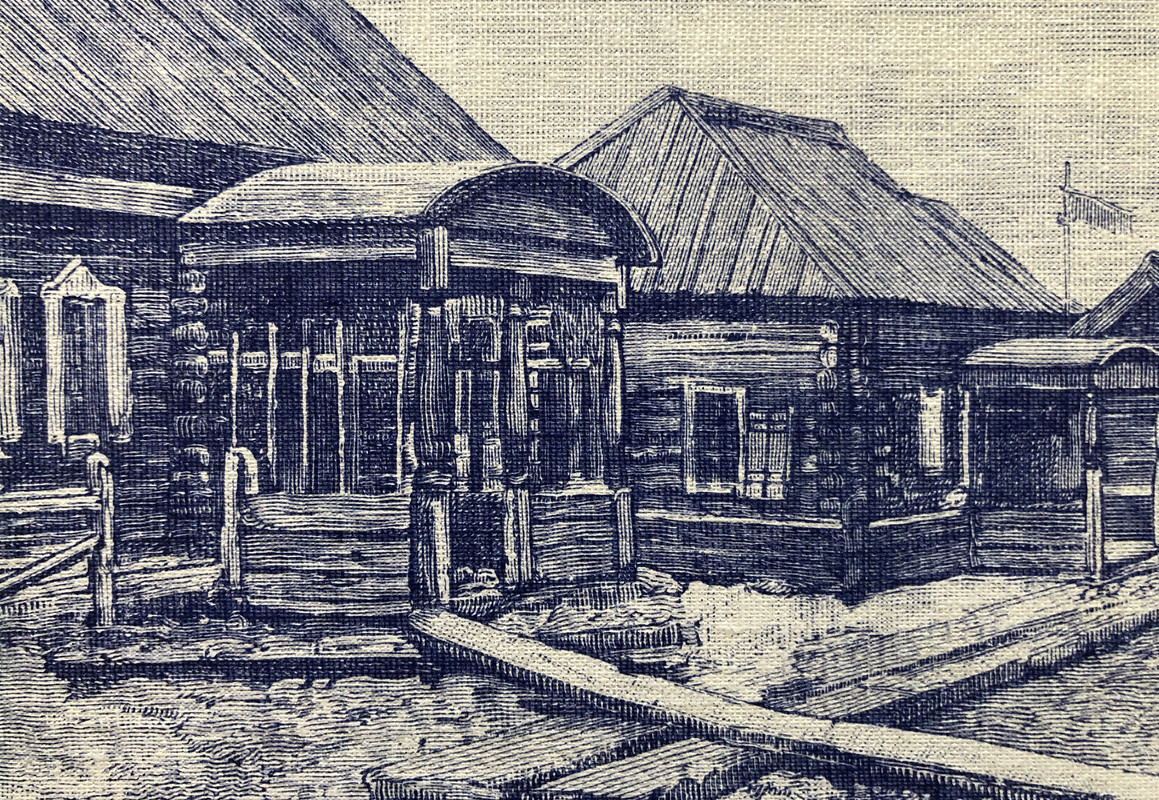
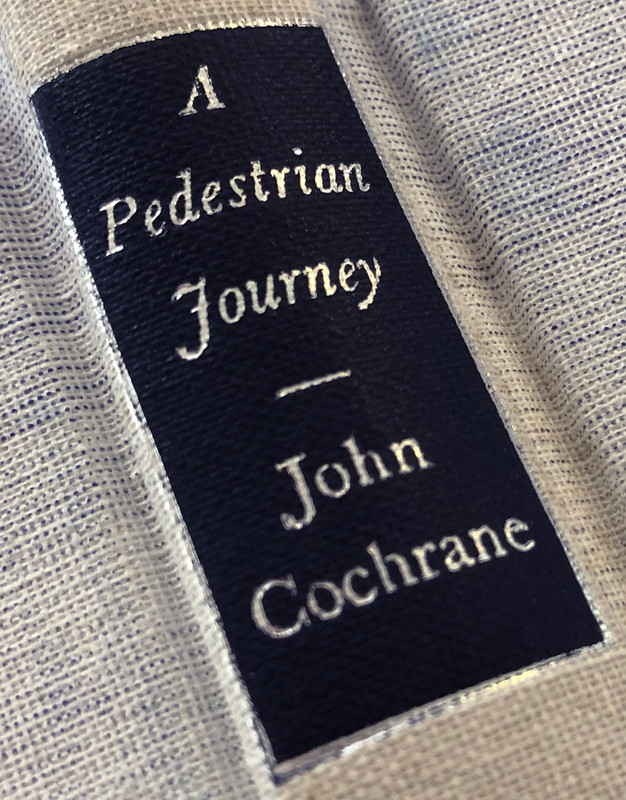
Front endpaper
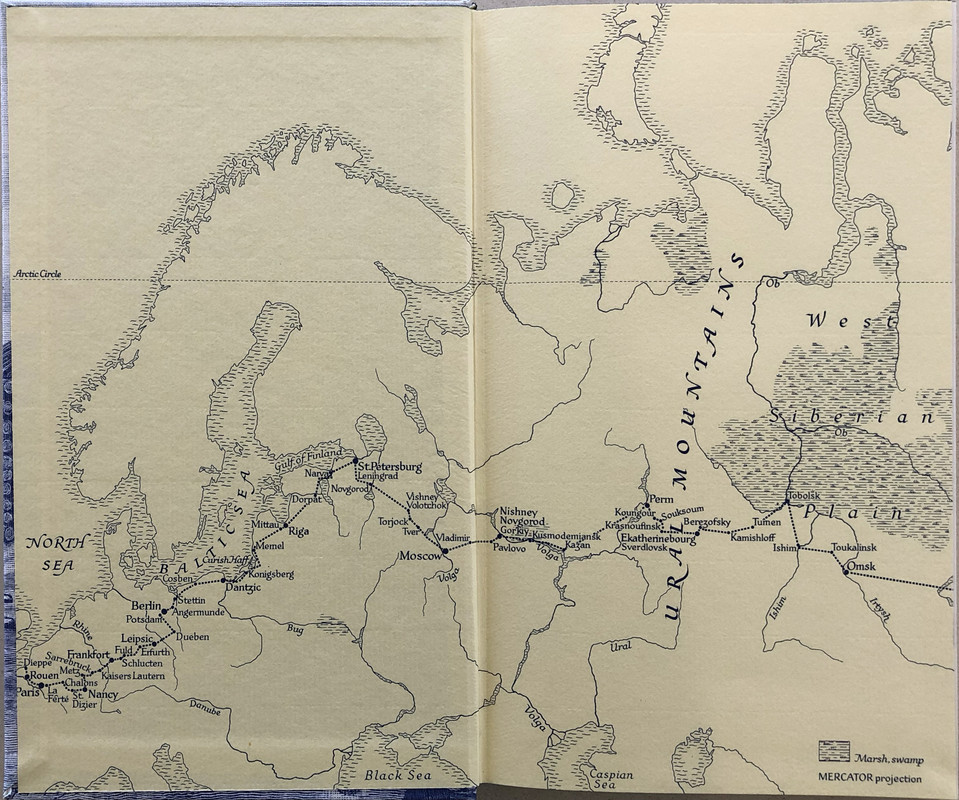
Back endpaper
An index of the other illustrated reviews in the "Folio Archives" series can be viewed here.
In 1820, aged 39, the Naval captain, John Cochrane set off from London, and walked 6000 miles across Europe, Russia and Siberia to the Pacific Ocean at Okotsk – an extraordinary journey.
He usually walked 20 to 40 miles a day, but once walked 96 miles in an unbroken forced march of 36 hours. Along the way he accepted occasional lifts on local carts and gentlemen’s carriages, river barges and in Siberia used horses, dog sleds and canoes, but the vast majority of the trip was on foot. He experienced rough robbery that left him almost naked, great generosity and hospitality, was present at the destruction by fire of one of the Czar’s palaces, lived rough sleeping in freezing conditions in the open and slept in governor’s mansions.
This 217 page book is an edited narrative of his extraordinary journey through almost unknown territories over a period of 18 months. There is a four page introduction by Mervyn Horder, a frontispiece of the author and ten bound-in pages of monochrome contemporary drawings showing scenes along the route.
The endpapers are maps of Northern Europe and Russia (front) and Siberia (back) marked with the route and printed dark blue on cream. The top page edges are stained dark blue. The book is bound in grey cloth blocked in dark blue with a wrap-around Russian engraving of village life. There is a spine label printed silver on black. The slipcase (25.9x16.7cm.) is a plain dark blue.
My copy unfortunately shows significant sunning of the spine.
 . . . .
Front endpaper
Back endpaper
An index of the other illustrated reviews in the "Folio Archives" series can be viewed here.
2cronshaw
Thanks Warwick, what an extraordinary man and journey! This is one of those older Folios that I must have seen several times in second hand bookshops but never taken notice of, and yet from your presentation it looks fascinating. With Folio's current trend towards larger, glitzier productions, I'm increasingly drawn to the smaller size and more modest presentation of these older editions. What did you make of Cochrane's account itself?
3wcarter
The account as published is very readable and interesting as it has been heavily edited. I believe the original publication was many time slonger and had a lot of repetition along the lines of "I walked 20 miles along an atrocious track in the snow and slept in a peasnt's barn". One or two such entries are all that is needed to get the idea.
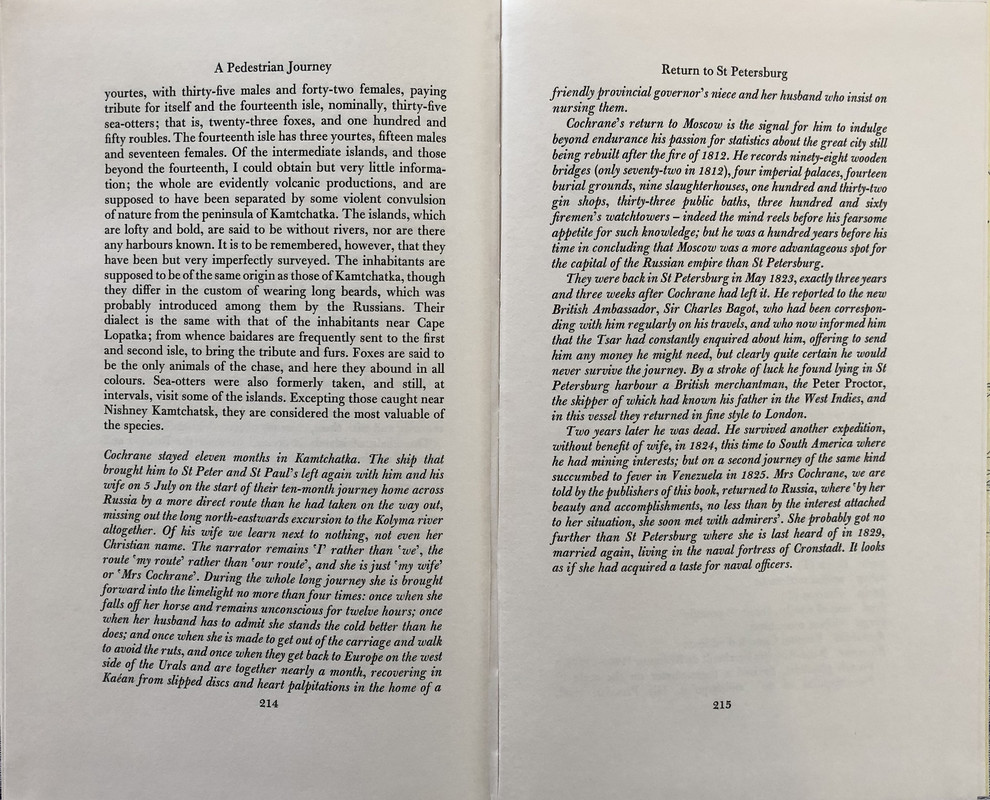
Un-shown on the map, he did a side trip to Kamchatka by boat at the end of his journey where he spent many months and married a woman who went with him as he retraced his steps and traveled back across Russia to England, where he promptly died. This is the subject of another book, not published by the FS.
I enjoyed reading it and found it fascinating, and the protagonist more than a little eccentric.
Un-shown on the map, he did a side trip to Kamchatka by boat at the end of his journey where he spent many months and married a woman who went with him as he retraced his steps and traveled back across Russia to England, where he promptly died. This is the subject of another book, not published by the FS.
I enjoyed reading it and found it fascinating, and the protagonist more than a little eccentric.
4overthemoon
This is one of my favourite "travel on foot" books, very enjoyable.
5affle
There is a Wikipedia article on John Dundas Cochrane, which is rather more informative than the introduction to this book by Mervyn Horder, and Horder's note at the end of the book. Horder does make the link to John Cochrane's cousin Archibald, the ninth Earl of Dundonald, but fails to mention Archibald's son Thomas, the tenth Earl. Thomas is the eponymous author of another Folio Society book, the 2005 Memoirs of a Fighting Captain, who had a most colourful naval career, and whose adventure-filled life provided Patrick O'Brian with the inspiration for the deeds of Jack Aubrey.
6cronshaw
>3 wcarter: Thanks for that, it's on my list now!
7coynedj
This looks to be right up my alley - I don't know how I didn't buy it back in my early FS membership days. I'll have to keep my eyes out for a copy.
8folio_books
>5 affle:
Thanks for that, Alan. I knew there had to be a connection between this Cochrane and Thomas but I'd never discovered it until now. As you say, Patrick O'Brien based Jack Aubrey on Thomas Cochrane. What amazed me was that if anyone thinks Aubrey was a larger-than-life Boy's Own action hero, Cochrane's real life exploits would astound them.
Thanks for that, Alan. I knew there had to be a connection between this Cochrane and Thomas but I'd never discovered it until now. As you say, Patrick O'Brien based Jack Aubrey on Thomas Cochrane. What amazed me was that if anyone thinks Aubrey was a larger-than-life Boy's Own action hero, Cochrane's real life exploits would astound them.

