1John5918
Two stories which caught my attention today and which I think are worth a mention...
Bird believed extinct for 170 years spotted in Borneo (Phys.Org)
World's oldest known wild bird has another chick at age of 70 (BBC)
Bird believed extinct for 170 years spotted in Borneo (Phys.Org)
A team of researchers from Indonesia and Singapore has found evidence of the continued existence of a bird long thought extinct...
Back sometime between 1843 and 1848 a bird now called the black-browed babbler was captured by naturalist Carl A.L.M. Schwaner. Records of the find are sketchy, but it appeared the bird had been captured on the island of Java. That finding was the one and only piece of evidence of the bird's existence—it is currently labeled as "data deficient" in ornithology texts. The bird was put into storage, and for the next 170 years, there were no further reports of its existence...
Then, last year, a pair of researchers, Muhammad Rizky Fauzan and Muhammad Suranto captured a bird that they could not identify on the Indonesian part of the island of Borneo. They took pictures of it and sent them to colleagues, then released the bird. As the team conducted research on the bird in the pictures, it soon became clear that its description matched that of the bird in storage in the Netherlands. A closer look confirmed that it was indeed the same species—a living black-browed babbler...
World's oldest known wild bird has another chick at age of 70 (BBC)
Wisdom the albatross, the world's oldest known wild bird, has had a chick at the age of at least 70... Laysan albatrosses usually only live for 12-40 years. But Wisdom was first identified by researchers in 1956... Albatrosses usually mate for life, but it is believed Wisdom had other partners in the past that she outlived...
2John5918
Scientists used ‘fake news’ to stop predators killing endangered birds — and the result was remarkable (The Conversation)
Animals, including humans, depend on accurate information to navigate the world. But we can easily succumb to deliberate misinformation or “fake news”, fooling us into making a poor choice... We protected endangered shorebirds by spreading misinformation — in the form of bird smells — to deceive predators. This helped reduce the number of birds lost, without using lethal force...
3alaudacorax
Brilliant!
5elenchus
>3 alaudacorax:
>4 alaudacorax:
Echo appreciation for both the story and the site. Can only assume the researchers weren't calling it "fake news" when they started the project 10 years ago, but maybe I only heard the term when it went viral.
>4 alaudacorax:
Echo appreciation for both the story and the site. Can only assume the researchers weren't calling it "fake news" when they started the project 10 years ago, but maybe I only heard the term when it went viral.
6Tess_W
>1 John5918: Which reminds me of a book I read 3-4 years ago about "extinct" species. The premise of the book is that about 90% of those species labeled extinct, aren't really, but just not cited for decades or centuries. I did not feel that book was very accurate at the time, and still don't.....but it does make one wonder. In 1949 Albatrosses were considered extinct.........
7John5918
>6 Tess_W:
Indeed. There are whole countries (South Sudan is one) where virtually nobody is recording bird sightings, and within such countries there are areas which are virtually inaccessible due to conflict or logistics. I've mentioned in a non-bird thread the search which is currently going on in South Sudan for the northern white rhino, as there are indications that a handful might still exist in certain areas, but the search which has been going on for a couple of years now involves a dedicated team of local rangers trekking on foot through inaccessible swamps in a conflict zone with very little logistics support. And new species are often being discovered in the Amazon and elsewhere. Who knows what wildlife is sheltering undisturbed and unrecorded in some of these areas?
Indeed. There are whole countries (South Sudan is one) where virtually nobody is recording bird sightings, and within such countries there are areas which are virtually inaccessible due to conflict or logistics. I've mentioned in a non-bird thread the search which is currently going on in South Sudan for the northern white rhino, as there are indications that a handful might still exist in certain areas, but the search which has been going on for a couple of years now involves a dedicated team of local rangers trekking on foot through inaccessible swamps in a conflict zone with very little logistics support. And new species are often being discovered in the Amazon and elsewhere. Who knows what wildlife is sheltering undisturbed and unrecorded in some of these areas?
8John5918
Regent honeyeater: Endangered bird 'has forgotten its song' (BBC)
A rare songbird has become so threatened that it has started to lose its song, say scientists. The regent honeyeater, once abundant in south-eastern Australia, is now listed as critically endangered; just 300 individuals remain in the world. "They don't get the chance to hang around with other honeyeaters and learn what they're supposed to sound like"...
9elenchus
>8 John5918:
I know it's anthropomorphising a pattern that likely happened with countless species (flora and fauna), but so poetically sad.
I know it's anthropomorphising a pattern that likely happened with countless species (flora and fauna), but so poetically sad.
10John5918
Hunting rare birds in Pakistan to feed the sex drive of princes (BBC)
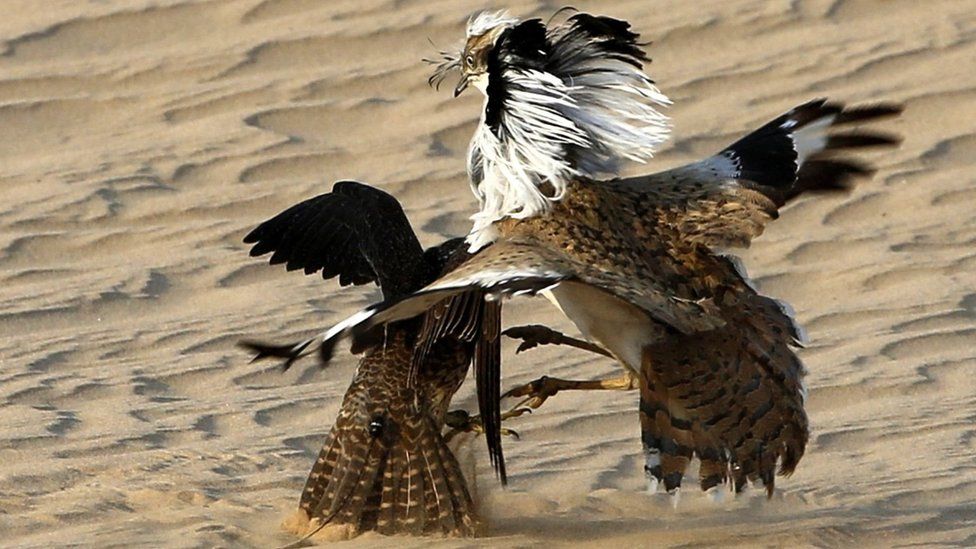
houbara bustards, rare birds whose meat is considered by some to be an aphrodisiac... The shy birds, about the size of a turkey, are in decline, so killing them is controversial - but they are still hunted for sport...
11John5918
Two new species of endangered screech owls identified from Brazil (Mongabay)
This also relates to a conversation which has come up in one or two other threads as to why the names of some bird species has changed. It's usually because of new DNA evidence.
-Two new species of tiny screech owls from the Amazon and Atlantic rainforests in Brazil have been described by science.
- Prior to the discovery, the new owl species were grouped together with two other South American species, but by closely examining their calls, DNA, and appearance, scientists determined that there were enough differences to classify two new species.
- Although the owls are new to science, they are at risk of extinction, and will likely be classified as critically endangered...
This also relates to a conversation which has come up in one or two other threads as to why the names of some bird species has changed. It's usually because of new DNA evidence.
12John5918
16 of Britain’s top 20 garden birds have declined in number, annual survey finds (Guardian)
RSPB’s 2021 Big Garden Birdwatch finds sparrow still most common species, while starlings, greenfinch and chaffinch struggle...
13alaudacorax
>12 John5918: - ... the burgeoning popularity of the birdwatch ...
I can't help wondering what effect this 'burgeoning' might have had on what trends the birdwatch apparently showed.
I can't help wondering what effect this 'burgeoning' might have had on what trends the birdwatch apparently showed.
14John5918
New Species of Bird Discovered in Brazil (Sci News)
A team of ornithologists from the United States, Canada, Brazil, and Paraguay has described a new species of trogon from the Atlantic Forest of north-eastern Brazil...
“During our fieldwork in 2019, we were able to detect only about 20 individuals, and explicitly avoided collecting more than one specimen,” they explained. “We, therefore, recommend that it be listed as Critically Endangered as less than 30 km2 of the forest remains at the site, mostly in small fragments and not all suitable for this species”...
15NorthernStar
>14 John5918: That's both exciting and sad at the same time.
16alaudacorax
>14 John5918:
Forgive me if I've got this wrong, but ... they wiped out five percent of an endangered population?
Forgive me if I've got this wrong, but ... they wiped out five percent of an endangered population?
17John5918
>16 alaudacorax:
Looks like it. Reminds me of The Natural History of Selborne by Rev Gilbert White, published in 1789 by one of the early English naturalists. Paraphrasing from memory, he said something like, "A farmer came to me today and described a bird we hadn't identified before, so I told him to go and shoot a couple and bring them to me."
Looks like it. Reminds me of The Natural History of Selborne by Rev Gilbert White, published in 1789 by one of the early English naturalists. Paraphrasing from memory, he said something like, "A farmer came to me today and described a bird we hadn't identified before, so I told him to go and shoot a couple and bring them to me."
18Tess_W
Birds can fly under camouflage to catch mates!
https://www.nytimes.com/2021/04/21/science/birds-tanagers-mating-color.html
https://www.nytimes.com/2021/04/21/science/birds-tanagers-mating-color.html
19John5918
Cranes: Flying giant returning to Ireland after 300 years (BBC)
A giant bird that has been part of Irish folklore and was often kept as a pet in medieval times could be returning to the island after an absence of more than 300 years.
A pair of cranes are nesting on a rewetted peat bog in the Republic of Ireland's midlands. It is hoped they could be the first of the species to breed in Ireland for centuries. The cranes are on land owned by former peat producer Bord na Móna. The location is to remain confidential to protect the birds. In January, Bord na Móna ceased peat harvesting for good and has been rehabilitating thousands of hectares of boglands, rewetting the drained sites...
Having been absent as a breeding bird in Britain for 400 years, there are now an estimated 200 cranes dispersed in Wales, Scotland, the English Fens, Suffolk and Gloucestershire...
20NorthernStar
>19 John5918: that sounds like good news! We have Sandhill Cranes here. Big flocks of them passing over are sure signs of spring and fall, and some stop to nest in the area.
21elenchus
That does sound like good news. A similar story with another species (piping plover) here in Chicago: in this case, it is the third consecutive season with the same nesting pair successfully breeding a clutch of eggs.
22John5918
World is home to 50bn birds, ‘breakthrough’ citizen science research estimates (Guardian)
There are about 50 billion individual birds in the world, according to new research that uses citizen science observations to try to estimate population numbers for almost 10,000 species. The paper, led by scientists at the University of New South Wales, suggests there are about six times as many birds on the planet as humans – but that many individual species are very rare.
Four species belong to what the researchers dubbed “the billion club”, with estimated populations greater than 1 billion. They are the house sparrow, found in many parts of the world, the European starling, the ring-billed gull and the barn swallow.
The researchers developed estimates for 9,700 species, including penguins, emus and the kookaburra, by drawing on hundreds of millions of bird observations logged by birdwatchers on eBird, one of the world’s largest biodiversity citizen science projects. They pooled the records with professional scientific observations to develop an algorithm that would estimate the population numbers for almost all species. The team of scientists found there were relatively few common bird species, but a large number of rare species...
24Tess_W
Yikes! A mouse plague in Australia treated with pesticide is killing the birds.
https://www.theguardian.com/australia-news/2021/jun/04/mouse-plague-poison-austr...
https://www.theguardian.com/australia-news/2021/jun/04/mouse-plague-poison-austr...
25John5918
Frightened terns abandon 3,000 eggs after drone illegally crashes on beach (Guardian)
About 3,000 elegant tern eggs were abandoned at a southern California nesting island after a drone crashed and scared off the birds, a newspaper reported Friday.
Two drones were flown illegally over the Bolsa Chica ecological reserve in Huntington Beach in May and one of them went down in the wetlands, the Orange County Register said. Fearing an attack from a predator, several thousand terns abandoned their ground nests, according to the state department of fish and wildlife. Now, during the month when the birds would be overseeing their eggs as they begin to hatch, the sand is littered with egg shells.
It’s one of the largest-scale abandonments of eggs ever at the coastal site about 100 miles (160 km) north of San Diego, according to the reserve manager, Melissa Loebl...
26Tess_W
>25 John5918: Such a shame!
28Tess_W
Puffins have returned after being "missing" for 30 years!
https://www.bbc.co.uk/news/world-europe-isle-of-man-57392543?fbclid=IwAR0w66u1MO...
https://www.bbc.co.uk/news/world-europe-isle-of-man-57392543?fbclid=IwAR0w66u1MO...
29Tess_W
A bird survey on the Isle of Man. Be sure to check it out, for nothing other than at least the beautiful pictures!
https://www.bbc.com/news/world-europe-isle-of-man-43822685
https://www.bbc.com/news/world-europe-isle-of-man-43822685

31elenchus
Fascinating, not least for introducing me to the Calf of Man: the specific island, and also the term calf allegedly (so Wikipedia) from the Norse. I was put in mind of icebergs and ice shelves calving smaller icebergs.
32Tess_W
Reports of dead or stumbling birds are pouring in to wildlife agencies in the east coast and midwest. It's a gruesome death as their eyes crust over and they go blind. Scientists have no idea! If's afflicting songbirds.
https://www.wusa9.com/article/news/verify/birds-dying-disease-2021-virginia-dc-m...
https://www.wusa9.com/article/news/verify/birds-dying-disease-2021-virginia-dc-m...
33NorthernStar
>32 Tess_W: horrible!
34Tess_W
Hair plucking! I've seen birds sitting on the back of cattle, but this article doesn't mention cattle.
https://www.sciencedaily.com/releases/2021/07/210730104316.htm

https://www.sciencedaily.com/releases/2021/07/210730104316.htm

36alaudacorax
>34 Tess_W:, >35 elenchus:
I'm surprised to find this regarded as unusual. When I was a youngster in the Welsh valleys I often saw jackdaws steal wool from sheep when the latter were lying down, early on frosty spring mornings. I suppose the frosts made the sheep reluctant to stand up and lose their warm, dry spot; though they were obviously irritated.
Round here I often see birds—jackdaws, again, and wagtails come to mind, though I'm sure I've seen others—climbing over the cattle to catch insects. The cattle seem very tolerant, even round their faces. It seems natural that these birds would snatch the odd hair in due season. Especially if there were some loose bits.
I wonder if I can remember until next spring to look out for this behaviour?
I've noticed, though, that birds will never, ever stand on a cow's head to catch insects when you have a camera or mobile phone in your hand ...
I'm surprised to find this regarded as unusual. When I was a youngster in the Welsh valleys I often saw jackdaws steal wool from sheep when the latter were lying down, early on frosty spring mornings. I suppose the frosts made the sheep reluctant to stand up and lose their warm, dry spot; though they were obviously irritated.
Round here I often see birds—jackdaws, again, and wagtails come to mind, though I'm sure I've seen others—climbing over the cattle to catch insects. The cattle seem very tolerant, even round their faces. It seems natural that these birds would snatch the odd hair in due season. Especially if there were some loose bits.
I wonder if I can remember until next spring to look out for this behaviour?
I've noticed, though, that birds will never, ever stand on a cow's head to catch insects when you have a camera or mobile phone in your hand ...
37elenchus
>36 alaudacorax: birds will never, ever stand on a cow's head to catch insects when you have a camera or mobile phone in your hand ...
Cheeky.
Reminds me of a certain Gary Larson cartoon.
Cheeky.
Reminds me of a certain Gary Larson cartoon.
38alaudacorax
Love Gary Larson's humour.
It's seriously weird, though, how wildlife seems to delight in frustrating my attempts with a camera.
And then there's that inflexible rule of birding. Wherever you sit, the birds will be behind you.
It's seriously weird, though, how wildlife seems to delight in frustrating my attempts with a camera.
And then there's that inflexible rule of birding. Wherever you sit, the birds will be behind you.
39John5918
Hear be kiwis: New Zealand celebrates as distinctive cry of iconic bird returns (Guardian)
Kiwi watchers have recorded the sound of the bird’s song at many sites that were silent just five years ago...
40NorthernStar
>39 John5918: Great! And my dog was very interested in the kiwi calls!
41Tess_W
Too hot, even for the birds!
https://www.newsobserver.com/news/nation-world/national/article252201153.html
https://www.newsobserver.com/news/nation-world/national/article252201153.html
42John5918
>34 Tess_W: and others
Scientists have a new word for birds stealing animal hair (Science News)
Scientists have a new word for birds stealing animal hair (Science News)
Species that engage in ‘kleptotrichy’ may use their loot to deter predators ...
43John5918
World's rarest heron facing extinction (Bird Guides)
A recent study has given cause for concern for Bhutan's important population of White-bellied Heron. The Himalayan kingdom is home to some 40-50% of the world's population of the Critically Endangered species, as well as the largest number of breeding birds. The heron is already extinct in Nepal and possibly Bangladesh too, with the entire global population now restricted to northern Myanmar, north-east India and Bhutan...
44Tess_W
Birds of prey face global decline from habitat loss, poisons
https://abcnews.go.com/Technology/wireStory/birds-prey-face-global-decline-habit...
https://abcnews.go.com/Technology/wireStory/birds-prey-face-global-decline-habit...
45Tess_W
Songbird deaths in the Eastern/Midwest US Still no definitive answer
https://www.indystar.com/story/news/environment/2021/08/31/indiana-songbird-deat...
https://www.indystar.com/story/news/environment/2021/08/31/indiana-songbird-deat...
46Tess_W
Oxfordshire's first crane chick in 500 years!
https://www.bbc.com/news/uk-england-oxfordshire-58423342
https://www.bbc.com/news/uk-england-oxfordshire-58423342
47John5918
France reviews overturning ban on cage and net traps for some birds (The Connexion)
Catching lapwings, golden plovers, skylarks, thrushes and blackbirds using nets and cages was banned over the summer, but a judge may now reconsider that decision...
48alaudacorax
>47 John5918: - It said the French Ecology Ministry had not proved these traditional hunting methods were the only ones that could be used for capturing the birds concerned.
Okay, I'm baffled. How is that relevant? Am I missing something?
Okay, I'm baffled. How is that relevant? Am I missing something?
49Tess_W
>48 alaudacorax: Not sure, but I think he is saying that even though nets and traps were banned, there are other methods of catching those birds (like shooting).
50alaudacorax
>49 Tess_W:
Ah, I think I've misunderstood things. I'd taken it that it was illegal to kill these birds and this was a loophole. But if killing them by other means is legal in France then the sentence makes sense. But now I'm even more confused because I thought such things as skylarks would have been protected under EU law.
Ah, I think I've misunderstood things. I'd taken it that it was illegal to kill these birds and this was a loophole. But if killing them by other means is legal in France then the sentence makes sense. But now I'm even more confused because I thought such things as skylarks would have been protected under EU law.
51John5918
>50 alaudacorax:
I've read that there's quite a tradition of catching and eating small wild birds in France, although that could just be the traditional English sport of defaming the French.
I've read that there's quite a tradition of catching and eating small wild birds in France, although that could just be the traditional English sport of defaming the French.
52elenchus
"The ivory-billed woodpecker is among 23 species declared extinct by the US Fish and Wildlife Service (FWS)."
https://www.bbc.com/news/world-us-canada-58740362
https://www.bbc.com/news/world-us-canada-58740362
53Tess_W
>53 Tess_W: A shame. I can remember seeing a couple of these when I was younger.
54John5918
‘Rogue’ paddleboarders and kayakers threaten seabird sanctuary (Guardian)
Human activity disturbs nesting of puffins and rare roseate terns at Coquet Island in Northumberland...
55NorthernStar
>54 John5918: Sad that people put their own pleasure first, and don't care about the birds.
56John5918
California condors: Virgin births discovered in critically endangered birds (BBC)
US wildlife researchers have discovered that two California condors, a critically endangered bird, gave birth without any male genetic DNA. The discovery that condors are capable of virgin births - formally called parthenogenesis or asexual reproduction - surprised scientists. Virgin births have been recorded in other bird species, as well as lizards, snakes, sharks, rays and other fish. Only about 500 California condors remain in the US south-west and Mexico. In the 1980s, fewer than two dozen birds remained in the wild, but conservation efforts have boosted their numbers in recent years...
The researchers describe how routine genetic screenings of captive birds led to the discovery that two male chicks hatched in 2001 and 2009 were related to their mothers and had not inherited DNA from any father bird. All 467 male condors in the breeding pool were tested. What makes the case even more rare is that it is the first time that any bird species has had a virgin birth when males were present for breeding... "We were not exactly looking for evidence of parthenogenesis, it just hit us in the face. We only confirmed it because of the normal genetic studies we do to prove parentage"...
57Tess_W
>56 John5918: Wow, great news!
58Tess_W
House sparrow population in Europe drops by 247m
New study reveals huge declines in once common species amounting to loss of one in six birds since 1980
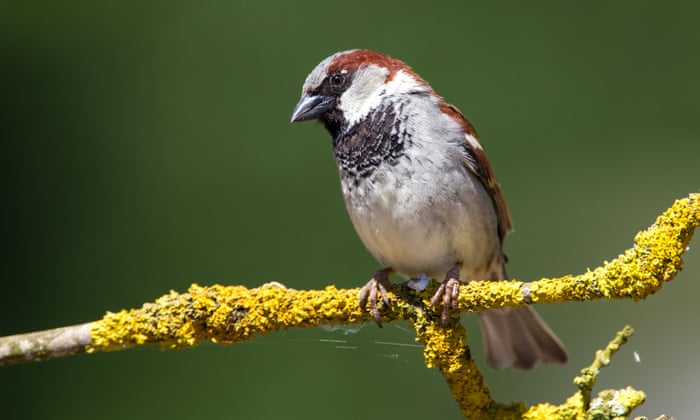
https://www.theguardian.com/environment/2021/nov/16/house-sparrow-population-in-...
59Tess_W
One in Six Australian birds now threatened.
https://www.theguardian.com/australia-news/2021/dec/01/one-in-six-australian-bir...
https://www.theguardian.com/australia-news/2021/dec/01/one-in-six-australian-bir...
60Tess_W
Rockford, Illinois. (about 1.5 hours west of Chicago) Will be on the lookout for these should I travel through Rockford for some reason!

https://www.audubon.org/news/the-audubon-mural-project-takes-flight-rockford-ill...

https://www.audubon.org/news/the-audubon-mural-project-takes-flight-rockford-ill...
61elenchus
>60 Tess_W:
That's a great story, wasn't aware of the NYC Mural Project and if anything, other photos from Rockford are even more impressive than the one in your post!
I'm in Chicago so Rockford's not far, but I can't think of any reason we'd be traveling through there. Hopefully I'll remember this if it ever comes to pass, though.
That's a great story, wasn't aware of the NYC Mural Project and if anything, other photos from Rockford are even more impressive than the one in your post!
I'm in Chicago so Rockford's not far, but I can't think of any reason we'd be traveling through there. Hopefully I'll remember this if it ever comes to pass, though.
62John5918
‘Mesmerising’: a massive murmuration of budgies is turning central Australia green and gold (Guardian)
After a bumper wet season, huge flocks of budgerigars are on the move in the deserts of the Northern Territory...
63alaudacorax
After reading that, my first thought was to go to YouTube to look for video reports. The only video I could find I suspect was using stock footage and that was not really what the article was describing. I did, however, find this from 2012, which shows truly gobsmacking numbers: https://www.youtube.com/watch?v=wyfCMrqitWI
64perennialreader
>62 John5918:, >63 alaudacorax: Wow, just wow!
65John5918
Bird songs bump stars off Australian music chart (BBC)
An album made up entirely of the tweets and squawks of endangered Australian birds has debuted in the top five of the country's Aria music charts. Songs of Disappearance is surpassing the likes of Abba and The Weeknd - not to mention Christmas favourites Michael Bublé and Mariah Carey. Created by BirdLife Australia, the album features the birdsongs of 53 of Australia's most threatened species. Some sounds took hours of waiting in the bush to record one short tweet. David Stewart, a wildlife sound recordist, has spent more than 30 years collecting often rarely heard sounds of Australia's wildlife. It is his bird recordings that have been used on the album...
66elenchus
I love that, sure it's likely to be a bit of a novelty but I'm guessing not to be dismissed entirely as a joke, and indicative of the importance of the natural world for Australians.
It reminds me of a track I have on a complilation album of electronic music out of Australia, and the first track -- surprisingly -- featured an ambient recording of insects and frogs, without any other treatment. The rest of the album was more orthodox in approach, but the track grabbed the attention for being so unexpected.
It reminds me of a track I have on a complilation album of electronic music out of Australia, and the first track -- surprisingly -- featured an ambient recording of insects and frogs, without any other treatment. The rest of the album was more orthodox in approach, but the track grabbed the attention for being so unexpected.
67TempleCat
>65 John5918:
Have you ever heard Cosmo Sheldrake's music? On some recordings it's only bird song, on others he sings, but the instruments are bird calls which he records and orchestrates.
Listen to https://youtu.be/tJHuJEookjM on YouTube for one example.
He doesn't limit himself to birds, either. He has some albums where fish are the focus; insects are also called to perform on other pieces.
Have you ever heard Cosmo Sheldrake's music? On some recordings it's only bird song, on others he sings, but the instruments are bird calls which he records and orchestrates.
Listen to https://youtu.be/tJHuJEookjM on YouTube for one example.
He doesn't limit himself to birds, either. He has some albums where fish are the focus; insects are also called to perform on other pieces.
68elenchus
>67 TempleCat:
Thanks for that, wasn't familiar with Sheldrake's music. Do all his tracks have lyrics? I'm especially curious to hear an instrumental done that way.
ETA Found the full album Wake Up Calls online (YouTube Music) and I think only one track has lyrics. Still a lot of electronic treatment and played melodies, but he does quite a bit with birdcall loops and textures. Not sure I'm compelled to listen to his music generally but that album I'll listen to more than once.
Thanks for that, wasn't familiar with Sheldrake's music. Do all his tracks have lyrics? I'm especially curious to hear an instrumental done that way.
ETA Found the full album Wake Up Calls online (YouTube Music) and I think only one track has lyrics. Still a lot of electronic treatment and played melodies, but he does quite a bit with birdcall loops and textures. Not sure I'm compelled to listen to his music generally but that album I'll listen to more than once.
69TempleCat
>68 elenchus:
I certainly haven't listened to all of his music, but I think you found the album that has the most bird sounds (music/calls/chirps/squawks). It was recorded over a number of years, concentrating on English birds on endangered lists.
Cosmo records the many animal sounds and uses the keys of his synthesizer to play/orchestrate them, maybe also adding other synthesized organ-like tones, sometimes his own or other voices as well. The result is an organized amalgam, focused on a particular cause (endangered species, e.g.), region (Galapagos, e.g.) or type (fish, e.g.), of natural and man-made music. I find it intriguing.
I certainly haven't listened to all of his music, but I think you found the album that has the most bird sounds (music/calls/chirps/squawks). It was recorded over a number of years, concentrating on English birds on endangered lists.
Cosmo records the many animal sounds and uses the keys of his synthesizer to play/orchestrate them, maybe also adding other synthesized organ-like tones, sometimes his own or other voices as well. The result is an organized amalgam, focused on a particular cause (endangered species, e.g.), region (Galapagos, e.g.) or type (fish, e.g.), of natural and man-made music. I find it intriguing.
70John5918
Last seen in … birdwatchers asked to join hunt for world’s 10 rarest birds (Guardian)
Birdwatchers around the world are being called on to turn detective and help in a search for some of the rarest birds on Earth. The global Search for Lost Birds, launched today, presents researchers, conservationists and the global birdwatching community with a Top 10 Most Wanted list of birds that have been lost to science...
Dusky tetraka, last documented in 1999 in Madagascar
South Island kōkako, last seen in 2007 in New Zealand
Jerdon’s courser, last seen in 2009 in India
Prigogine’s nightjar (also known as Itombwe nightjar), last seen in 1955 in the Democratic Republic of Congo
Cuban kite, last seen in 2010 in Cuba
Negros fruit-dove, last seen in 1953 in the Philippines
Santa Marta sabrewing, last seen in 2010 in Colombia
Vilcabamba brush-finch, last seen in 1968 in Peru
Himalayan quail, last seen in 1877 in India
Siau scops owl, last seen in 1866 in Indonesia
71John5918
You don’t need to travel long distances to spot birds, Britain’s twitchers urged (Guardian)
Twitching is synonymous with birdwatching, which can often involve long journeys in search of rare species. But now a new breed of climate-conscious birder is trying to persuade fellow enthusiasts to keep it local instead. A group of young birders has created a challenge for spotters to find birds in their own patch close to home rather than routinely travelling long distances to spot particular birds, a practice known as “twitching”. The Green Patch Challenge, created by Joe Parham, a 22-year-old birder from the Midlands, invites under-25s to attempt to travel only on foot or by bike to see birds. “We all need to make changes to our lives to address the climate crisis, and the goal of the challenge is to capture this while encouraging young birders to explore and enjoy nature close to them,” Parham said...
72alaudacorax
>71 John5918:
I've never really understood this twitching business. I get a thrill equal to any from a 'new' bird on my home patch, even though it might be quite familiar to me elsewhere and nationally quite common. On the other hand, I've never really got the point of travelling to the other end of the country to see some rare vagrant. It's interesting to know about it; but travelling to some unfamiliar bit of countryside to see that one, individual, exotic bird seems to me rather like going to a zoo—somehow or other, I don't feel it would be a 'genuine' experience for me—certainly no thrill. Transplant that same bird to my local patch and it would be a quite different matter—probably have me babbling.
Having said that, I take fairly frequent bird watching holidays (or did, pre-Covid), often travelling some distance there and back, so I can't really criticise twitchers too much.
By the way, is twitching really 'synonymous with birdwatching'?
I've never really understood this twitching business. I get a thrill equal to any from a 'new' bird on my home patch, even though it might be quite familiar to me elsewhere and nationally quite common. On the other hand, I've never really got the point of travelling to the other end of the country to see some rare vagrant. It's interesting to know about it; but travelling to some unfamiliar bit of countryside to see that one, individual, exotic bird seems to me rather like going to a zoo—somehow or other, I don't feel it would be a 'genuine' experience for me—certainly no thrill. Transplant that same bird to my local patch and it would be a quite different matter—probably have me babbling.
Having said that, I take fairly frequent bird watching holidays (or did, pre-Covid), often travelling some distance there and back, so I can't really criticise twitchers too much.
By the way, is twitching really 'synonymous with birdwatching'?
73John5918
>72 alaudacorax:
I'm no expert but I don't think they are synonymous. A quick Google search suggests that a twitcher is a birdwatcher whose main aim is to collect sightings of rare birds (and who is often willing to drop everything and travel hundreds of miles just to collect one) whereas a birdwatcher is simply someone who is interested in watching birds. I class myself as the latter.
I'm no expert but I don't think they are synonymous. A quick Google search suggests that a twitcher is a birdwatcher whose main aim is to collect sightings of rare birds (and who is often willing to drop everything and travel hundreds of miles just to collect one) whereas a birdwatcher is simply someone who is interested in watching birds. I class myself as the latter.
74Tess_W
I don't think I would travel much more than 30 minutes specifically for bird watching. Although, a friend could probably convince me!
75TempleCat
>71 John5918:
Britain's twitchers must be a very stolid group. I'd find it very difficult to peer through binoculars if I was constantly twitching!
Britain's twitchers must be a very stolid group. I'd find it very difficult to peer through binoculars if I was constantly twitching!
76John5918
Rare kingfisher sighting in Preston draws thousands (Guardian)
American shaggy-crested belted kingfisher thought to have got blown across ocean by Atlantic storm...
77John5918
Former quarry turns haven for endangered UK birds (Japan Today)
This part of the east of England was once all wetland, but gradually over the centuries it was drained for farming. Now there are many areas which are being allowed to return to their original wetlands, much to the benefit not only of birds but other flora and fauna.
Nature is reclaiming her territory at a quarry in the east of England that is being transformed into a vast reserve offering vital sanctuary to endangered birds. With its reedbed wetlands, the marshy plain of the Fens outside Cambridge has become an attractive habitat for the secretive bittern, which was until 2015 on the UK's Red list of most-threatened species...
This part of the east of England was once all wetland, but gradually over the centuries it was drained for farming. Now there are many areas which are being allowed to return to their original wetlands, much to the benefit not only of birds but other flora and fauna.
78Tess_W
>77 John5918: Great to hear. In the US there is a push to conserve marshlands.
79John5918
Migratory bird that flew over 7,000km from Poland to Kenya electrocuted in Nandi (Citizen)
The white stork (Ciconia ciconia) died after hitting power lines. The carcass was surrendered to the Kenya Wildlife Services which will now preserve it as a wildlife trophy...
80perennialreader
>79 John5918: So very sad.
81Tess_W
>79 John5918: awwww
82John5918
How new bird species arise (Phys.Org)
Much of a centuries-old debate over where and how new bird species form has now been resolved. Researchers at the University of Copenhagen have provided evidence that birds in mountainous areas—where the vast majority of the planet's species live—have left lowland habitats for higher and higher mountain elevations throughout their evolution. Millions of years of climatic fluctuations have contributed to pushing bird species upslope—as is probably happening now.
One of the fundamental questions in biology, and a centuries-old academic debate, is: How do new species form? And, how do species end up on mountaintops several kilometers high? Indeed, 85% of the world's vertebrates—birds included—live in mountainous areas where lowland habitats isolate animal species and populations from one another...
83TempleCat
>82 John5918:
That snippet of text left me scratching my head. It's fascinating that birds are moving upward over time. One explanation might be that their normal habitats (flora, climate, insects, etc.) moved up (with global warming?) and the birds moved their nesting and feeding sites in tandem. Or did they move upward as a defensive posture and outside of the comfort zone of predator species (snakes, rodents, etc.)?
Also, how do lowland habitats isolate animal species? Intuitively, at least to me, the opposite would be true. Without obstacles, species could more easily scatter, becoming less isolated, I would imagine. Or are predation and territories again possible factors?
Boy, I am woefully ignorant of wildlife biology! But your note did get me to thinking. Thank you, John!
Edit: I didn't realize until after I had posted the original of this note that the title of your note "How New Bird Species Arise" was actually a link to the full article and that the authors did discuss the factors that I wondered about - climate and competition. My question on isolation of species seems to balance on the meaning of "isolation." Species are less varied (i.e. more isolated?) at lowland levels and exhibit greater variance higher up the mountains. I'm still scratching my head....
That snippet of text left me scratching my head. It's fascinating that birds are moving upward over time. One explanation might be that their normal habitats (flora, climate, insects, etc.) moved up (with global warming?) and the birds moved their nesting and feeding sites in tandem. Or did they move upward as a defensive posture and outside of the comfort zone of predator species (snakes, rodents, etc.)?
Also, how do lowland habitats isolate animal species? Intuitively, at least to me, the opposite would be true. Without obstacles, species could more easily scatter, becoming less isolated, I would imagine. Or are predation and territories again possible factors?
Boy, I am woefully ignorant of wildlife biology! But your note did get me to thinking. Thank you, John!
Edit: I didn't realize until after I had posted the original of this note that the title of your note "How New Bird Species Arise" was actually a link to the full article and that the authors did discuss the factors that I wondered about - climate and competition. My question on isolation of species seems to balance on the meaning of "isolation." Species are less varied (i.e. more isolated?) at lowland levels and exhibit greater variance higher up the mountains. I'm still scratching my head....
84John5918
Poison, persecution and people: why Kenya’s raptors are disappearing (Guardian)
I'm privileged in that I still see or hear augur buzzards almost every day, but we don't see too many eagles these days and rarely ever do we see a vulture. Fish eagles are still common around the lakes and rivers.
a team of Kenyan and international scientists who recently published a report detailing widespread declines of Kenya’s birds of prey over the past 40 years. Numbers of common kestrel were down by 95%; secretary bird and long-crested eagles 94%; lesser kestrels 93%; and the augur buzzard down 91%. Both the hooded vulture and Montagu’s harrier saw an 88% decline. “We are on the brink of losing many of them, along with the environmental benefits they confer to humanity,” says Peter Njoroge, head of the ornithology section at National Museums of Kenya. “Most birds of prey are slow breeders and cannot cope with the myriad threats they face unless urgent action to protect them is initiated.”...
I'm privileged in that I still see or hear augur buzzards almost every day, but we don't see too many eagles these days and rarely ever do we see a vulture. Fish eagles are still common around the lakes and rivers.
85John5918
Dartford warbler is welcomed back from near-extinction (Guardian)
The distinctive sight and sound of a Dartford warbler singing from the top of a sprig of gorse in the May sunshine is making a welcome comeback after the bird almost became extinct half a century ago. Dartford warblers suffered a population crash and were at risk of vanishing from the UK in the 1960s, largely because of loss of the lowland heathland they thrive in. But the RSPB is reporting the highest recorded number of Dartford warblers – 183 pairs – at its reserves including RSPB Arne in Dorset and RSPB Minsmere in Suffolk. As well as needing the cover provided by gorse, the bird is susceptible to harsh weather and was almost wiped out in the big freeze of 1962-3 but recent milder weather has helped it to bounce back...
86alaudacorax
>85 John5918:
Interesting ... I'd been wondering about Dartford warblers. With global warming, we see so much new stuff now—here in the English Midlands I hear Cetti's warblers and see little egrets practically every day, birds I could only have dreamed about not so long ago, and we're now hearing about other egrets getting more frequent. I'd been wondering about the chances of Dartfords ever reaching this far north.
Interesting ... I'd been wondering about Dartford warblers. With global warming, we see so much new stuff now—here in the English Midlands I hear Cetti's warblers and see little egrets practically every day, birds I could only have dreamed about not so long ago, and we're now hearing about other egrets getting more frequent. I'd been wondering about the chances of Dartfords ever reaching this far north.
88John5918
Sudan sanctuary offers haven for exotic birds (Euronews) (video)
Nestled to the east of Sudan's capital Khartoum, a lush sanctuary is home to dozens of exotic birds from far and wide. Akram Yehia, owner of the 400-square-metre (4,300-square-foot) Marshall Nature Reserve, set up the huge caged aviary in the garden of his home four years ago and handcrafted dozens of nest boxes. He created a habitat of trees, adding a garden pond and misters to cool off from the scorching Sudanese heat. More than 100 birds of 13 different species now inhabit the reserve. Ring-necked parakeets, finches, as well as Meyers and red-rumped parrots fly on the branches and compete for the reserve's nest boxes. Sudanese and foreign visitors are only allowed to visit for two to three hours a day.
90John5918
How London’s new Elizabeth line has created a sanctuary for birds (Guardian)
London’s new Elizabeth line will allow commuters to start taking high-speed trains under the city this week, on part of a 73-mile route that stretches from Reading in the west to Shenfield in the east. They will not be the first travellers to enjoy the benefits of the new line, however. On Wallasea Island in Essex, thousands of birds have already taken advantage of the £19bn rail project – on a mosaic of lagoons, islands, and bays that have been created out of 3.5m tonnes of earth that were dug up during construction of its new stations and 13 miles of twin tunnels. Avian visitors to this newly constructed nature reserve, run by the Royal Society for the Protection of Birds, include avocets, spoonbills, black-tailed godwits and little egrets. Hen and marsh harriers have appeared in winter while wigeon, teal and plover have also frequented the site. For good measure, I spotted yellow wagtails, oystercatchers, lapwings, black-headed gulls and reed bunting on my visit last week. Brown hares scampered through the long grass while skylarks shrilled above the flat, uninterrupted Essex landscape. This is a nature lover’s paradise...
91John5918
More than 100 hen harriers fledge in England for first time in a century (Guardian)
Nearly 120 rare hen harrier chicks have fledged in England this year, the highest number for more than a century, England’s conservation agency has said. Natural England and its partners recorded 119 hen harrier chicks successfully fledging from nests across uplands in County Durham, Cumbria, Lancashire, Northumberland and Yorkshire. A fledgling is a young bird that has grown enough to acquire its initial flight feathers and is preparing to leave the nest and care for itself. It is the first time in more than a century that the number added to the population has exceeded 100 young birds, the agency said. But conservation experts have warned that work needs to continue to tackle the illegal persecution of England’s most threatened bird of prey, which hunt red grouse chicks to feed their young, bringing them into conflict with commercial shooting estates...
92Tess_W
A great article, how in one case, man, bird, and pesticides are co-existing.
https://www.allaboutbirds.org/news/at-orchards-and-vineyards-birds-are-outperfor...
https://www.allaboutbirds.org/news/at-orchards-and-vineyards-birds-are-outperfor...
93NorthernStar
>92 Tess_W: really good article!
94perennialreader
Black-naped Pheasant-pigeon discovered in Papua New Guinea
https://www.usatoday.com/story/news/world/2022/11/20/black-naped-pheasant-pigeon...
https://www.usatoday.com/story/news/world/2022/11/20/black-naped-pheasant-pigeon...
95John5918
Australia: How 'bin chickens' learnt to wash poisonous cane toads (BBC)
There are few Australian animals more reviled than the white ibis. It has earned the moniker "bin chicken" for its propensity to scavenge food from anywhere it can - messily raiding garbage and often stealing food right out of people's hands. But the native bird may have figured out how to overhaul its bad reputation. It has developed an "ingenious" method of eating one of the only animals Australians hate more - the cane toad, a toxic and pervasive pest...
The toad's skin contains venom which it releases when threatened, causing most animals that come into contact with it to die quickly of a heart attack... "Ibis were flipping the toads about, throwing them in the air, and people just wondered what on earth they were doing," she told the BBC. "After this they would always either wipe the toads in the wet grass, or they would go down to a water source nearby, and they would rinse the toads out. "She believes it is evidence of a "stress, wash and repeat" method that the birds have developed to rid the toads of their toxins before swallowing them whole. "It really is quite amusing"... birds like hawks and crows rather quickly figured out how to eat around the poison glands on their shoulder. They would flip the toads on their back and rip out their insides, leaving the glands untouched. But this is the first time Prof Shine - who has studied toads for 20 years - has heard of birds using a method like this to eat them whole. "Ibis do get an unfair reputation... {but} this demonstrates that these are clever birds"...
97Tess_W
January 5 was National Bird Day in the U.S. Good short video here: https://abcnews.go.com/International/national-bird-day-species-risk-extinction-u....
98John5918
Meet Jinx, the dog on a mission to protect Welsh bird colonies from rats (Guardian)
A lively spaniel with a nose for sniffing out rats has been unveiled as a new weapon in the fight to protect precious seabird colonies on small islands off the Welsh coast. Billed as the UK’s first “conservation detection dog”, Jinx’s role will be to keep islands such as Skomer, off Pembrokeshire, famed for its colonies of puffins, clear of rats, which can decimate bird populations. Jinx, a three-year-old working cocker spaniel, will not be directly responsible for tackling any rats found on the islands but will simply detect them and it will then be up to his human handlers to decide what to do next... The Welsh government has provided £250,000 for new biosecurity measures for Wales that includes payrolling Jinx...
99NorthernStar
>98 John5918: sounds like a clever idea!
100Tess_W
>98 John5918: I have read about the problem of rodents, specifically rats, in other places causing death and destruction, also. Interesting that rats (and their fleas) are responsible in history for quite a few deaths. When I was in college, I lived on the 8th floor of an 11 floor dorm. The dumpsters were 8 floors down and in the summer, you could see and hear the rats ripping open plastic bags to get to the trash, especially at sunset! UGH!
101TempleCat
>100 Tess_W: "Quite a few deaths"? The bubonic plague that swept through Europe in the mid-1300s killed between 30% and 50% of the population - tens of millions of people! Fleas on the rats were the primary vector, though I seem to remember reading recently that the disease may also have been passed around by aerosol, just like Covid, though that idea was discredited in the past.
But I agree with your UGH when rats are hanging around - maybe it's only cultural memory at work, but the conditions that are attracting them are, at the least, unpleasant and probably unhealthy. I was visiting a friend late last fall, sitting outside by her grape vine-covered fences. I began to notice a couple of rats running among the vines, probably searching out any grapes that remained. I left as soon as it was polite. The vines are now gone, so I guess I wasn't the only one who was bothered!
But I agree with your UGH when rats are hanging around - maybe it's only cultural memory at work, but the conditions that are attracting them are, at the least, unpleasant and probably unhealthy. I was visiting a friend late last fall, sitting outside by her grape vine-covered fences. I began to notice a couple of rats running among the vines, probably searching out any grapes that remained. I left as soon as it was polite. The vines are now gone, so I guess I wasn't the only one who was bothered!
102Tess_W
>101 TempleCat: just a figure of speech!
103TempleCat
>102 Tess_W: My apologies, Tess. I realized that last night as I was dropping off to sleep. Either that or you were being satirical (or maybe both!) In any case, your point was right on: rats = ugh!
104MaureenRoy
>101 TempleCat: --- You're quite right that the bubonic plague (Black Death) was passed around by aerosol ... not discredited at all. The primary mechanism of transmission is via the fleas on rats ... that transmits bubonic plague. The next step is the acute form of plague in humans, also known as pneumonic plague ... aerosol transmission for real ... not a nice way to go.
105MaureenRoy
In 2023, the majority of news reports on wild birds involve the global transmission of avian influenza, primarily among wild birds and backyard flocks of poultry. The Northern Hemisphere isn't seeing too many of such reports right now because it's winter here, so most traveling birds are in the Southern Hemisphere, with far too many of them continuing to die like flies there from avian influenza.
If you have a backyard bird feeder, try to set up a few different stations for different species of birds, in order to avoid accidentally encouraging transmission of avian flu across different species. Also try to keep the landing platforms clean on those feeder stations. Use nitrile gloves (blue color) for such cleaning activities as well as while refilling birdseed supplies there.
If you don't already have a backyard poultry flock, I don't recommend starting one now. It's "wait and see" time on that subject at the USDA website.
My latest bird book reading is The Bedside Book of Birds: an avian miscellany, by Graeme Gibson, with a new foreword by Margaret Atwood. The color illustrations are breathtaking. It portrays the vast scope of humanity's relationship on Earth with birds.
If you have a backyard bird feeder, try to set up a few different stations for different species of birds, in order to avoid accidentally encouraging transmission of avian flu across different species. Also try to keep the landing platforms clean on those feeder stations. Use nitrile gloves (blue color) for such cleaning activities as well as while refilling birdseed supplies there.
If you don't already have a backyard poultry flock, I don't recommend starting one now. It's "wait and see" time on that subject at the USDA website.
My latest bird book reading is The Bedside Book of Birds: an avian miscellany, by Graeme Gibson, with a new foreword by Margaret Atwood. The color illustrations are breathtaking. It portrays the vast scope of humanity's relationship on Earth with birds.
106Tess_W
Can cities make room for woodpeckers? https://www.sciencedaily.com/releases/2023/04/230403100319.htm
107John5918
One for our US birders!
What If eBird Data Was Used to Choose New State Birds? (eBird)
What If eBird Data Was Used to Choose New State Birds? (eBird)
Seven states chose cardinal as their state bird, six chose Western Meadowlark, and five chose Northern Mockingbird. Nothing against these beloved and familiar species, but a state-bird shake-up might provide a chance to better showcase the rich diversity of North American birdlife. In this lighthearted thought experiment, Macaulay Library applications programmer Matt Smith used eBird data to inform a new list of state and provincial birds. See what you think of the choices!...
108Tess_W
>107 John5918: Great article and suggested birds! The wood thrush was suggested for the Ohio state bird, replacing the cardinal. I've lived in Ohio for 65 years and never yet seen a wood thrush!.........but now I'm going to start to look! I see more blue jays or cow birds than anything else.
109NorthernStar
>107 John5918: Great article. Interesting that there are so many repeats.
110John5918
African sandgrouse inspires a new design for more efficient water bottle (Interesting Engineering)
used high-resolution microscopes and 3D technology to capture an unprecedented view of feathers from the desert-dwelling sandgrouse. With these tools, they have managed to figure out the singular architecture of the features and reveal for the first time how they can hold so much water... Sandgrouses nest about 20 miles from watering holes and gather water in their feathers to bring to their thirsty chicks. They can hold about 15 percent of his {sic} body weight in water, and keep most of it safe during a roughly 40 mph flight home that takes about a half hour. Their specially adapted belly feathers are the key...
111John5918
Researchers in the US are resurrecting dead birds and returning them to the skies as hi-tech drones (euronews)
Researchers in the US have taken an unconventional approach to wildlife monitoring using dead birds. Mechanical engineering professor, Dr Mostafa Hassanalian, is leading a project at New Mexico tech to kit out the taxidermy birds with drones to give them a new mechanical lease of life. Hassanalian completed two Masters degrees on flapping wing drones, which he developed with artificial material. But just as the early aviators took inspiration from wildlife to build the first planes, he realised that those models did not provide the highest efficiency compared to actual birds. "Now we can use re-engineered birds and dead birds and make them as a drone. And the only thing that we need to provide them to make them alive, is to basically design an attrition mechanism, put in their body, and everything is there," he explained. "So, they have their tail, they have their wings, they have their head, the body, everything is there. So we do reverse engineering," Hassalian added. He and his team analysed the weight, flapping frequency and angle of the bird when it was alive in order to create something similar...
112Tess_W
>111 John5918: WOW!
113John5918
>112 Tess_W:
Pity dodos were flightless, otherwise maybe they'd find a stuffed one in a museum and and get it to fly!
Pity dodos were flightless, otherwise maybe they'd find a stuffed one in a museum and and get it to fly!
115TempleCat
>111 John5918: Oh, the movies that could be made - The Flight of the Undead, The (dead) Birds, Zombie Crows, Frankenstein's Parakeet, etc. Edgar Allen Poe would turn over in his grave if an "attrition mechanism" (whatever that is) is put in his poor raven's body and it starts rap tap tapping on his chamber's door! I really dislike horror movies, but I find this guy's idea creepily delicious.
116John5918
‘We have offended a nation’: Miami zoo’s treatment of kiwi bird enrages New Zealand (Guardian)
The treatment of a kiwi at a Miami zoo has enraged thousands of New Zealanders, who launched a furious campaign to bring their national bird home and prompted the zoo to apologise. Videos of Pāora – a kiwi bird housed by Zoo Miami – being handled and petted by guests under bright lights emerged on Tuesday, to almost immediate uproar in New Zealand. Reclusive and nocturnal, kiwis are beloved in New Zealand to the point that the flightless, rotund, nocturnal ground-dweller has become the country’s national icon... Americans may have been surprised by the immediacy and volume of the fury on behalf of the kiwi – but New Zealand is unusually dedicated to the welfare of its endemic birds...
117John5918
Exotic bee-eater returns to UK for second summer in a row (Guardian)
With plumage cherry red, ultramarine, turquoise and yellow, usually found streaking like multicoloured darts across the skies of Morocco, Tunisia, Algeria and Spain, they present as an epitome of tropical glamour. British birdwatchers are aflutter to have found European bee-eaters swooping and burrowing in a disused quarry in Norfolk for the second summer in a row. The bee-eaters have come back to nest in the same site in Britain for a second consecutive year for the first time. But excitement at the exotic visitors’ return has been tempered by a warning it is a clear signal of the planet’s changing climate...
118alaudacorax
>117 John5918:
Lest anyone gets the wrong impression, I am NOT a climate change denier. I believe in science. But ...
I was interested in the language used. Why is the bee-eater a victim being 'pushed further north'? Why is it not 'seizing an opportunity to colonise new territory'? A century or so ago, collared doves apparently decided they were going to conquer the world, and they've made a pretty good fist of it—how do we know the bee-eaters are not feeling jealous?
Lest anyone gets the wrong impression, I am NOT a climate change denier. I believe in science. But ...
I was interested in the language used. Why is the bee-eater a victim being 'pushed further north'? Why is it not 'seizing an opportunity to colonise new territory'? A century or so ago, collared doves apparently decided they were going to conquer the world, and they've made a pretty good fist of it—how do we know the bee-eaters are not feeling jealous?
119John5918
>118 alaudacorax:
Exciting for British twitchers, anyway. Bee-eaters are common in Africa, but it must be quite spectacular seeing one in Norfolk!
Exciting for British twitchers, anyway. Bee-eaters are common in Africa, but it must be quite spectacular seeing one in Norfolk!
120John5918
Dancing Capercaillie bird makes a tentative comeback in Scotland (Guardian)
Ecologists say there are early signs that the population is recovering in remote forests...
121Tess_W
I ran across this bird "quiz" while looking for something else. See how you do!
https://www.facebook.com/groups/ABAbirds/permalink/10161131466725715
https://www.facebook.com/groups/ABAbirds/permalink/10161131466725715
122John5918
>121 Tess_W:
Thanks, Tess. Apart from the fact that it's a US bird which I'm unlikely to recognise anyway, I find identifying raptors very difficult indeed. I was lucky recently with a pair of eagles which circled very close to me, swooping and soaring above and below me for several minutes while my trusty 'noculars were within easy reach, so I was able to get a good look at them from all angles and identify them as Verraux's eagle. But usually when I spot a large raptor flying overhead I have to just shrug my shoulders and enjoy its beauty and majesty without knowing what it is. There are a few exceptions, including the Augur buzzards that I see almost daily, the distinctive African fish eagle, and of course the ubiquitous Black kite.
Thanks, Tess. Apart from the fact that it's a US bird which I'm unlikely to recognise anyway, I find identifying raptors very difficult indeed. I was lucky recently with a pair of eagles which circled very close to me, swooping and soaring above and below me for several minutes while my trusty 'noculars were within easy reach, so I was able to get a good look at them from all angles and identify them as Verraux's eagle. But usually when I spot a large raptor flying overhead I have to just shrug my shoulders and enjoy its beauty and majesty without knowing what it is. There are a few exceptions, including the Augur buzzards that I see almost daily, the distinctive African fish eagle, and of course the ubiquitous Black kite.
123TempleCat
(From the 13 July 2023 Washington Post)
Birds are using anti-bird spikes to fortify nests in ‘perfect comeback’
"The hard metal spikes that humans install to prevent birds from perching have been found in nests across Europe. The birds are masterfully subverting their intended use — stripping them from buildings and bringing them to fortify their own homes and protect their offspring.
“'Just the fact they’re using these anti-bird spikes to protect their nests … is like the perfect comeback,' Auke-Florian Hiemstra, lead author of a study on the nests published this week, said in an interview. 'These rebellious birds are outsmarting us.'
"The birds — mostly of the Corvidae type, which includes magpies and crows — have been spotted making such nests that incorporate the “hostile” architecture in Scotland, Holland and Belgium, according to Hiemstra.
"The metal spikes are believed to give 'structural support' to the nests, in some instances creating dome-like roofs, he said. They also come in handy for 'nest defense,' Hiemstra added, to ward off predators and protect eggs, such that 'the nest is like a fortress.' His study was published in Deinsea, an online journal of the Natural History Museum of Rotterdam."
Birds are using anti-bird spikes to fortify nests in ‘perfect comeback’
"The hard metal spikes that humans install to prevent birds from perching have been found in nests across Europe. The birds are masterfully subverting their intended use — stripping them from buildings and bringing them to fortify their own homes and protect their offspring.
“'Just the fact they’re using these anti-bird spikes to protect their nests … is like the perfect comeback,' Auke-Florian Hiemstra, lead author of a study on the nests published this week, said in an interview. 'These rebellious birds are outsmarting us.'
"The birds — mostly of the Corvidae type, which includes magpies and crows — have been spotted making such nests that incorporate the “hostile” architecture in Scotland, Holland and Belgium, according to Hiemstra.
"The metal spikes are believed to give 'structural support' to the nests, in some instances creating dome-like roofs, he said. They also come in handy for 'nest defense,' Hiemstra added, to ward off predators and protect eggs, such that 'the nest is like a fortress.' His study was published in Deinsea, an online journal of the Natural History Museum of Rotterdam."
124Tess_W
>123 TempleCat: LOL One for the birds! Might know it would be crows.
125John5918
Spot the difference: why drongos are likely to clock African cuckoo eggs 94% of the time (Guardian)
Cuckoos might be the ultimate avian con artists, laying lookalike eggs in the nests of other birds to avoid raising their own young, but researchers say at least one potential victim is remarkably good at rumbling the fraud. Scientists studying the African cuckoo have revealed that while the birds are able to produce almost identical-looking eggs to those of the fork-tailed drongo, the latter is likely to reject an impostor egg about 94% of the time. The team behind the work say that is because drongo eggs can vary greatly in appearance, ranging from unmarked to speckled, blotched, or reddish eggs. While cuckoos can produce an almost identical-looking collection, for both species individual females can only produce eggs with one type of appearance. Crucially, female cuckoos do not target drongo nests containing similar-looking eggs to their own. As a result, a cuckoo might drop a perfectly drongo-looking blotched egg into a clutch of speckled drongo eggs. “It really highlights how important it is to look at individual, case-by-case differences, and not only to compare population averages”...
126Tess_W
Roseate spoonbills last seen in Wisconsin in 1845. Very far north! Hope it makes it home before the cold weather!
https://people.com/rare-pink-roseate-spoonbill-sighting-wisconsin-first-time-178...
https://people.com/rare-pink-roseate-spoonbill-sighting-wisconsin-first-time-178...
127John5918
Two stories from the Guardian today.
Prehistoric bird once thought extinct returns to New Zealand wild
Birds – and ornithologists – flock to huge rubbish dump in Spain
Prehistoric bird once thought extinct returns to New Zealand wild
the takahē: a large, flightless bird, that was believed for decades to be extinct. Eighteen of the birds were released in the Lake Whakatipu Waimāori valley, an alpine area of New Zealand’s South Island last week, on to slopes they had not been seen roaming for about 100 years. For Ngāi Tahu, the tribe to whom the lands belong, and who faced a long legal battle for their return, it is particularly significant, marking the return to the wild of the birds that their ancestors lived alongside, in lands that they had fought to regain. Takahē are unusual creatures. Like a number of New Zealand birds, they evolved without native land mammals surrounding them, and adapted to fill the ecosystem niches that mammals would occupy. They are flightless, stand at around 50cm tall, and live in the mountains. Their presence in Aotearoa dates back to at least the prehistoric Pleistocene era, according to fossil remains... The birds had been formally declared extinct in 1898, their already-reduced population devastated by the arrival of European settlers’ animal companions: stoats, cats, ferrets and rats. After their rediscovery in 1948, their numbers are now at about 500, growing at about 8% a year... Their work to sustain takahē is part of a far wider effort in New Zealand to protect its unique, threatened birds. The country is in the midst of a national effort to wipe out its worst introduced predators – rats, possums and stoats – by 2050. As trapping efforts have expanded, rare species are being re-introduced outside sanctuary fences: last year kiwi, the national birds, were reintroduced to wild spaces on the outskirts of the city for the first time in generations...
Birds – and ornithologists – flock to huge rubbish dump in Spain
A vast rubbish dump in southern Spain has become a magnet for ornithologists as thousands of storks, black kites and vultures make a stopover to feed on food waste before beginning their journey across the Strait of Gibraltar. “It’s especially useful for carrying out a census, as with so many birds in one place it’s easy to count them and to read their rings”... But many Spanish and central European storks have chosen to stay in Spain, feeding from the dump, rather than make the long journey south...
128TempleCat
>127 John5918: I went to Wikipedia to learn more about the Takahē. It turns out that there are two closely related species - the North Island and the South Island Takahē, with the article on the South Island variety having a lot of information - discovery, taxonomy, rediscovery, behavior, habitat, etc. Interesting bird!
129Tess_W
The first Saturday in September is Vulture Awareness Day! A sanctuary in Pennsylvania hosts this every year. This site has a great Turkey Vulture vs. Black Vulture page!
https://www.hawkmountain.org/raptors/turkey-vulture
https://www.hawkmountain.org/raptors/turkey-vulture
130John5918
‘In total shock’: birdwatchers amazed as ‘uber-rare’ American birds land in UK (Guardian)
A record-breaking number of “uber-rare” North American songbirds have arrived in the UK this week, blown over the Atlantic in the aftermath of Hurricane Lee. More than a dozen species of small songbirds – one of which has never been seen in the UK before – were sent veering off their usual migration routes by the high winds. It was “the largest such arrival ever recorded in the British Isles”, said Dr Alexander Lees, a reader at Manchester Metropolitan University and the chair of the British Ornithologists’ Union Records Committee. “One species hasn’t been seen before, and several have only been recorded once or twice.” Their presence has delighted British birdwatchers, who gathered in their hundreds to spot the avian arrivals. “It is like having your football team winning the Premier League,” said Sophie Barrell, an ecologist with a particular interest in birding, who managed to see all three of the rarest species. She said: “Such a long journey is just an incredible feat because they have come miles and miles. To have multiple birds come over, and survive in this way, has just never happened for in my lifetime”... So far, 15 species have been spotted, with 49 individual birds. Included is the Canada warbler, which has never been seen before in the UK. Meanwhile, the bay-breasted warbler had only its second-ever UK sighting, and the magnolia warbler its third...
131Tess_W
https://www.seattletimes.com/seattle-news/environment/feds-propose-shooting-one-....
Govt. wants to cull 50,000 barred owls to save the spotted owl.
Govt. wants to cull 50,000 barred owls to save the spotted owl.
132Tess_W
Although this article is about wolf spiders, some interesting information about birds, especially Blue Jays!
https://www.sciencedaily.com/releases/2024/01/240117183748.htm
https://www.sciencedaily.com/releases/2024/01/240117183748.htm
133John5918
Aldabra rail: The bird that came back from the dead by evolving twice (Live Science)
The flightless Aldabra rail went extinct 136,000 years ago when its atoll home sank beneath the waves. Then it evolved again... A 2019 study published in the Zoological Journal of the Linnean Society examined the fossil record of rails in Aldabra and found evidence of a flightless rail on the atoll from before it was submerged beneath the waves 136,000 years ago... This inundation, which lasted until around 118,000 years ago, resulted in the extinction of the flightless rail subspecies, but then something remarkable happened. When the atoll resurfaced, the white-throated rail — which is able to fly — recolonized the atoll and began its evolution to become flightless once again...
134John5918
'Pirate of the seas' Great Skua in big decline after bird flu (BBC)
A powerful bird known as the pirate of the seas has declined dramatically because of avian flu, the RSPB says. Great Skuas soar around the UK's coasts stealing other birds' food but their numbers in 2023 were down by 76%, the charity says in a report. Populations of Gannets and Roseate Terns were also seriously reduced after avian flu killed thousands of wild birds in 2021-22. The numbers of the three species had been rising before the outbreak. The H5N1 strain of avian flu spread to wild birds in summer 2021, causing thousands of creatures to die. The findings make it clear that avian flu is "one of the biggest immediate conservation threats faced by multiple seabirds", says the RSBP. "This is a wake-up call as to how serious avian flu is and it's coming on top of multiple other threats that these species face," says Jean Duggan, RSPB avian influenza policy assistant...
135John5918
Shoebill: The human-sized African bird that eats baby crocodiles and kills its siblings (Live Science)
Of interest to me as I have been privileged to see the shoebill several times in isolated areas of South Sudan as well as in Uganda. I featured it as a Bird of the Week in this LT group a couple of years ago.
Shoebills reach up to 5 feet in height and they are formidable ambush predators, standing still in swamps before lunging forward to swallow their prey whole with their giant bills...
Of interest to me as I have been privileged to see the shoebill several times in isolated areas of South Sudan as well as in Uganda. I featured it as a Bird of the Week in this LT group a couple of years ago.
136John5918
‘More profitable than farming’: how Ecuador’s birding boom is benefiting wildlife (Guardian)
With hundreds of highly prized species, bird tourism is thriving in the country – and farmers are increasingly turning their land into nature reserves...
138John5918
Rewilding plan aims to bring majestic white storks to London (Guardian)
White storks could soon be wheeling in the skies above London and building their huge nests among towers, flats and spires as a result of new rewilding plans. After the success of the charismatic birds’ successful reintroduction into southern England since 2016, a white stork working group has been established to seek out habitat and gauge the political will to reintroduce the birds to Greater London. Citizen Zoo, a group specialising in community-led urban rewilding that helped establish the Ealing beaver project, which has just produced its first beaver kits, will examine places where the birds could be returned and engage with London boroughs and local community groups. “We know we have habitat here, and there’s a lot of wetland restoration occurring across Greater London as well so hopefully the habitat opportunities are increasing over time,” said Elliot Newton, co-founder of Citizen Zoo. “We don’t know if it’s possible yet but how amazing would it be if white storks nested in St James’s Park, beside Buckingham Palace, as a symbol of ecological recovery in the capital?” In 2020, storks bred in the wild in Britain for the first time since a pair was recorded nesting on the roof of St Giles’ cathedral in Edinburgh in 1416...
139JerBa
Not so upbeat, but interesting to see the scale of a problem once in a while (and as a Brit, to remember it's not a uniquely British problem!)
Thousands of rare bird eggs seized in Australia
Thousands of rare bird eggs seized in Australia
140alaudacorax
>139 JerBa:
Egg-collecting was widely frowned upon and falling out of fashion with youngsters when I was growing up in the '50s and '60s. I seem to remember that my childhood Observer's Book of Birds' Eggs admonished against actually taking them. It's heart-breaking and rather baffling that it's still clinging on. This chap, who is twelve years younger than me, must have grown up knowing that this was something to not be done. That's assuming he has an interest in birds and is not just a crook trading in illicit goods; but, in that case, one is baffled about his customers. Why, for ... well, words fail.
Egg-collecting was widely frowned upon and falling out of fashion with youngsters when I was growing up in the '50s and '60s. I seem to remember that my childhood Observer's Book of Birds' Eggs admonished against actually taking them. It's heart-breaking and rather baffling that it's still clinging on. This chap, who is twelve years younger than me, must have grown up knowing that this was something to not be done. That's assuming he has an interest in birds and is not just a crook trading in illicit goods; but, in that case, one is baffled about his customers. Why, for ... well, words fail.
141John5918
Review of 400 years of scientific literature corrects the Dodo extinction record (phys.org)
Researchers are setting out to challenge our misconceptions about the Dodo, one of the most well-known but poorly understood species of bird... They've painstakingly gone through 400 years' worth of scientific literature and visited collections around the UK to ensure this iconic species, embodying humanity's destructive potential, is correctly classified... "This was a time before the scientific principles and systems we rely on to label and classify a species were in place. Both the Dodo and the {Rodriguez Island} Solitaire were gone before we had a chance to understand what we were looking at." Much of what was written about the Dodo and the Solitaire was based on accounts from Dutch sailors, representations by artists, and incomplete remains. The lack of a definitive reference point (type specimen) or convention to label species (zoological nomenclature) led to a series of misidentifications in the centuries following their extinction...
142varielle
>141 John5918: I wish they could genetically recreate the dodo. I fell in love with them because of the Tennial sp? illustrations in Alice in Wonderland.
144TempleCat
>143 John5918: I can't help but think bringing back the Dodo is a fool's errand. I have no idea when Dodos lived, but birds have been around for 150 million years. That's a lot of time for the development of an immune system that can withstand the rigors of present life, time the Dodo hasn't put in. And that's only for the germs and viruses, etc. Then there are the predators that have had that time to develop their bodies and skills in service of their hunger or mankind to develop joy in killing (passenger pigeon, anyone?) If Dodos were to be brought back, they'd only be able to exist in sterile laboratories. What arrogance to consider putting a species through such a life!
145John5918
>144 TempleCat:
Yes, I agree with you. I read an article sometime in the last few days which went into more detail about the difficulties and pitfalls of trying to bring back long-extinct creatures, but I couldn't find it when I was looking for something relevant to >142 varielle:. Modifying human behaviour to prevent the extinction of existing species would seem to be a priority.
Yes, I agree with you. I read an article sometime in the last few days which went into more detail about the difficulties and pitfalls of trying to bring back long-extinct creatures, but I couldn't find it when I was looking for something relevant to >142 varielle:. Modifying human behaviour to prevent the extinction of existing species would seem to be a priority.
146JerBa
Bird photograph of the year 2024. I particularly like the nuthatch and the helmetshrike pictures, but the overall winner is a killer image (pun firmly intended)
147John5918
Kenya drops to 2nd in Africa in number of bird species (Daily Nation)
To be honest I had always thought Uganda had more birds than Kenya, but this year's count puts Tanzania ahead of both its neighbours. Five South American countries took the lead globally, with Tanzania sixth and Kenya ninth. But the Bamboo warbler was seen for the first time ever in Kenya. "Fewer than 50 people have seen it in the world" according to this article. It also notes that the low count in some African countries is due to lack of birders rather than lack of birds. The count refers to the Global Big Day on 12th October 2024.
To be honest I had always thought Uganda had more birds than Kenya, but this year's count puts Tanzania ahead of both its neighbours. Five South American countries took the lead globally, with Tanzania sixth and Kenya ninth. But the Bamboo warbler was seen for the first time ever in Kenya. "Fewer than 50 people have seen it in the world" according to this article. It also notes that the low count in some African countries is due to lack of birders rather than lack of birds. The count refers to the Global Big Day on 12th October 2024.
148JerBa
The decoy plot to save Scotland's elusive Capercaillie (BBC)
Interesting to read about the latest efforts to hang on to the UK's largest grouse species (albeit having probably gone extinct once before in the country). I have fond memories of helping with the annual Capercaillie counts in Glen Tanar when I was a student - they are quite spectacular animals!
Interesting to read about the latest efforts to hang on to the UK's largest grouse species (albeit having probably gone extinct once before in the country). I have fond memories of helping with the annual Capercaillie counts in Glen Tanar when I was a student - they are quite spectacular animals!
150JerBa
Apparently migrant birds use interspecies chat while on the move at night.
151TempleCat
There's a fascinating study today in the Current Biology journal entitled "The Demographic Drivers of Cultural Evolution in Bird Song". It discusses the effects of migration distance and age on bird song and how it allows the study of the development of a culture among bird populations.
152TempleCat
There's an interesting article in The Guardian (online) newspaper today, Sunday. It posits that sunlight induces a quantum change which creates molecules with free radicals in a bird's eye that may be an important factor in how a bird senses magnetic fields when migrating. See How migrating birds use quantum mechanics to navigate.
153JerBa
>152 TempleCat: thanks TempleCat - both are excellent reads!
154John5918
Giant bird once hunted to extinction returns to Scotland after 500 years (stv)
The crane is making a comeback thanks to wetland restoration and conservation efforts, the RSPB said... The RSPB say the species has hit record numbers across the UK with around 250 breeding pairs...
155John5918
It's just a weird, weird bird': Why we got the dodo so absurdly wrong (BBC)
The extinct flightless pigeon has captured imaginations for over 400 years. Experts and artists are now revealing how much we have distorted what the dodo was really like – nimble and slender, with a formidable beak...
156TempleCat
>155 John5918: Fascinating article!
157John5918
KWS mulls ethical eradication of invasive Indian House Crow (Star)
I'm familiar with this non-native bird, and I have to say I'm in sympathy with KWS here.
The Indian House Crow, a once-coastal nuisance, is now wreaking havoc far beyond the beaches of Mombasa. Once seen perched on seaside rooftops and scavenging in dustbins, the aggressive invader has pushed inland, posing fresh threats to Kenya’s biodiversity, food security, and even its tourism economy. At the heart of this growing crisis is a small but destructive bird. Studies have shown the Indian House Crow preys on the eggs and chicks of native birds, fuelling a worrying decline in local bird populations. The problem has grown so serious that communities across urban and rural Kenya are starting to feel the impact. Their environment, livelihoods, and their health are now at a far greater risk from this scavenger. So real is the threat that on Friday, the Kenya Wildlife Service (KWS) convened a high-level forum to chart a new course...
I'm familiar with this non-native bird, and I have to say I'm in sympathy with KWS here.
158Cecilturtle
If you live near the Eastern coast in North America, you could see species that don't usually make it to our region!
https://www.audubon.org/magazine/buckle-birders-winter-looking-finchy
As the colder months approach, birders eagerly await the annual Winter Finch Forecast, hoping for predictions that beloved birds like redpolls, grosbeaks, and siskins will move south from North America’s boreal forest. This year, they’re in luck: The forecast says there’s potential for the finchiest winter since a so-called “superflight” five years ago.
https://www.audubon.org/magazine/buckle-birders-winter-looking-finchy
As the colder months approach, birders eagerly await the annual Winter Finch Forecast, hoping for predictions that beloved birds like redpolls, grosbeaks, and siskins will move south from North America’s boreal forest. This year, they’re in luck: The forecast says there’s potential for the finchiest winter since a so-called “superflight” five years ago.
159Cecilturtle
I was happy to read this article today:
Vast swaths of vacant Detroit land are unexpectedly rich in bird life, according to a new study that found 54 species over four years, from eastern wood pewees to northern cardinals.
https://www.axios.com/local/detroit/2025/11/12/vacant-land-bird-diversity?utm_so...
Vast swaths of vacant Detroit land are unexpectedly rich in bird life, according to a new study that found 54 species over four years, from eastern wood pewees to northern cardinals.
https://www.axios.com/local/detroit/2025/11/12/vacant-land-bird-diversity?utm_so...
160Cecilturtle
A fascinating insight into adaptation:
Without campus leftovers to pick through, the beaks of this bird changed shape during the pandemic.
https://newsroom.ucla.edu/releases/bird-beaks-changed-shape-during-pandemic-junc...
Without campus leftovers to pick through, the beaks of this bird changed shape during the pandemic.
https://newsroom.ucla.edu/releases/bird-beaks-changed-shape-during-pandemic-junc...
161John5918
‘Camel bird’ returns to Saudi desert after nearly a century (Arab News)
In a milestone achievement for Saudi Arabia’s ReWild Arabia initiative, a critically endangered bird species once celebrated by Arab poets and Roman scholars has made a return to the Kingdom after an absence of almost 100 years. The red-necked ostrich, known historically as the “camel bird,” was reintroduced by the Prince Mohammed bin Salman Royal Reserve as part of its rewilding program. The reintroduction serves as a biological replacement for the extinct Arabian (Syrian) ostrich, which once roamed widely across the deserts of the Arabian Peninsula before disappearing in the early 20th century due to overhunting and habitat loss. The red-necked ostrich, the closest living genetic relative of the Arabian ostrich, was selected for its ability to survive in extreme desert conditions and fulfil the same ecological role...
162TempleCat
More about bird adaptability: Story (with video) about baby hummingbird behaving like a poisonous caterpillar to fool predators
163Cecilturtle
The Canadian community is all aflutter: the first European Robin has been spotted in Montreal. There is a lot of speculation about how it got there. Personally, I wonder if it didn't escape from a cage. However its travels, it is causing quite a storm of interest.
https://ca.news.yahoo.com/bird-enthusiasts-flock-montreal-canadian-034800142.htm...
https://ca.news.yahoo.com/bird-enthusiasts-flock-montreal-canadian-034800142.htm...
164Cecilturtle
Yesterday I attended the premier of a Canadian short film called Bird Names. It addressed the controversial naming of birds after their "discoverers", especially in 19th century when many of the recognized North American ornithologists had problematic perspectives and methodologies. There is a big push to rename the birds and the American Ornithology Society is considering renaming 150 species in English, French and possibly Spanish.
I wasn't convinced at first, but the filmmakers have a very compelling argument, and I'm definitely onboard now. At only 22 minutes, I think it's well-worth the investment in time to watch it. I'll be curious about other people's reaction. The discussion that followed the screening was thought-provoking and nourishing.
https://earthtoneslab.com/bird-names/
I wasn't convinced at first, but the filmmakers have a very compelling argument, and I'm definitely onboard now. At only 22 minutes, I think it's well-worth the investment in time to watch it. I'll be curious about other people's reaction. The discussion that followed the screening was thought-provoking and nourishing.
https://earthtoneslab.com/bird-names/
165John5918
Gen Z leads birdwatching boom as more Britons reach for the binoculars (Guardian)
Birdwatching no longer niche, old-fashioned pastime, says RSPB... Birdwatching is the second fastest growing hobby for generation Z after jewellery making, according to a multiyear study of more than 24,000 people. Almost 750,000 gen Zers (16 to 29-year-olds) in Britain regularly enjoy watching birds, a 1,088% increase since 2018, according to research by Fifty5Blue published by the RSPB. Regular birdwatching has been embraced by all generations over the past eight years, with a 47% increase overall. Among millennials it has risen by 216% alongside a 66% increase in gen X birders. Jess Painter, 24, a member of the RSPB’s Youth Council, said she had noticed more young people birdwatching, with knowledge and passion shared in new ways on social media... “It’s something that everyone can do, no matter how much or little they know about birds. It’ll inspire you to get outside and discover beautiful green spaces, exercise and generally slow down, which everyone can benefit from”...
166Cecilturtle
>165 John5918: That was definitely one of the unexpected side effects of the pandemic as people took more walks to escape their homes. I learned it was also having a positive impacts on the ecology: as young people become interested in birds, they also start caring about their habitats more and are therefore more sensitive to human impacts on the environment. A happy development!
167Cecilturtle
This has got to be one of the best stories ever: a Hummingbird built its nest on a door handle at a Ritz Hotel in California. The access has been closed so that she can raise her family in peace.
https://people.com/luxury-hotel-closes-its-entrance-for-an-unexpected-guest-excl...
https://people.com/luxury-hotel-closes-its-entrance-for-an-unexpected-guest-excl...
168amdial7
>165 John5918: This is wonderful to hear. Less phone time too, well except for the bird apps of course. Thanks for sharing.
169amdial7
>167 Cecilturtle: Thank you for sharing this, a wonderful story. I have yet to see one of their nests in person despite several actively using my hummingbird feeder in the summers. The first of the year, a red throated hummingbird, just appeared today.
170Cecilturtle
>169 amdial7: crossing my fingers for you!
171amdial7
>170 Cecilturtle: thank you!
172John5918
Birdwatching is cool now - young people tell us why (BBC)
Birdwatching has had a certain reputation for some time. Say the word and you may picture an older gentleman sporting a tweed jacket while clutching a pair of binoculars and a thermos of soup. Not that there is anything wrong with that, of course. And yet, flock to the park nowadays and you will find a different species emerging - students in their 20s with a competitive flair. Research published by the RSPB last week showed nearly 750,000 people aged 16-29 now regularly enjoy birdwatching - representing a tenfold increase since 2018. So why is the trend taking flight among young people? Jess Painter, from the RSPB's youth council, said she had noticed "more and more young people birdwatching". "I love how this is shifting it into a hobby that's more accessible, less jargonistic and cool," the 24-year-old said. "On social media in particular, people are redefining what it is to be into birdwatching - sharing knowledge and passion"...
173John5918
White storks are returning to the UK. But why is their reintroduction so controversial? (Independent)
Tropical heron spotted in UK for first time as more exotic birds arrive to thrill birdwatchers (Guardian)
White storks (Ciconia ciconia) are a majestic bird with a two-metre wingspan and an enormous circular nest. The recent release of these stunning birds at multiple sites in England, with more releases planned and a public consultation under way has kicked off a debate about whether non-native birds should be part of rewilding projects. The government advising body Natural England says it does not consider white storks to be native birds. But some experts disagree and say it is a native species and was hunted into extinction in the 1400s. In the UK, native species are those which have been present throughout the last 12,000 years. This includes migratory species which breed in or visit the UK. It also includes species which have been eradicated by humans but reintroduced...
Tropical heron spotted in UK for first time as more exotic birds arrive to thrill birdwatchers (Guardian)
It is a tropical bird typically encountered between west Africa and India, but last week a western reef heron arrived in north Wales in what is believed to be the first ever sighting in the UK. The heron was first spotted in Foryd Bay at the weekend before flying to nearby Caernarfon harbour where it fed among the boats. While the sighting has excited birdwatchers nationwide, experts said it also demonstrated how changing climate conditions have altered the bird’s range. “The fact that they are getting here in the first place, and then surviving, is likely to be because of increasingly mild winters,” said Nick Moran, training manager at the British Trust for Ornithology (BTO). “It’s much easier to survive in the winter now than it was 50 years ago because we don’t see shallow water bodies freezing over with any regularity. These herons and egrets typically feed in relatively shallow water.” A squacco heron, another rare tropical bird typically found in southern Europe and north Africa, was also drawing birdwatchers to Lincolnshire this week. According to the BTO, the bird is only seen in the UK a few times a year...
174John5918
First pelicans in 360 years hatch in St James’s Park London (Guardian)
They arrived in the royal park shortly before the Great Fire of London, when the Russian ambassador presented a pair to King Charles II as a gift. But although pelicans have been living in St James’s Park since 1664, none ever learned the art of courtship – until now, when for the first time in more than 360 years, chicks have been born. The first of four chicks hatched on 17 May and all have now survived their first month, to the delight of the Royal Parks manager, Mark Wasilewski. “This really is a first for us,” he said. “We’re gobsmacked”... “Pelicans normally only breed when they’re in large groups of 10, 12 or more,” said Wasilewski. “We’ve always had between two and six – never a great number – and as the pelicans have passed away, we’ve decided when it’s time to bring in some more … just to keep that tradition going, which we think is a really important tradition for St James’s Park”...

