
1wcarter
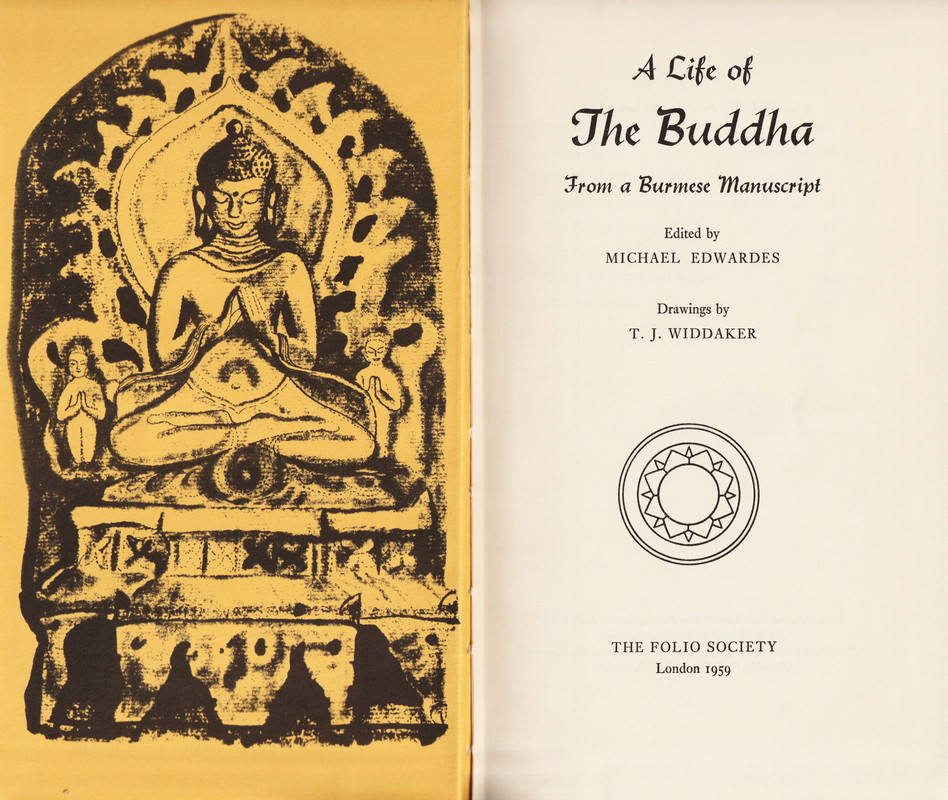
A Life of the Buddha, from a Burmese manuscript. Edited by Michael Edwardes 1959
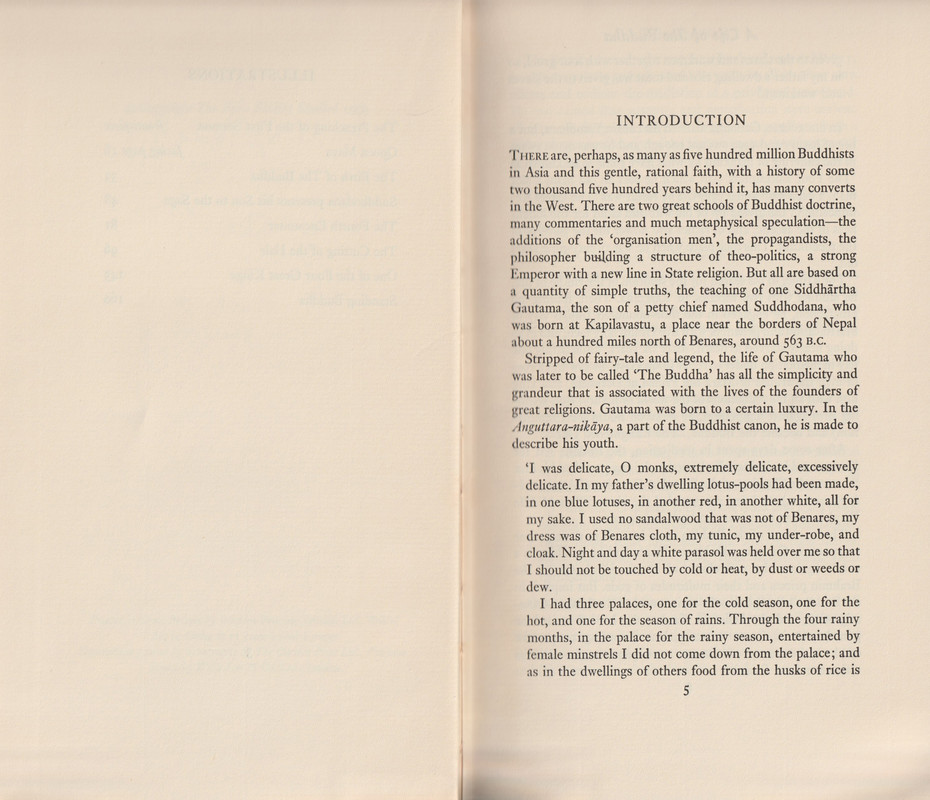
Guatama Buddha was born in far northern India, near the border of Nepal, in about 563 BC He started life as a privileged prince, but abandoned wealth and luxury to become an ascetic priest who started one of the world’s great religions.
Now almost unknown in its native India, Buddhism is widespread in southeast Asia, central Asia, Korea, Japan and (to a limited extent) China, with other adherents scattered worldwide.
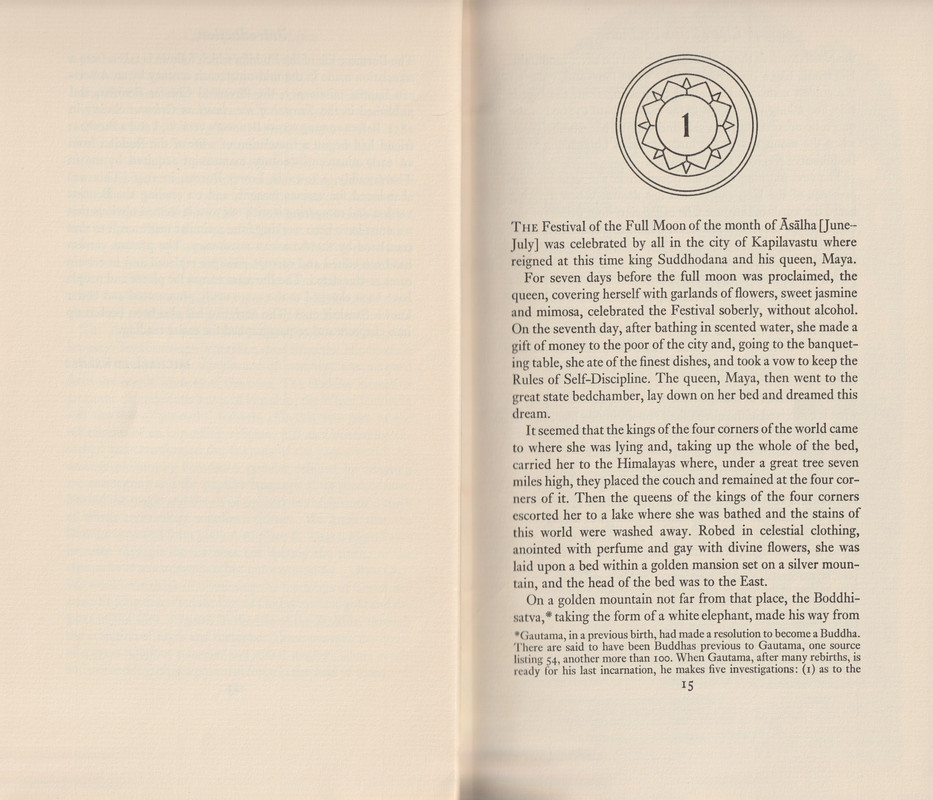
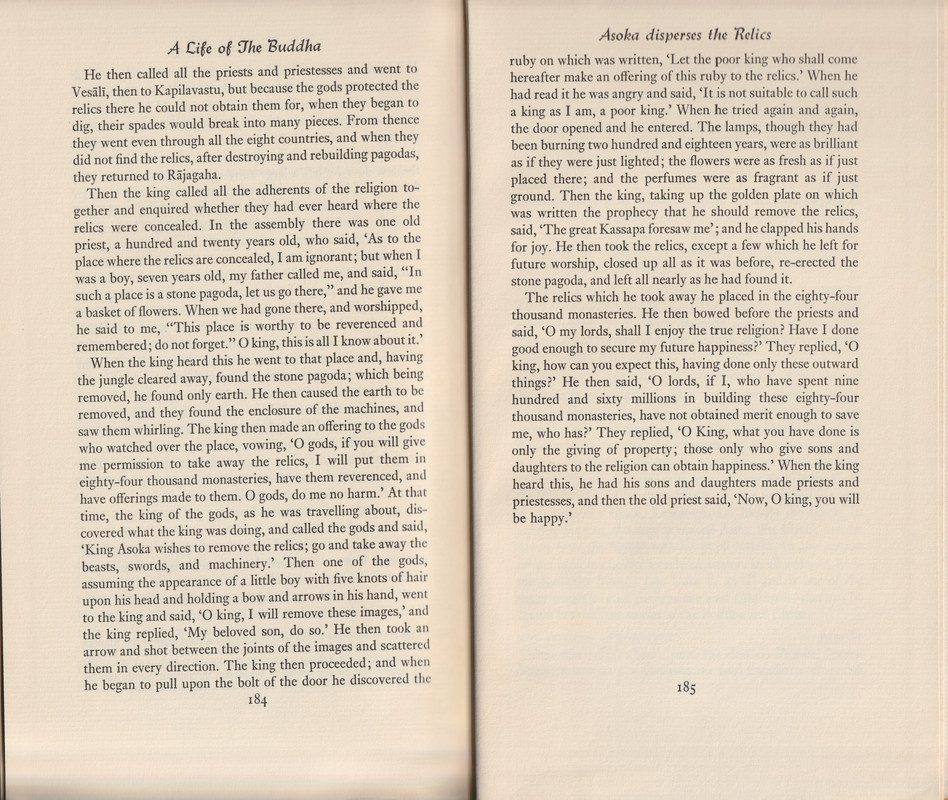
This book was translated from the Burmese by Rvd. Chester Bennett in 1851, and further edited by Michael Edwardes for this edition. The story follows the life of Buddha from conception, through his childhood, enlightenment, death and immolation. The recruitment of his disciples, priests, adherents and followers by demonstrating his powers, preaching and prophesising is detailed.
It contains numerous stories of the miracles in his life, from the possible to the improbable, and the hyperbole is overwhelming in some chapters. Parables demonstrating a good life and moral tales intermingle with embroidered legends that have been modified over the millennia.
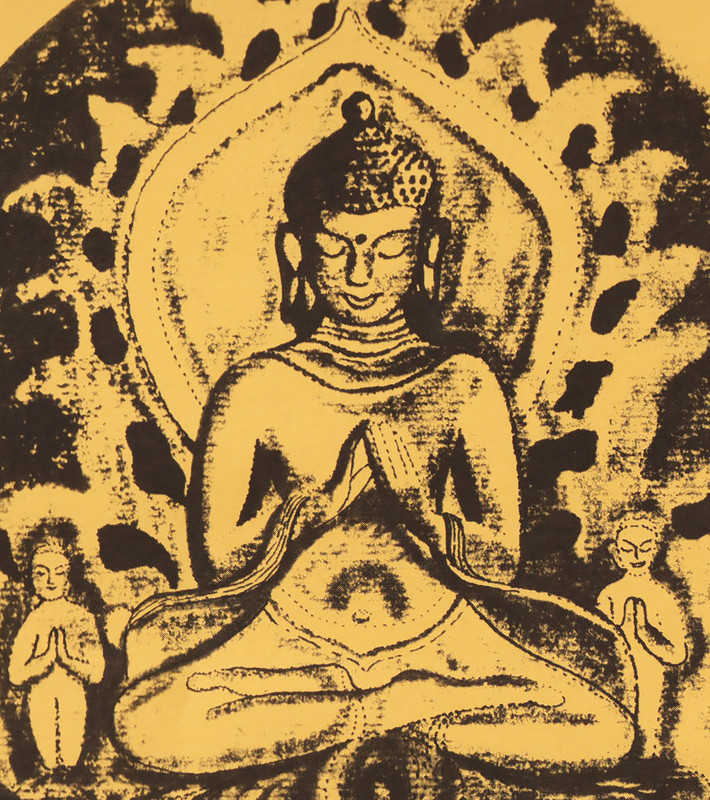
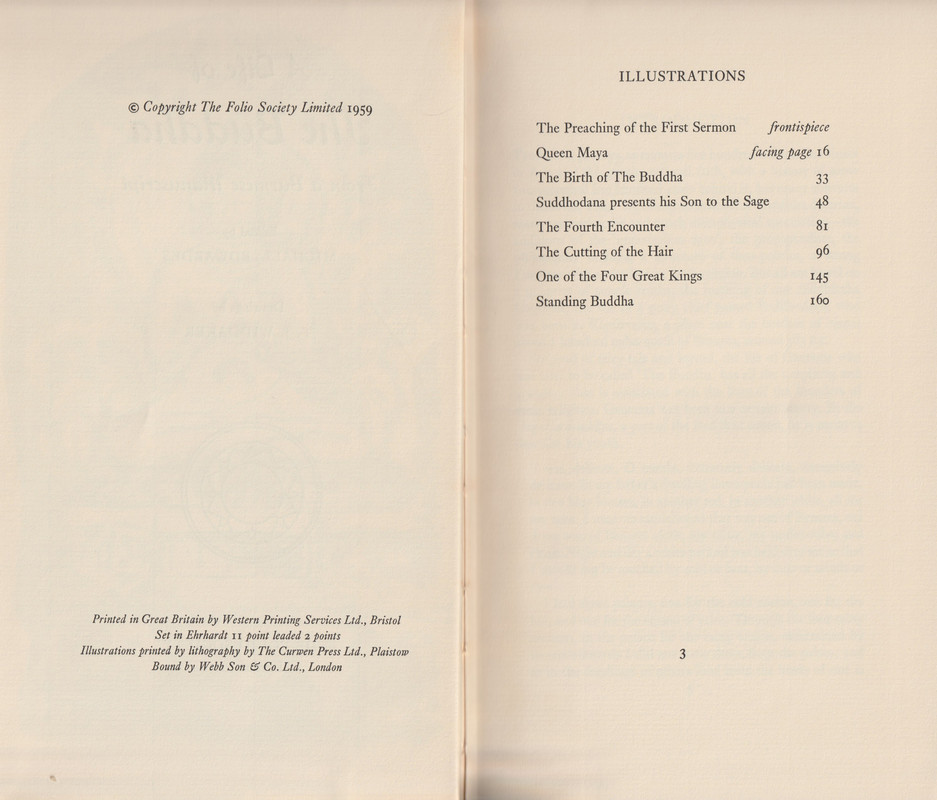
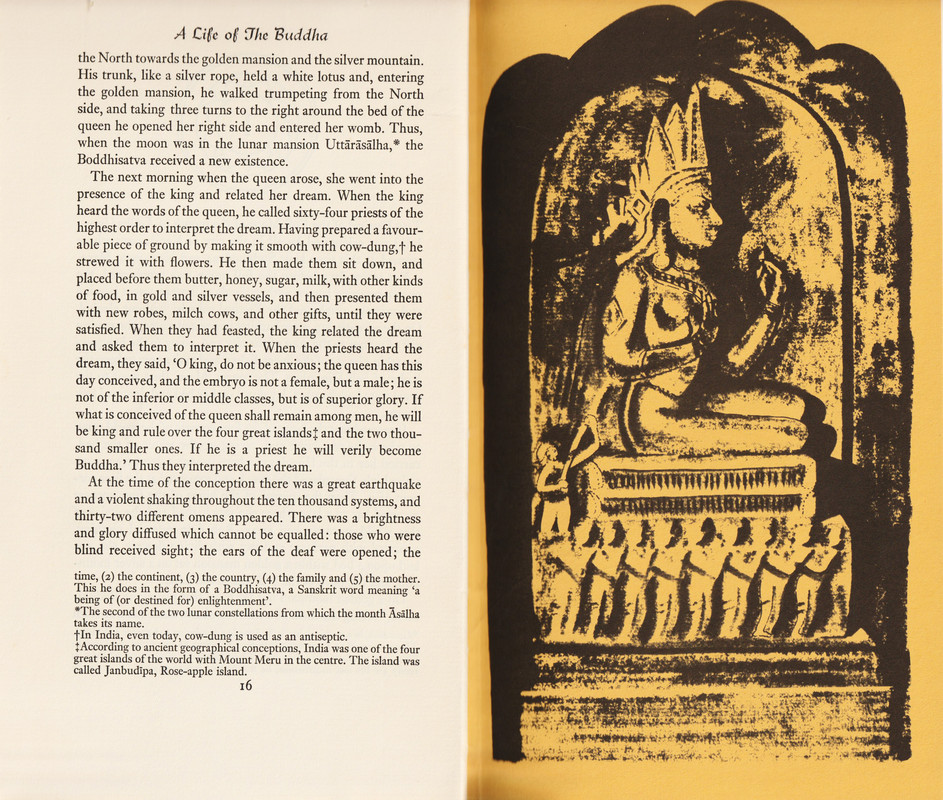
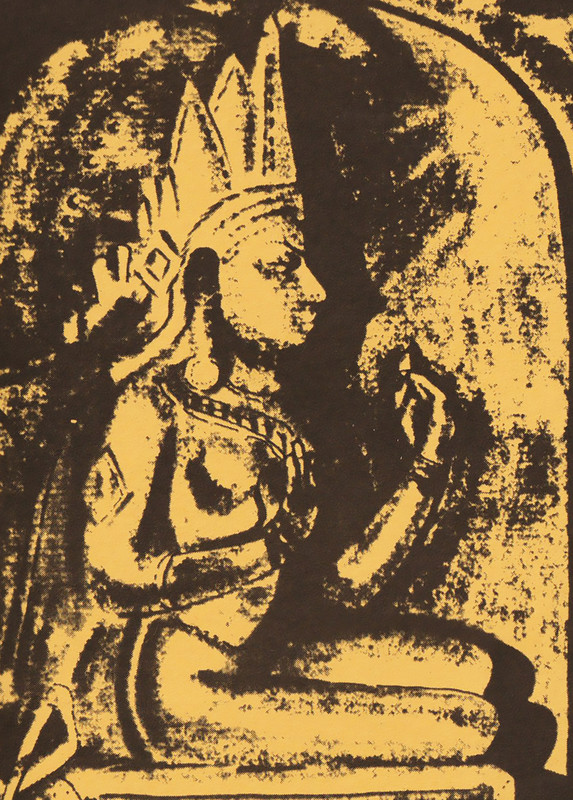
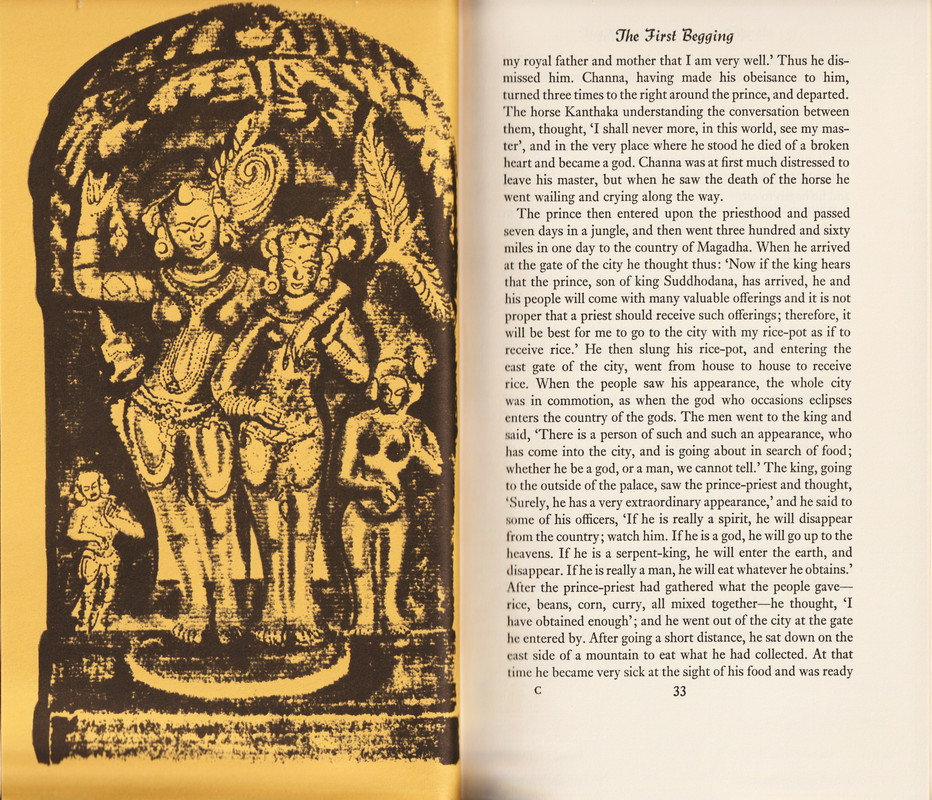
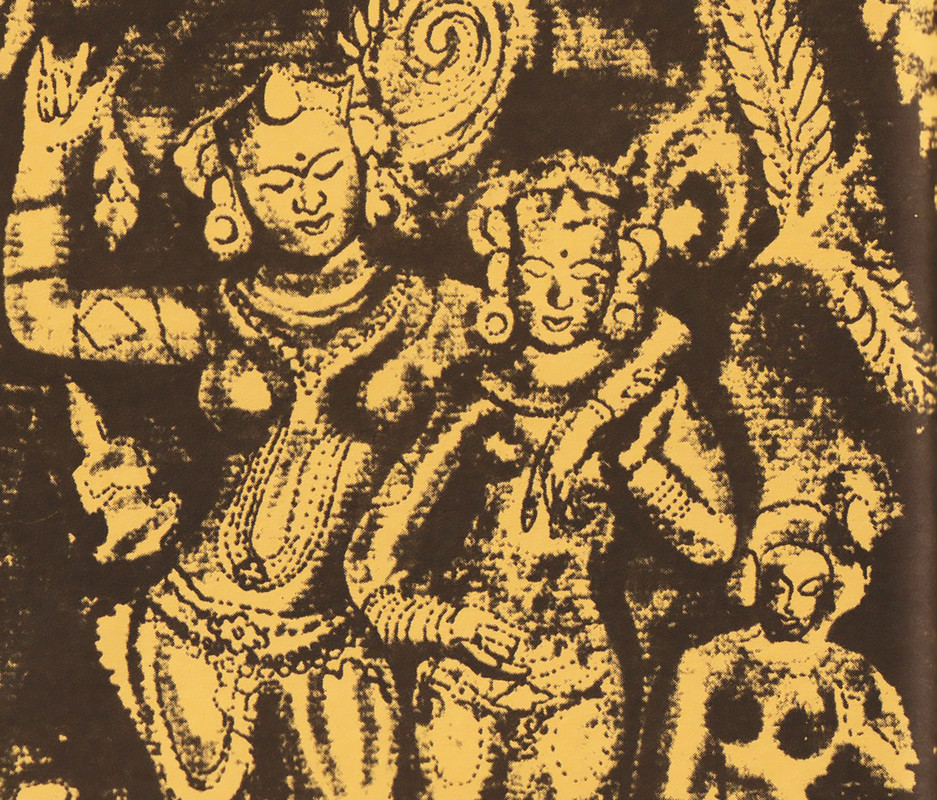
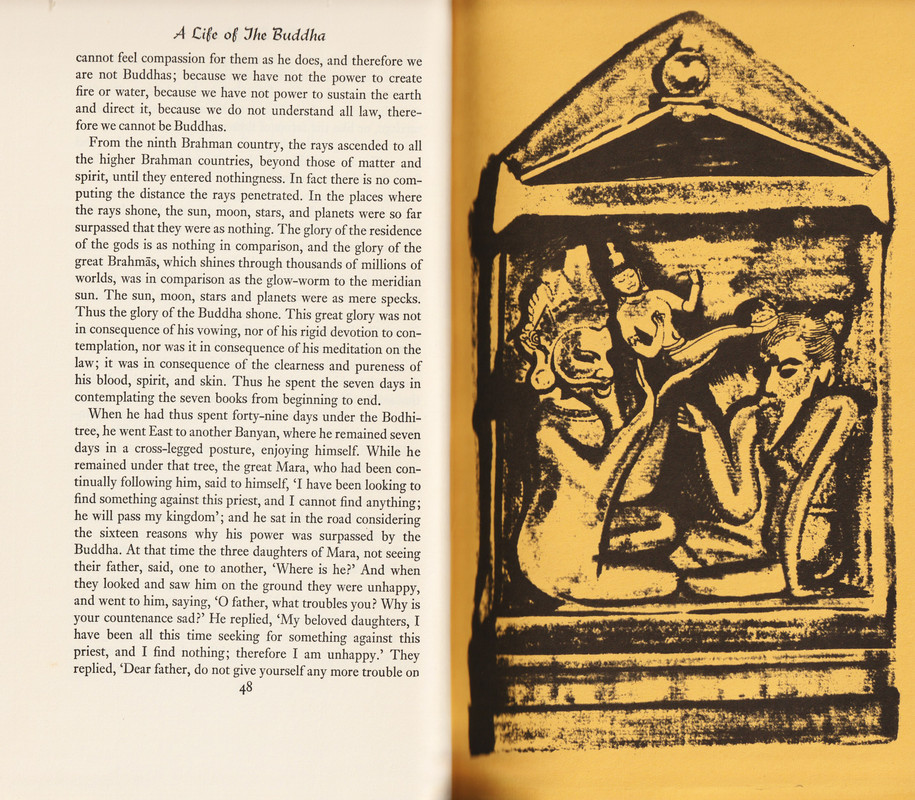
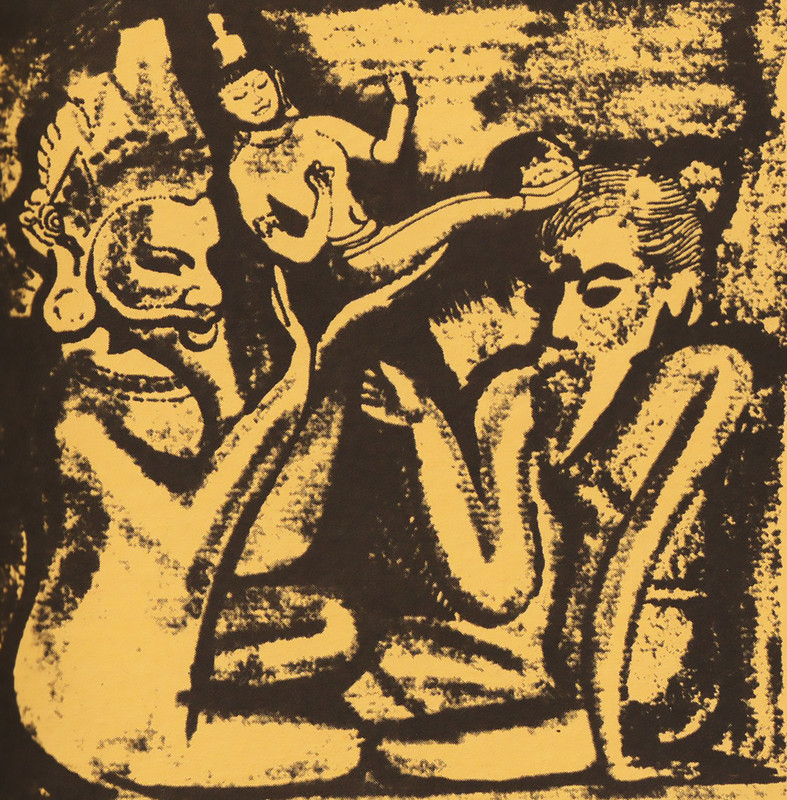
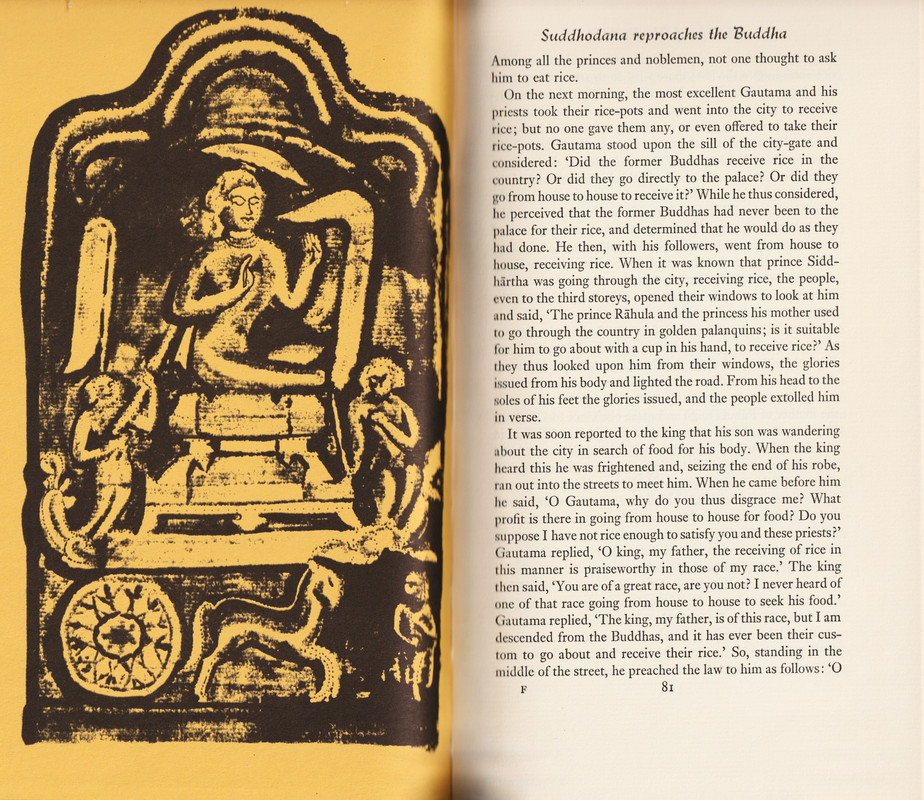
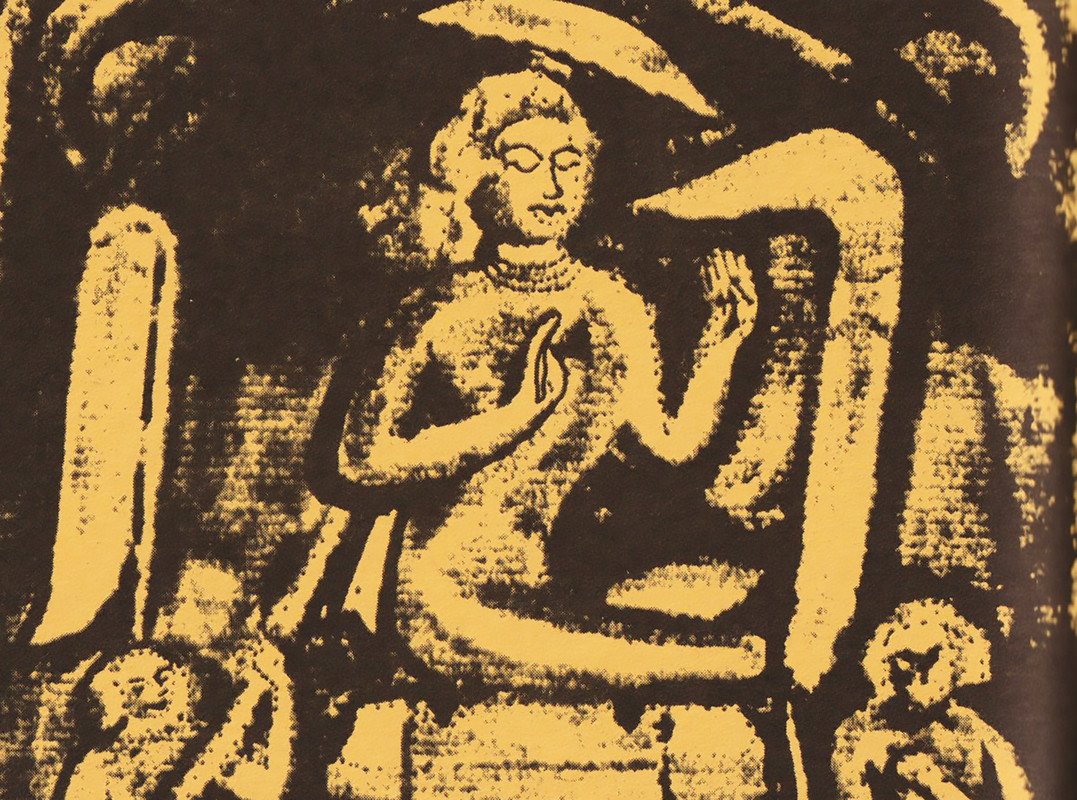
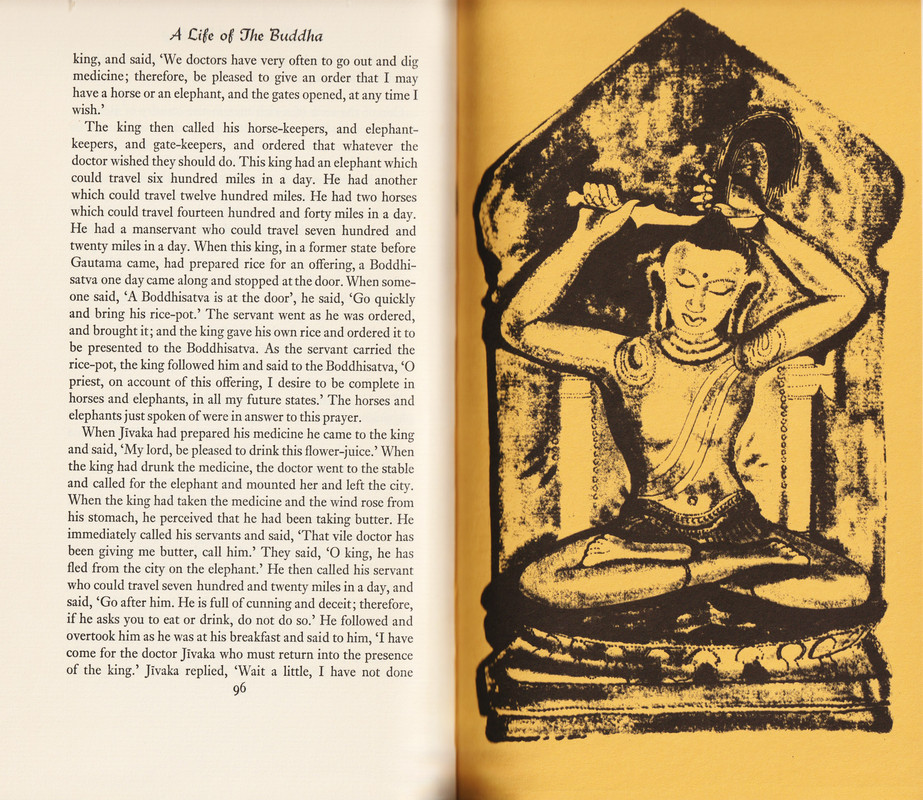
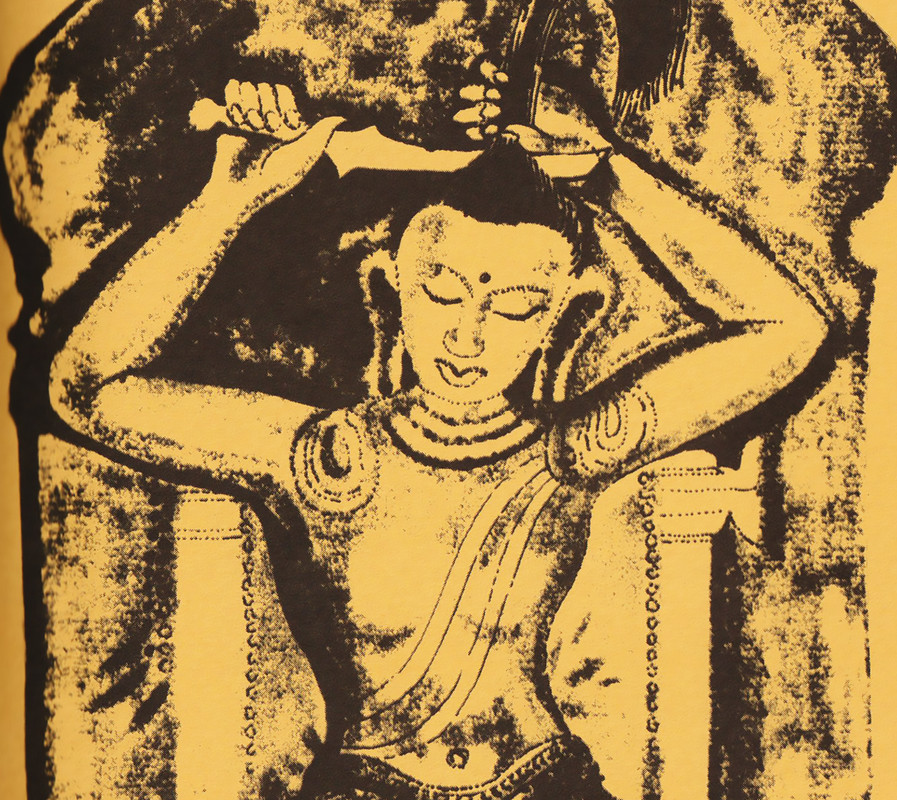
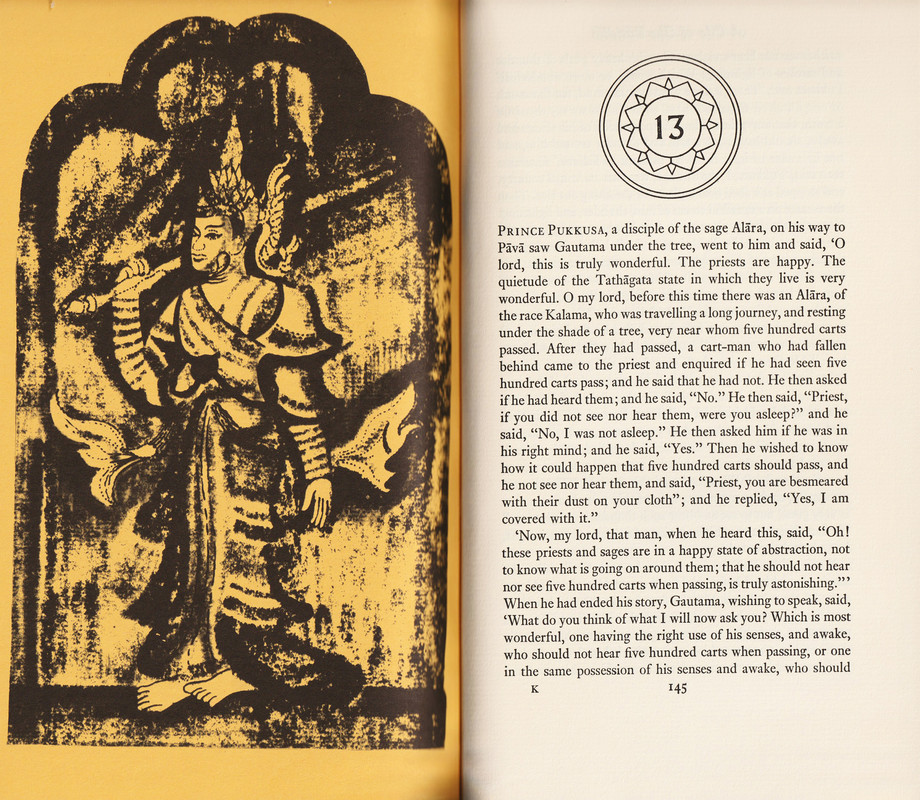
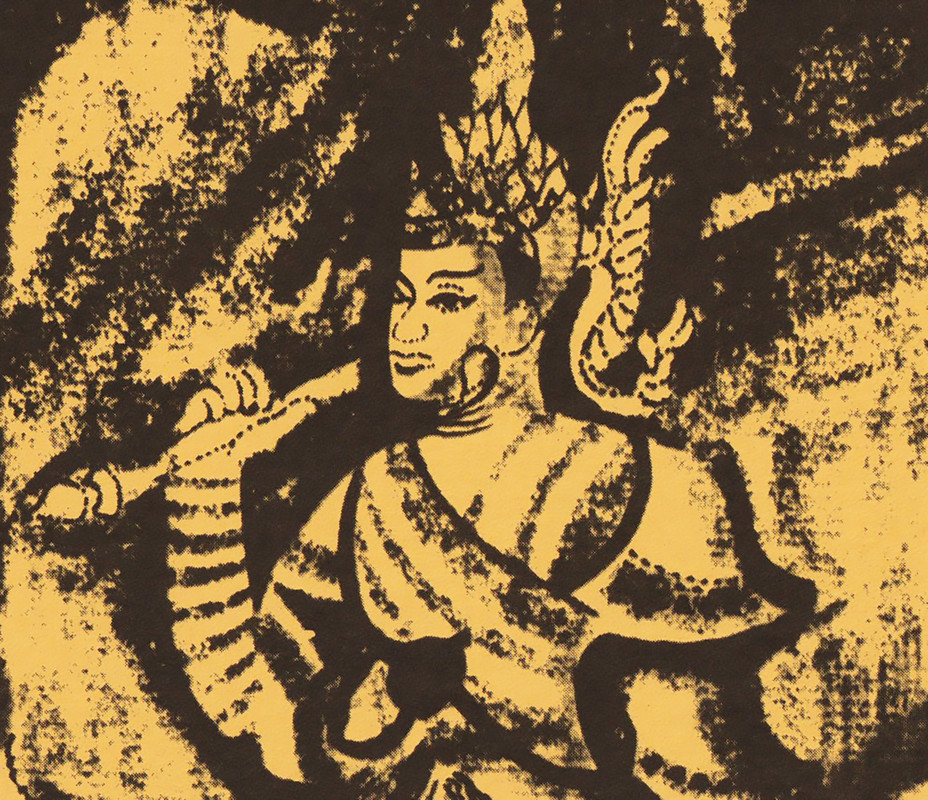
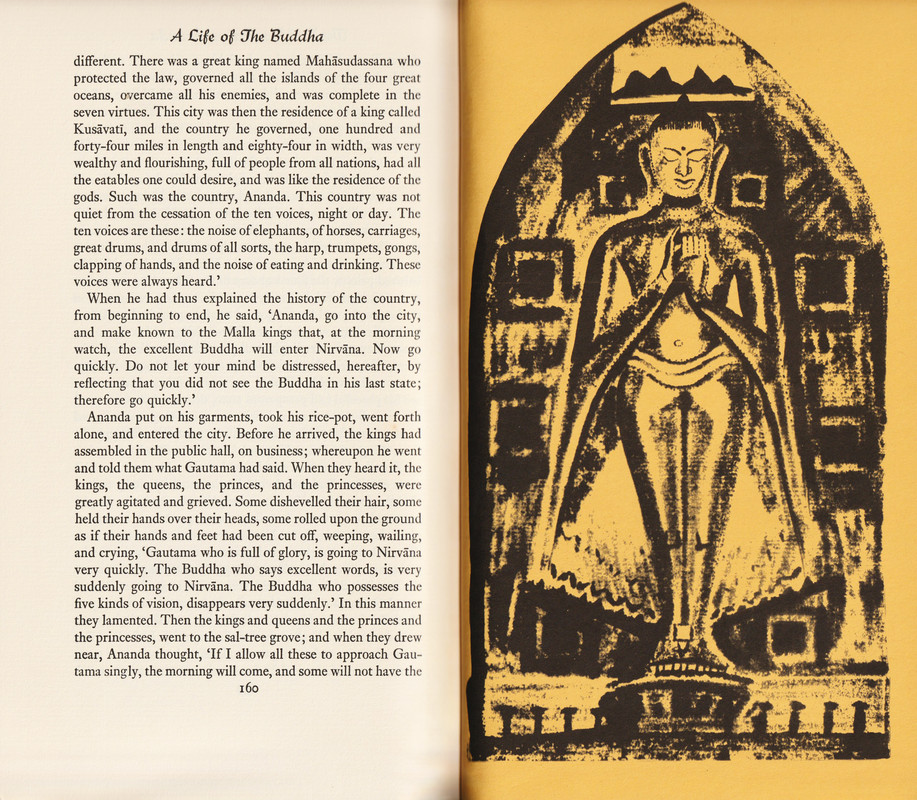
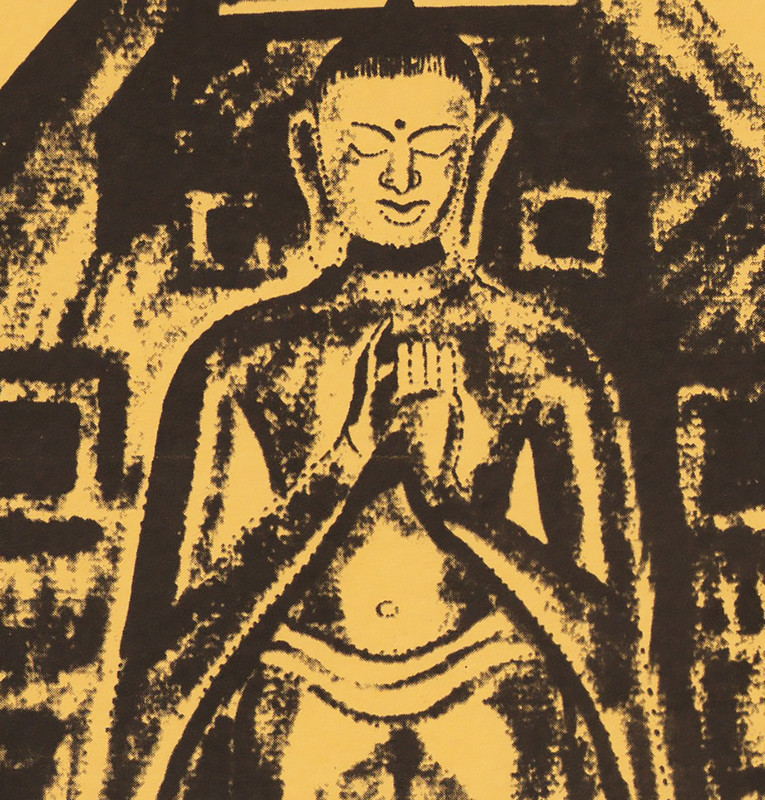
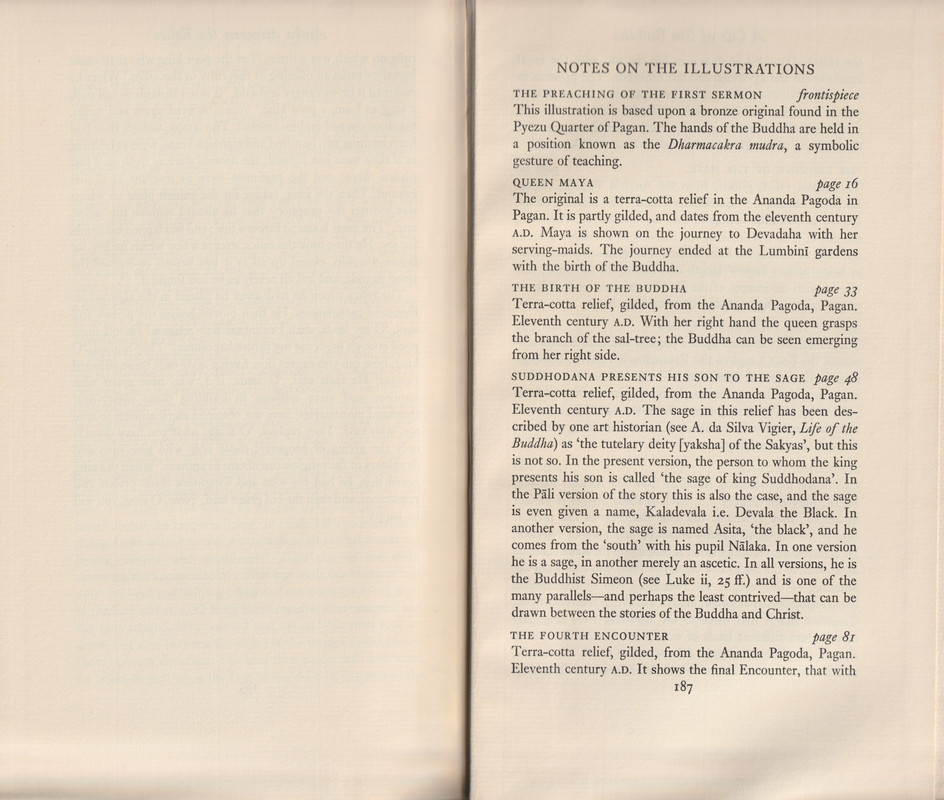
There is a nine page introduction by Edwardes that neatly summarises the book and Buddhism. Eight drawings by T. J. Widdaker are taken from original bronzes, terra-cotta reliefs and statues. They are printed in brown on thick bright yellow (the traditional colour of Buddhism) paper. The endpapers are plain white.
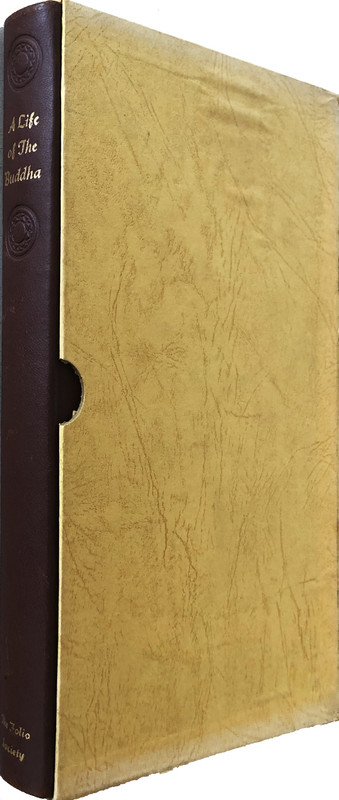
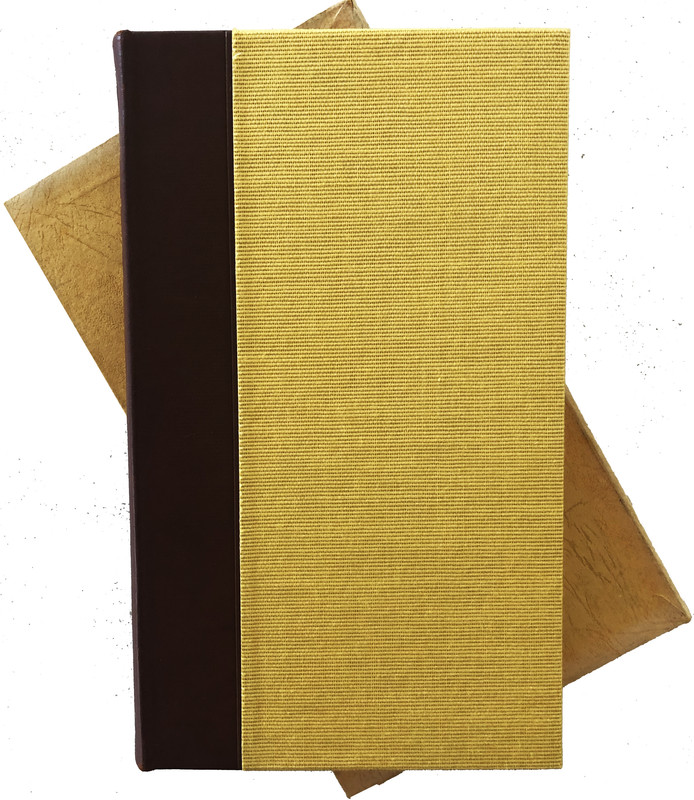
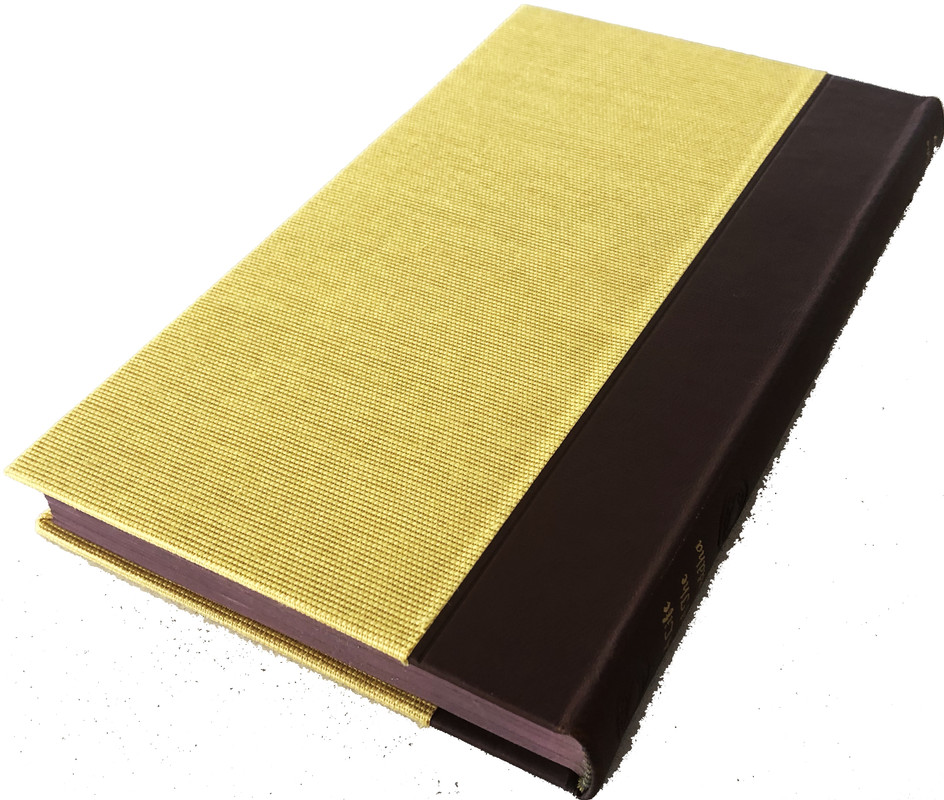
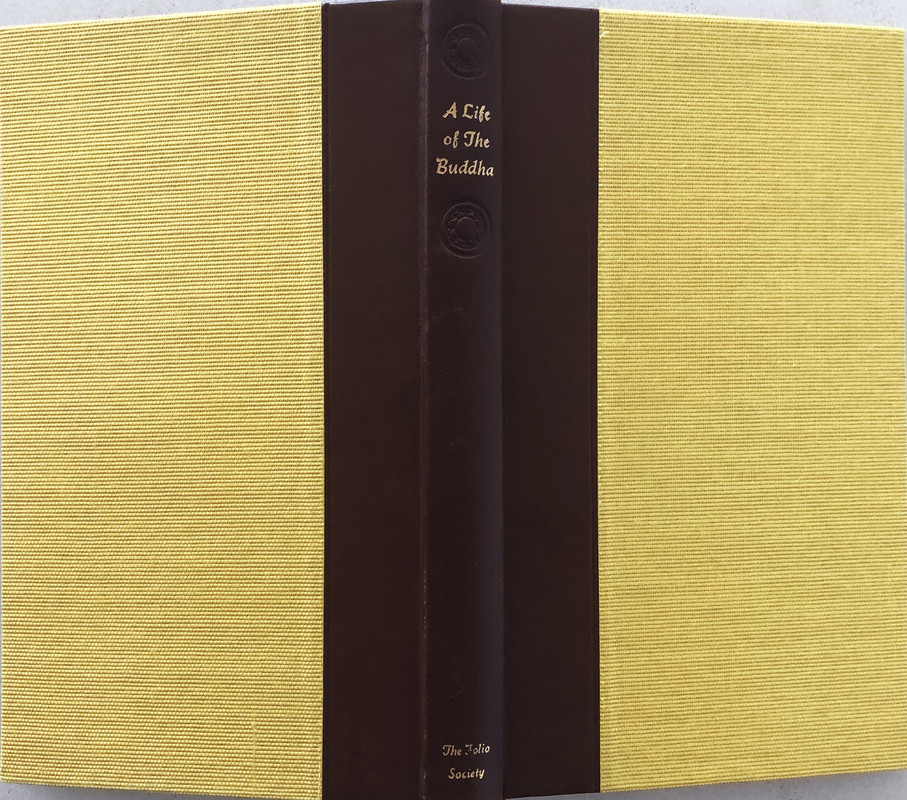
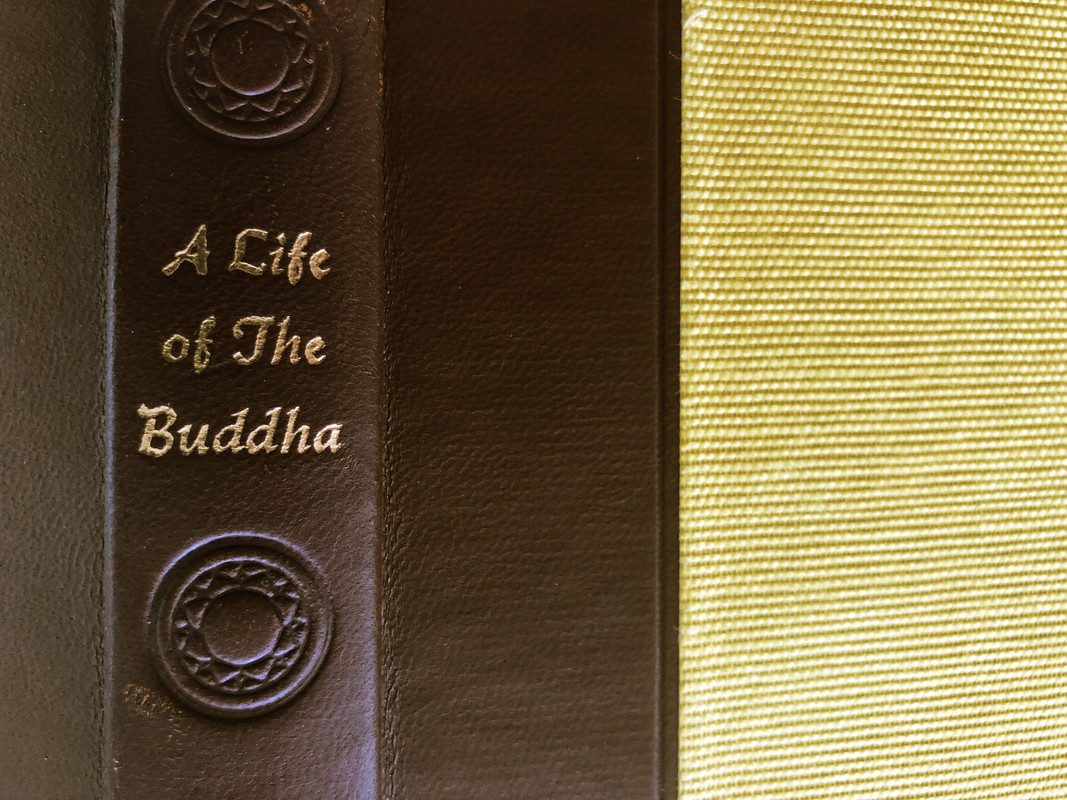
Quarter bound in brown leather with bright yellow coarse cloth boards, the 188 page book is housed in a textured yellow slipcase that measures 23.2x13.1. The page tops are stained dark red. The gilt spine title lists “The Folio Society” as the publisher, the only book in my collection where the word “The” is used on the spine.
 . . . .
An index of the other illustrated reviews in the "Folio Archives" series can be viewed here.
Guatama Buddha was born in far northern India, near the border of Nepal, in about 563 BC He started life as a privileged prince, but abandoned wealth and luxury to become an ascetic priest who started one of the world’s great religions.
Now almost unknown in its native India, Buddhism is widespread in southeast Asia, central Asia, Korea, Japan and (to a limited extent) China, with other adherents scattered worldwide.
This book was translated from the Burmese by Rvd. Chester Bennett in 1851, and further edited by Michael Edwardes for this edition. The story follows the life of Buddha from conception, through his childhood, enlightenment, death and immolation. The recruitment of his disciples, priests, adherents and followers by demonstrating his powers, preaching and prophesising is detailed.
It contains numerous stories of the miracles in his life, from the possible to the improbable, and the hyperbole is overwhelming in some chapters. Parables demonstrating a good life and moral tales intermingle with embroidered legends that have been modified over the millennia.
There is a nine page introduction by Edwardes that neatly summarises the book and Buddhism. Eight drawings by T. J. Widdaker are taken from original bronzes, terra-cotta reliefs and statues. They are printed in brown on thick bright yellow (the traditional colour of Buddhism) paper. The endpapers are plain white.
Quarter bound in brown leather with bright yellow coarse cloth boards, the 188 page book is housed in a textured yellow slipcase that measures 23.2x13.1. The page tops are stained dark red. The gilt spine title lists “The Folio Society” as the publisher, the only book in my collection where the word “The” is used on the spine.
 . . . .
An index of the other illustrated reviews in the "Folio Archives" series can be viewed here.
2boldface
>1 wcarter:
I love the simple, understated design compared to the garishness of many of today's offerings and that large-weave cloth is wonderful. An overall quality that doesn't have to shout from the rooftops to gain attention.
I love the simple, understated design compared to the garishness of many of today's offerings and that large-weave cloth is wonderful. An overall quality that doesn't have to shout from the rooftops to gain attention.
4Jayked
>1 wcarter:
"The gilt spine title lists “The Folio Society” as the publisher, the only book in my collection where the word “The” is used on the spine."
Odd, that. Even when they used it on a dustcover -- Woman in White, Tales of Mystery and Imagination -- it's not on the spine.
"The gilt spine title lists “The Folio Society” as the publisher, the only book in my collection where the word “The” is used on the spine."
Odd, that. Even when they used it on a dustcover -- Woman in White, Tales of Mystery and Imagination -- it's not on the spine.
5affle
>4 Jayked:
But there are many others, whether or not in Warwick's collection, eg
a dozen or so of the Victorian explorers
Asa Briggs's Victorian trilogy
the Folio History of England
3 vol Montaigne, Anatomy of Melancholy, Thomas Browne - all these similarly bound
Stones of Venice
Barbara Tuchman WW1 pair
And how tedious the current uniformity of the 'brand' colophon
But there are many others, whether or not in Warwick's collection, eg
a dozen or so of the Victorian explorers
Asa Briggs's Victorian trilogy
the Folio History of England
3 vol Montaigne, Anatomy of Melancholy, Thomas Browne - all these similarly bound
Stones of Venice
Barbara Tuchman WW1 pair
And how tedious the current uniformity of the 'brand' colophon
6N11284
Another one with this is The life of the Bee , another of those lovely older editions , published 1995.

