
Folio Archives 214: Pather Panchali by Bibhutibhushan Banerji 1971
Talk Folio Society Devotees
Join LibraryThing to post.
1wcarter
Pather Panchali (Song of the Road) by Bibhutibhushan Banerji 1971
This is a most unusual book in a most unusual binding.
Written in 1928, but set about 20 years earlier, this is the story of life in a tiny village in Bengal, somewhere North of Calcutta in the flat delta land of the Ganges and Brahmaputra Rivers. The story is told through the eyes of two children, brother and sister, who belong to the Brahmin caste, but are extremely poor, and have to cope with neighbours who are of a lower caste but more wealthy and worldly.
The daily intrigues and activities of Indian village life over a century ago are fascinating. The fight for survival from disease, lack of food, poor accommodation and clothing brings to life what life was like for people who were effectively isolated from the rest of their world by their poverty, and isolated from their neighbours by caste.
Written by one of India’s foremost writers, it was initially issued as a serial. It is now considered to be his greatest work, and may be partly drawn from his own childhood experiences. The book is divided into two stories; the first brief one is set about a decade earlier than the major latter work.
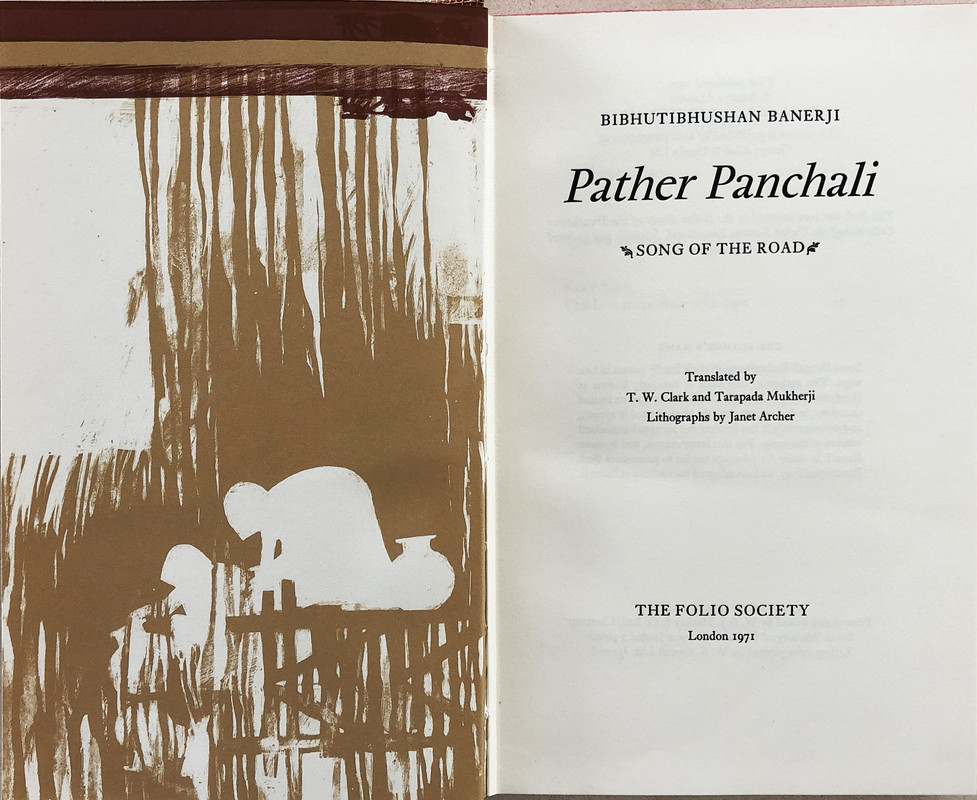
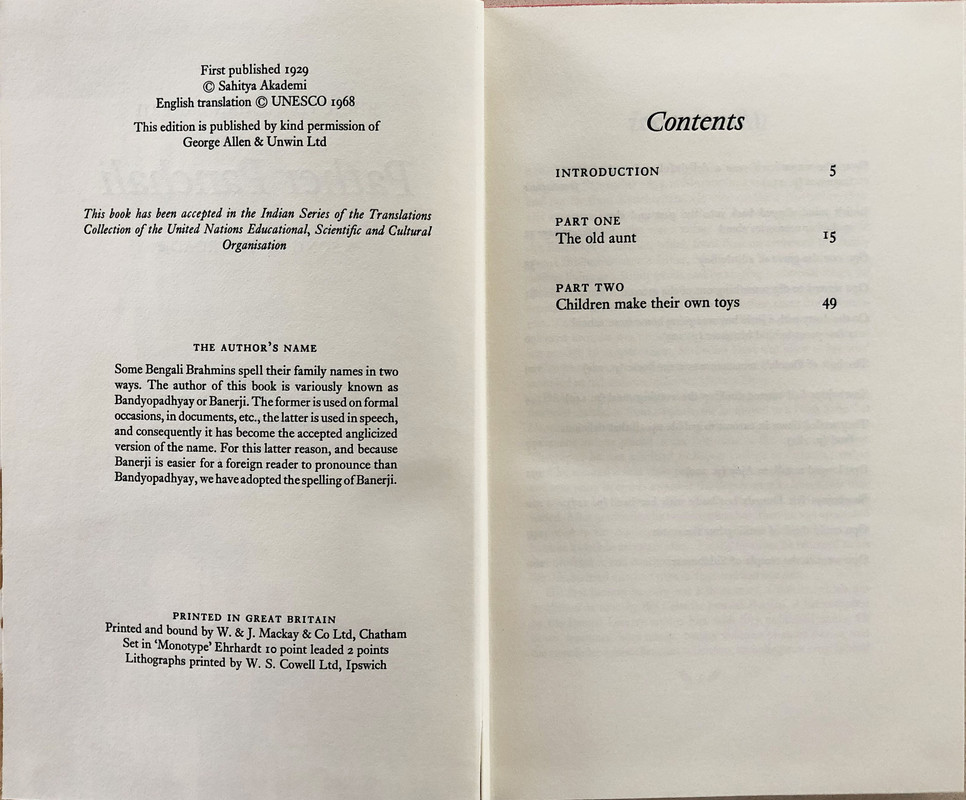
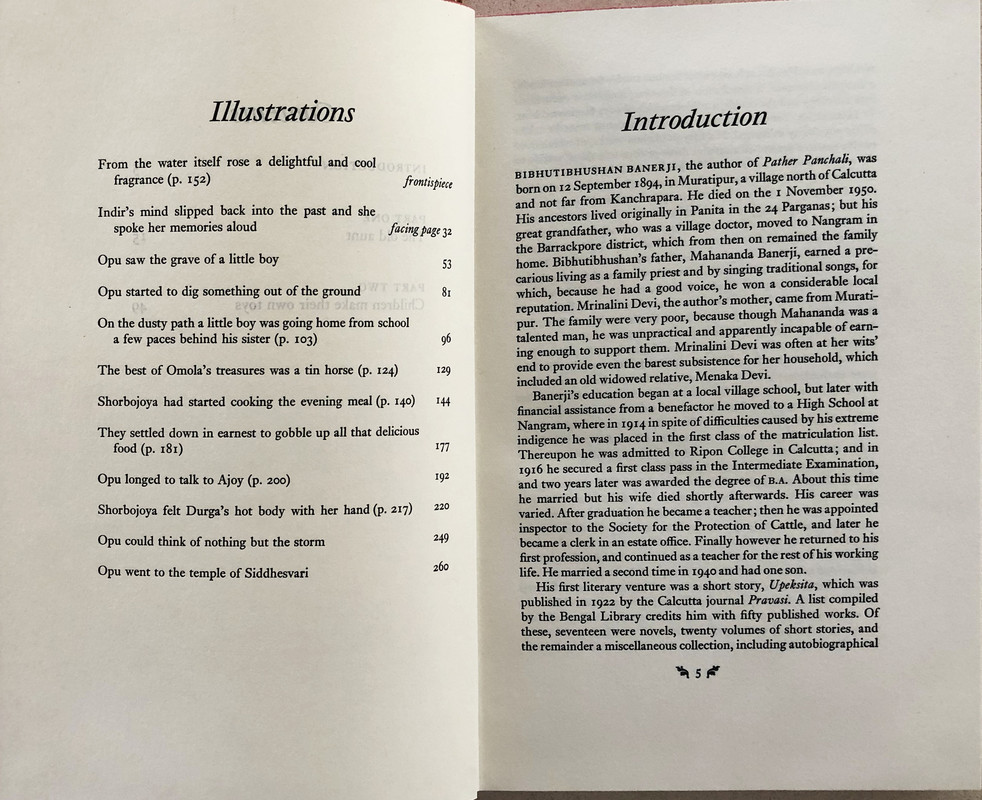
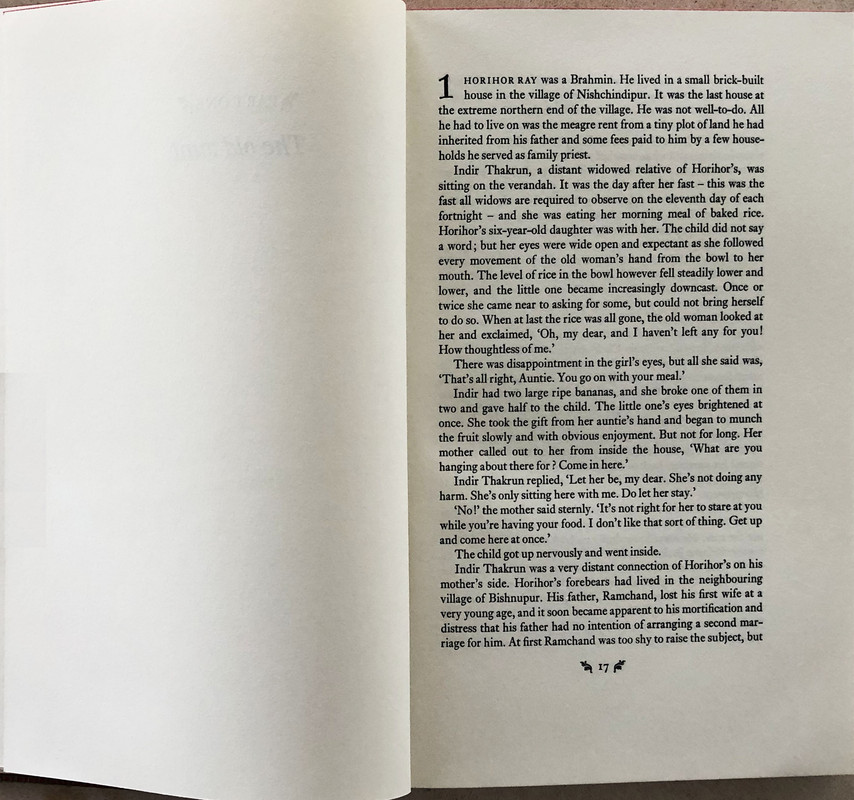
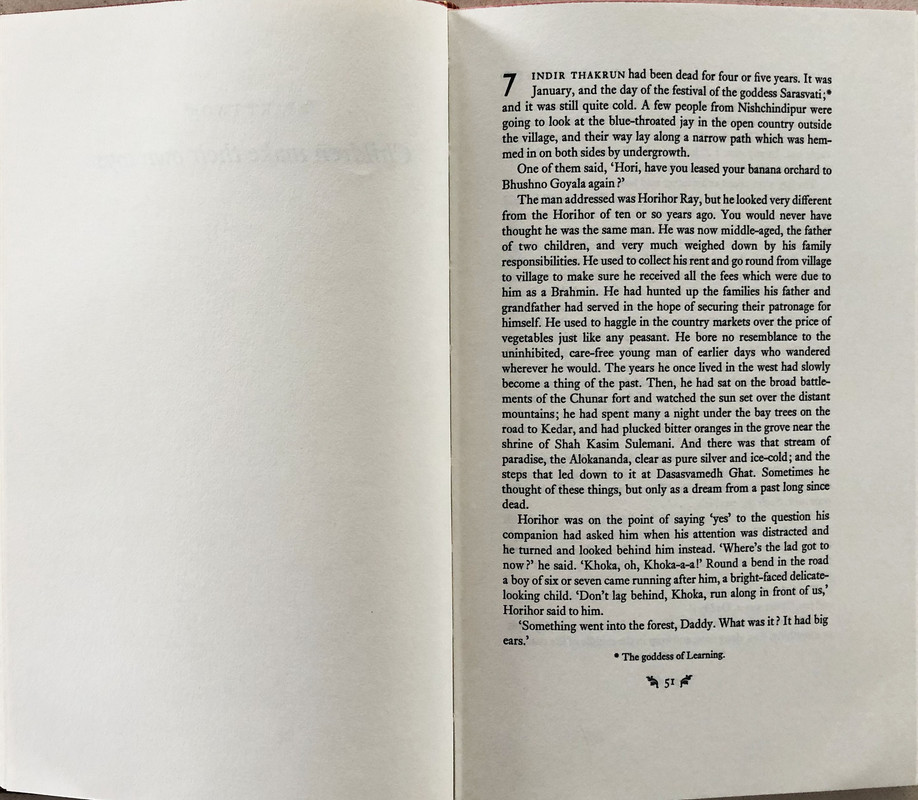
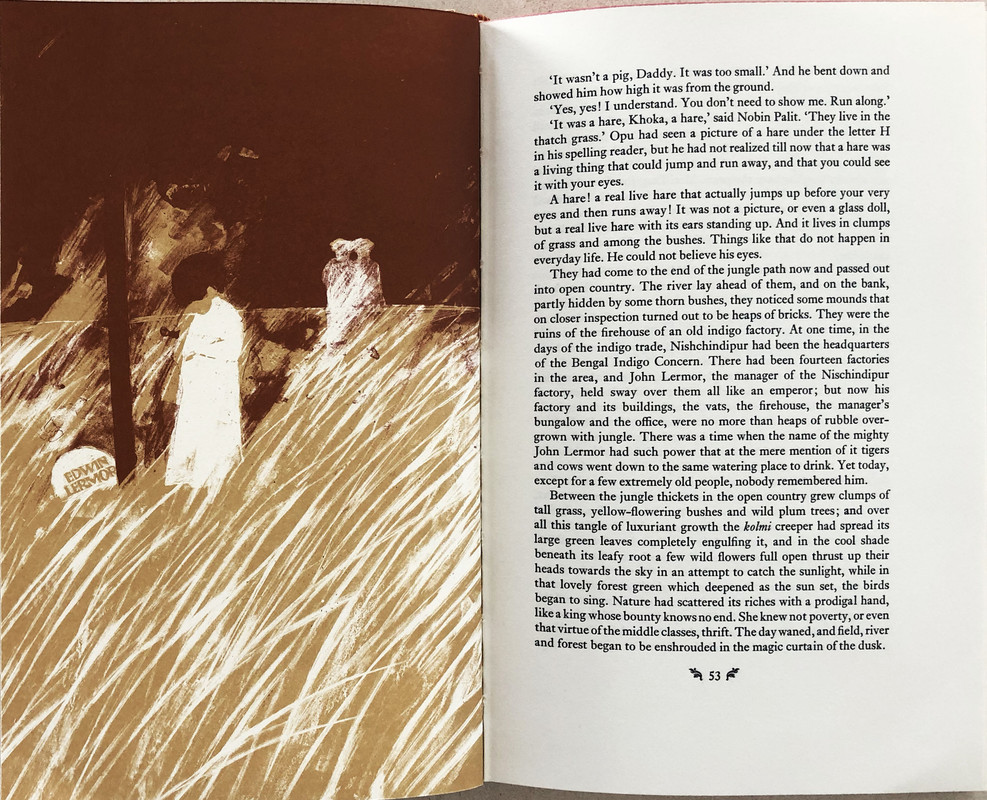
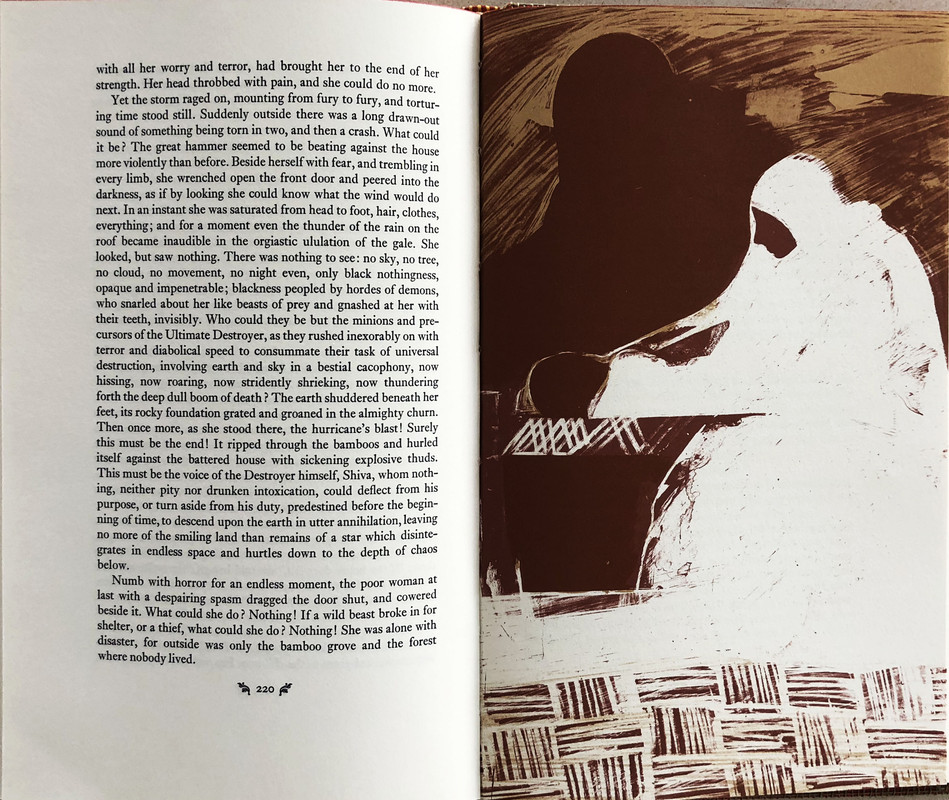
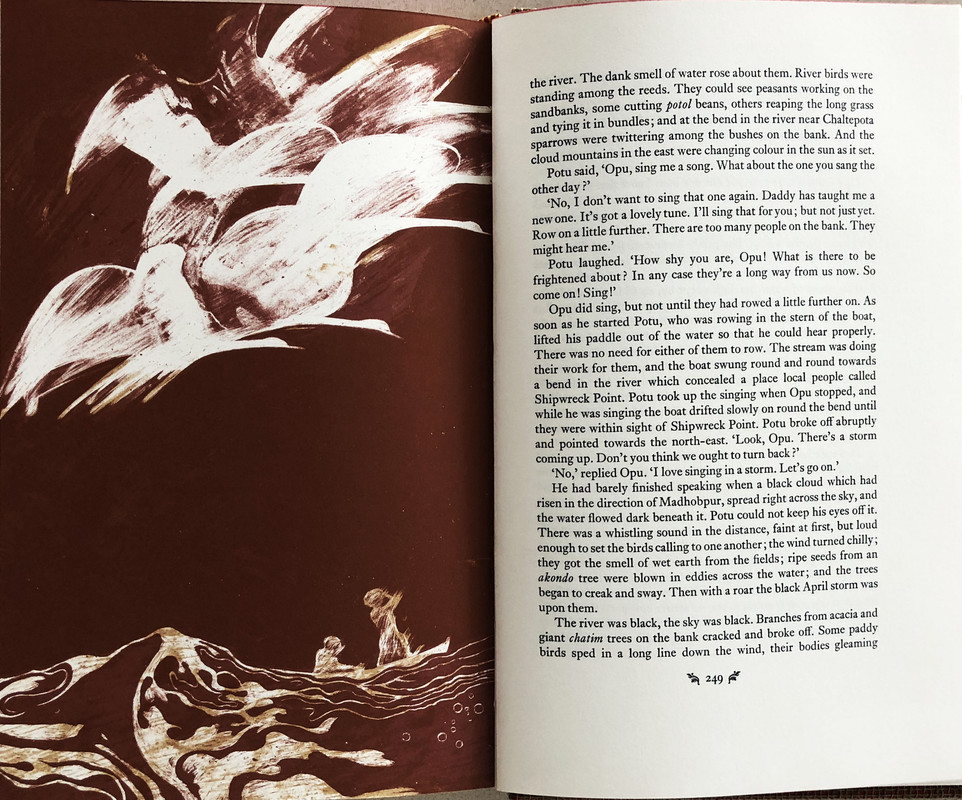
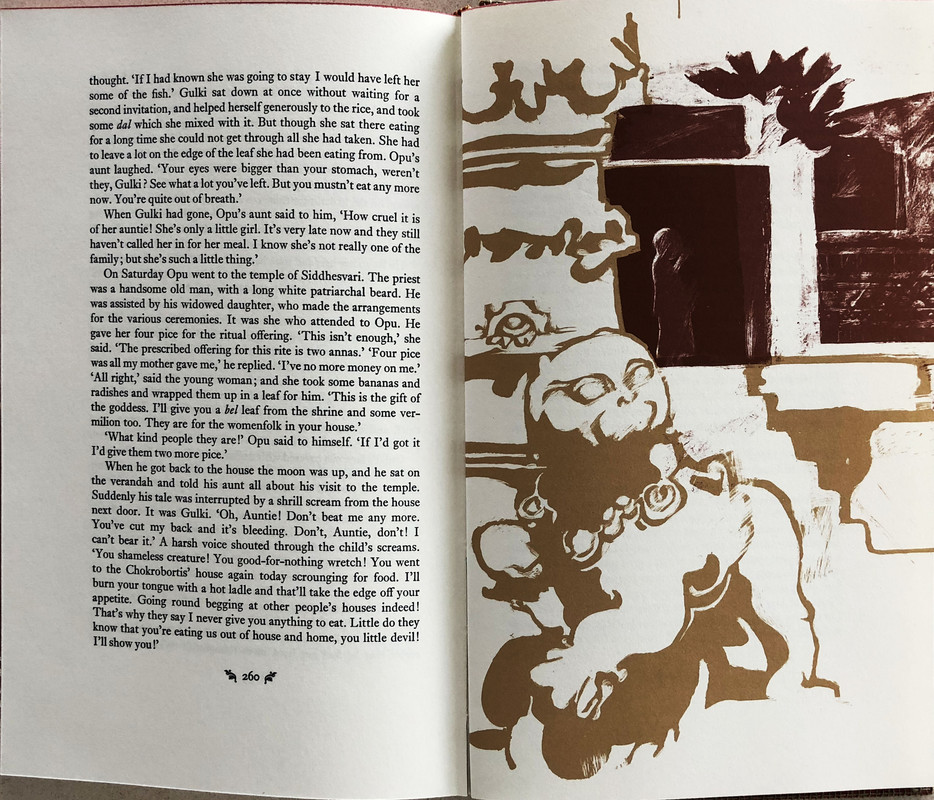
The 276 page book was translated by T.W. Clark and Tarapada Mukherji. 12 leaves of two-colour lithographs by Janet Archer are bound-in. The endpapers are plain brown.
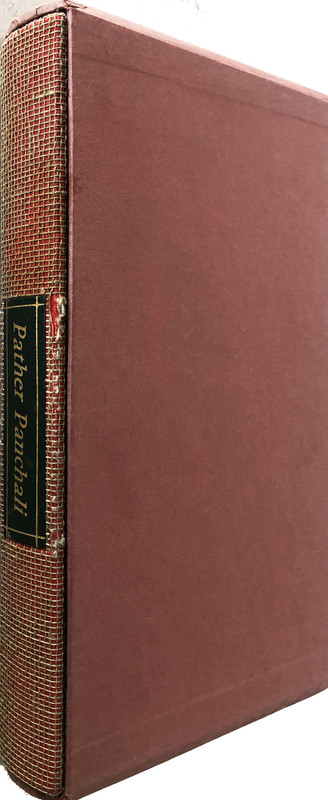
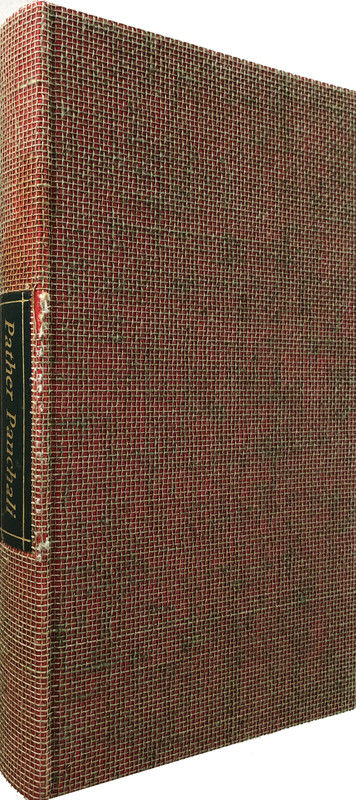
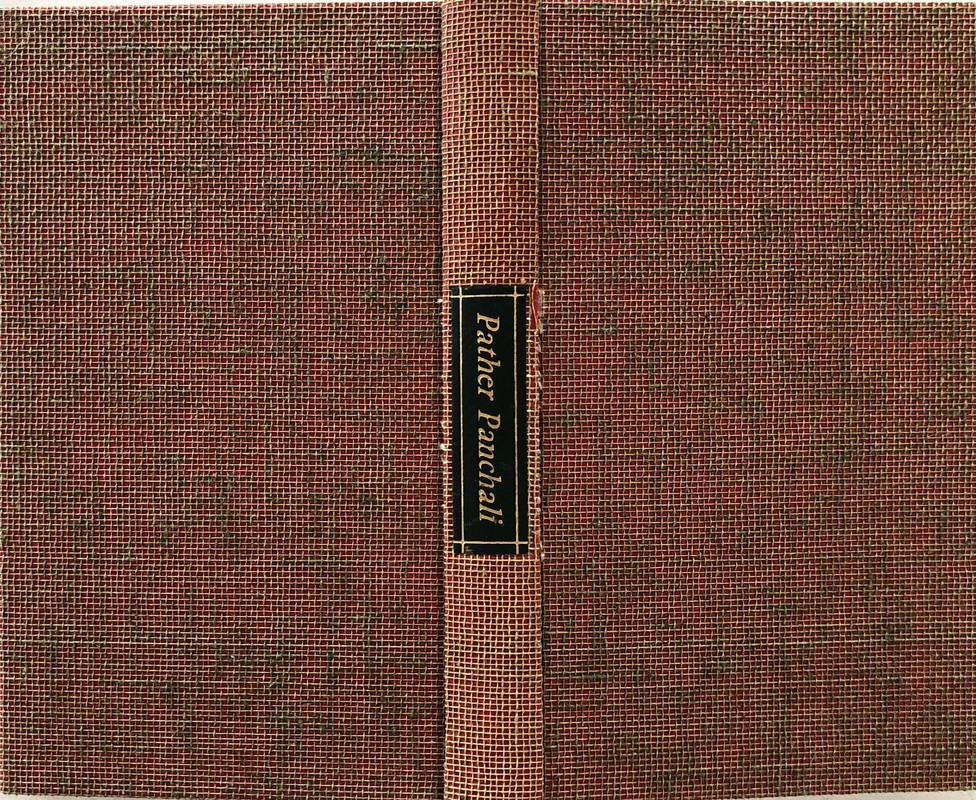
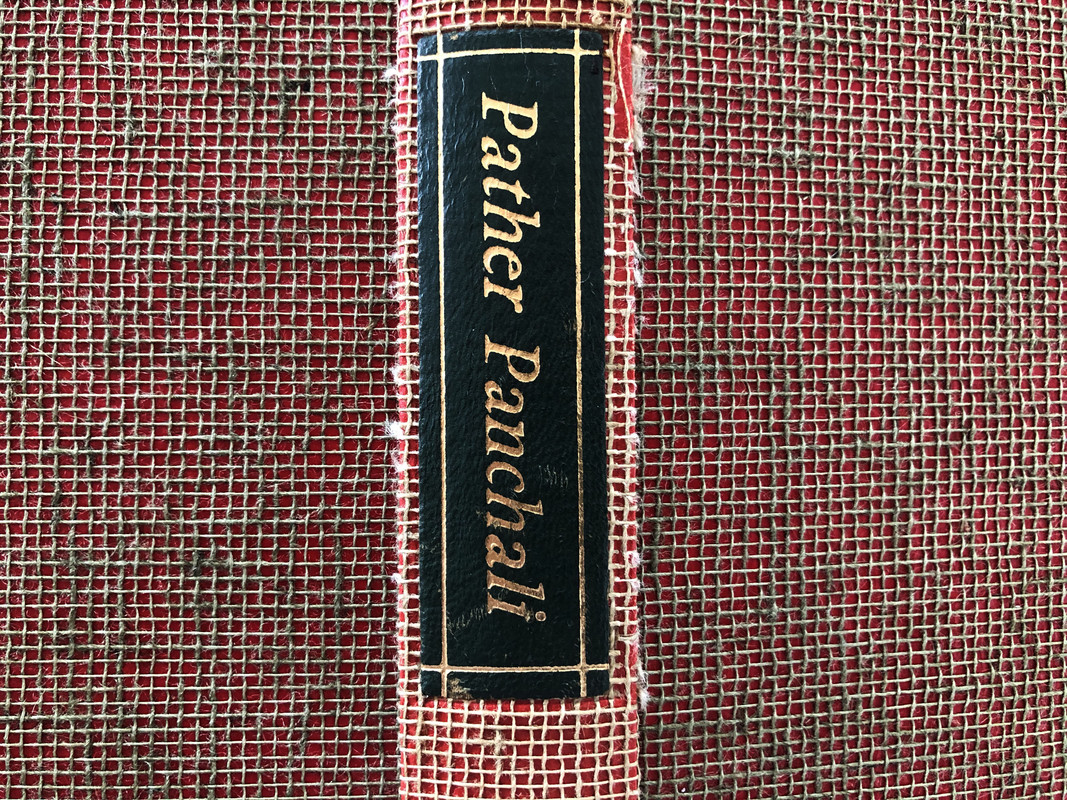
To my knowledge, this binding is unique in the Folio Society oeuvre. The plain brown cloth binding has been overwrapped with red-green coarse open-weave cloth that give the book a very distinct texture when held. There is a dark green gilt printed spine title label. The plain mid-brown slipcase is 24.7x14cm.

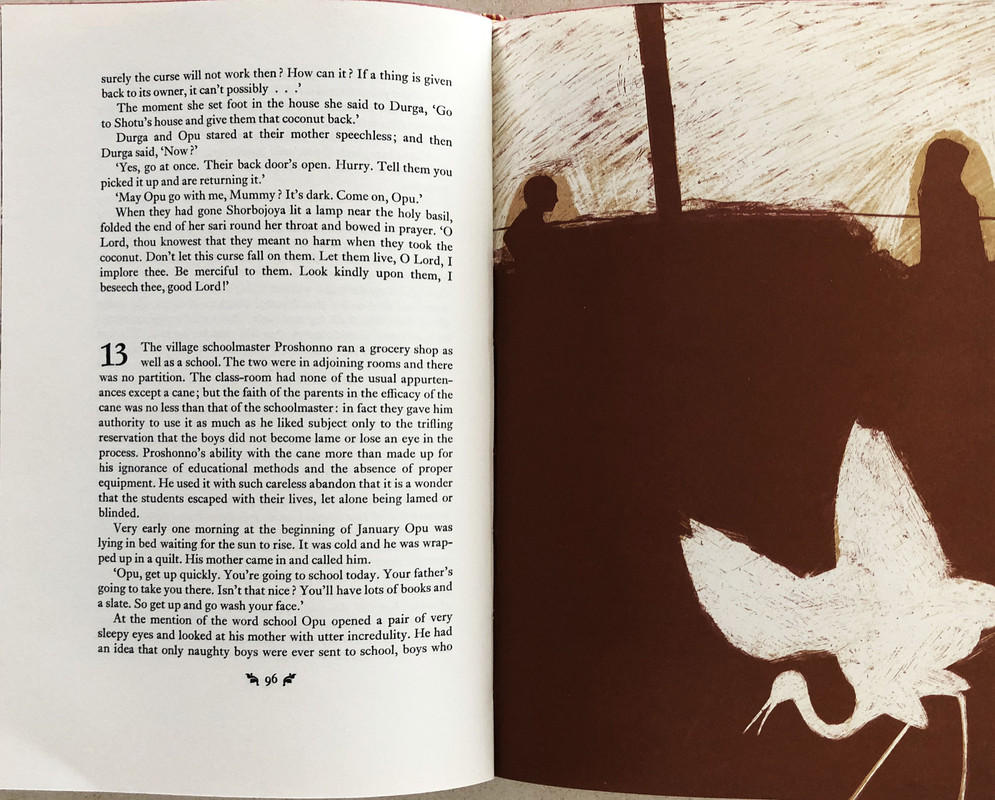
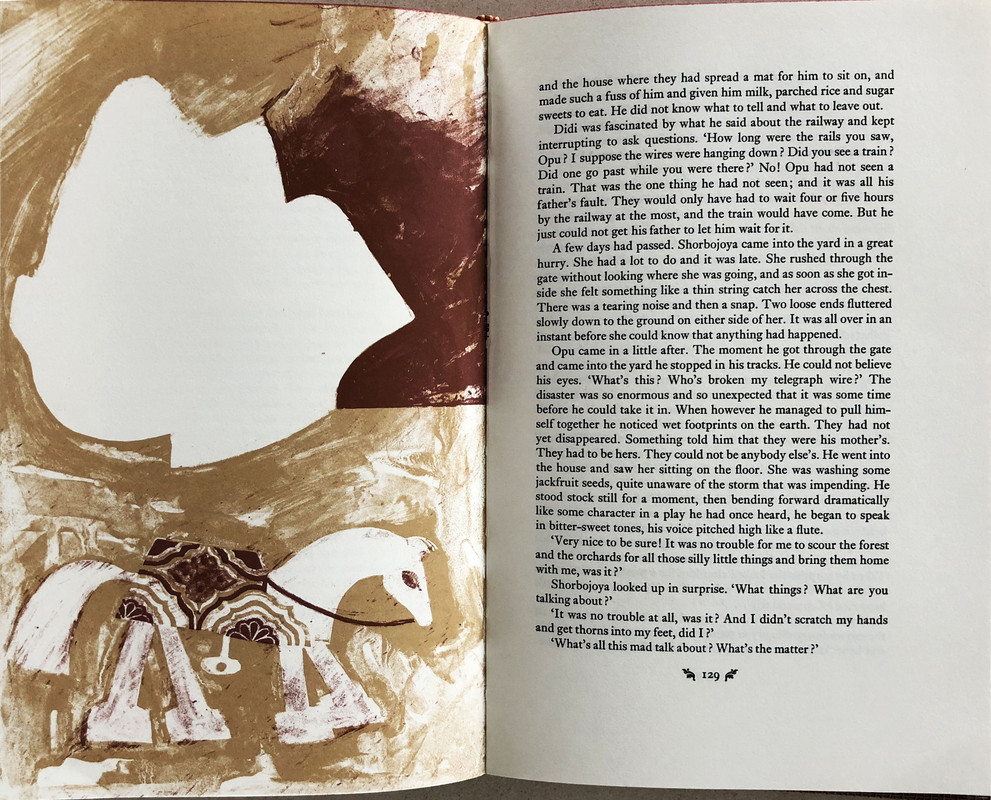
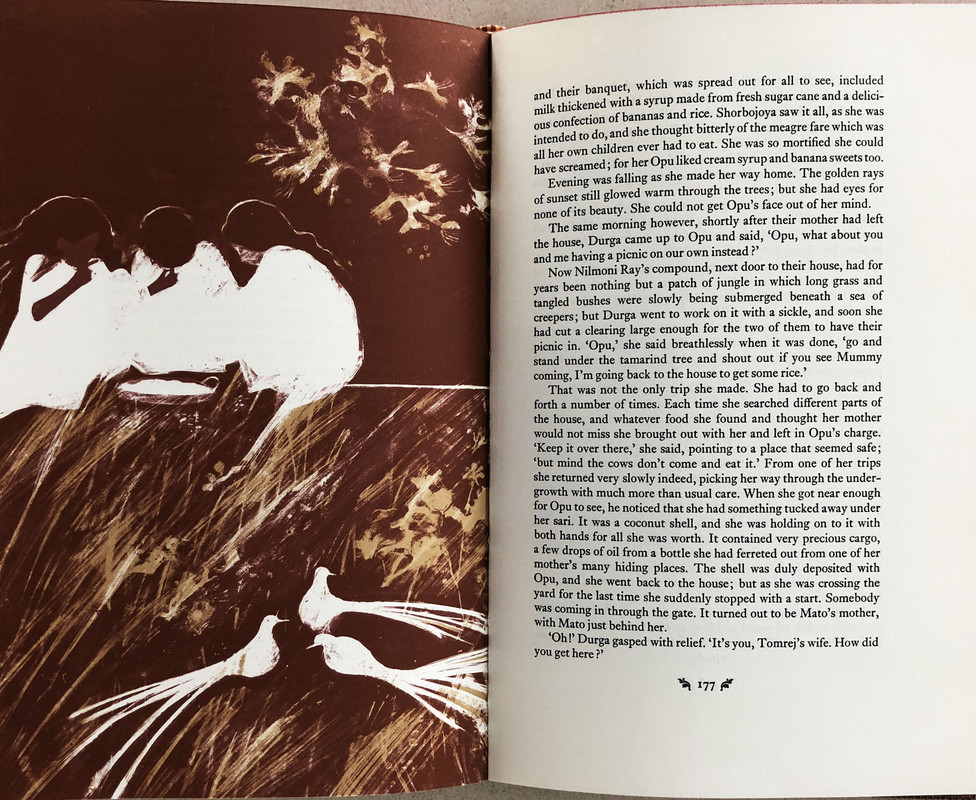
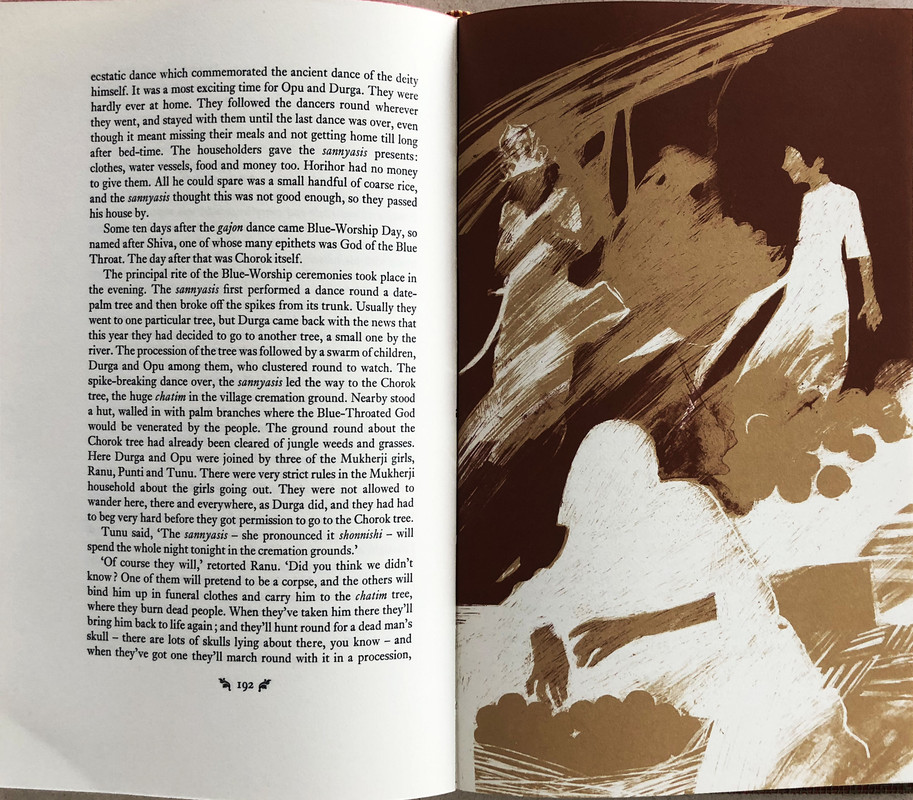
An index of the other illustrated reviews in the "Folio Archives" series can be viewed here.
This is a most unusual book in a most unusual binding.
Written in 1928, but set about 20 years earlier, this is the story of life in a tiny village in Bengal, somewhere North of Calcutta in the flat delta land of the Ganges and Brahmaputra Rivers. The story is told through the eyes of two children, brother and sister, who belong to the Brahmin caste, but are extremely poor, and have to cope with neighbours who are of a lower caste but more wealthy and worldly.
The daily intrigues and activities of Indian village life over a century ago are fascinating. The fight for survival from disease, lack of food, poor accommodation and clothing brings to life what life was like for people who were effectively isolated from the rest of their world by their poverty, and isolated from their neighbours by caste.
Written by one of India’s foremost writers, it was initially issued as a serial. It is now considered to be his greatest work, and may be partly drawn from his own childhood experiences. The book is divided into two stories; the first brief one is set about a decade earlier than the major latter work.
The 276 page book was translated by T.W. Clark and Tarapada Mukherji. 12 leaves of two-colour lithographs by Janet Archer are bound-in. The endpapers are plain brown.
To my knowledge, this binding is unique in the Folio Society oeuvre. The plain brown cloth binding has been overwrapped with red-green coarse open-weave cloth that give the book a very distinct texture when held. There is a dark green gilt printed spine title label. The plain mid-brown slipcase is 24.7x14cm.
An index of the other illustrated reviews in the "Folio Archives" series can be viewed here.
2Jayked
>1 wcarter:
Not quite the same, but there's a similar binding on A Russian Gentleman, described as Japanese Sack-cloth. Nice to handle, and tough.
Not quite the same, but there's a similar binding on A Russian Gentleman, described as Japanese Sack-cloth. Nice to handle, and tough.
3drasvola
>1 wcarter:
One of the first four books I ordered when becoming a member of Folio Society back in 1971!
One of the first four books I ordered when becoming a member of Folio Society back in 1971!
4cronshaw
I loved this book, a wonderful read. It's one of the volumes I couldn't bear to part with when I slimmed down my Folio library.
5cronshaw
>1 wcarter: According to the information in the 1971 prospectus, the binding is 'Japanese grass-paper' with a 'leather titling label'. It's certainly a delightful texture in the hands.
6LolaWalser
This is one of my favourite Folios in terms of combined literary interest + design. I read recently Banerji's other classic, Of the forest (Aranyaka) which I think would currently resonate even more--it describes the beauty of the forests of Bihar as they were falling down to exploitation by the landlords.
7drasvola
>4 cronshaw:
>6 LolaWalser:
I should have added that it is also one of my favourite books, and that I love its touch.
>6 LolaWalser:
I should have added that it is also one of my favourite books, and that I love its touch.
8sekhmet0108
I have been looking for this book for a while now since I came across it while looking through the earlier catalogues.
It looks absolutely amazing.
It looks absolutely amazing.
9wdripp
Well, with so many recommendations I couldn’t resist and just ordered myself a copy. Thanks for the enablement everyone.
>8 sekhmet0108: I don’t know where you are located but abebooks has a bunch of affordable listings. I just paid $20 for mine including shipping.
>8 sekhmet0108: I don’t know where you are located but abebooks has a bunch of affordable listings. I just paid $20 for mine including shipping.
10sekhmet0108
>9 wdripp: I am in Germany. And thanks for the heads up. I haven't reaally bought anything from Abe, but I guess I will be getting this book once my book-buying ban ends in June. I found a copy which seems to be in Austria.

