Folio Archives 226: What is Life? by Erwin Schrödinger 2000
Talk Folio Society Devotees
Join LibraryThing to post.
1wcarter
What is Life? The Physical Aspects of the Living Cell by Erwin Schrödinger 2000
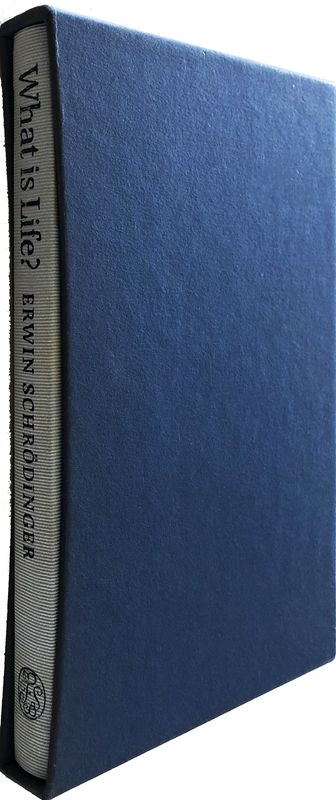
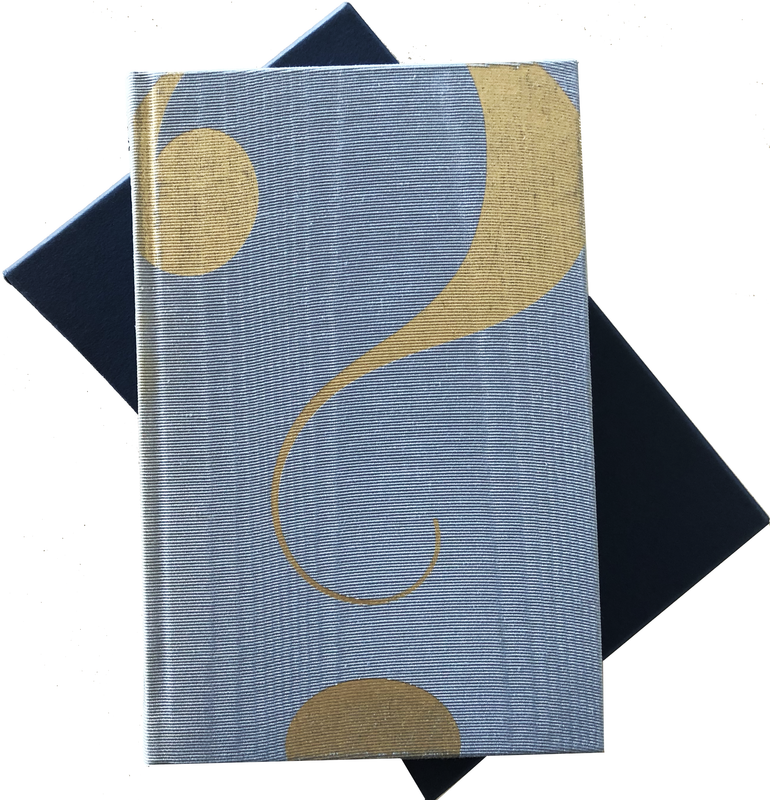
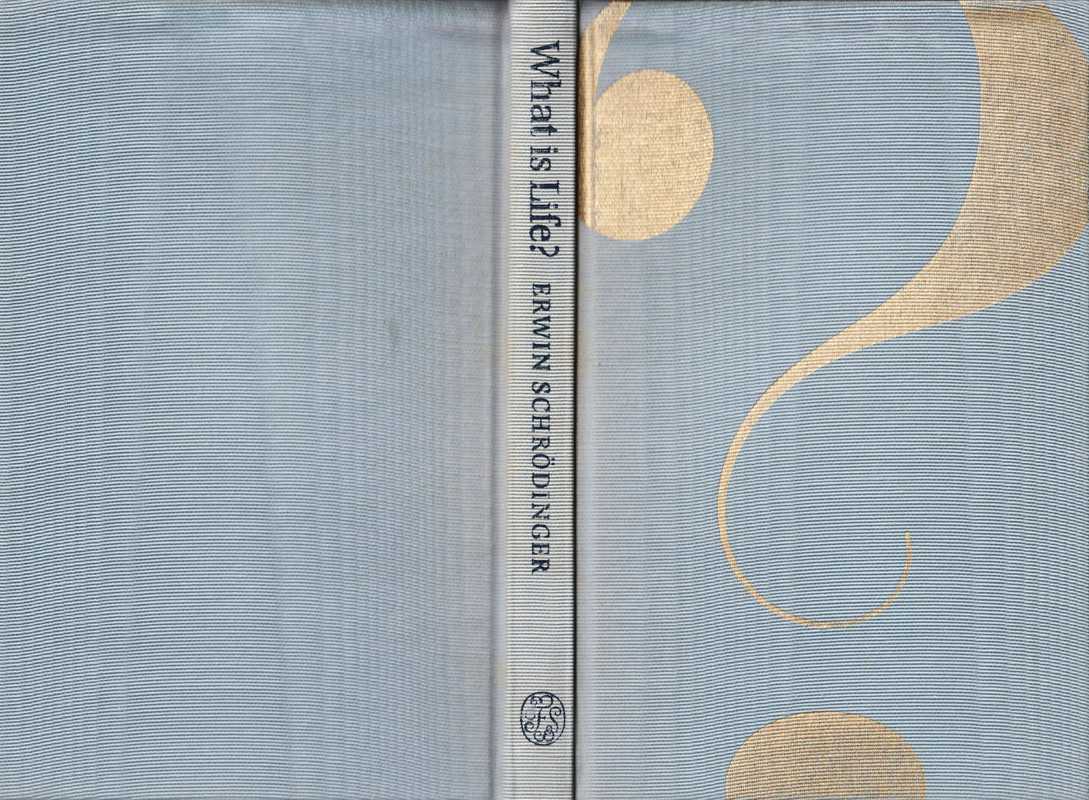
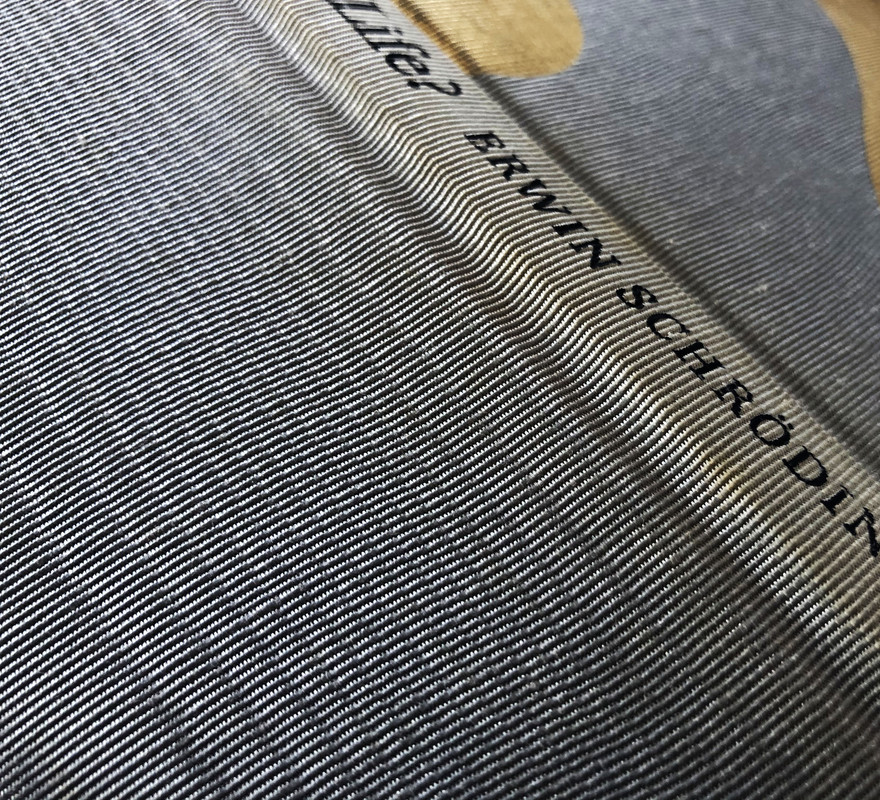
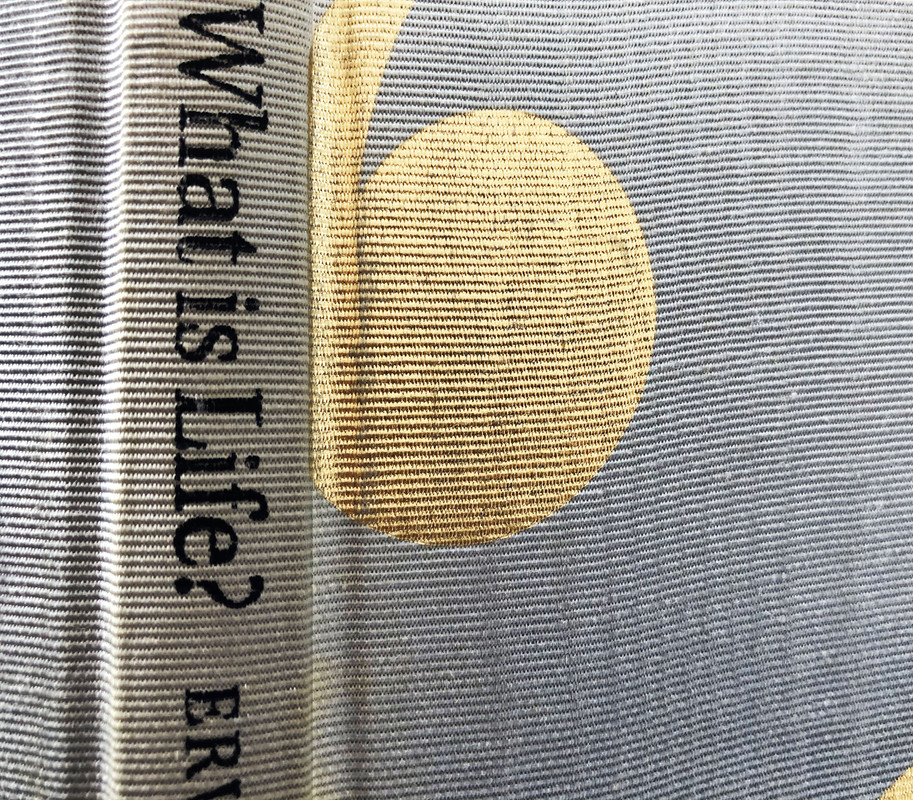
This little book is beautifully bound in silver moire silk cover blocked with a gilt design.
Schrödinger was one of the most famous physicists of the 20th. century. In this book he ties together all the sciences involved in the creation of life – physics, chemistry (organic and non-organic), biology – as well as mathematics, statistics and quantum fluctuations, to explain how life actually works.
It is written in a simple style that can be understood by anyone with high school science. The chapters are taken from a series of trinity College, Dublin lectures that Schrödinger gave in 1943 at a time when most of the world was at war, while Ireland stood neutral in a sea of conflict.
Housed in a plain mid-blue slipcase 21.2x13.9cm., the book has xxiv + 112 pages. An introduction by another famous scientist, Roger Penrose, further explains the philosophy of the book and updates the few areas that need modification after the 57 years between the lectures and this publication.
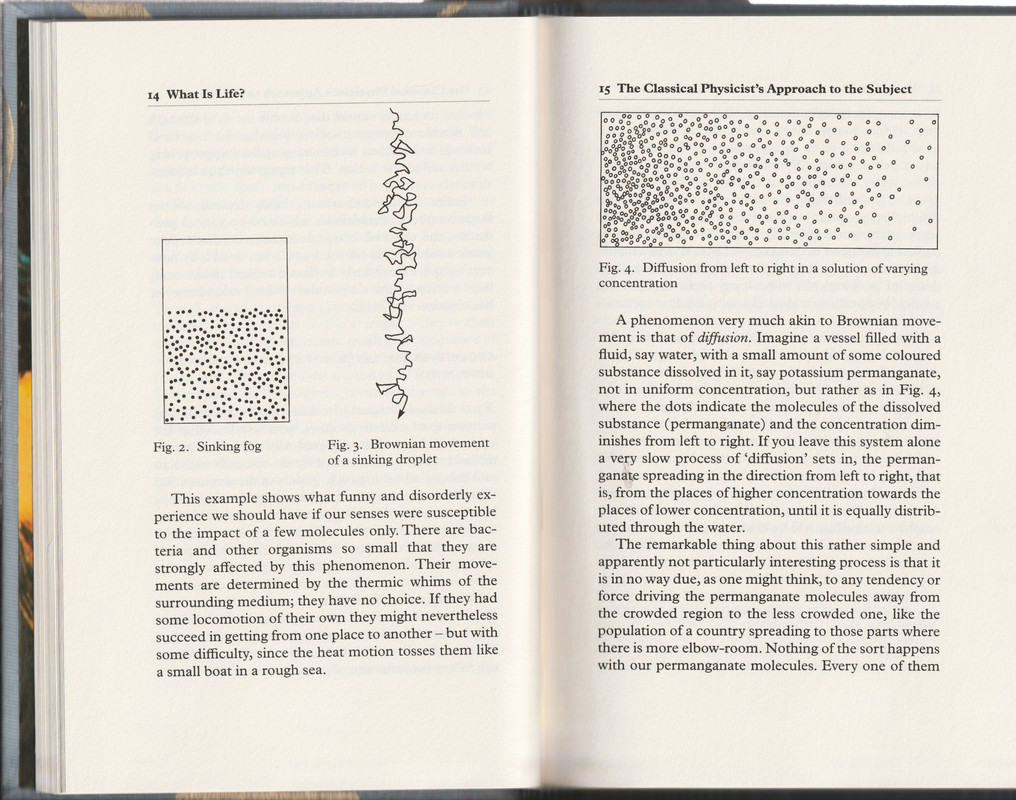
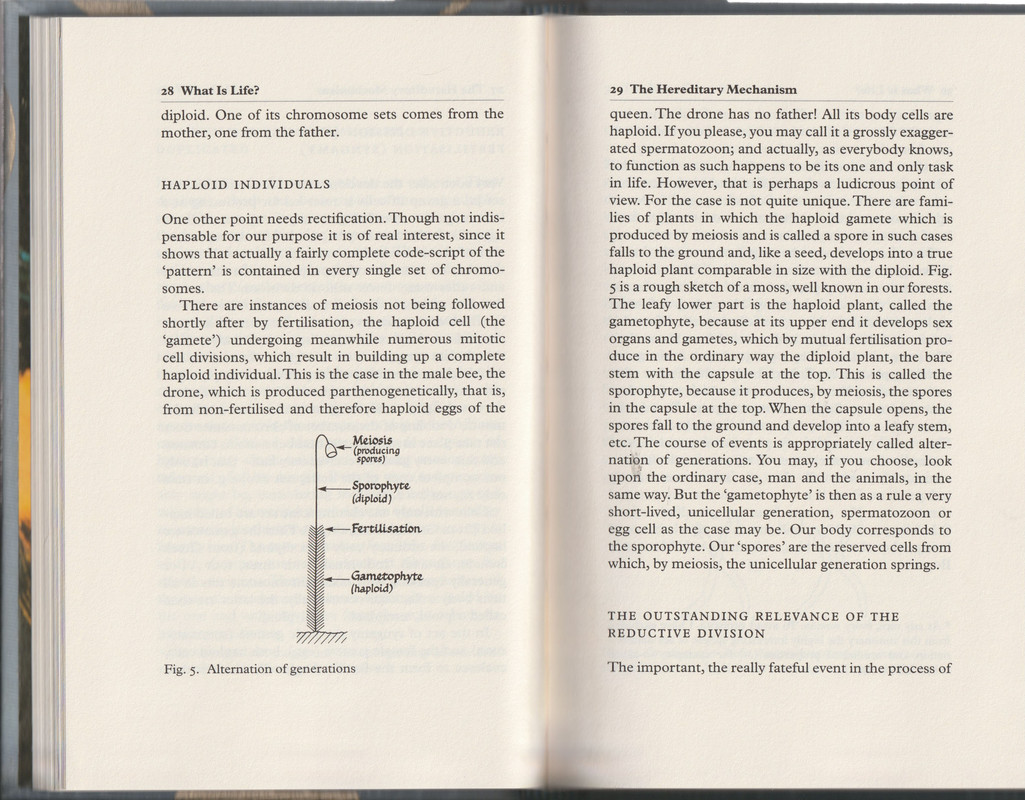
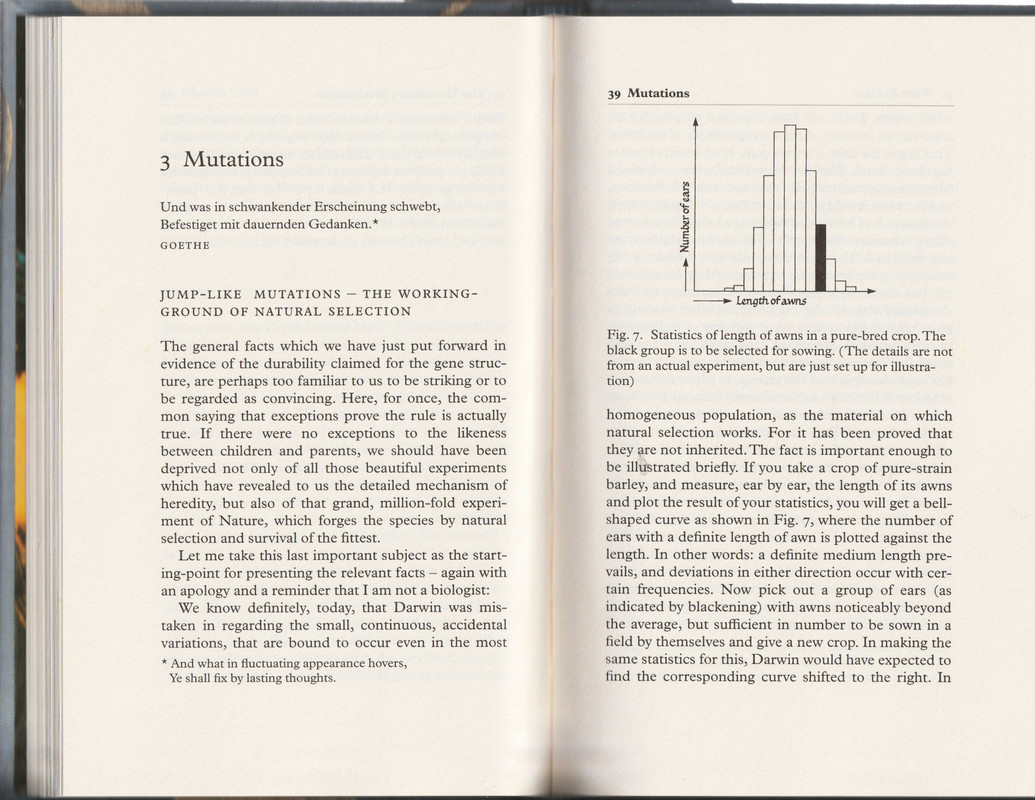
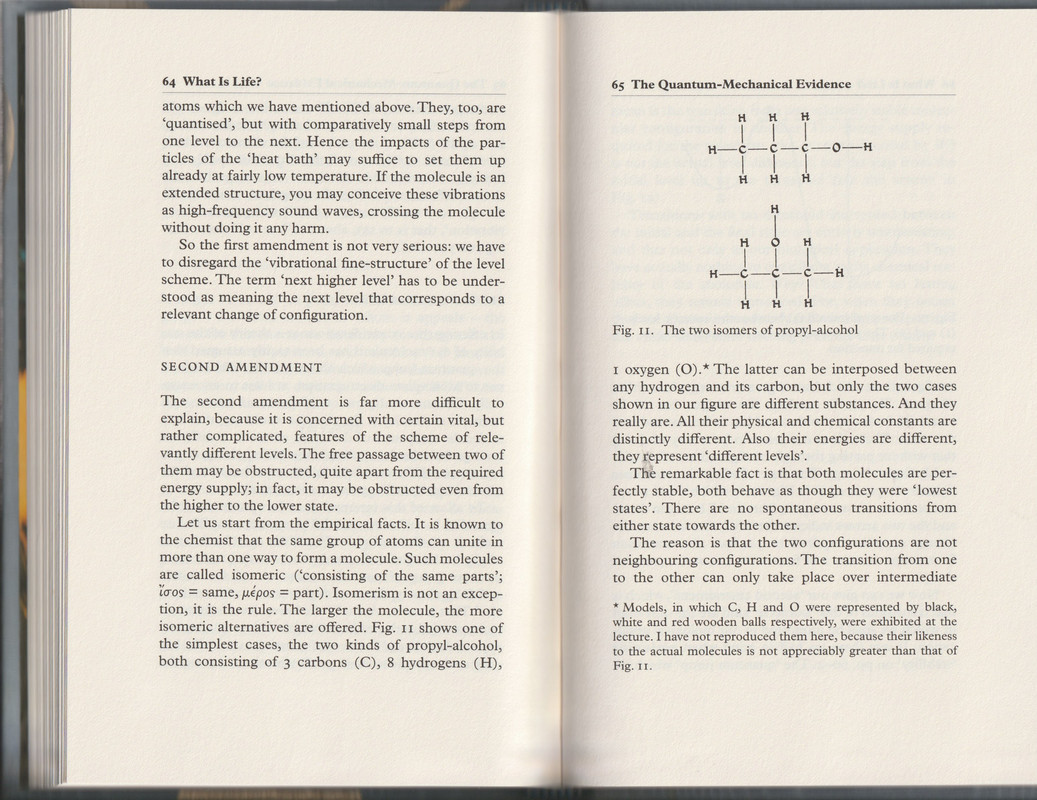
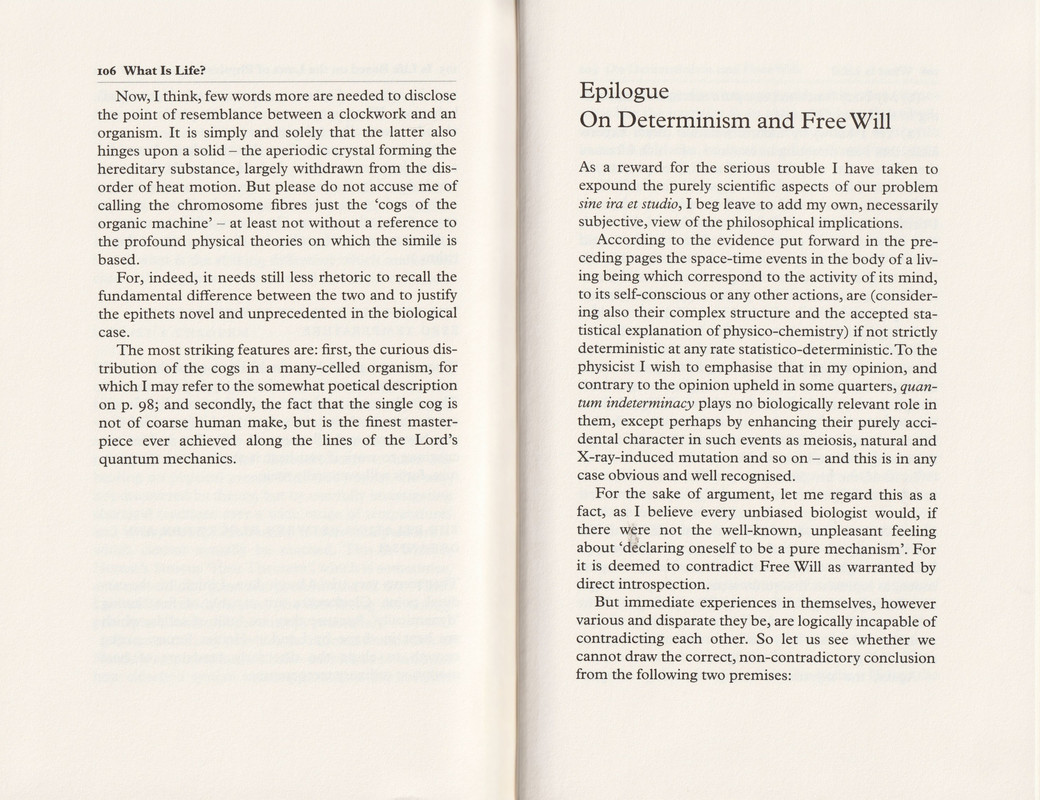
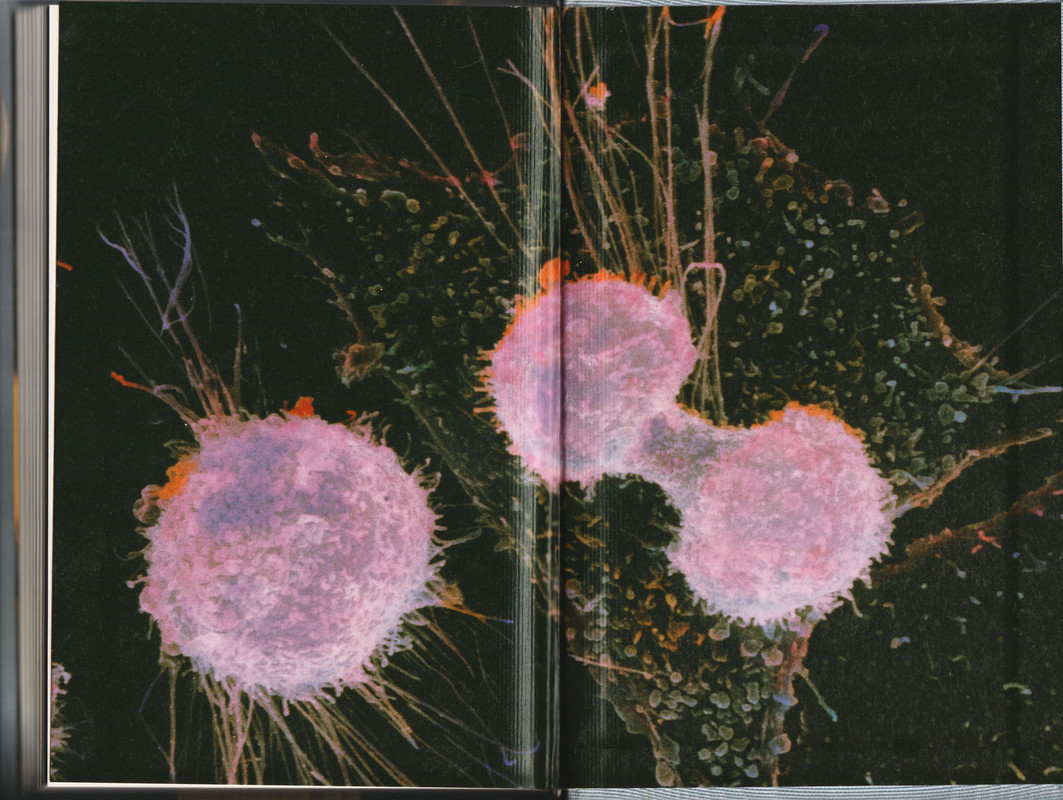
There are no illustrations in the book, but there are numerous integrated line drawings that help explain the adjacent text. The endpapers are brightly coloured electron micrographs of cells in various stages of division, the front and back endpapers being different.

Front endpapers
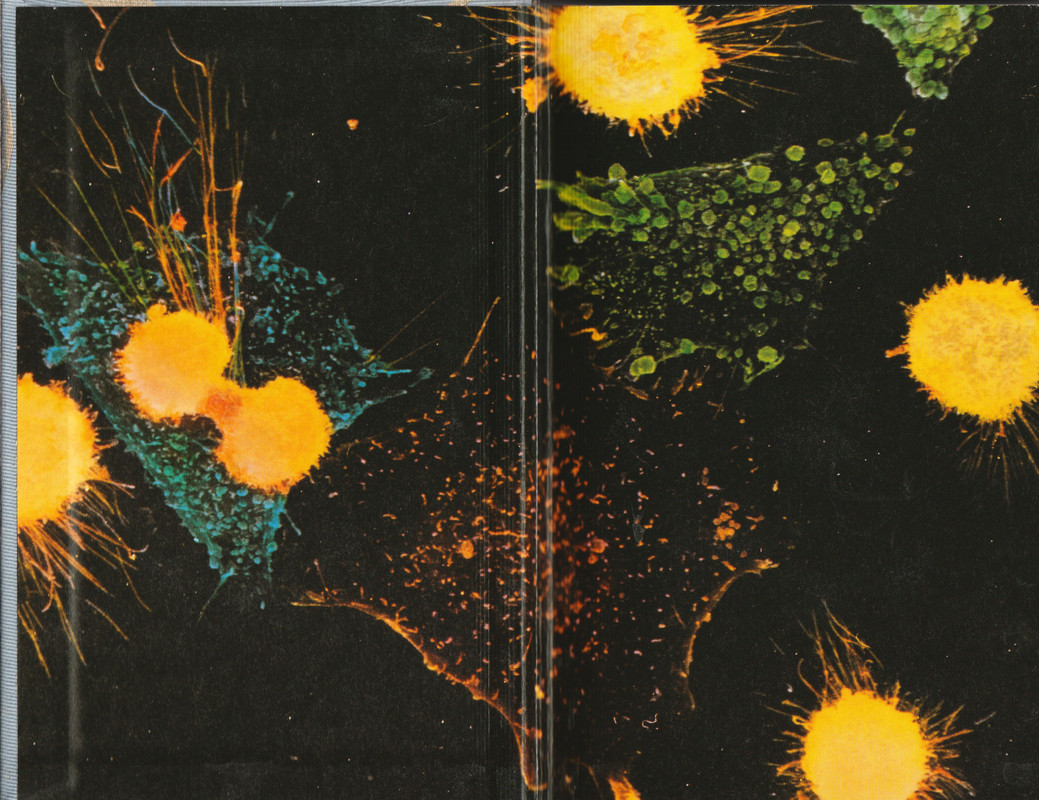
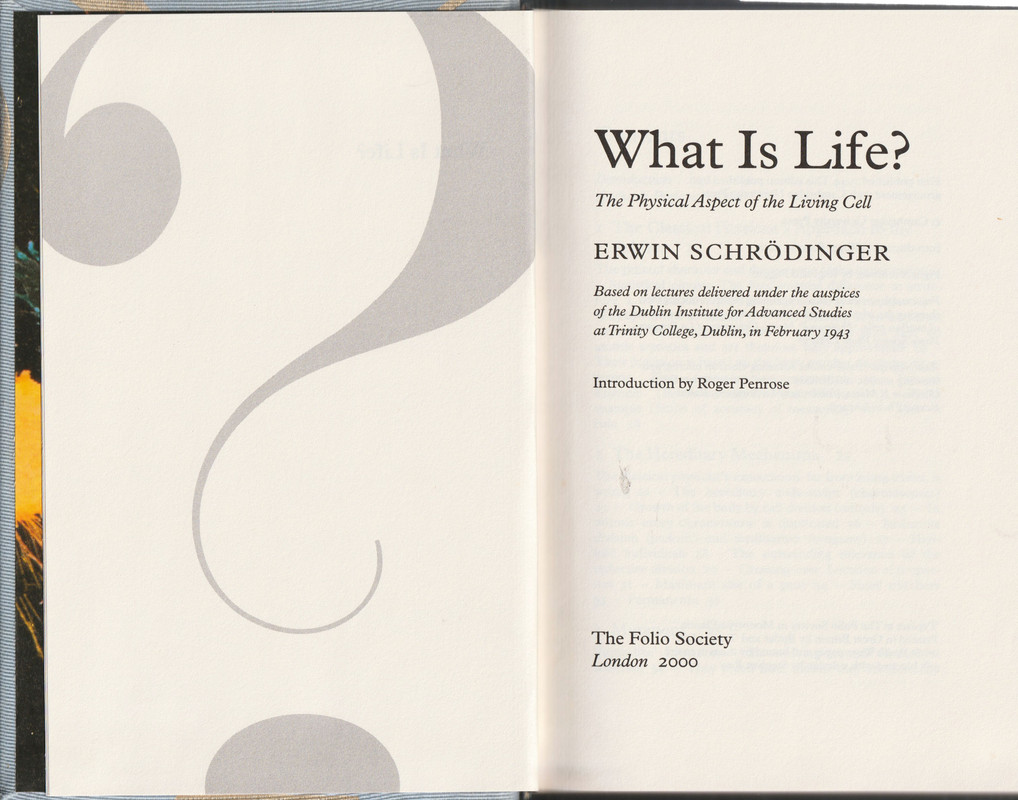
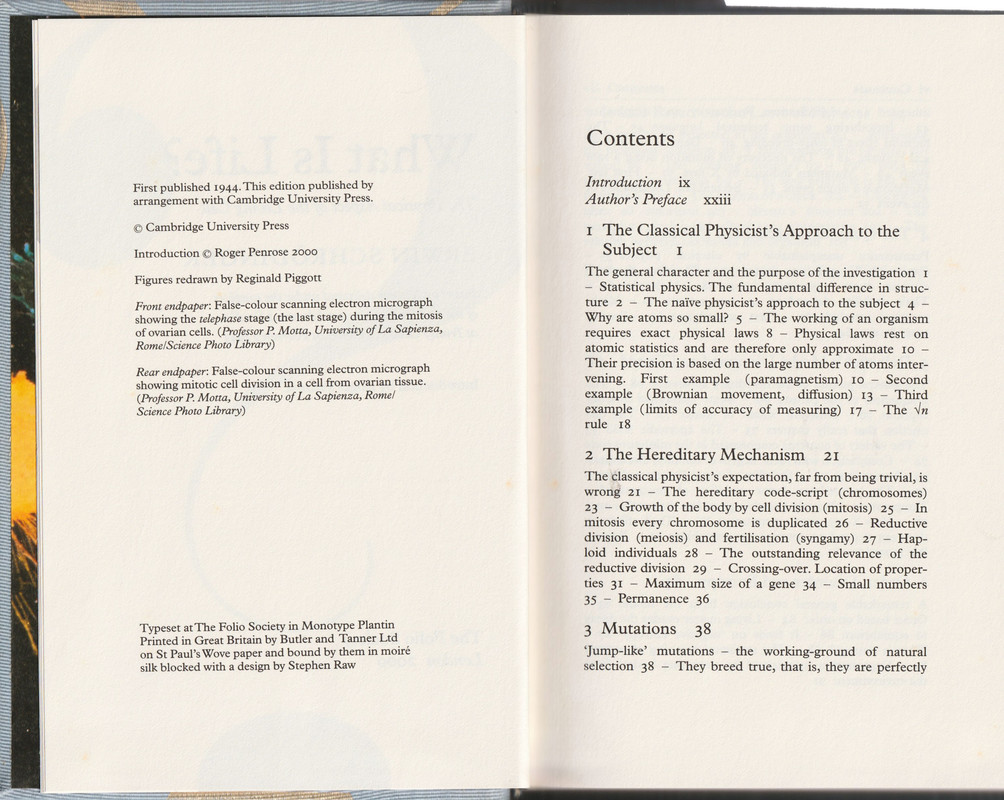
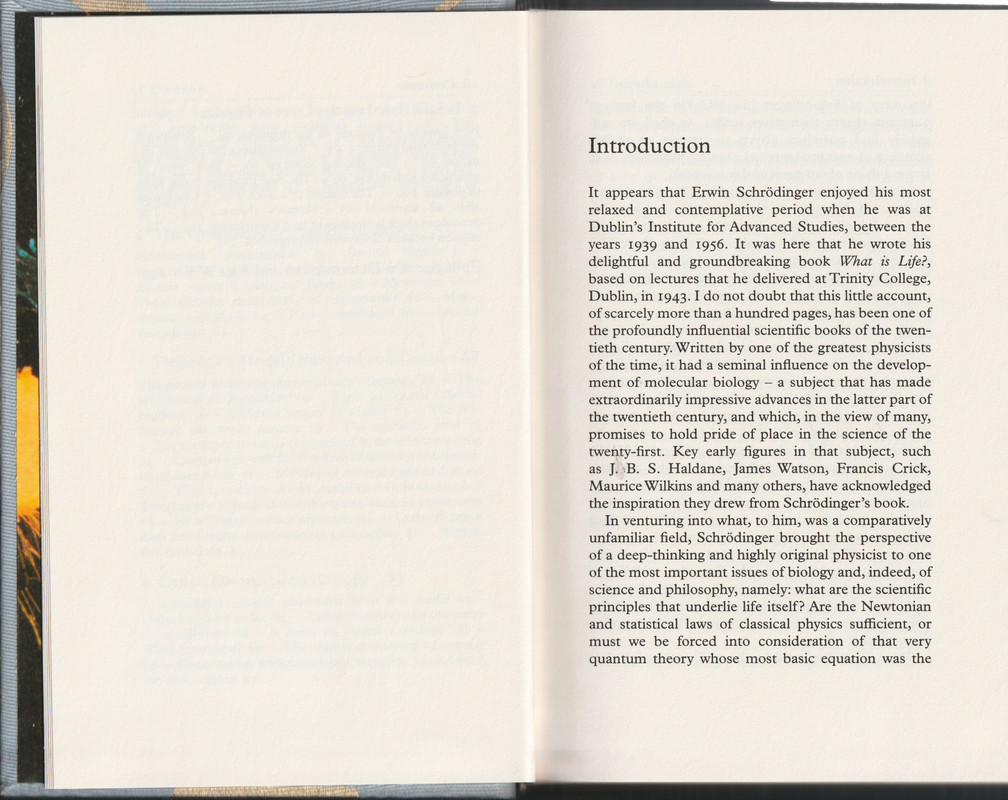
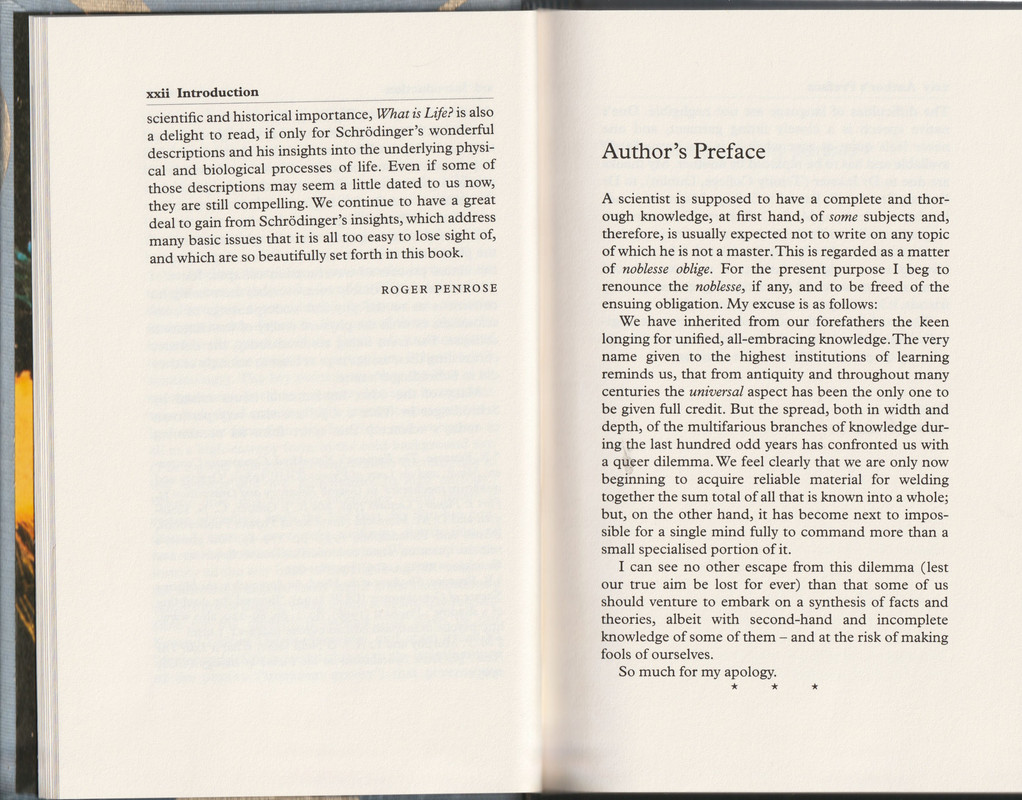
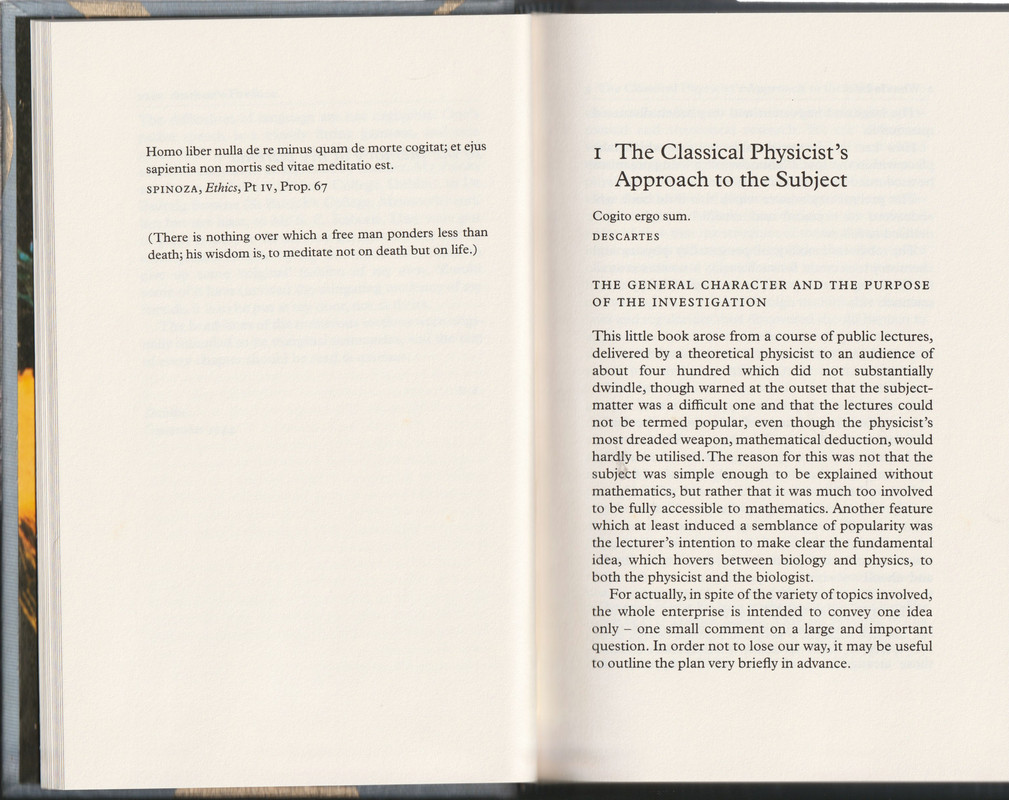
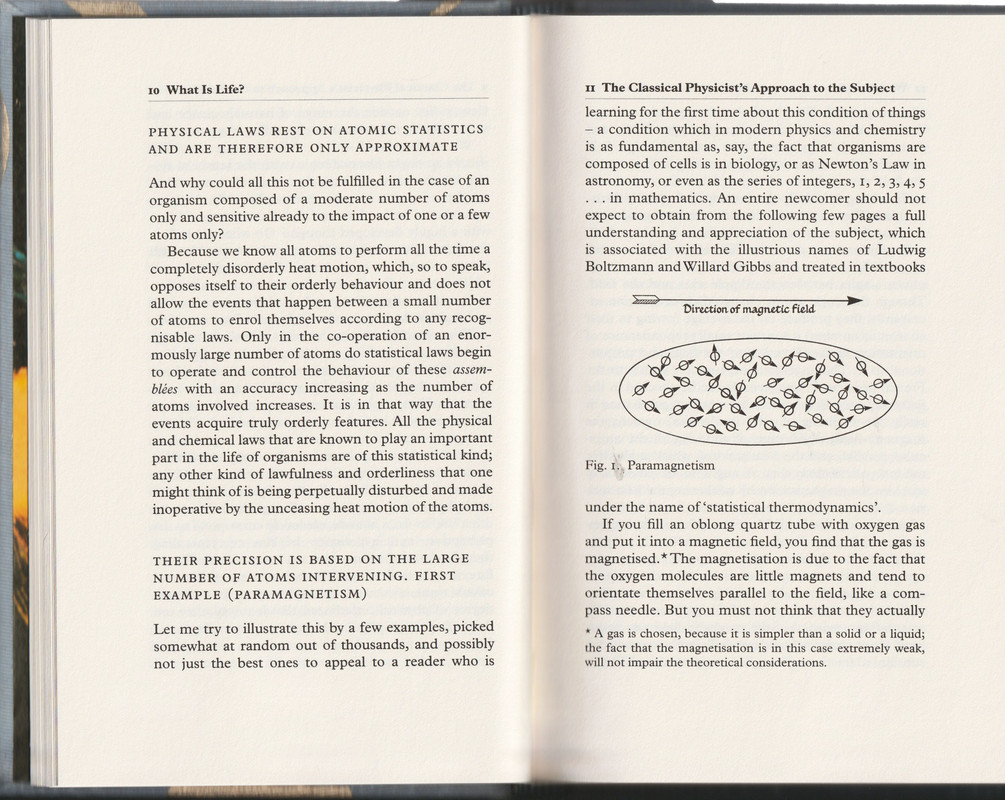
Back endpapers
An index of the other illustrated reviews in the "Folio Archives" series can be viewed here.
This little book is beautifully bound in silver moire silk cover blocked with a gilt design.
Schrödinger was one of the most famous physicists of the 20th. century. In this book he ties together all the sciences involved in the creation of life – physics, chemistry (organic and non-organic), biology – as well as mathematics, statistics and quantum fluctuations, to explain how life actually works.
It is written in a simple style that can be understood by anyone with high school science. The chapters are taken from a series of trinity College, Dublin lectures that Schrödinger gave in 1943 at a time when most of the world was at war, while Ireland stood neutral in a sea of conflict.
Housed in a plain mid-blue slipcase 21.2x13.9cm., the book has xxiv + 112 pages. An introduction by another famous scientist, Roger Penrose, further explains the philosophy of the book and updates the few areas that need modification after the 57 years between the lectures and this publication.
There are no illustrations in the book, but there are numerous integrated line drawings that help explain the adjacent text. The endpapers are brightly coloured electron micrographs of cells in various stages of division, the front and back endpapers being different.
Front endpapers
Back endpapers
An index of the other illustrated reviews in the "Folio Archives" series can be viewed here.
2dlphcoracl
Erwin Schrödinger is one of the most brilliant scientific minds of the twentieth century - on a par with Albert Einstein, Richard Feynman, John von Neumann, etc. He is the name most associated with the development of quantum mechanics and this book is a little jewel. As is often the case with the most brilliant minds, they often have a gift for writing about the most complex scientific theories and discoveries by distilling them to their essential core, then making it all comprehensible for a general audience with only a basic scientific background.

