
Folio Archives 245: Of Gods and Men by Frederic Raphael 1992
Talk Folio Society Devotees
Join LibraryThing to post.
1wcarter
Of Gods and Men by Frederic Raphael 1992
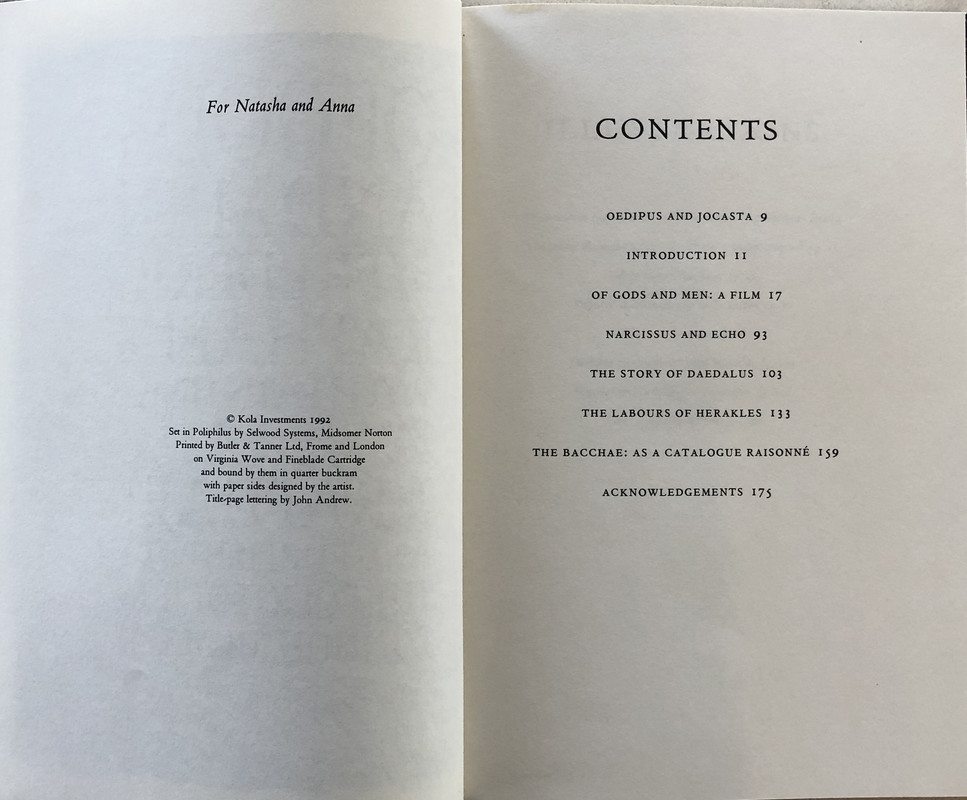
This book contains six very different writings by Frederic Raphael, making it a complex publication to review.
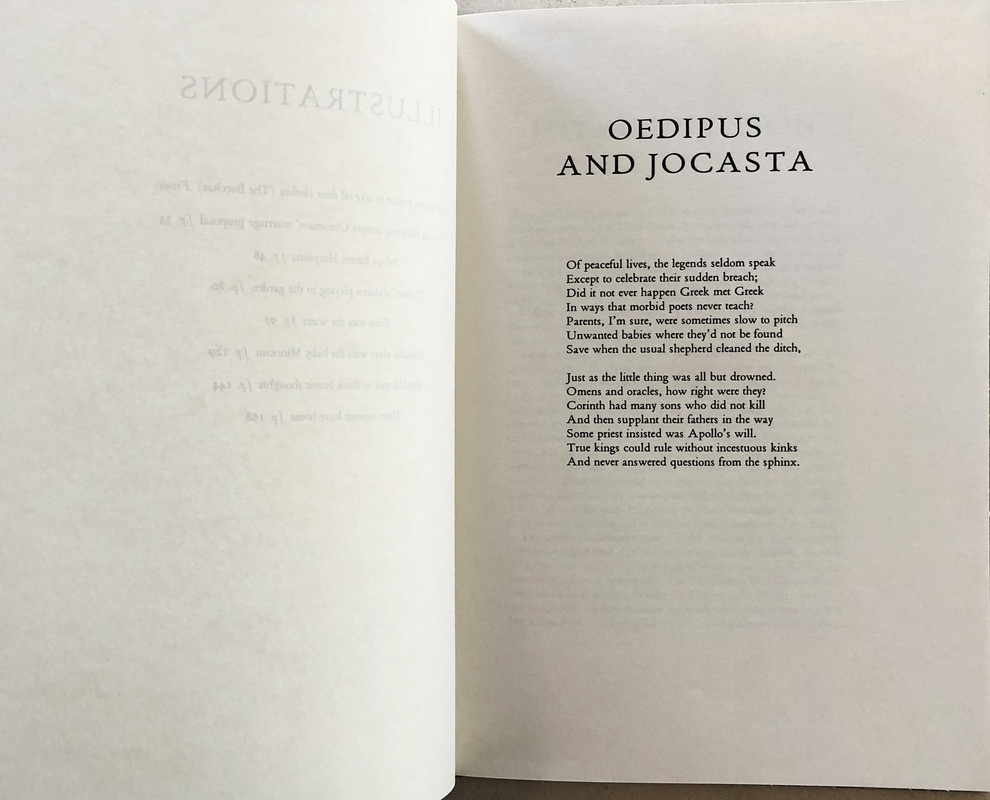
OEDIPUS AND JOCASTA
A one page poem.
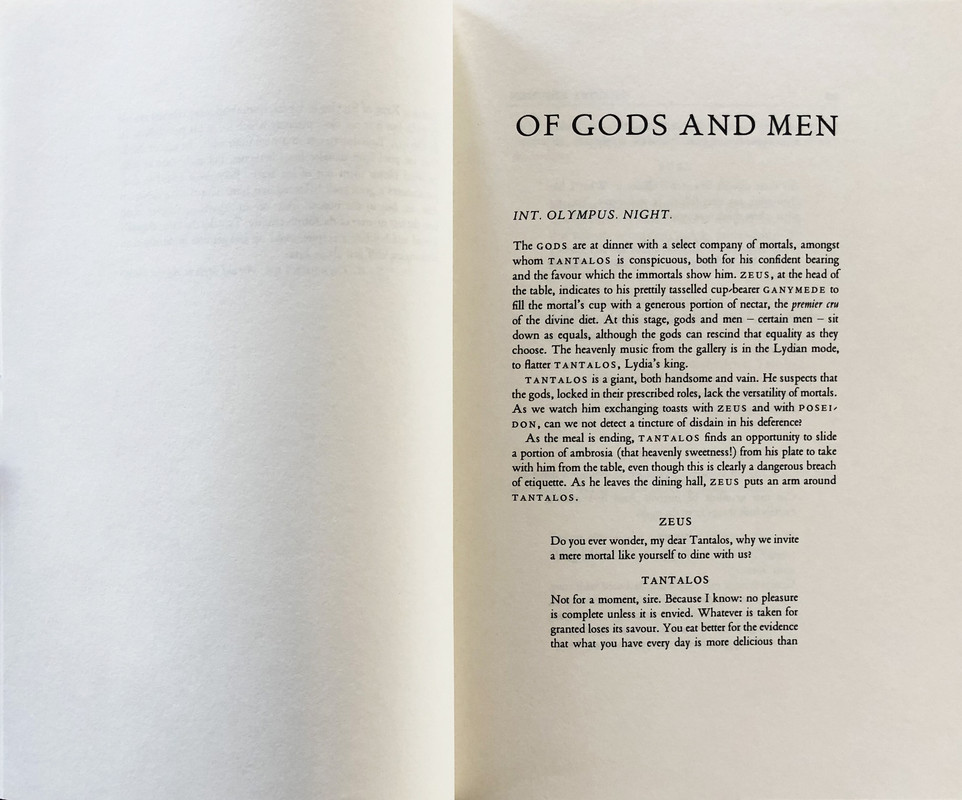
OF GODS AND MEN
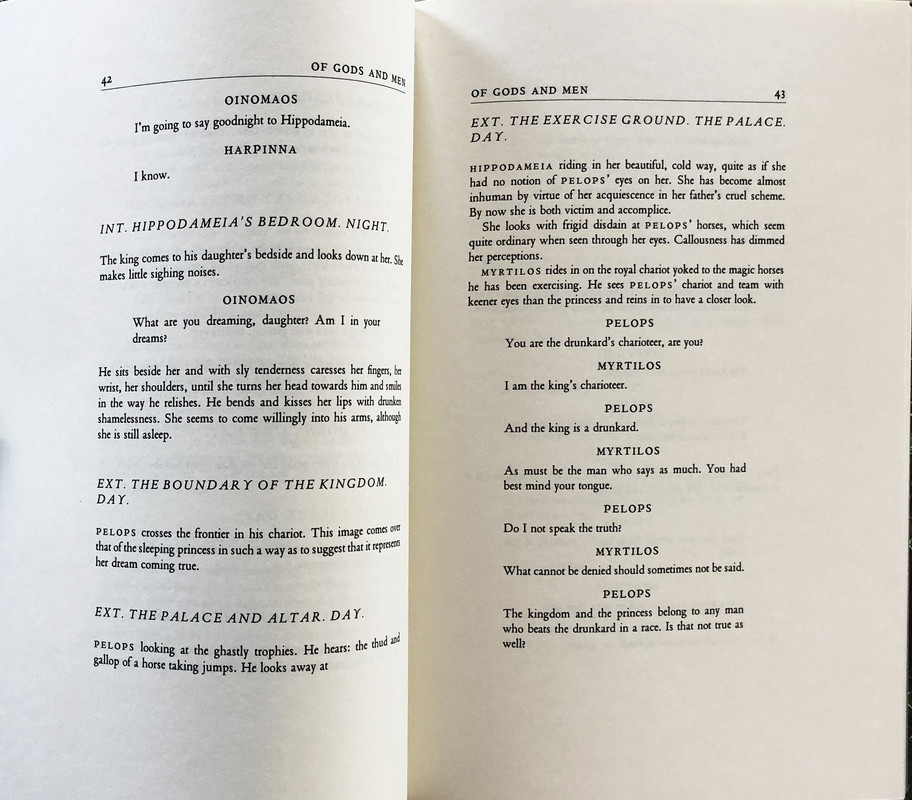
This is a horrendous tale that takes up half the book. It tells of greed, corruption, torture, infanticide, cannibalism, incest, suicide, lust, murder, adultery and almost every other nefarious sin you can conceive. It is told as a script for a film and uses the Greek gods and their stories as a basis for this perfidious and disturbing tale. There are directions for the sets and camera crews, but it has never ben filmed, and has only appeared in book form.
Written in 1992, the Folio Society edition is the only version of this story that I can find has ever been published. This makes it unusual in the Folio Society oeuvre, as there are few books that have only been published by the FS.
The unusual presentation of the tale is a significant attraction, but the depraved tale itself requires a good stomach to be digested.
NARCISSUS AND ECHO
A nine page poem retelling this this poignant myth that describes the tragic problem of pride, love and relationships with narcissists.
THE STORY OF DAEDALUS
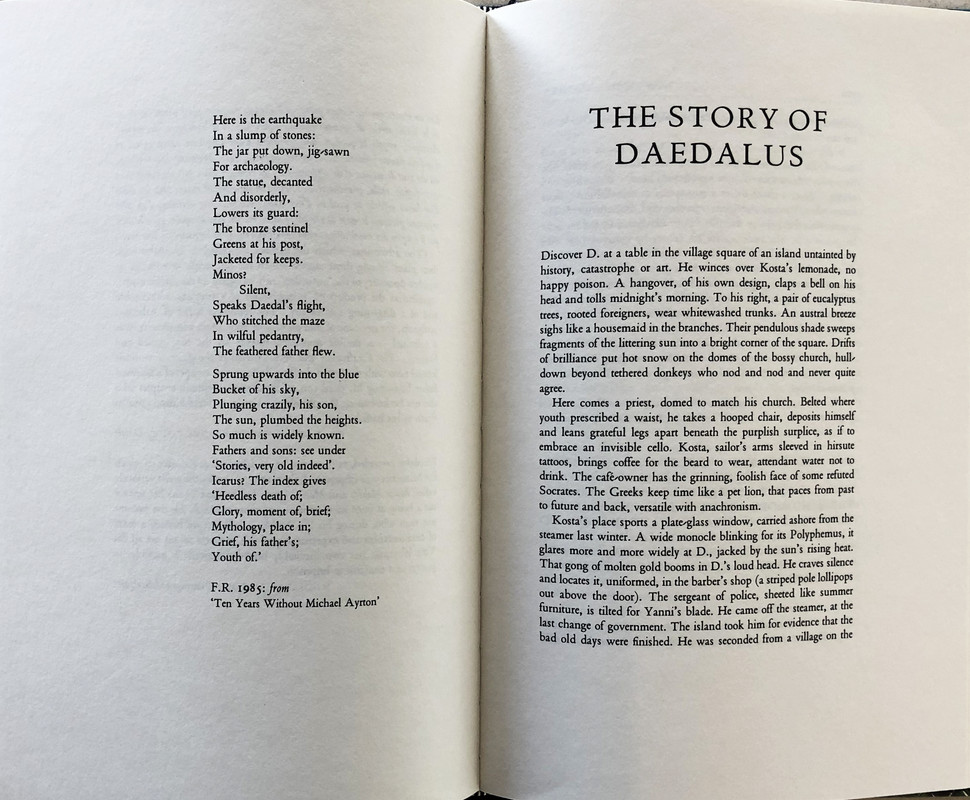
Written entirely in the third person, the 30 page story of Daedalus is now set in the 20th. Century. Daedalus was the architect of the Minotaur's labyrinth on Crete and the father of Icarus who flew too close to the sun on his artificial wings and so drowned in the Mediterranean. Raphael though puts (of course) a completely different twist on the story.
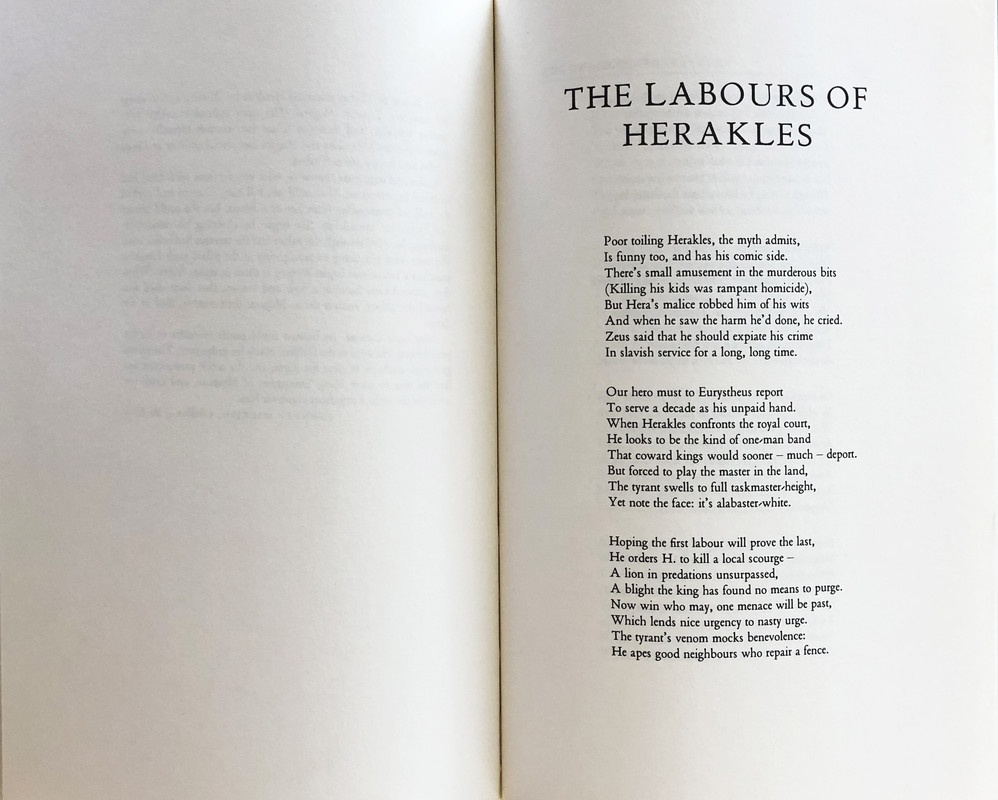
THE LABOURS OF HERAKLES
This section too has a gruesome start with Herakles killing his sons and then burning his castle and wife. This scene is followed by a 20 page poem describing the labours forced upon Herakles in penance for his sins.
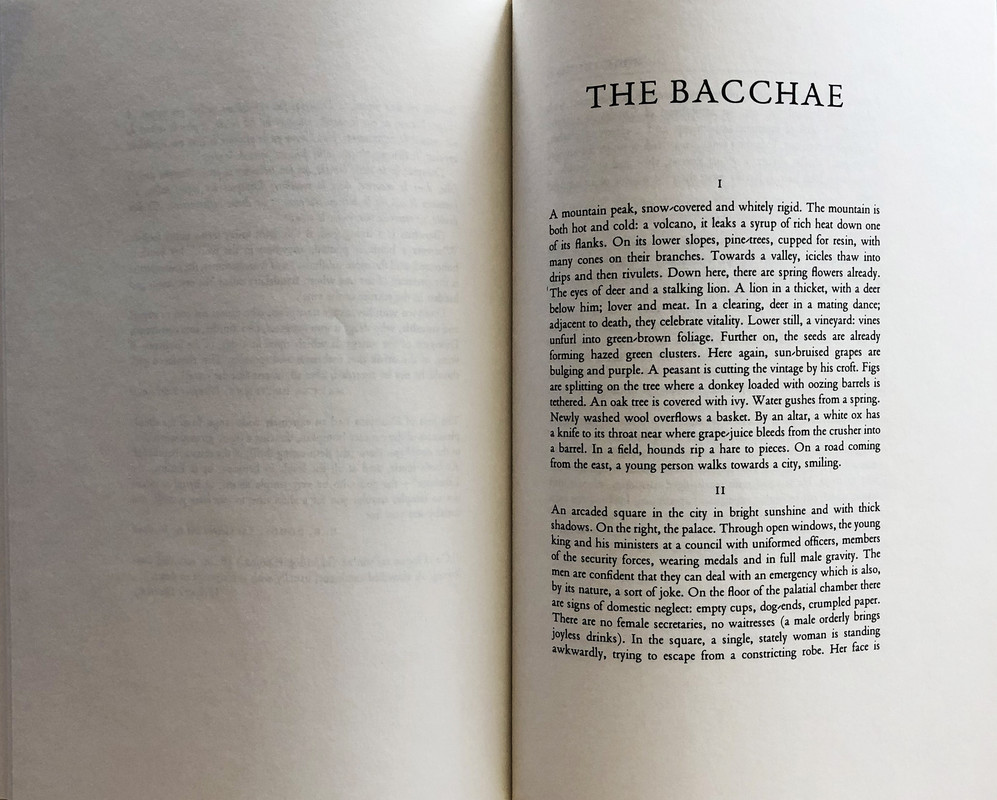
THE BACCHAE: AS A CATALOGUE RAISONNÉ
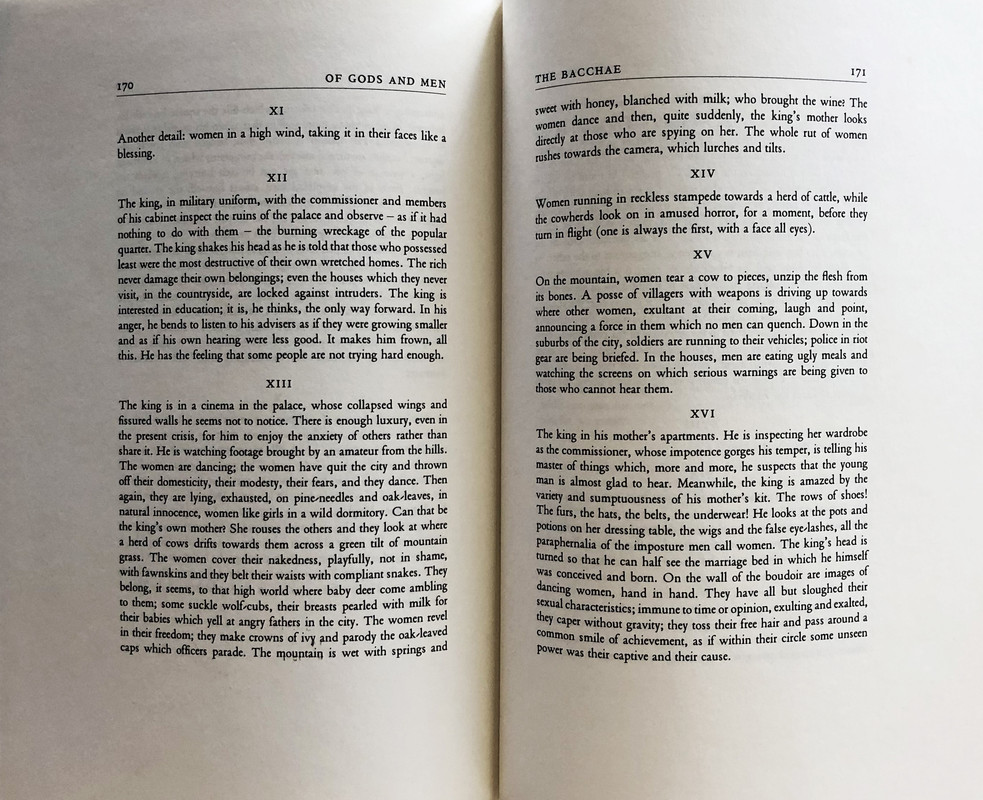
This is the most confusing section of the book. It consists of 23 disjointed vignettes set in modern times that demonstrate a series of scenes that describe various aspects of apocalyptic decadence. A king dresses in military uniform but wears high heels and a silk dress. Women tear a cow to pieces with their bare hands and consume it. Two old men embrace wisdom. The whole is chaos.
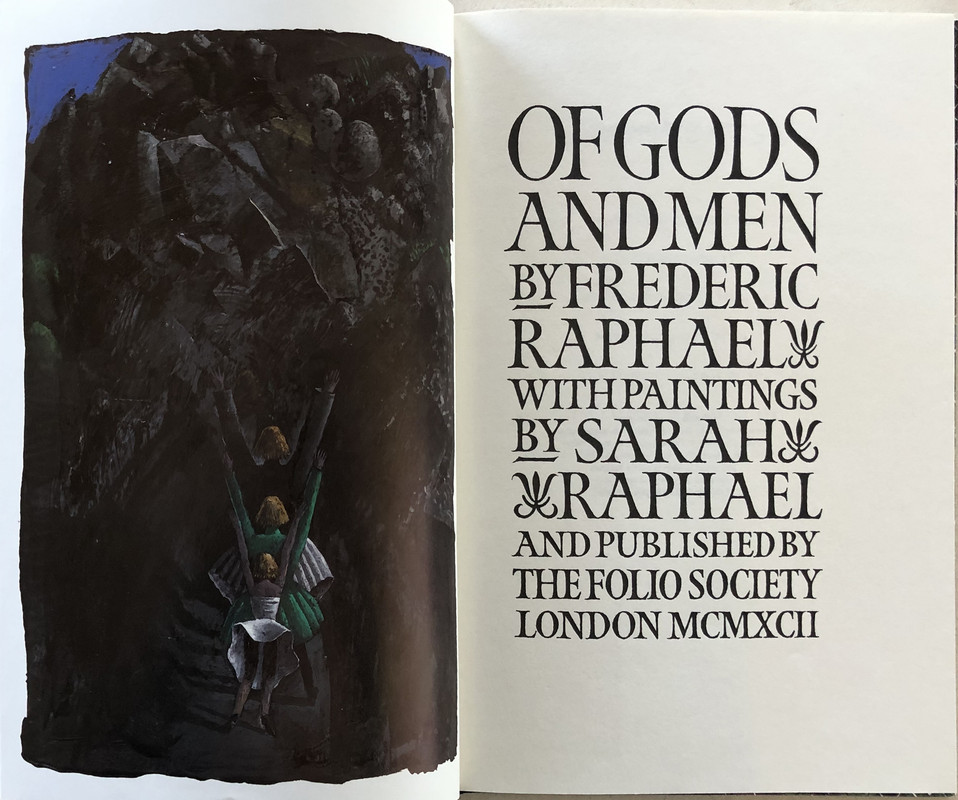
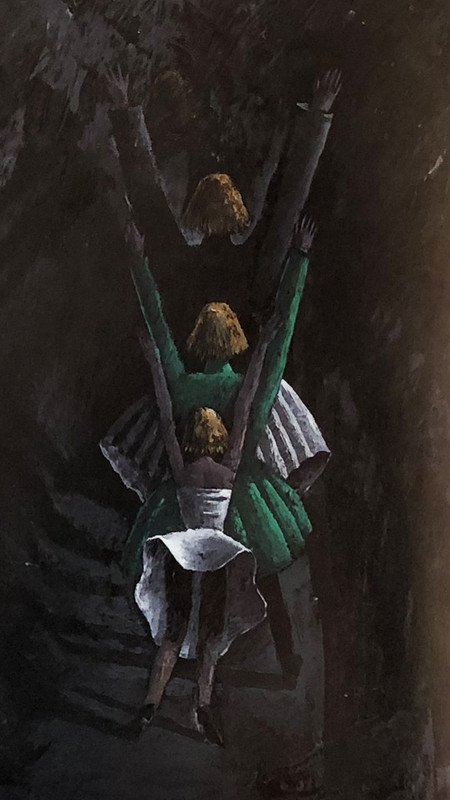
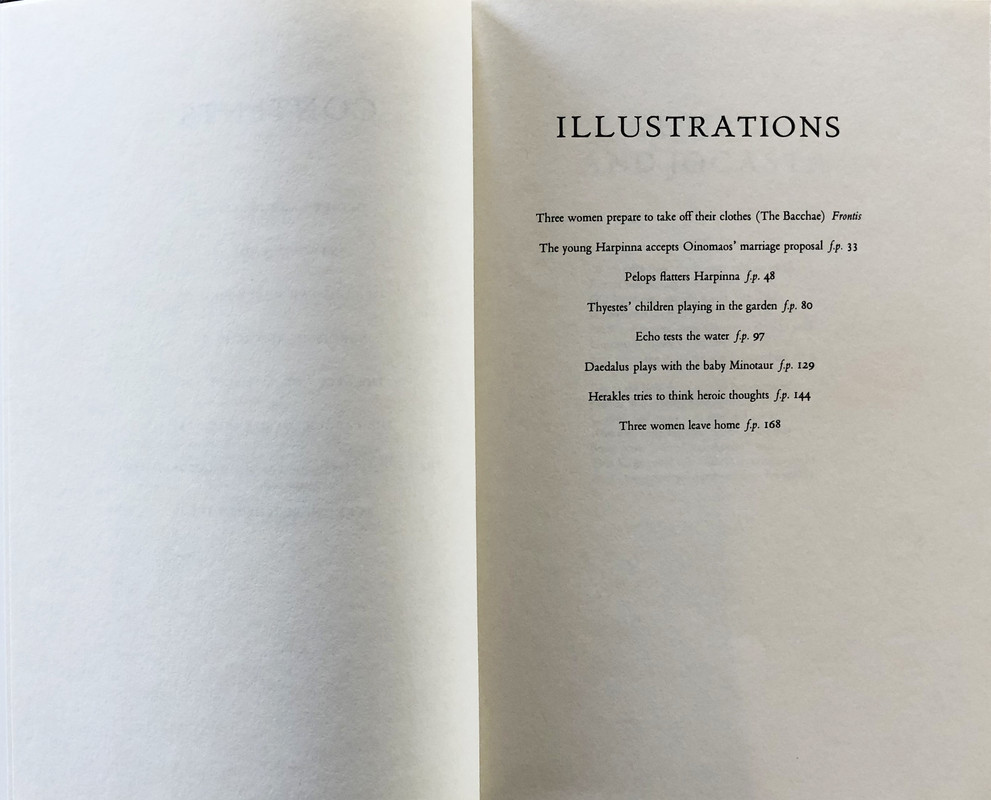
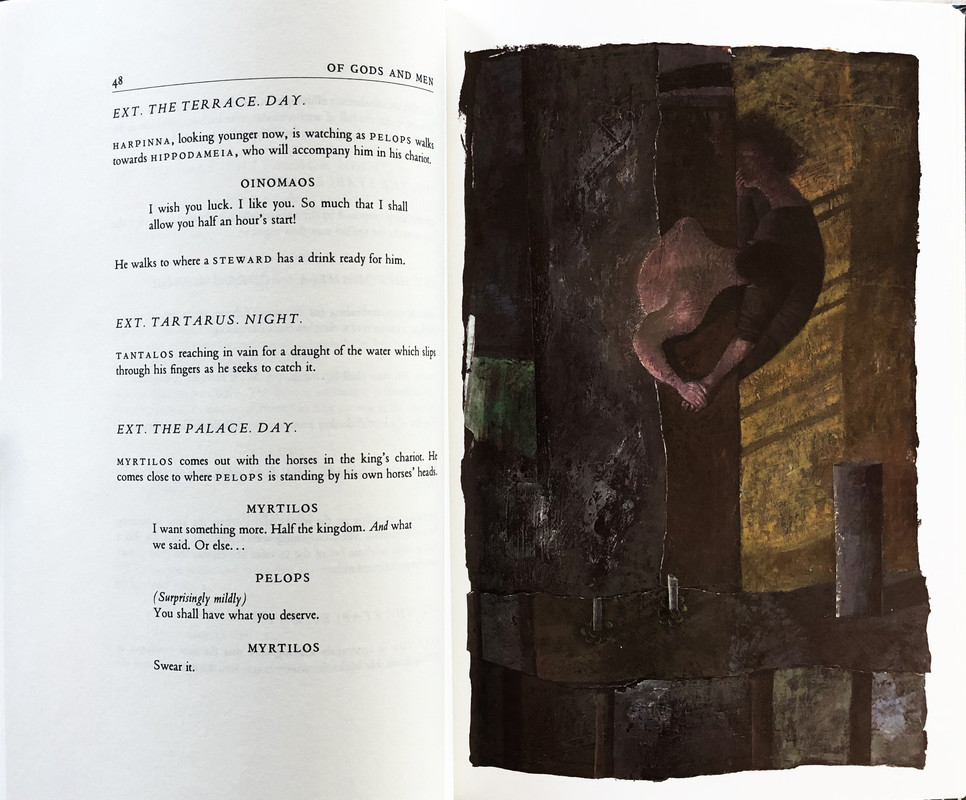
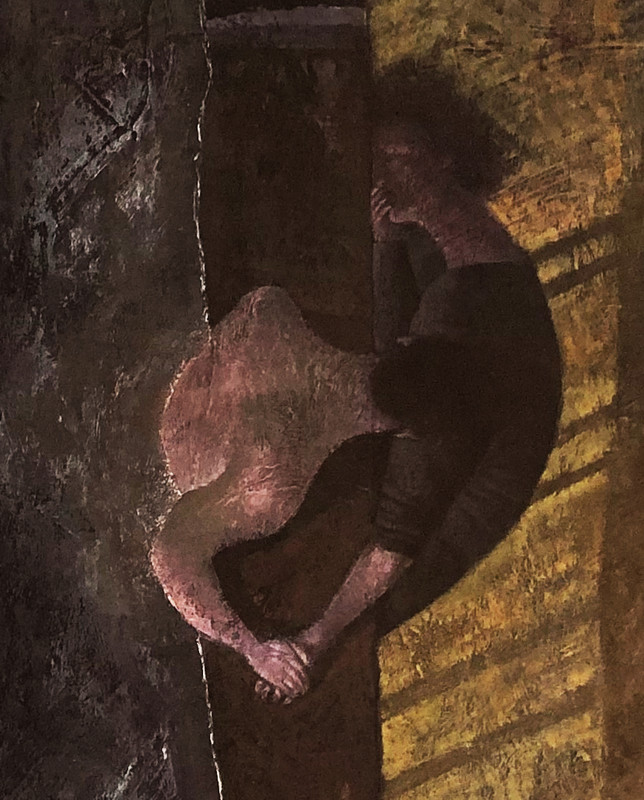
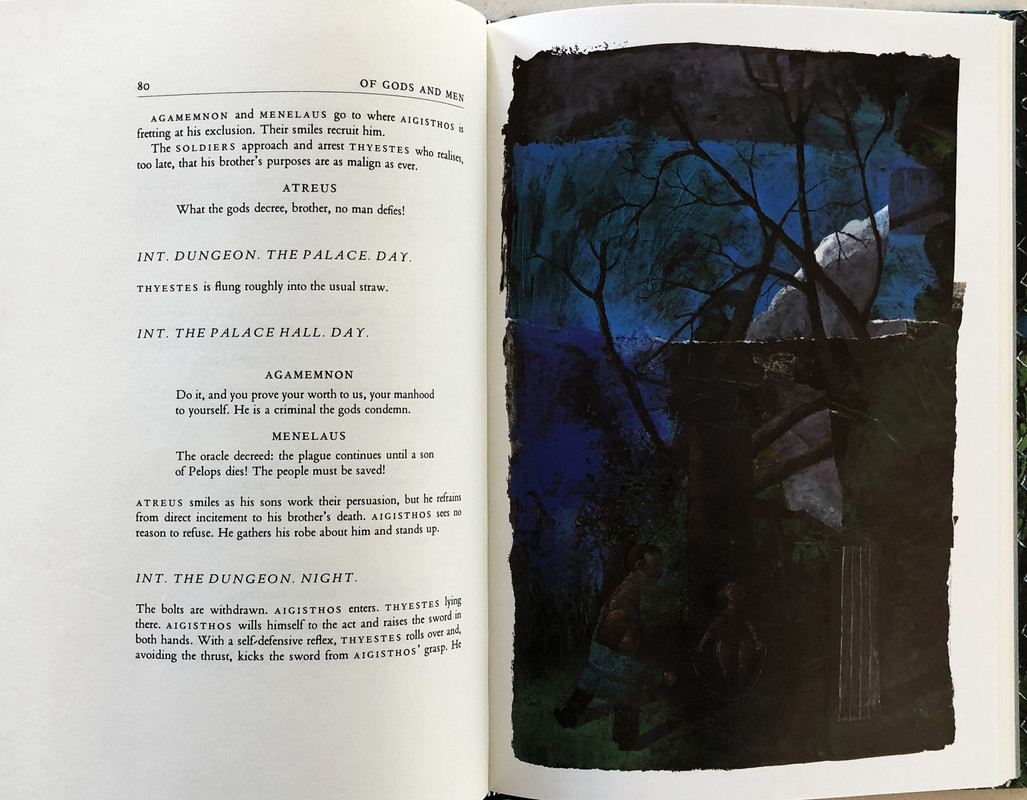
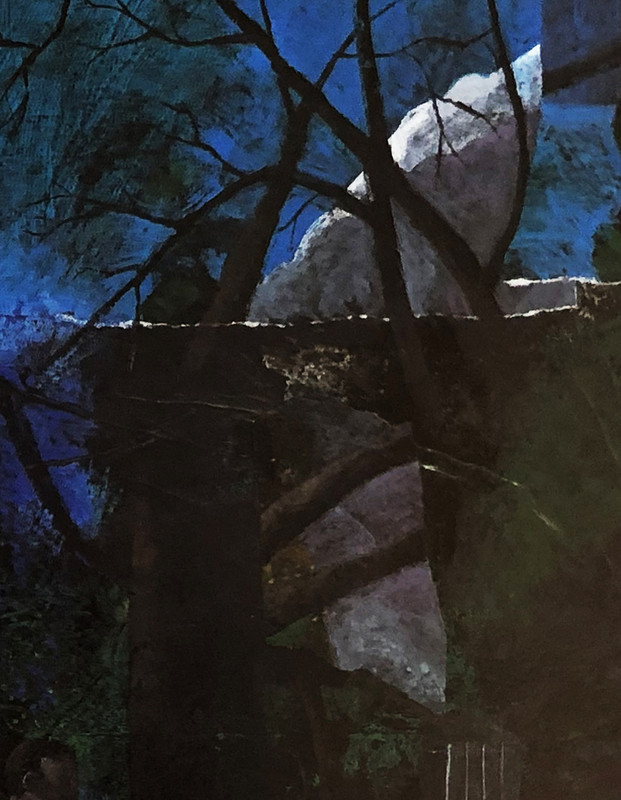
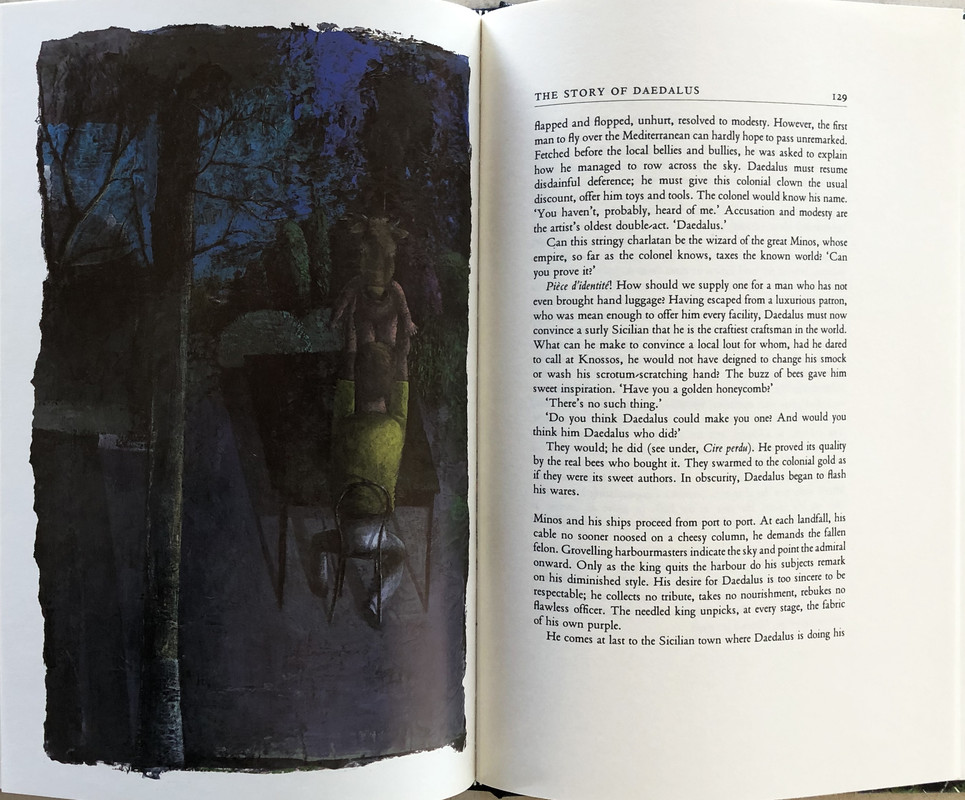
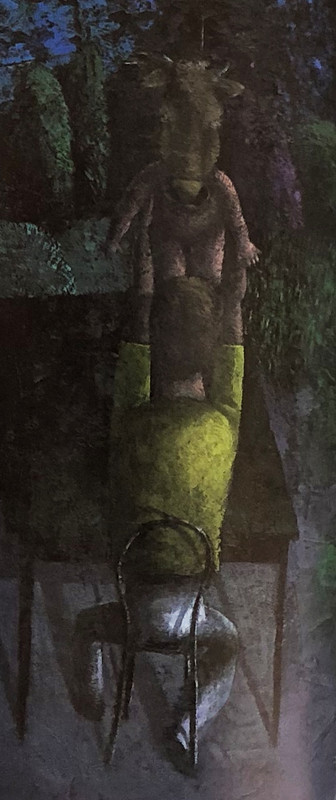
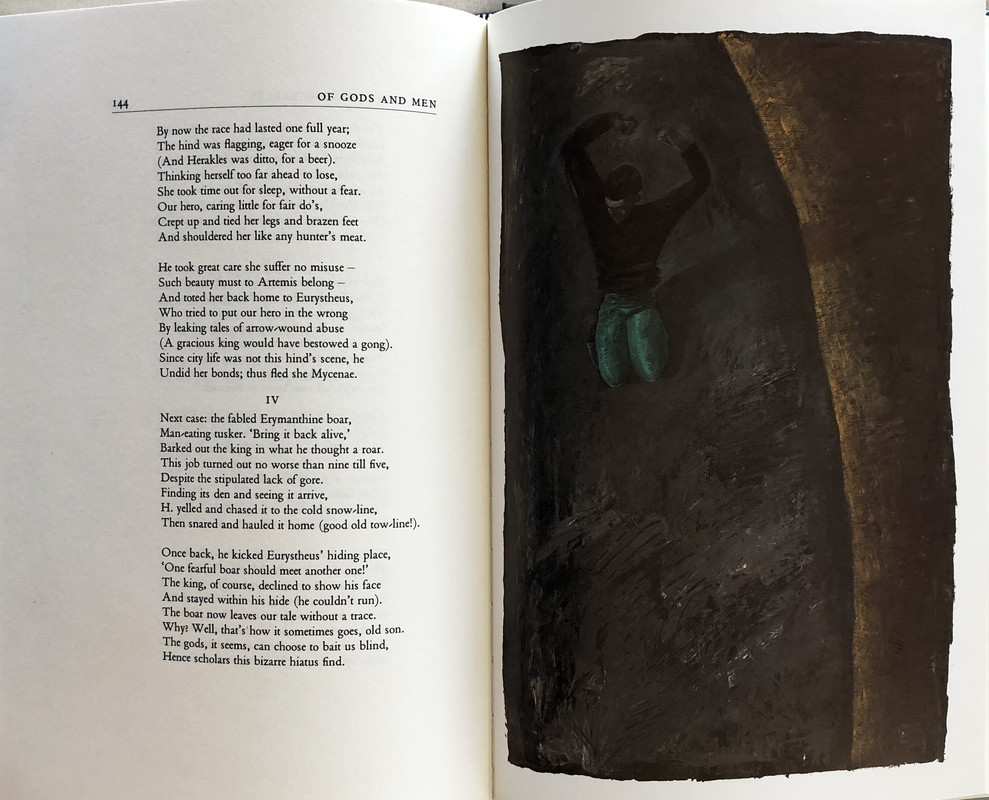
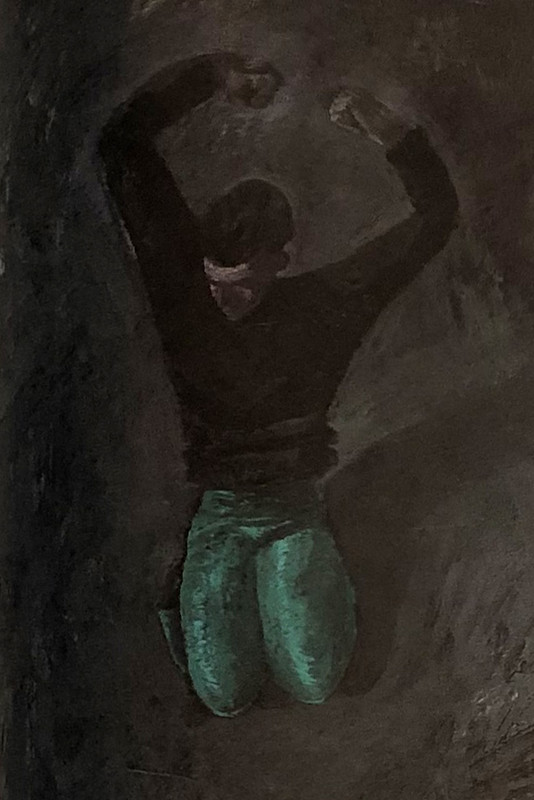
The book is illustrated with eight pages of suitably dark paintings by Sarah Raphael, Frederic’s daughter.
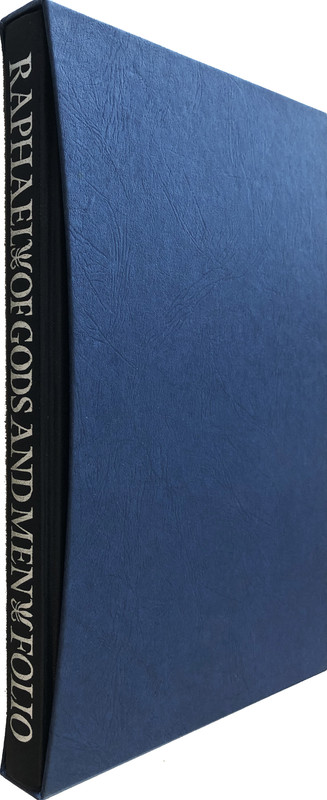
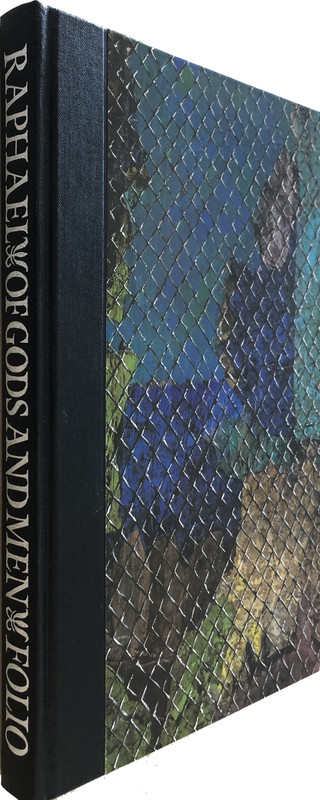
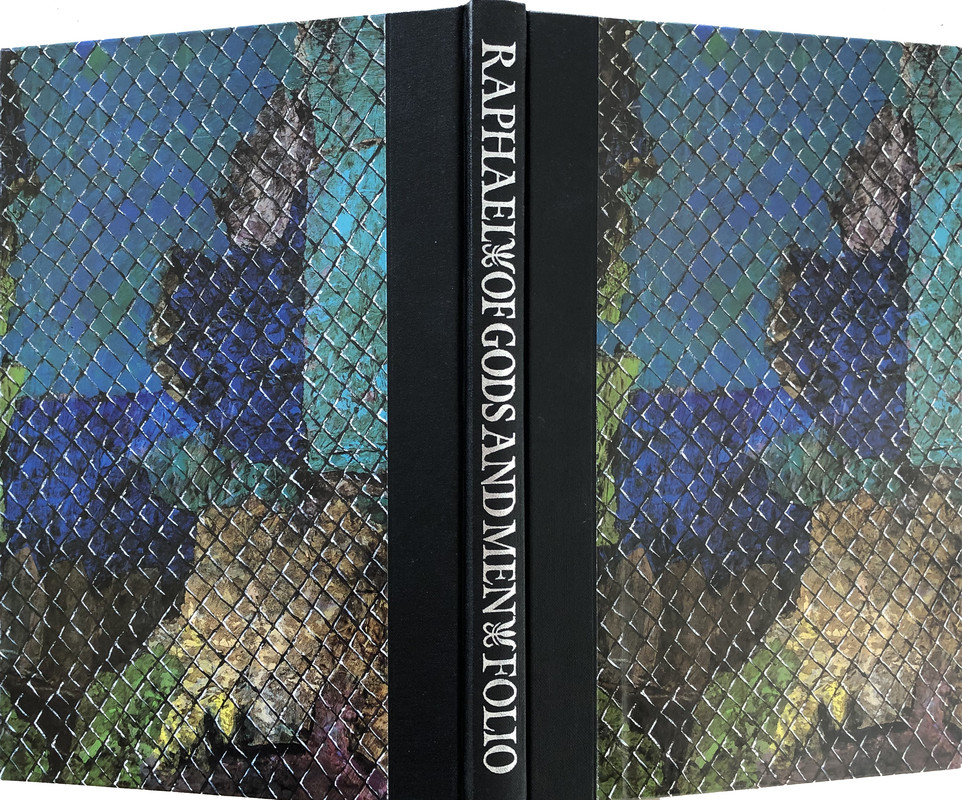
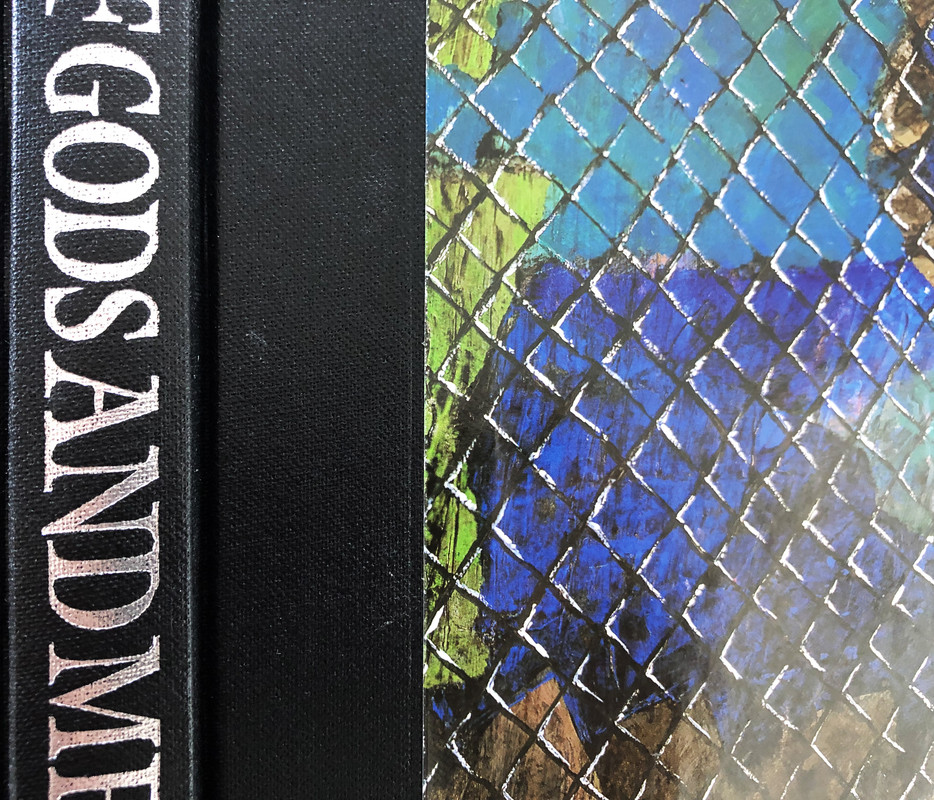
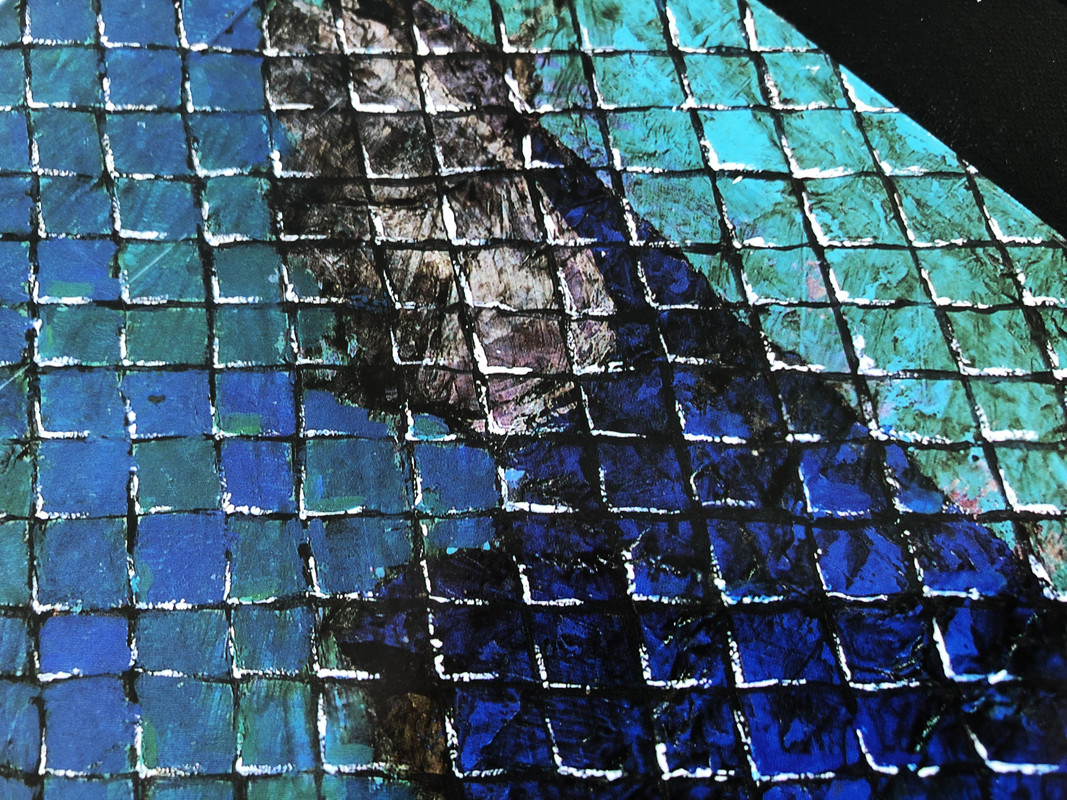
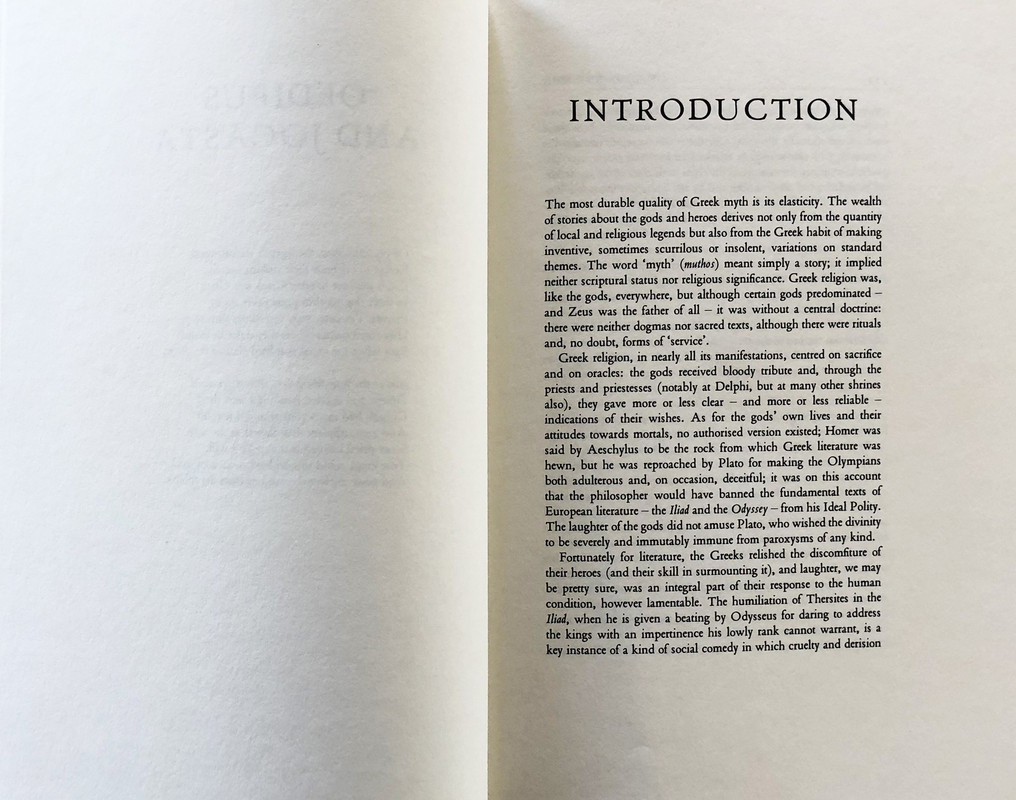
Strikingly presented, the 176 page book is quarter bound in black cloth, with paper covers printed with a mesh covered multi-colour design by Sarah Raphael. By contrast, the endleaves are a plain pale blue-grey and the slipcase (28.8x18.9cm.) a simple dark blue. There is a five page introduction that is unattributed.
This book was also issued in the same year by the FS as a limited edition of 100 copies quarter bound leather with Ann Muir marbled paper boards and signed by the artist for £180. A series of 9 regular titles between 1990 and 1995 were published in this format.
It is one of the Folio Society’s most unusual publications with one of its most beautiful bindings.

An index of the other illustrated reviews in the "Folio Archives" series can be viewed here.
This book contains six very different writings by Frederic Raphael, making it a complex publication to review.
OEDIPUS AND JOCASTA
A one page poem.
OF GODS AND MEN
This is a horrendous tale that takes up half the book. It tells of greed, corruption, torture, infanticide, cannibalism, incest, suicide, lust, murder, adultery and almost every other nefarious sin you can conceive. It is told as a script for a film and uses the Greek gods and their stories as a basis for this perfidious and disturbing tale. There are directions for the sets and camera crews, but it has never ben filmed, and has only appeared in book form.
Written in 1992, the Folio Society edition is the only version of this story that I can find has ever been published. This makes it unusual in the Folio Society oeuvre, as there are few books that have only been published by the FS.
The unusual presentation of the tale is a significant attraction, but the depraved tale itself requires a good stomach to be digested.
NARCISSUS AND ECHO
A nine page poem retelling this this poignant myth that describes the tragic problem of pride, love and relationships with narcissists.
THE STORY OF DAEDALUS
Written entirely in the third person, the 30 page story of Daedalus is now set in the 20th. Century. Daedalus was the architect of the Minotaur's labyrinth on Crete and the father of Icarus who flew too close to the sun on his artificial wings and so drowned in the Mediterranean. Raphael though puts (of course) a completely different twist on the story.
THE LABOURS OF HERAKLES
This section too has a gruesome start with Herakles killing his sons and then burning his castle and wife. This scene is followed by a 20 page poem describing the labours forced upon Herakles in penance for his sins.
THE BACCHAE: AS A CATALOGUE RAISONNÉ
This is the most confusing section of the book. It consists of 23 disjointed vignettes set in modern times that demonstrate a series of scenes that describe various aspects of apocalyptic decadence. A king dresses in military uniform but wears high heels and a silk dress. Women tear a cow to pieces with their bare hands and consume it. Two old men embrace wisdom. The whole is chaos.
The book is illustrated with eight pages of suitably dark paintings by Sarah Raphael, Frederic’s daughter.
Strikingly presented, the 176 page book is quarter bound in black cloth, with paper covers printed with a mesh covered multi-colour design by Sarah Raphael. By contrast, the endleaves are a plain pale blue-grey and the slipcase (28.8x18.9cm.) a simple dark blue. There is a five page introduction that is unattributed.
This book was also issued in the same year by the FS as a limited edition of 100 copies quarter bound leather with Ann Muir marbled paper boards and signed by the artist for £180. A series of 9 regular titles between 1990 and 1995 were published in this format.
It is one of the Folio Society’s most unusual publications with one of its most beautiful bindings.
An index of the other illustrated reviews in the "Folio Archives" series can be viewed here.
2ian_curtin
>2 ian_curtin: A curio. Rare for Folio to be the "publication of record" of a work or writer. I wonder what inspired this choice. I note the unusual copyright as well (Kola Investments?).
Interested that you mention the accompanying 100-copy LE - and that this was a semi-regular format. I must look up what other titles got this treatment.
Interested that you mention the accompanying 100-copy LE - and that this was a semi-regular format. I must look up what other titles got this treatment.

