1tonikat
Happy New Year
My 2021 thread - https://www.librarything.com/topic/327949#
2021 was my most prolific year of completions, though that varied enormously throughout the year, I lost quite a lot of time due to various responsibilities in the second half of the year and did not keep up my best pace.
My usual boring bit on plans/unplans that is usually quite pointless:
I want to keep following my heart in choosing my reading, that may mean following up books mentioned in those I read, it may mean a whim, and it may (and as ever at New Year) mean completing my big pile of part read books and those to be read.
I've greatly enjoyed some books that are in the '1001 to read' list and have a number of those already and also quite a number part read - so I hope to complete a few (see 2021 thread for me realising how many I have been leaving -- many of which I do want to finish). Not surprisingly the 1001 books are rewarding books, on that list for a reason - though I have distrusted some of that list due to how many recent books are on it. By my reckoning there are 120 I have read, though as ever if I get too analytic about all that I probably won't get anywhere. I do hope to simply complete more of all the books I have part read and have set up a tag 'completionist' to keep track. I did set up a tag 'the 20' of 20 part read books to turn to first if casting about for a book.
I've also enjoyed resetting my balance of male and female writers in this last year, though the wheels have fallen off that a bit in recent months meaning I think it's now not quite 50:50, but should be a big improvement. It feels good to work at this balance. (all that thinking about it is less pointless this year?)
the less boring bit --
My reading is a bit more liberated and coming into its own than for a long time . . . falling in with it is good for me and fun (though also serious at times with good work).
hmmm . . . less boring, right . . .
It can stimulate my own writing, helps me to be in a good space with that - it can also divert me. But if it is helping that is a creative place, that maybe does not get altogether shared here, though I hope the tone of it may show in comments.
more to come . . .
My 2021 thread - https://www.librarything.com/topic/327949#
2021 was my most prolific year of completions, though that varied enormously throughout the year, I lost quite a lot of time due to various responsibilities in the second half of the year and did not keep up my best pace.
My usual boring bit on plans/unplans that is usually quite pointless:
I want to keep following my heart in choosing my reading, that may mean following up books mentioned in those I read, it may mean a whim, and it may (and as ever at New Year) mean completing my big pile of part read books and those to be read.
I've greatly enjoyed some books that are in the '1001 to read' list and have a number of those already and also quite a number part read - so I hope to complete a few (see 2021 thread for me realising how many I have been leaving -- many of which I do want to finish). Not surprisingly the 1001 books are rewarding books, on that list for a reason - though I have distrusted some of that list due to how many recent books are on it. By my reckoning there are 120 I have read, though as ever if I get too analytic about all that I probably won't get anywhere. I do hope to simply complete more of all the books I have part read and have set up a tag 'completionist' to keep track. I did set up a tag 'the 20' of 20 part read books to turn to first if casting about for a book.
I've also enjoyed resetting my balance of male and female writers in this last year, though the wheels have fallen off that a bit in recent months meaning I think it's now not quite 50:50, but should be a big improvement. It feels good to work at this balance. (all that thinking about it is less pointless this year?)
the less boring bit --
My reading is a bit more liberated and coming into its own than for a long time . . . falling in with it is good for me and fun (though also serious at times with good work).
hmmm . . . less boring, right . . .
It can stimulate my own writing, helps me to be in a good space with that - it can also divert me. But if it is helping that is a creative place, that maybe does not get altogether shared here, though I hope the tone of it may show in comments.
more to come . . .
2tonikat
completed books
January
~ Autobiographies by W. B. Yeats -- -- comments here
~ The War of Art by Stephen Pressfield Kindle ed. -- my comments here
February
!
March
~ Introducing Swedenborg: Correspondences by Gary Lachman kindle ed. -- my comments here
~ The Doors of Perception: And Heaven and Hell by Aldous Huxley kindle ed. -- my comments here
~ Beowulf: A new translation translated by Seamus Heaney -- some comments here
~ The River Swimmer by Jim Harrison -- my comments here
April
May
~Felicity by Mary Oliver -- my comments here
June
~ Sins of My Father by Lily Dunn
~ The Kitchen by Arnold Wesker -- -- comments here
~ The Hill of Kronos by Peter Levi some thoughts here
~ The Colossus of Maroussi by Henry Miller kindle ed. thoughts
~ Chips with Everything by Arnold Wesker -- comments here
July
~ The Lyrics 1956 to the present by Paul McCartney and ed Paul Muldoon -- my appreciation here
~ John Keats: The Living Year by Robert Gittings my comments here
~ The Master and his Emissary: The Divided brain and the making of the western world by Iain McGilchrist Kindle ed. some thoughts here
~ The great philosophers, Spinoza by Roger Scruton kindle ed. comments
~ Jonathan Livingston Seagull, complete edition by Richard Bach kindle ed. some comments here
August
~ Trans, a Memoir by Juliet Jacques kindle ed.
September
~ Winnie-the-Pooh by A. A. Milne kindle ed. some thoughts
~ Sightlines by Kathleen Jamie kindle ed. some comments
~ The Uncommon Reader by Alan Bennett (was online at LRB) comments
~ The Odd Couple by Neil Simon comments
~ Winstanley by Simon Jenner
~ The Wild Duck by Henrik Ibsen (I think it was a Max Faber version, Anton Walbrook and mai Zetterling were in a production) some comments
~ The exile's house by Ian Parks
~ Breathe Before Thought by Uzmah Ali
October
~ Tune in, the Beatles, All these Years by Mark Lewisohn, kindle ed. -- appreciation here
~ Gratitude on the Coast of Death by David Swann
~ Bringing Home the Bacon by Pauline Suett Barbieri
November
~ The Electric Kool Aid Acid Test by Tom Wolfe my comments
~ The Artist's Way: a spiritual path to higher creativity by Julia Cameron kindle ed. my thoughts
~ Crime Passionnel by Jean-Paul Sartre some comments
~ real sofistikashun by Tony Hoagland my comments here
~ The Importance of Being Earnest: a trivial comedy for serious people (3 act version) by Oscar Wilde some comments here
~ Sectioned: A Life Interrupted by John O'Donoghue kindle ed. some comments here
December
~ The Waste Land in Collected Poems of T. S. Eliot by T. S. Eliot multiple re-reads my thoughts here
~ The Waste Land, a biography of a poem by Matthew Hollis Kindle ed. some thoughts here
~ Pygmalion by George Bernard Shaw thoughts
~ The Sacred Wood by T. S. Eliot Kindle ed. some thoughts here
~ Antony and Cleopatra by William Shakespeare reread my comments
January
~ Autobiographies by W. B. Yeats -- -- comments here
~ The War of Art by Stephen Pressfield Kindle ed. -- my comments here
February
!
March
~ Introducing Swedenborg: Correspondences by Gary Lachman kindle ed. -- my comments here
~ The Doors of Perception: And Heaven and Hell by Aldous Huxley kindle ed. -- my comments here
~ Beowulf: A new translation translated by Seamus Heaney -- some comments here
~ The River Swimmer by Jim Harrison -- my comments here
April
May
~Felicity by Mary Oliver -- my comments here
June
~ Sins of My Father by Lily Dunn
~ The Kitchen by Arnold Wesker -- -- comments here
~ The Hill of Kronos by Peter Levi some thoughts here
~ The Colossus of Maroussi by Henry Miller kindle ed. thoughts
~ Chips with Everything by Arnold Wesker -- comments here
July
~ The Lyrics 1956 to the present by Paul McCartney and ed Paul Muldoon -- my appreciation here
~ John Keats: The Living Year by Robert Gittings my comments here
~ The Master and his Emissary: The Divided brain and the making of the western world by Iain McGilchrist Kindle ed. some thoughts here
~ The great philosophers, Spinoza by Roger Scruton kindle ed. comments
~ Jonathan Livingston Seagull, complete edition by Richard Bach kindle ed. some comments here
August
~ Trans, a Memoir by Juliet Jacques kindle ed.
September
~ Winnie-the-Pooh by A. A. Milne kindle ed. some thoughts
~ Sightlines by Kathleen Jamie kindle ed. some comments
~ The Uncommon Reader by Alan Bennett (was online at LRB) comments
~ The Odd Couple by Neil Simon comments
~ Winstanley by Simon Jenner
~ The Wild Duck by Henrik Ibsen (I think it was a Max Faber version, Anton Walbrook and mai Zetterling were in a production) some comments
~ The exile's house by Ian Parks
~ Breathe Before Thought by Uzmah Ali
October
~ Tune in, the Beatles, All these Years by Mark Lewisohn, kindle ed. -- appreciation here
~ Gratitude on the Coast of Death by David Swann
~ Bringing Home the Bacon by Pauline Suett Barbieri
November
~ The Electric Kool Aid Acid Test by Tom Wolfe my comments
~ The Artist's Way: a spiritual path to higher creativity by Julia Cameron kindle ed. my thoughts
~ Crime Passionnel by Jean-Paul Sartre some comments
~ real sofistikashun by Tony Hoagland my comments here
~ The Importance of Being Earnest: a trivial comedy for serious people (3 act version) by Oscar Wilde some comments here
~ Sectioned: A Life Interrupted by John O'Donoghue kindle ed. some comments here
December
~ The Waste Land in Collected Poems of T. S. Eliot by T. S. Eliot multiple re-reads my thoughts here
~ The Waste Land, a biography of a poem by Matthew Hollis Kindle ed. some thoughts here
~ Pygmalion by George Bernard Shaw thoughts
~ The Sacred Wood by T. S. Eliot Kindle ed. some thoughts here
~ Antony and Cleopatra by William Shakespeare reread my comments


4labfs39
Welcome and happy new year, Kat! I'm glad 2021 was a good reading year for you. I too found my reading mojo last year after a long dry spell. I hope it continues for both of us in 2022. What will you read first?
5tonikat
>4 labfs39: Thanks - I was hoping to finish a book today, but am now thinking that is unlikely, so that will be my first (naming books i read here is something I avoid as it often means I drift from them). I do plan to join the David Copperfield read.
7tonikat
>6 dchaikin: good, and to you :)
10tonikat
January films
~ Don't look up d. Adam McKay
~ It's a Beautiful Day in the Neighbourhood d. Marielle Heller
~ A Rainy Day in New York d. Woody Allen
~ Meeting the Man: James Baldwin in Paris d. Terence Dixon
~ Mur Murs (Mural Murals) d. Agnes Varda
~ You've Got Mail d. Nora Ephron
~ Under Suspicion d. Stephen Hopkins
~ When Harry Met Sally d. Rob Reiner
~ Black Swan d. Darren Aronofsky
~ Crossfire Hurricane
~ (Coasting) Along the Coast d. Agnes Varda
~ The Pleasure of Love in Iran d. Agnes Varda - unsure about soem of this
~ Elsa La Rose d. Agnes Varda &
~ Moneyball d. Bennett Miller
~ The Big Short d. Adam McKay
articles
https://www.bbc.co.uk/sounds/play/m001326p
https://news.literati.com/brain-on-books
https://brokenbottleboy.substack.com/p/the-ice-cold-search-for-gold-joan Interesting, I watched The Center will Not Hold twice last year before her passing.
https://www.theguardian.com/books/2022/jan/10/joelle-taylor-wins-ts-eliot-poetry...
https://www.theguardian.com/books/2022/jan/17/robert-burns-letters-reveal-poet-w...
https://www.irishtimes.com/culture/art-and-design/visual-art/the-100-year-old-it...
https://www.theguardian.com/society/2022/jan/30/im-really-just-high-on-life-and-...
~ Don't look up d. Adam McKay
~ It's a Beautiful Day in the Neighbourhood d. Marielle Heller
~ A Rainy Day in New York d. Woody Allen
~ Meeting the Man: James Baldwin in Paris d. Terence Dixon
~ Mur Murs (Mural Murals) d. Agnes Varda
~ You've Got Mail d. Nora Ephron
~ Under Suspicion d. Stephen Hopkins
~ When Harry Met Sally d. Rob Reiner
~ Black Swan d. Darren Aronofsky
~ Crossfire Hurricane
~ (Coasting) Along the Coast d. Agnes Varda
~ The Pleasure of Love in Iran d. Agnes Varda - unsure about soem of this
~ Elsa La Rose d. Agnes Varda &
~ Moneyball d. Bennett Miller
~ The Big Short d. Adam McKay
articles
https://www.bbc.co.uk/sounds/play/m001326p
https://news.literati.com/brain-on-books
https://brokenbottleboy.substack.com/p/the-ice-cold-search-for-gold-joan Interesting, I watched The Center will Not Hold twice last year before her passing.
https://www.theguardian.com/books/2022/jan/10/joelle-taylor-wins-ts-eliot-poetry...
https://www.theguardian.com/books/2022/jan/17/robert-burns-letters-reveal-poet-w...
https://www.irishtimes.com/culture/art-and-design/visual-art/the-100-year-old-it...
https://www.theguardian.com/society/2022/jan/30/im-really-just-high-on-life-and-...
12SassyLassy
You always make me think, even though I don't respond much (lurker). Looking forward to this year.
13labfs39
>10 tonikat: I enjoyed the article about Literati. I like reading about the science of the effect of reading on the brain, especially these days when I am reading aloud to my nieces every day for (it seems) hours. Hopefully something good is happening in their little noggins!
14tonikat
>12 SassyLassy: thanks :) good to know and welcome along - may have some C19th reading that you might be more likely to comment on
>13 labfs39: I hope something good is :) I usually don't like too much brain science stuff, but that headline got me. I read a lot on kindle, but it is true, it is not quite the same. On the other hand there is not much room left for actual books at home.
>13 labfs39: I hope something good is :) I usually don't like too much brain science stuff, but that headline got me. I read a lot on kindle, but it is true, it is not quite the same. On the other hand there is not much room left for actual books at home.
15tonikat
may try commenting on some film:
Don't Look Up - I watched this as I saw it compared to Dr Strangelove. I didn't find as funny as it seemed too true. Lots of satisfying performances. Oh no.
It's a Beautiful Day in the Neighbourhood - I really enjoyed this, especially how it played between worlds usually kept separate.
A Rainy Day in New York - beautiful film. I think it nodded to Salinger briefly and I think it is the story 'the war with the eskimos' that I thought of as he met an ex's sister, in her apartment. I enjoyed both Timothee Chalamet and Elle Fanning's performances. Chalamet seemed a good Woody Allen type (from his films) figure. I still watch him, but much more cautiously.
Meeting the Man: James Baldwin in paris - very interesting documentary from 1970, well known I think. I've not read any Baldwin but keep running across quotations from him that I like. The film crew seem a bit well meaning but unknowing and it was really good to see him meet their challenge and start to express what they don't really seem to have any idea about - the extent of the difference for him and for black people. Which is of course still so needed, and which i can't claim to know either.
Mur Murs - or Mural Murals - an Agnes Varda documentary in LA looking at murals - usualy i have little interest in such art -- but there it really is an art and this is fascinating in how it tracks down and speaks with the artists behind the fantastic murals she shows. It speaks of its time and places and of the so much under represented experiences of so many. It fits with something I have seen in quite a lot of documentaries and wonder about, a hypothesis, it began with some old films of Philip Larkin, in observing the world around him, it continued with other films like a film about Raymond Williams -- whilst in the past i often saw the public on tv as often kind of lame, when i grew up -- now I look at examples of working people and think how erudite and well read they are, and this was so with this film, I've started to wonder if we don't have those interests we go so fats to our answers . . . in the Larkin film there was a working man walking in a park reading a broadsheet with his cap on, it was almost startling (and I did not think he was reading the racing). Or maybe I am wrong, maybe everyone on their devices is doing some serious reading. I'm not sure i am capturing what I am trying to say - its an idea of things that seem lost, kids playing in the Larkin film again (rampaging in a way that was not threatening), working people in the raymond Williams film on a bus with no illusions about work well informed . . . what shows people like that now? It's something i want to look more for. And I also wonder if it is now less likely even if people were well informed if they would share it so freely? It's also something about the self possession of the people, so often it seems people are not shown like that now -- would it be seen as uninteresting, undynamic? yet i am fascinated by it.
Edit - maybe it simply is rare to capture people on film without some mask, of their own or viewed through some lens.
Edit again - is that people lay claim to middle classness more or classlesdness in showing their ability or knowing?
Don't Look Up - I watched this as I saw it compared to Dr Strangelove. I didn't find as funny as it seemed too true. Lots of satisfying performances. Oh no.
It's a Beautiful Day in the Neighbourhood - I really enjoyed this, especially how it played between worlds usually kept separate.
A Rainy Day in New York - beautiful film. I think it nodded to Salinger briefly and I think it is the story 'the war with the eskimos' that I thought of as he met an ex's sister, in her apartment. I enjoyed both Timothee Chalamet and Elle Fanning's performances. Chalamet seemed a good Woody Allen type (from his films) figure. I still watch him, but much more cautiously.
Meeting the Man: James Baldwin in paris - very interesting documentary from 1970, well known I think. I've not read any Baldwin but keep running across quotations from him that I like. The film crew seem a bit well meaning but unknowing and it was really good to see him meet their challenge and start to express what they don't really seem to have any idea about - the extent of the difference for him and for black people. Which is of course still so needed, and which i can't claim to know either.
Mur Murs - or Mural Murals - an Agnes Varda documentary in LA looking at murals - usualy i have little interest in such art -- but there it really is an art and this is fascinating in how it tracks down and speaks with the artists behind the fantastic murals she shows. It speaks of its time and places and of the so much under represented experiences of so many. It fits with something I have seen in quite a lot of documentaries and wonder about, a hypothesis, it began with some old films of Philip Larkin, in observing the world around him, it continued with other films like a film about Raymond Williams -- whilst in the past i often saw the public on tv as often kind of lame, when i grew up -- now I look at examples of working people and think how erudite and well read they are, and this was so with this film, I've started to wonder if we don't have those interests we go so fats to our answers . . . in the Larkin film there was a working man walking in a park reading a broadsheet with his cap on, it was almost startling (and I did not think he was reading the racing). Or maybe I am wrong, maybe everyone on their devices is doing some serious reading. I'm not sure i am capturing what I am trying to say - its an idea of things that seem lost, kids playing in the Larkin film again (rampaging in a way that was not threatening), working people in the raymond Williams film on a bus with no illusions about work well informed . . . what shows people like that now? It's something i want to look more for. And I also wonder if it is now less likely even if people were well informed if they would share it so freely? It's also something about the self possession of the people, so often it seems people are not shown like that now -- would it be seen as uninteresting, undynamic? yet i am fascinated by it.
Edit - maybe it simply is rare to capture people on film without some mask, of their own or viewed through some lens.
Edit again - is that people lay claim to middle classness more or classlesdness in showing their ability or knowing?
16dchaikin
>15 tonikat: “ Meeting the Man: James Baldwin in paris” I might have to hunt this down. Also, read Giovanni’s Room. 🙂
17tonikat
>16 dchaikin: it is very interesting -- and I also think it impressive that they show the process that occurs. I watched it on mubi which I've rejoined for a while.
18tonikat
I've realised something about my posting - if busy, or say if I'm not especially interested in a book or don't know it/it is not in my sights, I often just skim read reviews or skip them to get to something I am more engaged with - and yet when I have time and read reviews properly there is so much to gain, and i do gain from them. Partly this comes from reading Dan's thread and also his amazing having read 1500 posts feat. And of course this also restricts when I might post a message. Maybe I can be too focused in a way on my interests, so am going to tackle that . . . as the funny thing is that when focussed like that I can be somewhat stuck and not really getting anywhere. Respect to those that read through whole threads consistently, and are not focussed in that way so they open up I guess in a way.
I also noticed Dan that you reviewed your week's reading and I may do that occasionally to take stock and repurpose.
Since before Christmas I've been staying with a sick relative and my reading patterns have been knocked. They're much better now (my relative), the important thing. I usually don't like to say too much about what i am reading - and maybe its just as i go so all over the place, but also it can seem to knock me from reading what I am. but I seem to coping with that and the Victorian read (David Copperfield). Currently I am managing a chapter or two per day.
I'm reading Wickedness by Mary Midgley, a book I partly read as a student -- i find her prose precise which makes it slow reading - on the other hand, and I think i found this as a student, i read and reread some sentences and think (eventually) yes i knew that already / did not need to hear that argument (part of why it was hard to read somehow), as she is arguing things from basic principles -- and yet i have to read it all still as who knows when she drops in something I haven't thought about. I'm managing a chapter every other day or so, but also deciding how much i need to keep pressing on with this.
After my Borges reading I began Don Quixote and was reading a chapter a day at bedtime - but that habit has gone in my current routine, hope to pick it back up.
I picked up an interesting book in a sale The Boundless and Miraculous - it's a book of 'found' poems from the letters of van Gogh -- I have another volume of those letters but haven't go to them, yet I have so often seen them quoted I must address that. I thought this may be a way in to them -- i had to make myself buy it though as I'm not big on found poems, and i wondered about this in this case (surely more proper to read the letters themselves, what do i think of this method?). The store had a number of copies on sale too. But it was very much cheaper than the usual price and also comes with 50 colour plates of his work. I've only dipped in at random so far, but I think it will be an occasional read for now.
I also noticed Dan that you reviewed your week's reading and I may do that occasionally to take stock and repurpose.
Since before Christmas I've been staying with a sick relative and my reading patterns have been knocked. They're much better now (my relative), the important thing. I usually don't like to say too much about what i am reading - and maybe its just as i go so all over the place, but also it can seem to knock me from reading what I am. but I seem to coping with that and the Victorian read (David Copperfield). Currently I am managing a chapter or two per day.
I'm reading Wickedness by Mary Midgley, a book I partly read as a student -- i find her prose precise which makes it slow reading - on the other hand, and I think i found this as a student, i read and reread some sentences and think (eventually) yes i knew that already / did not need to hear that argument (part of why it was hard to read somehow), as she is arguing things from basic principles -- and yet i have to read it all still as who knows when she drops in something I haven't thought about. I'm managing a chapter every other day or so, but also deciding how much i need to keep pressing on with this.
After my Borges reading I began Don Quixote and was reading a chapter a day at bedtime - but that habit has gone in my current routine, hope to pick it back up.
I picked up an interesting book in a sale The Boundless and Miraculous - it's a book of 'found' poems from the letters of van Gogh -- I have another volume of those letters but haven't go to them, yet I have so often seen them quoted I must address that. I thought this may be a way in to them -- i had to make myself buy it though as I'm not big on found poems, and i wondered about this in this case (surely more proper to read the letters themselves, what do i think of this method?). The store had a number of copies on sale too. But it was very much cheaper than the usual price and also comes with 50 colour plates of his work. I've only dipped in at random so far, but I think it will be an occasional read for now.
19wandering_star
>15 tonikat: Mur Murs sounds very good. I just signed up to MUBI and spotted it there while I was browsing - I love Faces, Places, the only Agnes Varda film I have seen, and would like to watch more.
20tonikat
That sounds good. I was a mubi member when they did one film per day, but now they are a great resource. I'm a Varda fan too, Cleo de 5 a 7 is maybe my favourite film. So im also going to enjoy, I hope, the range of her work that they have.
21pamelad
>15 tonikat:, >19 wandering_star:, >20 tonikat: I am also a member of Mubi, where I am learning French by osmosis. I've enjoyed all three of the Varda films mentioned, and highly recommend The Gleaners and I. Also a fan of Erich Rohmer's films, where attractive French people have philosophical conversations in picturesque surroundings.
22tonikat
>21 pamelad: >19 wandering_star: I love the Gleaners too. I've seen Faces,Places twice at the cinema and I've also seen Vagabond and la Pointe Courte -- so their collection is enticing. I'm also a huge Rohmer fan, I've missed fewer of them have seen the films in series and a few others. French by osmosis would be nice. I wish I'd followed Rohmer from my youth. I have a bio of him lined up at some point
23dianeham
>3 tonikat: Hi. How was the Yeats book?
24tonikat
>23 dianeham: thanks for asking. It was excellent. I've started waiting longer before I write my comments, but I am also away from my copy at the moment. Hopefully I'll have martialled my thoughts and have the book available sometime in the next week. I said a little on the Victorian Tavern thread.
25wandering_star
>21 pamelad:, >22 tonikat: - thank you - I have added The Gleaners to my watchlist!
26dchaikin
>18 tonikat: you're so considerate and I enjoyed your post.
"on the other hand, and I think i found this as a student, i read and reread some sentences and think (eventually) yes i knew that already / did not need to hear that argument (part of why it was hard to read somehow), as she is arguing things from basic principles " - I can relate to this thought process
So, Borges, do you have recommendations? Something I can, you know, read and not feel totally lost in?
"on the other hand, and I think i found this as a student, i read and reread some sentences and think (eventually) yes i knew that already / did not need to hear that argument (part of why it was hard to read somehow), as she is arguing things from basic principles " - I can relate to this thought process
So, Borges, do you have recommendations? Something I can, you know, read and not feel totally lost in?
27tonikat
>26 dchaikin: Thanks Dan.
I don't know how you might feel with Borges, maybe you won't be lost? i started with Labyrinths which has fictions but also a selection of essays. All of these writings are short, which may help wide sampling. On the other hand it has taken me quite a long time, maybe for my very idiosyncratic reasons, to tune in as I did in December. That was helped by reading from a wider selection of non fiction in The Total Library, that really helped me this time, something clicked, again that may be idiosyncratic of me (and also comes after having thought about him for quite a long time). I like Buddhism and his piece on 'The Personality of the Buddha' and also 'Pascal's sphere' (as Pascal too has interested me for some time) both especially helped. I'm really not sure you'd fee lost at all, you have read some of the works he is interested in. The good thing about trying him is you can do s relatively quickly as he's so brief.
I don't know how you might feel with Borges, maybe you won't be lost? i started with Labyrinths which has fictions but also a selection of essays. All of these writings are short, which may help wide sampling. On the other hand it has taken me quite a long time, maybe for my very idiosyncratic reasons, to tune in as I did in December. That was helped by reading from a wider selection of non fiction in The Total Library, that really helped me this time, something clicked, again that may be idiosyncratic of me (and also comes after having thought about him for quite a long time). I like Buddhism and his piece on 'The Personality of the Buddha' and also 'Pascal's sphere' (as Pascal too has interested me for some time) both especially helped. I'm really not sure you'd fee lost at all, you have read some of the works he is interested in. The good thing about trying him is you can do s relatively quickly as he's so brief.
28dchaikin
>27 tonikat: thanks! I hadn’t considered his nonfiction.
29tonikat
>28 dchaikin: it really helped how i thought of him.
31tonikat
>30 EmmaStapley: why is this happening so much at the mo? And what did it say?
32lisapeet
>27 tonikat: Also listening to the Borges recommendations over here. He's an author I feel like I should have read by now... or in the absence of being able to go back in time, should read at some point.
33AnnieMod
>31 tonikat: It always happens but at the moment Club 2022 is one of the most active groups so our threads are at the top of the chain if you look at all Posts in all groups and unlike last January, this January the group is opened for people to post without joining the group. I know that leaving it open was a conscious decision but that's the price for now.
Usually other groups get most of the hits. It's usually spam - links and/or advertisement OR uhm.. bad words. When the club calms down, we will see less and less of these...
Usually other groups get most of the hits. It's usually spam - links and/or advertisement OR uhm.. bad words. When the club calms down, we will see less and less of these...
34tonikat
>32 lisapeet: I hope you enjoy him when you do. It may be just me that the non fiction helped me click better - on the other hand it happened over a number of years and I had read pieces that did click, just some of him seemed vague to me (unlike his writing) and some of his perspective I was very wary of, but now see differently.
>33 AnnieMod: ahhh I see, thanks Annie. I think the non members posting is a good experiment.
>33 AnnieMod: ahhh I see, thanks Annie. I think the non members posting is a good experiment.
35labfs39
>33 AnnieMod: this January the group is opened for people to post without joining the group. I know that leaving it open was a conscious decision but that's the price for now.
In a bid to be inclusive of friendly lurkers (from 75 Books Group, etc), I had left the group open, but with so much spam, I have closed it. You now need to be a member of the group in order to post.
Edited to add: after much discussion and feedback, the group is reopened and will remain that way. Please let me know if you get more spam. Thanks.
In a bid to be inclusive of friendly lurkers (from 75 Books Group, etc), I had left the group open, but with so much spam, I have closed it. You now need to be a member of the group in order to post.
Edited to add: after much discussion and feedback, the group is reopened and will remain that way. Please let me know if you get more spam. Thanks.
36dianeham
Tonikat - you recommended Wild An Elemental Journey by Jay Griffiths to me when I introduced myself. It arrived today. Looking forward to it.
37tonikat
>36 dianeham: I loved it - hope you do too.
38tonikat
It was W. B. Yeats' anniversary yesterday - https://poets.org/poem/memory-w-b-yeats
So maybe it is a good time to attempt to write about this:
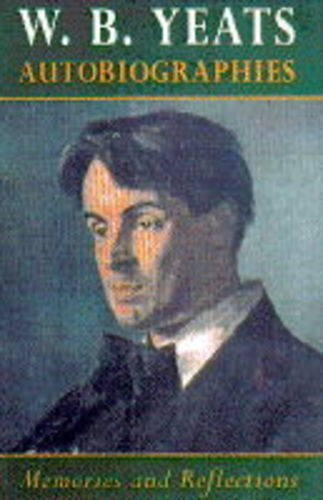
Autobiographies by W. B. Yeats
For a long time I've thought I liked Yeats' prose, whenever I heard it or came across it - and that's just it, I realised I had mostly just come across excerpts. So in the autumn I read this over a few months, should have finished last year but only got to do so on New Year's Day.
It's a book made up of books of memoir:
- Reveries over Childhood and Youth
- The Trembling of the Veil (itself made up of Four Years 1887-1891; Ireland after Parnell; Hodos Chameliontos; The Tragic Generation; The Stirring of the Bones)
- Dramatis Personae
- Estrangment
- The Death of Synge
- The Bounty of Sweden
So in that sense several Autobiographies or parts of the whole, the last published sometime after he received the Nobel Prize in 1923.
He starts off conventionally enough with his reveries - and in his wholly unconventional way. But these are accounts of his childhood and encounters with family and friends. During the Trembling of the Veil he expands his writing of his encounters with others, powerfully. We get memorable accounts of Oscar Wilde for example, one passage in particular I noticed on him that puts his finger on a weakness in Wilde's writing for him and a specific word choice he himself would not have made. It's interesting I remember it now that he ascribed this as Wilde going for an affect from the writing and giving up a sort of exactness. It's interesting given how much I found in this Yeats thought about affect himself - I found it especially in how he spoke later of developing his theatre and drama.
The book as a whole is full of memorable insights. I did find that for a while having started to speak of those he knew -- and there are very many (and very many of whom I knew nothing until he spoke) that I began to wonder if the 'autobiographies' somehow worked as mirrors of himself in these sketches of others, they were so many and himself often did not seem the subject except in reaction to others. Two especially stuck out to me: Lionel Johnson and John O'Leary. He says at one point:
"Two men are always at my side, Lionel Johnson and John Synge" (p312, in The Trembling of the Veil).
His account of Johnson has made me very interested in him, I would like to read him. How their friendship changes is also very touching, in how Yeats had no idea until he saw him fall over, how much he drank (and afterwards could not be with him again - spoke of his sensitivity). Synge he speaks later of meeting and speaks well of, but unlike so many we don't get his closest observations and thoughts - if anything I have a feeling of being overawed by him, or his work. I mention O'Leary as surely this is the O'Leary of September 1913 'Romantic Ireland's dead and gone, it's with O'Leary in the grave' -- and this opened to me as we learn he lodged with O'Leary and we learn much more of the man and his influence on Yeats.
Early on of course he speaks of his father, Jack Yeats and his influence on his own sensibility. We learn of many people. We learn of Yeats' work promoting literature in Ireland and have a very interesting anlysis of the changing politics of Ireland in these times. We also learn - for he says very little about poetry really - of his interests in theatre and drama. In Dramatis Personae he speaks a lot of George Moore who was associated with him for a time - this was where his method of talking of others wore thin for me, he perhaps settled scores a little (artfully) but I felt he'd lost his way a bit. He does speak of Lady Gregory - and very respectfully and later when he receives the Nobel we learn more of how much her backing meant practically financially but also of the imapct of her own work on him and the theatre development. He speaks very very little of Synge I found, certainly in comparison to Moore.
But he turns then in Estrangement and the Death of Synge to publish thoughts from his diary that are not as focused on observations of others (maybe he'd been encouraged after his words on Wilde and Johnson (and others), perhaps even by a publisher?). Both come from his diary of 1909 - what a year that must have been. Estrangement opens:
"To keep these notes natural and useful to me I must keep one note from leading on from another, that I may not surrender myself to literature. Every note must come as a casual thought, then it will be my life. Neither Christ nor Buddha nor Socrates wrote a book, for to do that is to exchange life for a logical process." (p461)
Now we're cooking I thought, and greatly enjoyed this and (the content of) the Death of Synge, which similarly starts off with a corker:
"Why does the struggle to come at truth take away our pity, and the struggle to overcome our passions restore it again?" (p499)
There's one to hurt yet heal.
I've liked Yeats for how he seems to come to his work from the heart first and then make sense of it (I think of him as an opposite of Eliot, who so often seems to think is way to feeling). We do get touches of his spiritualism but it does not overwhelm the books (in the main, there are interesting and uncanny stories to be sure and stories of dreams and dream coincidences). I still like him - I understand now how social a person he was, better, very knowing of that. I read an account a few years ago (wish I could find it) of the famous Peacock Dinner in which he was portrayed as maybe judgemental of some poets seens as lower in social rank, it would have been interesting to read him on it. He does seem quite aware of social status, even as he is often tryign to overcome it and can fall into traps it may seem (at least superficially). When he writes of the Nobel reception and maybe at other times he also seems very much to value those of high social station, of aristocracy as an institution f value. He is also a voice of an Ireland that must have changed greatly - protestant gentry. Yet at the same time an Ireland that felt alienated and downtrodden, that he sought to speak for (especially from a rural point of view and from the roots of Ireland in myth).
I have a sense in his writing here of him always attempting or being on the path to attempting to understand -- sometimes it does not ring as true. It is an edge to his tone I think of as stepping back, for all his sociability, and comparing or sounding his thoughts against some sense of the absolute -- and yes sometimes he's not ready for that, events may change again -- but this is his poetry, and when he can do that and link it to his here and now, well we should all know what that is (whilst not knowing it at all, except in the ways Emily Dickinson cited of poetry). I may now try his A Vision. I don't know if more of his diaries are available but I'd be very interested. The other thing I missed was any account of his time with Ezra Pound that of course may have focused more on poetry.
So maybe it is a good time to attempt to write about this:
Autobiographies by W. B. Yeats
For a long time I've thought I liked Yeats' prose, whenever I heard it or came across it - and that's just it, I realised I had mostly just come across excerpts. So in the autumn I read this over a few months, should have finished last year but only got to do so on New Year's Day.
It's a book made up of books of memoir:
- Reveries over Childhood and Youth
- The Trembling of the Veil (itself made up of Four Years 1887-1891; Ireland after Parnell; Hodos Chameliontos; The Tragic Generation; The Stirring of the Bones)
- Dramatis Personae
- Estrangment
- The Death of Synge
- The Bounty of Sweden
So in that sense several Autobiographies or parts of the whole, the last published sometime after he received the Nobel Prize in 1923.
He starts off conventionally enough with his reveries - and in his wholly unconventional way. But these are accounts of his childhood and encounters with family and friends. During the Trembling of the Veil he expands his writing of his encounters with others, powerfully. We get memorable accounts of Oscar Wilde for example, one passage in particular I noticed on him that puts his finger on a weakness in Wilde's writing for him and a specific word choice he himself would not have made. It's interesting I remember it now that he ascribed this as Wilde going for an affect from the writing and giving up a sort of exactness. It's interesting given how much I found in this Yeats thought about affect himself - I found it especially in how he spoke later of developing his theatre and drama.
The book as a whole is full of memorable insights. I did find that for a while having started to speak of those he knew -- and there are very many (and very many of whom I knew nothing until he spoke) that I began to wonder if the 'autobiographies' somehow worked as mirrors of himself in these sketches of others, they were so many and himself often did not seem the subject except in reaction to others. Two especially stuck out to me: Lionel Johnson and John O'Leary. He says at one point:
"Two men are always at my side, Lionel Johnson and John Synge" (p312, in The Trembling of the Veil).
His account of Johnson has made me very interested in him, I would like to read him. How their friendship changes is also very touching, in how Yeats had no idea until he saw him fall over, how much he drank (and afterwards could not be with him again - spoke of his sensitivity). Synge he speaks later of meeting and speaks well of, but unlike so many we don't get his closest observations and thoughts - if anything I have a feeling of being overawed by him, or his work. I mention O'Leary as surely this is the O'Leary of September 1913 'Romantic Ireland's dead and gone, it's with O'Leary in the grave' -- and this opened to me as we learn he lodged with O'Leary and we learn much more of the man and his influence on Yeats.
Early on of course he speaks of his father, Jack Yeats and his influence on his own sensibility. We learn of many people. We learn of Yeats' work promoting literature in Ireland and have a very interesting anlysis of the changing politics of Ireland in these times. We also learn - for he says very little about poetry really - of his interests in theatre and drama. In Dramatis Personae he speaks a lot of George Moore who was associated with him for a time - this was where his method of talking of others wore thin for me, he perhaps settled scores a little (artfully) but I felt he'd lost his way a bit. He does speak of Lady Gregory - and very respectfully and later when he receives the Nobel we learn more of how much her backing meant practically financially but also of the imapct of her own work on him and the theatre development. He speaks very very little of Synge I found, certainly in comparison to Moore.
But he turns then in Estrangement and the Death of Synge to publish thoughts from his diary that are not as focused on observations of others (maybe he'd been encouraged after his words on Wilde and Johnson (and others), perhaps even by a publisher?). Both come from his diary of 1909 - what a year that must have been. Estrangement opens:
"To keep these notes natural and useful to me I must keep one note from leading on from another, that I may not surrender myself to literature. Every note must come as a casual thought, then it will be my life. Neither Christ nor Buddha nor Socrates wrote a book, for to do that is to exchange life for a logical process." (p461)
Now we're cooking I thought, and greatly enjoyed this and (the content of) the Death of Synge, which similarly starts off with a corker:
"Why does the struggle to come at truth take away our pity, and the struggle to overcome our passions restore it again?" (p499)
There's one to hurt yet heal.
I've liked Yeats for how he seems to come to his work from the heart first and then make sense of it (I think of him as an opposite of Eliot, who so often seems to think is way to feeling). We do get touches of his spiritualism but it does not overwhelm the books (in the main, there are interesting and uncanny stories to be sure and stories of dreams and dream coincidences). I still like him - I understand now how social a person he was, better, very knowing of that. I read an account a few years ago (wish I could find it) of the famous Peacock Dinner in which he was portrayed as maybe judgemental of some poets seens as lower in social rank, it would have been interesting to read him on it. He does seem quite aware of social status, even as he is often tryign to overcome it and can fall into traps it may seem (at least superficially). When he writes of the Nobel reception and maybe at other times he also seems very much to value those of high social station, of aristocracy as an institution f value. He is also a voice of an Ireland that must have changed greatly - protestant gentry. Yet at the same time an Ireland that felt alienated and downtrodden, that he sought to speak for (especially from a rural point of view and from the roots of Ireland in myth).
I have a sense in his writing here of him always attempting or being on the path to attempting to understand -- sometimes it does not ring as true. It is an edge to his tone I think of as stepping back, for all his sociability, and comparing or sounding his thoughts against some sense of the absolute -- and yes sometimes he's not ready for that, events may change again -- but this is his poetry, and when he can do that and link it to his here and now, well we should all know what that is (whilst not knowing it at all, except in the ways Emily Dickinson cited of poetry). I may now try his A Vision. I don't know if more of his diaries are available but I'd be very interested. The other thing I missed was any account of his time with Ezra Pound that of course may have focused more on poetry.
39baswood
Interested to read your notes on Autobiographies I am surprised that his spiritualism was not such a big feature
40tonikat
>39 baswood: yes strange I remember it beign the direct topic sparingly. It is there. Though for example whilst he talks a lot about the literary societies he was part of he does not discuss really the other interesting societies he was involved with. Whilst it may seem to be there a little (and it is there at times and interestingly, his ideas on the moon, interest in dreams and dream coincidences with others) maybe it still imbiues everything, of course.
41Linda92007
>38 tonikat: Very interesting review of Autobiographies! I recently participated in a discussion group class where we read some of Yeats' works and I'd like to explore more. By coincidence, I am actually about half way through reading Prodigal Father: The Life of John Butler Yeats, by William Michael Murphy - very detailed and long, but fascinating. It includes a great deal about WBY, as well as JBY's other children. It would be interesting to compare Murphy's accounts with those in Autobiographies. Murphy does discuss WBY's spiritualism and includes a very strange excerpt that I could hardly decipher.
42AnnieMod
>38 tonikat: I did not know that Yeats had written any prose - although the time he worked in should have told me that he probably had, he was one of the “poet only” poets in my mind.
Interesting review. I’m not sure I’d ever read it but it was interesting reading a review of it.
Interesting review. I’m not sure I’d ever read it but it was interesting reading a review of it.
43tonikat
>41 Linda92007: I love his poetry, or some of it anyway. His father does seem very interesting and certainly had a huge impact, from Autobiographies, upon how he shaped his sensibility, not least to art. Spiritualism is not wholly absent Autobiographies by any means - it may be i came prepared for it in some ways. I woner if that excerpt was from A Vision.
>42 AnnieMod: I knew he was very involved in the Abbey Theatre and also wrote plays, but I didn't know how central it was for him - the final book which recounts his trip to Sweden includes his Nobel acceptance speech, entitled 'The Irish Dramatic Movement'.
>42 AnnieMod: I knew he was very involved in the Abbey Theatre and also wrote plays, but I didn't know how central it was for him - the final book which recounts his trip to Sweden includes his Nobel acceptance speech, entitled 'The Irish Dramatic Movement'.
44SassyLassy
>38 tonikat: Your great review makes me realize I know next to nothing about Yeats. This looks like the book with which to correct that.
45tonikat
>44 SassyLassy: thanks :) It's got some interesting Victorian points of view to it, not least about a number of people. I hope you enjoy it.
46tonikat
February films
~ Dune d. Denis Villeneuve
~ Bob Dylan 1978-1989: Both ends of the rainbow
~ Old Henry w&d. Potsy Ponciroli
February articles
~ https://www.newstatesman.com/long-reads/2022/02/the-end-of-mental-illness
https://www.theguardian.com/lifeandstyle/2022/feb/11/living-in-a-womans-body-my-...
https://www.theguardian.com/uk-news/2022/feb/17/deadline-to-register-englands-fo...
https://www.youtube.com/watch?v=vPg976h1Wv8 Wordsworth lecture - fascinating about Dorothy Wordsworth
https://thehumandivine.org/2016/05/22/left-brain-angels-and-right-brain-gods-by-...
https://www.the-tls.co.uk/articles/tom-stoppard-life-hermione-lee-review/
https://kiwihellenist.blogspot.com/2022/03/snake-island.html
~ Dune d. Denis Villeneuve
~ Bob Dylan 1978-1989: Both ends of the rainbow
~ Old Henry w&d. Potsy Ponciroli
February articles
~ https://www.newstatesman.com/long-reads/2022/02/the-end-of-mental-illness
https://www.theguardian.com/lifeandstyle/2022/feb/11/living-in-a-womans-body-my-...
https://www.theguardian.com/uk-news/2022/feb/17/deadline-to-register-englands-fo...
https://www.youtube.com/watch?v=vPg976h1Wv8 Wordsworth lecture - fascinating about Dorothy Wordsworth
https://thehumandivine.org/2016/05/22/left-brain-angels-and-right-brain-gods-by-...
https://www.the-tls.co.uk/articles/tom-stoppard-life-hermione-lee-review/
https://kiwihellenist.blogspot.com/2022/03/snake-island.html
47dchaikin
>38 tonikat: enjoyed this, and the comments afterward.
48tonikat
>47 dchaikin: thanks Dan :)
I've been stalled on Copperfield again for a few days, but have also been reading and introductory book on Jaques Derrida and a little else. I couldn't get hold of the Derrida book I'd like to read.
I've been stalled on Copperfield again for a few days, but have also been reading and introductory book on Jaques Derrida and a little else. I couldn't get hold of the Derrida book I'd like to read.
49tonikat
Since then stalled a bit on the Derrida 101 too. Made slight progress with David, I think I'm on chapter 40 or 41 of the 60, the one he's visiting Agnes in. Finding Dora a cipher, what does it say of Dickens' view of women? a bit concerned, and Miss Mills . . . but then i've got a few things wrong myself over the years.
I did read the first novella in the river swimmer, my first Jim Harrison, the first novel is called The Land of Unlikeness -- I liked it very much, though some male gaze in it, also an artistic rebirth. I'd have read more of this artist and so have found it hard to switch to the different character in the second novella.
i read the poems from Under Loughrigg in a collected poems of Fleur Adcock, prompted by hearing David Whyte quote from Weathering.
I also finally started The Master and his Emissary as i read some of 'the human divine' blog and it reminded me how much I gain from thinking about this (the brain's hemispheres in McGilchrist's argument which I have meant to read for years) and also of Blake's ideas. Not far in.
I've also been reading a bit of Czeslaw Milosz having splashed out on a real book in a real bookshop when i was out for a walk on his selected and new poems -- and also from a volume I have of Polish writers on writing.
But i have a feeling of drifting a bit. Oh thought I'd try reading The Wrecking Light by Robin Robertson, one poem per day, not far in.
I did read the first novella in the river swimmer, my first Jim Harrison, the first novel is called The Land of Unlikeness -- I liked it very much, though some male gaze in it, also an artistic rebirth. I'd have read more of this artist and so have found it hard to switch to the different character in the second novella.
i read the poems from Under Loughrigg in a collected poems of Fleur Adcock, prompted by hearing David Whyte quote from Weathering.
I also finally started The Master and his Emissary as i read some of 'the human divine' blog and it reminded me how much I gain from thinking about this (the brain's hemispheres in McGilchrist's argument which I have meant to read for years) and also of Blake's ideas. Not far in.
I've also been reading a bit of Czeslaw Milosz having splashed out on a real book in a real bookshop when i was out for a walk on his selected and new poems -- and also from a volume I have of Polish writers on writing.
But i have a feeling of drifting a bit. Oh thought I'd try reading The Wrecking Light by Robin Robertson, one poem per day, not far in.
50labfs39
>49 tonikat: I enjoy reading about neuroscience, and I'm tempted by this one, although being 12 years old, it might be a bit outdated. I'll look forward to your thoughts when you are finished with it.
I like Milosz too. Have you read The Issa Valley? Beautiful semi-autobiographical novel about childhood, nature, and a region of the world that has been through much upheaval.
I like Milosz too. Have you read The Issa Valley? Beautiful semi-autobiographical novel about childhood, nature, and a region of the world that has been through much upheaval.
51tonikat
>50 labfs39: I haven't read much Milosz at all. I read some of The Captive Mind once -- and have said i will read it this year in memory of rebeccanyc.
McGilchrist's book is reckoned very highly - I am not sure how out of date it will have got. He does something probably most neuroscientists don't do - he looks for examples of how his interpretation of the relationship between the hemispheres is playe out in human cultures. He gave an address also to the Blake Society, I think there is a link to it on my thread last year, which is very illuminating, if you wanted a taster.
I am doing very badly on my gender balance of authors though :(
McGilchrist's book is reckoned very highly - I am not sure how out of date it will have got. He does something probably most neuroscientists don't do - he looks for examples of how his interpretation of the relationship between the hemispheres is playe out in human cultures. He gave an address also to the Blake Society, I think there is a link to it on my thread last year, which is very illuminating, if you wanted a taster.
I am doing very badly on my gender balance of authors though :(
52tonikat
March films
~ Deep Water ~ Jack Reacher s1. ~ Frost/Nixon
March articles
~ https://www.bbc.co.uk/ideas/videos/i-went-from-prisoner-to-phd/p08mpxtt "there is treasure within each and every one of us"
~ https://www.theguardian.com/fashion/2022/mar/06/mens-clothes-have-always-been-a-...
https://www.the-tls.co.uk/articles/born-to-be-nomads/
https://tribunemag.co.uk/2022/03/w-h-auden-poetry-modernism-humanism-world-war-i...
https://www.theguardian.com/commentisfree/2022/mar/24/countries-covid-trust-dama... - Amazing and IMPORTANT
https://poeticoutlaws.substack.com/p/when-henry-miller-met-george-orwell
~ Deep Water ~ Jack Reacher s1. ~ Frost/Nixon
March articles
~ https://www.bbc.co.uk/ideas/videos/i-went-from-prisoner-to-phd/p08mpxtt "there is treasure within each and every one of us"
~ https://www.theguardian.com/fashion/2022/mar/06/mens-clothes-have-always-been-a-...
https://www.the-tls.co.uk/articles/born-to-be-nomads/
https://tribunemag.co.uk/2022/03/w-h-auden-poetry-modernism-humanism-world-war-i...
https://www.theguardian.com/commentisfree/2022/mar/24/countries-covid-trust-dama... - Amazing and IMPORTANT
https://poeticoutlaws.substack.com/p/when-henry-miller-met-george-orwell
53SassyLassy
>49 tonikat: I wondered about Miss Mills too. Were there feelings there that Dickens couldn't address?
54tonikat
>53 SassyLassy: I'm quite intrigued by her as a sort of literary wannabe. I wondered what the Brontes would have thought of her, especially before success. Or what Elizabeth Barrett Browning might have thought. In Dickens' defence David is of course young and naive - I think of his fast walking and commitment to success, the picture of her is a mirror of that kind of youthful unknowing and seriousness based on what it has kind of picked up -- but as it is so much briefer and of Dora too I wonder if it makes it stand out somehow, look a step further in satire. It feels a crueller portrait than that of David. It also makes me wonder about whole generations of nineteenth century upper middle class young women in love with the romantics and what followed, and wonder what we might have lost. Do you know the film The Ladykillers? I start to wonder about that old lady as a young girl, maybe with those interests. And I often think it is exactly those interests that some political interests want to divert us from. Then there is the desperate living vicariously.
but then Dora is even more a simple blank, except for Papa, dear old Jip and the guitar. That last which seemed to promise much more.
but then Dora is even more a simple blank, except for Papa, dear old Jip and the guitar. That last which seemed to promise much more.
55labfs39
>51 tonikat: I'll try to keep an eye out for when you read The Captive Mind. I might join you, as it's been on my TBR for decades.
56tonikat
>55 labfs39: the more the merrier - we need to smash mind captivity
57thorold
>49 tonikat: There's some good stuff in those Adcock poems, nice to be reminded of them! "I am the dotted lines on the map: / Footpaths exist only when they are walked on." And that one about the man in hospital who's in the Lakes in his imagination.
I think the one that struck me when I first got that collection was "Train from the Hook of Holland" — local connection, of course.
>53 SassyLassy: >54 tonikat: There's definitely something going on with Miss Mills. She's mentioned far too often and too conspicuously for the very minor role she plays and the few lines she gets on her own account. Dickens even feels the need to wrap her story up at the end of the book. Maybe he'd had plans to put her into another sub-plot?
I think the one that struck me when I first got that collection was "Train from the Hook of Holland" — local connection, of course.
>53 SassyLassy: >54 tonikat: There's definitely something going on with Miss Mills. She's mentioned far too often and too conspicuously for the very minor role she plays and the few lines she gets on her own account. Dickens even feels the need to wrap her story up at the end of the book. Maybe he'd had plans to put her into another sub-plot?
58tonikat
>57 thorold: yes I totally agree about those two poems and more. "Train from the Hook of Holland" doesn't make it into poems 1960-2000 -- I got it from the uni library, as they didn't have Below Loughrigg, on the shelf at least. I browsed it on the spur of the moment having heard Whyte mention it. I've not read Adcock before, but will now, starting with some whole collection, maybe when I take this back.
Of course Dickens must have come across quite a lot of fans, which may have informed his view of Miss Mills. She is bursting with energy.
Of course Dickens must have come across quite a lot of fans, which may have informed his view of Miss Mills. She is bursting with energy.
59tonikat
This is a weird thread by my standards - 58 replies by April must be fast going for me - but only one actual review written so far. And a whole month without any completed books. Strange, but ok, let's go with strange, new maybe.
No more progress on David C. I was wondering if this section was a bit mechanical compared to others, and want to check if it is all the same installment. It occurred to me it might be sort of changign gears to allow him to take the last third where he sees it needs to go.
Maybe I'll get back to posting reviews, one day.
April films
~ The Ipcress File (tv) ~ Made in Italy ~ Miss Sloane ~ A Good Year ~ The Way, Way Back
April articles
https://thehumandivine.org/2016/06/26/william-blake-as-biological-visionary-by-r...
https://monk.gallery/interviews/gillian-allnutt-under-northern-skies-divinations...
https://www.the-tls.co.uk/articles/speak-silence-w-g-sebald-carole-angier-book-r...
https://www.theguardian.com/music/2022/apr/10/john-lennon-morris-levy-beatle-v-m...
https://tribunemag.co.uk/2021/04/kurt-vonneguts-socialism-from-outer-space
No more progress on David C. I was wondering if this section was a bit mechanical compared to others, and want to check if it is all the same installment. It occurred to me it might be sort of changign gears to allow him to take the last third where he sees it needs to go.
Maybe I'll get back to posting reviews, one day.
April films
~ The Ipcress File (tv) ~ Made in Italy ~ Miss Sloane ~ A Good Year ~ The Way, Way Back
April articles
https://thehumandivine.org/2016/06/26/william-blake-as-biological-visionary-by-r...
https://monk.gallery/interviews/gillian-allnutt-under-northern-skies-divinations...
https://www.the-tls.co.uk/articles/speak-silence-w-g-sebald-carole-angier-book-r...
https://www.theguardian.com/music/2022/apr/10/john-lennon-morris-levy-beatle-v-m...
https://tribunemag.co.uk/2021/04/kurt-vonneguts-socialism-from-outer-space
60tonikat
and hark at me, 'reviews' -- the thing i spent quite a lot of time saying wheni set out all that time ago that i did not want to post. Slip of the tongue -- but watch it, me!
62tonikat
>61 labfs39: thx :)

the War of Art
I bought this in early January when it was on offer for kindle. Partly on offer I think as there are sequels I think to gobble up more of my pennies. They haven't, as yet. Not because there was anything wrong with it.
I also bought it as pre librarything I'd read Pressfield's The Legend of Bagger Vance which I love and also love the film (will it be affected by last week's slap? maybe it will humanise and make my take on it realistic, it's hard to play a god I guess, or not so much hard, but an image that cannot last). Pressfield in my memory is also interested in ancient history, so I thought I'd like his take.
Anyway, I read it at a sitting and don't really remember it too well now. It sort of enthuses on his own experience of releasing his process and encourages us to allow that ourselves -- it kind of enthused me. But I also kind of already know this, though I am not great on acting on it in some ways, it can feel some of my interests are beyond my grasp.
Quite a long time ago now I went to a reading by the poet Kathleen Jamie, whose work I like, including her prose. It was probably since I started my threads. There she spoke of how in writing poetry she wasn't a sit at the desk and write poet -- but instead a scribble things down on whatever as she gets them poet, and that that is fine. And it really helped me get away from feeling at all that I should sit at my desk and write poems much, it allowed a bit more life in my view and so what if some of the stuff I think about doesn't get scribbled.
On the other hand, aside from journal writing this may not have been helping a lot of other writing. Someone the other day spoke to me of sitting writing for two and half hours and I was horrified at the idea - in fact I realise it might scare me a bit. So where did that old 3 hour exam taker of university go? At the same time I am writing other thigns a bit more and have to realise that when in that process I may sit and write for longer I suppose, just not regularly.
One of Pressfield's messages was about how the regularity helps, if I recall. And it may be that is of course hwo the out of grasp may become doable, in its doen imperfection, in small chunks. Lots of other things tell me that, or have nagged at that for a long time. We shall see.
I'm not going to reread Pressfield just now -- but do hope to experiment a bit in rereleasing my writing process on some other things and letting it run a bit, even just to see if it still can or would. Though also thoughtfully at times, and unthoughtfully, surreally and not, wherever it wants to go, free.
btw the subtitle of this book is usually the sort of thing that would turn me off. I don't have a good record at completing books on writers and artists process and how to free it, nor like lots of the ways it is pictured by them, which I sometimes wonder if in freeing us somehow tie us at the same time. but maybe that is just me, who is good at tieing themselves.
And come to think of it I can also make the idea of the art being product of a war (no matter how apparently correct this is) something I'd be hoping to transcend, even if it wholly accurately depicted a warlike struggle.

the War of Art
I bought this in early January when it was on offer for kindle. Partly on offer I think as there are sequels I think to gobble up more of my pennies. They haven't, as yet. Not because there was anything wrong with it.
I also bought it as pre librarything I'd read Pressfield's The Legend of Bagger Vance which I love and also love the film (will it be affected by last week's slap? maybe it will humanise and make my take on it realistic, it's hard to play a god I guess, or not so much hard, but an image that cannot last). Pressfield in my memory is also interested in ancient history, so I thought I'd like his take.
Anyway, I read it at a sitting and don't really remember it too well now. It sort of enthuses on his own experience of releasing his process and encourages us to allow that ourselves -- it kind of enthused me. But I also kind of already know this, though I am not great on acting on it in some ways, it can feel some of my interests are beyond my grasp.
Quite a long time ago now I went to a reading by the poet Kathleen Jamie, whose work I like, including her prose. It was probably since I started my threads. There she spoke of how in writing poetry she wasn't a sit at the desk and write poet -- but instead a scribble things down on whatever as she gets them poet, and that that is fine. And it really helped me get away from feeling at all that I should sit at my desk and write poems much, it allowed a bit more life in my view and so what if some of the stuff I think about doesn't get scribbled.
On the other hand, aside from journal writing this may not have been helping a lot of other writing. Someone the other day spoke to me of sitting writing for two and half hours and I was horrified at the idea - in fact I realise it might scare me a bit. So where did that old 3 hour exam taker of university go? At the same time I am writing other thigns a bit more and have to realise that when in that process I may sit and write for longer I suppose, just not regularly.
One of Pressfield's messages was about how the regularity helps, if I recall. And it may be that is of course hwo the out of grasp may become doable, in its doen imperfection, in small chunks. Lots of other things tell me that, or have nagged at that for a long time. We shall see.
I'm not going to reread Pressfield just now -- but do hope to experiment a bit in rereleasing my writing process on some other things and letting it run a bit, even just to see if it still can or would. Though also thoughtfully at times, and unthoughtfully, surreally and not, wherever it wants to go, free.
btw the subtitle of this book is usually the sort of thing that would turn me off. I don't have a good record at completing books on writers and artists process and how to free it, nor like lots of the ways it is pictured by them, which I sometimes wonder if in freeing us somehow tie us at the same time. but maybe that is just me, who is good at tieing themselves.
And come to think of it I can also make the idea of the art being product of a war (no matter how apparently correct this is) something I'd be hoping to transcend, even if it wholly accurately depicted a warlike struggle.
63SassyLassy
>62 tonikat: Good to see you still pondering, even without reviews. Having said that, about your latest review:
That subtitle would completely turn me off too.
I sometimes wonder if in freeing us somehow tie us at the same time. but maybe that is just me, who is good at tieing themselves.
If we manage to free ourselves, who do we become? Are we still ourselves?
That subtitle would completely turn me off too.
I sometimes wonder if in freeing us somehow tie us at the same time. but maybe that is just me, who is good at tieing themselves.
If we manage to free ourselves, who do we become? Are we still ourselves?
64tonikat
>63 SassyLassy: and thank you. My concerns at the word review is that often what I write is not thorough in setting out the work, not comprehensive at all, and rests mainly in my considering reactions that have stood out for me. Sometimes I work harder at it to give it more of that fullness, but thanks. (edit - I like the word appreciation more -- and am quite careful of all idea of criticism (I hope - writers unite).
In this case i remembered some random bits but there was more to it and a firm structure he had that I have not really reflected.
I think there are different parts to the freeing thing -- first we may free ourselves to be able to report a block, or maybe a whole pile of things that we have seen or experienced somehow (even if alluded to indirectly, or only in terms of impact). But then also, for me, we might free ourselves to be like aeolian harps, another voice of the universe. My best experienmces of writing poetry is sort of like hearing it, being with it very closely and bringing something back from that, somewhat in tune with it. Maybe some writing does a both. (edit - and maybe being released into it will bring more from experience.)
The freeing us is mainly seen as from the negative to me, so we can allow the possibility.
In this case i remembered some random bits but there was more to it and a firm structure he had that I have not really reflected.
I think there are different parts to the freeing thing -- first we may free ourselves to be able to report a block, or maybe a whole pile of things that we have seen or experienced somehow (even if alluded to indirectly, or only in terms of impact). But then also, for me, we might free ourselves to be like aeolian harps, another voice of the universe. My best experienmces of writing poetry is sort of like hearing it, being with it very closely and bringing something back from that, somewhat in tune with it. Maybe some writing does a both. (edit - and maybe being released into it will bring more from experience.)
The freeing us is mainly seen as from the negative to me, so we can allow the possibility.
65tonikat

Introducing Swedenborg: Correspondences by Gary Lachman
I was in a second hand book store and it had Peter Ackroyd's contribution to this series on display, and also this. But I stayed my acquisitive hand and, needs must, realised I could get this first cheaper on Amazon for kindle (I am more trapped than I'd like to be).
This is quite short, I read it quickly. I came to Swedenborg via Blake and realise that I was aware of him as a schoolchild. Ideas in this book are nicely introduced and I realise many of them I have picked up already, but still a nice introduction that teases me to read more. I also think hard copies are infinitely better for idly flicking back through having completed, and that perhaps that is an important part of me being with a book, that it can be a sort of relaxed learning.
As an aside I'm thinking quite a bit how maybe in some way I sort of expect myself to be aware and assimilate reading quite easily - maybe I am getting older - but at the same time thinking how unreasonable this is for words that took up so much of the writer's time, and made up their life. Think of Dickens and writing David Copperfield in installments over those eigtheen months or so. Something about my hunger (greed?) and some false wish to gobble it all up -- I am wondering if some of this came from having to read (usually just bits) lots of stuff at university, attend a seminar and then maybe move on, at best write an essay. And some of it must just happen to be me and paths i have taken and not taken and retaken etc.. Also a sort of an idea of having imbibed it all of how false it is to close the book, they are ongoing commitments (in the best cases). I think the impact of our culture that floods us with stuff is also related to this, and I guess the publishing industry, and maybe reading lots of people who are well read in stuff expounding on it - it suggests somehow its is the norm to read it all, or try. I also read an article about Jim Harrison in which he was quoted as suggesting reading a poetry collection one poem per day, and then thinking about it, and I like that. Though I can also see lots of good poets not resting at that. I also read some comments of his somewhere about our pace of life, the mind going at the speed of television I think, and yes I am thinking (again) on that too, it seems connected. Maybe it is bringing it all back home somehow.
Maybe I can do that best by writing in greater detail than i just have about this book, to be preent with my reading. And maybe that is best done for the best books. And maybe it will mean writing more than once on some. I did start last year reading through my threads, but I only got one year in I think. Revising, so important. I can be bad at it, I can also be good at it.
66SassyLassy
>64 tonikat: Lovely description of writing poetry. I know that feeling, but from the ocean shores, or the woods and hills. I have never been able to put it into words.
>63 SassyLassy: Meant to add that I would have loved to be at that Kathleen Jamie reading. She can certainly put the natural world into words!
>63 SassyLassy: Meant to add that I would have loved to be at that Kathleen Jamie reading. She can certainly put the natural world into words!
67tonikat
>66 SassyLassy: thanks. It's not jusyt about those sorts of moments -- but i hear you. Some I imagine may not like a lot of mine, but then some poets tend to like what fits their view of what poetry is (a recent contact on my mind).
I was very happy to see Kathleen Jamie, I'd only read her poetry then. She was at a local uni and I got a ticket as alumni, not many people there. It was much earlier in my poetry journey, enjoyed it immensely and went with the scribble things down as/when/if they occur to me, which means recognising that to start with.
I was very happy to see Kathleen Jamie, I'd only read her poetry then. She was at a local uni and I got a ticket as alumni, not many people there. It was much earlier in my poetry journey, enjoyed it immensely and went with the scribble things down as/when/if they occur to me, which means recognising that to start with.
68tonikat
May films
~ Immortal Beloved ~ Picard s2. ~ Erin Brockovich ~ The Contract
May articles
https://www.theguardian.com/lifeandstyle/2022/may/08/readers-reply-what-is-the-s...
June articles
https://www.spectator.co.uk/article/peter-levi-poet-priest-and-life-enhancer
a film on Henry Miller Ive seen before but always forget the name of, posted to remember Henry Miller asleep and awake https://www.youtube.com/watch?v=T4cSoR6fOTk
https://www.newyorker.com/magazine/2022/06/27/the-invention-of-the-trans-novel-i...
https://www.theguardian.com/science/2022/jun/25/sleep-scientist-russell-foster-i...
~ Immortal Beloved ~ Picard s2. ~ Erin Brockovich ~ The Contract
May articles
https://www.theguardian.com/lifeandstyle/2022/may/08/readers-reply-what-is-the-s...
June articles
https://www.spectator.co.uk/article/peter-levi-poet-priest-and-life-enhancer
a film on Henry Miller Ive seen before but always forget the name of, posted to remember Henry Miller asleep and awake https://www.youtube.com/watch?v=T4cSoR6fOTk
https://www.newyorker.com/magazine/2022/06/27/the-invention-of-the-trans-novel-i...
https://www.theguardian.com/science/2022/jun/25/sleep-scientist-russell-foster-i...
69tonikat

The Doors of Perception and Heaven and Hell by Aldous Huxley Kindle ed.
I'm not sure quite what made me look at this. It wasn't consciously any follow up to reading of Swedenborg and maybe altered states etc. I knew it was a quote from Blake, who always interests me. Something made it go through my mind and I suddenly thought of how much it has been referred to in pop culture as an inspiration, that I have undoubtedly heard bits of it, yet I hadn't read it. I think i saw a kindle copy quite cheap and so went for it. And of course it also has the advantage of not being very long, though bundled with a secodn follow up essay, Heaven and Hell.
His account of hs first experiment with mescalin is very interesting - how it changed his focus in a way. Not that he had visions really, more that everythign was more itself and lots of his usual cares dropped away. I find him a very rational writer and I guess this may be his version, it makes sense. I am interested in visions (and he makes an interesting distinction in the second essay i think between visionaries and mystics), and also in mysticism. I'm interested in approaching those states in our selves. Coincidentally I read Paul Mccartney recently talking of experimenting with LSD as compared to the marjuana they'd first tried and how he found one thing about it was you couldn't just switch it off, whilst with marijuan he could fall asleep and wake up unaffected.
Its a while since I read this, what I really remember now are his accounts of the things he was drawn to -- how suddenly of vital importance in his universe the folds of his trousers were to him, and uterly connected to the whole flow of life for example. Although he may feel he didn't have visions, somehow in his descriptions he captures that heightened state somewhat, and it did remind me that i have heard parts of this over the years. And with is intyerest in art it was an interesting passage when he talked of artists who had been so good at capturing the flow of gowns and clothes. Throughout in fact he makes interesting comparisons with art and also poetry at times. I enjoyed the secodn book, but am writing this without looking again right now and don't remember it as clearly at the moment, how it is structured. I'll add a quote from it sometime when I go back to it. But it did somehow inspire, remind me of life and the flow of energy, and I can see how it maybe inspired others, and I suppose understand that better now.
edit - I've read his novel Island but nothing else. My image of him is usually quite austere and rationalistic. Island is a warm book that I'm fond of, and thank him for positing a utopia. I remembered as I read him that i was always interested in his essay Music at Night and i took a copy from the library when i finished this. i was enjoying it including the title piece, i think i got about half way through. Then two essays i found a bit to rationalistic on matters of faith and spiriutuality, and in fact I found them hard work. teh library asked for it back as my card ran out and as I've not renewed that card that is where it has left me, so April was not a month of zero reading, there was lots else too. But for the second time this year a month seems ot have gone by without a completion.
70tonikat

Beowulf: a new translation by Seamus Heaney
I heard the poet David Whyte speaking of Beowulf, which I'd never read myself. he spurred me on - though I made the mistake of buying a kindle copy when i already had this on the shelves. In passing I'd not recommend the kindle version, the formatting of the commenary in the margin was not good on the kindle I read it on.
I've known this as an English poem, old English of course, for a long time, but could never get it in my head where on earth Beowulf was from from what I knew. Now of course it makes perfect sense, the poem brought with migrants escaping the internecine wars (somewhat) in the Gottland area of southern Sweden.
I read it at a sitting I think. it contains a world and a world view and a psychology of course. Facing the monster Grendel -- to then have to face his mother. Beautiful, horrifying, wise -- and then wise as to what this may mean in the long term when your tenure of peace ends and having taken the lead suddenly other leaders have not emerged. I loved it, why I'd not read it i don't know, then I do, but now I have, good.
71tonikat
I watched the film Erin Brockovich again last week. I thought of her as a heroine and how much that may speak to us now. She approaches things largely unqualified and has to seek to challenge established structures and vested interests. it occurred to me that in many ways that is the position of us all largely as consumers in our nuclear families (in the west). We may have a specialism of a profession - which may help in many such situations. But away from that we face these forces and have to use characteristics like she displays to get anywhere. Hopefully we don;t face what her plantiffs did, or anythign like it. But in other ways it made me wonder this, or is that just me?
I've not got so much further with David Copperfield - it's a book Id' be happy to go and on. I also started a fantastic, big, non fiction book, The Master and his Emissary about the brain's hemsipheres and as i begin part two just over a third of the way through about their relationship to western culture - it is fantastic, but will say no mroe here so i don't lose momentum.
I've not got so much further with David Copperfield - it's a book Id' be happy to go and on. I also started a fantastic, big, non fiction book, The Master and his Emissary about the brain's hemsipheres and as i begin part two just over a third of the way through about their relationship to western culture - it is fantastic, but will say no mroe here so i don't lose momentum.
72labfs39
>69 tonikat: Interesting review of Huxley. I had no idea. My sole exposure to him was reading Brave New World many, many years ago.
>70 tonikat: I have only read excerpts of Beowulf. I really should sit down with it at some point.
>71 tonikat: I'm curious about The Master and His Emissary, as I find neuroscience fascinating. I wonder how dated it is though? The field is changing so rapidly.
>70 tonikat: I have only read excerpts of Beowulf. I really should sit down with it at some point.
>71 tonikat: I'm curious about The Master and His Emissary, as I find neuroscience fascinating. I wonder how dated it is though? The field is changing so rapidly.
73tonikat
>72 labfs39: -- I'm not sure dated comes into his argument very much. But this is a book about more than just the neuroscience, he traces the cultural history of his hypothesis. I don't think there will be another neuroscientist or psychiatrist writing so well about the link to culture - Nietzsche, Heidegger, Hegel, Wittgenstein, Merleau-Ponty and many more all figure so far. I' just starting the part about the cultural development, but it is a superb book so far --- very healthy reading for me. Oh and poets too - I think on last years thread I put alink somewhere of him addressing the Blake Society, which may be a good intro. (have we talked about this before).
74labfs39
>73 tonikat: Interesting. I'll have to read more about it. Thanks!
75SassyLassy
>70 tonikat: Like you, I had never read Beowulf until a couple of years ago. I had spent years avoiding it, thinking it would be difficult, time consuming, and just about any other negative that came to mind. Then my book club chose the Seamus Heaney translation for its yearly classic selection. I contemplated skipping that month, but then found a beautiful illustrated copy at the library. There were photographs of Viking artefacts, illustrations from literature and so on, and each one went with the text on the opposite page.
It was a wonderful read and a good discussion, and I too loved it.
It was a wonderful read and a good discussion, and I too loved it.
76tonikat
>75 SassyLassy: I didn't know about the illustrated edition, I'll look out for it now to have a look through in a library or bookshop.
77tonikat
I think one of the most interesting things about Huxley in The Doors of Perception given his awareness of art, was how art did not figure really in how the world came alive to him, whilst every other thing in existence did, he comments on this. The ways his trousers folded though, wow . . . and recognising how some artists had sought to captrue that, had keyed into what is through that it seemed . . . but the opening up of the world was all things including what we might think mundane.
78wandering_star
>75 SassyLassy: My mum gave me that edition - it is lovely!
80tonikat
>75 SassyLassy: >78 wandering_star: your comment made me think of the juxtaposition between saying things like 'it is lovely' about these old artifacts and ways and it made me think of the british tv series detectorists, which is set in east anglia though maybe a bit south I think of where the people from Gottland went -- do you know it? Quite exciting they have announced a new feature length episode for later this year.
81SassyLassy
>80 tonikat: That's not a programme I know of, so you sent me off to look for it. It does sound like fun, but is on a service that I don't have. It looks like I may be able to access it online though. Thanks for mentioning it.
82tonikat
>81 SassyLassy: hope you can, it's well worth it.
83dianeham
>80 tonikat: Isn’t that 2 guys with metal detectors?
84tonikat
>83 dianeham:, yes, in east anglia amongst boat burials etc is what made me think of it, and that juxtaposition with their lives.
85tonikat
I was thinking, until I joined Librarything I had no conception of reading a certain number of books per year at all. I don't think I'd ever thought like that. I suppose I did have a conception of people more active in the arts then than me reading a lot, and for example of wondering how the heck the Booker judges read all those books to judge. A teacher had once suggested a certain number of pages to read per week, but that didn't translate to books as we were reading chapters, articles and excerpts mainly. I'd also not much talked to anyone else about my reading, it was a private thing and I didn't know many people interested in what I was interested in. It was totally LT and joining the 50 book challenge that gave me that as a figure and its loomed ever since having never achieved it. And it seemed so reasonable, a book a week would do it, surely well within my grasp. I'm not blaming it or anything, in a way there is nothing wrong with it. What may be wrong may be me having placed it there in my landscape to loom. But I'm thinking how nice it is to idle away and through books meandering and following my heart, listening to them (listening is hard), and listening to it (also known to be hard). And listening is also not hard, but wonderful and free.
86rocketjk
>85 tonikat: "me having placed it there in my landscape to loom"
Something about this phrase really struck me in a really nice way. First, the rhythm of the words. But also, I think, the possible (and I'm guessing unintended) double-meaning of the word "loom," there. There's "looming," as in threatening to happen soon. But also there's the image of the weaving tool, and the creative implications that offers. Anyway, happy Tuesday.
Something about this phrase really struck me in a really nice way. First, the rhythm of the words. But also, I think, the possible (and I'm guessing unintended) double-meaning of the word "loom," there. There's "looming," as in threatening to happen soon. But also there's the image of the weaving tool, and the creative implications that offers. Anyway, happy Tuesday.
87tonikat
That is a cool way to see it, I'm grateful -- and let me give back to you also another cool thing, happy Tuesday to you too.
88tonikat
There is letting a book settle with you before writing it up and there is letting go of them altogether and not bothering, but hey, it's a process.
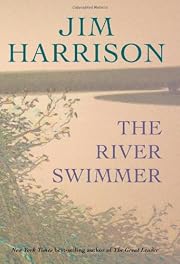
The River Swimmer by Jim Harrison
I often enjoy memes of Jim Harrison quotes. I also enjoyed the film of A River Runs Through It. But I'd not really read him. Then I bought this a few years ago, maybe as it was cheap when I did look for a book by him. I am definitely interested in his poetry and thoughts on it.
This book is made up of two novellas, the eponymous second story and the first The Land of Unlikeness.
I really loved this first story. A painter well into middle age who gave up painting as he approached middle age to become an academic and art expert, maybe someone dissatisfied with his own creativity. He's then had success and adventures as that art expert, but now is facing challenge, especially from some feminist critics. Harrison takes a very direct approach to sex really in these stories, seems to deliberately put it there - and very much a male point of view and in fact in this story it figures.
Anyway, this character ends up home on the farm to look after his elderly mother whilst is sister gets her first trip to Europe. Cue some nostalgia, not over done, and also thoughts of a long lost first love (subject of his male gaze as she lives, by a winding path, more or less next door).
But what I loved about this story was the discovery by him a of a kind of artistic rebirth - reencountering an initial trigger for him, a door framed by multicoloured pieces of glass -- and how suddenly he can see again each thing as utterly unique -- and is transported to draw and paint again (and gets ot paint that first love though he is stuck on painting her in a pose that has lingered from an erotic encounter they had so many years ago, very blokey). But the artistic rebirth and the energy of it is very effectively written to kind of share such an experience with the reader. Of course I am a middle aged creative, so I would love that.
It then took me a little while to adjust to read the next story, of a young school leaver who loves to swim in rivers, living on a farm on an island of the river. In the end I did adjust -- and was very taken with it as well. I especially appreciated how well Harrison seemed to write off the immediacy of feeling young with the world at your feet, his swimming is outstanding (the young man's) and the world is -- and in fact more than just the world, but the magical world maybe. He has adventures, and then life happens, which may be just why so much was available for a while. I can relate to that. Though as I read this one at times, there was so much to it, I wondered if some parts were notes that could have been expanded on to be a novel. Still I loved it, though it crept up on me more than that first one which so delighted me.
I have another book by him lined up.
The River Swimmer by Jim Harrison
I often enjoy memes of Jim Harrison quotes. I also enjoyed the film of A River Runs Through It. But I'd not really read him. Then I bought this a few years ago, maybe as it was cheap when I did look for a book by him. I am definitely interested in his poetry and thoughts on it.
This book is made up of two novellas, the eponymous second story and the first The Land of Unlikeness.
I really loved this first story. A painter well into middle age who gave up painting as he approached middle age to become an academic and art expert, maybe someone dissatisfied with his own creativity. He's then had success and adventures as that art expert, but now is facing challenge, especially from some feminist critics. Harrison takes a very direct approach to sex really in these stories, seems to deliberately put it there - and very much a male point of view and in fact in this story it figures.
Anyway, this character ends up home on the farm to look after his elderly mother whilst is sister gets her first trip to Europe. Cue some nostalgia, not over done, and also thoughts of a long lost first love (subject of his male gaze as she lives, by a winding path, more or less next door).
But what I loved about this story was the discovery by him a of a kind of artistic rebirth - reencountering an initial trigger for him, a door framed by multicoloured pieces of glass -- and how suddenly he can see again each thing as utterly unique -- and is transported to draw and paint again (and gets ot paint that first love though he is stuck on painting her in a pose that has lingered from an erotic encounter they had so many years ago, very blokey). But the artistic rebirth and the energy of it is very effectively written to kind of share such an experience with the reader. Of course I am a middle aged creative, so I would love that.
It then took me a little while to adjust to read the next story, of a young school leaver who loves to swim in rivers, living on a farm on an island of the river. In the end I did adjust -- and was very taken with it as well. I especially appreciated how well Harrison seemed to write off the immediacy of feeling young with the world at your feet, his swimming is outstanding (the young man's) and the world is -- and in fact more than just the world, but the magical world maybe. He has adventures, and then life happens, which may be just why so much was available for a while. I can relate to that. Though as I read this one at times, there was so much to it, I wondered if some parts were notes that could have been expanded on to be a novel. Still I loved it, though it crept up on me more than that first one which so delighted me.
I have another book by him lined up.
89tonikat
To catch up a bit, without doing it at all -- I need to reread Felicity before posting comments on it (its short won't take long) -- but a holding card, to say my reading of Peter Levi on Greece (which I love though not been there for decades) led me to read Henry Miller's book, a book I was reminded of as Pico Iyer placed it in a top five of travel books. When I was younger I probably could barely see how Miller could vie amongst the great books on Greece - but I have to say The Colossus of Maroussi is one of the best books I have ever read (I could compare it to Tolstoy's Confession), and what it has to say about Greeks and Greece really hit home to me (I agree so much), plus he's been to some of the places I have, so one of the most beautiful and human books i have ever read -- one to make me think i have to read everything he wrote (despite not being able to take The Tropic of Cancer once) but nmmost especially everything he wrote after this.
90tonikat
July articles
https://www.essentiafoundation.org/how-idealism-and-schopenhauer-saved-tolstoys-...
https://15orient.com/files/kleist-on-the-marionette-theatre.pdf
https://www.theguardian.com/commentisfree/2022/jul/24/tory-death-priests-have-ou...
https://www.theguardian.com/film/2022/jul/25/bob-rafelson-presiding-genius-of-th...
https://www.theguardian.com/film/2022/jul/12/james-caan-lunches-fallouts-golf-sh...
https://www.youtube.com/watch?v=ITnQb30yl40 M. Brando interviewed by L. King
August
https://blog.sci-nature.com/2022/08/nasa-released-30-amazing-high-def.html? AMAZING
https://www.theguardian.com/books/2022/aug/15/reader-i-followed-them-tiktok-expa... who'd have thought
https://www.bbc.com/culture/article/20220812-did-proust-write-the-greatest-novel...
https://www.theguardian.com/commentisfree/2022/aug/17/england-public-trespassing...
https://www.theguardian.com/lifeandstyle/2019/jan/20/the-mega-monk-who-wants-us-...
September
https://www.lrb.co.uk/the-paper/v29/n05/alan-bennett/the-uncommon-reader currently available free
https://www.theguardian.com/music/2022/sep/10/beatles-revolver-reissue-shows-ban...
https://psyche.co/guides/how-to-nurture-and-grow-a-personal-library-of-books
https://www.theguardian.com/film/2022/sep/16/romain-gavras-athena-interview
https://www.theguardian.com/culture/2022/sep/26/tutankhamun-burial-chamber-could...
https://lithub.com/if-you-want-to-write-a-novel-start-with-a-plan/
https://www.essentiafoundation.org/how-idealism-and-schopenhauer-saved-tolstoys-...
https://15orient.com/files/kleist-on-the-marionette-theatre.pdf
https://www.theguardian.com/commentisfree/2022/jul/24/tory-death-priests-have-ou...
https://www.theguardian.com/film/2022/jul/25/bob-rafelson-presiding-genius-of-th...
https://www.theguardian.com/film/2022/jul/12/james-caan-lunches-fallouts-golf-sh...
https://www.youtube.com/watch?v=ITnQb30yl40 M. Brando interviewed by L. King
August
https://blog.sci-nature.com/2022/08/nasa-released-30-amazing-high-def.html? AMAZING
https://www.theguardian.com/books/2022/aug/15/reader-i-followed-them-tiktok-expa... who'd have thought
https://www.bbc.com/culture/article/20220812-did-proust-write-the-greatest-novel...
https://www.theguardian.com/commentisfree/2022/aug/17/england-public-trespassing...
https://www.theguardian.com/lifeandstyle/2019/jan/20/the-mega-monk-who-wants-us-...
September
https://www.lrb.co.uk/the-paper/v29/n05/alan-bennett/the-uncommon-reader currently available free
https://www.theguardian.com/music/2022/sep/10/beatles-revolver-reissue-shows-ban...
https://psyche.co/guides/how-to-nurture-and-grow-a-personal-library-of-books
https://www.theguardian.com/film/2022/sep/16/romain-gavras-athena-interview
https://www.theguardian.com/culture/2022/sep/26/tutankhamun-burial-chamber-could...
https://lithub.com/if-you-want-to-write-a-novel-start-with-a-plan/
91tonikat

Felicity by Mary Oliver
I really got into Mary Oliver in 2007, 08, 09 as I remember it and read a number of collections and then last year (and maybe the end of the year before?) I read more and reread some. And that second bout of reading her made me really remember how much I loved her work. I think I knew it, but i felt it again -- and as I think I commented her work deepened for me, wholly unexpectedly, with that second engagement.
She's often known as a nature writer or poet. But that characterisation misses such a lot, or may miss it, as we can with words, or with how we use them or hear them. She's writing of life, and in doing so she is engaged with life and the lives of the natural world and being in sympathy with them. She is of course also a LGBT writer and she alludes to this and to her love for her partner too in her writing, it's there whilst not focused on in a way she's just herself, as poets are. It may be this that in part explains her turn to the natural world. But I am a bit fed up with myself for writing such a sentence and thinking it and what do I know. She's very good at not just going for easy answers and explanations and often for letting them go by getting in touch with something/s deeper.
This collection was the last she published in her lifetime. Whether she was aware that would be the case I do not know. She seems aware of her time coming to a close and very much reviews here. The book is broken into three parts:
The Journey
Love
Felicity
Each part takes an epigraph from Rumi. Though she's also capable as she goes of splitting hairs or disagreeing with him, at least once, if I understood correctly. Though, as you suspect with him too, this is done with such love and respect. She is of course a mystical writer, in a way underlying those other aspects mentioned above, yet escaping any simplistic understanding of that, she's always connecting to life I guess, or wondering on it and times when it is no tin view or coming into it.
The Journey really reviews her journey in life I suppose, towards her view of the world and place in the world, her days. Love speaks for itself and the final part is made up of just one poem which really speaks of gratitude and felicity which also underlie the book. It is a treasure that it is wrong to try to put too many words to, better to simply encourage people read it. A really wonderful collection of poetry from the heart of someone who has found some wonderful moments and ways of being in the world, with some wonderful people too, and helped very many people by sharing a touch of this from living well. Her poems are often short, yet so succinct and capturing so much, cutting through so much. This is the first poem in the collection:
Don't Worry
Things take the time they take. Don't
worry.
How many roads did St. Augustine follow
before he became St. Augustine?
(apologies the second and fourth lines should be indented)
93tonikat


The Kitchen and Chips with Everything by Arnold Wesker
I read through these plays with others, quickly. I don't remember The Kitchen that well now, it seemed ok, stories of a busy restaurant kitchen's staff, behind the scenes. Quite of its time. I think I remember a kind of theme of no escape, or only to another kitchen, where the world is different but the same. Yes that's it and comment on society. I need to reread it to say anymore.
But Chips with Everything came more to life for me, we took two meetings to read it. I realised it came up in childhood -- although written in the early sixties I found a Play for Today film of it that was in colour and I am sure I remember debate about it after it played on tv in the news and also at school.
'Chips with Everything' is the tale of some national servicemen in the RAF. I think it must have been written at the very end of National Service. One of them is the son of a high ranking military man, he is what we call here 'posh', not like the other men. He tells a story of imagining east end cafes and that on their menus there are chips with everything. He is rebelling against daddy and class whose ways he has seen through -- and refuses the prospect of a commission during the play - which of course becames a major theme as the command structure meets this challenge to enforce his place in the status quo. Like it or not they will have him as one of them -- and not even have to force him to accept this.
As part of his his rebellion he refuses to bayonet a dummy in bayonet practice and I remember this as being part of the shock of the film of it at the time. I remember adults finding it impossible (and I think i was stopped from watching the film back then, it definitely had a brand of being 'controversial' (to some), I sense a theme of people not getting poetic licence or exploration).
There are other strands to the story and as with The Kitchen there are quite a lot of characters who are well thought through and bouncing off each other in short witty dialgue. One thing I loved in the kitchen was a sort of rhapsodic recitation of orders and repeated by the chef and waiters/waitresses, very poetic, or a kind of lullaby of living. Here we see the servicemen develop into their roles and finally accepting their postings.
As for our officer rebel -- well he does of course accept the place in society he cannot escape from. And he does so without force. During the process they place him, identify who/what/how he is and he recognises that, and there is no escape from that it seems, he cannot escape it. To me though it is unwritten that suggests the importance of never accepting the definition of yourself others so easily ascribe, even that you ascribe. And if this was written in the early 60s I wonder if it played a role in some rebellions (though National Service disappeared).
One thing that surprised me was just how civil it all was, recognisably British. the tough NCO, was he that tough? the officer with a downer on the men understood and kept measured by a colleague/superior (?). All of it sailing forward happily(?) merrily, a machine reproducing itself into the future, and unable to brook anythign different, a bit liek the Borg in Star Trek.
The rebel also rejected by the people, especially by one person, whom he was aping in a way, shown his own measure by this man (and maybe the man had himself been prompted by the machine?).
So, I got a lot from reading it. Remembered half forgotten things at school from it and the impact of this questioning on several people, including family members who had been in world war 2 or else National Service. Although the play allowed the staus quo victory I remember the idea of rebellion as dismissed by all adults who commented on it to me. Like all of my generation, born after the end of National Service, being threatened with it, that that would sort me out (they didn't even know about me!) was not an uncommon proprosition from the older generation of the time, both personally and applied to whole classes of pupils by teachers etc. One thing I remembered and we discussed was that it never included women -- and I can only think with some dread on behalf of others as to how that was for trans people then.
Wesker wrote a trilogy of plays that I'd also like to read now. A teacher long ago recommended reading lots of drama, it being short, you are able to take in a lot of experience that way. Of all the reading I do I feel it is not something I am strong in reading - I can follow the dialogue, but I sometimes feel I miss something in appreciation of the whole, the actions, some of the implications, without seeing it performed. It's like I mistrust reading it, except very carefully. May now try a bit more.
94tonikat
>92 dchaikin: thanks Dan :)
96labfs39
>95 tonikat: Everything ok?
97tonikat
>96 labfs39: yes thx for asking, just thought 'why share that'.
98SassyLassy
>97 tonikat: Still good to see you here though
99tonikat
>98 SassyLassy: thank you :) i will get back to writing responses to books . . . sometime . . .
100tonikat
October articles
https://www.theguardian.com/music/2022/oct/03/rare-images-emerge-of-the-beatles-...
https://www.theguardian.com/music/2022/oct/03/the-beatles-love-me-do-at-60-first...
https://www.theguardian.com/books/2022/oct/07/we-are-made-of-words-the-radically...
https://www.theguardian.com/world/2022/oct/09/bruno-latour-french-philosopher-an...
https://www.theguardian.com/society/2022/oct/11/psychiatry-wars-psychoanalysis-a...
https://kwmr.org/broadcasts/40918?fbclid=IwAR2IevCXuiOu_IxdTpiWU_Z0aGyqJPImA4gYF... a wonderful radio broadcast, from c14 mins with Martin Shaw talking about his friend Tony Hoagland and reading some of his very beautiful poems
https://bigthink.com/high-culture/bob-dylan-imitatio/
https://www.the-tls.co.uk/articles/the-waste-land-matthew-hollis-book-review-hel...
November articles/links
https://www.youtube.com/watch?v=Nup6deehcck Krista Tippett intervieewed by David Whyte on becoming wise
https://www.youtube.com/watch?v=aqalrRkYP14 Krista Tippett interview with John O'Donohue
https://www.theguardian.com/commentisfree/2022/nov/03/fossil-fuel-burning-mass-e...
https://www.theguardian.com/lifeandstyle/2022/nov/05/brian-eno-sex-drugs-art-the... some lovely thoughts
https://www.theguardian.com/environment/2022/nov/11/why-climate-change-means-som...
https://www.theguardian.com/books/2022/nov/12/reading-proust-aloud-how-can-it-be...
https://www.theguardian.com/books/2022/nov/14/cinema-speculation-by-quentin-tara...
https://www.theguardian.com/culture/2022/nov/16/shakespeare-portrait-said-to-be-...
https://www.youtube.com/watch?v=v1eWIshUzr8
https://www.theguardian.com/commentisfree/2022/nov/19/joan-didion-rich-obsessed-...
https://www.theguardian.com/world/2022/nov/29/manuscript-treasure-trove-may-offe...
https://www.theguardian.com/music/2022/oct/03/rare-images-emerge-of-the-beatles-...
https://www.theguardian.com/music/2022/oct/03/the-beatles-love-me-do-at-60-first...
https://www.theguardian.com/books/2022/oct/07/we-are-made-of-words-the-radically...
https://www.theguardian.com/world/2022/oct/09/bruno-latour-french-philosopher-an...
https://www.theguardian.com/society/2022/oct/11/psychiatry-wars-psychoanalysis-a...
https://kwmr.org/broadcasts/40918?fbclid=IwAR2IevCXuiOu_IxdTpiWU_Z0aGyqJPImA4gYF... a wonderful radio broadcast, from c14 mins with Martin Shaw talking about his friend Tony Hoagland and reading some of his very beautiful poems
https://bigthink.com/high-culture/bob-dylan-imitatio/
https://www.the-tls.co.uk/articles/the-waste-land-matthew-hollis-book-review-hel...
November articles/links
https://www.youtube.com/watch?v=Nup6deehcck Krista Tippett intervieewed by David Whyte on becoming wise
https://www.youtube.com/watch?v=aqalrRkYP14 Krista Tippett interview with John O'Donohue
https://www.theguardian.com/commentisfree/2022/nov/03/fossil-fuel-burning-mass-e...
https://www.theguardian.com/lifeandstyle/2022/nov/05/brian-eno-sex-drugs-art-the... some lovely thoughts
https://www.theguardian.com/environment/2022/nov/11/why-climate-change-means-som...
https://www.theguardian.com/books/2022/nov/12/reading-proust-aloud-how-can-it-be...
https://www.theguardian.com/books/2022/nov/14/cinema-speculation-by-quentin-tara...
https://www.theguardian.com/culture/2022/nov/16/shakespeare-portrait-said-to-be-...
https://www.youtube.com/watch?v=v1eWIshUzr8
https://www.theguardian.com/commentisfree/2022/nov/19/joan-didion-rich-obsessed-...
https://www.theguardian.com/world/2022/nov/29/manuscript-treasure-trove-may-offe...
101rocketjk
>100 tonikat: Those are wonderful articles. Thanks for posting them. I particularly appreciated the Love Me Do article. It's always enlightening to me to read other musicians' appreciations of what the Beatles were doing and how they were ahead of the curve in so many areas, harmonies being foremost among them. I read a recent quote from Bob Dylan talking about how the Beatles were using chord structures that nobody else in popular music had even thought of using.
102tonikat
>101 rocketjk: yes I thought they were, I enjoyed them. I'm in the last few hundred pages of Mark Lewisohn's (whom they quote) first volume of his history too at the moment so it was a nice time to come across them. I've just read about the first recording of Love Me Do (when it was slower) -- and how it was it got prompted to be written and they got prompted to dare to take their own stuff to the session. But there is so much worth mentioning in this first five years I've been reading about, fascinating, inspiring. I've heard Dylan say such things - I think the influence of music hall and what came out of it was a big thing for them, and Paul's Dad's experience of being in bands.
edit - i meant to ask, are you a musician, or just interested in other musicians on them?
edit - i meant to ask, are you a musician, or just interested in other musicians on them?
103tonikat

The Hill of Kronos by Peter Levi
A few years ago something made me interested in Peter Levi. It may be that i had found a second hand copy of his Oxford Professor of Poetry lectures, The Art of Poetry (still only partly read). I added thsi book in 2018, but I think the interest went back further and I may have had the book longer - I'm very bad at adding books now. I'm not sure but I wonder if it is the first of the publications of Oxford professors of poetry lectures (?). But it's probably also been related to lettign myself broaden who I follow up with interest in poetry. Somethign about him interested me, it may simply have been the Greek connection.
"Heythrop College was an enormous, four-square eighteenth-century mansion which had lamentable alterations. It stood high up in the wind, its park was bald and ragged, and the Cotswolds heaved around it. Orchids and bluebells grew undisturbed in the more distant woods. Every prospect was a green desert. In summer you could hear the cry of vixens at night and in winter you coudl hear the snow falling. It was a walk of a mile or two through the fields to the nearest country bus stop. the dullness of the theological lectures was beyond expression; it was absolutely unrelieved, and there were four or five a day, many of the delivered in fluent, incompetent Latin. But the worst enemy was the dampness and cold. I was thirty-two and coughing my infuriated heart out.
The first summer I spent in Greece was not achieved without a skirmish. I had fluttered my wings in that direction as a Jesuit undergraduate at Oxford, in the middle nineteen-fifties, but every request for permission was met with well phrased silences, and the journey never took place. I am glad now that I never went then, because perhaps if I had I might have got Greece out of my system too early. By 1963 I was hungry for it. The fall of Constantinople in the fifteenth century was as real to me as the 1914 war. Homer was as powerful and as god-like in my ears as Shakespeare. I knew that George Seferis was one of the greatest, perhaps the greatest, of all the European poets of this century. It was time to go."
(The Hill of Kronos, p13 -- speaking as a city dweller a desert of greenness doesnt' sound a bad thing, but it is a thing to ponder)
And go he did (thanks to having his ordination as a priest postponed due to some of his irregularities) . And sharing those journeys, places and people he met is what the book is all about. I'm a bit of a philhellene myself but not in anywhere the same degree. I loved reading of some places I know very slightly and the many many more I don't know. And often he manages to capture the flavour of Greece and Greek people. His first visit was the first of many more and of comign to work in there at times it seemed amongst archaeologists but also as a priest. One of the delights of the book are descriptions of seeking out ancient sacred places afr off the beaten track and the adventures of finding them (or not) and who and what he finds along the way. he seems to have got there before mass tourism and I wonder if there was more patience for some of this then than you may meet now. Though greeks are famously hospitable.
And he seeks out poets - Gatsos, Seferis, Pavlopoulos and also Katsimbalis (not poet, or a written one anyway, more of him later in this thread). So you get a sort of long conversation from Levi of his times in Greece and thougths on it and memories of these people and thoughts on them. Lovely -- and I read it in June which was hot here in a northern way. In the course of his journeys we meet the regime of the colonels and some remarkable memories (including his own actions) and observations on that time. And over the years he also comes to leave the church and find his wife.
I've read that in later life having left the church and foudn a family he then had to write a lot and that is sometimes seen to have impacted the quality of what he wrote overall. I don't know. There were times when i wondered a little at how deep his knowledge was (despite being an Oxfrod Professor - I think it came from his sometiems throwing in an opinion (?opinion or observation) without sharing all his argument) -- and there were times i did not wonder that at all. There were passages that were sketchier and there was one in particular I wish I had marked for being so good and drawing all of what he'd been going through together makign me wonder how I could doubt. And some of the sort of relaxed wandering through and not having to be at a peak all the time but just recount really, to me, gave it a Greek flavour too and a pleasantness of age old story telling.
I'm very glad I read it and connected with it this year - I'd tried once before and got stuck early on, maybe trying too hard - it's a good book to let go and just flow with . . . and doing so led me to the next book which was full summer in my year.
104thorold
>103 tonikat: Thanks, that sounds really interesting: I vaguely knew about Levi, but I don’t think I ever read anything by him except his Tennyson biography.
105dchaikin
>103 tonikat: great post T.
106tonikat
>104 thorold: >105 dchaikin: thanks both of you. I should get back to his Art of Poetry.
I'm reading a nunmber of things, just following what speaks to me, it means going back to some things started and left.
But I was sitting thinking after reading some of Tom Woolfe's The Electric Kool Aid Acid Test where he gives Kesey having an idea of how we are all a bit removed from what is happening due to the delay on our senses, so it is like we are watching a movie, are part of our own movie. Its a very powerful idea.
I am not sure quite why but I started to think about Tolstoy -- and I don't want to make this a direct thought from that last -- but I've also been thinking about getting back to The iliad and of how George Steiner paints Tolstoy as epic, whilst Dostoevsky as dramatic. And it occurred to me that the epic voice of Homer is removed from the events, is observing them, not implicated in them maybe, neutral and knowing, wise. But then it occurred to me how Tolstoy came to reject this stance (his own stance) -- and in fact very specifically had his crisis which involved his confession of so much he had in some way been implicated in. And then we have his very different style in response later in his life. It occurred to me that this style was in fact him placing himself (or his characters) more 'out front' (or facing that) if I follow the Kesey line, but placing himself as an actor and placing his characters as actors within their own lives, is it more dynamic and dramatic -- and he did read Dostoevsky. So I am thinking Steiner mainly referred to the earlier Tolstoy but the later Tolstoy is a shift from that, a response maybe to the challenge of drama to the epic or a shift away from that epic stance towards a human one, part of it and following his Christianity as a response to being part of it all -- and this fundamental question and also maybe self judgement on his past may have partly fuelled his own urge to dismiss Anna Karenin and War and Peace, he has (has he) moved on from that to a version of his voice that is more connected? I suppose I am saying is the later Tolstoy more dramatic -- and given he didn't think Shakespeare was very good as a dramatist I want to learn more as his own version of the dramatic seems maybe very special and of course related to his christianity and his own journey (and to me I may prefer it to Dostoevsky's wild rides of dramatic empathy which are such hard work (to me),is it gentler, does it bring in some part of that epic voice?). And I want to know more of how he thought of these changes. It seems a very postmodern thing to do maybe, to move from his distance in voice as I see it to somehow being more involved (not sure I have got that quite right in how I am saying it - and my view of his later writings is based on as much reading of his non fiction as his fiction, maybe more of the non fiction).
I'd need to think about it now, I think Steiner in Tolstoy or Dostoevsky did refer to Resurrection a little, but it was mainly those earlier biggies he refers to as I remember it. But it would then be very interesting to trace the relationship (and differences) of later Tolstoy to Dostoevsky -- and Tolstoy when he left home and died was found with a copy of The Brothers Karamazov. Maybe I speculate too much too soon - but these are questions I'd like to keep with me and learn more of.
I suppose I am wondering if it gives new colours to his realism - not the realism of empathy and imaging things about the character that show their fullness as people -- but somehow a more direct empathy, perhaps of being in them more himself, playing them or maybe having them play out something/s for himself. Is that nonsense? I mean how can I question the empathy of AK and W&P? Except maybe that it may simply be closer to just himself later. I wonder if this might be part of why he felt Shakespeare not a good dramatist, as he is apparently throwing himself so far into his characters, perhaps even using them to explore hypotheticals. I don't know I'll have to read him on Shakespeare.
edit - of course that directness in his emapthy is in part maybe not due to the empathy, but simply that he was more clearly teaching in what he shows which puts a lot of him into what happens, maybe that is the difference . . . and that may also be why the wild rides of Dostoevsky's characters can have such a different flavour, they follow themselves whilst yes, in a way it may be the remains of an epic voice framing things in Tolstoy later (?).
edit 2 - One thing about Steiner's book it occurs to me is that it doesn't think much or at all about either's influence on the other (or I don't remember that) - maybe there was no evidence for that. It also occurs to me that this framing of Tolstoy's is also potentially a political thing - it is saying we do know and can judge somehow.
edit 3 - you know I've said a lot, going around about something I am trying to say and maybe my edits are closest to it, but saying a lot usually means I know the least about something.
edit 4 - some more thoughts -- I suppose in a way he can't escape himself. I've thought before how he became more himself. But he seems to have tried to lose part of what had been in is art before and in his own feeling for it, he moves. Anna K has a very powerful dedication, i sometimes wonder if what that implies if that is part of it, that he could not take that stance knew he should not or seem to, seem to know in a way, but later he is showing how he does know, what he does know. I don't know.
It's ironic people generally find him more sure, and telling or preaching not story telling in the later fiction - though it seems to me in doing so he is being open about it and not taking a seemingly omniscient position.
edit 5 - this may all sound confused to you - but it is somehow making sense to me. I may be wrong to say trying to be more dramatic, it was the option to move away from a sort of epicness. It may also be that i was thinking in terms of the narrator being more of an actor themself, or more obviously so as a teacher. But even that may seem goofy to you. Then there was also the huge cast list of Resurrection anyway.
I'm going ot have to read him on Shakespeare as well, one piece of his nonfiction I've never got far with.
I'm reading a nunmber of things, just following what speaks to me, it means going back to some things started and left.
But I was sitting thinking after reading some of Tom Woolfe's The Electric Kool Aid Acid Test where he gives Kesey having an idea of how we are all a bit removed from what is happening due to the delay on our senses, so it is like we are watching a movie, are part of our own movie. Its a very powerful idea.
I am not sure quite why but I started to think about Tolstoy -- and I don't want to make this a direct thought from that last -- but I've also been thinking about getting back to The iliad and of how George Steiner paints Tolstoy as epic, whilst Dostoevsky as dramatic. And it occurred to me that the epic voice of Homer is removed from the events, is observing them, not implicated in them maybe, neutral and knowing, wise. But then it occurred to me how Tolstoy came to reject this stance (his own stance) -- and in fact very specifically had his crisis which involved his confession of so much he had in some way been implicated in. And then we have his very different style in response later in his life. It occurred to me that this style was in fact him placing himself (or his characters) more 'out front' (or facing that) if I follow the Kesey line, but placing himself as an actor and placing his characters as actors within their own lives, is it more dynamic and dramatic -- and he did read Dostoevsky. So I am thinking Steiner mainly referred to the earlier Tolstoy but the later Tolstoy is a shift from that, a response maybe to the challenge of drama to the epic or a shift away from that epic stance towards a human one, part of it and following his Christianity as a response to being part of it all -- and this fundamental question and also maybe self judgement on his past may have partly fuelled his own urge to dismiss Anna Karenin and War and Peace, he has (has he) moved on from that to a version of his voice that is more connected? I suppose I am saying is the later Tolstoy more dramatic -- and given he didn't think Shakespeare was very good as a dramatist I want to learn more as his own version of the dramatic seems maybe very special and of course related to his christianity and his own journey (and to me I may prefer it to Dostoevsky's wild rides of dramatic empathy which are such hard work (to me),is it gentler, does it bring in some part of that epic voice?). And I want to know more of how he thought of these changes. It seems a very postmodern thing to do maybe, to move from his distance in voice as I see it to somehow being more involved (not sure I have got that quite right in how I am saying it - and my view of his later writings is based on as much reading of his non fiction as his fiction, maybe more of the non fiction).
I'd need to think about it now, I think Steiner in Tolstoy or Dostoevsky did refer to Resurrection a little, but it was mainly those earlier biggies he refers to as I remember it. But it would then be very interesting to trace the relationship (and differences) of later Tolstoy to Dostoevsky -- and Tolstoy when he left home and died was found with a copy of The Brothers Karamazov. Maybe I speculate too much too soon - but these are questions I'd like to keep with me and learn more of.
I suppose I am wondering if it gives new colours to his realism - not the realism of empathy and imaging things about the character that show their fullness as people -- but somehow a more direct empathy, perhaps of being in them more himself, playing them or maybe having them play out something/s for himself. Is that nonsense? I mean how can I question the empathy of AK and W&P? Except maybe that it may simply be closer to just himself later. I wonder if this might be part of why he felt Shakespeare not a good dramatist, as he is apparently throwing himself so far into his characters, perhaps even using them to explore hypotheticals. I don't know I'll have to read him on Shakespeare.
edit - of course that directness in his emapthy is in part maybe not due to the empathy, but simply that he was more clearly teaching in what he shows which puts a lot of him into what happens, maybe that is the difference . . . and that may also be why the wild rides of Dostoevsky's characters can have such a different flavour, they follow themselves whilst yes, in a way it may be the remains of an epic voice framing things in Tolstoy later (?).
edit 2 - One thing about Steiner's book it occurs to me is that it doesn't think much or at all about either's influence on the other (or I don't remember that) - maybe there was no evidence for that. It also occurs to me that this framing of Tolstoy's is also potentially a political thing - it is saying we do know and can judge somehow.
edit 3 - you know I've said a lot, going around about something I am trying to say and maybe my edits are closest to it, but saying a lot usually means I know the least about something.
edit 4 - some more thoughts -- I suppose in a way he can't escape himself. I've thought before how he became more himself. But he seems to have tried to lose part of what had been in is art before and in his own feeling for it, he moves. Anna K has a very powerful dedication, i sometimes wonder if what that implies if that is part of it, that he could not take that stance knew he should not or seem to, seem to know in a way, but later he is showing how he does know, what he does know. I don't know.
It's ironic people generally find him more sure, and telling or preaching not story telling in the later fiction - though it seems to me in doing so he is being open about it and not taking a seemingly omniscient position.
edit 5 - this may all sound confused to you - but it is somehow making sense to me. I may be wrong to say trying to be more dramatic, it was the option to move away from a sort of epicness. It may also be that i was thinking in terms of the narrator being more of an actor themself, or more obviously so as a teacher. But even that may seem goofy to you. Then there was also the huge cast list of Resurrection anyway.
I'm going ot have to read him on Shakespeare as well, one piece of his nonfiction I've never got far with.
107tonikat

The Colossus of Maroussi by Henry Miller
So reading Levi there was on the cover comment comparing him to Miller and Durrell. Henry Miller I thought, and then remembered I had read this mentioned before, a book on Greece. I looked a little further and read a recommendation by Pico Iyer of this book being in his top five travel books, ever. So I thought I'd try it. It wasn't so large and it seemed a good recommendation and would have to be as I didn't enjoy Tropic of Cancer when I tried it.
But, I had seen a film of Henry Miller a few times, one of him in Paris, its called something like 'Henry Miller asleep and awake' and I liked that. And, well this book is just lovely.
Miller is invited to Corfu by Lawrence Durrell and goes in the summer of 1939 - so the book starts. After years of writing he's letting himself have a holiday, just letting himself not write. And so as war approaches, starts even, he remains committed to his holiday, beaches, Greece, thinking, not thinking, floating maybe, lovely. Durrell is off finding an army to join and he is just Millering himself about, making contact with Greeks and seeing things.
There are details I don't remember now but he goes off travelling. His accounts of Epidavros and Mycenae are famous for what happens to him there and havign been to those places and being especially interested in Epidavros I thoroughly enjoyed that -- he gains a perspective and his way of living gains with his interaction with Greece and the Greeks. He has an insight into what the point of it all is and vis and vis writing that is just so wonderful and true and there is something about doing this whilst the world was going to hell that is just right, for me anyway. He has some further travels - he also meets Katsimbalis and some of those around him (Seferis too? I don't remember), but it is Katsimbalis who is the colossus and someone whom Miller deeply recognised. And well, it is all just lovely, his very particular personal accounts of these things that get through. I want to read more of him now, especially anything written after this, but I guess I will read him more. I saw a story that when he met Bob Dylan he felt Dylan might have felt Miller spoke down to him, but I also saw that Dylan thought he was America's greatest novelist, such might be the life of an author. I also thought I'd try some Anais Nin, I keep coming across nice quotes from her and he and she were close.
This book just delighted me and I don't think I am alone in that. I think also that Miller thought it his best. he really catches greece, for me, and also greek people. It's a book that lets the light in.
108ELiz_M
>107 tonikat: lovely review. I have no interest in reading Miller's Topics of.... but this does sound good.
109kidzdoc
Great review of The Colossus of Maroussi, Toni.
110tonikat
>108 ELiz_M: >109 kidzdoc: very happy to hear that, thank you both :) have a great rest of week.
111labfs39
>106 tonikat: I love your thoughts on Tolstoy, thanks for sharing. Although I don't know enough to comment, I like thinking about it.
>107 tonikat: Echoing others that I like your review of Colossus. If I ever make it back to Greece, this would be just the thing to tuck in my suitcase.
>107 tonikat: Echoing others that I like your review of Colossus. If I ever make it back to Greece, this would be just the thing to tuck in my suitcase.
112tonikat
Thanks I woke up this morning and thought of what I'd said about Tolstoy and realise how it may sound. I guess there is something there I am grappling with -- and to me it seems very important, this change in him is often simply put down to his crisis and religion and sort of dismissed or treated with a sort of tolerance of quirkiness, when really I think whatever it was was a huge learning for him and helped him, and so led him on from what he had achieved and understanding that seems an important thing to me, reasons why he can be so dismissive of what are usually seen as two of the greatest novels ever written, if not the greatest.
That sounds like a nice plan for Greece . . . one day maybe for myself too.
That sounds like a nice plan for Greece . . . one day maybe for myself too.
113tonikat

The Electric Kool-Aid Acid test by Tom Wolfe
I meant to read this for a long time and then there it was in a bookshop and so.
It was a real struggle to complete. Firstly the dream goes where it goes. Secondly it was Wolfe's tone at times. He places himself inside people's heads, often it seems to me to play off how silly how they are being (usually under some influence) compared to reality, a sort of sarcastic or sardonic element. In the very first chapter I thought I had a glimpse of it in how he pictured Neal Cassady, an inspiration to so many but seen without sympathy here. Though the whole book is not wholly without it - it keeps coming back to these moments of judgement. Another I especially noticed was a dialogue we're presented in Kesey's head when on the look out for cops in Mexico, surely he can't present that as real, no matter how paranoid those times must have been.
On the wiki pages Kesey seems to say sarcastically that Wolfe was with them for two weeks but, the sarcastic part I think, "he's a genius". I can't help but think he may have been kind of countering the counterculture. For me much of the freewheelingness of the text did not always work - and whilst I''ve not (to my knowledge) used it myself it stands out that Wolfe said he did not take LSD. At times he's definitely not in sympathy with the Pranksters, for all that he pictures them as exploring at the end. He harps on about their unawareness of hygiene. Though there are times his harder head does get through - like the girl on the bus none had realised had lost her mind and none of them helped . . . a warning sign early doors. But then I also think his hard headedness may have had counter countercultural purposes and wonder about other versions of that story. Who knows. There seem to be people that see it as positive towards the Pranksters and in large parts it was and gives a version of their story and they engage, but it does keep coming back to these judgements, and maybe it can't help but do so when you look at what they were up to -- but somehow a loss of sympathy for them speaks to me even as I might tend to see these problems myself.
I've just finished it and its lingered in the finishing over a week or two and I just want it out of my head on this issue of his narration which bothers me. I'm not keen to read more Wolfe and I guess I'd always wondered how he could write a book on the Pranksters and also be the author of The Right Stuff and I guess now I have more of an idea. I also had a weird thought, Kesey having so demolished a certain view of mental health and a so called nurse in One Flew Over the Cuckoo's Nest, it struck me that Wolfe, well known for his white suit i think, had maybe embodied some of that white coated discipline back -- and I haven't even taken any substances.
Edit - at times the freewheeling experimentation reminded me of Gravity's rainbow but I don't think it is as successful, there were sections of it that just freewheeled and did not carry me through the transitions -- and if it was me i was not minded to go back over to put it together. . . when Pynchon does it you are with him on the ride (unfortunately at times as though I mostly love it there are hard hard parts to GR),
2nd edit - Wolfe notes Kesey at one point noting how some of those influenced by the Pranksters know "where it is but not what it is" and whilst he was very good at appreciating a lot, I think that might be what I'd say of some of his freewheelingness of text at times, that it felt insincere in that tone of voice and a parody of it, just seeming to be talking that tone. It also is interesting to note that he can be highly clinical in is tone, there were several specific things he said that made me wonder what his training was to know such things -- and they stick out in comparison to the freewheellingness.
114rocketjk
>113 tonikat: That is a great, thoughtful review. Thanks! I haven't read that book since shortly after it was first published, and I was way too young and impressionable to understand most of the nuances that you've examined, here.
115tonikat
>114 rocketjk: thank you that's a lovely bit of feedback. Maybe it is just me as well, I always wonder that when i have a reaction like that, but it seemed quite clear to me.
116tonikat
I do need to catch up a little on my remarks. I've not had a year quite like this. No completions or few some months, eight books completed in others (and in a month where I didn't read for a week).
For some reason I am thinking back a bit. Since I started my threads I have listed over 400 books completed now. There must be a similar number of part read books in my library (which annoyingly I don't keep track of - many highly enjoyable that i was diverted from for some reason). I'm thinking of reviewing my threads in my thread next year, or starting to.

The Lyrics, 1956 to the present by Paul McCartney edited by Paul Muldoon
This was a Christmas present. A coffee table book in a way that I dipped into and out of for the first six months of the year. I love the Beatles and it was lovely and threw a lot more light on his years since to me, and how, for me who had hoped so much for something like them from him, how in fact at times he was trying not to repeat, to not do things like they had.
I've found new favourites amongst his later work. And enjoyed his stories. He speaks so well on creativity and is process, in a general way that makes a lot of sense. And is, of course, quite right to see himself as a watercolourist, yes that's it. He enthused me for creative process, building on how he'd enthused my youth. And whilst in some ways I think the image he sometimes has is light (and in comparison to John Lennon I guess) it totally clarified how he saw himself as an artist, pursued so many artistic interests and how much that fed into the beatles and his own later dynamics. Maybe that is a strange thing to have to have clarified, I was not good at learning such background when i was younger, but I also don't think i am alone in that picture of him in some ways. Well, no longer. A wonderful book.
For some reason I am thinking back a bit. Since I started my threads I have listed over 400 books completed now. There must be a similar number of part read books in my library (which annoyingly I don't keep track of - many highly enjoyable that i was diverted from for some reason). I'm thinking of reviewing my threads in my thread next year, or starting to.

The Lyrics, 1956 to the present by Paul McCartney edited by Paul Muldoon
This was a Christmas present. A coffee table book in a way that I dipped into and out of for the first six months of the year. I love the Beatles and it was lovely and threw a lot more light on his years since to me, and how, for me who had hoped so much for something like them from him, how in fact at times he was trying not to repeat, to not do things like they had.
I've found new favourites amongst his later work. And enjoyed his stories. He speaks so well on creativity and is process, in a general way that makes a lot of sense. And is, of course, quite right to see himself as a watercolourist, yes that's it. He enthused me for creative process, building on how he'd enthused my youth. And whilst in some ways I think the image he sometimes has is light (and in comparison to John Lennon I guess) it totally clarified how he saw himself as an artist, pursued so many artistic interests and how much that fed into the beatles and his own later dynamics. Maybe that is a strange thing to have to have clarified, I was not good at learning such background when i was younger, but I also don't think i am alone in that picture of him in some ways. Well, no longer. A wonderful book.
117rocketjk
>116 tonikat: OK, you've convinced me that I need this. Hanukkah coming up . . . . :)
118lisapeet
>116 tonikat: I always thought of Paul as a lightweight when I was in my teens, 20s, 30s, but looking back on his work and his staying power I have a lot more respect for him. I have a newfound appreciation for Wings, for one thing, even if I'll never really like Linda's voice. I'd like to see his paintings.
119tonikat
>117 rocketjk: you won't be sorry, I think.
>118 lisapeet: -- oh I should have said the book is chock full of photos of all sorts including some of his art. Yes I appreciate Wings better - I also found an album of stuff that has not been released on You tube that is one of my favourite listening things this year.
>118 lisapeet: -- oh I should have said the book is chock full of photos of all sorts including some of his art. Yes I appreciate Wings better - I also found an album of stuff that has not been released on You tube that is one of my favourite listening things this year.
120tonikat
I am taken with that idea of trying to review the reading have done here on LT since 2007, will I be consistent enough to do so, we shall see. I guess I'll have to try and make a master list of the books. I do have a LT list that is not up to date but it's not easily manipulable at least to my skill set. I Need to find a way to get it all in a spreadsheet.
But I'm droning on about it here as i am wondering what to ask myself about each year -- what is really motivating me is not stats, but asking myself (especially about those longest ago) which books stay with me, what are remembered as good reading experiences, which make me feel warm and fuzzy etc (technical term that) and so as ever also where should my future planning go. But it'd also be nice to know more of the stats. And also think as to whether i am reminded when exactly i was part reading anything I have part read. But do shout out if you can think of good questions to ask myself.
Tune In, The Beatles, All These years by Mark Lewisohn
As I was thinking all things McCartney I'm going to get unchronological and write about this book finished last month. Fab Fab fab it was before they were fab.
It's a big book. It starts off with some family history of each of them and I didn't quite like that at times. the author seems quite knowing of that sort of background and I wondered if he implied things not quite said at times. But I got over it.
It also summarises their earlier childhoods, the famous meeting of McCartney and Lennon, school life, home life. before then focusing on five years, in increasingly longer chapters, 1958-1962. In some ways the description is flat, but it seems meticulous. I've not yet read the book on the hours of Emily Dickinson, but I thought of it as as we got going I realised we were following the boys almost at times on a week by week even day by day basis. The affect was amazing as I held my breath for these guys to achieve what they did, step out into it all.
It's the first volume of a projected three volumes and I have the highest hopes for these now.
Along the way it considered their influences - the hours and hours of listening to singles in the booths that used to operate in record shops and then, which in a way he does not say much about how they did it, but the unpicking of the songs so they coudl perform them themselves. He's great at indetifying what they did, what they liked, what for so long was in their routines before they were famous. but, and maybe it is not a bad thing, he doesn't say a lot or speculate as to how they did it. Of course we learn how e.g. Paul and I think George were more or less inseparable from their guitars and learning. We learn a bit of paul and John meeting together at Paul's at John's (front porch mostly) and sometimes elsewhere to work on songs (building on what I learned from paul's book above). maybe it is good Lewisohn does not try to throw himself too far into what they did, the magic that they found. he also doe snot seem to inyerpret songs a lot, but this book is so rich with stories and history of them I don't care, I read it over about a month and in a way relived this period. When I bought it i wondered if I'd be that interested in the pre fame Beatles, but it is totally engrossing - what i particularly like is the way in which it is quite clear how they time and again kept making decisions that kept the love of the music alive, that in some way seemed to bet on themselves, to give themselves a chance.
It also explained so much to me, not being there at the time. the history of rock and roll was a bit cloudier to me and I put it together better from their own listening histories. It also gives us the Brian Epstein part of the story and George Martin. And of course must introduce us to Stuart Sutcliffe (who an artistic mentor identified may have been THE beatle in terms of output and potential) and Pete best (and other drummers before Ringo). There is so much to this book i could go on and on and on, so much clarified and brought to life. the whole hamburg trips scenario and that as a catalyst for what they became -- and how apparent it was to people that saw them then how they were transformed especially by the first trip. Highly recommended.
In so many ways a journey into what was possible when it seemed impossible. As it all comes together, gathers momentum its so satisfying at every step - all the little steps as a local band, the scottish tour, the first Hamburg trip, the way they stopped everyone wherever they performed when they got back (dancers would simply go to stand at the front of the stage and watch), the increasing local fame, the managers and then Brian Epstein, the nearness to splitting, the lure of possible jobs, the commitment, the Decca audition, the German recording, Hamburg and the red light district, art, music, the fans, the fan club, their whole world of what they liked (so passed now and yet strangely familiar to brits in some ways). Like they were so much of the time - simply infectious.
But I'm droning on about it here as i am wondering what to ask myself about each year -- what is really motivating me is not stats, but asking myself (especially about those longest ago) which books stay with me, what are remembered as good reading experiences, which make me feel warm and fuzzy etc (technical term that) and so as ever also where should my future planning go. But it'd also be nice to know more of the stats. And also think as to whether i am reminded when exactly i was part reading anything I have part read. But do shout out if you can think of good questions to ask myself.
Tune In, The Beatles, All These years by Mark Lewisohn
As I was thinking all things McCartney I'm going to get unchronological and write about this book finished last month. Fab Fab fab it was before they were fab.
It's a big book. It starts off with some family history of each of them and I didn't quite like that at times. the author seems quite knowing of that sort of background and I wondered if he implied things not quite said at times. But I got over it.
It also summarises their earlier childhoods, the famous meeting of McCartney and Lennon, school life, home life. before then focusing on five years, in increasingly longer chapters, 1958-1962. In some ways the description is flat, but it seems meticulous. I've not yet read the book on the hours of Emily Dickinson, but I thought of it as as we got going I realised we were following the boys almost at times on a week by week even day by day basis. The affect was amazing as I held my breath for these guys to achieve what they did, step out into it all.
It's the first volume of a projected three volumes and I have the highest hopes for these now.
Along the way it considered their influences - the hours and hours of listening to singles in the booths that used to operate in record shops and then, which in a way he does not say much about how they did it, but the unpicking of the songs so they coudl perform them themselves. He's great at indetifying what they did, what they liked, what for so long was in their routines before they were famous. but, and maybe it is not a bad thing, he doesn't say a lot or speculate as to how they did it. Of course we learn how e.g. Paul and I think George were more or less inseparable from their guitars and learning. We learn a bit of paul and John meeting together at Paul's at John's (front porch mostly) and sometimes elsewhere to work on songs (building on what I learned from paul's book above). maybe it is good Lewisohn does not try to throw himself too far into what they did, the magic that they found. he also doe snot seem to inyerpret songs a lot, but this book is so rich with stories and history of them I don't care, I read it over about a month and in a way relived this period. When I bought it i wondered if I'd be that interested in the pre fame Beatles, but it is totally engrossing - what i particularly like is the way in which it is quite clear how they time and again kept making decisions that kept the love of the music alive, that in some way seemed to bet on themselves, to give themselves a chance.
It also explained so much to me, not being there at the time. the history of rock and roll was a bit cloudier to me and I put it together better from their own listening histories. It also gives us the Brian Epstein part of the story and George Martin. And of course must introduce us to Stuart Sutcliffe (who an artistic mentor identified may have been THE beatle in terms of output and potential) and Pete best (and other drummers before Ringo). There is so much to this book i could go on and on and on, so much clarified and brought to life. the whole hamburg trips scenario and that as a catalyst for what they became -- and how apparent it was to people that saw them then how they were transformed especially by the first trip. Highly recommended.
In so many ways a journey into what was possible when it seemed impossible. As it all comes together, gathers momentum its so satisfying at every step - all the little steps as a local band, the scottish tour, the first Hamburg trip, the way they stopped everyone wherever they performed when they got back (dancers would simply go to stand at the front of the stage and watch), the increasing local fame, the managers and then Brian Epstein, the nearness to splitting, the lure of possible jobs, the commitment, the Decca audition, the German recording, Hamburg and the red light district, art, music, the fans, the fan club, their whole world of what they liked (so passed now and yet strangely familiar to brits in some ways). Like they were so much of the time - simply infectious.
121labfs39
>120 tonikat: I think your thread retrospective is a great idea. I will follow with interest, and maybe even browse my own. Questions I would have for myself would include what were the influences on my reading (a la the current Question for the Avid Reader) and similarly how did what was happening in my life affect my reading and vise versa. I too would be interested in which books have stayed with me and which have evaporated from my memory.
122AlisonY
Thoroughly enjoyed both the McCartney Lyrics review and the one on Tune In. I've also loved The Beatles since I was a young child. They'd split up long before I was even born, but my sister was a Mod as a teenager and she and I ended up listening to a lot of general Sixties music as well as Mod stuff.
I have to admit I struggle a little with McCartney. I have a lot of respect for his writing and musicianship, and his revered place in the music hall of fame is much deserved, but there's something about the man himself that increasingly irks me over the years. You know how here in the UK he seems to get rolled out at every big occasion to sing Hey Jude? Maybe it's that. Or that he ever married Heather McCartney. Or that he tries so hard to remain cool and still current. BUT.... he did write some damn fine songs which I still enjoy listening to and always will.
(I still miss George).
I have to admit I struggle a little with McCartney. I have a lot of respect for his writing and musicianship, and his revered place in the music hall of fame is much deserved, but there's something about the man himself that increasingly irks me over the years. You know how here in the UK he seems to get rolled out at every big occasion to sing Hey Jude? Maybe it's that. Or that he ever married Heather McCartney. Or that he tries so hard to remain cool and still current. BUT.... he did write some damn fine songs which I still enjoy listening to and always will.
(I still miss George).
123tonikat
>121 labfs39: I'm not sure I want to trawl up too much of personal things in thinking the threads through, I'll know the significant things. the net need not know all. In some way I already know these answers, in a rough uncollated way as to what has influenced me - though it is ineteresting perhaps how I move on from great interests and maybe this will tell me to develop them/read somethign new by e.g. Rilke, Rumi, Tolstoy etc.
>122 AlisonY: I think it was last year I read a book of interviews with McCartney that someone had done over 20-30 years - it struck me then that in tv interviews we've not been getting full on Macca, or just a playful Macca, the interviews really showed other sides to him and started me waking back up to him. He's still writing fine songs.
I agree with how you feel about George.
I realised a while ago how much less rubbish you get from the things all of them say or have said than usual, and the book also touches on how that sincerity was important to them i think. Yet so fun. Need to keep that in mind myself, fun, f, u, n, mmmmmmm :)
>122 AlisonY: I think it was last year I read a book of interviews with McCartney that someone had done over 20-30 years - it struck me then that in tv interviews we've not been getting full on Macca, or just a playful Macca, the interviews really showed other sides to him and started me waking back up to him. He's still writing fine songs.
I agree with how you feel about George.
I realised a while ago how much less rubbish you get from the things all of them say or have said than usual, and the book also touches on how that sincerity was important to them i think. Yet so fun. Need to keep that in mind myself, fun, f, u, n, mmmmmmm :)
125tonikat

John Keats: The Living Year 21 September 1818 to 21 September 1819 by Robert Gittings
I read a children's version of Gittings on Keats sometime in these threads. This was heartily recommended to me around that time and I think I read the kids version as I was very busy and wanted an overview of his whole life.
This is very accessible - and very enjoyable. Following what he knew of Keats in this year, the year of some Great poems.
I don't have my copy as I write - so this is from memory. And I don't want to get into too much detail. What it left me with was a reminder of his times and definitely a big impression of how changeable a person he was in some ways. It makes his love life more complicated and also real too and the many influences on him and his writing. At the start of this year he lost his brother of course of the disease that was to later become his own too. Curiously i don't remember much being said of his grief, though there were some dark days for sure at times. But a lovely book - I realise I was reading the poems as I went along with him but also stalled with that and need to get back to it.
It gave me a great afternoon of my year in the garden from tea time, of a quiet country pub on a hot sunny day, with a drink and this book and no plans and on my own, the sound of lambs bleating as I read and little else, in the sun, bliss. I was going to go for a walk but one drink became three.
126tonikat

The Master and his Emissary: The Divided Brain and the Making of the Western World by Iain McGilchrist
This is a big book I was engrossed in for quite some time -- but long after I bought it and I so wish I had read it earlier.
It is a book in two parts: the first explores neuroscience on the frontal hemispheres of the brain and how they work and their relationship to each other; the second explores how he sees biases in how they work may have played out in human history.
This is profound stuff, he is explaining how we know and how we know ourselves. Very intimately who we are.
Put shortly he argues that both hemispheres of the brain are capable pretty uch of the same things, but there are some biases and sometimes some things one side cannot do. He presents evidence in animals that it helps for the brain to be able to do more than one thing at a time e.g. to peck at seeds whilst still on the look out for foes. he argues the left frotnal hemisphere (linked to the right eye) focuses on focus and analysis -- whilst the right does the other main things brains do. Overal the left is more logical and takes things apart, whilst the right (though lanaguage is very much associated with the left) is the more poetic, more connected to the world we live in. And he argues that the brain works such that sensory inputs mainly come in and are dealt with by the right hemisphere and are then sent to the left, where they are analysed/taklen apart and thought in a very rational way about -- but that the final step is one in which this is sublated (he takes this word from Hegel whom he argues intuited thsi process), that sublation means the analysis is sent back to the right brain which must now fit the dry/static/analaytical mode back into the living world.
Reading this was amazing for me it made so much good sense of things I won't even start explaining. I plan to write a bit of it. I have of course given a very rough overview, there was a lot more to this, not least the science that supported him.
The second part of the book was more problematic for me. I have a history degree, though I read little history now I have read a fair amount of it. I'd never think i could write a book on neuroscience, but he sets out to write on history. I don't mean to be unfair, i believe he also had an arts degree (literature I think) before training in medicine. But I coudl be cynical of psychiatrists thinking they can do such.
He argues that at different times in human history there has been a tendency to dominance (or not) in the relationship between the hemispheres -- yes I did not mention that bit, the hemispheres may even compete a bit and seek for their view of the world to be prime or the one acted upon. he argues that in our oh so technological and fast world now we are left brain dominated, we're not sublating what the world means enough. Igts an argument I can have a lot of time for -- but the whole sectiopn progressively lost me. In some parts of history he has read more than me and on some aspects. However I found it thin - the neuroscience chapters were heavy on secodnary sources, yet he seemd to rely on far fewer in these parts (though some were very interesting). But more than anythign I find it reductive to argue whole ages were left or right brain dominated -- that seems to deny some humanty to the past, at time i thought it is really a histroy fo certain ideas. And yet at the same time I cannot dismiss it -- but it all for me would bear much more thought and argument and nuance.
But a superb book that has and will influence me hugely, I think.
127tonikat

The Great Philosophers, Spinoza by Roger Scruton
Maybe reading the McGilchrist had me thinking I needed to read more philosophy, but I don't remember a lot of this now, woithout looking at it again, and maybe beyond what I'd learned from reading aroudn him before. It all makes me feel the only way is to read the actual philosopher, in this case Spinoza, obvs.
128tonikat

Jonathan Livingston Seagull, the complete edition by Richard Bach
I've never read this before, published when I was little, I think maybe I have head aspects of it or even seen an animation of it or heard others talk of it as it seemed familiar in some ways. It brought back memories of the 70s, Cat Stevens on the box and lots of other music. I read it in a sitting and enjoyed it. Seagull against the flock, also maybe very much a symptom of those times and the ch ch changes around. It came with a final chapter that was not in the original, foudn in a drawer years later, I was less sure of this chapter. Overall yes now glad to have read it and understand all those other mentions of it by people in my life.
129tonikat

Winnie-the-Pooh by A. A Milne
I don't remember reading all of this as a kid, however it was of course Very Familiar, the first episode with a balloon (when I was small) made me think he was a bit thick, but luckily a broader understanding of him seems to have developed. I am a bear of little brain.
130tonikat

Sightlines by Kathleen Jamie
The better balance I started to achieve last year in the ratio of reading women to men has goen out of the window this year. Which makes sense in a strange year. i wonder where it will be by year end, it cannot change that much to the better.
I loved rading Findings by Jamie, which I now chec and see i read in 2013, nearly ten years ago and have meant to read this more or less ever since, and yes it was pubished in 2012. You can't sayu i don't let the grass grow, and a good thing that is for the insect life in my mind.
This is a beautiful book in a similar format, chapters on travels Jamie makes, especially linked to the natural world. Something that helps kindle your own heart to take such a lively curious interest in the world about us and places to see and be in. And I learned a lot, I am sure, of whales and museums and islands and all sorts. Lovely.
131tonikat

The Uncommon Reader by Alan Bennett
We lost the Queen this year, in case you had not heard. Were plunged into State mourning. LRB made the original short story publication of this available again and I surprised myself by reading it. Bennett, for all his celebrity royalty status doesn't seem to have had any contact with the royals. This is a lovely pleasing portrait of a human being in an extreme situation. The only thing the royals I think may not like about it may be that it suggests she would not have read anyway, but it is so lovely and gentle and a fable really I can't see anyone really minding. I enjoyed it a lot, including its take on where reading may lead us.
132tonikat

The Odd Couple by Neil Simon
What can I say, very funny and also wise at the same time. Two relationships on the rocks and a very different pair of men end up living together and somehow play out their difficulties on each other, that ellision itself very funny as well as the whole journey to get there.
133tonikat

The Wild Duck by Henrik Ibsen
I really enjoyed this. Ibsen has a reputation for being serious and dense. I think I read Chekhov really didn't rate him at all. But I much prefer this to The Seagull. Chekhov said Ibsen didn't know life, that it wasn't like that, but I prefer this sort of magical version of it. As I read it I realised that I did have some familiarity with it -- the attic with the wild duck in it and all, a little world was familiar to me. That attic having a kind of magic to it, surely. Anyway it had a lightness to it somehow, amongst the serious.
134tonikat

The Artist's Way by Julia Cameron
I've had this for years. One friend really tried to convince me to read it/follow it sure that it would fit with my view of the world. But I was busy being my own artist and finding my own way. Then in August I knew I wanted to read it. Needed to try morning pages. And yes it has been really good - read it week by week, was not good at some aspects of it, but on finishing began again and continue to make my way my own way with working further. Very helpful.
135AlisonY
>134 tonikat: Oooh - I have that on my Christmas book wishlist. I'm hoping my husband has it under the tree! I'm not arty, but I used to enjoy doing far more creative things than I ever do now (I would say I'm close to zero creativity), so I'm hoping it spans creativity wider than art.
136labfs39
>126 tonikat: Great review. I'm tempted by the first half. I love reading about neuroscience findings. Did you find it dated at all?
Edited to fix typo
Edited to fix typo
137tonikat

Crime Passionel by Jean Paul Sartre
I first read Sartre as a first year on a Philosophy 101 that began by looking at Existentialism. We read his short story 'The Wall' and the essay 'Existentialism is a Humanism'. This in some ways reminded me of 'The Wall', which I'd remembered as being about resistance to tbe Nazi's but see was written before that about Spain.
This play is set in an Eastern European country amongst the communist resistance during the war. We begin with a man returning from prison, for having killed someone a crime of passion. the play plays out the story of what happened. This man is of a bourgeois background and volunteers for a mission, the resistors want to kill their own leader - he (only 21 or so) wants to prove himself to them (and hismelf), misunderstood by his family in some way he doesn't have a grip on life. He leaves his job editing their newspaper to act as secretary to the leader bringing with him his wife. And the play plays out his difficulties and reasonings and how exactly this mission could become a crime of passion. Along the way we have a politcal analysis of whether the working class can take power in the real politik of the situation. It seems to me that that was something written to explore the situation of the left when he wriote it, possibly in France too. The ending is stunning, can he somehow rehabilitate his story so the men (yes, did they cange their mind about the mission they gave him!) on their way to kill him at his rendez-vous do not? (there's already been an attemot in prison.) What will happen as all his illusions are stripped and he stands knowing existence, finally.
I don't want to give it away. there is something meaty and brutal in Sartre's writing I remembered as I read this. The leader's minders especially brutal despite hurting no one. It makes me wonder about that strand Sartre seems to know.
I spoke about this play with someone who knows theatre better. they explained to me the difference between Ibsen and this, how Ibsen is about development of character that they felt was missing in this. And I see that at some levels, that this appears not to have development of character. But I don't agree, and certainly not that it is any less subtle somehow. Sartre was an existentialist - it occurred to me that Ibsen may be finding ways in which we (his characters) find who we (they) are through our (their) situation. That in a way it is interested in how we understand ourselves through our position. Whilst to me it is the opposite - he won't have that who we are is so related to our position, there is not no understanding of that, but he is trying to get underneath to simply who we are standing in existence and if anythign feeling that beyond the accident of circusmstance. When he does get underneath and the people who may be aware of their own masks, their is no less subtley and fulleness to these characters. It's not that he doesn't get the impact of those circumstances, I think he is subtle in that, its just he is not beholden to them compared to the overall circusmatnces of life. It's almost two different directions of movement. I like both, but maybe having had that formative Philosophy class maybe I prefer the second, though the meatiness of Sartre, the brutality (not even in what is done in violence, but of the views of the world and of self in the world) is not entirely my cuppa. It leaves me questions of where is kindness and love.
138rocketjk
>133 tonikat: " I think I read Chekhov really didn't rate him at all. But I much prefer this to The Seagull. "
You probably already know this, but The Seagull was Chekhov's first full-length play. As such, it's not as good (in my opinion and, I think, in many other's) as either The Cherry Orchard or, especially for me, Uncle Vanya. I'm not making a comment on your Chekhov/Ibsen comparison, as I don't have enough of a memory of any of Ibsen's plays offhand to have a relevant opinion. But just in terms of your enjoyment of Chekhov on his own, I highly recommend either of the plays I mentioned. Cheers!
You probably already know this, but The Seagull was Chekhov's first full-length play. As such, it's not as good (in my opinion and, I think, in many other's) as either The Cherry Orchard or, especially for me, Uncle Vanya. I'm not making a comment on your Chekhov/Ibsen comparison, as I don't have enough of a memory of any of Ibsen's plays offhand to have a relevant opinion. But just in terms of your enjoyment of Chekhov on his own, I highly recommend either of the plays I mentioned. Cheers!
139tonikat
>138 rocketjk: thanks, that is about the limit of my knowledge of Chekhov, so i will bear your wise words in mind as I change that.
I noticed the similarity of the two motifs which makes me wonder about relation between the two plays.
I noticed the similarity of the two motifs which makes me wonder about relation between the two plays.
140tonikat
Have gone through a few books yesterday and today on here a bit by rote in a way. I've never waited so long to write my reactions, for so many and it must look like I just piled through them. I think I've learned I am probably best writing up reactions about 4 weeks later, when the contents are still quite fresh with me and I have a mind to get into more detail. Some of these are almost pointless except for my personal reaction in some way.
It's been a good reading year, though very uneven - I've never had so many months of the year (I think -- and more than once in a year) of not reading and not finishing things, on the other hand have also had some of my richest months in the years I've been recording, when I'd be well in touch perhaps with nearly a hundred books in a year. And yet it makes perfect sense to me and my year. I may yet break 40 completed books this year and should certainly make the highest in my years of threads. Not that i am quantity driven really, except it has been an expression of frustration at being able to focus on reading over the years I've had threads, which is down to i) me and ii) calls on me. In the Artist's Way about writing there is a thought, look after the quantity and God will look after the quality and maybe it applies to reading too. for such an uneven year it's been a good and rewarding one overall.
It's been a good reading year, though very uneven - I've never had so many months of the year (I think -- and more than once in a year) of not reading and not finishing things, on the other hand have also had some of my richest months in the years I've been recording, when I'd be well in touch perhaps with nearly a hundred books in a year. And yet it makes perfect sense to me and my year. I may yet break 40 completed books this year and should certainly make the highest in my years of threads. Not that i am quantity driven really, except it has been an expression of frustration at being able to focus on reading over the years I've had threads, which is down to i) me and ii) calls on me. In the Artist's Way about writing there is a thought, look after the quantity and God will look after the quality and maybe it applies to reading too. for such an uneven year it's been a good and rewarding one overall.
141labfs39
>140 tonikat: I find that I have to write my reviews right away, before I start another book, or else I get distracted and never get back to write them. It doesn't give me a lot of time to reflect, but the good thing is that I am usually still "in" the book, which helps me write about it.
I had a good reading year too, both in quality and quantity. It's interesting that your reading went in fits and starts this year. Was it dependent on things happening in your life or mood or serendipity? I find mood is a huge factor in my reading output. I had one year where I only read ten books all year.
I had a good reading year too, both in quality and quantity. It's interesting that your reading went in fits and starts this year. Was it dependent on things happening in your life or mood or serendipity? I find mood is a huge factor in my reading output. I had one year where I only read ten books all year.
142tonikat
>141 labfs39: Thanks for what you say. Well, at some point someone suggested on here letting them ferment a bit inside me before commenting, usually over the years I have written them quite quickly. So this has been a big experiemnt in doing that - I think maybe sometimes when i write quite quickly they may seem somewhat pressured somehow and also without a sort of perspective that may come of processing. The fermenting maybe has got a bit out of control in the experiement and hence writing lots of short things quite quickly -- even where I've written more a heck of a lot more could be said e.g. the master and his emissary, it is a book that has really helped me. But on the other hand I've also quite enjoyed not bothering, to some extent, not trying to say everything. I can understand mood being a factor, but no i don't think that is it, other than in a general sense maybe of not being in a mood to read -- on the other hand Iiwas definitely reading in some of these fallow times, I think e.g. in January and Feb i was reading David Copperfield and later, that i sort of stalled somehow (which i don't altogether understand) may be what diverted me from other things, i was really enjoying it. I guess there have been things happening at times. Its most unusual to have had what seems like not one fallow period but three in the year and yet for it to have been so productive in the end just really then stands out to me.
I thought of making a note of some of my unfinished reading - I don't remember it all right now so will come back to add to this:
Music at Night by Aldous Huxley (library recalled it - but I had stalled on it when he wrote of religion as I remember it)
Don Quixote
Pip Pip by Jay Griffiths
The World of sex, henry miller
On earth we're briefly gorgeous, ocean Vuong
Ikigai, the japanese secret to a long and happy life
Mother Night, vonnegut
ABC of action learning
I'm not sure what happened in April and May especially.
It's always this time of year I end up looking at part read things I could aim to finish.
I thought of making a note of some of my unfinished reading - I don't remember it all right now so will come back to add to this:
Music at Night by Aldous Huxley (library recalled it - but I had stalled on it when he wrote of religion as I remember it)
Don Quixote
Pip Pip by Jay Griffiths
The World of sex, henry miller
On earth we're briefly gorgeous, ocean Vuong
Ikigai, the japanese secret to a long and happy life
Mother Night, vonnegut
ABC of action learning
I'm not sure what happened in April and May especially.
It's always this time of year I end up looking at part read things I could aim to finish.
143labfs39
>142 tonikat: Ebbs and flows of life, I guess. I'm glad it's not because difficult things were happening in your life.
Interesting ideas about letting books ferment before writing. My problem is that as I have gotten older, my memory is not what it used to be. If I let things ferment, I forget they are there! My purpose in writing reviews has shifted from being a way to help me process a book's meaning to a mnemonic aid. Thus the quicker I jot down my thoughts the better. :0
Interesting ideas about letting books ferment before writing. My problem is that as I have gotten older, my memory is not what it used to be. If I let things ferment, I forget they are there! My purpose in writing reviews has shifted from being a way to help me process a book's meaning to a mnemonic aid. Thus the quicker I jot down my thoughts the better. :0
144SassyLassy
Going through these last posts, it seemed like a strange journey at first - Spinoza to Jonathan Livingston Seagull to Pooh - but then I thought, all different kinds of wisdom, but all comforting in their own ways.
Then >130 tonikat:, the wonderful Kathleen Jamie and a book that gave me yet another reason to want to get to Norway with that whale museum.
Lots more here, and as always, enjoyed your thoughts.
Then >130 tonikat:, the wonderful Kathleen Jamie and a book that gave me yet another reason to want to get to Norway with that whale museum.
Lots more here, and as always, enjoyed your thoughts.
145tonikat
>144 SassyLassy: yes that museum sounds very interesting, a number of places in there do. Thanks - wisdom, yes maybe there is a link.
I've made a spreadsheet of all my reading in my threads on LT as I approach 500 books since March 2007, which leaves me thinking about my reading and me in lots of ways. It adds up, not as much as it could have been but in the circumstances not bad and important, to me anyway. I hadn't realised how much poetry I had read, and how much I dropped the amount of fiction. But maybe wisdom joins it all together, more or less, putting together a large skeleton in a hall packed with stuff, that I might sit amongst.
I got an idea from reading Jamie of those bones having an energy she picked up on when she was up close in some of those positions, or might I have over-read that?
And that makes me think of whale song - which makes me think of song and the evidence in McGilchrist's book, or the argument that language developed from song and that the size of the nerve tunnel in ancient skeletons shows that our ancestors were capable of complex sounds. But the song idea I love and fits with my music reading and piano learning in vague but nice ways. I was writing without sitting as much in feelings like this the other day, it was a bit business-like those posts, I'll try nto to let the tasks become as large again which might result in such.
500 books, hopefully next year, might have taken some five years not seventeen. but that means nothing, nothing at all, it is what they mean to me and how they help me share.
I've made a spreadsheet of all my reading in my threads on LT as I approach 500 books since March 2007, which leaves me thinking about my reading and me in lots of ways. It adds up, not as much as it could have been but in the circumstances not bad and important, to me anyway. I hadn't realised how much poetry I had read, and how much I dropped the amount of fiction. But maybe wisdom joins it all together, more or less, putting together a large skeleton in a hall packed with stuff, that I might sit amongst.
I got an idea from reading Jamie of those bones having an energy she picked up on when she was up close in some of those positions, or might I have over-read that?
And that makes me think of whale song - which makes me think of song and the evidence in McGilchrist's book, or the argument that language developed from song and that the size of the nerve tunnel in ancient skeletons shows that our ancestors were capable of complex sounds. But the song idea I love and fits with my music reading and piano learning in vague but nice ways. I was writing without sitting as much in feelings like this the other day, it was a bit business-like those posts, I'll try nto to let the tasks become as large again which might result in such.
500 books, hopefully next year, might have taken some five years not seventeen. but that means nothing, nothing at all, it is what they mean to me and how they help me share.
146labfs39
>145 tonikat: it is what they mean to me and how they help me share Nicely said.
147SassyLassy
>145 tonikat: I don't think Jamie's energy idea was an over read at all. I truly believe there are places and objects that can call out to us from the distant past, different ones for different people, but you know when it hits you.
I heard a radio programme this week which suggested that dance also arose from subsonic sensations received through nerve vibrations. Apparently our ancestors loved to dance as well as sing..
I agree with >146 labfs39: It is what they mean to me and how they help me share 'Nicely said.'
I heard a radio programme this week which suggested that dance also arose from subsonic sensations received through nerve vibrations. Apparently our ancestors loved to dance as well as sing..
I agree with >146 labfs39: It is what they mean to me and how they help me share 'Nicely said.'
148tonikat
>147 SassyLassy: Yes, you know when it hits you, I like that.
Of course dance, yes am all for dance. And still its reckoned 70% of communication is body language. Thanks.
Of course dance, yes am all for dance. And still its reckoned 70% of communication is body language. Thanks.
149tonikat
Making up that spreadsheet I've done of my reading has led to lots of thoughts. As I looked through my threads it brought back lots of memories of reading and places I was when I was reading some things and what was going on for me then. I also thought of a lot of the books I've left part read, which I should write a list of, the ones that come to me.
Then last night I had a thought about letting books go uncompleted - the big one this year is David Copperfield. I think I struggled with that first love interest of his, forget her name right now, the portrayal of her. But in the longer run I was thinking one reason to then struggle to go back to a book is the idea of picking it up again, of not being in the same place - of course you're in exactly the same place in the book, and yet not, having built your understanding to where you have got to and that is what is hard to face trying to reconstruct my understanding somehow to pick up where I was with it. Yet perhaps I think it is a gift - perhaps I am taking myself too seriously at such points and and I want to tell myself to stop with all the understanding (is this why I did?). That, it seems to me would be in line with Keats' idea of negative capability -- and so to return to the book a bit fresh again would leave me more open for what is to come. Maybe I'll go back a chapter or two, if I can figure out where I was. But this leaves me feeling very refreshed about the uncompleted book issue as I think about trying to finish a few I've started, in the new year, which i usually say at this time of year, but really.
Looking back over the books I also noticed some i did not remember so well -- and I had an idea that that sometimes went with pushing myself through them when my feeling for them had waned a bit, or when i was trying to get through books -- it reinforced to me the idea of the importance of being really interested in them, mostly I think I've managed that in those I've completed.
Edit -- no not being really interested in them -- being in love with them probably says it better, not going through the motions, but smitten somehow or at least intrigued. Admittedly some I'm just caught by in superficial ways. Its not a perfect analogy, I've deleted my comment about being unfaithful, but in love in a way, that seemed a big part of the best bits.
And maybe it is not just love, but feeling, though that might all, in the end, come under love and relationship to it.
Then last night I had a thought about letting books go uncompleted - the big one this year is David Copperfield. I think I struggled with that first love interest of his, forget her name right now, the portrayal of her. But in the longer run I was thinking one reason to then struggle to go back to a book is the idea of picking it up again, of not being in the same place - of course you're in exactly the same place in the book, and yet not, having built your understanding to where you have got to and that is what is hard to face trying to reconstruct my understanding somehow to pick up where I was with it. Yet perhaps I think it is a gift - perhaps I am taking myself too seriously at such points and and I want to tell myself to stop with all the understanding (is this why I did?). That, it seems to me would be in line with Keats' idea of negative capability -- and so to return to the book a bit fresh again would leave me more open for what is to come. Maybe I'll go back a chapter or two, if I can figure out where I was. But this leaves me feeling very refreshed about the uncompleted book issue as I think about trying to finish a few I've started, in the new year, which i usually say at this time of year, but really.
Looking back over the books I also noticed some i did not remember so well -- and I had an idea that that sometimes went with pushing myself through them when my feeling for them had waned a bit, or when i was trying to get through books -- it reinforced to me the idea of the importance of being really interested in them, mostly I think I've managed that in those I've completed.
Edit -- no not being really interested in them -- being in love with them probably says it better, not going through the motions, but smitten somehow or at least intrigued. Admittedly some I'm just caught by in superficial ways. Its not a perfect analogy, I've deleted my comment about being unfaithful, but in love in a way, that seemed a big part of the best bits.
And maybe it is not just love, but feeling, though that might all, in the end, come under love and relationship to it.
150lisapeet
What a good discussion here. I hope you start up a new thread for 2023, @tonikat, because I really like the flow of all these different books making a conversation.
152tonikat

real sofistikashun by Tony Hoagland
I've had this for a few years, can't remember what exactly made me get it, some praise or something read no doubt, maybe when he passed away in 2018.
Then this year I heard the US radio broadcast with his friend Martin Shaw, which was just beautiful. I posted the link to it above but when I last clicked it seems to have been taken down now by the station.
So I read this. I'm writing now without the book in front of me, so I may be inexact. but I thoroughly enjoyed it - even though I disagreed with something he said int e first chapter about the Wallace Stevens' poem The Well Dressed Man with a Beard that it was inexact in its middle, I don't agree at all. But sometimes translators and writers seem to say such things and really just spwn interst to look further at who they've spoken of -- in my case I engaged with Stevens in a way I never had before and got a fair way through Harmonium as well as reading others. He compared the poem to another but really I'd argue Stevens does what Hoagland says he does not, just differently, but marvelously.
Other than that I don't remember disagreeing with him again (at least not so as it matters) and learned a good deal from this book - accessible and wise and stimulating.
edit - it is a book on poetry and poetics.
153tonikat

The Importance of Being Earnest by Oscar Wilde
As I read this I realised I had either read it or tried to read it before. What I recognised was the first act - how there seemed really no basis for love or friendship between the two men. Why not just biff him on the nose and take back your cigarette case. That and the concept of Bunburying, well it can seem charming and amusing, but it can seem dirty and low down. It occurs to wonder whether this lack of feeling between the two male protagonists was deliberate - and that it makes most sense teleologically at the end of the play when the links between them are understood. It also occurs to me to wonder if the care to take obvious love beteen them out had anything to do with the situation Wilde was in - I understand this play was playing whilst his trial was on. And then it occurs to me that the way this play extracts humour from the upper classes may not have helped him at his trial - and for example giving Bunburying a name and exposure may have been unwanted by entire gentlemen's clubs.
This version was in three acts. I don't know the difference from that with more. I warmed to it with the move to the country and the young women - in some ways it was very very modern, almost absurd in how they are trapped by language. I liked that a lot about it. Overall lovely, but no there is something about that first act that I don't like and maybe at times a cleverness about it I may not. I got to go for the famous handbag line though and enjoyed that.
edit - maybe i need to read it again, or see it, maybe it is in the tone of how they speak and that they can to each other that way (act 1 between the men), but it's not the first time I have reacted to that.
edit edit -- an of course maybe that is the point - in this really quite absurd play in which people are trapped in language that is somewhat divorced from reality -- maybe that is what act one is about, they are trapped in friendship when what they say to each other is anything but friendly, that's being a bloke maybe is what he is saying and the teleological aspect i see is a little added extra.
154tonikat

Sectioned, a life interrupted by John O'Donoghue
I went to a reading the author gave. I've not read much of him but his name keeps coming up and I heard about it from a good source. Something about how he spoke made me think to try this memoir.
He's a poet and writer. He has a working class background and Irish heritage. In his early teens his father died suddenly. Then his mother did not cope. He alludes to having had to make a decision to have her taken into hospital and himself fostered (and a sense of self blame about that). Amongst all that, and what he starts the book with an account of and mentions later he felt was of importance to his own mental health, on attending a christian reading group on the strength of a comment he made he was without warning the subject of an exorcism as he describes it.
And he was a poet, trying to grow up amongst it all -- with the rug utterly pulled form beneath him. It led to an early life of being in an out of a number of hospitals and half way house type therapy centres. In the first he describes, in his teens, being treated with electroconvulsive shock therapy. Though he really doesn't dwell much on treatment at all - those doctors are mentioned but I don't think he mentions another psychiatrist in the book, which I take as a likely statement in itself.
Whilst he was trying to find his feet he also lost his mother. There certainly seem to have been important social factors to his situation in the midst of medicalisation. But they seem largely ignored when it comes down to it -- I read hoping that one of the people he connects to will make a difference, but the journey is long before they do and of course when they do it is just people that understand, accept and love (and tend to get poetry and art and do not judge) and are able to help him stabilise his situation that help, to allow him to find his own stability. Clearly intelligent and artistic it is understandable how this all impacted his exams and hard to credit that no one thought to support him more in such directions of developing his abilities.
It all sounds very serious, maybe depressing. But it does not read that way at all. He gives us his lively interest in those around him. One of the things I most liked about this book is how it reminded me of the difference in our older culture and the newer neoliberal culture we have now. There was a sense of space and time about the earlier institutions he was in (including schools) that seems not as familiar today. Literally the older asylums seemed to be bigger, before land was sold off -- and of course before so many were returned the community (in good and bad ways). Of course it is also an account of a young person which brings with it an openness -- especially as a poet. I also loved the friendships he made with others interested in art and creativity and wondered why on earth this seemed neglected in his getting better. Few seem to get his depth, in fact I guess that idea may have been impossible to some. I also think, and not unusually, he keeps what he has, what he treasures, to himself a bit -- though he does find some people he can connect with, the people that can help change happen did not seem to have got it,.
His situation gets worse and worse before turning -- and it is clear how in the positions he was in as the eighties progressed those on such hard edges in some ways felt the weight of change most clearly, maybe in ways that are only more apparent more widely now.
I really enjoyed this book, spending time with a person emerging as a poet under such circumstances and finally finding themselves and being found and sharing the sights and people along the way, so generously and openly. And begging a question as to how it could happen, that he never really poses, has just to and does live with. I have not mentioned his family ties to Ireland which were so important to him of course and which must also have given other contexts for so much he faced in England.
He explained in his reading that he was saddled with the subtitle because of the Girl, Interrupted book and would not have chosen it himself, so please don't let that put you off. I'm glad to have read it.
155kidzdoc
Great review of Sectioned: A Life Interrupted, Kat. I'll have to see if one of the library systems I belong to has a copy of it.
156baswood
A good production of The importance of Being Ernest can be very funny
157tonikat
>156 baswood: oh yes it was funny, I read it with others and we laughed as we did. I remember that especially after act 1, but maybe we laughed then too.
>155 kidzdoc: thanks I hope you can find it, and then I hope you can find what I've seen in it to some extent.
Happy New year to you both.
>155 kidzdoc: thanks I hope you can find it, and then I hope you can find what I've seen in it to some extent.
Happy New year to you both.
158tonikat
>135 AlisonY: I'm so sorry Alison I don't know how I missed acknowledging your comment - I hope Santa was good. I think it can be interpreted very broadly for creativity. She gives an example of a lawyer using it I think and it helpign their work, she has lost of examples and is very approachable.
159tonikat


The Waste Land by T. S. Eliot in his collected poems.
I've read this before. I see I commented about not commenting when I last read it. What can you say, in a way. It speaks for itself and also leaves itself open to interpretation. I hadn't realised but this is its centenary year. Then I was drawn into a group reading of it (probably not what TSE would have wanted, the polyphony as it was his one voice), but the run throughs and the reading have really made it a lot more familiar to me and with that have deepend my appreciation of it and increased my interpretations. To start to try and say what that involves is like starting to unpick a very long and precious thread, and maybe interfere with others doing the same, though at the same time maybe it could also lead to pleasant conversation. But I'm feelign it needs great care what I might say, it might not fit here.
The Waste Land: a biography of a poem by Matthew Hollis
This is a new book which I'd thought of asking for for Christmas - I loved his book on Edward Thomas and Robert Frost, Now All Roads Lead to France. Doing the reading and discussing the poem led me to preempt Santa.
It's an information packed book, it takes us through the years leading up to the writing of the poem which he's good at not saying 'therefore the poem is about this' but just letting us conclude how it may be relevant for our own view. It's very much also a story of not just Eliot but some of those around him, his wife Vivien for example helping the edit and such a big part of his life. There are numerous others, but of course the famous and big one was Ezra Pound who came alive afresh for me here - and who seems to have helped no end of people, important people, in their work . . . Joyce, Yeats, Eliot, Hemingway wrote an ode for him. This book is really just what the Waste Land needs (or needed for me anyway). It contextualises it both generally and in the specifics of Eliot's life. It's a wonderful, beautiful book which together with our reading has made much more vivid and a little less daunting this amazing poem. Full of details that help bring to life all these people, his wife's remarkable day of sailing (and ability at it) one summer day, the image of Eliot (who I'd not known drank so much, at least at this time) hardly being able to stand one evening to see Virginia Woolfe and her husband out of his flat, Eliot and Pound standing on the balcony of said flat listening tot he street below and people coming and going from the pub nearby. Wonder full.
160tonikat

The Sacred Wood by T. S. Eliot
When I didn't comment on The Waste Land previously I also said I had half read this. I think it must have been much less than half, maybe I stopped after 'Tradition and the Individual Talent' - I was definitely put off as I had not read so many of the writers commented on. In fact I still haven't, but it didn't matter as much this time.
I know I commented on is tone beign high in some ways. He is polite and he makes some big sweeeping statements -- and as I have nto read some of the people he mentions to know what i think. I do feel he has been shown to be wrong (largely by the work of Kathleen Raine), to have thought Blake simply 'genius' but not connected to tradition. And there may be other points on which to disagree with him. But overall it is a superb book -- and now the Hollis book has maybe helped me understand him ebtter -- I see that in reading about hsi take on these other writers we have revealed a lot about his thinking and his own poetics and views of writing. It is remarkably fresh and modern behind his politesse. I loved it and it has made me keen (where usually i am not) to acquaint myself better especially with the Elizabethans -- and I can see how it may indeed help me appreciate Shakespeare better too.
His essay on Hamlet is wonderful and famous as is the aforementioned essay on tradition and where the poet fits in, of course also so famous. Just very nice and generous sharing of his thinking and ear. Superb beyond any fault or disagreement I may have.
161labfs39
>160 tonikat: Adding Now All Roads Lead to France to my wishlist. Great last couple of reviews.
162tonikat
>161 labfs39: hope you enjoy that one. Thanks :)
163tonikat

Pygmalion by George Bernard Shaw
I've been feeling a bit bad (?bad, kind of somehat remorseful) for not recognising how much our read of The Importance of Being Earnest made us laugh -- and how this one also made us laugh, what a delight at times. I'm reading more drama as I've met a group fo people that read plays through together, and it has been very good for my reading. We read this and the Wilde having read the Sartre and also the next for lighter relief - though the Sartre in its twisted ironic ending also made us laugh (which may be very bad of me indeed).
I can't say i have read loads of plays. I had a teacher once who recommended reading them as a great way to get through a lot of literature comparitively quickly. hearing others read really has brought most of them to life.
This play has a lot of associated prose, for example at the end there are several pages discussing Liza's future. I've not seen a play do that before. It also came with illustrations. Again I think i have tried to read it before I think, I remembered the beginning.
It is of course the play the film My Fair Lady is based on. And much of that did not need a big rewrite -- and even though the ending is different, as I remember it there also needed only to be small changes at times (for big effect).
It is the story of a young flower girl (Liza Doolittle) - whom Shaw specifically explains is not a romantic figure in the least. She crosses paths with Henry Higginson who is an expert in speech. Out of it the next day she tracks him down and insists he teach her - she'd like to move beyond being a flower girl and maybe own a flower shop. She is sharp as a tack and a nice girl she is. He's an older well educated compartively rich bore and prig. But he takes her on and under his wing, and with the help of the Colonel, a friend, with whom he makes a bet they work towards passing her in society as what she is not. And that of course, like Wilde's play is a delight in how it lays bare how the social world of that time worked and also like Wilde's play is so concerned with language, this time also with pronuniciation and who is beneath right up front. The scene in which she tries out her new accent for the first time with the very limted phrases Higginson allows had us laughing lots, and this continued onwards -- and that is a delight as you read and follow others that there are sniggers and laughs coming from here and there.
You may know the ending is not the same as in the film. i knew this -- and i was reading Liza at this point, as I did I went through a load of emotions, I thought it was going to turn out like the film for a while, but it switches (and i do need to go back to a copy and read all of Shaw's concluding prose). I feel there is a fairy tale logic to the film's conclusion - and one that is not well earned in the play, maybe it is in the film it is a while since i saw it. As with Shaw's direction that Liza is not a romantic figure to start with it has a very hard realism, wholly of the socialist Shaw and his quite revolutionary views on women's emancipation, it is a very real ending in a very real world - though perhaps less fairy tale and maybe less redemptive in a couple of ways, of her of him of a society as it was. Still beautiful.
164tonikat

Antony and Cleopatra by William Shakespeare
We read this before we read the Sartre, but I missed the concluding week (and also the first half of another Sartre play, La putain respectueuse which I was back for the conclusion of). For me I found it harder to keep up with the play this way -- we also read from an acting notes edition for children that was so packed with notes I'd be impressed with an child who took a tenth of them in), it made following the text a matter of find the right text amidst all the prose a bit. Anyway, i followed well enough.
Then with reading Eliot (who named this play as Shakespeare's best) I was enthused as I said with the Elizabethans again. I was also thinking of my uncompleted reading. So when I was a bit more intense the other day I pulled out my Collected Shakespeare (which I rarely read from) and completed it. And I suddenly realised I had read it before, when I was about 13 at school. It really came alive for me in its famous ending, I really enjoyed it. I have a sense that reading Shakespeare can sometimes feel a challenge, a chore (when it is anything but), but it needs work to follow the old style language. For a number of years I have largely preferred seeing performances (and sometimes reading the play in preparation beforehand). Reading Eliot has freshened my mind a bit -- and also reading Iain McGilchrist. i think it is a matter of practice and I think that practice in fact is good for me -- I had a sense yesterday that haveing gone to sleep the night before shortly after reading this, it was in part why yesterday I was quite with it, it was good for me. And so it swings Shakespeare right into view in terms of my thoughts on reading plans. Eliot is very good at appreciating when writers are sort of hitting living language and it is this that can make Shakespeare a bit hard, but also so rewarding. Something it would be good to touch more, but it would be a very loose plan.
165tonikat
What a mixture of a year. I don't want to classify it or to try to analyse its progress. Maybe as I said at the start my reading was coming into its own and maybe that is all I can ever want. I enjoyed this:
"I am alive to a usual objection to what is clearly part of my programme for the métier of poetry. The objection is that the doctrine requires a ridiculous amount of erudition (pedantry), a claim which can be rejected by appeal to the lives of poets in any pantheon. It will even be affirmed that much learning deadens or perverts poetic sensibility. While, however, we persist in believing that a poet ought to know as much as will not encroach upon his necessary receptivity and necessary laziness, it is not desirable to confine knowledge to whatever can be put into a useful shape for examinations, drawing-rooms, or the still more pretentious modes of publicity."
Eliot, T. S.. The Sacred Wood (Mint Editions (Nonfiction Narratives: Essays, Speeches and Full-Length Work)) (pp. 43-44). West Margin Press. Kindle Edition.
"necessary receptivity and necessary laziness", love it.
And somehow my highest number of completeds.
Next year's thread - https://www.librarything.com/topic/346928
"I am alive to a usual objection to what is clearly part of my programme for the métier of poetry. The objection is that the doctrine requires a ridiculous amount of erudition (pedantry), a claim which can be rejected by appeal to the lives of poets in any pantheon. It will even be affirmed that much learning deadens or perverts poetic sensibility. While, however, we persist in believing that a poet ought to know as much as will not encroach upon his necessary receptivity and necessary laziness, it is not desirable to confine knowledge to whatever can be put into a useful shape for examinations, drawing-rooms, or the still more pretentious modes of publicity."
Eliot, T. S.. The Sacred Wood (Mint Editions (Nonfiction Narratives: Essays, Speeches and Full-Length Work)) (pp. 43-44). West Margin Press. Kindle Edition.
"necessary receptivity and necessary laziness", love it.
And somehow my highest number of completeds.
Next year's thread - https://www.librarything.com/topic/346928

