1594/5 reading
Talk The Globe: Shakespeare, his Contemporaries, and Context
Join LibraryThing to post.
1baswood
Just discovered this group: Hi Everybody.
On my reading list for this next couple of months there is:
Willobie: his Avisa by Henry Willobie
Some readers and scholars interested in this period of literature spend inordinate amounts of time looking for connections, that may or may not exist. Have I found one?
On my reading list for this next couple of months there is:
Willobie: his Avisa by Henry Willobie
Some readers and scholars interested in this period of literature spend inordinate amounts of time looking for connections, that may or may not exist. Have I found one?
3baswood
Just finished The Genius of Shakespeare by Jonathan Bate
my review https://www.librarything.com/work/51711/details/211376073
my review https://www.librarything.com/work/51711/details/211376073
4baswood
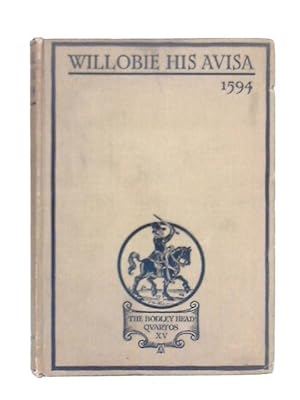
Willobie His Avisa or The true Picture of a Modest Maid and a Chaste and Constant Wife.
This was a pamphlet originally published in 1594. I read the modern spelling version in book form, with an essay towards its interpretation by Charles Hughes published in 1904. It is basically a poem of 74 cantos which takes the form of arguments between the virtuous Avisa, a woman of modest social status and various disreputable suitors who ply her with courtship both before and after marriage. Anything with a connection to William Shakespeare is going to be of interest and this poem has two: in an introductory poem following the usual dedications there is a direct reference with the line "And Shake-speare, paints poore Lucrece rape" (Shakespeare's The Rape of Lucrece was printed in 1594) and in the poem itself the author's friend who gives him advice on how to pursue Avisa is identified as W. S.
Initials, false names, fake news perhaps, certainly adds to the mystery of who may have written this poem. There is a record of a Henry Willobie being a student of law at the time but no record of his friend Hadrian Dorrell who writes an introduction. If Henry Willobie was the author he goes by the initials H. W. in the poem along with a D. H. and a D. B. There has of course emerged a number of theories as to who all these people were and who actually wrote the poem (George Gascoigne anyone?). There has also been speculation as to whether Avisa was a real person. (Queen Elizabeth anyone?). While all of this is not without interest I concentrated mainly on the worth and readability of the text in front of me.
“ The mirror of this sinneful age
That gives us beasts in shapes of men
Such beasts as still continue sinne,
Where age doth leave, there youths begin."
The poem is written in six line stanzas with eight syllables to a line, this is instead of the usual pentameter line of 10 syllables. This gives the whole thing a song like rhythm and feel. It has a rhyming scheme of ababcc with little deviation. In my opinion this gives the whole thing a lighter feel than much of the poetry written at the time. The first seven cantos provide the reader with a long introduction and then we get the first of the would be lovers N. O. B. who promises Avisa a life of luxury if she will be his mistress and perhaps his wife. This seems to be a man of the nobility. Avisa refuses him and his love turns to hatred he finishes:
I was thy friend, but now thy foe,
Thou hadst my heart, but now my hate,
Refusing wealth, God send thee woe,
Repentance now will come too late,
That tongue that did protest my faith
Shall waile thy pride, and wish thy death.
The second tempter is Caveleiro (a lusty hot headed Spaniard)
'And therefore wench, be not so strange,
to grant me that which others have,
I know that women love to change,
T'is but deceite, to seem so grave,
I never have that women tri'd,
Of whom as yet I was Deni'd
From Avisa's response it is now evident that she is newly married and she will not entertain the Spaniard. The next tempter is D. B. a frenchman; he is more subtle. However he also fails to bed Avisa and after an exchange of letters he accepts her decision with some grace:
Though thou in sorrow make me dwell
Yet love will make me wish you well
The next tempter is D. H. an Angle-German. His pursuit of Avisa takes place over a number of years and he visits her house in order to leave some verse he has written for her. He realises that Avisa will not consent to his wishes.
Now grant I Pray this last request,
That fraudlesse hart doth frendly send,
That if my fayth deserves it best,
Accept me for your honest friend
And if I seek your spoil, or shame,
Then raze me out, and blot my name.
It is interesting that in her replies to her suitors; Avisa increasingly differentiates between love and lust. She accuses her suitors of foul lust and so lust is taking on a more modern meaning: something sexual rather than just adventurous in spirit.
The final suitor is H. W. (Henry Willobie himself?), but first he asks advice on how to court Avisa from his good friend W. S. We are told that W. S. has recently been successful in love and his advice to H. W. is to keep on pursuing Avisa as she is bound to consent in the end. H. W. certainly takes W. S. advice and there is a long exchange of verse between him and Avisa. At first she chides him for his youthful puppy love, but when he continues to chase her, she must again use all her powers of persuasion to fend him off. The poetry now has become a little repetitive. A sort of challenge in thinking up different ways for Avisa to say no. Finally she puts an end to it all and asks him not to write to her anymore.
The 1904 book ends with two final poem celebrating a chaste and constant wife and then a contented mind. There follows a postscript in the form of an Apologie where the mysterious Hadrian Dorrel writing now two years later in 1596 (a subsequent reprinting) asks to be forgiven for suggesting that Avisa was a real person. He states categorically that the author had made up the name as a generic for a constant wife.
This is not difficult poetry to read and it certainly highlights the problems that a faithful wife, who is also very attractive would face from would be suitors. She is threatened, cajoled, made to feel guilty, promised everything she could want, and she must find a way to say no. There is very little evidence that she has encouraged the men and the poetry owes much to the courtly verse of earlier times. However, here it seems more concrete, not quite a new reality, but plainer speaking does not always lead to better poetry. 3 stars.
5Crypto-Willobie
Good review. I hadn't revisited this in a long time. But 25 or 30 years ago I borrowed one of my aliases from it -- the "hidden Willobie"...
7baswood
Two more sonnet collections:
W Percy - Sonnets to the fairest Coelia.
William Percy third son of the eighth Earl of Northumberland was born in 1575. At the age of fifteen he went to Oxford University, where he took up residence for the rest of his life. He made friends with a small group of scholar poets and his sonnet collection was his only work published in his lifetime. He had a reputation for gaiety and wit and earned his reputation as a published poet with the Coelia sonnets. In his introduction to the poems he says:
To the Reader
COurteous Reader, whereas I was fullie determined to haue concealed my Sonnets, as thinges priuie to my selfe, yet of courtesie hauing lent them to some, they were secretelie committed to the Presse, and almost finished, before it came to my knowledge. Wherefore making, as they say, Vertue of necessitie, I did deeme it most conuenient to proepose mine Epistle, onely to beseech you to account of them as toyes and amorous deuises, and ere long, I will impart vnto the world another Poeme which shall be both more fruitfull and ponderous. In the meane while I commit these as a pledge vnto your indifferent censures. London,
1594.
W. PERCY
Perhaps Percy should not have signed his name to these toys and amorous devices. There are twenty sonnets and a madrigal to Coelia very much in the accepted pattern of Elizabethan love sonnets. In Percy's case his rhyming schemes do not always work so well, but perhaps he thought he was pushing the boundaries. There is little for the modern reader to enjoy here, as his poems are exercises in style. Percy was marching on a well- trod path with these sonnets. Perhaps his best offering is sonnet XX
Receaue these writs, my sweet and deerest frend,
The liuelie patterns of my liuelesse bodie,
VVhere thou shalt find in Hebon pictures pend,
Hovv I was meeke, but thou extremelie blodie.
I'le walke forlorne along the vvillovv shades,
Alone complaining of a ruthlesse dame;
Where ere I passe, the rocks, the hilles, the glades,
In pittious yelles shall sound her cruell name.
There I will vvaile the lot which fortune sent me,
And make my mones vnto the sauage eares,
The remnant of the daies which nature lent me,
He spend them all, conceald, in ceaselesse teares.
Since vnkind fates permit me not t'ennoy her,
No more, burst eyes, I meane for to annoy her.
2 stars for this then and moving quickly onto the next collection
Zepheria - Anonymous
Printed in 1594 this is a collection of poems, mostly fourteen line sonnets, written by now in the firm tradition of the Elizabethan Love sonnet. There seemed to be a gaggle of sonneteers either connected with the court of Queen Elisabeth or with the Inns of court (which provided schooling in the law and were based around Lincoln's Inn Fields in London). The anonymous poet who wrote his love sonnets to Zepheria was probably from the latter court as some of the poems are chock full of legal terms. They are love poems following the example set by the Italian renaissance poet Petrarch. They are poems of unrequited love and were closely connected with the idea of courtly love. In the hands of many sonneteers they had by 1594 become mere exercises in style and the modern reader is hard pressed to find any originality or any strength of feeling. We feel no sympathy for the love lorn poet as he takes us along a well trodden path, but sometimes there are individual poems that work through the music they create or some originality in the use of metaphors or rhymes. In the case of the Zepheria poems there are odd lines, couplets or even quatrains that give pleasure, but this does not last for the whole poem.
Certainly the Zepheria poems do not read as smoothly as some other collections. The iambic pentameters can be rough and the poet seems to have made up or altered some words to fit his rhyming scheme; he seems to have invented more words than most. Although most sonnets follow the traditional rhyming scheme made famous by Shakespeare and are fourteen lines in length, there are a couple with 16 or even eighteen lines. Although the poems were published as a series, unlike the better collections there is no connecting story. Reading them through one after another, therefore can be a pretty uninteresting experience. They would almost certainly have appeared firstly in manuscript form and so would have been read individually, which would have shown some of them in a better light.
As an example of the collection: Canzon 25 will serve. There are some interesting lines and the theme is the the old chestnut of the poets claim to making his subject famous through his published poems.
LET not Disdain, thy soul unsanctify!
Disdain, the passport for a lover’s vow!
Unsieging, where its seeks to fortify
With deadly frowns, the canons of the brow!
Let not Disdain (the Hearse of virgin Graces! 5
The Counterpoison to unchastity!
The Leaven that doth sour the sweetest faces!)
Stain thy new purchased immortality!
’Mongst Delian nymphs, in Angels’ University,
Thou, my ZEPHERIA, liv’st matriculated! 10
The daughters of ethereal JOVE, thy deity
On holy hill, have aye perpetuated!
O then, retire thy brows’ artillery!
Love more! and more bliss yet, shall honour thee!
I found this collection more lively than some, but they outstayed their welcome, especially the latter ones that seemed to weigh heavy with legal terms and metaphors. 3.5 stars.
W Percy - Sonnets to the fairest Coelia.
William Percy third son of the eighth Earl of Northumberland was born in 1575. At the age of fifteen he went to Oxford University, where he took up residence for the rest of his life. He made friends with a small group of scholar poets and his sonnet collection was his only work published in his lifetime. He had a reputation for gaiety and wit and earned his reputation as a published poet with the Coelia sonnets. In his introduction to the poems he says:
To the Reader
COurteous Reader, whereas I was fullie determined to haue concealed my Sonnets, as thinges priuie to my selfe, yet of courtesie hauing lent them to some, they were secretelie committed to the Presse, and almost finished, before it came to my knowledge. Wherefore making, as they say, Vertue of necessitie, I did deeme it most conuenient to proepose mine Epistle, onely to beseech you to account of them as toyes and amorous deuises, and ere long, I will impart vnto the world another Poeme which shall be both more fruitfull and ponderous. In the meane while I commit these as a pledge vnto your indifferent censures. London,
1594.
W. PERCY
Perhaps Percy should not have signed his name to these toys and amorous devices. There are twenty sonnets and a madrigal to Coelia very much in the accepted pattern of Elizabethan love sonnets. In Percy's case his rhyming schemes do not always work so well, but perhaps he thought he was pushing the boundaries. There is little for the modern reader to enjoy here, as his poems are exercises in style. Percy was marching on a well- trod path with these sonnets. Perhaps his best offering is sonnet XX
Receaue these writs, my sweet and deerest frend,
The liuelie patterns of my liuelesse bodie,
VVhere thou shalt find in Hebon pictures pend,
Hovv I was meeke, but thou extremelie blodie.
I'le walke forlorne along the vvillovv shades,
Alone complaining of a ruthlesse dame;
Where ere I passe, the rocks, the hilles, the glades,
In pittious yelles shall sound her cruell name.
There I will vvaile the lot which fortune sent me,
And make my mones vnto the sauage eares,
The remnant of the daies which nature lent me,
He spend them all, conceald, in ceaselesse teares.
Since vnkind fates permit me not t'ennoy her,
No more, burst eyes, I meane for to annoy her.
2 stars for this then and moving quickly onto the next collection
Zepheria - Anonymous
Printed in 1594 this is a collection of poems, mostly fourteen line sonnets, written by now in the firm tradition of the Elizabethan Love sonnet. There seemed to be a gaggle of sonneteers either connected with the court of Queen Elisabeth or with the Inns of court (which provided schooling in the law and were based around Lincoln's Inn Fields in London). The anonymous poet who wrote his love sonnets to Zepheria was probably from the latter court as some of the poems are chock full of legal terms. They are love poems following the example set by the Italian renaissance poet Petrarch. They are poems of unrequited love and were closely connected with the idea of courtly love. In the hands of many sonneteers they had by 1594 become mere exercises in style and the modern reader is hard pressed to find any originality or any strength of feeling. We feel no sympathy for the love lorn poet as he takes us along a well trodden path, but sometimes there are individual poems that work through the music they create or some originality in the use of metaphors or rhymes. In the case of the Zepheria poems there are odd lines, couplets or even quatrains that give pleasure, but this does not last for the whole poem.
Certainly the Zepheria poems do not read as smoothly as some other collections. The iambic pentameters can be rough and the poet seems to have made up or altered some words to fit his rhyming scheme; he seems to have invented more words than most. Although most sonnets follow the traditional rhyming scheme made famous by Shakespeare and are fourteen lines in length, there are a couple with 16 or even eighteen lines. Although the poems were published as a series, unlike the better collections there is no connecting story. Reading them through one after another, therefore can be a pretty uninteresting experience. They would almost certainly have appeared firstly in manuscript form and so would have been read individually, which would have shown some of them in a better light.
As an example of the collection: Canzon 25 will serve. There are some interesting lines and the theme is the the old chestnut of the poets claim to making his subject famous through his published poems.
LET not Disdain, thy soul unsanctify!
Disdain, the passport for a lover’s vow!
Unsieging, where its seeks to fortify
With deadly frowns, the canons of the brow!
Let not Disdain (the Hearse of virgin Graces! 5
The Counterpoison to unchastity!
The Leaven that doth sour the sweetest faces!)
Stain thy new purchased immortality!
’Mongst Delian nymphs, in Angels’ University,
Thou, my ZEPHERIA, liv’st matriculated! 10
The daughters of ethereal JOVE, thy deity
On holy hill, have aye perpetuated!
O then, retire thy brows’ artillery!
Love more! and more bliss yet, shall honour thee!
I found this collection more lively than some, but they outstayed their welcome, especially the latter ones that seemed to weigh heavy with legal terms and metaphors. 3.5 stars.
8baswood

Caelica - Fulke Greville
Caelica is a collection of 110 poems written by Fulke Greville probably between 1580 and his death in 1628. They were never published during his lifetime. They existed in manuscript form until they were printed in 1633. They have been labelled a sonnet collection although in effect only 41 of the 110 poems keep to the 14 line rhyming sequence that we associate with sonnets. It is conjectured that many of the early poems in the collection (perhaps 1-40) were written in conjunction with Sir Philip Sydney as the two men were firm friends both serving at the court of Queen Elizabeth. Perhaps Greville is best known for the biography of Sir Philip Sydney written between 1610-12 and published in 1652.
Loaded with this information I approached the sonnet sequence with some trepidation, having recently trudged my way through sonnet sequences by Giles Fletcher, Barnabe Barnes, Henry Constable, Samuel Daniel; all collections named after a woman with whom the poet had supposedly fallen in love. Elizabethan love sonnet collections can be dreary things indeed, as by the 1590's they had quickly fallen into a pattern that owed far more to a style of writing than to any emotional content. They were seemingly based on ideas of courtly love, wedded to the example and template set down by the Italian poet Petrarch. They usually take the form of poems addressed to the named woman who is the love of the poets life; usually an unrequited love, hence the standard phrases and images of the love lorn speaker pleading his case to be accepted as a lover. A quick glance at the Caelica collection seemed to point to the same sort of thing. I thought I might be spending a couple of evenings with them, but ended up by reading them for over a week. It is true that in many respects they do follow the well trodden path of other sonnet collections, even more so in Greville's case because we never get any idea of Caelica as a living breathing woman, but there is something different at work here. In all such collections that I have read there are the occasional poems that stand out, or an arresting stanza, or a few lines that sing that can make the reading experience worthwhile. In the case of Greville this seemed to happen more often than not and in many instances I was fascinated by what I had just read.
The early poems are in the traditional form of Elizabethan love poetry, but there are enough good poems to make the reading worthwhile. Sonnet number two (and this is a traditional 14 line sonnet) is an example. It revisits the story of the hunter Acteon who stumbles on the Goddess of chastity Diana who is bathing naked in a stream. She is so outraged that she turns Acteon into a stag and his dogs tear him to pieces. This story from classical mythology has been used by any number of poets, but Greville's first line is
Faire dog, which so my heart dost tear asunder
Fair dog? could easily be read mistakenly as fair god and so we are alerted to Greville telling the story in a different way. Greville's poem about Acteon and Diana is a rarity, because he seldom falls back on classical mythology as a subject for his poems (that is with the exception of Cupid who features in several) and his imagery tends to be drawn from real life and so the reader does not feel the need of a classical education to enjoy the poems. What the reader does need is some patience because Greville's syntax can be knotty in the extreme. This is especially true in the 14 line sonnets where it is my guess that he has so many ideas to cram into each line that it becomes difficult to unpick. In my opinion his poetry becomes much more readable when he is not constricted by the sonnet form and he can let his ideas flow. Fortunately there are many examples in this collection.
SONNET LXII.
WHO worships Cupid, doth adore a boy;
Boyes earnest are at first in their delight,
But for a new, soone leaue their dearest toy,
And out of minde, as soone as out of sight;
Their ioyes be dallyings and their wealth is play,
They cry to haue, and cry to cast away.
Mars is an idol, and man's lust his skye,
Whereby his glories still are full of wounds;
Who worships him, their fame goes farre and nigh,
But still of ruine and distresse it sounds.
Yet cannot all be wonne, and who doth liue,
Must roome to neighbours and succession giue.
Those Mercurists that upon humors worke,
And so make others' skill and power their owne,
And like the climats, which farre Northward lurke,
And through long Winters must reape what is sowne;
Or like the masons, whose art building well,
Yet leaues the house for other men to dwell.
Mercurie, Cupid, Mars, they be no gods,
But humane idols, built vp by Desire;
Fruit of our boughs, whence heauen maketh rods,
And babyes1 too for child-thoughts that aspire:
Who sees their glories, on the earth must prye;
Who seeks true glory must looke to the skye.
Sonnet 62 is an example of a poem written in sestain units popular with Greville; as the collection moves forward he writes fewer 14 line sonnets. When we get to sonnet 85 he has abandoned all thoughts about Caelica and has moved on to matters that concern an older perhaps more reflective man. His Calvinist religious thoughts dominate the later poems, but also his political views. He held views which were typical of the time concerning order in the world; how everybody should know their place in society. He expresses the view that the Creator (God) has a master plan and he hints at predestination. He is obsessed with mutability, but firmly of the belief that man should accept the changes that are inevitable. He does rail against ambition and bad rulers, but stops well short of advocating any changes to the world order. Greville is not without a sense of humour. Sonnet 107 advocates taxing the rich more thoroughly and so it is no wonder that the collection was not published in his lifetime. It could also be said that there is scant evidence of misogyny: Caelica sometimes called Myra and sometimes Cynthia; goddess of the moon does not suffer the usual diatribe against women.
I said earlier in this short piece that many of the sonneteers however dull they maybe could occasionally come up with a line or two which can connect with the modern reader. Greville does this more often than not and he ends many a poem or a stanza with a rhyming couplet that makes the reading worthwhile. Greville has his admirers amongst modern critics and one or two have placed him just behind Shakespeare and Sir Phillip Sidney in the order of merit. Certainly a few of his poems from this collection have been anthologised and are available to read on the internet. I found some of his poetry a delight to read and have made notes to re-read some of them. I think he is never without interest especially within the tradition of Elizabethan sonnet writers and so I rate this collection as 4 stars.
9baswood

Michael Drayton - Ideas Mirrour
Michael Drayton 1563-1631 was an English poet and playwright. He was successful and widely read in the Elizabethan and Jacobean era, but has since suffered some obscurity. The Concise Cambridge History of English Literature says:
Michael Drayton was a major poet of his age; but neither the present nor any future age will believe that a complete knowledge of his very extensive poetry is a necessity of intellectual life.
A bit of a put down, but the Cambridge History certainly does not take any prisoners when discussing authors outside of the elite canon. At the end of its summary of Drayton's works it concludes that "Drayton is a kind of poetical epitome. There is something of almost every kind of poetry in him. Drayton may not be read, but he is delightful to read in". There is little doubt that Drayton was a popular poet and his popularity was based on his printed work. He was disdainful of those gentleman poets who did not publish their work, referring to them as 'Cabinet Poets'. He had trouble finding a patron either due to bad luck or his ability to say the wrong thing at the wrong time and so he needed to get into print.
Ideas Mirrour was published in 1594 at the height of the Elizabethan craze for love sonnets and Drayton writes very much within the Petrarchan template. It is an early work and he revised and added to the poems repeatedly throughout his career, but I have read the original 51 sonnets: two of which are stretched to eighteen lines. On the whole it is a good collection and I would say better than most, as it repeatedly introduces arresting imagery and for much of the time avoids the obscurity that belabours some of these collections when the poets launch into mere stylistic exercises. The poems however do not breakout of the straight jacket imposed by the unwritten rules of love sonnets at the time and so there is little evidence of personal feeling.
In his introductory sonnet Drayton acknowledges his debt to Sir Philip Sydney:
Divine Syr Phillip, I avouch thy writ,
I am no Pickpurse of anothers wit.
And in the first sonnet titled Amour 1 he comes straight to the point in the very first line:
Reade heere (sweet Mayd) the story of my wo,
He is addressing directly the woman who has rejected him as a lover. The idea of unrequited love is usual in theses collections, but Drayton seems to be making this personal: the Mayd is never named and referred to as Idea, but it is conjectured he is writing the poems for Anne Goodere the daughter of his patron at the time, she married someone else, but remained on good terms with Drayton. He emphasis her virtue throughout as well as his own chaste desire and so there is a feeling of a genuine love story here.
The sequence runs through the usual gamut of praise for the beloved and then the realisation that he has been rejected. There are a few instances where bitterness of his loss is reflected in some vitriol against his beloved, but he soon recovers, wishing to internalise his feelings and ends by restating his love and admiration.
There are many enjoyable poems in this collection, but of course not every one would be to my taste and there are plenty of examples where the poet is either labouring the same point over a sequence of poems or is indulging in exercises of style, but even Shakespeare in his wonderful collection is guilty of this. It is therefore pertinent to think about those poems that appear to be successful and please the reader: here are a couple of examples:
In Amour 7 he plays with a personification of Time:
Stay, stay, sweet Time; behold, or ere thou passe
From world to world, thou long hast sought to see,
That wonder now wherein all wonders be,
Where heaven beholds her in a mortall glasse.
Nay, looke thee, Time, in this Celesteall glasse,
And thy youth past in this faire mirror see:
Behold worlds Beautie in her infancie,
What shee was then, and thou, or ere shee was.
Now passe on, Time: to after-worlds tell this,
Tell truelie, Time, what in thy time hath beene,
That they may tel more worlds what Time hath seene,
And heauen may joy to think on past worlds blisse.
Heere make a Period, Time, and saie for mee,
She was the like that never was, nor never more shalbe.
Amour 45 later in the sequence when things are not to rosy:
Blacke pytchy Night, companyon of my woe,
The Inne of care, the Nurse of drery sorrow,
Why lengthnest thou thy darkest howres so,
Still to prolong my long tyme lookt-for morrow?
Thou Sable shadow, Image of dispayre,
Portraite of hell, the ayres black mourning weed,
Recorder of reuenge, remembrancer of care,
The shadow and the vaile of euery sinfull deed.
Death like to thee, so lyve thou still in death,
The grave of ioy, prison of dayes delight.
Let heavens withdraw their sweet Ambrozian breath,
Nor Moone nor stars lend thee their shining light;
For thou alone renew'st that olde desire,
Which still torments me in dayes burning fire.
I rate this as 3.5 stars.
Matilda The faire and chaste daughter of the Lord Robert Fitzwater. The true glorie of the noble house of Sussex.
Another dip into the poetry of Michael Drayton. Matilda was published in 1594 and is an epic poem of nearly 200 stanzas written in rhyme royal: a stanza of seven lines, in iambic pentameter rhyming ababbcc. It harks back to the poetry in William Baldwins The Mirror for Magistrates published in 1559 which had the same format. It also has the same idea as the protagonist in the poems in that collection, which were all ghosts of famous people who claimed to have been unjustly murdered. Drayton does the same thing in Matilda; daughter of the Earl of Sussex, who claimed she was murdered by King John.
Like the collection in Mirror for magistrates it is a sorry tale. Matilda is an outstanding beauty at the court of King John. He falls in lust with her and she realises her virginity is in danger. She flees to the protection of her father the Earl of Sussex. King John exiles her powerful father and Matilda enters a convent. She is soon visited by a messenger from the king who gives her a stark choice; she must either consent to going to bed with the king or she must drink a vial of poison. She drinks the poison and seeks revenge through the poem written by her ghost.
No new ground being broken here and none is claimed by Drayton who refers to a couple of the poems in the earlier collection, notably Shore's wife. The Mirror for Magistrates proved to be a popular collection when printed and so for Drayton there would be no harm in repeating the formula. His versification is smooth and his imagery is lively enough. The interest from a 21st century standpoint is what the poem tells us about the power of kings and the helplessness of women like Matilda. Her own thoughts on the tragedy of her life finally comes to the surface when she is given the poison to drink, she bemoans the evil king on one hand, but she also says it is within his right to command his subjects as he wishes.
3 stars.
10baswood

Love's Labour's Lost - The Arden Shakespeare
Love's Labour's Lost - BBC Shakespeare Collection 1985
Shakespeare does it again, he writes a play that builds and deepens on much of what has gone before (1594/5) on the British stage, producing a play that seems totally original. Between August 1592 and the spring of 1594 the London theatres were closed due to the plague and Shakespeare's career as a playwright seems to have come to a halt as he probably spent his time preparing his narrative poems Venus and Adonis (1593) and The Rape of Lucrece (1594). Certainly he must have been busy writing sonnets, because a few of them appear in Love's Labour's Lost. There is a lot of poetry in the play and a good percentage of it is rhymed iambic pentameters. It is a delight to read and the only comparison I can make is with the later plays of John Lyly for example Loves Metamorphoses where the themes are virginity, chastity and constancy in love, all wrapped up in a froth of light entertainment. Love's Labour's Lost is certainly a comedy and would fall under the genre of light entertainment, but there is more depth, more word play and the jokes are more funny.
There is not much of a plot in Love's labour's Lost. Ferdinand the King of Navarre has persuaded three of his courtiers Berowne, Longaville and Dumaine to give up all pleasures for a three year period to study with him in his academy. They have forsworn oaths that they will not even speak to any women during this time. Berowne points out that the king must break his oath the next week because he has agreed to welcome the Princess of France and her attendants who are arriving on a diplomatic mission. The inevitable happens the four men fall in love with the Princess and her ladies Rosaline, Maria and Katherine and must devise ways of courting their intended. A Spanish gentleman, a clown are both looking to get their way with Jaquenetta a dairymaid and a pedantic schoolmaster Holofernes are all thrown into the mix. There are the usual elements of disguises, mistaken identity, a play within a play and many opportunities for double entendres, however Shakespeare introduces two major items of originality in that the women always seem to have the upper hand and are wise and worldly compared to their male counterparts and the ending of the play is open ended.
The four men appear foolish from the very start with their oath making and only proceed to become more foolish when they fall in love. The play does not rely on mistaken identities or slapstick comedy to entertain, but does rely on wordplay, wit and characterisation. This can make it more difficult to catch all the jokes and puns, because of the differences in language and culture between modern times and the Elizabethan era, but I think there is still enough which comes through to entertain us today, which was shown by the BBC production: the penultimate scene of the play put on by the nine worthies (commoners) was hilarious. As in much of Shakespeare more familiarity with Elizabethan culture and drama will result in a more in depth all round entertainment. A feature of this play is the craze for sonnet writing. Shakespeares contemporaries were rushing into print with sonnet collections based on ideas from a previous era of courtly love where the poet would write reams of words complaining about his unrequited love, for the unattainable woman or man of his affections. Ferdinand, Berowne, Longaville and Dumaine all write sonnets to their loved ones and those proudly read out by Ferdinand, Longaville and Dumaine are certainly no better than much of the dross that was served up by the Elizabethan sonneteers. The sonnet written by Berowne is a cut above the others, but unfortunately this one gets misplaced and read out by Nathaniel the curate to Jaquenetta the dairymaid, when it finally gets back to Berowne he immediately tears it up; this is surely Shakespeare's joke. There are many jokes concerning book worms and ink horns, which stretch across the social divide from the nobles to the professionals. Unrequited love is a feature of most sonnet collections and at the end of this play love is unrequited for all of the sonnet writers.
A play then about the battle of the sexes, with the women as the morally superior beings, but of course it is the foolish men who are the stars of the show. Much can be read into the play; for example Shakespeare's comments on the life of the courtiers, the tomfoolery and ignorance of the working classes, but although this may be interesting from a historical point of view this is an entertainment first and foremost. The reader can appreciate the word play with the puns and the innuendos, but the BBC production of the play showed how it works on stage. It is a delight for the eye as well as the brain and can be adapted to enhance Shakespeare's original stage craft. I was pleased to see that not too much was made of the sexual innuendos by the actors and if the viewer reads anything in the dialogue then this was not the result of leery comments or facial expressions from the players. This play does not need that, it has Shakespeare's genius to lift a mundane plot full of clichés into superb entertainment. A four star read and a five star view.
11baswood
Amoretti & Epithalamion - Edmund Spenser
The Genius of Spenser transforms an Elizabethan love sonnet sequence into something delicate and personal with poems that are sometimes striking in their beauty. Despite Spenser's use of some antiquated words they prove to be relatively easy to read and this is because of Spenser's ear for melody and his skill in making the poems flow. For the most part they follow a logical development and end in a rhyming couplet that brings the poem to a natural end. Spenser developed his own rhyming scheme for his 14 lined sonnets which knits the poems together. In many ways they are more traditional than Shakespeare's sonnets and are less complex and for the most part avoid some of the knotty language that Shakespeare preferred.
Elizabethan love sonnet collections can be dreary things indeed, as by the 1590's they had quickly fallen into a pattern that owed far more to a style of writing than to any emotional content. They were seemingly based on ideas of courtly love, wedded to the example and template set down by the Italian poet Petrarch. They usually take the form of poems addressed to a woman with a fictitious name who is the love of the poets life; usually an unrequited love, hence the standard phrases and images of the love lorn speaker pleading his case to be accepted as a lover. Spenser, while drawing on the Petrarchan form using themes and imagery that would be familiar to readers, subtly changed the raison d'être of his collection.
Firstly he addressed his poems to Elizabeth: Elizabeth Boyle who became his wife in 1594 the year before the poems were published and so they became a tribute to her. This is not a sequence of poems where the love remains unrequited: about three quarters through the collection, there is a change of mood and in sonnet 64 they kiss and it is evident that Elizabeth has given her consent. The poems are sequenced so that the reader can follow the outcome of the poets courtship, this was not the case in other collections: usually the lady was already married or remained an etherial figure and the poets painful love affair continued in keeping them apart. Spenser's Amoretti can be seen as a denigration of the courtly love ideal that was a feature of previous collections, because although his courtship went through the usual pains of thankless striving for acceptance, it ended with a commitment to marriage and then a celebration of his success.
The traditional imagery used by Petrarch and his followers is used by Spenser, however he takes these images and exaggerates them to such an extent that they become almost a parody. This is particularly noticeable in the power of his lovers eyes: the withering looks that the lady gives her suitor alternates with her celestial gaze that has the power to attract everyone and everything:
Sonnet 36
Is there no meanes for me to purchace peace,
Or make agreement with her thrilling eyes;
But that their cruelty doth still increace,
And dayly more augment my miseryes?
Sonnet 16
One day as I unwarily did gaze
On those fayre eyes, my loves immortall light,
The whiles my stonisht hart stood in amaze,
Through sweet illusion of her lookes delight,
I mote perceive how, in her glauncing sight,
Legions of Loves with little wings did fly,
Darting their deadly arrows, fyry bright,
At every rash beholder passing by,
The exaggeration used becomes almost comic. We have no idea how his contemporary Elizabethan readers would have interpreted the sonnets, but reading them today the poet seems to be laughing at himself as well as his intended:
Sonnet 54
Yet she, beholding me with constant eye,
Delights not in my merth, nor rues my smart:
But when I laugh, she mocks; and when I cry,
She laughs, and hardens evermore her hart.
What then can move her? If nor merth, nor mone,
She is no woman, but a sencelesse stone.
Spenser certainly praises the beauty of his beloved in typical male gaze fashion, but he emphasises that it is her wit and mind that he values above all else and that will make for a lasting happy relationship:
Men call you fayre, and you doe credit it,
For that your selfe ye daily such doe see:
But the trew fayre, that is the gentle wit
And vertuous mind, is much more praysd of me.
For all the rest, how ever fayre it be,
Shall turne to nought and lose that glorious hew;
Elizabethan sonneteers tended to link the idea of an unrequited love to somehow making them better men because of the pain that they suffer. They in typical courtier fashion learn go the extra mile in all the things that they do to impress their beloved. Spenser was not a typical courtier although of course he relied on his reputation as a poet and a gentleman to secure positions in government. He found himself almost in exile in Ireland, unable to secure a position at court. His courtship of Elizabeth was in keeping with traditional protestant virtues and therefore successful in leading to matrimony and much has been made of the links between the sonnets and the religious calendar.
There are 89 sonnets in this collection and sonnet 64 acts like a turn in the whole collection because at this point the relationship changes; It starts with "Coming to kiss her lyps, (such grace I found)'', there had been no evidence of physical contact before this point. Now it is the poet who is in control of the situation and his beloved accepts her situation, but not without fears of losing her liberty sonnet 65 addresses this beautifully:
The doubt which ye misdeeme, fayre Love, is vaine,
That fondly feare to lose your liberty,
When, losing one, two liberties ye gayne,
And make him bond that bondage earst did fly.
Sweet be the bands the which true love doth tye,
Without constraynt or dread of any ill:
The gentle birde feeles no captivity
Within her cage, but sings, and feeds her fill.
The poems now are a celebration and a triumph and include the sonnets that appear most in various anthologies, however the last four sonnets end the collection on a downbeat note. Sonnet 86 is an angry poem addressed to a slanderous accusation and the last three sonnets deal with a temporary separation and the pain it brings to both of them. I found great pleasure in reading these poems and because of their musicality and their accessibility I rank them together with Shakespeare and Sir Philip Sidney's collections and a 5 star read. Difficult to choose one of the sonnets to close this appreciation, but I do like sonnet 71:
I ioy to see how, in your drawen work,
Your selfe unto the Bee ye doe compare,
And me unto the Spyder, that doth lurke
In close awayt, to catch her unaware.
Right so your selfe were caught in cunning snare
Of a deare foe, and thralled to his love;
In whose streight bands ye now captived are
So firmely, that ye never may remove.
But as your worke is woven all about
With woodbynd flowers and fragrant eglantine,
So sweet your prison you in time shall prove,
With many deare delights bedecked fyne:
And all thensforth eternall peace shall see
Betweene the Spyder and the gentle Bee.
Epithalamion
Linking Amoretti with the bridal poem Epithalamion are several stanzas telling a mildly erotic story of Cupid and a bee. Epithalamion has 24 stanzas one for each hour of the wedding day. They describe the happy couples delight in all of the arrangements for a perfect wedding day. It is a joyous celebration with each stanza averaging 18 lines fitted to a rhyming scheme. The final stanza has 7 lines which forms a conclusion. The poem hopes for the blessing of children, fidelity and all things good in the marriage. Perhaps he envisioned it not only as a celebration of his marriage, but a poem that could be used to celebrate other marriages.
12Crypto-Willobie
Good account!
13baswood

Anonymous - Locrine
Printed in 1595 this play has been variously ascribed to Robert Greene, George Peele and even in collaboration with Shakespeare, however I think it is best that it remains anonymous. It is not a particularly bad play but reading it today it just feels very 'run of the mill'. It is a relatively simple story with no surprises: Brutus has conquered Britain and has established his family as future rulers. He is about to die when the play opens and his three sons and three brothers all swear to maintain family unity. Locrine the eldest son is declared king and he has been betrothed by Brutus to Gwendoline. Humbar king of the Scythians and his son Hubba are attempting to invade Britain. They first meet Albanact: Locrine's young brother in battle. Albanact's army are defeated and Albanact commits suicide rather than being captured. Locrine takes to the field to avenge his brother. Albanact's ghost has appeared before Humbar and shown him his troops desecrated on the battlefield. Humbar is defeated and Hubba is slain. Back at Locrines court Estrild: Humbars wife is brought in, Locrine is minded to kill her, but falls in love with her and gives her the option of being his mistress. Corineius Locrine's uncle warns that Locrine should remain faithful to Gwendoline and leaves the court. It is seven years later when Corineius dies and Locrine brings Estrild into his court. Meanwhile the defeated Humber has been on the run and starving, he decides to commit suicide by throwing himself in the river. Thrasimachus: Gwendoline's brother vows revenge and he and Gwendoline raise an army and defeat Locrine. Locrine commits suicide as does Estrild and their daughter Sabren drowns herself.
It is the usual story of a royal family in discord, a kings inflexibility and weakness, but in Locrine the guilty party is firmly nailed as either Estrild or Gwendoline, because in a closing speech Ate the goddess of revenge says:
Lo here the end of lawless treachery,
Of usurpation and ambitious pride;
And they that for their private amours dare
Turmoil our land, and set their broils abroach,
Let them be warned by these premises.
And as a woman was the only cause
That civil discord was then stirred up,
There is very little character development in Locrine. It is a moral story and looks back to earlier plays with its dumb shows at the beginning of each act. It is written mostly in pretty good iambic pentameter, with language that harks back to Marlowe; particularly Tamburlaine the Great. Running through the earlier acts are the clowns Strombo and his entourage and they are genuinely funny and corse. It is a play that sets out to tell a story and succeeds admirably. It calls itself a tragedy and reminds the audience that it is based on chivalry. It has ghosts, it has battles, it has a history of sorts, but it does not say anything different to what has gone before. I enjoyed the read through 3 stars.
14baswood

King John (Arden Shakespeare)- William Shakespeare
The life and death of King John - BBC Film
The Arden Shakespeare edited by Jesse M. Lander and J. J. M. Tobin have chosen to call the play King John instead of the usual title The Life and Death of King John. It is unusual in the Shakespeare cannon as it appears to be a rewrite of an earlier play: The Troublesome Reign of John, King of England which was published in 1591, some four years earlier than the probable date of Shakespeare's play. In my opinion Shakespeare could have called his play The Troublesome play of King John, because although he improved the dramatic effect of the earlier play, he lost some continuity in his version. It was a play depicting an historical event and the telling of the story, however accurate or inaccurate it might be, should be intelligible for the punters paying their money at the theatre gate. It is a play that has not enjoyed many revivals in the late 20th and early 21st century and although the poetry is typically Shakespearean the drama suffers from being tied to the earlier Troublesome Reign.
The Troublesome Reign of John, King of England has been accredited to George Peele and it is noted for its coherent story and sustained and developed characterisation. It starts in the court of King John when a messenger from king Philip of France informs John that his brother Geoffrey's son Arthur is entitled to the crown of England and that John has usurped the throne. John tells the messenger that he will take an army to France to enforce his crown. Shortly after the messenger leaves two sons of Lord Faulconbridge arrive disputing a claim to their father's property. John with the aid of Queen Eleanor sorts the dispute by knighting the bastard Philip as Sir Richard and agreeing that his brother Robert be entitled to Sir Robert's property. The newly knighted Sir Richard will join King John in his expedition to France. The armies of England and France face each other outside the town of Angiers, whose citizens will not decide who is the rightful ruler of their town. A compromise is reached when the citizen of Angiers suggests a marriage between the Dauphin and Blanche a ward of John. After the wedding the Pope's legate Cardinal Pandulph arrives to excommunicate King John and orders King Philip to restart his war with John. After the battle we learn that John has captured Arthur and returned to England and instructed Sir Richard to rob the monasteries. The Dauphin and his army land in England to rescue Arthur. King John arranges for Hubert to murder Arthur, but this is too much for his followers who side with the French. Sir Richard remains loyal and leads King John's army against the French; the English Lords who have changed sides learn that the Dauphin is planning to kill them change sides again. Cardinal Pandulph arrives to welcome John back into the christian fold and the Dauphin's invasion is thwarted but King John while residing at an Abbey is poisoned and his son Henry is proclaimed king.
It is a complex story and the plot in (TR) is reeled out in fairly pedestrian fashion. Shakespeare takes the plot by the scruff of the neck in his King John and in the very first scene the french ambassador has arrived and is squaring up to the usurper King John. In the Troublesome Reign (TR) Queen Eleanor starts by explaining the history of King Richard's brother Geoffrey and Arthurs claim to the crown. This is an early example as to how Shakespeare dramatises the action and he continues to do this as he follows and changes the story line to the plays advantage. His characters are more sharply drawn and have better poetry to speak: there is no prose in Shakespeares play. Shakespeare further enhances the drama by introducing more action; for instance he has the two Kings clutching hands while the Pope's legate is excommunicating John and King Philip must decide to let John's hand fall.
I read the two plays side by side and had the impression that Shakespeare grew into the story. The first act with the disputed land rights of the Faulconbridge brothers is confusing and goes on too long, making the play appear top heavy at the start. There follows the dispute in front of the town of Angiers and it feels like the scene has been shaped to allow processions and parades, rather than battles and action. In the second half of the play Shakespeare is able to cut out scenes that hamper the central storyline. for example in TR there is an account largely in prose of Sir Richard's sacking of a monastery: there is a semi humorous conversation between Sir Richard and Friar Lawrence. This scene has disappeared from King John.
Shakespeare's play is built around the politics of the relationship between the two kings and the women who support them. Queen Eleanor mother of John and Constance mother of Arthur are fanatical in support of their progeny and emerge as strong characters exerting some control over the men. Shakespeare emphasises the oath breaking: the changing of sides which all the men are guilty of, while the women stay firm. The action moves forward at a good pace in the second half and while it does not enjoy a particular climax the death scene of King John provides a sombre conclusion to a play where few characters are shown at their best. Commodity rules much of the action as Sir Richard reminds us in one of his soliloquies. TR is very anti catholic and while this is present to some extent in King John Shakespeare has toned it down.
I also watched the 1984 BBC production with Leonard Rossiter as King John, who gave his character a particularly Machiavellian bent; perhaps a bit too much like a pantomime character in some places. The production made excellent sense of the story and moved it along at a pace. Shakespeare indulges in much word play throughout and some of it, not even the best actors are able to deliver meaningfully, for example part of Pandulph's speech in act 3:
It is religion that doth make vows kept,
But thou hast sworn against religion
By what thou swear’st against the thing thou swear’st,
And mak’st an oath the surety for thy truth
Against an oath. The truth thou art unsure
To swear, swears only not to be forsworn,
Else what a mockery should it be to swear?
But thou dost swear only to be forsworn,
And most forsworn, to keep what thou dost swear.
Therefore thy latter vows against thy first
Is in thyself rebellion to thyself;
Of course there is much good poetry, including this much misquoted speech by Lord Salisbury:
Therefore, to be possess’d with double pomp,
To guard a title that was rich before,
To gild refined gold, to paint the lily,
To throw a perfume on the violet,
To smooth the ice, or add another hue
Unto the rainbow, or with taper-light
To seek the beauteous eye of heaven to garnish,
Is wasteful and ridiculous excess.
All in all I spent an enjoyable few days with King John, but this early play of Shakespeare's is not my favourite. 4.5 stars.
15baswood

Shakespeare - Richard II
I find it exciting to pick up a Shakespeare play that I have not read before and Richard II proved to be a straightforward read. Let me explain: my modus operandi with Shakespeare is to read through the play in one sitting if possible and then note down any thoughts. I will then read the introduction and any notes or commentaries before reading through the play again at a slower pace. I finish off by watching a video performance of the play (usually a BBC production). On my first reading I was surprised how easy it was to follow the story. It is a history play and Shakespeare although reorganising and adapting the historical facts still tells a recognisable story of the latter part of Richard's reign and Bolingbroke's seizing of the crown. Other first impressions were that the heightened language that Richard and others use reminded me of Christopher Marlowe's Edward II or even Tamburlaine. It is a political play, perhaps the most political play I have read so far and its major theme is the divine right of kings. There is only a little light relief from the tragedy of the unfolding story. There are no prose passages and plenty of poetry in the iambic pentameter. The play is usually dated at 1595 and would seem to be a thoroughly professional job, by a playwright who had learnt his craft.
On to the commentaries and notes of which there were plenty, being from the Arden Collection of plays. There is certainly enough here to explain and enhance the enjoyment. I also had in my library a copy of MAXnotes from the Research & Education Association's collection of study guides, I had previously not read any of these and found it concise and easy to read. It summarises the play scene by scene and provides a good analysis of the themes and story as it goes along. It stars with a very useful introduction on Shakespeares language and was a useful back-up to the Introduction and notes in the Arden publication. I usually spend some time researching on the internet for different aspects or views, but found much of this to be superfluous for this play. I felt I really did not need to know anymore to the information to hand.
The editors of the Arden Shakespeare of course talk up the play that they have been asked to edit, but I have to agree with Charles R Forker who says:
"Its unusual formality of structure and tone as well as the impressive eloquence of its style seems to have been crafted to express the mystique of kingship more emphatically than any of the earlier histories, without neglecting a subtle handling of its major action........................In the character of Richard, Shakespeare achieved a higher degree of psychological complexity than he had yet managed in tragedy"
Forker goes on to say that Richard II is now regarded as one of the greatest of Shakespeares histories, with over 3000 books/commentaries written about it, which means that you could spend any amount of time reading about other peoples research or views if you wished.
Shakespeare starts the play with the confrontation between Thomas Mowbray Duke of Norfolk and Henry Bolingbroke in front of King Richard II. They accuse each other of being traitors to the king. Richard cannot settle the dispute and so they agree to a trial by combat. At the very last moment before the lethal joust Richard stops the contest and exiles them both. Mowbray for life and Bolingbroke who has family connections to the king for six years. Richard lives a dissolute lifestyle spending much money on his friends and hangers on, he decides to lead an army to quell a revolt in Ireland, but the treasury is nearly empty. He raises money by enforced loans on the English nobility and by the sequestration of land and property from Bolingbroke who has inherited his fathers estates, the wealthy John of Gaunt. While Richard is in Ireland Henry Bolingbroke with a host of titled followers lands in the North of England and soon attracts more support including eventually the Duke of York who Richard has entrusted with guarding his kingdom whilst he is in Ireland. Richard arrives back in England after a successful campaign to find that his army has been let go and his court favourites have fled or been executed by Bolingbroke. He is powerless and Bolingbroke looks for a way to seize power by persuading Richard to abdicate in his favour. Richard is forced to agree and becomes Bolingbroke's (now Henry IV) prisoner. Richard is murdered in Pontefract castle.
In Plantagenet England kingly succession was more often than not a tricky business, because of disputes over birthrights, however in this instance Shakespeare's focus is on a direct usurpation which brings starkly into question the divine right of kings. Richard claimed amid popular contention that he was appointed by God to rule England, still a feudal state at this time (mid 14th century) and so Richard supported by the clergy has an indisputable right to govern as he sees fit and he makes this case throughout the play. For political reasons Bolingbroke is able to lead a successful revolt, but cannot rule in security until the old king is dead. Shakespeare's skill here is in leading his audience firstly to admire Richards kingly qualities in settling a difficult dispute and then to turn them against the king when they see his unjust behaviour, to the noble families and particularly Bolingbrook. Unjust, vindictive behaviour or a politician indulging in realpolitik it's difficult to decide. However sympathies are swayed back to Richard when he is devastated by the loss of his kingship. Watching the BBC production I thought that Richard got what was coming to him, despite his tragic circumstances, but in Elizabethan England where the idea of the divine right of kings was almost sacrosanct, Shakespeares arguments brilliantly portrayed by Richard would have swayed many people to feel the tragedy of his final months.
The play is notable for its poetry and word play. There are some impressive speeches, for example John of Gaunt's patriotic 'sceptered Isle' speech or Richards 'hollow crown' speech. There are many such as these, even the assistant gardener can get in on the act:
"Why should we in the compass of a pale
Keep law and form and due proportion,
Showing, as in a model, our firm estate,
When our sea walled garden, the whole land
Is full of weeds, her fairest flowers choked up,
Her fruit trees all unpruned, her hedges ruined
Her knots disordered and her wholesome herbs
Swarming with caterpillars."
He is talking about the state of England under Richard's kingship and the caterpillars are the kings flattering supporters. We know this about the caterpillars because one of Bolingbroke's followers has already referred to Richards' flatterers as caterpillars. This is an example of the unity of Shakespeares vision and poetry in this play, which has patterns and themes interweaved throughout, for example: the idea of blood which stands for family and murder, the tears and weeping which show emotion, images of blots stains and poison, the powerful image of the mirror where Richard examines his dual identity of man and divine monarch, the idea of people and things which can be sweet or sour according to the wheel of fortune.
A Shakespeare play then that can hardly be faulted and one that has a unity of vision making it a delight to follow to the end. The character development of both Ricard II and Bolingbroke adds real depth and so 5 stars.
16baswood

William Shakespeare - A Midsummer Nights Dream (Norton Critical Edition)
A Midsummer Nights dream: BBC Shakespeare 1981
Shakespeare's wonderful A Midsummer Nights Dream is pure fantasy. The fairy hordes that populate this play have all the best lines, that is until the final act where they are largely absent and Theseus is moved to make his 'The lunatic, the lover and the poet speech." Until this time the play comes alive when we are transported to fairy wonderland.
The play starts with Theseus Duke of Athens who wants to celebrate marriage with his partner Hippolyta. The tone of this opening is set by Theseus when he addresses his future wife:
Hippolyta I wooed the with my sword,
And won thy love doing thee injuries.
Egeus enters with his daughter Hermia and two young suitors Lysander and Demetrius. Hermia wishes to marry Lysander, but Egeus has chosen Demetrius for her, he will not listen to her protestations, determined to exercise his rights as her father in accordance with the law of Athens. He expects to be supported by the Duke and he is not disappointed as Theseus tells Hermia that if she does not marry Demetrius she must either die or become a nun. After the hearing Lysander suggests to Hermia that they elope. Hermia tells her close friend Helena of her plans to elope. Helena is in love with Demetrius. Meanwhile Quince, Snug, Bottom, Flute, Snout, Starveling; local artisans are preparing a play for Theseus' wedding celebrations.
It is Act 2 when the fairies appear and all is not well in the forest. Oberon the king of the fairies has fallen out with his queen Titania. Oberon tells Puck to put a love potion on the eyes of Titania so that she will fall in love with the first wild animal she sees. He also tells Puck to use the magic potion on an Athenian gentleman who is lost in the woods, to resolve his tangled love life. Demetrius is in the forest looking for Lysander and Hermia who have also become lost and Helena is following them. The artisans are also in the forest rehearsing for their play and Puck cannot resist putting an asses head on Bully Bottom which is the first thing Titania sees when she awakes. Puck mistakenly puts the love potion on the wrong Athenian gentleman causing even more confusion between Demetrius, Lysander Hermia and Helena. Oberon manages to sort out the entanglements and also takes pity on Titania removing the donkeys head from Bottom. All is resolved to everyones satisfaction and the final act shows the artisans performing their play for Theseus and his entourage. the play finishes with the approaching dawn and the disappearance of the fairies from the forest: Puck has the last word;
If we shadows have offended,
Think but this, and all is amended;
That you have but slumbered here
While these visions did appear,
And this weak and idle dream,
No more yielding but a dream.
The world of the fairies in the forest had never had such a sympathetic portrait as Shakespeare shows in this play. Although Puck can be mischievous, he follows Oberon's lead in trying to do good.
Jack shall have Jill
Nought shall go ill
Watching the BBC's production, which films the fairies in the moonlit splashing around a swamp like landscape, does its best to bring out the dark side of the fairies world; Puck looks on at the humans that he leads around the forest in a merry dance and says;
Lord, what fools these mortals be.
A romantic interpretation of this play held sway until the 1970's; then Peter Brooks production suggested that "the conflicts and erotic adventures of the nocturnal wood were the uncontrollable eruption of subconscious fears and desires" The BBC's interpretation is impressive in following this idea and it is stimulating to watch, however reading the play as a whole I prefer to see things in a more romantic vein. Shakespeare's poetry attains new heights, descriptions of the natural world of the fairies are lively and intense, bathed in moonlight it may be, but it is a world of wonder: a fantasy world that keeps on giving. It is a world of music and play and much of the poetry is song like in construction. Along with the fantasy world of the fairies there is the humour of the artisans rehearsals and performance of their play. In contrast to the magical woods of the fairies there is the rather staid world of Theseus and his court, but even they loosen up when the play is performed, it is as though they have been touched by the fairy world.
This is a magical play, no one gets hurt, everyone appears in a better light at the end of the play. Human troubles have been resolved and even if the play does not quite end in a joyous celebration it leaves the audience with a feel good factor that has been touched with fantasy 5 stars.
The Norton Critical edition has an excellent introduction and the critical responses to the play do well to emphasise the different interpretations. It is a short play and there are numerous extracts from Shakespeares possible source material, which might not be of interest to everybody. There is not much help with the actual text, for those who may need more interpretation. It is a play that can be read purely for its beautiful poetry, but it all came alive for me with the excellent BBC production.
17alaudacorax
>16 baswood:
That quote about 'the conflicts and erotic adventures' is really rather ambiguous. One could read it either way, but I'm with you in preferring to believe that Shakespeare intended romantic comedy rather than something darkly Freudian.
I wasn't taught Shakespeare very well at school and I think they believed that the history plays were somehow more worthy—or, at least, better for children—which probably led to a preference for the comedies when I eventually discovered them in adult life. The Dream is probably my favourite but I don't think it stands up very well in the BBC collection; I much prefer their Twelfth Night or As You Like It. As much as I like some of the actors in it, it's all a little too damp and murky.
I have at least half a dozen here and I haven't watched most in years; I think I'll start rewatching them in the run-up to midsummer.
That quote about 'the conflicts and erotic adventures' is really rather ambiguous. One could read it either way, but I'm with you in preferring to believe that Shakespeare intended romantic comedy rather than something darkly Freudian.
I wasn't taught Shakespeare very well at school and I think they believed that the history plays were somehow more worthy—or, at least, better for children—which probably led to a preference for the comedies when I eventually discovered them in adult life. The Dream is probably my favourite but I don't think it stands up very well in the BBC collection; I much prefer their Twelfth Night or As You Like It. As much as I like some of the actors in it, it's all a little too damp and murky.
I have at least half a dozen here and I haven't watched most in years; I think I'll start rewatching them in the run-up to midsummer.
18baswood

Gervase Markham - The most honorable tragedie of Sir Richard Grinuile, Knight
Gervase Markham (1658-1637) was an English poet and writer and was best known for The English Huswife. in 1595 early in his career he published The Most honorable tragedy of Sir Richard Grinville. It is a long narrative poem that could be described as Epic Poetry. It seems to fall into two parts starting off with troubles in the kingdom of the Gods and how these relate to events at the time of the Spanish Armada. The poem really gets going when it turns to a narrative on the heroic sea battle when Sir Richard Grenville took on the might of the Spanish Armada single handedly.
"Grenville was appointed Vice-Admiral of the Fleet under Thomas Howard. He was charged with maintaining a squadron at the Azores to waylay the return to Spain of the South American treasure fleets. He took command of Revenge, a galleon considered to be a masterpiece of naval construction.
At Flores Island the English fleet was surprised by a much larger squadron sent by King Philip II of Spain. Howard retreated to safety, but Grenville faced the 53 enemy ships alone, leading his single ship in what amounted to a suicide mission, stating that he "utterly refused to turn from the enimie...he would rather chose to die than to dishonour himselfe".11 His crew was reduced by nearly 100 men due to sickness on shore, but he chose nonetheless to confront the far superior Spanish force.11 For twelve hours he and his crew fought off the Spanish, causing heavy damage to fifteen galleons. According to Raleigh's account, Grenville and his soldiers fought for hour after hour, "...until all the powder of The Revenge, to the last barrell, was now spent, all her pikes broken, fortie of her best men slain, and the most part of the rest hurt".11 The ship itself was "marvellous unsaverie, filled with bloud and bodies of deade and wounded men like a slaughter house"
The poem is written in eight line stanzas with a rhyming scheme (abababcc) It builds to suitable climax when Grenville is fatally wounded, but continues to fight on although his ship is nearly destroyed. He orders the ship to be scuttled, but the surviving members of the crew refuse, choosing to surrender rather than go to their deaths with Grenville.
What foole (saith he) ads to the sea a drop,
Lends Etna sparks, or angry stormes his wind?
Who burnes the roote when lightning fiers the top?
Who unto hell, can worse then hell combined?
Pale hungry death, thy greedy longings stop,
Hope of long life is banefull to my mind:
yet hate not life, but lothe captivity
Where rests no trust to purchase victory
The second part of the poem is full of blood and thunder and Markham has written a lively and at times atmospheric poem that draws the reader into the desperate battle. I thoroughly enjoyed reading this example of epic poetry and so 3.5 stars.
19baswood
Two Romances and a feminist critique:
Emanuel Ford -The Most Pleasant History Of Ornatus And Artesia
This is an Elizabethan Prose Romance probably written in 1595 and published in 1599. Little is known about the author Emanuel Ford, but this novel proved to be very popular going through at least eight editions in the 17th century. I am calling it a novel because from a 21st century perspective it reads just like one: there is no poetry, no songs just prose that is very amenable. There is no evidence of the ornate sentence structure popularised by John Lyly, which can be like so much sugar coating getting in the way of the story telling. All of the prose romances that I have read by authors such as Robert Greene, Thomas Lodge, Anthony Munday and even Thomas Nashe seem at times to struggle to break free from Lyly's ornate style. It has to be said that there is nothing groundbreaking in Ford's book, but what he has done is taken many elements of the romance stories and wielded them together into a story that works. It feels like he had a plan and kept to it, rather than letting his tale run away to wherever it felt like going.
Ornatus falls in love with Artesia after seeing her bathing in the river, however his father is a deadly enemy of her father and he has to devise a way of meeting her. He convinces a friend of hers to ply his suit, but meanwhile the kings son Lenon has fallen in lust with Artesia who is determined to reject both of them. There are secret meeting places, Ornatus disguises himself as a woman to get close to Artesia, pirates capture Artesia, Ornatus is banished with his father, there is a fight with a wild boar and Lenon holds Artesia hostage, war is declared, but all is resolved after further twists and turns.
The story itself is a mixture of fantasy with well described realistic events: there is cheating, lying, fighting, attempted rape, casual liaisons and some altruistic behaviour. Ornatus must be a master of disguise, because Artesia and his father do not recognise him when he is disguised as a woman or when he is disguised as a pilgrim, but these disguises are necessary for the plot and are familiar tropes in comedies and romances. Ornatus when disguised as a woman gets to sleep in the same bed as Artesia, but also becomes the love interest of another man; the cross dressing leads to a mixing of gender perception issues.
Caroline Lucas in her book Writing for Women claims that Emanuel Ford's Ornatus and Artesia was aimed at women readers. Its mixture of fantasy, romanticism and adventure is appealing and Artesia and her friend Adellena are right at the heart of the story. There is lust and bad behaviour from some of the male characters, but the women behave true to themselves finding ways to thwart unwanted advances to protect their honour, but consenting to love making on their own terms. There is some eroticism in the descriptions of Artesia's near naked body and a two page lovemaking scene when Ornatus and Artesia get into bed and Artesia finally decides to give up her spotless virginity, even though they are not married (she does not suffer any retribution at the hands of the author).
The story is not overly endowed with moral preaching and even though the divine right of kings is stated as an argument, at one point in the story there is a successful rising by the downtrodden classes. Ford says in his dedication/introduction that: Here you shall see lust tyrannizing avarice guilty of murder and dignity seeking his content with usurpation, yet all subverted with virtue.
There is motive in the behaviour of his character, there is self questioning and inner cogitation and there is also some logic and argument as to how they react to events. I found myself enjoying the reading experience, not getting lost or overwhelmed by the events and although the characters are mostly high born they are not shackled by traditions of courtly love. I am not sure that readers of romances in the 21st century would find this compulsive reading, but I was surprised how much I enjoyed it and so 4 stars.
Pheander the Mayden Knight - H R (Henry Roberts)
This is another Elizabethan Romance published in 1595. It is set in the kingdoms of Thessaly, Thrace, Numedia and Egypt. Dionicus is the son of Manpelious king of Numedia and he hears stories of the beautiful Nutania whom he has never seen, however Dionicus falls in love with her image and becomes so infatuated that he makes himself ill, very ill, so ill that he cannot get out of his sickbed. He is visited by Cariolus who boasts of his true love comparing her to Nutania and over a game of chess Dionicus becomes so upset he trashes the chess board and decides that he must do something to cure his sickness. He wills himself to get better so that he can voyage to see Numedia and disguises himself as a merchant calling himself Pheander. Arriving in Thrace he makes a name for himself as a knight errant and comes to the notice of Nutania who dubs him the Mayden (maiden) Knight. Nutania will not entertain Pheander as a future husband because of his low station in life; he remains disguised as Pheander the merchant. Pheander the mayden knight is then summoned to help in the wars against Egypt and he spends some years parted from Nutania whose father has died leaving his crown to her. As Queen she has resisted many suitors and longs for news of Pheander.
As Elizabethan romances go this story is slow moving, it is careful to emphasis the chivalrous behaviour of all concerned. There is great formality with long sections on the correct positioning and respect due to the nobility involved in the wars. It is a little stilted and lacks some of the drama that you may find in books of this type. It's main subject is however the love story between Nutania and Pheander with Nutania being represented as a strong and forceful personality even though she is unable to break out of conventional behaviour. I found this long story fairly dull perhaps its redeeming feature is coining the immortal phrase about Pheander that "his heart was on his halfpenny". I had not heard this before but apparently at some time halfpenny pieces were shaped like hearts. 2.5 stars.

Writing for Women, Caroline Lucas: The Example of Woman As Reader in Elizabethan Romance (Gender in Writing) by Caroline Lucas
I was interested to read this, having found Lucas's book being referred to by other critics/reviewers of Elizabethan Romances. I have read a few of these romances and have wondered who would be the target audience in the period 1560-1600. Caroline Lucas claims that they were aimed at women readers and makes a strong case for this assumption. There are no references from women readers at the time in existence saying that they had read any of the romances, but certainly there are examples of dedications by male authors to female readers; for example Sir Philip Sidney's Arcadia. The evidence points to the popularity of romance fiction by the numbers that have survived and the fact that some enjoyed reprints and therefore somebody must have been reading them.
Assuming that women were reading the romances, Lucas then asks why were they reading them and what would they have enjoyed. An issue for 21st century readers is all the romances published during this period were written by men. Written by men for women to read; they could hardly help, but to be androcentric and so Lucas stretches to giving them a 21st century feminist reading. She wonders if Elizabethan women read 'against the grain' seeing in the stories women acting strongly, independently and competently within the strictures of Elizabethan cultural norms. Remembering that men were writing about how women feel in the romances, did women readers challenge these presumptions, did they read between the lines as it were? what was their response as readers. Caroline Lucas carefully examines four texts for evidence of how male authors postulated to their female readers.
Typically in Elizabethan romances women characters are given plenty of space within the narrative. They do not take part in the fighting, jousting or wars, but they are concerned with family, their position in society and sometimes in politics. While chivalry seems still to reign supreme on the battlefield outdated ideas of courtly love no longer feature. Women are fighting for their own romantic notions whilst balancing these against the patriarchal society in which they live; who chooses their husbands or lovers, their parents, their peers or themselves? These are important and sometimes the main theme of the romances.
Lucas first looks at George Pettie's - A Petite Pallace of Pettie his pleasures 1576 which are a series of 12 stories adapted from classical Greek tales. Although Pettie places women squarely at the centre of his stories and makes them strong personalities his authorial intervention sometimes borders on being lewdly harassing. His tone is condescending and assured.
Robert Greene is next to come under Lucas's microscope; after all he was famous for his romances and fellow author Thomas Nash referred to him as the Homer of Women. Greene's female characters are usually strong resolute women, but Greene usually had a moral agenda which was typical of the time. Women must live up to man's idea of feminine virtues, he had a predilection for suffering heroines. In Greene's Mamillia it is the virtuous resourceful, women who bring their faithless men to heel. They are given significant, although limited power to act to shape their lives.
Lucas is perhaps more in admiration of Barnaby Riche who was a military man writing about martial arts, but who occasionally wrote romances. His collection of eight romances 'Riche his farewell to Military Profession' 1581 was a best seller. His fictional women have strength, independence, resourcefulness and wit. They behave virtuously and with a certain amount of freedom, which may well have surprised Riche's contemporary female readers.
Lucas final assessment is Sir Philip Sidney's Arcadia and for once she does not come to any conclusions. She acknowledges that the quality of his writing gives a more nuanced approach, but she is ambivalent about how she reads him. I think more work could have been done here, but I do agree that The Arcadia and the New Arcadia are difficult to pin down.
There can of course be few conclusions from Lucas's postulations as she attempts to get inside the minds of Elizabethan women readers. It does however present a different aspect for readers today when approaching these texts. I will continue to read them and hopefully Lucas's ideas will add another dimension to the experience. 3.5 stars
Emanuel Ford -The Most Pleasant History Of Ornatus And Artesia
This is an Elizabethan Prose Romance probably written in 1595 and published in 1599. Little is known about the author Emanuel Ford, but this novel proved to be very popular going through at least eight editions in the 17th century. I am calling it a novel because from a 21st century perspective it reads just like one: there is no poetry, no songs just prose that is very amenable. There is no evidence of the ornate sentence structure popularised by John Lyly, which can be like so much sugar coating getting in the way of the story telling. All of the prose romances that I have read by authors such as Robert Greene, Thomas Lodge, Anthony Munday and even Thomas Nashe seem at times to struggle to break free from Lyly's ornate style. It has to be said that there is nothing groundbreaking in Ford's book, but what he has done is taken many elements of the romance stories and wielded them together into a story that works. It feels like he had a plan and kept to it, rather than letting his tale run away to wherever it felt like going.
Ornatus falls in love with Artesia after seeing her bathing in the river, however his father is a deadly enemy of her father and he has to devise a way of meeting her. He convinces a friend of hers to ply his suit, but meanwhile the kings son Lenon has fallen in lust with Artesia who is determined to reject both of them. There are secret meeting places, Ornatus disguises himself as a woman to get close to Artesia, pirates capture Artesia, Ornatus is banished with his father, there is a fight with a wild boar and Lenon holds Artesia hostage, war is declared, but all is resolved after further twists and turns.
The story itself is a mixture of fantasy with well described realistic events: there is cheating, lying, fighting, attempted rape, casual liaisons and some altruistic behaviour. Ornatus must be a master of disguise, because Artesia and his father do not recognise him when he is disguised as a woman or when he is disguised as a pilgrim, but these disguises are necessary for the plot and are familiar tropes in comedies and romances. Ornatus when disguised as a woman gets to sleep in the same bed as Artesia, but also becomes the love interest of another man; the cross dressing leads to a mixing of gender perception issues.
Caroline Lucas in her book Writing for Women claims that Emanuel Ford's Ornatus and Artesia was aimed at women readers. Its mixture of fantasy, romanticism and adventure is appealing and Artesia and her friend Adellena are right at the heart of the story. There is lust and bad behaviour from some of the male characters, but the women behave true to themselves finding ways to thwart unwanted advances to protect their honour, but consenting to love making on their own terms. There is some eroticism in the descriptions of Artesia's near naked body and a two page lovemaking scene when Ornatus and Artesia get into bed and Artesia finally decides to give up her spotless virginity, even though they are not married (she does not suffer any retribution at the hands of the author).
The story is not overly endowed with moral preaching and even though the divine right of kings is stated as an argument, at one point in the story there is a successful rising by the downtrodden classes. Ford says in his dedication/introduction that: Here you shall see lust tyrannizing avarice guilty of murder and dignity seeking his content with usurpation, yet all subverted with virtue.
There is motive in the behaviour of his character, there is self questioning and inner cogitation and there is also some logic and argument as to how they react to events. I found myself enjoying the reading experience, not getting lost or overwhelmed by the events and although the characters are mostly high born they are not shackled by traditions of courtly love. I am not sure that readers of romances in the 21st century would find this compulsive reading, but I was surprised how much I enjoyed it and so 4 stars.
Pheander the Mayden Knight - H R (Henry Roberts)
This is another Elizabethan Romance published in 1595. It is set in the kingdoms of Thessaly, Thrace, Numedia and Egypt. Dionicus is the son of Manpelious king of Numedia and he hears stories of the beautiful Nutania whom he has never seen, however Dionicus falls in love with her image and becomes so infatuated that he makes himself ill, very ill, so ill that he cannot get out of his sickbed. He is visited by Cariolus who boasts of his true love comparing her to Nutania and over a game of chess Dionicus becomes so upset he trashes the chess board and decides that he must do something to cure his sickness. He wills himself to get better so that he can voyage to see Numedia and disguises himself as a merchant calling himself Pheander. Arriving in Thrace he makes a name for himself as a knight errant and comes to the notice of Nutania who dubs him the Mayden (maiden) Knight. Nutania will not entertain Pheander as a future husband because of his low station in life; he remains disguised as Pheander the merchant. Pheander the mayden knight is then summoned to help in the wars against Egypt and he spends some years parted from Nutania whose father has died leaving his crown to her. As Queen she has resisted many suitors and longs for news of Pheander.
As Elizabethan romances go this story is slow moving, it is careful to emphasis the chivalrous behaviour of all concerned. There is great formality with long sections on the correct positioning and respect due to the nobility involved in the wars. It is a little stilted and lacks some of the drama that you may find in books of this type. It's main subject is however the love story between Nutania and Pheander with Nutania being represented as a strong and forceful personality even though she is unable to break out of conventional behaviour. I found this long story fairly dull perhaps its redeeming feature is coining the immortal phrase about Pheander that "his heart was on his halfpenny". I had not heard this before but apparently at some time halfpenny pieces were shaped like hearts. 2.5 stars.

Writing for Women, Caroline Lucas: The Example of Woman As Reader in Elizabethan Romance (Gender in Writing) by Caroline Lucas
I was interested to read this, having found Lucas's book being referred to by other critics/reviewers of Elizabethan Romances. I have read a few of these romances and have wondered who would be the target audience in the period 1560-1600. Caroline Lucas claims that they were aimed at women readers and makes a strong case for this assumption. There are no references from women readers at the time in existence saying that they had read any of the romances, but certainly there are examples of dedications by male authors to female readers; for example Sir Philip Sidney's Arcadia. The evidence points to the popularity of romance fiction by the numbers that have survived and the fact that some enjoyed reprints and therefore somebody must have been reading them.
Assuming that women were reading the romances, Lucas then asks why were they reading them and what would they have enjoyed. An issue for 21st century readers is all the romances published during this period were written by men. Written by men for women to read; they could hardly help, but to be androcentric and so Lucas stretches to giving them a 21st century feminist reading. She wonders if Elizabethan women read 'against the grain' seeing in the stories women acting strongly, independently and competently within the strictures of Elizabethan cultural norms. Remembering that men were writing about how women feel in the romances, did women readers challenge these presumptions, did they read between the lines as it were? what was their response as readers. Caroline Lucas carefully examines four texts for evidence of how male authors postulated to their female readers.
Typically in Elizabethan romances women characters are given plenty of space within the narrative. They do not take part in the fighting, jousting or wars, but they are concerned with family, their position in society and sometimes in politics. While chivalry seems still to reign supreme on the battlefield outdated ideas of courtly love no longer feature. Women are fighting for their own romantic notions whilst balancing these against the patriarchal society in which they live; who chooses their husbands or lovers, their parents, their peers or themselves? These are important and sometimes the main theme of the romances.
Lucas first looks at George Pettie's - A Petite Pallace of Pettie his pleasures 1576 which are a series of 12 stories adapted from classical Greek tales. Although Pettie places women squarely at the centre of his stories and makes them strong personalities his authorial intervention sometimes borders on being lewdly harassing. His tone is condescending and assured.
Robert Greene is next to come under Lucas's microscope; after all he was famous for his romances and fellow author Thomas Nash referred to him as the Homer of Women. Greene's female characters are usually strong resolute women, but Greene usually had a moral agenda which was typical of the time. Women must live up to man's idea of feminine virtues, he had a predilection for suffering heroines. In Greene's Mamillia it is the virtuous resourceful, women who bring their faithless men to heel. They are given significant, although limited power to act to shape their lives.
Lucas is perhaps more in admiration of Barnaby Riche who was a military man writing about martial arts, but who occasionally wrote romances. His collection of eight romances 'Riche his farewell to Military Profession' 1581 was a best seller. His fictional women have strength, independence, resourcefulness and wit. They behave virtuously and with a certain amount of freedom, which may well have surprised Riche's contemporary female readers.
Lucas final assessment is Sir Philip Sidney's Arcadia and for once she does not come to any conclusions. She acknowledges that the quality of his writing gives a more nuanced approach, but she is ambivalent about how she reads him. I think more work could have been done here, but I do agree that The Arcadia and the New Arcadia are difficult to pin down.
There can of course be few conclusions from Lucas's postulations as she attempts to get inside the minds of Elizabethan women readers. It does however present a different aspect for readers today when approaching these texts. I will continue to read them and hopefully Lucas's ideas will add another dimension to the experience. 3.5 stars

