1wcarter
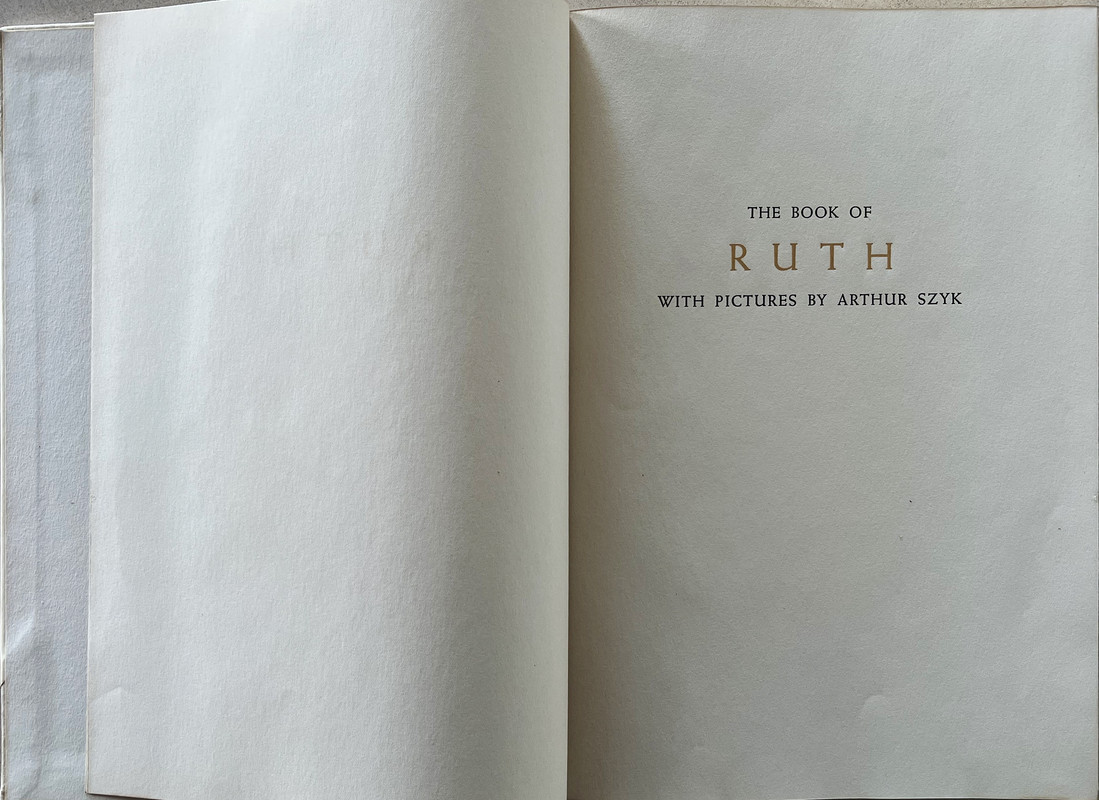
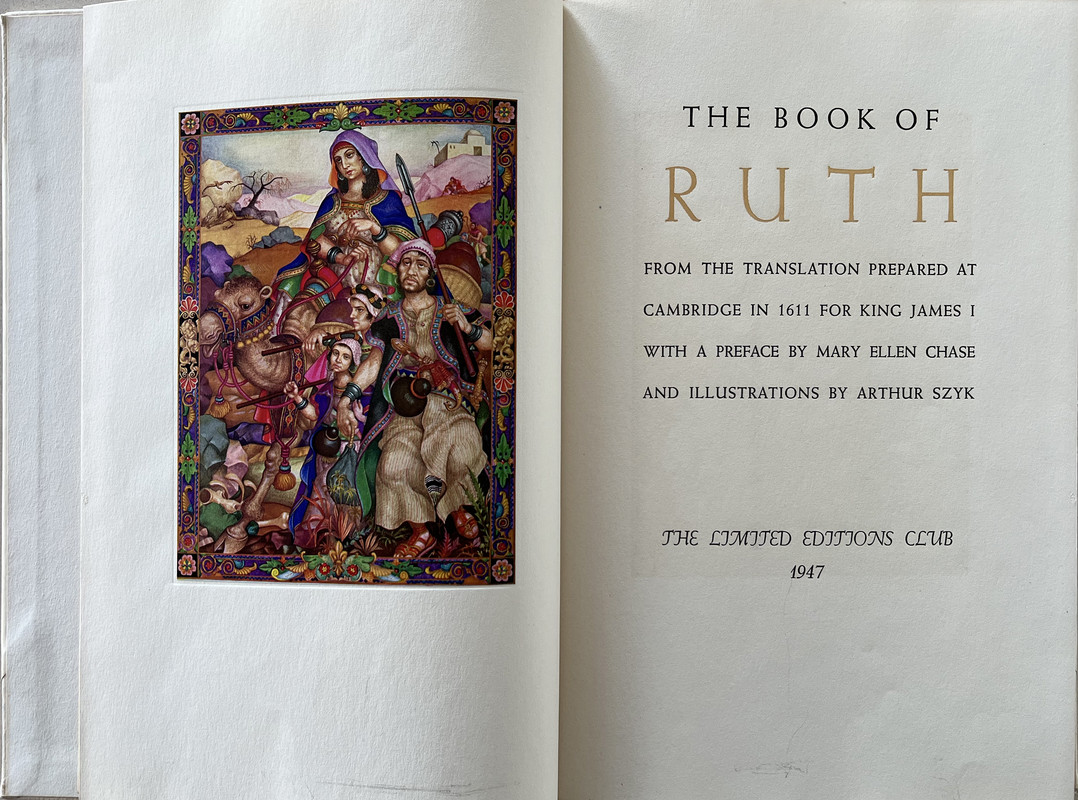
The Book of Ruth in the King James Version – LIMITED EDITIONS CLUB 1947
A PICTORIAL REVIEW
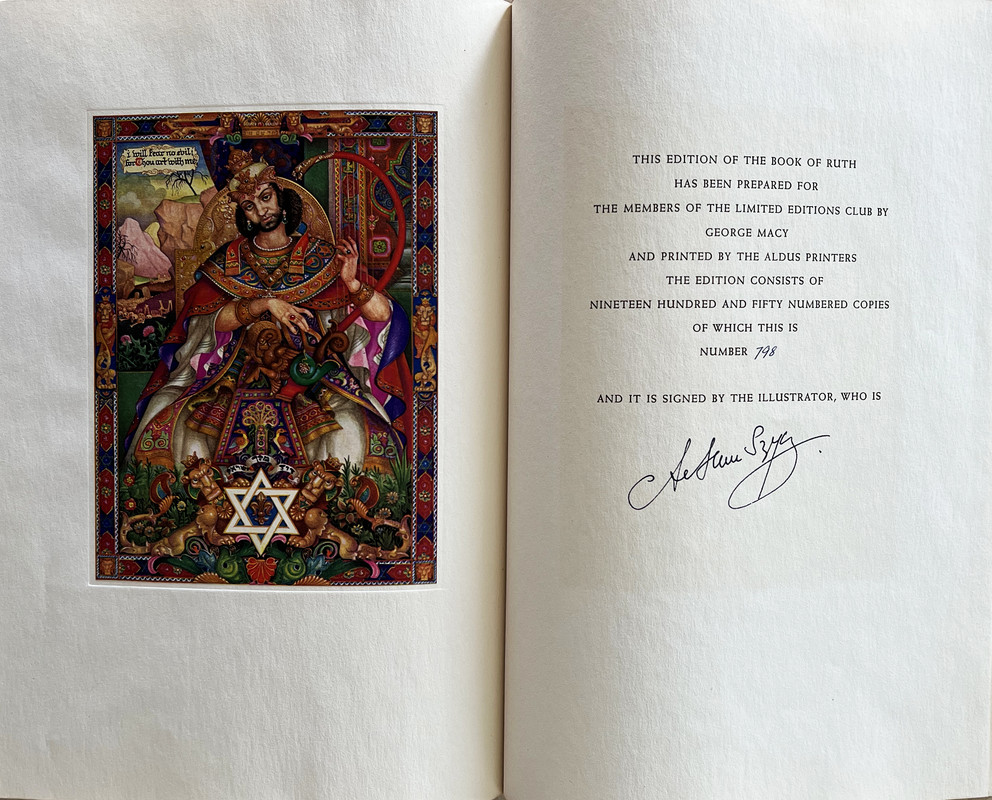
No. 798 of a limited edition of 1950 copies.
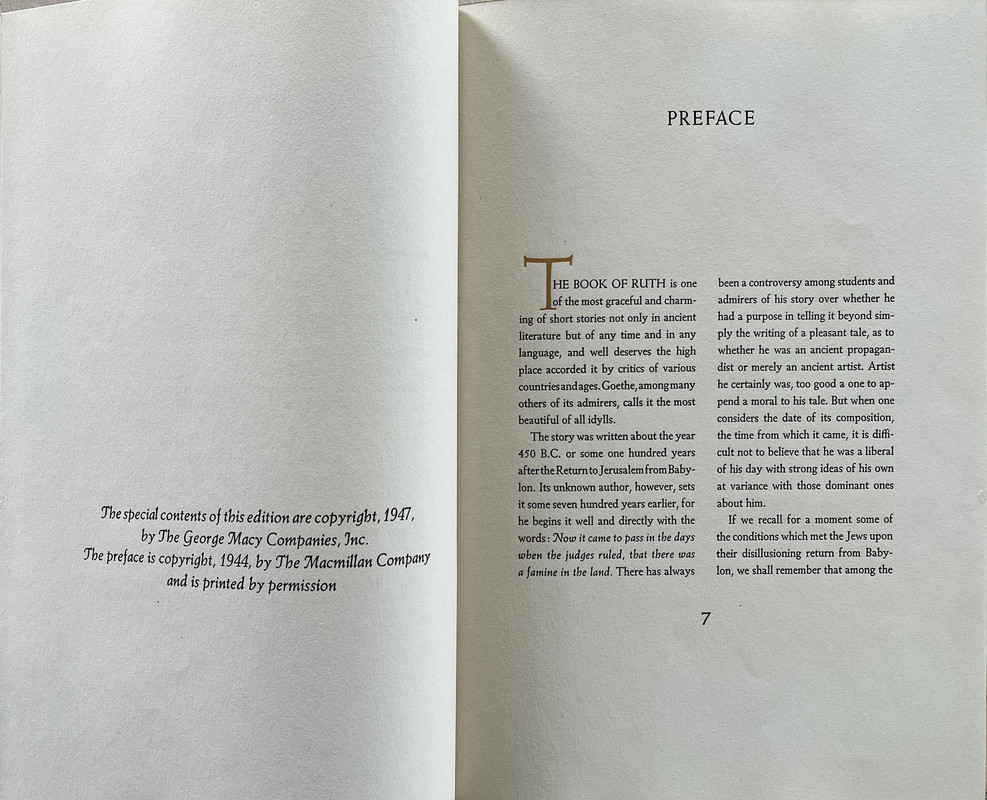
Preface by Mary Ellen Chase.
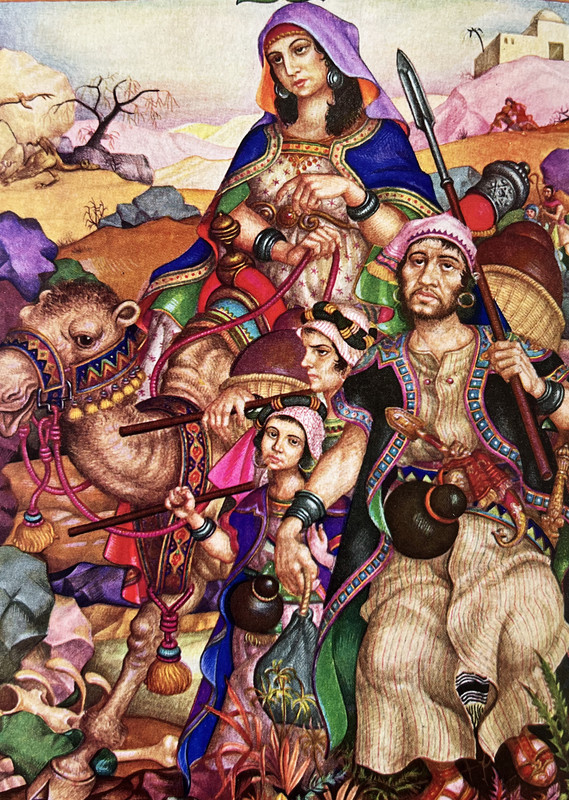
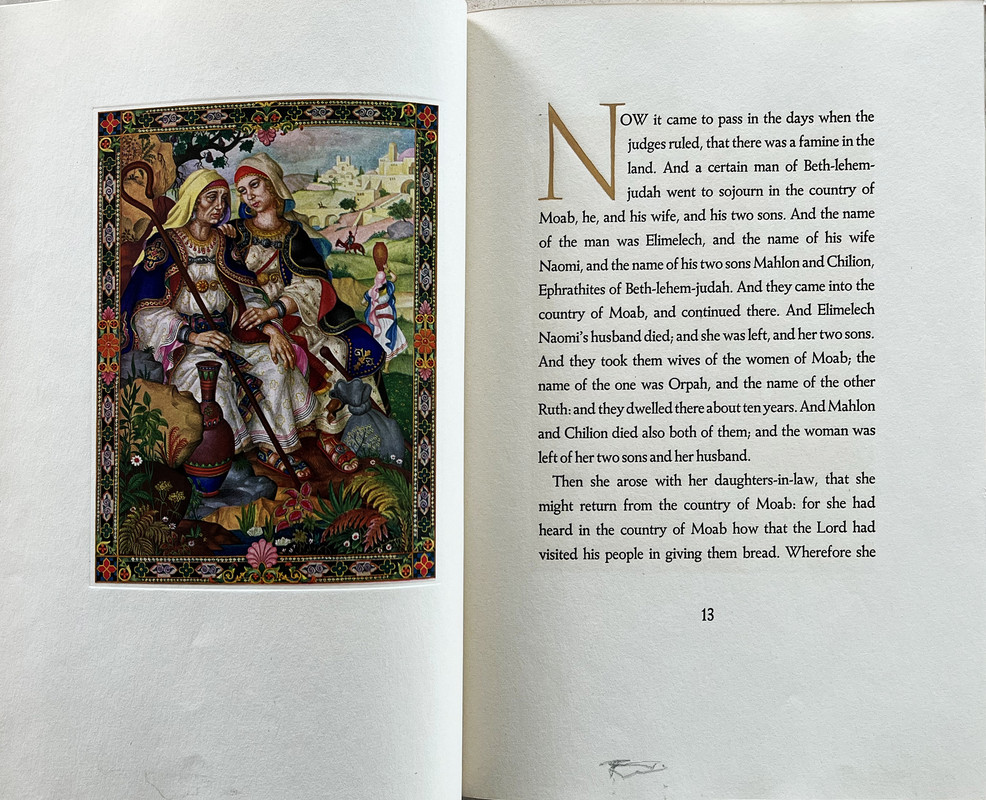
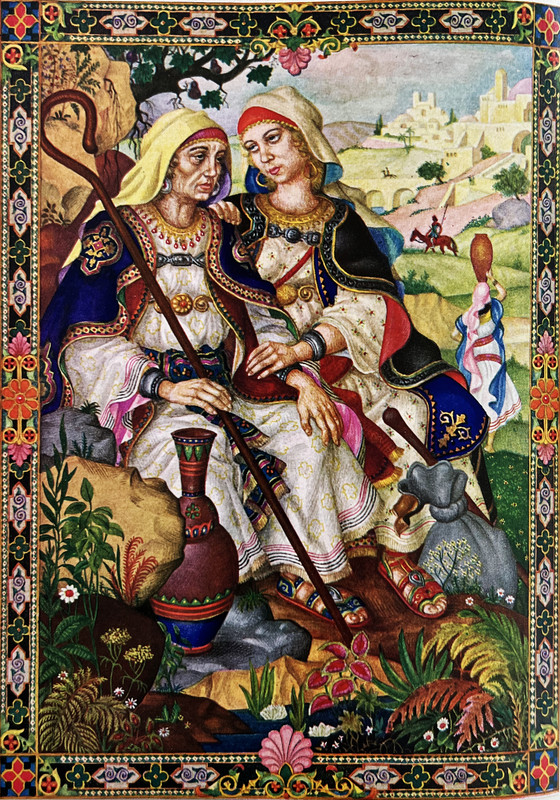
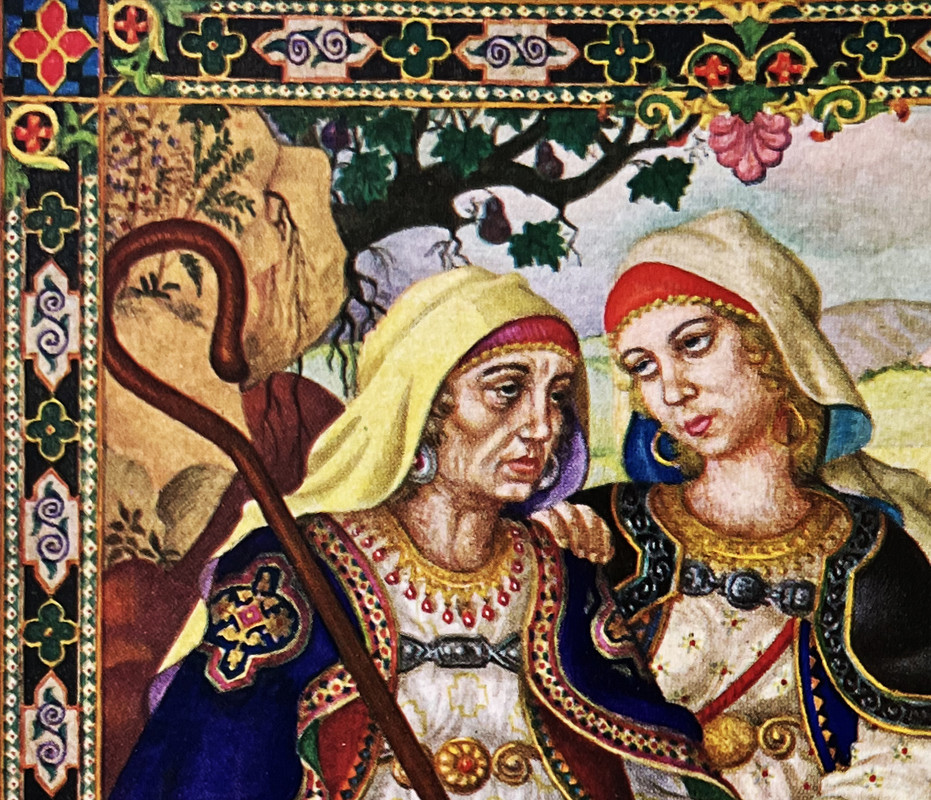
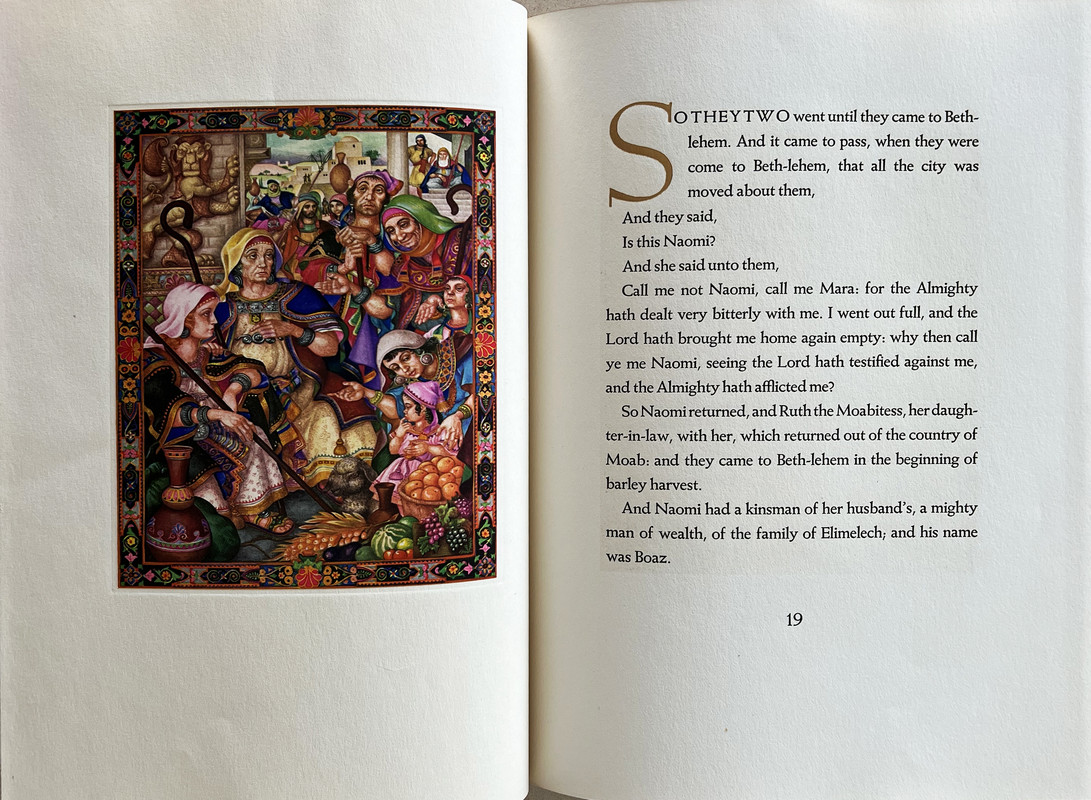
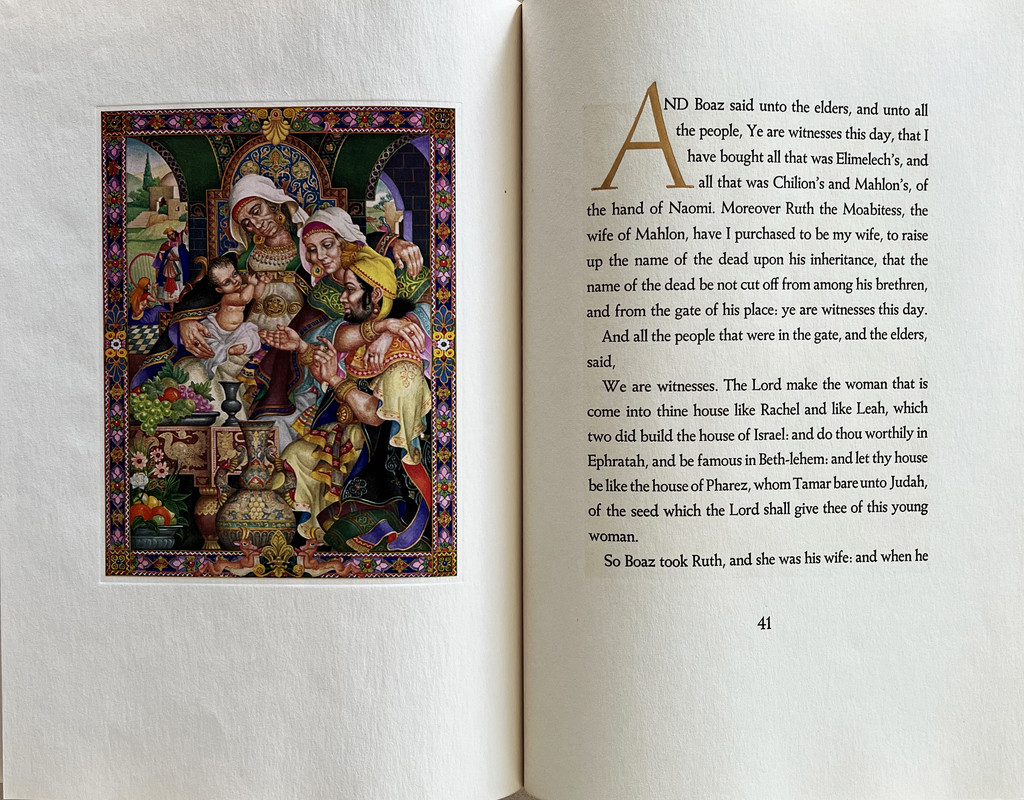
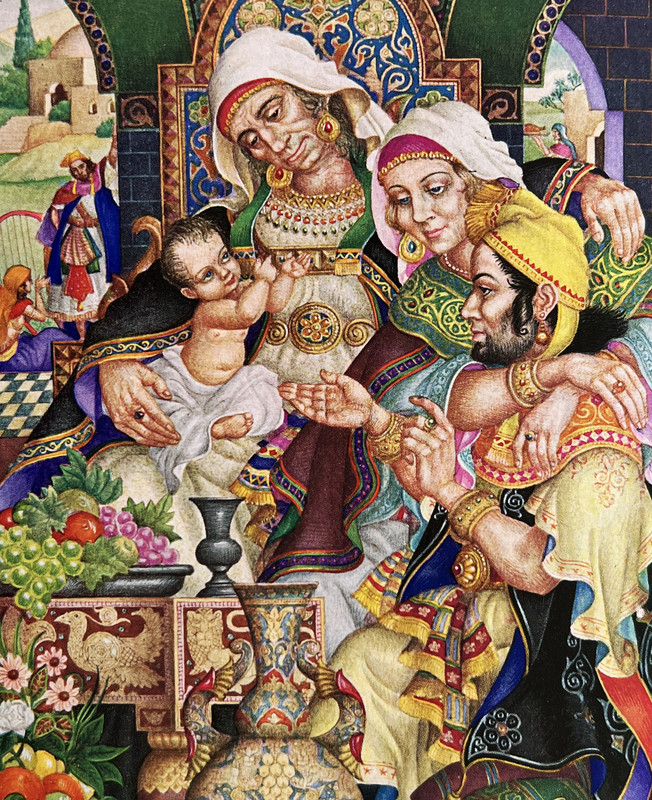
Illustrated with eight tipped-in paintings by Arthur Szyk who has signed the colophon.
Printed by Aldus Printers.
French fold pages.
Page tops gilded.
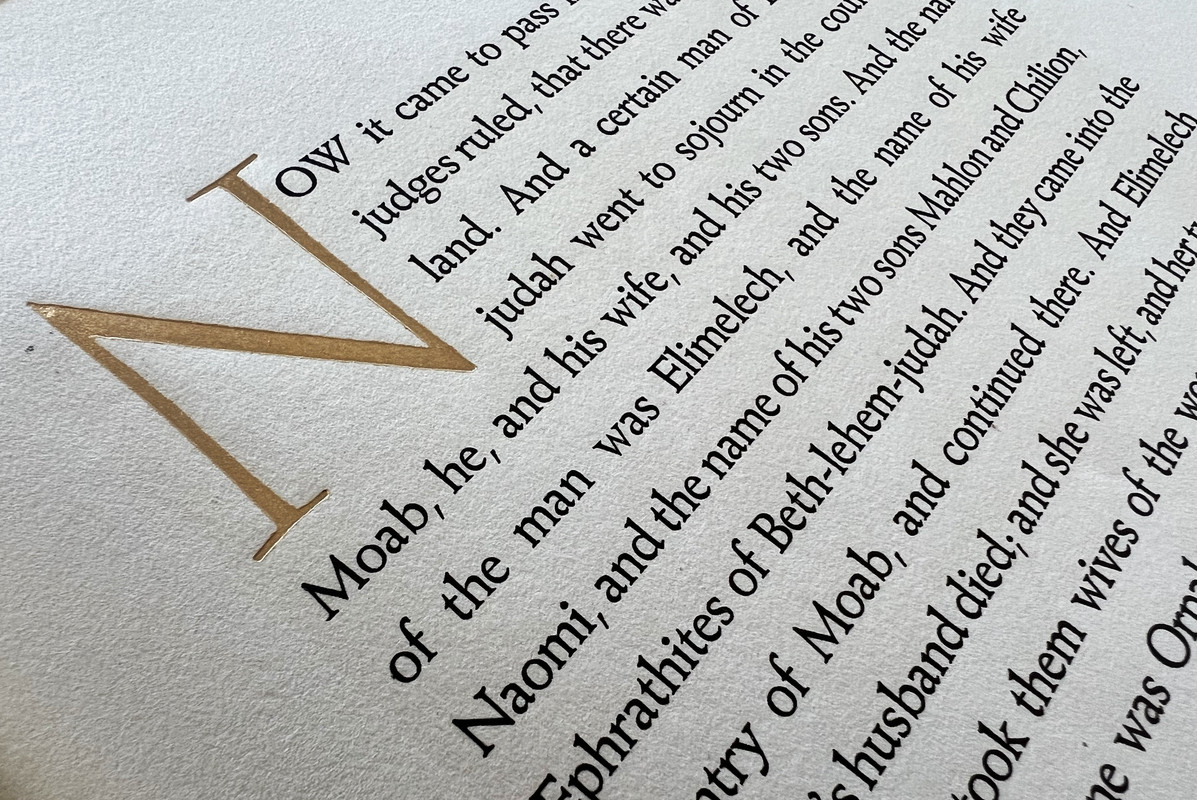
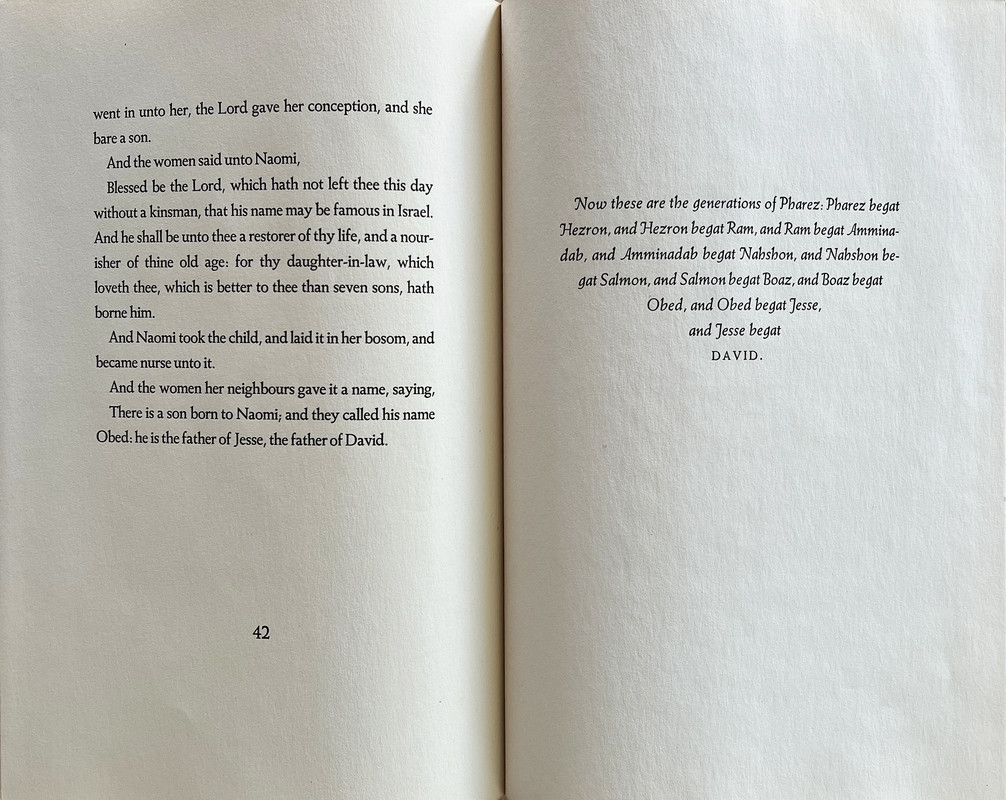
Printed with Weiss type on heavy Worthy’s Aurelian paper.
Plain white endpapers.
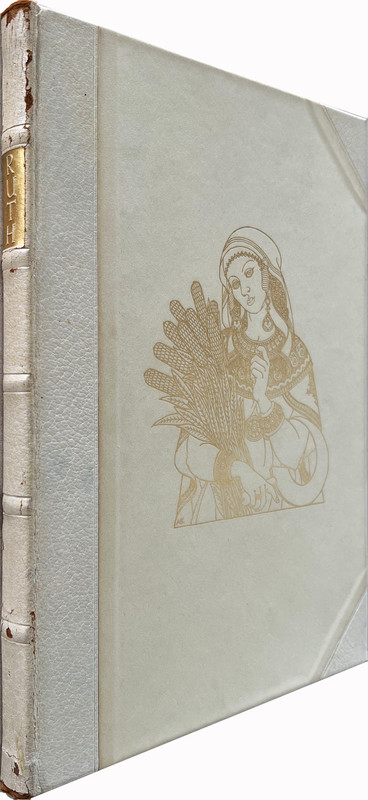
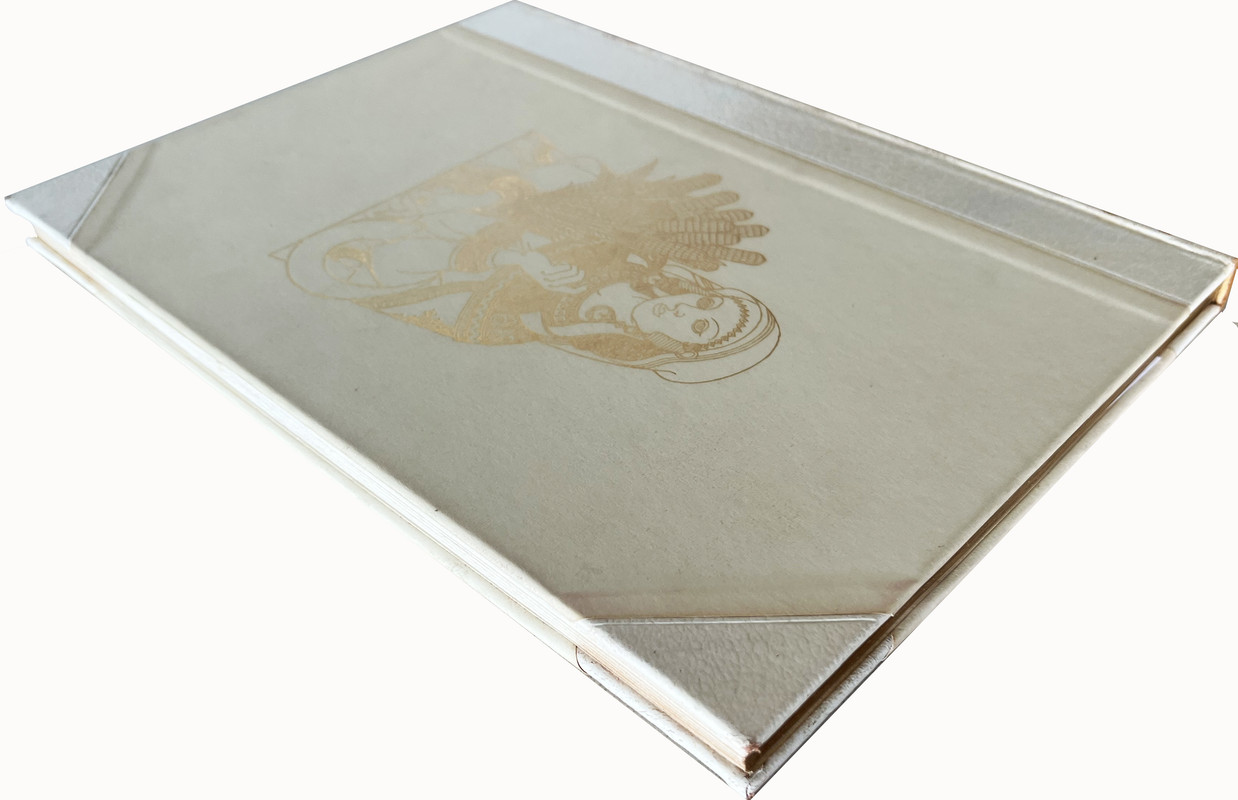
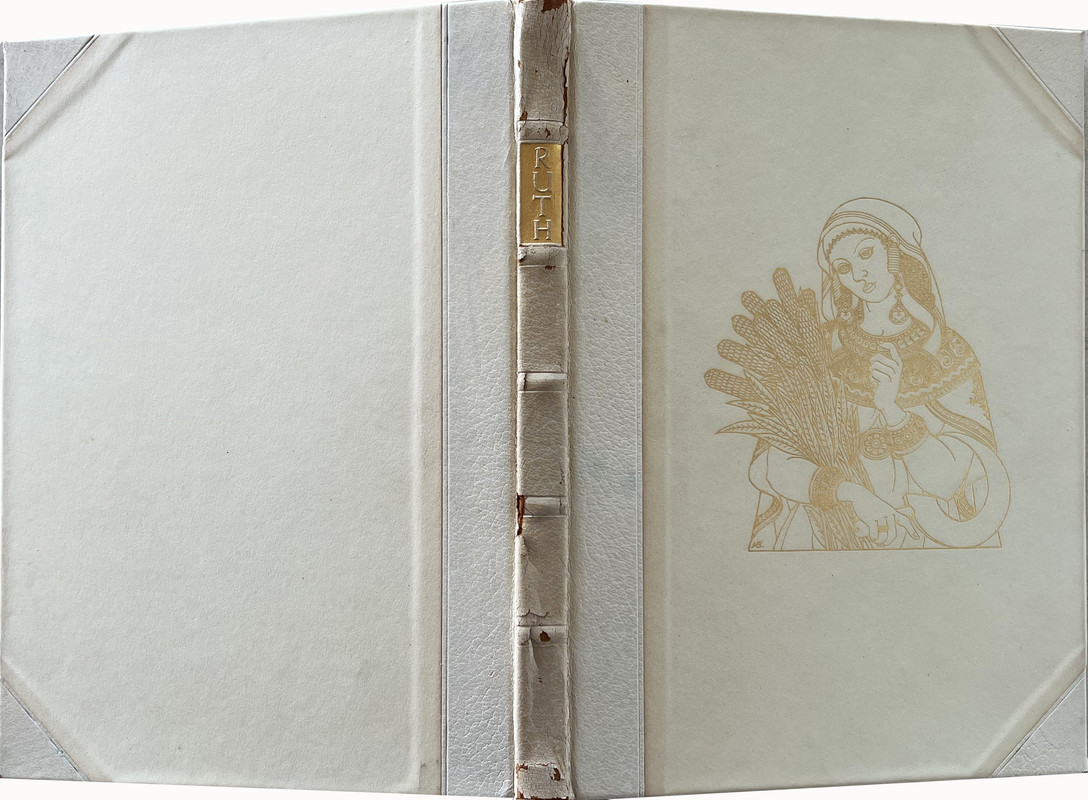
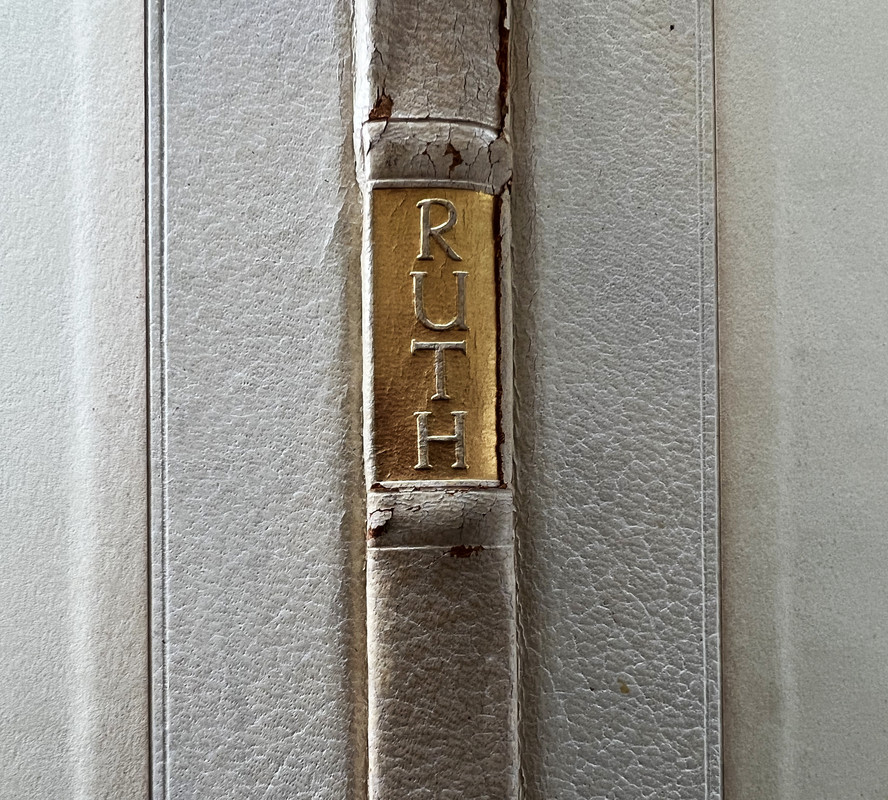
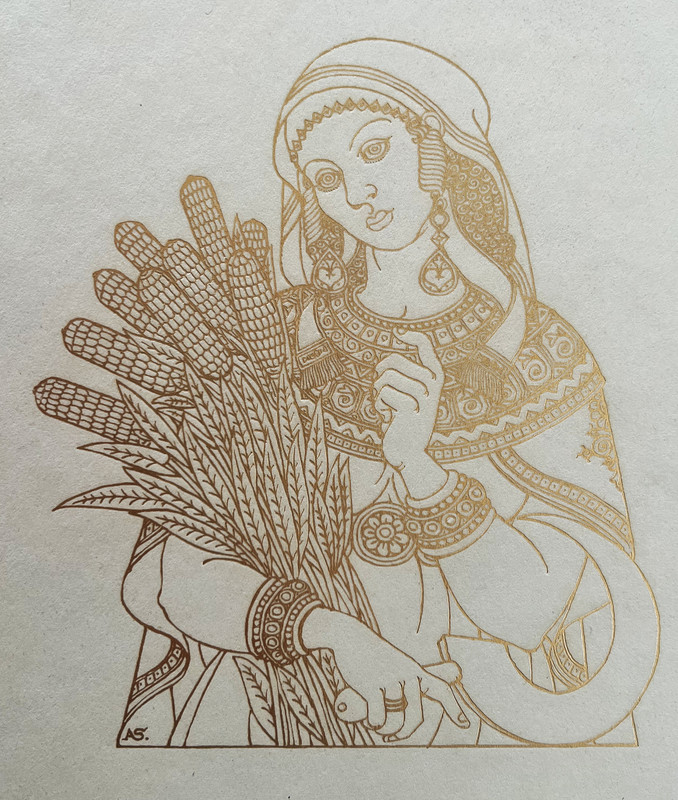
Bound by Russell-Rutter Company in three-quarter white leather stamped in gold, smooth vellum-paper cover with gold image stamped.
Ribbed spine.
Gold title label with raised print.
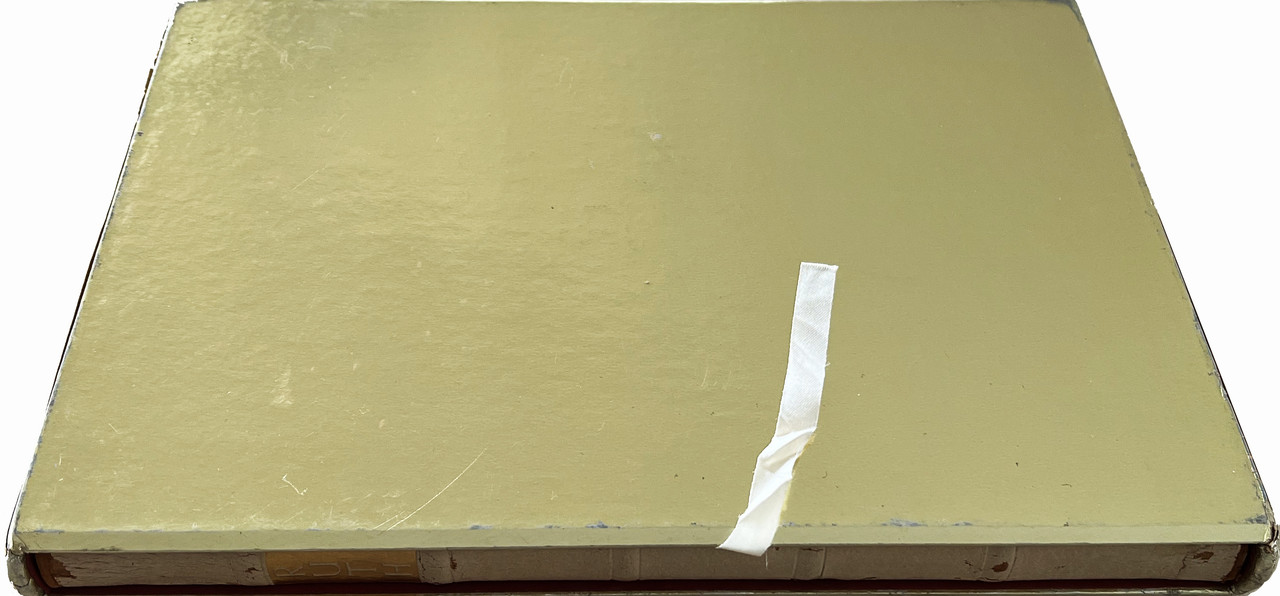
Gold slipcase with red spine title.
White book-lift ribbon.
Monthly letter laid-in.
42 pages
32x22.5cm.
€90
The spine and slipcase of my copy are a bit battered after 75 years, but the covers and interior are in fine condition.



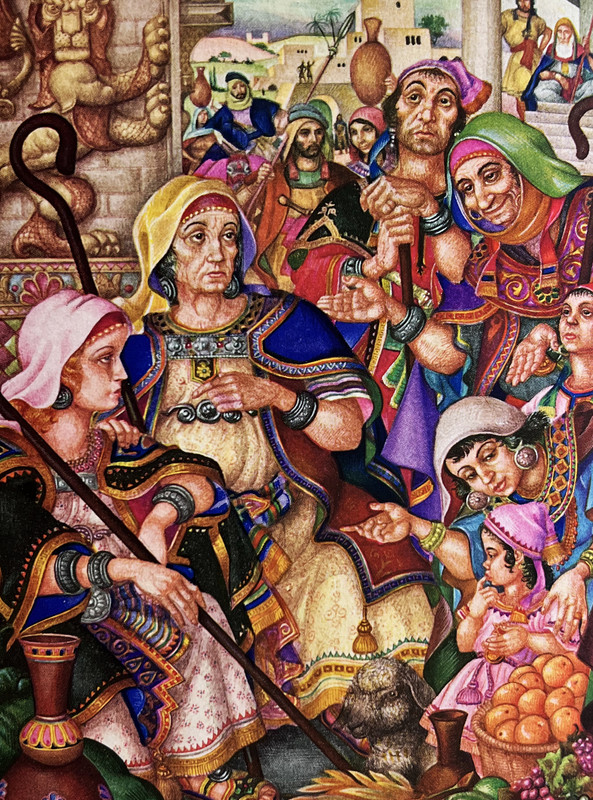
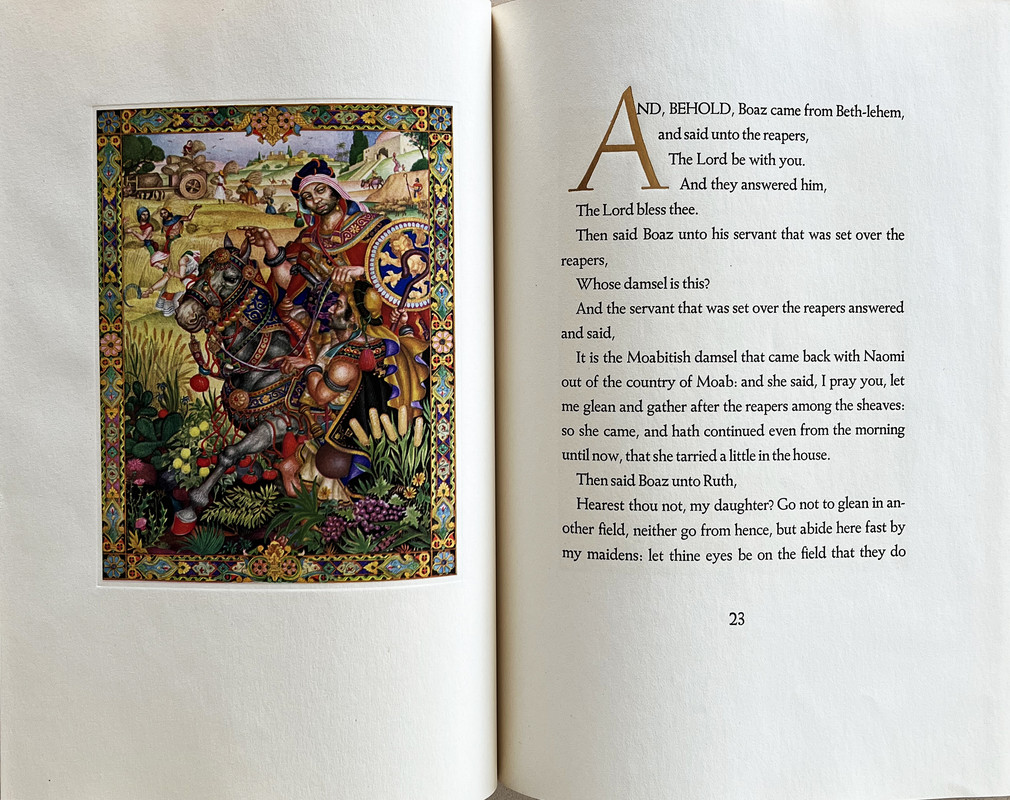
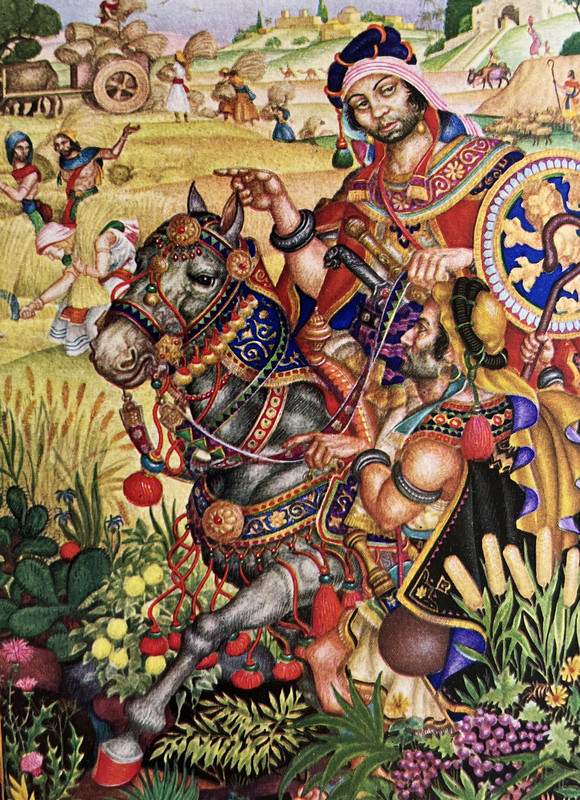
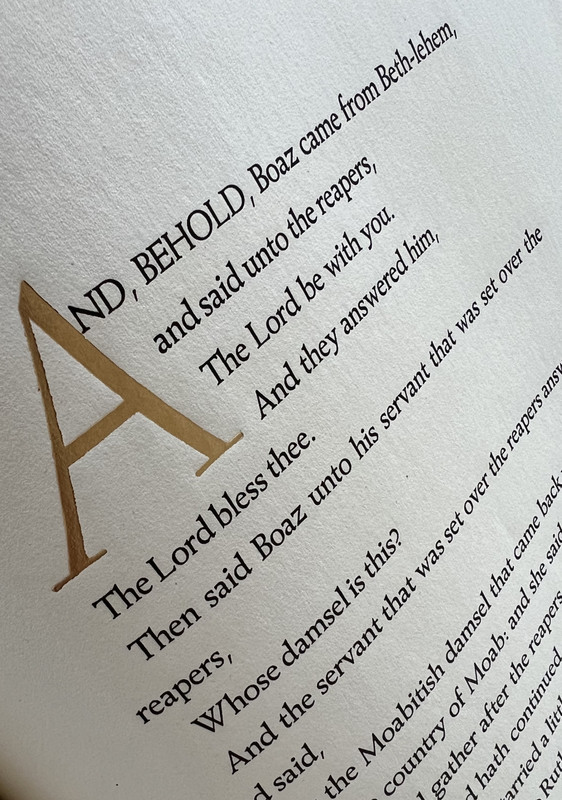
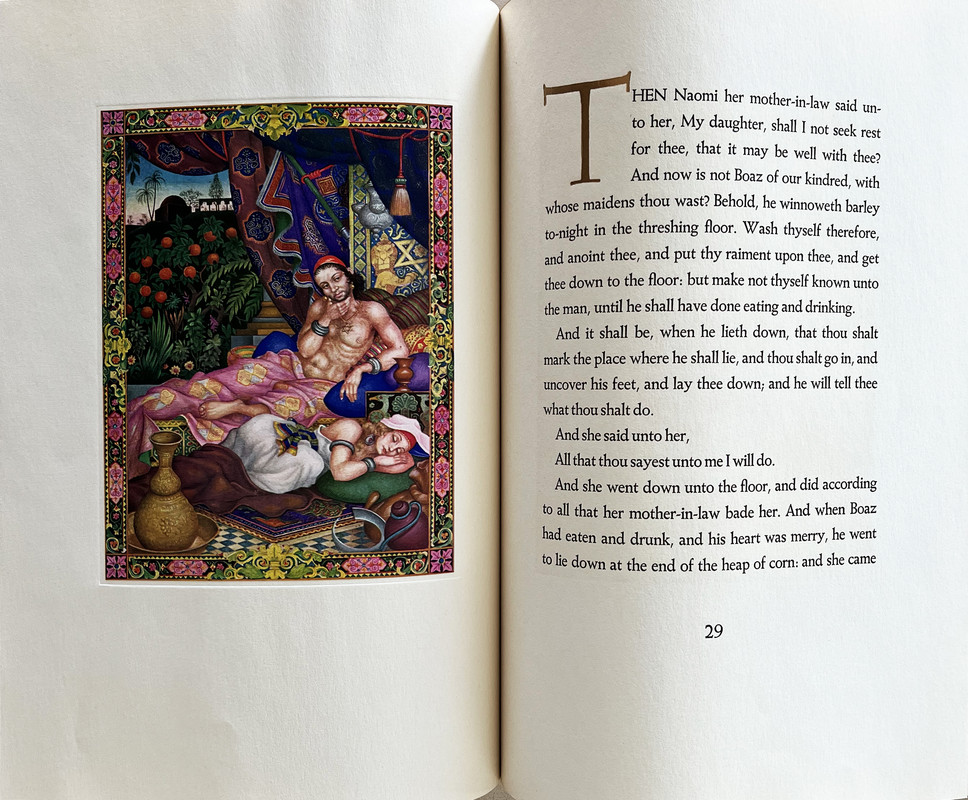
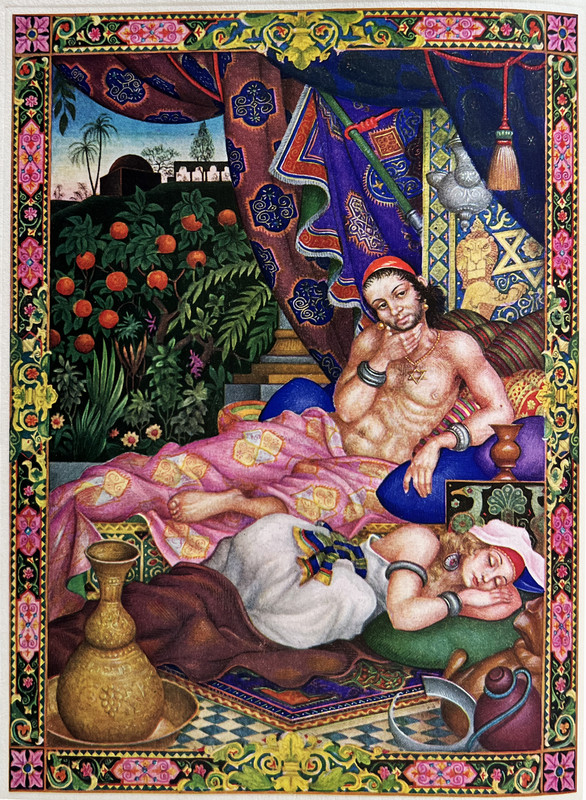
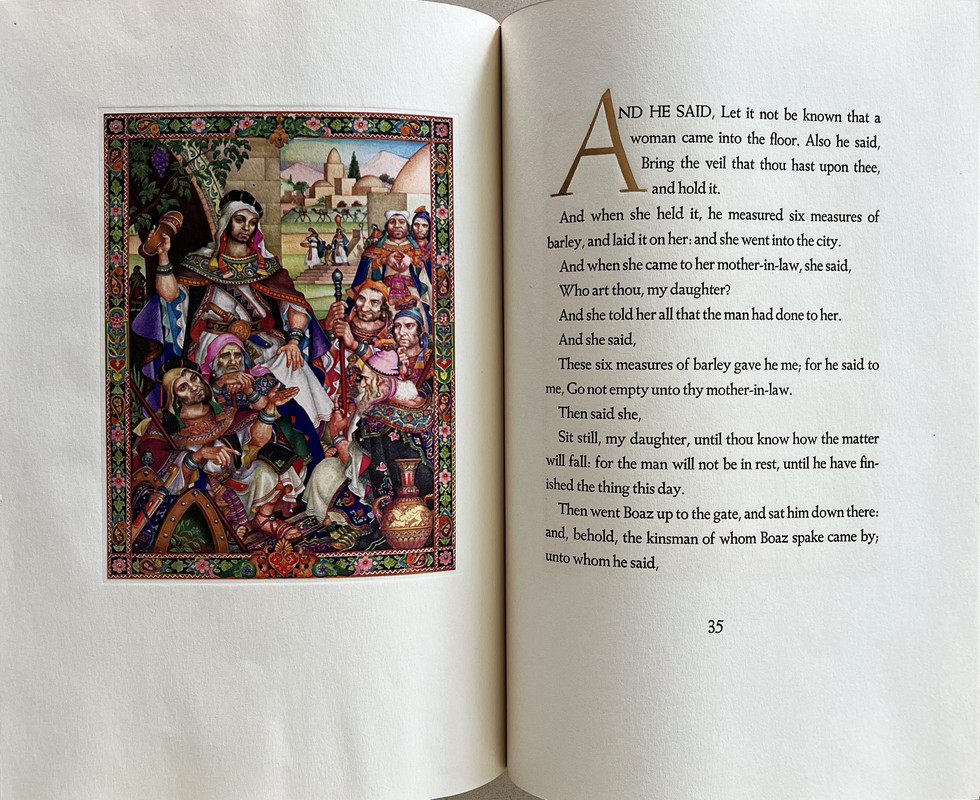
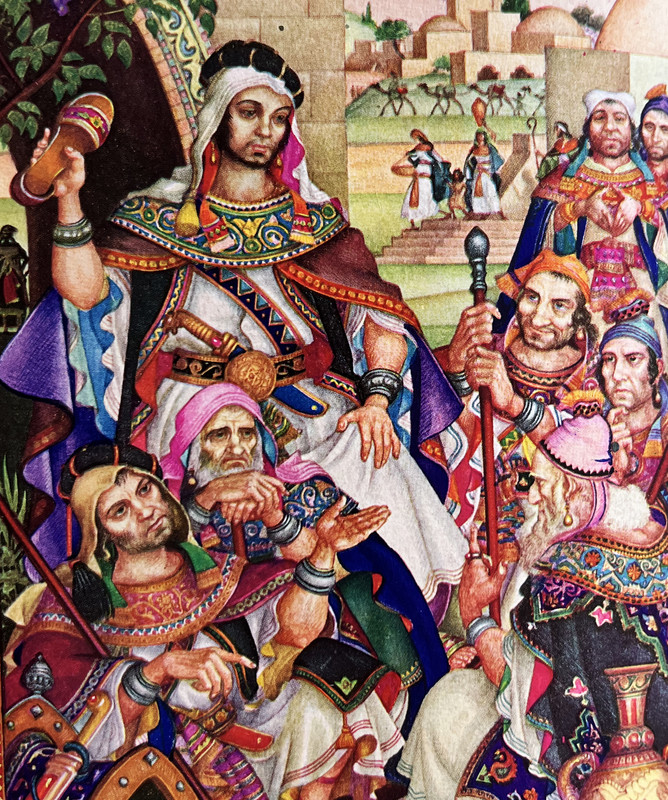
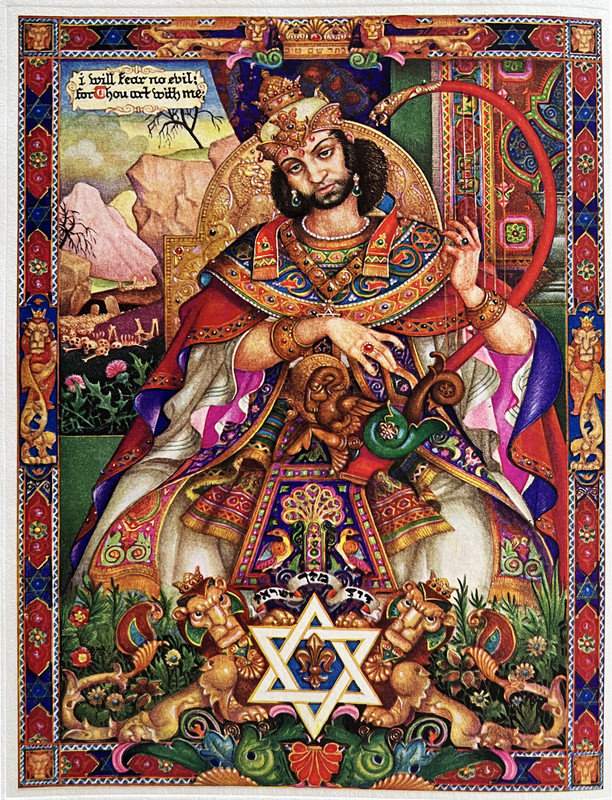
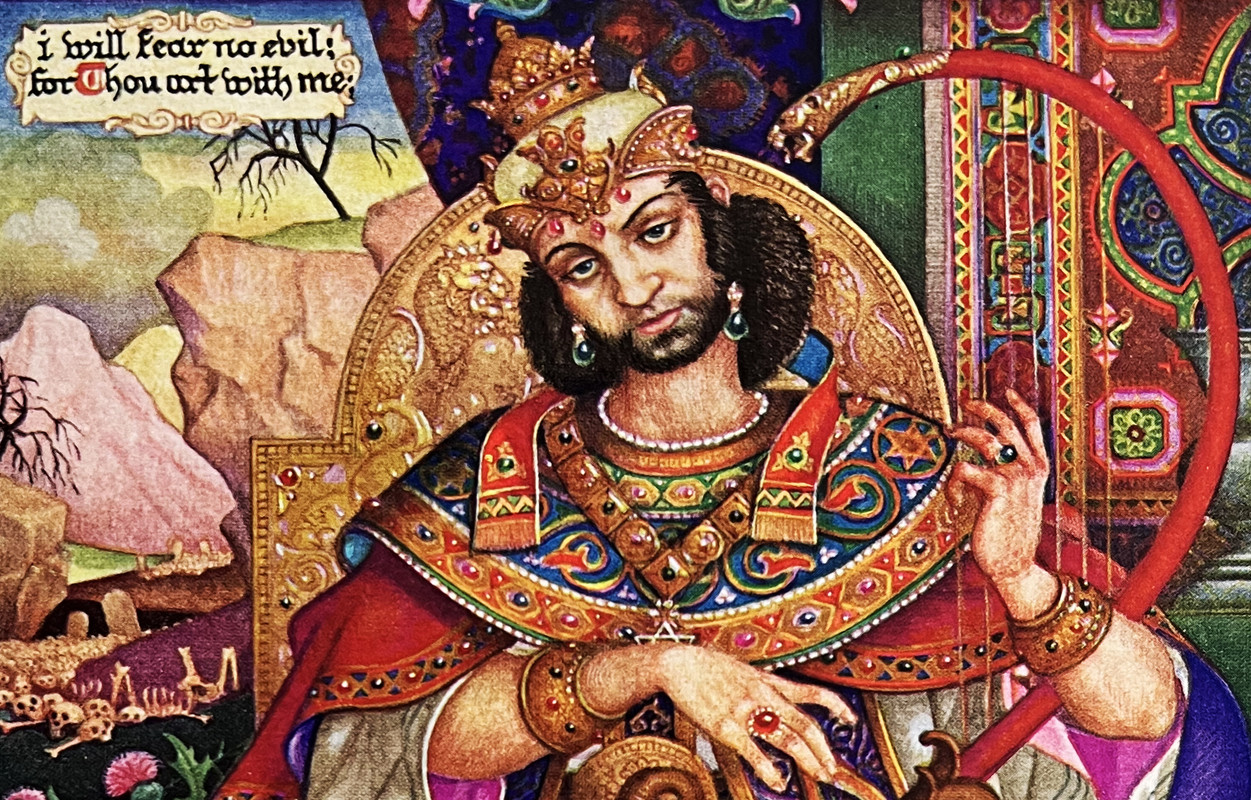
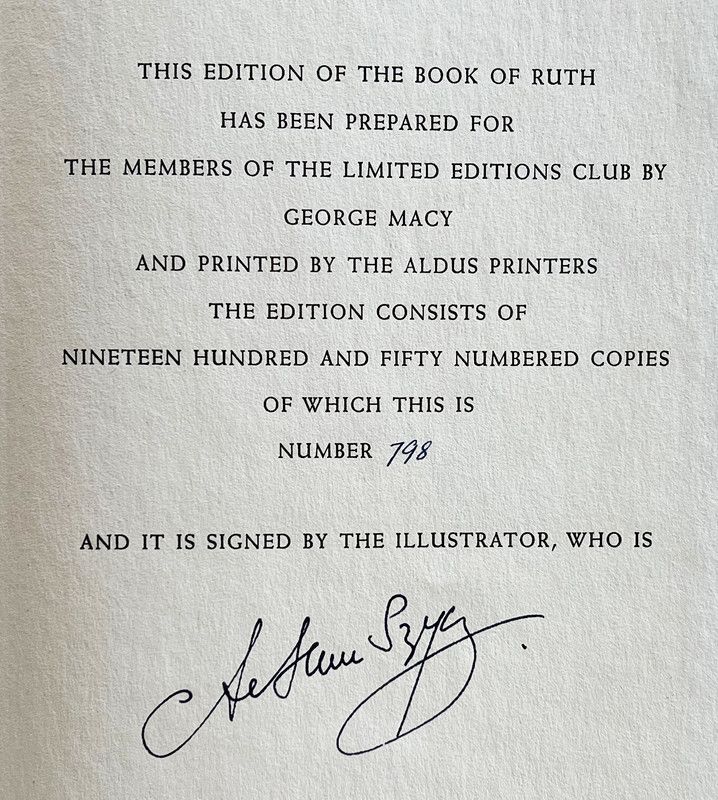
An index of the other illustrated reviews in the this series can be viewed here.
A PICTORIAL REVIEW
No. 798 of a limited edition of 1950 copies.
Preface by Mary Ellen Chase.
Illustrated with eight tipped-in paintings by Arthur Szyk who has signed the colophon.
Printed by Aldus Printers.
French fold pages.
Page tops gilded.
Printed with Weiss type on heavy Worthy’s Aurelian paper.
Plain white endpapers.
Bound by Russell-Rutter Company in three-quarter white leather stamped in gold, smooth vellum-paper cover with gold image stamped.
Ribbed spine.
Gold title label with raised print.
Gold slipcase with red spine title.
White book-lift ribbon.
Monthly letter laid-in.
42 pages
32x22.5cm.
€90
The spine and slipcase of my copy are a bit battered after 75 years, but the covers and interior are in fine condition.
An index of the other illustrated reviews in the this series can be viewed here.
2kdweber
The dreaded LEC sheepskin binding compounded with the dreaded LEC peeling foil slipcase. I was fortunate to find a copy with a pristine binding but my copy does have some peeling on the slipcase spine. Otherwise, a really nice book. Thanks for the wonderful photography.
3kermaier
Wow, that's really attractive! I'd never really considered any of the LEC biblical editions before.
Szyk's illustrations are pretty over-the-top for the subject matter, but the book looks really well done, overall.
Szyk's illustrations are pretty over-the-top for the subject matter, but the book looks really well done, overall.
4astropi
Szyk's illustrations are simply amazing!
About the only thing I would wish for is the Hebrew text alongside the English translation. Well, that and that the binding would not deteriorate - Of course sheepskin binding is notorious for that. Regardless, thanks for sharing!
About the only thing I would wish for is the Hebrew text alongside the English translation. Well, that and that the binding would not deteriorate - Of course sheepskin binding is notorious for that. Regardless, thanks for sharing!
5kermaier
>4 astropi: Hebrew letterpress would've been quite a heavy lift in 1947 -- polymer plates would be the way to go.
Edit: Though I guess it's a pretty short text....
Edit: Though I guess it's a pretty short text....
6abysswalker
>5 kermaier: The Living Talmud (LEC) used a Hebrew typeface called Hadassah which a Sandglass tells me was designed in 1950 (that particular face). I might have the monthly letter around somewhere, but for whatever reason the Sandglass is what came up first when I searched my laptop, and I think the info is the same for the typesetting. I don't think there are that many glyphs needed for Hebrew, are there? There must have been some already extant typefaces previous to that.
Regarding the Szyk illustrated biblical books, some of the Heritage Press editions are nice as well, if someone likes the general treatment but wants to avoid the sheepskin bindings. I have an earlier Heritage Press edition of the Book of Job with which I am happy.
Regarding the Szyk illustrated biblical books, some of the Heritage Press editions are nice as well, if someone likes the general treatment but wants to avoid the sheepskin bindings. I have an earlier Heritage Press edition of the Book of Job with which I am happy.
7astropi
>6 abysswalker: Oh, nice call! The Living Talmud is beautiful, and truly a gem amongst the numerous LEC editions - yes many/most LEC books are beautiful, but here we have something truly unique and wonderful among fine press! Also, I looked through the LEC Dead Sea Scrolls and did not spot any Hebrew - although I will add that the latter is also a gorgeous edition and very well worth getting :)
8kermaier
>6 abysswalker: There are 22 consonants in the Hebrew alphabet (no upper/lower case), plus 5 that take a different form when they appear at the end of a word. There are 10 vowels that take the form of diacritics added above, below or within the consonant characters. Typesetting is probably extremely difficult unless most of the consonant/vowel combinations are available as separate sorts. I don’t feel like doing the math (not all combinations are valid) — but that’s a lot of sorts!
Edit: And that’s without the cantillation marks that indicate formal reading intonation, emphasis and punctuation…
Edit: And that’s without the cantillation marks that indicate formal reading intonation, emphasis and punctuation…
9kermaier
Here's the first page of the Book of Ruth in a modern (1963) letterpress Hebrew edition (sorry for the poor snapshot):


10kdweber
>8 kermaier: Most Hebrew in Israel is written without using the diacritical marks. It’s useful for learning Hebrew and is found in most American Jewish prayer books. Torah scrolls do not use these added vowels either nor trope marks for that matter. There is a Hebrew book called a tikkun which has a side by side translation of Hebrew with one side being the Hebrew as it is in a Torah scroll and the other side with the added vowels and cantillation/trope.
I don’t think it would be very hard to typeset Ruth without the added diacritical marks.
I don’t think it would be very hard to typeset Ruth without the added diacritical marks.
11kermaier
>10 kdweber:
All of that information is correct, but not very relevant, since the Book of Ruth and similar OT books in the original Hebrew are almost never presented in print without the vowels. It might be relatively easy to do, but I question the utility of the result.
All of that information is correct, but not very relevant, since the Book of Ruth and similar OT books in the original Hebrew are almost never presented in print without the vowels. It might be relatively easy to do, but I question the utility of the result.
12abysswalker
>10 kdweber: this is fascinating. I am about as far from an expert on typesetting Hebrew as one can be (my knowledge coming entirely from a handful of articles I have read this evening), but it sounds like it would have been rare historically as well. From the Wikipedia article on niqqud:
In modern Israeli orthography niqqud is seldom used, except in specialised texts such as dictionaries, poetry, or texts for children or for new immigrants to Israel.And:
The most widespread system, and the only one still used to a significant degree today, was created by the Masoretes of Tiberias in the second half of the first millennium AD(Much later than the 6th–4th centuries BC publication date generally accepted for the Book of Ruth.)
13abysswalker
(I just checked my copy of The Living Talmud from the LEC, and the Hebrew text has no niqqud marks.)
14kermaier
>12 abysswalker:
Even native Hebrew speakers in Israel would virtually never encounter a biblical text without vowels, and would likely have at least some difficulty in pronouncing it correctly. The only exceptions would be a parchment scroll (or facsimile thereof), read by adepts in either an archaeological or Jewish ritual context.
Even native Hebrew speakers in Israel would virtually never encounter a biblical text without vowels, and would likely have at least some difficulty in pronouncing it correctly. The only exceptions would be a parchment scroll (or facsimile thereof), read by adepts in either an archaeological or Jewish ritual context.
15kermaier
>13 abysswalker:
I’m not familiar with the book — what text is it?
I’m not familiar with the book — what text is it?
16kermaier
>13 abysswalker:
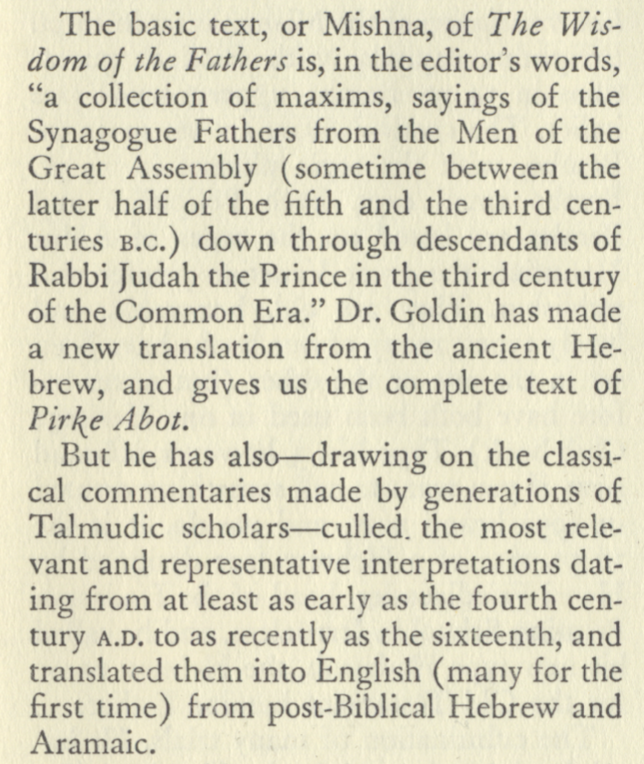
If “The Living Talmud” reproduces excerpts from the Talmud, then it’s not actually Hebrew. Although printed using Hebrew characters, the language of the Talmud is Aramaic.
And the Talmud has historically been printed without vowels. It’s only recently (think past 50 years) that printed editions of the Talmud have been published with vowels.
(Similarly, Yiddish is written/printed using Hebrew characters, without vowels, although the language has more in common with German than with Hebrew.)
If “The Living Talmud” reproduces excerpts from the Talmud, then it’s not actually Hebrew. Although printed using Hebrew characters, the language of the Talmud is Aramaic.
And the Talmud has historically been printed without vowels. It’s only recently (think past 50 years) that printed editions of the Talmud have been published with vowels.
(Similarly, Yiddish is written/printed using Hebrew characters, without vowels, although the language has more in common with German than with Hebrew.)
18kermaier
>17 abysswalker:
Thanks — that’s very interesting. And somewhat bizarre for the LEC. I wonder what the subscribers thought of it at the time?
Thanks — that’s very interesting. And somewhat bizarre for the LEC. I wonder what the subscribers thought of it at the time?
19Django6924
>16 kermaier:
I am sadly ignorant of this subject and can only quote from the Sandglass:
A printed page of the Talmud in its original languages (Hebrew, Aramaic, etc.) presents a fairly symmetrical appearance. There is a center island of large type, surrounded on four sides by a sea of smaller type. The large type consists of a portion of the Mishna together with the related portion of Gemara, continuing on subsequent pagesThe small surrounding type columns embody the eleventh-to-fourteenth-century commentaries.
From this it was my understanding that the Talmud wasn't just Aramaic transliterated into Hebrew but simultaneous texts. From what you say this isn't correct.
The Hebrew type used was designed by Henri Friedlander, head of the Hadassah Printing School in Jerusalem and named "Hadassah" and was obtained by the designer, Joseph Blumenthal, from the Amsterdam Type Foundry (lead type).
>18 kermaier:
I admit when I received the book as a Heritage Club member back in the 1960s, I didn't quite know what to make of it. It was obviously a labor of love on Macy's part (perhaps as a means of balancing out the accounts after the multiple productions of The Holy Bible, The Four Gospels, etc., which featured the glories of the KJV). The Heritage edition is deluxe and I never felt the need to replace it with a Limited Editions Club version.

I am sadly ignorant of this subject and can only quote from the Sandglass:
A printed page of the Talmud in its original languages (Hebrew, Aramaic, etc.) presents a fairly symmetrical appearance. There is a center island of large type, surrounded on four sides by a sea of smaller type. The large type consists of a portion of the Mishna together with the related portion of Gemara, continuing on subsequent pagesThe small surrounding type columns embody the eleventh-to-fourteenth-century commentaries.
From this it was my understanding that the Talmud wasn't just Aramaic transliterated into Hebrew but simultaneous texts. From what you say this isn't correct.
The Hebrew type used was designed by Henri Friedlander, head of the Hadassah Printing School in Jerusalem and named "Hadassah" and was obtained by the designer, Joseph Blumenthal, from the Amsterdam Type Foundry (lead type).
>18 kermaier:
I admit when I received the book as a Heritage Club member back in the 1960s, I didn't quite know what to make of it. It was obviously a labor of love on Macy's part (perhaps as a means of balancing out the accounts after the multiple productions of The Holy Bible, The Four Gospels, etc., which featured the glories of the KJV). The Heritage edition is deluxe and I never felt the need to replace it with a Limited Editions Club version.

20kermaier
>19 Django6924:
I suppose that’s a bit more accurate, in a sense.
The Mishna is a compendium of Jewish law written in Hebrew around the 2nd-3rd century.
The Gemara is an elucidation of the Mishna, written in Aramaic over the next 400 years or so.
The Talmud often is taken to mean the combination of the two, but the vast bulk of the material consists of the Aramaic Gemara.
The page layout with Medieval commentaries described in the Sandglass is from a particular edition, first published in Vilna, Lithuania in the 19th century, in a set of something like 37 large folio volumes. The Vilna edition has since become the classic edition, reproduced in numerous formats, and ubiquitous as the standard source for Talmudic scholars.
Edit: The two medieval commentaries included in the Vilna edition are written in Hebrew, and set using a special type face that replicates a medieval cursive Hebrew handwriting used by one of their authors. (The main Mishna/Gemara text is set in a standard Hebrew letter-form font.)
I suppose that’s a bit more accurate, in a sense.
The Mishna is a compendium of Jewish law written in Hebrew around the 2nd-3rd century.
The Gemara is an elucidation of the Mishna, written in Aramaic over the next 400 years or so.
The Talmud often is taken to mean the combination of the two, but the vast bulk of the material consists of the Aramaic Gemara.
The page layout with Medieval commentaries described in the Sandglass is from a particular edition, first published in Vilna, Lithuania in the 19th century, in a set of something like 37 large folio volumes. The Vilna edition has since become the classic edition, reproduced in numerous formats, and ubiquitous as the standard source for Talmudic scholars.
Edit: The two medieval commentaries included in the Vilna edition are written in Hebrew, and set using a special type face that replicates a medieval cursive Hebrew handwriting used by one of their authors. (The main Mishna/Gemara text is set in a standard Hebrew letter-form font.)

23kermaier
>22 Lukas1990:
Hah! You’re looking for a 30-odd-volume set of the first edition now? That’s some serious enablement….
Hah! You’re looking for a 30-odd-volume set of the first edition now? That’s some serious enablement….
Join to post

