
1edwinbcn
It was the best of times, it was the worst of times, it was the age of wisdom, it was the age of foolishness, it was the epoch of belief, it was the epoch of incredulity, it was the season of Light, it was the season of Darkness, it was the spring of hope, it was the winter of despair, we had everything before us, we had nothing before us, we were all going direct to heaven, we were all going direct the other way - in short, the period was so far like the present period, that some of its noisiest authorities insisted on its being received, for good or for evil, in the superlative degree of comparison only.
After 23 years in China, the moment has come to go home. Maybe not the best of times, but now is the moment. Better no ponder the future too much.
I have roughly 12 days left to pack. Unfortunately, I will be unable to take all of my books, and many, many books will have to be left behind.
If all is well, I will move back to the Netherlands on August 11.
After 23 years in China, the moment has come to go home. Maybe not the best of times, but now is the moment. Better no ponder the future too much.
I have roughly 12 days left to pack. Unfortunately, I will be unable to take all of my books, and many, many books will have to be left behind.
If all is well, I will move back to the Netherlands on August 11.
2edwinbcn
Being so busy packing, I do have time to read, but not to review the books, so for the time being, I will just continue posting the covers of the books I have finished reading.

7labfs39
Wow, Edwin! Big news. I can't imagine having 12 days to wrap up 23 years of life in another country (and to sort through all my book children). I hope you are doing okay. One positive for us, hopefully you will have better wifi connectivity. Good luck!
8dchaikin
What a change for you! It must be very difficult. Wish you well on your move and this next adventure.
9lilisin
What news!
Best of luck in what must seem impossible a move!
I must however selfishly comment that I am very much excited to finally get access to all your noncensored reviews from here on out. I hope you will also spend some time to enlighten us on how things are in China that we might not get to hear about ordinarily.
Again, best of luck and see you again on the other side!
Best of luck in what must seem impossible a move!
I must however selfishly comment that I am very much excited to finally get access to all your noncensored reviews from here on out. I hope you will also spend some time to enlighten us on how things are in China that we might not get to hear about ordinarily.
Again, best of luck and see you again on the other side!
10dchaikin
>9 lilisin: (ok, i had thought too. Edwin uncensored! ☺️)
11AlisonY
Well, kudos to still fitting in plenty of reading when you're packing all those years of "stuff" within a couple of weeks!
Also mighty glad your reviews won't be stuck behind a firewall going forward :)
Also mighty glad your reviews won't be stuck behind a firewall going forward :)
12thorold
Good luck with the big move! Also looking forward to hearing more from you.
Unless you start to reconsider when you see how you've raised expectations :-)
Unless you start to reconsider when you see how you've raised expectations :-)
13SassyLassy
What a change for you, and how difficult for you to have to choose among your books.
As others have said, looking forward to your less self contained reviews.
As others have said, looking forward to your less self contained reviews.
14edwinbcn
Thanks for all the friendly and supportive comments. LT is still one of the friendliest communities on the web.


21edwinbcn
157. The Geography of Thought. How Asians and Westerners Think Differently... and Why
Finished reading: 30 July 2022

Finished reading: 30 July 2022

22labfs39
>21 edwinbcn: I'm curious what you thought of this one...
23arubabookwoman
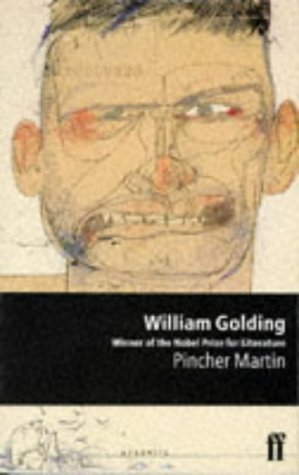
Curious about what you thought of Pincher Martin.
24edwinbcn
>22 labfs39: I think in the late 90s and early years of the new century as China started its ascent, there was a lot of interest to figure out the Chinese, understand what makes them tick. China's rise was preceded by the booming 'Asian Tigers' Japan, Korea, Taiwan and Singapore. There is a lot of ethnocentric, anecdotal information. This book is based on the author's impressions of some two or three decades, working with Asian (graduate) students and a small body of research.
The core message of the book has very little substance. The writing style is exuberant, very easy to read, but a lot of talk around a modest message. A small amount of empirical research does seem to support some of the author's ideas but the "why" explanation is a long, repetitive historical ramble. The book will tell you nothing new if you already had a modest interest in the topic, it just confirms some widely held notions.
Given the wordy writing style, with lots of references to the author's own personal experiences, and the fact that the whole book is just about 200 pages, the core message of the book would just about merit a short academic article (now blown up to book-size proportions).
I think there are better books about Confucion heritage learning or learners, and the author's ideas about different ways of thinking do not hold up against comparison with other cultures and background. Then, too, some observation are of interest, and I have seen and experienced them myself, but I think the research and offered explanations in this book are not robust enough.
The core message of the book has very little substance. The writing style is exuberant, very easy to read, but a lot of talk around a modest message. A small amount of empirical research does seem to support some of the author's ideas but the "why" explanation is a long, repetitive historical ramble. The book will tell you nothing new if you already had a modest interest in the topic, it just confirms some widely held notions.
Given the wordy writing style, with lots of references to the author's own personal experiences, and the fact that the whole book is just about 200 pages, the core message of the book would just about merit a short academic article (now blown up to book-size proportions).
I think there are better books about Confucion heritage learning or learners, and the author's ideas about different ways of thinking do not hold up against comparison with other cultures and background. Then, too, some observation are of interest, and I have seen and experienced them myself, but I think the research and offered explanations in this book are not robust enough.
25edwinbcn
>23 arubabookwoman: I have read almost all of Golding's novels and think Pincher Martin is one of the most accessible. The premise is intriguing, and the narrative structure is brilliant. I was deeply drawn into to the book from the beginning till the end. The story has several overlapping layers, each having its own psychological reality, each of convincing and intriguing dynamic. I would definitely recommend it.
27lilisin
>25 edwinbcn:
I read Golding's The Spire two years ago and was absolutely entranced by it. I will absolutely be adding Pincher Martin to my wishlist.
I read Golding's The Spire two years ago and was absolutely entranced by it. I will absolutely be adding Pincher Martin to my wishlist.
28arubabookwoman
>25 edwinbcn: >27 lilisin: I asked because Golding is one of my favorite authors. I had read Pincher Martin in my late teens/early 20's and it passed over my head--I think I was reading it solely as an adventure/survival story. I reread it 5-10 years ago (I think Club Read was doing some sort of Golding group read) and loved it. Another of my favorites of Golding's is The Inheritors, which depicts an encounter between early humans and Neanderthals. I think his Rites of Passage trilogy about an early sea voyage to Australia is also very accessible, and much more conventionally written. The whole trilogy is somewhat long (but worthwhile), but the first volume won the Booker I think, so I suppose it could be read as a stand alone. I have on my shelf for a reread The Spire with medieval cathedral building as a subject. I am always amazed at Golding's versatility, and wish more people would read him beyond Lord of the Flies, which was often required reading in school, at least during my far past school days.
29edwinbcn
>28 arubabookwoman: I didn't like The Spire and Rites of Passage, but I very much enjoyed The Double Tongue.

33edwinbcn
161. So Bright and Delicate. Love Letters and Poems of John Keats to Fanny Brawne
Finished reading: 4 August 2022

Finished reading: 4 August 2022

35edwinbcn
163. Von versunknen schönen Tagen. Ein Eichendorff-Lesebuch
Finished reading: 5 August 2022

Aus dem Leben eines Taugenichts
Das Schloss Dürande
Die Glücksritter
Die Zauberei im Herbste
Erlebtes
Finished reading: 5 August 2022

Aus dem Leben eines Taugenichts
Das Schloss Dürande
Die Glücksritter
Die Zauberei im Herbste
Erlebtes




46AlisonY
Some great reads as always. Interested in what you thought of the two Woolf books - I've not got to those two yet, but I generally really enjoy her writing.
47edwinbcn
>46 AlisonY:
Please note that I list "works"and books separately, so the "two books"above are a listing of the "work" Three Guineas followed by a book, namely A Room of One's Own / Three Guineas in the OUP edition.
A Room of One's Own
I read A Room of One's Own way back in February 1998, either in the Norton Anthology of in a different edition. I purchased the OUP edition containing both works in 2001.
I have been reading some works of Virginia Woolf alongside the biography by James King.
I did not now reread A Room of One's Own, I just only read Three Guineas.
Both works are considered early feminist classics, and both are non-fictional works. A Room of One's Own is often said to be a book-length essay, while Three Guineas is a much longer work.
A Room of One's Own is much more readable than Three Guineas. The former work is more focused while the structure is clearer. The main idea is straightforward, and Woolf's eloquent writing assures a pleasurable read.
Three Guineas is much less accessible. It is a longer work that addresses various issues including feminism, pacifism, anti-facism and anti-imperialism. The structure is novel and unusual in the sense the much of the text is written as a response to letters raising questions. Basically, Three Guineas seems a bit too long and circular or repetitive.
Both works are now celebrated as classics, but to modern readers they feel rather dated, particularly the latter. The theme of A Room of One's Own is universal and timeless, while Three Guineas feels much more dated.
Despite the lesser interest of Three Guineas, reading both will deepen our understanding of Virginia Woolf and her time.

Please note that I list "works"and books separately, so the "two books"above are a listing of the "work" Three Guineas followed by a book, namely A Room of One's Own / Three Guineas in the OUP edition.
A Room of One's Own
I read A Room of One's Own way back in February 1998, either in the Norton Anthology of in a different edition. I purchased the OUP edition containing both works in 2001.
I have been reading some works of Virginia Woolf alongside the biography by James King.
I did not now reread A Room of One's Own, I just only read Three Guineas.
Both works are considered early feminist classics, and both are non-fictional works. A Room of One's Own is often said to be a book-length essay, while Three Guineas is a much longer work.
A Room of One's Own is much more readable than Three Guineas. The former work is more focused while the structure is clearer. The main idea is straightforward, and Woolf's eloquent writing assures a pleasurable read.
Three Guineas is much less accessible. It is a longer work that addresses various issues including feminism, pacifism, anti-facism and anti-imperialism. The structure is novel and unusual in the sense the much of the text is written as a response to letters raising questions. Basically, Three Guineas seems a bit too long and circular or repetitive.
Both works are now celebrated as classics, but to modern readers they feel rather dated, particularly the latter. The theme of A Room of One's Own is universal and timeless, while Three Guineas feels much more dated.
Despite the lesser interest of Three Guineas, reading both will deepen our understanding of Virginia Woolf and her time.

48edwinbcn
173. Lights Out for the Territory
Finished reading: 11 August 2022

Over the past four years, I have been reading various bulky books about the history of London, and I imagined that this book would serve well as a description of the most recent section of modern contemporary history of London. The subtitle of the book, nl. “9 Excursions into the Secret History of London” seems to hint at that. I am familiar with Iain Sinclair's writing and style, and was looking forward to a fresh look on the City, as blurb texts also promised.
However, this was very disappointing. There is a lot of namesdropping, and the book isn't really about anything. Looking back a few days after reading, I cannot even say clearly what it is about, even whether it was about London at all.
It is long and repetitive, some references to Sinclair's own, other work coming back several times in exactly the same words like a recurring mantra. There are historical references, but they do not really tie up with the present, and much of what Sinclair writes about is highly obscure.
The book was originally published by Granta and re-issued by Penguin in a short series of "Penguin Street Art".
Finished reading: 11 August 2022

Over the past four years, I have been reading various bulky books about the history of London, and I imagined that this book would serve well as a description of the most recent section of modern contemporary history of London. The subtitle of the book, nl. “9 Excursions into the Secret History of London” seems to hint at that. I am familiar with Iain Sinclair's writing and style, and was looking forward to a fresh look on the City, as blurb texts also promised.
However, this was very disappointing. There is a lot of namesdropping, and the book isn't really about anything. Looking back a few days after reading, I cannot even say clearly what it is about, even whether it was about London at all.
It is long and repetitive, some references to Sinclair's own, other work coming back several times in exactly the same words like a recurring mantra. There are historical references, but they do not really tie up with the present, and much of what Sinclair writes about is highly obscure.
The book was originally published by Granta and re-issued by Penguin in a short series of "Penguin Street Art".
49AlisonY
>47 edwinbcn: Good to know. A Room of One's Own has been on my wishlist for ages - I must nudge it up.
50labfs39
I hope you trip home was uneventful and that you are getting settled. Drop us a line when you can.
51edwinbcn
Back.
I arrived home in the Netherlands on August 12. The weather being fantastic for the time of the year, I spent the first 3 weeks with my family, and started hiking in the neighborhood to get back into shape (the half year busy work, lockdowns, relocation preparations and scorching temperatures (35+ Celsius) had resulted in considerable weight gain. I don't need to diet, but I do need to exercise more.
The first 3 - 4 weeks there wasn't much I could do, because I had to register, get a phone number, find a doctor, etc, and this was all hampered by blocked on-line communications. Leaving China, I had forgotten to switch on roaming for my mobile Chinese number. My luggage was delayed for more than 3 hours (yes, Amsterdam Schiphol Airport is in a real mess), so my mum who had come to pick me up had already left the airport when I came though, all the wihile I hadn't been able to call her.
Then, relocation caused all my email accounts to simultaneously lock me out, either requiring confirmation via my locked Chinese number or via a locked alternative email account. Gmail effectively locked me out of ANY android mobile phone, and preparations I had made pre-travel could not be executed because I didn't have access to (any of) my email accounts. It felt a bit like arriving in ... China, lol.
September and this first week of October, the weather has also been superb, so with some shame I must admit that I have prioritised hiking and weightloss over looking for a job and getting back in touch with friends. Many of my Chinese frieds were upset that I hadn't told them prior to my departure, but that would have been impossible. Communication with each by chatting easily takes twenty minutes, and I simply didn't have the time. That will all have to come later (still hasn't happened).
I also had to figure out and decide which social media to use. ALL foreign social media has been blocked in China, including several email providers, notably Yahoo! which had been my major email account for nearly 20 years. Yes, I had Gmail, too, but it was blocked in China, just like Facebook and LinkedIn and all the rest. Actually, my problem with LibraryThing were relatively minor, just impaired usage and occasional, temporary inaccessibility.
Leaving China, I had to leave about 2000 books behind which I couldn't take, and decided to donate to a library rather than keep them at my apartment in China. It may take many years before I go back, and by that time many of those books will have fallen apart due to high humidity, etc. I just left about 600 books behind at my apartment in China, and shipped 1200 books to the Netherlands, together with clothes and small stuff a total of about 450 kg. The shipment by sea has not yet arrived, although the container is due at Rotterdam on October 12.
Upon arrival, I first went through my old stuff, and got rid of another 200 book. I was elated to find that many thrift shops and second-hand shops have opened that sell second-hand books at very low prices, like 1 - 2.5 euro, and have already bought several books.
Beautiful weather has kept me from reading and writing much. I probably won't be able to read as much as in China, but will try to get back to it as the weather cools and keeps us indoors.
I arrived home in the Netherlands on August 12. The weather being fantastic for the time of the year, I spent the first 3 weeks with my family, and started hiking in the neighborhood to get back into shape (the half year busy work, lockdowns, relocation preparations and scorching temperatures (35+ Celsius) had resulted in considerable weight gain. I don't need to diet, but I do need to exercise more.
The first 3 - 4 weeks there wasn't much I could do, because I had to register, get a phone number, find a doctor, etc, and this was all hampered by blocked on-line communications. Leaving China, I had forgotten to switch on roaming for my mobile Chinese number. My luggage was delayed for more than 3 hours (yes, Amsterdam Schiphol Airport is in a real mess), so my mum who had come to pick me up had already left the airport when I came though, all the wihile I hadn't been able to call her.
Then, relocation caused all my email accounts to simultaneously lock me out, either requiring confirmation via my locked Chinese number or via a locked alternative email account. Gmail effectively locked me out of ANY android mobile phone, and preparations I had made pre-travel could not be executed because I didn't have access to (any of) my email accounts. It felt a bit like arriving in ... China, lol.
September and this first week of October, the weather has also been superb, so with some shame I must admit that I have prioritised hiking and weightloss over looking for a job and getting back in touch with friends. Many of my Chinese frieds were upset that I hadn't told them prior to my departure, but that would have been impossible. Communication with each by chatting easily takes twenty minutes, and I simply didn't have the time. That will all have to come later (still hasn't happened).
I also had to figure out and decide which social media to use. ALL foreign social media has been blocked in China, including several email providers, notably Yahoo! which had been my major email account for nearly 20 years. Yes, I had Gmail, too, but it was blocked in China, just like Facebook and LinkedIn and all the rest. Actually, my problem with LibraryThing were relatively minor, just impaired usage and occasional, temporary inaccessibility.
Leaving China, I had to leave about 2000 books behind which I couldn't take, and decided to donate to a library rather than keep them at my apartment in China. It may take many years before I go back, and by that time many of those books will have fallen apart due to high humidity, etc. I just left about 600 books behind at my apartment in China, and shipped 1200 books to the Netherlands, together with clothes and small stuff a total of about 450 kg. The shipment by sea has not yet arrived, although the container is due at Rotterdam on October 12.
Upon arrival, I first went through my old stuff, and got rid of another 200 book. I was elated to find that many thrift shops and second-hand shops have opened that sell second-hand books at very low prices, like 1 - 2.5 euro, and have already bought several books.
Beautiful weather has kept me from reading and writing much. I probably won't be able to read as much as in China, but will try to get back to it as the weather cools and keeps us indoors.
52edwinbcn
I had some hard decisions to make, while sifting through my books, what to take and what to leave behind. I have never really liked reading Dickens, so I left most of his novels behind, reckoning I will always be able to buy them again.
I had hoped to finish David Copperfield before my departure, but couldn't finish it on time, and left it behind.
I had hoped to finish David Copperfield before my departure, but couldn't finish it on time, and left it behind.
53labfs39
What a time you've had! I hope your communications woes are resolved quickly and that your container arrives on time. When I moved across country, my belongings were three weeks late, and I had to sleep on a blowup mattress in my empty apartment until they finally came. I'm glad you are getting to spend time hiking. It seems like that would be a good way to acclimate to a new environment. I should get out more too, as the weather seems like it may turn any day now.
54thorold
Good to hear that you are starting to get sorted out. Modern life obviously hasn’t made international relocation any easier. Based on your experience It sounds as though it would be a good strategy — if possible — to set up phone and email in the destination country before the move. But that’s probably not often practicable.
Prioritising hiking and family is hard to disagree with!
Prioritising hiking and family is hard to disagree with!
55dchaikin
Rough entry, but welcome home, or maybe your new home. The hiking sounds terrific. David Copperfield can always be found online (assuming free access to the internet now, minus your blocked account) - not that reading book-length webpages is ever ideal.
57AnnieMod
Relocating is never much fun when you get to the details of it, is it? :) Welcome back/home :)
58edwinbcn
>56 dianeham: Sure, Diane.
I moved to China in 2000, when I lost my job. Earlier that year my relation with my Chinese partner had ended, and prior to that there had been talk of going to China together, in fact, I had spent two times two months in Spring and Winter in 1999 to explore Beijing, learn some Chinese and test the water. I probably wouldn't have taken that step if it hadn't been for the need to find another job. Looking for a teaching job in China also meant I could work in the field (Education), although I was also very happy working as an editor and copywriter. In fact, I ended doing much of both in China.
I moved to China in 2000, when I lost my job. Earlier that year my relation with my Chinese partner had ended, and prior to that there had been talk of going to China together, in fact, I had spent two times two months in Spring and Winter in 1999 to explore Beijing, learn some Chinese and test the water. I probably wouldn't have taken that step if it hadn't been for the need to find another job. Looking for a teaching job in China also meant I could work in the field (Education), although I was also very happy working as an editor and copywriter. In fact, I ended doing much of both in China.
59edwinbcn
>57 AnnieMod: Relocating isn't the problem, really. The biggest thing is about getting a new job.
60edwinbcn
174. The club of queer trades
Finished reading: 11 August 2011

I didn't like reading this at all. I have read three other works by Chesterton, all of which I didn't like very much. I am not a great fan of detective stories, and I hadn't liked his Father Brown stories. The concept of each of these seven stories is kind of complex: the action takes place in a strange, bewildering (a weird guild), the detective is an ideosyncratic, puzzling person and the problem of each story is a mystery which is to be solved.
However, it must be said that perhaps I wasn't fully concentrated because I was travelling, and that's why perhaps I should read this slim work another time, just to be fair.

Other works I have read by G. K. Chesterton:
The man who was Thursday. A nightmare
The Napoleon of Notting Hill
Father Brown
Finished reading: 11 August 2011

I didn't like reading this at all. I have read three other works by Chesterton, all of which I didn't like very much. I am not a great fan of detective stories, and I hadn't liked his Father Brown stories. The concept of each of these seven stories is kind of complex: the action takes place in a strange, bewildering (a weird guild), the detective is an ideosyncratic, puzzling person and the problem of each story is a mystery which is to be solved.
However, it must be said that perhaps I wasn't fully concentrated because I was travelling, and that's why perhaps I should read this slim work another time, just to be fair.

Other works I have read by G. K. Chesterton:
The man who was Thursday. A nightmare
The Napoleon of Notting Hill
Father Brown
61edwinbcn
175. De huismus
Finished reading: 3 September 2022

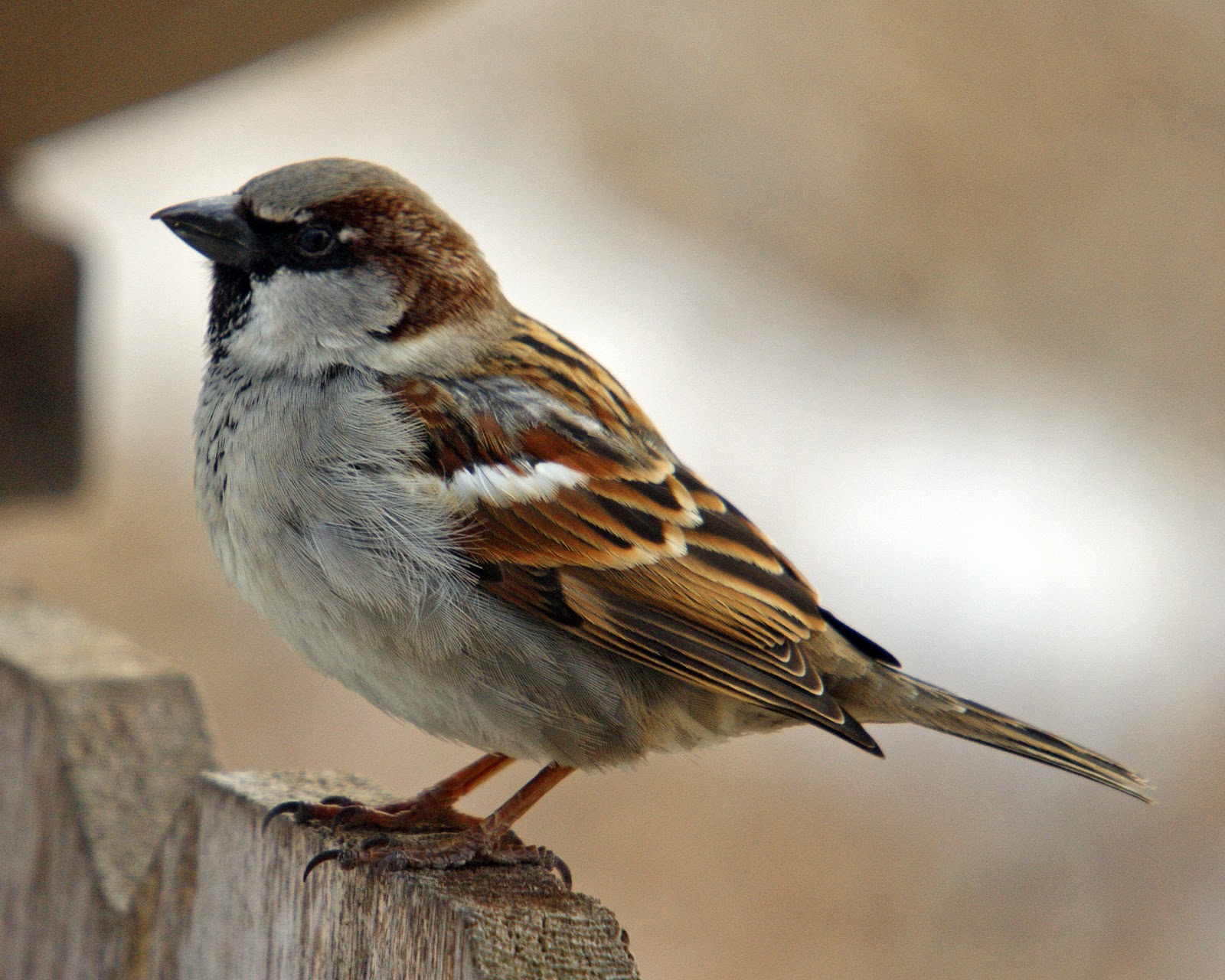
If 25 years ago anyone would have told me that the house sparrow (Passer domesticus), the then most common bird in our cities and villages, would all but disappear, I would not have believed them. But so it is. The house sparrow is nowhere to be seen.
Perhaps all for it being the most common bird around the house, 30 years ago, very few books and hardly any monographs were written about the house sparrow. Therefore, I was happy to see that this monograph was apparently commissioned by the publisher and written in Dutch. In quite fine print this edition tells us all about this cute, little bird. There are chapters about its physical characteristics, courtship and mating, nest, foraging, social life, cause of death and average age. One chapter is devoted to the harmfulness of the sparrow to agriculture.
Thirty years ago the house sparrow was so common in my village, that I never consciously realized that sparrows live is small colonies of 12 - 20 individuals, only when last month I hiked in a suburb did I clearly spot a small flock of 15 - 18 house sparrows frolicking in the thistles around a large villa.
The books describes a number of endearing facts of house sparrows, such as loyalty to a mate, although within certain boundaries. The maximum age of this little bird is set at 12. This is well-documented by the description made of Clarence, the house sparrow of Mrs. Kipps, in Sold for a Farthing (1953).
In the 1980s most families in Dutch cities and villages had front and back gardens with a little grass plot and some small shrubs, while gardens were separated by hedges. Many people would shake out table cloths or throw pieces of bread into the garden for the birds. But these days the vast majority of locals have paved both front and backyards, and hedges have been replaced with fences. Roofs no longer offer spaces for nesting, and the number of insects in gardens has decreased. In addition to that, Van Der Plas-Haarsma specifically mentions chickenfeed as a source of food, but I cannot see how this fits into the urban and semi-urban context.
De huismus consists of three parts, Part 1 describing the species, Part 2 life and habitat, while Part 3 is dedicated to their co-existence with people. House sparrows aren’t found in forests, moors of the dunes. They exclusively live and breed in the vicinity of people. Part 3 describes scientific studies done into various species of sparrows. Although they weren’t introduced to the US until 1868, they spread across the North-American continent in less than half a century. Throughout history there have been instances when sparrows were seen as a plague ravaging grain or isolation material in roofs. House sparrows make numerous appearances in literature and poetry from the Greek classics to the modern day.

The book is illustrated with the simple but endearing pen drawings by the Dutch artist Peter Vos, who contributed as quite astounding number of drawings of house sparrows to this volume, depicting the birds in all of their typical movements.
De huismus is the ninth volume in a series “Dieren dichterbij” published in 1980. The author mentions that she wrote the book in 1976. Up until then, very few books had been published specifically dedicated to the house sparrow. In her introduction, the author specifically mentions The House Sparrow (1963) by D. Summers-Smith and Der Feldsperling (1973) by Gisela Deckert. At the back of the book a list of references is included.
De huismus by Minouk van der Plas-Haarsma is very well written, particularly for a general readership. In 2011 a revised new edition was published with coloured illustrations.

Finished reading: 3 September 2022

If 25 years ago anyone would have told me that the house sparrow (Passer domesticus), the then most common bird in our cities and villages, would all but disappear, I would not have believed them. But so it is. The house sparrow is nowhere to be seen.
Perhaps all for it being the most common bird around the house, 30 years ago, very few books and hardly any monographs were written about the house sparrow. Therefore, I was happy to see that this monograph was apparently commissioned by the publisher and written in Dutch. In quite fine print this edition tells us all about this cute, little bird. There are chapters about its physical characteristics, courtship and mating, nest, foraging, social life, cause of death and average age. One chapter is devoted to the harmfulness of the sparrow to agriculture.
Thirty years ago the house sparrow was so common in my village, that I never consciously realized that sparrows live is small colonies of 12 - 20 individuals, only when last month I hiked in a suburb did I clearly spot a small flock of 15 - 18 house sparrows frolicking in the thistles around a large villa.
The books describes a number of endearing facts of house sparrows, such as loyalty to a mate, although within certain boundaries. The maximum age of this little bird is set at 12. This is well-documented by the description made of Clarence, the house sparrow of Mrs. Kipps, in Sold for a Farthing (1953).
In the 1980s most families in Dutch cities and villages had front and back gardens with a little grass plot and some small shrubs, while gardens were separated by hedges. Many people would shake out table cloths or throw pieces of bread into the garden for the birds. But these days the vast majority of locals have paved both front and backyards, and hedges have been replaced with fences. Roofs no longer offer spaces for nesting, and the number of insects in gardens has decreased. In addition to that, Van Der Plas-Haarsma specifically mentions chickenfeed as a source of food, but I cannot see how this fits into the urban and semi-urban context.
De huismus consists of three parts, Part 1 describing the species, Part 2 life and habitat, while Part 3 is dedicated to their co-existence with people. House sparrows aren’t found in forests, moors of the dunes. They exclusively live and breed in the vicinity of people. Part 3 describes scientific studies done into various species of sparrows. Although they weren’t introduced to the US until 1868, they spread across the North-American continent in less than half a century. Throughout history there have been instances when sparrows were seen as a plague ravaging grain or isolation material in roofs. House sparrows make numerous appearances in literature and poetry from the Greek classics to the modern day.
The book is illustrated with the simple but endearing pen drawings by the Dutch artist Peter Vos, who contributed as quite astounding number of drawings of house sparrows to this volume, depicting the birds in all of their typical movements.
De huismus is the ninth volume in a series “Dieren dichterbij” published in 1980. The author mentions that she wrote the book in 1976. Up until then, very few books had been published specifically dedicated to the house sparrow. In her introduction, the author specifically mentions The House Sparrow (1963) by D. Summers-Smith and Der Feldsperling (1973) by Gisela Deckert. At the back of the book a list of references is included.
De huismus by Minouk van der Plas-Haarsma is very well written, particularly for a general readership. In 2011 a revised new edition was published with coloured illustrations.

62labfs39
>61 edwinbcn: How sweet! Are you acclimating to your new environs?
63baswood
Welcome back to Europe Edwin. I hope you feel settled again soon. I really enjoyed your review of De Huismus. I saw plenty of sparrows around lake Garda in Italy, but there are very few around where I live in South West France. Various types of Finch and Tits are the most common small birds here, there are Robins and the Redstarts are endemic.
64japaul22
>61 edwinbcn: Interesting that house sparrows have disappeared from your area! They are everywhere in my neighborhood in Virginia, near D.C. In fact they don't have the best reputation around here. They are viewed as an invasive species that often take over nesting sites of our native birds by killing them (bluebirds and purple martins particularly).
65edwinbcn
>62 labfs39:
Pretty well yes, Lisa. Apart from some practical problems, the most surprising were some issues with food and digestion. I had thought that I'd blend in seamlessly with my mom's home style cooking, but aparently switching from rice to potatoes wasn't that easy, and I asked my mom to stick with rice for a while.
Pretty well yes, Lisa. Apart from some practical problems, the most surprising were some issues with food and digestion. I had thought that I'd blend in seamlessly with my mom's home style cooking, but aparently switching from rice to potatoes wasn't that easy, and I asked my mom to stick with rice for a while.
66edwinbcn
>64 japaul22:
Indeed. In my review I sort of foregrounded the cuteness of sparrows, but in fact, the book did describe some of their naughty-nastiness, and throughout history they have at times been described as a plague. They have always been opportunistic culture followers, and pretty loud.
Indeed. In my review I sort of foregrounded the cuteness of sparrows, but in fact, the book did describe some of their naughty-nastiness, and throughout history they have at times been described as a plague. They have always been opportunistic culture followers, and pretty loud.
67edwinbcn
>63 baswood: Settling back in shouldn't be too difficult, except that things all stand so badly in this 2022 Annus Horribilis of war in Ukraine and high inflation. Globalization and liberal governments (retreating government) have totally eroded the welfare society and problems are mounting. Best look away, and keep calm (and read a book).
68edwinbcn
176. Te veel geluk
Finished reading: 13 September 2022

This was really rather disappointing. I had never read anything by Alice Munroe, who won the Nobel Prize in 2013. I prefer reading English literature in English, but my mum has these two Dutch language editions of Munro short stories, so I would give them a try.
Only the last, title story "Te veel geluk" seems to be coherent, perhaps because it is the most traditional and follows or is based upon a biographical story. Most of the other stories left no impression with me.
I have wondered whether it was the translation, but since I do not know about Munro's style in English it is hard to decide. The prose seems to be characterized by short sentences, and it is true that generally I do not appreciate that very much.
Many of these short stories are rather long, often between 30 and 60 pages, but still it wouldn't feel right to describe them as novellas. They also lack a clear plot, and that is likely why I cannot really follow what the stories are about.

Finished reading: 13 September 2022

This was really rather disappointing. I had never read anything by Alice Munroe, who won the Nobel Prize in 2013. I prefer reading English literature in English, but my mum has these two Dutch language editions of Munro short stories, so I would give them a try.
Only the last, title story "Te veel geluk" seems to be coherent, perhaps because it is the most traditional and follows or is based upon a biographical story. Most of the other stories left no impression with me.
I have wondered whether it was the translation, but since I do not know about Munro's style in English it is hard to decide. The prose seems to be characterized by short sentences, and it is true that generally I do not appreciate that very much.
Many of these short stories are rather long, often between 30 and 60 pages, but still it wouldn't feel right to describe them as novellas. They also lack a clear plot, and that is likely why I cannot really follow what the stories are about.

69ELiz_M
>68 edwinbcn: I'm sorry these didn't work for you. I loved this collection. But her stories are more character focused and internal, usually hinging on the effects of serious event (if you read between the lines).
70edwinbcn
>69 ELiz_M:
Yes, Liz. I had already started looking up what other people throught or felt about these short stories, and saw that there are many people who feel like me, and there are lots of people who feel about the stories like you.
Generally, I feel the Nobel Prize winners do tend to be extraordinary writers, and therefore I started more doubting the translation rather than the author. I rarely read translations from English, and I can mostly find appreciation for books even if they are not my favorites.
Many other people note Munro's understating style, and many people point out, like you, that the stories are about character, more than plot or action. I know, of myself, that I prefer stories and novels with a clear plot, and I prefer elaborate style, so that's why it clashes.
However, I will go on reading Munro, hoping I may warm to her, and try reading the next book with your suggestions in mind.
Yes, Liz. I had already started looking up what other people throught or felt about these short stories, and saw that there are many people who feel like me, and there are lots of people who feel about the stories like you.
Generally, I feel the Nobel Prize winners do tend to be extraordinary writers, and therefore I started more doubting the translation rather than the author. I rarely read translations from English, and I can mostly find appreciation for books even if they are not my favorites.
Many other people note Munro's understating style, and many people point out, like you, that the stories are about character, more than plot or action. I know, of myself, that I prefer stories and novels with a clear plot, and I prefer elaborate style, so that's why it clashes.
However, I will go on reading Munro, hoping I may warm to her, and try reading the next book with your suggestions in mind.
71edwinbcn
177. Lotus-brieven. Het verslag van een betovering
Finished reading: 14 September 2022

Genant is the Dutch word for embarrassing. It is the best word to characterize this collection of letters.
Adriaan Morriën was a long-lived author, but throughout his long career has mainly remained unknown to the reading public. Mostly known for poetry, Morriën wrote very little prose, with exception of two volumes of autobiographical writings. His long career was foremostly spent as an editor for various literary magazines. Through his literary work Morriën made many literary friends among Dutch and German writers.
In the Spring of 1956 Adriaan Morriën, then 43 years old, met the much younger Lotus Schipper, then 22 years old. With her he started a passionate affair which he was able to keep from his wife for about a year. The illicit affair was kept by an intense correspondence and regular meetings in hotels in the Netherlands, Italy and Germany.
Lotus, who studied French at the time spent some time living in France. Morriën often travelled abroad for his literary work. He would plan or arrange his trips to cities to be with Lotus, and asked her to travel hundreds of miles to meet him in cities in Germany.
The letters are an overflowing wave upon wave of sexual desire. Their meetings are mainly spent in bed. Progressing through the letters, it becomes clear that Lotus is merely a sex object. At the beginning, the reader may be willing to accept the romance as wild passion, but later on it becomes increasingly apparent that Morriën is sex obsessed.
The book only contains the letters written by Morriën. The letters she wrote are not included, however, from some passages it can be gleaned that she had doubts and desired a more balanced, more quiet relationship that would offer her more perspective. She is drawn into Morriën's work, as he gives her commissions to write articles and encourages her development as a writer. However, it seems her emotional needs are ignored. Adriaan Morriën appears as a totally narcissistic sex maniac with a purely selfish lust for the young student, except that, in the end, he endorses and lightly encourages her to start a relationship with a young man who is interested in her.
Lotus-brieven. Het verslag van een betovering was the last book to be appear in his lifetime, the year before his death. It is a commercial publication, not an academic edition, although Morriën's biographer has acted as an editor, adding some notes, a foreword and an afterword. The correspondence was published several decades after the death of Lotus Schipper, who died in 1965.
Other books I have read by Adriaan Morriën:
Plantage Muidergracht
Ik heb nu weer de tijd
Finished reading: 14 September 2022

Genant is the Dutch word for embarrassing. It is the best word to characterize this collection of letters.
Adriaan Morriën was a long-lived author, but throughout his long career has mainly remained unknown to the reading public. Mostly known for poetry, Morriën wrote very little prose, with exception of two volumes of autobiographical writings. His long career was foremostly spent as an editor for various literary magazines. Through his literary work Morriën made many literary friends among Dutch and German writers.
In the Spring of 1956 Adriaan Morriën, then 43 years old, met the much younger Lotus Schipper, then 22 years old. With her he started a passionate affair which he was able to keep from his wife for about a year. The illicit affair was kept by an intense correspondence and regular meetings in hotels in the Netherlands, Italy and Germany.
Lotus, who studied French at the time spent some time living in France. Morriën often travelled abroad for his literary work. He would plan or arrange his trips to cities to be with Lotus, and asked her to travel hundreds of miles to meet him in cities in Germany.
The letters are an overflowing wave upon wave of sexual desire. Their meetings are mainly spent in bed. Progressing through the letters, it becomes clear that Lotus is merely a sex object. At the beginning, the reader may be willing to accept the romance as wild passion, but later on it becomes increasingly apparent that Morriën is sex obsessed.
The book only contains the letters written by Morriën. The letters she wrote are not included, however, from some passages it can be gleaned that she had doubts and desired a more balanced, more quiet relationship that would offer her more perspective. She is drawn into Morriën's work, as he gives her commissions to write articles and encourages her development as a writer. However, it seems her emotional needs are ignored. Adriaan Morriën appears as a totally narcissistic sex maniac with a purely selfish lust for the young student, except that, in the end, he endorses and lightly encourages her to start a relationship with a young man who is interested in her.
Lotus-brieven. Het verslag van een betovering was the last book to be appear in his lifetime, the year before his death. It is a commercial publication, not an academic edition, although Morriën's biographer has acted as an editor, adding some notes, a foreword and an afterword. The correspondence was published several decades after the death of Lotus Schipper, who died in 1965.
Other books I have read by Adriaan Morriën:
Plantage Muidergracht
Ik heb nu weer de tijd
72AlisonY
I hope things are going well with your move. Good that we can now enjoy your reviews on a regular basis.
73edwinbcn
178. Mooi doodliggen
Finished reading: 23 September 2022

Van der Heijden's novel Mooi doodliggen is a story of deception and betrayal. Journalist Grigori Moerasjko stages his own death, but for unclear reasons breaks this deception the following day by showing up again. However, having failed to warn his wife in advance, the deceipt is the death blow for his marriage with Yulia. She kicks him out and Grigori finds refuge with his friend Natan Haandrikman. The story is not entirely chronological. It starts with Nathan hearing in New York that Moerasjko has been murdered.
Although the story is fairly simple, Van Der Heijden has written a book of more than 360 pages. In fact, many of his books are much bulkier. Much of the volume of the books is spent on describing all sorts of irrelevant details, while the whole of it is written in Van der Heijden's typical exuberant shit-sex-snot-drool style which makes his novels so sensational, i.e. give you shivers, flush and disgust while reading.
However, it is the backdrop of the story which makes the book more interesting. Van der Heijden is an unusual writer in the sense that many of his novels are part of series. These series are fairly open-ended. The book series are operatic in their conception. They are multi-volumes, designated as Volumes, but a novel designated as a "volume" can have two parts. A "part"can have its own title and be a 700+ page novel. Yet, the author also publishes small occasional works, which may thematically be related to a series, which may be published as a prologue, an intermezzo, or with a different designation. Thus, each novel series becomes an almost symphonic, and organic creature. In the overall conception, the sum of the parts is also greater.
So far, Van der Heijden has been working on two series. The first of such series had the overall title De tandeloze tijd. It was orginally conceived as five volumes, while volume 3 consists of two parts. The first four volumes were published reasonably fast, while readers had to (have been) wait(ing) for the final, fifth volume for many years. Over time, other works were added in the form of a prologue and an intermezzo. And recently, the author has shown an extended outline, and plans to add several more volumes to the series. In the other series, only two volumes have appeared, while the rest of that series seems to have stalled.
Based of the authors statements, it is conceivable that Mooi doodliggen is a volume in a new series. Mooi doodliggen was published in 2018, and the story of the novel develops against the background of the Russian agression against Ukraine. In the meantime, anno 2022, this agression has developed into fullfledged war.
The Netherlands has a closer, more direct involvement in the conflict than most other countries. On February 26, 2014 a Malaysian passenger plane, MH-17, flying from Amsterdam to Kuala Lumpur was shot down over Ukraine by Russian-backed separatists from the Donetsk region. There were no survivors, and most of the victims were Dutch, with some Australians, Maylaysians and passengers of other nationalities.
In Mooi doodliggen Grigori Moerasjko is a Russian journalist who has fled Russia. He is investigating the catastophe of the MH-17 plane. He lives with his wife Yulia in Kiev, and the his murder was staged by the Ukranian secret service to loose the Russians off his trail. However, the novel is only in auxiliary about the MH-17 disaster, which Van Der Heijden calls MX-17. It seems the author is planning to write a different novel dedicated to the MH / MX-17 case. Mooi doodliggen could be a prologue to such a novel.
Van Der Heijden's novel Arkadi Babtsjenko is a fictionalized story of real events. In fact, the story of Grigori Moerasjko is but a thinly veiled version of the lifestory of the Russian journalist Arkadi Babtsjenko who staged his own death in the same way in May 2018. Other historical, real people appear in the novel under this disguise. For example, President Putin appears as "President Czar", and Trump appears as "Trumpet".
Calling Putin a "Czar" shows the concurrent value of the novel. While Mooi doodliggen is perhaps not such a spectacular novel on its own, the way it is published now, it may take on more significance when other related stories or novels are published.

Other books I have read by A.F.Th. van der Heijden:
De helleveeg. De Tandeloze Tijd. Deel 5
Het Schervengericht. Een transatlantische tragedie
Tonio. Een requiemroman
Asbestemming: Een requiem
Uitdorsten. Klein requiem voor mama, mam, ma
Doodverf
De gazellejongen. Het verzameld werk van Patrizio Canaponi
De draaideur
Een gondel in de Herengracht en andere verhalen
Gentse lente
Voetstampwijnen zijn tandknarswijnen
Kruis en kraai. De romankunst na James Joyce
Drijfzand koloniseren
MIM, of De doorstoken globe
Het leven uit een dag
Hier viel Van Gogh flauw
Ik heb je nog veel te melden. De briefwisseling tussen Jean-Paul Franssens en A.F.Th. van der Heijden
Gevouwen woorden
Engelenplaque
De Movo tapes. Een carriere als ander
De sandwich
Advocaat van de hanen. De Tandeloze Tijd. Deel 4
Onder het plaveisel het moeras. De Tandeloze Tijd. Deel 3, Tweede boek
Het hof van barmhartigheid. De Tandeloze Tijd. Deel 3, Eerste Boek
Weerborstels. De Tandeloze Tijd. Een intermezzo
De gevarendriehoek. De Tandeloze Tijd. Deel 2
Vallende ouders. De Tandeloze Tijd. Deel 1
De slag om de Blauwbrug. De Tandeloze Tijd. Proloog
De slag om de Blauwbrug
Finished reading: 23 September 2022

Van der Heijden's novel Mooi doodliggen is a story of deception and betrayal. Journalist Grigori Moerasjko stages his own death, but for unclear reasons breaks this deception the following day by showing up again. However, having failed to warn his wife in advance, the deceipt is the death blow for his marriage with Yulia. She kicks him out and Grigori finds refuge with his friend Natan Haandrikman. The story is not entirely chronological. It starts with Nathan hearing in New York that Moerasjko has been murdered.
Although the story is fairly simple, Van Der Heijden has written a book of more than 360 pages. In fact, many of his books are much bulkier. Much of the volume of the books is spent on describing all sorts of irrelevant details, while the whole of it is written in Van der Heijden's typical exuberant shit-sex-snot-drool style which makes his novels so sensational, i.e. give you shivers, flush and disgust while reading.
However, it is the backdrop of the story which makes the book more interesting. Van der Heijden is an unusual writer in the sense that many of his novels are part of series. These series are fairly open-ended. The book series are operatic in their conception. They are multi-volumes, designated as Volumes, but a novel designated as a "volume" can have two parts. A "part"can have its own title and be a 700+ page novel. Yet, the author also publishes small occasional works, which may thematically be related to a series, which may be published as a prologue, an intermezzo, or with a different designation. Thus, each novel series becomes an almost symphonic, and organic creature. In the overall conception, the sum of the parts is also greater.
So far, Van der Heijden has been working on two series. The first of such series had the overall title De tandeloze tijd. It was orginally conceived as five volumes, while volume 3 consists of two parts. The first four volumes were published reasonably fast, while readers had to (have been) wait(ing) for the final, fifth volume for many years. Over time, other works were added in the form of a prologue and an intermezzo. And recently, the author has shown an extended outline, and plans to add several more volumes to the series. In the other series, only two volumes have appeared, while the rest of that series seems to have stalled.
Based of the authors statements, it is conceivable that Mooi doodliggen is a volume in a new series. Mooi doodliggen was published in 2018, and the story of the novel develops against the background of the Russian agression against Ukraine. In the meantime, anno 2022, this agression has developed into fullfledged war.
The Netherlands has a closer, more direct involvement in the conflict than most other countries. On February 26, 2014 a Malaysian passenger plane, MH-17, flying from Amsterdam to Kuala Lumpur was shot down over Ukraine by Russian-backed separatists from the Donetsk region. There were no survivors, and most of the victims were Dutch, with some Australians, Maylaysians and passengers of other nationalities.
In Mooi doodliggen Grigori Moerasjko is a Russian journalist who has fled Russia. He is investigating the catastophe of the MH-17 plane. He lives with his wife Yulia in Kiev, and the his murder was staged by the Ukranian secret service to loose the Russians off his trail. However, the novel is only in auxiliary about the MH-17 disaster, which Van Der Heijden calls MX-17. It seems the author is planning to write a different novel dedicated to the MH / MX-17 case. Mooi doodliggen could be a prologue to such a novel.
Van Der Heijden's novel Arkadi Babtsjenko is a fictionalized story of real events. In fact, the story of Grigori Moerasjko is but a thinly veiled version of the lifestory of the Russian journalist Arkadi Babtsjenko who staged his own death in the same way in May 2018. Other historical, real people appear in the novel under this disguise. For example, President Putin appears as "President Czar", and Trump appears as "Trumpet".
Calling Putin a "Czar" shows the concurrent value of the novel. While Mooi doodliggen is perhaps not such a spectacular novel on its own, the way it is published now, it may take on more significance when other related stories or novels are published.

Other books I have read by A.F.Th. van der Heijden:
De helleveeg. De Tandeloze Tijd. Deel 5
Het Schervengericht. Een transatlantische tragedie
Tonio. Een requiemroman
Asbestemming: Een requiem
Uitdorsten. Klein requiem voor mama, mam, ma
Doodverf
De gazellejongen. Het verzameld werk van Patrizio Canaponi
De draaideur
Een gondel in de Herengracht en andere verhalen
Gentse lente
Voetstampwijnen zijn tandknarswijnen
Kruis en kraai. De romankunst na James Joyce
Drijfzand koloniseren
MIM, of De doorstoken globe
Het leven uit een dag
Hier viel Van Gogh flauw
Ik heb je nog veel te melden. De briefwisseling tussen Jean-Paul Franssens en A.F.Th. van der Heijden
Gevouwen woorden
Engelenplaque
De Movo tapes. Een carriere als ander
De sandwich
Advocaat van de hanen. De Tandeloze Tijd. Deel 4
Onder het plaveisel het moeras. De Tandeloze Tijd. Deel 3, Tweede boek
Het hof van barmhartigheid. De Tandeloze Tijd. Deel 3, Eerste Boek
Weerborstels. De Tandeloze Tijd. Een intermezzo
De gevarendriehoek. De Tandeloze Tijd. Deel 2
Vallende ouders. De Tandeloze Tijd. Deel 1
De slag om de Blauwbrug. De Tandeloze Tijd. Proloog
De slag om de Blauwbrug
74edwinbcn
179. De sterren van de hemel
Finished reading: 26 September 2022

Thé Lau is mostly remembered as a musician. From 1979 he played in bands, originally playing the guitar and later became the lead singer. His career as a published writer ran parallel with the appearance of his music albums. His first album appeared in 1998, and De sterren van de hemel was his debut as a writer, published in 2000.
De sterren van de hemel zingen / spelen is a Dutch expression which means sing / play musiv tremendously well. The title of his first published collection of short stories, De sterren van de hemel, refers to this expression, and the word "hemel" (sky) also appears in the title of his first novel, Hemelrijk, four years later.
De sterren van de hemel contains 7 stories. The first story, about a prostitute who teasingly flirts with a boy with down syndrom is probably the best. It is the most coherent, although the twist at the end makes it traditional. In many stories music plays a role, jazz, classical music, but it isn't foregrounded.

Other books I have read by Thé Lau:
Hemelrijk
Finished reading: 26 September 2022

Thé Lau is mostly remembered as a musician. From 1979 he played in bands, originally playing the guitar and later became the lead singer. His career as a published writer ran parallel with the appearance of his music albums. His first album appeared in 1998, and De sterren van de hemel was his debut as a writer, published in 2000.
De sterren van de hemel zingen / spelen is a Dutch expression which means sing / play musiv tremendously well. The title of his first published collection of short stories, De sterren van de hemel, refers to this expression, and the word "hemel" (sky) also appears in the title of his first novel, Hemelrijk, four years later.
De sterren van de hemel contains 7 stories. The first story, about a prostitute who teasingly flirts with a boy with down syndrom is probably the best. It is the most coherent, although the twist at the end makes it traditional. In many stories music plays a role, jazz, classical music, but it isn't foregrounded.

Other books I have read by Thé Lau:
Hemelrijk
75edwinbcn
180. Met bonzend hart. Brieven aan Hella S. Haasse
Finished reading: 3 October 2022

Met bonzend hart. Brieven aan Hella S. Haasse is the first autobiography of the Dutch actor Willem Nijholt. It is written as s series of letters to Hella S. Haasse. In recent years, Haasse has become the grand old dame of Dutch letters. Had her letters been included in this book, it would have found a vast readership. Except that.... there are no letters by Haasse. It is explained at the back of the book that Nijholt wrote letters to Haasse but she would telephone. Apparently, it was her intention to get Nijholt to write up his memories of his youth, growing up in the former Dutch colony, now Indonesia. Once a considerable number of letters had been written, she showed them to a publisher, and persuaded Nijholt to publish.
There is a fairly large contingent of Dutch writers with roots in "the Dutch Indies". Many of these writers have known each other for many years, but Nijholt's friendship with Haasse was relatively new. Previously, Nijholt had only published his correspondence with Gerard Reve, Met niks begonnen.
Met bonzend hart is a very open-hearted collection of letters. Although it had been Haasse's intention to get Nijholt to write about his time in the Dutch Indies, in his letters he touches upon a wide variety of topics and episodes in his life.
The letters are written in a very honest and lively style, one might say of an amateur. There is no trace of shame or holding back. Many letters even seem chatty, and there is some openly expressed hatred to other writers, notably Jos Brink. Many passages and anecdotes make you laugh.
Nijholt looks back over his whole life. There is much about growing up in the Dutch Indies, and the time spent in Japanese concentration camps that were set up in Indonesia during the Second World War. Nijholt writes about poverty upon his family's return to the Netherlands, his ambitions and the struggle to become admitted to the Theatre School and his career as an actor. There are portraits of celebrity actors and actresses of the Dutch stage.
Met bonzend hart also tells us a lot about Nijholt's life with his husband, their life in France and their visists to Amsterdam. As a biography, the book is fragmented, but coherent, and one gets a good picture of Willem Nijholt's life. Besides an autobiography, it is also a contemporary picture of the first decade of this century of Amsterdam, and ageing. Nijholt also regularly writes about writers and books he reads.
I enjoyed reading this very much.
Other books I have read by Willem Nijholt:
Met niks begonnen. Correspondentie
Finished reading: 3 October 2022

Met bonzend hart. Brieven aan Hella S. Haasse is the first autobiography of the Dutch actor Willem Nijholt. It is written as s series of letters to Hella S. Haasse. In recent years, Haasse has become the grand old dame of Dutch letters. Had her letters been included in this book, it would have found a vast readership. Except that.... there are no letters by Haasse. It is explained at the back of the book that Nijholt wrote letters to Haasse but she would telephone. Apparently, it was her intention to get Nijholt to write up his memories of his youth, growing up in the former Dutch colony, now Indonesia. Once a considerable number of letters had been written, she showed them to a publisher, and persuaded Nijholt to publish.
There is a fairly large contingent of Dutch writers with roots in "the Dutch Indies". Many of these writers have known each other for many years, but Nijholt's friendship with Haasse was relatively new. Previously, Nijholt had only published his correspondence with Gerard Reve, Met niks begonnen.
Met bonzend hart is a very open-hearted collection of letters. Although it had been Haasse's intention to get Nijholt to write about his time in the Dutch Indies, in his letters he touches upon a wide variety of topics and episodes in his life.
The letters are written in a very honest and lively style, one might say of an amateur. There is no trace of shame or holding back. Many letters even seem chatty, and there is some openly expressed hatred to other writers, notably Jos Brink. Many passages and anecdotes make you laugh.
Nijholt looks back over his whole life. There is much about growing up in the Dutch Indies, and the time spent in Japanese concentration camps that were set up in Indonesia during the Second World War. Nijholt writes about poverty upon his family's return to the Netherlands, his ambitions and the struggle to become admitted to the Theatre School and his career as an actor. There are portraits of celebrity actors and actresses of the Dutch stage.
Met bonzend hart also tells us a lot about Nijholt's life with his husband, their life in France and their visists to Amsterdam. As a biography, the book is fragmented, but coherent, and one gets a good picture of Willem Nijholt's life. Besides an autobiography, it is also a contemporary picture of the first decade of this century of Amsterdam, and ageing. Nijholt also regularly writes about writers and books he reads.
I enjoyed reading this very much.
Other books I have read by Willem Nijholt:
Met niks begonnen. Correspondentie
76edwinbcn
181. De adem van Mars
Finished reading: 7 October 2022

Leo Vroman was a Dutch-American author and a hematologist. Born in the Netherlands he went to the United States where he was naturalized and obtained American citizenship in 1951. His main career in the United States was as a hematologist. He worked at various research institutes and published more than 70 articles and books in that field.
In the Netherlands he was one of the most well-known and appreciated poets, publishing more than 40 books. His creative output was mostly written in Dutch, most of it poetry, and less prose.
De adem van Mars is prose and published early in Vroman's literary career. There are 15 prose pieces varying in length from just 3 to more than 20 pages. They read like vignettes or episodes and are fictionalized stages of Vroman's early life from May 1940 to about 1952. This fictionalization is very thin, as Vroman and his wife appear in the stories under their own names, and other characters, such as Jan Greshoff are also described true to life and with their own names. One of the stories is written (and printed) in English.
Leo Vroman's escape from the Nazi-occupied Netherlands is quite spectacular and adventurous. At first glance, the title story "De adem van Mars" seems funny, or perhaps jocular, but apparently biographical details are accurate. From London, Vroman travelled to the Dutch Indies, where, in Batavia, he finished his studies. However, he was locked up in various Japanese concentration camps in the Dutch Indies (now Indonesia), before being transported to Japan via Singapore. The stories set in America describe life in the United States in the late 40s and early 50s.

Finished reading: 7 October 2022

Leo Vroman was a Dutch-American author and a hematologist. Born in the Netherlands he went to the United States where he was naturalized and obtained American citizenship in 1951. His main career in the United States was as a hematologist. He worked at various research institutes and published more than 70 articles and books in that field.
In the Netherlands he was one of the most well-known and appreciated poets, publishing more than 40 books. His creative output was mostly written in Dutch, most of it poetry, and less prose.
De adem van Mars is prose and published early in Vroman's literary career. There are 15 prose pieces varying in length from just 3 to more than 20 pages. They read like vignettes or episodes and are fictionalized stages of Vroman's early life from May 1940 to about 1952. This fictionalization is very thin, as Vroman and his wife appear in the stories under their own names, and other characters, such as Jan Greshoff are also described true to life and with their own names. One of the stories is written (and printed) in English.
Leo Vroman's escape from the Nazi-occupied Netherlands is quite spectacular and adventurous. At first glance, the title story "De adem van Mars" seems funny, or perhaps jocular, but apparently biographical details are accurate. From London, Vroman travelled to the Dutch Indies, where, in Batavia, he finished his studies. However, he was locked up in various Japanese concentration camps in the Dutch Indies (now Indonesia), before being transported to Japan via Singapore. The stories set in America describe life in the United States in the late 40s and early 50s.

77edwinbcn
182. 30 Graden Celsius in de schaduw. Zomerverhalen
Finished reading: 9 October 2022

Four stories about relationships.
Finished reading: 9 October 2022

Four stories about relationships.
78edwinbcn
183. Wat wij zagen
Finished reading: 9 October 2022

Wat wij zagen is a tiny novel. Commissioned to be distributed for free, the annual Book Week free novel has about 92 pages.
At first, the short novel seems to be conceived as creative non-fiction. It is written as an autobiographical report or a letter, describing the work at a large unnamed social media company (most likely Youtube or Facebook).
The main characters in the novel are content moderators, and their job is to evaluate (un)acceptable content, ranging from very violent content, sexually explicit content, forms of abuse, dangerous experiments and suicide.
However, this setting is the background to the story. The main theme is a love story which develops between two women in the team. There is quite some tension between these two themes, that are not very well connected. Neither is fully developed within the short scope of the novel.
Finished reading: 9 October 2022

Wat wij zagen is a tiny novel. Commissioned to be distributed for free, the annual Book Week free novel has about 92 pages.
At first, the short novel seems to be conceived as creative non-fiction. It is written as an autobiographical report or a letter, describing the work at a large unnamed social media company (most likely Youtube or Facebook).
The main characters in the novel are content moderators, and their job is to evaluate (un)acceptable content, ranging from very violent content, sexually explicit content, forms of abuse, dangerous experiments and suicide.
However, this setting is the background to the story. The main theme is a love story which develops between two women in the team. There is quite some tension between these two themes, that are not very well connected. Neither is fully developed within the short scope of the novel.
79edwinbcn
184. De spiegelingen
Finished reading: 10 October 2022

De spiegelingen is a lyrical novel. Although Erwin Mortier had already published 3 collections of essays, 4 of poetry and four novels, he broke through to a larger audience with his fifth novel Godenslaap, which won the national book award. De spiegelingen is his sixth novel and achieves the same heights as Godenslaap.
Mortier does not (yet) have a distinct style. Although he hasn't published any poetry after 2007, his output remains divided between essays and novels. Thematically, the novels are also wide apart, some displaying a strong religious background.
De spiegelingen was published in 2014, the first centennial of the First World War. Between 2009 and 2012 Mortier translated and published the war journals of three nurses or volunteers who worked on the front during the Great War. In 2009, the book by the American nurse Ellen N. La Motte, in 2011 a book by the American nurse Mary Borden and in 2012 the diaries by the British volunteer Enid Bagnold.
The first part of the novel De spiegelingen is clearly inspired by these works. It is the longest and mostly deeply felt part of the novel. It describes how the main character is wounded and nursed back to health. It also describes the relationship between Edgar and Matthew. This sexual relation is the reiterated in all subsequent episodes of the novel, although Matthew was apparently bisexual and marries Edgar’s sister, their bond is transformed into comradeship.
The novel consists of a series of episodes. Each episode describes a new phase in Edgar’s life with a new gay lover. Each new relationship is like an echo of that first relationship, and each new relationship it entered with the scars from that first relationship, mental and physical scars. The old relationship is mirrored in the new relationships. Sexuality is described in a very explicit, brutal way. Thus,comradeship and the violence of war in the first relationship are reflected in later relationships in love and sexuality. Partners in later relationships are also international, from all races and continents.
While sexuality is described very explicitly and shocking, the novel contains many beautiful and lyrical passages, which remind of the works of the French author Philippe Besson.

Other works I have read by Erwin Mortier:
Godenslaap
Marcel
Finished reading: 10 October 2022

De spiegelingen is a lyrical novel. Although Erwin Mortier had already published 3 collections of essays, 4 of poetry and four novels, he broke through to a larger audience with his fifth novel Godenslaap, which won the national book award. De spiegelingen is his sixth novel and achieves the same heights as Godenslaap.
Mortier does not (yet) have a distinct style. Although he hasn't published any poetry after 2007, his output remains divided between essays and novels. Thematically, the novels are also wide apart, some displaying a strong religious background.
De spiegelingen was published in 2014, the first centennial of the First World War. Between 2009 and 2012 Mortier translated and published the war journals of three nurses or volunteers who worked on the front during the Great War. In 2009, the book by the American nurse Ellen N. La Motte, in 2011 a book by the American nurse Mary Borden and in 2012 the diaries by the British volunteer Enid Bagnold.
The first part of the novel De spiegelingen is clearly inspired by these works. It is the longest and mostly deeply felt part of the novel. It describes how the main character is wounded and nursed back to health. It also describes the relationship between Edgar and Matthew. This sexual relation is the reiterated in all subsequent episodes of the novel, although Matthew was apparently bisexual and marries Edgar’s sister, their bond is transformed into comradeship.
The novel consists of a series of episodes. Each episode describes a new phase in Edgar’s life with a new gay lover. Each new relationship is like an echo of that first relationship, and each new relationship it entered with the scars from that first relationship, mental and physical scars. The old relationship is mirrored in the new relationships. Sexuality is described in a very explicit, brutal way. Thus,comradeship and the violence of war in the first relationship are reflected in later relationships in love and sexuality. Partners in later relationships are also international, from all races and continents.
While sexuality is described very explicitly and shocking, the novel contains many beautiful and lyrical passages, which remind of the works of the French author Philippe Besson.

Other works I have read by Erwin Mortier:
Godenslaap
Marcel
80edwinbcn
185. Zuidland
Finished reading: 14 October 2022

Zuidland was P.F. Thomése's first book of fiction, consisting of three novellas. Each novella is set in the seventeenth Century. Stylistically, the first two novellas, "Leviathan" and "Zuidland" are more similar, while the third novella "Boven aarde" seems a bit different, ironic. The theme of all novellas is perception, or the complex relation between seeing and interpreting, or observation and knowing what is seen. By setting the stories in the 17th rather than the 18th century, when, during the enlightenment, science took flight, at first based on observation and careful description, observation in these stories is still very much connected with superstition.
Zuidland was a very strong debut on the literary scene in 1990, and launched the author's career as a writer of fiction.
Other books I have read by P.F. Thomése:
Vladiwostok!
Eerder thuis dan Townes
Het zesde bedrijf
Finished reading: 14 October 2022

Zuidland was P.F. Thomése's first book of fiction, consisting of three novellas. Each novella is set in the seventeenth Century. Stylistically, the first two novellas, "Leviathan" and "Zuidland" are more similar, while the third novella "Boven aarde" seems a bit different, ironic. The theme of all novellas is perception, or the complex relation between seeing and interpreting, or observation and knowing what is seen. By setting the stories in the 17th rather than the 18th century, when, during the enlightenment, science took flight, at first based on observation and careful description, observation in these stories is still very much connected with superstition.
Zuidland was a very strong debut on the literary scene in 1990, and launched the author's career as a writer of fiction.
Other books I have read by P.F. Thomése:
Vladiwostok!
Eerder thuis dan Townes
Het zesde bedrijf
81edwinbcn
186. Wij zijn ons brein. Van baarmoeder tot Alzheimer
Finished reading: 16 October 2022

We Are Our Brains: A Neurobiography of the Brain, from the Womb to Alzheimer's is an encyclopedic work that deals with virtually all aspects of the brain. The book is structured to follow the development of the brain from the time before birth, in the womb, till its final degeneration in the final stages of Alzheimer's disease. The book was first published in 2010 and dealts with state-of-the-art insight up until that date. This means that most well-educated readers will already be familiar with a large part of the content, while receiving some new insights. Many of the subsections of the book are surprisingly short, giving just the most basic knowledge of that type of brain disorder or developmental stage.
Sections that receive more attention are (former) specializations of their author. One of the most intriguing observations is that birth is initiated by the child
Throughout his career, the author was swept up in some emotional controversies. The sections of the book dealing with that show that Swaab still understands little of why people were so upset. In the mid-1980s Swaab postulated that causes for homosexuality could be found in the brain, and more recently that religious fanaticism is based of a brain disorder. While obviously from a scientific point of view this is very interesting, it seems Swaab is unable to oversee the consequences of such statements.
A funny side of reading the book was the idea that so much of our development was predetermined by brain development in the womb
Finished reading: 16 October 2022

We Are Our Brains: A Neurobiography of the Brain, from the Womb to Alzheimer's is an encyclopedic work that deals with virtually all aspects of the brain. The book is structured to follow the development of the brain from the time before birth, in the womb, till its final degeneration in the final stages of Alzheimer's disease. The book was first published in 2010 and dealts with state-of-the-art insight up until that date. This means that most well-educated readers will already be familiar with a large part of the content, while receiving some new insights. Many of the subsections of the book are surprisingly short, giving just the most basic knowledge of that type of brain disorder or developmental stage.
Sections that receive more attention are (former) specializations of their author. One of the most intriguing observations is that birth is initiated by the child
Throughout his career, the author was swept up in some emotional controversies. The sections of the book dealing with that show that Swaab still understands little of why people were so upset. In the mid-1980s Swaab postulated that causes for homosexuality could be found in the brain, and more recently that religious fanaticism is based of a brain disorder. While obviously from a scientific point of view this is very interesting, it seems Swaab is unable to oversee the consequences of such statements.
A funny side of reading the book was the idea that so much of our development was predetermined by brain development in the womb
82edwinbcn
187. De kegelwerper
Finished reading: 18 October 2022

A rather uninteresting story about a group of low-rate artists living in Amsterdam in the 1950s.
Other books I have read by Margriet de Moor:
Eerst grijs dan wit dan blauw
Finished reading: 18 October 2022

A rather uninteresting story about a group of low-rate artists living in Amsterdam in the 1950s.
Other books I have read by Margriet de Moor:
Eerst grijs dan wit dan blauw

84edwinbcn
189. Het hijgend hert
Finished reading: 24 October 2022

Although the psychological reality of the book is authentic, the highly artificial style of the later Reve makes this book an oddity. It seems that Reve has wanted to tell a story about the way a common young man grew up and tried to come to terms with his homosexuality. Some talent for art, an office job the main character buys a property which faintly sparks sexual fantasies. Everyone is looked at with some suggestion that they might be gay as well. Looking at young man, this suspicion becomes more like a lustful wish. People's actions and presence are all explained through possible motivation either sexual or repressive, while repressive actions are also translated into masochistic feelings. Finally, one reason for the desire to own an additional property is to secure a place for illicit action, which exists in various forms in his mind, but which in reality could be very inextraordinary.
Despite Reve's odd style, which became very pronounced in his later works, Reve has a very compelling writing style, that ties the book in with his earlier style and the overall quality of his work. I would not recommend this book to readers new to the work of Gerard Reve.
Other books I have read by Gerard Reve:
Verzameld werk, Vol. 4
De stille vriend
Zelf schrijver worden
Brieven aan Wimie, 1959-1963
Bezorgde ouders
De laatste jaren van mijn grootvader
Oud en eenzaam
Wolf
De vierde man
Een circusjongen
Een eigen huis
Verzameld werk, Vol. 2
Lieve jongens
Het zingend hart
De taal der liefde
Vier pleidooien
Nader tot U
Op weg naar het einde
Brief aan mijn bank
Brieven aan Bernard S., 1965-1975
Brieven aan Bram P.
Met niks begonnen. Correspondentie
Brieven aan kandidaat katholiek A., 1962-1969
Brieven aan Josine M., 1959-1975
Brieven aan Simon C., 1971-1975
Brieven aan Frans P., 1965-1969
Brieven aan Wim B., 1968-1975
Ik had hem lief
Tien vrolijke verhalen
Werther Nieland
De ondergang van de familie Boslowits
The acrobat and other stories
De avonden
Finished reading: 24 October 2022

Although the psychological reality of the book is authentic, the highly artificial style of the later Reve makes this book an oddity. It seems that Reve has wanted to tell a story about the way a common young man grew up and tried to come to terms with his homosexuality. Some talent for art, an office job the main character buys a property which faintly sparks sexual fantasies. Everyone is looked at with some suggestion that they might be gay as well. Looking at young man, this suspicion becomes more like a lustful wish. People's actions and presence are all explained through possible motivation either sexual or repressive, while repressive actions are also translated into masochistic feelings. Finally, one reason for the desire to own an additional property is to secure a place for illicit action, which exists in various forms in his mind, but which in reality could be very inextraordinary.
Despite Reve's odd style, which became very pronounced in his later works, Reve has a very compelling writing style, that ties the book in with his earlier style and the overall quality of his work. I would not recommend this book to readers new to the work of Gerard Reve.
Other books I have read by Gerard Reve:
Verzameld werk, Vol. 4
De stille vriend
Zelf schrijver worden
Brieven aan Wimie, 1959-1963
Bezorgde ouders
De laatste jaren van mijn grootvader
Oud en eenzaam
Wolf
De vierde man
Een circusjongen
Een eigen huis
Verzameld werk, Vol. 2
Lieve jongens
Het zingend hart
De taal der liefde
Vier pleidooien
Nader tot U
Op weg naar het einde
Brief aan mijn bank
Brieven aan Bernard S., 1965-1975
Brieven aan Bram P.
Met niks begonnen. Correspondentie
Brieven aan kandidaat katholiek A., 1962-1969
Brieven aan Josine M., 1959-1975
Brieven aan Simon C., 1971-1975
Brieven aan Frans P., 1965-1969
Brieven aan Wim B., 1968-1975
Ik had hem lief
Tien vrolijke verhalen
Werther Nieland
De ondergang van de familie Boslowits
The acrobat and other stories
De avonden
85edwinbcn
190. De verrekijker. Inclusief de literagenda 2013-2014
Finished reading: 24 October 2022

After an interesting start, this short novel quickly developed in the regular, uninspired issue of guilt for the parents' actions during the second world war, a theme Van Kooten had been using for too long in his tv programmes, already.
Finished reading: 24 October 2022

After an interesting start, this short novel quickly developed in the regular, uninspired issue of guilt for the parents' actions during the second world war, a theme Van Kooten had been using for too long in his tv programmes, already.
86edwinbcn
191. In hoger sferen. De muziekkeuze van Paul Witteman
Finished reading: 28 October 2022

Very mediocre columns about music.
Finished reading: 28 October 2022

Very mediocre columns about music.
87edwinbcn
192. Suezkade
Finished reading: 7 November 2022

The story of Suezkade is remarkably straightforward and simple for a book of nearly 400 pages. Most chapters are very short and the book is very readable.
Marc Cordesius is a young teacher who starts teaching French at a school after an introduction by a friend. Although inexperienced and not trained as a teacher, he seems to have a natural talent for teaching. Himself independently wealthy, he does not need the job for a living, so he can avoid school politics and speak his mind relatively freely. Intellectually superior to the other teachers, the head master has a high esteem of Cordesius and shields him from affairs in the school. The microcosmos of the school is a bit of a moral cesspool that the idealistic Cordesius has strayed into.
It is up to the reader to decide to what extent Cordesius is corrupted by the school. His actions have clear precedent at the school, and it is only from the perspective of the reader to decide whether Cordesius isn't just as perfidious as his predecessors and colleagues.
Likewise, the role of the student he adores is highly ambiguous. Love seems to be tainted and desctructive, and Cordesius cannot escape its tentacles.
Other books I have read by Jan Siebelink:
Koning Cophetua en het bedelmeisje
Vera
Knielen op een bed violen
Engelen van het duister
Finished reading: 7 November 2022

The story of Suezkade is remarkably straightforward and simple for a book of nearly 400 pages. Most chapters are very short and the book is very readable.
Marc Cordesius is a young teacher who starts teaching French at a school after an introduction by a friend. Although inexperienced and not trained as a teacher, he seems to have a natural talent for teaching. Himself independently wealthy, he does not need the job for a living, so he can avoid school politics and speak his mind relatively freely. Intellectually superior to the other teachers, the head master has a high esteem of Cordesius and shields him from affairs in the school. The microcosmos of the school is a bit of a moral cesspool that the idealistic Cordesius has strayed into.
It is up to the reader to decide to what extent Cordesius is corrupted by the school. His actions have clear precedent at the school, and it is only from the perspective of the reader to decide whether Cordesius isn't just as perfidious as his predecessors and colleagues.
Likewise, the role of the student he adores is highly ambiguous. Love seems to be tainted and desctructive, and Cordesius cannot escape its tentacles.
Other books I have read by Jan Siebelink:
Koning Cophetua en het bedelmeisje
Vera
Knielen op een bed violen
Engelen van het duister
88edwinbcn
193. De Harm en Miepje Kurk story
Finished reading: 12 November 2022

The anglicized Dutch title of this short novel or novella suggests a melodrama which should perhaps not be taken entirely seriously. It is a bit of a satiric story about marital problems in which the narrator plays a double role, while Miepje comes out with a true-to-its time appearance. Quite humorous.
This Penta Pocket edition comes with several interviews and essay materials at the end which give more insight into the work, the author and his other work.
Other books I have read by Remco Campert:
Een liefde in Parijs
Finished reading: 12 November 2022

The anglicized Dutch title of this short novel or novella suggests a melodrama which should perhaps not be taken entirely seriously. It is a bit of a satiric story about marital problems in which the narrator plays a double role, while Miepje comes out with a true-to-its time appearance. Quite humorous.
This Penta Pocket edition comes with several interviews and essay materials at the end which give more insight into the work, the author and his other work.
Other books I have read by Remco Campert:
Een liefde in Parijs
89edwinbcn
194. On Green Dolphin Street
Finished reading: 17 November 2022

On Green Dolphin Street defies categorization and analysis. I had forgotten, or rather lost faith in Faulks as an author. Still quite at a loss of whether and whither the story would take off after the first 100+ pages, it isn't until the final 70 pages that it turns into a page turner and becomes a very compelling and moving love story.
Other books I have read by Sebastian Faulks:
Jeeves and the wedding bells
Faulks on fiction
The Girl at the Lion d'Or
A week in December
Engleby
Charlotte Gray
Birdsong
The fatal Englishman. Three short lives
Finished reading: 17 November 2022

On Green Dolphin Street defies categorization and analysis. I had forgotten, or rather lost faith in Faulks as an author. Still quite at a loss of whether and whither the story would take off after the first 100+ pages, it isn't until the final 70 pages that it turns into a page turner and becomes a very compelling and moving love story.
Other books I have read by Sebastian Faulks:
Jeeves and the wedding bells
Faulks on fiction
The Girl at the Lion d'Or
A week in December
Engleby
Charlotte Gray
Birdsong
The fatal Englishman. Three short lives
90edwinbcn
195. Pestvogels en andere verhalen
Finished reading: 18 November 2022

Four early stories of the Dutch novelist Willem van Toorn. Particularly the title story, which is also the longest of these four stories, about the war, is very well-written.
Other books I have read by Willem van Toorn:
Leesbaar landschap
Twee dagreizen
Finished reading: 18 November 2022

Four early stories of the Dutch novelist Willem van Toorn. Particularly the title story, which is also the longest of these four stories, about the war, is very well-written.
Other books I have read by Willem van Toorn:
Leesbaar landschap
Twee dagreizen
91edwinbcn
196. De hel
Finished reading: 21 November 2022

A strong, short novel about school and growing up.
Other books I have read by Boudewijn Büch:
De kleine blonde dood
Het geheim van Eberwein
De blauwe salon. Berichten omtrent leven en wedervaren van een jongeman. In het licht gegeven door Lothar G. Mantoua
Finished reading: 21 November 2022

A strong, short novel about school and growing up.
Other books I have read by Boudewijn Büch:
De kleine blonde dood
Het geheim van Eberwein
De blauwe salon. Berichten omtrent leven en wedervaren van een jongeman. In het licht gegeven door Lothar G. Mantoua
92edwinbcn
197. Chaos en rumoer
Finished reading: 22 November 2022

A hilarious novel about a writer with writer's block who starts working for a radio show. Quite a page turner, with a story that is interesting till the end.
Other books I have read by Joost Zwagerman:
Winnie en de onschuld
Duel
Gimmick!
Vals licht
Finished reading: 22 November 2022

A hilarious novel about a writer with writer's block who starts working for a radio show. Quite a page turner, with a story that is interesting till the end.
Other books I have read by Joost Zwagerman:
Winnie en de onschuld
Duel
Gimmick!
Vals licht
93edwinbcn
198. Kinderjaren
Finished reading: 27 November 2022

Kinderjaren is an autobiographical novel. It is a fictionalized account which closely follows reality, but some details, such as the age of the child, have been changed. This short novel describes the deportation of a Jewish family, the death of the father in a concentration camp, and eventually their liberation during a transport at the end of the war. The work is written from the perspective of the child, almost all in the words of and at the level of comprehension of the child.
Kinderjaren has been translated into many languages. Jona Oberski, the author, recently (September 2022), forty-four years after Kinderjaren, published a new work.
Finished reading: 27 November 2022

Kinderjaren is an autobiographical novel. It is a fictionalized account which closely follows reality, but some details, such as the age of the child, have been changed. This short novel describes the deportation of a Jewish family, the death of the father in a concentration camp, and eventually their liberation during a transport at the end of the war. The work is written from the perspective of the child, almost all in the words of and at the level of comprehension of the child.
Kinderjaren has been translated into many languages. Jona Oberski, the author, recently (September 2022), forty-four years after Kinderjaren, published a new work.
94edwinbcn
199. Buiten is het maandag
Finished reading: 29 November 2022

In many of the novels by Jan Bernlef, black-out or loss of memory is a recurrent theme. In Buiten is het Maandag the relation between a father and his son is central to the action. Waking up from a coma, the father finds that his son has disappeared. He traces his to a remote village in Canada, and persuades him to return to his wife.
Besides Canada, many flashbacks in the novel are set in the rural area around Alkmaar in North-Holland, which is my hometown. Berlef was born in St Pancras, just north of Alkmaar.
Other books I have read by Jan Bernlef:
Hersenschimmen
Doorgaande reizigers
De witte stad
Meneer Toto-tolk
De pianoman
Verbroken zwijgen
Publiek geheim
Sneeuw
Finished reading: 29 November 2022

In many of the novels by Jan Bernlef, black-out or loss of memory is a recurrent theme. In Buiten is het Maandag the relation between a father and his son is central to the action. Waking up from a coma, the father finds that his son has disappeared. He traces his to a remote village in Canada, and persuades him to return to his wife.
Besides Canada, many flashbacks in the novel are set in the rural area around Alkmaar in North-Holland, which is my hometown. Berlef was born in St Pancras, just north of Alkmaar.
Other books I have read by Jan Bernlef:
Hersenschimmen
Doorgaande reizigers
De witte stad
Meneer Toto-tolk
De pianoman
Verbroken zwijgen
Publiek geheim
Sneeuw
95edwinbcn
200. Zo is het genoeg. Het laatste jaar van Jan Wolkers
Finished reading: 30 November 2022

The author of this small book, Onno Blom was a close friend of the author Jan Wolkers (1925 - 2007). Zo is het genoeg. Het laatste jaar van Jan Wolkers describes the last year and death of Wolkers. It was published in 2008. In the years before that, several volumes of Wolkers's diaries had been published, in apparently random, haphazard order. Zo is het genoeg appears a nice companion volume to that series.
In 2017, Onno Blom published Het litteken van de dood. De biografie van Jan Wolkers, to date the standard biography of Jan Wolkers.
Finished reading: 30 November 2022

The author of this small book, Onno Blom was a close friend of the author Jan Wolkers (1925 - 2007). Zo is het genoeg. Het laatste jaar van Jan Wolkers describes the last year and death of Wolkers. It was published in 2008. In the years before that, several volumes of Wolkers's diaries had been published, in apparently random, haphazard order. Zo is het genoeg appears a nice companion volume to that series.
In 2017, Onno Blom published Het litteken van de dood. De biografie van Jan Wolkers, to date the standard biography of Jan Wolkers.
97edwinbcn
201. Paniek der onschuld
Finished reading: 3 December 2022

This was a very disappointing, and even dissatisfactory book. Harry Mulisch is one of the major 20th century Dutch authors, and therefore, his early and critical writings interest me. Paniek der onschuld supposedly presents an overview of his work as an author by collecting 13 previously uncollected texts demonstrating his development as an author through the 1950s, 60s and 70s, in 150 pages.
However, upon close inspection, there are only 3 short articles that were written in the 1950s, and one article written in 1969, altogether just 31 pages, while the remainder of the book are articles written in the 1970s.
The bulk of the book is formed by two review articles, about Godfried Bomans and Gerard Reve, while the latter is a long tirade of abuse.
Like many Dutch (even European) intellectuals, Mulisch had strong politically-left leanings, praising Castro and the Cuban revolution.
Other books I have read by Harry Mulisch:
De ontdekking van de hemel
De verhalen
Het theater, de brief en de waarheid
De aanslag
Siegfried. Een zwarte idylle
De procedure
De pupil
Hoogste tijd
Het stenen bruidsbed
Twee vrouwen
Het zwarte licht
Finished reading: 3 December 2022

This was a very disappointing, and even dissatisfactory book. Harry Mulisch is one of the major 20th century Dutch authors, and therefore, his early and critical writings interest me. Paniek der onschuld supposedly presents an overview of his work as an author by collecting 13 previously uncollected texts demonstrating his development as an author through the 1950s, 60s and 70s, in 150 pages.
However, upon close inspection, there are only 3 short articles that were written in the 1950s, and one article written in 1969, altogether just 31 pages, while the remainder of the book are articles written in the 1970s.
The bulk of the book is formed by two review articles, about Godfried Bomans and Gerard Reve, while the latter is a long tirade of abuse.
Like many Dutch (even European) intellectuals, Mulisch had strong politically-left leanings, praising Castro and the Cuban revolution.
Other books I have read by Harry Mulisch:
De ontdekking van de hemel
De verhalen
Het theater, de brief en de waarheid
De aanslag
Siegfried. Een zwarte idylle
De procedure
De pupil
Hoogste tijd
Het stenen bruidsbed
Twee vrouwen
Het zwarte licht
98Trifolia
>96 edwinbcn: Congratulations, Edwin! What an achievement!
99labfs39
>93 edwinbcn: Added to my wishlist.
>96 edwinbcn: Wow! That is awesome. And in a year when you had a major round-the-world relocation.
>96 edwinbcn: Wow! That is awesome. And in a year when you had a major round-the-world relocation.
100edwinbcn
202. David Copperfield
Finished reading: 8 December 2022

Review: Although there are probably several other criteria to decide whether a book is better or worse than other books, one could say that some books tend to stay with you. Some books are great while reading, but soon forgotten, while other books are a slow read by remain vivid in your memory. David Copperfield is clearly in the latter category.
I first started reading David Copperfield when I was at high school, but abandoned it after about 130 pages. This time round, I must say the first 250 - 350 pages are the most memorable or exciting, with some 100+ fairly nice pages at the end, while about 300 pages in the second half of this bulky novel are less interesting.
It could be said that this is a fair resemblance true to life. After all, David Copperfield as a novel is a biography of David Copperfield. The formative years are the most exciting, while one's middle years bring less excitement, and the closing bring moments of endearment. Young David's youth is a hard struggle and this translates into a fascinating story with grotesk figures.
It has been a while since I read another major novel by Dickens (in 2001). One of the major attractions of the novels of Dickens are his unforgettable characters. However, it must be said that seemingly most of these great cameos are men, with the exception of Peggotty, who takes a very special place in David's upbringing, and who is perhaps more to him than a mother. However, the other women in the second part of the novel are all rather bland and inconspicuous.
I did not really enjoy reading this. There are wonderful descriptions, and the first part deserves full attention, but the the novel does seem to be overmuch long, without about 300 pages of minor interest. Still, I am happy I read David Copperfield.
Source / edition: In 1983, I first read this in a Penguin Classics paperback, taken from the public library in my hometown. In 2014 I bought a Vintage Books paperback (red series) in Beijing, which I started reading in the spring of 2022 in Nanning, but left behind unfinished in August 2022. I read the final 400 pages on an eReader with an ePub downloaded from Project Gutenberg in my hometown.
Why I read this now: I read David Copperfield for the Q1 challenge of Club Read 2022.
Rating:
Other books I have read by Charles Dickens:
Night walks
A tale of two cities
The adventures of Oliver Twist, or The parish boy's progress
Great expectations
Finished reading: 8 December 2022

Review: Although there are probably several other criteria to decide whether a book is better or worse than other books, one could say that some books tend to stay with you. Some books are great while reading, but soon forgotten, while other books are a slow read by remain vivid in your memory. David Copperfield is clearly in the latter category.
I first started reading David Copperfield when I was at high school, but abandoned it after about 130 pages. This time round, I must say the first 250 - 350 pages are the most memorable or exciting, with some 100+ fairly nice pages at the end, while about 300 pages in the second half of this bulky novel are less interesting.
It could be said that this is a fair resemblance true to life. After all, David Copperfield as a novel is a biography of David Copperfield. The formative years are the most exciting, while one's middle years bring less excitement, and the closing bring moments of endearment. Young David's youth is a hard struggle and this translates into a fascinating story with grotesk figures.
It has been a while since I read another major novel by Dickens (in 2001). One of the major attractions of the novels of Dickens are his unforgettable characters. However, it must be said that seemingly most of these great cameos are men, with the exception of Peggotty, who takes a very special place in David's upbringing, and who is perhaps more to him than a mother. However, the other women in the second part of the novel are all rather bland and inconspicuous.
I did not really enjoy reading this. There are wonderful descriptions, and the first part deserves full attention, but the the novel does seem to be overmuch long, without about 300 pages of minor interest. Still, I am happy I read David Copperfield.
Source / edition: In 1983, I first read this in a Penguin Classics paperback, taken from the public library in my hometown. In 2014 I bought a Vintage Books paperback (red series) in Beijing, which I started reading in the spring of 2022 in Nanning, but left behind unfinished in August 2022. I read the final 400 pages on an eReader with an ePub downloaded from Project Gutenberg in my hometown.
Why I read this now: I read David Copperfield for the Q1 challenge of Club Read 2022.
Rating:
Other books I have read by Charles Dickens:
Night walks
A tale of two cities
The adventures of Oliver Twist, or The parish boy's progress
Great expectations
101edwinbcn
203. The nice and the good
Finished reading: 9 December 2022

Review: What makes the early novels of Iris Murdoch challenging to is the abundance of major and minor characters. Moreover, the reader should not only remember who all these characters are, and what is special about them, but also their relations with the other characters in the novel. Meanwhile, these relations can be very varied, familial relations, sexual relations across gender and sex, friendship, and these relations existing in all colours and flavours. In many ways, The nice and the good, published in 1968, is typical for its time.
In fact, the plot of The nice and the good is fairly straighforward, although it seems many of the details are open to interpretation and ambiguous. In the end it is very difficult for John Ducane to reconstruct what has happened, and what role was played by each of the people involved in the drama.
At a higher level, the characters in the novel all play out certain roles, and their roles change under given circumstances and the willingness of the other characters to engage. Once the other characters do engage, they adopt changing roles and their perception or experience of the situation changes. At the same time, the play-act in each situation is easily broken when one of the actors refuses to play their role.
As a thinker and a novelist, Iris Murdoch is profoundly interested in Plato. In The nice and the good and important chapter describes an episode in a cave. Earlier in the story, this cave is described as a place of immense potential, possibly a treasure. However, rather than a warm, and safe womb, the cave turns out to be a death trap. This chapter emphasizes that things are not what they seem to be, and the same is true for almost all people and all their relations in The nice and the good. They are not so nice and good, but rather sinister.
Source / edition: I have two editions of The nice and the good: a Penguin paperback, bought in 1989 in Amsterdam, and a Vintage paperback edition bought in Beijing in 2003. I brought that copy back with me, but actually read the Penguin edition, as the paper quality seemed a bit higher. After finishing the book, I went back to the Vintage Books edition and read the introduction there by Catherine Bates
Why I read this now: In November 2021, I read Peter J. Conradi's biography Iris. The Life of Iris Murdoch, although I did not like that biography as much as I had hoped. Iris Murdoch is one of my favourite writers and I have read about half of her novels.
Rating:
Other books I have read by Iris Murdoch:
Jackson's Dilemma
The philosopher's pupil
Bruno's dream
The message to the planet
The sea, the sea
The unicorn
The black prince
The Italian girl
A fairly honourable defeat
A severed head
A word child
Under the net
The bell
Finished reading: 9 December 2022

Review: What makes the early novels of Iris Murdoch challenging to is the abundance of major and minor characters. Moreover, the reader should not only remember who all these characters are, and what is special about them, but also their relations with the other characters in the novel. Meanwhile, these relations can be very varied, familial relations, sexual relations across gender and sex, friendship, and these relations existing in all colours and flavours. In many ways, The nice and the good, published in 1968, is typical for its time.
In fact, the plot of The nice and the good is fairly straighforward, although it seems many of the details are open to interpretation and ambiguous. In the end it is very difficult for John Ducane to reconstruct what has happened, and what role was played by each of the people involved in the drama.
At a higher level, the characters in the novel all play out certain roles, and their roles change under given circumstances and the willingness of the other characters to engage. Once the other characters do engage, they adopt changing roles and their perception or experience of the situation changes. At the same time, the play-act in each situation is easily broken when one of the actors refuses to play their role.
As a thinker and a novelist, Iris Murdoch is profoundly interested in Plato. In The nice and the good and important chapter describes an episode in a cave. Earlier in the story, this cave is described as a place of immense potential, possibly a treasure. However, rather than a warm, and safe womb, the cave turns out to be a death trap. This chapter emphasizes that things are not what they seem to be, and the same is true for almost all people and all their relations in The nice and the good. They are not so nice and good, but rather sinister.
Source / edition: I have two editions of The nice and the good: a Penguin paperback, bought in 1989 in Amsterdam, and a Vintage paperback edition bought in Beijing in 2003. I brought that copy back with me, but actually read the Penguin edition, as the paper quality seemed a bit higher. After finishing the book, I went back to the Vintage Books edition and read the introduction there by Catherine Bates
Why I read this now: In November 2021, I read Peter J. Conradi's biography Iris. The Life of Iris Murdoch, although I did not like that biography as much as I had hoped. Iris Murdoch is one of my favourite writers and I have read about half of her novels.
Rating:
Other books I have read by Iris Murdoch:
Jackson's Dilemma
The philosopher's pupil
Bruno's dream
The message to the planet
The sea, the sea
The unicorn
The black prince
The Italian girl
A fairly honourable defeat
A severed head
A word child
Under the net
The bell
102edwinbcn
204. Limbo
Finished reading: 12 December 2022

Review: Aldous Huxley (1894 - 1963) was a bit too young to notice when Vernon Lee published Limbo and Other Essays in 1897, but he may have read it later on, or he may have gotten "limbo" or the Kingdom of Might-have-been directly from Dante.
In any case, the young Aldous Huxley was widely read. With the publication of his first novel Crome Yellow he was described as 'a wild young thing' storming the stage, with a head full of ideas. Limbo (1920), a collection of short stories was published just the year before.
Upon comparison, the novel is a much more balanced, reigned in type of work, while the short stories a bit of a jumble. Limbo contains seven short stories, of which one is written like a play. The stories are of very unequal length, the first, "The farcical history of Richard Greenow" extending to 116 pages. The style of many of the stories is that of satire, and the obvious play with gender in the first story of an effeminate boy and his "manly" sister might have been daring, while the story about monstrous plants suggests much later science fiction.
In these short stories Huxley demonstrates his wide reading and varied interests, etymology of words, and wisdom in short citations. Mention is made of the ideas of Freud, and the range of topics and settings, from the jungle in Guatamala to imperial Roman times, to modern day England, throwing in the term "flapper" just shows these stories are brimming with ideas.
Source / edition: I downloaded this from Project Gutenberg.
Why I read this now: Aldous Huxley is one of my favourite authors. I read Crome Yellow in April this year, and was thinking to start his other collection of short stories, Mortal Coils but settled for Limbo because it could be read on line. These three works all belong to his early work, published in 1920, 1921 and 1922 respectively.
Rating:
Other books I have read by Aldous Huxley:
Crome Yellow
Eyeless in Gaza
The Doors of Perception and Heaven and Hell
Ends and means. An inquiry into the nature of ideals and into methods employed for their realization
After many a summer dies the swan
Ape and essence
After the fireworks
Brave New World revisited
The genius and the goddess
Heaven and hell
The devils of Loudun
Antic hay
Brave new world
Finished reading: 12 December 2022

Review: Aldous Huxley (1894 - 1963) was a bit too young to notice when Vernon Lee published Limbo and Other Essays in 1897, but he may have read it later on, or he may have gotten "limbo" or the Kingdom of Might-have-been directly from Dante.
In any case, the young Aldous Huxley was widely read. With the publication of his first novel Crome Yellow he was described as 'a wild young thing' storming the stage, with a head full of ideas. Limbo (1920), a collection of short stories was published just the year before.
Upon comparison, the novel is a much more balanced, reigned in type of work, while the short stories a bit of a jumble. Limbo contains seven short stories, of which one is written like a play. The stories are of very unequal length, the first, "The farcical history of Richard Greenow" extending to 116 pages. The style of many of the stories is that of satire, and the obvious play with gender in the first story of an effeminate boy and his "manly" sister might have been daring, while the story about monstrous plants suggests much later science fiction.
In these short stories Huxley demonstrates his wide reading and varied interests, etymology of words, and wisdom in short citations. Mention is made of the ideas of Freud, and the range of topics and settings, from the jungle in Guatamala to imperial Roman times, to modern day England, throwing in the term "flapper" just shows these stories are brimming with ideas.
Source / edition: I downloaded this from Project Gutenberg.
Why I read this now: Aldous Huxley is one of my favourite authors. I read Crome Yellow in April this year, and was thinking to start his other collection of short stories, Mortal Coils but settled for Limbo because it could be read on line. These three works all belong to his early work, published in 1920, 1921 and 1922 respectively.
Rating:
Other books I have read by Aldous Huxley:
Crome Yellow
Eyeless in Gaza
The Doors of Perception and Heaven and Hell
Ends and means. An inquiry into the nature of ideals and into methods employed for their realization
After many a summer dies the swan
Ape and essence
After the fireworks
Brave New World revisited
The genius and the goddess
Heaven and hell
The devils of Loudun
Antic hay
Brave new world
103edwinbcn
205. Brief diversions, being tales, travesties and epigrams
Finished reading: 13 December 2022

Review: Brief diversions, being tales, travesties and epigrams is a peculiar book that takes on more significance when one looks at the time it was written.
Firstly, it is a very short work. It consists of three section, 'tales', 'travesties' and 'epigrams'. The pieces in each of these sections are also very short. Most of the tales are just one page long, and the whole book is just under 60 pages.
The tales in the first section are much like vignettes or short sketches, and many of them are short brushes with death. It is as if one turns a corner and looks into the eyes of death, for example on such tales as "The uninvited guest" and "Death and the fiddler". Each time, death appears as gruesome, ruthless and horrible. At other times the Great Reaper features as Time. The other short pieces in this collection all have the same sinister tones, of facing dust and ghosts.
Brief diversions, being tales, travesties and epigrams is not mentioned among the many works by J.B. Priestley on the pages dedicated to him on Wikipedia. It belongs to his earliest published work. His earliest work consisted on essays from the mid-20 while his great output of novels and later plays did not start until 1927. Brief diversions, being tales, travesties and epigrams was published in 1920.
In a note to the 1920 edition, Priestley writes that most of these pieces were written during the War, meaning the First World War (1914 - 1918):
"while I was in Flanders, and at that time, being away from books, I imagined I was doing something new, being either ignorant or forgetful of the work of better men, such as Lord Dunsany and Mr T. W. H. Crosland, in a very similar form."
J.B. Priestley fought in Flanders in 1915. He was badly wounded in June 1916 when he was buried alive by a trench mortar. He suffered from the effects of poison gas and spent many months in military hospitals and convalescent establishments.
With this in mind, Brief diversions, being tales, travesties and epigrams should be read and appreciated in a very different way, as it shows the horrors af war and death.
Source / edition: I downloaded this from Project Gutenberg.
Why I read this now: In June, I had started reading Angel Pavement but was unable to finish it and bring the bulky book with me. I could not find Angel Pavement on Project Gutenberg, and decided to read Brief diversions, being tales, travesties and epigrams instead.
Rating:
Finished reading: 13 December 2022

Review: Brief diversions, being tales, travesties and epigrams is a peculiar book that takes on more significance when one looks at the time it was written.
Firstly, it is a very short work. It consists of three section, 'tales', 'travesties' and 'epigrams'. The pieces in each of these sections are also very short. Most of the tales are just one page long, and the whole book is just under 60 pages.
The tales in the first section are much like vignettes or short sketches, and many of them are short brushes with death. It is as if one turns a corner and looks into the eyes of death, for example on such tales as "The uninvited guest" and "Death and the fiddler". Each time, death appears as gruesome, ruthless and horrible. At other times the Great Reaper features as Time. The other short pieces in this collection all have the same sinister tones, of facing dust and ghosts.
Brief diversions, being tales, travesties and epigrams is not mentioned among the many works by J.B. Priestley on the pages dedicated to him on Wikipedia. It belongs to his earliest published work. His earliest work consisted on essays from the mid-20 while his great output of novels and later plays did not start until 1927. Brief diversions, being tales, travesties and epigrams was published in 1920.
In a note to the 1920 edition, Priestley writes that most of these pieces were written during the War, meaning the First World War (1914 - 1918):
"while I was in Flanders, and at that time, being away from books, I imagined I was doing something new, being either ignorant or forgetful of the work of better men, such as Lord Dunsany and Mr T. W. H. Crosland, in a very similar form."
J.B. Priestley fought in Flanders in 1915. He was badly wounded in June 1916 when he was buried alive by a trench mortar. He suffered from the effects of poison gas and spent many months in military hospitals and convalescent establishments.
With this in mind, Brief diversions, being tales, travesties and epigrams should be read and appreciated in a very different way, as it shows the horrors af war and death.
Source / edition: I downloaded this from Project Gutenberg.
Why I read this now: In June, I had started reading Angel Pavement but was unable to finish it and bring the bulky book with me. I could not find Angel Pavement on Project Gutenberg, and decided to read Brief diversions, being tales, travesties and epigrams instead.
Rating:
104edwinbcn
206. Hugh Walpole. An appreciation
Finished reading: 15 December 2022

Review: This was a substandard book, that would not be published in modern times. It is a bit unclear as to why Hergesheimer wrote this book and published it in 1919. Hugh Walpole would live and publish for another 20 years, and most of his work was written after 1920.
Hugh Walpole. An appreciation is only about Walpole's early novels and about his book-length non-fiction study of Joseph Conrad. It provides a sketchy, incomplete description of Walpole's life and then goes on to describe his novels and other works as published prior to 1919.
Hugh Walpole. An appreciation is poorly organised, as descriptions of the same novels is repeated in different places. Descriptions of the novels by Hergesheimer are followed by blurbs as copied from the covers of books or advertising materials. This gives the book a very slap dash impression of being thrown together.
Despite its poor quality as a work of literary criticism, Hergesheimer does seem convinced of the high quality of the work of Walpole, and mainly praises his work.
Source / edition: I downloaded this from Project Gutenberg.
Why I read this now: I was planning to read Judith Paris by Hugh Walpole but could not find editions on Project Gutenberg. Instead, I decided to read this, hoping to read more about the author.
Rating:
Finished reading: 15 December 2022

Review: This was a substandard book, that would not be published in modern times. It is a bit unclear as to why Hergesheimer wrote this book and published it in 1919. Hugh Walpole would live and publish for another 20 years, and most of his work was written after 1920.
Hugh Walpole. An appreciation is only about Walpole's early novels and about his book-length non-fiction study of Joseph Conrad. It provides a sketchy, incomplete description of Walpole's life and then goes on to describe his novels and other works as published prior to 1919.
Hugh Walpole. An appreciation is poorly organised, as descriptions of the same novels is repeated in different places. Descriptions of the novels by Hergesheimer are followed by blurbs as copied from the covers of books or advertising materials. This gives the book a very slap dash impression of being thrown together.
Despite its poor quality as a work of literary criticism, Hergesheimer does seem convinced of the high quality of the work of Walpole, and mainly praises his work.
Source / edition: I downloaded this from Project Gutenberg.
Why I read this now: I was planning to read Judith Paris by Hugh Walpole but could not find editions on Project Gutenberg. Instead, I decided to read this, hoping to read more about the author.
Rating:

105edwinbcn
207. The annals of the parish, or the chronicle of Dalmailing during the ministry of the Rev. Micah Balwhidder
Finished reading: 15 December 2022

Review: "written by himself and arranged and edited by John Galt" it says on the title page. John Galt (1779 - 1839) was a Scottish writer, whose novels are best known for their depiction of Scottish rural life, tinged with ironic humour. Most of his work is published between 1812 and 1839. Galt was a very prolific writer, but mainly remembered for two work, The annals of the parish (1821) being one of them
The annals of the parish, or the chronicle of Dalmailing during the ministry of the Rev. Micah Balwhidder is a somewhat puzzling work. Some parts are definitely humorous, such as the beginning when the Reverend Micah Balwhidder is appointed and arrives in the village, but his congregation tries to ban him from entering the church. There are other passages which are mildly funny, but as with the work of Thomas Love Peacock it seems I miss the knowledge to understand the wit or fail to recognize the humor.
The annals of the parish consists of 51 chapters, and introduction and 50 chapters each dedicated to one year between 1760 and 1810. 1760 is the year George III ascended the throne, but I do not see why the annals end in the year 1810. The annals do not describe any significant historical moments, neither do they give a chronology of each year. Instead, each chapter focusses on a rather random, 'insignificant' incident in the life of the reverend. Thus, the annals seem to be a personal log of highlights in the career of the Reverend, and perhaps the irony is that it is so totally insignificant.
It can't be said that nothing happens. In fact, in the margins of each episode mention is made to great events in world history, such as the French Revolution and the American Revolution and War of Independence. The irony is just that very little changes in the life of the Reverend.
Source / edition: I downloaded this from Project Gutenberg.
Why I read this now: I was looking for a copy of The House with the Green Shutters when I started receiving suggestions for similar reading options, mostly books about the Scottish countryside. I decided on this book.
Rating:
Finished reading: 15 December 2022

Review: "written by himself and arranged and edited by John Galt" it says on the title page. John Galt (1779 - 1839) was a Scottish writer, whose novels are best known for their depiction of Scottish rural life, tinged with ironic humour. Most of his work is published between 1812 and 1839. Galt was a very prolific writer, but mainly remembered for two work, The annals of the parish (1821) being one of them
The annals of the parish, or the chronicle of Dalmailing during the ministry of the Rev. Micah Balwhidder is a somewhat puzzling work. Some parts are definitely humorous, such as the beginning when the Reverend Micah Balwhidder is appointed and arrives in the village, but his congregation tries to ban him from entering the church. There are other passages which are mildly funny, but as with the work of Thomas Love Peacock it seems I miss the knowledge to understand the wit or fail to recognize the humor.
The annals of the parish consists of 51 chapters, and introduction and 50 chapters each dedicated to one year between 1760 and 1810. 1760 is the year George III ascended the throne, but I do not see why the annals end in the year 1810. The annals do not describe any significant historical moments, neither do they give a chronology of each year. Instead, each chapter focusses on a rather random, 'insignificant' incident in the life of the reverend. Thus, the annals seem to be a personal log of highlights in the career of the Reverend, and perhaps the irony is that it is so totally insignificant.
It can't be said that nothing happens. In fact, in the margins of each episode mention is made to great events in world history, such as the French Revolution and the American Revolution and War of Independence. The irony is just that very little changes in the life of the Reverend.
Source / edition: I downloaded this from Project Gutenberg.
Why I read this now: I was looking for a copy of The House with the Green Shutters when I started receiving suggestions for similar reading options, mostly books about the Scottish countryside. I decided on this book.
Rating:

106labfs39
Great reviews as always, Edwin. I like how you have started formatting them. I may borrow from you to help organize my own reviews.
107thorold
>96 edwinbcn: …”200 books!”, he boasts, and then carries on casually to read David Copperfield in the last few minutes of the year! :-)
Well done!
And good to know that Priestley still has something to offer you. Have you read English Journey?
Well done!
And good to know that Priestley still has something to offer you. Have you read English Journey?
108arubabookwoman
>101 edwinbcn:--I think you hit it on the head as to why I had so much trouble getting into The Nice and the Good--there are so many characters, all introduced right at the beginning of the book. Like you I ended up liking the book a lot--I gave it 4 stars too. The only other book by Murdoch I have read is The Sea, the Sea, which I also liked a lot, but I have several others to get to on my shelf.
Hope to see you over in the 2023 Club Read group.
Hope to see you over in the 2023 Club Read group.
109edwinbcn
208. The house on the borderland
Finished reading: 18 December 2022

Review: Firstly, I should say that I am not very interested in science fiction and fantasy novels, neither do I like the genre of horror and detective. Nonetheless, I do ocassionally read novels belonging to each of these categories, usually when they are considered classics.
William Hope Hodgson was a prolific writer, mainly of horror, fantastic fiction, and science fiction, and many of his stories involve adventures at sea. He is most widely remembered for two works, The house on the borderland (1908) being one of them.
The house on the borderland has a layered story frame. An introduction to the manuscript precedes the table of contents, followed by chapter 1 describing the discovery of the manuscript. Each of these sections is preceded by a poem, with a footnote saying the second poem was found written in pencil on the fly-leaf of the manuscript. It is the story of two men travelling to an area where they encounter suspicious local. In what appears to be an overgrown garden belonging to a lost estate they discover the manuscript. They read the manuscript aloud.
The landscape of the overgrown garden, the house (unseen) and some other aspects of the landscape appear as echos in the story in the manuscript, in the dreams of the writer of the manuscript, in the dream of the man and in the landscape of the setting of the top frame.
Although the manuscript and the story seem to suggest fact, very little in the story is factual, and it often seems all of it only happens in the imagination of the main character, to the effect that subtle self-doubt makes the reader wonder about the sanity of the main character. Suggestion and suspense are everything.
The story consists of five episodes that seem to be interconnected, but their interconnectedness is possibly just imagined. The presence of the sister and her behavior suggests that all events only exist in the mind of the narrator. One of the episodes (Chapt. 14) breaks up into fragments and has a dreamlike quality. However, among the five episodes, two major parts stand out. The first is the long coherent story of the siege by the swain-things, and the other is the jump to the end of time. Barely traceable story elements suggest these parts are interconnected, but only very faintly, and again much to be imagined. The last part of the travel to the end of time must have been mindboggling to readers a hundred years ago, while now it has been done much more convincingly visually on film and tv.
As an historic fantasy story The house on the borderland remains very readable and exciting. The author cleverly constructs a story in which the imagination is the driving force of the story.
Source / edition: The house on the borderland was published in a subset of Penguin Red Classics in 2008. This yellow series brought out 10 sci-fi and fantasy novels of which I bought five, as I already owned the other stories in other collections.
Why I read this now: I picked up this book because it fit snugly in my bag.
Rating:
Finished reading: 18 December 2022

Review: Firstly, I should say that I am not very interested in science fiction and fantasy novels, neither do I like the genre of horror and detective. Nonetheless, I do ocassionally read novels belonging to each of these categories, usually when they are considered classics.
William Hope Hodgson was a prolific writer, mainly of horror, fantastic fiction, and science fiction, and many of his stories involve adventures at sea. He is most widely remembered for two works, The house on the borderland (1908) being one of them.
The house on the borderland has a layered story frame. An introduction to the manuscript precedes the table of contents, followed by chapter 1 describing the discovery of the manuscript. Each of these sections is preceded by a poem, with a footnote saying the second poem was found written in pencil on the fly-leaf of the manuscript. It is the story of two men travelling to an area where they encounter suspicious local. In what appears to be an overgrown garden belonging to a lost estate they discover the manuscript. They read the manuscript aloud.
The landscape of the overgrown garden, the house (unseen) and some other aspects of the landscape appear as echos in the story in the manuscript, in the dreams of the writer of the manuscript, in the dream of the man and in the landscape of the setting of the top frame.
Although the manuscript and the story seem to suggest fact, very little in the story is factual, and it often seems all of it only happens in the imagination of the main character, to the effect that subtle self-doubt makes the reader wonder about the sanity of the main character. Suggestion and suspense are everything.
The story consists of five episodes that seem to be interconnected, but their interconnectedness is possibly just imagined. The presence of the sister and her behavior suggests that all events only exist in the mind of the narrator. One of the episodes (Chapt. 14) breaks up into fragments and has a dreamlike quality. However, among the five episodes, two major parts stand out. The first is the long coherent story of the siege by the swain-things, and the other is the jump to the end of time. Barely traceable story elements suggest these parts are interconnected, but only very faintly, and again much to be imagined. The last part of the travel to the end of time must have been mindboggling to readers a hundred years ago, while now it has been done much more convincingly visually on film and tv.
As an historic fantasy story The house on the borderland remains very readable and exciting. The author cleverly constructs a story in which the imagination is the driving force of the story.
Source / edition: The house on the borderland was published in a subset of Penguin Red Classics in 2008. This yellow series brought out 10 sci-fi and fantasy novels of which I bought five, as I already owned the other stories in other collections.
Why I read this now: I picked up this book because it fit snugly in my bag.
Rating:
110edwinbcn
209. The Golden Bowl
Finished reading: 20 December 2022

Review: The Golden Bowl is another fascinating novel by Henry James. It must be said, though, that this novel is very difficult to read. Despite the fact that there are very few characters, basically only five, the long sentences, unusual turns of phrase, natural conversation and the use of pronouns call for very careful reading. The other thing is that there is not much of a plot, and very little action. Most chapters describe endless conversations, observations and contemplations
The symbolism of the golden bowl is difficult to understand. It seems the author has had an ideosyncratic idea of its symbolism, or the author's focus would be more on the binding through gilding while most readers focus on the (supposed) hidden flaw. This is borne out by the end of the story as the pairs choose to stay together, while the doubt remains till the very end.
This ending is also different from other novels by Henry James, where the conclusion is often a miserable state for the women. The Golden Bowl seems to be a novel that tests the expectations of the reader as much as of the characters, and perfection is found when least expected.
Source / edition: I have three copies of The Golden Bowl, which I also all three brought with me. Two are different Penguin Classics editions, and one is an Oxford Classics edition.
Why I read this now: While I had read a few shorter novels and novellas of Henry James in the 1990, I started reareading and reading the major novels since September 2020, reading 8 major novels and collections of novellas over the past two years. In August I had started reading The Golden Bowl, but felt I could not follow it very well, and started rereading the first 180 pages again from the middle of October. I am still not entirely happy with my reading, so I will reread The Golden Bowl some time in the future.
Rating:
Other books I have read by Henry James:
Tales of Henry James
The American
The Aspern papers
Daisy Miller
The Coxon Fund
The Bostonians
The portrait of a lady
In the cage
The turn of the screw, and other short fiction
The birthplace
On Provence
Washington Square
The spoils of Poynton
The Aspern papers / The turn of the screw
The turn of the screw
The Europeans
Finished reading: 20 December 2022

Review: The Golden Bowl is another fascinating novel by Henry James. It must be said, though, that this novel is very difficult to read. Despite the fact that there are very few characters, basically only five, the long sentences, unusual turns of phrase, natural conversation and the use of pronouns call for very careful reading. The other thing is that there is not much of a plot, and very little action. Most chapters describe endless conversations, observations and contemplations
The symbolism of the golden bowl is difficult to understand. It seems the author has had an ideosyncratic idea of its symbolism, or the author's focus would be more on the binding through gilding while most readers focus on the (supposed) hidden flaw. This is borne out by the end of the story as the pairs choose to stay together, while the doubt remains till the very end.
This ending is also different from other novels by Henry James, where the conclusion is often a miserable state for the women. The Golden Bowl seems to be a novel that tests the expectations of the reader as much as of the characters, and perfection is found when least expected.
Source / edition: I have three copies of The Golden Bowl, which I also all three brought with me. Two are different Penguin Classics editions, and one is an Oxford Classics edition.
Why I read this now: While I had read a few shorter novels and novellas of Henry James in the 1990, I started reareading and reading the major novels since September 2020, reading 8 major novels and collections of novellas over the past two years. In August I had started reading The Golden Bowl, but felt I could not follow it very well, and started rereading the first 180 pages again from the middle of October. I am still not entirely happy with my reading, so I will reread The Golden Bowl some time in the future.
Rating:
Other books I have read by Henry James:
Tales of Henry James
The American
The Aspern papers
Daisy Miller
The Coxon Fund
The Bostonians
The portrait of a lady
In the cage
The turn of the screw, and other short fiction
The birthplace
On Provence
Washington Square
The spoils of Poynton
The Aspern papers / The turn of the screw
The turn of the screw
The Europeans
111edwinbcn
210. Paddestoelen
Finished reading: 21 December 2022

Review: Ton Ven is a pseudonym of the Dutch author F. Bordewijk (1884–1965). Paddestoelen is a small volume of poetry, consisting of five sonnets, two ballads and six other poems. The tone of all poems is very light and humorous, making me laugh out loud several times.
Source / edition: I downloaded this from the DBNL (Dutch digital library).
Why I read this now: I have only recently started downloading and reading ebooks from DBNL and enjoyed this as one of my first choices, following the recommendations in the Newsletter of DBNL for December 2022.
Rating:
Other books I have read by F. Bordewijk:
Karakter. Roman van zoon en vader
Finished reading: 21 December 2022

Review: Ton Ven is a pseudonym of the Dutch author F. Bordewijk (1884–1965). Paddestoelen is a small volume of poetry, consisting of five sonnets, two ballads and six other poems. The tone of all poems is very light and humorous, making me laugh out loud several times.
Source / edition: I downloaded this from the DBNL (Dutch digital library).
Why I read this now: I have only recently started downloading and reading ebooks from DBNL and enjoyed this as one of my first choices, following the recommendations in the Newsletter of DBNL for December 2022.
Rating:
Other books I have read by F. Bordewijk:
Karakter. Roman van zoon en vader
112edwinbcn
211. Die Rose
Finished reading: 22 December 2022

Review: As several novels of Robert Walser have been lost to posterity, through three or four are still in print, most of Walser's work consists of small prose pieces, which were originally published as columns or feuilletons. They have been collected and published in various single-volume editions.
Die Rose is such a collection of prose pieces. Walser often wrote about the theatre and about literature, but the pieces in this collection are difficult to classify, some are sideways about the theatre or literature. Most of the pieces are observations of people and situations, written during the first two decades of the 20th century, after the Great War and into the early Twenties of the 20th century.
Source / edition: Suhrkamp paperback.
Why I read this now: I felt I had to read some German again.
Rating:
Other books I have read by Robert Walser:
Bedenkliche Geschichten. Prosa aus der Berliner Zeit 1906 - 1912
Briefe
Der Spaziergang
Poetenleben
Seeland
Finished reading: 22 December 2022

Review: As several novels of Robert Walser have been lost to posterity, through three or four are still in print, most of Walser's work consists of small prose pieces, which were originally published as columns or feuilletons. They have been collected and published in various single-volume editions.
Die Rose is such a collection of prose pieces. Walser often wrote about the theatre and about literature, but the pieces in this collection are difficult to classify, some are sideways about the theatre or literature. Most of the pieces are observations of people and situations, written during the first two decades of the 20th century, after the Great War and into the early Twenties of the 20th century.
Source / edition: Suhrkamp paperback.
Why I read this now: I felt I had to read some German again.
Rating:
Other books I have read by Robert Walser:
Bedenkliche Geschichten. Prosa aus der Berliner Zeit 1906 - 1912
Briefe
Der Spaziergang
Poetenleben
Seeland
113edwinbcn
212. Huntingtower
Finished reading: 23 December 2022
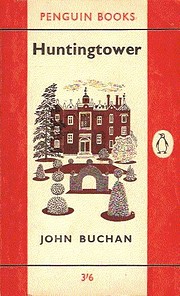
Review: This was a bit of a potboiler. I am a great fan of John Buchan's spy adventure novels, but both the plot and the development of the characters in Huntingtower seemed to be second-rate.
Huntingtower is the first of a series of three novels centered around the character Dickson McCunn. The novels in the series were written alongside other novels by Buchan I appreciate much more. The fast development of the plot is characteristic, as are serendipity and exaggerated elements of a strong story. The solidarity of Scottish (or British) folk against a sinister foreign power, and corruption of some countrymen are also a fixed element. Another thing is the obvious love of the Scottish countryside, and beautiful descriptions of the landscape, nature, villages and castles.
Still, particularly in this first volume, the character of Dickson McCunn, as well as Heritage are cardboard characters. Their unexpected ally consists in a troupe of street urchins, the Gorbal Die-Hards and their leader Dougal, sketched by the same pasteboard characterization. There is some humor in the way they are juxtaposed against the aristocratic Sir Archibald. The Gorbal Die-Hards add a fairy-tale element to the novel.
Huntingtower was written shortly after the Russian Revolution and published in 1922. The novel contains several story elements that would later feature in Cold War era pulp fiction, such as Russian spies, the ruthlessness of Bolshevik spies, the power of a united people to withstand an invader, and the importance of the middle class and its natural loyalty to the upper classes.
Source / edition: I downloaded this from Project Gutenberg.
Why I read this now: I looked for an easy read while reading several door stoppers.
Rating:
Other books I have read by John Buchan:
Prester John
Greenmantle
Mr. Standfast
The island of sheep
Sick Heart River
The thirty-nine steps
Finished reading: 23 December 2022
Review: This was a bit of a potboiler. I am a great fan of John Buchan's spy adventure novels, but both the plot and the development of the characters in Huntingtower seemed to be second-rate.
Huntingtower is the first of a series of three novels centered around the character Dickson McCunn. The novels in the series were written alongside other novels by Buchan I appreciate much more. The fast development of the plot is characteristic, as are serendipity and exaggerated elements of a strong story. The solidarity of Scottish (or British) folk against a sinister foreign power, and corruption of some countrymen are also a fixed element. Another thing is the obvious love of the Scottish countryside, and beautiful descriptions of the landscape, nature, villages and castles.
Still, particularly in this first volume, the character of Dickson McCunn, as well as Heritage are cardboard characters. Their unexpected ally consists in a troupe of street urchins, the Gorbal Die-Hards and their leader Dougal, sketched by the same pasteboard characterization. There is some humor in the way they are juxtaposed against the aristocratic Sir Archibald. The Gorbal Die-Hards add a fairy-tale element to the novel.
Huntingtower was written shortly after the Russian Revolution and published in 1922. The novel contains several story elements that would later feature in Cold War era pulp fiction, such as Russian spies, the ruthlessness of Bolshevik spies, the power of a united people to withstand an invader, and the importance of the middle class and its natural loyalty to the upper classes.
Source / edition: I downloaded this from Project Gutenberg.
Why I read this now: I looked for an easy read while reading several door stoppers.
Rating:
Other books I have read by John Buchan:
Prester John
Greenmantle
Mr. Standfast
The island of sheep
Sick Heart River
The thirty-nine steps
114edwinbcn
213. De V van Venus
Finished reading: 27 December 2022

Review: In Dutch the letter "V" is the letter of "vrouw" (woman). In this novel, De V van Venus, by the Dutch author Marion Bloem the letter "V" is the letter of "Venus", the name of the main character.
Venus van Oosten is a writer. One day, when she disappears, her editor collects her notes and computer files in order to try to piece together her story, hoping this story can be published as a work by Venus. De V van Venus is this story. It consists of notes and parts written by Venus van Oosten, selected and arranged by her editor, and the story discovered by her editor. The story is built up from these two revolving complementary perspectives. Like Marion Bloem, Venus van Oosten (= 'Venus of the East') is a Dutch writer with an Indonesian background. Every chapter starts with one, two or more key words that invariably start with the letter "V": Versjes, vervreemding, vrijgevochten, venusheuvel, vagina, vingeren, visitekaartje (Chapt 18), vaste verkering (Chapt 19), verloren tijd en voorspelbaarheid (Chap 20), Vrijdag (Chap 21), verzekeringen en Valkenswaard (Chap 22). Most of these words are pointers to identity and growing up. Some words point toward spiritual development and insight, e.g. Varanasi (Chap 24) and vikshepa-sakti (Chap 64).
While many words often appear in binary pairs, such as man & woman, or Adam & Eve, Venus is not directly associated with a (supposedly) complementary figure. De V van Venus is the story of the search for Venus, and as Venus is a woman, it is also the search for woman, the identity of what makes a woman, or what a woman, i.e. Venus needs.
De V van Venus was published in 2004. It is a powerful and original novel that shows that Marion Bloem has stepped out the of limited corner of "Indo-Dutch" post-colonial literature, and beyond activist feminism. Bloem (1952) has written a surprisingly large number of books after her debut Geen gewoon Indisch meisje (No Ordinary Indo Girl) in 1983.
In November 2022 she was awarded the prestigious Constantijn Huygens Award for her whole work of novels, stories and poetry.
Source / edition: Rainbow Pockets edition (Dutch language)
Why I read this now: I read this book because the author had just been awarded the prestigious Constantijn Huygens Award for her whole work.
Rating:
Finished reading: 27 December 2022

Review: In Dutch the letter "V" is the letter of "vrouw" (woman). In this novel, De V van Venus, by the Dutch author Marion Bloem the letter "V" is the letter of "Venus", the name of the main character.
Venus van Oosten is a writer. One day, when she disappears, her editor collects her notes and computer files in order to try to piece together her story, hoping this story can be published as a work by Venus. De V van Venus is this story. It consists of notes and parts written by Venus van Oosten, selected and arranged by her editor, and the story discovered by her editor. The story is built up from these two revolving complementary perspectives. Like Marion Bloem, Venus van Oosten (= 'Venus of the East') is a Dutch writer with an Indonesian background. Every chapter starts with one, two or more key words that invariably start with the letter "V": Versjes, vervreemding, vrijgevochten, venusheuvel, vagina, vingeren, visitekaartje (Chapt 18), vaste verkering (Chapt 19), verloren tijd en voorspelbaarheid (Chap 20), Vrijdag (Chap 21), verzekeringen en Valkenswaard (Chap 22). Most of these words are pointers to identity and growing up. Some words point toward spiritual development and insight, e.g. Varanasi (Chap 24) and vikshepa-sakti (Chap 64).
While many words often appear in binary pairs, such as man & woman, or Adam & Eve, Venus is not directly associated with a (supposedly) complementary figure. De V van Venus is the story of the search for Venus, and as Venus is a woman, it is also the search for woman, the identity of what makes a woman, or what a woman, i.e. Venus needs.
De V van Venus was published in 2004. It is a powerful and original novel that shows that Marion Bloem has stepped out the of limited corner of "Indo-Dutch" post-colonial literature, and beyond activist feminism. Bloem (1952) has written a surprisingly large number of books after her debut Geen gewoon Indisch meisje (No Ordinary Indo Girl) in 1983.
In November 2022 she was awarded the prestigious Constantijn Huygens Award for her whole work of novels, stories and poetry.
Source / edition: Rainbow Pockets edition (Dutch language)
Why I read this now: I read this book because the author had just been awarded the prestigious Constantijn Huygens Award for her whole work.
Rating:
115edwinbcn
214. Virtualia. Teletonen. Even- en nevenbeelden. Gedichten
Finished reading: 27 December 2022

Review: Sybren Polet is one of the great experimental novelists of Dutch literature. Virtualia. Teletonen. Even- en nevenbeelden. Gedichten (2012) is a volume of poetry which shows Polet shuns conventionality and fearlessly experiments with unconventional form and language in writing Dutch poetry.
Hard to read.
Source / edition: Downloaded from DBNL (Dutch digital library).
Why I read this now: I have read some prose, but never read any poetry by Polet
Rating:
Other books I have read by Sybren Polet:
Breekwater
Finished reading: 27 December 2022

Review: Sybren Polet is one of the great experimental novelists of Dutch literature. Virtualia. Teletonen. Even- en nevenbeelden. Gedichten (2012) is a volume of poetry which shows Polet shuns conventionality and fearlessly experiments with unconventional form and language in writing Dutch poetry.
Hard to read.
Source / edition: Downloaded from DBNL (Dutch digital library).
Why I read this now: I have read some prose, but never read any poetry by Polet
Rating:
Other books I have read by Sybren Polet:
Breekwater
116edwinbcn
215. Tussen Medemblik en Hippolytushoef
Finished reading: 27 December 2022

Review: Louis Lehmann, although on many of his books signed off as L. Th. Lehmann was active as a writer and poet for more than 70 years, while alongside he had a professional careers as a ships archaeologist. He was also active as a musician and composer. Although some of his works were published with the most respected mainstream publishers, many of his works were smaller publication which appeared on the margin of the literary scene, making Lehmann more of an author for connoiseurs than mainstream readership.
Tussen Medemblik en Hippolytushoef is a short novel or novella. It describes one day in the life of a university student. Many of the images and scenes in the story are set in Amsterdam. The climax of the day's ruminations are the student's attempt to get laid.
Source / edition: I downloaded this from DBNL (Dutch digital library).
Why I read this now: I own one small book of travelogues, but preferred to read this work first. The title appealed to me as it is the landscape and region of my hometown.
Rating:
Finished reading: 27 December 2022

Review: Louis Lehmann, although on many of his books signed off as L. Th. Lehmann was active as a writer and poet for more than 70 years, while alongside he had a professional careers as a ships archaeologist. He was also active as a musician and composer. Although some of his works were published with the most respected mainstream publishers, many of his works were smaller publication which appeared on the margin of the literary scene, making Lehmann more of an author for connoiseurs than mainstream readership.
Tussen Medemblik en Hippolytushoef is a short novel or novella. It describes one day in the life of a university student. Many of the images and scenes in the story are set in Amsterdam. The climax of the day's ruminations are the student's attempt to get laid.
Source / edition: I downloaded this from DBNL (Dutch digital library).
Why I read this now: I own one small book of travelogues, but preferred to read this work first. The title appealed to me as it is the landscape and region of my hometown.
Rating:
117edwinbcn
216. Het Bittermeer
Finished reading:

Review: Het Bittermeer is a volume of poetry collecting 16 poems. While most of the poems are inspired by classical history, the final three poems break away describing different things.
Source / edition: Downloaded from DBNL (Dutch digital library)
Why I read this now: Following a recommendation in the DBNL Newsletter December 2022.
Rating:
Finished reading:

Review: Het Bittermeer is a volume of poetry collecting 16 poems. While most of the poems are inspired by classical history, the final three poems break away describing different things.
Source / edition: Downloaded from DBNL (Dutch digital library)
Why I read this now: Following a recommendation in the DBNL Newsletter December 2022.
Rating:
118edwinbcn
217. Een schot in de lucht
Finished reading: 31 December 2022

Review: Most stories and novels of Anton Koolhaas are about animals. Stories in which both animals and people appear are often written from the perspective of the animals.
Een schot in de lucht is a short novel or novella in five chapters. The central character in the story is the hound Dian. The main event in the book is a deadly car crash, caused in an attempt to avoid running over another dog in the story, Moppie. However, since the perspective lies with the dogs, the car crash is of minor importance in the life of Dian.
Source / edition: Downloaded from DBNL (Dutch digital library)
Why I read this now: Random choice.
Rating:
Other books I have read by Anton Koolhaas:
Vanwege een tere huid
De hond in het lege huis
Finished reading: 31 December 2022

Review: Most stories and novels of Anton Koolhaas are about animals. Stories in which both animals and people appear are often written from the perspective of the animals.
Een schot in de lucht is a short novel or novella in five chapters. The central character in the story is the hound Dian. The main event in the book is a deadly car crash, caused in an attempt to avoid running over another dog in the story, Moppie. However, since the perspective lies with the dogs, the car crash is of minor importance in the life of Dian.
Source / edition: Downloaded from DBNL (Dutch digital library)
Why I read this now: Random choice.
Rating:
Other books I have read by Anton Koolhaas:
Vanwege een tere huid
De hond in het lege huis
120edwinbcn
>107 thorold: I haven't read English Journey but was aware of it through the book English journey, or The road to Milton Keynes by Beryl Bainbridge.
In China, I bought several books by J.B. Priestley but didn't come round to start reading some of them this year, and I am now reading Angel Pavement.
In China, I bought several books by J.B. Priestley but didn't come round to start reading some of them this year, and I am now reading Angel Pavement.
121edwinbcn
>108 arubabookwoman: It is worthwhile to know more about Iris Murdoch's life, her philosophy and her open-minded (if not kinky) ideas about sexuality and human relations. In her early work, it is often hard to get into the story and find out what role each character plays. In the later, bulkier novels, this is not so complicated any more.
122labfs39
>119 edwinbcn: Wow, Edwin, that's impressive, especially given the caliber of books you read in multiple languages. Happy New Year!
123arubabookwoman
>121 edwinbcn: I haven't read a lot of literary biographies. For several years I have noted the bookElegy for Iris, a memoir by Iris Murdoch's husband focusing on her later years when she suffered from Alzheimer's. Not sure that would be of much help in understanding her work though.
124edwinbcn
>106 labfs39:
Thanks, Lisa. For some time I have felt that my reviews are not a long and as well-written as before, due to difficulties with access to LT and having less time. After all, I am not retired and at least prior to August I had a busy job.
Since my return home, I have been unemployed, and I am busy looking for a job. However, that does not mean I have more time to look for a job. Reconnecting with friends and looking for a job take a lot of time. In addition, with the much more temperate climate, I go out for long walks much more often than in China, and have so far managed to shed 30 pounds. Thus, my average reading speed over the past four months was below my regular speed (10 versus 16 books per month). Over the first haf year, I read much more than my regular habit, as I tried to finish as many books before leaving China, knowing I wouldn't be able to bring them all.
I also have the impression that most other members are not so interested in reviews of obscure Dutch books, and have therefore felt little motivation to write long reviews of Dutch books *which I did not appreciate myself*. On the other hand, I do enjoy writing long reviews of Dutch books I like.
To balance all that, I jave looked for a different format of my posts. When I started posting to Club Read in 2011, I modeled my posts after StevenTX, a member who is now no longer active. With my new model, I follow Joyce (Nickelini). What I like about her format is providing some information as how I come to read a particular author or book at a particular time, and some information about the source. The latter also because I have recently started reading eBooks.
Thanks, Lisa. For some time I have felt that my reviews are not a long and as well-written as before, due to difficulties with access to LT and having less time. After all, I am not retired and at least prior to August I had a busy job.
Since my return home, I have been unemployed, and I am busy looking for a job. However, that does not mean I have more time to look for a job. Reconnecting with friends and looking for a job take a lot of time. In addition, with the much more temperate climate, I go out for long walks much more often than in China, and have so far managed to shed 30 pounds. Thus, my average reading speed over the past four months was below my regular speed (10 versus 16 books per month). Over the first haf year, I read much more than my regular habit, as I tried to finish as many books before leaving China, knowing I wouldn't be able to bring them all.
I also have the impression that most other members are not so interested in reviews of obscure Dutch books, and have therefore felt little motivation to write long reviews of Dutch books *which I did not appreciate myself*. On the other hand, I do enjoy writing long reviews of Dutch books I like.
To balance all that, I jave looked for a different format of my posts. When I started posting to Club Read in 2011, I modeled my posts after StevenTX, a member who is now no longer active. With my new model, I follow Joyce (Nickelini). What I like about her format is providing some information as how I come to read a particular author or book at a particular time, and some information about the source. The latter also because I have recently started reading eBooks.
125labfs39
>124 edwinbcn: Congratulations on your walking and weight loss regime. That's wonderful. Good luck too on job hunting. I always find that incredibly stressful. I remember StevenTX fondly, and still have dozens of books in my TBR and wishlist that he recommended. Even now, if I see his name associated with a book, I am more likely to add it to my pile. I too have enjoyed Joyce's format. Her cover comments are often interesting. I do think I'm going to shake up my own review format a bit in 2023. I'll look for you on the 2023 threads.

