The 2023 Nonfiction Challenge: Prizewinners and Nominees in January!
Talk 75 Books Challenge for 2023
Join LibraryThing to post.
1Chatterbox
I'm late, I'm late... Yes, I feel like the White Rabbit in Alice in Wonderland, running around in a dither. "Oh my fur and whiskers!"
But here's the first month's thread for the new year of non-fiction reading, and as always, we'll kick off with what has tended to be one of the most popular themes: Prizewinning books and nominees as well.
Any prize; any year. Here are some ideas to get you started!
U.S. National Book Awards
Baillie Gifford Prize, formerly Samuel Johnson Prize
An Odyssey: A Father, a Son and An Epic by Daniel Mendelsohn; The Spy and the Traitor by Ben Macintyre; Negroland by Margo Jefferson
Pulitzer Prizes -- general nonfiction
Random titles: An American Abroad in a Post-American World by Suzy Hansen; Evicted: Poverty and Profit in the American City by Matthew Desmond.
PEN/John Kenneth Galbraith Award
Wellcome Book Prize -- mixed fiction/nonfiction, so you'll need to pay attention!
The Orwell Prize -- 2017 longlist -- includes some fiction
Recent nominees include What You Did Not Tell by Mark Mazower and Islamic Enlightenment by Christophe de Bellaigue
Andrew Carnegie Medals of Excellence
Educated by Tara Westover; The Line Becomes a River by Francisco Cantú, The Poisoned City by Anna Clark (about Flint, Mich.), The Feather Thief by Kirk Johnson Wallace, Dopesick by Beth Macy
Edward Stanford Travel Writing Awards
(Where the Wild Winds Are by Nick Hunt; also Border by Kapka Kassabova. The Epic City, about Calcutta, by Kushanava Choudhury.
The James Tait Black Memorial Prize
There's a great biography category here.
Los Angeles Times book prizes -- any non-fiction category
The Death and Life of the Great Lakes by Dan Egan, Democracy in Chains by Nancy MacLean
Royal Society prize
https://royalsociety.org/grants-schemes-awards/book-prizes/science-book-prize/20....
Testosterone Rex by Cordelia Fine
And there's a bio category for the Costa prize (used to be Whitbread).
https://en.m.wikipedia.org/wiki/Costa_Book_Awards
In the Days of Rain by Rebecca Stott; H is for Hawk by Helen Macdonald; Young Stalin by Simon Sebag Montefiore.
the Wainwright Prize
Books (with a focus on England) about nature, the outdoors, and English-focused travel.
The Seabird's Cry by Adam Nicolson
The J. Anthony Lukas Prize Project
The Nieman School at Harvard and the Columbia Journalism School award two book prizes each year to published works and one to works in progress.
The Frederick Douglass Prize
Awarded to books writing about the themes of slavery, abolition, resistance, etc.
The Phi Beta Kappa Society Awards
Rather academic in nature; includes books like Bloodlands by Timothy Snyder or Short Nights of the Shadow Catcher by Timothy Egan (winners of the Ralph Waldo Emerson Award, one of the categories). Siddhartha Mukherjee won their science award for his book on the gene; there's also an award for literary criticism.
The Hawthornden Prize
The majority of books here are fiction, but occasionally a work of non-fiction creeps through, such as Bruce Chatwin's In Patagonia and Stalingrad by Anthony Beevor.
The Chatauqua Prize
NOTE: The nominees include both fiction and non-fiction, so do your due diligence!! The prize goes to "a book of fiction or literary/narrative nonfiction that provides a richly rewarding reading experience and honors the author for a significant contribution to the literary arts."
(examples, Why Read Moby Dick by Nathaniel Philbrick; In the Garden of Beasts by Erik Larson, Devil in the Grove by Gilbert King, It's What I Do by Lynsey Addorio.)
Hilary Weston Writers Trust Prize for Non-Fiction
Awarded to a top work of non-fiction by a Canadian author -- All Things Consoled by Elizabeth Hay, a memoir, by a great Canadian novelist. Nominees in recent past include Mad Enchantment by Ross King, about Monet and his water lily paintings, Seven Fallen Feathers by Tanya Talaga, an indigenous writer, about racism; Pumpkinflowers by Matti Friedman, A Disappearance in Damascus by Deborah Campbell and a book about the Arctic by novelist Kathleen Winter, Boundless: Tracing Land and Dream in a New Northwest Passage.
The Wolfson History Prize
Shortlisted for 2021 for this award was one of my fave books of the year, Burning the Books by Richard Ovenden. The book that won was Black Spartacus, a bio of Toussaint L'Ouverture. Previous years have included books about birds, about China, about medicine. Mary Beard's book about Pompeii was a winner/nominee.
The Financial Times & McKinsey Business Book of the Year
Formerly the Financial Times & Goldman Sachs Business Book of the Year. Titles like Black Swan by Nassim Nicholas Taleb; Lean In by Sheryl Sandberg; McMafia by Misha Glenny, Dragnet Nation by Julia Angwin and More Money Than God by Sebastian Mallaby.
But here's the first month's thread for the new year of non-fiction reading, and as always, we'll kick off with what has tended to be one of the most popular themes: Prizewinning books and nominees as well.
Any prize; any year. Here are some ideas to get you started!
U.S. National Book Awards
Baillie Gifford Prize, formerly Samuel Johnson Prize
An Odyssey: A Father, a Son and An Epic by Daniel Mendelsohn; The Spy and the Traitor by Ben Macintyre; Negroland by Margo Jefferson
Pulitzer Prizes -- general nonfiction
Random titles: An American Abroad in a Post-American World by Suzy Hansen; Evicted: Poverty and Profit in the American City by Matthew Desmond.
PEN/John Kenneth Galbraith Award
Wellcome Book Prize -- mixed fiction/nonfiction, so you'll need to pay attention!
The Orwell Prize -- 2017 longlist -- includes some fiction
Recent nominees include What You Did Not Tell by Mark Mazower and Islamic Enlightenment by Christophe de Bellaigue
Andrew Carnegie Medals of Excellence
Educated by Tara Westover; The Line Becomes a River by Francisco Cantú, The Poisoned City by Anna Clark (about Flint, Mich.), The Feather Thief by Kirk Johnson Wallace, Dopesick by Beth Macy
Edward Stanford Travel Writing Awards
(Where the Wild Winds Are by Nick Hunt; also Border by Kapka Kassabova. The Epic City, about Calcutta, by Kushanava Choudhury.
The James Tait Black Memorial Prize
There's a great biography category here.
Los Angeles Times book prizes -- any non-fiction category
The Death and Life of the Great Lakes by Dan Egan, Democracy in Chains by Nancy MacLean
Royal Society prize
https://royalsociety.org/grants-schemes-awards/book-prizes/science-book-prize/20....
Testosterone Rex by Cordelia Fine
And there's a bio category for the Costa prize (used to be Whitbread).
https://en.m.wikipedia.org/wiki/Costa_Book_Awards
In the Days of Rain by Rebecca Stott; H is for Hawk by Helen Macdonald; Young Stalin by Simon Sebag Montefiore.
the Wainwright Prize
Books (with a focus on England) about nature, the outdoors, and English-focused travel.
The Seabird's Cry by Adam Nicolson
The J. Anthony Lukas Prize Project
The Nieman School at Harvard and the Columbia Journalism School award two book prizes each year to published works and one to works in progress.
The Frederick Douglass Prize
Awarded to books writing about the themes of slavery, abolition, resistance, etc.
The Phi Beta Kappa Society Awards
Rather academic in nature; includes books like Bloodlands by Timothy Snyder or Short Nights of the Shadow Catcher by Timothy Egan (winners of the Ralph Waldo Emerson Award, one of the categories). Siddhartha Mukherjee won their science award for his book on the gene; there's also an award for literary criticism.
The Hawthornden Prize
The majority of books here are fiction, but occasionally a work of non-fiction creeps through, such as Bruce Chatwin's In Patagonia and Stalingrad by Anthony Beevor.
The Chatauqua Prize
NOTE: The nominees include both fiction and non-fiction, so do your due diligence!! The prize goes to "a book of fiction or literary/narrative nonfiction that provides a richly rewarding reading experience and honors the author for a significant contribution to the literary arts."
(examples, Why Read Moby Dick by Nathaniel Philbrick; In the Garden of Beasts by Erik Larson, Devil in the Grove by Gilbert King, It's What I Do by Lynsey Addorio.)
Hilary Weston Writers Trust Prize for Non-Fiction
Awarded to a top work of non-fiction by a Canadian author -- All Things Consoled by Elizabeth Hay, a memoir, by a great Canadian novelist. Nominees in recent past include Mad Enchantment by Ross King, about Monet and his water lily paintings, Seven Fallen Feathers by Tanya Talaga, an indigenous writer, about racism; Pumpkinflowers by Matti Friedman, A Disappearance in Damascus by Deborah Campbell and a book about the Arctic by novelist Kathleen Winter, Boundless: Tracing Land and Dream in a New Northwest Passage.
The Wolfson History Prize
Shortlisted for 2021 for this award was one of my fave books of the year, Burning the Books by Richard Ovenden. The book that won was Black Spartacus, a bio of Toussaint L'Ouverture. Previous years have included books about birds, about China, about medicine. Mary Beard's book about Pompeii was a winner/nominee.
The Financial Times & McKinsey Business Book of the Year
Formerly the Financial Times & Goldman Sachs Business Book of the Year. Titles like Black Swan by Nassim Nicholas Taleb; Lean In by Sheryl Sandberg; McMafia by Misha Glenny, Dragnet Nation by Julia Angwin and More Money Than God by Sebastian Mallaby.
2Chatterbox
And here's what you have to look forward to as 2023 unfolds! I hope it helps steer all of us to a great year of nonfiction reading...
February: Hobbies & Pastimes. Gardening, Genealogy, Travel. Whatever floats your boat. Including sailing.
March: Empires. The history of them, bios of their emperors, stories about how empires rise and fall. You can pick any empire, any era, but it must be seen to be an empire (so, the USSR and the USA may have imperial tendencies, but they are not formal empires...) Napoleon, Genghis Khan, China, the Byzantines, the Roman emperors, and I'll accept the Egyptian Pharaohs.
April: The Sea/Ocean. What happens on and in the sea, from trade and travel to oceanography and the study of fishes (think, Mark Kurlansky's book about the humble cod...)
May: Literary Biography. Books about literary creators, and some of the books they created.
June: Indigenous/Aboriginal Peoples/ First Nations. Explore their history, the first contacts with interlopers, land rights and treaty issues, human rights, social justice issues, etc.
July: Explorations and Expeditions. Define this any way you choose. Someone could walk the length of the Silk Road, or explore the structure of the human genome.
August: The World of the Land, Trees and Plants. So, think the natural world, here. This could be scientific; it could also be a travel book that is tied to geography, ecology, etc.
September: Family Ties. A family-based memoir (so, not just any memoir, but one revolving around family members), a book about family history or exploring a family's past/roots.
October: Crimes, Mysteries, Puzzles, Enigmas. What did happen to the Princes in the Tower? Does the Bermuda Triangle exist, really? Where did DB Cooper go? Or anything puzzling that intrigues you.
November: Matters of Faith and Philosophy. Basically: books about any ideas that shape the way we live and how we interact in society.
December As You Like It. Yes, it's the other perennial bookend! A go-anywhere/read-anything challenge.
February: Hobbies & Pastimes. Gardening, Genealogy, Travel. Whatever floats your boat. Including sailing.
March: Empires. The history of them, bios of their emperors, stories about how empires rise and fall. You can pick any empire, any era, but it must be seen to be an empire (so, the USSR and the USA may have imperial tendencies, but they are not formal empires...) Napoleon, Genghis Khan, China, the Byzantines, the Roman emperors, and I'll accept the Egyptian Pharaohs.
April: The Sea/Ocean. What happens on and in the sea, from trade and travel to oceanography and the study of fishes (think, Mark Kurlansky's book about the humble cod...)
May: Literary Biography. Books about literary creators, and some of the books they created.
June: Indigenous/Aboriginal Peoples/ First Nations. Explore their history, the first contacts with interlopers, land rights and treaty issues, human rights, social justice issues, etc.
July: Explorations and Expeditions. Define this any way you choose. Someone could walk the length of the Silk Road, or explore the structure of the human genome.
August: The World of the Land, Trees and Plants. So, think the natural world, here. This could be scientific; it could also be a travel book that is tied to geography, ecology, etc.
September: Family Ties. A family-based memoir (so, not just any memoir, but one revolving around family members), a book about family history or exploring a family's past/roots.
October: Crimes, Mysteries, Puzzles, Enigmas. What did happen to the Princes in the Tower? Does the Bermuda Triangle exist, really? Where did DB Cooper go? Or anything puzzling that intrigues you.
November: Matters of Faith and Philosophy. Basically: books about any ideas that shape the way we live and how we interact in society.
December As You Like It. Yes, it's the other perennial bookend! A go-anywhere/read-anything challenge.
3alcottacre
I will be reading Cuba: An American History by Ada Ferrer for January's challenge. The book won the Pulitzer Prize in 2022 for History.
4Familyhistorian
I pulled one from my shelves, Having it so Good: Britain in the Fifties which was the winner of the 2007 Orwell prize for political writing.
5fuzzi
>1 Chatterbox: I'm here, with bells on!
I will have to see what I can find at home, as I'm determined to work more on removing unread books from my shelves this year!
I will have to see what I can find at home, as I'm determined to work more on removing unread books from my shelves this year!
6Jackie_K
I'm finishing off H is for Hawk by Helen Macdonald, which I started in 2022. And later in the month I am really looking forward to reading On Gallows Down: Place, Protest and Belonging by Nicola Chester, which was highly commended in last year's Wainwright Prize, and also won the 2021 Richard Jeffries Prize for Nature Writing.
7EllaTim
>1 Chatterbox: Late or not, thanks for setting this up again!
I found the winner of the Dutch prize for nature writing:
Wolven op het Ruiterpad, by Tijs Goldschmidt. We’ll see. Was thinking of reading the book about the gene by Siddharta Mukherjee, but I got bogged down in his earlier one, such a tome.
And I have added one to the wishlist, as it looked wonderful but my library doesn’t have it.
>6 Jackie_K: Also will have to wait for On Gallows Down!
I found the winner of the Dutch prize for nature writing:
Wolven op het Ruiterpad, by Tijs Goldschmidt. We’ll see. Was thinking of reading the book about the gene by Siddharta Mukherjee, but I got bogged down in his earlier one, such a tome.
And I have added one to the wishlist, as it looked wonderful but my library doesn’t have it.
>6 Jackie_K: Also will have to wait for On Gallows Down!
8The_Hibernator
I'm going to try to read South to America this month.
9Jackie_K
>7 EllaTim: I'm so excited to read On Gallows Down! I took a look at the amazon page for Tijs Goldschmidt, it looks like only one of his older books is in English translation (or at least available in English for amazon customers).
10EllaTim
>9 Jackie_K: Let us hear what you thought of it! It might become available later, and the best received books usually get translated. The book by Goldschmidt? Getting translated into English is not easy for a nature writer, there are so many excellent books available in English.
11libraryperilous
Thanks, as always, for setting this up, Suzanne.
I'm looking forward to the March, April, and August challenges.
I'm looking forward to the March, April, and August challenges.
12kac522
Most probably my reading this month will be Maus by Art Spiegelman, which got a Pulitzer "Special Citation" in 1992.
13jessibud2
>12 kac522: - Oh, that's a good idea! I currently have that one on hold at the library. Time to move it from in active to active hold
14lindapanzo
Happy New Year, Suzanne!!
I intend to take advantage of the prizewinning challenge for January by reading the most recent Casey Award winner for 2021 (given to the best baseball book of the year) for Joe Posnanski's The Baseball 100.
I intend to take advantage of the prizewinning challenge for January by reading the most recent Casey Award winner for 2021 (given to the best baseball book of the year) for Joe Posnanski's The Baseball 100.
15PaulCranswick
I'm going to read Free by Lea Ypi which won the Ondaatje Prize and was shortlisted/ a finalist for the Baillie Gifford and Costa Biography Prize.
16SandDune
>15 PaulCranswick: I read Free recently Paul - I can strongly recommend it. I don't know how much I'll participate in this challenge but I do intend to read The Five: The Untold Lives of the Women Killed by Jack the Ripper by Hallie Rubenhold, winner of the BaillieGifford Prize in 2019.
17alcottacre
I completely forgot that Parting the Waters by Taylor Branch also won the Pulitzer Prize for History in 1989. I have already started that one so it would qualify for this challenge too.
18Familyhistorian
>16 SandDune: I really liked The Five: The Untold Lives of the Women Killed by Jack the Ripper. It was about time the focus was taken from Jack and put on the women whose lives were taken.
19SandDune
>18 Familyhistorian: Mr SandDune said that too. He's really not into the whole 'Jack the Ripper' thing (not am I) but he loved that book.
20LizzieD
I will or will not be reading The Silk Roads, nominated in 2019 for The Information Book Prize in the 12-16 category. I've never heard of that prize, but there it was on the Internet, so it must be real.
21Jackie_K
>20 LizzieD: Prize or no, it's a great book! Really interesting.
22jessibud2
>20 LizzieD: - LOL!
23benitastrnad
I will be reading one of the Silver Gavel Award winners. The Silver Gavel Award is given yearly by the American Bar Association for the best book published or presented during the preceding year that have been exemplary in helping to foster the American public's understanding of law and the legal system. For the past several years I have been trying to read the winners of this prize for this nonfiction challenge.
This year I intend to finish reading the book I started for this category last year. That is Unwarrented: Policing Without Permission by Barry Friedman. It won the Silver Gavel back in 2018. This is a big book and I managed to read half of it last year. It is about the abuse of police power in the US and how the Courts have added to the problem by allowing more and more police intrusion into many aspects of our lives. It is a dense academic book and it is time to finish it.
I am also going to try to read Civil Action by Jonathan Harr, which should be much easier reading than Unwarrented. This book was a finalist for the National Book Award, and it won the Silver Gavel Award in 1996.
This year I intend to finish reading the book I started for this category last year. That is Unwarrented: Policing Without Permission by Barry Friedman. It won the Silver Gavel back in 2018. This is a big book and I managed to read half of it last year. It is about the abuse of police power in the US and how the Courts have added to the problem by allowing more and more police intrusion into many aspects of our lives. It is a dense academic book and it is time to finish it.
I am also going to try to read Civil Action by Jonathan Harr, which should be much easier reading than Unwarrented. This book was a finalist for the National Book Award, and it won the Silver Gavel Award in 1996.
24benitastrnad
I also have a good start on a biography for my book club, Beatrix Potter: A Life in Nature by Linda Lear. This book won the Lakeland Book of the Year Award in 2007.
The Lakeland Book of the Year, also known as the Hunter Davies Lakeland Book of the Year is an award given annually for a book "set in or featuring Cumbria in some way", and is named for the Lake District of north west England. It was founded by writer Hunter Davies in 1984 and is administered by Cumbria Tourism.
The Potter biography is a big book (600 pages) so I doubt I will finish it for this month and most likely will finish it in time for May when we are reading literacy biographies. I have been wanting to read this one for a long time. I find Potter’s life fascinating.
The Lakeland Book of the Year, also known as the Hunter Davies Lakeland Book of the Year is an award given annually for a book "set in or featuring Cumbria in some way", and is named for the Lake District of north west England. It was founded by writer Hunter Davies in 1984 and is administered by Cumbria Tourism.
The Potter biography is a big book (600 pages) so I doubt I will finish it for this month and most likely will finish it in time for May when we are reading literacy biographies. I have been wanting to read this one for a long time. I find Potter’s life fascinating.
25dreamweaver529
Humm...as I was looking around, I was surprised to see several books I've already read, including NeuroTribes (Baillie Gifford Prize 2015) which I HIGHLY recommend.
I think I'll read The Five: The Untold Lives of the Women Killed by Jack the Ripper.
I think I'll read The Five: The Untold Lives of the Women Killed by Jack the Ripper.
26Chatterbox
Glad to see so many people reading The Five! What really resonated with me was that the book delivered on its promise to tell the stories of the LIVES of the five women who usually are only names in the Jack the Ripper saga.
I'll be reading last year's winner of the Orwell Prize for political writing, My Fourth Time We Drowned by Sally Hayden, about the Africa-to-Europe refugee migration route. I'm also hoping to read We Don't Know Ourselves by Fintan O'Toole, which was the An Post Irish Book of the Year. And if I get time, I may pick up the multiple-award winning book about John Donne, Super-Infinite, by Katherine Rundell. Or Kingdom of Characters, by Jing Tsu, a nominee for the Baillie Gifford Prize last year.
I'll be reading last year's winner of the Orwell Prize for political writing, My Fourth Time We Drowned by Sally Hayden, about the Africa-to-Europe refugee migration route. I'm also hoping to read We Don't Know Ourselves by Fintan O'Toole, which was the An Post Irish Book of the Year. And if I get time, I may pick up the multiple-award winning book about John Donne, Super-Infinite, by Katherine Rundell. Or Kingdom of Characters, by Jing Tsu, a nominee for the Baillie Gifford Prize last year.
27benitastrnad
>26 Chatterbox:
You have several books on that list that I am hoping to read this year. My Fourth Time We Drowned, We Don't Know Ourselves, and Kingdom of Characters are already on my TBR list. However, my local public library doesn't have any of them yet, so I will have to wait a bit before reading them.
You have several books on that list that I am hoping to read this year. My Fourth Time We Drowned, We Don't Know Ourselves, and Kingdom of Characters are already on my TBR list. However, my local public library doesn't have any of them yet, so I will have to wait a bit before reading them.
28benitastrnad
For anybody who might be looking for a good book to read for this month I would highly recommend You Don't Belong Here: How Three Women Rewrote the Story of War by Elizabeth Becker. This was one of my top reads for 2022 and it was recommended by Suzanne. It won the Goldsmith Prize in 2022. The Goldsmith Prize is awarded to the trade and academic book published in the United States in the last 24 months that best fulfills the objective of improving democratic governance through an examination of the intersection between the media, politics and public policy. Recent Goldsmith Book Prizes have been awarded to books about political journalism, the history of news, news and political polarization, internet freedom, local news and digital democracy. Books that are not on the topic of media and politics will not be considered.
People always say that a work of nonfiction "reads like a novel" and that is true of this book. Once I started reading it I couldn't put it down. It was simply fascinating. There has been lots of LT love for Martha Gelhorn recently and the three women profiled in this book (written by a fourth woman who was trained by them) are worthy successors to Gelhorn's legacy.
The book may be hard to find, as it was published by an small publisher. I had to place an ILL request for it, but I am glad that I did.
People always say that a work of nonfiction "reads like a novel" and that is true of this book. Once I started reading it I couldn't put it down. It was simply fascinating. There has been lots of LT love for Martha Gelhorn recently and the three women profiled in this book (written by a fourth woman who was trained by them) are worthy successors to Gelhorn's legacy.
The book may be hard to find, as it was published by an small publisher. I had to place an ILL request for it, but I am glad that I did.
29benitastrnad
>4 Familyhistorian:
That's a BB! I even looked up other books by Paul Hennessy and added them to my list.
That's a BB! I even looked up other books by Paul Hennessy and added them to my list.
30dreamweaver529

The Five: The Untold Lives of the Women Killed by Jack the Ripper by Hallie Rubenhold
I can see why this won awards. It is a must-read for all True Crime readers, and for anyone who is interested in women's issues (which should be all of us, as we are ether a woman and/or the child of a woman). It does a great job of humanizing the women involved.
31ronincats
I need to choose among The Gene, Neurotribes, and The Emperor of Maladies, all of which have languished on my tbr shelves for far too long, and soon so I can start reading!
33Chatterbox
Finished reading The Fourth Time, We Drowned by Sally Hayden. This is an important book, that highlights the specific horrors confronted by migrants trying to make their way across the Med to Europe, who have ended up trapped in Libya in part 'thanks' to the EU's support of Libyan coast guards, who are paid to keep these people out of Europe itself. Would-be migrants are sold by one smuggling group or militia to each other and then extorted for more money, with relatives forced to listen to torture. And yet, they keep trying. Hayden does a good job of delineating the scope and nature of the problem and raises some interesting questions about the overall issue of "migrants" -- what do borders mean in our globalized world? What's the ongoing legacy of colonialism, not just in why people flee but in the ongoing exploitation and division within societies in areas like Africa? Why is out of sight, out of mind? What does the word 'migrant' entail, and is it value-laden? Still, the book wasn't quite a five-star read: Hayden succumbed to the temptation to repeat and repeat and repeat details of the horrors to which the people she talked to were subjected -- torture, starvation, deadly illness, being caught in the crossfire of a civil war, hazardous journeys -- to the point where it numbs the reader. What changes are the names and the specific places, not the nature of the problem. The last thing anyone needs is to be numbed to the nature of this kind of human tragedy. The book gathers steam in the final third, as the focus moves beyond this repetitive detail to look at the legacy of trauma, the culpability of institutions (I will never look at the UNHCR in the same way again) and the hypocrisy of governments that claim to cherish and uphold human rights. It's a difficult book to read, but worth the effort and the sometimes repetitive nature of the horrific details.
34karspeak
I also read The Five and really enjoyed it. I'm hoping to finish Sting in the Tale this month, as well, which was a finalist for the Samuel Johnson Prize (as it was then called).
35libraryperilous
>33 Chatterbox: Timely review, posted on the week Biden announced draconian right-wing border policies that are even worse than the UK's.
This is such an international failure of imperialism, racism, status quo bias, and selfishness on the part of median voters. Here in the US, it's been a bipartisan failing since the Reagan era, and it will continue to be so until Democratic voters decide to care about immigrants. Unfortunately, since Biden took office, support for immigrants has declined within the Democratic party.
Immigration is good for democracy! Immigration grows the economy, enhances our international reputation, shores up our national security (see esp. brain drains), enriches our civil society, and allows us to compete with other countries. I hope we can find our way to policies that reflect that someday. It will take a better class of Democratic politicians than the one we currently have. They've gone all in on Trump's border policies, Title 42, and travel bans. Policies that were viewed by moderate Democrats as extreme and right-wing under Trump have become the supported status quo by those same moderate Democrats under Biden.
It's not just the border policies that are bad. Our visa system is awful, our quotas are too low, and our focus on STEM* means we are creating an immigration system that disproportionately rewards wealthy entrepreneurs. People wait for years to join their families. No laws have changed, but applications that used to take 4 pages now are over 20 pages long. This is the result of bipartisan fearmongering about 'terrorism,' but it also netted some consultants and third-party contractors big money in the name of 'efficiency.'
I really want to stress that this is a bipartisan failing in the US. The Democratic party is bad on immigration in the same ways Republicans are bad on immigration. The Democratic governor of Colorado spent the last couple of months busing migrants to "blue" cities. The Democratic mayor of New York City recently announced "no room at the inn" and has made migrants in NYC fill out forms for baby formula.
It is my fervent hope that the Democratic party looks back in 10-25 years on our current immigration stance with as much shame and anger as we currently do DOMA and the 1994 crime bill.
For those of you looking for good sources of information, I recommend Aaron Reichlin-Melnick and Todd Schulte.
*This one is deeply tied to the Democratic party's embrace of college as a business and degrees as tools for higher salaries.
This is such an international failure of imperialism, racism, status quo bias, and selfishness on the part of median voters. Here in the US, it's been a bipartisan failing since the Reagan era, and it will continue to be so until Democratic voters decide to care about immigrants. Unfortunately, since Biden took office, support for immigrants has declined within the Democratic party.
Immigration is good for democracy! Immigration grows the economy, enhances our international reputation, shores up our national security (see esp. brain drains), enriches our civil society, and allows us to compete with other countries. I hope we can find our way to policies that reflect that someday. It will take a better class of Democratic politicians than the one we currently have. They've gone all in on Trump's border policies, Title 42, and travel bans. Policies that were viewed by moderate Democrats as extreme and right-wing under Trump have become the supported status quo by those same moderate Democrats under Biden.
It's not just the border policies that are bad. Our visa system is awful, our quotas are too low, and our focus on STEM* means we are creating an immigration system that disproportionately rewards wealthy entrepreneurs. People wait for years to join their families. No laws have changed, but applications that used to take 4 pages now are over 20 pages long. This is the result of bipartisan fearmongering about 'terrorism,' but it also netted some consultants and third-party contractors big money in the name of 'efficiency.'
I really want to stress that this is a bipartisan failing in the US. The Democratic party is bad on immigration in the same ways Republicans are bad on immigration. The Democratic governor of Colorado spent the last couple of months busing migrants to "blue" cities. The Democratic mayor of New York City recently announced "no room at the inn" and has made migrants in NYC fill out forms for baby formula.
It is my fervent hope that the Democratic party looks back in 10-25 years on our current immigration stance with as much shame and anger as we currently do DOMA and the 1994 crime bill.
For those of you looking for good sources of information, I recommend Aaron Reichlin-Melnick and Todd Schulte.
*This one is deeply tied to the Democratic party's embrace of college as a business and degrees as tools for higher salaries.
36SandDune
I've finished The Five: the Untold Stories of the Women Killed by Jack the Ripper Hallie Rubenhold. Here is my review:
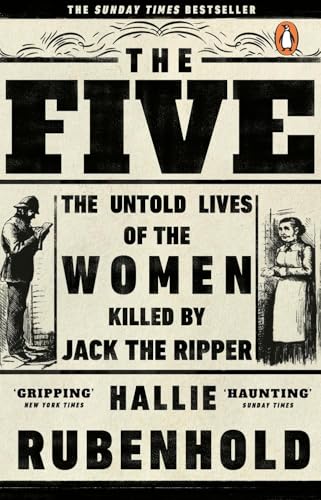
Anybody coming to this book looking for theories on the identity of Jack the Ripper himself will be very disappointed as it focuses solely on the lives of the five women that he is believed to have killed. Mary Ann 'Polly' Nichols, Annie Chapman, Elizabeth Stride, Catherine Eddowes and Mary Jane Kelly have all been assumed in the Ripper literature to be prostitutes, but in most cases this assumption is not borne out by the evidence. Hallie Rubenhold's meticulous research looks at each woman's path to becoming a victim of the Ripper. Rather than prostitution, Rubenhold argues that it was extreme poverty that led most of the Ripper's victims to be on the streets of Whitechapel in 1888. They simply could not afford the price of a bed in even the most basic lodging house.
Above all, the book brings home how extremely difficult it was for a poor woman without a husband or other male partner to support themselves in Victorian Britain. They simply couldn't earn enough to provide the most basic necessities of life and purely as a result of their situation they would be seen as an immoral outcasts from society:
Overall, this book provides a fascinating insight into the lives of the poor in Victorian England and emphasises how even relatively prosperous working class families were only a step away from destitution. A death, an illness, or the arrival of too many children in an age where contraception was not well understood, would be all it took. It also sheds light on why there were so many adherents to the temperance movement as addiction to alcohol is a common theme in the downward spiral that these women took. But given the circumstances of the lives of the poor, it's also surprising that many Victorian women were able to deal with the realities of their day to day lives without it.
Recommended.
Anybody coming to this book looking for theories on the identity of Jack the Ripper himself will be very disappointed as it focuses solely on the lives of the five women that he is believed to have killed. Mary Ann 'Polly' Nichols, Annie Chapman, Elizabeth Stride, Catherine Eddowes and Mary Jane Kelly have all been assumed in the Ripper literature to be prostitutes, but in most cases this assumption is not borne out by the evidence. Hallie Rubenhold's meticulous research looks at each woman's path to becoming a victim of the Ripper. Rather than prostitution, Rubenhold argues that it was extreme poverty that led most of the Ripper's victims to be on the streets of Whitechapel in 1888. They simply could not afford the price of a bed in even the most basic lodging house.
Above all, the book brings home how extremely difficult it was for a poor woman without a husband or other male partner to support themselves in Victorian Britain. They simply couldn't earn enough to provide the most basic necessities of life and purely as a result of their situation they would be seen as an immoral outcasts from society:
The confusion occasioned by a woman of Polly's age, living apart from her husband and family, would have caused people to have concluded one thing alone: she was an aberration, a failure, and invariably, where the character of the woman was compromised, sexual immorality was also assumed. Regardless of whether she could support herself with laundry work or charring, the concept of a woman of childbearing age living and enjoying a single life was an absolute anathema to the Victorian era, regardless of one's class. Without a man, a woman had no credibility, no protection against the schemes and violence of other men, and no purpose in life.
Overall, this book provides a fascinating insight into the lives of the poor in Victorian England and emphasises how even relatively prosperous working class families were only a step away from destitution. A death, an illness, or the arrival of too many children in an age where contraception was not well understood, would be all it took. It also sheds light on why there were so many adherents to the temperance movement as addiction to alcohol is a common theme in the downward spiral that these women took. But given the circumstances of the lives of the poor, it's also surprising that many Victorian women were able to deal with the realities of their day to day lives without it.
Recommended.
37cbl_tn
I read Parallel Journeys by Eleanor Ayer with Helen Waterford and Alfons Heck. Helen and Alfons were born not far from each other in Germany. During World War II, Alfons was a proud member of the Hitler Youth, while Helen was a young Jewish wife and mother who had fled to the Netherlands, believing that it was far enough away from Germany for safety. Decades later, Helen and Alfons made joint public appearances to tell their stories in hope of keeping history from repeating itself. This book follows a format similar to their public appearances, alternating between each one's story chronologically throughout the war and its aftermath.
38Chatterbox
I started reading A Kingdom of Characters by Jing Tsu, and I can already tell it's going to be fabulous. I've long been fascinated by ideograms or Chinese characters, since I began studying Japanese in my late teens/early 20s and began to grasp exactly what they represented and how they were constructed, so this is right up my alley.
39SandDune
>38 Chatterbox: I’ll be interested to see how you get on with this one. Jacob had it on his Christmas list last year.
40alcottacre
I am finishing up Parting the Waters, the first book in Taylor Branch's Pulitzer prize winning trilogy, today. The first book is around 900 pages long in the edition that I have and well worth the read.
41kac522

I read The Complete Maus: A Survivor's Tale by Art Spiegelman (1986 & 1992). This book received a Pulitzer Prize "Special Citation" in 1992. This was originally published as 2 volumes (1986 and 1992); this edition is a combined volume of both books.
In a graphic book Art Spiegelman tells the story of his father's experience in Poland during the Holocaust, from his early years to his imprisonment in concentration camps to his release. Spiegelman also shows us the process of gathering these stories from his father and the conflicts that arise. The author draws people as animals: Jews as mice, Poles as pigs, Germans as cats, etc. At first this seemed odd, but as I got used to it, I realized this had a purpose: to help Spiegelman himself put some distance between the real people and the characters he was drawing. It also helped me as a reader to quickly tell the "hierarchy" inherent in relationships at that time.
What struck me most about the book was the relationship between the author and his father, and then the author's own struggles as a child of survivors, and trying to make sense of it all. Although he doesn't specifically point that out, we can see it in how he deals with his father. I kept coming away with the father being quite the wheeler and dealer, but you had to be to survive. I don't think there's any way that I can do justice to this book in a review. Overall a very compelling and very personal look at surviving the Holocaust.
42Chatterbox
>39 SandDune: I'm really, really enjoying this book -- taking it in small bites, though, as I'm also reading/listening to Fintan O'Toole's We Don't Know Ourselves, about changing modern Ireland. He was born in the late 1950s, and is very successfully blending his own life and observations with some fascinating insights, in a combination of chronological and thematic chapters. I'm about midway through this now, and am finding it revelatory and fascinating. Who knew, for instance, that Charles de Gaulle once sought to celebrate his Irish roots, even as he vetoed Irish application to join the EEC (as it then was)??
43Jackie_K
I've just finished H is for Hawk by Helen Macdonald (winner of the Costa Book of the Year in 2014, the Samuel Johnson Prize the same year, and also on the Wainwright Prize longlist) and loved it. It's very far from a cosy, nature-as-healer book (even though she clearly did experience a level of healing through her experience with Mabel the goshawk). I thought her writing was amazing. I loved how she could even make me laugh in the midst of an awful experience, such as this one when she's been attacked by the juvenile Mabel:
I rubbed my eyes and my hand came away soaked, dramatically and Shakespearianly, in blood. I pulled off my glasses. They were covered in it. Blood was running in streams down my forehead, into my left eye, and was now attracting the attention of a hungry goshawk.
Christ, I thought, this is a bit Edgar Allan Poe.
I rubbed my eyes and my hand came away soaked, dramatically and Shakespearianly, in blood. I pulled off my glasses. They were covered in it. Blood was running in streams down my forehead, into my left eye, and was now attracting the attention of a hungry goshawk.
Christ, I thought, this is a bit Edgar Allan Poe.
44Chatterbox
>43 Jackie_K: I adored that book!
I finally finished We Don't Know Ourselves by Fintan O'Toole, and really admired it, and enjoyed much of it. Only a few small caveats -- it ended up feeling repetitive (a lot of segments focused on political corruption, and a lot focused -- understandably -- on the Catholic Church's toxic actions and inaction in Ireland) while I felt that he kind of buried the thesis too much throughout -- that Ireland and the Irish were struggling to find an identity for themselves as a marginal European post-colonial independent nation into the second half of the 20th century. That said, it was deeply thought-provoking: I hadn't really considered that the Irish might themselves have experienced an identity crisis, given the resilience of their Irish identity as part of the centuries-long battle against the British. But once you remove that "enemy", well, what happens? And when you're stranded on the fringe of Europe, but not part of the Americas, etc. etc. And as always with me and NF books, what made this book was the use of granular examples to make big points -- those are the vivid details that shock a reader awake and make them realize, omigod, YES, that tells me more than broad sweeping generalizations do...
I finally finished We Don't Know Ourselves by Fintan O'Toole, and really admired it, and enjoyed much of it. Only a few small caveats -- it ended up feeling repetitive (a lot of segments focused on political corruption, and a lot focused -- understandably -- on the Catholic Church's toxic actions and inaction in Ireland) while I felt that he kind of buried the thesis too much throughout -- that Ireland and the Irish were struggling to find an identity for themselves as a marginal European post-colonial independent nation into the second half of the 20th century. That said, it was deeply thought-provoking: I hadn't really considered that the Irish might themselves have experienced an identity crisis, given the resilience of their Irish identity as part of the centuries-long battle against the British. But once you remove that "enemy", well, what happens? And when you're stranded on the fringe of Europe, but not part of the Americas, etc. etc. And as always with me and NF books, what made this book was the use of granular examples to make big points -- those are the vivid details that shock a reader awake and make them realize, omigod, YES, that tells me more than broad sweeping generalizations do...
45SandDune
>43 Jackie_K: I loved that book
>44 Chatterbox: I hadn't really considered that the Irish might themselves have experienced an identity crisis I started thinking about similar questions when I read The Pull of the Stars by Emma Donoghue last year, whose main character is very ambivalent about Irish independence. I suppose I had always assumed that the vast majority of Irish people had wanted independence. But I started to wonder about the extent to which some Irish people would have just been uninterested or even opposed to independence on economic or other grounds. And then I started thinking about the question in the light of the Scottish independence movement. At the moment, according to polling, marginally more Scots want to stay in the U.K. as want to leave (about 54% to 46%). But if that percentage were reversed and Scotland became independent would the narrative in 100 years time be that independence was inevitable and that 'truly patriotic Scots' had all supported the move to independence, like we assume that the Irish of the early twentieth century did?
>44 Chatterbox: I hadn't really considered that the Irish might themselves have experienced an identity crisis I started thinking about similar questions when I read The Pull of the Stars by Emma Donoghue last year, whose main character is very ambivalent about Irish independence. I suppose I had always assumed that the vast majority of Irish people had wanted independence. But I started to wonder about the extent to which some Irish people would have just been uninterested or even opposed to independence on economic or other grounds. And then I started thinking about the question in the light of the Scottish independence movement. At the moment, according to polling, marginally more Scots want to stay in the U.K. as want to leave (about 54% to 46%). But if that percentage were reversed and Scotland became independent would the narrative in 100 years time be that independence was inevitable and that 'truly patriotic Scots' had all supported the move to independence, like we assume that the Irish of the early twentieth century did?
46Chatterbox
>45 SandDune: That's an intriguing question vis-a-vis Scotland -- complicated by Brexit, of course! Scotland has been part of the 'United' Kingdom rather than a colony for much longer, of course, and for the last two centuries, has been far more integrated with England than Ireland EVER was -- I think the sense of national identity is different and coexists more readily within the UK than Ireland did. Religion is part of that, and so is history -- the Irish were under or vulnerable to English control from the early days after the Norman Conquest, vs two nations with LOTS of border wars followed by a somewhat peaceful union later complicated by the Jacobites.
But what resonated with me was the idea that as long as everyone was so very preoccupied within independence from Britain/England, they didn't have to stop and think what an independent Ireland would look like. Yes, it would be Catholic; yes, the Irish language would be revived. But then what; what comes next?? Reminds me of a postcard with an illustration I once had on my work cube before 9/11 cost me everything that was there: picture of a cat all smushed up inside a glass jar with words that were something like: "Cat, having tried very hard to get somewhere, wondering where it is she really got." So, it would be possible for a high degree of support for independence prior to independence (and even afterward...) to be accompanied by uncertainty/wariness/anxiety/identity crisis. If your identity is to be opposed to something, and that "thing" vanishes -- well, what do you pin your identity to now?
But what resonated with me was the idea that as long as everyone was so very preoccupied within independence from Britain/England, they didn't have to stop and think what an independent Ireland would look like. Yes, it would be Catholic; yes, the Irish language would be revived. But then what; what comes next?? Reminds me of a postcard with an illustration I once had on my work cube before 9/11 cost me everything that was there: picture of a cat all smushed up inside a glass jar with words that were something like: "Cat, having tried very hard to get somewhere, wondering where it is she really got." So, it would be possible for a high degree of support for independence prior to independence (and even afterward...) to be accompanied by uncertainty/wariness/anxiety/identity crisis. If your identity is to be opposed to something, and that "thing" vanishes -- well, what do you pin your identity to now?
47benitastrnad
I am half done with reading Beatrix Potter: A Life In Nature by Linda Lear. I love this book. It is a long biography at 600 pages, but it is very readable for those of us interested in Potter and her work. I have learned much about this remarkable woman in the 225 pages of the biography that I have read this month. Potter made significant discoveries about Fungi. She was never given credit for these in her lifetime, and in fact is only now being regarded as one of the world's great mycologists. She was denied entrance into the British Mycology Society because she was a woman. Her paper on the reproduction of Fungi was never published because she was a woman and not a member of the British Mycology Society. Her uncle, a chemist, tried to interest people at the Royal Botanical Gardens at Kew and got nowhere because she was a woman, although his intersession did result in her being allowed to visit the gardens and got her access to the information that they had on fungi. Her botanical drawings of fungi were used without her permission and she was never given credit for them because she was a woman.
Potter was one of the first author's to have business acumen. She was one of the first author's to produce licensed products and spinoff of her books. She created the prototypes for all of the Peter Rabbit and subsequent books. She did the designs for all the licensed products for everything from wallpaper to fabrics to china and silverware, in addition she continued to write and illustrate two books a year. Eventually, she made more money off of the licensed products than she did royalties from the books. It was these royalties that allowed her to purchase the land in the Lake District that she did. I am now up to the year 1908 and Potter has just purchased her second farm and is going all in on purchasing herd stock for her sheep and making improvements in the house at Hill Top Farm. She also learned that she had been fleeced on her purchase of Hill Top Farm and has just engaged a local solicitor to prevent that from happening again.
I plan on continuing to read this book and will eventually finish it because Potter lived a very interesting life. It is going to take me months to do so because of the length of the book, but I am enjoying the reading of it so time is not that important.
Potter was one of the first author's to have business acumen. She was one of the first author's to produce licensed products and spinoff of her books. She created the prototypes for all of the Peter Rabbit and subsequent books. She did the designs for all the licensed products for everything from wallpaper to fabrics to china and silverware, in addition she continued to write and illustrate two books a year. Eventually, she made more money off of the licensed products than she did royalties from the books. It was these royalties that allowed her to purchase the land in the Lake District that she did. I am now up to the year 1908 and Potter has just purchased her second farm and is going all in on purchasing herd stock for her sheep and making improvements in the house at Hill Top Farm. She also learned that she had been fleeced on her purchase of Hill Top Farm and has just engaged a local solicitor to prevent that from happening again.
I plan on continuing to read this book and will eventually finish it because Potter lived a very interesting life. It is going to take me months to do so because of the length of the book, but I am enjoying the reading of it so time is not that important.
48mdoris
>47 benitastrnad: I learned a lot about Beatrix Potter in a book that I thought was wonderful The Shepherd's Life by James Reaney. Sadly my library system does not have the Linda Lear book.
49Familyhistorian
My prize winner for January is going much slower than I hoped. Having It So Good: Britain in the Fifties started out with the social history of the decade and the read was going well until I got part way in. A chapter on the Cold War followed by one on proposed monetary policy slowed things down a lot. I won’t get the book finished this month but I’m sure I’ll get back to social history before long. I know there’s more. The deadly London smog of 1952 hasn’t been covered yet and there’s much more social history besides that needs to be covered.
50Chatterbox
Nope, I have not forgotten. Setting Feb challenge up now...
51Chatterbox
And here is the link... Don't forget to star it as the star will NOT transfer automatically...
https://www.librarything.com/topic/348217
https://www.librarything.com/topic/348217
52Jackie_K
Thanks Suzanne! I am still reading On Gallows Down and loving it, just didn't manage to finish it before the end of the month. I'll make sure to post a review when I do.
53Jackie_K
Better late than never, here's my review of On Gallows Down (TL:DR: I loved it!):
On Gallows Down: Place, Protest and Belonging by Nicola Chester is a memoir full of nature, anger, and ultimately hope. She writes so beautifully about the places she's lived - in the borders of rural Berkshire, Hampshire and Wiltshire - and her experiences both of the nature of the area, but also of the contested landscape. She lived near Greenham Common in the 1980s, with its women's peace camp at the American nuclear base, and protested the nearby Newbury Bypass in the 1990s. Her husband works for one of the local sporting estates owned by the landed gentry, and their housing is attached to the job, so she also talks about the precarity of living in tied housing and the tensions between wanting to preserve the local nature and the interests of the estate owners who put profit above all. It's a galvanising cry for the nature which has been lost over the years, a call to honour and love and seek to preserve and increase what remains, and a beautiful meditation on belonging. Fantastic book.
On Gallows Down: Place, Protest and Belonging by Nicola Chester is a memoir full of nature, anger, and ultimately hope. She writes so beautifully about the places she's lived - in the borders of rural Berkshire, Hampshire and Wiltshire - and her experiences both of the nature of the area, but also of the contested landscape. She lived near Greenham Common in the 1980s, with its women's peace camp at the American nuclear base, and protested the nearby Newbury Bypass in the 1990s. Her husband works for one of the local sporting estates owned by the landed gentry, and their housing is attached to the job, so she also talks about the precarity of living in tied housing and the tensions between wanting to preserve the local nature and the interests of the estate owners who put profit above all. It's a galvanising cry for the nature which has been lost over the years, a call to honour and love and seek to preserve and increase what remains, and a beautiful meditation on belonging. Fantastic book.
54benitastrnad
>53 Jackie_K:
That's a BB!
That's a BB!
55benitastrnad
I also finished a Prizewinner today. It is not the one I started back in January. (I am still reading on Beatrix Potter: A Life in Nature.) The University was closed due to there might be bad weather, so I had time to read this morning. I finished Down From the Mountain: The Life and Death of Grizzly Bear by Bryce Andrews. This book won the Banff Book Festival Prize in 2019. I know that isn't a big prize, but this is simply a wonderful book. After I finished it I thought it was so good that it had to have gotten some kind of attention. I looked in the common knowledge category here on LT and sure enough it was listed as a finalist for the Banff Book Prize and then as the winner. This book was so good I just have to tell people about it.
I have my first 5 star read of the year is Down From the Mountain: The Life and Death of a Grizzly Bear by Bryce Andrews. Once I started reading this one I just couldn't stop. The author is a wonderful writer. The book is part memoir and part long nature essay. What impressed me so much was that the author managed to be compassionate and yet able to recognize all the complexities that are happening because of climate change, urban sprawl, and wildlife encroachment.
The story takes place in the Mission Valley of Montana on the Flathead Indian Reservation and it has everything that makes a great story. The population of Montana has risen by 14% in the last ten years and even small towns out in the boonies of Montana are feeling the pressures caused by this migration. So are the Grizzlies, who are an endangered species. This book brings all of those problems to the fore and lays out the results in a clear cut but very compassionate way. Most of all it has real people who care about the environment who are farmers, conservationists, Native Americans and law enforcement. It is just a great story. You simply have to read this one.
I have my first 5 star read of the year is Down From the Mountain: The Life and Death of a Grizzly Bear by Bryce Andrews. Once I started reading this one I just couldn't stop. The author is a wonderful writer. The book is part memoir and part long nature essay. What impressed me so much was that the author managed to be compassionate and yet able to recognize all the complexities that are happening because of climate change, urban sprawl, and wildlife encroachment.
The story takes place in the Mission Valley of Montana on the Flathead Indian Reservation and it has everything that makes a great story. The population of Montana has risen by 14% in the last ten years and even small towns out in the boonies of Montana are feeling the pressures caused by this migration. So are the Grizzlies, who are an endangered species. This book brings all of those problems to the fore and lays out the results in a clear cut but very compassionate way. Most of all it has real people who care about the environment who are farmers, conservationists, Native Americans and law enforcement. It is just a great story. You simply have to read this one.
56Jackie_K
>55 benitastrnad: I've just taken a BB right back!

