Folio Archives 309: The Life of Muhammad by Ibn Ishaq 2003
Talk Folio Society Devotees
Join LibraryThing to post.
1wcarter
The Life of Muhammad, Apostle of Allah by Ibn Ishaq - 2003
Born in Mecca in about 570 AD, Muhammed was 40 years old when he began to receive vision from God and began to preach amongst fellow Arabs. He died aged about 62 after being persecuted, wandering through various Arabian cities and constantly teaching his new philosophy which became Islam.
This biography was written in the 7th. century and is the earliest known account of the prophet’s life. It was translated by Edward Rehatsek and there is a nine page introduction by Michael Edwardes.
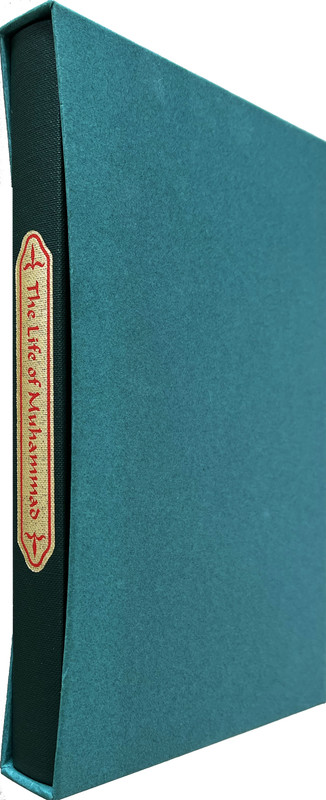
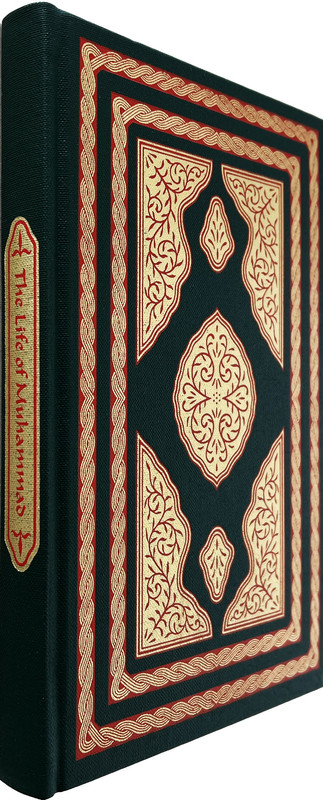
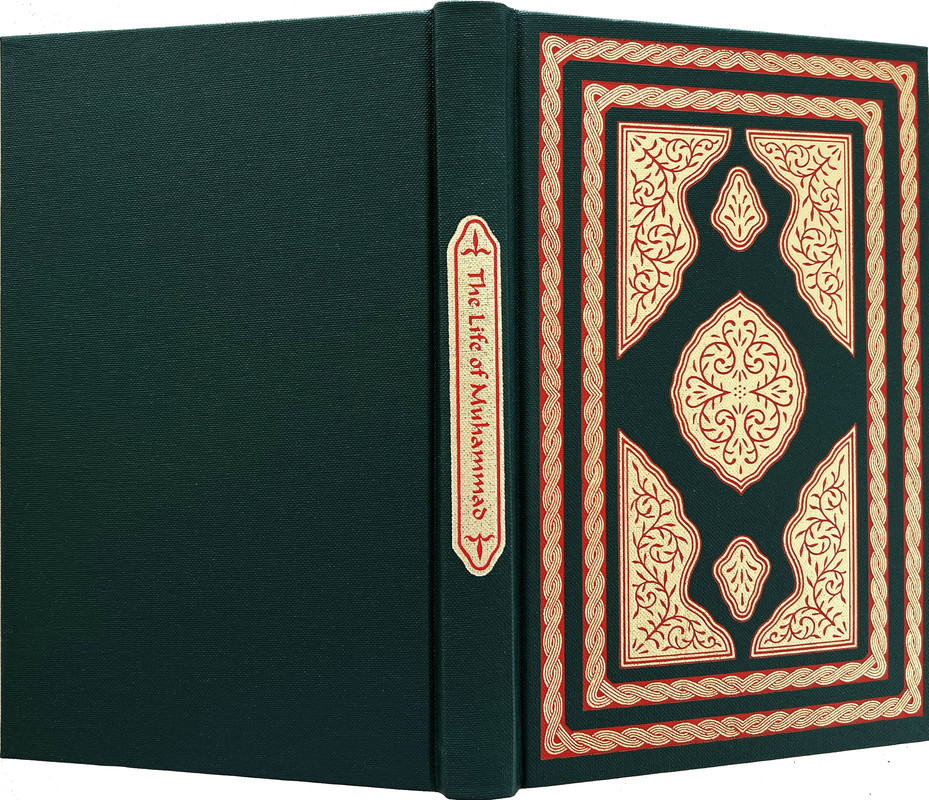
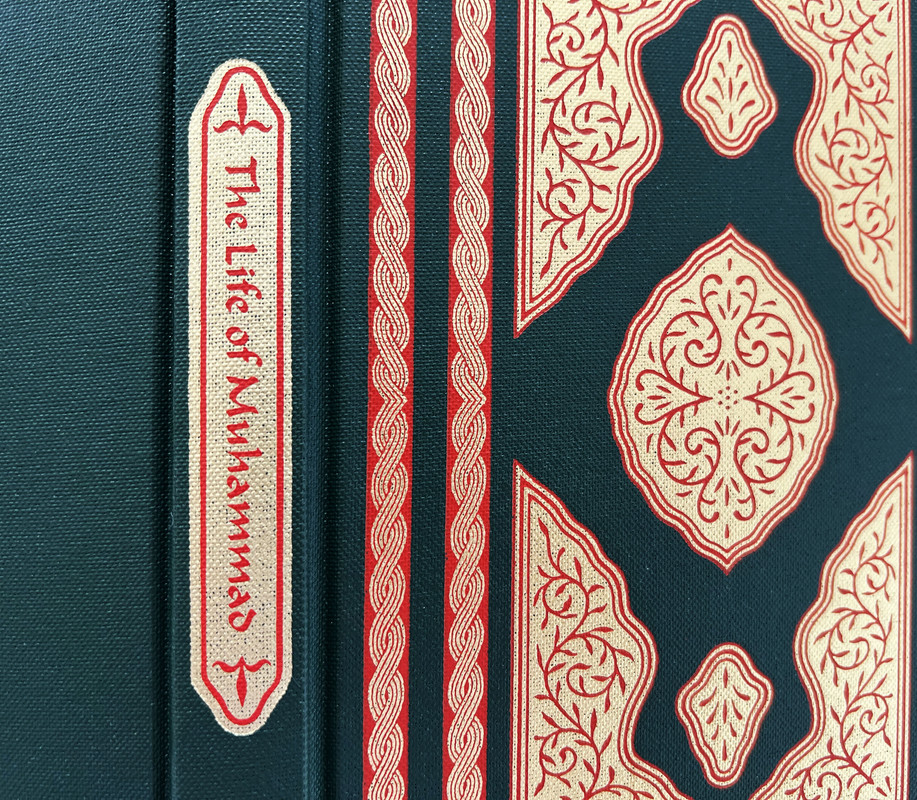
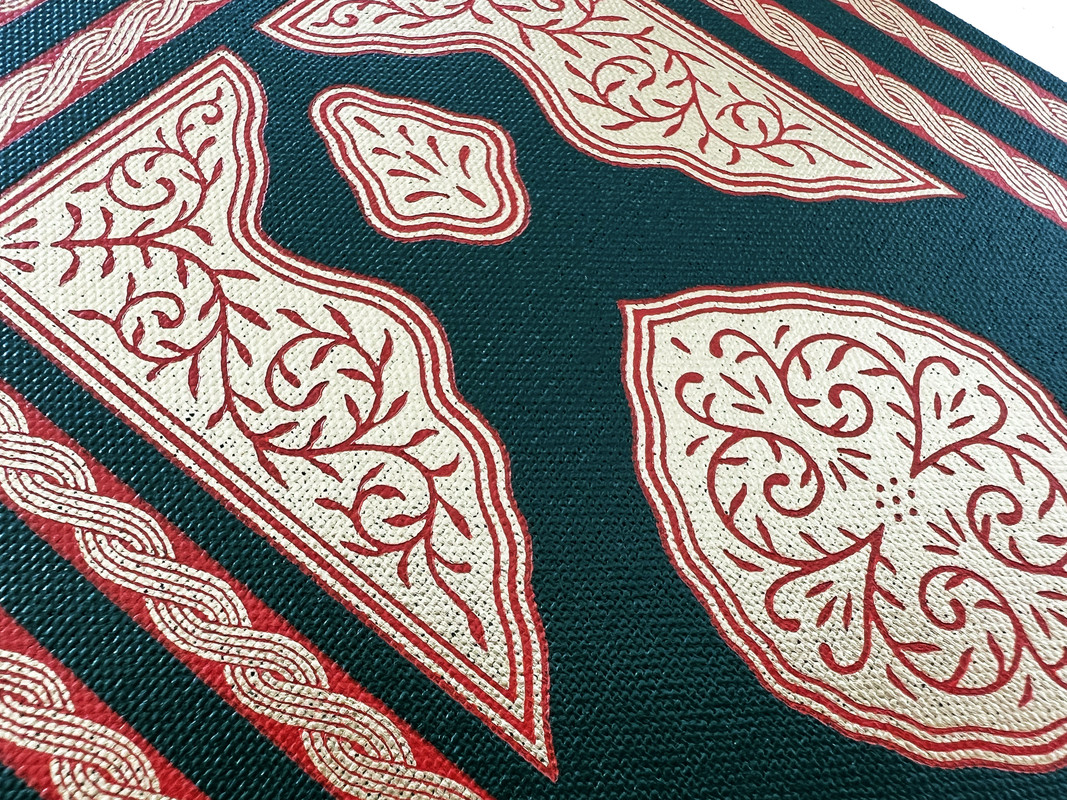
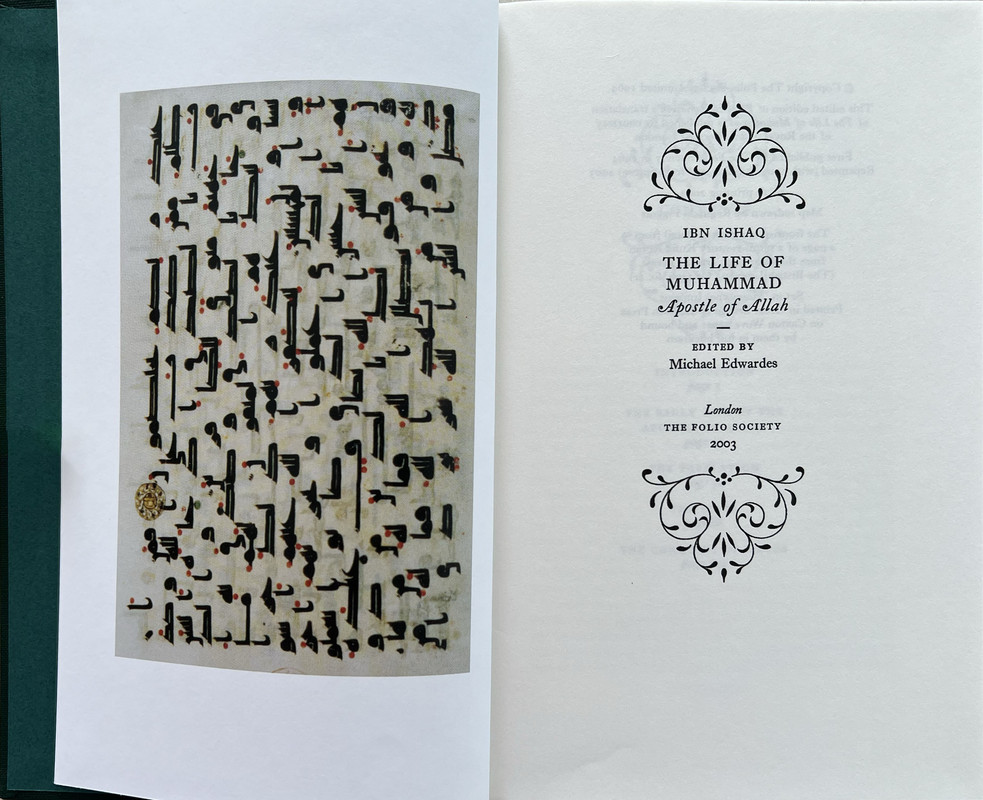
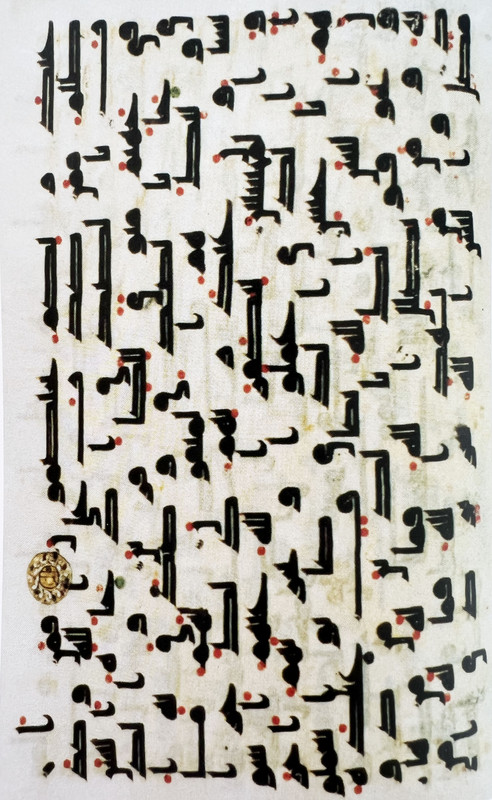
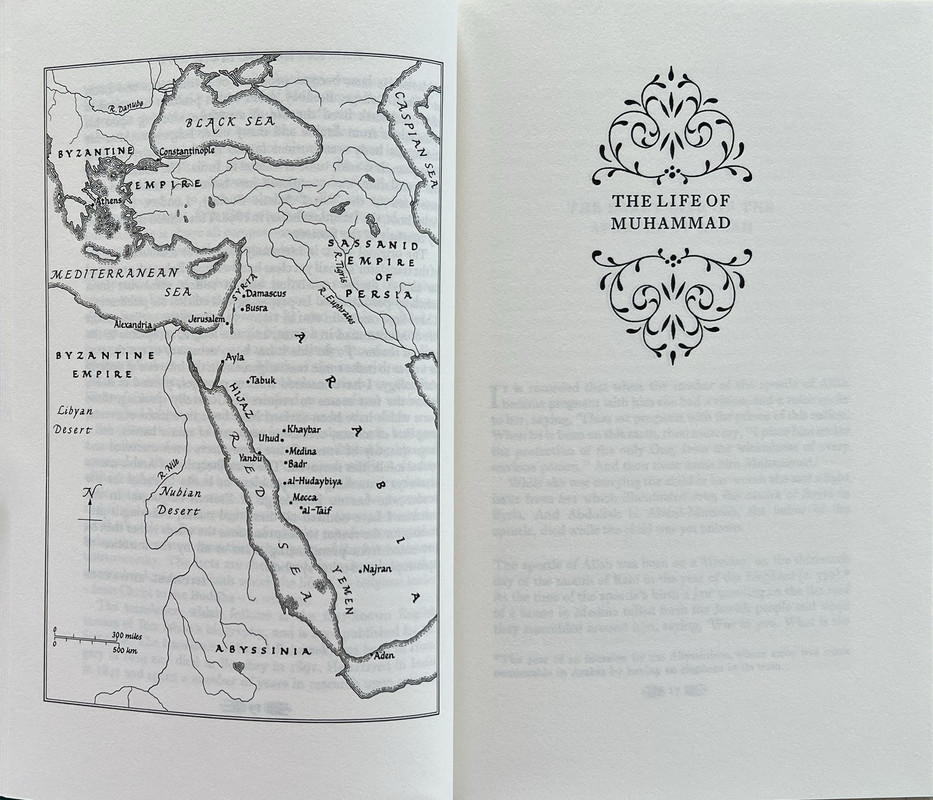
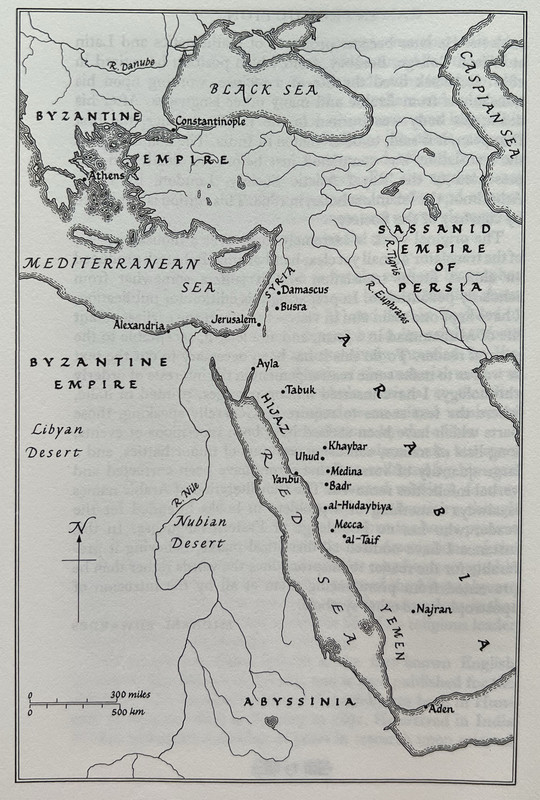
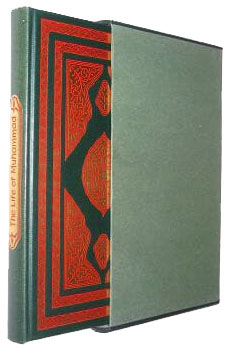
The book is bound in green buckram blocked on cover with a red and gilt design. There is a coloured calligraphy frontispiece taken from a 9th. century Kufic Koran, and one map, but it is otherwise unillustrated as befits an Islamic book. It has green slipcase and green endpapers, 184 pages and the slipcase measures 23x15cm.
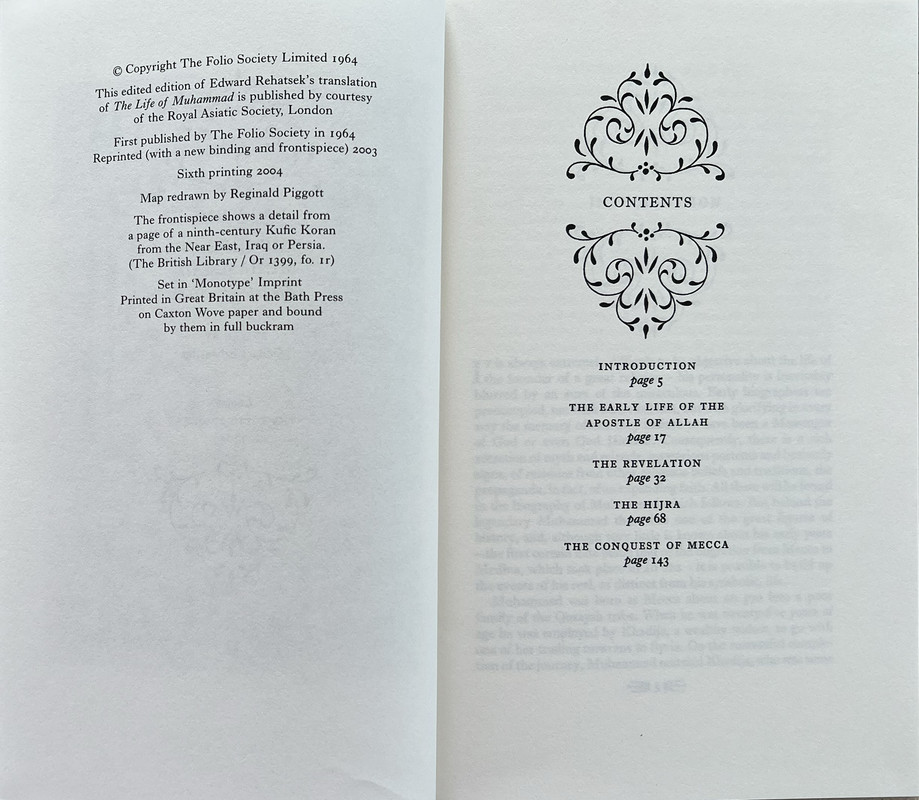
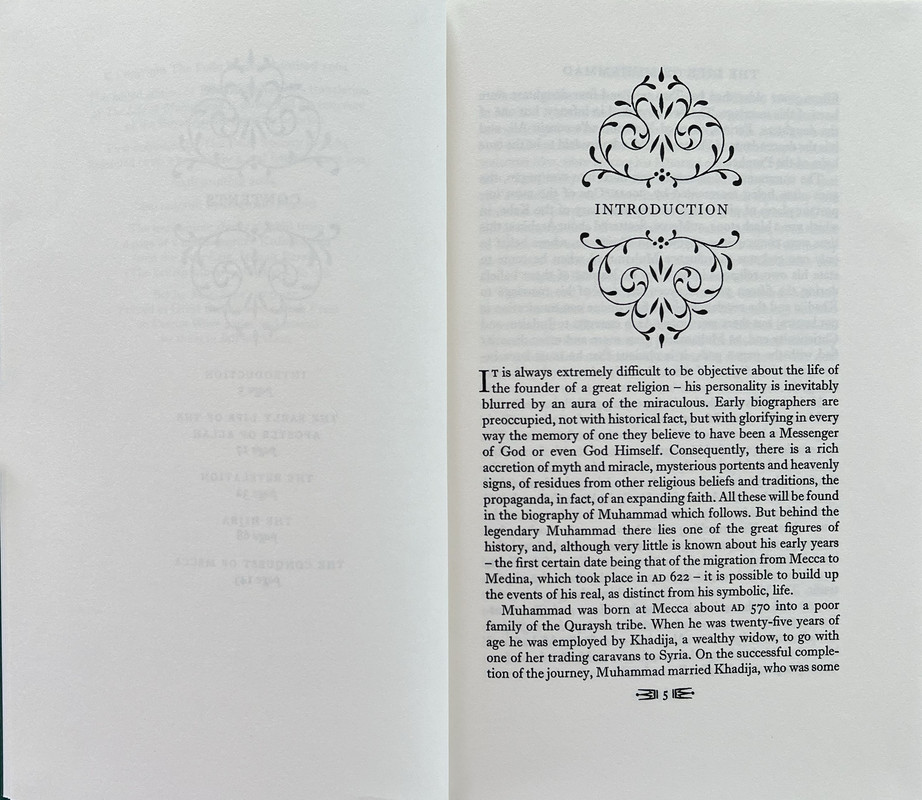
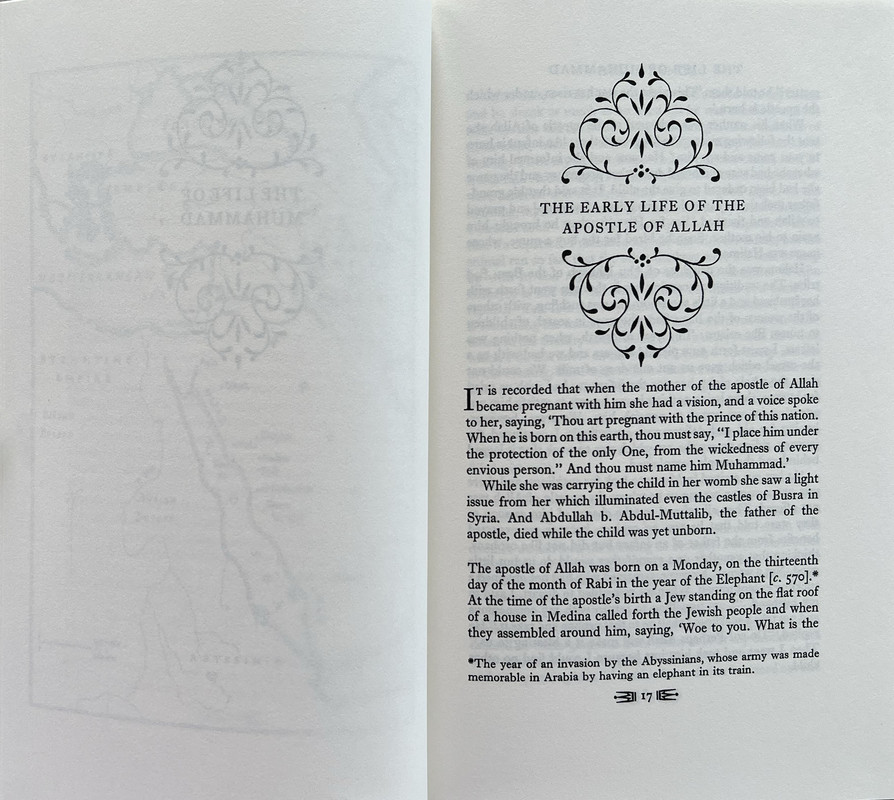
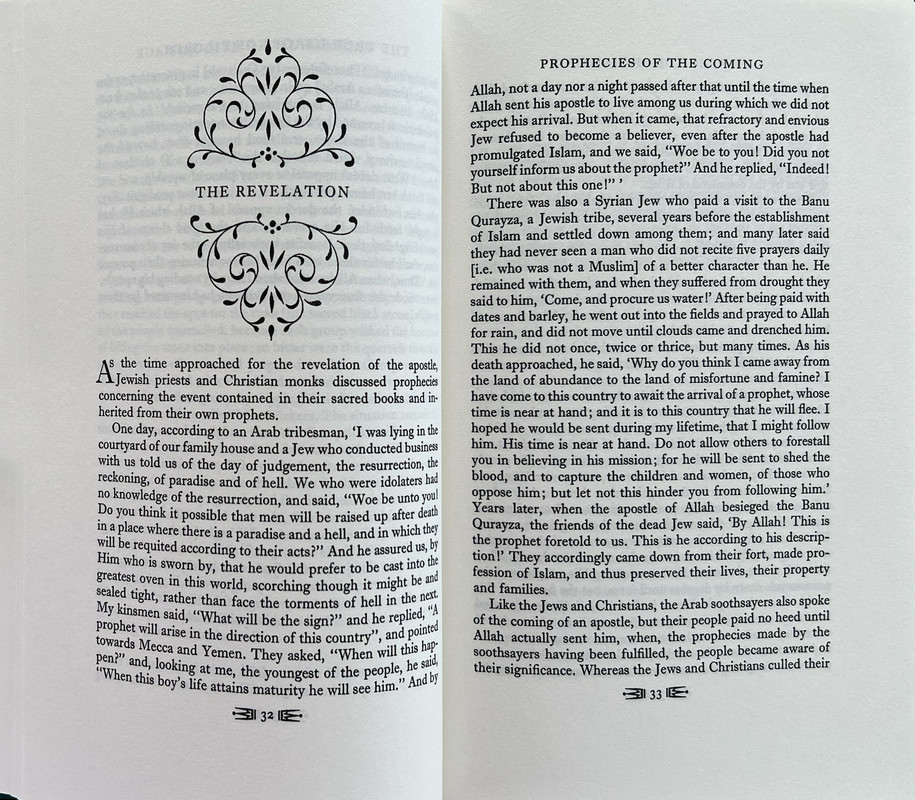
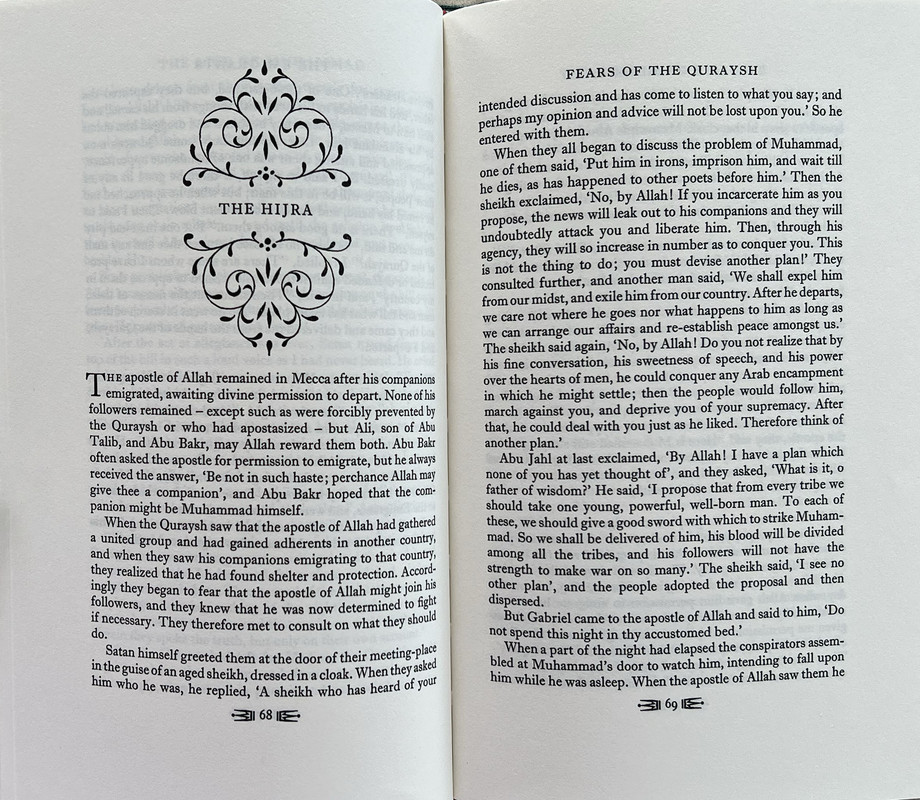
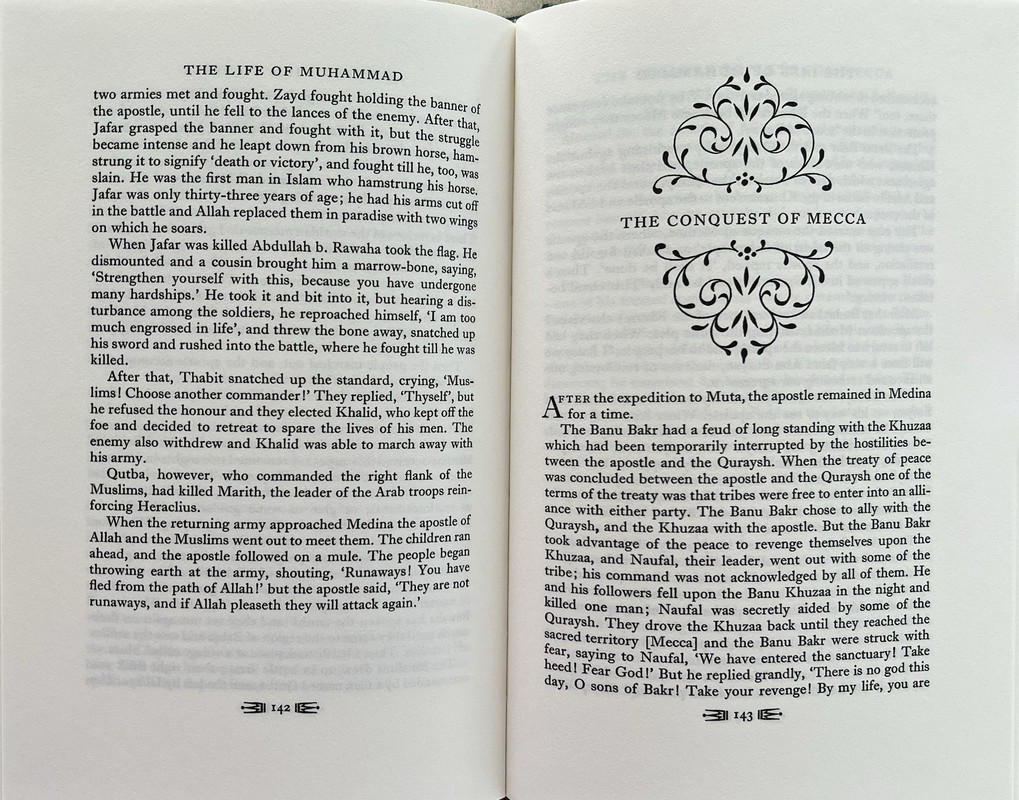
Even though there is only the one illustration, the following pictures will enable you to read the first few paragraphs of several chapters so you can get an idea of the book.
The Folio Society also published this title in 1964, and it differs from this later edition only in the frontispiece which is a colour reproduction of an early 15th century miniature of Mecca.

1964 edition
An index of the other illustrated reviews in the "Folio Archives" series can be viewed here.
Born in Mecca in about 570 AD, Muhammed was 40 years old when he began to receive vision from God and began to preach amongst fellow Arabs. He died aged about 62 after being persecuted, wandering through various Arabian cities and constantly teaching his new philosophy which became Islam.
This biography was written in the 7th. century and is the earliest known account of the prophet’s life. It was translated by Edward Rehatsek and there is a nine page introduction by Michael Edwardes.
The book is bound in green buckram blocked on cover with a red and gilt design. There is a coloured calligraphy frontispiece taken from a 9th. century Kufic Koran, and one map, but it is otherwise unillustrated as befits an Islamic book. It has green slipcase and green endpapers, 184 pages and the slipcase measures 23x15cm.
Even though there is only the one illustration, the following pictures will enable you to read the first few paragraphs of several chapters so you can get an idea of the book.
The Folio Society also published this title in 1964, and it differs from this later edition only in the frontispiece which is a colour reproduction of an early 15th century miniature of Mecca.
1964 edition
An index of the other illustrated reviews in the "Folio Archives" series can be viewed here.
2mr.philistine
>1 wcarter: Even though there is only the one illustration...
FS have chosen to err on the side of caution by not illustrating books like this or The Qur'an (2008).
Quote from a 2015 BBC news article:
More: https://en.wikipedia.org/wiki/Depictions_of_Muhammad
FS have chosen to err on the side of caution by not illustrating books like this or The Qur'an (2008).
Quote from a 2015 BBC news article:
Pictures - as well as statues - are thought to encourage the worship of idols.Source: https://www.bbc.com/news/magazine-30814555
Historically, the dominant forms in Islamic art have been geometric, swirling patterns or calligraphic - rather than figurative art.
More: https://en.wikipedia.org/wiki/Depictions_of_Muhammad
3wcarter
>2 mr.philistine:
“otherwise unillustrated as befits an Islamic book.”
“otherwise unillustrated as befits an Islamic book.”
5MobyRichard
>2 mr.philistine:
Never mind the thousands of Persian style miniatures out there including of the M'iraj, the ascension of the Prophet into the Seven Heavens.
Never mind the thousands of Persian style miniatures out there including of the M'iraj, the ascension of the Prophet into the Seven Heavens.

