Folio Archives 355: Black Mischief by Evelyn Waugh 1980
Talk Folio Society Devotees
Join LibraryThing to post.
1wcarter
Black Mischief by Evelyn Waugh 1980
A quite politically incorrect farce set in 1930 in the mythical country of Azania which occupies a large island in the Indian ocean off the coast of Somalia and Kenya.
Waugh portrays this African kingdom as being run by incompetent and corrupt Negro natives, the European residents are depicted as being arrogant and inept, the Indians are incorrigible traders in stolen goods and the Arabs watch on while smoking their hookahs in a hashish haze.
Every characteristic of these races is exaggerated to make everyone look ridiculous and you can just imagine some individuals at the extremes of their depiction actually acting in these ways.
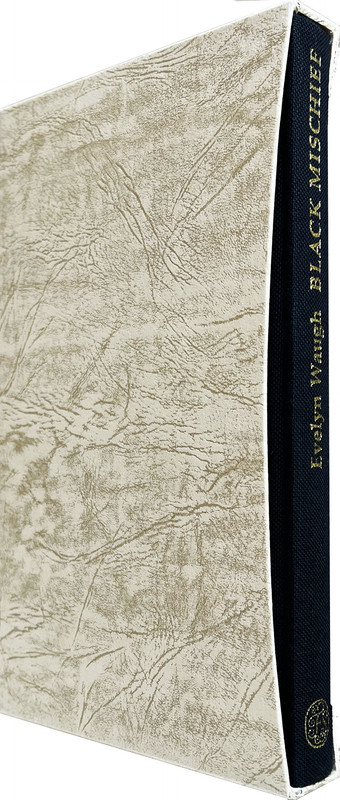
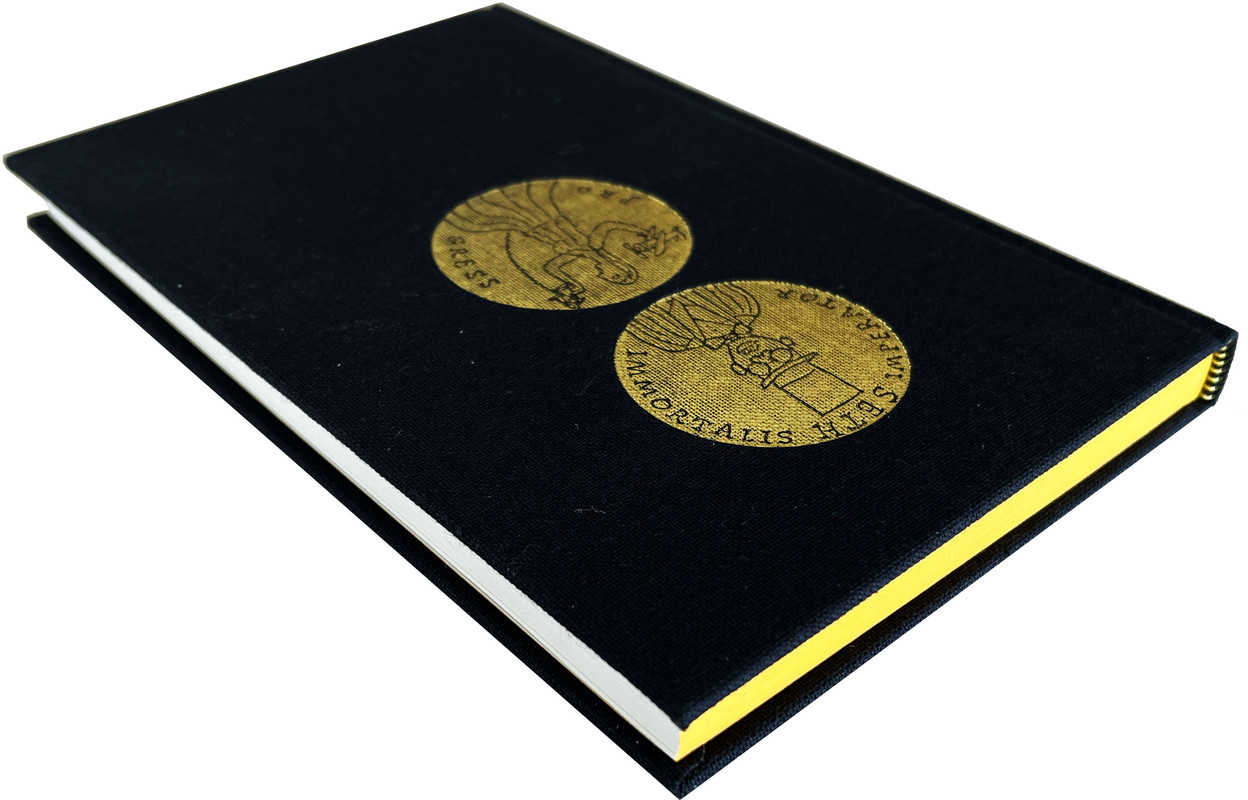
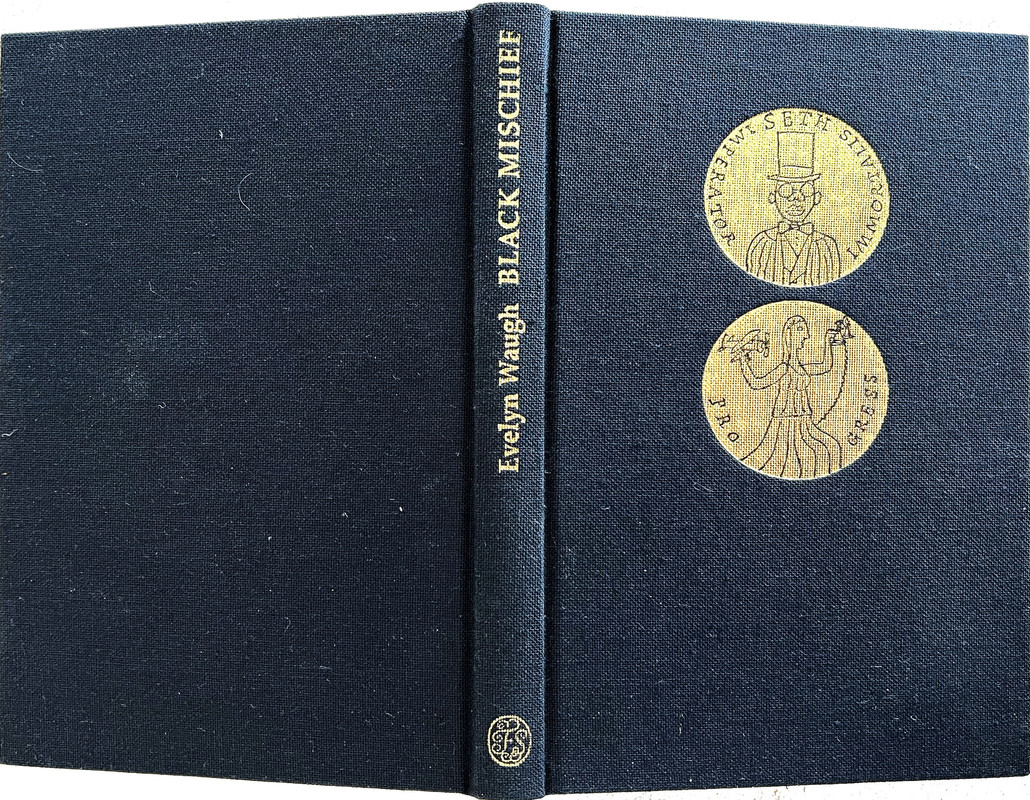
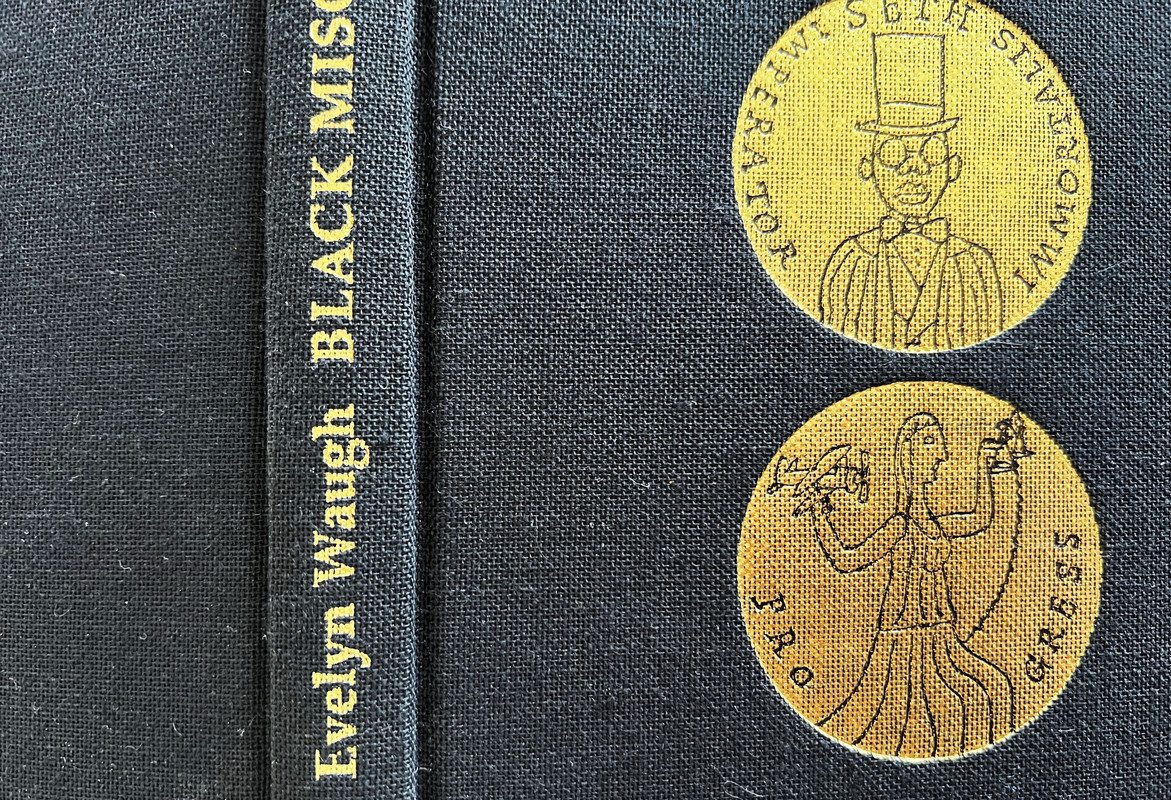
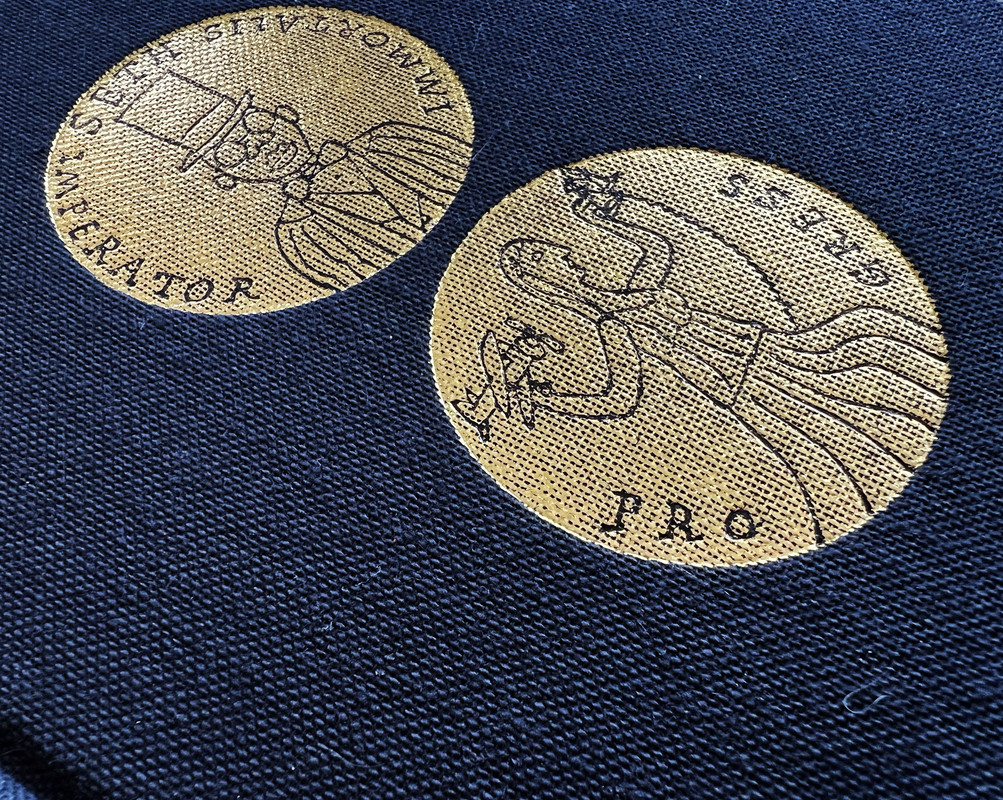
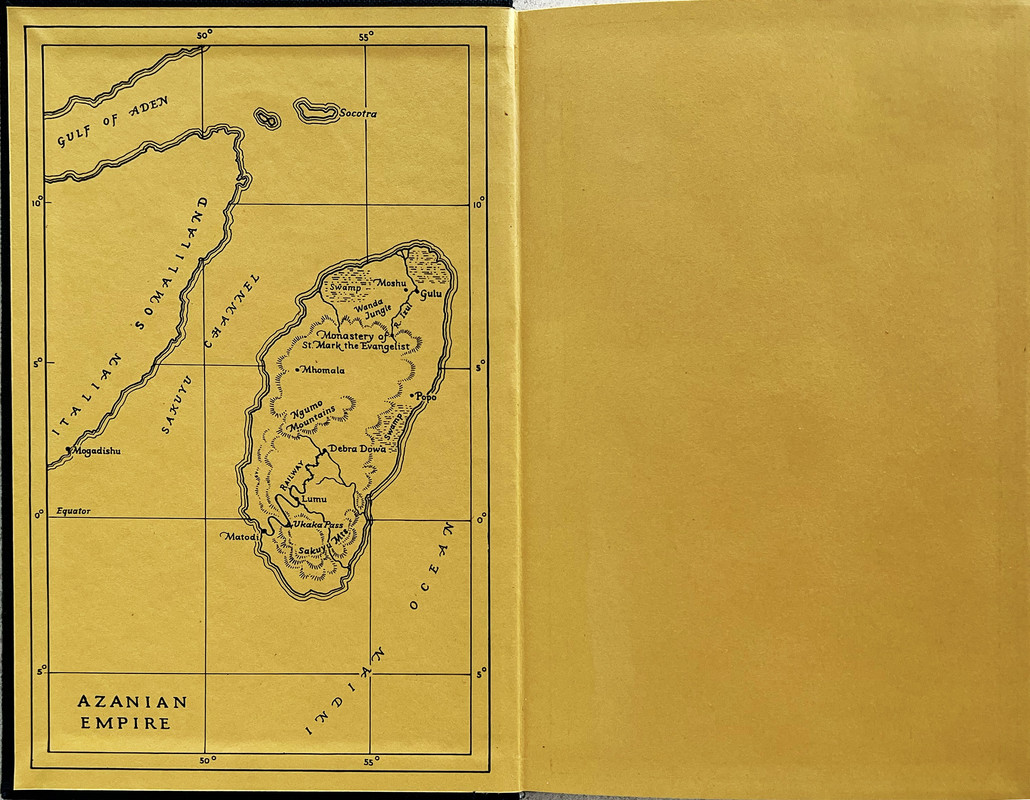
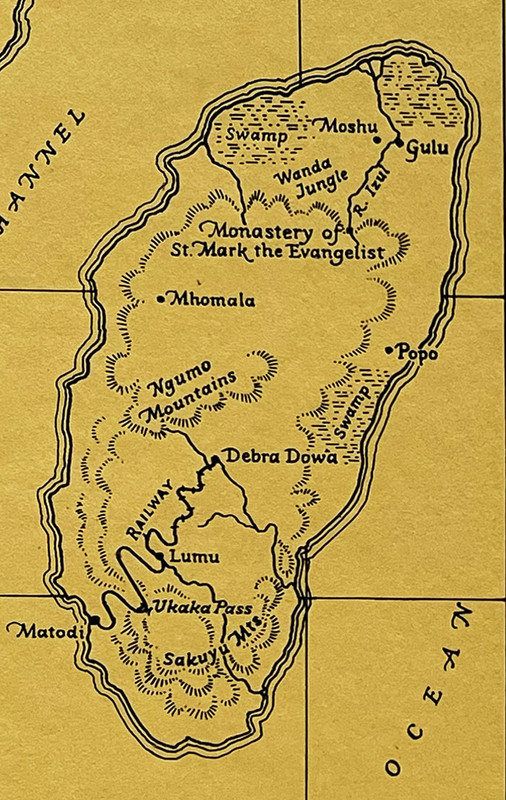
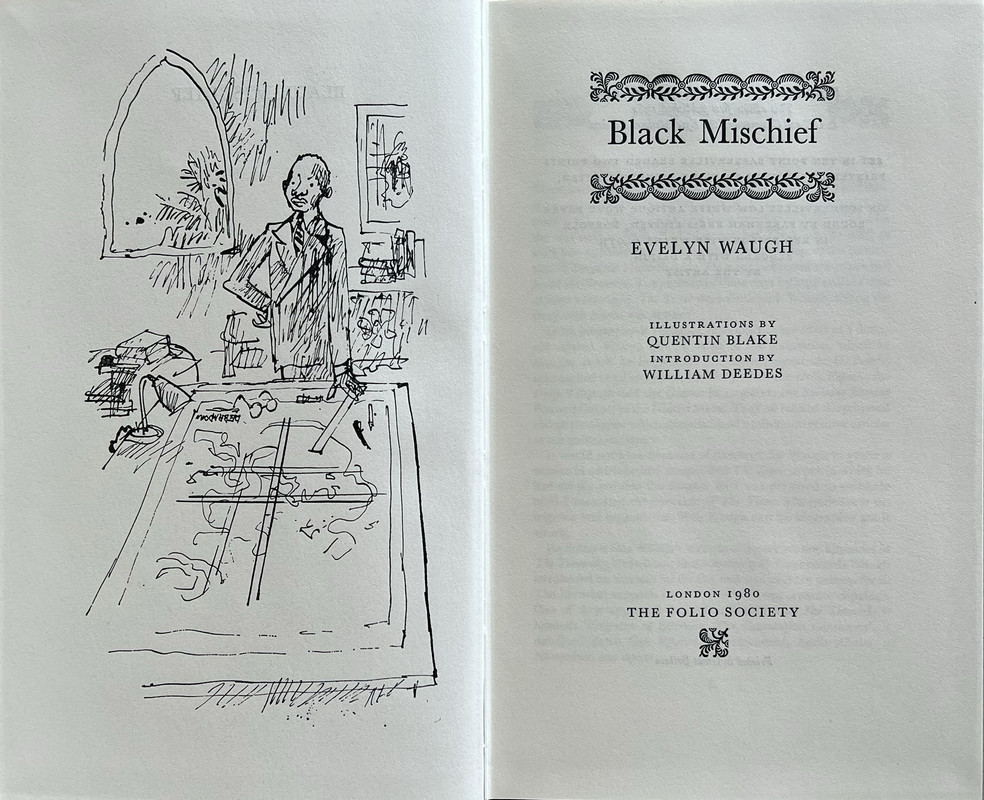
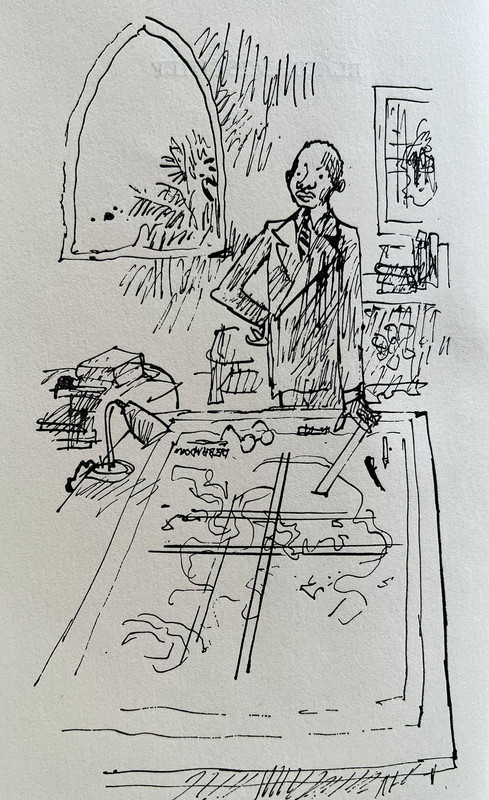
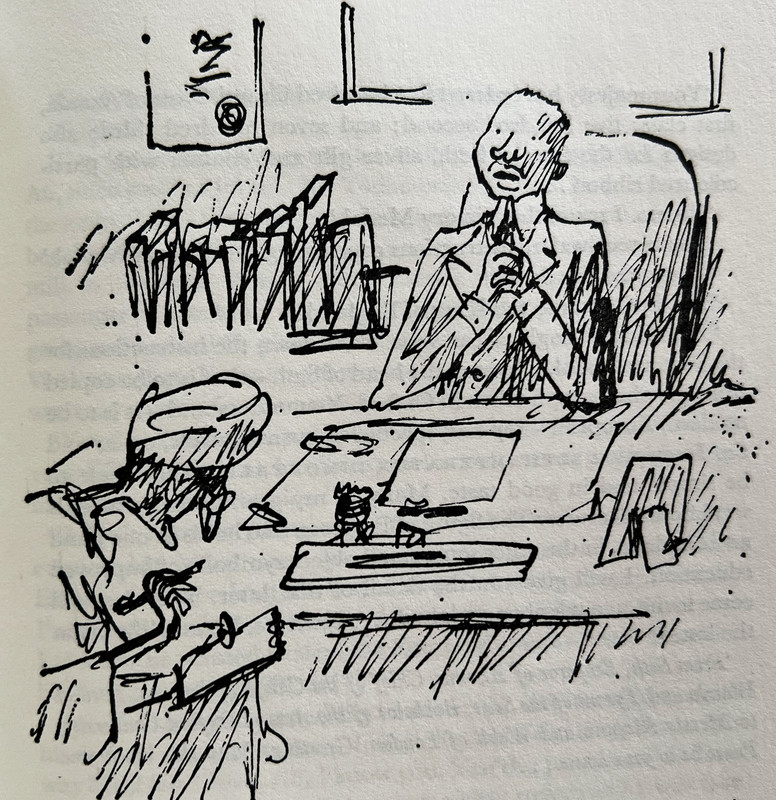
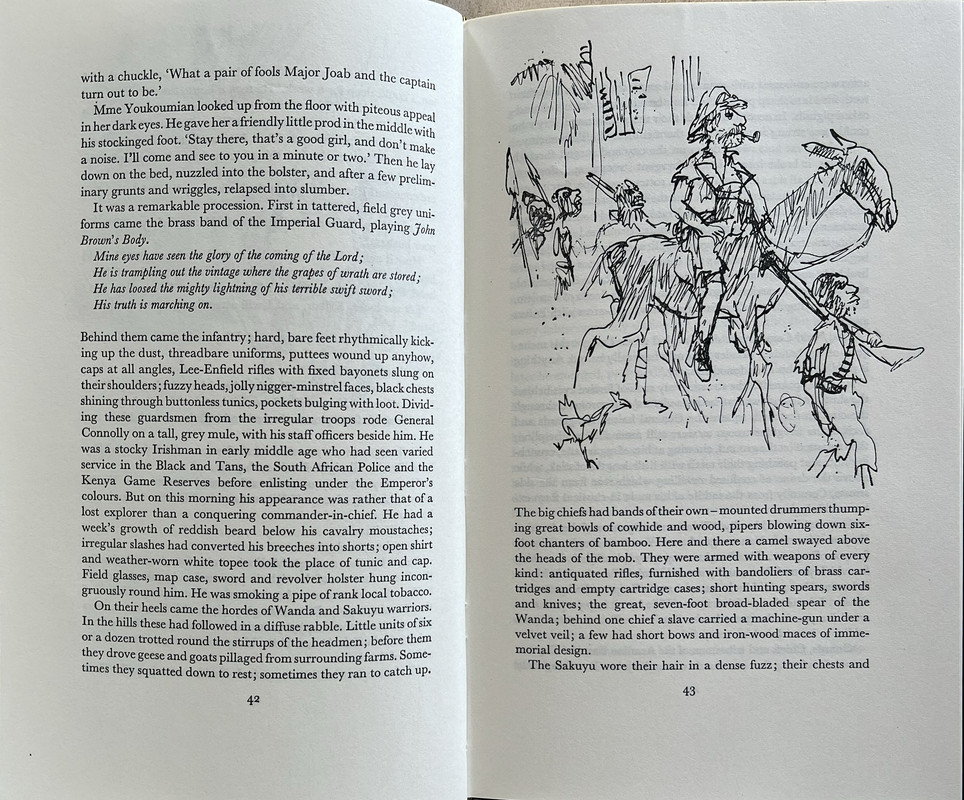
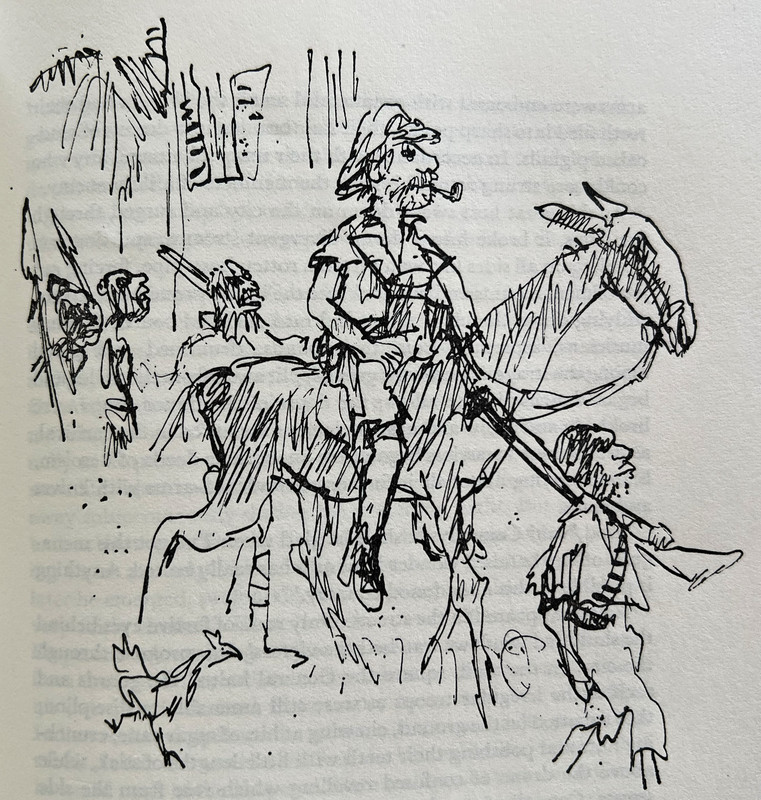
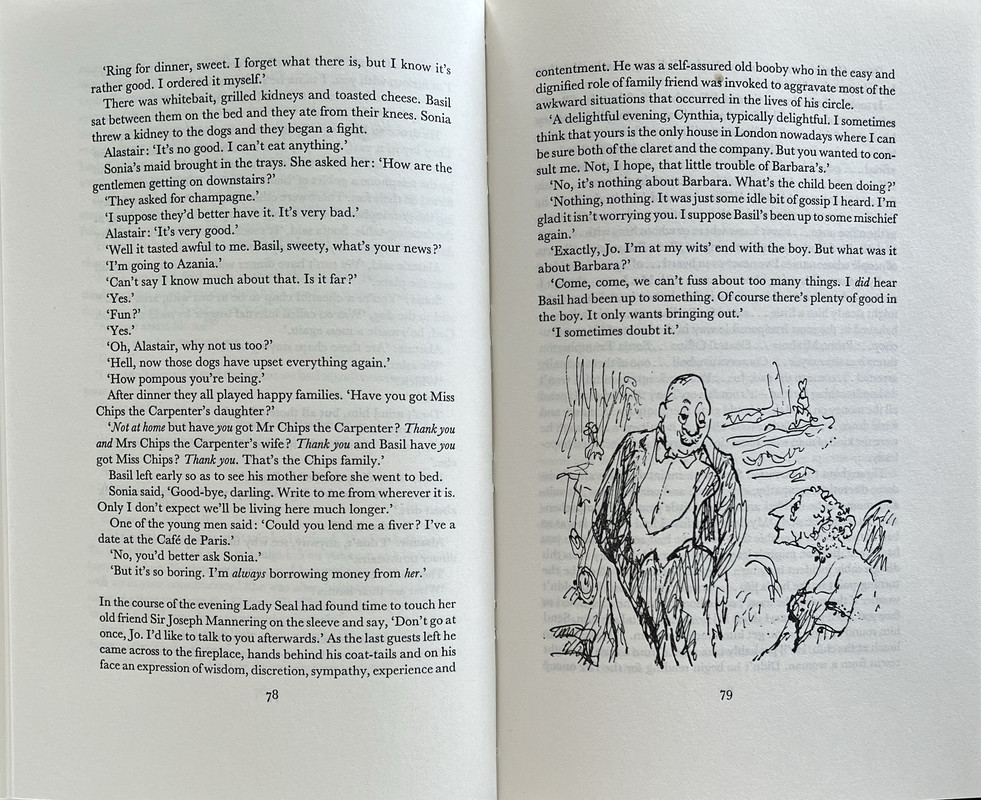
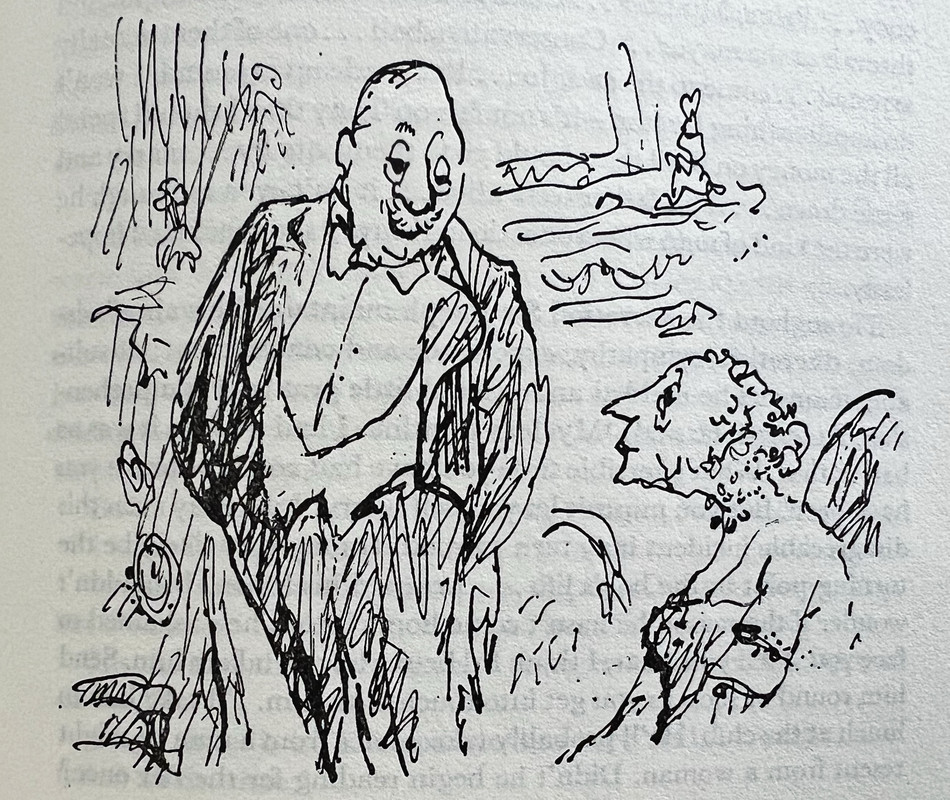
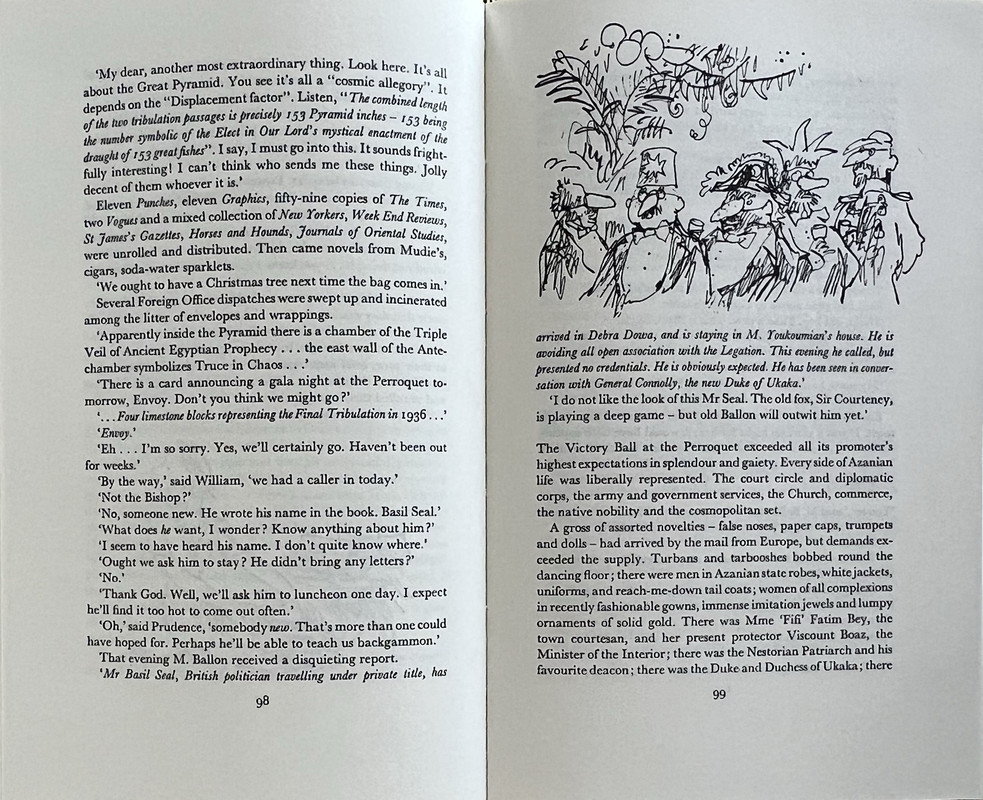
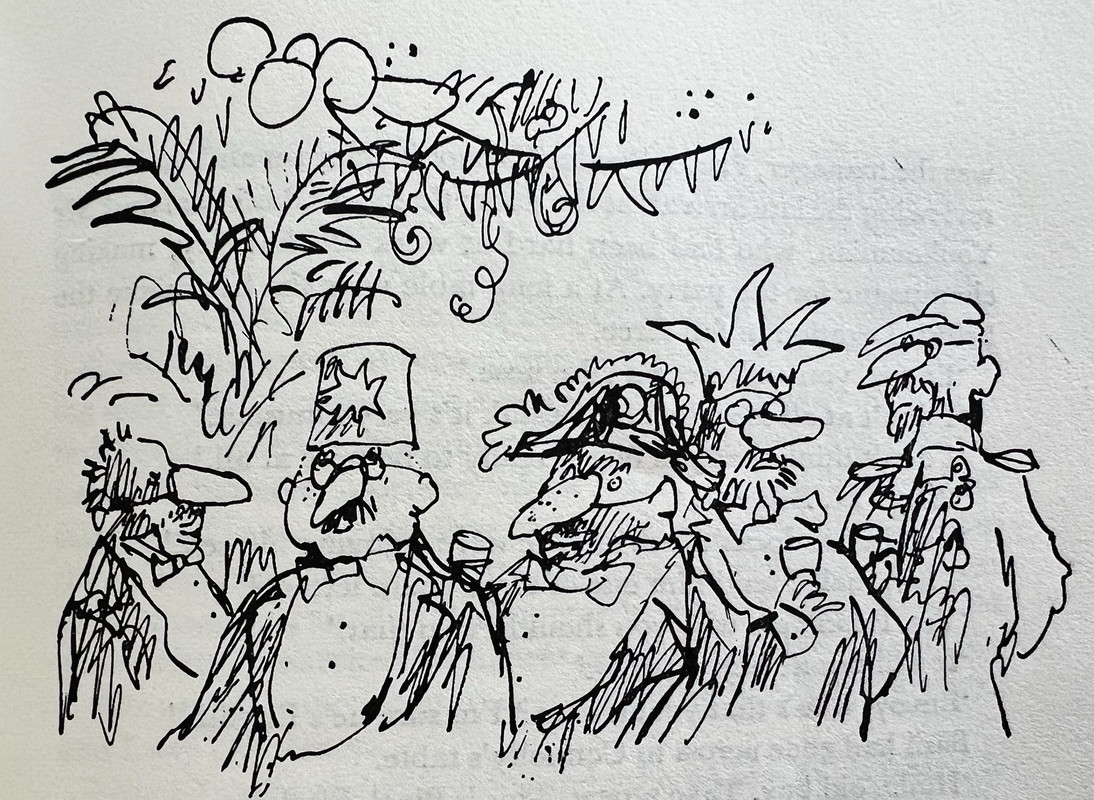
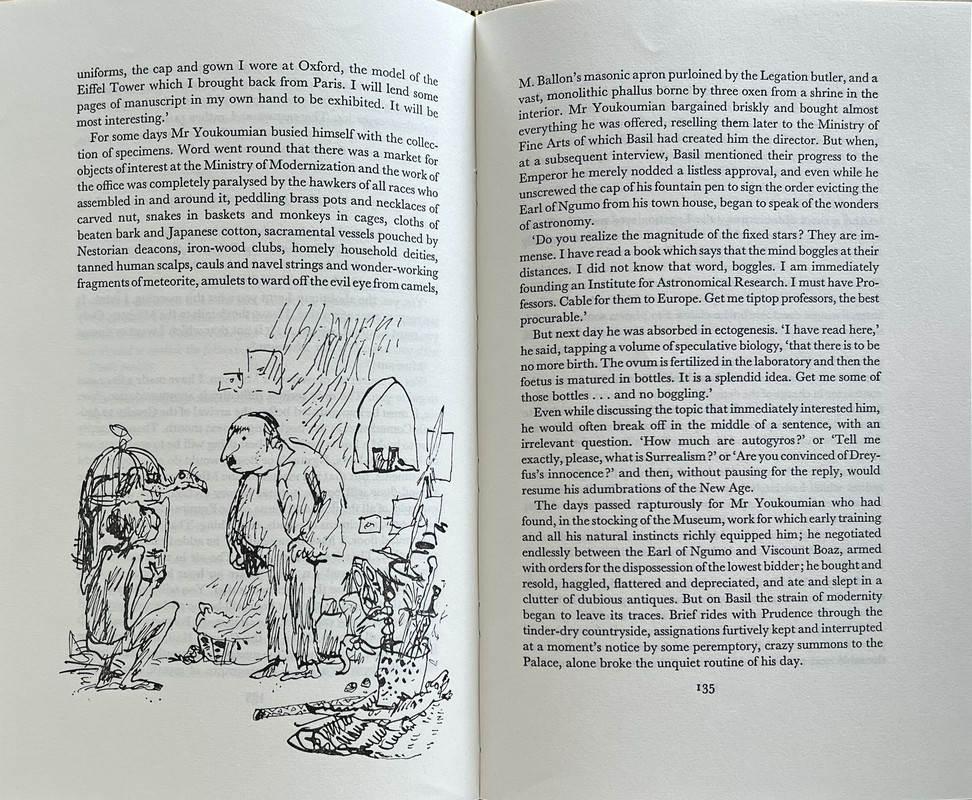
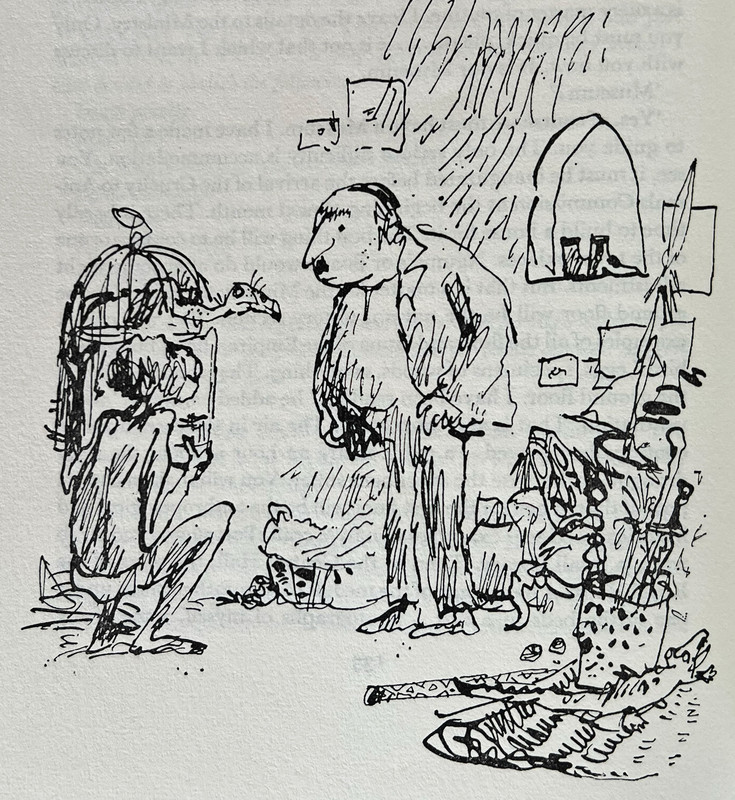
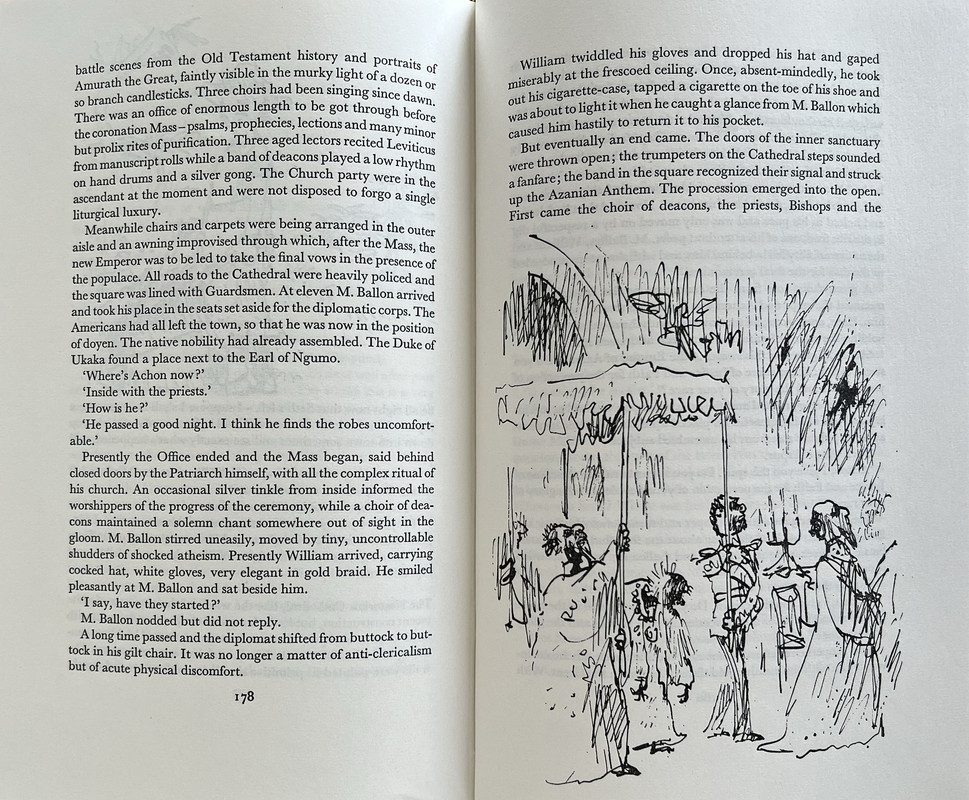
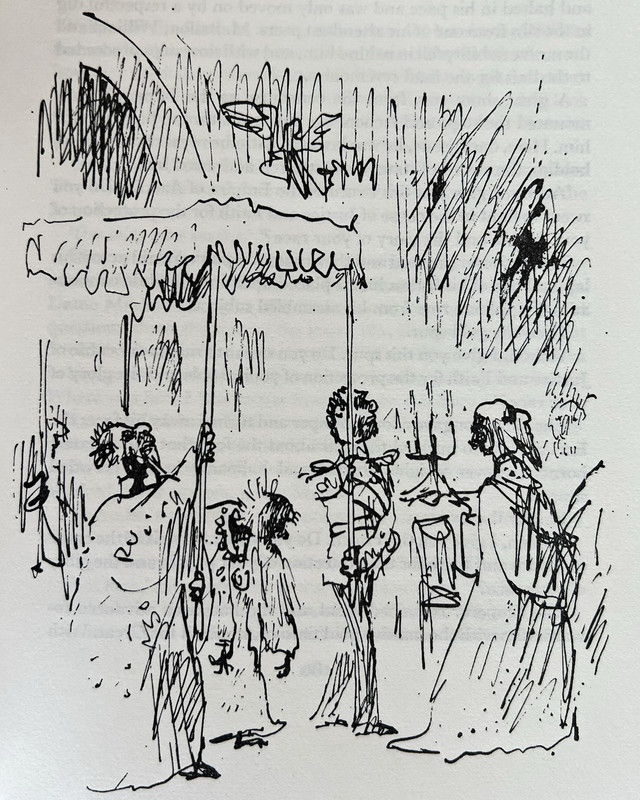
It is an amusing 206 page book that has 19 pen and ink sketches by Quentin Blake integrated into the text. It has a rather long (for a small book) nine page introduction by William Deedes. The book is bound in black cloth with a double medallion design of an Azanian medal in gold by Blake on the cover while the gilt spine title runs from bottom to top. The yellow endleaves are printed in black with a map of Azania, the page tops are stained yellow and the pale brown textured slipcase measures 23.1x14.5cm.
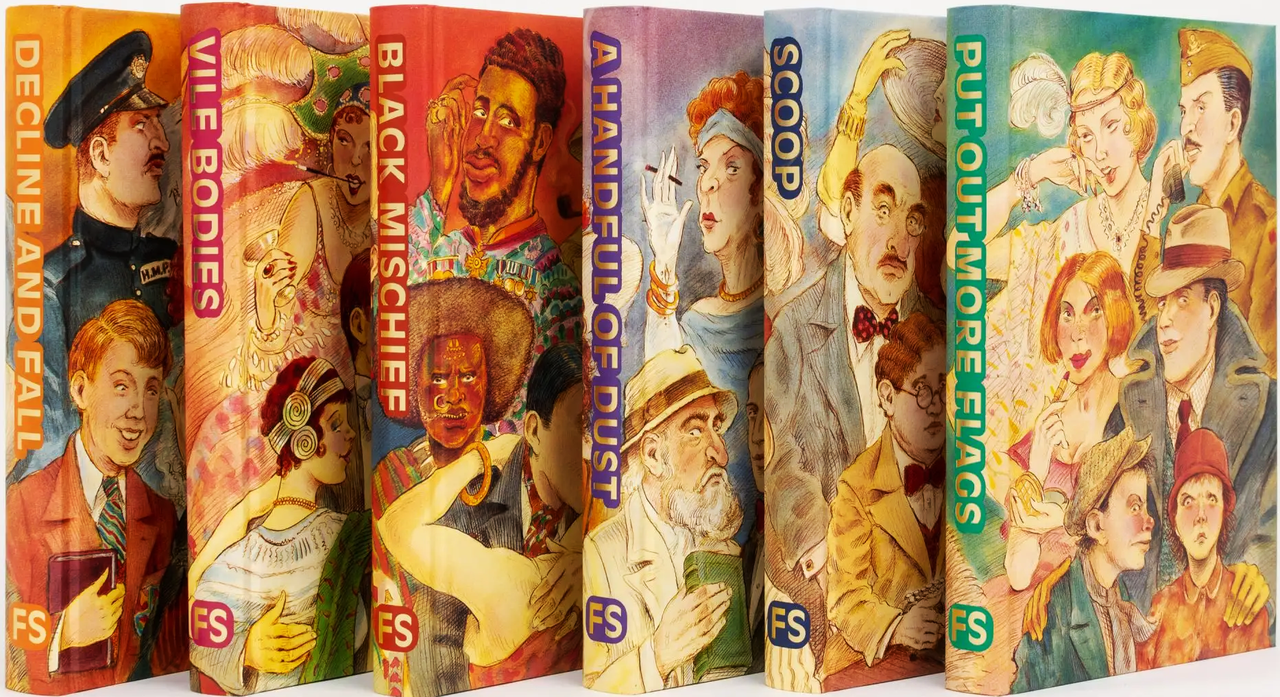
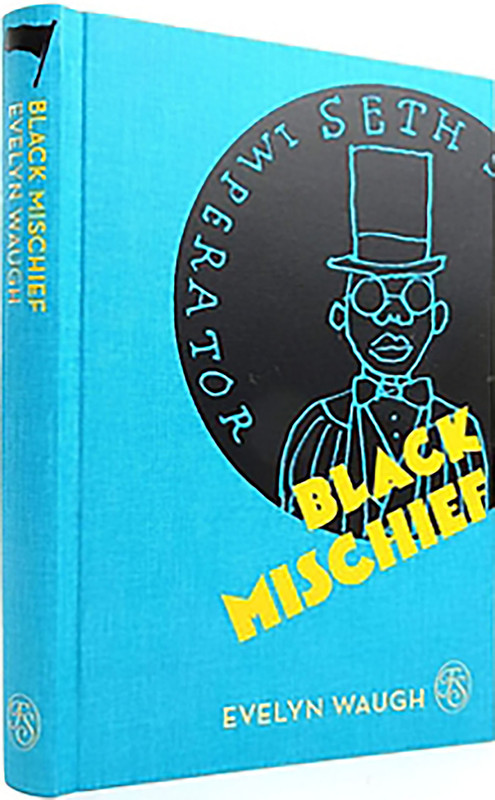
The Folio Society published two subsequent editions of this book. In 1999 it was one of a set of six comedies by Waugh, and in 2016 another edition was published in a different binding as one of the short-lived Folio Society Collectable editions. Both these editions had the same content as the 1980 edition reviewed here.
1999 edition as one of a 6 volume set of Comedies by Evelyn Waugh
2016 edition in a “Collectable” binding.
1980 edition

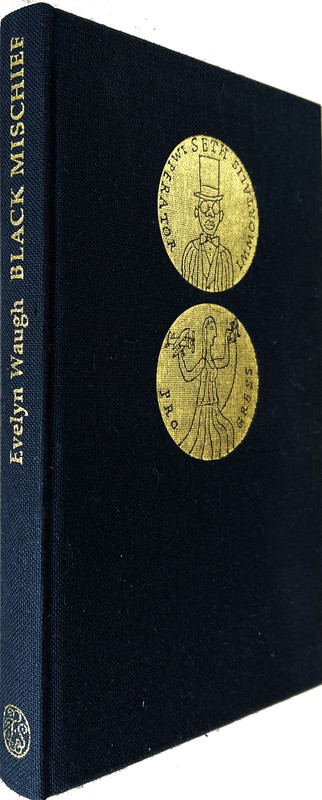
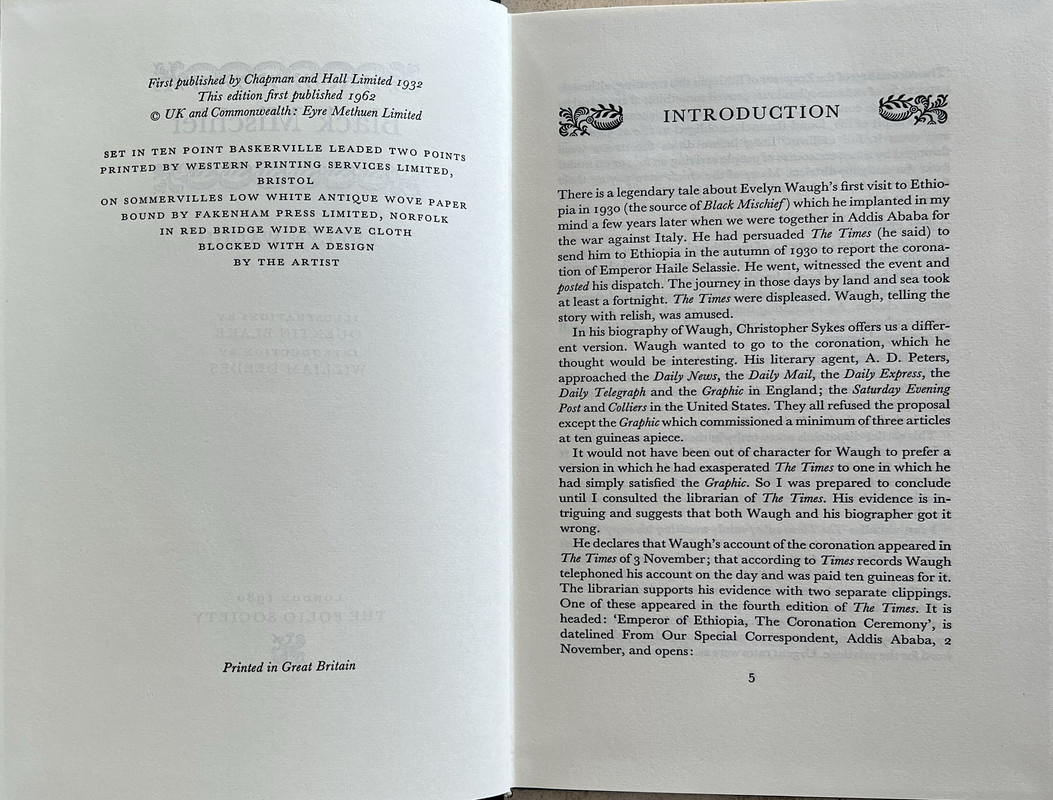
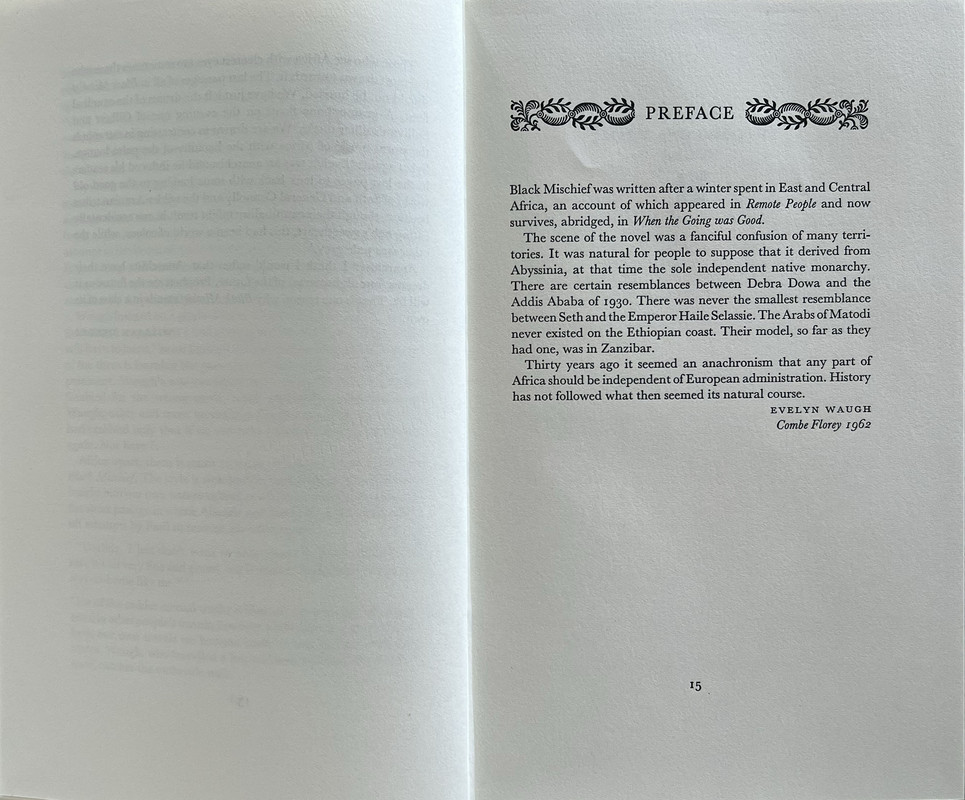
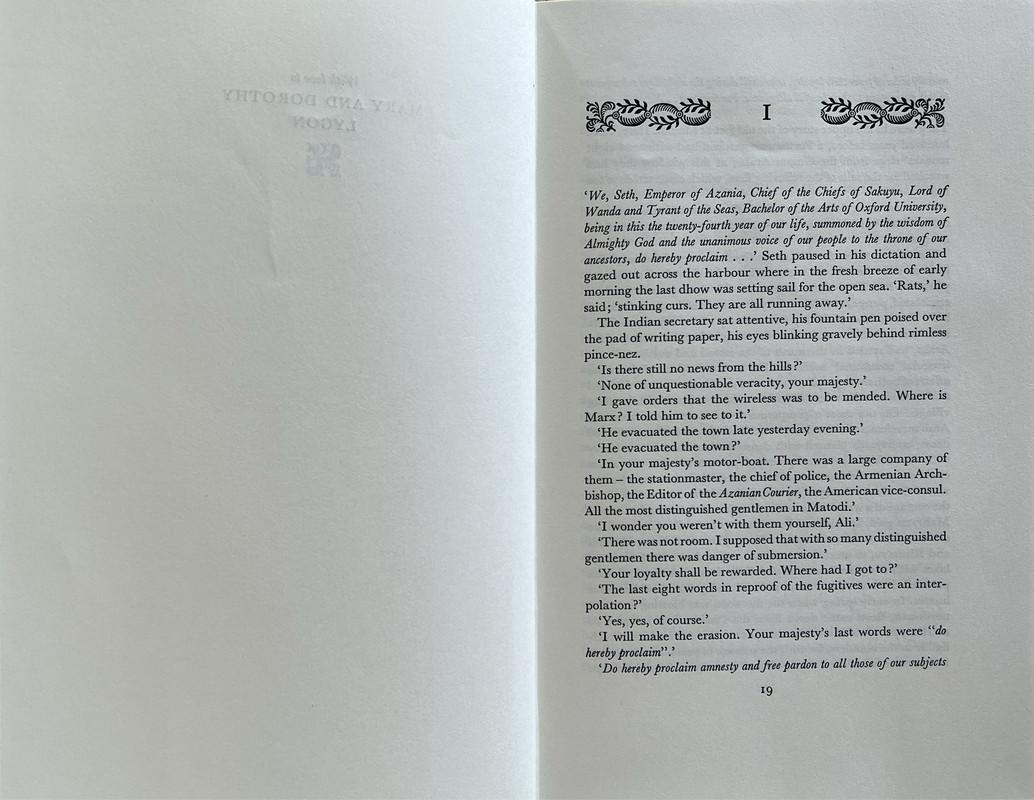
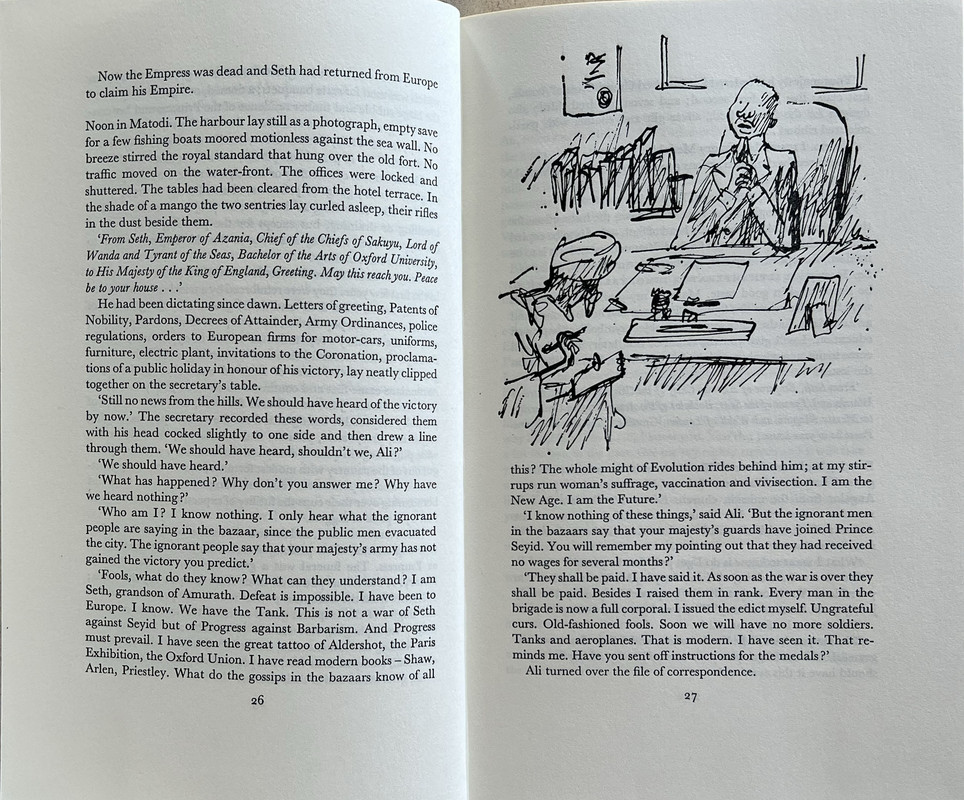

An index of the other illustrated reviews in the "Folio Archives" series can be viewed here.
A quite politically incorrect farce set in 1930 in the mythical country of Azania which occupies a large island in the Indian ocean off the coast of Somalia and Kenya.
Waugh portrays this African kingdom as being run by incompetent and corrupt Negro natives, the European residents are depicted as being arrogant and inept, the Indians are incorrigible traders in stolen goods and the Arabs watch on while smoking their hookahs in a hashish haze.
Every characteristic of these races is exaggerated to make everyone look ridiculous and you can just imagine some individuals at the extremes of their depiction actually acting in these ways.
It is an amusing 206 page book that has 19 pen and ink sketches by Quentin Blake integrated into the text. It has a rather long (for a small book) nine page introduction by William Deedes. The book is bound in black cloth with a double medallion design of an Azanian medal in gold by Blake on the cover while the gilt spine title runs from bottom to top. The yellow endleaves are printed in black with a map of Azania, the page tops are stained yellow and the pale brown textured slipcase measures 23.1x14.5cm.
The Folio Society published two subsequent editions of this book. In 1999 it was one of a set of six comedies by Waugh, and in 2016 another edition was published in a different binding as one of the short-lived Folio Society Collectable editions. Both these editions had the same content as the 1980 edition reviewed here.
1999 edition as one of a 6 volume set of Comedies by Evelyn Waugh
2016 edition in a “Collectable” binding.
1980 edition
An index of the other illustrated reviews in the "Folio Archives" series can be viewed here.
2PartTimeBookAddict
>1 wcarter: Nice review. Small point, but I think the 1999 Six Comedies has John Holder illustrations and not Blake's. I don't know, but I don't think the introduction is included either.
3RavenSeeker
Very funny novel introducing Waugh readers to the scoundrel Basil Seal for the first time. The William Deedes introduction is very good too. I have a copy which unfortunately has a faded spine due to sun depradation
4ian_curtin
I read this exact edition (my uncle's) in about 1986. Very funny, but as you say no doubt beyond the pale these days. It has not \, so far as I'm aware, attracted the online denunciation that some 20th century classics have (e.g. Lolita and oddly The Catcher in the Rye). I suppose that speaks to the relative decline of Waugh's profile and popularity. He'll always be a go-to for me.

