THE WAR ROOM CHALLENGE - MARCH 2024 : THE WAR OF THE ROSES
Talk 75 Books Challenge for 2024
Join LibraryThing to post.
1PaulCranswick
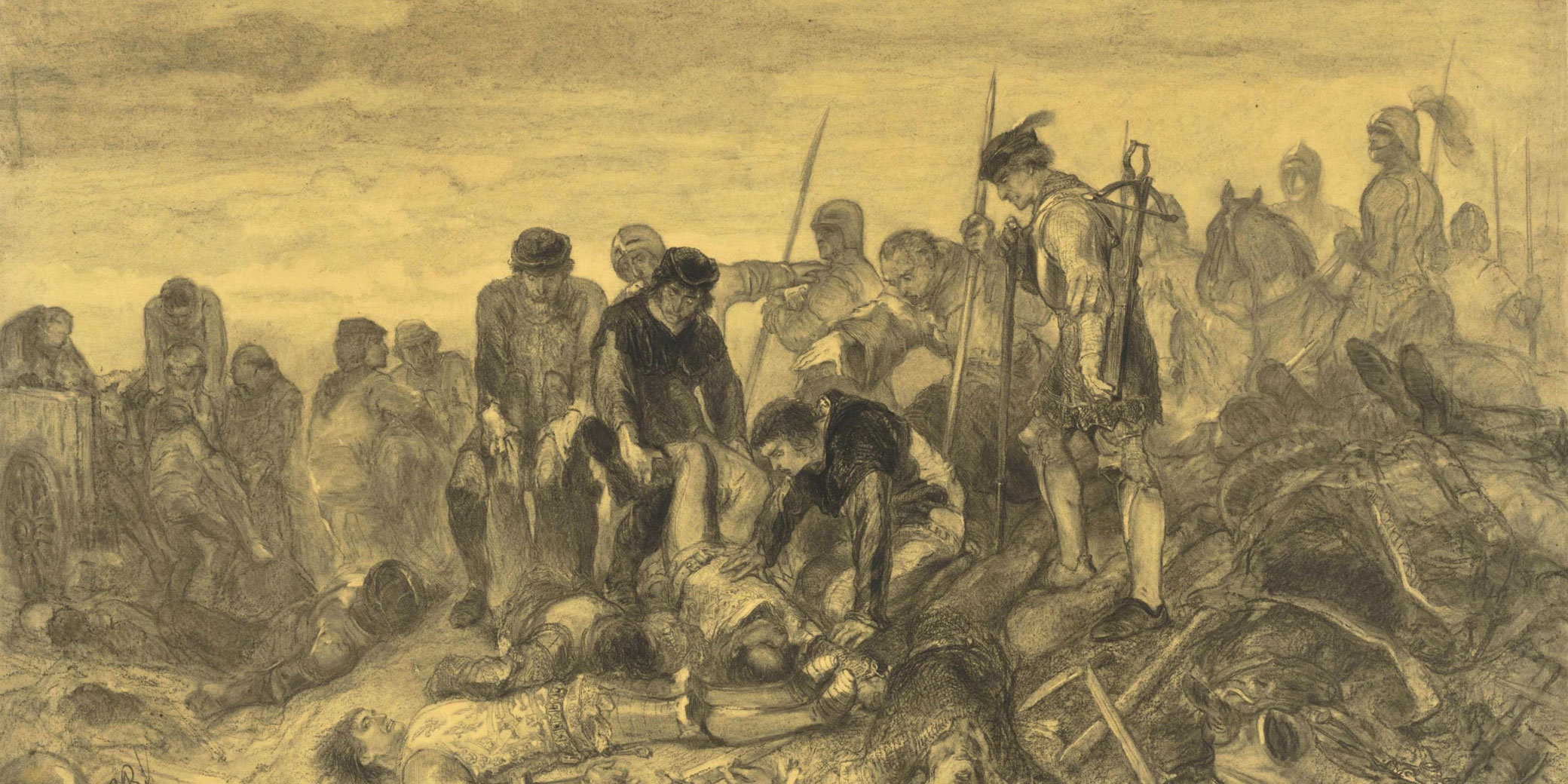
The Battle of Bosworth Field took place on 22 August 1485 and definitively decided the War of the Roses vide the death of a King, Richard III. It is also a byword for treachery as Richard was betrayed by the Percys and the Stanleys in the moment of his triumph.
2PaulCranswick
What I will read :
I plan three books this month:
Non-Fiction
Fatal Colours: Towton 1461 - England's Most Brutal Battle by George Goodwin
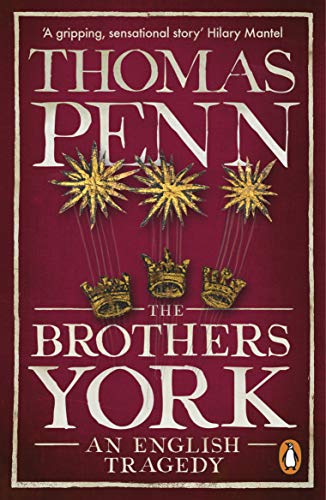
The Brothers York by Thomas Penn
Fiction
Stormbird by Conn Iggulden


I plan three books this month:
Non-Fiction
Fatal Colours: Towton 1461 - England's Most Brutal Battle by George Goodwin
The Brothers York by Thomas Penn
Fiction
Stormbird by Conn Iggulden

3amanda4242
I'm trying to decide between The Wars of the Roses: The Fall of the Plantagenets and the Rise of the Tudors by Dan Jones and The Sunne in Splendour by Sharon Kay Penman.
4alcottacre
I am using my *Wild Card* this month and am reading about the genocide in Rwanda in the 1990s. At the very least I want to re-read Paul Rusesabagina's An Ordinary Man and read The Girl Who Smiled Beads by Clemantine Wamariya and Elizabeth Weil. I am hopeful that I will get to Jean Hatzfeld's trilogy of The Antelope's Strategy, Life Laid Bare, and Machete Season as well.
5avatiakh
I've made a start on The Black Arrow by Robert Louis Stephenson. It also fits my personal challenge to read more Scottish writers.
6PaulCranswick
>3 amanda4242: The Sunne in Splendour is a long novel, Amanda, but it is a personal favourite of mine too. I do need to read more Dan Jones too.
>4 alcottacre: I have a few books on Rwanda, Stasia, including that one, but I haven't read it yet.
>5 avatiakh: I may try and read it too if I have time this month, Kerry.
>4 alcottacre: I have a few books on Rwanda, Stasia, including that one, but I haven't read it yet.
>5 avatiakh: I may try and read it too if I have time this month, Kerry.
7alcottacre
>6 PaulCranswick: I am not sure which book you are referring to, Paul, but if you are talking about An Ordinary Man, I would urge you to get to it.
8booksaplenty1949
Have started Grisly Grisell. Unlike some writers of historical fiction Ms Yonge assumes we are up to speed on contemporary events; I think I need to look up a chart of “who’s who” in the run-up to to this war.
9PaulCranswick
>7 alcottacre: Yes I did mean that one, Stasia.
>8 booksaplenty1949: It is complicated by having so many Richards, Edwards and Henrys plus a smattering of Margarets, Elizabeths and Annes.
>8 booksaplenty1949: It is complicated by having so many Richards, Edwards and Henrys plus a smattering of Margarets, Elizabeths and Annes.
10Tess_W
This topic doesn't really appeal to me , so I may take a wild card and go for something dealing with the Russian Revolution. Or I could read a quickie, Robert Louis Stevenson's The Black Arrow.
12Familyhistorian
>3 amanda4242: I had the same choice but The Sunne in Spendour looks formidable so I've pulled The Wars of the Roses: The Fall of the Plantagenets and the Rise of the Tudors.
13Chatterbox
I'll finish reading The Princes in the Tower by Philippa Langley.
14Kristelh
I am reading The Black Arrow by Stevenson. I doubt that I will get to any other book this month.
15booksaplenty1949
>9 PaulCranswick: Yes, the apparent acute shortage of choice in the given names dept presents quite a challenge. BTW, I hope the British royal family has got the message that “Edward” for a potential king must be avoided. They have had a very bad run.
16atozgrl
>13 Chatterbox: I have that on my shelves but wanted to try to find something that dealt more with the war itself. I may read The Wars of the Roses, which my library has, and/or The Black Arrow, which I will have to purchase because my library does not have it. I'll be interested to know what you think of The Princes in the Tower.
17benitastrnad
I have a few suggestions for books about the later stages of the Wars of the Roses that might be useful for the confused reader. These are biographies and will probably be academic in tone.
The Winter King: Henry VII and the Dawn of Tudor England by Thomas Penn would be a good one for those who want to read nonfiction and are confused by all the players in the contested crown. This biography of Henry Tudor is about the end of the Wars of the Roses and yet starts at the very beginning of the problem. In the end Henry Tudor won out (at Bosworth) and as I recall the book had plenty of genealogical charts that would assist many readers.
There is also The House of Beaufort: The Bastard Line That Captured the Crown by Nathan Amin and Uncrowned Queen: The Life of Margaret Beaufort by Nicola Tallis. Both of these biographies are newer, published in 2018 and 2020 respectively. The biography of Margaret Beaufort was criticized because it portrays Margaret as being a schemer with political ambitions for her son. Who knows it might be the truth? When the book was published there was discussion in academic circles because there is a great lack of primary documents about the women of the Wars of the Roses, and there is precious little about Margaret, on which to build a biography. It is one of the reasons why women have been written out of so much of history. Nonetheless this biography might be a good one for a person who is trying to understand how this civil war came about and how an obscure upstart family from the Welsh Marches became the rulers of England.
The Winter King: Henry VII and the Dawn of Tudor England by Thomas Penn would be a good one for those who want to read nonfiction and are confused by all the players in the contested crown. This biography of Henry Tudor is about the end of the Wars of the Roses and yet starts at the very beginning of the problem. In the end Henry Tudor won out (at Bosworth) and as I recall the book had plenty of genealogical charts that would assist many readers.
There is also The House of Beaufort: The Bastard Line That Captured the Crown by Nathan Amin and Uncrowned Queen: The Life of Margaret Beaufort by Nicola Tallis. Both of these biographies are newer, published in 2018 and 2020 respectively. The biography of Margaret Beaufort was criticized because it portrays Margaret as being a schemer with political ambitions for her son. Who knows it might be the truth? When the book was published there was discussion in academic circles because there is a great lack of primary documents about the women of the Wars of the Roses, and there is precious little about Margaret, on which to build a biography. It is one of the reasons why women have been written out of so much of history. Nonetheless this biography might be a good one for a person who is trying to understand how this civil war came about and how an obscure upstart family from the Welsh Marches became the rulers of England.
18ArlieS
I've decided that I don't want to read a narrative history of the whole period of the Wars of the Roses. I decided I wanted to read a biography of one of the important players, preferably NOT Richard III or the Earl of Warwick.
I settled on Edward IV, and then had the problem of finding a biography of him within the set of libraries accessible by me. I found one by Charles Ross, which I just requested by ILL. Maybe there were others, but it can be hard to find a bibliography to start from.
I settled on Edward IV, and then had the problem of finding a biography of him within the set of libraries accessible by me. I found one by Charles Ross, which I just requested by ILL. Maybe there were others, but it can be hard to find a bibliography to start from.
19Chatterbox
>18 ArlieS: There's also The Brothers York by Thomas Penn, which is a joint bio of Edward IV, George of Clarence and Richard III. Penn is an excellent writer, and puts these brothers in the broader context of the war rather than focusing on "all those nasty battles to Bosworth".
20PaulCranswick
>19 Chatterbox: I intend to read that one too this month Suz.
I am just finishing off Fatal Colours by George Goodwin which is narrative history at its best and focuses on Towton and the build up to it.
I am just finishing off Fatal Colours by George Goodwin which is narrative history at its best and focuses on Towton and the build up to it.
21booksaplenty1949
Have discovered that Scott’s Anne of Geierstein has a Wars of the Roses connection. Last time I tried to read a novel in my 13-volume Nimmo’s Popular Edition of The Waverley Novels (1878) it fell apart in my hands, but I see that there is a free Librivox version available, so may give it a try.
22hredwards
The Wars Of The Roses: The Fall Of The Plantagenets And The Rise Of The Tudors by Dan Jones
Interesting read. Hard to keep all the Elizabeths, Richards, Annes, Henrys, and Edwards straight but the history was fun.
Interesting read. Hard to keep all the Elizabeths, Richards, Annes, Henrys, and Edwards straight but the history was fun.
23avatiakh
The Black Arrow by Robert Louis Stevenson is an adventure novel published in 1888.
I enjoyed this, Richard Shelton is a brave lad swept up in the turmoils of the War, discovering his guardian is responsible for his father's untimely death.
I enjoyed this, Richard Shelton is a brave lad swept up in the turmoils of the War, discovering his guardian is responsible for his father's untimely death.
24booksaplenty1949
Grisly Grisell was surprisingly readable. Just the book to put into a young 19thC woman’s hands, giving a well-researched glimpse into late mediaeval life along with a story about love as the product of service to others rather than good looks.
25booksaplenty1949
Since Grisly Grisell was such a fast read I have begun another Wars of the Roses novel: Anne of Geierstein. Just collected the volume of my set of The Works of John Ruskin which I had to have repaired at vast expense after making the mistake of trying to read it. My set of The Waverley Novels is even more fragile so I am listening to Scott’s novel on Librivox.
26Tess_W
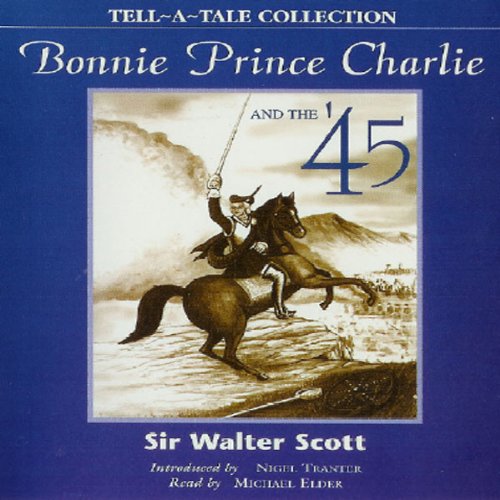
Since I did not have a book on my shelf concerning The War of the Roses, I decided to go with the Highland Wars?Rebellions?Uprisings? Bonnie Prince Charlie and the '45 by Sir Walter Scott This was an excerpt from Scott's Tales of a Grandfather. It told the story of Bonnie Prince Charlie from his landing in Scotland through the Battle of Culloden and his eventual escape from Scotland. I think Gabaldon's version of the Battle of Culloden is much better. I don't think I will be seeking out the unabridged version. 4 hours 45 minutes AOTM: Sir Walter Scott 3 stars
ETA A colleague of mine heard me tell a friend that I did not have a book about the War of the Roses on my shelves.......and the next day he proudly gave me a copy of Black Arrow by Robert Louis Stevenson. Hopefully, I can also get that read this month.
ETA A colleague of mine heard me tell a friend that I did not have a book about the War of the Roses on my shelves.......and the next day he proudly gave me a copy of Black Arrow by Robert Louis Stevenson. Hopefully, I can also get that read this month.
27Tess_W
38. The Black Arrow by Robert Louis Stevenson This was the story of Shelton, a young lad of about 18, who is naive (maybe dumb!) and a tad cruel. He is caught between trying to avenge his father's murder and trying to figure out his guardian, a man who keeps changing sides in the War of the Roses. Shelton is hard to like, he stumbles around, and quite frankly, I just didn't care what happened to him! Meh


28booksaplenty1949
>27 Tess_W: Maybe it’s a guy thing. Grisly Grisell, also clearly Victorian YPF, but for girls, kept me engaged. And yet Black Arrow is still in print, I assume, whereas Charlotte Mary Yonge’s opus is available only on Project Gutenberg or the used book market.
29ChrisG1
I just finished Stormbird by Conn Iggulden, the first volume of his four volume Wars of the Roses historical fiction epic. It's a solidly entertaining read. Of course, I have zero qualification for judging it's historical accuracy. Perhaps Paul will comment on that when he finishes it.
30booksaplenty1949
Almost finished vol 1 of Anne of Geierstein Sir Walter Scott is anything but economical in his descriptive passages, and the Librivox..narrator…wants…to make…sure…we…don’t…miss…a…word, so it’s a slow process, but I’m enjoying it more than I thought I would. The Wars of the Roses actually a political backdrop rather than part of the action, but I know the area where it takes place—-the current border area of Switzerland, France, and Germany—-quite well, and Sir Walter knows how to differentiate his characters, so I can keep them all straight—-sometimes a challenge these days.
31booksaplenty1949
Wars of the Roses finally in the foreground of Anne of Geierstein. Mysterious woman in the St George chapel of the cathedral in Strasbourg turns out to be Margaret of Anjou, widow of Henry VI. Turns out the purpose of the trip to the court of Charles the Bold, Duke of Burgundy, is not a commercial transaction but an appeal for his support for the Yorkist cause after their defeat at the Battle of Tewkesbury.
32ArlieS
Fatal colours : Towton 1461--England's most brutal battle by George Goodwin
This is a relatively short book about the battle of Towton, set in its context during the Wars of the Roses.
It was a good book, and did a somewhat better job of giving me overall context for the Wars of the Roses than I'd gotten from a biography of one of the participants (Edward IV).
The section on the battle itself doesn't start until halfway through the book, and basically consists of one very meaty chapter. I'm fine with that, but another reader with better knowledge of the context might have been disappointed.
This is a relatively short book about the battle of Towton, set in its context during the Wars of the Roses.
It was a good book, and did a somewhat better job of giving me overall context for the Wars of the Roses than I'd gotten from a biography of one of the participants (Edward IV).
The section on the battle itself doesn't start until halfway through the book, and basically consists of one very meaty chapter. I'm fine with that, but another reader with better knowledge of the context might have been disappointed.
33atozgrl
I've finally gotten my other reads for this month out of the way, and I've started on The Wars of the Roses by Alison Weir. This is the one that my library had, so it's the one I'm reading. They didn't have The Wars of the Roses: The Fall of the Plantagenets and the Rise of the Tudors so I didn't have any other option to choose. I'm not sure if I'll be able to finish this one before the end of the month, but at least I've got it underway.
34booksaplenty1949
Finished Anne of Geierstein just ahead of April 1 when one must turn one’s attention to Wars of Religion. Sir Walter Scott seems to be in eclipse these days but I found this novel surprisingly readable.
35annushka
>34 booksaplenty1949: Finished The Wars of the Roses: The Fall of the Plantagenets and the Rise of the Tudors the other day. It is a well-researched book. The author did a good job keeping the reader engaged while not only retelling the main events but also giving a good background of the happenings in the country.
36booksaplenty1949
>35 annushka: The fact that such books can be New York Times’ best sellers is heartening.
37booksaplenty1949
Looked briefly into copy of The Black Arrow I got from the library but decided I had done my duty by the Wars of the Roses. Stevenson’s readers here not big fans, I note.
38annushka
>36 booksaplenty1949: I agree. The book did not feel like a textbook and can appeal to many.
39ReneeMarie
>38 annushka: Just a heads up if you didn't know it that the author is writing historical fiction now, too. First just hit paperback: Essex Dogs.
40ArlieS
The military campaigns of the Wars of the Roses by Philip A. Haigh
This book contains a chapter on each of the battles of the Wars of the Roses. Each chapter begins with a bit of context, continues with the lead up to the battle, describes the battle itself in detail, then gives a bit about its aftermath.
I enjoyed it a lot, and found it easier to absorb even non-military information about the Wars of the Roses than some other books I've tried. I didn't absorb all the details of the battles, but I wasn't really trying to do so. Recommended.
This book contains a chapter on each of the battles of the Wars of the Roses. Each chapter begins with a bit of context, continues with the lead up to the battle, describes the battle itself in detail, then gives a bit about its aftermath.
I enjoyed it a lot, and found it easier to absorb even non-military information about the Wars of the Roses than some other books I've tried. I didn't absorb all the details of the battles, but I wasn't really trying to do so. Recommended.
41annushka
>39 ReneeMarie: Thank you for the heads up!
42Familyhistorian
Any understanding that I had of the Wars of the Roses was minimal before I read Wars of the Roses: The Fall of the Plantagenets and the Rise of the Tudors. Now I know why. The ins and outs of the convoluted and messy conflicts of this period of English history were hard to follow. After reading Dan Jones’ book about it all, I now have a basic grasp on the players and conflicts.
43hredwards
>42 Familyhistorian: I agree. I knew very little about that period of history, but his book was a good introduction, I thought.
44Familyhistorian
>43 hredwards: It was even though it was sometimes hard to keep the players straight, especially at the beginning of the book.
45hredwards
>44 Familyhistorian: Yes. I had trouble with that also.
46ArlieS
Edward IV by Charles Derek Ross
I read this biography of Edward IV of England for the March edition of the War Room challenge.
It took me a while, in part because the beginning of the book was very confusing, with nobles referred to by their titles, which changed over time - with old titles simultaneously going to new people. The early chapter(s) were especially bad, with much turning back several pages to see who "York" or "Somerset" referred to in the current paragraph. It didn't help that there were generally several people with the same name (e.g. "Edward" or "Richard") associated with the changing titles. I switched to reading other books I'd borrowed for the same challenge.
Eventually I came back to this book, which became a lot easier to follow after (a) reading better written accounts of some of the same events and people and/or (b) chapters of this book became more substantial, so there were fewer title changes per chapter. (I'm not sure which mattered more.)
The book is OK, except for that confusing early section, and did what I wanted to - gave me real life context for a famous person who'd been portrayed in a memorable and positive way when he appeared in a novel I'd once read. I can't call it great, but it did the job. Moreover, it was just about the only biography of Edward IV available from any library near me.
I read this biography of Edward IV of England for the March edition of the War Room challenge.
It took me a while, in part because the beginning of the book was very confusing, with nobles referred to by their titles, which changed over time - with old titles simultaneously going to new people. The early chapter(s) were especially bad, with much turning back several pages to see who "York" or "Somerset" referred to in the current paragraph. It didn't help that there were generally several people with the same name (e.g. "Edward" or "Richard") associated with the changing titles. I switched to reading other books I'd borrowed for the same challenge.
Eventually I came back to this book, which became a lot easier to follow after (a) reading better written accounts of some of the same events and people and/or (b) chapters of this book became more substantial, so there were fewer title changes per chapter. (I'm not sure which mattered more.)
The book is OK, except for that confusing early section, and did what I wanted to - gave me real life context for a famous person who'd been portrayed in a memorable and positive way when he appeared in a novel I'd once read. I can't call it great, but it did the job. Moreover, it was just about the only biography of Edward IV available from any library near me.
47ArlieS
The Wars of the Roses : the fall of the Plantagenets and the rise of the Tudors by Dan Jones (Daniel Gwynne Jones)
This is a decent history of the Wars of the Roses, the last of the books I read for the March installment of the War Room challenge. I almost rated it 4; it was kind of on the cusp between that and 3.5.
This is a decent history of the Wars of the Roses, the last of the books I read for the March installment of the War Room challenge. I almost rated it 4; it was kind of on the cusp between that and 3.5.
48atozgrl
I have finally finished The Wars of the Roses by Alison Weir that I picked up from the library for this challenge. I started it in late March, but as I suspected, I was not able to finish it before the end of the month. It is dense with a lot of information, and it was slow going, particularly at the beginning, because there were so many names and intertwined relationships that I had trouble keeping everyone straight. The English practice of having personal names and also titles of nobility with no relationship to the person's name, with the book referring to them variously by name or by title, also took some getting used to. I had to keep referring back to places in the book where they were introduced or previously mentioned to try to keep them straight. After I got deeper into the book, it went more quickly, but it was not a quick read.
Weir does a great job of setting the stage for the wars. She begins by telling us what England was like in the 14th and 15th centuries, and she goes all the way back to Edward III to explain the roots of the coming conflict. She provides a great deal of detail about all the events leading up to the conflict and the wars themselves. She takes us all the way up to the restoration of Edward IV to the throne, but only gives a brief summary of what happened later, with his death, the accession of Richard III, and Henry Tudor becoming king after the Battle of Bosworth. Apparently those events were covered in detail in her previous book The Princes in the Tower. The book could not have been easy to write, given the convoluted relationships and conflicts of the time. But she succeeded in helping me to understand a period of English history that was very muddy in my mind.
The book includes a set of genealogical tables, which helps with the complicated relationships between the warring families, although the small print and calligraphic typeface were not easy to read. It also includes an extensive bibliography and index. It was obviously very well researched.
This read took me so long to complete that I won't have time to read a book for the April War Room Challenge on Wars of Religion. I don't think there's anything on my shelves that fits that challenge in any case.
Weir does a great job of setting the stage for the wars. She begins by telling us what England was like in the 14th and 15th centuries, and she goes all the way back to Edward III to explain the roots of the coming conflict. She provides a great deal of detail about all the events leading up to the conflict and the wars themselves. She takes us all the way up to the restoration of Edward IV to the throne, but only gives a brief summary of what happened later, with his death, the accession of Richard III, and Henry Tudor becoming king after the Battle of Bosworth. Apparently those events were covered in detail in her previous book The Princes in the Tower. The book could not have been easy to write, given the convoluted relationships and conflicts of the time. But she succeeded in helping me to understand a period of English history that was very muddy in my mind.
The book includes a set of genealogical tables, which helps with the complicated relationships between the warring families, although the small print and calligraphic typeface were not easy to read. It also includes an extensive bibliography and index. It was obviously very well researched.
This read took me so long to complete that I won't have time to read a book for the April War Room Challenge on Wars of Religion. I don't think there's anything on my shelves that fits that challenge in any case.
49atozgrl
I have finally gotten around to reading The Black Arrow by Robert Louis Stevenson that I picked up for a fiction read for this challenge. I think I have to agree in general with >27 Tess_W:'s reaction to the book. I thought it was overly violent in places and I didn't see the reason for some parts of the story to be included. Although I note that it was apparently originally published in serial form, so maybe that explains why the story was unnecessarily padded in places. It was OK, but not up to the other books I've read by Stevenson.

