THE WAR ROOM CHALLENGE - JUNE 2024 : THE ENGLISH CIVIL WAR
Talk 75 Books Challenge for 2024
Join LibraryThing to post.
1PaulCranswick

The English Civil War 1642 - 1651 (I will include all events up to and in the immediate aftermath of the Restoration in 1660/1) was a conflict between Parliament and Royalists which lead to the execution of a King and an early exercise in the formation of a Republic.
3PaulCranswick
There is a wealth of history writing and fiction on the English civil war and I will be interested to see what is chosen.
4amanda4242
I've got Simon by Rosemary Sutcliff on deck for this month.
5ArlieS
I have once again borrowed more library books on this topic than any reasonable person would expect me to complete:
- The King's peace, 1637-1641 by C.V. Wedgwood (started; 1st of a 3 volume series)
- Cromwell : the Lord Protector by Antonia Fraser (started; note that the touchstone shows an alternate title, but it seems to be the same book)
- A freeborn people : politics and the nation in seventeenth-century England by David Underdown
- The Blazing World: A New History of Revolutionary England, 1603-1689 by Jonathan Healey
- The English Civil War: A Concise History by Maurice Ashley
Of course some of these extend beyond the period we're covering.
I don't imagine I'll actually finish all of them, particularly not in June, but stranger things have happened.
- The King's peace, 1637-1641 by C.V. Wedgwood (started; 1st of a 3 volume series)
- Cromwell : the Lord Protector by Antonia Fraser (started; note that the touchstone shows an alternate title, but it seems to be the same book)
- A freeborn people : politics and the nation in seventeenth-century England by David Underdown
- The Blazing World: A New History of Revolutionary England, 1603-1689 by Jonathan Healey
- The English Civil War: A Concise History by Maurice Ashley
Of course some of these extend beyond the period we're covering.
I don't imagine I'll actually finish all of them, particularly not in June, but stranger things have happened.
6ChrisG1
I've chosen a bit of historical fiction - The Bleeding Land by Giles Kristian.
7avatiakh
I've made a start on Children of the New Forest.
8PaulCranswick
>5 ArlieS: I have read the first two and was thinking to read Wegwood again but I might also add something by Christopher Hibbert.
9ArlieS
>7 avatiakh: I have fond memories of Children of the New Forest.
10Tess_W
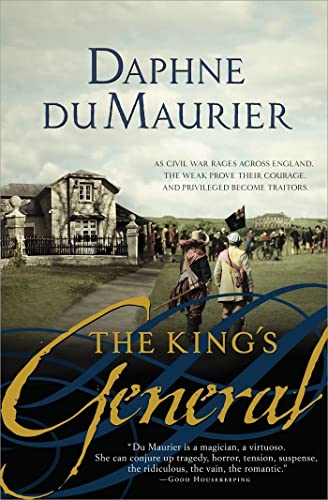
Going with some light reading this month (I'm on vacation!), The King's General by Daphne du Maurier.
11Familyhistorian
I have a few books to chose from when reading about the Civil War. I collected them as my theory is that my family must have been involved in some fashion as they lived in Northamptonshire and the surrounding counties in the relevant time period.
12avatiakh
Finished Children of the New Forest and it was a highly satisfying read. There was much more of the Civil War in it than I expected which was a bonus.
My next book will be Act of Oblivion by Robert Harris.
My next book will be Act of Oblivion by Robert Harris.
13booksaplenty1949
Finishing A Tale of Two Cities which was a spin-off from last month’s Napoleonic War theme. Quite different from Dickens’ other novels in its tight plotting and restricted cast of (generally boring) characters. Probably my least favourite of his novels, but I was interested in Humphry House’s observation in The Dickens World that this book has decisively shaped the English view of the French Revolution to this day, or at least to his day, a century after the novel appeared. Think I might revisit The Scarlet Pimpernel as a follow-up, esp as I own a very nice Folio Society edition of this title. But will get on to Wedgwood in due course. And maybe even look into my copy of Eikon Basilike.
14alcottacre
I pretty much no nothing about the English Civil War, so I am planning on reading The origins of the English Civil War: conspiracy, crusade, or class conflict? by Philip A. M. Taylor and then I am going to read some historical fiction, The White Witch by Elizabeth Goudge.
15PaulCranswick
>12 avatiakh: I am well into Act of Oblivion and hope to finish it tonight. A very engaging "seat-of-the-pants" read.
16avatiakh
>15 PaulCranswick: Oooh good. I'll bump it up.
17hredwards
For my book this month I selected Killers Of The King: The Men Who dared To Execute Charles I by Charles Spencer
Most of this book seems to take place after the Civil Wars unfortunately, but it deals with the aftermath. Starts with the trial and execution of Charles I and then details the hunt for the regicides by Charles II and his followers. Interesting reading in places, but I for some reason had a difficult time getting into this book. Seemed kind of dry.
Most of this book seems to take place after the Civil Wars unfortunately, but it deals with the aftermath. Starts with the trial and execution of Charles I and then details the hunt for the regicides by Charles II and his followers. Interesting reading in places, but I for some reason had a difficult time getting into this book. Seemed kind of dry.
18VioletCrown
I'm going to read The World Turned Upside Down: Radical Ideas During the English Revolution, which has been waiting to be read for some while.
20booksaplenty1949
>19 PaulCranswick: Just clicked the link and see that I’ve had an unread copy on my shelf since I purchased it at a Penguin remainder sale in 1980. This could be your Big Day, World Turned Upside Down! Flash those pages!
21VioletCrown
>19 PaulCranswick: Well now I am irretrievably committed. I'd better get reading.
22ArlieS
I have finished A freeborn people : politics and the nation in seventeenth-century England by David Underdown
This is a book about political ideas - what right and wrong government looked like to elite and non-elite English people - during the century that includes the English Civil War.
It's not the only book I'm reading for the challenge, and others are more focussed on the Civil War itself. But it's quite short, so I finished it first of the three Civil War books I've started so far.
The book originated as a set of lectures delivered at Oxford. That tends to result in a book that reads like a collection of somewhat related essays, but this one was edited enough before publication that it's moved most of the way to reading like a normal history book.
It was enlightening, but I kept wanting more: more depth, more comparisons, more clarity. I suspect that may be somewhat impossible - available sources only go so far. But OTOH, the idea of routinely studying the opinions and experiences of non-elites was still fairly young when the book was written; it's possible that significantly more has now been learned, found in archival material not previously studied in this context.
My key takeaways - there was no single popular idea of right government across England, even among people of like social status. There was a large regional and even local element. Also, the opinions of ordinary folks probably started the period closer to those of elites, and diverged as the century progressed.
It's also interesting that while censorship was routine for most of this century, there's a period during the early Commonwealth where it pretty well lapsed, making it a bit safer to criticize what we might now call the establishment. Some of the news sheets survive, both Royalist and anti-Royalist.
They are a scurrilous lot, about as attentive to reality as the modern National Enquirer, or maybe less. But what's interesting is the type of insults hurled at prominent opponents, rather than their dubious accuracy. Perhaps the worst possible thing that could be said about a political figure seems to have been that his wife was unfaithful - never mind his policies, honesty, or competence.
An interesting read overall, but not entirely satisfying.
This is a book about political ideas - what right and wrong government looked like to elite and non-elite English people - during the century that includes the English Civil War.
It's not the only book I'm reading for the challenge, and others are more focussed on the Civil War itself. But it's quite short, so I finished it first of the three Civil War books I've started so far.
The book originated as a set of lectures delivered at Oxford. That tends to result in a book that reads like a collection of somewhat related essays, but this one was edited enough before publication that it's moved most of the way to reading like a normal history book.
It was enlightening, but I kept wanting more: more depth, more comparisons, more clarity. I suspect that may be somewhat impossible - available sources only go so far. But OTOH, the idea of routinely studying the opinions and experiences of non-elites was still fairly young when the book was written; it's possible that significantly more has now been learned, found in archival material not previously studied in this context.
My key takeaways - there was no single popular idea of right government across England, even among people of like social status. There was a large regional and even local element. Also, the opinions of ordinary folks probably started the period closer to those of elites, and diverged as the century progressed.
It's also interesting that while censorship was routine for most of this century, there's a period during the early Commonwealth where it pretty well lapsed, making it a bit safer to criticize what we might now call the establishment. Some of the news sheets survive, both Royalist and anti-Royalist.
They are a scurrilous lot, about as attentive to reality as the modern National Enquirer, or maybe less. But what's interesting is the type of insults hurled at prominent opponents, rather than their dubious accuracy. Perhaps the worst possible thing that could be said about a political figure seems to have been that his wife was unfaithful - never mind his policies, honesty, or competence.
An interesting read overall, but not entirely satisfying.
23Tess_W
I read A History of Cornwall by F.E. Halliday This was a broad sweeping but seemingly concise history of Cornwall. I "needed" to get some background and context for a novel I'm reading about the English Civil War, Du Maurier's The King's General. I specifically wanted to locate more information on Sir Richard Grenville, who led the King's forces in Cornwall, among other places. I must confess that I did not read the entire book, but began with the dissolutions of the monasteries and the Tudors and finished with the English Civil War. I did get some good information about the War, Charles I, Charles II (then the Duke of Cornwall), Oliver Cromwell, Prince Rupert of the Rhine, etc. Only a few lines about Richard Grenville leading the Royalist forces at the Battle of Lostwithiel, which handed the armies of Parliament their biggest defeat in the war. However, I do feel that I am more versed about Cornwall, their Royalist support, and their subsequent loss(es) to the Cromwell's armies. Read about 70 pages 4 stars Paul's War Room English Civil War Now on to finish the novel--it's great, btw!
24booksaplenty1949
>19 PaulCranswick: Haven’t finished The World Turned Upside Down yet but I’ve already added a thumb to the five Widsith has previously received for his/her LT review, which I think sums up the book’s weaknesses. I was alerted early on by Hill’s sentence in his introduction “There were lunatics in the seventeenth century, but modern psychiatry is helping us to understand that madness itself may be a form of protest against social norms, and that the ‘lunatic’ may be in some sense saner than the society which rejects him.” Oh dear. Hill’s ideas about the “English Revolution” reflect the counter-cultural movements of his time (book was originally published in 1972) and his experience as a member of the Communist Party of Great Britain from 1934-57. He doesn’t make much effort to distinguish the distinctive ideas of the different radical groups, and the actual events of the Civil War, I mean the Revolution, are very far in the background. The focus is on the breakdown of conventional social order and the opportunity for every norm to be challenged. I will be interested to see if he has a theory about why, like our own “Age of Aquarius,” this came to an end.
25Tess_W
I completed The Long Parliament Dissolved by Denzil Holles This book was critical of Cromwell's dissolution of a parliament that had sat from 1640-1660. Those dates are from this book, but I have different dates from different books. However, the author condemns the military closure of said parliament as an act of democratic betrayal. He sees it as an erosion of the checks and balances of a parliamentary system as well as the consolidation of political power. Found at a Friends of the Library sale for 25 cents and it fit this month's war room topic: English Civil War. Book is being pitched because it smells bad and I'm not going to contaminate other books. 79 pages 3.5 stars This book has no cover.
ETA: This was only an excerpt!
ETA: This was only an excerpt!
26alcottacre
I started The Origins of the English Civil War by Philip A. M. Taylor last night. I did not realize that the book is a collection of essays, many drawn from chapters of published books, on the war. It starts off with Thomas Macaulay and includes essays both contemporary and not.
27Tess_W
I completed The King's General by Daphne du Maurier This was historical fiction concerning The English Civil War. The story is beautifully told by the protagonist, Honor Harris, one-time love of Sir Richard Grenvile, the King's General in the West. (Cornwall) Du Maurier spins a great, but painful romance as well as exposing the psychological and emotional toll the war takes on the locals. I had to do some pre-reading to be able to really get into this novel as I wanted to understand more about the English Civil War. I was well prepared for this novel. I really enjoyed the author's end notes as she let the reader know what happened to every historical personage who had a part in the novel. One of the best reads thus far in 2024! 448 pages 5 stars Paul's War Room: English Civil War
28Kristelh
>27 Tess_W:, thanks for that review, Tess, I looked at this one to read but chose a different one. Now I am reconsidering.
29alcottacre
I finished The Origins of the English Civil War this evening and found it to be a disappointing read as its essays, which are chapters from different historian's books, cannot seem to agree on pretty much anything. I wanted a straightforward book on 'the origins of the English Civil War' and did not get it.
30booksaplenty1949
I have finished The World Turned Upside Down and begun The Trial of Charles I but felt in the mood for some fiction so have begun A Legend of Montrose, a novel by Sir Walter Scott, set during the 1644-5 campaign in Scotland in support of Charles I. Neither of the non-fiction works deals with combat so this is also more directly relevant to our martial theme.
31ArlieS
I have finished The King's Peace, 1637-1641 by C. V. Wedgwood and very much want to read the other 2 volumes in the series.
This book covers the 4 years before the outbreak of hostilities, during which the political situation went from good to bad, stable to unstable. The other two volumes cover the war itself, and the King's execution.
The King's Peace starts with a description of the state of the country in 1637 - what life was like, how people made their living, and similar. This sets the stage for the political history that follows, giving the reader a better feeling for the context and so making their experience far richer.
It continues with the political history, and manages to communicate a good idea of the abilities and motivations of prominent figures, not just what they were doing.
I feel like I know something about Wentworth/Lord Stafford, Archbishop Laud, and John Pym in particular - not quite at the level of having read a biography of any of them, but better than I'd normally get from a political history.
Overall, an excellent book. My participation in the July War Room theme may suffer as I expect I'll be continuing the June theme well into July ;-)
This book covers the 4 years before the outbreak of hostilities, during which the political situation went from good to bad, stable to unstable. The other two volumes cover the war itself, and the King's execution.
The King's Peace starts with a description of the state of the country in 1637 - what life was like, how people made their living, and similar. This sets the stage for the political history that follows, giving the reader a better feeling for the context and so making their experience far richer.
It continues with the political history, and manages to communicate a good idea of the abilities and motivations of prominent figures, not just what they were doing.
I feel like I know something about Wentworth/Lord Stafford, Archbishop Laud, and John Pym in particular - not quite at the level of having read a biography of any of them, but better than I'd normally get from a political history.
Overall, an excellent book. My participation in the July War Room theme may suffer as I expect I'll be continuing the June theme well into July ;-)
32booksaplenty1949
>29 alcottacre: I guess the full title of the book—-The Origins of the English Civil War: Conspiracy, Crusade, or Class Conflict?—-might have been a tip-off that there was no consensus among the authors represented.
33EllaTim
>27 Tess_W: I have read Du Maurier’s Rebecca, and loved it. So I decided to try The King’s General too. I liked it a lot, vividly written. Some scenes I will remember! She is a dramatic storyteller. Surprising as well, there’s a twist in the ending that had me thinking.
34alcottacre
>32 booksaplenty1949: I did not think about it at the time, but yeah, you are probably right.
I started Elizabeth Goudge's The White Witch last night and, thus far (60+ pages in), I am really liking it.
I started Elizabeth Goudge's The White Witch last night and, thus far (60+ pages in), I am really liking it.
35PaulCranswick
>31 ArlieS: If that is the case, Arlie, then my aim in setting the challenges has sort of succeeded! I love Wedgwood's books and remember reading all three books during my student days.
36booksaplenty1949
>35 PaulCranswick: I concede that Christopher Hill’s book is still in print after fifty years, so it must still be filling a scholarly gap, but I am finding Wedgwood’s approach more congenial. She quotes a lot less and synthesises a lot more.
37PaulCranswick
>36 booksaplenty1949: Her style of history telling is much more to my liking too, I must admit. I admire Hill but I enjoy Wedgwood.
38booksaplenty1949
Finished The Trial of Charles I. Very well written, but think that between the English Civil War and the books touching on the French Revolution I read last month I’ve about had it with deposed monarchs. Still working on A Legend of Montrose but it is clear that Sir Walter’s real focus is not the Civil War but who will enjoy the favours of the mysterious foundling Annot Lyle who practises music therapy on the harp.
39ArlieS
I have just finished Cromwell, the Lord Protector by Antonia Fraser. This was an excellent biography; I might well seek out other biographies by the same author.
40avatiakh
I've finished the novel, Act of Oblivion by Robert Harris. Highly enjoyable read that covered a period I know very little about.
41alcottacre
Forgot to mention it here but I did finish reading Elizabeth Goudge's The White Witch. Overall I liked it but thought it went on a bit long.
42annushka
I finished reading Act of Oblivion today. It’s incredibly well-written and kept me in suspense until the very end.
43Familyhistorian
I’m still working my way through Peter Ackroyd’s The History of England Volume III: Civil War. The lead up to the fight was long, as I suppose it was in real life and it has been hard to keep track of the main players. I was also stymied by the fact that there were no end notes because I wanted to find out where he obtained one particular fact. It is an interesting account so I will keep at it.
44booksaplenty1949
>43 Familyhistorian: I notice there are 82 books on Peter Ackroyd’s Author Page. I doubt that *he* knows where he obtained that fact. Probably employs a small army of “research assistants.”
45Familyhistorian
>44 booksaplenty1949: Yeah, probably but it makes me wonder why some facts make it into the narrative - just what triggers his interest so that errand fact makes the cut.
46booksaplenty1949
>45 Familyhistorian: Folio Society edition of Lord Kinross’s history of the Ottoman Empire which I am currently reading includes an introduction by Norman Stone, a British historian based in Turkey, which deals with the strengths and weaknesses of the author’s approach to his subject. Good to be reminded that “objectivity” is not really attainable in the chronicling of human activity.
I notice that the title of volume III was changed at some point from Rebellion: The History of England from James I to the Glorious Revolution to simply The History of England: Civil War, presumably for some reason related to marketing.
I notice that the title of volume III was changed at some point from Rebellion: The History of England from James I to the Glorious Revolution to simply The History of England: Civil War, presumably for some reason related to marketing.
47booksaplenty1949
Finished A Legend of Montrose. Focus of the story was the rivalries among the Highland clans, with little consideration of the larger issues of the Civil War, but there was a battle, which is more than I got in the two other books I read for this month’s challenge.
48PaulCranswick
>46 booksaplenty1949: Norman Stone was quite a controversial but very readable historian. In his book Turkey : A Short History he took issue with the term "genocide" to describe the 1.5million Armenian deaths. He was also the subject of an extremely nasty obituary from the historian of German history Richard J Evans whose 3 volume history of the Third Reich is of itself a remarkable work of tedium.
49ArlieS
I've finally finished the last of the books I'm going to read for the June challenge.
I enjoyed The blazing world : a new history of revolutionary England, 1603-1689 by Jonathan Healey quite enough to read it well after the end of the challenge.
I liked that it both started before the start of the civil war, and continued after the Restoration, all the way through the Glorious Revolution.
This whole period feels connected to me, with the same issues being contested. Both the Protectorate and the Restoration were simply stages on the way to a lasting resolution; they were intended as permanent solutions, but they didn't work. Resolution - of sorts - happened with the Glorious Revolution, which was tolerable to all parties, enabling political arguments to move on to different issues.
Of course I am not a historian, let alone a (British) constitutional scholar, so that's just my unprofessional take on the history. ;-)
I enjoyed The blazing world : a new history of revolutionary England, 1603-1689 by Jonathan Healey quite enough to read it well after the end of the challenge.
I liked that it both started before the start of the civil war, and continued after the Restoration, all the way through the Glorious Revolution.
This whole period feels connected to me, with the same issues being contested. Both the Protectorate and the Restoration were simply stages on the way to a lasting resolution; they were intended as permanent solutions, but they didn't work. Resolution - of sorts - happened with the Glorious Revolution, which was tolerable to all parties, enabling political arguments to move on to different issues.
Of course I am not a historian, let alone a (British) constitutional scholar, so that's just my unprofessional take on the history. ;-)
50RBeffa
>2 PaulCranswick: I started on Act of Oblivion today. I like Robert Harris as an author. My knowledge of the period of the book is close to nil.

