THE WAR ROOM CHALLENGE : JULY 2024 - COLONIAL WARS
Talk 75 Books Challenge for 2024
Join LibraryThing to post.
1PaulCranswick
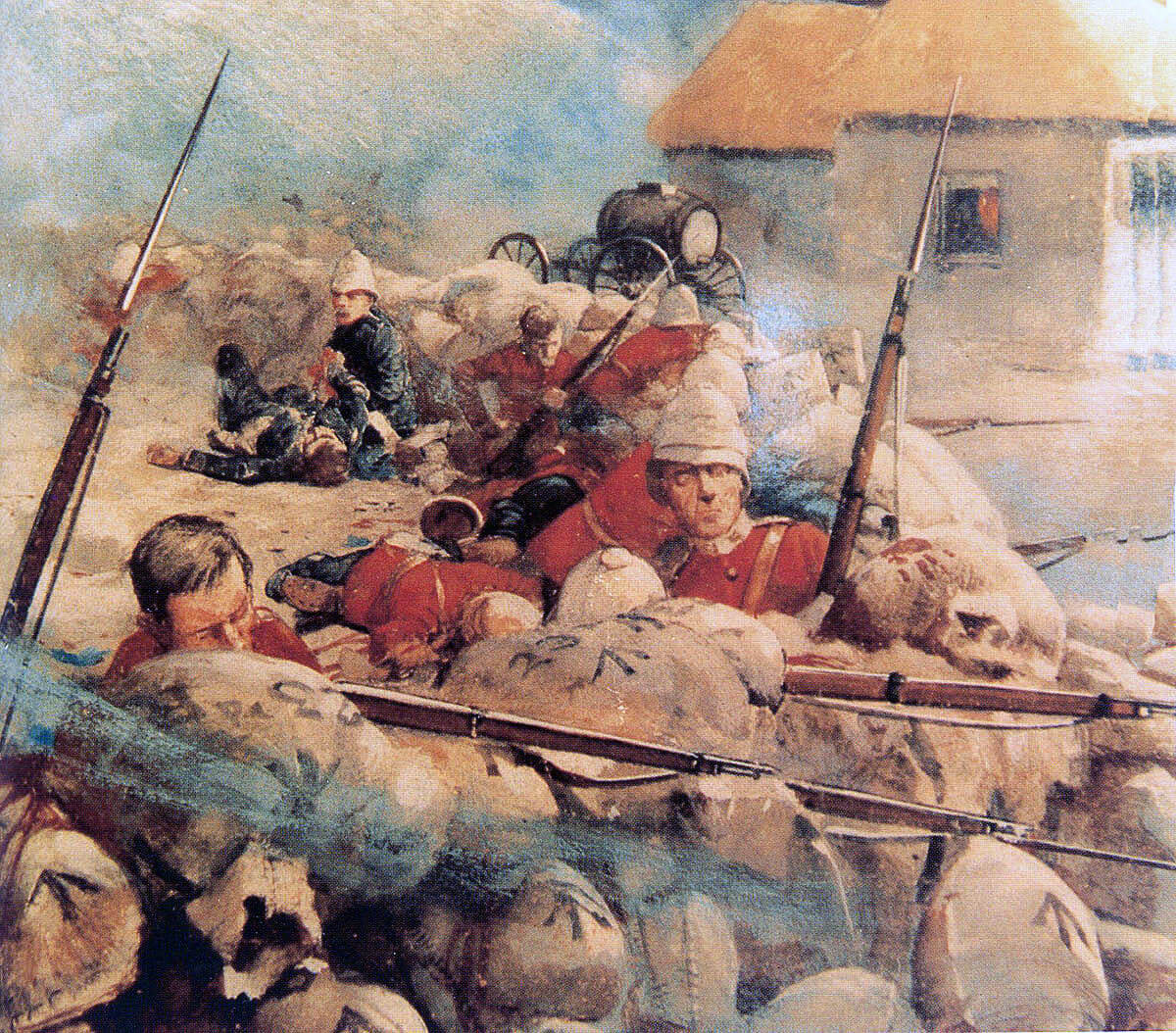
This month we are concentrating on battles against the colonizers. Some possible topics:
Wars or battles with the Native Americans
The Zulu Wars
The Mau Mau uprisings
The Indian Mutiny
Algerian War of Independence
The Indochinese War (with France)
2amanda4242
I'll be reading about the Second Boer War in Churchill's London to Ladysmith via Pretoria, which, conveniently, also counts for the August BAC.
3PaulCranswick
A few that I will read:
The Wretched of the Earth by Frantz Fanon (General but mainly Algeria)
Monday's Warriors by Maurice Shadbolt (The Maori wars)
The Centurions by Jean Larteguy (Vietnam and Algeria)
The Wretched of the Earth by Frantz Fanon (General but mainly Algeria)
Monday's Warriors by Maurice Shadbolt (The Maori wars)
The Centurions by Jean Larteguy (Vietnam and Algeria)
4Tess_W
I'm going to finish book # 3 in the George Washington Series, Victory at Yorktown by Newt Gingrich et. al The first two books were both 5 star reads.
5PaulCranswick
>4 Tess_W: Even though we had a specialist month, it clearly also counts here too, Tess.
7Tess_W
>5 PaulCranswick: Thanks! This is book #3 of the trilogy and I wanna finish the series! I will try for another, also!
8Tess_W
I completed Victory at Yorktown by Newt Gingrich et.al. This was book 3/3 in the George Washington series. To be honest, before I read the first book in the series, I didn't expect anything but mediocre. I was pleasantly surprised. This book included personalities such as Comte de Rochambeau, Benedict Arnold, and Alexander Hamilton. Best historical series I've read in awhile. July: Colonial Wars
Now I'm going in search of a book about Portugal and Angola.
Now I'm going in search of a book about Portugal and Angola.
9EllaTim
I found Revolusi by David van Reybrouck in the public library. Indonesian independence. A war in which my dad had to participate on the dutch side, so interesting to me for that reason. I’m going to give it a try.
10booksaplenty1949
Am finding The Ottoman Empire a page-turner. Kinross’s style reminds me of Stephen Runciman’s in A History of the Crusades, summarising complex events in clear, flowing sentences and creating vivid vignettes of personalities. The book does not have Runciman’s blizzard of footnotes on every page, however; just a relatively short bibliography. If I had a scholarly interest in the subject I would find this a drawback, but as I am just trying to get an overview of a subject I know embarrassingly little about it’s not a problem.
11booksaplenty1949
>8 Tess_W: I read several novels by Mia Coutu, an Angolan novelist, for the Africa Novel Challenge last year, and can recommend his historical The Sands of the Emperor trilogy.
12Tess_W
>11 booksaplenty1949: Thanks, will put that on my WL...however, I see it is set in Mozambique.....I need a book set in Angola! I found 2, but they are not readily available at a reasonable cost right now.
13booksaplenty1949
>12 Tess_W: Sorry, I now see Coutu lives in Mozambique. Anything here https://www.mappit.net/bookmap/countries/3/angola/ you weren’t aware of?
14Tess_W
>13 booksaplenty1949: A couple, yes! I'm finding though that a lot of the Angola/Portugal/Independence books are more pricey than I like and most aren't in libraries, but I will keep my eyes open. Thanks!
15booksaplenty1949
>14 Tess_W: I suppose it’s a niche subject for English-language readers compared to the British and even the French Empire.
16ArlieS
I've been very lax this month - I only just starred this thread, and haven't thought about what to read.
Fortunately I've already read at least one qualifying book in May of this year: A continent erupts : decolonization, civil war, and massacre in postwar Asia, 1945-1955 by Ronald H. Spector. It discusses multiple wars, not all of them against colonizers, including in particular the Indochinese war.
I find myself too lacking in ambition for non-fiction. What I'd most like to read for this is Zulu Warrior by Ronald Welch, but that's the only one of Ronald Welch's novels I've never been able to get my hands on, and the only one not reissued by Slightly Foxed in the 2010s. (They even printed one the author had not completed, but skipped this one.)
Meanwhile, I'm still happily reading books about the English Civil War, which perhaps accounts for my lack of ambition for July.
Fortunately I've already read at least one qualifying book in May of this year: A continent erupts : decolonization, civil war, and massacre in postwar Asia, 1945-1955 by Ronald H. Spector. It discusses multiple wars, not all of them against colonizers, including in particular the Indochinese war.
I find myself too lacking in ambition for non-fiction. What I'd most like to read for this is Zulu Warrior by Ronald Welch, but that's the only one of Ronald Welch's novels I've never been able to get my hands on, and the only one not reissued by Slightly Foxed in the 2010s. (They even printed one the author had not completed, but skipped this one.)
Meanwhile, I'm still happily reading books about the English Civil War, which perhaps accounts for my lack of ambition for July.
17ArlieS
>10 booksaplenty1949: Your BB has landed, but for some time in the indefinite future. The Ottoman Empire is on my long list of topics to read about some day, hopefully soon. I'd prefer a book with lots of lovely footnotes, but like you, I know embarassingly little about the topic, so a book with only a bibliography will do. (This is one topic where I'm unlikely to notice any errors the author makes, let alone statements that contradict what I think I know of the topic, which tend to send me running for the footnote section.)
18Kristelh
>16 ArlieS:, I am late in arriving here, too and so far I don’t have anything jumping out. I found this Warrior on Hoopla Digital. Maybe I can do that one.
19booksaplenty1949
Finished The Ottoman Empire and feel that a significant gap in my general knowledge has been filled.
20atozgrl
I have finally picked up a copy of Bury My Heart at Wounded Knee, and if I have time this month, I will try to read it for this challenge. It's a long book, and I'm already committed to several more books this month, so I'm not sure if I will be able to fit it in. However, it's a classic that somehow passed me by when originally published, so I need to get to it some time, and I hope that will be soon.
21hredwards
For my read this month I chose:
A Brutal Reckoning: Andrew Jackson, The Creek Indians, And The Epic War For The American South by Peter Cozzens
Well written and researched, fair and balanced account of Andrew Jackson and the Creek Indian War in the southeast of the USA.
When I was a young kid my grandfather, who lived in central Alabama by the Talladega National Forest took us during a summer visit to see Horseshoe Bend where the ultimate battle in this war took place, so it was nice to finally read the history of the event that I didn't get much out of back then. Thank you, grandpa for instilling a love of history into me. I live now in Missouri, in Jackson County and Andrew Jackson has gotten a lot of bad press lately. It was nice to read a fair, balanced account of this war and see that there was good and bad in both sides and people weren't just inherently bad as so many revisionist historians today would have you believe. Good book.
A Brutal Reckoning: Andrew Jackson, The Creek Indians, And The Epic War For The American South by Peter Cozzens
Well written and researched, fair and balanced account of Andrew Jackson and the Creek Indian War in the southeast of the USA.
When I was a young kid my grandfather, who lived in central Alabama by the Talladega National Forest took us during a summer visit to see Horseshoe Bend where the ultimate battle in this war took place, so it was nice to finally read the history of the event that I didn't get much out of back then. Thank you, grandpa for instilling a love of history into me. I live now in Missouri, in Jackson County and Andrew Jackson has gotten a lot of bad press lately. It was nice to read a fair, balanced account of this war and see that there was good and bad in both sides and people weren't just inherently bad as so many revisionist historians today would have you believe. Good book.
22Tess_W
>21 hredwards: I find that to be the case of many historical personages that are now maligned. It is true that Brutus said, "the good is oft interred with the bones."
23hredwards
>22 Tess_W: I like that. We have two statues outside our two county courthouses of Jackson that were gifted to the county by President Harry Truman (who was born here) and there has been a drive to have them taken down the last few years. It was brought to a vote of the County and the people voted to leave them alone, but some of our County legislators still are trying to get them removed. When asked about the vote to save them, one of them said "Well, the voters aren't always right." It just makes me sick. I love History and hate to see certain people trying to remove it because they don't agree with it.
Sorry, didn't mean to go off on my soap box. I was a little nervous about reading this book, for fear of it being fair, but I felt it was pretty well written.
Sorry, didn't mean to go off on my soap box. I was a little nervous about reading this book, for fear of it being fair, but I felt it was pretty well written.
24booksaplenty1949
This message has been deleted by its author.
25booksaplenty1949
>23 hredwards: A statue isn’t “history.” It’s a sign of respect for the subject and gratitude for his/her achievements. When a statue is raised to someone a hundred years after their death it often reflects an agenda on the part of the person or group who sponsors the statue. The statues of Confederate generals erected in the Southern US in the Jim Crow era, for example, were certainly statements about “segregation today…segregation tomorrow…segregation forever.” Harry Truman clearly identified with Andrew Jackson as a “man of the people” who did not cater to the interests of “elites.” Truman’s own background—-a failed businessman, an elected judge with no law degree or indeed degree of any kind—probably explains his respect for Jackson’s ascent to the presidency from humble origins and continued identification with those origins. Truman’s speech on the unveiling of the statue in Independence is “Aw, shucks” in the extreme https://www.trumanlibrary.gov/soundrecording-records/sr62-119-address-presentati.... The equestrian statue in Charlottesville, VA to which he alludes is of course the statue of Stonewall Jackson, now removed.
26Tess_W
>23 hredwards: If you are concerned about a book being fair, that's ok--you are allowed. However, if others are concerned about you reading a book that may be unfair, pfftt--none of their business!;)
>25 booksaplenty1949: Statues are indeed history; just as a grocery list, a shirt, a revolver, etc; regardless of when erected. It is true though, that the vanquished usually do not merit statues. (Germany)
>25 booksaplenty1949: Statues are indeed history; just as a grocery list, a shirt, a revolver, etc; regardless of when erected. It is true though, that the vanquished usually do not merit statues. (Germany)
27booksaplenty1949
>26 Tess_W: Someone who holds on to every grocery list, shirt, etc is generally regarded as a hoarder, not a historian. It’s important to be selective.
29Tess_W
>27 booksaplenty1949: You are describing a hoarder--however, sometimes a gold mine for a historian. I was not describing a person (hoarder), I was comparing historical artifacts.
30booksaplenty1949
>29 Tess_W: A historical artifact is not “history,” although it can provide insight into history, with appropriate interpretation. And removing it from its original location often assists that effort. If you were arguing that Andrew Jackson wasn’t such a bad guy and doesn’t deserve to be “cancelled,” that would be one thing, but you seem to be agreeing that the statue was put there in 1947, and that’s a long time ago, so it should stay there.
31hredwards
>30 booksaplenty1949: I believe that a statue gifted by a President that a lot of people look up to is History. Much as Truman's home which is open for tours is history. The great thing about this country is we are each free to have our opinions. The Truman Library, the Lincoln Library are full of History.
32booksaplenty1949
>31 hredwards: An inspiring story of the evolution of Truman's thinking on desegregation https://www.history.com/news/harry-truman-executive-order-9981-desegration-milit.... Do you think the letter to his future wife quoted in the fourth paragraph is framed and on display in the Truman Library? Can you buy a postcard of it? I doubt it. Being looked up to does not mean that your choices at one stage of your life can’t be revisited and judged.
33avatiakh
I've finished The Siege of Krishnapur by J. G. Farrell which is historical fiction based on the Indian Mutiny of 1857. A very fine novel, book 2 in his Empire trilogy.
Now picked up Monday's Warriors by Maurice Shadbolt which is set during the Maori Wars in New Zealand.
I'm also reading Moonraker by F. Tennyson Jesse which features Toussaint L'Ouverture, leader of the Haitian slave rebellions & revolution.
Now picked up Monday's Warriors by Maurice Shadbolt which is set during the Maori Wars in New Zealand.
I'm also reading Moonraker by F. Tennyson Jesse which features Toussaint L'Ouverture, leader of the Haitian slave rebellions & revolution.
34Familyhistorian
England was at war a lot especially when it came to their far flung colonies. One war that I knew little about was the Boer War so I pulled Hero of the Empire: The Boer War, a Daring Escape and the Making of Winston Churchill off the shelves to read. It told the history of the war by focusing on Churchill and his exploits during this time. It also showed how the British were introduced to modern warfare by the Boers.
35annushka
>34 Familyhistorian: I read Hero of the Empire for this challenge. I enjoyed the book! Thank you for the recommendation.
36booksaplenty1949
Finally finished The Great Game. Started to read it out of general interest rather than with the War Room Challenge in mind, since it is primarily about diplomacy and espionage rather than war, but as it began with an account of several skirmishes in the First Afghan War and ended with an overview of the Russo-Japanese War I decided to post my thoughts here. Probably told me more than I wanted to know about the Great Game, but Hopkirk is a great stylist who knows how to select the details that make even accounts of obscure events in remote locales surprisingly entertaining. Think I might look for the first novel in the Flashman series as a follow-up.
37booksaplenty1949
About halfway through Flashman and greatly enjoying it. Must say I don’t find Flashy nearly as much of an anti-hero as he is billed. Just less of a hypocrite than those around him.
38booksaplenty1949
Finished Flashman, which turned out to be very relevant to The War Room —-a fictional follow-up to Hopkirk’s book, with Flashy’s involvement in the First Anglo-Afghan War and his first-hand account of the appalling 1842 Retreat from Kabul. Not the escapist fare I was expecting, I must say. Flashy’s character is more complicated than the cowardly cad he seems to be billed as, and even his exploitive attitude towards women, played for apparently harmless fun through most of the book, is cast in another light as he is, we suspect, hoist on his own petard at the end of the story. But we have to wait and see. I must exercise some discipline with this unexpectedly engrossing series.

