Folio Archives 391: The Queen of Spades etc. by A.S.Pushkin 1970
Talk Folio Society Devotees
Join LibraryThing to post.
1wcarter
The Queen of Spades and The Captain’s Daughter by A.S.Pushkin 1970
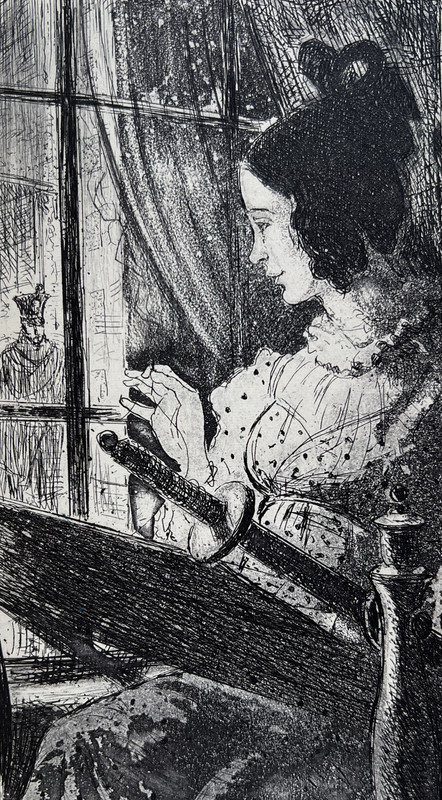
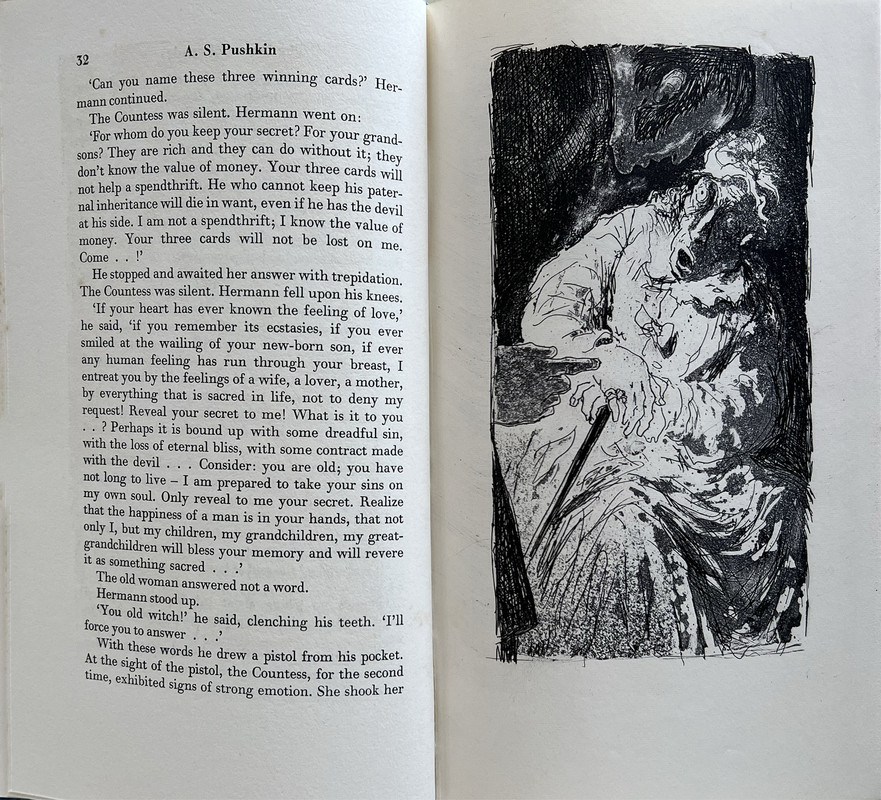
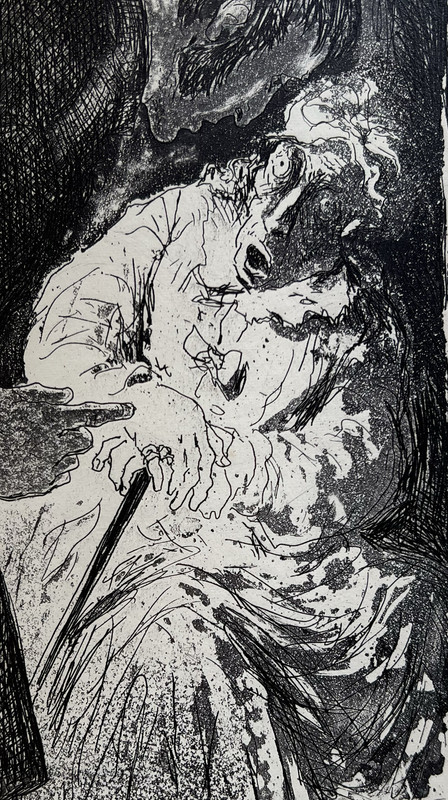
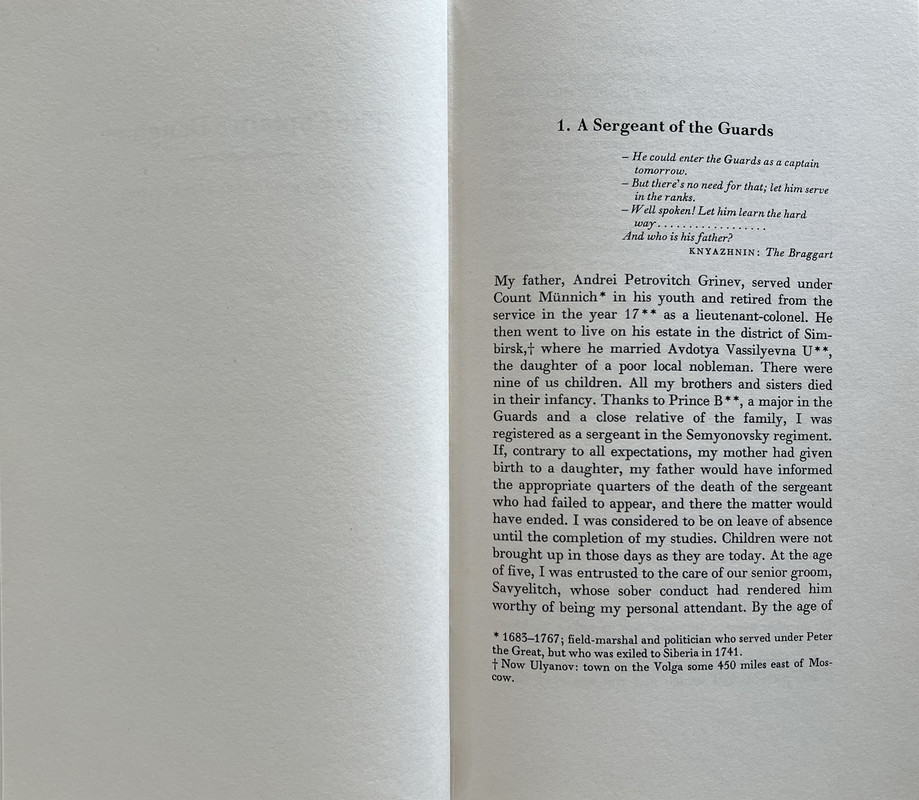
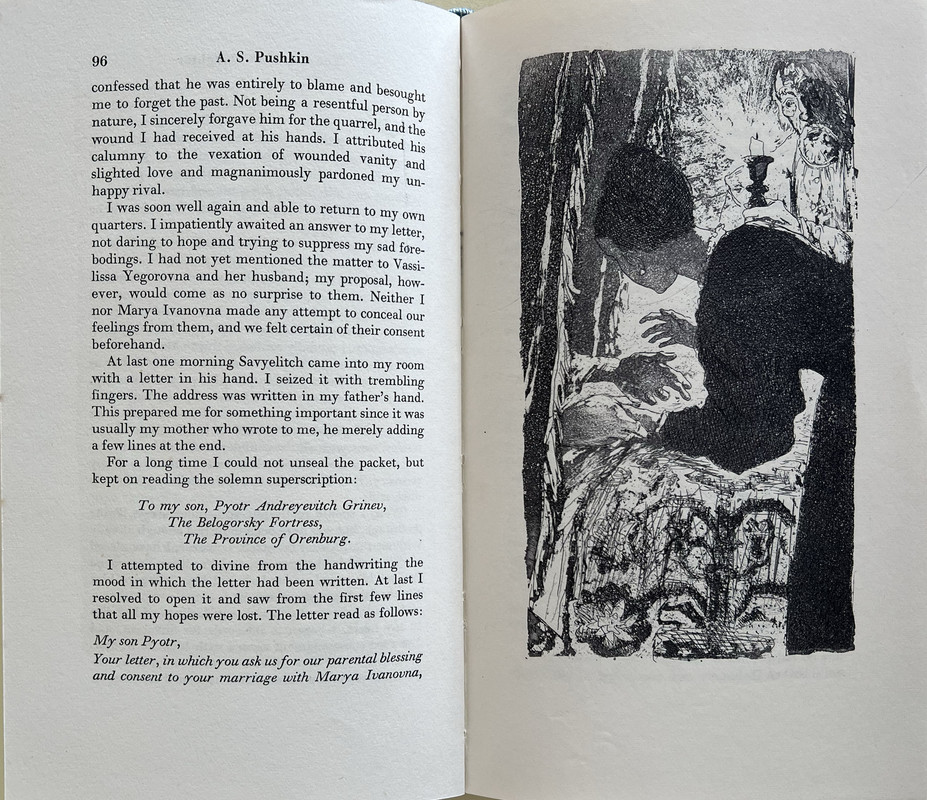
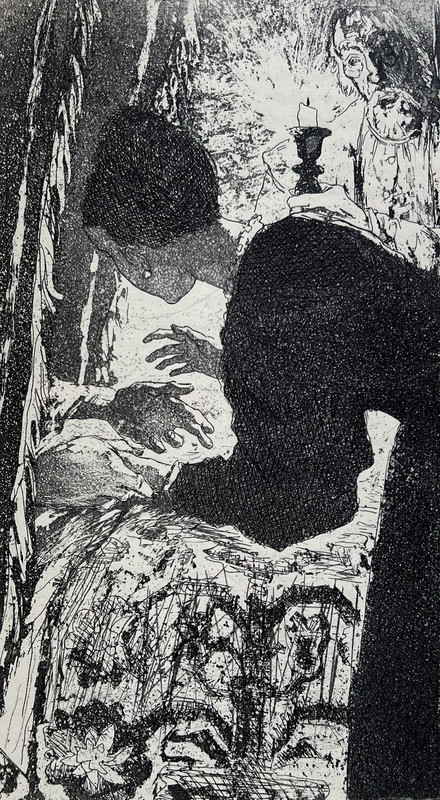
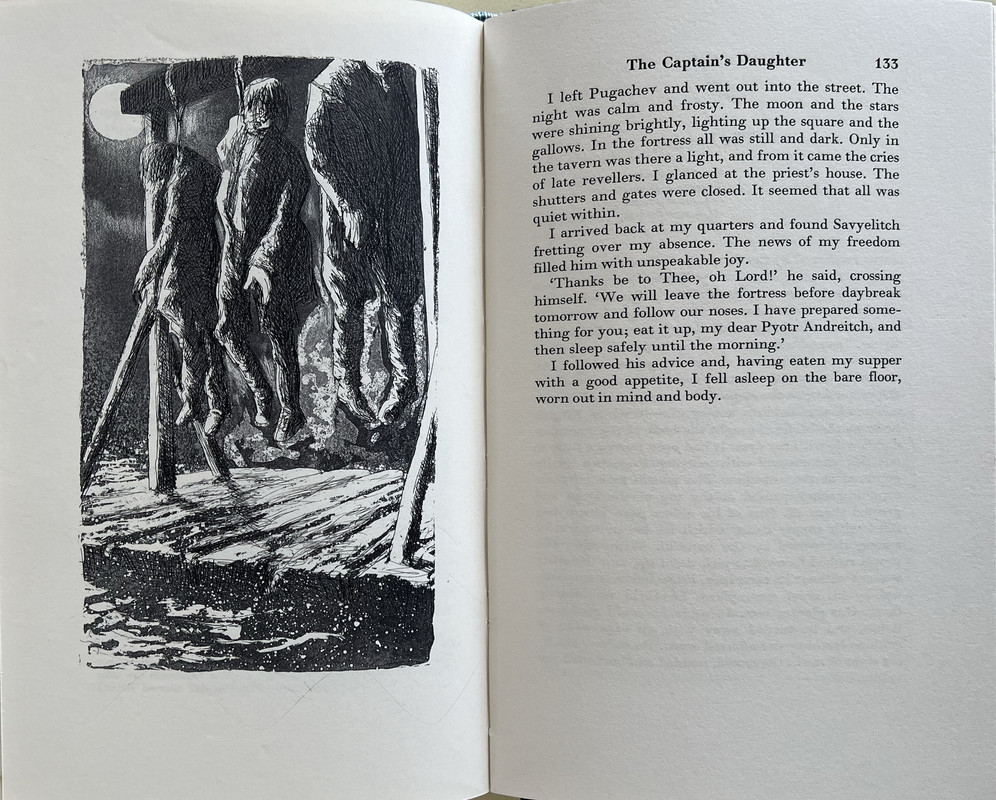
There is absolutely nothing special about this book. Its about as basic as you can get with a Folio Society book, the artwork is uninspiring and sparse and the binding is boring; but it is a Folio Society book, it contains two good stories and it can be bought for peanuts on the secondary market. The two stories alone make it a worthwhile purchase for less than a paperback.
Set in Russia at the end of the eighteenth century but written in the 1830s, the stories are very different, but demonstrate the class structure and difficulties of life in Russia at that time. The Queen of Spades is the far shorter work being only 35 pages, while the more intricate and brutal Captain’s Daughter runs to 143 pages.
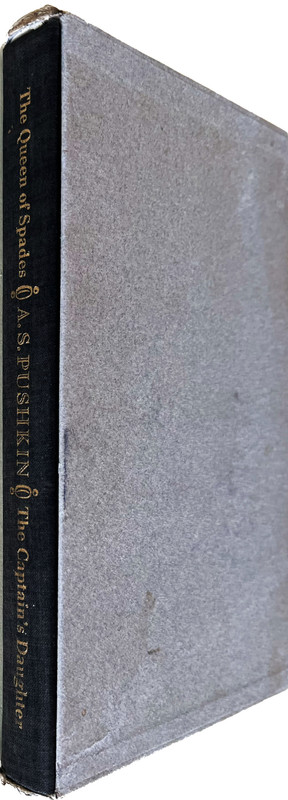
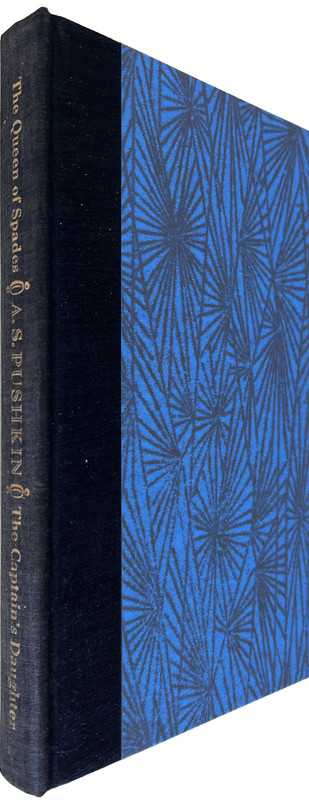
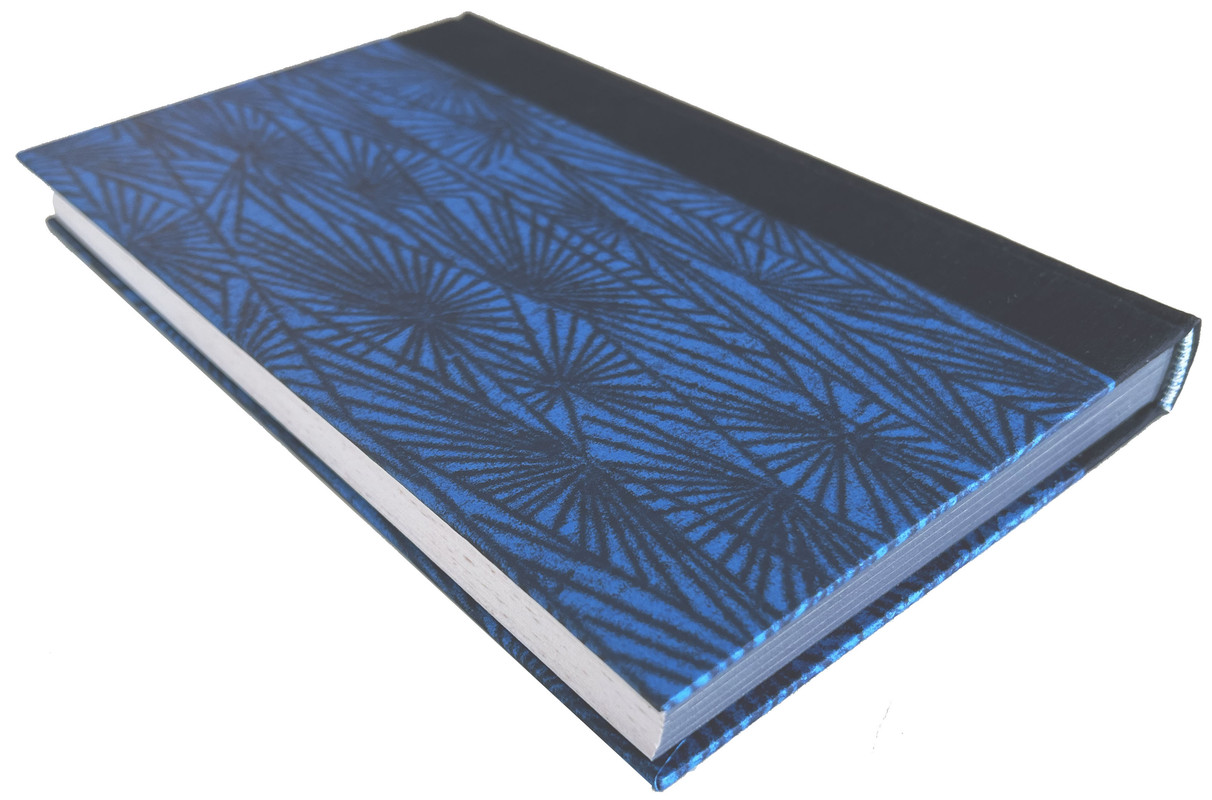
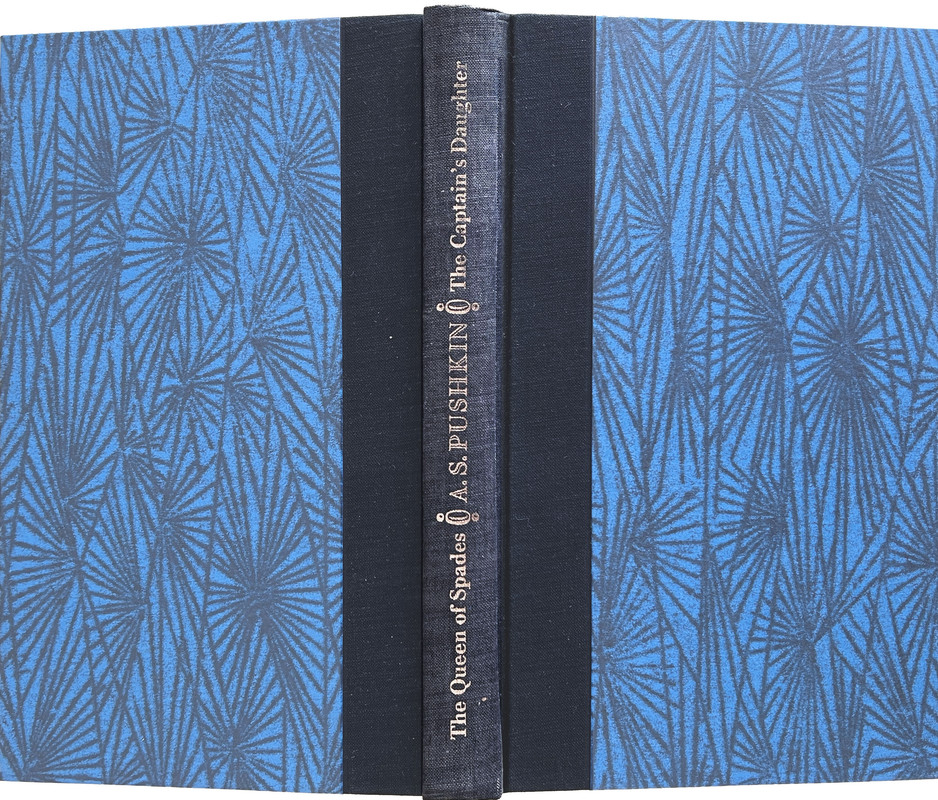
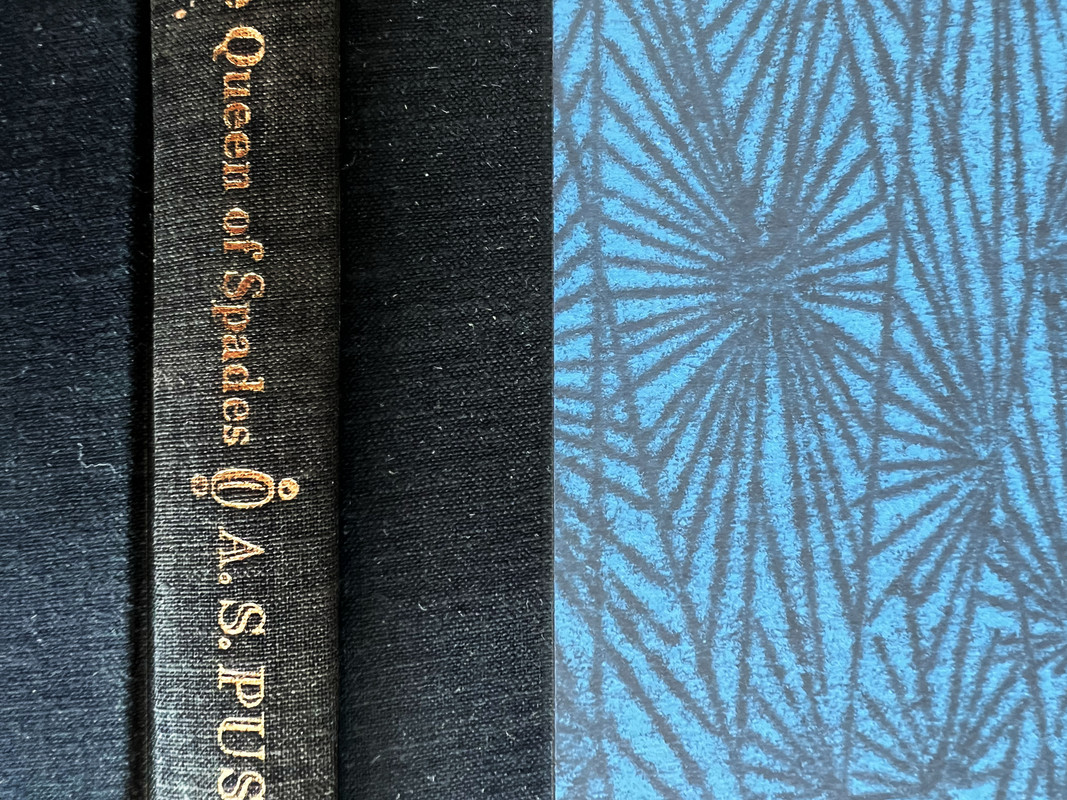
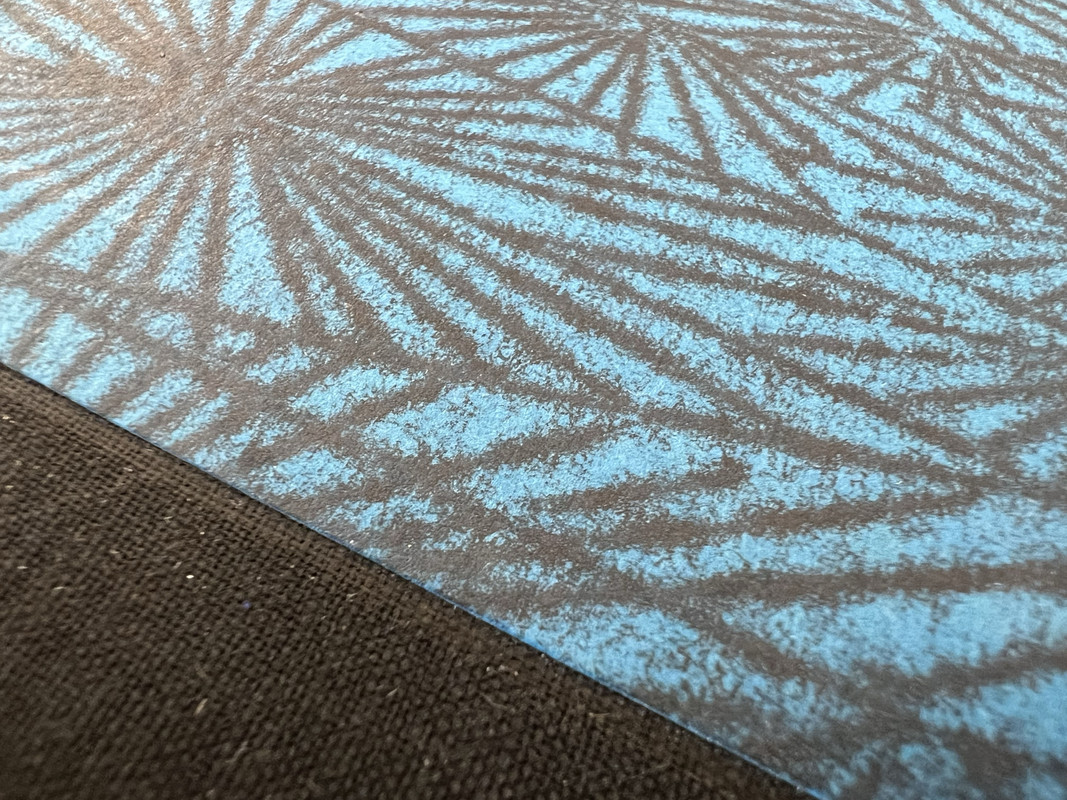
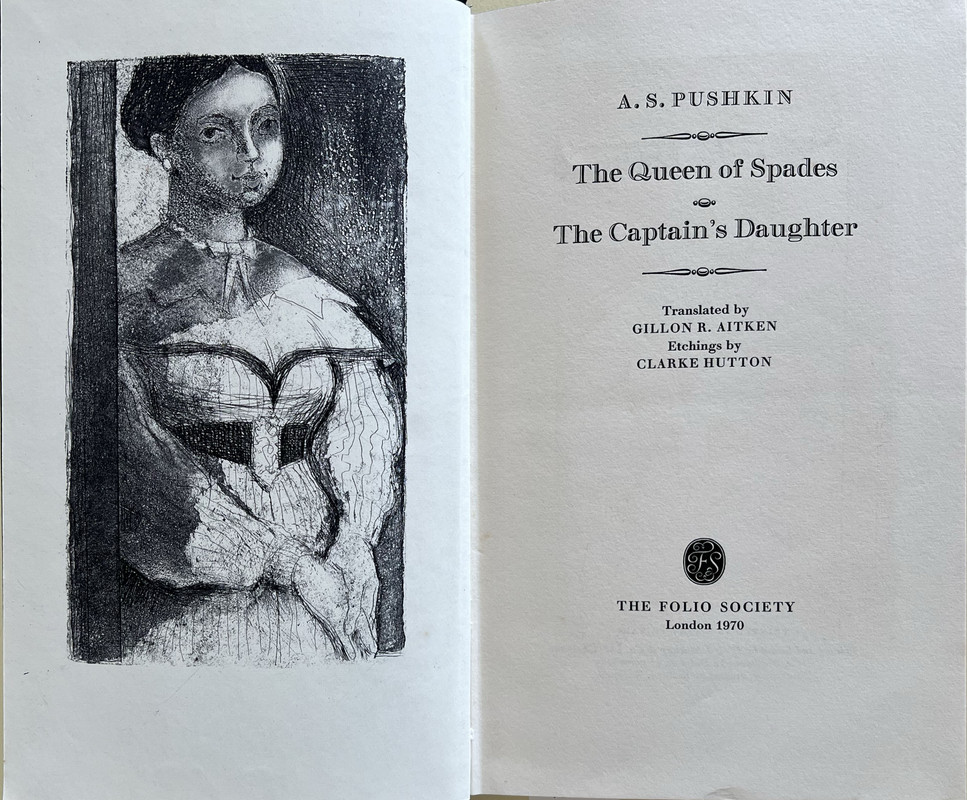
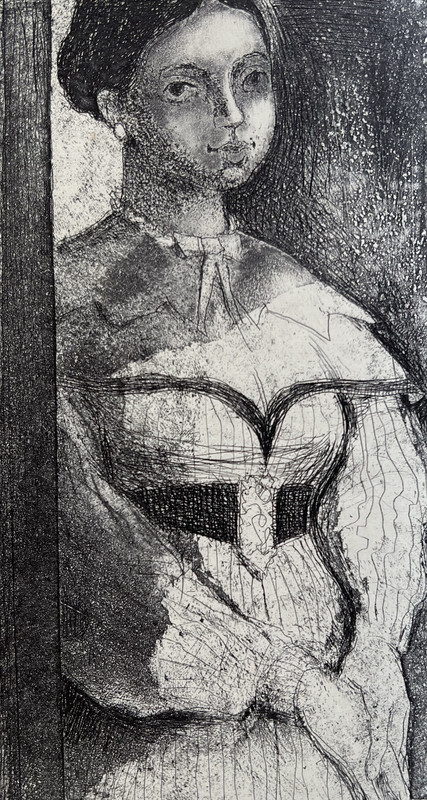
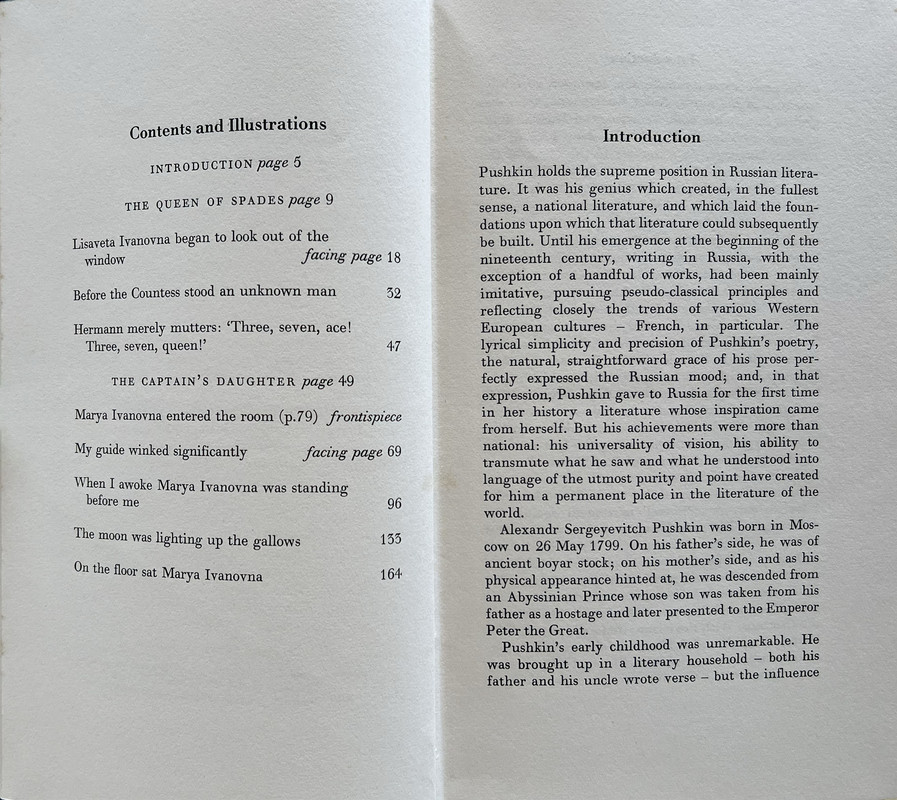
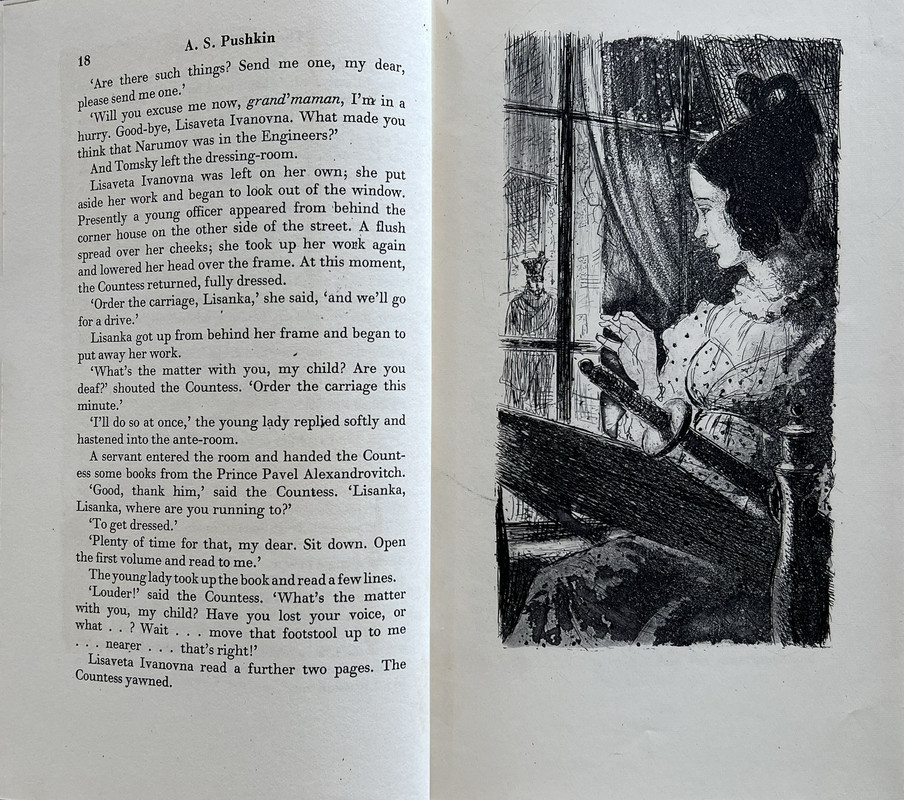
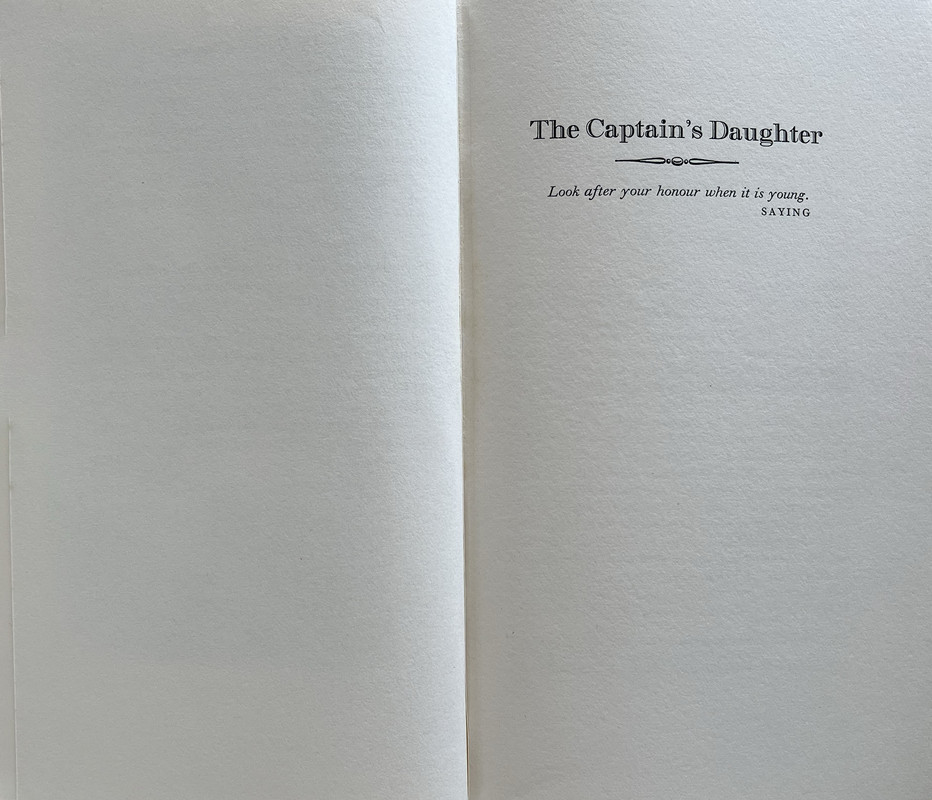
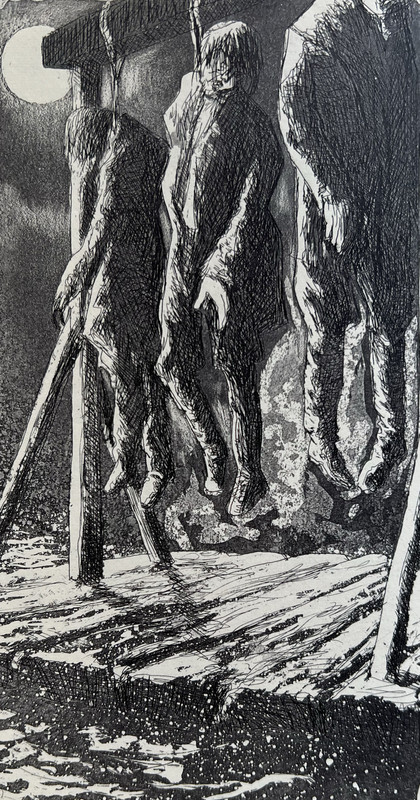
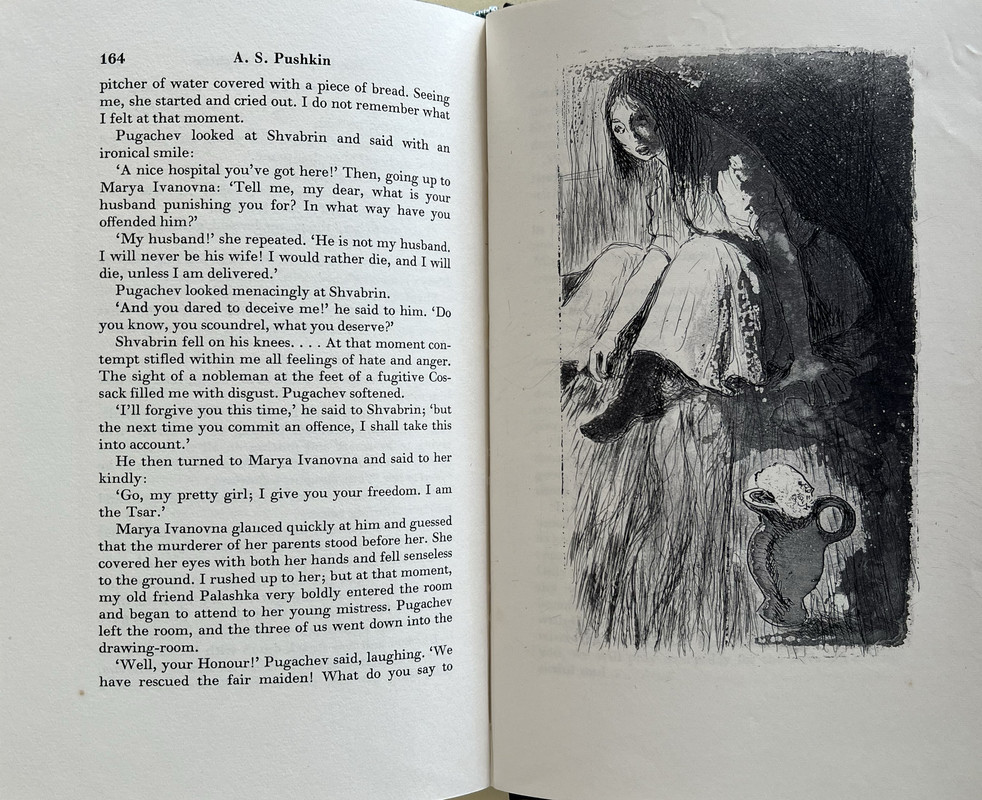
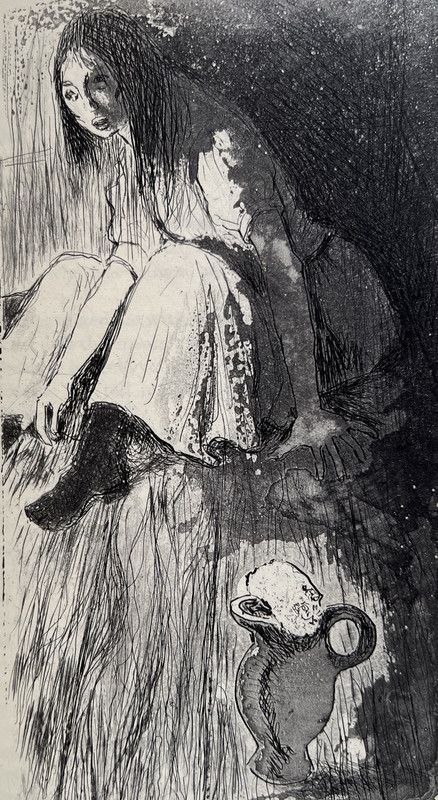
The 192 page book was translated by Gillon R. Aitken and has a four page introduction by Gillon R. Aitken. There are eight leaves of monochrome etchings by Clarke Hutton. The book’s page tops are stained blue and it is quarter bound in black cloth, with black pattern printed blue paper boards. It has plain black endleaves and a coarse grey cardboard slipcase that measures 23.5x14cm. Annoyingly, the spine title runs from bottom to top as it does in many other FS books of this era.

An index of the other illustrated reviews in the "Folio Archives" series can be viewed here.
There is absolutely nothing special about this book. Its about as basic as you can get with a Folio Society book, the artwork is uninspiring and sparse and the binding is boring; but it is a Folio Society book, it contains two good stories and it can be bought for peanuts on the secondary market. The two stories alone make it a worthwhile purchase for less than a paperback.
Set in Russia at the end of the eighteenth century but written in the 1830s, the stories are very different, but demonstrate the class structure and difficulties of life in Russia at that time. The Queen of Spades is the far shorter work being only 35 pages, while the more intricate and brutal Captain’s Daughter runs to 143 pages.
The 192 page book was translated by Gillon R. Aitken and has a four page introduction by Gillon R. Aitken. There are eight leaves of monochrome etchings by Clarke Hutton. The book’s page tops are stained blue and it is quarter bound in black cloth, with black pattern printed blue paper boards. It has plain black endleaves and a coarse grey cardboard slipcase that measures 23.5x14cm. Annoyingly, the spine title runs from bottom to top as it does in many other FS books of this era.
An index of the other illustrated reviews in the "Folio Archives" series can be viewed here.
2HonorWulf
Funny, I was looking at the 2014 version last week, which contains both these stores as well as Tales of Belkin and Blackamoor (and a right ways spine!).
3affle
>2 HonorWulf:
The new edition, as well as having more stories, has a new translation, illustrations by the Balbussos, and better design. I don't doubt that there are FSDs who will praise the older book on the grounds that it is letterpress and has etchings printed direct from the plates, but I'm in no doubt which is the better book: thanks to Warwick for the reminder of how ordinary many of the books of that time were.
The new edition, as well as having more stories, has a new translation, illustrations by the Balbussos, and better design. I don't doubt that there are FSDs who will praise the older book on the grounds that it is letterpress and has etchings printed direct from the plates, but I'm in no doubt which is the better book: thanks to Warwick for the reminder of how ordinary many of the books of that time were.

