Folio Archives 392: Montaillou by Emmanuel Le Roy Ladurie 2005
Talk Folio Society Devotees
Join LibraryThing to post.
1wcarter
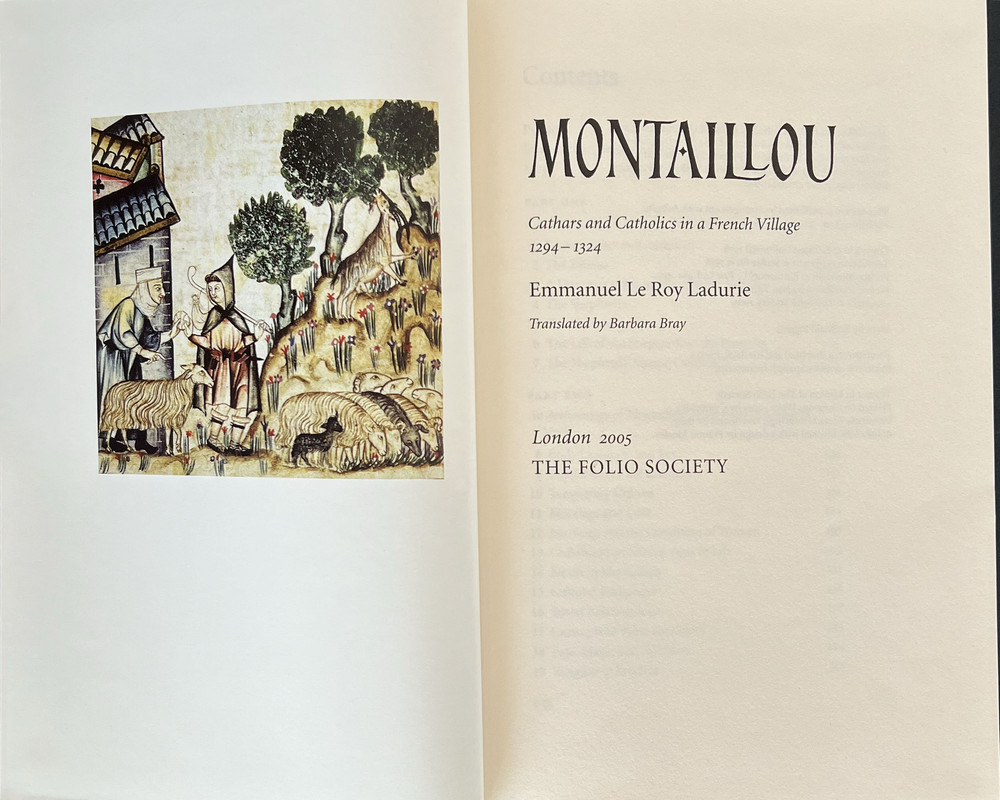
Montaillou : Cathars and Catholics in a French Village 1294-1324 by Emmanuel Le Roy Ladurie 2005
Have you ever wondered what life was like in a tiny French village 700 years ago? Probably not, but reading this book gives you an amazingly detailed insight into life in the village of Montaillou between 1290 and 1340 (but mainly from 1300 to 1325).
The Cathars were a pseudo-Gnostic Christian sect that flourished in southern Europe for 200 years from the mid-12th. to the mid-14th. centuries. It was considered heretical by the Catholic Church and believers were subject to the inquisition. Thousands were burnt at the stake or tortured to death and the sect was eradicated.
Montaillou was a village with a significant number of Cathars, and the records of the inquisitor Bishop Jacques Fournier (who later became Pope Benedict XII) with regard to this village of about 200 to 250 people were extraordinarily detailed. These records have been dissected by the author to produce an amazing picture of daily life at this time.
No subject is taboo, and the book not only covers the expected details about the local lord and his family, but also details about the peasants, servants, shepherds and bastards in the village. Their homes, style of living, way of life, diet, farming methods, emigrations, marriages, deaths, births and even mental outlook was documented. But the interrogators did not stop there. The intimate details of consensual sexual liaisons, concubines, incest, pederasty (particularly by the priest), rape, wife beating, and homosexuality were also recorded.
There is a great deal of information in this book, and although interesting, I found myself getting bogged down in details as I read, so ended up skim reading several pages before a paragraph would catch my eye and lead to a more careful reading for a page or three.
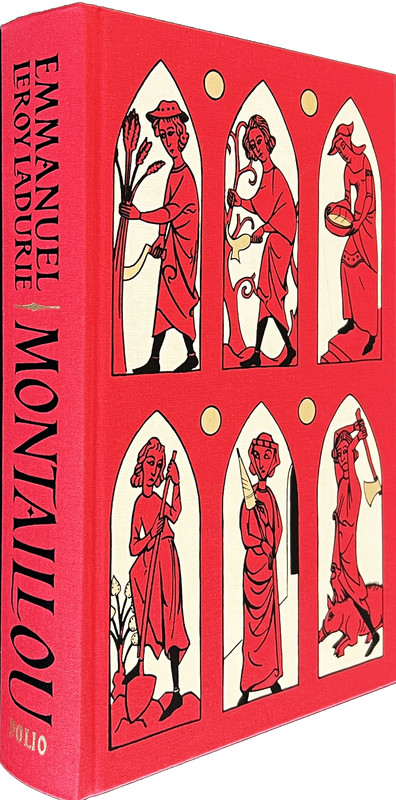
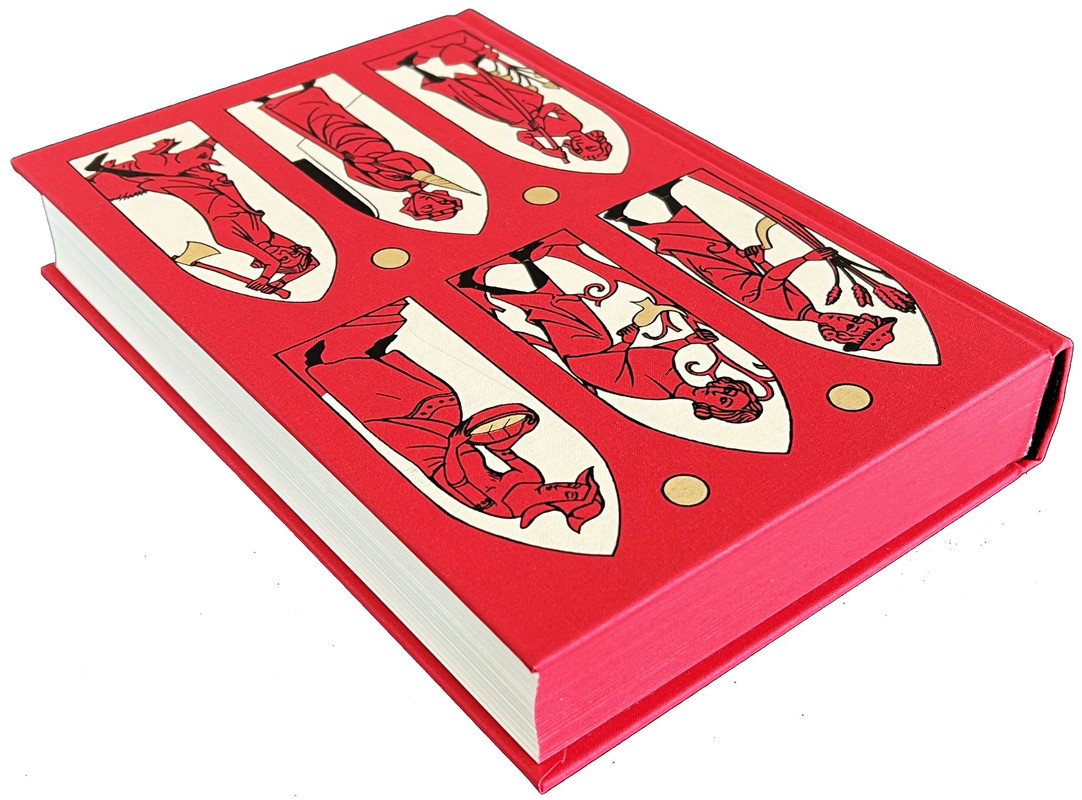
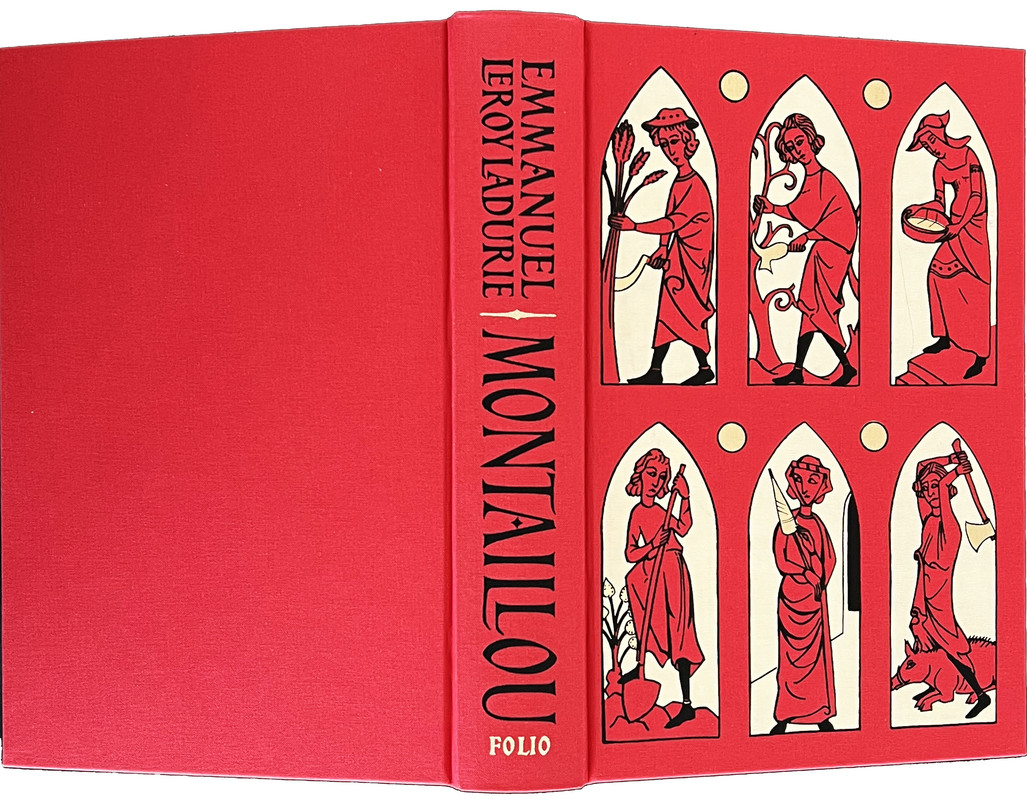
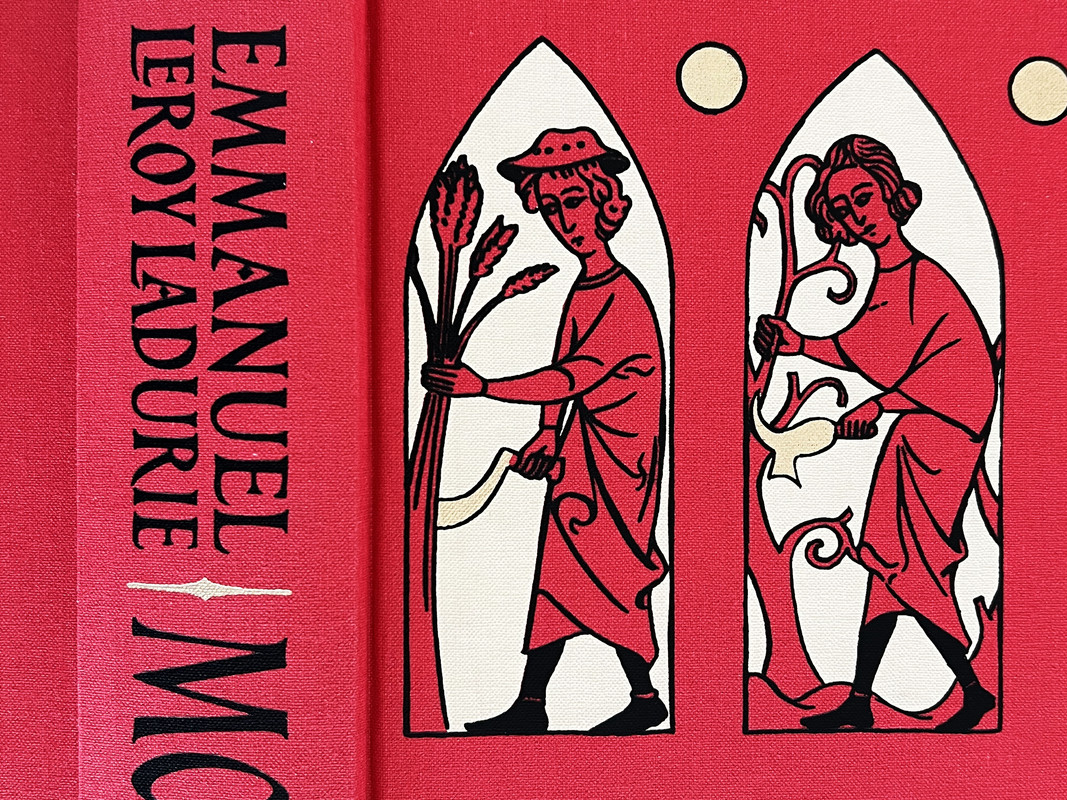
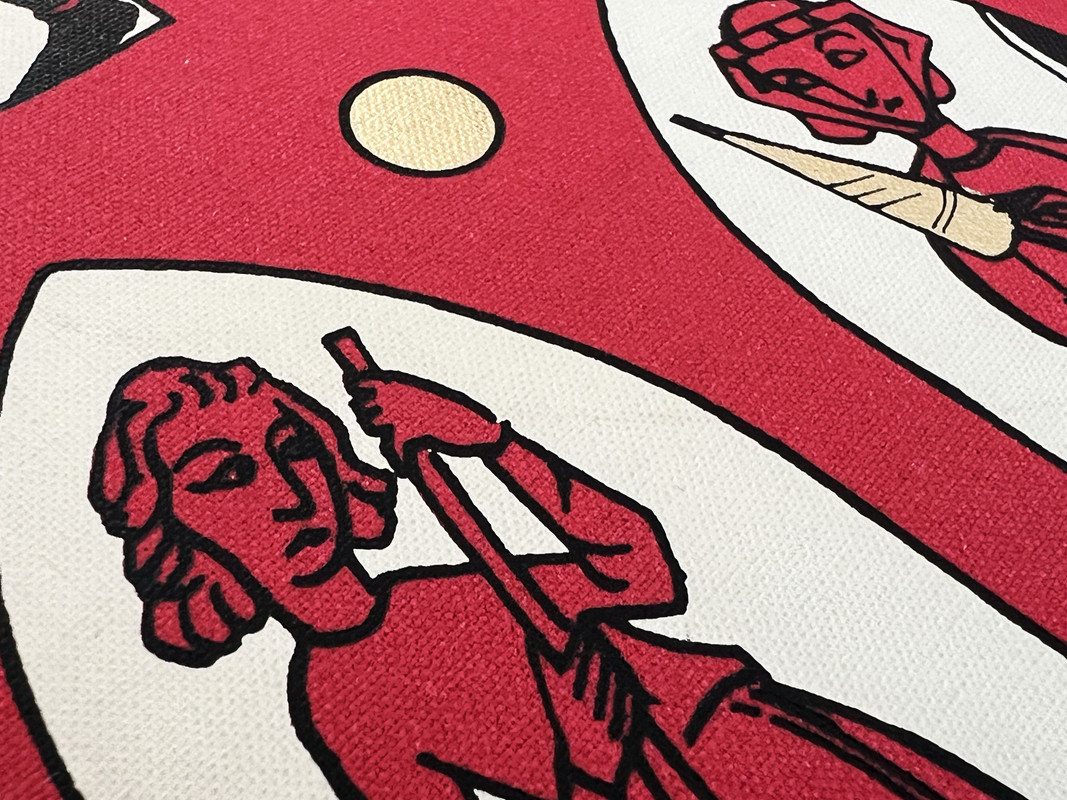
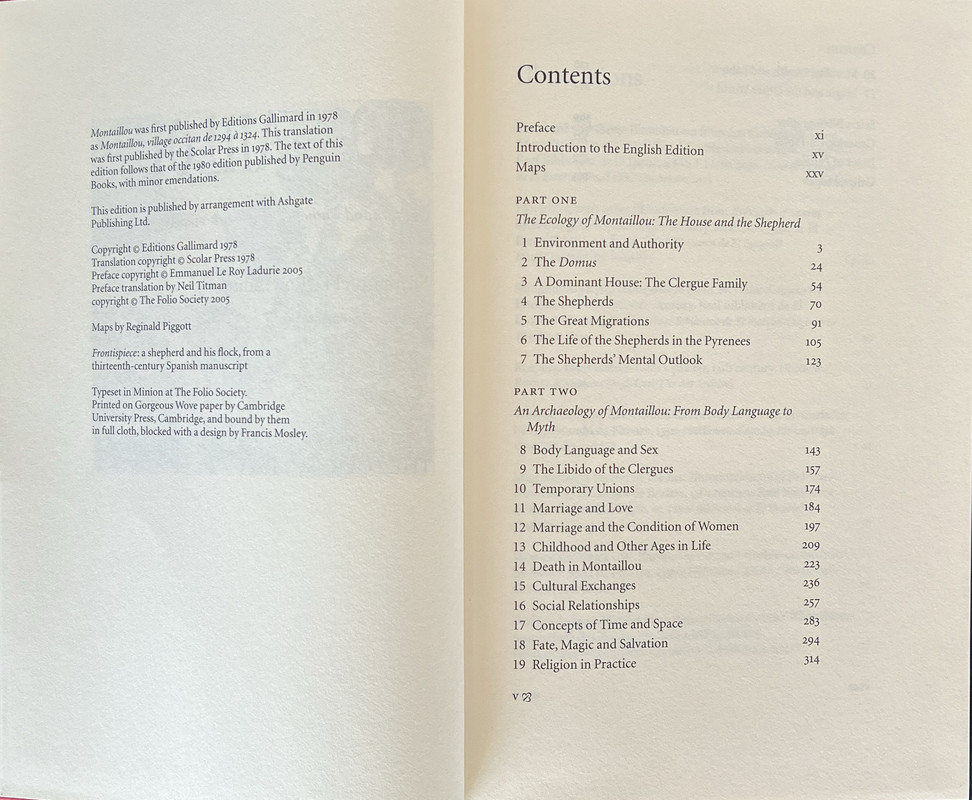
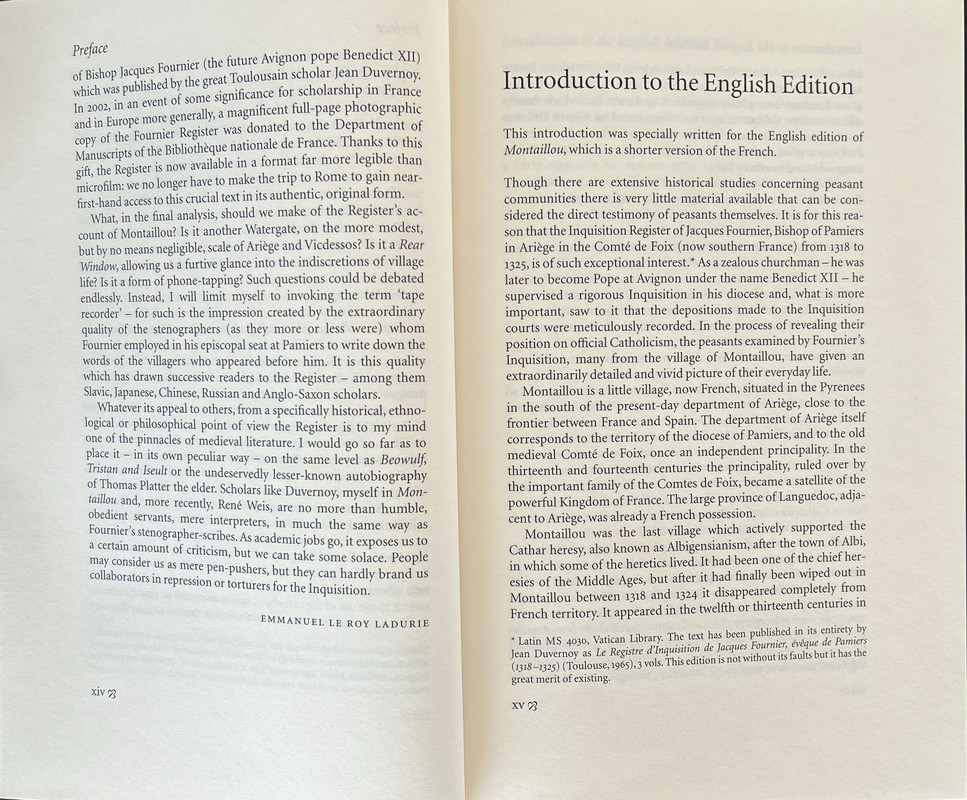
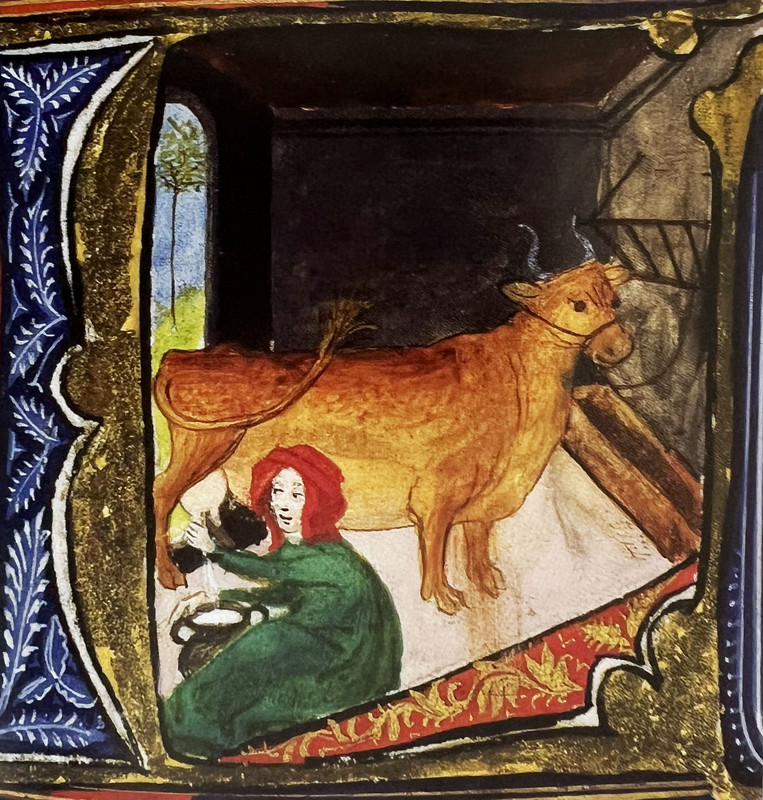
The xxiii + 413 page book is beautifully bound in red cloth, printed on the cover in cream and gilt with medieval vignettes showing tasks of daily living. The book is translated by Barbara Bray, there is a preface by the author and an unattributed nine page introduction.
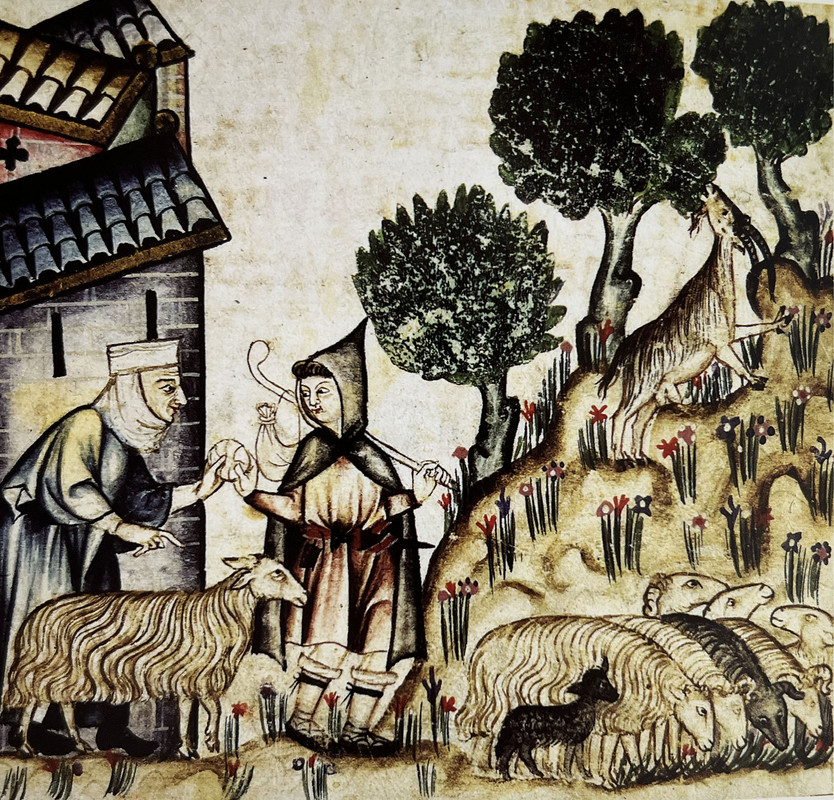
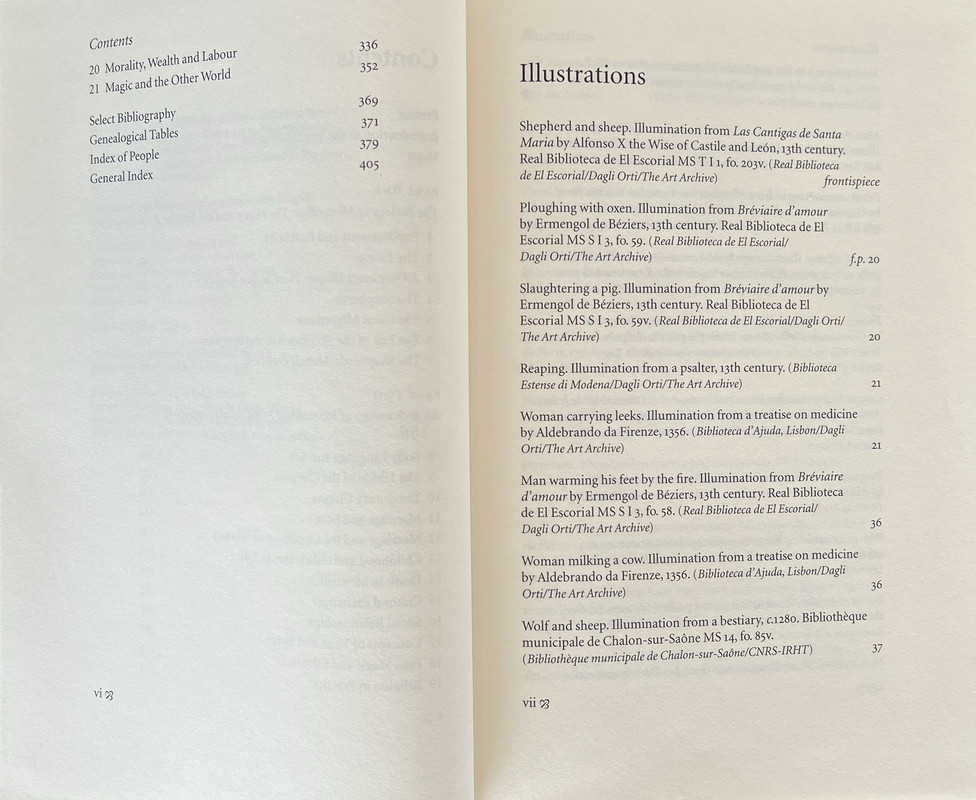
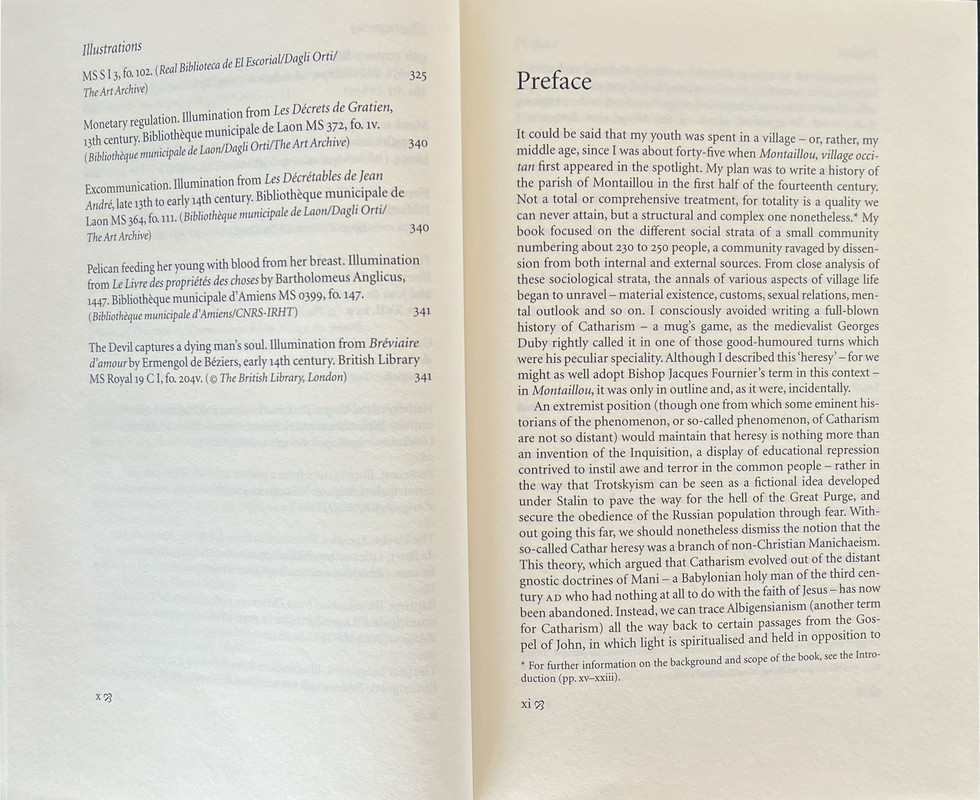
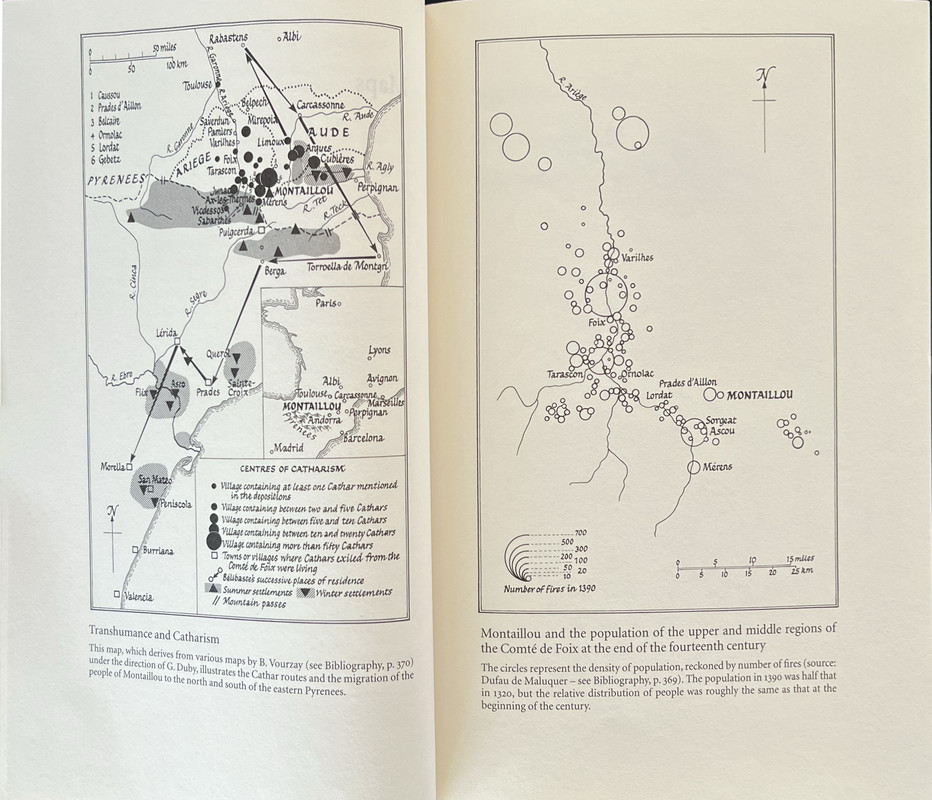
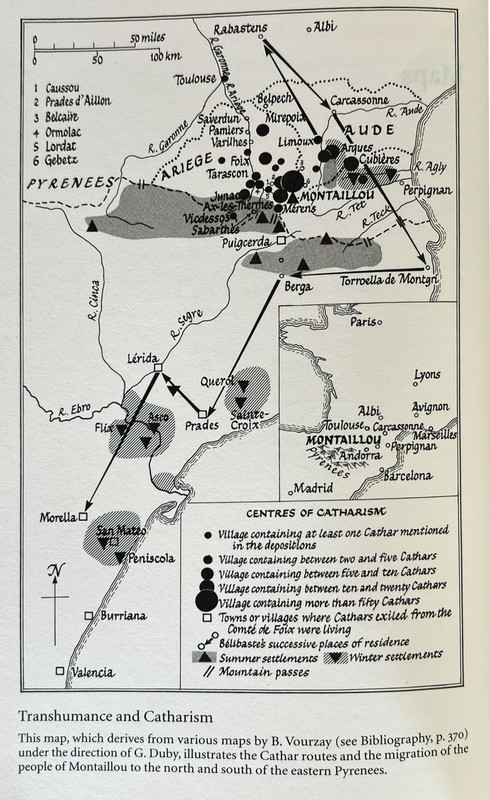
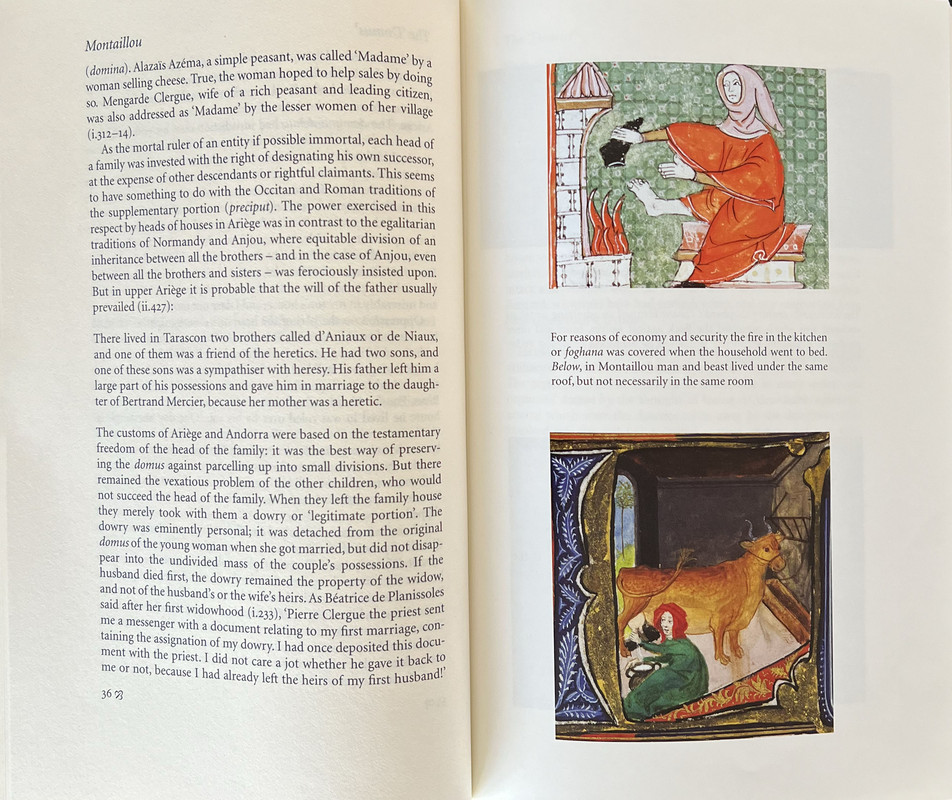
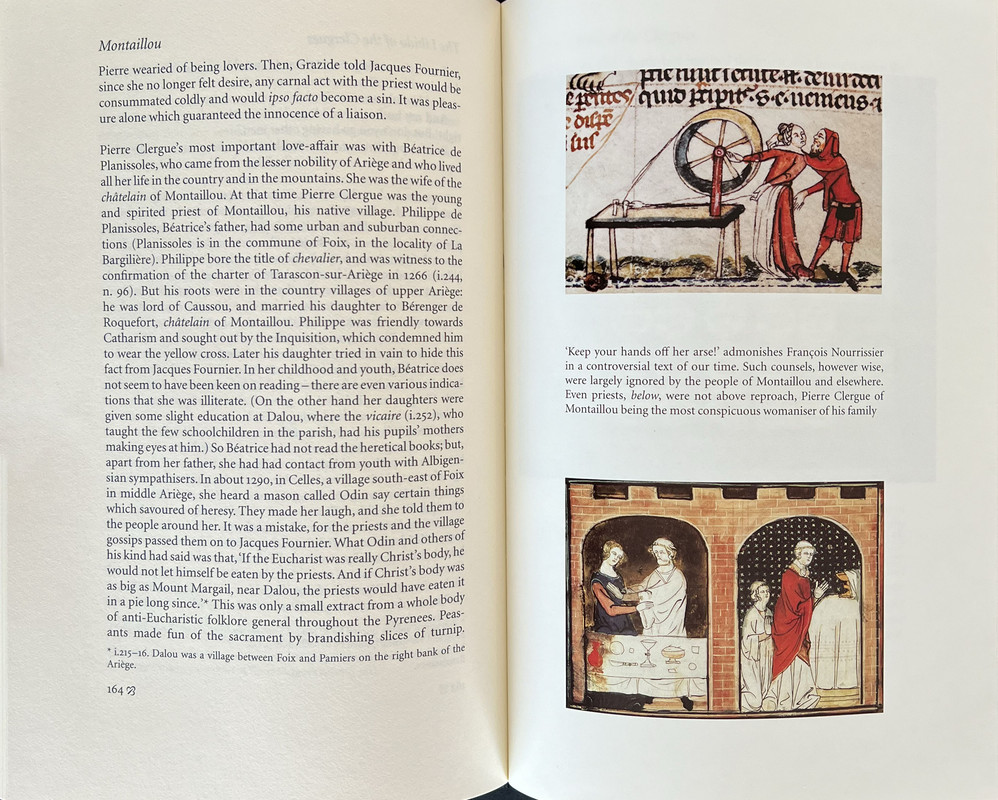
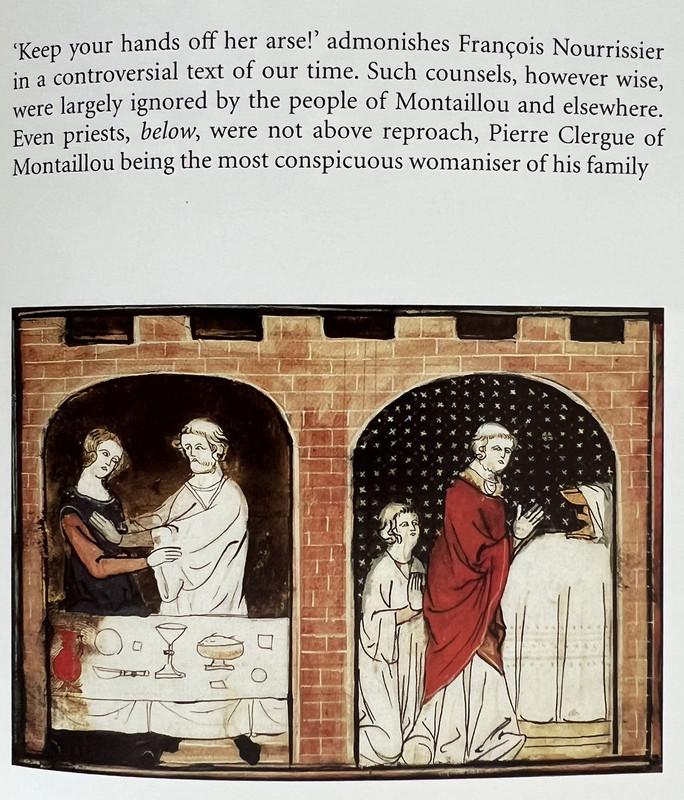
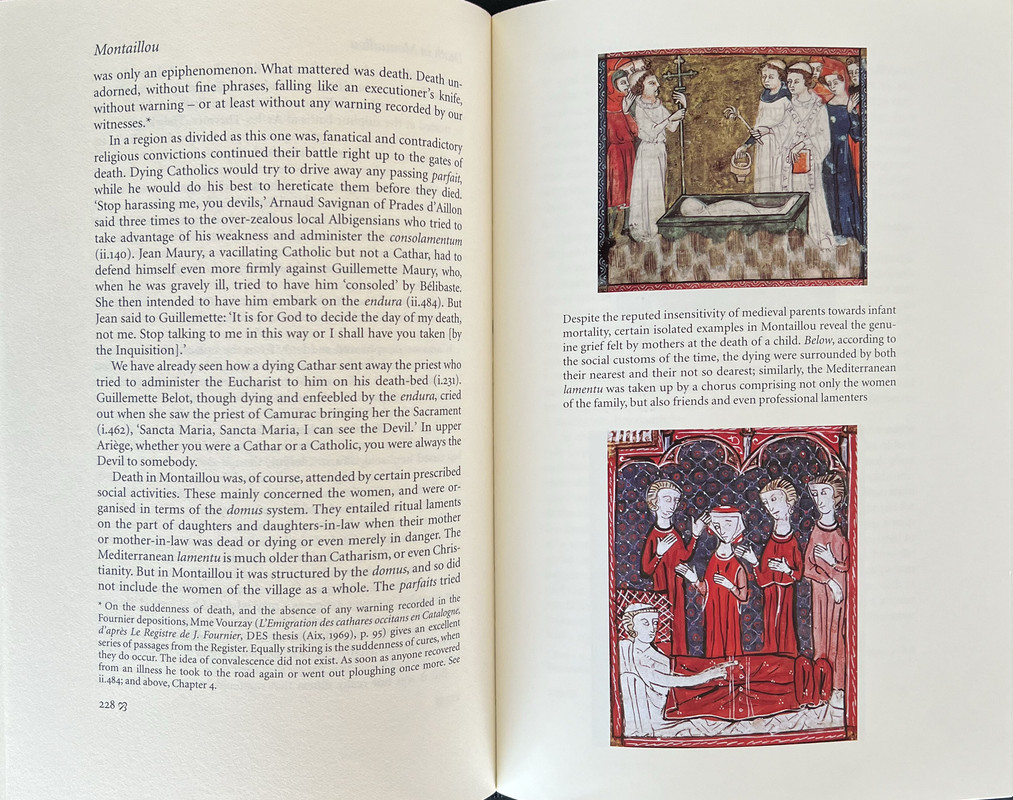
Two monochrome maps show the location of Montaillou (West of Perpignan and South of Carcasonne in the foothills of the Pyrenees) and population distribution of it and surrounding villages and there are two genealogical tables at the back of the book. The illustrations are extracted from contemporary hand-coloured breviaries and consist of a frontispiece and eight bound in glossy paper pages printed on both sides.
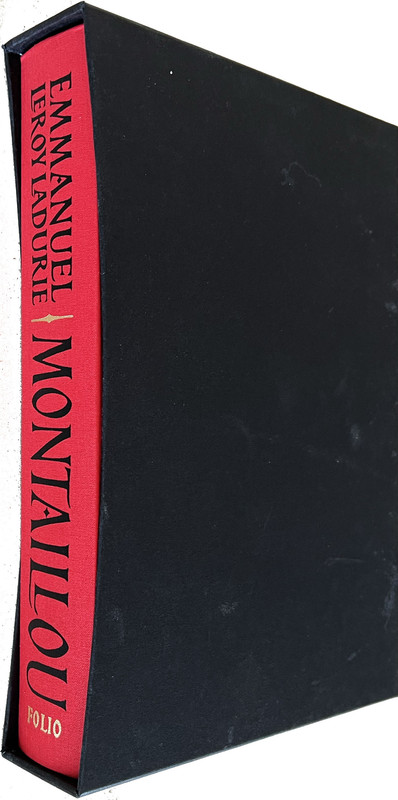
The endpapers are dark red, the page tops are stained red and the black slipcase measures 24.8x16.9cm.

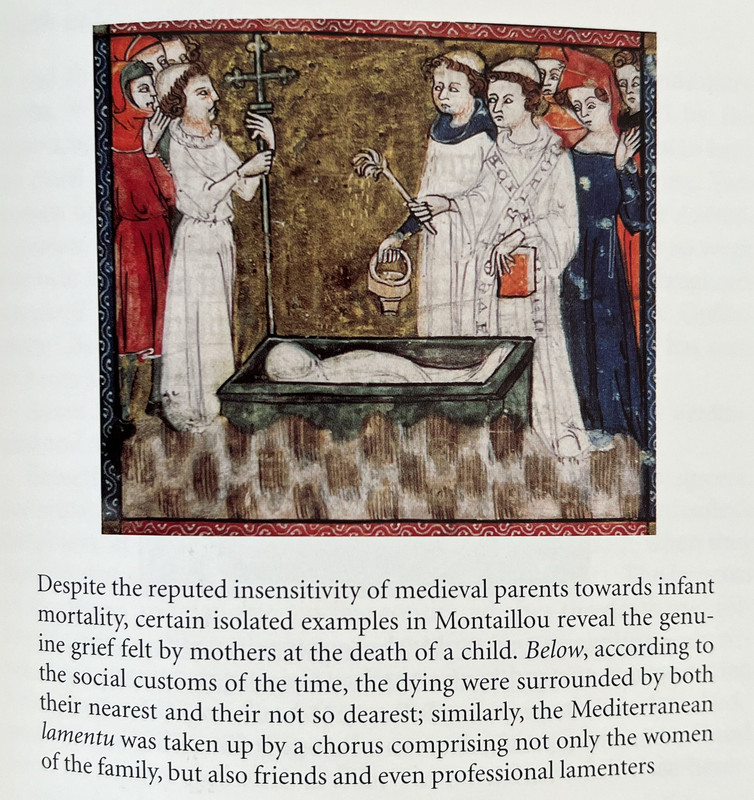
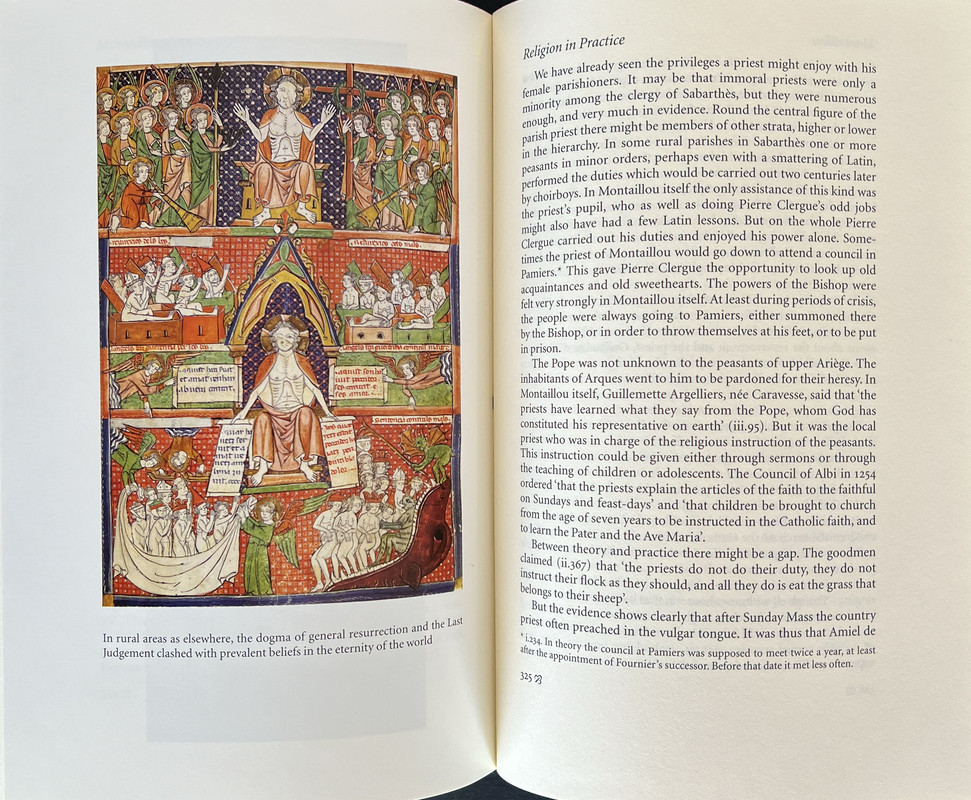
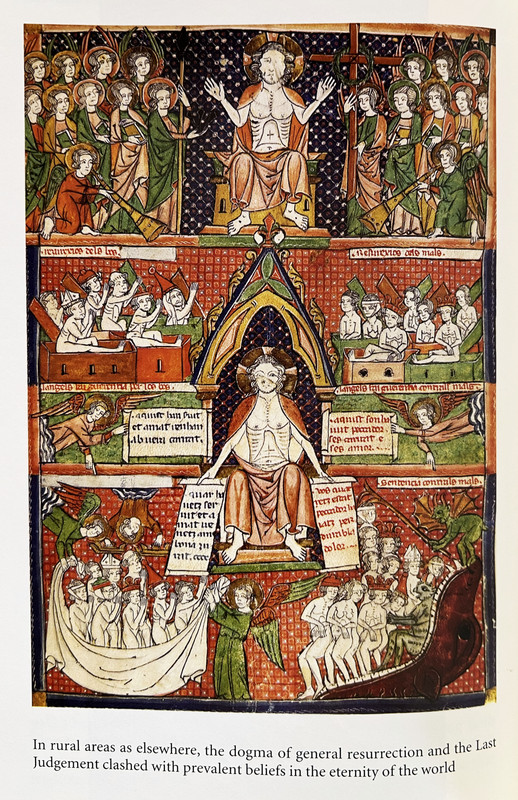
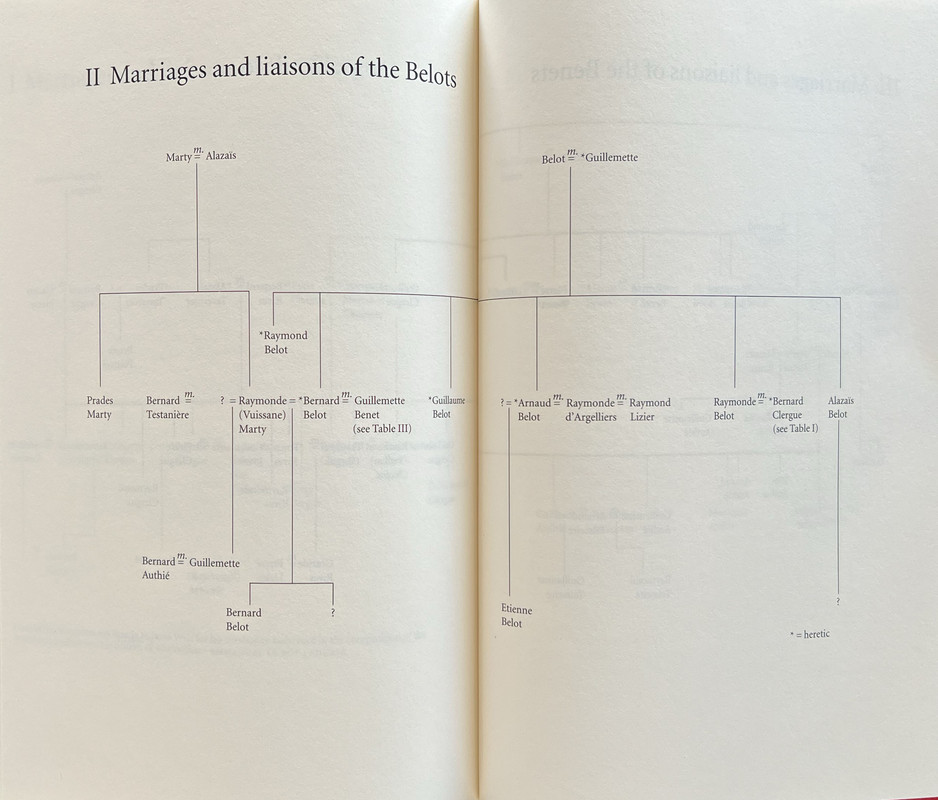
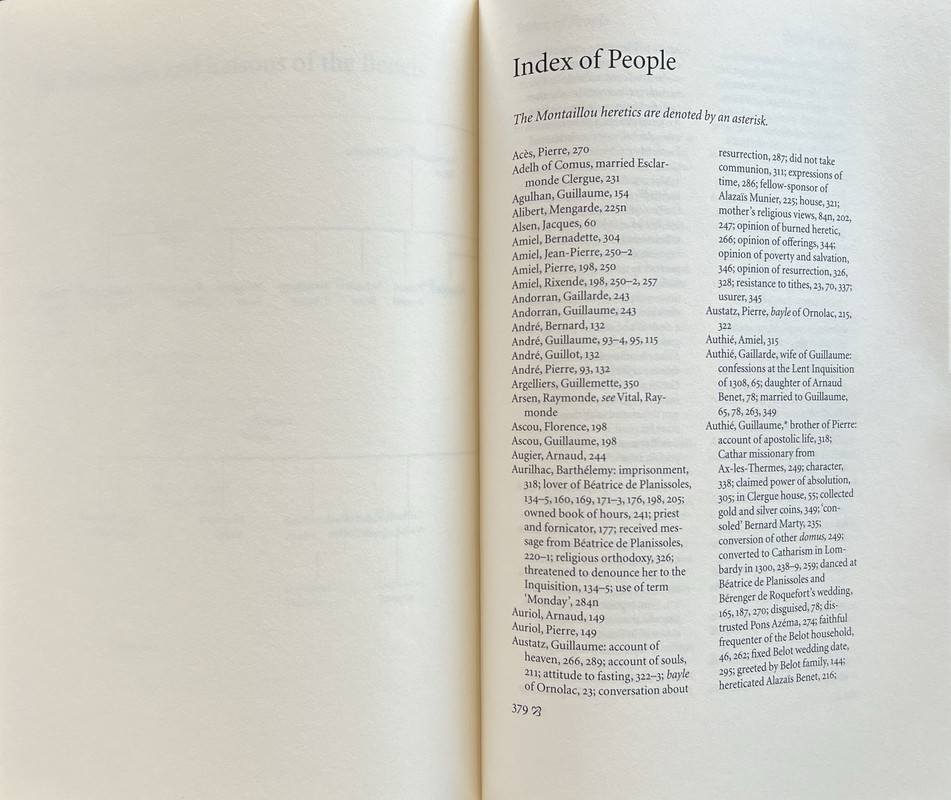
An index of the other illustrated reviews in the "Folio Archives" series can be viewed here.
Have you ever wondered what life was like in a tiny French village 700 years ago? Probably not, but reading this book gives you an amazingly detailed insight into life in the village of Montaillou between 1290 and 1340 (but mainly from 1300 to 1325).
The Cathars were a pseudo-Gnostic Christian sect that flourished in southern Europe for 200 years from the mid-12th. to the mid-14th. centuries. It was considered heretical by the Catholic Church and believers were subject to the inquisition. Thousands were burnt at the stake or tortured to death and the sect was eradicated.
Montaillou was a village with a significant number of Cathars, and the records of the inquisitor Bishop Jacques Fournier (who later became Pope Benedict XII) with regard to this village of about 200 to 250 people were extraordinarily detailed. These records have been dissected by the author to produce an amazing picture of daily life at this time.
No subject is taboo, and the book not only covers the expected details about the local lord and his family, but also details about the peasants, servants, shepherds and bastards in the village. Their homes, style of living, way of life, diet, farming methods, emigrations, marriages, deaths, births and even mental outlook was documented. But the interrogators did not stop there. The intimate details of consensual sexual liaisons, concubines, incest, pederasty (particularly by the priest), rape, wife beating, and homosexuality were also recorded.
There is a great deal of information in this book, and although interesting, I found myself getting bogged down in details as I read, so ended up skim reading several pages before a paragraph would catch my eye and lead to a more careful reading for a page or three.
The xxiii + 413 page book is beautifully bound in red cloth, printed on the cover in cream and gilt with medieval vignettes showing tasks of daily living. The book is translated by Barbara Bray, there is a preface by the author and an unattributed nine page introduction.
Two monochrome maps show the location of Montaillou (West of Perpignan and South of Carcasonne in the foothills of the Pyrenees) and population distribution of it and surrounding villages and there are two genealogical tables at the back of the book. The illustrations are extracted from contemporary hand-coloured breviaries and consist of a frontispiece and eight bound in glossy paper pages printed on both sides.
The endpapers are dark red, the page tops are stained red and the black slipcase measures 24.8x16.9cm.
An index of the other illustrated reviews in the "Folio Archives" series can be viewed here.
3affle
I had a house in Cathar country for twenty years, so perhaps I had just a little more tolerance for the detail of this account. For example, the people of Montaillou rarely washed, and I liked the image of them delousing each other on their flat roof tops in a neighbourly way. But a broader brush would have been welcome, as Warwick implies. The Cathars came to a terrible end, massacred in the Albigensian Crusade with quite unspeakable cruelty. One of the crusade leaders was Simon de Montfort, whose son of the same name is credited with the establishment of the English parliamentary system. A good history is by Jonathan Sumption, whose main legal career led to him becoming a Supreme Court judge: The Albigensian Crusade
4InVitrio
Latest hypothesis on the Cathars is that they were not heretics, but they were old school. I.e. when the Roman Catholic church reformed in the 11th century - things like banning priests from marrying - the Cathars said, no, actually, we're good as we are. And the "modernists" basically made stuff up to justify their genocide of people who had become a bit embarrassing to the rotten and corrupt Roman elites.

