1stretch
Tired of the goat...

Fiction:
Last Night at the Lobster by Stewart O'Nan ★★★
Letters to the Purple Satin Killer by Joshua Chaplinsky ★★★½
First Love by Rio Shimamoto ★★★½
Worst Case Scenario: A Novel by T.J. Newman ★★★★½
Into the Forest and All the Way Through by Cynthia Pelayo ★★★★½
Hysteria: Lolly & Lady Vanity by Ali Seay ★★★★½
Saving Noah by Lucinda Berry ★★★★
Satan’s Sweethearts by Marge Simon & Mary A. Turzillo ★★★★★
Hard Mountain Clay by C.W. Blackwell ★★★★
Cicada by Tanya Pell ★★★½
Gold Rush by Yu Miri ★★★★
Audition by Ryu Murakami ★★★½
Two-Step Devil by Jamie Quatro ★★★★½
We Have Always Lived in a Castle by Shirley Jackson ★★★
Narcissus by Adam Godfrey ★★★½
The Other Side of the Mountain by Michel Bernanos ★★★½
Psychic Teenage Bloodbath by Carl John Lee ★★½
Sympathy Tower Tokyo by Rie Qudan ★★★★★
Sacred Cesium Ground and Isa’s Deluge by Kimura Yusuke ★★½
Killer on the Road / The Babysitter Lives by Stephen Graham Jones ★★★★½
The Long Low Whistle by Laurel Hightower ★★★★★
Non-Fiction:
The Civil War: A Narrative: Volume 2: Fredericksburg to Meridian by Shelby Foote ★★★★½
The Wager by David Grann ★★★★
The Wars for Asia, 1911–1949 by S. C. M. Paine ★★★½
The Pseudoscience Wars: Immanuel Velikovsky and the Birth of the Modern Fringe by Michael D. Gordin ★★★½
The Edifice Complex by Deyan Sudjic ★★★½
A Mousetrap for Darwin by Michael Behe ★★
Faith, Reason, & Earth History by Leonard Brand ★★
Red Earth, White Lies by Vine Deloria Jr. ★½
Typography for Lawyers by Matthew Butterick ★★★
Pyramid by David Macauley ★★★
Great Geological Controversies by A. Hallam ★★½
American Scary by Jeremy Dauber ★★★★
On Abolishing Political Parties by Simone Weil ★★★★
The Demon of Unrest by Erik Larson ★★★★
In the Eye of the Wild by Nastassja Martin ★★★
Why I Love Horror by Becky Siegel Spratford ★★★★½
Other:
Grave of the Fireflies by Akiyuki Nosaka ★★★★½
Garden by Usamaru Furuya ★★★
Blood on the Tracks 10 by Shuzo Oshimi ★★★½
Blood on the Tracks 11 by Shuzo Oshimi ★★★
Locke & Key: Heaven and Earth by Joe Hill ★★★
The Devil's Portion by Benedict Jones ★★★½
The Blanks by Graddy Hendrix ★★★★½
The Indigo Room by Stephen Graham Jones ★★★½
Duel by Richard Matherson ★★★★
Strange Houses by Uketsu ★★★½
Kent State by Derf Backderf ★★★
Sandkings by George R.R. Martin ★★★
the princess saves herself in this one by Amanda Lovelace ★★★½
the witch doesn't burn in this one by Amanda Lovelace ★★★★
the mermaid's voice returns in this one by Amanda Lovelace ★★★½
A Guest in the House by Emily Carroll ★★½
Death of a Salesman by Arthur Miller ★★★★★
Blood on the Tracks 12 by Shuzo Oshimi ★★★½

Fiction:
Last Night at the Lobster by Stewart O'Nan ★★★
Letters to the Purple Satin Killer by Joshua Chaplinsky ★★★½
First Love by Rio Shimamoto ★★★½
Worst Case Scenario: A Novel by T.J. Newman ★★★★½
Into the Forest and All the Way Through by Cynthia Pelayo ★★★★½
Hysteria: Lolly & Lady Vanity by Ali Seay ★★★★½
Saving Noah by Lucinda Berry ★★★★
Satan’s Sweethearts by Marge Simon & Mary A. Turzillo ★★★★★
Hard Mountain Clay by C.W. Blackwell ★★★★
Cicada by Tanya Pell ★★★½
Gold Rush by Yu Miri ★★★★
Audition by Ryu Murakami ★★★½
Two-Step Devil by Jamie Quatro ★★★★½
We Have Always Lived in a Castle by Shirley Jackson ★★★
Narcissus by Adam Godfrey ★★★½
The Other Side of the Mountain by Michel Bernanos ★★★½
Psychic Teenage Bloodbath by Carl John Lee ★★½
Sympathy Tower Tokyo by Rie Qudan ★★★★★
Sacred Cesium Ground and Isa’s Deluge by Kimura Yusuke ★★½
Killer on the Road / The Babysitter Lives by Stephen Graham Jones ★★★★½
The Long Low Whistle by Laurel Hightower ★★★★★
Non-Fiction:
The Civil War: A Narrative: Volume 2: Fredericksburg to Meridian by Shelby Foote ★★★★½
The Wager by David Grann ★★★★
The Wars for Asia, 1911–1949 by S. C. M. Paine ★★★½
The Pseudoscience Wars: Immanuel Velikovsky and the Birth of the Modern Fringe by Michael D. Gordin ★★★½
The Edifice Complex by Deyan Sudjic ★★★½
A Mousetrap for Darwin by Michael Behe ★★
Faith, Reason, & Earth History by Leonard Brand ★★
Red Earth, White Lies by Vine Deloria Jr. ★½
Typography for Lawyers by Matthew Butterick ★★★
Pyramid by David Macauley ★★★
Great Geological Controversies by A. Hallam ★★½
American Scary by Jeremy Dauber ★★★★
On Abolishing Political Parties by Simone Weil ★★★★
The Demon of Unrest by Erik Larson ★★★★
In the Eye of the Wild by Nastassja Martin ★★★
Why I Love Horror by Becky Siegel Spratford ★★★★½
Other:
Grave of the Fireflies by Akiyuki Nosaka ★★★★½
Garden by Usamaru Furuya ★★★
Blood on the Tracks 10 by Shuzo Oshimi ★★★½
Blood on the Tracks 11 by Shuzo Oshimi ★★★
Locke & Key: Heaven and Earth by Joe Hill ★★★
The Devil's Portion by Benedict Jones ★★★½
The Blanks by Graddy Hendrix ★★★★½
The Indigo Room by Stephen Graham Jones ★★★½
Duel by Richard Matherson ★★★★
Strange Houses by Uketsu ★★★½
Kent State by Derf Backderf ★★★
Sandkings by George R.R. Martin ★★★
the princess saves herself in this one by Amanda Lovelace ★★★½
the witch doesn't burn in this one by Amanda Lovelace ★★★★
the mermaid's voice returns in this one by Amanda Lovelace ★★★½
A Guest in the House by Emily Carroll ★★½
Death of a Salesman by Arthur Miller ★★★★★
Blood on the Tracks 12 by Shuzo Oshimi ★★★½
4stretch
>3 ursula: Yeah it's just a bit of fun. Books in the Freezer podcast put it together, I use it more like a bingo card than a challenge, which gets me to read or think about reading things outside of slashers. Also, good for using as a broken html tag to hide things under.
7stretch
>5 karspeak: Thanks and happy to have you falling along.
>6 Nickelini: Thanks, the anthologies might be difficult I haven't really read an anthology in years. The challenge is a good for this kind of thing, even if I don't achieve it I will explore a ton of different books in different areas. All in the pursuit of reading better books as opposed to the same old but comforting rut.
>6 Nickelini: Thanks, the anthologies might be difficult I haven't really read an anthology in years. The challenge is a good for this kind of thing, even if I don't achieve it I will explore a ton of different books in different areas. All in the pursuit of reading better books as opposed to the same old but comforting rut.
9stretch
>8 rasdhar: Thanks, hope to pick up something along the way!
10stretch
The Civil War: A Narrative: Volume 2: Fredericksburg to Meridian by Shelby Foote

Shelby Foote’s The Civil War: A Narrative, Volume 2 continues his epic trilogy with a detailed exploration of the pivotal middle years of the American Civil War, from Fredericksburg in late 1862 to the aftermath of Gettysburg in mid-1863. Like the previous iteration this volume covers key battles, military strategies, and the political maneuvering that shaped the conflict, as well as the personal stories of those involved. Foote’s signature narrative style and mastery of storytelling make the book a remarkable achievement, though it is not without controversy, particularly regarding the lens through which he interprets history.
Foote’s writing is characterized by its vivid descriptions, fluid prose, and attention to the drama of human conflict. Reading less like a conventional history book and more like an epic novel, blending meticulous research with a novelist’s eye for detail. Foote weaves together the perspectives of generals, soldiers, and civilians, bringing to life the major battles of Chancellorsville, Vicksburg, Gettysburg, and Chickamauga. The real strength of Foote’s storytelling lies in his ability to capture the complexities of the war; the strategic brilliance, the tragic miscalculations, and the sheer brutality of battle.
However, one of the most frequently criticized aspects of Foote’s work is his perceived Southern bias. While Foote himself denied being a “Lost Cause” apologist, his admiration for Confederate leaders, particularly Robert E. Lee, Nathan Bedford Forest and Stonewall Jackson, is evident throughout the narrative. He often portrays Lee as a tragic hero, a figure of almost mythic stature whose decisions are framed in terms of noble intent, even when they result in devastating consequences. Also, while he acknowledges slavery’s role in the conflict, it often feels secondary to his focus on the valor and sacrifice of Confederate soldiers and leaders. This perspective can leave readers with the impression that the Confederacy’s cause was primarily about states’ rights or honor. Moreover, Foote’s narrative occasionally downplays or omits the systemic racism and violence that underpinned the Confederate cause, contributing to a romanticized view of the South. His sympathetic portrayal of Confederate figures and his criticism of Union generals can sometimes feel uneven, as if he holds the Union to a higher standard.
The Civil War: A Narrative, is a monumental work that combines masterful storytelling with a deep knowledge of Civil War history. It offers readers a richly detailed and compelling account of some of the war’s most critical moments. For those willing to engage with Foote’s work critically, this volume remains a valuable resource for understanding the Civil War, its battles, and its characters. However, readers should also seek out other perspectives to gain a more comprehensive and nuanced view of this pivotal period in American history.
★★★★½
Connective Tissue: The Civil War: A Narrative

Shelby Foote’s The Civil War: A Narrative, Volume 2 continues his epic trilogy with a detailed exploration of the pivotal middle years of the American Civil War, from Fredericksburg in late 1862 to the aftermath of Gettysburg in mid-1863. Like the previous iteration this volume covers key battles, military strategies, and the political maneuvering that shaped the conflict, as well as the personal stories of those involved. Foote’s signature narrative style and mastery of storytelling make the book a remarkable achievement, though it is not without controversy, particularly regarding the lens through which he interprets history.
Foote’s writing is characterized by its vivid descriptions, fluid prose, and attention to the drama of human conflict. Reading less like a conventional history book and more like an epic novel, blending meticulous research with a novelist’s eye for detail. Foote weaves together the perspectives of generals, soldiers, and civilians, bringing to life the major battles of Chancellorsville, Vicksburg, Gettysburg, and Chickamauga. The real strength of Foote’s storytelling lies in his ability to capture the complexities of the war; the strategic brilliance, the tragic miscalculations, and the sheer brutality of battle.
However, one of the most frequently criticized aspects of Foote’s work is his perceived Southern bias. While Foote himself denied being a “Lost Cause” apologist, his admiration for Confederate leaders, particularly Robert E. Lee, Nathan Bedford Forest and Stonewall Jackson, is evident throughout the narrative. He often portrays Lee as a tragic hero, a figure of almost mythic stature whose decisions are framed in terms of noble intent, even when they result in devastating consequences. Also, while he acknowledges slavery’s role in the conflict, it often feels secondary to his focus on the valor and sacrifice of Confederate soldiers and leaders. This perspective can leave readers with the impression that the Confederacy’s cause was primarily about states’ rights or honor. Moreover, Foote’s narrative occasionally downplays or omits the systemic racism and violence that underpinned the Confederate cause, contributing to a romanticized view of the South. His sympathetic portrayal of Confederate figures and his criticism of Union generals can sometimes feel uneven, as if he holds the Union to a higher standard.
The Civil War: A Narrative, is a monumental work that combines masterful storytelling with a deep knowledge of Civil War history. It offers readers a richly detailed and compelling account of some of the war’s most critical moments. For those willing to engage with Foote’s work critically, this volume remains a valuable resource for understanding the Civil War, its battles, and its characters. However, readers should also seek out other perspectives to gain a more comprehensive and nuanced view of this pivotal period in American history.
★★★★½
Connective Tissue: The Civil War: A Narrative
11dchaikin
I haven’t read Foote, but I have read about him and about both aspects you capture. I would like to read his take on Shiloh.
12stretch
>11 dchaikin: These are my favorite so I think his account of Shiloh is worth the read in volume 1. He did write a fictional book on Shiloh that predates the narrative, but I have not read that yet. To be fair to Foote in the first volume Foote does not shy away from the underpinnings of succession, the racist speeches and slavery are not hidden, they just slowly fade away as he tells the story of the war. Part of that is a matter of the narrow focus of telling the chronological events of the course of the fighting. The generals and presidents didn't concern themselves too much with the civilian aspects of the country. This is perhaps a greater flaw in telling the "story" of the war to neglect the homefront, but with large battles and most of the men off fighting them, there isn't much of a homefront to tell about. No one really does a good job of this balance. The Federation for Lee and Jackson and even Forest also isn't all that unusual, Catton and McPerhson are guilty of this to varying degrees. I think it's that they are unwavering in principle and are never really dragged through the ugly backroom politics of the North. Newspapers hardly have a negative word to say and mostly they steer clear of controversial topics their whole careers. They are unsullied so they are clean to project whatever you want on them even if they are guilty of the very same butchery as the generals of the Union.
13dchaikin
Thanks K. I recently read The Unvanquished - Faulkner’s easiest book, a collection of stories about the Mississippi home front - Faulkner style. So when you mention that, I think of Faulkner’s excellent, if imperfect take.
I imagine Foote (and many other authors) understood that war has its own drama. The bigger picture is not only less dramatic, but way more complicated and much more driven by author interest and perspective, instead of the, in hindsight, natural story of war that have nice beginnings and endings.
I imagine Foote (and many other authors) understood that war has its own drama. The bigger picture is not only less dramatic, but way more complicated and much more driven by author interest and perspective, instead of the, in hindsight, natural story of war that have nice beginnings and endings.
14stretch
Grave of the Fireflies by Akiyuki Nosaka
Translated by James R. Abrams
A heart-wrenching and deeply personal exploration of loss, survival, and the devastating human toll of war. Set in Japan during the final months of World War II, the story follows the tragic lives of Seita, a teenage boy, and his younger sister, Setsuko, as they struggle to survive in the aftermath of relentless air raids and societal collapse. Inspired by his own experiences during the war, Nosaka captures the unflinching realities of hunger, desperation, and isolation. Nosaka avoids romanticizing the siblings’ plight, instead portraying their slow descent into despair with harrowing precision. The narrative is unrelenting in its portrayal of human suffering, but it also highlights moments of tenderness and love between Seita and Setsuko.
★★★★½
Translated by James R. Abrams
A heart-wrenching and deeply personal exploration of loss, survival, and the devastating human toll of war. Set in Japan during the final months of World War II, the story follows the tragic lives of Seita, a teenage boy, and his younger sister, Setsuko, as they struggle to survive in the aftermath of relentless air raids and societal collapse. Inspired by his own experiences during the war, Nosaka captures the unflinching realities of hunger, desperation, and isolation. Nosaka avoids romanticizing the siblings’ plight, instead portraying their slow descent into despair with harrowing precision. The narrative is unrelenting in its portrayal of human suffering, but it also highlights moments of tenderness and love between Seita and Setsuko.
★★★★½
16raton-liseur
>14 stretch: Oh, I remember watching the anime, and then latter reading the book, when I found out the anime was based on a book. I love the anime and felt it was more intense than the book. I'd like to re-watch it, but it is so intense that I need to be in the right mood.
And I think I should re-read the book too.
Thanks for the review of such a great book!
And I think I should re-read the book too.
Thanks for the review of such a great book!
17stretch
>15 dchaikin: Thanks!
>16 raton-liseur: I am sure the anime drawn out would be even more intense drawn out. I may have to look it up when I get the chance. I didn't know about the anime until I got to the translators note. Certainly full of incredibly sad scenes that watching be played out would be hard to watch.
>16 raton-liseur: I am sure the anime drawn out would be even more intense drawn out. I may have to look it up when I get the chance. I didn't know about the anime until I got to the translators note. Certainly full of incredibly sad scenes that watching be played out would be hard to watch.
18dchaikin
>16 raton-liseur: >17 stretch: it’s on Netflix. I might watch that anime
ETA - my daughter tells me she’s already seen it. Said it’s amazing but really sad.
ETA - my daughter tells me she’s already seen it. Said it’s amazing but really sad.
19raton-liseur
>18 dchaikin: I'm one of those dinosaurs who have never watched Netflix... I have the DVD...
But I've not watched it yet with P'tit Raton or M'ni Raton. Will do, eventually.
But I've not watched it yet with P'tit Raton or M'ni Raton. Will do, eventually.
20LolaWalser
>14 stretch:, >19 raton-liseur:
I haven't read the book, I have seen the film. It's hands down the saddest, most heart-wrenching story I have ever seen or read. What makes it so powerful and awful is that things are happening to children, who have no means to understand or affect the larger events, but are just trying to survive moment to moment. The adults show them little attention and less care and they live only through the bond of mutual love, the older brother taking care of his little sister the best he can for as long as he can.
I wouldn't show it to very young or hypersensitive children. I don't joke when I say it could make someone suicidal.
I haven't read the book, I have seen the film. It's hands down the saddest, most heart-wrenching story I have ever seen or read. What makes it so powerful and awful is that things are happening to children, who have no means to understand or affect the larger events, but are just trying to survive moment to moment. The adults show them little attention and less care and they live only through the bond of mutual love, the older brother taking care of his little sister the best he can for as long as he can.
I wouldn't show it to very young or hypersensitive children. I don't joke when I say it could make someone suicidal.
21dchaikin
I just finished watching the anime with my daughter. Beautifully done. But… I don’t have words for how i feel. Yes, Lola, painfully sad
23stretch
>20 LolaWalser: Damn... that made the story much more visceral. Very well done and made the fireflies motifs work really well. Hollows you out for sure.
24raton-liseur
>20 LolaWalser: I agree with you, it is not an anime for kids. My children are almost adult now, but I'd still prefer watch it with them rather than letting them watch it on their own.
>21 dchaikin:, >22 labfs39:, >23 stretch: I'm glad to see so many people did watch it and got so much out of it. Now, I feel I might be ready to watch it again.
>21 dchaikin:, >22 labfs39:, >23 stretch: I'm glad to see so many people did watch it and got so much out of it. Now, I feel I might be ready to watch it again.
25ursula
I also didn't realize the Grave of the Fireflies anime was based on a book. I always tell people the anime will destroy you. It's worth it, but oof.
26bragan
>16 raton-liseur: Grave of the Fireflies may be one of the best movies I've ever seen, but I am absolutely, positively never watching it again. I think it might kill me. I kept hearing about how sad it was, so I thought I was prepared for it. I was not.
27dchaikin
>26 bragan: Sounds about right
28cindydavid4
>14 stretch: not sure where my post went, But a friend turned me on to this. Beautifully filmed but broke my heart. plan to have kleenex available
29cindydavid4
>22 labfs39: i didnt either; I can imagine the anime would be more powerfu but Ill need to read it first
30stretch
>26 bragan:, >27 dchaikin:, and >28 cindydavid4: Even with my jaded view there is something about that anime that makes the images inescabable. It'll be impossible to separate the film from the story. Either adaptation great on their own, but together they are perfect combination of sadness and sorrow to imprint on the mind forever.
31stretch
The Last Night at the Lobster by Stewart O'Nan

A quiet, poignant portrait of work, dignity, and the small dramas of ordinary lives. Set over the course of a single, snowy evening in New Britain, Connecticut, the novella follows Manny DeLeon, the manager of a soon-to-be-shuttered Red Lobster. As the restaurant’s final day unfolds, O’Nan captures the melancholic rhythm of lives lived by his co-workers, infused with deep humanity if not a bittersweet inevitability.
For me this started in a weird place emotionally, continued to dwell in that weird place, and concluded in the same weird place. Nothing ever really comes to a satisfying conclusion. Just threads of stories left incomplete.
★★★
Connective Tissue: Severance

A quiet, poignant portrait of work, dignity, and the small dramas of ordinary lives. Set over the course of a single, snowy evening in New Britain, Connecticut, the novella follows Manny DeLeon, the manager of a soon-to-be-shuttered Red Lobster. As the restaurant’s final day unfolds, O’Nan captures the melancholic rhythm of lives lived by his co-workers, infused with deep humanity if not a bittersweet inevitability.
For me this started in a weird place emotionally, continued to dwell in that weird place, and concluded in the same weird place. Nothing ever really comes to a satisfying conclusion. Just threads of stories left incomplete.
★★★
Connective Tissue: Severance
33Ameise1
>31 stretch: I read this book eight years ago. I liked it a little better than you did.
My thoughts of this book:
Here the feelings and memory of Manny are told. He is the manager of the Lobster. It is the last day the restaurant is open. Some employees have a new job others are looking. Manny has hired his employees for various reasons. The harmony among themselves is not always the best and animosities escalate on this last day.
I liked the story. It is subtly written and easy to read.
My thoughts of this book:
Here the feelings and memory of Manny are told. He is the manager of the Lobster. It is the last day the restaurant is open. Some employees have a new job others are looking. Manny has hired his employees for various reasons. The harmony among themselves is not always the best and animosities escalate on this last day.
I liked the story. It is subtly written and easy to read.
34stretch
Letters to the Purple Satin Killer by Joshua Chaplinsky
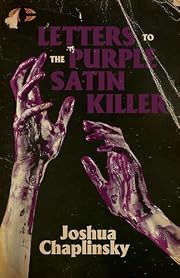
Through a series of letters crafts a disturbing portrait of the fictional serial killer Jonas Williker, AKA the Purple Satin Killer as awaits his trail and eventual execution. Jonas has been convicted for the brutal murders of 23 women after leaving a torn piece of purple fabric on or inside the bodies of each of his victims launching him into the upper echelons of the most notions killers. The novel's structure is both innovative and impactful. By showcasing letters from an array of correspondents, including Williker's mother, an ex-girlfriend, a surviving victim, law enforcement officers, and fervent admirers, Chaplinsky delves into the complex psyche of individuals drawn to such a macabre individual as well as shape the person from the outside.
Presenting a mosaic of perspectives through personal correspondences, Chaplinsky challenges readers to reflect on the ethical implications of society's morbid curiosity and the media's role in glorifying violent criminals. Even if it falls into cliche from time to time, the novel is worth the read for the twist on a the typical portrait of true crime and its perpetrators.
★★★½
Connective Tissue: Penance
Through a series of letters crafts a disturbing portrait of the fictional serial killer Jonas Williker, AKA the Purple Satin Killer as awaits his trail and eventual execution. Jonas has been convicted for the brutal murders of 23 women after leaving a torn piece of purple fabric on or inside the bodies of each of his victims launching him into the upper echelons of the most notions killers. The novel's structure is both innovative and impactful. By showcasing letters from an array of correspondents, including Williker's mother, an ex-girlfriend, a surviving victim, law enforcement officers, and fervent admirers, Chaplinsky delves into the complex psyche of individuals drawn to such a macabre individual as well as shape the person from the outside.
Presenting a mosaic of perspectives through personal correspondences, Chaplinsky challenges readers to reflect on the ethical implications of society's morbid curiosity and the media's role in glorifying violent criminals. Even if it falls into cliche from time to time, the novel is worth the read for the twist on a the typical portrait of true crime and its perpetrators.
★★★½
Connective Tissue: Penance
35stretch
The Wager by David Grann

The Wager chronicles the harrowing ordeal of the crew of the British warship HMS Wager, part of a squadron pursuing Spanish treasure during the War of Jenkins' Ear. After the shipwrecks on a desolate island off the coast of Patagonia, what unfolds is a fascinating tale of survival, mutiny, and betrayal. Grann explores the psychological toll of isolation, the moral ambiguities of leadership, and the lengths humans will go to endure.
The story doesn’t end on the island. Grann also delves into the aftermath: competing testimonies during a British court-martial, as survivors accuse one another of mutiny and murder. This legal and moral drama lends the narrative a complex, layered quality, raising questions about truth, justice, and empire.
★★★★
Coneective Tissue: The Devil in the White City

The Wager chronicles the harrowing ordeal of the crew of the British warship HMS Wager, part of a squadron pursuing Spanish treasure during the War of Jenkins' Ear. After the shipwrecks on a desolate island off the coast of Patagonia, what unfolds is a fascinating tale of survival, mutiny, and betrayal. Grann explores the psychological toll of isolation, the moral ambiguities of leadership, and the lengths humans will go to endure.
The story doesn’t end on the island. Grann also delves into the aftermath: competing testimonies during a British court-martial, as survivors accuse one another of mutiny and murder. This legal and moral drama lends the narrative a complex, layered quality, raising questions about truth, justice, and empire.
★★★★
Coneective Tissue: The Devil in the White City
36arubabookwoman
>35 stretch: That was a good one. Grann writes some good narrative nonfiction. I also liked his The Lost City of Z quite a lot.
37SassyLassy
>35 stretch: Love those kind of books. Will look for it for my Ahoy collection.
38dchaikin
>35 stretch: Sounds like a tough rescue. Interesting!
39ursula
>35 stretch: I liked this one a lot too.
40stretch
First Love by Rio Shimamoto
Translated by Louise Heal Kawai
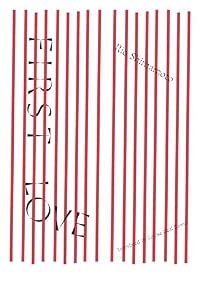
Rio Shimamoto’s First Love is an intriguing psychological thriller that explores obsession, memory, and the complexities of human relationships. The novel follows a psychologist investigating the case of a young woman accused of murdering her father, weaving together a slow-burning narrative that blurs the lines between truth and perception.
Shimamoto’s prose is understated, creating an atmosphere of quiet tension that keeps the reader engaged. The psychological depth of the protagonist and the accused is one of the book’s strengths, as their interactions reveal layers of trauma and emotional manipulation. However, the novel’s pacing can feel sluggish at times, with certain sections meandering. Some plot twists feel predictable, and the resolution, while thought-provoking, may leave readers wanting more depth or closure. Still, for fans of slow-burning thrillers and character-driven mysteries, it’s a worthwhile read.
★★★½
Connective Tissue: Penance
Translated by Louise Heal Kawai
Rio Shimamoto’s First Love is an intriguing psychological thriller that explores obsession, memory, and the complexities of human relationships. The novel follows a psychologist investigating the case of a young woman accused of murdering her father, weaving together a slow-burning narrative that blurs the lines between truth and perception.
Shimamoto’s prose is understated, creating an atmosphere of quiet tension that keeps the reader engaged. The psychological depth of the protagonist and the accused is one of the book’s strengths, as their interactions reveal layers of trauma and emotional manipulation. However, the novel’s pacing can feel sluggish at times, with certain sections meandering. Some plot twists feel predictable, and the resolution, while thought-provoking, may leave readers wanting more depth or closure. Still, for fans of slow-burning thrillers and character-driven mysteries, it’s a worthwhile read.
★★★½
Connective Tissue: Penance
41kjuliff
>40 stretch: Looks like something I’d read but it’s not available in audio. Great review though.
42stretch
The Wars for Asia, 1911–1949 by S. C. M. Paine
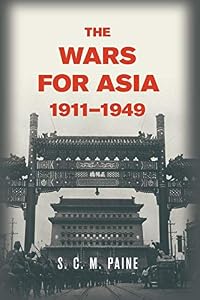
The Wars for Asia, 1911–1949 is a deeply researched analysis of the interconnected conflicts that shaped modern East Asia. Paine’s framing of the period as a series of overlapping wars—local, regional, and global—to untangle the chaotic and often misunderstood history of China, Japan, and broader regional dynamics. Paine argues that Japan's actions during this period should be understood as interconnected struggles for dominance between competing ideological and national forces. The book’s strength lies in its meticulous use of primary and secondary sources, providing readers with a well-documented and thought-provoking analysis of the period’s geopolitical complexities. The depth and perspective offer important insights into a little talked about period in the context of the greater conflicts on the early 20th century.
While the book succeeds in providing a broad historical synthesis, its structure and execution occasionally undermine its effectiveness. At times, it feels more like a collection of essays than a cohesive narrative. Certain sections shift in tone and repetition rather than reinforcing the book’s central themes, some chapters reintroduce ideas and information in a way that feels redundant rather than illuminating.
★★★½
Connective Tissue: Curse on This Country
The Wars for Asia, 1911–1949 is a deeply researched analysis of the interconnected conflicts that shaped modern East Asia. Paine’s framing of the period as a series of overlapping wars—local, regional, and global—to untangle the chaotic and often misunderstood history of China, Japan, and broader regional dynamics. Paine argues that Japan's actions during this period should be understood as interconnected struggles for dominance between competing ideological and national forces. The book’s strength lies in its meticulous use of primary and secondary sources, providing readers with a well-documented and thought-provoking analysis of the period’s geopolitical complexities. The depth and perspective offer important insights into a little talked about period in the context of the greater conflicts on the early 20th century.
While the book succeeds in providing a broad historical synthesis, its structure and execution occasionally undermine its effectiveness. At times, it feels more like a collection of essays than a cohesive narrative. Certain sections shift in tone and repetition rather than reinforcing the book’s central themes, some chapters reintroduce ideas and information in a way that feels redundant rather than illuminating.
★★★½
Connective Tissue: Curse on This Country
44stretch
The Pseudoscience Wars: Immanuel Velikovsky and the Birth of the Modern Fringe by Michael D. Gordin
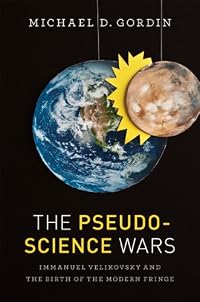
Gordin's somewhat dense exploration of Immanuel Velikovsky, the controversial author of Worlds in Collision, and his place in the broader debate over science and pseudoscience. Gordin, a historian of science, does an admirable job contextualizing Velikovsky’s ideas within Cold War-era anxieties, the shifting authority of scientific institutions, and the broader struggles between mainstream and fringe thinkers. One of the book’s strengths is its nuanced take on the boundary between science and pseudoscience. Gordin avoids easy dismissals, instead showing how Velikovsky’s theories—though debunked—were taken seriously. While Gordin effectively dismantles the myth that Velikovsky was a lone genius silenced by a scientific conspiracy, he sometimes gets bogged down in historiographical debates that may not interest general readers.
★★★½
Connective Tissue: Red Earth, White Lies
Gordin's somewhat dense exploration of Immanuel Velikovsky, the controversial author of Worlds in Collision, and his place in the broader debate over science and pseudoscience. Gordin, a historian of science, does an admirable job contextualizing Velikovsky’s ideas within Cold War-era anxieties, the shifting authority of scientific institutions, and the broader struggles between mainstream and fringe thinkers. One of the book’s strengths is its nuanced take on the boundary between science and pseudoscience. Gordin avoids easy dismissals, instead showing how Velikovsky’s theories—though debunked—were taken seriously. While Gordin effectively dismantles the myth that Velikovsky was a lone genius silenced by a scientific conspiracy, he sometimes gets bogged down in historiographical debates that may not interest general readers.
★★★½
Connective Tissue: Red Earth, White Lies
45dchaikin
>44 stretch: hmm. What time period? (Pre or post Birch Society? 1958)
46stretch
>45 dchaikin: Pre-Birch. The whole Velikovsky affair took place in 1950. Macmillian the notable science publishing house at the time took a lot of heat for string to publish his book then taking the deal away once the scientific community protested. He spent a lot time trying to get the scientific and historical academics on board with his theories. But never got much traction going those routes. Also, while it did sell quite well it never was picked up by conservative politics. It wasn't until the hippy generation in the late 60s and 70s and the rejection of all things mainstream, gave Velikovsky a wider audience with his particular form of catatrophism being taught in some universities. His is a curious case in the annals of creationism, not even the YECs Henry Morris and John Whitcomb jived with his theories even if some of the source material was similar.
47lisapeet
Catching up on your thread here, and just wanted to chime in that yeah, I saw the film of Grave of the Fireflies and it was just wrenching. But so well done—animation is really an amazing medium (it was one of my first loves, and once upon a time I wanted nothing more than to be an animator... didn't have the right work ethic at the time, though).
48stretch
The Edifice Complex by Deyan Sudjic
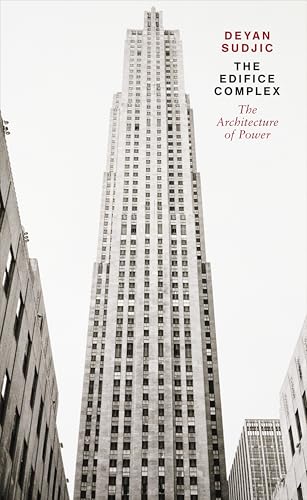
The Edifice Complex is both an informative and provocative exploration of architecture’s role in power, politics, and identity. The book offers a fascinating look at how buildings are more than just structures—they serve as monuments to ambition, ideology, and control. The author skillfully weaves together history, economics, and design, providing a compelling narrative that challenges conventional thinking about the built environment.
That said, the book occasionally gets bogged down in jargon, which at times obstructs its larger points. While the depth of analysis is impressive, the language can be unnecessarily dense, making certain sections harder to digest than they need to be.
★★★½
Connective Tissue: Stories in Stone
The Edifice Complex is both an informative and provocative exploration of architecture’s role in power, politics, and identity. The book offers a fascinating look at how buildings are more than just structures—they serve as monuments to ambition, ideology, and control. The author skillfully weaves together history, economics, and design, providing a compelling narrative that challenges conventional thinking about the built environment.
That said, the book occasionally gets bogged down in jargon, which at times obstructs its larger points. While the depth of analysis is impressive, the language can be unnecessarily dense, making certain sections harder to digest than they need to be.
★★★½
Connective Tissue: Stories in Stone
49stretch
Worst Case Scenario: A Novel by T. J. Newman
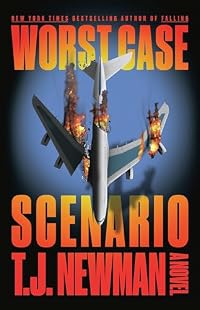
Worst Case Scenario is a high-octane, edge-of-your-seat thiller from the first page to the last. The novel begins with a harrowing incident—a commercial airliner crashes into a nuclear power plant in Waketa, Minnesota—setting off a catastrophic chain of events. Newman's narrative thrusts ordinary individuals into extraordinary circumstances, showcasing their courage and resilience. The relentless pacing and escalating tension make it an exhilarating read, reminiscent of blockbuster disaster films. It is the very best of the "and then it gets worst" creative writing prompt, even if each step along the path is predictable it is still a fun step.
★★★★½
Connective Tissue: Airframe, Midnight in Chernobyl
Worst Case Scenario is a high-octane, edge-of-your-seat thiller from the first page to the last. The novel begins with a harrowing incident—a commercial airliner crashes into a nuclear power plant in Waketa, Minnesota—setting off a catastrophic chain of events. Newman's narrative thrusts ordinary individuals into extraordinary circumstances, showcasing their courage and resilience. The relentless pacing and escalating tension make it an exhilarating read, reminiscent of blockbuster disaster films. It is the very best of the "and then it gets worst" creative writing prompt, even if each step along the path is predictable it is still a fun step.
★★★★½
Connective Tissue: Airframe, Midnight in Chernobyl
50dchaikin
Sounds fun. (It occurred to me to wonder what kind of president the author may have chosen, capable, clueless, or, well, you know, self-destructive)
51stretch
>50 dchaikin: Young and capable, gives West Wing Sam vibes in the story. A little too idealistic really but transparent, very different then the muppet we currently have.
52rasdhar
>49 stretch: Oh, this sounds like fun!
53stretch
Into the Forest and All the Way Through by Cynthia Pelayo
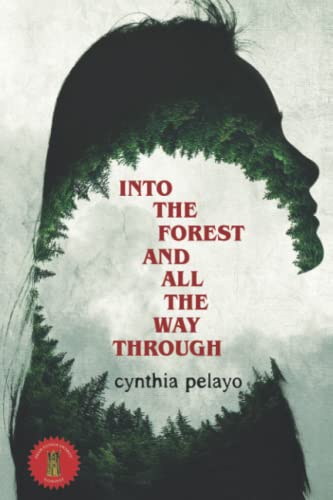
Into the Forest and All the Way Through is a poignant and powerful collection that transcends traditional poetry. Cynthia Pelayo's work is deeply effective in its mission to bring awareness and justice to the countless missing and murdered women and girls in the United States. This book is not just a collection of poems; it is a haunting exploration of true crime cases that society has often overlooked.
Pelayo's writing is raw and evocative, capturing the pain and sorrow of each story with a sensitivity that is both heartbreaking and necessary. Each poem serves as a memorial, a call to action, and a reminder of the lives lost. Shining a harsh light on the cycles of violence and grief, demanding that readers confront the reality of these tragedies. However, the poetry itself is not always polished or traditionally great. The rawness of the writing can sometimes feel unrefined, but this unpolished nature adds to the authenticity and urgency of the message. The imperfections in the poetry mirror the chaotic and often brutal realities of the cases being described.
★★★★½
Connective Tisse: Letters to the Purple Satin Killer
Into the Forest and All the Way Through is a poignant and powerful collection that transcends traditional poetry. Cynthia Pelayo's work is deeply effective in its mission to bring awareness and justice to the countless missing and murdered women and girls in the United States. This book is not just a collection of poems; it is a haunting exploration of true crime cases that society has often overlooked.
Pelayo's writing is raw and evocative, capturing the pain and sorrow of each story with a sensitivity that is both heartbreaking and necessary. Each poem serves as a memorial, a call to action, and a reminder of the lives lost. Shining a harsh light on the cycles of violence and grief, demanding that readers confront the reality of these tragedies. However, the poetry itself is not always polished or traditionally great. The rawness of the writing can sometimes feel unrefined, but this unpolished nature adds to the authenticity and urgency of the message. The imperfections in the poetry mirror the chaotic and often brutal realities of the cases being described.
★★★★½
Connective Tisse: Letters to the Purple Satin Killer
54stretch
Hysteria: Lolly & Lady Vanity by Ali Seay
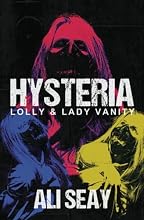
Hysteria: Lolly & Lady Vanity is a gripping collection of two darkly compelling stories that delve into the depths of human psyche and societal pressures.
Lolly: This story follows Lolly, who, after being diagnosed with the flu and taking antivirals, starts seeing disturbing halos around certain people's heads. These people turn out to be child predators. The narrative explores themes of justice and trauma, blending horror with a sense of moral reckoning.
Lady Vanity: The second tale centers on Frankie, who is grappling with the physical and mental challenges of perimenopause. Her discovery of a vintage electric knife, dubbed Lady Vanity, leads her down a path of self-improvement that quickly turns into a macabre obsession. This story is a chilling commentary on body image and the lengths one might go to achieve perceived perfection.
Both stories are rich with emotion, gore, and a sense of catharsis. Ali Seay masterfully combines horror with relatable struggles.
★★★★½
Connective Tissue: Go Down Hard, #Thighgap
Hysteria: Lolly & Lady Vanity is a gripping collection of two darkly compelling stories that delve into the depths of human psyche and societal pressures.
Lolly: This story follows Lolly, who, after being diagnosed with the flu and taking antivirals, starts seeing disturbing halos around certain people's heads. These people turn out to be child predators. The narrative explores themes of justice and trauma, blending horror with a sense of moral reckoning.
Lady Vanity: The second tale centers on Frankie, who is grappling with the physical and mental challenges of perimenopause. Her discovery of a vintage electric knife, dubbed Lady Vanity, leads her down a path of self-improvement that quickly turns into a macabre obsession. This story is a chilling commentary on body image and the lengths one might go to achieve perceived perfection.
Both stories are rich with emotion, gore, and a sense of catharsis. Ali Seay masterfully combines horror with relatable struggles.
★★★★½
Connective Tissue: Go Down Hard, #Thighgap
56ursula
>54 stretch: Interesting! Not available in my libraries unfortunately but I clicked the "notify me" and we'll see if anything ever happens.
57stretch
>55 dchaikin: This singular topic poetry really feeds the researcher in my bones. It is somewgat heartening too see a lot of these cases sovled now since its original publication. I think it really has kicked up something I grabbed a couple more collections of similar vein.
>56 ursula: yeah unfortuantley my tastes in horror runs along the small press and indy toutes which libraries aren't great at stocking. Ali Seay is great at twisting the protagnist type tales if you do come across here.
As an aside, I love Libby, but hate the vagueness of the "notify me" tag. Am I making a request, or is it just a list of books that triggers a notification if the library picks it up? The old request system was a bit clunky but was easier to understand what was happening and track.
>56 ursula: yeah unfortuantley my tastes in horror runs along the small press and indy toutes which libraries aren't great at stocking. Ali Seay is great at twisting the protagnist type tales if you do come across here.
As an aside, I love Libby, but hate the vagueness of the "notify me" tag. Am I making a request, or is it just a list of books that triggers a notification if the library picks it up? The old request system was a bit clunky but was easier to understand what was happening and track.
58AnnieMod
>57 stretch: Libby: At least in my library, when they add the book to the system, I get notified and I get put first in line on the waiting list for the book (as long as I have an open slot) - possibly not first if someone else is also waiting for notifications but that has not happened yet. Or so it worked for the last 2 books I asked to be notified about anyway. But I agree that it is extremely vague. :)
59stretch
>58 AnnieMod: That sounds right. I think the switch to Libby caught the Indy libary off guard, we kept the old overdrive request system a lot longer than the adoption of the app as the main interface. So we still have our old request limits, but the Libby app lets us keep hitting "notify me" tag way past our limit amount so it doesn't feel like a request more like vague hold that is infinite in time. Kind of optimistic if looking at it that way.
60AnnieMod
I am not sure that they count the Notify me at all until there is a copy in the system (at which point they try to put it on hold basically and check that way). At least once I was able to ask for it to notify me despite having a full list of holds. But who knows - these systems keep changing. :)
61ursula
>57 stretch: From the Libby site:
- You can set up a Notify Me smart tag for titles not offered by your library. When you tag a title with your Notify Me smart tag, your interest in the title is anonymously shared with all of your saved libraries.
- If a title you've tagged with your Notify Me smart tag is purchased, you'll get a notification and have the option to borrow it or place it on hold right away.
So it's both.
- You can set up a Notify Me smart tag for titles not offered by your library. When you tag a title with your Notify Me smart tag, your interest in the title is anonymously shared with all of your saved libraries.
- If a title you've tagged with your Notify Me smart tag is purchased, you'll get a notification and have the option to borrow it or place it on hold right away.
So it's both.
62stretch
>61 ursula: Thanks for the information. That is interesting it is shared with all my saved libraries. I had no idea that you could use the Libby website to browser (strickly use the app for Libby). I have always used the libraries own digital collections website, we have frankly too many ways to interface with the library here.
63stretch
Saving Noah by Lucinda Berry
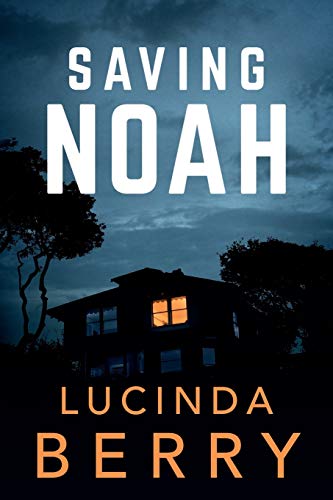
Saving Noah is a bold and emotionally gripping novel that dares to explore one of society’s most uncomfortable taboos: a mother’s unconditional love for her son in the wake of an unthinkable crime. The novel stand out is its commitment to complex, morally gray character, particularly the mother, who narrates much of the story with raw vulnerability and emotional honesty. Berry excels at portraying the stigma, isolation, and internal conflict that come with trying to love someone the world has labeled unlovable. The story is strongest when it leans into that discomfort, asking readers to sit with questions that have no easy answers. The tension builds steadily, and the psychological realism of the characters’ responses is both haunting and compelling.
However, the twist at the end feels out of place, more like a last-minute shock tactic than a meaningful contribution to the story’s emotional arc. Rather than enhancing the narrative, it undercuts much of the novel’s hard-earned complexity and nuance. The twist risks cheapening what was otherwise a deeply affecting and thought-provoking exploration of guilt, forgiveness, and parental devotion.
★★★★
Connective Tissue: Ordinary People
Saving Noah is a bold and emotionally gripping novel that dares to explore one of society’s most uncomfortable taboos: a mother’s unconditional love for her son in the wake of an unthinkable crime. The novel stand out is its commitment to complex, morally gray character, particularly the mother, who narrates much of the story with raw vulnerability and emotional honesty. Berry excels at portraying the stigma, isolation, and internal conflict that come with trying to love someone the world has labeled unlovable. The story is strongest when it leans into that discomfort, asking readers to sit with questions that have no easy answers. The tension builds steadily, and the psychological realism of the characters’ responses is both haunting and compelling.
However, the twist at the end feels out of place, more like a last-minute shock tactic than a meaningful contribution to the story’s emotional arc. Rather than enhancing the narrative, it undercuts much of the novel’s hard-earned complexity and nuance. The twist risks cheapening what was otherwise a deeply affecting and thought-provoking exploration of guilt, forgiveness, and parental devotion.
★★★★
Connective Tissue: Ordinary People
64stretch
Satan’s Sweethearts by Marge Simon and Mary A. Turzillo
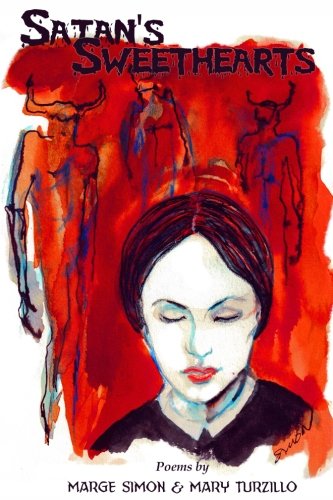
Satan’s Sweethearts is a haunting and masterfully crafted poetry collection that delves into the dark histories of infamous women who defied societal norms through acts of violence and rebellion. Co-authored by poets Marge Simon and Mary A. Turzillo, this anthology resurrects figures such as Ching-Shih, Delphine LaLaurie, and Lizzie Borden, presenting their stories through vivid and evocative verse. The collection stands out for its ability to humanize these notorious women without absolving them, offering a nuanced exploration of their motivations and the societal constraints they navigated.
★★★★★
Connective Tissue: Into the Forest all the Way Through
Satan’s Sweethearts is a haunting and masterfully crafted poetry collection that delves into the dark histories of infamous women who defied societal norms through acts of violence and rebellion. Co-authored by poets Marge Simon and Mary A. Turzillo, this anthology resurrects figures such as Ching-Shih, Delphine LaLaurie, and Lizzie Borden, presenting their stories through vivid and evocative verse. The collection stands out for its ability to humanize these notorious women without absolving them, offering a nuanced exploration of their motivations and the societal constraints they navigated.
★★★★★
Connective Tissue: Into the Forest all the Way Through
66labfs39
>63 stretch: Interesting topic. Too bad the ending was disappointing.
67stretch
>65 kidzdoc: thanks, i think I finally found me poetry lane.
>66 labfs39: Actually the ending is fitting its just a singler unnessaccccry chapter right before the ending that could easily be cut. it's in there for the shock value and to square a circle around a parent child dynamic that didn't needed squaring.
>66 labfs39: Actually the ending is fitting its just a singler unnessaccccry chapter right before the ending that could easily be cut. it's in there for the shock value and to square a circle around a parent child dynamic that didn't needed squaring.
68stretch
And another detour into a hobbyhorse:
A Mousetrap for Darwin by Michael Behe
This collection of essays serves as Behe’s responses to critics of his earlier work, Darwin’s Black Box. While intelligent design (ID) remains a contentious topic in scientific circles, Behe distinguishes himself among ID proponents by demonstrating a level of honesty about its scientific shortcomings. His responses to figures like Kenneth Miller and his reflections on the Dover trial are particularly revealing—though he steadfastly maintains his support for ID, he acknowledges that many of its claims fall outside the boundaries of conventional scientific inquiry.
Behe's approach in Mousetrap is almost reluctant at times, recognizing that his position lacks empirical robustness while still advocating for its theoretical validity.
This restrained perspective makes his work a notable contrast to more dogmatic proponents of ID, but it also highlights the inherent vulnerabilities in his argument—especially when addressing empirical critiques from figures like Miller.
Geology in Faith, Reason, and Earth History
This textbook, written by Young Earth Creationists (YEC), offers an intriguing juxtaposition between mainstream geological science and YEC interpretations. What sets it apart from more polemical YEC materials (such as those from Ken Ham and similar voices) is its willingness to acknowledge mainstream geological perspectives rather than dismiss them outright. In this sense, the authors demonstrate a commendable honesty, the flaws in YEC geology are often apparent even within their own summaries.
Andrew Snelling’s contributions are particularly noteworthy, as he points out key geological discrepancies that pose serious challenges to a young Earth framework. His explanations, however, frequently rely on faith-based resolutions rather than scientific counterpoints. ses in the latter’s framework.
Both books stand out for their relative transparency within their respective ideological domains. Behe openly admits the scientific limitations of ID, while the YEC authors acknowledge the existence of mainstream geological models and their challenges. This honesty makes both works valuable for examining fringe perspectives in science, even if they ultimately reinforce the weaknesses of the positions they seek to defend.
A Mousetrap for Darwin by Michael Behe
This collection of essays serves as Behe’s responses to critics of his earlier work, Darwin’s Black Box. While intelligent design (ID) remains a contentious topic in scientific circles, Behe distinguishes himself among ID proponents by demonstrating a level of honesty about its scientific shortcomings. His responses to figures like Kenneth Miller and his reflections on the Dover trial are particularly revealing—though he steadfastly maintains his support for ID, he acknowledges that many of its claims fall outside the boundaries of conventional scientific inquiry.
Behe's approach in Mousetrap is almost reluctant at times, recognizing that his position lacks empirical robustness while still advocating for its theoretical validity.
This restrained perspective makes his work a notable contrast to more dogmatic proponents of ID, but it also highlights the inherent vulnerabilities in his argument—especially when addressing empirical critiques from figures like Miller.
Geology in Faith, Reason, and Earth History
This textbook, written by Young Earth Creationists (YEC), offers an intriguing juxtaposition between mainstream geological science and YEC interpretations. What sets it apart from more polemical YEC materials (such as those from Ken Ham and similar voices) is its willingness to acknowledge mainstream geological perspectives rather than dismiss them outright. In this sense, the authors demonstrate a commendable honesty, the flaws in YEC geology are often apparent even within their own summaries.
Andrew Snelling’s contributions are particularly noteworthy, as he points out key geological discrepancies that pose serious challenges to a young Earth framework. His explanations, however, frequently rely on faith-based resolutions rather than scientific counterpoints. ses in the latter’s framework.
Both books stand out for their relative transparency within their respective ideological domains. Behe openly admits the scientific limitations of ID, while the YEC authors acknowledge the existence of mainstream geological models and their challenges. This honesty makes both works valuable for examining fringe perspectives in science, even if they ultimately reinforce the weaknesses of the positions they seek to defend.
69labfs39
>68 stretch: I commend you for your patience and diligence in reading creationist literature. Do you think it helps you understand, and increase your tolerance for, those with anti-science attitudes in the US?
70stretch
>69 labfs39: Thanks, I do enjoy trying to understand the other side of things.
Reading creationist materials has definitely expanded my understanding of people who hold views outside the mainstream. However, increasing my tolerance for anti-science proponents? Not so much.
Most of them fall into two categories, those driven by an agenda (i.e. AiG or the Discovery Institute) and those genuinely curious but trapped by their own intellectual cul-de-sac, like Andrew Snelling, Behe, and Philip Johnson. I’ve come to respect the latter for their convictions and intellectual curiosity, even if I don’t agree with them. But as for the agenda-driven side, I have no patience for that.
One thing I’ve learned is that humans are pretty bad at risk assessment; science education often assumes that teaching the technical tools of math and science will naturally lead people to grasp the bigger conceptual picture, but we lose people in that process far more than we realize; and most people don’t have an innate, insatiable curiosity about the nature of things, at least not right away. However, given enough time, exposure to real-world examples, and small, tangible explanations, they often start coming around. Maybe not entirely, but enough to engage meaningfully and come away with a decent understanding.
When it comes to anti-science discussions, the creation debate is my “safe space,” in the sense that it’s mostly harmless. Anti-vaxxers, on the other hand, are infuriating, and climate debates tend to be overly politicized. Creationism, at least, is more conceptual, though, of course, there are caveats. I’ve thought about branching out into topics like flat-earthism and geocentrism, but honestly, those realms tend to be the last refuge for conspiracy theorists who’ve run out of theories. I am still always in search of the point of the spectrum of ideas where I can see the intellectual inflection point of the the other side without compromising the 1st principles, not to swayed or sway others necessarily, but I think at that point I might be able to understand the concept more fully, if that makes sense.
Reading creationist materials has definitely expanded my understanding of people who hold views outside the mainstream. However, increasing my tolerance for anti-science proponents? Not so much.
Most of them fall into two categories, those driven by an agenda (i.e. AiG or the Discovery Institute) and those genuinely curious but trapped by their own intellectual cul-de-sac, like Andrew Snelling, Behe, and Philip Johnson. I’ve come to respect the latter for their convictions and intellectual curiosity, even if I don’t agree with them. But as for the agenda-driven side, I have no patience for that.
One thing I’ve learned is that humans are pretty bad at risk assessment; science education often assumes that teaching the technical tools of math and science will naturally lead people to grasp the bigger conceptual picture, but we lose people in that process far more than we realize; and most people don’t have an innate, insatiable curiosity about the nature of things, at least not right away. However, given enough time, exposure to real-world examples, and small, tangible explanations, they often start coming around. Maybe not entirely, but enough to engage meaningfully and come away with a decent understanding.
When it comes to anti-science discussions, the creation debate is my “safe space,” in the sense that it’s mostly harmless. Anti-vaxxers, on the other hand, are infuriating, and climate debates tend to be overly politicized. Creationism, at least, is more conceptual, though, of course, there are caveats. I’ve thought about branching out into topics like flat-earthism and geocentrism, but honestly, those realms tend to be the last refuge for conspiracy theorists who’ve run out of theories. I am still always in search of the point of the spectrum of ideas where I can see the intellectual inflection point of the the other side without compromising the 1st principles, not to swayed or sway others necessarily, but I think at that point I might be able to understand the concept more fully, if that makes sense.
71RidgewayGirl
>68 stretch: Having come from a background where believing the earth is 6,000 years old is part and parcel of being a "real Christian," I would not touch any of that stuff with a barge pole, but it is interesting to read about your forays into the subject. It's hard to get people to reconsider YEC when their very salvation depends on it.
72kidzdoc
>70 stretch: I and my fellow pediatricians find hard core antivax parents and families completely infuriating, as it is usually impossible to engage in an intellectual discussion about vaccines in general, and medicine in particular, with them; the interview with the father of a child who died from complications of measles is a perfect example, as he stood behind his decision to not vaccinate his deceased daughter. If we attempt to talk with them about vaccines they either spout memorized statements from antivax websites, hand us literature to support their beliefs, or both. Talking with them is akin to beating your head against a brick wall in most cases.
73kjuliff
>72 kidzdoc: I don’t think I could keep my cool with such anti-vaxers. I realize that as a pediatrician you would feel your duty to explain to these people to these people that they are in error, but I don’t know how you do it. I’m impressed.
74stretch
>71 RidgewayGirl: I can completely understand why you'd feel hesitant or even wary about exploring these topics, especially when foundational beliefs were so deeply tied to them. Must be incredibly difficult for people to reconsider young Earth creationism when it's framed as a core part of faith or salvation. The catholic/quasi-methodist traditions I was raised in were not so hung up on such things.
>72 kidzdoc: I can only imagine how deeply frustrating and heartbreaking that must be, especially when something like that is on the line. It must be incredibly disheartening to witness preventable tragedies. The scene from The Pitt with anti-vaxing parents would have had me jabbing the needle in them instead. Doctors have an insane amount of patience for the nonsense, my cousin fields the dumbest questions ever.
>72 kidzdoc: I can only imagine how deeply frustrating and heartbreaking that must be, especially when something like that is on the line. It must be incredibly disheartening to witness preventable tragedies. The scene from The Pitt with anti-vaxing parents would have had me jabbing the needle in them instead. Doctors have an insane amount of patience for the nonsense, my cousin fields the dumbest questions ever.
75stretch
Shiver by Junji Ito
Translated by Jocelyne Allen, Naomi Kokubo
Junji Ito’s Shiver is a striking example of visual horror, with artwork so disturbingly vivid it lingers in your mind. His grotesque imagination is evident in every panel—twisted bodies, haunting expressions, and surreal monstrosities rendered with unsettling precision.
However, while the illustrations are unforgettable, the stories themselves often feel like mere vehicles for the art. Many of the plots are thin, with characters that serve more as props than people. The narratives tend to rely heavily on shock value rather than building sustained tension or emotional depth. Some stories end abruptly or without satisfying resolution, leaving you more puzzled than horrified.
If you’re drawn to horror for its visual impact and atmosphere, Shiver delivers.
★★★½
Connective Tissue: Fragments of Horror, The Kurosagi Corpse Delivery Service
Translated by Jocelyne Allen, Naomi Kokubo
Junji Ito’s Shiver is a striking example of visual horror, with artwork so disturbingly vivid it lingers in your mind. His grotesque imagination is evident in every panel—twisted bodies, haunting expressions, and surreal monstrosities rendered with unsettling precision.
However, while the illustrations are unforgettable, the stories themselves often feel like mere vehicles for the art. Many of the plots are thin, with characters that serve more as props than people. The narratives tend to rely heavily on shock value rather than building sustained tension or emotional depth. Some stories end abruptly or without satisfying resolution, leaving you more puzzled than horrified.
If you’re drawn to horror for its visual impact and atmosphere, Shiver delivers.
★★★½
Connective Tissue: Fragments of Horror, The Kurosagi Corpse Delivery Service
76stretch
American Scary by Jeremy Dauber
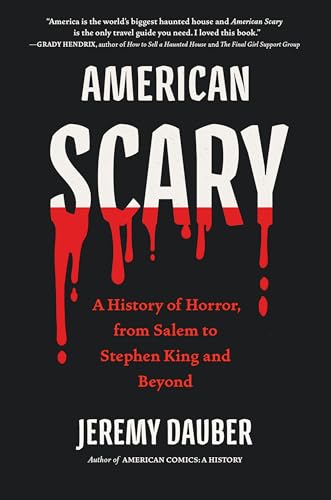
Jeremy Dauber’s American Scary is a meticulously researched dive into the history of American horror, tracing its roots from Puritan fears to modern pop culture. With an encyclopedic range, Dauber explores how horror has long served as a mirror for the nation’s deepest fears, whether rooted in religion, race, gender, or political unrest.
Dauber’s central argument is that American horror is shaped by two main forces: the cosmic, which evokes fear of the unknowable, and the domestic, which turns the familiar into something terrifying. This duality allows him to connect a wide range of cultural moments into a coherent, if sprawling, narrative.
Dauber doesn’t just recount horror’s greatest hits; he contextualizes them within American history, showing how each era’s monsters reflect its unique anxieties. American Scary is not a quick read, but it’s a rewarding one. For horror enthusiasts, cultural critics, and anyone curious about why Americans are so drawn to the macabre, this book offers a rich and thought-provoking journey through the haunted heart of the American imagination.
★★★★
Connective Tissue: Horror Literature through History, Horror Fiction in the 20th Century
Jeremy Dauber’s American Scary is a meticulously researched dive into the history of American horror, tracing its roots from Puritan fears to modern pop culture. With an encyclopedic range, Dauber explores how horror has long served as a mirror for the nation’s deepest fears, whether rooted in religion, race, gender, or political unrest.
Dauber’s central argument is that American horror is shaped by two main forces: the cosmic, which evokes fear of the unknowable, and the domestic, which turns the familiar into something terrifying. This duality allows him to connect a wide range of cultural moments into a coherent, if sprawling, narrative.
Dauber doesn’t just recount horror’s greatest hits; he contextualizes them within American history, showing how each era’s monsters reflect its unique anxieties. American Scary is not a quick read, but it’s a rewarding one. For horror enthusiasts, cultural critics, and anyone curious about why Americans are so drawn to the macabre, this book offers a rich and thought-provoking journey through the haunted heart of the American imagination.
★★★★
Connective Tissue: Horror Literature through History, Horror Fiction in the 20th Century
77stretch
On Abolishing Political Parties by Simone Weil
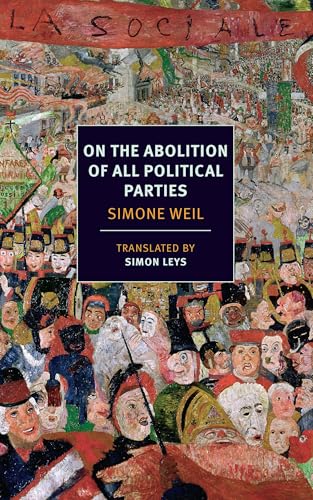
Simone Weil’s On Abolishing Political Parties is a provocative and intellectually rich essay that challenges the notion of parties within modern democratic systems. With characteristic intensity, Weil argues that political parties are inherently corrupting forces, machines of collective passion that prioritize power over truth, loyalty over conscience, and conformity over genuine thought.
Her critique is sharp and often persuasive. Weil sees parties not as vehicles for democratic engagement, but as structures that distort individual judgment and suppress moral clarity. However, the essay takes a puzzling turn when Weil invokes the Catholic Church as a model for moral authority and spiritual discipline. This move feels out of step with the otherwise secular and rational tone of her argument. Weil’s conclusion—that we should abolish political parties entirely and rely on individuals to engage in politics with pure, disinterested attention is both noble and, frankly, naive. Expecting the general public to maintain that level of political engagement without the organizational scaffolding of parties is an exhausting and unrealistic vision. It doesn’t offer a viable blueprint for reform, but it does force us to question the assumptions we make about democracy, representation, and the role of institutions
★★★★
Connective Tissue: n/a
Simone Weil’s On Abolishing Political Parties is a provocative and intellectually rich essay that challenges the notion of parties within modern democratic systems. With characteristic intensity, Weil argues that political parties are inherently corrupting forces, machines of collective passion that prioritize power over truth, loyalty over conscience, and conformity over genuine thought.
Her critique is sharp and often persuasive. Weil sees parties not as vehicles for democratic engagement, but as structures that distort individual judgment and suppress moral clarity. However, the essay takes a puzzling turn when Weil invokes the Catholic Church as a model for moral authority and spiritual discipline. This move feels out of step with the otherwise secular and rational tone of her argument. Weil’s conclusion—that we should abolish political parties entirely and rely on individuals to engage in politics with pure, disinterested attention is both noble and, frankly, naive. Expecting the general public to maintain that level of political engagement without the organizational scaffolding of parties is an exhausting and unrealistic vision. It doesn’t offer a viable blueprint for reform, but it does force us to question the assumptions we make about democracy, representation, and the role of institutions
★★★★
Connective Tissue: n/a
78stretch
"The Blanks" by Grady Hendrix
A compact and eerie story that explores themes of privilege and willful ignorance. Hendrix uses a mysterious island setting to quietly build tension, though the horror remains more suggestive than explicit..
"The Indigo Room" by Stephen Graham Jones
A surreal office horror story with eerie atmosphere and unsettling imagery. While the premise is intriguing, the pacing drags and the payoff feels underwhelming compared to Jones’s usual high standards.
A compact and eerie story that explores themes of privilege and willful ignorance. Hendrix uses a mysterious island setting to quietly build tension, though the horror remains more suggestive than explicit..
"The Indigo Room" by Stephen Graham Jones
A surreal office horror story with eerie atmosphere and unsettling imagery. While the premise is intriguing, the pacing drags and the payoff feels underwhelming compared to Jones’s usual high standards.
79stretch
Hard Mountain Clay by C.W. Blackwell
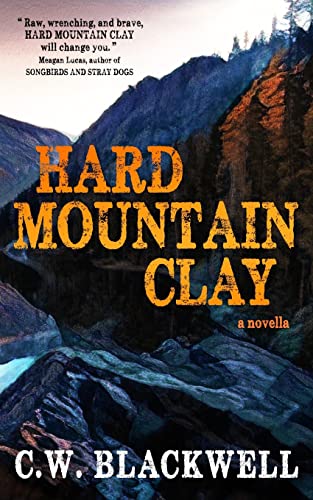
Hard Mountain Clay is a gritty novella that follows siblings Ben and Maisy as they navigate a childhood shaped by addiction, violence, and neglect in the Santa Cruz Mountains. Blackwell’s prose is lean and evocative, capturing both the stark beauty of the setting and the vulnerability of his young protagonists.
The story’s strength lies in its emotional immediacy. Blackwell doesn’t flinch from the darkness, but he also doesn’t exploit it. The novella’s conclusion is especially effective, delivering a quiet but powerful emotional punch that lingers after the final page. That said, the pacing can feel uneven. The story builds steadily, but the ending arrives a bit too quickly, leaving the reader wishing for a more gradual descent into its final, affecting moments.
★★★★
Connective Tissue: True Crime, Death of Bees, The River Why, The Good Thief
Hard Mountain Clay is a gritty novella that follows siblings Ben and Maisy as they navigate a childhood shaped by addiction, violence, and neglect in the Santa Cruz Mountains. Blackwell’s prose is lean and evocative, capturing both the stark beauty of the setting and the vulnerability of his young protagonists.
The story’s strength lies in its emotional immediacy. Blackwell doesn’t flinch from the darkness, but he also doesn’t exploit it. The novella’s conclusion is especially effective, delivering a quiet but powerful emotional punch that lingers after the final page. That said, the pacing can feel uneven. The story builds steadily, but the ending arrives a bit too quickly, leaving the reader wishing for a more gradual descent into its final, affecting moments.
★★★★
Connective Tissue: True Crime, Death of Bees, The River Why, The Good Thief
80SassyLassy
>77 stretch: It's on my TBR. Reading your review makes me think now is a good time to read it.
81stretch
>80 SassyLassy: It's an interesting time to read it, in light the state of the world.
82stretch
Cicada by Tanya Pell
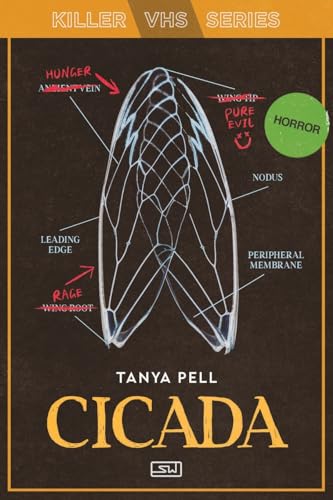
Creepy, creative, and crawling with atmosphere, Cicada is a solid entry into the Killer VHS series. Tanya Pell nails the retro horror vibe and delivers some memorably grotesque moments. While the pacing stumbles in places and the characters could’ve used more depth, the concept is fun and the body horror hits the mark.
★★★½
Connective Tissue: Horrorama
Creepy, creative, and crawling with atmosphere, Cicada is a solid entry into the Killer VHS series. Tanya Pell nails the retro horror vibe and delivers some memorably grotesque moments. While the pacing stumbles in places and the characters could’ve used more depth, the concept is fun and the body horror hits the mark.
★★★½
Connective Tissue: Horrorama
83royallyreading
>82 stretch: I've never heard of the Killer VHS series but now I feel like I need it in my life. This sounds awesome!
84royallyreading
>75 stretch: I've been wanting to read this one. The only Ito collection I've read so far is Soichi and I'd like to see if his horror hits the mark for me when it's not just tied to one primary creep character.
85stretch
>83 royallyreading: Yeah this and the Rewind or Die series are some of the most fun horror out there. They are like the adult verison of goosebumps and i am here for it.
>84 royallyreading: Ito has some of the best creepiest art work out there. He has a well deserved rep, but for me his stories fall a bit flat. I hold a outlier opinion on this.
>84 royallyreading: Ito has some of the best creepiest art work out there. He has a well deserved rep, but for me his stories fall a bit flat. I hold a outlier opinion on this.
86stretch
Gold Rush by Yū Miri
Translated by Stephen Snyder
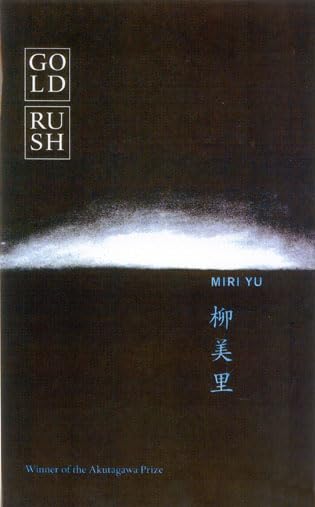
Yū Miri’s Gold Rush is a raw, unsettling plunge into the psyche of 14-year-old Kazuki, set in the slums of Yokohama. The son of a pachinko tycoon, spirals from privilege into psychopathy. Raised in a vacuum of parental care and societal concern, he drifts through a world riddled with drugs, sexual violence, and murder.
The story is relentless, told without chapter breaks, echoing Kazuki’s own unbroken descent. Yū Miri offers stark realism; no irony, no distance, just the brutal truth. The setting, beneath the train tracks, isn’t just a backdrop, it’s a decaying character in its own right, reflecting the erosion of tradition and the alienation at the heart of modern Japan. Yū’s prose is both savage and lyrical, it’s not an easy read, but its darkness, is a haunting meditation on neglect, and the human need for connection.
★★★★
Connective Tissue: American Psycho, In the Miso Soup, Cannibals
Translated by Stephen Snyder
Yū Miri’s Gold Rush is a raw, unsettling plunge into the psyche of 14-year-old Kazuki, set in the slums of Yokohama. The son of a pachinko tycoon, spirals from privilege into psychopathy. Raised in a vacuum of parental care and societal concern, he drifts through a world riddled with drugs, sexual violence, and murder.
The story is relentless, told without chapter breaks, echoing Kazuki’s own unbroken descent. Yū Miri offers stark realism; no irony, no distance, just the brutal truth. The setting, beneath the train tracks, isn’t just a backdrop, it’s a decaying character in its own right, reflecting the erosion of tradition and the alienation at the heart of modern Japan. Yū’s prose is both savage and lyrical, it’s not an easy read, but its darkness, is a haunting meditation on neglect, and the human need for connection.
★★★★
Connective Tissue: American Psycho, In the Miso Soup, Cannibals
87valkyrdeath
>85 stretch: I share your opinion of Ito. From the ones I've read, he's great at setting a mood and creating an unsettling atmosphere, but in terms of story there's just not been much there.
88lilisin
>86 stretch:
I had the opportunity to purchase Yu Miri's The End of August at the annual book sale but I just couldn't pull the trigger. I enjoyed the aftertaste of Tokyo Ueno Station moreso than the actual reading experience that I'm hesitant to pick her up again.
I had the opportunity to purchase Yu Miri's The End of August at the annual book sale but I just couldn't pull the trigger. I enjoyed the aftertaste of Tokyo Ueno Station moreso than the actual reading experience that I'm hesitant to pick her up again.
89stretch
>88 lilisin: I feel largely the same about Gold Rush. It wasn’t the greatest reading experience but it lingers with you. One day I will read Tokyo Ueno Station, but not ready to jump back into her writing just yet.
90stretch
Audition by Ryu Murakami
Translated by Ralph McCarthy

Audition is a restrained horror novel that unfolds with eerie calm, only to erupt into visceral terror in its final act. For much of the book, the story presents itself as a quiet character study: a lonely widower, nudged by a friend, into staging a fake film audition to find a new wife. The pacing is slow, with subtle hints of unease buried beneath polite conversation and emotional detachment. Murakami builds tension through atmosphere and psychological ambiguity, allowing for the gradual accumulation of dread. Then, without warning, the novel pivots into brutal physical horror.
The ending is a crescendo of pain and reckoning, where the body becomes the site of repressed trauma and male entitlement. Murakami’s restraint throughout the narrative makes the climax all the more disturbing. True to the aesthetics of Japanese horror, Audition delays its descent until the end, where emotional repression gives way to corporeal torment and psychological collapse, where trauma festers beneath social decorum and violence erupts from emotional neglect, Murakami crafts a narrative that doesn’t just horrify; it indicts. The horror here isn’t supernatural; it’s human, intimate, and inevitable.
★★★½
Connective Tissue: N/A
Translated by Ralph McCarthy

Audition is a restrained horror novel that unfolds with eerie calm, only to erupt into visceral terror in its final act. For much of the book, the story presents itself as a quiet character study: a lonely widower, nudged by a friend, into staging a fake film audition to find a new wife. The pacing is slow, with subtle hints of unease buried beneath polite conversation and emotional detachment. Murakami builds tension through atmosphere and psychological ambiguity, allowing for the gradual accumulation of dread. Then, without warning, the novel pivots into brutal physical horror.
The ending is a crescendo of pain and reckoning, where the body becomes the site of repressed trauma and male entitlement. Murakami’s restraint throughout the narrative makes the climax all the more disturbing. True to the aesthetics of Japanese horror, Audition delays its descent until the end, where emotional repression gives way to corporeal torment and psychological collapse, where trauma festers beneath social decorum and violence erupts from emotional neglect, Murakami crafts a narrative that doesn’t just horrify; it indicts. The horror here isn’t supernatural; it’s human, intimate, and inevitable.
★★★½
Connective Tissue: N/A
91stretch
We Have Always Lived in Castle by Shirley Jackson
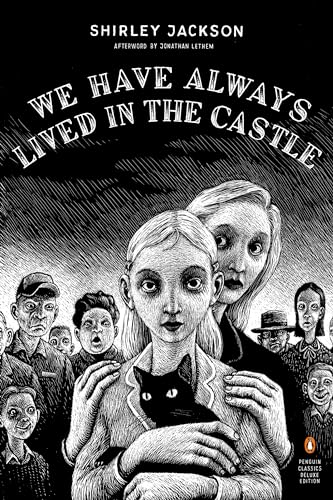
There’s no denying Shirley Jackson’s talent, and this story certainly delivers on mood: the claustrophobia is palpable, the isolation suffocating, and the slow creep of dread is expertly handled. But for all its eerie ambiance, the novel falters where it matters most.
Merricat, Constance, and Uncle Julian feel less like people and more like archetypes, their quirks so exaggerated and their motivations so transparent that they lose the nuance needed to sustain interest. The mystery surrounding the family’s past is intriguing at first, but the emotional depth never quite materializes. It’s all a bit too obvious, too one-note. Jackson’s mastery of the short story form is undeniable, but in this longer format, her strengths seem diluted. The novel feels like it’s stretching a brilliant concept thin, relying on atmosphere to carry what the characters cannot.
In short: haunting, yes. Memorable, perhaps. But for me, Jackson’s longer fiction doesn’t quite cast the same spell as her shorter works.
★★★
Connective Tissue: The Lottery, Poe
There’s no denying Shirley Jackson’s talent, and this story certainly delivers on mood: the claustrophobia is palpable, the isolation suffocating, and the slow creep of dread is expertly handled. But for all its eerie ambiance, the novel falters where it matters most.
Merricat, Constance, and Uncle Julian feel less like people and more like archetypes, their quirks so exaggerated and their motivations so transparent that they lose the nuance needed to sustain interest. The mystery surrounding the family’s past is intriguing at first, but the emotional depth never quite materializes. It’s all a bit too obvious, too one-note. Jackson’s mastery of the short story form is undeniable, but in this longer format, her strengths seem diluted. The novel feels like it’s stretching a brilliant concept thin, relying on atmosphere to carry what the characters cannot.
In short: haunting, yes. Memorable, perhaps. But for me, Jackson’s longer fiction doesn’t quite cast the same spell as her shorter works.
★★★
Connective Tissue: The Lottery, Poe
92stretch
Strange Houses by Uketsu
Translated by Jim Rion
Strange Houses is one of those stories that defies easy categorization. It’s not particularly well-written in the conventional sense, dialogue can be clunky, pacing uneven, and the prose occasionally veers into the unintentionally surreal. Yet, despite (or perhaps because of) its flaws, it’s oddly compelling.
Uketsu, the enigmatic Japanese horror writer known for his masked YouTube persona, delivers a story that feels like a puzzle box made of floor plans, family secrets, and creeping dread. The premise is deceptively simple: a freelance writer is asked to look into a house with an odd architectural feature; a “dead space” between rooms. What begins as a quirky curiosity quickly spirals into a multi-generational mystery involving missing persons, hidden rooms, and a disturbing family ritual. The dialogue sometimes veers into the stilted, and the leaps in logic required to follow the plot can be... generous. But there’s something undeniably gripping about the way Uketsu builds tension through architectural oddities and visual storytelling. What makes Strange Houses work is its atmosphere. The horror here is slow, methodical, and deeply psychological. It’s less about jump scares and more about the unsettling realization that something is fundamentally wrong with the spaces we inhabit.
It’s not a polished novel, and it won’t be for everyone. But if you’re willing to embrace its eccentricities, Strange Houses offers a uniquely eerie experience that lingers.
★★★½
Connective Tissue: Shinji Ito
Translated by Jim Rion
Strange Houses is one of those stories that defies easy categorization. It’s not particularly well-written in the conventional sense, dialogue can be clunky, pacing uneven, and the prose occasionally veers into the unintentionally surreal. Yet, despite (or perhaps because of) its flaws, it’s oddly compelling.
Uketsu, the enigmatic Japanese horror writer known for his masked YouTube persona, delivers a story that feels like a puzzle box made of floor plans, family secrets, and creeping dread. The premise is deceptively simple: a freelance writer is asked to look into a house with an odd architectural feature; a “dead space” between rooms. What begins as a quirky curiosity quickly spirals into a multi-generational mystery involving missing persons, hidden rooms, and a disturbing family ritual. The dialogue sometimes veers into the stilted, and the leaps in logic required to follow the plot can be... generous. But there’s something undeniably gripping about the way Uketsu builds tension through architectural oddities and visual storytelling. What makes Strange Houses work is its atmosphere. The horror here is slow, methodical, and deeply psychological. It’s less about jump scares and more about the unsettling realization that something is fundamentally wrong with the spaces we inhabit.
It’s not a polished novel, and it won’t be for everyone. But if you’re willing to embrace its eccentricities, Strange Houses offers a uniquely eerie experience that lingers.
★★★½
Connective Tissue: Shinji Ito
93labfs39
>92 stretch: Interesting review, Kevin. The book seems to be making inroads in CR at the moment.
94stretch
>93 labfs39: Yeah it does seem to be making the rounds. @Ridgewaygirl review caused me to try this one out. Steange Pictures wasn’t clicking for me but this story did work for me despite the simple writing.
95valkyrdeath
>91 stretch: I was really disappointed in We Have Always Lived in the Castle when I read it, but on the other hand I loved The Haunting of Hill House, so I'm breaking even on Jackson so far. I've been meaning to try something else by her, and maybe the short stories are the way to go.
>92 stretch: I just finished this one myself today. Definitely flawed in the ways you said and a bit far-fetched, but once I started I didn't want to stop reading.
>92 stretch: I just finished this one myself today. Definitely flawed in the ways you said and a bit far-fetched, but once I started I didn't want to stop reading.
96RidgewayGirl
>90 stretch: I've read a different book by Murakami (In the Miso Soup) and you've reminded me to go read another one. He's an interesting writer.
>92 stretch: This is a book that reminded me that the things that happen in novels are just what the writer makes up, over and over again. And yet it was also a book I was always itching to read just a little more of. Oddly compelling indeed.
>92 stretch: This is a book that reminded me that the things that happen in novels are just what the writer makes up, over and over again. And yet it was also a book I was always itching to read just a little more of. Oddly compelling indeed.
97stretch
Two-Step Devil by Jamie Quatro
Two-Step Devil is a haunting Southern Gothic novel that follows the unlikely bond between a reclusive visionary known as the Prophet and a teenage girl named Michael, whom he rescues from a life of trafficking. Set in Lookout Mountain, Alabama, a seventy-year-old man who paints divine visions, believes Michael is a messenger sent by God to deliver his apocalyptic warnings to the White House. Their relationship unfolds in a remote cabin filled with art and spiritual tension, gradually evolving into a tender friendship, exploring themes of trauma, salvation, and divine purpose. A poignant subplot involves the Prophet’s estranged relationship with his son. A loss that echoes through his interactions with Michael, adding a sense of longing to his spiritual mission.
Quatro blends lyrical prose with philosophical inquiry in deeply Southern Gothic atmosphere. Her experimental structure pushes narrative boundaries and succeeds in portraying Michael’s transformation with nuance and grace, though some of the devil’s monologues feel overly stylized. The novel’s dual endings offer contrasting visions of Michael’s fate, but the second is less compelling. It’s not simply that she wouldn’t relapse into her former life; rather, her time with the Prophet has equipped her with the clarity, strength, and skill set to break that particular cycle. The first ending, where she steps into a future shaped by agency and resilience, feels more aligned with the emotional and thematic arc of the story. Perhaps the true ending is lying somewhere in the middle?
★★★★½
Connective Tissue: Hard Mountain Clay
Two-Step Devil is a haunting Southern Gothic novel that follows the unlikely bond between a reclusive visionary known as the Prophet and a teenage girl named Michael, whom he rescues from a life of trafficking. Set in Lookout Mountain, Alabama, a seventy-year-old man who paints divine visions, believes Michael is a messenger sent by God to deliver his apocalyptic warnings to the White House. Their relationship unfolds in a remote cabin filled with art and spiritual tension, gradually evolving into a tender friendship, exploring themes of trauma, salvation, and divine purpose. A poignant subplot involves the Prophet’s estranged relationship with his son. A loss that echoes through his interactions with Michael, adding a sense of longing to his spiritual mission.
Quatro blends lyrical prose with philosophical inquiry in deeply Southern Gothic atmosphere. Her experimental structure pushes narrative boundaries and succeeds in portraying Michael’s transformation with nuance and grace, though some of the devil’s monologues feel overly stylized. The novel’s dual endings offer contrasting visions of Michael’s fate, but the second is less compelling. It’s not simply that she wouldn’t relapse into her former life; rather, her time with the Prophet has equipped her with the clarity, strength, and skill set to break that particular cycle. The first ending, where she steps into a future shaped by agency and resilience, feels more aligned with the emotional and thematic arc of the story. Perhaps the true ending is lying somewhere in the middle?
★★★★½
Connective Tissue: Hard Mountain Clay
98stretch
Quick hits because I feel like catching up and they really aren't that deep:
The Duel by Richard Matherson
The same pulse-pounding tension I remember from the movie, but with a leaner, more intense narrative that trades Hollywood spectacle for psychological grit. The ending, while less cinematic, feels more grounded and fitting for the frantic nature of the story.
★★★★
Narcissus by Adam Godfrey
A simple yet entertaining retelling of the classic Greek myth, dressed in horror garb. It doesn’t overcomplicate the source material, instead leaning into atmosphere and mood to deliver a creepy twist.
★★★½
Kent State by Derf Backderf
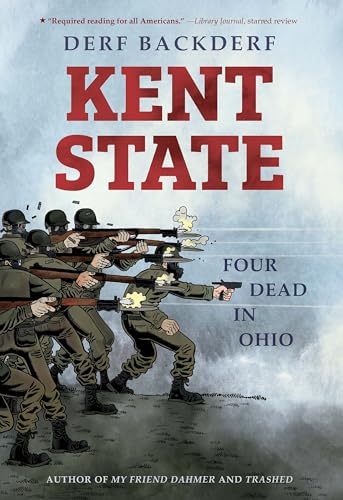
While Kent State aims to shed light on a pivotal moment in American history, its narrative feels caught between biography and reportage, never fully committing to either. The result is informative, but not as emotionally impactful or immersive as it could be. The storytelling struggles to convey the gravity of the events with the urgency they deserve, leaving the reader more aware than affected.
★★★
The Duel by Richard Matherson
The same pulse-pounding tension I remember from the movie, but with a leaner, more intense narrative that trades Hollywood spectacle for psychological grit. The ending, while less cinematic, feels more grounded and fitting for the frantic nature of the story.
★★★★
Narcissus by Adam Godfrey
A simple yet entertaining retelling of the classic Greek myth, dressed in horror garb. It doesn’t overcomplicate the source material, instead leaning into atmosphere and mood to deliver a creepy twist.
★★★½
Kent State by Derf Backderf
While Kent State aims to shed light on a pivotal moment in American history, its narrative feels caught between biography and reportage, never fully committing to either. The result is informative, but not as emotionally impactful or immersive as it could be. The storytelling struggles to convey the gravity of the events with the urgency they deserve, leaving the reader more aware than affected.
★★★
99labfs39
>97 stretch: Good review of Two-Step Devil. Sounds interesting
100RidgewayGirl
>97 stretch: Not sure I agree with you about the second ending, but this is a remarkable novel.
101stretch
>100 RidgewayGirl: Don't get me wrong I like the second ending, escaping that kind of damage is really hard. Hard Mountain Clay has a very similar ending, but the path to addiction is windy and next to impossible to escape. I just find it hard to believe the first thing Micheal does is leaving the mountain is go back to her same trafficer, she is a bit wiser by that point in the story. the pull of drugs and returning to that life absolutely, a very real possibilty and wouldn't change that. Just don't think her trafficker can offer her anything she can't get on her own for the return of the abuse. For me that is too much of a reversal for where she was in the story.
102stretch
The Other Side of the Mountainby Michel Bernanos

Michel Bernanos’ novella blends a maritime adventure with dreadful, and a surrealistic weird world. It begins as a brutal sea tale: a young sailor joins a ship where mutiny, madness, and cannibalism erupt. After a shipwreck, he and the cook wash ashore in a crimson-hued alien landscape, where nature itself seems hostile, plunging the reader into a world of red mountains, blood-colored skies, and grotesque creatures. The terrain becomes a metaphor for death, despair, and the limits of human comprehension. Bernanos’ prose is lyrical and hallucinatory, evoking a dreamlike terror that lingers.
Though short, the novella is dense with allegory. It’s not a story of survival, but of transformation and annihilation.
★★★½
Connective Tissue: The Narrative of Arthur Gordon Pym of Nantucket

Michel Bernanos’ novella blends a maritime adventure with dreadful, and a surrealistic weird world. It begins as a brutal sea tale: a young sailor joins a ship where mutiny, madness, and cannibalism erupt. After a shipwreck, he and the cook wash ashore in a crimson-hued alien landscape, where nature itself seems hostile, plunging the reader into a world of red mountains, blood-colored skies, and grotesque creatures. The terrain becomes a metaphor for death, despair, and the limits of human comprehension. Bernanos’ prose is lyrical and hallucinatory, evoking a dreamlike terror that lingers.
Though short, the novella is dense with allegory. It’s not a story of survival, but of transformation and annihilation.
★★★½
Connective Tissue: The Narrative of Arthur Gordon Pym of Nantucket
103stretch
The Demon of Unrest: A Saga of Hubris, Heartbreak, and Heroism at the Dawn of the Civil War by Erik Larson
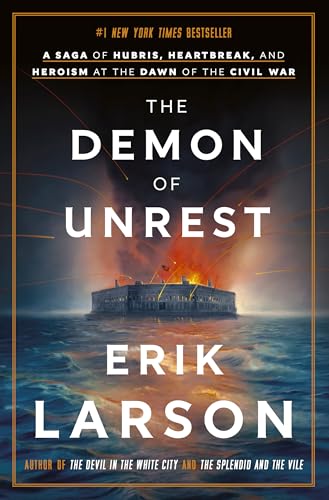
Erik Larson’s The Demon of Unrest is a well researched and resonant account of the turbulent months between Abraham Lincoln’s election and the outbreak of the Civil War. Known for his ability to turn historical nonfiction into page-turning drama, Larson delivers a compelling narrative, but this time, with an even deeper reliance on primary sources and firsthand accounts.
One of the book’s greatest strengths is its extensive use of original documents—diaries, letters, speeches, and newspaper articles—that bring the era to life with startling immediacy. Larson quotes liberally from figures like Mary Chesnut, whose diary entries offer a vivid, conflicted Southern perspective, and Major Robert Anderson, whose dispatches from Fort Sumter convey the tension and uncertainty of impending war. Rather than relying on broad summaries or secondhand interpretations, Larson lets the historical voices speak for themselves.
Larson’s focus on individual characters Lincoln, Anderson, Chesnut, Ruffin, Hammond, and Seward grounds the sweeping political crisis in personal stakes. He portrays Lincoln not as the mythic emancipator, but as a newly elected leader grappling with miscommunication, political scheming, and the weight of a fractured nation. Anderson, stationed at Fort Sumter, becomes a reluctant symbol of Union resolve, while Southern firebrands like Ruffin and Hammond embody the ideological extremism that pushed the South toward secession.
★★★★
Connective Tissue: The Devil in the White City
Erik Larson’s The Demon of Unrest is a well researched and resonant account of the turbulent months between Abraham Lincoln’s election and the outbreak of the Civil War. Known for his ability to turn historical nonfiction into page-turning drama, Larson delivers a compelling narrative, but this time, with an even deeper reliance on primary sources and firsthand accounts.
One of the book’s greatest strengths is its extensive use of original documents—diaries, letters, speeches, and newspaper articles—that bring the era to life with startling immediacy. Larson quotes liberally from figures like Mary Chesnut, whose diary entries offer a vivid, conflicted Southern perspective, and Major Robert Anderson, whose dispatches from Fort Sumter convey the tension and uncertainty of impending war. Rather than relying on broad summaries or secondhand interpretations, Larson lets the historical voices speak for themselves.
Larson’s focus on individual characters Lincoln, Anderson, Chesnut, Ruffin, Hammond, and Seward grounds the sweeping political crisis in personal stakes. He portrays Lincoln not as the mythic emancipator, but as a newly elected leader grappling with miscommunication, political scheming, and the weight of a fractured nation. Anderson, stationed at Fort Sumter, becomes a reluctant symbol of Union resolve, while Southern firebrands like Ruffin and Hammond embody the ideological extremism that pushed the South toward secession.
★★★★
Connective Tissue: The Devil in the White City
104stretch
Sympathy Tower Tokyo by Rie Qudan
Translated by Jesse Kirkwood
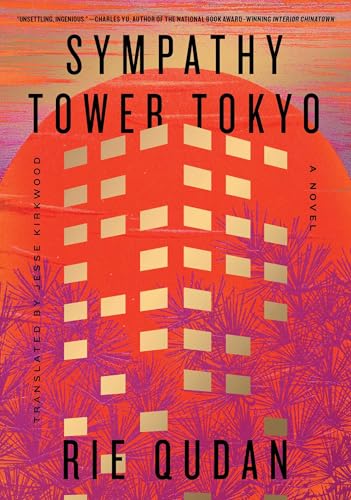
Sympathy Tower Tokyo is a thought-provoking novel that begins with the presence of generative AI, but quickly reveals it’s not really about machines. It’s about people. While it may seem at first like Qudan is simply exploring the novelty of AI-generated language, the real power of the novel lies in how that technology becomes a lens for deeper questions. When a machine offers us words, does that reduce their emotional impact, or is it just another form of collaboration?
At its core, Sympathy Tower Tokyo is a meditation on the changing nature of language. In the neon-lit glow of Tokyo, languages blend as Japanese and foreign sounding imports mix in subways, menus, ideals, and inner thoughts. Generative AI, able to mimic tone and idioms, highlights how flexible language has become. But the novel goes beyond this. Language here isn’t just a tool. It’s a living thing, shaped by context, gesture, even silence. The AI’s fluent but mechanical voice contrasts with the messiness of human expression, showing that meaning comes not just from grammar but from emotion, memory, and history.
Although the story presents itself as forward-looking with themes of AI, emotional design, and restorative justice, it’s also shot through with more conservative undercurrents that complicate its message. These aren’t overt, but they surface in character dynamics, language choices, and ideological tensions.
The architect of the tower is a particularly complex figure. She’s a woman leading a radical project meant to reimagine criminal justice. Yet her thinking is steeped in cultural nostalgia and linguistic conservatism. Her dislike for katakana, for example, goes beyond aesthetics. It reflects discomfort with Japan’s shifting cultural identity. To her, katakana signals dilution, euphemism, even avoidance. Her preference for kanji isn’t just about beauty. It’s about control and preserving meaning within a fixed cultural tradition. This linguistic purism mirrors a broader conservative instinct, a desire to maintain clarity, hierarchy, and cultural specificity in an increasingly fluid world.
The novel’s central irony is that its most innovative elements, the tower, the AI, the justice model, are all created by people who hold deeply traditional views. This tension feels deliberate. Qudan seems to suggest that real progress often stands on the shoulders of older, sometimes problematic foundations. Even the most forward-thinking ideas can carry traces of the past. The result is a story that embraces empathy, technology, and change while cautioning us to examine the ideologies quietly embedded in them. The tower may rise high, but it’s still grounded in history, bias, and contradiction.
In the end, Sympathy Tower Tokyo isn’t really a story about AI, architecture, or even justice. It’s a story about language, how it shifts, how it connects, and how it fails to define. Through its layered narrative and philosophical depth, Qudan invites us to examine language and its cultural underpinnings more closely
★★★★★
Connective Tissue: The Great Passage, There's No Such Thing as an Easy Job, The Memory Police
Translated by Jesse Kirkwood
Sympathy Tower Tokyo is a thought-provoking novel that begins with the presence of generative AI, but quickly reveals it’s not really about machines. It’s about people. While it may seem at first like Qudan is simply exploring the novelty of AI-generated language, the real power of the novel lies in how that technology becomes a lens for deeper questions. When a machine offers us words, does that reduce their emotional impact, or is it just another form of collaboration?
At its core, Sympathy Tower Tokyo is a meditation on the changing nature of language. In the neon-lit glow of Tokyo, languages blend as Japanese and foreign sounding imports mix in subways, menus, ideals, and inner thoughts. Generative AI, able to mimic tone and idioms, highlights how flexible language has become. But the novel goes beyond this. Language here isn’t just a tool. It’s a living thing, shaped by context, gesture, even silence. The AI’s fluent but mechanical voice contrasts with the messiness of human expression, showing that meaning comes not just from grammar but from emotion, memory, and history.
Although the story presents itself as forward-looking with themes of AI, emotional design, and restorative justice, it’s also shot through with more conservative undercurrents that complicate its message. These aren’t overt, but they surface in character dynamics, language choices, and ideological tensions.
The architect of the tower is a particularly complex figure. She’s a woman leading a radical project meant to reimagine criminal justice. Yet her thinking is steeped in cultural nostalgia and linguistic conservatism. Her dislike for katakana, for example, goes beyond aesthetics. It reflects discomfort with Japan’s shifting cultural identity. To her, katakana signals dilution, euphemism, even avoidance. Her preference for kanji isn’t just about beauty. It’s about control and preserving meaning within a fixed cultural tradition. This linguistic purism mirrors a broader conservative instinct, a desire to maintain clarity, hierarchy, and cultural specificity in an increasingly fluid world.
The novel’s central irony is that its most innovative elements, the tower, the AI, the justice model, are all created by people who hold deeply traditional views. This tension feels deliberate. Qudan seems to suggest that real progress often stands on the shoulders of older, sometimes problematic foundations. Even the most forward-thinking ideas can carry traces of the past. The result is a story that embraces empathy, technology, and change while cautioning us to examine the ideologies quietly embedded in them. The tower may rise high, but it’s still grounded in history, bias, and contradiction.
In the end, Sympathy Tower Tokyo isn’t really a story about AI, architecture, or even justice. It’s a story about language, how it shifts, how it connects, and how it fails to define. Through its layered narrative and philosophical depth, Qudan invites us to examine language and its cultural underpinnings more closely
★★★★★
Connective Tissue: The Great Passage, There's No Such Thing as an Easy Job, The Memory Police
105lilisin
>104 stretch:
Haven't seen you give 5 stars to a book in a while and what an excellent review! It seems that the translation was able to present the struggles with Japanese language despite not having the visual advantage of actually seeing the characters. I'm really happy about that.
I know that even us who have learned Japanese as a second language often lament the pereceived Japanese language's 'deterioration' into English. This is subjective of course and really, as a native English speaker, it's actually an advantage to us that we can just use an English word, put a Japanese accent on it, and be totally understood by Japanese when we can't remember the actual Japanese word. But where is that language that we are learning going? In college I learned that the word for 'kitchen' in Japanese is 'daidokoro'. If I used that daidokoro word in real life people would look at me like I had time travelled forward form 1942. Everyone just uses the word English word 'kitchen' now.
Yes, Korean doesn't use any Chinese characters and they are doing just fine, but kanji truly is a great visual advancement to the language. You can add so many layers to a word, a sentence, a phrase, a book, on which kanji you use, or don't use, or replace. It's what makes Japanese so fascinating and is a reason so many of us have worked so hard to learn it.
This one has been on my to read list since the Akutagawa Prize but I've been trying to get through my backlog first before I refresh my Japanese TBR.
Haven't seen you give 5 stars to a book in a while and what an excellent review! It seems that the translation was able to present the struggles with Japanese language despite not having the visual advantage of actually seeing the characters. I'm really happy about that.
I know that even us who have learned Japanese as a second language often lament the pereceived Japanese language's 'deterioration' into English. This is subjective of course and really, as a native English speaker, it's actually an advantage to us that we can just use an English word, put a Japanese accent on it, and be totally understood by Japanese when we can't remember the actual Japanese word. But where is that language that we are learning going? In college I learned that the word for 'kitchen' in Japanese is 'daidokoro'. If I used that daidokoro word in real life people would look at me like I had time travelled forward form 1942. Everyone just uses the word English word 'kitchen' now.
Yes, Korean doesn't use any Chinese characters and they are doing just fine, but kanji truly is a great visual advancement to the language. You can add so many layers to a word, a sentence, a phrase, a book, on which kanji you use, or don't use, or replace. It's what makes Japanese so fascinating and is a reason so many of us have worked so hard to learn it.
This one has been on my to read list since the Akutagawa Prize but I've been trying to get through my backlog first before I refresh my Japanese TBR.
106labfs39
>104 stretch: Excellent review, Kevin. I'll keep in on my radar. I've also had the Great Passage on my wish list after reading Easy Life in Kamusari. Surprisingly, I wasn't a huge fan of The Memory Police, I thought I would like it more than I did. It checks a lot of boxes, but I didn't love it.
107stretch
>105 lilisin: Thanks, it has been a minute since I really connected with a book. Sympathy Tower Tokyo really ticked all the booxes for me in the contempary fiction. in its complexity as a novel it really got me thinking on a lot of different levels.
As someone that doesn't speak or read Japanese, this book does show the complexity and nuance of the language very well. There are a couple sections that compare the katakana borrowed words with kanji equivalents. It's not perfect they being horizontal, and I believe are read left to right, but it does provide an effective demonstration of the differences. For a quick lesson in the nearly is the task of showing how the language is mutated by the influx of English. The contrast with English is curious in that introduction of foreign words enriches it, but the opposite seems to be true with kanji. The whole topic is fascinating, even the deliberate choice of literally translating the name of the tower instead of Tokyo Sympathy Tower was a way of emphasizing the foreignness of simplified Japanese over more traditional word usage.
This was a really great book for me to gain a deeper understanding of that aspect of Japanese culture.
>106 labfs39: Thanks. The Great Passage is one of my personal favorites, its certainly slow, but I enjoyed to uplifting part of finding purpose in unsuspected places. Same for The Memory Police, on paper it should be right up my alley, but it didn't stick, lots of unique aspects that never came togehter quite right.
As someone that doesn't speak or read Japanese, this book does show the complexity and nuance of the language very well. There are a couple sections that compare the katakana borrowed words with kanji equivalents. It's not perfect they being horizontal, and I believe are read left to right, but it does provide an effective demonstration of the differences. For a quick lesson in the nearly is the task of showing how the language is mutated by the influx of English. The contrast with English is curious in that introduction of foreign words enriches it, but the opposite seems to be true with kanji. The whole topic is fascinating, even the deliberate choice of literally translating the name of the tower instead of Tokyo Sympathy Tower was a way of emphasizing the foreignness of simplified Japanese over more traditional word usage.
This was a really great book for me to gain a deeper understanding of that aspect of Japanese culture.
>106 labfs39: Thanks. The Great Passage is one of my personal favorites, its certainly slow, but I enjoyed to uplifting part of finding purpose in unsuspected places. Same for The Memory Police, on paper it should be right up my alley, but it didn't stick, lots of unique aspects that never came togehter quite right.
108stretch
In the Eye of the Wild by Nastassja Martin
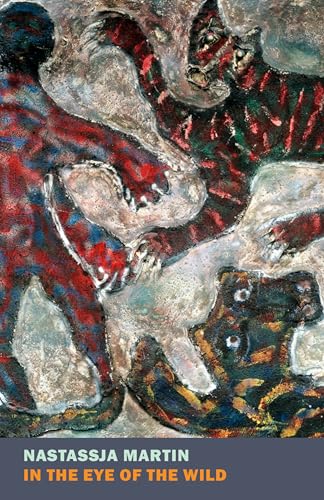
In the Eye of the Wild opens a brutal, graphic bear attack in the remote Kamchatka wilderness. Martin, an anthropologist, is mauled—her jaw shattered, her body torn, surviving only through sheer will and a series of grueling surgeries. The writing in these early pages is stark and unflinching, a raw recounting of trauma that doesn’t flinch from the blood, the pain, or the surreal clarity that comes with facing death.
The book doesn’t stay grounded in the physical for long. As Martin recovers, she begins to interpret the attack not just as a biological event, but as a metaphysical transformation. She leans into the animist beliefs of the Even people, suggesting that she has become 'medka' — part human, part bear. This is where the narrative takes a turn into territory that is poetic and perplexing. Martin’s reflections on identity, nature, and the dissolution of boundaries between species are undeniably thought-provoking. Yet her insistence on framing the bear encounter as a kind of spiritual initiation can feel like a stretch. The anthropological lens she applies is fascinating, but at times it veers into mysticism. It’s not just a survival story, nor is it a straightforward anthropological study. It’s a hybrid blending memoir, philosophy, and myth into an amalgamation of something compelling if not outright strange.
★★★
In the Eye of the Wild opens a brutal, graphic bear attack in the remote Kamchatka wilderness. Martin, an anthropologist, is mauled—her jaw shattered, her body torn, surviving only through sheer will and a series of grueling surgeries. The writing in these early pages is stark and unflinching, a raw recounting of trauma that doesn’t flinch from the blood, the pain, or the surreal clarity that comes with facing death.
The book doesn’t stay grounded in the physical for long. As Martin recovers, she begins to interpret the attack not just as a biological event, but as a metaphysical transformation. She leans into the animist beliefs of the Even people, suggesting that she has become 'medka' — part human, part bear. This is where the narrative takes a turn into territory that is poetic and perplexing. Martin’s reflections on identity, nature, and the dissolution of boundaries between species are undeniably thought-provoking. Yet her insistence on framing the bear encounter as a kind of spiritual initiation can feel like a stretch. The anthropological lens she applies is fascinating, but at times it veers into mysticism. It’s not just a survival story, nor is it a straightforward anthropological study. It’s a hybrid blending memoir, philosophy, and myth into an amalgamation of something compelling if not outright strange.
★★★
109labfs39
>108 stretch: This review caught my eye because I read Black Woods, Blue Sky earlier this year. It's a novel about some of these themes, set in Alaska.
110FlorenceArt
>104 stretch: Great review of what sounds like a fascinating book!
111stretch
Why I Love Horror by Becky Siegel Spratford
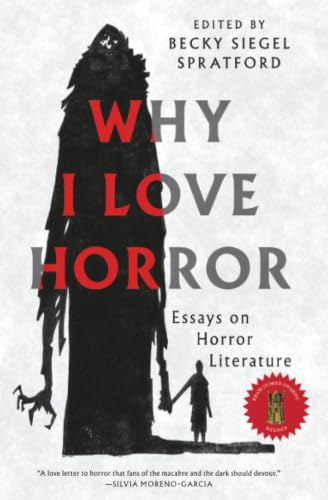
Why I Love Horror is a passionate, diverse, and deeply personal tributes to a genre that continues to evolve, provoke, and captivate. Curated by Becky Spratford, a respected horror expert and librarian, this essay collection is a celebration of horror in all its chilling, cathartic, and emotionally resonant forms. The book features essays from some of the most influential voices in contemporary horror, each bringing a distinct perspective that contributes to a rich and varied exploration of what makes the genre so compelling. Some essays are nostalgic, recalling childhood encounters with monsters under the bed, dog-eared paperbacks hidden under pillows, and the thrill of late-night movie marathons. Others are analytical, examining horror’s role in confronting social injustice, processing trauma, and exploring identity through metaphor and fear. Together, these essays form a multifaceted portrait of horror as both a cultural force and a deeply personal experience. All are united by a shared reverence for the genre’s ability to unsettle, challenge, and ultimately heal. Spratford’s curation is thoughtful and intentional, reflecting her deep knowledge of horror literature and her commitment to elevating the genre. Her work makes this collection not only a celebration of horror, but also a valuable resource for readers, educators, and fans seeking to understand why fear continues to fascinate.
★★★★½
Connective Tissue: Ex Libris, American Scary
Why I Love Horror is a passionate, diverse, and deeply personal tributes to a genre that continues to evolve, provoke, and captivate. Curated by Becky Spratford, a respected horror expert and librarian, this essay collection is a celebration of horror in all its chilling, cathartic, and emotionally resonant forms. The book features essays from some of the most influential voices in contemporary horror, each bringing a distinct perspective that contributes to a rich and varied exploration of what makes the genre so compelling. Some essays are nostalgic, recalling childhood encounters with monsters under the bed, dog-eared paperbacks hidden under pillows, and the thrill of late-night movie marathons. Others are analytical, examining horror’s role in confronting social injustice, processing trauma, and exploring identity through metaphor and fear. Together, these essays form a multifaceted portrait of horror as both a cultural force and a deeply personal experience. All are united by a shared reverence for the genre’s ability to unsettle, challenge, and ultimately heal. Spratford’s curation is thoughtful and intentional, reflecting her deep knowledge of horror literature and her commitment to elevating the genre. Her work makes this collection not only a celebration of horror, but also a valuable resource for readers, educators, and fans seeking to understand why fear continues to fascinate.
★★★★½
Connective Tissue: Ex Libris, American Scary
112stretch
Irons in the Fire by John McPhee
I have a strong bias, but John McPhee’s Irons in the Fire is a masterful rendition of narrative nonfiction; richly textured stories shaped by McPhee’s insatiable curiosity and meticulous reporting. With his signature blend of literary and journalistic precision, McPhee crafts essays that act as a reminder that even the most overlooked stories can reveal unexpected depth and meaning.
The title essay centers on a brand inspector in Nevada, a figure who might seem anachronistic but proves deeply relevant in the modern West. McPhee immerses readers in the gritty, sun-scorched terrain of contemporary ranching, where cattle rustling remains a real and evolving crime. He evokes the rhythms of life on remote ranches, capturing the isolation, the dust and heat, the camaraderie among the crew, and the quiet authority of the inspector, who reads brands like a second language.
A standout essay explores forensic geology. McPhee introduces readers to pioneering FBI geologists who use soil and rock evidence with remarkable precision. He recounts how mineral grains found on a car’s undercarriage helped identify the killer of beer magnate Adolph Coors, and how another geologist played a key role in solving the murder of DEA agent Enrique Salazar in Mexico, despite resistance from corrupt officials. McPhee traces the field’s origins to early European cases, including Georg Popp’s groundbreaking work in 1904, where soil layers on a suspect’s clothing helped reconstruct a murder scene. These geologists act as detectives, decoding the earth’s subtle clues to uncover truths hidden beneath the surface. Even a single grain of sand can become a key witness. In one particularly compelling case study, McPhee recounts the history of Japan’s World War II balloon bombing campaign. These hydrogen-filled paper balloons, carried across the Pacific by the jet stream, were designed to ignite forest fires and create panic in the American West. Though largely ineffective, one balloon tragically killed six civilians in Oregon in 1945, marking the only enemy-inflicted fatalities on the U.S. mainland during the war. McPhee uses this episode to illustrate how forensic geologists helped trace the origin of the sand ballast used in the balloons, identifying its Japanese source and helping unravel the mystery behind the attacks.
Other essays in the collection offer equally engaging perspectives. One provides a brief but thoughtful look into the parole system, highlighting the human complexities behind institutional processes. McPhee presents this story with quiet empathy, avoiding sensationalism and focusing instead on the lived realities of justice and rehabilitation. In another, he shifts to one of the last untouched forests in New Jersey, reflecting on conservation and the subtle power of wilderness. His reverence for nature and its cultural significance comes through in this compact meditation. McPhee also investigates environmental hazards, focusing on the disposal of used tires, he examines how tire piles pose fire dangers, scar landscapes, and challenge both regulators and industry to find sustainable solutions. Another essay offers a colorful account of an exotic car auction in Pennsylvania, where personalities and passions collide in a spectacle of nostalgia and mechanical beauty. And in a particularly memorable piece, McPhee blends history, geology, and cultural commentary to trace the physical and symbolic journey of Plymouth Rock, exploring how landscapes and artifacts shape national identity.
Throughout Irons in the Fire, McPhee’s writing is clear, thoughtful, and observant. He approaches his subjects (cowboys, scientists, parolees, auctioneers) with respect and curiosity, letting their stories unfold without embellishment. The collection shows how much depth can be found in everyday lives and places when viewed with attention and care.
★★★★
Connective Tissue: Annals of the Former World, The Control of Nature, Salvador
I have a strong bias, but John McPhee’s Irons in the Fire is a masterful rendition of narrative nonfiction; richly textured stories shaped by McPhee’s insatiable curiosity and meticulous reporting. With his signature blend of literary and journalistic precision, McPhee crafts essays that act as a reminder that even the most overlooked stories can reveal unexpected depth and meaning.
The title essay centers on a brand inspector in Nevada, a figure who might seem anachronistic but proves deeply relevant in the modern West. McPhee immerses readers in the gritty, sun-scorched terrain of contemporary ranching, where cattle rustling remains a real and evolving crime. He evokes the rhythms of life on remote ranches, capturing the isolation, the dust and heat, the camaraderie among the crew, and the quiet authority of the inspector, who reads brands like a second language.
A standout essay explores forensic geology. McPhee introduces readers to pioneering FBI geologists who use soil and rock evidence with remarkable precision. He recounts how mineral grains found on a car’s undercarriage helped identify the killer of beer magnate Adolph Coors, and how another geologist played a key role in solving the murder of DEA agent Enrique Salazar in Mexico, despite resistance from corrupt officials. McPhee traces the field’s origins to early European cases, including Georg Popp’s groundbreaking work in 1904, where soil layers on a suspect’s clothing helped reconstruct a murder scene. These geologists act as detectives, decoding the earth’s subtle clues to uncover truths hidden beneath the surface. Even a single grain of sand can become a key witness. In one particularly compelling case study, McPhee recounts the history of Japan’s World War II balloon bombing campaign. These hydrogen-filled paper balloons, carried across the Pacific by the jet stream, were designed to ignite forest fires and create panic in the American West. Though largely ineffective, one balloon tragically killed six civilians in Oregon in 1945, marking the only enemy-inflicted fatalities on the U.S. mainland during the war. McPhee uses this episode to illustrate how forensic geologists helped trace the origin of the sand ballast used in the balloons, identifying its Japanese source and helping unravel the mystery behind the attacks.
Other essays in the collection offer equally engaging perspectives. One provides a brief but thoughtful look into the parole system, highlighting the human complexities behind institutional processes. McPhee presents this story with quiet empathy, avoiding sensationalism and focusing instead on the lived realities of justice and rehabilitation. In another, he shifts to one of the last untouched forests in New Jersey, reflecting on conservation and the subtle power of wilderness. His reverence for nature and its cultural significance comes through in this compact meditation. McPhee also investigates environmental hazards, focusing on the disposal of used tires, he examines how tire piles pose fire dangers, scar landscapes, and challenge both regulators and industry to find sustainable solutions. Another essay offers a colorful account of an exotic car auction in Pennsylvania, where personalities and passions collide in a spectacle of nostalgia and mechanical beauty. And in a particularly memorable piece, McPhee blends history, geology, and cultural commentary to trace the physical and symbolic journey of Plymouth Rock, exploring how landscapes and artifacts shape national identity.
Throughout Irons in the Fire, McPhee’s writing is clear, thoughtful, and observant. He approaches his subjects (cowboys, scientists, parolees, auctioneers) with respect and curiosity, letting their stories unfold without embellishment. The collection shows how much depth can be found in everyday lives and places when viewed with attention and care.
★★★★
Connective Tissue: Annals of the Former World, The Control of Nature, Salvador
113labfs39
>112 stretch: I found this review interesting. I hadn't heard the term "forensic geology" before, nor the war balloon incident. Thanks for sharing on a book that I would never pick up on my own.
114stretch
>113 labfs39: Growing up in the west, I knew about the balloon bombs but never heard the story of their construction and function, it is an interesting side of the Geology that makes for ineresting fodder. A case hinging on a pebble of a few grains of sand can be scetchy at best in a court setting like the Coors case has a lot of smoke, and the other circumstantail evidence adds up but tracing the mud on the car's wheel well makes for a good story, not the nail in the coffin. The way John McPhee writes about geology is unique in the world of narrative nonfiction, this is a much easier way in then his longer geology works.
115stretch
Listening to a podcast on developing a personnel cannon of books that aren't just favorites but the ones that fundamentally changed your own reading directions got me thinking it would be an interesting exercise.
Personal Cannon in Five books:
It is hard to constrain a list like this leaving off so many books like Harry Potter, The Lottery, Goosebumps, Hitchhiker to Galaxy, Animal Farm, Brave New World, Black Rain, A Sand County Almanac, and A Civil War: A Narrative. All great and fundamental in their own ways, but I think the five I got are turning points, whereas the others just add to cannon sort of speak.
Personal Cannon in Five books:
-
Annals of the Former World -- This is like the geologist cat nip, but also complete flip on science and nature writing that I seek. Firmed up becoming a working a geologist for me.
The Black Cat -- The first of the horrors that would slowly influence all of my reading into a darker fiction.
Hiroshima -- I have been enthralled with this book ever since reading it, one of the very few works I've re-read multiple times, helps that it is short. Couldn't possibly leave it off a list of books that influenced my reading personally.
The Jungle -- First adult book read that wasn't assigned reading.
Fires on the Plain -- Not the first but second Japanaese literature book that cemented Japanese Literature as thing for me.
It is hard to constrain a list like this leaving off so many books like Harry Potter, The Lottery, Goosebumps, Hitchhiker to Galaxy, Animal Farm, Brave New World, Black Rain, A Sand County Almanac, and A Civil War: A Narrative. All great and fundamental in their own ways, but I think the five I got are turning points, whereas the others just add to cannon sort of speak.
116baswood
Interesting; I have read three of those and the remaining two Annals of the Former World and Hiroshima look very interesting.
A Personal Cannon of course is personal, but it got me thinking which books were turning points in my reading.............
A Personal Cannon of course is personal, but it got me thinking which books were turning points in my reading.............
117stretch
>116 baswood: Yeah it was bit of a fun exercise to think about and not just pick favorites, although these are favorites just not the ones that would immediately hump out at me. The Black Cat isn't even in my top 5 favorite Poe stories but was the first one read that really flipped my own reading of psychological horror and what stories good do way back in elementary school.
You don't have to take on Annals of the Former World all at once, it is a giant tome, It's actually 5 of John McPhee's books collected into a single narrative. Basin and Range, In Suspect Terrain, Rising from the Plains, Assembling California, and Crossing the Craton. Although you may not ab able to get the last one as a stand alone, it's the boring flat bit of North America so it doesn't have the drama of mountain building.
You don't have to take on Annals of the Former World all at once, it is a giant tome, It's actually 5 of John McPhee's books collected into a single narrative. Basin and Range, In Suspect Terrain, Rising from the Plains, Assembling California, and Crossing the Craton. Although you may not ab able to get the last one as a stand alone, it's the boring flat bit of North America so it doesn't have the drama of mountain building.
118labfs39
I really liked Hiroshima and Fires on the Plain too. My five most influential books might be:
Bloodlands: Between Hitler and Stalin - after years studying Eastern Europe, this book completely changed my perspective
Maus - my first graphic novel
Black Holes and Warped Space Time - the first adult science book I read, made a huge impression on me
Tisha: The Story of a Young Teacher in the Alaska Wilderness - read as a teen, encouraged my interest in teaching
Gone with the Wind - first long adult book that I read as a kid
Bloodlands: Between Hitler and Stalin - after years studying Eastern Europe, this book completely changed my perspective
Maus - my first graphic novel
Black Holes and Warped Space Time - the first adult science book I read, made a huge impression on me
Tisha: The Story of a Young Teacher in the Alaska Wilderness - read as a teen, encouraged my interest in teaching
Gone with the Wind - first long adult book that I read as a kid
119stretch
>118 labfs39: I didn't explain mine I should explain the ones I pcked. Maus was also my first graphic novel and the reason why I enjoy the medium now. It would make the list if there was 10 for sure.
121rasdhar
>112 stretch: Fascinating. I too had not heard of 'forensic geology'.
>115 stretch: The only one on your canon I've read is The Black Cat and that was years ago....I must explore this list some more.
>115 stretch: The only one on your canon I've read is The Black Cat and that was years ago....I must explore this list some more.
122labfs39
>119 stretch: I had not read a lot of comics as a kid, only those in the weekend newspaper, so Maus struck me like a thunderbolt. That such serious adult topics as the Holocaust and parental relationships could be dealt with in a visual work was revelatory.
>120 RidgewayGirl: Something about Tisha resonated and inspired me. She was idealistic yet pragmatic too, and the compassionate way in which all the different people were portrayed was hopeful that people were basically good and could change over time. Besides it was a darned good adventure story too.
>120 RidgewayGirl: Something about Tisha resonated and inspired me. She was idealistic yet pragmatic too, and the compassionate way in which all the different people were portrayed was hopeful that people were basically good and could change over time. Besides it was a darned good adventure story too.
123stretch
Death Of A Salesman by Arthur Miller
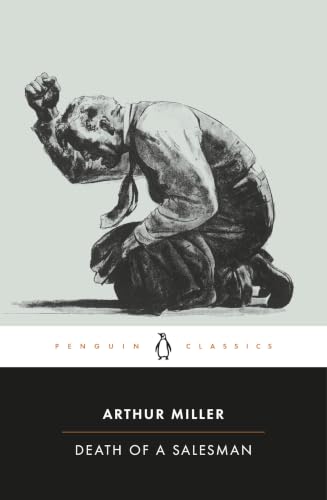
Death of a Salesman was a powerful read that I should have gotten to much sooner. Arthur Miller tells the story of Willy Loman, a salesman who dreams of success but struggles to face the truth about his life. The play shows how chasing the American Dream can lead to disappointment when it’s built on false hopes. What struck me most was how real the family feels; Willy’s wife Linda tries to hold things together, while his sons wrestle with their own failures. The writing is clear and direct, and even though it was written decades ago, the themes of ambition, pride, and regret still feel very close to home.
★★★★★
Death of a Salesman was a powerful read that I should have gotten to much sooner. Arthur Miller tells the story of Willy Loman, a salesman who dreams of success but struggles to face the truth about his life. The play shows how chasing the American Dream can lead to disappointment when it’s built on false hopes. What struck me most was how real the family feels; Willy’s wife Linda tries to hold things together, while his sons wrestle with their own failures. The writing is clear and direct, and even though it was written decades ago, the themes of ambition, pride, and regret still feel very close to home.
★★★★★
124kjuliff
>123 stretch: Although I haven’t read Death of a Salesman I understand that the Coen brothers film “ Glengarry Glen Ross” is based on the idea behind it. Have you seen the film and do you know if it’s true?
125stretch
>124 kjuliff: I have seen the film, Jack Lemmon is always a fantastic watch. That is interesting that it is based somewhat on the play, I'd not made the connection, but I can kind of see the parrallels in Jack's character and Willy. Older men at the tail ends of careers that failed to live up their own ambitions. The Coen brothers certainly matched the tone and theme of the play. i think the play ends in a more gut wrenching place as a family drama.
126KeithChaffee
Glengarry Glen Ross is not a Coen brothers film; it was directed by James Foley.
127kjuliff
>126 KeithChaffee: Oh, of course. I was mixing up my salesmen. Thinking of Fargo. But I can’t imagine Henry Miller writing about a death by wood chipper.
128rocketjk
>126 KeithChaffee: Also, just a point of information that the movie Glengarry Glen Ross is a film adaptation of a David Mamet play.
129LolaWalser
>123 stretch:
Seeing how much you liked it... Miller's account of staging the play in Beijing in the 1980s, with a Chinese cast, is terrific and practically a commentary on the play itself.
Seeing how much you liked it... Miller's account of staging the play in Beijing in the 1980s, with a Chinese cast, is terrific and practically a commentary on the play itself.
130stretch
>129 LolaWalser: Neat! I’ll have to look for that, it’d be really interesting to see how the play would play to an audience in Beijing.
131stretch
Nocturne of Remembrance by Shichiri Nakayama
Translated by Paul Rubin
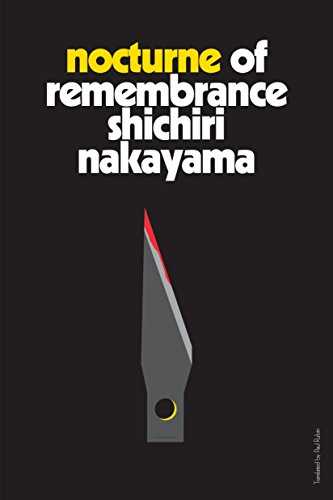
A solid legal thriller that stands out for its portrayal of Japan’s unique trial system. The novel offers an intriguing look at courtroom dynamics that differ from Western conventions. The opening chapter introduces a compelling and disturbing premise that is layered with moral ambiguity and filled with potential. While this beginning feels somewhat disconnected from the main body of the story, Nakayama cleverly ties it back in by the end. The plot delivers a good story overall, though seasoned readers may find many of the twists easy to predict. Even so, the journey remains engaging thanks to strong character work and the ethical dilemmas woven throughout. The ending is particularly noteworthy: it strikes a delicate balance between justice and injustice, framed against a backdrop of terrible circumstances. While not flawless, it succeeds as an atmospheric, thought-provoking courtroom drama that blends legal tension with psychological depth.
★★★★
Connective Tissue: Penance
Translated by Paul Rubin
A solid legal thriller that stands out for its portrayal of Japan’s unique trial system. The novel offers an intriguing look at courtroom dynamics that differ from Western conventions. The opening chapter introduces a compelling and disturbing premise that is layered with moral ambiguity and filled with potential. While this beginning feels somewhat disconnected from the main body of the story, Nakayama cleverly ties it back in by the end. The plot delivers a good story overall, though seasoned readers may find many of the twists easy to predict. Even so, the journey remains engaging thanks to strong character work and the ethical dilemmas woven throughout. The ending is particularly noteworthy: it strikes a delicate balance between justice and injustice, framed against a backdrop of terrible circumstances. While not flawless, it succeeds as an atmospheric, thought-provoking courtroom drama that blends legal tension with psychological depth.
★★★★
Connective Tissue: Penance
132qebo
>131 stretch: intriguing look at courtroom dynamics that differ from Western conventions
This sounds interesting. Anything you can describe as an example?
This sounds interesting. Anything you can describe as an example?
133stretch
>132 qebo: Given Japan’s high criminal conviction rate (over 90%), the appeals process primarily focuses on reducing sentences rather than overturning verdicts. Japan also employs the Saiban-in system, a quasi-jury model introduced in 2009 that blends elements of the common law jury system and the European mixed court system. This system enables citizen participation in certain criminal trials through lay judges, who work alongside professional judges to review evidence and determine both guilt and sentencing. Which I found interesting to learn about, this book certainly isn't a in depth examination of the system as its just the fictional backdrop for the story to play out, but it was an interesting rabbit hole.
134rasdhar
>131 stretch: Nocturne of Remembrance sounds interesting, added it to my list and enjoyed your review. Your comments about the courtroom system were also helpful - I did not know that the Japanese quasi jury system functioned like this.
135stretch

As a quick 2025 reading wrap-up, a few statistical revealations of a highly productive year where you surpassed your initial goals and refined reading tastes.
- Completed 70 books totaling 16,148 pages, maintaining a consistent pace of approximately 5.8 books per month and finishing each title in an average of 9.3 days.
This year marked a peak in quality, with your average rating rising to 3.61; notably higher than your lifetime average. Favorite genres of Horror and Literary fiction.
Next year I am going to reduce the numerical goals and just keep track of reads see how that changes what I read or if it has any effect at all.
The Stats:
Vitals:
Total Number of Books = 70 | Pace = 5.83
Fiction = 23 | 32.9%
Non-Fiction = 18 | 25.7%
Other = 9 | 12.9%
Article = 20 | 28.6%
Total Number of Pages = 16,148 | Average = 323
Audio Hours Listened = 34.3 | Median = 208
Podcast Hours Listened = 598.9
Average Number Days = 9.3
Average Pages per Day = 44.7
Allocation:
Bought = 31 | 44.3%
Borrowed = 22 | 31.4%
Stole = 17 | 24.3%
Author Demographics:
Male = 42 | 60.0%
Female = 23 | 32.9%
Mixed = 5 | 7.1%
New to Me = 40 | 57.1%
Diverse Read = 18 | 25.7%
Translated = 14 | 60.9%
More than 1 book: Amanda Lovelace (3), Red Lagoe (2), Shuzo Oshimi (3)
Country of Origin:
U.S. = 44
U.K. = 7
Japan = 13
France = 3
Canada = 1
Poland = 1
Estonia = 1
Publication Year:
2020+ = 32
2010-2019 = 17
2000-2009 = 5
1990-1999 = 3
1980-1989 = 4
Pre-1980 = 9
Avg. Pub. Year = 2009
Median Pub. Year = 2019
Ratings:
5 = 4
4.5 = 11
4 = 14
3.5 = 20
3 = 14
2.5 = 3
2 = 3
1.5 = 1
1 = 0
Average = 3.61
40.3% Rated 4 stars or higher
47.2% Rated between 3 & 4 stars
9.7% Rated below 3 stars
Favorites of 2025
1st Quarter:
(nf) The Civil War: A Narrative Vol. 2 by Shelby Foote
(s) Grave of the Fireflies by Akiyuki Nosaka
(nf) The Wager by David Grann
(f) Worst Case Scenario by T.J. Newman
(f) Scorch Atlas by Blake Butler
(p) Into the Forest and All the Way Through by Cynthia Pelayo
(f) Hysteria: Lolly and Lady Vanity by Ali Seay
2nd Quarter:
(p) Satan's Sweethearts by Marge Simon & Mary Turzillo
(f) White Ibis by Wendy Dalrymple
(nf) How to Read a Book by Mortimer Alder & Charles Doren
(p) Choking Back the Devil by Donna Lynch
(f) Saving Noah by Lucinda berry
(nf) American Scary by Jeremy Dauber
(nf) On Abolishing Political Parties by Simone Weil
(s) The Blanks by Grady Hendrix
3rd Quarter:
(f) Hard Mountain Clay by C.W. Blackwell
(f) Gold Rush by Yu Miri
(f) Two-Step Devil by Jamie Quatro
(f) Strange Houses by Uketsu
(ss) Duel by Richard Matherson
(nf) The Demon of Unrest by Erik Larson
(f) Sympathy Tower Tokyo by Rie Qudan
4th Quarter:
(nf) Why I Love Horror by Becky Siegel Spratford
(f) Rekt by Alex Gonzalez
(nf) Irons from the Fire by John McPhee
(d) Death of a Salesman by Arthur Miller
(f) Killer on the Road/The Babysitter Lives by Stephen Graham Jones
(f) The Long Low Whistle by Laurel Hightower
(f) Nocturnes of Remembrance by ShiChiri Nakayama
(nf) Horror: A Literary History by Xavier Aldana Reyes et. al.
A bit of fun:
The Finest of January: Grave of the Fireflies by Akiyuki Nosaka
Runner up: The Civil War: A Narrative: Volume 2: Fredericksburg to Meridian by Shelby Foote
Greatest of February:The Wager by David Grann
Runner Up: First Love by Rio Shimamoto
The Supreme in March: Worst Case Scenario by T.J. Newman
Runner Up: Hysteria: Lolly & Lady Vanity by Ali Seay
Tippy-Top of April: Satan's Sweethearts by Marge Simon and Mary Turzillo
Runner Up: Choking Back the Devil by Donna Lynch
The Outstanding of May: None.
Runner up: N/A
Premier of June: Hard Mountain Clay by C.W. Blackwell
Runner Up: On Abolishing Political Parties by Simone Weil
Most Optimal of July: Two-Step Devil by Jamie Quatro
Runner Up: Gold Rush by Miri Yu
Excellent in August: Strange Houses by Uketsu
Runner Up: Duel by Richard Matherson
Singularly Exceptional in September: Sympathy Tower Tokyo by Rie Qudan
Runner Up: The Demon of Unrest by Erik Larson
Superior of October: Why I Love Horror by Becky Siegel Spratford
Runner Up: Irons in the Fire by John McPhee
Peerless in November: The Long Low Whistle by Laurel Hightower
Runner Up: Death of a Salesman by Arthur Miller
Smash Hit of December: Nocturnes of Rememberance by Shichiri Nakayama
Runner Up: Horror: A Literary History by Xaviar Aldana Reyes

136baswood
>135 stretch: Thats a great summary and I am going to catch up on On the abolition of all political parties by Simone weil
137lilisin
>135 stretch:
A great reading year and looks like you really hit gold with your Japanese reads! Looking forward to another year of reading with you.
A great reading year and looks like you really hit gold with your Japanese reads! Looking forward to another year of reading with you.
138stretch
>136 baswood: Thanks, I got a lot out of Well's book, even if I thought it was too idealistic in the end.
>137 lilisin: I really found a few good Japanese reads this year. Different from my plan going in for sure, next year I think I can pursue some of those classics I've been meaning to tackle next year. Abe, No Longer Human, etc. Not feeling the new releases are going to be distracting next year.
>137 lilisin: I really found a few good Japanese reads this year. Different from my plan going in for sure, next year I think I can pursue some of those classics I've been meaning to tackle next year. Abe, No Longer Human, etc. Not feeling the new releases are going to be distracting next year.
139lilisin
>138 stretch:
I can say that I found the new releases this year a bit lackluster. Not saying there aren't good books on the list, but I'm not on the edge of my seat wanting to get to them. Are you going to read the new translation for No Longer Human or stick with the older one? I thought I had this book on my TBR but it turns out I only have The Setting Sun so it looks like I'll be reading the new translation eventually.
I can say that I found the new releases this year a bit lackluster. Not saying there aren't good books on the list, but I'm not on the edge of my seat wanting to get to them. Are you going to read the new translation for No Longer Human or stick with the older one? I thought I had this book on my TBR but it turns out I only have The Setting Sun so it looks like I'll be reading the new translation eventually.
141FlorenceArt
>138 stretch: My grandfather was a great fan of Simone Weil, he had a photo of her in his study I think. Unfortunately I’m not a great fan of my grandfather so I’ve always had a skeptical view of Weil. I should read her though.
142rasdhar
>135 stretch: I am so impressed with your careful data management and your lists are a pleasure to read. Happy reading in 2026!
143stretch
>142 rasdhar: Thanks, that spreadsheet is a bit of monster, started out simple and has ratcheted up the compilcation over time, probably wouldn't do it that way if i had to start over again.

