1NielsenGW
Howdy all! I'm back for another go here in 2025.
I read mainly non-fiction, and some obscure stuff at that, as I'm trying to complete the Dewey Decimal Challenge (at some point).
If you need a quiet oasis, then stop on by.
I read mainly non-fiction, and some obscure stuff at that, as I'm trying to complete the Dewey Decimal Challenge (at some point).
If you need a quiet oasis, then stop on by.
2PaulCranswick
Happy 2025, Gerard.
4thornton37814
Have a great year of reading!
5NielsenGW
Book 1: Tradition and Enlightenment in The Tuscan Academies, 1690-1800 by Eric Cochrane. Chicago: University of Chicago Press, 1961. 248 pp.

Eric Cochrane's fairly comprehensive survey of the landscape and evolution of academic societies in Tuscan Italy is about the best one can hope for. He identifies five themes and follows their shape through the 100ish years of the book's scope. From the Apatisti to the Georgofili to the Crusca, each organization has its focus and its flaws. One group, for example, spent a fair amount of energy making sure that only Tuscan words were in its publications, much to the chagrin of anyone just wishing to get their ideas out there. There are still vestiges of these societies left in Tuscany, but the glory days are far behind them. This book reads a lot like someone Master's or PhD work getting published, but should be of interest to fans of either Italian or scholastic history.

Eric Cochrane's fairly comprehensive survey of the landscape and evolution of academic societies in Tuscan Italy is about the best one can hope for. He identifies five themes and follows their shape through the 100ish years of the book's scope. From the Apatisti to the Georgofili to the Crusca, each organization has its focus and its flaws. One group, for example, spent a fair amount of energy making sure that only Tuscan words were in its publications, much to the chagrin of anyone just wishing to get their ideas out there. There are still vestiges of these societies left in Tuscany, but the glory days are far behind them. This book reads a lot like someone Master's or PhD work getting published, but should be of interest to fans of either Italian or scholastic history.
6NielsenGW
Book 2: Illusory Dwellings: Aesthetic Meditations in Kyoto by Allen S. Weiss. Berkeley, CA: Stone Bridge Press, 2024. 157 pp.
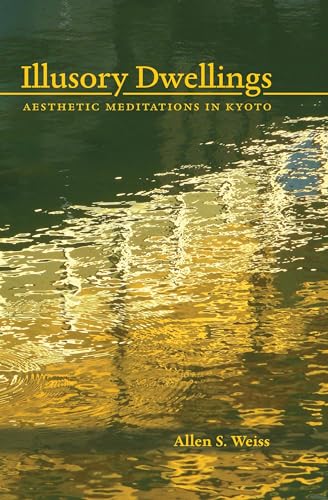
This book is one I'll have to come back to over and over again. One part travelogue (but not really), one part biography (but not really), one part art history (mostly art history), it threads a weird path between scholarly, pompous, conversational, critical, wondrous, and meditative. Almost all adjectives can be employed here -- there were moments of weird anger following by a serenity not usually found in modern art literature. If any of that was the slightest bit intriguing, pick this one up.
This book is one I'll have to come back to over and over again. One part travelogue (but not really), one part biography (but not really), one part art history (mostly art history), it threads a weird path between scholarly, pompous, conversational, critical, wondrous, and meditative. Almost all adjectives can be employed here -- there were moments of weird anger following by a serenity not usually found in modern art literature. If any of that was the slightest bit intriguing, pick this one up.
8NielsenGW
Book 3: The Americanization of the British Press, 1830s - 1914: Speed in the Age of Transatlantic Journalism by Joel H. Wiener. New York: Palgrave Macmillan, 2011. 234 pp.

Joel Wiener's competent history of both American and British journalism was as interesting as one could expect. We get a lot of back-and-forth trendsetting, from the use of runners to get news back to the press faster to the introduction of telegraphs and telephones to the establishment of regional offices to collect news more locally. What struck me most was how quickly a newspaper could be established and start making a splash (and a profit). The era covered by this book sees the creation of the London Daily Mail, the Chicago Tribune, the New York Times, and the Washington Post, so we also see the great news titans emerge -- Hearst, Pulitzer, Stead, and the like. We go from local gossip to international sensations to an understanding that news should be simple, informative, and accessible to all. Overall, a good, well-researched, but not great, book.

Joel Wiener's competent history of both American and British journalism was as interesting as one could expect. We get a lot of back-and-forth trendsetting, from the use of runners to get news back to the press faster to the introduction of telegraphs and telephones to the establishment of regional offices to collect news more locally. What struck me most was how quickly a newspaper could be established and start making a splash (and a profit). The era covered by this book sees the creation of the London Daily Mail, the Chicago Tribune, the New York Times, and the Washington Post, so we also see the great news titans emerge -- Hearst, Pulitzer, Stead, and the like. We go from local gossip to international sensations to an understanding that news should be simple, informative, and accessible to all. Overall, a good, well-researched, but not great, book.
9NielsenGW
Book 4: Babysitter: An American History by Miriam Forman-Brunell. New York: New York University Press, 2009. 220 pp.

Miriam Forman-Brunell's Babysitter is a historical and sociological at the concept of non-parents looking after a family's children. The book is a little drier than one would expect, reading at times more like an academic monograph rather than a popular history, but after a while, the tone draws the reader into a better understanding of all the cultural and social forces that impact the ideas of babysitters and babysitting. Forman-Brunell uses both pop culture references as well as academic data to come to an understanding of the occupation and how it has intersected feminism, economics, society, and media. Overall, a pretty decent book.

Miriam Forman-Brunell's Babysitter is a historical and sociological at the concept of non-parents looking after a family's children. The book is a little drier than one would expect, reading at times more like an academic monograph rather than a popular history, but after a while, the tone draws the reader into a better understanding of all the cultural and social forces that impact the ideas of babysitters and babysitting. Forman-Brunell uses both pop culture references as well as academic data to come to an understanding of the occupation and how it has intersected feminism, economics, society, and media. Overall, a pretty decent book.
10NielsenGW
Book 5: The Delirium of Praise: Bataille, Blanchot, Deleuze, Foucault, Klossowski by Eleanor Kaufman. Johns Hopkins University Press, 2003. 142 pp.

Eleanor Kaufman's Delirium of Praise is somehow both boring and maddening. The central conceit is that five French thinkers -- Bataille, Blanchot, Deleuze, Foucault, and Klossowski -- all shared an intense friendship despite never meeting very often. They were intimate friends via the pen only. Their essays to and about one another creates a string of relationships that helps to shed light on the deeper corners of thought. Or so Kaufman would make it seem. Instead, we get a lot circular logic and seemingly deep analyses that ultimately make things muddier not clearer. These thinkers are famous for their "A is a form of not-A" writing, like "Thinking is a form of thoughtlessness" or "friendship, a deep bond of humanity, contains a measure of inhumanity". Maddening. More often than not, I found the absolute aloofness of the writers the best part of the book. All in all, there are better ways to spend an afternoon.

Eleanor Kaufman's Delirium of Praise is somehow both boring and maddening. The central conceit is that five French thinkers -- Bataille, Blanchot, Deleuze, Foucault, and Klossowski -- all shared an intense friendship despite never meeting very often. They were intimate friends via the pen only. Their essays to and about one another creates a string of relationships that helps to shed light on the deeper corners of thought. Or so Kaufman would make it seem. Instead, we get a lot circular logic and seemingly deep analyses that ultimately make things muddier not clearer. These thinkers are famous for their "A is a form of not-A" writing, like "Thinking is a form of thoughtlessness" or "friendship, a deep bond of humanity, contains a measure of inhumanity". Maddening. More often than not, I found the absolute aloofness of the writers the best part of the book. All in all, there are better ways to spend an afternoon.
11NielsenGW
Book 6: Only the Best / Solo lo Mejor: 100 Great Quotations and Proverbs by Adrienne Avila. New York: Warner Books, 2005. 118 pp.

This is a bilingual collection of Spanish proverbs translated into English. It's nice. If you're one of those people that likes a "quote of the day", here's 100 days' worth. There's not much else to say. It's unoffensive and might guide folks to different voices from the Spanish speaking world.

This is a bilingual collection of Spanish proverbs translated into English. It's nice. If you're one of those people that likes a "quote of the day", here's 100 days' worth. There's not much else to say. It's unoffensive and might guide folks to different voices from the Spanish speaking world.
12NielsenGW
Book 7: Himmler's Auxiliaries: The Volksdeutsche Mittelstelle and the German National Minorities of Europe, 1933-1945 by Valdis O. Lumans. Chapel Hill, NC: The University of North Carolina Press, 1993. 262 pp.

First off, this is a book about dumb Nazis with dumb Nazi ideas doing dumb Nazi things. Feel free to skip it if you want to.
That said, Valdis Lumans's Himmler's Auxiliaries is about the short history of the Volksdeustche Mittelstelle (VoMi), an organization devoted to finding German populations living outside of Germany and supporting them or bringing them back to Germany. It lasted from 1937 to 1945 and was responsible for the unwarranted mass movement of civilians throughout Europe while World War II raged around them. It is very competently written and constitutes the only full history of the organization. Read it only if you have to.

First off, this is a book about dumb Nazis with dumb Nazi ideas doing dumb Nazi things. Feel free to skip it if you want to.
That said, Valdis Lumans's Himmler's Auxiliaries is about the short history of the Volksdeustche Mittelstelle (VoMi), an organization devoted to finding German populations living outside of Germany and supporting them or bringing them back to Germany. It lasted from 1937 to 1945 and was responsible for the unwarranted mass movement of civilians throughout Europe while World War II raged around them. It is very competently written and constitutes the only full history of the organization. Read it only if you have to.
13NielsenGW
Book 8: Inside Old English: Essays in Honour of Bruce Mitchell. Edited by John Walmsley. Malden, MA: Blackwell Publishing, 2006. 267 pp.

To start, I thought a collection of essays on Old English (OE) was going to be fairly boring, but John Walmsley has assembled an insightful baker's dozen of essays from philologists around the world to honor the career of Bruce Mitchell. If you have any interest in linguistics, then this one will hold some fun nuggets for you. There's a whole section on wryness in OE, several deep dives into translation pitfalls in Beowulf, and even a short but educational note on how the current Finnish language can inform an understanding of OE in the present day. All in all, not a bad read.

To start, I thought a collection of essays on Old English (OE) was going to be fairly boring, but John Walmsley has assembled an insightful baker's dozen of essays from philologists around the world to honor the career of Bruce Mitchell. If you have any interest in linguistics, then this one will hold some fun nuggets for you. There's a whole section on wryness in OE, several deep dives into translation pitfalls in Beowulf, and even a short but educational note on how the current Finnish language can inform an understanding of OE in the present day. All in all, not a bad read.
14NielsenGW
Book 9: Pantone: The Twentieth Century in Color by Leatrice Eiseman and Keith Recker. San Francisco, CA: Chronicle Books, 2011. 191 pp.

Eiseman and Recker's Pantone is a fairly simplistic look at the color palettes of certain domains of American life throughout the 20th century. From the Art & Crafts designs of the 1900s to the Hawaiian shirts of the 1940s to the Grunge aesthetics of the 1990s, there is a lot to take in here. Each section, however, is very surface-level and un-nuanced. The focus here is the use of color in each of the spaces, and not an in-depth look at the culture and the history. It works fairly well as a coffee table book, and not much else.

Eiseman and Recker's Pantone is a fairly simplistic look at the color palettes of certain domains of American life throughout the 20th century. From the Art & Crafts designs of the 1900s to the Hawaiian shirts of the 1940s to the Grunge aesthetics of the 1990s, there is a lot to take in here. Each section, however, is very surface-level and un-nuanced. The focus here is the use of color in each of the spaces, and not an in-depth look at the culture and the history. It works fairly well as a coffee table book, and not much else.
15NielsenGW
Book 10: Conflict Management for Libraries by Jack G. Montgomery and Eleanor Cook. Chicago, IL: American Library Association, 2005. 186 pp.

I was honestly expecting Jack Montgomery and Eleanor Cook's Conflict Management for Libraries to be heavy on the legalese and leadership training side of things, but I was pleasantly surprised to find it contained quite a few lessons to internalize. The authors do well to point the reader to more in-depth reading on different nuanced topic in leadership, all the while walking the reader through 17 scenarios where perspective-taking and interpersonal communication are key. Libraries sit at the weird Venn diagram of business-but-not-a-business, nonprofit-but-not-a-nonprofit, and educational-but-not-completely-educational, and so navigating the vagaries of conflicts within is equally as unique. Read this one if you are even the tiniest bit interested.

I was honestly expecting Jack Montgomery and Eleanor Cook's Conflict Management for Libraries to be heavy on the legalese and leadership training side of things, but I was pleasantly surprised to find it contained quite a few lessons to internalize. The authors do well to point the reader to more in-depth reading on different nuanced topic in leadership, all the while walking the reader through 17 scenarios where perspective-taking and interpersonal communication are key. Libraries sit at the weird Venn diagram of business-but-not-a-business, nonprofit-but-not-a-nonprofit, and educational-but-not-completely-educational, and so navigating the vagaries of conflicts within is equally as unique. Read this one if you are even the tiniest bit interested.
16NielsenGW
Book 11: The Poetics of Space by Gaston Bachelard. Boston, MA: Beacon Press, 1994. 241 pp.

Gaston Bachelard's The Poetics of Space is enigmatic, infuriating, bold, poetic, dense, far-reaching, and ultimately craves a second reading. The central conceit is to work through how intimate spaces can be described philosophically, phenomenologically, and poetically, treating each of those fields as theoretically equivalent. Passages in poems referencing corners contribute to a philosophy of corners which informs a phenomenology of those spaces. It's all very mid-century French, and as such, is unapologetic in its forthright-ness. In a way, it's Bachelard's righteousness that keeps the book moving forward. Any doubt on his end, and the whole thing falls apart. It's a tough read to be sure, but not unpleasant.

Gaston Bachelard's The Poetics of Space is enigmatic, infuriating, bold, poetic, dense, far-reaching, and ultimately craves a second reading. The central conceit is to work through how intimate spaces can be described philosophically, phenomenologically, and poetically, treating each of those fields as theoretically equivalent. Passages in poems referencing corners contribute to a philosophy of corners which informs a phenomenology of those spaces. It's all very mid-century French, and as such, is unapologetic in its forthright-ness. In a way, it's Bachelard's righteousness that keeps the book moving forward. Any doubt on his end, and the whole thing falls apart. It's a tough read to be sure, but not unpleasant.
17NielsenGW
Book 12: The Caliph's House: A Year in Casablanca by Tahir Shah. New York: Bantam, 2006. 343 pp.

This is the simple story of a man who buys a house in Casablanca. Just kidding, the mere act of buying sets off a chain of events that sends the reader headlong into the intricacies of Moroccan history, society, and culture. Tahir Shah has no idea what he's in for, but luckily, he lives to tell the tale. From bothersome guardians to a shady assistant to an actual exorcism involving a live goat, this book is weird and wonderful and makes for a pleasant afternoon read.

This is the simple story of a man who buys a house in Casablanca. Just kidding, the mere act of buying sets off a chain of events that sends the reader headlong into the intricacies of Moroccan history, society, and culture. Tahir Shah has no idea what he's in for, but luckily, he lives to tell the tale. From bothersome guardians to a shady assistant to an actual exorcism involving a live goat, this book is weird and wonderful and makes for a pleasant afternoon read.
18NielsenGW
Book 13: Vanity, Vitality, and Virility: The Science behind the Products You Love to Buy by John Emsley. Oxford, UK: Oxford University Press, 2004. 227 pp.

John Emsley's Vanity, Vitality, and Virility is a crash course in consumer and medical chemistry. He examines many spheres of everyday life -- including makeup, drugs, plastics, and food -- to get a deep look at the chemistry at work. At some points, yes, I did start to glaze over when each chemical was listed and each of their interactions with the human body was laid out, but overall, with multiple re-readings, I might start to retain a lot of the chemistry here. I learned at lot more about chlorinates than I expected, to name one. Emsley does well to go through the actual history of the science conducted to delineate the good, bad, and ugly about corporate chemistry. Very refreshingly, he ends with a plea to young scientists to come and help in the field, and that can't be bad at all.

John Emsley's Vanity, Vitality, and Virility is a crash course in consumer and medical chemistry. He examines many spheres of everyday life -- including makeup, drugs, plastics, and food -- to get a deep look at the chemistry at work. At some points, yes, I did start to glaze over when each chemical was listed and each of their interactions with the human body was laid out, but overall, with multiple re-readings, I might start to retain a lot of the chemistry here. I learned at lot more about chlorinates than I expected, to name one. Emsley does well to go through the actual history of the science conducted to delineate the good, bad, and ugly about corporate chemistry. Very refreshingly, he ends with a plea to young scientists to come and help in the field, and that can't be bad at all.
19NielsenGW
Book 14: The Bonobo and the Atheist: In Search of Humanism Among the Primates by Frans de Waal. New York: W.W. Norton, 2013. 240 pp.

Frans de Waal's Bonobo and the Atheist is a delightful look at how we can learn more about ourselves as humans from others in the primate world. The author takes the time to go through the murky world of ethics, morality, and religion to show how pieces and parts of each of those concepts are present in chimpanzee and bonobo social groups. De Waal's perspective is first and foremost that of a scientist, but not a dispassionate observer -- he has skin in the game. He earnestly wants more people to look at how they live their lives and compare that to other hominids. It reads quick, has some very interesting anecdotes, and generally tries to bridge the gap between the two magisteria of science and religion.

Frans de Waal's Bonobo and the Atheist is a delightful look at how we can learn more about ourselves as humans from others in the primate world. The author takes the time to go through the murky world of ethics, morality, and religion to show how pieces and parts of each of those concepts are present in chimpanzee and bonobo social groups. De Waal's perspective is first and foremost that of a scientist, but not a dispassionate observer -- he has skin in the game. He earnestly wants more people to look at how they live their lives and compare that to other hominids. It reads quick, has some very interesting anecdotes, and generally tries to bridge the gap between the two magisteria of science and religion.
20NielsenGW
Book 15: The Collocational Behavior of Anglicisms in German and American Business and News Magazines by Julia Sosnizka. Göttingen, Germany: Cuvillier Verlag, 2014. 236 pp.

Julia Sosnizka's (now Dr. Sosnizka's) Collocational Behavior of Anglicisms in German and American Business and News Magazines is a doctoral dissertation turned monograph on how the German language acquires and integrates English words and phrases. In a language, when two or more words appear near each other more frequently, they become collocates. Sosnizka's hypothesis (at least one of them) was that if a language acquires one part of a collocate, it should acquire all the other parts as well. Comparing German to English, she found this happens only slightly more than half the time. She compares a full year's of writing from each of four different print magazines for the analysis. While a little repetitive, it is competent, organized, and thorough. Unless you are doing research in this niche of this field, feel free to skip this one.

Julia Sosnizka's (now Dr. Sosnizka's) Collocational Behavior of Anglicisms in German and American Business and News Magazines is a doctoral dissertation turned monograph on how the German language acquires and integrates English words and phrases. In a language, when two or more words appear near each other more frequently, they become collocates. Sosnizka's hypothesis (at least one of them) was that if a language acquires one part of a collocate, it should acquire all the other parts as well. Comparing German to English, she found this happens only slightly more than half the time. She compares a full year's of writing from each of four different print magazines for the analysis. While a little repetitive, it is competent, organized, and thorough. Unless you are doing research in this niche of this field, feel free to skip this one.
21NielsenGW
Book 16: Utopia by Sir Thomas More. New York: Washington Square Press, 1965. 127 pp.

This is a classic that I finally got around to. Published in 1516, Sir Thomas More purports to meet a traveler named Raphael Hythlodeaus through his association with Peter Gilles (a clerk in Antwerp) and Hieronymus van Busleyden (a member of the court of Charles V). Raphael then regales the group with a full description of the land of Utopia, an ideal nation in which people form ideal relationships, follow ideal laws, and live ideal lives. Bearing in mind, this was written in the 16th century, More does a good job of balancing the lectures with the ludicrous. A satire to be sure, but an enlightening one nonetheless.

This is a classic that I finally got around to. Published in 1516, Sir Thomas More purports to meet a traveler named Raphael Hythlodeaus through his association with Peter Gilles (a clerk in Antwerp) and Hieronymus van Busleyden (a member of the court of Charles V). Raphael then regales the group with a full description of the land of Utopia, an ideal nation in which people form ideal relationships, follow ideal laws, and live ideal lives. Bearing in mind, this was written in the 16th century, More does a good job of balancing the lectures with the ludicrous. A satire to be sure, but an enlightening one nonetheless.
22NielsenGW
Book 17: Some Things In This World by Joyce Thomas. Montpelier, VT: Rootstock Publishing, 2025. 62 pp.
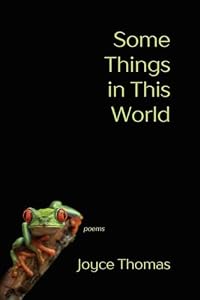
Joyce Thomas's poetry book Some Things in This World is a very clear window into the life of the poet in general. Equal parts languid and livid, Thomas shows that pain and pride may be two halves of the same coin. Much of the book rails against humanity's crimes against nature, and the rest deals with humanity's crimes against itself. It will capably hold your attention for an afternoon, but will come calling later for a second read.
Joyce Thomas's poetry book Some Things in This World is a very clear window into the life of the poet in general. Equal parts languid and livid, Thomas shows that pain and pride may be two halves of the same coin. Much of the book rails against humanity's crimes against nature, and the rest deals with humanity's crimes against itself. It will capably hold your attention for an afternoon, but will come calling later for a second read.
23NielsenGW
Book 18: Words and Rules: The Ingredients of Language by Steven Pinker. London: Phoenix, 1999. 321 pp.

Steven Pinker's Words and Rules is a complex look at how the human mind interprets words as both individual items and parts of a whole amidst the infinite wonders of human language. While the book concentrates on the English-speaking world, Pinker does take a few detours into language history, including the evolution and construction of German, French, and Turkish. These bits from the past can inform how certain word-constructions came to be in the present. Some of the writing tends to get repetitive after a while, but Pinker tries to get into all the nooks and crannies of the regularities and irregularities of how language is constructed and spoken. This book sits nicely at the crossroads of psychology, neuroscience, and linguistics. I wouldn't say this is a casual read, but language nerds may find some good nuggets here.

Steven Pinker's Words and Rules is a complex look at how the human mind interprets words as both individual items and parts of a whole amidst the infinite wonders of human language. While the book concentrates on the English-speaking world, Pinker does take a few detours into language history, including the evolution and construction of German, French, and Turkish. These bits from the past can inform how certain word-constructions came to be in the present. Some of the writing tends to get repetitive after a while, but Pinker tries to get into all the nooks and crannies of the regularities and irregularities of how language is constructed and spoken. This book sits nicely at the crossroads of psychology, neuroscience, and linguistics. I wouldn't say this is a casual read, but language nerds may find some good nuggets here.
24NielsenGW
Book 19: Curious Folks Ask: 162 Real Answers on Amazing Inventions, Fascinating Products, and Medical Mysteries by Sherry Seethaler. Upper Saddle River, NJ: Pearson Education, 2010. 194 pp.

As a Q&A columnist for the San Diego Union-Tribune, Dr. Sherry Seethaler received her fair share of weird and wonderful questions from readers just looking for some order in an inscrutable universe. 162 of those questions are collected in Curious Folks Ask into eight themes for the reader to peruse. Everything from alternating current to zoonotic diseases is covered here. It's a quick read, but will give you a few new nuggets to trot out at dinner parties. All in all, a decent way to pass an afternoon.

As a Q&A columnist for the San Diego Union-Tribune, Dr. Sherry Seethaler received her fair share of weird and wonderful questions from readers just looking for some order in an inscrutable universe. 162 of those questions are collected in Curious Folks Ask into eight themes for the reader to peruse. Everything from alternating current to zoonotic diseases is covered here. It's a quick read, but will give you a few new nuggets to trot out at dinner parties. All in all, a decent way to pass an afternoon.
25NielsenGW
Book 20: Mass Oratory and Political Power in the Late Roman Republic by Robert Morstein-Marx. Cambridge, UK: Cambridge University Press, 2004. 287 pp.

Robert Morstein-Marx's Mass Oratory and Political Power in the Late Roman Republic is not for the faint of heart. You better know your Roman history or this will become a jumble of names and dates and places. Luckily, the Internet is a great tool for getting quick background info on many of the characters under inspection here. His central thesis is that Roman politicians strategically used the organization of public speeches to both influence public opinion and record the temperature of the populace. The author's main figurehead is, of course, Cicero, whose career personifies the modern public speaker. You will gain (very quickly) a lot of new info on how Rome was spatially laid out, the ins and outs of Roman politics, and the vagaries of Roman history. A slow but ultimately rewarding read.

Robert Morstein-Marx's Mass Oratory and Political Power in the Late Roman Republic is not for the faint of heart. You better know your Roman history or this will become a jumble of names and dates and places. Luckily, the Internet is a great tool for getting quick background info on many of the characters under inspection here. His central thesis is that Roman politicians strategically used the organization of public speeches to both influence public opinion and record the temperature of the populace. The author's main figurehead is, of course, Cicero, whose career personifies the modern public speaker. You will gain (very quickly) a lot of new info on how Rome was spatially laid out, the ins and outs of Roman politics, and the vagaries of Roman history. A slow but ultimately rewarding read.
26NielsenGW
Book 21: The Mighty Fallen: Our Nation's Greatest War Memorials by Larry Bond and f-stop Fitzgerald. New York: HarperCollins, 2007. 141 pp.

This is a quintessential coffee table book. It contains a wide range of American and Canadian war memorial statues. Some honor the soldiers, some honor the citizens, and many honor the sacrifices made. It is not very deep, but gives a sense of the amount of memorials out there. The writing is adequate and the photos ever more so. If this was sitting out in a doctor's office waiting room, I'd pick it up for a spell.

This is a quintessential coffee table book. It contains a wide range of American and Canadian war memorial statues. Some honor the soldiers, some honor the citizens, and many honor the sacrifices made. It is not very deep, but gives a sense of the amount of memorials out there. The writing is adequate and the photos ever more so. If this was sitting out in a doctor's office waiting room, I'd pick it up for a spell.
27NielsenGW
Book 22: Persian Fire: The First World Empire and the Battle for the West by Tom Holland. New York: Anchor, 2007. 372 pp.

Tom Holland's Persian Fire is the type of history book that will make you want to read more history books. While it is 370+ pages long, there is a sense here that you need all those pages to cover the vast sprawling histories of both Ancient Greece and the Persian Empire. Holland's prose flows nicely and feels like you are right in the thick of it. From the formation of one of the world's first democracies to the battle at Thermopylae, there is a lot to enjoy here.

Tom Holland's Persian Fire is the type of history book that will make you want to read more history books. While it is 370+ pages long, there is a sense here that you need all those pages to cover the vast sprawling histories of both Ancient Greece and the Persian Empire. Holland's prose flows nicely and feels like you are right in the thick of it. From the formation of one of the world's first democracies to the battle at Thermopylae, there is a lot to enjoy here.
28NielsenGW
Book 23: Gaining Ground: The Origin and Early Evolution of Tetrapods by Jennifer A. Clack. Bloomington, IN: Indiana University Press, 212. 331 pp.

Dr. Jennifer Clack's Gaining Ground is a dense textbook covering the physiology, evolution, and history of tetrapod science. Tetrapods were the first aquatic creatures that evolved limbs to crawl out of the water and thrive on dry(ish) land. Technically, all current four-limbed mammals come from this group, but Dr. Clack focuses on the fossil record of amphibians and amniotes. The information presented here is unapologetically technical, intense, and informative. If you've made it past the basics of paleontology and are looking for a deeper dive, this is the way to go. For the more casual reader, a lot of this will go in one ear and out the other.

Dr. Jennifer Clack's Gaining Ground is a dense textbook covering the physiology, evolution, and history of tetrapod science. Tetrapods were the first aquatic creatures that evolved limbs to crawl out of the water and thrive on dry(ish) land. Technically, all current four-limbed mammals come from this group, but Dr. Clack focuses on the fossil record of amphibians and amniotes. The information presented here is unapologetically technical, intense, and informative. If you've made it past the basics of paleontology and are looking for a deeper dive, this is the way to go. For the more casual reader, a lot of this will go in one ear and out the other.
29alcottacre
You have been doing some great reading this year, Nelson! I am adding several books to the BlackHole based on your recommendations - although I have already read Persian Fire so I can dodge that BB.
Have a marvelous Monday!
Have a marvelous Monday!
30NielsenGW
>29 alcottacre: Ah...but have you read his previous work -- Rubicon? It's just as good.
31alcottacre
>30 NielsenGW: I have read Rubicon as well. I agree, it is just as good.
32NielsenGW
Book 24: The Pope and the Heretic: The True Story of Giordano Bruno, the Man Who Dared to Defy the Roman Inquisition by Michael White. New York: HarperCollins, 2003. 210 pp.

On February 19, 1600, Giordano Bruno was burned at the stake by the Roman Inquisition. His crime: he deigned to think beyond orthodoxy. Michael White's The Pope and the Heretic is a sad look at the short life of Bruno, his philosophy, his execution, and his legacy. Bruno's notion of the infinite as it pertains to the universe was only slightly ahead of its time, and in the centuries that followed, countless scientists would come to many of the same conclusions that Bruno contemplated in the 16th century. His treatment at the hands of the Vatican was tedious at best and torturous at worst. This book is a quick read, but a vexing one.

On February 19, 1600, Giordano Bruno was burned at the stake by the Roman Inquisition. His crime: he deigned to think beyond orthodoxy. Michael White's The Pope and the Heretic is a sad look at the short life of Bruno, his philosophy, his execution, and his legacy. Bruno's notion of the infinite as it pertains to the universe was only slightly ahead of its time, and in the centuries that followed, countless scientists would come to many of the same conclusions that Bruno contemplated in the 16th century. His treatment at the hands of the Vatican was tedious at best and torturous at worst. This book is a quick read, but a vexing one.
33NielsenGW
Book 25: The Grand Inquisitor's Manual: A History of Terror in the Name of God by Jonathan Kirsch. New York: HarperCollins, 2008. 258 pp.

From the 1250s until the mid-1800s, the Catholic charged the various entities now known collectively as The Inquisition to root out and punish heretics and enemies of the Church. Infractions could be as minor greeting known heretics or as major as starting a new branch of Christianity or Protestantism, and included everything in between. If you denied the accusation, then you were charged with lying to the Inquisition. If you accepted the charges, but weren't contrite enough, then you were charged with another offense. Absolutely ghastly stuff. Jonathan Kirsch's Grand Inquisitor's Manual is a depressing telling of the horrible actions of the Catholic against its own members. Read this one only if you're ready for a very frustrating time.
NOTE: I am now done reading inquisition history for a while, I hope...

From the 1250s until the mid-1800s, the Catholic charged the various entities now known collectively as The Inquisition to root out and punish heretics and enemies of the Church. Infractions could be as minor greeting known heretics or as major as starting a new branch of Christianity or Protestantism, and included everything in between. If you denied the accusation, then you were charged with lying to the Inquisition. If you accepted the charges, but weren't contrite enough, then you were charged with another offense. Absolutely ghastly stuff. Jonathan Kirsch's Grand Inquisitor's Manual is a depressing telling of the horrible actions of the Catholic against its own members. Read this one only if you're ready for a very frustrating time.
NOTE: I am now done reading inquisition history for a while, I hope...
34NielsenGW
Book 26: Rodeo by Sunni Brown Wilkinson. Pittsburgh, PA: Autumn House Press, 2025. 72 pp.
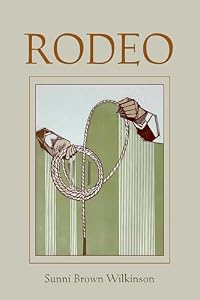
Sunni Brown Wilkinson's Rodeo does a lot of what a good books of poetry should do. There is pain, loss, anger, beauty, stillness, and a sense of place, each in the appropriate amounts. I would urge anyone interested to read this at least two or three times to catch all the little moments that might fly past you on the first go.
Sunni Brown Wilkinson's Rodeo does a lot of what a good books of poetry should do. There is pain, loss, anger, beauty, stillness, and a sense of place, each in the appropriate amounts. I would urge anyone interested to read this at least two or three times to catch all the little moments that might fly past you on the first go.
35NielsenGW
Book 27: Excavations by Sera Maddox Drake. Lavande Mistral Press, 2025. 154pp.
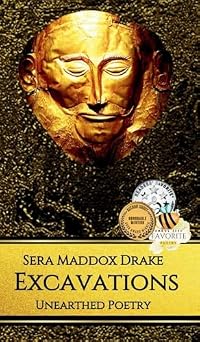
This book of poetry lives in a space haunted by personal archaeology, fantasy, and desperate mythology. The poetry is lyrical in a way that I haven't encountered in a long while. At first, it didn't really grab me, but after not too long, I found myself quickening at each poetic choice. Give this one a few reads before truly forming an opinion.
This book of poetry lives in a space haunted by personal archaeology, fantasy, and desperate mythology. The poetry is lyrical in a way that I haven't encountered in a long while. At first, it didn't really grab me, but after not too long, I found myself quickening at each poetic choice. Give this one a few reads before truly forming an opinion.
36NielsenGW
Book 27: A Man if West Destiny: An Arrangement of Words by Gerome Mauricio. Wise Media Group, 2025. 178 pp.

This book is definitely not for me. It tries too hard to be clever and doesn't achieve even a third of what it wants. The first half reads like snippets from a teenage musician's lyric journal, and the second half is a shotgun blast of short stories hitting with the force of a naive debate competitor. You can tell when the author has chosen what he wants the reader to feel, and then he belabors it. Not my cup of tea.

This book is definitely not for me. It tries too hard to be clever and doesn't achieve even a third of what it wants. The first half reads like snippets from a teenage musician's lyric journal, and the second half is a shotgun blast of short stories hitting with the force of a naive debate competitor. You can tell when the author has chosen what he wants the reader to feel, and then he belabors it. Not my cup of tea.
37NielsenGW
Book 29: Wallace Stevens Checklist and Bibliography of Stevens Criticism by Samuel French Morse. Denver, CO: A. Swallow, 1963. 98 pp.

There really isn't a lot to say about this one. Samuel French Morse and a few of his colleagues pull together the known primary writings of the 20th-century American poet Wallace Stevens (one of my early favorites). It has a comprehensive listing of every book, every anthology contribution, and every poem he published in various periodicals. The checklist is actually a very good way to tell if the book you own is a first or second edition, and has near-perfect descriptions of the decorations, bindings, and page counts. The only two audiences that I can think of for this book are rare book collectors or Stevens scholars.

There really isn't a lot to say about this one. Samuel French Morse and a few of his colleagues pull together the known primary writings of the 20th-century American poet Wallace Stevens (one of my early favorites). It has a comprehensive listing of every book, every anthology contribution, and every poem he published in various periodicals. The checklist is actually a very good way to tell if the book you own is a first or second edition, and has near-perfect descriptions of the decorations, bindings, and page counts. The only two audiences that I can think of for this book are rare book collectors or Stevens scholars.
38elorin
>33 NielsenGW: >34 NielsenGW: Did you realize you had two Book 25s?
39NielsenGW
>38 elorin: NICE! One more book than I thought I had. I appreciate the eagle-eyed catch.
40NielsenGW
Book 30: Birds and the Trick of Time by Mark Anthony Burke. Richmond, VA: Circling Rivers, 2025. 106 pp.

Mark Anthony Burke's Birds and the Trick of Time is a slow burn. There is a sense of a poet trying to hold on to everything -- hold on to family, hold on to memories, hold on to time itself. The futility of that longing pervades each piece in this volume. This one needs to be read over a long period of time lest the reader get washed away entirely.

Mark Anthony Burke's Birds and the Trick of Time is a slow burn. There is a sense of a poet trying to hold on to everything -- hold on to family, hold on to memories, hold on to time itself. The futility of that longing pervades each piece in this volume. This one needs to be read over a long period of time lest the reader get washed away entirely.
41NielsenGW
Book 31: Summer for the Gods: The Scopes Trial and America's Continuing Debate Over Science and Religion by Edward J. Larson. New York: Basic Books, 2006. 278 pp.

Edward Larson's Summer for the Gods is an vexing history of the Scopes anti-evolution education trial held in Dayton, Tennessee in 1925. For 12 days in the hot July summer, Clarence Darrow and William Jennings Bryan duked it out over whether the Tennessee state legislature could mandate that schools not teach content that contradicts Biblical ideas. A dumb law to be sure, but in the 1920s America, evolution (and everything that came with it) was not as settled as it is today. Larson's account of the trial (and the political and religious atmosphere that surrounded it) is commendable for it completeness. He even corrects the record on later publications. For anyone interested in landmark legal cases or science history, this is a very good read.

Edward Larson's Summer for the Gods is an vexing history of the Scopes anti-evolution education trial held in Dayton, Tennessee in 1925. For 12 days in the hot July summer, Clarence Darrow and William Jennings Bryan duked it out over whether the Tennessee state legislature could mandate that schools not teach content that contradicts Biblical ideas. A dumb law to be sure, but in the 1920s America, evolution (and everything that came with it) was not as settled as it is today. Larson's account of the trial (and the political and religious atmosphere that surrounded it) is commendable for it completeness. He even corrects the record on later publications. For anyone interested in landmark legal cases or science history, this is a very good read.
42NielsenGW
Book 32: Christianity Made in India: From Apostle Thomas to Mother Teresa by Roger E. Hedlund. Minneapolis, MN: Fortress Press, 2017. 233 pp.

Roger Hedlund's Christianity Made in India is a plain, straightforward, contemporary account of how the Christian church began its life and continues its existence in India. Apparently, sometime around 52 CE, the Apostle Thomas ends up in present-day Kerala and starts preaching the Gospel. From there to nearly 30 million people practicing today, the history of the Church in India is spotty at best. Hedlund manages to gather what information he can and delivers it here in a collection of talks and presentations he has made on behalf of the Church. It's not a very exciting read, but does give a halfway-decent account of how Christianity intermingles with Hindu teachings across the country.

Roger Hedlund's Christianity Made in India is a plain, straightforward, contemporary account of how the Christian church began its life and continues its existence in India. Apparently, sometime around 52 CE, the Apostle Thomas ends up in present-day Kerala and starts preaching the Gospel. From there to nearly 30 million people practicing today, the history of the Church in India is spotty at best. Hedlund manages to gather what information he can and delivers it here in a collection of talks and presentations he has made on behalf of the Church. It's not a very exciting read, but does give a halfway-decent account of how Christianity intermingles with Hindu teachings across the country.
43NielsenGW
Book 33: American Rococo, 1750-1775: Elegance in Ornament by Morrison H. Heckscher and Leslie Greene Bowman. New York: Metropolitan Museum of Art, 1992. 239 pp.

Heckscher and Bowman's American Rococo is a fairly thorough tour through the many decorations produced in the American colonies just before the Revolutionary War. The book specifically explores the history and details of pieces held in the Metropolitan Museum of Art. There is a lot of information here. We get details on individual makers, their ledgers and histories. Household financial accounts are used to give a sense of the age and how pieces were commissioned and acquired from craftsmen. There are about 150 nice plates showing off the excellent workmanship that still survives. Alongside all that are a treasure trove of texts and resources for any art historian. A slow but decent read.

Heckscher and Bowman's American Rococo is a fairly thorough tour through the many decorations produced in the American colonies just before the Revolutionary War. The book specifically explores the history and details of pieces held in the Metropolitan Museum of Art. There is a lot of information here. We get details on individual makers, their ledgers and histories. Household financial accounts are used to give a sense of the age and how pieces were commissioned and acquired from craftsmen. There are about 150 nice plates showing off the excellent workmanship that still survives. Alongside all that are a treasure trove of texts and resources for any art historian. A slow but decent read.
44NielsenGW
Book 34: Rail, Steam, and Speed: The "Rocket" and the Birth of Steam Locomotion by Christopher McGowan. New York: Columbia University Press, 2004. 316 pp.

Christopher McGowan's Rail, Steam, and Speed is a full accounting of the Rainhill Trials, a competition held at Rainhill, UK in October of 1829 to see who could manufacture the best, fastest, most reliable steam locomotives for the upcoming Liverpool & Manchester Railway. Locomotives had to be a certain weight, operate under certain constraints, and--most importantly--finish the 35-mile test length. One by one, locomotives started, ran, stalled, broke, huffed, and hoped. In the end, George Stephenson's Rocket took the prize and the contract. McGowan's history spans the early careers and later adventures of everyone involved. It reads fairly quickly and anyone interested in engineering history should check this one out.

Christopher McGowan's Rail, Steam, and Speed is a full accounting of the Rainhill Trials, a competition held at Rainhill, UK in October of 1829 to see who could manufacture the best, fastest, most reliable steam locomotives for the upcoming Liverpool & Manchester Railway. Locomotives had to be a certain weight, operate under certain constraints, and--most importantly--finish the 35-mile test length. One by one, locomotives started, ran, stalled, broke, huffed, and hoped. In the end, George Stephenson's Rocket took the prize and the contract. McGowan's history spans the early careers and later adventures of everyone involved. It reads fairly quickly and anyone interested in engineering history should check this one out.
45NielsenGW
Book 35: The Odes of Pindar Including the Principal Fragments by Pindar. London, UK: William Heinemann, 1915. 613 pp.

Pindar's Odes are celebrations of athletic prowess. Each year, a set of games of held in one of four cities -- Olympia, Nemea, Delphi, or Isthmia. These Panhellenic Games rotated around in sequence to find that year's best athletes. This collection of Pindar's Odes focuses on the various victors from each of the games. A bit of a warning, the poetry here is dated and very stilted, but pleasant enough once you get the hang of the translator's cadence and style. This isn't the thing I would recommend to another person, but I'm now at least conversant on another great Greek poet.

Pindar's Odes are celebrations of athletic prowess. Each year, a set of games of held in one of four cities -- Olympia, Nemea, Delphi, or Isthmia. These Panhellenic Games rotated around in sequence to find that year's best athletes. This collection of Pindar's Odes focuses on the various victors from each of the games. A bit of a warning, the poetry here is dated and very stilted, but pleasant enough once you get the hang of the translator's cadence and style. This isn't the thing I would recommend to another person, but I'm now at least conversant on another great Greek poet.
46NielsenGW
Book 36: A Concise History of the French Language by John Fox and Robin Wood. London, UK: Basil Blackwell, 1972. 84 pp.

Fox and Wood's Concise History of the French Language is a bare-bones but fairly complete look at how the French language changed both phonetically and orthographically. The evolution of French from Classical Latin to Vulgar Latin to Old French to Middle French to the modern day is filled with spelling changes, lazy speech patterns breaking down and combining vowel sounds, and foreign influences. As far as the phonetics go, I found myself mimicking out loud many of the sound shifts that the authors describe, so it at least kept me somewhat engaged. All in all, it's a quick read for anyone interested in languages and their complicated histories.

Fox and Wood's Concise History of the French Language is a bare-bones but fairly complete look at how the French language changed both phonetically and orthographically. The evolution of French from Classical Latin to Vulgar Latin to Old French to Middle French to the modern day is filled with spelling changes, lazy speech patterns breaking down and combining vowel sounds, and foreign influences. As far as the phonetics go, I found myself mimicking out loud many of the sound shifts that the authors describe, so it at least kept me somewhat engaged. All in all, it's a quick read for anyone interested in languages and their complicated histories.
47NielsenGW
Book 37: Ancient Titicaca: The Evolution of Complex Society in Southern Peru and Northern Bolivia by Charles Stanish. Berkeley, CA: University of California Press, 2003. 294 pp.

This book is all business. Charles Stanish's Ancient Titicaca catalogues the formation and decline of polities around Lake Titicaca in Peru and Bolivia. Stanish leaves no area of archaeology uncovered. We get discussions on geography, ecology, ethnography, sociology, art, and language all through the lens of the history of research done in the area. The singular salient downfall of this book is that it is NOT meant for the general public. Stanish's language is as academic as it can possibly get. It is measured and uninterested in working for your attention. Everything here is clinical. If you are student of the archaeology of this region, then you'll need this one. If not, pass this one over.

This book is all business. Charles Stanish's Ancient Titicaca catalogues the formation and decline of polities around Lake Titicaca in Peru and Bolivia. Stanish leaves no area of archaeology uncovered. We get discussions on geography, ecology, ethnography, sociology, art, and language all through the lens of the history of research done in the area. The singular salient downfall of this book is that it is NOT meant for the general public. Stanish's language is as academic as it can possibly get. It is measured and uninterested in working for your attention. Everything here is clinical. If you are student of the archaeology of this region, then you'll need this one. If not, pass this one over.
48NielsenGW
Book 38: What Solitude Sees in Me: Uncollected Poems 1976-2023 by Miriam Sagan. Abiquiu, NM, CA: Casa Urraca Press, 2005. 83 pp.
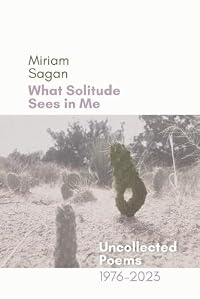
It says a lot about a poet that even their uncollected poems still make for a very fine collection in and of themselves. Miriam Sagan's What Solitude Sees in Me is a great romp through fragments of life and thought. Her words are vivid, striking, and salient. Of particular interest are "Lightning Field Haiku" and "Signal Fire." I would gladly read more of her work in the future. Pick this one up if you can.
It says a lot about a poet that even their uncollected poems still make for a very fine collection in and of themselves. Miriam Sagan's What Solitude Sees in Me is a great romp through fragments of life and thought. Her words are vivid, striking, and salient. Of particular interest are "Lightning Field Haiku" and "Signal Fire." I would gladly read more of her work in the future. Pick this one up if you can.
49NielsenGW
Book 39: The New Soviet Journalism: The Best of the Soviet Weekly "Ogonyok" by Vitaly Korotich. Boston, MA: Beracon Press, 1990. 222 pp.

To be fair, I did not expect this book to be as interesting as it was. Ogonyok was a weekly magazine published in Russia whose first issue came out in 1899. But during the perestroika years in the late 1980s, things took off for the publication and this book is a collection of articles written during those years. These were the Gorbachev years, and there was a nation-wide reckoning dealing with Stalin's draconic government and class struggles throughout Russia. The articles collected here dance through subjects of wrongful imprisonment, drug trafficking, child labor, economic despair, and weird self-serving national museums. Give this one a chance, and it will grow on you.

To be fair, I did not expect this book to be as interesting as it was. Ogonyok was a weekly magazine published in Russia whose first issue came out in 1899. But during the perestroika years in the late 1980s, things took off for the publication and this book is a collection of articles written during those years. These were the Gorbachev years, and there was a nation-wide reckoning dealing with Stalin's draconic government and class struggles throughout Russia. The articles collected here dance through subjects of wrongful imprisonment, drug trafficking, child labor, economic despair, and weird self-serving national museums. Give this one a chance, and it will grow on you.
50NielsenGW
Book 40: Bookmen's Bedlam: An Olio of Literary Oddities by Walter Hart Blumenthal. Freeport, NY: Books for Libraries Press, 1969. 260 pp.

Walter Hart Blumenthal's Bookmen's Bedlam is equal parts weird and boring. Blumenthal crawls through literary listings, indexes, and bibliographies to find odd books written over the years. The book is arranged thematically, so you get a chapter on giant books, miniature books, book bound in human skin, books in weird shapes, books that were buried with people, books written by eccentrics, and so on. The books mentioned come at varying speeds -- he lingers on some, and in other cases, four books are listed off in a single paragraph. Also, the author digs into the English corpus for some rare words, so keep a dictionary handy. All in all, a mildly entertaining read for folks looking for books off the beaten path.

Walter Hart Blumenthal's Bookmen's Bedlam is equal parts weird and boring. Blumenthal crawls through literary listings, indexes, and bibliographies to find odd books written over the years. The book is arranged thematically, so you get a chapter on giant books, miniature books, book bound in human skin, books in weird shapes, books that were buried with people, books written by eccentrics, and so on. The books mentioned come at varying speeds -- he lingers on some, and in other cases, four books are listed off in a single paragraph. Also, the author digs into the English corpus for some rare words, so keep a dictionary handy. All in all, a mildly entertaining read for folks looking for books off the beaten path.
51NielsenGW
Book 41: A History of Wood Engraving by Douglas Percy Bliss. New York: Skyhorse Publishing, 2013. 288 pp.

While Douglas Percy Bliss does indeed cover a large amount of wood-engraving from the early years to the early 20th century, it is not without a thorough helping of elitism. You'll get the details and the background you need on the subject, for sure, but be aware it's going to come with a healthy dose of Bliss's feelings on the matter. There are a fair amount of visual examples of prints, but seminal pieces from Durer and Blake are inexplicably absent. On the plus side, there was more here than I was expecting on the background of many of history's engravers, so there's that. An informative but definitely biased book.

While Douglas Percy Bliss does indeed cover a large amount of wood-engraving from the early years to the early 20th century, it is not without a thorough helping of elitism. You'll get the details and the background you need on the subject, for sure, but be aware it's going to come with a healthy dose of Bliss's feelings on the matter. There are a fair amount of visual examples of prints, but seminal pieces from Durer and Blake are inexplicably absent. On the plus side, there was more here than I was expecting on the background of many of history's engravers, so there's that. An informative but definitely biased book.
52NielsenGW
Book 42: A practical list of Greek word roots with Greek and English derivatives by Thomas Rogers. Nashville, TN: Abingdon Press, 1968. 30 pp.

This book does exactly what it says on the tin. It is a list of Greek word roots to help the user translate Greek texts with examples of both Greek translations and English derivatives of Greek words. Useful example: The Greek root -baph- means "to dip", so consequently the English baptism involves a nice "dip." Also, -od- means "smell", so an odor is that which smells. So on and so forth. Great for beginner translators. Not much else to report here.

This book does exactly what it says on the tin. It is a list of Greek word roots to help the user translate Greek texts with examples of both Greek translations and English derivatives of Greek words. Useful example: The Greek root -baph- means "to dip", so consequently the English baptism involves a nice "dip." Also, -od- means "smell", so an odor is that which smells. So on and so forth. Great for beginner translators. Not much else to report here.
53NielsenGW
Book 43: Weimar Germany's Left-Wing Intellectuals: A Political History of the Weltbühne and Its Circle by István Deák.Berkeley, CA: University of California Press, 1968. 228 pp.

István Deák's history of the Die Weltbühne is equal parts interesting, maddening, and sad. I enjoy seeing how people just organically decide to put together a publication that they feel the public needs to read month after month or, in this case, week after week. That's the interesting part. It started as a German weekly, commenting on national theater, economics, and politics. That last part get real important real fast. As ideas originating on the political left tend to do, it got more bombastic and more particular is it essays, eventually leading to its banning in 1933. That's the maddening and sad part. As the magazine passed from Siegfried Jacobsohn to Kurt Tucholsky and then to Carl von Ossietzky, we see it navigate the murky and bureaucratic waters of leftist politics is the days before the Nazi regime. If you're looking at the intersection of history, politics, and European thought, this one is a fine read.

István Deák's history of the Die Weltbühne is equal parts interesting, maddening, and sad. I enjoy seeing how people just organically decide to put together a publication that they feel the public needs to read month after month or, in this case, week after week. That's the interesting part. It started as a German weekly, commenting on national theater, economics, and politics. That last part get real important real fast. As ideas originating on the political left tend to do, it got more bombastic and more particular is it essays, eventually leading to its banning in 1933. That's the maddening and sad part. As the magazine passed from Siegfried Jacobsohn to Kurt Tucholsky and then to Carl von Ossietzky, we see it navigate the murky and bureaucratic waters of leftist politics is the days before the Nazi regime. If you're looking at the intersection of history, politics, and European thought, this one is a fine read.
54NielsenGW
Book 44: Lithography, 1800-1850: The Techniques of Drawing on Stone in England and France and Their Application to Works of Typography by Michael Twyman. London: Oxford University Press, 1970. 253 pp.

Lithography is quite the weird art form. You start with a very smooth stone, then apply a design using a crayon or grease pencil, then apply a gum solution, then slightly wear away the un-waxy area with a acid of some sort, then you wash away the drawing (which is now left after the acid process), then you ink the stone, and print it onto a paper for distribution. This is a wild process to engineer your way into, but Alois Senefelder did just that at the very end of the 1700s. His new technique was then taught to artisans of the day and it spread across Germany, England, and France. Twyman's Lithography is an interesting look into the people and processes behind this new artform. While photography as a artform began to outperform this process for books and newspapers, many artists in the 20th century still employed this methodology, including Alphonse Mucha and M.C. Escher. While this books gets a little too detailed at times, the history was interesting nonetheless.

Lithography is quite the weird art form. You start with a very smooth stone, then apply a design using a crayon or grease pencil, then apply a gum solution, then slightly wear away the un-waxy area with a acid of some sort, then you wash away the drawing (which is now left after the acid process), then you ink the stone, and print it onto a paper for distribution. This is a wild process to engineer your way into, but Alois Senefelder did just that at the very end of the 1700s. His new technique was then taught to artisans of the day and it spread across Germany, England, and France. Twyman's Lithography is an interesting look into the people and processes behind this new artform. While photography as a artform began to outperform this process for books and newspapers, many artists in the 20th century still employed this methodology, including Alphonse Mucha and M.C. Escher. While this books gets a little too detailed at times, the history was interesting nonetheless.
55NielsenGW
Book 45: Greek Orations: Lysias, Isocrates, Demosthenes, Aeschines, Hyperides, and Letter of Philip by W. Robert Connor. Ann Arbor, MI: University of Michigan Press, 1966. 219 pp.

Great oratory performances are meant to be studied and learned from. W. Robert Connor pulls together ten Greek orations and sends the reader on a light annotated journey through them. Some, of course, are more engaging than others. For me, the Letter of Philip and the Funeral Oration of Hyperides were fun read, although the Address on the Crown of Demosthenes is exactly what you would expect of a old-school political address -- it's petty, long-winded, and full of hot air. All in all, this book offers a decent view into ancient Greek politics and rhetoric.

Great oratory performances are meant to be studied and learned from. W. Robert Connor pulls together ten Greek orations and sends the reader on a light annotated journey through them. Some, of course, are more engaging than others. For me, the Letter of Philip and the Funeral Oration of Hyperides were fun read, although the Address on the Crown of Demosthenes is exactly what you would expect of a old-school political address -- it's petty, long-winded, and full of hot air. All in all, this book offers a decent view into ancient Greek politics and rhetoric.
56NielsenGW
Book 46: Nature and Culture: American Landscape and Painting, 1825-1875 by Barbara Novak. Oxford, UK: Oxford University Press, 2007. 232pp.

Barbara Novak's Nature and Culture is both a sweeping look at mid-19th century American landscape art and a pinpointed analysis of how American artists arrived there. Each aspect of American and European culture gets its own angle -- from the divine to music to geology and evolution to travel art and even European aesthetics and politics. Many spheres of public and private life touched each of the artists discussed, and so, each piece they painted of the American landscape embodies (to some degree) those spheres. My only gripe is that the art is reprinted in this book in black and white, so the vibrant descriptions sometimes fall on deaf ears. I read the Third Edition of this book and I can tell why the art world keeps revisiting this topic. Any scholar of art will find this one very interesting.

Barbara Novak's Nature and Culture is both a sweeping look at mid-19th century American landscape art and a pinpointed analysis of how American artists arrived there. Each aspect of American and European culture gets its own angle -- from the divine to music to geology and evolution to travel art and even European aesthetics and politics. Many spheres of public and private life touched each of the artists discussed, and so, each piece they painted of the American landscape embodies (to some degree) those spheres. My only gripe is that the art is reprinted in this book in black and white, so the vibrant descriptions sometimes fall on deaf ears. I read the Third Edition of this book and I can tell why the art world keeps revisiting this topic. Any scholar of art will find this one very interesting.
57NielsenGW
Book 47: The Soviet Academy of Sciences by Alexander Vucinich. Stanford, CA: Stanford University Press, 1956. 124pp.

I thought this one was going to be a straightforward history of the Soviet Academy of Sciences from its founding in 1724 to today. What I got was a thoroughly-detailed invective on the modern attitude of the Soviet government toward science and scientists. Lip service is paid to the founding of the academy for 4 or 5 pages, and then we get the madness of the 20th century. We find out how the academy was organized and then re-organized, how the Soviet government implanted Party loyalists into key posts along the structure, and how dozens of scientists were "disappeared" from the 1930s to the 1950s. New whims was occupy the minds of Party leadership, and then all Soviet scientists were pressured to make sure their publication properly toed the Party line. There is hardly anything here on scientific discovery and progress, but rather interference and incarceration. Quite the sad book.

I thought this one was going to be a straightforward history of the Soviet Academy of Sciences from its founding in 1724 to today. What I got was a thoroughly-detailed invective on the modern attitude of the Soviet government toward science and scientists. Lip service is paid to the founding of the academy for 4 or 5 pages, and then we get the madness of the 20th century. We find out how the academy was organized and then re-organized, how the Soviet government implanted Party loyalists into key posts along the structure, and how dozens of scientists were "disappeared" from the 1930s to the 1950s. New whims was occupy the minds of Party leadership, and then all Soviet scientists were pressured to make sure their publication properly toed the Party line. There is hardly anything here on scientific discovery and progress, but rather interference and incarceration. Quite the sad book.
59PaulCranswick

New Year greetings from Kuala Lumpur. My project is at least physically completed and an addition to the city scape.
Look forward to keeping up with you in 2026

