
Folio Archives 408: The Odes of Horace : The William Morris Manuscript LE 2014
Talk Folio Society Devotees
Join LibraryThing to post.
1wcarter
The Odes of Horace : The William Morris Manuscript.- LIMITED EDITION 2014
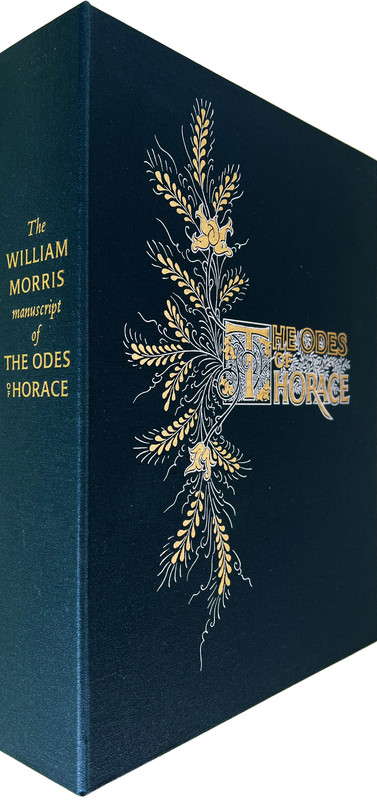
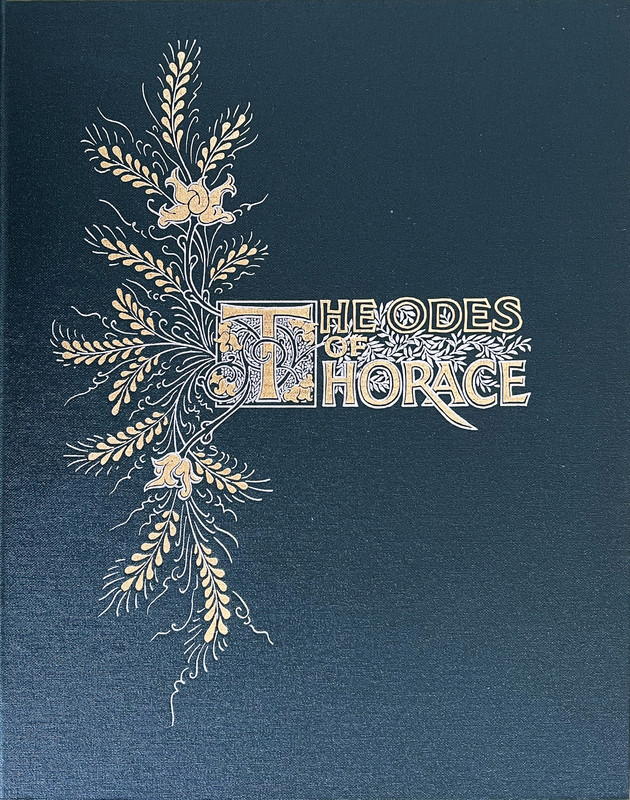
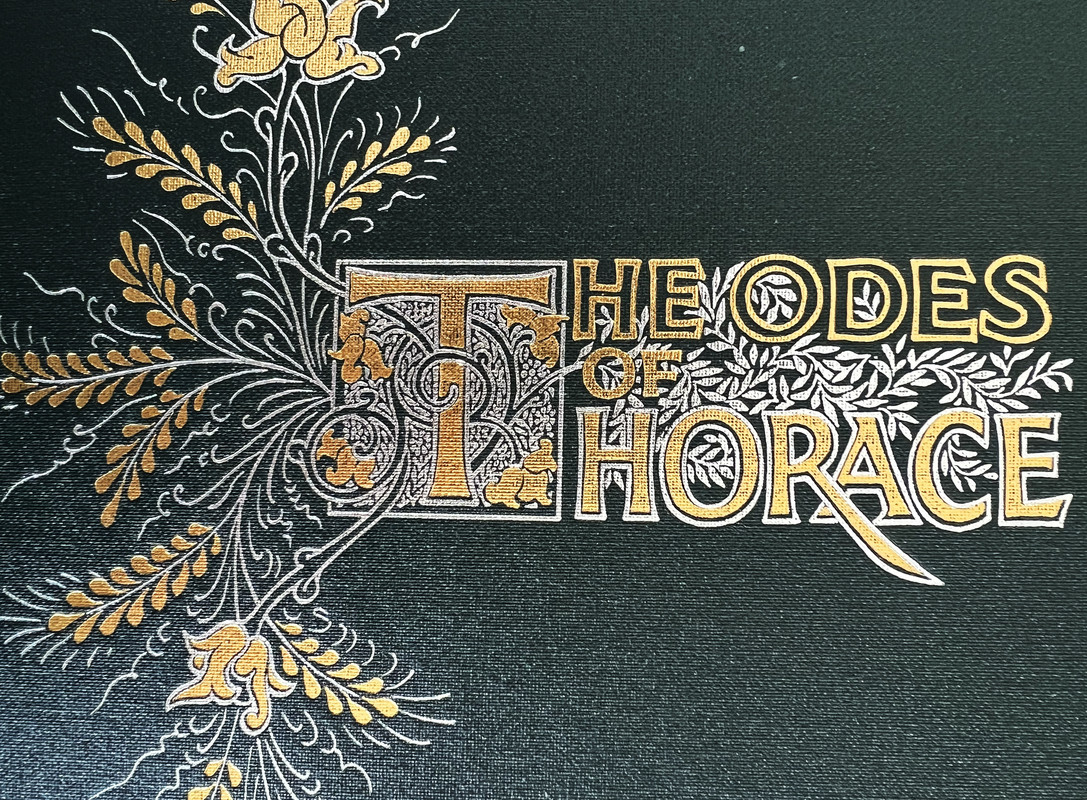
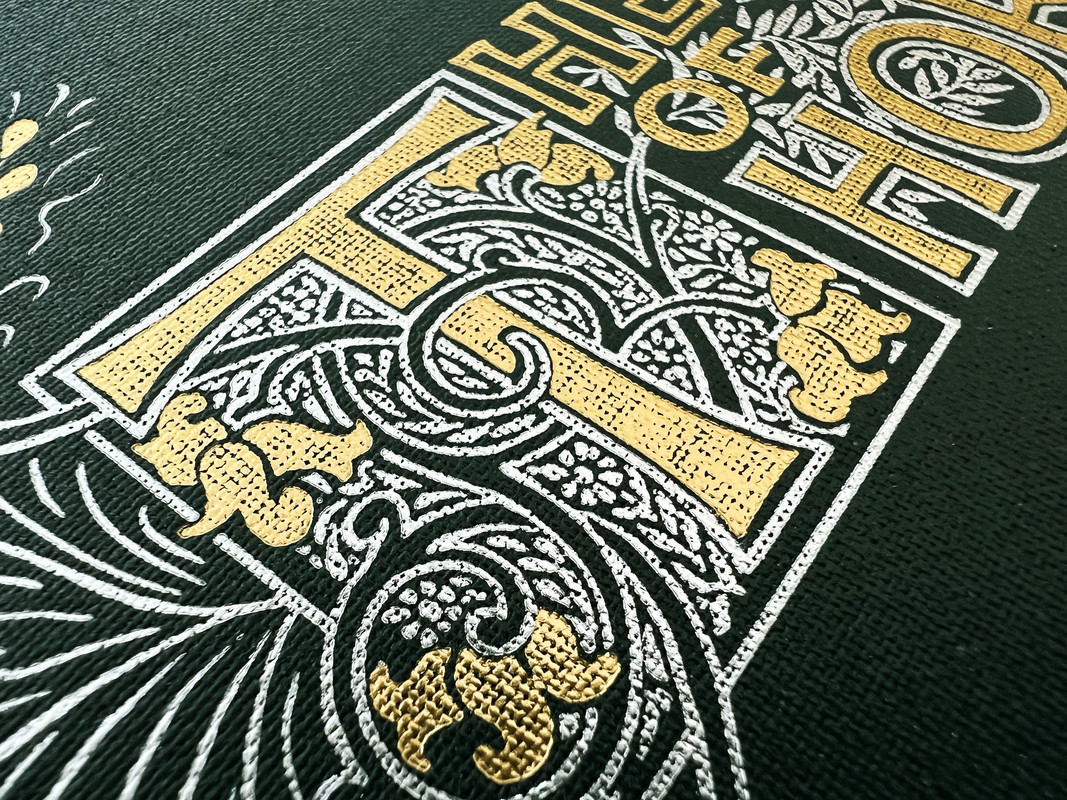
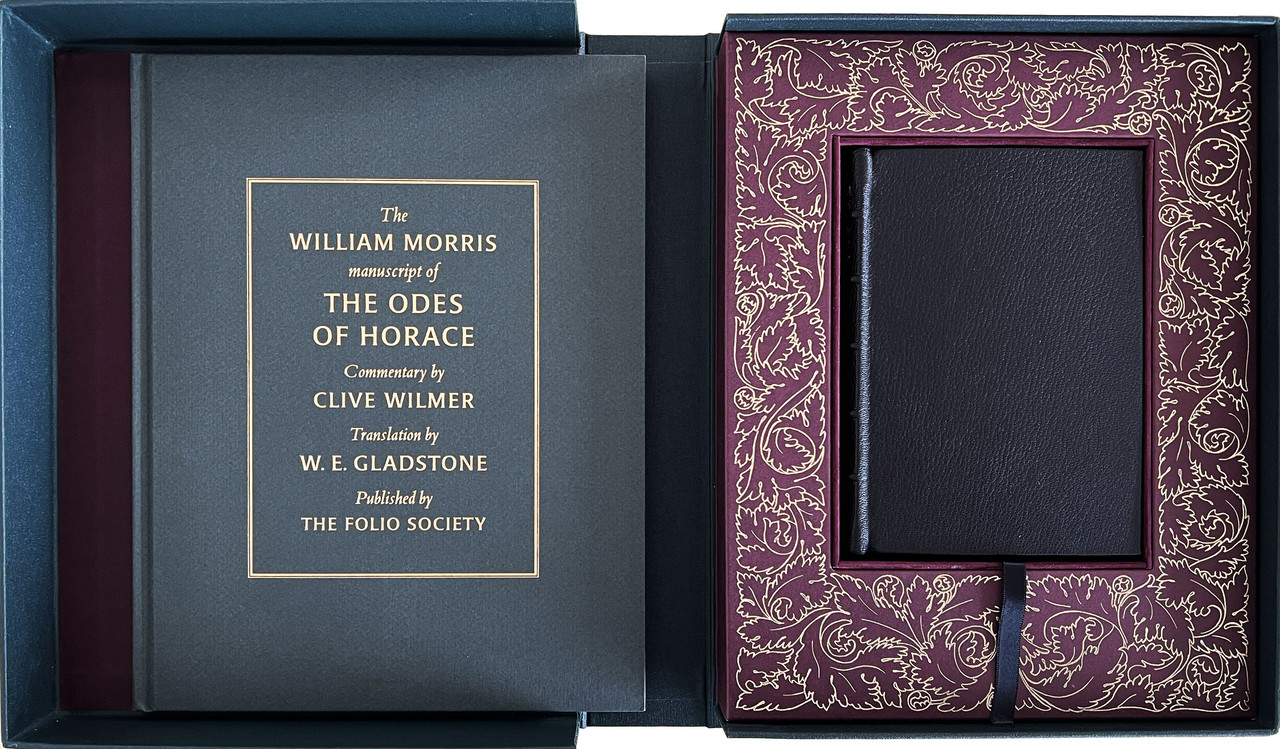
Exquisite is the first word that comes to mind when examining the contents of this small facsimile volume. But the whole package is superb. In fact, the Solander case is one of the most beautiful produced by the Folio Society being printed on the front with a Morris style gold and silver pattern on the dark green cloth.
Horace (c.65BC-8BC) or Quintus Horatius Flaccus, lived in Rome and was the son of a freed slave. He was well educated, initially in Rome, then later in Athens where he studied philosophy, and after returning to Rome worked as a middleman at auctions, assisting in the completion of transactions. After the assassination of Julius Caesar he joined the Roman army as a staff officer, but fought on the wrong side in the civil war at the battle of Philippi where General Brutus was defeated. He returned to Rome an impoverished man.
In due course he gained a sinecure position as a treasury official which gave him an income and time for his passion, poetic writing. This bought him into literary circles that included Virgil, the emperor Augustus and a wealthy Roman, Maccenas, who became his patron. He eventually owned an estate near Tibur (Tivoli) in the Sabine Hills which today is a site of pilgrimage for admirers of this poetic philosopher from over 2000 years ago.
His odes cover a lot of politics (some still relevant today) but also love, philosophy, culture and ethics.
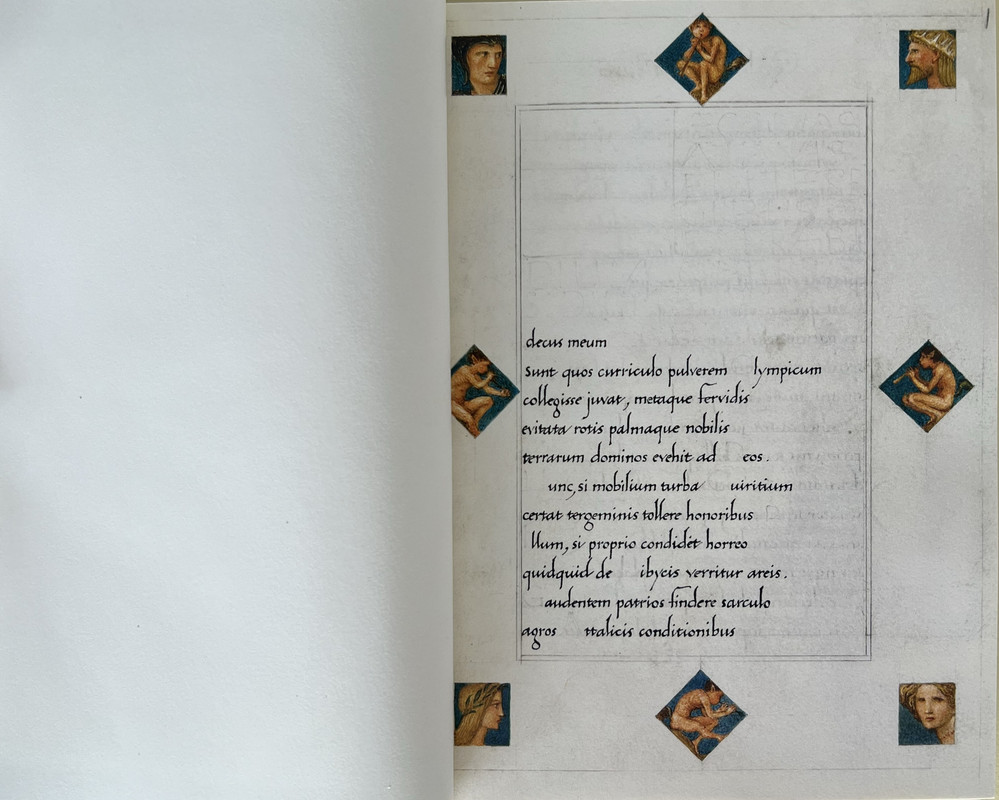
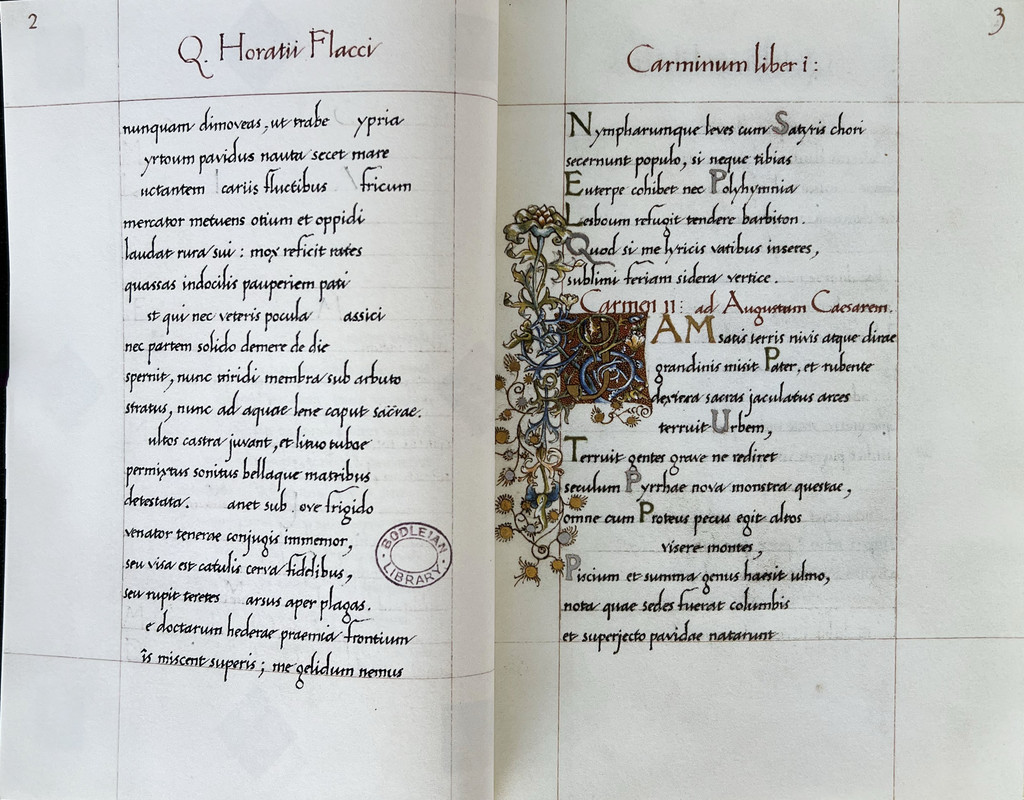
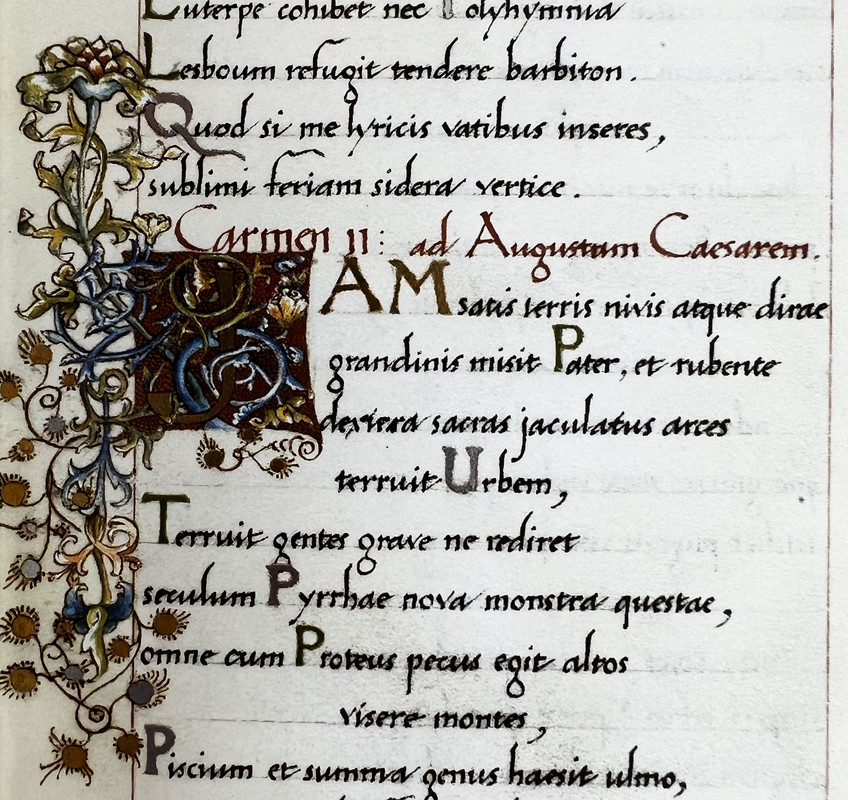
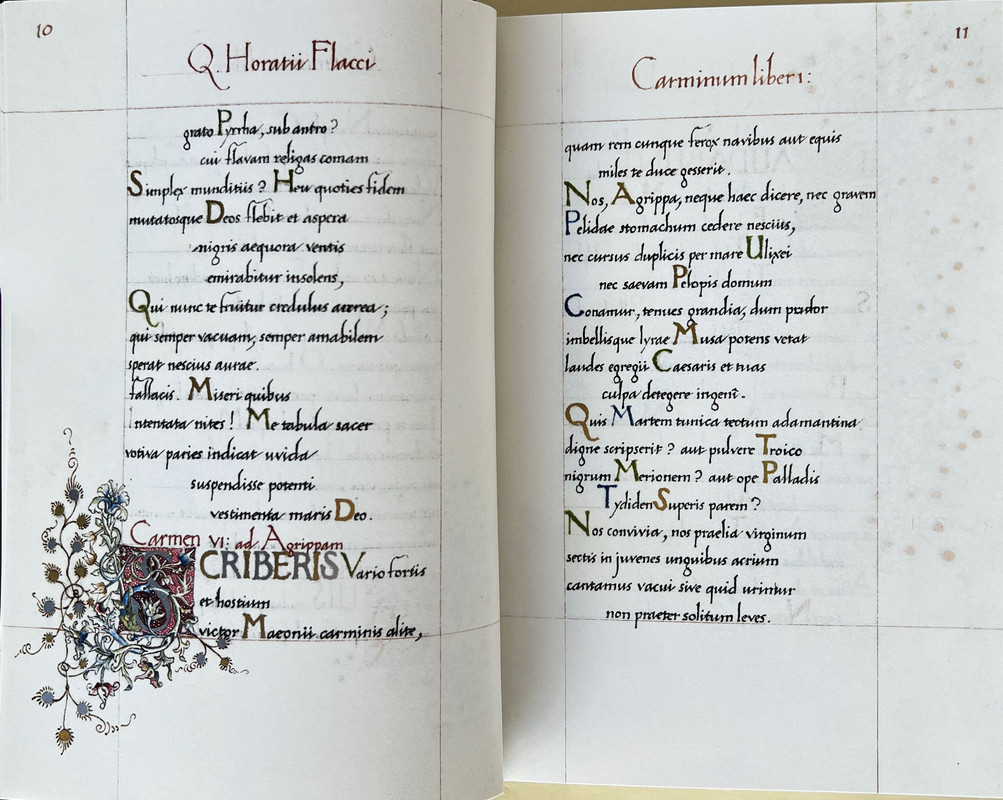
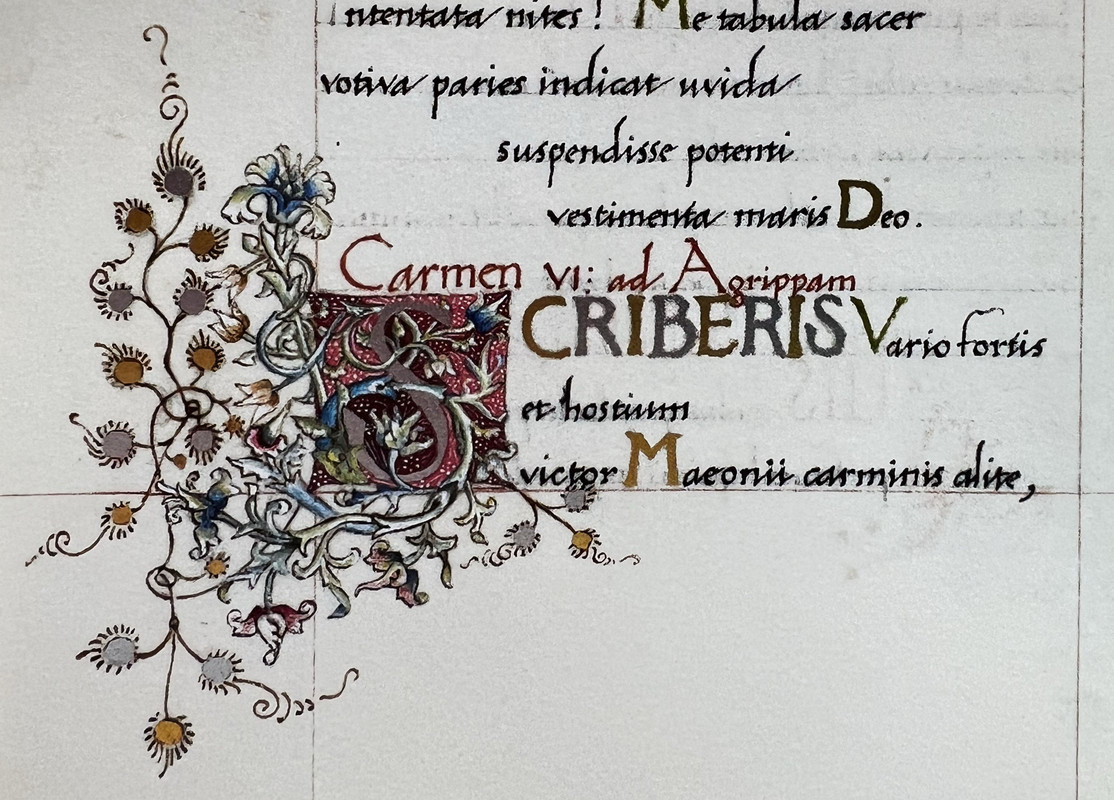
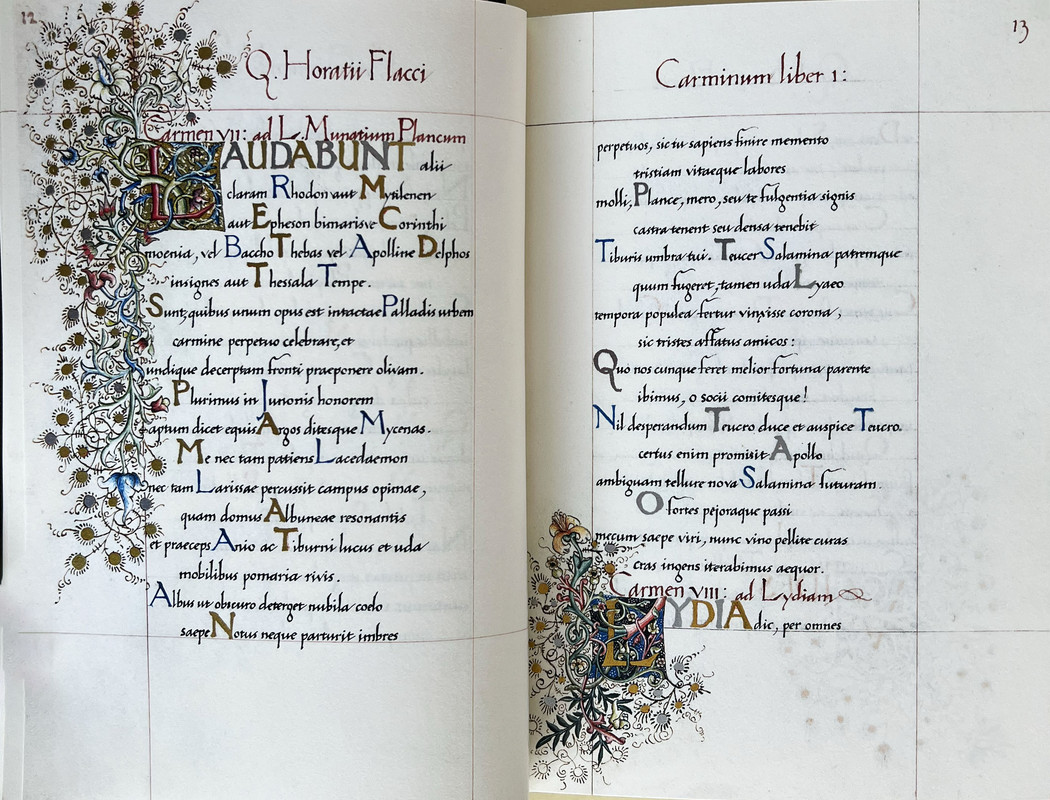
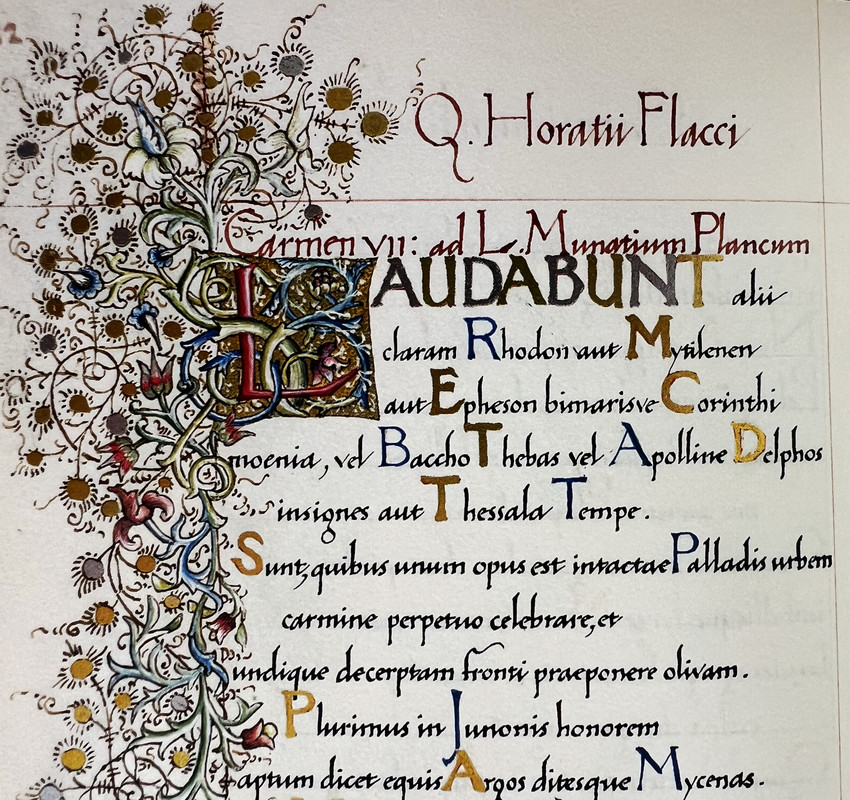
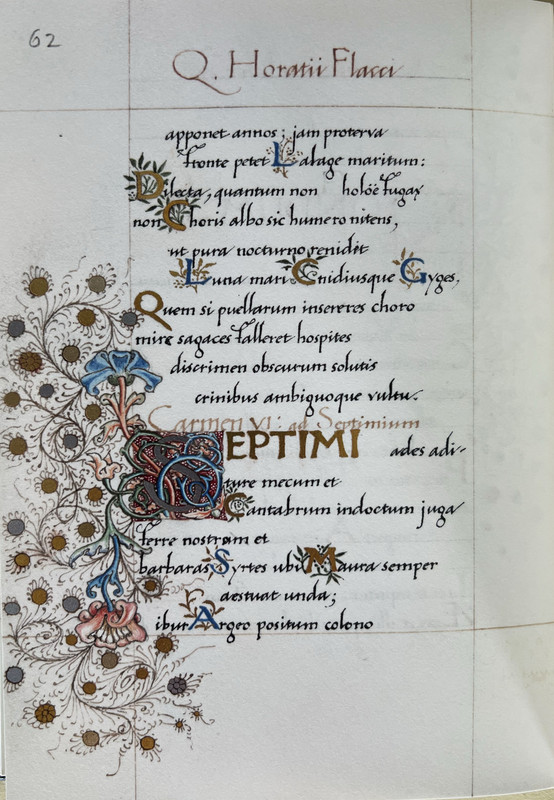
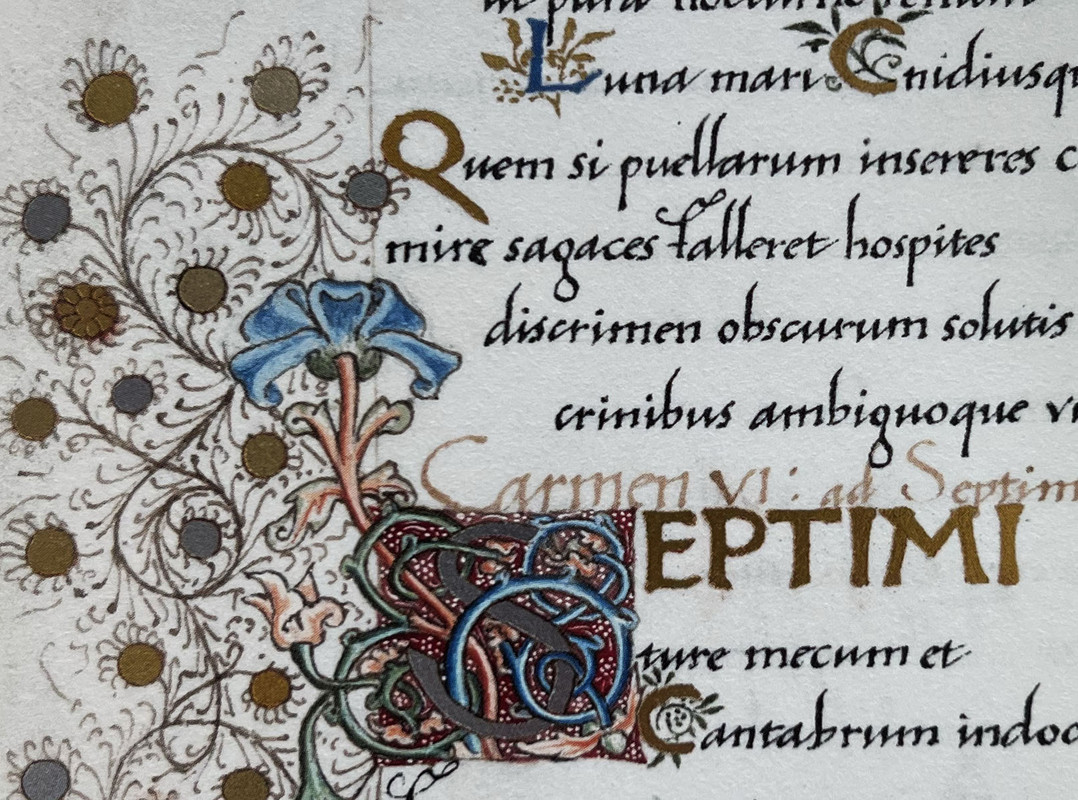
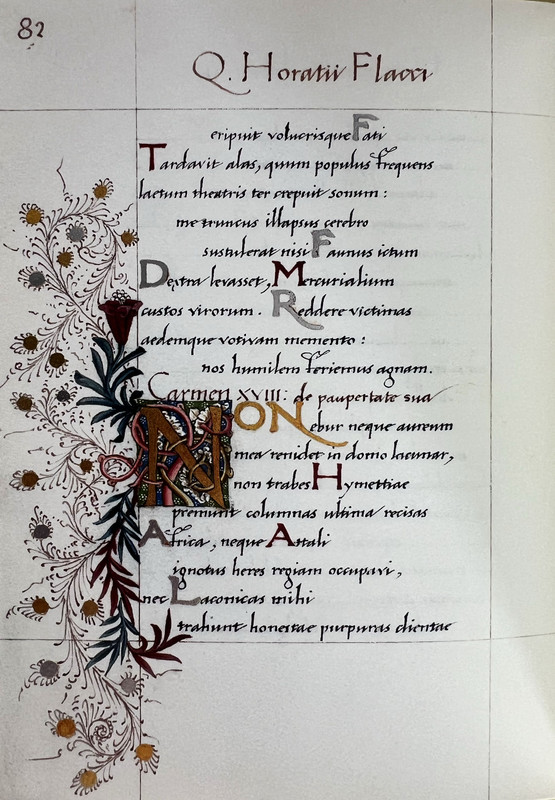
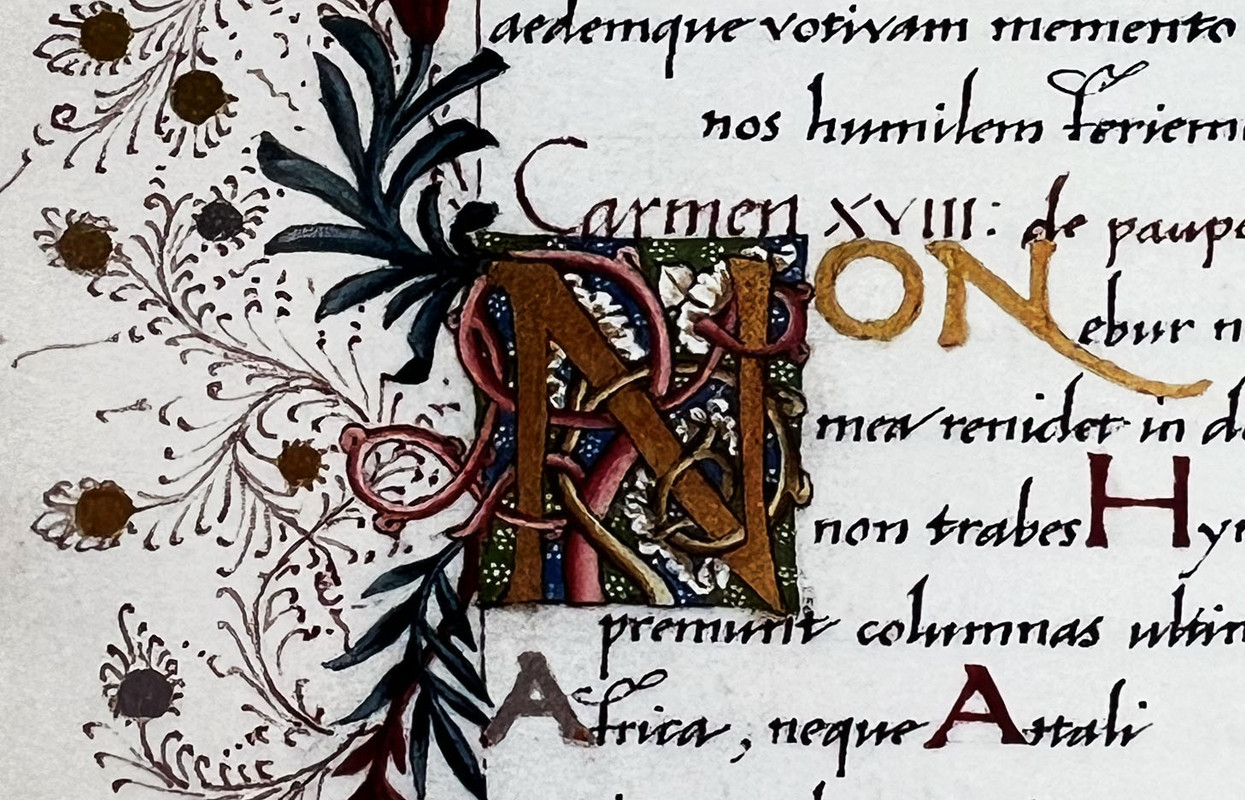
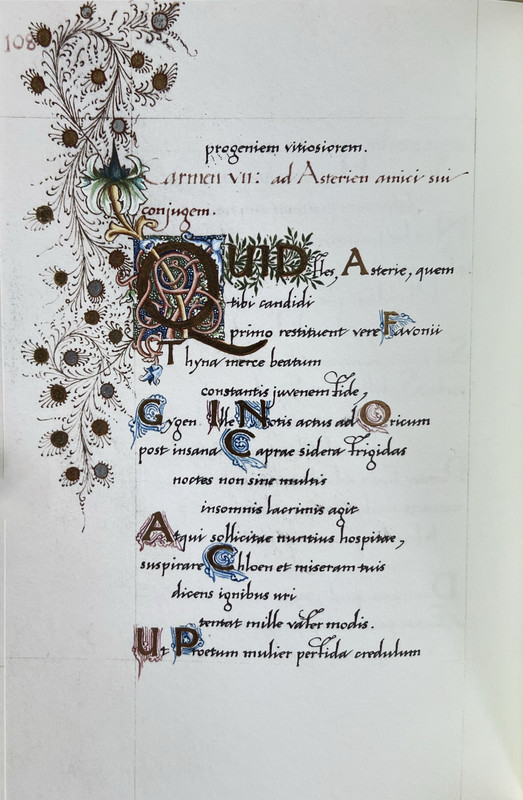
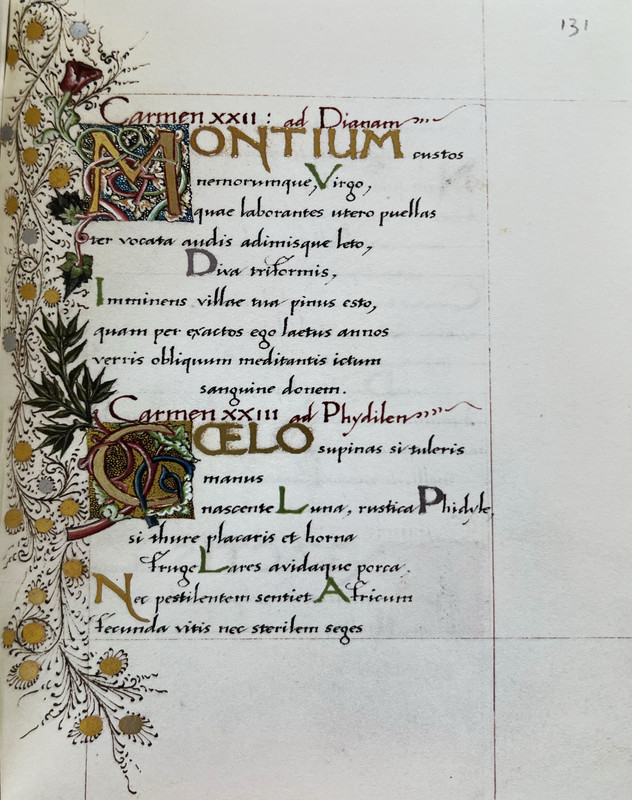
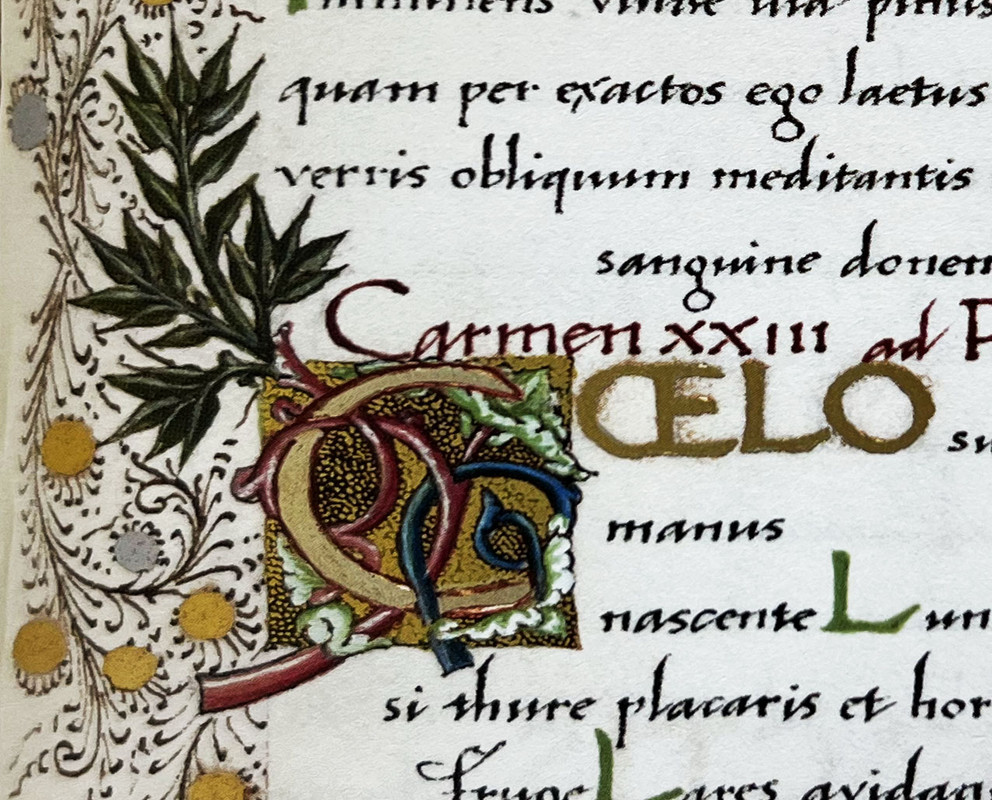
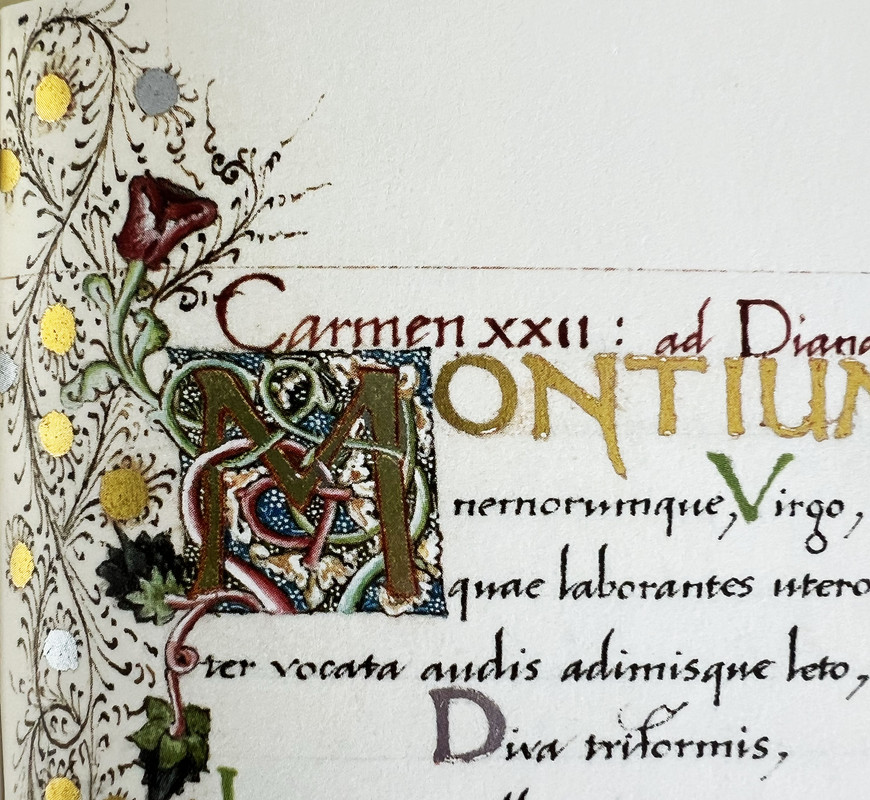
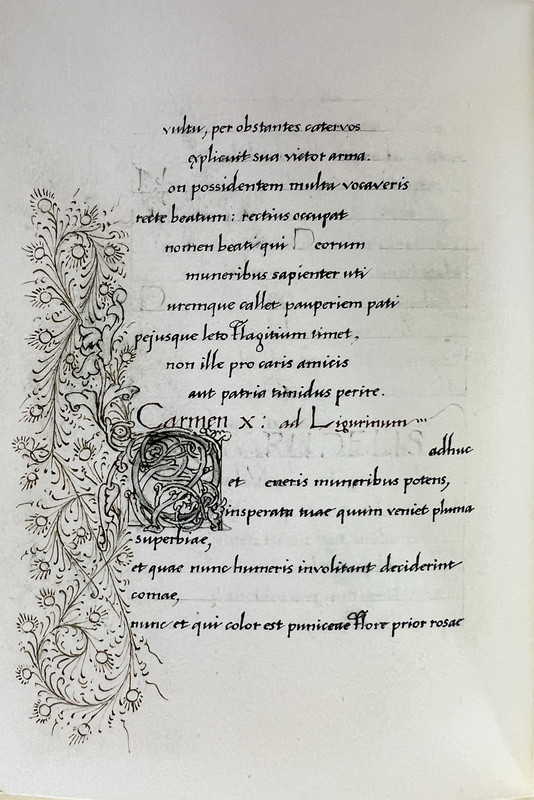
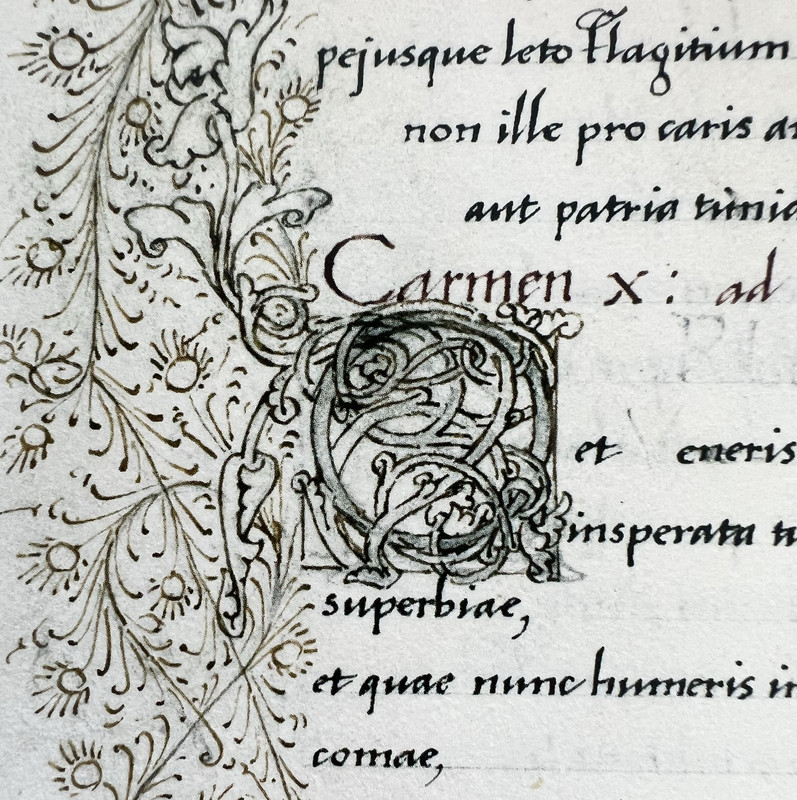
Between 1869 and 1875 William Morris (1834-1896) produced 18 illuminated books. One, The Odes of Horace, he never finished, but the pages that he did complete form a visual masterpiece and show how he created some of the most elaborate illuminations he ever produced. Morris had a vehement aversion to the age of mechanical reproduction, and he demonstrated this with his superb calligraphy and intricate illustrations.
The original manuscript is housed in the Bodleian Library, Oxford, and this Folio Society edition is the first ever facsimile.
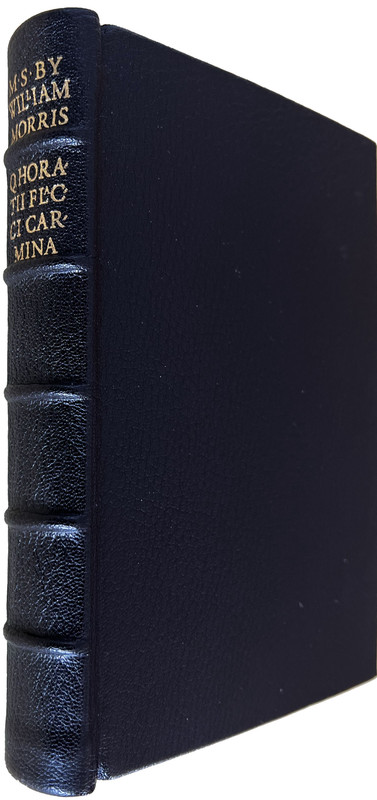
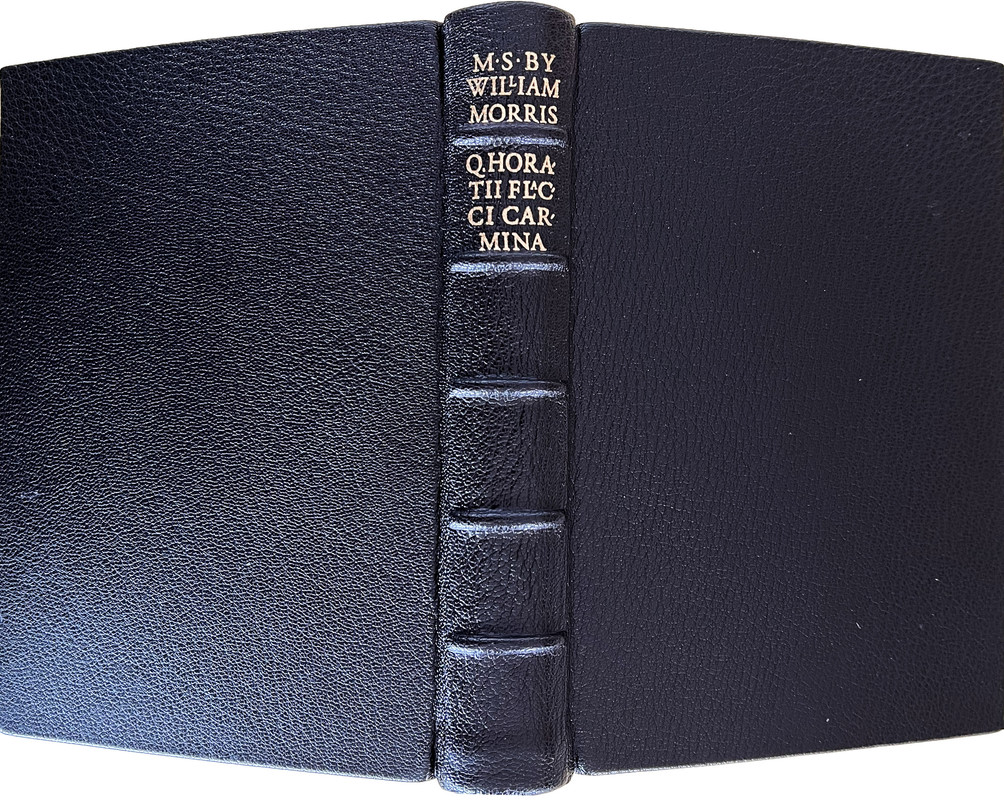
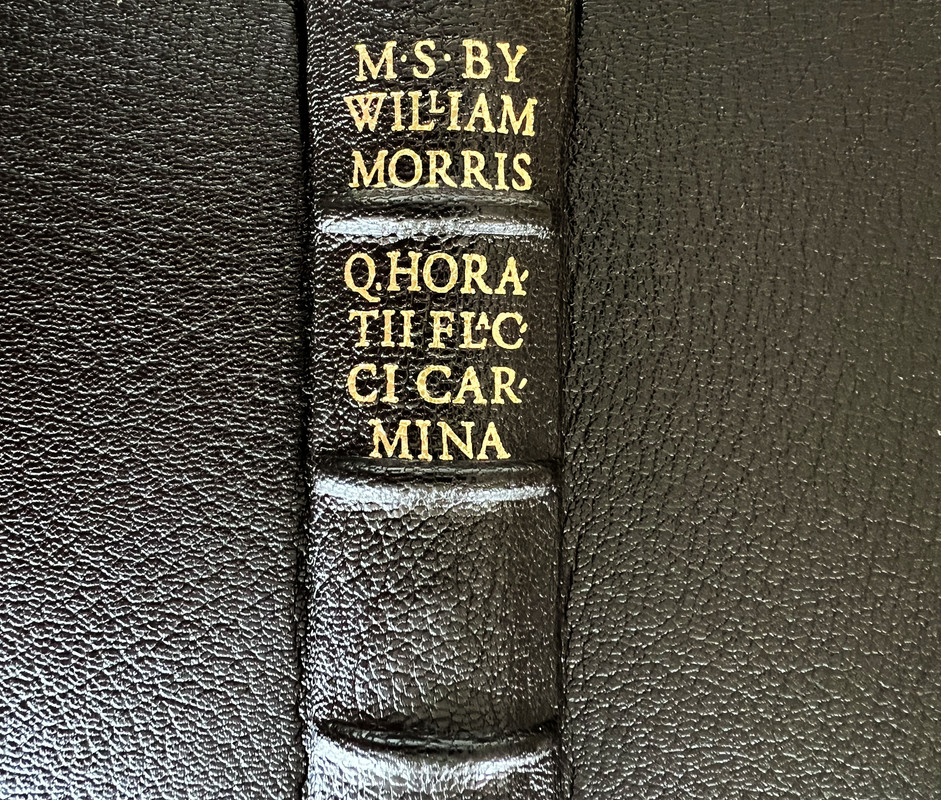
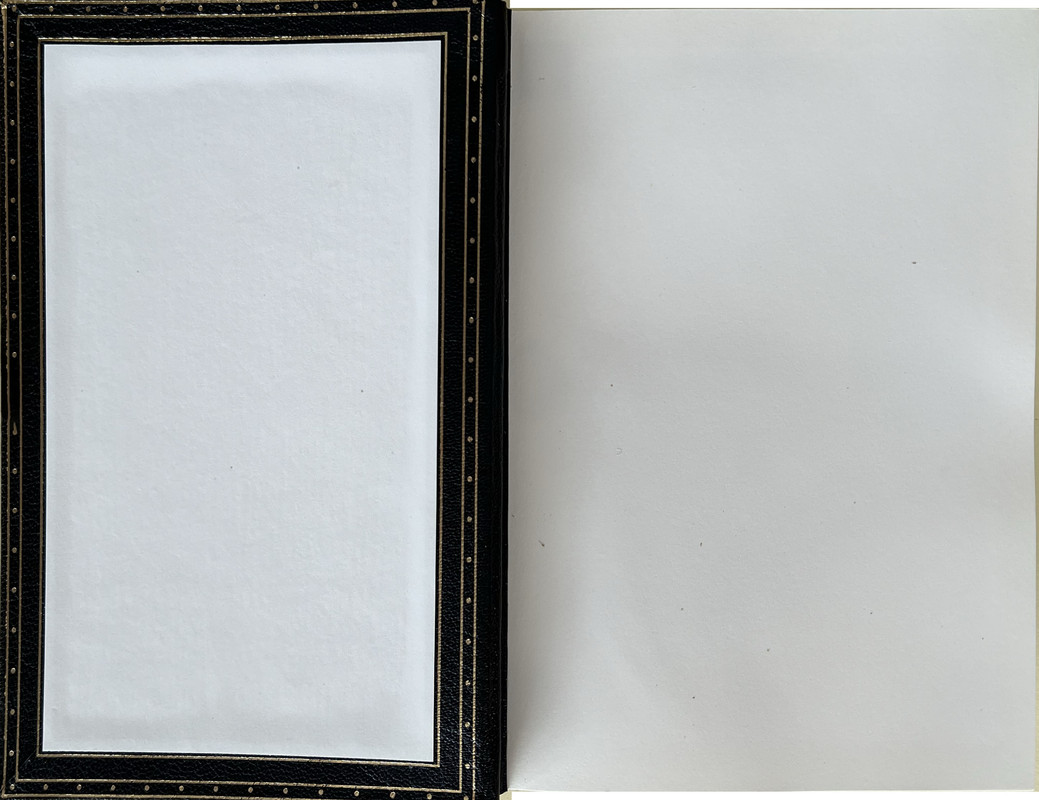
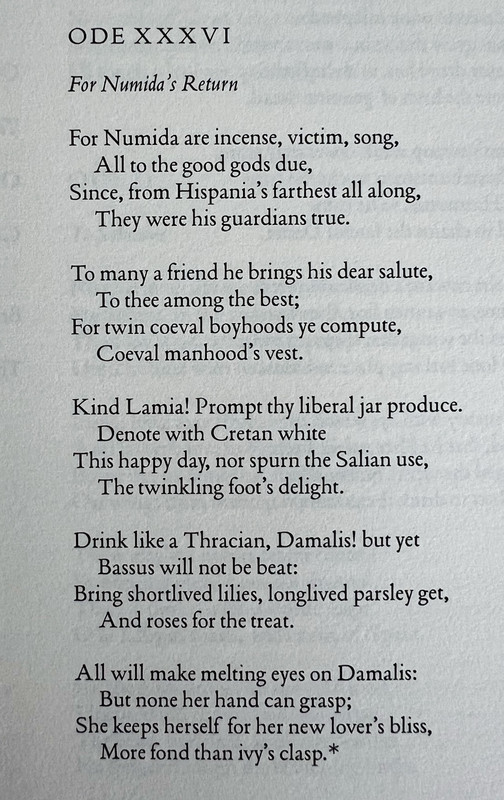
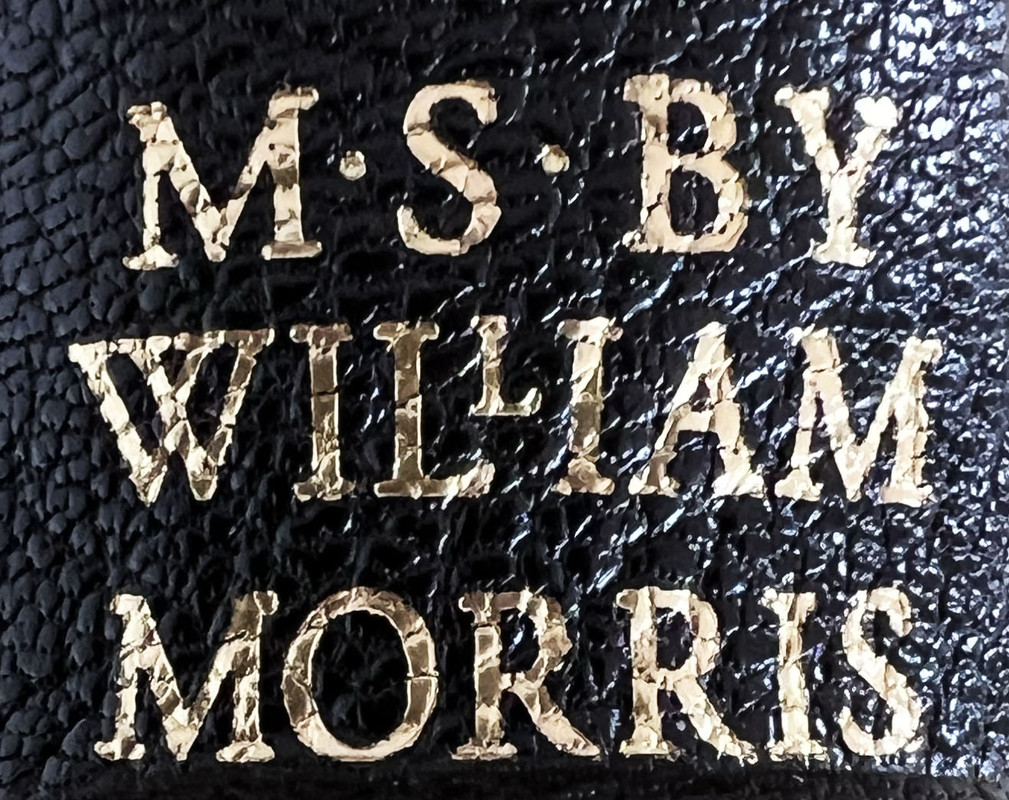
The facsimile volume contains all four books of odes as originally written by Horace and was printed on Tatami paper with gold and silver foil highlights by Castelli Bolis in Bergamo, Italy. The decorations on the last few pages are in outline only and have been left unfinished. It is bound in black Nigerian goatskin with five spine bands and gold spine titling by Smith Settle in Yorkshire, has 192 pages and measures just 17.4x12.8cm. The facsimile matches the original as closely as possible in its contents and binding.
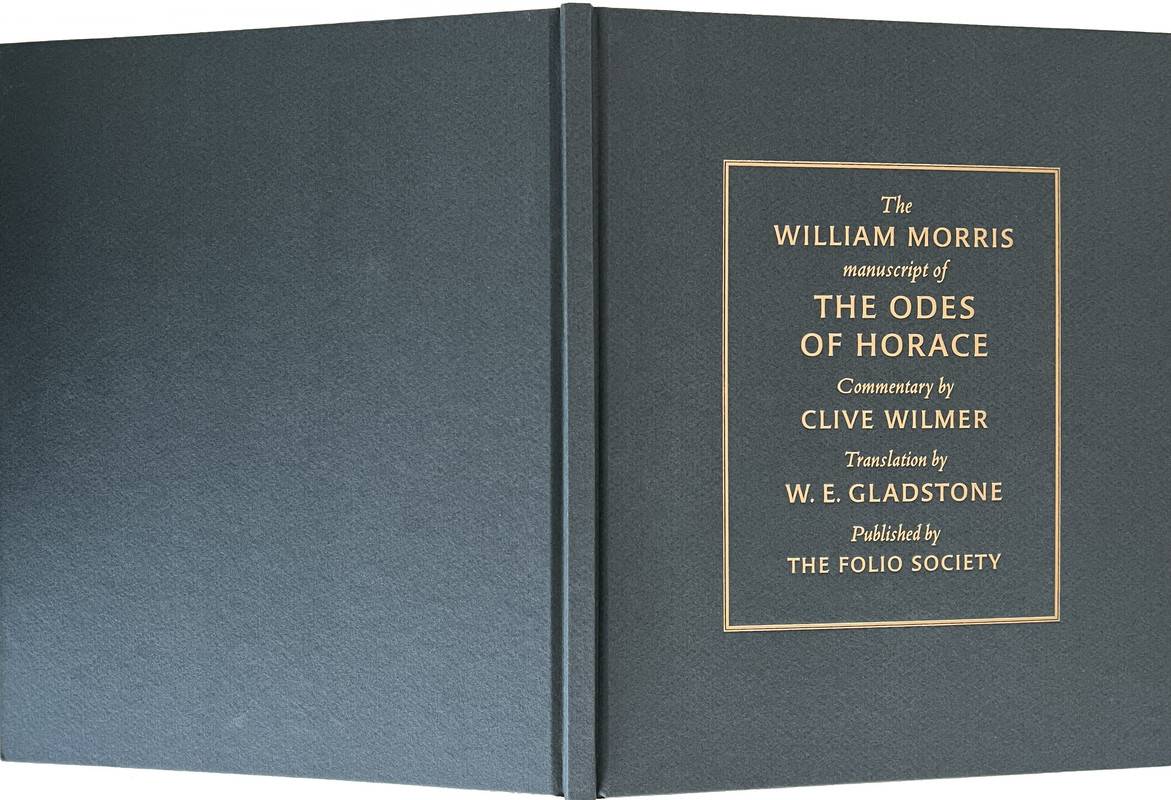
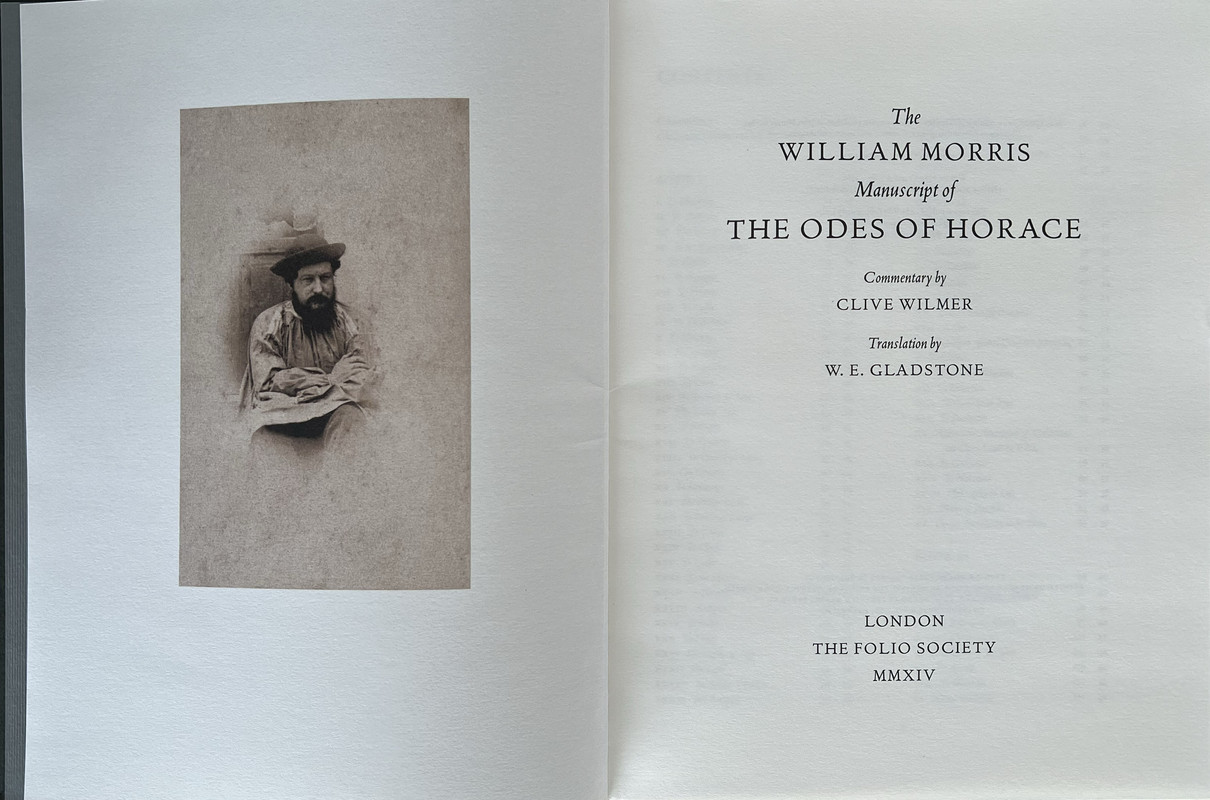
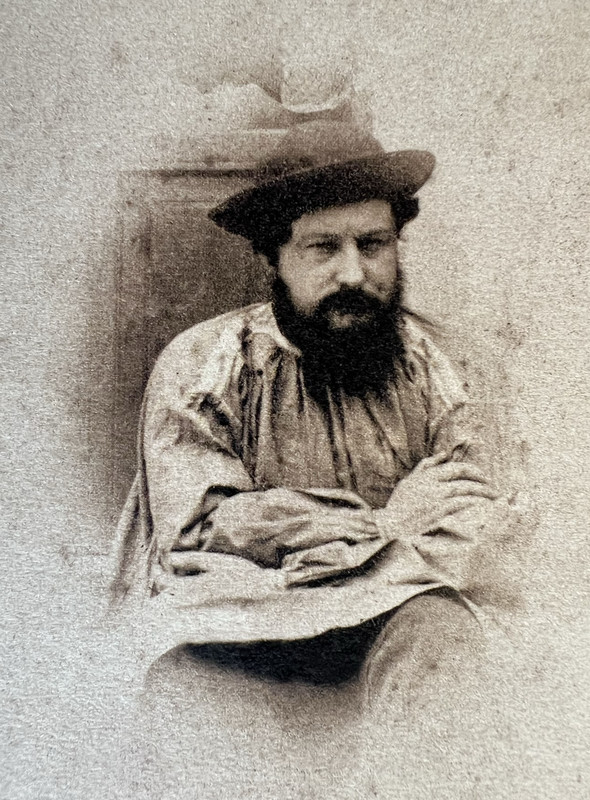
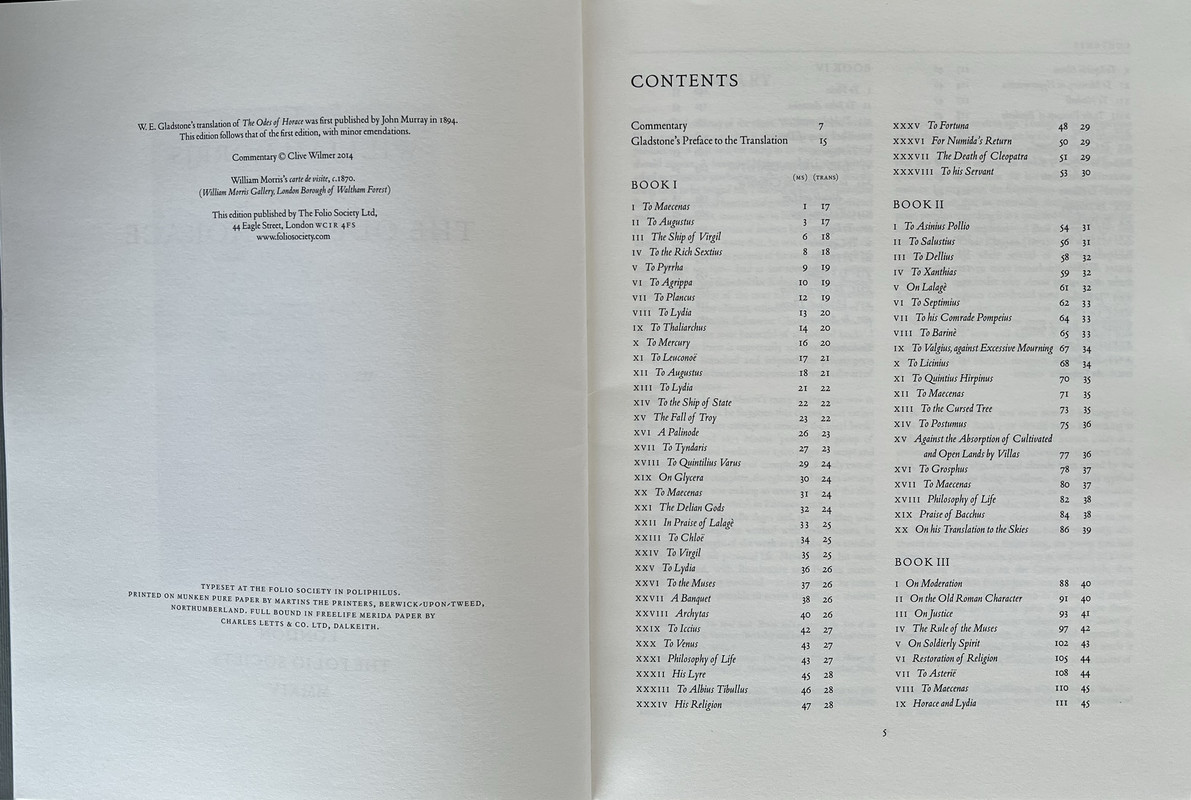
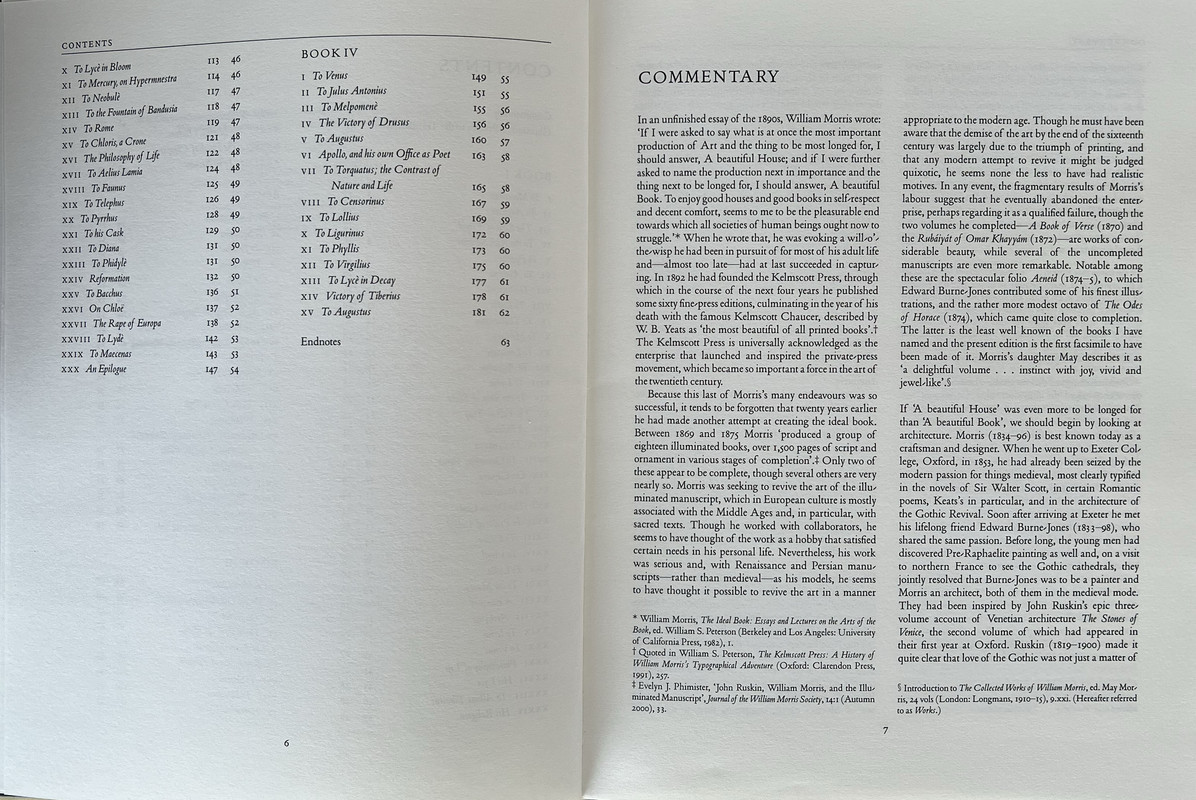
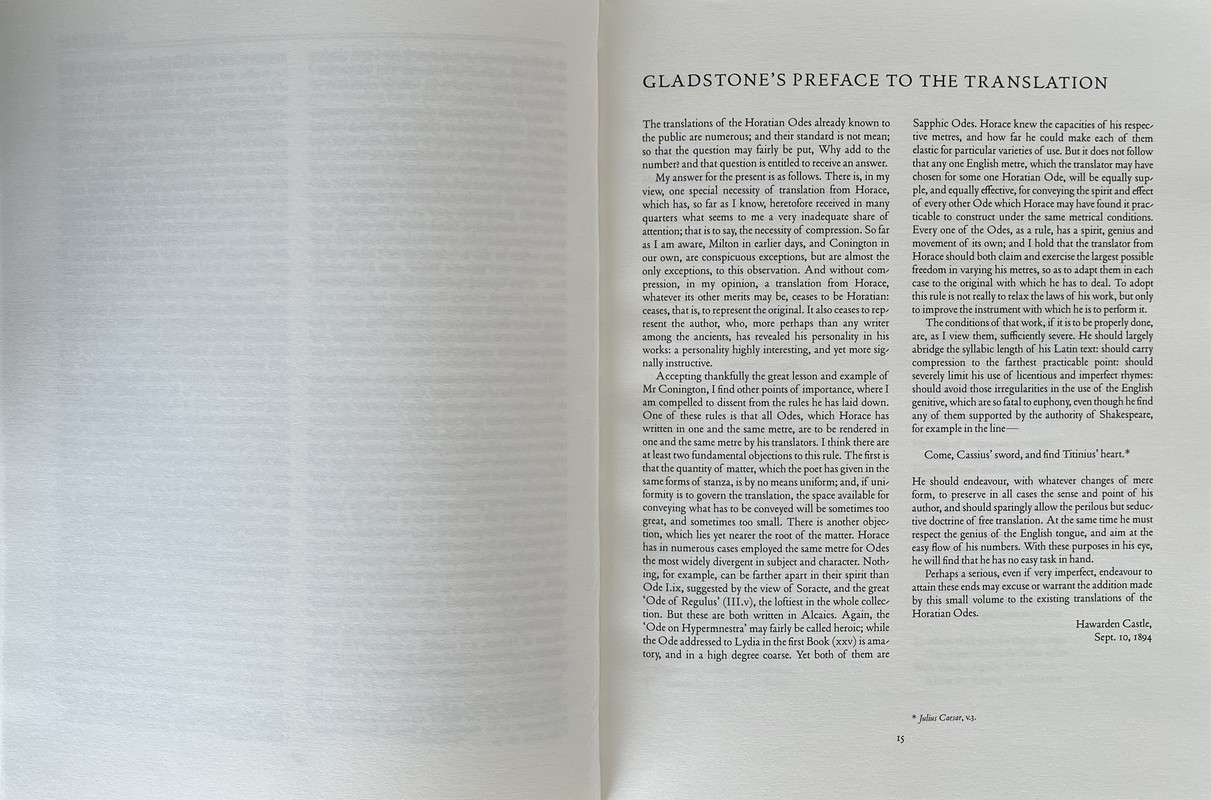
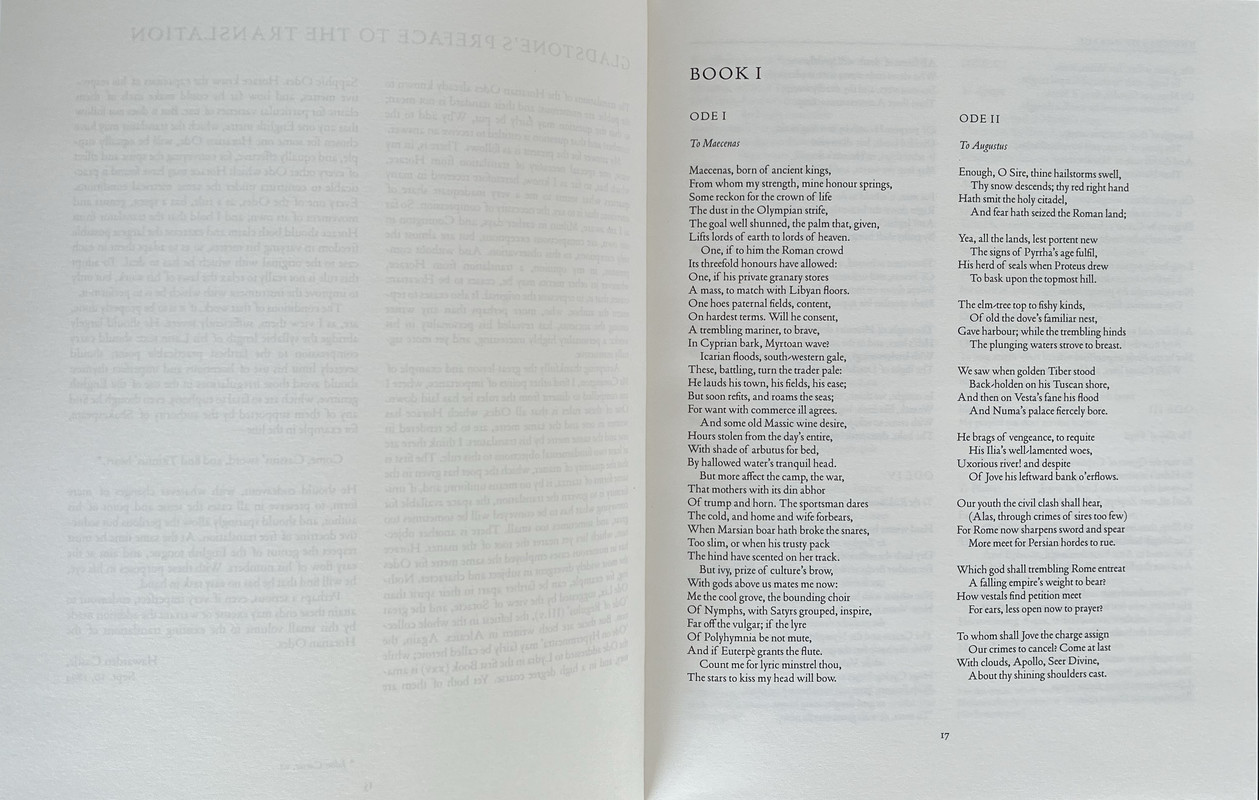
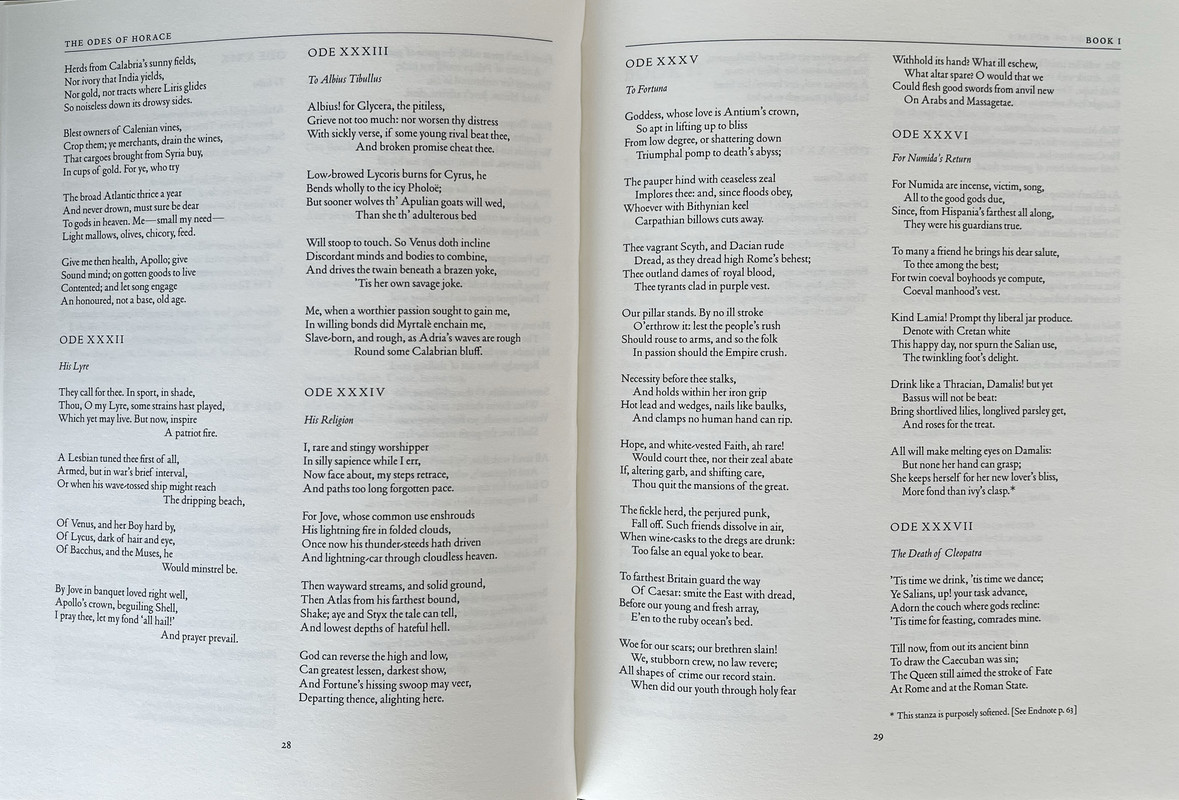
The accompanying commentary volume has 64 pages, an essay by Clive Wilmer and a translation of all the odes by W.E.Gladstone. There is a frontispiece picture of Morris, but it is otherwise unillustrated. The book measures 29x23.7cm., is bound in dark green paper with gilt cover titling and has grey/green endpapers.
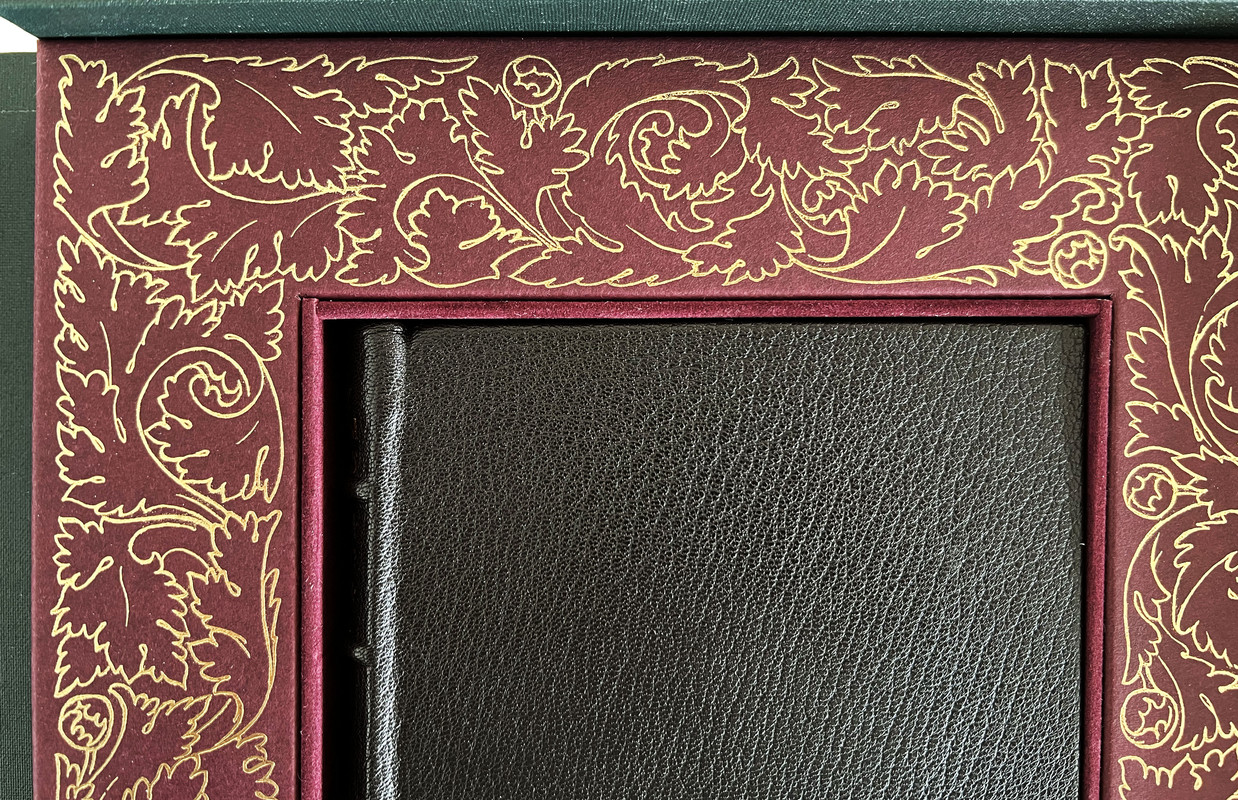
The Solander case is bound in dark green buckram with the afore mentioned gilt cover stamping and edge titling. The facsimile is housed in a cloth lined recess in the box that is surrounded with maroon card that is stamped with a gilt pattern. The lid is lined with maroon paper and there is a black book lift ribbon for the facsimile. It measures 31.5x24.8x5.5cm.
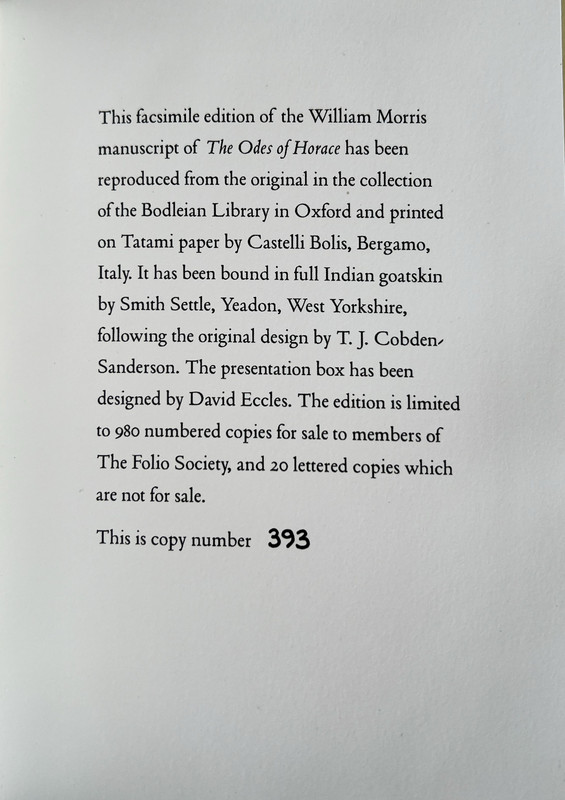
This edition was limited to 980 copies and originally cost £395 from the Folio Society.
The FS published a standard translated edition of the Odes of Horace in 1987.
This was one of the great facsimile editions produced under the direction of Joe Whitlock-Blundell and it is hard to do justice to the beauty of it in photographs.

FACSIMILE VOLUME
Endpapers
COMMENTARY VOLUME
The Folio Society brochure for this book can be downloaded here.
A review of the Limited Editions Club edition of The Odes of Horace can be viewed here.
An index of the other illustrated reviews in the "Folio Archives" series can be viewed here.
Exquisite is the first word that comes to mind when examining the contents of this small facsimile volume. But the whole package is superb. In fact, the Solander case is one of the most beautiful produced by the Folio Society being printed on the front with a Morris style gold and silver pattern on the dark green cloth.
Horace (c.65BC-8BC) or Quintus Horatius Flaccus, lived in Rome and was the son of a freed slave. He was well educated, initially in Rome, then later in Athens where he studied philosophy, and after returning to Rome worked as a middleman at auctions, assisting in the completion of transactions. After the assassination of Julius Caesar he joined the Roman army as a staff officer, but fought on the wrong side in the civil war at the battle of Philippi where General Brutus was defeated. He returned to Rome an impoverished man.
In due course he gained a sinecure position as a treasury official which gave him an income and time for his passion, poetic writing. This bought him into literary circles that included Virgil, the emperor Augustus and a wealthy Roman, Maccenas, who became his patron. He eventually owned an estate near Tibur (Tivoli) in the Sabine Hills which today is a site of pilgrimage for admirers of this poetic philosopher from over 2000 years ago.
His odes cover a lot of politics (some still relevant today) but also love, philosophy, culture and ethics.
Between 1869 and 1875 William Morris (1834-1896) produced 18 illuminated books. One, The Odes of Horace, he never finished, but the pages that he did complete form a visual masterpiece and show how he created some of the most elaborate illuminations he ever produced. Morris had a vehement aversion to the age of mechanical reproduction, and he demonstrated this with his superb calligraphy and intricate illustrations.
The original manuscript is housed in the Bodleian Library, Oxford, and this Folio Society edition is the first ever facsimile.
The facsimile volume contains all four books of odes as originally written by Horace and was printed on Tatami paper with gold and silver foil highlights by Castelli Bolis in Bergamo, Italy. The decorations on the last few pages are in outline only and have been left unfinished. It is bound in black Nigerian goatskin with five spine bands and gold spine titling by Smith Settle in Yorkshire, has 192 pages and measures just 17.4x12.8cm. The facsimile matches the original as closely as possible in its contents and binding.
The accompanying commentary volume has 64 pages, an essay by Clive Wilmer and a translation of all the odes by W.E.Gladstone. There is a frontispiece picture of Morris, but it is otherwise unillustrated. The book measures 29x23.7cm., is bound in dark green paper with gilt cover titling and has grey/green endpapers.
The Solander case is bound in dark green buckram with the afore mentioned gilt cover stamping and edge titling. The facsimile is housed in a cloth lined recess in the box that is surrounded with maroon card that is stamped with a gilt pattern. The lid is lined with maroon paper and there is a black book lift ribbon for the facsimile. It measures 31.5x24.8x5.5cm.
This edition was limited to 980 copies and originally cost £395 from the Folio Society.
The FS published a standard translated edition of the Odes of Horace in 1987.
This was one of the great facsimile editions produced under the direction of Joe Whitlock-Blundell and it is hard to do justice to the beauty of it in photographs.
FACSIMILE VOLUME
Endpapers
COMMENTARY VOLUME
The Folio Society brochure for this book can be downloaded here.
A review of the Limited Editions Club edition of The Odes of Horace can be viewed here.
An index of the other illustrated reviews in the "Folio Archives" series can be viewed here.
2AdPacem
Beautiful photos as always! For anyone who might be interested in this manuscript and commentary at a lower price point, I highly recommend the Bodleian Libraries edition, currently available for 99 pounds: https://bodleianshop.co.uk/products/the-odes-of-horace
I believe the contents of the two volumes are exactly the same as the Folio edition, with the main differences being the cloth binding, a simple slipcase instead of the solander box, and the smaller size of the commentary volume (the facsimile should be around the same size in both editions)
I believe the contents of the two volumes are exactly the same as the Folio edition, with the main differences being the cloth binding, a simple slipcase instead of the solander box, and the smaller size of the commentary volume (the facsimile should be around the same size in both editions)
3Jayked
>2 AdPacem:
The Bodleian owns the original, and as part of the agreement for Folio to copy it would have the right to issue their version after a year, using Folio's reproductions but without the expensive trimmings. Always an interesting catalogue, with some reasonably priced reproductions of classic wood engravings, e.g. Ravilious's Twelfth Night.
The Bodleian owns the original, and as part of the agreement for Folio to copy it would have the right to issue their version after a year, using Folio's reproductions but without the expensive trimmings. Always an interesting catalogue, with some reasonably priced reproductions of classic wood engravings, e.g. Ravilious's Twelfth Night.

