Jill's 2025 Reading, Rummaging, and Sorting Continues - Part Two
This is a continuation of the topic Jill's 2025 Reading, Rummaging, and Sorting Continues.
This topic was continued by Jill's 2025 Reading, Rummaging, and Sorting Continues - Part Three.
Talk The Green Dragon
Join LibraryThing to post.
1jillmwo
I am wrestling with a gigantic TBR pile. I have *several* on-going "research" projects. I participate in 3 or 4 different reading groups. There's a lot going on in my head and virtually none of it will help with housekeeping in the long run.
Here's what I know I read in the first two months of 2025
The Orb of Cairado
The City in Glass
Fear Stalks the Village
The Greene Murder Case
Dictionary of Fine Distinctions
Here's what I am still working my way through in 2025
War and Peace
Anglican Women Novelists
Brutus and Other Heroines
A Poem for Every Night
Tolstoy and the Purple Chair
Other things are lying about -- dipped into as needed. I try not to bother the rest of you with those. I mean, there's books here on Agatha Christie, on monasticism and English cathedrals, on publishing, etc. So much depends on what one hopes to do with the information gathered through daily reading. It's not all just entertainment; it's that the entertainment reading is so much easier to speed through.
Here's what I know I read in the first two months of 2025
The Orb of Cairado
The City in Glass
Fear Stalks the Village
The Greene Murder Case
Dictionary of Fine Distinctions
Here's what I am still working my way through in 2025
War and Peace
Anglican Women Novelists
Brutus and Other Heroines
A Poem for Every Night
Tolstoy and the Purple Chair
Other things are lying about -- dipped into as needed. I try not to bother the rest of you with those. I mean, there's books here on Agatha Christie, on monasticism and English cathedrals, on publishing, etc. So much depends on what one hopes to do with the information gathered through daily reading. It's not all just entertainment; it's that the entertainment reading is so much easier to speed through.
3pgmcc
Happy New Thread!
I am sure this thread will contain many more BBs aimed at my head. I love it.
>1 jillmwo: I for one would be interested in the other things you are reading. I am a nosey so-and-so.
I am sure this thread will contain many more BBs aimed at my head. I love it.
>1 jillmwo: I for one would be interested in the other things you are reading. I am a nosey so-and-so.
5Alexandra_book_life
Happy new thread! :)
6jillmwo
One quick one from A Poem for Every Night
What are heavy? sea-sand and sorrow:That's one to hold onto. It's from a book Christina Rossetti did for children, entitled Sing-Song
What are brief? today and tomorrow:
What are frail? Spring blossoms and youth:
What are deep? the ocean and truth.
8haydninvienna
Happy new thread!
10jillmwo
For those of you with an interest in audio books, here's a quick statistical summary of what audio book usage in the Nordic countries looks like: https://all-about-digital-publishing.com/en/1/nordic-audiobook-market As a sample, did you know that 26% of Icelanders listen to an audio book weekly? More importantly, is this the sort of thing you'll want to know for your local pub trivia contest?
The piece concludes with:
The piece concludes with:
Digital publishing in the Nordic region is increasingly defined by three key elements: audio, subscription, and fiction. Across Sweden, Norway, and Finland, digital book consumption is driven by audiobook streaming services, which continue to expand their market share. Fiction dominates audiobook sales, reflecting consumer preferences for engaging narratives in digital formats. Denmark and Iceland are also following these trends, though with unique market characteristics. As digital subscriptions solidify their place in Nordic reading habits, the region continues to set the benchmark for audiobook innovation and growth.
11clamairy
>10 jillmwo: Wowser! Those statistics are through the roof. I'm impressed with their ability to get through them so quickly, too.
I'm wondering what those Philistines among you who don't think of audiobooks as real books think about this.
I'm wondering what those Philistines among you who don't think of audiobooks as real books think about this.
12Alexandra_book_life
>11 clamairy: Audiobooks are real books, of course ;)
13jillmwo
Muttering about print being real reading while maintaining that audiobooks are not real reading is right up there with arguments over War and Peace versus Vanity Fair. You are a wicked woman for trying to rabble rouse, >11 clamairy:. Just because the two activities light up two entirely different neurological areas of the brain is no reason for things to get rambunctious. ;>) Grab yourself a pint and some cheese and remember we're trying for world peace here.
I am 80% of the way through War and Peace. The book has made an impression on me but probably not in the way Tolstoy would have hoped. It is absolutely memorable but, at the same time, not my cup of tea. I will soldier on. (See what I did there? "Soldier on" in a book about the Napoleonic Wars. hardy-har-har. I crack myself up.)
It's been a series of busy freelance work days, so at night I've just been soothing myself to sleep with bits of Agatha Christie and Sir Arthur Conan Doyle.
I am 80% of the way through War and Peace. The book has made an impression on me but probably not in the way Tolstoy would have hoped. It is absolutely memorable but, at the same time, not my cup of tea. I will soldier on. (See what I did there? "Soldier on" in a book about the Napoleonic Wars. hardy-har-har. I crack myself up.)
It's been a series of busy freelance work days, so at night I've just been soothing myself to sleep with bits of Agatha Christie and Sir Arthur Conan Doyle.
14cindydavid4
>13 jillmwo: wow I thought that debate ended decades ago. of course audio are considered books;both involve reading with different domains. I cant read that way but respect those who can
15clamairy
>13 jillmwo: "Soldier on" is almost worthy of that terrible jokes thread. Well done.
PS A quick Google search tells me that MRIs show similar areas of the brain lighting up for both reading and listening to books, so I'm not sure where you got your info. Unless you were trying to make another joke there...
PS A quick Google search tells me that MRIs show similar areas of the brain lighting up for both reading and listening to books, so I'm not sure where you got your info. Unless you were trying to make another joke there...
16pgmcc
>13 jillmwo:
I see what you did there and am proud of you.
>13 jillmwo: & >15 clamairy:
Are we going to have to modify the “no religion or no politics to be discussed on the premises” sign to include “no book formats” to be discussed? The purpose of the sign was to avoid topics likely to cause ill will and antagonistic exchanges and now we see print versus audio book lines drawing up. Where do the e-book troops line up?
As for the War and Peace versus Vanity Fair debacle I thought that ended when everyone agreed that Vanity Fair was the better book.
”Cat”; “Pigeons”; Mix.
I see what you did there and am proud of you.
>13 jillmwo: & >15 clamairy:
Are we going to have to modify the “no religion or no politics to be discussed on the premises” sign to include “no book formats” to be discussed? The purpose of the sign was to avoid topics likely to cause ill will and antagonistic exchanges and now we see print versus audio book lines drawing up. Where do the e-book troops line up?
As for the War and Peace versus Vanity Fair debacle I thought that ended when everyone agreed that Vanity Fair was the better book.
”Cat”; “Pigeons”; Mix.
17Karlstar
>13 jillmwo: Very funny! Having just read one book about Russians, I feel somewhat more prepared to dive into War and Peace, which so far I've read one page. At this rate I'll never finish.
18jillmwo
>14 cindydavid4: You're right. Old news, but keep reading these additional responses.
>15 clamairy:. I just figured I'd further add to any rabble rousing that might be brewing. Life can be so routine, after all. (Honestly, I had done no fact-checking whatsoever. My bad.)
>16 pgmcc:. ”Cat”; “Pigeons”; Mix. See, clam, Peter did the exact same thing. Yell at him. (Also, please note that Vanity Fair is really not all its cracked up to be...)
>17 Karlstar: Honestly, I don't hate War and Peace. It's just long. The thing requires commitment.
Meanwhile I have to go back to my freelance stuff. Some days, it feels as if no one is paying me enough. And don't get me started on the so-called "prestige economy". (Barf, she said in a ladylike tone.)
>15 clamairy:. I just figured I'd further add to any rabble rousing that might be brewing. Life can be so routine, after all. (Honestly, I had done no fact-checking whatsoever. My bad.)
>16 pgmcc:. ”Cat”; “Pigeons”; Mix. See, clam, Peter did the exact same thing. Yell at him. (Also, please note that Vanity Fair is really not all its cracked up to be...)
>17 Karlstar: Honestly, I don't hate War and Peace. It's just long. The thing requires commitment.
Meanwhile I have to go back to my freelance stuff. Some days, it feels as if no one is paying me enough. And don't get me started on the so-called "prestige economy". (Barf, she said in a ladylike tone.)
19jillmwo
Also see this one: https://reactormag.com/taking-the-shoulds-out-of-reading/. (I love the associated artwork shown as a banner on the page. Listed as “Woman Reading” by Torajiro Kojima, c. 1921)
Take out the shoulds. Take out the ought-to and need-to (unless you have school or deadlines, in which case, hop to it!). Take out the obligations and the sense of missing out—but embrace the fact that you’re never going to be able to read all the books. If your taste is weird right now, accept it.
21MrsLee
>19 jillmwo: Hear! Hear!
22terriks
>13 jillmwo: >14 cindydavid4: >15 clamairy: >16 pgmcc:. I like reading. Someone hand me something with a story in it.
Funny, I'm used to the "film vs digital" debates at the photo forum - never gave a thought to a "print vs audio book" debate.
Funny, I'm used to the "film vs digital" debates at the photo forum - never gave a thought to a "print vs audio book" debate.
24jillmwo
I swear that I'm hiding here in the Green Dragon, because the real world out there is scaring me. So okay people, you need to supply me with piffle, with really good distractions, and/or erudite discussions of Orcs vs. Elves. (Was Peter Jackson's movie trilogy too sensational in light of what Tolkien wrote?) It's Friday and I need you all to be as trivial as humanly possible. Roombas. Bug-Eyed Monsters (BEMs). One-eyed, One-Horned, Flying Purple People Eaters. Pan-Galactic Gargle Blasters. What have you got?
25clamairy
Well I don't know who's watching the Rings of Power anymore, but they just added Jamie Campbell Bower to the cast. The scuttlebutt is that he will either be playing Glorfindel or Celeborn. What do you think, Jill? Is he pretty enough to be either of these elves?
PS The real world is very unsettling. I'm with you.
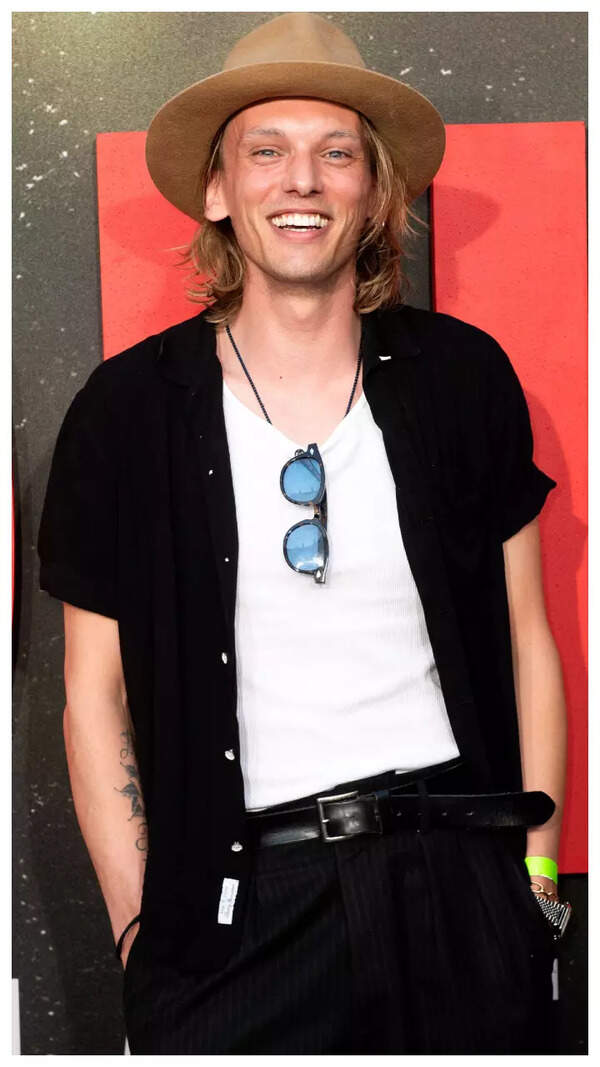
PS The real world is very unsettling. I'm with you.
26hfglen
>24 jillmwo: I fully agree with you that the real world is even more depressingly worrisome than usual at the moment.

So here's a nice trivial picture; I hope you find it calming.

So here's a nice trivial picture; I hope you find it calming.
27haydninvienna
>24 jillmwo: You mean there are Purple People Eaters in the Pub? Better find some purple people for them.
28terriks
>24 jillmwo: You might be amused with my shots of my little neighborhood friend I just posted in my thread. Might be perfect timing. Please vote for her to be the pub's first red squirrel mascot, or something.
I'm with ya in feeling these unsettling times. So I play with backyard creatures. Somehow, I'm going pagan, I swear it! Through no real intention of my own.
>25 clamairy: I don't know this actor, but he is pretty and looks like he would make a very fine elf.
>26 hfglen: There's very little that a picture of a prairie dog won't help. Love it!
I'm with ya in feeling these unsettling times. So I play with backyard creatures. Somehow, I'm going pagan, I swear it! Through no real intention of my own.
>25 clamairy: I don't know this actor, but he is pretty and looks like he would make a very fine elf.
>26 hfglen: There's very little that a picture of a prairie dog won't help. Love it!
29jillmwo
>25 clamairy:. Oh, look! A new pool boy. We haven't had one of those in quite a while.
>26 hfglen:. Can he help the pool boy, if needed? He's just cute.
>27 haydninvienna:. We need more purple people!!! Where did all of them go?
>28 terriks:. I will go look at your red squirrel friend and consider his candidacy. How long is the voting booth open?
>26 hfglen:. Can he help the pool boy, if needed? He's just cute.
>27 haydninvienna:. We need more purple people!!! Where did all of them go?
>28 terriks:. I will go look at your red squirrel friend and consider his candidacy. How long is the voting booth open?
30haydninvienna
>29 jillmwo: I think they're all out on the terrace with the witch doctor and Alvin and the Chipmunks, doing the Monster Mash ..
BTW thanks, you fed me the straight line beautifully.
BTW thanks, you fed me the straight line beautifully.
32jillmwo
Just encountered a case of someone on the Web, offering their services as a "literary chaplain". I honestly can't decide if this is just a new name for readers' advisory or if it's an out and out scam (priced at something like $185 per hour.) I'm beginning to realize this is why I'm not independently wealthy.
Words fail me. I can't even begin to define the parameters of such an activity. I do wonder if it would come with new fancy clothing of some sort...
Words fail me. I can't even begin to define the parameters of such an activity. I do wonder if it would come with new fancy clothing of some sort...
33pgmcc
>32 jillmwo:
The world is a strange place.
The world is a strange place.
34clamairy
>32 jillmwo: Hmmm. Did you try Googling the job description? I think we could have a lot of fun designing this costume. After watching Conclave last week I think must include robes and a mitre, at the very least.
35jillmwo
>34 clamairy:. Vaguely phrased description of the promised service, but key phrases include: "non-denominational space" for persons seeking "solace and connection through the written word" I think the individual is offering about an hour's worth of sympathetic conversation about books.
And, oh, please!!! May I be first in line for the long robe with a lace overlay and a head beanie? Mitres might be expensive, not to mention being difficult to keep on one's head in a high wind. But the other, I could do. I'd look so demure.
And, oh, please!!! May I be first in line for the long robe with a lace overlay and a head beanie? Mitres might be expensive, not to mention being difficult to keep on one's head in a high wind. But the other, I could do. I'd look so demure.
36MrsLee
>32 jillmwo: Maybe they pray over your manuscript before you send it to a publisher? :D
37terriks
>34 clamairy: And a tall sparkly hat! You must be a commanding presence, to charge that kind of jack.
>33 pgmcc: Agreed. And they probably have clients!
>33 pgmcc: Agreed. And they probably have clients!
38jillmwo
Study released on Australian reading habits; Links to the executive summary (six pages) and full report (92 pages) can be found here. https://australiareads.org.au/research/understanding-australian-readers/ The report is entitled "Understanding Australian Readers". (Honestly, they don't seem so very different from the rest of us.)
Avid readers (22.4 percent), referred to as “daily devotees”
Habits: Read daily and frequently start new books
Intentions: No gap between how much they read and how much they intend to read
Demographics: Mostly women, older or retired, living alone or with a partner
Barriers: None! They have the motivation, time, and ability to read
“Engaged” readers (30.6 percent), described as “regular but busy”
Habits: Read regularly (daily or a few times a week), but want to read more
Challenges: Struggle with motivation, distracted by other activities
Demographics: Young to middle-aged, highly educated
Barriers: Competing priorities and lack of time for reading
Other categories of readers in the study:
Ambivalent readers (14.8 percent), who are seen as “uncertain explorers”
Aspirational readers (14.7 percent), called “eager yet struggling seekers”
Lapsed readers (7.1 percent), which are given the hopeful characterization of “forgotten book lovers”
Uninterested non-readers (10.4 percent), who are described as “complete disconnects”
Avid readers (22.4 percent), referred to as “daily devotees”
Habits: Read daily and frequently start new books
Intentions: No gap between how much they read and how much they intend to read
Demographics: Mostly women, older or retired, living alone or with a partner
Barriers: None! They have the motivation, time, and ability to read
“Engaged” readers (30.6 percent), described as “regular but busy”
Habits: Read regularly (daily or a few times a week), but want to read more
Challenges: Struggle with motivation, distracted by other activities
Demographics: Young to middle-aged, highly educated
Barriers: Competing priorities and lack of time for reading
Other categories of readers in the study:
Ambivalent readers (14.8 percent), who are seen as “uncertain explorers”
Aspirational readers (14.7 percent), called “eager yet struggling seekers”
Lapsed readers (7.1 percent), which are given the hopeful characterization of “forgotten book lovers”
Uninterested non-readers (10.4 percent), who are described as “complete disconnects”
39pgmcc
>37 terriks:
You have reminded me of a training course I was giving to staff from a client company. It was a company I had done a lot of work with and the participants on the course were as much friends as clients by this stage.
One of the group commented jokingly about how my company treated our customers. I corrected him by saying, "We do not have customers; we have clients."
He turned to the person beside him and said, "So do prostitutes."
That put me in my place. :-)
You have reminded me of a training course I was giving to staff from a client company. It was a company I had done a lot of work with and the participants on the course were as much friends as clients by this stage.
One of the group commented jokingly about how my company treated our customers. I corrected him by saying, "We do not have customers; we have clients."
He turned to the person beside him and said, "So do prostitutes."
That put me in my place. :-)
40terriks
>39 pgmcc: Bah hahaha!! Indeed. :D
41jillmwo
From the 1842 version of Tennyson's Lady of Shalott
Word is that Agatha Christie was particularly fond of this poem. She did incorporate aspects of the story into a variety of her novels. (Another factoid you may not feel necessary to your vital existence.)
She knows not what the curse may be,
And so she weaveth steadily,
And little other care hath she,
The Lady of Shalott.
Word is that Agatha Christie was particularly fond of this poem. She did incorporate aspects of the story into a variety of her novels. (Another factoid you may not feel necessary to your vital existence.)
42jillmwo
Something to read with your coffee today: Repackaging Christie: How might AI change literary analysis, reference tools, etc.? It's my piece this morning on the Scholarly Kitchen. https://scholarlykitchen.sspnet.org/2025/03/04/the-mysteries-of-agatha-christie-... It was actually a challenging 1621 words to write.
43Karlstar
>42 jillmwo: That's a great article and a great question. When AI can answer all of those questions for you, will anyone bother to do it themselves? Will the 'free' AI interfaces keep up with those charging a fee?
44Sakerfalcon
>42 jillmwo:, >43 Karlstar: Another question is "Will AI give you the correct answer?" And will people bother to check, or is that too much effort.
45jillmwo
Well, in the context of scholarly publishing, >44 Sakerfalcon:, my assumption is that AI is most likely to be used by the publishing house to reformulate new reference products. The publisher or an editor might look at trends in disciplinary markets and ask AI to bring together all the scholarly articles mentioning ecocriticism or which might appear to be relevant to ecocriticism. It saves time if one can push a button and have at least a portion of a handbook be already in hand and requiring perhaps just a bit of updating. You can have a new work on the market in a shorter time frame with less imposition on the editor's time. (This is the positive business view of AI.)
The downside is that someone still has to verify what the system brings up. Look for any unfortunate hallucinations. I dont' think I know anyone who is immediately working with dictionaries but I imagine that assembling one doesn't take nearly as much time as it used to when creating an initial "draft" or version.
I suppose I'm a bit of a luddite. I don't believe AI can replace the creative spark needed to develop some of these reference works. It can help in assembling the ordered set of entries perhaps. (Frankly, my preferred headline on the piece didn't reference AI at all; the editor however didn't like it. He thought a reference to Pub trivia trivialized it.)
The downside is that someone still has to verify what the system brings up. Look for any unfortunate hallucinations. I dont' think I know anyone who is immediately working with dictionaries but I imagine that assembling one doesn't take nearly as much time as it used to when creating an initial "draft" or version.
I suppose I'm a bit of a luddite. I don't believe AI can replace the creative spark needed to develop some of these reference works. It can help in assembling the ordered set of entries perhaps. (Frankly, my preferred headline on the piece didn't reference AI at all; the editor however didn't like it. He thought a reference to Pub trivia trivialized it.)
46Karlstar
>44 Sakerfalcon: To be fair, that's not a new question, we always had to ask that question with the humans assembling the information.
>45 jillmwo: I agree with you, it is the creative spark that will be missing.
>45 jillmwo: I agree with you, it is the creative spark that will be missing.
47clamairy
>42 jillmwo: Great piece! 'In another five years, will a Gen Z visitor look at my relatively limited reference collection and think, “Oh, isn’t that quaint”?' Ha! Possibly.
48pgmcc
>42 jillmwo:
A lovely piece. Well done.
It reminded me of the film, Westworld, staring Yul Brynner. The theme park with entertainment sets manned by androids began to act strangely and the androids breached security protocols designed to protect the park's visitors. One visitors started being injured and killed a big investigation to started to find out what was going wrong. The scientists and engineers investigating the problem concluded that the androids were now being built by other androids and that the result was that none of the engineers or scientists knew how they were being built and could not trace the source of the errors.
I feel that AI, if not minded very carefully, will be generating reference material that will be cited as authoritative and that it may contain mistakes if there is no person or mechanism to check the validity of what is produced by the AIs. Asking for a list of reference materials may include such AI generated documents/sources and even AI generated documents/sources that cite other AI generated documents/sources that may also not have been verified. Ultimately we end up with a virtual world within which it is not possible to find a source that can be regarded as reliable and regarded as definitive in its content. If it becomes totally uneconomic to produce such publications in the traditional fashion there will be no financial incentive to produce wholly authoritative reference material. Once an error gets into the cascading production process of reference material it will propagate and infect the whole scholarly library.
A lovely piece. Well done.
It reminded me of the film, Westworld, staring Yul Brynner. The theme park with entertainment sets manned by androids began to act strangely and the androids breached security protocols designed to protect the park's visitors. One visitors started being injured and killed a big investigation to started to find out what was going wrong. The scientists and engineers investigating the problem concluded that the androids were now being built by other androids and that the result was that none of the engineers or scientists knew how they were being built and could not trace the source of the errors.
I feel that AI, if not minded very carefully, will be generating reference material that will be cited as authoritative and that it may contain mistakes if there is no person or mechanism to check the validity of what is produced by the AIs. Asking for a list of reference materials may include such AI generated documents/sources and even AI generated documents/sources that cite other AI generated documents/sources that may also not have been verified. Ultimately we end up with a virtual world within which it is not possible to find a source that can be regarded as reliable and regarded as definitive in its content. If it becomes totally uneconomic to produce such publications in the traditional fashion there will be no financial incentive to produce wholly authoritative reference material. Once an error gets into the cascading production process of reference material it will propagate and infect the whole scholarly library.
49cindydavid4
I agree with you and considering how the little boys in the white house are going about with chain saws, we might be seeing the beginning
50Sakerfalcon
>48 pgmcc: I agree with you. I am reluctant to embrace AI for these reasons, but also for its social and enviromental impacts, and its theft of human-created work. (Stopping here in case this strays into political issues.)
51jillmwo
BTW, as of February 5, I finished my initial read of War and Peace. (A smattering of applause might be in order, but it's up to you.) I am still processing my final review of it, but the TL;DR is that I didn't actually hate it. I just don't know if it falls into the category of being something that everyone should read. I almost didn't make it through because I hit a dreadful misogynistic passage where my jaw dropped. I just don't know that I can overlook such sexism, even when acknowledging that Tolstoy was a man of his time, writing back in the 1860's. Review to come.
52pgmcc
>51 jillmwo:
Well done. Consider me applauding loudly. In fact, I am giving you a standing ovation, and whooping and hollering. You can probably hear me from Pennsylvania.
It is no mean feat. I am still trepidatious about starting it. Apart from the length of the book, your posts have not altogether encouraged me to jump in. Your comment that it does not fall into "the category of being something that everyone should read." leads me to think I may not read it. Then I think of all the acclaim and adulationyou are receiving one receives for having read it and I think that maybe I should. :-) What an ego boost. Think of the bragging rights at the book club.
By coincidence, having picked up a free copy for the Kindle, I found a physical copy amongst one of my son's books. It is a thick book, as you know, but despite that the print is tiny. I may use the Kindle version because I can adjust the font size, but I hate using the Kindle for a big book as it feels like it is taking forever to make any progress; you read for five days and manage to move 1% through the book. At least with the physical book it is not a shock that you are only so far through the book.
Any way, well done. That is a great achievement and you did it in quite a short time. I look forward to reading your review.
Well done. Consider me applauding loudly. In fact, I am giving you a standing ovation, and whooping and hollering. You can probably hear me from Pennsylvania.
It is no mean feat. I am still trepidatious about starting it. Apart from the length of the book, your posts have not altogether encouraged me to jump in. Your comment that it does not fall into "the category of being something that everyone should read." leads me to think I may not read it. Then I think of all the acclaim and adulation
By coincidence, having picked up a free copy for the Kindle, I found a physical copy amongst one of my son's books. It is a thick book, as you know, but despite that the print is tiny. I may use the Kindle version because I can adjust the font size, but I hate using the Kindle for a big book as it feels like it is taking forever to make any progress; you read for five days and manage to move 1% through the book. At least with the physical book it is not a shock that you are only so far through the book.
Any way, well done. That is a great achievement and you did it in quite a short time. I look forward to reading your review.
53clamairy
>51 jillmwo: Don't you mean March 5th? A hearty congrats from me!
54jillmwo
>53 clamairy: See how exhausting it was as an experience? Thanks for catching such an error. I did mean March 5th.
>52 pgmcc: I found that I switched between the print edition (public domain version approved by Tolstoy in his lifetime) and the Kindle edition (a more recent translation). The former could sometimes feel discouragingly stolid and it slowed me down. The trim sizes and of the print font wasn't bad, but it wasn't always an encouragement. The Kindle edition was easier in some respects but I found sometimes I was skimming far too much and I would have to go back the next day to review the text.
>52 pgmcc: I found that I switched between the print edition (public domain version approved by Tolstoy in his lifetime) and the Kindle edition (a more recent translation). The former could sometimes feel discouragingly stolid and it slowed me down. The trim sizes and of the print font wasn't bad, but it wasn't always an encouragement. The Kindle edition was easier in some respects but I found sometimes I was skimming far too much and I would have to go back the next day to review the text.
55jillmwo
Reading War and Peace - The Final Update
We follow three young men – Pierre Bezukov, NIcolai Rostov, and Prince Andre Bolkonsky – and their families through roughly a decade or more. There is a maturation process that each individual experiences through separation, poor choices, and a destructive war. Each of the three young men is shown as flawed in some way. None of the three are consistently heroic, although individually each may do something that qualifies as heroism. All of Tolstoy’s characters (the men, at least) are fairly realistically drawn. Ultimately, one cares about their final happiness in the story. And because each is inherently of good character, each has a moment of finding themselves with an awareness of the cosmos and learning from that moment.
There are times when Tolstoy’s writing is vivid, the basis of Italo Calvino's assessment of Tolstoy as being “the greatest writer of open warfare”. There is, as an example, the incident when an exhausted general arrives on the ground and witnesses two famished foot soldiers (barefoot in the snow) as they tear into a chunk of raw meat. They do not care about the presence of their commanding officer. There are uncomfortable renderings of the wounded in battlefield hospitals.
Other chapters are equally striking. About mid-way through the book, we encounter what I think of as the “beehive chapter”. Tolstoy likens the destruction of Moscow to the drones encountered in an abandoned hive. It’s memorable. In other sections, we see the panic of those who must flee the advancing armies as well as the chaos and potential deadliness experienced by refugees and the military’s wounded abandoned to their fate. At one point, there is a horrifying chapter describing the tense experience of prisoners facing a firing squad.
Tolstoy doesn’t spend much time on his individual “bad guys”. Those characters are simply triggers for actions taken by others. Prince Vassily embezzles money from Pierre. Boris is blatantly ambitious and professionally cold. Anatole is a deceiver and seducer of innocent young women. (Anatole will ultimately perish in the war, which is deserved, but not dwelt on.)
What prevents me from enjoying War and Peace is the sexism seen in Tolstoy’s treatment of his female characters.
We follow three young men – Pierre Bezukov, NIcolai Rostov, and Prince Andre Bolkonsky – and their families through roughly a decade or more. There is a maturation process that each individual experiences through separation, poor choices, and a destructive war. Each of the three young men is shown as flawed in some way. None of the three are consistently heroic, although individually each may do something that qualifies as heroism. All of Tolstoy’s characters (the men, at least) are fairly realistically drawn. Ultimately, one cares about their final happiness in the story. And because each is inherently of good character, each has a moment of finding themselves with an awareness of the cosmos and learning from that moment.
There are times when Tolstoy’s writing is vivid, the basis of Italo Calvino's assessment of Tolstoy as being “the greatest writer of open warfare”. There is, as an example, the incident when an exhausted general arrives on the ground and witnesses two famished foot soldiers (barefoot in the snow) as they tear into a chunk of raw meat. They do not care about the presence of their commanding officer. There are uncomfortable renderings of the wounded in battlefield hospitals.
Other chapters are equally striking. About mid-way through the book, we encounter what I think of as the “beehive chapter”. Tolstoy likens the destruction of Moscow to the drones encountered in an abandoned hive. It’s memorable. In other sections, we see the panic of those who must flee the advancing armies as well as the chaos and potential deadliness experienced by refugees and the military’s wounded abandoned to their fate. At one point, there is a horrifying chapter describing the tense experience of prisoners facing a firing squad.
Tolstoy doesn’t spend much time on his individual “bad guys”. Those characters are simply triggers for actions taken by others. Prince Vassily embezzles money from Pierre. Boris is blatantly ambitious and professionally cold. Anatole is a deceiver and seducer of innocent young women. (Anatole will ultimately perish in the war, which is deserved, but not dwelt on.)
What prevents me from enjoying War and Peace is the sexism seen in Tolstoy’s treatment of his female characters.
Now, as he told it all to Natasha, he experienced that rare pleasure which is granted by women when they listen to a man—not intelligent women, who, when they listen, try either to memorize what they are told in order to enrich their minds and on occasion retell the same thing, or else to adjust what is being told to themselves and quickly say something intelligent of their own, worked out in their small intellectual domain; but the pleasure granted by real women, endowed with the ability to select and absorb all the best of what a man has to show.Parse that sentence carefully. Tolstoy believes that the role of a woman is not to share and engage intellectually, but rather to serve as a receptacle. Also, to foster and protect life. In my view, there’s a certain amount of toxic masculinity to be found in this work.
56jillmwo
Part Two:
I’m not sure that War and Peace is best read on one’s own. The gap in cultural attitudes between 1863 (when Tolstoy began writing) and cultural attitudes in 2025 is massive. Throughout I felt it entirely possible that I was missing some percentage of the message that Tolstoy sought to communicate. He thought he was demonstrating the dangers of misinterpretation of historical events, showing the drivers of those events. From his perspective, the causes were beyond instances of either chance or genius.
Do I recommend this book? Only to a somewhat limited population – those with an interest in Russian studies, those tracking the development of the 19th century novel, and/or those pursuing an advanced degree in historiography. There’s a good deal of philosophical thought to chew on and only some will want to exercise the muscles necessary to work it through. (I skimmed a certain amount myself.)
On the other hand, not everyone should feel obliged to read War and Peace. One can lead a productive life in harmony with the universe without doing so. Tolstoy takes the long way round in making his point and 1500 pages is a commitment. I’m sure I’m not the first to suggest that the services of a strong editor might have improved upon the final output.
Is there an ideal age at which to encounter this book? I wouldn’t offer it to anyone below the age of 17. A certain maturity is called for.
How much should one know about the story beforehand? Some people have mentioned that they found it useful as a casual reader to watch a film or television adaptation as a means of orienting oneself. Getting the lay of the land might enhance the experience. That said, one’s own interpretation of War and Peace is more important than the emphasis given through a screenwriter. (Hint: This is not a GREAT LOVE STORY, despite what the trailers for various adaptations suggest. Tolstoy wasn’t a romantic.)
Have I learned anything from having waded through it? I really knew nothing about the plot or the scope of War and Peace before starting it. It’s a very male oriented book. There was a certain amount of eye-rolling on my part. Frankly, I’ve learned that his philosophical concerns do not strike a chord with me. I don’t think Tolstoy will ever be a particular favorite.
My reason for reading had to do with curiosity over whether the book deserved canonical status. On one level, yes, it does. It is an imaginative feat of composition and narrative. When Tolstoy is engaged with the lives of his main characters, it’s a lively, compelling read. But his point in telling the story may not be sufficiently engaging for all readers. There may be a disconnect. I am not sorry I spent time with it (and not just on the basis of bucket list or bragging rights.) because my curiosity has been satisfied. But – and it’s a big but- a different motivation for reading Tolstoy may well mean you have a different experience with the book.
I’m not sure that War and Peace is best read on one’s own. The gap in cultural attitudes between 1863 (when Tolstoy began writing) and cultural attitudes in 2025 is massive. Throughout I felt it entirely possible that I was missing some percentage of the message that Tolstoy sought to communicate. He thought he was demonstrating the dangers of misinterpretation of historical events, showing the drivers of those events. From his perspective, the causes were beyond instances of either chance or genius.
Do I recommend this book? Only to a somewhat limited population – those with an interest in Russian studies, those tracking the development of the 19th century novel, and/or those pursuing an advanced degree in historiography. There’s a good deal of philosophical thought to chew on and only some will want to exercise the muscles necessary to work it through. (I skimmed a certain amount myself.)
On the other hand, not everyone should feel obliged to read War and Peace. One can lead a productive life in harmony with the universe without doing so. Tolstoy takes the long way round in making his point and 1500 pages is a commitment. I’m sure I’m not the first to suggest that the services of a strong editor might have improved upon the final output.
Is there an ideal age at which to encounter this book? I wouldn’t offer it to anyone below the age of 17. A certain maturity is called for.
How much should one know about the story beforehand? Some people have mentioned that they found it useful as a casual reader to watch a film or television adaptation as a means of orienting oneself. Getting the lay of the land might enhance the experience. That said, one’s own interpretation of War and Peace is more important than the emphasis given through a screenwriter. (Hint: This is not a GREAT LOVE STORY, despite what the trailers for various adaptations suggest. Tolstoy wasn’t a romantic.)
Have I learned anything from having waded through it? I really knew nothing about the plot or the scope of War and Peace before starting it. It’s a very male oriented book. There was a certain amount of eye-rolling on my part. Frankly, I’ve learned that his philosophical concerns do not strike a chord with me. I don’t think Tolstoy will ever be a particular favorite.
My reason for reading had to do with curiosity over whether the book deserved canonical status. On one level, yes, it does. It is an imaginative feat of composition and narrative. When Tolstoy is engaged with the lives of his main characters, it’s a lively, compelling read. But his point in telling the story may not be sufficiently engaging for all readers. There may be a disconnect. I am not sorry I spent time with it (and not just on the basis of bucket list or bragging rights.) because my curiosity has been satisfied. But – and it’s a big but- a different motivation for reading Tolstoy may well mean you have a different experience with the book.
57haydninvienna
>51 jillmwo: What Peter said. Looking forward to your review.
ETA I posted that as soon as I saw your first comment. I completely agree with you about the toxic masculinity. I'll read your subsequent comments a bit later: I have stuff to do now.
ETA I posted that as soon as I saw your first comment. I completely agree with you about the toxic masculinity. I'll read your subsequent comments a bit later: I have stuff to do now.
58Karlstar
>55 jillmwo: >56 jillmwo: Congrats on reading it and reviewing it. Like Peter, now I'm hesitant to bother. It may fall into the category of a book I read when I have nothing else to read and my Kindle is handy or necessary.
59jillmwo
@pgmcc. @Karlstar, @haydninvienna. I have to wonder whether your experience of War and Peace might not be more satisfying than my own. Had I realized just how much I would disagree with Tolstoy's view of how the world should operate, I might never have picked it up in the first place. One thing I realized this morning was how quickly I moved through the first volume (based on how Tolstoy was introducing his characters and their world). The pacing was decent, even in light of the length. (Volume 1 was still 500 pages.) However, as I was reading Volume Two, I see that my post-it notes were more frequent. The way in which I was reading the book was shifting as Tolstoy was beginning to focus on the ways in which wars are conducted. (One note mentions how much went wrong on the basis of poor communication. Napoleon and Kutuzov lacked the technological boost of speed as supported by use of the telegraph.)
I think that Tolstoy might well have served as a model for the likes of George R.R. Martin. The two share a sense of the massive canvas of war. That may make War and Peace sound more palatable. Again, I think having more contextual understanding of Napoleon and his wars might make a difference to the reading experience. (I have never found Napoleon and his ambition to dominate Europe to be of particular interest. What I know of the man has been gleaned from fictional portrayals.)
And to be quite frank, I am not persuaded that many people these days actually read War and Peace. So bragging rights about completing it aren't going to add much lustre to my public persona. (People kind of look at you and wonder why you don't find something more worthwhile to do with your life.)
As a complete shift in focus, I do want to thank @clamairy for recommending the Alice Hoffman Bookshop series of short stories. Those are nice.
I think that Tolstoy might well have served as a model for the likes of George R.R. Martin. The two share a sense of the massive canvas of war. That may make War and Peace sound more palatable. Again, I think having more contextual understanding of Napoleon and his wars might make a difference to the reading experience. (I have never found Napoleon and his ambition to dominate Europe to be of particular interest. What I know of the man has been gleaned from fictional portrayals.)
And to be quite frank, I am not persuaded that many people these days actually read War and Peace. So bragging rights about completing it aren't going to add much lustre to my public persona. (People kind of look at you and wonder why you don't find something more worthwhile to do with your life.)
As a complete shift in focus, I do want to thank @clamairy for recommending the Alice Hoffman Bookshop series of short stories. Those are nice.
60pgmcc
>59 jillmwo:
I am not persuaded that many people these days actually read War and Peace. So bragging rights about completing it aren't going to add much lustre to my public persona.
Easy for you to say now that you have read it. :-)
(People kind of look at you and wonder why you don't find something more worthwhile to do with your life.)
People say that no matter what one reads.
I am not persuaded that many people these days actually read War and Peace. So bragging rights about completing it aren't going to add much lustre to my public persona.
Easy for you to say now that you have read it. :-)
(People kind of look at you and wonder why you don't find something more worthwhile to do with your life.)
People say that no matter what one reads.
61Alexandra_book_life
>51 jillmwo: You are getting a lot of applause! It's especially loud in my case, since I've been there myself. So I know, I know... :)))
62Alexandra_book_life
>55 jillmwo: I agree with you on toxic masculinity. Tolstoy was not a feminist... There are quite a few cringe-worthy passages in Anna Karenina as well. (It's still worth reading, imo.)
On the other hand, not everyone should feel obliged to read War and Peace. One can lead a productive life in harmony with the universe without doing so.
Very true, very true 😆😆😆
On the other hand, not everyone should feel obliged to read War and Peace. One can lead a productive life in harmony with the universe without doing so.
Very true, very true 😆😆😆
63Sakerfalcon
I read War and peace years ago, after I graduated from university and was going through a phase of reading Russian literature. Most of the detail has faded from my mind, but I'm not feeling the urge to reread any time soon.
64Karlstar
I agree with >60 pgmcc:. Of course, we'd never say that about you! Do we really care what non-readers say?
65haydninvienna
>60 pgmcc: "People say that ...": too true.
66haydninvienna
As one of the cheerers-on for Jill's project of reading W&P, I have to say that I agree with her about Tolstoy's views on women. IIRC, F L Lucas says somewhere that "Tolstoy's long-suffering countess copied out for him seven times the vast bulk of War and Peace".
"Nuff said.
.
"Nuff said.
.
67jillmwo
More than once in my existence, I have opened an book and begun to read some encyclopedia entry or chapter (one ostensibly written by an expert in the field) and encountered a glaring factual error that makes me doubt the reliability of everyone. Something that might have been fixed if the writer of said entry or chapter had simply checked the original source material. It is the most exasperating and irritating experience. It causes me to froth at the mouth in rage. I want to grab the publisher at fault, push their nose into the page, and shame them loudly for such a lack of quality control. AAAArrrgh!
Now I am having to remind myself that I too am prone to error. BUT STILL...
Similarly, I get annoyed when the publisher uses the same ISBN to identify two separate editions, appearing under two separate and distinctly different titles. Scum, I tell you, penny-pinching scum.
Now I am having to remind myself that I too am prone to error. BUT STILL...
Similarly, I get annoyed when the publisher uses the same ISBN to identify two separate editions, appearing under two separate and distinctly different titles. Scum, I tell you, penny-pinching scum.
68jillmwo
During this past week or ten days, I re-read Christie's Death on the Nile and conclude that it is about more than the concept / illusion of ownership. It is also about how women understand and handle independence and how they are perceived by others when doing so. Certainly not a blaring klaxon of feminism but some fairly shrewd observations about the exertion of power. She has a number of secondary characters who are present solely to serve as foils as she makes a point about behaving independently. (They're not really key to any resolution of the mystery itself.) As flawed as her prose style may be, re-reading Christie can be worthwhile. (I also got a kick out of Christie short story, one of the Mysterious Mr Quin ones, where Quin told Mr. Satterthwaite to imagine himself a hundred years in the future -- that is, to 2025!)
I am not sure what to turn to next. I have a book by Will Storr that @pgmcc had recommended a couple of years back. I have the first half of The Bookshop: A History of the American Bookstore to read before the non-fiction book group meets at the end of the week, but it's not an overly challenging title. At intervals, I am also encountering some nice stuff in A Poem for Every Night. There's a Louise Penny book and a Fred Vargas book somewhere nearby. (They'd nicely offset an overdose of Christie in recent weeks. They both take the mystery genre to the next level.) The new Katherine Addison is due to be delivered on Tuesday, but if I post anything about that one, I'll be careful to put it behind spoiler tags. Lots to choose from.
I am not sure what to turn to next. I have a book by Will Storr that @pgmcc had recommended a couple of years back. I have the first half of The Bookshop: A History of the American Bookstore to read before the non-fiction book group meets at the end of the week, but it's not an overly challenging title. At intervals, I am also encountering some nice stuff in A Poem for Every Night. There's a Louise Penny book and a Fred Vargas book somewhere nearby. (They'd nicely offset an overdose of Christie in recent weeks. They both take the mystery genre to the next level.) The new Katherine Addison is due to be delivered on Tuesday, but if I post anything about that one, I'll be careful to put it behind spoiler tags. Lots to choose from.
69pgmcc
>68 jillmwo:
I find it a difficult choice to pick a read when I have a lot of books that I want to read to hand. My choice often ends up being the one that is closest to me, not because it is the one that I happen to want to read next, but the fact that it is the one that is closest to me. :-) Everyone on this Train is a Suspect has been sitting on my bedside cabinet for some weeks. As such it was the handiest book to pick up and read. I am glad I took this path of least resistance.
I find it a difficult choice to pick a read when I have a lot of books that I want to read to hand. My choice often ends up being the one that is closest to me, not because it is the one that I happen to want to read next, but the fact that it is the one that is closest to me. :-) Everyone on this Train is a Suspect has been sitting on my bedside cabinet for some weeks. As such it was the handiest book to pick up and read. I am glad I took this path of least resistance.
70jillmwo
>68 jillmwo: What tends to drive me is less physical convenience and more the connections between topics. So, for example, having just spent time with two storytellers (Christie and/or Tolstoy), I am thinking about the structures used and the choices made by those storytellers. The Storr book, The Science of Storytelling, would feed into that, should I want to continue down that particular rabbit hole.
The thing is -- as I survey the bookshelves -- I have to ask myself whether I'm in the mood for Victorian novels (Trollope? Not hitting the mark.) or if I'm in the mood for SF/F (Dreamsnake is due for another book group at the end of March) or if I am ready to wade into non-fiction, specifically history. Or do I continue an on-going process of reading material that influenced or fueled Christie? I am easily attracted by shiny things.
The thing is -- as I survey the bookshelves -- I have to ask myself whether I'm in the mood for Victorian novels (Trollope? Not hitting the mark.) or if I'm in the mood for SF/F (Dreamsnake is due for another book group at the end of March) or if I am ready to wade into non-fiction, specifically history. Or do I continue an on-going process of reading material that influenced or fueled Christie? I am easily attracted by shiny things.
71Bookmarque
I sometimes read thematically as well, say stringing together a few spy, sensation or noir novels in a row. Other times I want something very different as a palate cleanser. My reading is really mood driven and I indulge it because if I don't it usually makes me cranky.
72pgmcc
>70 jillmwo:
The Storr book, The Science of Storytelling, would feed into that,...
I think you would find Storr's approach refreshingly different for every other book on storytelling and writing that you would not consider it another step along the story structure rabbit hole. More than the first half of the book is psychology. I think you would find it something new and, as you well know, a change is as good as a rest.
The Storr book, The Science of Storytelling, would feed into that,...
I think you would find Storr's approach refreshingly different for every other book on storytelling and writing that you would not consider it another step along the story structure rabbit hole. More than the first half of the book is psychology. I think you would find it something new and, as you well know, a change is as good as a rest.
73jillmwo
So I'm beginning the delicious experience of reading something by Katherine Addison. The Tomb of Dragons is a BRAND NEW BOOK!!! I will read all afternoon and then I shall order dinner in. And then maybe even I shall continue to read until late, late, late. Jill wickedly wallows in sloth.
75MrsLee
>73 jillmwo: Sounds like a lovely day!
76clamairy
>73 jillmwo: Wonderful, enjoy! Don't get cheese fingers on your new book, though.
77Karlstar
>73 jillmwo: Enjoy! I have not ordered that one yet.
78Alexandra_book_life
>73 jillmwo: Enjoy! It sounds like a wonderful plan.
80jillmwo
No spoilers visible here.
Thara Celehar is faced with a number of dilemmas. They have a coat of office that is not fit to be seen in public in their role as a Witness for the Dead. On the other hand, what does that matter if recent events mean that they cannot continue to BE a Witness for the Dead? (Read The Grief of Stones.)They have conversed with a Dragon (An interesting experience.).They have received a petition for justice, but even the Emperor cannot freely resolve the issues that are beginning to surface. There are powerful interests involved; those who seek to hide deeds committed in the dark do not find Thara’s engagement to be a desirable situation.
Addison’s latest, The Tomb of Dragons is wonderful. I’m really only halfway through it. Thus far, I promise you it is absolutely a delight. *happy dance* Back to my book. (I mean, we're eating leftover spaghetti for dinner tonight because it's easy and won't interfere with other activities.)
P.S. I note that @tardis likes it as well (check her current thread).
Thara Celehar is faced with a number of dilemmas. They have a coat of office that is not fit to be seen in public in their role as a Witness for the Dead. On the other hand, what does that matter if recent events mean that they cannot continue to BE a Witness for the Dead? (Read The Grief of Stones.)
Addison’s latest, The Tomb of Dragons is wonderful. I’m really only halfway through it. Thus far, I promise you it is absolutely a delight. *happy dance* Back to my book. (I mean, we're eating leftover spaghetti for dinner tonight because it's easy and won't interfere with other activities.)
P.S. I note that @tardis likes it as well (check her current thread).
81Karlstar
>80 jillmwo: Argh! I do not have it yet and I just got Terry Brooks' latest, and likely last book, Galaphile today. I'll get to The Tomb of Dragons soon, I hope.
82Alexandra_book_life
>80 jillmwo: Awwww. I am doing my own happy dance! My plan is to get it as soon as possible :)))
83jillmwo
Well, this is a bit distressing (this year's Nebula Award nominees): https://reactormag.com/nebula-awards-finalists-2024/ I haven't read anything at all on that list and I think there's only one title that is on my Kindle. *murfle*
84ScoLgo
>83 jillmwo: I don't really try to keep up with these types of lists and so have only read one of the novellas that are up for award, (The Tusks of Extinction - it's a good one). One of the novels is also on my library wish list, and I may even get to it this year. We'll see...
Incidentally, if anyone else has the issue of their computer running the CPU at a high rate while visiting the Reactor Mag website, the fix is to scroll to the bottom of the page and click on 'Pause Background'. My computer always ran extra hot on their site until I found that nefarious little script running by default.
Incidentally, if anyone else has the issue of their computer running the CPU at a high rate while visiting the Reactor Mag website, the fix is to scroll to the bottom of the page and click on 'Pause Background'. My computer always ran extra hot on their site until I found that nefarious little script running by default.
85Karlstar
>83 jillmwo: I always like checking them, but I don't think I've even heard of any of those books. Maybe the Kingfisher title, here in the GD.
>84 ScoLgo: Thanks for the tip!
>84 ScoLgo: Thanks for the tip!
86Alexandra_book_life
>83 jillmwo: I can recommend Sleeping Worlds Have No Memory, it's excellent!
I am planning to read the Kingfisher one ;) I've also heard good things about The Butcher of the Forest, but I don't know much more than that.
I am planning to read the Kingfisher one ;) I've also heard good things about The Butcher of the Forest, but I don't know much more than that.
87tardis
>83 jillmwo: jillmwo: I've read only the T. Kingfisher off the novel list and the Premee Mohamed off the novella list but highly recommend both.
88jillmwo
>84 ScoLgo: I was simply surprised at how few of the titles I recognized although >86 Alexandra_book_life: posting reminded me of Premee Mohamed's book. (Somehow or other I was seeing a lot of marketing for that one, although horror isn't my thing.). And like @Karlstar, I'm grateful to you for the tip. I hadn't paid attention at all to that. I need to start being a bit more aware.
Meanwhile, I was wondering about something earlier today and thought I'd throw it out to the various lurkers here. (As well as to those more vocal posters...) When something is a brand new title, like The Tomb of Dragons, when is the best time to post a review of it? Getting ahead of the publication cycle (as with the Early Reviewers program here on LT) drives advance sales which is absolutely critical from the perspective of the author and publisher. Publishing a review some three years later may also be a positive boost because at that point, the title moves to a publisher's backlist. Readers need to be reminded of the book and its worth as a reading experience. But what about now -- that is, the few weeks or so immediately after a book has just been released? How much does that drive "consumption"? My thinking on Addison's book might drive someone towards adding it to their wish list or to the library wait list. I guess it's not so much a question about the timing of a review being posted, but more about how much information should be shared. I mean, I hid some important information behind those spoiler tags but not necessarily anything that truly qualifies as spoiling the point of the story. What's behind the tags was written more to intrigue prospective readers. But some people really don't want more than absolutely necessary. (Which is what I left outside of the spoiler tags...) I want to burble enthusiastically to encourage readers, but I don't want to bug anyone. I dunno.
FWIW @Karlstar, I think you'll enjoy The Tomb of Dragons. I'm thinking about revisiting the first two in the trilogy to see how well she wove everything together.
Meanwhile, I was wondering about something earlier today and thought I'd throw it out to the various lurkers here. (As well as to those more vocal posters...) When something is a brand new title, like The Tomb of Dragons, when is the best time to post a review of it? Getting ahead of the publication cycle (as with the Early Reviewers program here on LT) drives advance sales which is absolutely critical from the perspective of the author and publisher. Publishing a review some three years later may also be a positive boost because at that point, the title moves to a publisher's backlist. Readers need to be reminded of the book and its worth as a reading experience. But what about now -- that is, the few weeks or so immediately after a book has just been released? How much does that drive "consumption"? My thinking on Addison's book might drive someone towards adding it to their wish list or to the library wait list. I guess it's not so much a question about the timing of a review being posted, but more about how much information should be shared. I mean, I hid some important information behind those spoiler tags but not necessarily anything that truly qualifies as spoiling the point of the story. What's behind the tags was written more to intrigue prospective readers. But some people really don't want more than absolutely necessary. (Which is what I left outside of the spoiler tags...) I want to burble enthusiastically to encourage readers, but I don't want to bug anyone. I dunno.
FWIW @Karlstar, I think you'll enjoy The Tomb of Dragons. I'm thinking about revisiting the first two in the trilogy to see how well she wove everything together.
89pgmcc
>83 jillmwo:
It is probably a result of how out of touch I have become regarding new SF works but I did not recognise any of the titles of any of the categories. I thought I would have a better idea of recognising something if I looked at the authors' names. The only author I recognised was Kingfisher.
>88 jillmwo:
I think your comments outside the spoiler tags in >80 jillmwo: strike the correct tone and level of content for a review that is intended to give a positive message about the book and not include any spoilers. It is a tenet of mine that a review, unless it is for a school project or part of a spoiler accepted discussion about the book in question, should not include a plot summary. The plot and the story are for the author to tell. I do not want to read the plot of a story before reading a book. Some set up points, the type of thing that appears in the first few pages of the book, can be useful in a review to set the scene, but a plot summary that goes beyond that is totally beyond the pale as far as I am concerned. This is why I am very wary when reading reviews of books I have not read. At the first sign of plot summary I am out of there.
Authors love having reviews posted, so post away any time. Reviews drive awareness and if people cannot see a book they are not aware of it and cannot buy it. Sales in the first while after publication are key to the author, so early reviews have a lot of value.
Your point about later reviews is valid. I think that most promotion goes into new books, but the authors will be thankful for later reviews that keep their work visible and in the public mind. I think LibraryThing is a great source of good vintage reads. All the book festivals and book awards are focused on promoting the latest titles. I am not aware of any regular systematic processes that regularly promote older books other than those traditionally regarded as classics. The promotion of older books tends to be through discussion amongst readers of genres that have a fanbase that keeps the books alive; SF&F, Horror and Crime are genres that are good at keeping vintage books visible.
It is probably a result of how out of touch I have become regarding new SF works but I did not recognise any of the titles of any of the categories. I thought I would have a better idea of recognising something if I looked at the authors' names. The only author I recognised was Kingfisher.
>88 jillmwo:
I think your comments outside the spoiler tags in >80 jillmwo: strike the correct tone and level of content for a review that is intended to give a positive message about the book and not include any spoilers. It is a tenet of mine that a review, unless it is for a school project or part of a spoiler accepted discussion about the book in question, should not include a plot summary. The plot and the story are for the author to tell. I do not want to read the plot of a story before reading a book. Some set up points, the type of thing that appears in the first few pages of the book, can be useful in a review to set the scene, but a plot summary that goes beyond that is totally beyond the pale as far as I am concerned. This is why I am very wary when reading reviews of books I have not read. At the first sign of plot summary I am out of there.
Authors love having reviews posted, so post away any time. Reviews drive awareness and if people cannot see a book they are not aware of it and cannot buy it. Sales in the first while after publication are key to the author, so early reviews have a lot of value.
Your point about later reviews is valid. I think that most promotion goes into new books, but the authors will be thankful for later reviews that keep their work visible and in the public mind. I think LibraryThing is a great source of good vintage reads. All the book festivals and book awards are focused on promoting the latest titles. I am not aware of any regular systematic processes that regularly promote older books other than those traditionally regarded as classics. The promotion of older books tends to be through discussion amongst readers of genres that have a fanbase that keeps the books alive; SF&F, Horror and Crime are genres that are good at keeping vintage books visible.
90Karlstar
>89 pgmcc: I try to stay away from summarizing a book, for the reasons you mention, though I'm sure at times I've strayed from a pure review to a summary. My main goal is to encourage people to read (or not read) a book, though mostly towards the 'read' end of the spectrum.
91jillmwo
>89 pgmcc: and >90 Karlstar: Thanks. It's amazingly difficult to decide the positioning on some of these things.
92Karlstar
>88 jillmwo: I will pick up Tomb of Dragons soon.
93jillmwo
Who would have thought a book about early monasticism (and the distraction of modern times) would be so good? I am suggesting to those who are curious that they take a quick look at The Wandering Mind: What Medieval Monks Tell Us About Distraction. I have encountered one or two new words, but also some fun background regarding early monastic history.
New word:
Another new word encountered: autarky (having to do with the state of self-sufficiency).
And then there was this humorous retelling of a story regarding a particularly virtuous monk who memorized the Psalms in an unusual fashion:
New word:
Christians also created luxe editions known as pandects: complete Bibles, calligraphed upon the highly processed skins of hundreds of sheep, enfolded within a single volume. Pandects were not widely owned or used, but they were ideologically and technologically significant.
Another new word encountered: autarky (having to do with the state of self-sufficiency).
And then there was this humorous retelling of a story regarding a particularly virtuous monk who memorized the Psalms in an unusual fashion:
They commemorated a monk named Jonas, for example, who had worked as the gardener for the monastery of Thmoushons. Jonas never slept lying down but instead sat on a stool braiding rope in the dark while reciting scriptures. He died on the stool with the rope in his hand. And he had to be buried like that, because rigor mortis had set in by the time his brothers found him.It probably seems insensitive of me to chortle at that, but I did.
94jillmwo
>92 Karlstar: I found it quite enjoyable. I certainly wanted to know how everything came out in the story. (She does good dragons.)
95terriks
>93 jillmwo: Fascinating! I don't think it's insensitive of you to chortle at this story. If they don't want people to get this vision in their heads of a dead monk, stiff on a stool with a rope in his hands...well, they shouldn't let anyone know.
I also find it worth a chortle.
I also find it worth a chortle.
96MrsLee
>93 jillmwo: & >95 terriks: I see that the cabal is in step with their unique sense of humor. ;}
97jillmwo
Was part of a book group discussion earlier today -- one that I didn't know was supposed to be on March 16 until it got mentioned in passing on Saturday evening. (I had thought I had another week. Fortunately, it wasn't a tough read.) The book was The Wizard's Butler and somehow or other the group got to talking about descriptions of food. The question was whether there'd been a shift in how food appears in fantasy titles over the past decade. One such book that came up was Legends and Lattes. Another was A Coup of Tea which had a great deal about tea and tea ceremonies. Now both of those titles are relatively recent (as in since the Pandemic) so part of the shift was attributed to people wanting to retreat into comforting stories (food being comforting). One or two other people in the discussion said they thought it preceded the Pandemic although no concrete titles got mentioned as proof. At any rate, I thought I'd check here to see if anyone else had noted any particular shift? Some of you read far more fantasy titles than I do.
Not related to food was a different recommendation, specifically a book entitled We Are Satellites which came out within the past two years. Anyone familiar with it?
Not related to food was a different recommendation, specifically a book entitled We Are Satellites which came out within the past two years. Anyone familiar with it?
98cindydavid4
>97 jillmwo: I usually dont pay much attention to food in anything I read. I have noticed more books about bookstores combimed with magic or sword. I tried read legends and lattes, but im not its target audience
99jillmwo
>98 cindydavid4: I hadn't really paid much attention myself, but one example in The Wizard's Butler mentioned a menu of chicken marsala with green beans. The butler then considered having white wine with dinner but then changed it to red wine instead. None of these details made any difference to the story itself. But for at least one of the book group members, knowing that menu added to her enjoyment of the book.
100cindydavid4
I know other readers who enjoy that. Might belike maps for me; when Im reading a novel Im always very appreciative of a map, even it its not a part of the story, but just tells me the location
101MrsLee
>97 jillmwo: Food has been quite a theme in cozy mystery novels for at least ten years. I'm not so sure about fantasy. There was a wonderful story about sourdough before the pandemic, but it might be more of what they call magic realism than fantasy.
Of course LotR has sometimes been called a "Hobbit's Walking Tour and Food Journal."
Of course LotR has sometimes been called a "Hobbit's Walking Tour and Food Journal."
102haydninvienna
>101 MrsLee: If you meant Sourdough by Robin Sloan, I’d call it magic realism. Good book.
103jillmwo
>101 MrsLee: and >102 haydninvienna: Another one where the sourdough starter has a name and a role in winning over evil was A Wizard's Guide to Defensive Baking by T. Kingfisher. I have no issue with food appearing in a book, but it's not a make or break for me.
104Karlstar
>97 jillmwo: I've seen both Robert Jordan and George R. R. Martin criticized for how often they mention food in their series, but I think it appeals to readers more than it bothers them. There are a number of cookbooks derived from the food mentioned in books available, so it must be popular.
105hfglen
>104 Karlstar: Er, yes, but are any of the cookbooks better than the one derived from the Cat Who ... series or Nanny Ogg's Cookbook, neither of which yield exactly cordon-bleu meals?
106Narilka
>97 jillmwo: Descriptions of food, among other things, seems to be more prevalent in cozy and slice-of-life style fantasy. I started to notice it more when I read Ilona Andrews' Innkeeper Chronicles. One of the side characters is a chef and the descriptions of his creations are divine. The internet tells me that the first book, Clean Sweep, was published in 2013. So it was happening before the plague years though I do also agree that its seems the cozy fantasy genre took off in the last 5 years or so too.
107MrsLee
>102 haydninvienna: That's the one! Loved it.
I think the difference is whether the food is part of the story and characters, or does it feel added in to please readers, like the obligatory three sex scenes? In LotR it is part of the world and the character's lives. Same in the Nero Wolfe detective stories. In Sourdough the story was about the food. However, some cozy mysteries I've tried which add the recipes at the end of the book, are forced and the food detracts from the story rather than adds to it. I haven't read any of the current fantasy tales with food, so I can't comment on that.
I think the difference is whether the food is part of the story and characters, or does it feel added in to please readers, like the obligatory three sex scenes? In LotR it is part of the world and the character's lives. Same in the Nero Wolfe detective stories. In Sourdough the story was about the food. However, some cozy mysteries I've tried which add the recipes at the end of the book, are forced and the food detracts from the story rather than adds to it. I haven't read any of the current fantasy tales with food, so I can't comment on that.
108jillmwo
I agree with you, @MrsLee. It needs to be well-woven into the story.
But for @hfglen, I include a reference encountered in a book entitled Recipes for Murder:
>106 Narilka: I am not familiar with that series but will now keep an eye out for Clean Sweep.
But for @hfglen, I include a reference encountered in a book entitled Recipes for Murder:
Christie commits murder with food in all three acts of this mystery: a poisoned cocktail in the first act, a poisoned glass of Port in the second, and a poisoned box of chocolates in the final act.(Yes, I'm aware that makes it sound like the Poisoners Cabal/Coterie is in full swing here.) But honestly, that is a cookbook for various foodstuffs that appear in Christie's novels. Rice pudding, Lobster Newburg, etc.
>106 Narilka: I am not familiar with that series but will now keep an eye out for Clean Sweep.
109Karlstar
>105 hfglen: I have the Game of Thrones cookbook, for the most part, it is recipes for a dish mentioned in the books that are mostly fairly simple, already existing recipes, but some of them are at least decent.
For example, 'Tywin Lannister's Garlic Sausage', in the breakfast section, seems like a tasty recipe if you like chicken sausage (no casing). The next recipe actually calls for antelope or venison, in a breakfast hash and eggs sort of dish.
'Bran Stark's Pigeon Pie' actually calls for pigeon breast, porcini mushrooms, heavy cream, Boursin cheese and a few other ingredients, though I'd say it is lacking seasoning.
I've seen a couple of other similar cookbooks, and as cookbooks go, they seem functional.
For example, 'Tywin Lannister's Garlic Sausage', in the breakfast section, seems like a tasty recipe if you like chicken sausage (no casing). The next recipe actually calls for antelope or venison, in a breakfast hash and eggs sort of dish.
'Bran Stark's Pigeon Pie' actually calls for pigeon breast, porcini mushrooms, heavy cream, Boursin cheese and a few other ingredients, though I'd say it is lacking seasoning.
I've seen a couple of other similar cookbooks, and as cookbooks go, they seem functional.
110Alexandra_book_life
>97 jillmwo: I am planning to read We Are Satellites for my book club soon. I'll let the pub know :)
111clamairy
>83 jillmwo: I'm just catching up on threads, and I am in the same boat as you. I only own A Sorceress Comes to Call, but have yet to read it. I did hear about the Ray Nayler, but I think that's because I went looking after I finished his Octopus gem.
112pgmcc
>97 jillmwo:
I do not read a lot of fantasy but I have noticed more books describing meals and even giving recipes. The first book I recall doing this was Unberto Eco’s Prague Cemetery. The most recent book that I have read that involves food is Butter, a novel of food and murder.
I do not read a lot of fantasy but I have noticed more books describing meals and even giving recipes. The first book I recall doing this was Unberto Eco’s Prague Cemetery. The most recent book that I have read that involves food is Butter, a novel of food and murder.
113jillmwo
Well, given the liveliness of the comments left here in the past few days, I'd say that people have differing experiences of food as presented in books without regard to genre. Agatha Christie mentions food but doesn't overly indulge in descriptive adjectives. I've been rereading some of Katherine Addison's books and those mention food fairly regularly. That's largely because the hero tends to forget that meals are necessary -- thus every bit Thara Celehar ingests is welcome because he is hungry. There are cookbooks that get marketed as being tied into works by bestselling authors like George R.R. Martin. (I love the mention of Pigeon Pie.) Peter mentions Butter because it is about both food and murder.
I must think about this. Perhaps there's an interesting book list or reading project in this. (I think that's how Recipes for Murder probably got started. The subtitle mentions sixty-six dishes that celebrate the mysteries of Agatha Christie. Pure and simple merchandising.) My belief is that doing something like that would undoubtedly be fattening.
I must think about this. Perhaps there's an interesting book list or reading project in this. (I think that's how Recipes for Murder probably got started. The subtitle mentions sixty-six dishes that celebrate the mysteries of Agatha Christie. Pure and simple merchandising.) My belief is that doing something like that would undoubtedly be fattening.
114clamairy
>113 jillmwo: I would love a bit of a more detailed description of the food Celehar was eating, and the teas he consumed as well. Some teas definitely had caffeine, because there was mention of the fear of being up all night.
Calories consumed in the pursuit of art don't count.
Calories consumed in the pursuit of art don't count.
115jillmwo
>114 clamairy: How about calories in pursuit of scholarly research?
For the record, I'd always assumed that the food Celehar was eating was akin to something Asian? Steamed buns? Lots of soup.
For the record, I'd always assumed that the food Celehar was eating was akin to something Asian? Steamed buns? Lots of soup.
116clamairy
>115 jillmwo: Those are actually negative calories.
Perhaps you're right. I did not make that connection. I'm going to try to pay a little bit more attention to the food descriptions in The Goblin Emperor.
Perhaps you're right. I did not make that connection. I'm going to try to pay a little bit more attention to the food descriptions in The Goblin Emperor.
117Karlstar
>115 jillmwo: If I remember correctly, it is described as something like steamed buns but I think she uses the term rolls.
118jillmwo
It appears that some things are cyclical. Three years ago (almost to the day) in March of 2022, I read The Witness for the Dead. However, while I mentioned it on that year's reading thread, I indicated that I lacked the time to write an actual review. I said I liked the book but not much more than that. (At the time, I blamed my husband for the omission as he insisted that I go out into the fresh Spring air…) At any rate, other than saying I enjoyed it and thanking three or four people for the recommendation, I simply said the book was good. Later in June of that year, I would do a more intelligent write-up of The Grief of Stones, again noting that the series was worthwhile.
Today, having re-read The Witness of the Dead I am going to do the review that I didn’t do before. Up front, allow me to say that the book certainly stands up to a second read.
We meet Thara Celehar when he is in Amalo, having left the Emperor’s court to return to his duties as a prelate of the moon god, Ulis. His situation appears to be uncomfortably one in limbo. He owes his living, his benefice, to the Archprelate, which puts him outside of the control of the local hierarchy. His status in the local but highly regulated hierarchy is unclear. He has a very small benefice which means that he has little financial support – barely enough to maintain himself and virtually none for any luxury items. He can’t afford to go to the theatre. He can’t buy a new coat of office. He can barely afford to buy himself a pot of tea in the local cafes.
What we see Thara Celehar do is be a caring individual while still shielding himself from emotional ties, even ties to the local cats to whom he feeds sardines. He is recovering from the loss of a loved one himself. He is not kept nearly as busy as he might like, but the services for which his presence is required are still important to those whose relatives have departed this earth. Those services might have to do with identifying chosen heirs within a family on up to quieting a ghoul in one of the cemeteries of Amalo. (Hence, the series name.) He is an emotional wreck but he is still obligated to get up every day and fulfill his role as Witness, all while navigating the political niceties of Church and State.
Definitely an engaging read in a field where well-imagined worlds are not overly common. The characters are likeable, their circumstances and challenges relatively complicated. One likes Celehar as a person of integrity and wants to encourage him to connect more deeply with those who want to befriend him.
Now to reread The Grief of Stones. Other things, too, but definitely retracing some of the steps of 2022.
Today, having re-read The Witness of the Dead I am going to do the review that I didn’t do before. Up front, allow me to say that the book certainly stands up to a second read.
We meet Thara Celehar when he is in Amalo, having left the Emperor’s court to return to his duties as a prelate of the moon god, Ulis. His situation appears to be uncomfortably one in limbo. He owes his living, his benefice, to the Archprelate, which puts him outside of the control of the local hierarchy. His status in the local but highly regulated hierarchy is unclear. He has a very small benefice which means that he has little financial support – barely enough to maintain himself and virtually none for any luxury items. He can’t afford to go to the theatre. He can’t buy a new coat of office. He can barely afford to buy himself a pot of tea in the local cafes.
What we see Thara Celehar do is be a caring individual while still shielding himself from emotional ties, even ties to the local cats to whom he feeds sardines. He is recovering from the loss of a loved one himself. He is not kept nearly as busy as he might like, but the services for which his presence is required are still important to those whose relatives have departed this earth. Those services might have to do with identifying chosen heirs within a family on up to quieting a ghoul in one of the cemeteries of Amalo. (Hence, the series name.) He is an emotional wreck but he is still obligated to get up every day and fulfill his role as Witness, all while navigating the political niceties of Church and State.
Definitely an engaging read in a field where well-imagined worlds are not overly common. The characters are likeable, their circumstances and challenges relatively complicated. One likes Celehar as a person of integrity and wants to encourage him to connect more deeply with those who want to befriend him.
Now to reread The Grief of Stones. Other things, too, but definitely retracing some of the steps of 2022.
119clamairy
>115 jillmwo: & >117 Karlstar: I found this fascinating wiki! The foodstuffs seem to be from all over the place, savory steamed dumplings with pickled ginger is definitely Asian, but oatmeal with dried fruit is not. There are meat pies with crusts, and cheeses. There's a cucumber dish that sounds Middle Eastern. There are plenty of tea varieties, but no coffee that I noticed.
https://the-chronicles-of-osreth.fandom.com/wiki/Food_and_Drink
https://the-chronicles-of-osreth.fandom.com/wiki/Food_and_Drink
120clamairy
>118 jillmwo: Thank you for this. There was a lot going on in 2022, so I am not surprised that you didn't have time for an in-depth review.
121Karlstar
>118 jillmwo: Excellent review. I always wonder though - why the heck won't any of his friends buy the poor guy a coat?
>119 clamairy: That's cool! I see there are both buns and rolls. There are a lot of references from The Goblin Emperor, I guess those are the first time that particular food appeared?
>119 clamairy: That's cool! I see there are both buns and rolls. There are a lot of references from The Goblin Emperor, I guess those are the first time that particular food appeared?
122Alexandra_book_life
>118 jillmwo: As @Karlstar said, excellent review :) I am glad you wrote it.
Hmmm, I think I will need to reread the whole trilogy at some point.
Hmmm, I think I will need to reread the whole trilogy at some point.
123Alexandra_book_life
>119 clamairy: Oh, lovely! Thank you.
(And now I am hungry...)
(And now I am hungry...)
124jillmwo
Back in 2019, @hfglen had recommended a book The Disinherited to me. It’s a book about the Sackville family and the ways in which they behaved badly over their birthright and social position. Fascinating stuff and not something I’ve relegated to the “For Dispersal” box of books. Well, this morning, I received a beautiful coffee table book entitled Knole: A Private View of One of Britain’s Great Houses. Now I had been unwilling to pay full price for a copy of this one, but when I saw a used copy for half price, I seized upon it. One wants to really understand the scope of this place when reading Vita Sackville-West’s book The Edwardians. That whole family was so very whacked-out in so many ways, one has to believe that the specific Great House played a part in warping the humans living there.
The book is lovely. I’m in awe. And really, really of the mindset that says that being possessed of too much money (for anyone) is a bad thing. The photography is amazing. The sculpture in some of the photos is quite striking. (The Duke's mistress lying nude. Another one that is a tomb of the son and heir who died, where the mother’s skirts are carved in marble as she kneels beside it.)
Puts all kinds of historic things in perspective when one is reading up on England and the aristocracy. (On the other hand, it is a coffee table book and we lack a coffee table. Very heavy for the hands to hold for any length of time.)
See what long-lasting impact our threads can have on each other? All because Hugh and I got to talking about Lobelia Sackville-Baggins in The Hobbit.
Edited 3/21/25 to fix the touchstone noted by @hfglen below. Originally post timestamped at 11:04am.
The book is lovely. I’m in awe. And really, really of the mindset that says that being possessed of too much money (for anyone) is a bad thing. The photography is amazing. The sculpture in some of the photos is quite striking. (The Duke's mistress lying nude. Another one that is a tomb of the son and heir who died, where the mother’s skirts are carved in marble as she kneels beside it.)
Puts all kinds of historic things in perspective when one is reading up on England and the aristocracy. (On the other hand, it is a coffee table book and we lack a coffee table. Very heavy for the hands to hold for any length of time.)
See what long-lasting impact our threads can have on each other? All because Hugh and I got to talking about Lobelia Sackville-Baggins in The Hobbit.
Edited 3/21/25 to fix the touchstone noted by @hfglen below. Originally post timestamped at 11:04am.
125jillmwo
>119 clamairy: What an extraordinary find! The food in her universe does look a bit more diverse than I'd realized. Thank you!
>121 Karlstar: I've wondered the same thing. Certainly one of his acquaintances is sufficiently well funded to be able to provide the man with a respectable and very necessary Coat of Office.
>121 Karlstar: I've wondered the same thing. Certainly one of his acquaintances is sufficiently well funded to be able to provide the man with a respectable and very necessary Coat of Office.
126hfglen
>124 jillmwo: *psst!* I think your touchstone points to the wrong disinherited.
127jillmwo
>126 hfglen: Thank you for noticing that. I have fixed it now. I was so worried about the touchstone for the coffee table book that I didn't even think to verify the other ones.
128jillmwo
A group of us got together today to talk about Dreamsnake which won the Hugo, Nebula and Locus awards back in 1979. I wasn’t sure how the others there might react to it. (Did this ever make it onto the list of post-apocalyptic titles that was assembled by folks in the Pub?) The thing is that I remember this coming out way back when, but I hadn’t read it in the intervening time period. So when I went into it, I was only vaguely recalling the world in which it was set. But you meet the main character, Snake, a healer who relies on the medical aid provided by her venomous companion, Grass. We don't really know how Grass helps to save sick people, but he does. Ultimately, Snake must make a journey through the atomic-bomb-blasted landscape on behalf of her patients’ needs. Without giving too much away, the book is about a woman making the hero’s journey, proving and coming into her strength and her power. She goes both down into the dark cave and also up the forested mountain. (Naturally, the radiation has had an impact on the botanical life forms as well as on the humans who are barely subsisting.) Dreamsnake is an early instance of successful feminist SF.
It was a worthwhile reading experience but still…I don’t want to read much about nuclear disasters, radiation sickness and other forms of human abuse. Yes, ultimately it all works out, but still. The writing is good. But still… Snake is a good person who behaves ethically (and admits her own propensity to hate, something she must guard against). She survives (not all of the other characters so.) You get the point.
By no means did the others hate the book. They found the value in it, but also admitted that they might not go out of their way at the current time to find other works by Vonda MacIntyre.
Returning to read something by Kate Charles or by Agatha Christie may be the literary equivalent to sticking our heads in the sand, but I think lots of people are feeling ostrich-like. At least that way, you only encounter one body in the village at a time.
If I'm truly to be flippant, I am reminded of Indiana Jones. "Snakes. Why did it have to be snakes?"
It was a worthwhile reading experience but still…I don’t want to read much about nuclear disasters, radiation sickness and other forms of human abuse. Yes, ultimately it all works out, but still. The writing is good. But still… Snake is a good person who behaves ethically (and admits her own propensity to hate, something she must guard against). She survives (not all of the other characters so.) You get the point.
By no means did the others hate the book. They found the value in it, but also admitted that they might not go out of their way at the current time to find other works by Vonda MacIntyre.
Returning to read something by Kate Charles or by Agatha Christie may be the literary equivalent to sticking our heads in the sand, but I think lots of people are feeling ostrich-like. At least that way, you only encounter one body in the village at a time.
If I'm truly to be flippant, I am reminded of Indiana Jones. "Snakes. Why did it have to be snakes?"
129Karlstar
>128 jillmwo: I like Dreamsnake, though I didn't think it was tremendous, but it did make me go look for another of her books. One of which, The Moon and the Sun, I did not care for much.
130clamairy
>128 jillmwo: It is amazing to me which books age well, and which ones do not. I love your snake quote, but I will be taking a pass.
131jillmwo
>130 clamairy: No, you don't need Dreamsnake at the moment. You were looking for something frothy and McIntyre's book just won't do. But I did leave one or two ideas on your thread of other things that might qualify...
>129 Karlstar: I'm not sure how I feel about it. It was decent speculative fiction and there was something of a positive ending. But it wasn't what I had hoped for this week (but it was for a book group, so there was that obligation to be satisfied).
>129 Karlstar: I'm not sure how I feel about it. It was decent speculative fiction and there was something of a positive ending. But it wasn't what I had hoped for this week (but it was for a book group, so there was that obligation to be satisfied).
132jillmwo
By the way, from much earlier in the month: https://www.paperage.com/2025news/03-04-2025afpa-says-tariffscould-disrupt-paper... To clarify: The American Forest & Paper Association (AF&PA) serves to advance U.S. paper and wood products manufacturers through fact-based public policy and marketplace advocacy.
In their press release, they're saying "While we recognize the Administration's goals of securing our borders, AF&PA remains concerned that today's new North American tariffs have potential to seriously disrupt our industry's complex, cross-border supply chains. These manufacturing processes have been built and refined with the customer in mind around existing mill infrastructure for decades...We look forward to continued conversations with the Administration to highlight our industry's contributions to the American economy and workforce in an effort to avoid longer term disruption to U.S. pulp, paper and packaging manufacturing operations."
*sigh* This will undoubtedly mean that something will be happening re the pricing of print product.
In their press release, they're saying "While we recognize the Administration's goals of securing our borders, AF&PA remains concerned that today's new North American tariffs have potential to seriously disrupt our industry's complex, cross-border supply chains. These manufacturing processes have been built and refined with the customer in mind around existing mill infrastructure for decades...We look forward to continued conversations with the Administration to highlight our industry's contributions to the American economy and workforce in an effort to avoid longer term disruption to U.S. pulp, paper and packaging manufacturing operations."
*sigh* This will undoubtedly mean that something will be happening re the pricing of print product.
133clamairy
>132 jillmwo: Great. :o(
134jillmwo
A bit more from Publishers Weekly, one CEO noted that we get a lot of paper from Canada. About 67% (2023 statistic):
Given the rise in shipping costs as well...
American printers and publishers also disagree on whether American book manufacturers have enough capacity to take over the production of books that are currently printed in China. Executives have made clear that for certain books, including Bibles, there are still no real competitors to Chinese printers. There is also a limited, albeit growing, capacity in the U.S. to produce the deluxe hardcover editions that have become so popular, especially amid the romantasy boom. One publisher estimated that, unless there are changes to the tariffs in the coming weeks, he may need to add $1 to each hardcover. “I can’t afford to eat the cost,” he said.
Printers have insisted that their capacity has increased, and that they are willing to work with publishers to find ways to manufacture books in the U.S. affordably. The tariffs, some printers suggested, could also prove a boon to digital printers, which have also upped capacity in recent years. Ingram, for example, has suggested to some Canadian publishers whose books it distributes to use its print on demand service, Lightning Source.
Given the rise in shipping costs as well...
135terriks
>132 jillmwo: >134 jillmwo: None of that seems to bode well for print book lovers.
Time to buy up what's already here. Gah!!!
I wonder how long it took the AF&PA to craft that carefully worded press release. I envision a few edits.
Time to buy up what's already here. Gah!!!
I wonder how long it took the AF&PA to craft that carefully worded press release. I envision a few edits.
136Karlstar
I agree with >133 clamairy:, this doesn't sound great, but in >134 jillmwo: it looks like there may be some hope for more printing in the USA?
137jillmwo
>136 Karlstar: Yes. Some had already moved back because of the way that COVID hit the industry. Stuff printed in China got delayed so the publishers were having things printed in Mexico, changing too alternate methods of printing so that the books could be done "close by". When the current administration announced the possibility of tariffs on goods coming in from Mexico, that meant that publishers were forced to turn back to what's available here. Between that and paper costs and changing the amount of their print runs, publishers are having to adapt. The thing is (based on what I hear from others) the Chinese had really become the best place to go for four-color printing and they have the labor force available to them. One of the issues that my buddy at the book manufacturing institute shared with me is that, at the moment, we may not have a sufficient workforce for robust printing in the U.S. And it takes time to build up the expertise.
So yes, >135 terriks:, buy up those titles you can lay hands on. Licensed digital content is not the same and we may be seeing funding cut from the public library systems.
So yes, >135 terriks:, buy up those titles you can lay hands on. Licensed digital content is not the same and we may be seeing funding cut from the public library systems.
138jillmwo
I had actually come in here to say that I re-read The Grief of Stones and it stands up well! Addison does have a wonderful way with her phrases at times. One of her characters is described as having a bitterness in her laugh "that was like ashes and salt".
I had never done a formal review following the initial read of 2022. I had only put some comments here in my reading thread. However, I'm attaching my formal review of it now. (Because, after all, LT did all that development work to make it possible to do so!!! Let's use that function as intended.)
I had never done a formal review following the initial read of 2022. I had only put some comments here in my reading thread. However, I'm attaching my formal review of it now. (Because, after all, LT did all that development work to make it possible to do so!!! Let's use that function as intended.)
139jillmwo
On a different thing altogether, I recently learned that in Agatha Christie's book Three Act Tragedy, the murderer is seen to face a different end in the American version as compared with the British version. It's a surprisingly subtle shift -- just a single sentence -- but that sentence suggests a world of difference in meaning. One indicates a fixed and final outcome while the other version leaves it as a somewhat more ambiguous ending.
Slow reading has a real value in this life. Very different practice from when I go slurping stuff down gulp-by-gulp. Reading in a light-hearted fashion for entertainment is one thing but doing things one or two chapters at a time yields a different kind of satisfaction.
Slow reading has a real value in this life. Very different practice from when I go slurping stuff down gulp-by-gulp. Reading in a light-hearted fashion for entertainment is one thing but doing things one or two chapters at a time yields a different kind of satisfaction.
140Alexandra_book_life
>138 jillmwo: It was lovely to read your thoughts on this book! Thank you :)
141Sakerfalcon
>97 jillmwo:, >110 Alexandra_book_life: I read We are satellites and thought it was very good. Here are my thoughts from the time:
"We are satellites is about a family and how it is impacted by new technology. A Pilot is a brain implant that increases productivity by helping the user to focus on many things at once. David begs to be allowed one because he's being left behind at school by his classmates who've had the implant. His mother Julie is also keen to get one for work. His sister Sophie can't have one as she lives with epilepsy, and his mother Val wants nothing to do with the Pilot. The book revolves between 3rd person narratives from each family member, showing us the pros and cons of the technology and the experiences of those without it. Of course, corporate corruption and coverup is revealed, as the Pilot is indeed too good to be true. But can Sophie and her ragtag group of misfits do anything about it? I really enjoyed this, finding things to empathise with in each character, and, as something of a Luddite myself, wondering at those who are so quick to adopt new technology."
>124 jillmwo: Knole is not far from where I grew up, and currently live. We visited quite frequently, often just to picnic in the park and fend off the deer. I went back a year or two ago, after they opened up the Tower rooms. It is a spectacular house with decades of history. I can heartily recommend a field trip :-)
>128 jillmwo: Dreamsnake is on my TBR pile, but the last line of your post sums up why I haven't read it yet. I have read The moon and the sun but like @Karlstar I wasn't terribly impressed by it.
"We are satellites is about a family and how it is impacted by new technology. A Pilot is a brain implant that increases productivity by helping the user to focus on many things at once. David begs to be allowed one because he's being left behind at school by his classmates who've had the implant. His mother Julie is also keen to get one for work. His sister Sophie can't have one as she lives with epilepsy, and his mother Val wants nothing to do with the Pilot. The book revolves between 3rd person narratives from each family member, showing us the pros and cons of the technology and the experiences of those without it. Of course, corporate corruption and coverup is revealed, as the Pilot is indeed too good to be true. But can Sophie and her ragtag group of misfits do anything about it? I really enjoyed this, finding things to empathise with in each character, and, as something of a Luddite myself, wondering at those who are so quick to adopt new technology."
>124 jillmwo: Knole is not far from where I grew up, and currently live. We visited quite frequently, often just to picnic in the park and fend off the deer. I went back a year or two ago, after they opened up the Tower rooms. It is a spectacular house with decades of history. I can heartily recommend a field trip :-)
>128 jillmwo: Dreamsnake is on my TBR pile, but the last line of your post sums up why I haven't read it yet. I have read The moon and the sun but like @Karlstar I wasn't terribly impressed by it.
142Karlstar
>138 jillmwo: Great review. I had no idea this series was called The Chronicles of Osreth! My copy here in LT just has the title as The Goblin Emperor, with no series title or sub-title.
143jillmwo
>142 Karlstar:. I think that's probably because The Goblin Emperor was viewed as being a stand-alone novel. The three books about Thara Celehar are what gets grouped as being the Cemeteries of Amalo series. Those include The Witness for the Dead, The Grief of Stones, and The Tomb of Dragons. However, all four books take place in the same universe.
144jillmwo
>141 Sakerfalcon:. Thank you for that write-up of We Are Satellites. I think one of the book groups is going to take it up as a selection. (I wanted to know what I might be in for...)
I am sure that a real tour of Knole would take up a full day, if not more. But I rather suspect that the number of stairs to be climbed would kill me (quickly).
I am sure that a real tour of Knole would take up a full day, if not more. But I rather suspect that the number of stairs to be climbed would kill me (quickly).
145Karlstar
>143 jillmwo: True, the Cemeteries title doesn't really apply to the first book, but I see it is tacked on in your copy. If I didn't have such a backlog of brand new books to read and if I hadn't forgotten my B&N gift card last weekend, I'd have The Tomb of Dragons by now. You and @clamairy did convince me to pick up and read The Orb of Cairado.
146jillmwo
How would your reading experiences shift if you were to stick with a single book over across the space of a month? (Please note this is something of a rhetorical post. I'm putting the question here so that I can keep turning the idea over in my head and so I don't forget it. LT as back-up brain.)
That is, what if you selected a single book in the sense of concentrated reading and review -- a novel (even if not one considered to be a classic of great literature or value). How would that experience work? Would it be like sitting down with the author (as a live conversationalist), listening to them and determining where you do and don't agree with the assumptions underlying their work of fiction? A novel is just another human being's voice speaking as a meditation on life and human connection. (pompous bit there...) But you're engaging with another person's thinking.
That is, what if you selected a single book in the sense of concentrated reading and review -- a novel (even if not one considered to be a classic of great literature or value). How would that experience work? Would it be like sitting down with the author (as a live conversationalist), listening to them and determining where you do and don't agree with the assumptions underlying their work of fiction? A novel is just another human being's voice speaking as a meditation on life and human connection. (pompous bit there...) But you're engaging with another person's thinking.
147pgmcc
>146 jillmwo:
The danger with a rhetorical post is that it starts other people thinking and they cannot help them selves but to respond with their own thoughts on the topic.
Initial impressions:
- Release from feeling I have to finish the book so that I can get onto the next one.
- Guilt at spending so much time on one book when there are so many others waiting to be read.
Full time focus on one book for a month could be very liberating. In my case it would have to be associated with changes to other activities so that serious time could be spent on the book*, deep diving into the story, looking at the author's background to find motivations and explanations, and ruminating on the meanings of words and sentences.
I have forgotten, if I ever knew, who said that to truly understand a book one had to know the context of the book in the author's life. This is a view I agree strongly with. So many of the books I found meaningful and significant were obviously influenced by the lives of the authors concerned. I have found this for some classics and for more contemporary books. When I have had biographical information about authors no longer with us I have found their novels have reflected key elements of their lives and of their ambitions. I have also found this to be the case for authors I have known in person.
Thank you for dumping your thoughts in your LT back-up memory.
*You have already pointed out my abhorrent practice of actually leaving the house and doing things other than reading.
The danger with a rhetorical post is that it starts other people thinking and they cannot help them selves but to respond with their own thoughts on the topic.
Initial impressions:
- Release from feeling I have to finish the book so that I can get onto the next one.
- Guilt at spending so much time on one book when there are so many others waiting to be read.
Full time focus on one book for a month could be very liberating. In my case it would have to be associated with changes to other activities so that serious time could be spent on the book*, deep diving into the story, looking at the author's background to find motivations and explanations, and ruminating on the meanings of words and sentences.
I have forgotten, if I ever knew, who said that to truly understand a book one had to know the context of the book in the author's life. This is a view I agree strongly with. So many of the books I found meaningful and significant were obviously influenced by the lives of the authors concerned. I have found this for some classics and for more contemporary books. When I have had biographical information about authors no longer with us I have found their novels have reflected key elements of their lives and of their ambitions. I have also found this to be the case for authors I have known in person.
Thank you for dumping your thoughts in your LT back-up memory.
*You have already pointed out my abhorrent practice of actually leaving the house and doing things other than reading.
148MrsLee
>146 jillmwo: It would have to be a novel by someone who had something to say. There are plenty of fun books out there, written mostly to sell, which are fun to read but don't have a lot to say. Then there are those which offer meat to chew on. As a quick example from the top of my head, those by J.R.R. Tolkien, Dorothy L. Sayers, Jane Austin, Wallace Stegner, Ivan Doig. Those all wrote novels which are fun to read, but there is enough meat in them to chew on for a month. As much as I enjoyed Janet Evanovich's series, I couldn't spend a month with one of her books.
149jillmwo
>148 MrsLee: I understand what you mean. However, a book that I have been "chewing" on is one by Agatha Christie. It's Three Act Tragedy which isn't -- generally speaking -- deemed to be one of her outstanding classics. I think I'd read it maybe once or twice but that would have been a few years back. This past month, I had picked it up because the character Mr. Satterthwaite (of The Mysterious Mr. Quin was a primary character. I wanted to see a bit more in detail how Christie had dealt with him in a novel as opposed to the short story format. But what really caught my attention was Christie's opening two or three paragraphs where we're introduced to Sir Charles Cartwright. She makes clear that he's a wonderful and professional actor, one who slips in to character very convincingly.
Reading this in the past, I was always kind of "Yeah, yeah. Move it along.". But reading this bit by bit (not more than a chapter or two at a time and sometimes with a day or two in between portions), I saw Cartwright in a very different way. When I learned that the ending of the book was different, according to whether you read an American edition or a British edition, and compared the two versions, the British version was much more in keeping with what Christie was saying about acting as a profession.
Now this says more about me as a reader than about any specific work. When I'm reading for entertainment, I'm kind of lightheartedly skipping through the book. "Tell me a story" kind of reading without any analysis of how well its done or whether the author is making a point. I'm just waiting for an author to pick me up and carry me along.
But if I were to really focus on a book, maybe I'd find something more in even the fluffiest kind of novel. I don't recall ever reading one of Janet Evanovich's books so I can't really speak to that. But were I to really try to simply confine myself to a single book for a consecutive 30-day period, I have to wonder what I might be more likely to notice about a particular author's theme or prose style or whatever.
Reading this in the past, I was always kind of "Yeah, yeah. Move it along.". But reading this bit by bit (not more than a chapter or two at a time and sometimes with a day or two in between portions), I saw Cartwright in a very different way. When I learned that the ending of the book was different, according to whether you read an American edition or a British edition, and compared the two versions, the British version was much more in keeping with what Christie was saying about acting as a profession.
Now this says more about me as a reader than about any specific work. When I'm reading for entertainment, I'm kind of lightheartedly skipping through the book. "Tell me a story" kind of reading without any analysis of how well its done or whether the author is making a point. I'm just waiting for an author to pick me up and carry me along.
But if I were to really focus on a book, maybe I'd find something more in even the fluffiest kind of novel. I don't recall ever reading one of Janet Evanovich's books so I can't really speak to that. But were I to really try to simply confine myself to a single book for a consecutive 30-day period, I have to wonder what I might be more likely to notice about a particular author's theme or prose style or whatever.
150jillmwo
>147 pgmcc: Context is important, although I have been in some book groups that believed that one should read and absorb the book without that background. The theme or message of the book must be clear without any awareness of what the author might have been wrestling with in his or her personal life. I go back and forth on that approach.
The thing is that reading purely for entertainment -- that is, without much focus -- may mean that we dismiss a book when we ought not to. It's like the 50 page rule where you don't finish the book because it hasn't grabbed you by that point. I'm one who thinks that you need to go deeper in than that initial 50 pages. Authors sometimes really, really surprise you. There was a Brandon Sanderson that I would have treated as a DNF because of the narrative arc, but his stellar finish was worth the slog.
If you only have a single book to lull you through four weeks, as @MrsLee notes, you need to be sure that there's something there to spend time with. But sometimes I suspect I dismiss a book before I've really bothered to give an author the appropriate amount of attention necessary.
I think -- for a one-month sojourn with a single title -- one might need to spend time during that month identifying the range of facets or lenses that will allow one to really squeeze as much from a book as possible. Of course, this runs the risk of making it seem like homework which is not the intent at all.
The thing is that reading purely for entertainment -- that is, without much focus -- may mean that we dismiss a book when we ought not to. It's like the 50 page rule where you don't finish the book because it hasn't grabbed you by that point. I'm one who thinks that you need to go deeper in than that initial 50 pages. Authors sometimes really, really surprise you. There was a Brandon Sanderson that I would have treated as a DNF because of the narrative arc, but his stellar finish was worth the slog.
If you only have a single book to lull you through four weeks, as @MrsLee notes, you need to be sure that there's something there to spend time with. But sometimes I suspect I dismiss a book before I've really bothered to give an author the appropriate amount of attention necessary.
I think -- for a one-month sojourn with a single title -- one might need to spend time during that month identifying the range of facets or lenses that will allow one to really squeeze as much from a book as possible. Of course, this runs the risk of making it seem like homework which is not the intent at all.
151MrsLee
>149 jillmwo: I suspect that some of us are more able to find satisfaction in that sort of reading than others.
I don't think I have the knowledge required for analytical reading of that sort. I can have discussions with an author (in my head) about what they wrote, but not necessarily why they wrote it.
I have been motivated to look up an authors biography either because I enjoyed what they wrote or occasionally because I didn't.
I don't think I have the knowledge required for analytical reading of that sort. I can have discussions with an author (in my head) about what they wrote, but not necessarily why they wrote it.
I have been motivated to look up an authors biography either because I enjoyed what they wrote or occasionally because I didn't.
152cindydavid4
>150 jillmwo: Im sorry to say that a book Ive been reading for a month feels just like that an african history of africais a fantastic introduction to the various empires and royalty that we dont learn about in school. I have learned from it, but it just got bogged down and after all this time I still have half to go.Shes a good writer and is excited about the things she could teach us; I just had enough. I want to finish that part because its about post colonial time. but I look at other books waiting for me to read and I need to make a choice. think Ill let it sit for a while and finish when the spirit moves me
153terriks
>152 cindydavid4: I can relate to this. For me, a lot of history is like that. I enjoy reading history, but can usually only take it in small doses. I have a copy of A People's History of the United States by Howard Zinn on my coffee table. Like your author, Zinn is a good writer and wants his readers to understand certain historical events from a different perspective. Great reading, but I can only take a few chapters at a time.
Keeping the book out lets me reach for it when I sit down and don't have anything else at hand.
Keeping the book out lets me reach for it when I sit down and don't have anything else at hand.
154jillmwo
>152 cindydavid4: and >153 terriks: I don't know that I could stick to a single book over the course of a month. I tend to be pulled in a variety of directions. But I did find that reading this one slowly meant I got far more out of it.
155jillmwo
As part of a deeper dive into Christie's work during the 1930s, I have begun reading George V: Never a Dull Moment which is a surprisingly enjoyable biography -- absolutely substantive, but not bogged down in too much detail.
Related is The King is Dead, Long Live the King!: Majesty, Mourning and Modernity in Edwardian Britain which I was reading last night in bed. I had never heard of the event known as "Black Ascot". The court was in formal mourning following Edward's death, but the new King (George V) didn't want to ask anyone to give up the important prestige and revenue of the races at Ascot. A few quick quotes;
Related is The King is Dead, Long Live the King!: Majesty, Mourning and Modernity in Edwardian Britain which I was reading last night in bed. I had never heard of the event known as "Black Ascot". The court was in formal mourning following Edward's death, but the new King (George V) didn't want to ask anyone to give up the important prestige and revenue of the races at Ascot. A few quick quotes;
On Monday, 13 June, Lord Churchill had issued a stern reminder that clothing of unrelieved black would be mandatory in the Royal Enclosure.
Considerable mileage was derived from filmy silk voile, but there was an abundance of ninon de soie, mousseline de soie, charmeuse and foulard too. ‘One realised how exceedingly pretty and tasteful black can be made to look if used properly, and not too, too conscientiously,’ marvelled the Bystander.Another reporter of the fashions noted:
Black Ascot was, he believed, ‘the Englishwoman’s charter of emancipation from the belief that her beauty owes aught to clothes. The eye, having little sartorial to occupy it, fell upon faces, to discover, to its delighted astonishment, that we can put together decidedly more pretty women to one rood than most other countries can to a square mile.’
156terriks
>154 jillmwo: Nice review! I may want to find this one. As I was unpacking my books a few years back I realized I had a lot more Christie than I thought. Always good reading, good character development, and surprises. One of the best.
>155 jillmwo: I love this!
>155 jillmwo: I love this!
157Karlstar
>155 jillmwo: Both of those sound very interesting.
158jillmwo
>157 Karlstar: I think you might find both of them worthwhile. The King is Dead. Long Live the King is a lively discussion of the transition period following the death of Edward VII and the ascension of his son, George V. The author notes a range of things occupying the attention of the British public at the time -- everything from the Crippen murder case through to Post-Impressionism. Actually, one of the most interesting elements of the book had to do with the poor public servant who was responsible for making and executing the plans for Edward's funeral. Really not an easy job, including having to work around an idiot of a Duke who held the titular responsibility but who was without exaggeration a total incompetent.
The biography of George V is written by Jane Ridley. I am not sure, but she may hold an official title as a Royal Historian. She's written several biographies of the royals during this particular period. She's more sympathetic in her treatment of King George and of Queen Mary, recognizing that there were numerous ways that they were hindered from doing useful work. But she notes that they were truly the initiators of the idea that the Royal Family needed to deliver practical service of one sort of another, in order to maintain the monarchical standing. None of which is intended to excuse the fact that George rescinded an offer of asylum to the Romanov family.
The biography of George V is written by Jane Ridley. I am not sure, but she may hold an official title as a Royal Historian. She's written several biographies of the royals during this particular period. She's more sympathetic in her treatment of King George and of Queen Mary, recognizing that there were numerous ways that they were hindered from doing useful work. But she notes that they were truly the initiators of the idea that the Royal Family needed to deliver practical service of one sort of another, in order to maintain the monarchical standing. None of which is intended to excuse the fact that George rescinded an offer of asylum to the Romanov family.
159jillmwo
>156 terriks: I can't speak to your experience of Christie, but I think I had always treated her books as light reading. They were fun, but not more than that. But over the course of the past 8-12 months, I have been re-reading much of her stuff and recognizing the cleverness of how she managed her technique. During the 1930s, she was managing to deliver two or three novels a year. Some of that output is recognized as being her very best. (And as I said -- or maybe I didn't say-- I think the writing in Three Act Tragedy is far better than is generally acknowledged. It builds on an idea begun in Lord Edgeware Dies and with far greater finesse.)
160jillmwo
One more thing about Black Ascot. Cecil Beaton was involved with costume design for the Broadway production and the film adaptation of My Fair Lady. Apparently Black Ascot was his inspiration:
Directly inspired by Black Ascot, it had incurred doubt when Beaton outlined his scheme. ‘You’re sure it won’t look like a comic strip?’ asked Hart.12 The misgivings were groundless. My Fair Lady, which premiered on Broadway in the spring of 1956, was a smash-hit. When the curtain rose on the patrician race-goers frozen against a stylised representation of the Royal Enclosure, audiences were in raptures. What Beaton described as ‘the motionless frieze of ladies like magpies against a white drop’ incurred ecstatic applause throughout a record-breaking run. The critics were united in a chorus of praise.Surprising aspect of Beaton, his active role in costume design, and the 1964 movie that I had not known.
162haydninvienna
>159 jillmwo: Somewhere I have a book by J I M Stewart, who was 'Michael Innes', Myself and Michael Innes. Stewart was full of praise for Christie's technique, and he being a prolific writer of detective fiction as well as, in his day job, a Professor of English at Oxford, he could fairly be called an expert.
This topic was continued by Jill's 2025 Reading, Rummaging, and Sorting Continues - Part Three.

