Barbara's (Ameise1) world and adventures (2)
This is a continuation of the topic Barbara's (Ameise1) world and adventures (1).
This topic was continued by Barbara's (Ameise1) world and adventures (3).
Talk Club Read 2025
Join LibraryThing to post.
1Ameise1
Welcome to my second thread. I've actually been retired since last summer, but as life goes, I'm always filling in for former colleagues who have had accidents, are travelling or are pregnant. For example, I stood in for a colleague who is travelling in South Africa for three weeks in April and for the first two weeks of July I will be standing in for a colleague who is having her second child. Before that, I'm on piquet for her in case the baby comes early or she can no longer work for health reasons.
But now, in May, Thomas and I will be travelling by train. First we're going to Salzburg for a few days. Then we'll continue over the Semmering to Graz, where we'll stay for a few days. The next stop is Ljubljana, where we will also stay for a few days before travelling on to Trieste, where we will stay for a whole week. We are looking forward to our spring adventure.
But now, in May, Thomas and I will be travelling by train. First we're going to Salzburg for a few days. Then we'll continue over the Semmering to Graz, where we'll stay for a few days. The next stop is Ljubljana, where we will also stay for a few days before travelling on to Trieste, where we will stay for a whole week. We are looking forward to our spring adventure.
2Ameise1
January
# 1 Silenced by Kristina Ohlsson (4 stars)
# 2 Babylon Berlin by Volker Kutscher (4½ stars) 🎧
# 3 The Unexpected Inheritance of Inspector Chopra by Vaseem Khan (3½ stars)
# 4 Schwarzes Gold by Dominique Manotti (4 stars)
# 5 The Forbidden Place by Susanne Jansson (4 stars)
February
# 6 Rauhnächte by Ulrike Gerold (4 stars)
# 7 Madame le Commissaire und die tote Nonne by Pierre Martin (4 stars)
# 8 Provenzalischer Rosenkrieg by Sophie Bonnet (4 stars) 🎧
# 9 Duell: Island Krimi by Arnaldur Indridason (3½ stars) 🎧
#10 Der rote Raum by Roman Voosen (4½ stars)
#11 Das Gewicht eines Vogels beim Fliege by Dana Grigorcea (3 stars)
March
#12 Neid by Arne Dahl (4stars) 🎧
#13 East West Street by Philippe Sands (4½ stars)
#14 Wikmans Zöglinge by Jaan Kross (4½ stars)
#15 The Vegetarian by Han Kang (3 stars)
#16 Ein ungezähmtes Tier by Joël Decker (4½ stars)
#17 Das neunte Gemälde by Andreas Storm (4½ stars) 🎧
#18 Die Rose von Nischapur by Amir Hassan Cheheltan (3½ stars)
April
#19 Zone Defence by Petros Markaris (4½ stars)
#20 My Name Is Red by Orhan Pamuk (4 stars)
#21 Wie Grischa mit einer verwegenen Idee beinahe den Weltfrieden auslöste by Jakob Hein (5 stars)
#22 Nord Sentinelle by Jérôme Ferrari (4 stars)
#23 The Godmother by Hannelore Cayre (4 stars)
#24 Deadline by John Sandford (4 stars)
# 1 Silenced by Kristina Ohlsson (4 stars)
# 2 Babylon Berlin by Volker Kutscher (4½ stars) 🎧
# 3 The Unexpected Inheritance of Inspector Chopra by Vaseem Khan (3½ stars)
# 4 Schwarzes Gold by Dominique Manotti (4 stars)
# 5 The Forbidden Place by Susanne Jansson (4 stars)
February
# 6 Rauhnächte by Ulrike Gerold (4 stars)
# 7 Madame le Commissaire und die tote Nonne by Pierre Martin (4 stars)
# 8 Provenzalischer Rosenkrieg by Sophie Bonnet (4 stars) 🎧
# 9 Duell: Island Krimi by Arnaldur Indridason (3½ stars) 🎧
#10 Der rote Raum by Roman Voosen (4½ stars)
#11 Das Gewicht eines Vogels beim Fliege by Dana Grigorcea (3 stars)
March
#12 Neid by Arne Dahl (4stars) 🎧
#13 East West Street by Philippe Sands (4½ stars)
#14 Wikmans Zöglinge by Jaan Kross (4½ stars)
#15 The Vegetarian by Han Kang (3 stars)
#16 Ein ungezähmtes Tier by Joël Decker (4½ stars)
#17 Das neunte Gemälde by Andreas Storm (4½ stars) 🎧
#18 Die Rose von Nischapur by Amir Hassan Cheheltan (3½ stars)
April
#19 Zone Defence by Petros Markaris (4½ stars)
#20 My Name Is Red by Orhan Pamuk (4 stars)
#21 Wie Grischa mit einer verwegenen Idee beinahe den Weltfrieden auslöste by Jakob Hein (5 stars)
#22 Nord Sentinelle by Jérôme Ferrari (4 stars)
#23 The Godmother by Hannelore Cayre (4 stars)
#24 Deadline by John Sandford (4 stars)
3Ameise1
May
#25 Das Grab der Jungfrau by Stefan von der Lahr (4 stars)
#26 AchtNacht by Sebastian Fitzek (3½ stars)
#27 The last Hours by Minette Walters (4 stars) 🎧
#28 Strange Weather in Tokyo by Hiromi Kawakami (4 stars) 🎧
#29 The Venetian Game by Philip Gwynne Jones (4 stars)
#30 Dampfer ab Triest by Günter Neuwirth (4 stars)
#31 The Shadow Lily by Johanna Mo (4 stars) 🎧
#32 Obabakoak by Bernardo Atxaga (4½ stars)
June
#33 Ein halber Löffel Reis by Dacia Maraini (4 stars)
#34 Falcone by Roberto Saviano (4½ stars)
#35 Ragazzi di vita by Pier Paolo Pasolini (4 stars)
#36 Café Royal by Marco Balzano (4 stars)
#37 Am Samstag wird abgerechnet by Davide Longo (4½ stars)
#38 Darkness for the Bastards of Pizzofalcone by Maurizio de Giovanni (4½ stars)
#39 Schwarz wie das Herz by Giancarlo De Cataldo (3½ stars)
July
#40 Im Wald by Nele Neuhaus (4½ stars)
#41 Nachtschein by Seraina Kobler (4stars)
#42 Das Erbe der Schuld Hendrik Falkenberg (4½ stars)
#43 Dunkelsprung by Leonie Swann (4 stars) 🎧
#44 Schattenriss by Theresa Prammer (4 stars)
#45 Todessturz by Irène Mürner (3 stars)
#46 Tod im Cabaret Voltaire by Miriam Veya (4 stars)
#47 Schatten über der Villa Patumbah by Miriam Veya (4 stars)
#48 Daily Soap by Nora Osagiobare (3 stars)
#49 Tatverdacht by Petra Ivanov (4½ stars)
#50 Der Buchspazierer by Carsten Henn (4½ stars) 🎧
#51 Die Meisterdiebin by Christine Jaeggi (3½ stars)
#52 Todesrache by Andreas Gruber (4½ stars)
#53 The Little Café in Copenhagen by Julie Caplin (3½ stars)
August
#54 Leben. Nehmen. by Tullio Forgiarini (3½ stars)
#55 Der Mann der nie krank war by Arnon Grünberg (4 stars)
#56 Blaubart by Amélie Nothomb (4½ stars)
#57 The Ministry of Time by Kaliane Bradley (4 stars)
#58 Wintersonne by Katrine Engberg (4½ stars)
#59 Witwenwald by Anna Jansson (4½ stars)
#60 Die Karte by Andreas Winkelmann (4 stars) 🎧
#61 Freyheitsball by Satu Blanc (4 stars)
#62 Russische Spezialitäten by Dmitrij Kapitelman (4½ stars)
#63 Whisky From Small Glasses by Denzil Meyrick (4½ stars)
#64 Todesströmung by Gordon Tyrie (4½ stars)
#65 Das zweite Kind by Marco de Franchi (4½ stars)
#66 Provenzalischer Stolz by Sophie Bonnet (4 stars) 🎧
#67 Der Holländer by Mathijs Deen (4 stars)
#68 Der goldene Tod by Florian Wacker (4 stars)
#25 Das Grab der Jungfrau by Stefan von der Lahr (4 stars)
#26 AchtNacht by Sebastian Fitzek (3½ stars)
#27 The last Hours by Minette Walters (4 stars) 🎧
#28 Strange Weather in Tokyo by Hiromi Kawakami (4 stars) 🎧
#29 The Venetian Game by Philip Gwynne Jones (4 stars)
#30 Dampfer ab Triest by Günter Neuwirth (4 stars)
#31 The Shadow Lily by Johanna Mo (4 stars) 🎧
#32 Obabakoak by Bernardo Atxaga (4½ stars)
June
#33 Ein halber Löffel Reis by Dacia Maraini (4 stars)
#34 Falcone by Roberto Saviano (4½ stars)
#35 Ragazzi di vita by Pier Paolo Pasolini (4 stars)
#36 Café Royal by Marco Balzano (4 stars)
#37 Am Samstag wird abgerechnet by Davide Longo (4½ stars)
#38 Darkness for the Bastards of Pizzofalcone by Maurizio de Giovanni (4½ stars)
#39 Schwarz wie das Herz by Giancarlo De Cataldo (3½ stars)
July
#40 Im Wald by Nele Neuhaus (4½ stars)
#41 Nachtschein by Seraina Kobler (4stars)
#42 Das Erbe der Schuld Hendrik Falkenberg (4½ stars)
#43 Dunkelsprung by Leonie Swann (4 stars) 🎧
#44 Schattenriss by Theresa Prammer (4 stars)
#45 Todessturz by Irène Mürner (3 stars)
#46 Tod im Cabaret Voltaire by Miriam Veya (4 stars)
#47 Schatten über der Villa Patumbah by Miriam Veya (4 stars)
#48 Daily Soap by Nora Osagiobare (3 stars)
#49 Tatverdacht by Petra Ivanov (4½ stars)
#50 Der Buchspazierer by Carsten Henn (4½ stars) 🎧
#51 Die Meisterdiebin by Christine Jaeggi (3½ stars)
#52 Todesrache by Andreas Gruber (4½ stars)
#53 The Little Café in Copenhagen by Julie Caplin (3½ stars)
August
#54 Leben. Nehmen. by Tullio Forgiarini (3½ stars)
#55 Der Mann der nie krank war by Arnon Grünberg (4 stars)
#56 Blaubart by Amélie Nothomb (4½ stars)
#57 The Ministry of Time by Kaliane Bradley (4 stars)
#58 Wintersonne by Katrine Engberg (4½ stars)
#59 Witwenwald by Anna Jansson (4½ stars)
#60 Die Karte by Andreas Winkelmann (4 stars) 🎧
#61 Freyheitsball by Satu Blanc (4 stars)
#62 Russische Spezialitäten by Dmitrij Kapitelman (4½ stars)
#63 Whisky From Small Glasses by Denzil Meyrick (4½ stars)
#64 Todesströmung by Gordon Tyrie (4½ stars)
#65 Das zweite Kind by Marco de Franchi (4½ stars)
#66 Provenzalischer Stolz by Sophie Bonnet (4 stars) 🎧
#67 Der Holländer by Mathijs Deen (4 stars)
#68 Der goldene Tod by Florian Wacker (4 stars)


5Ameise1
My lazy April stats

Authors Gender and origin:
women: 1
men: 5
France: 2
Germany: 1
Greece: 1
Turkey: 1
USA: 1

Authors Gender and origin:
women: 1
men: 5
France: 2
Germany: 1
Greece: 1
Turkey: 1
USA: 1

8Ameise1
>7 labfs39: Thank you very much, Lisa. We are really looking forward to it.
10Ameise1
>9 Deern: Thank you very much Nathalie. You'll see lots of photos on my Whatsapp status from 8 May 😉
12Ameise1
>11 Dilara86: Thanks so much Dilara. Happy Thursday.
13Ameise1
book 25 Read in German
With all the current events surrounding the death of Pope Francis and the upcoming papal election, I remembered that I had long wanted to read this book.
With all the current events surrounding the death of Pope Francis and the upcoming papal election, I remembered that I had long wanted to read this book.
15Ameise1
>14 SirThomas: Thank you Thomas, we are looking forward to it.
We spent most of today with an old school friend of Thomas and mine. He has lived in Toronto for over 30 years. So we always have a lot to talk about when he visits Switzerland. Today we enjoyed an extended summer lunch in a garden restaurant. 😎🌞
We spent most of today with an old school friend of Thomas and mine. He has lived in Toronto for over 30 years. So we always have a lot to talk about when he visits Switzerland. Today we enjoyed an extended summer lunch in a garden restaurant. 😎🌞
16richardderus
>13 Ameise1: The Vatican and archaeology go together like Schlag and cocoa. I love those stories!
New-thread orisons, Barbara.
New-thread orisons, Barbara.
17Ameise1
>16 richardderus: I still have many of these types of books on my MTR 😆. I love this genre. 😃
*smooch*
*smooch*
18Nickelini
>1 Ameise1: in May, Thomas and I will be travelling by train. First we're going to Salzburg for a few days. Then we'll continue over the Semmering to Graz, where we'll stay for a few days. The next stop is Ljubljana, where we will also stay for a few days before travelling on to Trieste, where we will stay for a whole week. We are looking forward to our spring adventure.
That sounds amazing! Salzburg is so beautiful and charming. I hope to get back there one day (it was over 30 years ago that I visited). We had a trip to Ljubljana and Trieste planned for spring of 2020 but it was Covid cancelled. I still really want to get to that corner of Europe. But for us this year, it will be Portugal instead. Enjoy your trip! I look forward to seeing your pictures on social media.
That sounds amazing! Salzburg is so beautiful and charming. I hope to get back there one day (it was over 30 years ago that I visited). We had a trip to Ljubljana and Trieste planned for spring of 2020 but it was Covid cancelled. I still really want to get to that corner of Europe. But for us this year, it will be Portugal instead. Enjoy your trip! I look forward to seeing your pictures on social media.
19Ameise1
>18 Nickelini: Thank you very much Joyce. Tomorrow is the day :-D.
Portugal is nice too, when will you be there?
Portugal is nice too, when will you be there?
21Nickelini
>20 Ameise1: That sounds disturbing!
We go to Portugal June 22 and come home July 18. Nina is hoping to come down from Switzerland to meet us for a few days at some point
We go to Portugal June 22 and come home July 18. Nina is hoping to come down from Switzerland to meet us for a few days at some point
22Familyhistorian
Happy new thread, Barbara! Looks like work is still keeping you busy when they need a fill in. What did they do before you retired?
23Deern
Hi Barbara, I followed your trip on FB, lovely pictures! I didn’t get all the posts in the right order, but today’s said you’re back home. I hope you had a great time and also got some nice reading done.
24SirThomas
I hope you got home safely, your pictures were great.
I look forward to many BB's when you have time again...
I look forward to many BB's when you have time again...
25Ameise1
>21 Nickelini: Yes, you're right, it's a very frightening book.
Your holidays are starting soon. Are you going to be travelling around or staying in one place? How are Nina and her job search going?
>22 Familyhistorian: Thank you, Meg. Yes, as soon as we got home, the headmaster called me and asked if I could already start substituting for my colleague, who I will be replacing before the summer holidays because she is having her baby. While we were away, she had a fall and tore her ankle ligaments, and she's heavily pregnant. So I'll be back at school next Monday and will be working six weeks instead of two. I have no idea how we managed before. I would say just persevere. In any case, I can earn some ‘pocket money’ for the next holidays, which isn't bad either.
>23 Deern: Hello Nathalie, yes, we had a wonderful trip and enjoyed it to the fullest. The photo album is almost finished. It's nice to hear that you liked our photos. Yes, I still have to write some book reviews. I was able to listen to a lot of audiobooks during the train rides.
>24 SirThomas: Hello Thomas, I am delighted that you enjoyed the photos. It was a wonderful trip.
I will now write some reviews, and it is quite possible that there will be one or two BBs among them.
Your holidays are starting soon. Are you going to be travelling around or staying in one place? How are Nina and her job search going?
>22 Familyhistorian: Thank you, Meg. Yes, as soon as we got home, the headmaster called me and asked if I could already start substituting for my colleague, who I will be replacing before the summer holidays because she is having her baby. While we were away, she had a fall and tore her ankle ligaments, and she's heavily pregnant. So I'll be back at school next Monday and will be working six weeks instead of two. I have no idea how we managed before. I would say just persevere. In any case, I can earn some ‘pocket money’ for the next holidays, which isn't bad either.
>23 Deern: Hello Nathalie, yes, we had a wonderful trip and enjoyed it to the fullest. The photo album is almost finished. It's nice to hear that you liked our photos. Yes, I still have to write some book reviews. I was able to listen to a lot of audiobooks during the train rides.
>24 SirThomas: Hello Thomas, I am delighted that you enjoyed the photos. It was a wonderful trip.
I will now write some reviews, and it is quite possible that there will be one or two BBs among them.
26Ameise1
book 27 Read in German 🎧
 The Last Hours
July 1348: The plague breaks out in England. Within a very short time, entire regions are depopulated, and fear and panic reign. Only Lady Anne, the mistress of Develish, remains calm. When the plague reaches her territory, she quickly decides to bring all her wards to safety on her estate and has the access bridge burned. She does not even let her husband in when he returns from a trip. In her small kingdom, social conventions and rank no longer matter; what counts is commitment to others. Anne appoints Thaddeus, the lowest but wisest of her servants, as the new steward. But can this community of fate stand up to the disease raging at their gates? Against the desperate and greedy who attack Develish? Will the supplies last? Then a murder occurs and threatens to tear the community apart for good.
What I liked about the story is that Lady Anne did away with ‘class snobbery’ and was able to show that if everyone pulls together, it is possible to get out of a bad situation.

 The Last Hours
July 1348: The plague breaks out in England. Within a very short time, entire regions are depopulated, and fear and panic reign. Only Lady Anne, the mistress of Develish, remains calm. When the plague reaches her territory, she quickly decides to bring all her wards to safety on her estate and has the access bridge burned. She does not even let her husband in when he returns from a trip. In her small kingdom, social conventions and rank no longer matter; what counts is commitment to others. Anne appoints Thaddeus, the lowest but wisest of her servants, as the new steward. But can this community of fate stand up to the disease raging at their gates? Against the desperate and greedy who attack Develish? Will the supplies last? Then a murder occurs and threatens to tear the community apart for good.
What I liked about the story is that Lady Anne did away with ‘class snobbery’ and was able to show that if everyone pulls together, it is possible to get out of a bad situation.
27richardderus
>20 Ameise1: I actually hate that plot. I first encountered it in Shirley Jackson's The Lottery, and it made my stomach churn. It's a vile thing, it's something close to the world coming into being around us, and it causes me to wish I believed in a Hell for the architects of it to go to.
28richardderus
>25 Ameise1: No true teacher's work is ever done, is it, Barbara? Six weeks! Stay sharp, don't you fall, too! *smooch*
29Ameise1
book 28 Read in German 🎧
 Strange Weather in Tokyo
A self-confident woman, an old, wise man, plenty of sake, some whale blubber and lots of lotus root – these are the ingredients of this quiet, fascinatingly foreign love story from Japan. Tsukiko is thirty-eight and lives alone. She believes she is not gifted when it comes to love. Then she meets her old Japanese teacher, whom she calls Sensei, in a pub. He also lives alone, in a somewhat neglected flat, where he collects strange objects. One seeks the closeness of the other and at the same time seems to flee from her. Rarely has the rapprochement between two people been described so subtly and at the same time so poignantly.
It is a very sensitive story with many details, not only about the relationship between the protagonists, but also about nature, such as mushroom picking or the cherry blossom festival.
@dchaikin thank you very much for recommending this author to me. It was a great listen and I can highly recommend this story to you.
 Strange Weather in Tokyo
A self-confident woman, an old, wise man, plenty of sake, some whale blubber and lots of lotus root – these are the ingredients of this quiet, fascinatingly foreign love story from Japan. Tsukiko is thirty-eight and lives alone. She believes she is not gifted when it comes to love. Then she meets her old Japanese teacher, whom she calls Sensei, in a pub. He also lives alone, in a somewhat neglected flat, where he collects strange objects. One seeks the closeness of the other and at the same time seems to flee from her. Rarely has the rapprochement between two people been described so subtly and at the same time so poignantly.
It is a very sensitive story with many details, not only about the relationship between the protagonists, but also about nature, such as mushroom picking or the cherry blossom festival.
@dchaikin thank you very much for recommending this author to me. It was a great listen and I can highly recommend this story to you.
30Ameise1
>27 richardderus: >28 richardderus: Rdear, you're so right, the digital social world is becoming more and more devilish. The scary thing is that in the past, when you read a story like this, you wouldn't expect anything bad to happen, but today, unfortunately, this is pure reality.
I'll try to stay healthy for the next six weeks. But I'm also looking forward to work, and yes, you're never out of date as a teacher.
I'll try to stay healthy for the next six weeks. But I'm also looking forward to work, and yes, you're never out of date as a teacher.
31Ameise1
book 29 Read in German
 The Venetian Game
British gentlemanly charm meets Italian dolce vita.
As the British Honorary Consul in Venice, Nathan Sutherland doesn't exactly have the most exciting job in the world: He struggles with lost passports and directions. His grumpy cat and the portrait of Her Majesty keep him company. He also enjoys Venetian life: Aperol on the canal, tramezzini in the trattoria.
Then something unexpected happens: A stranger passes Nathan a package: a book with apparently original illustrations by the 15th-century artist Giovanni Bellini. Nathan soon discovers that someone else is interested in the book.
This is the first volume in a new series for me, and I really enjoyed it. I will read the other volumes as well.
 The Venetian Game
British gentlemanly charm meets Italian dolce vita.
As the British Honorary Consul in Venice, Nathan Sutherland doesn't exactly have the most exciting job in the world: He struggles with lost passports and directions. His grumpy cat and the portrait of Her Majesty keep him company. He also enjoys Venetian life: Aperol on the canal, tramezzini in the trattoria.
Then something unexpected happens: A stranger passes Nathan a package: a book with apparently original illustrations by the 15th-century artist Giovanni Bellini. Nathan soon discovers that someone else is interested in the book.
This is the first volume in a new series for me, and I really enjoyed it. I will read the other volumes as well.
32Ameise1
book 30 Read in German
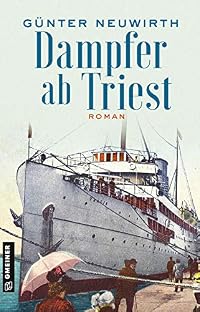 Dampfer ab Triest
Trieste 1907
The novel "Steamer from Trieste" is the first installment in the series about Inspector Bruno Zabini. I chose this book because we spent a week in Trieste and, throughout our trip, had already followed the traces of the Austro-Hungarian monarchy and architecture. In this historical novel, which is also a mystery, featuring Bruno Zabini, Luise Dorothea Freifrau von Callenhoff, Emilio Pittoni, and Fedora Cherini, the fascination of the vibrant port city of Trieste comes alive. Polyglot elegance, sensual adventures, and the dawn of fascinating new times are palpable, forming a clear contrast to the narrow-minded conventions, patriarchal morals, and the almost brutal militarism of the time.
Inspector Bruno Zabini is a true Trieste native; he speaks several languages and loves coffee. His hometown of Trieste is the "port to the world" for the Danube Monarchy. When Bruno receives orders to board the cruise ship "Thalia" to protect Count Urbanau, he is not pleased. He would have much preferred to spend a few pleasant days with his lover. He boards the ship incognito and mingles with the illustrious passengers. One of them is plotting against the Count's life.
 Dampfer ab Triest
Trieste 1907
The novel "Steamer from Trieste" is the first installment in the series about Inspector Bruno Zabini. I chose this book because we spent a week in Trieste and, throughout our trip, had already followed the traces of the Austro-Hungarian monarchy and architecture. In this historical novel, which is also a mystery, featuring Bruno Zabini, Luise Dorothea Freifrau von Callenhoff, Emilio Pittoni, and Fedora Cherini, the fascination of the vibrant port city of Trieste comes alive. Polyglot elegance, sensual adventures, and the dawn of fascinating new times are palpable, forming a clear contrast to the narrow-minded conventions, patriarchal morals, and the almost brutal militarism of the time.
Inspector Bruno Zabini is a true Trieste native; he speaks several languages and loves coffee. His hometown of Trieste is the "port to the world" for the Danube Monarchy. When Bruno receives orders to board the cruise ship "Thalia" to protect Count Urbanau, he is not pleased. He would have much preferred to spend a few pleasant days with his lover. He boards the ship incognito and mingles with the illustrious passengers. One of them is plotting against the Count's life.
33Ameise1
book 31 Read in German 🎧
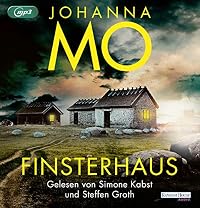 The Shadow Lily
This is the second volume in the Island Murders series, and since I had plenty of time to listen during the long train rides, it was a pleasure to follow this mystery.
Hanna has studied her father's investigative files intensively, but before she can get a complete picture, she faces a professional challenge: she receives a desperate call from Jenny Ahlström: Jenny's husband and her fourteen-month-old son have disappeared without a trace. All of Öland participates in a large-scale search, while Hanna and her colleague Erik Lindgren search for a motive in the missing father's life. One lead eventually leads to an empty house. Could this be the key to the case? A race against time begins for Hanna.
The investigation is protracted, and Hanna can't shake the thought of her father's crimes. Why is someone trying with all their might to prevent her from finally finding out the truth about her own father?
 The Shadow Lily
This is the second volume in the Island Murders series, and since I had plenty of time to listen during the long train rides, it was a pleasure to follow this mystery.
Hanna has studied her father's investigative files intensively, but before she can get a complete picture, she faces a professional challenge: she receives a desperate call from Jenny Ahlström: Jenny's husband and her fourteen-month-old son have disappeared without a trace. All of Öland participates in a large-scale search, while Hanna and her colleague Erik Lindgren search for a motive in the missing father's life. One lead eventually leads to an empty house. Could this be the key to the case? A race against time begins for Hanna.
The investigation is protracted, and Hanna can't shake the thought of her father's crimes. Why is someone trying with all their might to prevent her from finally finding out the truth about her own father?
34Ameise1
book 32 Read in German
 Obabakoak
With Obabakoak, which has been translated into numerous languages, the Basque language has conquered its place in world literature.
The remote village of Obaba, somewhere in the Basque mountains, follows its own rules. Here, confused hearts, dead letters, and stubborn chickens live. Here, tomato paste piles up in Rosie's corner shop, and rumors about the shepherds' house and lizards creep into unwary ears. Those who aren't careful get lost on the mountain paths or behind the neighbor's door.
Bernardo Atxaga conjures a sensual labyrinth, narrating fantastically real things, searching for the final word and endless stories.
It is a novel of fabulation, in which the fantastic becomes real and the real becomes fantastic, and all the stories are essentially about storytelling. The fictional village of Obaba becomes an almost mythical place of universal significance, yet remains a small town lost in the Basque mountains. With a playful perspective that ranges from Germany to Baghdad to the Amazon, from Borges to Calvino to Queneau, Atxaga conjures up a bizarre cosmos, distorting and parodying, delightfully playing with words, sentences, and senses.
I highly recommend this book.

 Obabakoak
With Obabakoak, which has been translated into numerous languages, the Basque language has conquered its place in world literature.
The remote village of Obaba, somewhere in the Basque mountains, follows its own rules. Here, confused hearts, dead letters, and stubborn chickens live. Here, tomato paste piles up in Rosie's corner shop, and rumors about the shepherds' house and lizards creep into unwary ears. Those who aren't careful get lost on the mountain paths or behind the neighbor's door.
Bernardo Atxaga conjures a sensual labyrinth, narrating fantastically real things, searching for the final word and endless stories.
It is a novel of fabulation, in which the fantastic becomes real and the real becomes fantastic, and all the stories are essentially about storytelling. The fictional village of Obaba becomes an almost mythical place of universal significance, yet remains a small town lost in the Basque mountains. With a playful perspective that ranges from Germany to Baghdad to the Amazon, from Borges to Calvino to Queneau, Atxaga conjures up a bizarre cosmos, distorting and parodying, delightfully playing with words, sentences, and senses.
I highly recommend this book.
35Ameise1
My lazy May stats

Authors Gender and origin:
women: 3
men: 5
Austria: 1
Germany: 2
Japan: 1
Spain: 1
Sweden: 1
UK: 2

Authors Gender and origin:
women: 3
men: 5
Austria: 1
Germany: 2
Japan: 1
Spain: 1
Sweden: 1
UK: 2
36kidzdoc
Great review of Obabakoak, Barbara. I've owned a copy of it for several years but haven't gotten to it yet, so I'll move it a bit higher on my TBR list. I had meant to read it when I was on vacation in Bilbao and San Sebastián several years ago but I didn't get around to it, for some reason.
37Ameise1
>36 kidzdoc: I can warmly recommend this book to you. It is something for the soul and it is really good to read such a wonderful book in this day and age.
38Nickelini
>25 Ameise1: Your holidays are starting soon. Are you going to be travelling around or staying in one place? How are Nina and her job search going?
Nina has started a job in Luzern. She can see the Kapellbrucke and the water tower right outside her office window. She also interviewed for a job in Zurich and may continue to look for work there. I think she wants to find a place to live first.
In Portugal we are starting in Sintra for 3 nights, and then we are meeting a large group of friends in Lisbon for 3 nights, and then the group is moving to a golf resort on the Silver Coast for 4 nights. From there the group goes to Porto for 3 nights. We have extended that by one night as we want to do a Duoro Valley tour/cruise. From there we have a place in Nazare that we can use for the rest of the trip. It belongs to a friend of my husband and he's not charging us. I was hoping to get over to the Azores, but that's going to have to be a future trip. We might pop down to Madeira though. Still have to book that if we want to do that. Nina is also hoping to come down for a weekend while we are in Nazare. Then we fly home from Lisbon.
I also have another trip booked. A friend told me she was going to an antique fair in Paris at the end of September, so I invited myself along. We will be in Paris Sept 25 to Oct 2 and we are just doing museums, flea markets, and the antique fair. I'm pretty excited. We have a charming hotel close to the Eifel Tower.
In any case, I can earn some ‘pocket money’ for the next holidays, which isn't bad either. I know so many teachers who have retired, but then go back and fill in like this, and all for the same reason -- to fund their travels. Seems like a sweet deal! When I retire from my job, that's it. So I'll keep working for now so I can fund my travel too
Nina has started a job in Luzern. She can see the Kapellbrucke and the water tower right outside her office window. She also interviewed for a job in Zurich and may continue to look for work there. I think she wants to find a place to live first.
In Portugal we are starting in Sintra for 3 nights, and then we are meeting a large group of friends in Lisbon for 3 nights, and then the group is moving to a golf resort on the Silver Coast for 4 nights. From there the group goes to Porto for 3 nights. We have extended that by one night as we want to do a Duoro Valley tour/cruise. From there we have a place in Nazare that we can use for the rest of the trip. It belongs to a friend of my husband and he's not charging us. I was hoping to get over to the Azores, but that's going to have to be a future trip. We might pop down to Madeira though. Still have to book that if we want to do that. Nina is also hoping to come down for a weekend while we are in Nazare. Then we fly home from Lisbon.
I also have another trip booked. A friend told me she was going to an antique fair in Paris at the end of September, so I invited myself along. We will be in Paris Sept 25 to Oct 2 and we are just doing museums, flea markets, and the antique fair. I'm pretty excited. We have a charming hotel close to the Eifel Tower.
In any case, I can earn some ‘pocket money’ for the next holidays, which isn't bad either. I know so many teachers who have retired, but then go back and fill in like this, and all for the same reason -- to fund their travels. Seems like a sweet deal! When I retire from my job, that's it. So I'll keep working for now so I can fund my travel too
39labfs39
>29 Ameise1: I've had Strange Weather in Tokyo on my wish list since reading her novel The Nakano Thrift Shop, which I really liked. Not much happens, but it is well-written and full of little things that are quite catching.
40Ameise1
>38 Nickelini: Oh that sounds wonderful that Nina has found a job. Finding a flat will probably be a bit more difficult with these high prices we have here.
Your trip sounds great. I'm looking forward to your photos.
Ha, well done for inviting you to the Psris trip and the programme sounds fascinating.
Your trip sounds great. I'm looking forward to your photos.
Ha, well done for inviting you to the Psris trip and the programme sounds fascinating.
41Ameise1
>39 labfs39: I hope you can find a copy of it. It's a wonderful story. I still have Manazuru as an audiobook at home. This will have to wait as I'm going to listen to some other audios first.
42ELiz_M
>34 Ameise1: I loved this more than I thought I would.
43Ameise1
>42 ELiz_M: Isn't it a beautiful book? It is so eloquent and yet light, so archaic and yet fairytale-like. I hope that many people will read this book.
44cindydavid4
>27 richardderus: I find it rather interesting and would like to read it, but ive read similar books in the fantasy genre that would fit. But to each his own,
45cindydavid4
>28 richardderus: aint that the truth!
46CDVicarage
Hello Barbara, it's good to see you back here and I loved your holiday photos. I don't travel much or far these days (by choice) but I love following my friends' holidays through photos here and on Facebook.
47richardderus
>32 Ameise1: It's not translated or I'd buy it! Trieste is fascinating to me, especially in that era. Such a fascinating liminal era...empires huge and ancient doddering to their extinction, new ones bubbling up....
48richardderus
>34 Ameise1: *ow*ow*ow* book-bulleted
49richardderus
>44 cindydavid4: It's a plot that truly is evergreen. There's always a reason for that...in some dark recess of the human brain, a lottery for awfulness seems more palatable than the utter uninterested-in-you randomness of the universe. I do not feel that way.
50Ameise1
>45 cindydavid4: Yes, so true.
>46 CDVicarage: Thank you very much, Kerry, glad to hear you liked the photos. I also enjoy travelling virtually with friends. It always provides new inspiration.
>47 richardderus: I completely agree with you, Rdear. I can lose myself in places and stories like that. It was great to spend a whole week in Trieste, where you can still see and feel so much of the Austro-Hungarian Empire era. This is also actively promoted. We also visited the old harbour. It was very impressive and somehow I was able to relate to this story.
>48 richardderus: I hope you find a copy of this book. I'm sure you'll like it.
>46 CDVicarage: Thank you very much, Kerry, glad to hear you liked the photos. I also enjoy travelling virtually with friends. It always provides new inspiration.
>47 richardderus: I completely agree with you, Rdear. I can lose myself in places and stories like that. It was great to spend a whole week in Trieste, where you can still see and feel so much of the Austro-Hungarian Empire era. This is also actively promoted. We also visited the old harbour. It was very impressive and somehow I was able to relate to this story.
>48 richardderus: I hope you find a copy of this book. I'm sure you'll like it.
51Ameise1
book 33 Read in German
 Ein halber Löffel Reis
It is Maraini's autobiography of her early childhood in Japan. She describes, with clear and concise language, what happened to her in an internment camp in Japan during World War II. She presents it from a childlike perspective, one that knows neither resentment nor hatred, yet she names all the terrible things with a clear message.
She only reveals her lack of understanding of politicians and humanity in retrospect, which is all the more accusatory and frightening, given that we are back at the same point today as we were 85 years ago.
Among other things, she writes that she repeatedly visits former concentration camps. She doesn't compare them to her time in the internment camp. Rather, she asks questions about them:
Another statement by Maraini:
Another statement by Maraini that perfectly fits today's times and is more than frightening:
Shouldn't we be asking ourselves the same question today, when we read all the horrific news from Gaza, where an entire people is being exterminated and no one dares to shout "stop"?
After being liberated from the internment camp by the Americans, where she was grateful and happy from a child's perspective, Maraini asks herself almost 80 years later:
Maraini is a very politically minded woman who is particularly committed to women's rights. She dealt with her years in the internment camp, partly by 'eating' her way through the old literary classics. Poetry is equally important to her, and she has also worked on several projects in prisons.
Something from her time in Japan, however, has stayed with her, as she writes:
You have to know that the internees did not receive the food they were entitled to. It was confiscated by the guards. They were given only enough to keep them alive. They all became very ill. Maraini's youngest sister died from the long-term effects of this food deprivation.
It's a very interesting story that I highly recommend.
 Ein halber Löffel Reis
It is Maraini's autobiography of her early childhood in Japan. She describes, with clear and concise language, what happened to her in an internment camp in Japan during World War II. She presents it from a childlike perspective, one that knows neither resentment nor hatred, yet she names all the terrible things with a clear message.
She only reveals her lack of understanding of politicians and humanity in retrospect, which is all the more accusatory and frightening, given that we are back at the same point today as we were 85 years ago.
Among other things, she writes that she repeatedly visits former concentration camps. She doesn't compare them to her time in the internment camp. Rather, she asks questions about them:
Goethe once said: "What is the hardest thing in the world? To see with your eyes what lies before your eyes." (Maraini about the soldiers and population around the concentration camps): In fact, the desire to ignore what is documented by thousands upon thousands of documents and photographs is a desire to see nothing and hear nothing, an ethical blindness and deafness that has turned them into unfeeling automatons.
Another statement by Maraini:
It's difficult to discuss things with people who are inaccessible to other worldviews and common sense.
Another statement by Maraini that perfectly fits today's times and is more than frightening:
Totalitarian systems are perfectly organized, especially when it comes to information. The critical press was banned, and broadcasting was placed under strict state control. No one would have dared to ask uncomfortable questions. No one would have dared to criticize or ask: Where are these trains full of people going, passing by here every hour from all over Europe?
Shouldn't we be asking ourselves the same question today, when we read all the horrific news from Gaza, where an entire people is being exterminated and no one dares to shout "stop"?
After being liberated from the internment camp by the Americans, where she was grateful and happy from a child's perspective, Maraini asks herself almost 80 years later:
When I think about what the American soldiers who defeated the terrible dragon of National Socialism meant to us, I wonder how they could have fallen so low afterward. One of her fatal mistakes, for example, was allying herself with the Mafia during the conquest of Sicily, thus giving it legitimacy, which later contributed to the Cosa Nostra's ever-increasing power.
Maraini is a very politically minded woman who is particularly committed to women's rights. She dealt with her years in the internment camp, partly by 'eating' her way through the old literary classics. Poetry is equally important to her, and she has also worked on several projects in prisons.
Something from her time in Japan, however, has stayed with her, as she writes:
For years, I hid food as a supply for later, like a dog burying a piece of bread, because the future is uncertain and it's better to prepare for the worst.
You have to know that the internees did not receive the food they were entitled to. It was confiscated by the guards. They were given only enough to keep them alive. They all became very ill. Maraini's youngest sister died from the long-term effects of this food deprivation.
It's a very interesting story that I highly recommend.
52dchaikin
>29 Ameise1: I’m excited to see this. Glad you found a good story. I’m very curious
53SirThomas
>25 Ameise1: How well you know me, Barbara.
I have reserved some of them at the public library, they are not yet available.
Anticipation...
Have a wonderful start to the week!
I have reserved some of them at the public library, they are not yet available.
Anticipation...
Have a wonderful start to the week!
54Ameise1
>52 dchaikin: I hope you find a copy of this story. I could well imagine that you would like it.
>53 SirThomas: I'm glad I could inspire you. I wish you a good start to the new week.
>53 SirThomas: I'm glad I could inspire you. I wish you a good start to the new week.
55Ameise1
book 34 Read in German
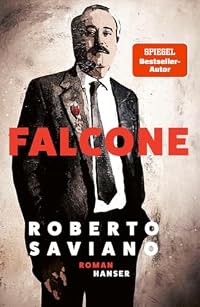 Falcone
I read this book because I closely followed the events in Sicily and Italy in the 1980s. Even though I live in a neighbouring country to Italy, these events did not pass us by unnoticed. Time and again, one has to grapple with these events, even though one knows that one will never learn the whole truth.
The author writes in the introduction to the book:
Falcone is the person who will always be remembered, even though many others paved the way or stood by his side. In fact, it was a whole team of judges, prosecutors and a few politicians who took up the fight against the Mafia. Falcone and his colleagues described themselves as relay runners who run part of the race before being killed and handing over the baton to the next runner. However, in order for the baton to be passed on, it is essential that everything is collected, recorded and processed in one place. This only happened in the early 1980s. Before that, each prosecutor worked independently, and the connections that had long existed were not visible. This is certainly to the credit of all the investigators and colleagues around Falcone. It was they who were able to meticulously gather everything, recognise the connections and ultimately conduct a maxi trial in which 346 defendants were sentenced to a total of 2,665 years in prison.
All those courageous individuals involved knew that sooner or later they would be murdered. The corruption of the Mafia, politicians and the highest judges in the country was enormous. Nothing could protect them, and yet they continued tirelessly.
Even more than thirty years after the events, the world is once again moving towards a situation where leading politicians are trying to undermine the courts and seize all power for themselves. This is a very dangerous development. Falcone might say: We are moving back to medieval times.
I read this book with great interest and can warmly recommend it to everyone.
 Falcone
I read this book because I closely followed the events in Sicily and Italy in the 1980s. Even though I live in a neighbouring country to Italy, these events did not pass us by unnoticed. Time and again, one has to grapple with these events, even though one knows that one will never learn the whole truth.
The author writes in the introduction to the book:
This novel tells a true story. (...) When I used my imagination to connect facts, fill in gaps, reconstruct dialogues, illustrate short scenes or give shape to feelings and thoughts, I never did so arbitrarily, but always on the basis of historical evidence or concrete clues. ( . . . ) Each scene is an excerpt from the drama of an entire country, where the truth is so distorted that it surpasses the wildest imaginations.
All the characters existed, every event actually happened. All of this really happened.
Falcone is the person who will always be remembered, even though many others paved the way or stood by his side. In fact, it was a whole team of judges, prosecutors and a few politicians who took up the fight against the Mafia. Falcone and his colleagues described themselves as relay runners who run part of the race before being killed and handing over the baton to the next runner. However, in order for the baton to be passed on, it is essential that everything is collected, recorded and processed in one place. This only happened in the early 1980s. Before that, each prosecutor worked independently, and the connections that had long existed were not visible. This is certainly to the credit of all the investigators and colleagues around Falcone. It was they who were able to meticulously gather everything, recognise the connections and ultimately conduct a maxi trial in which 346 defendants were sentenced to a total of 2,665 years in prison.
All those courageous individuals involved knew that sooner or later they would be murdered. The corruption of the Mafia, politicians and the highest judges in the country was enormous. Nothing could protect them, and yet they continued tirelessly.
Even more than thirty years after the events, the world is once again moving towards a situation where leading politicians are trying to undermine the courts and seize all power for themselves. This is a very dangerous development. Falcone might say: We are moving back to medieval times.
I read this book with great interest and can warmly recommend it to everyone.
56dchaikin
>55 Ameise1: how interesting!
57Ameise1
>56 dchaikin: It was indeed highly interesting, and unfortunately much of it is applicable to the present day.
58labfs39
>55 Ameise1: Sounds fascinating as well as chilling. Unfortunately it doesn't seem to be translated yet. Would probably be banned in this country at the moment.
59richardderus
>55 Ameise1: It is a crime against humanity that these tireless fighters for real justice were never truly protected. Their example should be celebrated around the world.
60kidzdoc
>55 Ameise1: Great review, Barbara!
61Ameise1
>58 labfs39: Yes, I could well imagine that it would be banned in the USA at the moment. I checked and found that, apart from the original Italian version, this book is only available in German and Dutch.
>59 richardderus: Rdear, they were given personal protection, but this was of little use, as they were also killed. The sad thing is that the Mafia had enough people in very high positions who “kindly” served as moles in exchange for payment. In addition, the killers had staying power and the murders were well planned.
>60 kidzdoc: Thank you very much, Darryl. I hope that this book will one day be translated into English so that you can all read about what is happening here in “beautiful” Europe.
>59 richardderus: Rdear, they were given personal protection, but this was of little use, as they were also killed. The sad thing is that the Mafia had enough people in very high positions who “kindly” served as moles in exchange for payment. In addition, the killers had staying power and the murders were well planned.
>60 kidzdoc: Thank you very much, Darryl. I hope that this book will one day be translated into English so that you can all read about what is happening here in “beautiful” Europe.
62kidzdoc
>61 Ameise1: I hope so too, Barbara. I searched for "Roberto Saviano" on Amazon, and apparently at least five of his previous books have been translated into English. Hopefully this makes it more likely that Falcone will be as well.
63richardderus
>61 Ameise1: It's depressing but inevitable. Look at All the people who threaten the powerful who utterly coincidentally and completely unrelatedly turn up dead.
Mysterious.
Mysterious.
64Ameise1
>63 richardderus: I have been saying for decades that humans do not learn from history. It is always déjà vu. One would think that, from an evolutionary perspective, we should be highly developed, but unfortunately this only confirms that this is a myth and that we are always back at square one. Sad but true.
65vancouverdeb
The Shadow Lily sounds like a good read, Barbara! I'm glad you enjoyed your travels.
66Ameise1
>65 vancouverdeb: Thanks so much, Deborah. Yes we had a winderful journey.
67Ameise1
book 35 Read in German
 Ragazzi di vita
I had had this book on my reading list for quite some time. First of all, I would like to say that you need strong nerves to read it.
The German translator (Moshe Kahn) writes the following in the afterword:
The novel is full of strong language, which one has to endure, because it corresponds to the lowest social class that Paolini writes about in this novel. The novel is set in the suburbs of Rome from the end of World War II to the early 1950s. We follow a group of young people from their early teens until they are young adults. Life was brutally hard. There was unemployment, extreme poverty, homelessness, children left to fend for themselves or taken under the wing of youth gangs, and a great deal of violence. The themes of homosexuality, rape and death also feature in the novel.
And despite all this brutality, you learn to love the protagonists. You develop an understanding of why they are the way they are and fear with them that they will survive the next low point. The boys were very resourceful in finding food, new clothes and shelter.
Their motto was usually not to work and to obtain money or the things they needed in other ways. Of course, there was a lot of rivalry in this system, but they still cared for each other.
Even though it wasn't an easy read, I'm glad I read it and would highly recommend it.
 Ragazzi di vita
I had had this book on my reading list for quite some time. First of all, I would like to say that you need strong nerves to read it.
The German translator (Moshe Kahn) writes the following in the afterword:
Even before its publication at the end of May 1955, an Italian literary scandal was brewing. The initial reactions of booksellers who had read the galley proofs questioned whether the novel should be published at all.
After revising the manuscript, Paolini wrote to his friend, the poet Vittorio Sereni: '... So now the galley proofs lie before me like half-dead corpses, and I am supposed to correct and castrate them. True despair ...'
Kahn goes on to write that the German translation corresponds to Paolini's original and that nothing has been shortened or altered.
The novel is full of strong language, which one has to endure, because it corresponds to the lowest social class that Paolini writes about in this novel. The novel is set in the suburbs of Rome from the end of World War II to the early 1950s. We follow a group of young people from their early teens until they are young adults. Life was brutally hard. There was unemployment, extreme poverty, homelessness, children left to fend for themselves or taken under the wing of youth gangs, and a great deal of violence. The themes of homosexuality, rape and death also feature in the novel.
And despite all this brutality, you learn to love the protagonists. You develop an understanding of why they are the way they are and fear with them that they will survive the next low point. The boys were very resourceful in finding food, new clothes and shelter.
Their motto was usually not to work and to obtain money or the things they needed in other ways. Of course, there was a lot of rivalry in this system, but they still cared for each other.
Even though it wasn't an easy read, I'm glad I read it and would highly recommend it.
68Ameise1
book 36 Read in German
 Café Royal
This book is a quick read. It deals with very different relationships from the microcosm of Via Marghera in Milan shortly after the lockdown was lifted.
Northern Italy was hit hard by Covid-19. I still remember well how the dead were taken away in trucks. This may seem disrespectful to some, but there was really no other option.
Covid-19 is only mentioned in passing in the book. Everyone is happy that they can see each other again, even if only from a distance, and talk to each other. The book is divided into chapters, each of which accompanies one person for a while. What is exciting is that the people mentioned are given their own chapter in the course of the book, linking the whole thing together.
The main themes are relationships, whether homosexual or escapes from “dead-end” marriages. The author writes this book and its characters' life circumstances with great love.
I can recommend this book.
 Café Royal
This book is a quick read. It deals with very different relationships from the microcosm of Via Marghera in Milan shortly after the lockdown was lifted.
Northern Italy was hit hard by Covid-19. I still remember well how the dead were taken away in trucks. This may seem disrespectful to some, but there was really no other option.
Covid-19 is only mentioned in passing in the book. Everyone is happy that they can see each other again, even if only from a distance, and talk to each other. The book is divided into chapters, each of which accompanies one person for a while. What is exciting is that the people mentioned are given their own chapter in the course of the book, linking the whole thing together.
The main themes are relationships, whether homosexual or escapes from “dead-end” marriages. The author writes this book and its characters' life circumstances with great love.
I can recommend this book.
70Ameise1
>69 Nickelini: The 75 group has a European challenge, and this month it's Italy's turn. I love books by Italian authors and can finally get through some books that I've been wanting to read for a long time.
71SirThomas
It's much further north, but thank you so much for introducing me to Hanna Duncker in Sweden, it's a great read.
72Ameise1
>71 SirThomas: Glad to hear you enjoyed the first volume 😃.
73richardderus
>67 Ameise1: If I remember rightly, I read an old translation of this entitled The Hustlers. It sticks in my mind as a very tough read, but like you, one I was glad I'd done.
74Ameise1
>73 richardderus: Your title is interesting. As an English version, I could only find The Ragazzi.
75Ameise1
book 37 Read in German
 Am Samstag wird abgerechnet
I found this book in my local library. As soon as I started reading it, I was hooked and bought the previous three volumes of this series before I had even finished reading the fourth.
In a deserted Alpine village, a film producer and brother of a former Democrazia Cristiana politician is found dead in his Jaguar. His wife, a former actress whom an entire generation was in love with, has disappeared without a trace. For the investigation, Commissario Arcadipane, originally from Turin, has to settle in the lonely mountain village, which consists of only a handful of houses. There, suspicious residents and a puzzle that gives him a headache await him. The case is too complicated not to ask his old friend and mentor Corso Bramard for help, as well as the undisciplined but indispensable Isa Mancini. Both are currently going through a difficult phase in their lives. If they want to uncover the truth together, they will have to dig up old secrets and new machinations and untangle a complex web of political intrigue. And on Saturday, the reckoning will come.
What I particularly liked were the different characters of the main protagonists. Each of them is quirky in their own way, yet they manage to solve the case with their rather unorthodox ways of thinking. I also love books like this one, where pagan elements, such as fertility rites in this case, play an important role.
It is a solid and complex story, with a lot of love for the protagonists and the mystical mountain world.
 Am Samstag wird abgerechnet
I found this book in my local library. As soon as I started reading it, I was hooked and bought the previous three volumes of this series before I had even finished reading the fourth.
In a deserted Alpine village, a film producer and brother of a former Democrazia Cristiana politician is found dead in his Jaguar. His wife, a former actress whom an entire generation was in love with, has disappeared without a trace. For the investigation, Commissario Arcadipane, originally from Turin, has to settle in the lonely mountain village, which consists of only a handful of houses. There, suspicious residents and a puzzle that gives him a headache await him. The case is too complicated not to ask his old friend and mentor Corso Bramard for help, as well as the undisciplined but indispensable Isa Mancini. Both are currently going through a difficult phase in their lives. If they want to uncover the truth together, they will have to dig up old secrets and new machinations and untangle a complex web of political intrigue. And on Saturday, the reckoning will come.
What I particularly liked were the different characters of the main protagonists. Each of them is quirky in their own way, yet they manage to solve the case with their rather unorthodox ways of thinking. I also love books like this one, where pagan elements, such as fertility rites in this case, play an important role.
It is a solid and complex story, with a lot of love for the protagonists and the mystical mountain world.
76richardderus
>74 Ameise1: I think "The Hustlers" really captures the spirit of the book better than "Ragazzi" which means nothing whatever to Anglophone audiences.
77Ameise1
book 38 Read in German
 Darkness for the Bastards of Pizzofalcone
I am a huge fan of the Giuseppe Lojacono e i Bastardi di Pizzofalcone series. This volume also captivated me from the first page to the last.
During a school trip, ten-year-old Dodo disappears. A school friend says that a blonde woman took him away. The surveillance cameras are of no help. However, it becomes clear that Dodo left the museum with the woman of his own free will. As Inspector Lojacano and his partner are working on a mysterious apartment burglary, their spirited colleagues Romano and Aragona take on the case. They first get to know the little boy's family, or rather what is left of it. His mother Eva is divorced and has been living with a penniless artist ever since. Her relationship with her wealthy father is broken, as is her relationship with Dodo's father, an entrepreneur from northern Italy. So it is not surprising that mutual recriminations and hatred dominate the scene. The police struggle to get the family to focus on the kidnapping. But even after a phone call confirms that Dodo has been kidnapped, the investigators make no progress. Instead, the kidnappers increasingly lose control of the situation. Only Dodo remains completely calm. He puts his faith in Batman, the action figure he always carries with him.
Above all, the very different police officers breathe special flair into Maurizio De Giovanni's novels, all of whom, albeit for different reasons, have rather messed-up private lives. As good as they are at their jobs as police officers, they are unable to deal openly with their feelings. Various relationship issues remain unresolved, but nevertheless, we get to know some of the investigators a little better. Equally open is the private investigation of colleague Pisanelli, who, after the suicide of his seriously ill wife, wonders about the conspicuously high suicide rate in the city. He does not believe in coincidences, but rather that someone has helped along the process. Unlike in the last novel, this side story is now resolved, but (for the time being) only for the reader.
 Darkness for the Bastards of Pizzofalcone
I am a huge fan of the Giuseppe Lojacono e i Bastardi di Pizzofalcone series. This volume also captivated me from the first page to the last.
During a school trip, ten-year-old Dodo disappears. A school friend says that a blonde woman took him away. The surveillance cameras are of no help. However, it becomes clear that Dodo left the museum with the woman of his own free will. As Inspector Lojacano and his partner are working on a mysterious apartment burglary, their spirited colleagues Romano and Aragona take on the case. They first get to know the little boy's family, or rather what is left of it. His mother Eva is divorced and has been living with a penniless artist ever since. Her relationship with her wealthy father is broken, as is her relationship with Dodo's father, an entrepreneur from northern Italy. So it is not surprising that mutual recriminations and hatred dominate the scene. The police struggle to get the family to focus on the kidnapping. But even after a phone call confirms that Dodo has been kidnapped, the investigators make no progress. Instead, the kidnappers increasingly lose control of the situation. Only Dodo remains completely calm. He puts his faith in Batman, the action figure he always carries with him.
Above all, the very different police officers breathe special flair into Maurizio De Giovanni's novels, all of whom, albeit for different reasons, have rather messed-up private lives. As good as they are at their jobs as police officers, they are unable to deal openly with their feelings. Various relationship issues remain unresolved, but nevertheless, we get to know some of the investigators a little better. Equally open is the private investigation of colleague Pisanelli, who, after the suicide of his seriously ill wife, wonders about the conspicuously high suicide rate in the city. He does not believe in coincidences, but rather that someone has helped along the process. Unlike in the last novel, this side story is now resolved, but (for the time being) only for the reader.
78Ameise1
>76 richardderus: Thank you very much for the explanation.
79Deern
Hi Barbara, some great reviews! I’m really wondering if I should reread Ragazzi di Vita, it left a strong impression on me, although I understood only half of the Italian.
The Falcone book also sounds interesting. I never read a book by Saviano, though I should, I was just yesterday discussing him with a colleague. I’m finding the mafia stuff so painful to read, because it is still romanticized - even the more realistic takes in movies or TV have something seductive - while it has seeped so deeply into everything (politics, business, family) everywhere, and I’m far from meaning just Italy here. There‘s almost no way to avoid and not financially support them in some way.
Belated Happy Birthday to Thomas, I saw the menu pics on FB today, it all looked wonderful. Have a lovely weekend!
The Falcone book also sounds interesting. I never read a book by Saviano, though I should, I was just yesterday discussing him with a colleague. I’m finding the mafia stuff so painful to read, because it is still romanticized - even the more realistic takes in movies or TV have something seductive - while it has seeped so deeply into everything (politics, business, family) everywhere, and I’m far from meaning just Italy here. There‘s almost no way to avoid and not financially support them in some way.
Belated Happy Birthday to Thomas, I saw the menu pics on FB today, it all looked wonderful. Have a lovely weekend!
80Ameise1
>79 Deern: Thank you very much, Nathalie. I hope you find a German edition of Ragazzi di Vita. Since you've already read it in Italian, it won't be so shocking anymore.
I have Saviano's Treue : Liebe, Begehren und Verrat / Noi due ci apparteniamo on my library wish list. Since it's usually checked out, I'll probably have to wait a while.
Thank you very much for the congratulations, says Thomas.
I have Saviano's Treue : Liebe, Begehren und Verrat / Noi due ci apparteniamo on my library wish list. Since it's usually checked out, I'll probably have to wait a while.
Thank you very much for the congratulations, says Thomas.
81Ameise1
book 39 Read in German
 Schwarz wie das Herz
The author is a lawyer and became familiar with the misery of prisons and the entire spectrum of criminals, from terrorists to drug dealers to the notorious Magliana gang. Against this backdrop, he began writing on the side.
This book is about hatred towards black immigrants and illegal organ trafficking.
Lawyer Valentino Bruio is in deep trouble. The bar association is threatening to expel him, he is broke and has just turned away a black immigrant who told him about his child in need. He is simply fed up with losers as clients. But when he learns that the man has been killed, Bruio finds himself in a moral crisis. He begins an investigation with friends from Rome's black community. A black child disappears in Rome. Investigator Valentino Bruio takes on the case and discovers a criminal network involving organ trafficking, racist ideology and greed. It leads him to the villa of the powerful Alga-Croce family. The confrontation with the enigmatic patriarch Noè opens his eyes to the upper class's lust for power and boundless amorality. But his affection for the daughter of the house presents Bruio with a dilemma.

 Schwarz wie das Herz
The author is a lawyer and became familiar with the misery of prisons and the entire spectrum of criminals, from terrorists to drug dealers to the notorious Magliana gang. Against this backdrop, he began writing on the side.
This book is about hatred towards black immigrants and illegal organ trafficking.
Lawyer Valentino Bruio is in deep trouble. The bar association is threatening to expel him, he is broke and has just turned away a black immigrant who told him about his child in need. He is simply fed up with losers as clients. But when he learns that the man has been killed, Bruio finds himself in a moral crisis. He begins an investigation with friends from Rome's black community. A black child disappears in Rome. Investigator Valentino Bruio takes on the case and discovers a criminal network involving organ trafficking, racist ideology and greed. It leads him to the villa of the powerful Alga-Croce family. The confrontation with the enigmatic patriarch Noè opens his eyes to the upper class's lust for power and boundless amorality. But his affection for the daughter of the house presents Bruio with a dilemma.

83SassyLassy
>67 Ameise1: Intrigued by this book as I went through a Pasolini film watching stage.
>73 richardderus: Hovering over the title, a Europa edition with the title The Street Kids appears, but I prefer your The Hustlers much more. Street Kids sounds like Amado.
>73 richardderus: Hovering over the title, a Europa edition with the title The Street Kids appears, but I prefer your The Hustlers much more. Street Kids sounds like Amado.
84Ameise1
>83 SassyLassy: I hope you find a copy of this book. I haven't seen any of the films yet. I prefer to stick to the books.
85richardderus
>83 SassyLassy: "The Hustlers" was an older translation that's just...vanished for some reason. I do not know why.
86Ameise1
book 40 Read in German
 Im Wald
This is the eighth case in the von Bodenstein and Kirchhoff series, and once again it was very exciting.
I had the good fortune to meet the author Nele Neuhaus in March at the Book Love Festival in Zurich. I already knew that her books are based on newspaper reports that she saves and eventually weaves into a story.
In this story, we learn right from the start that Inspector von Bodenstein is “burnt out” and wants to take a sabbatical. However, he would hardly have believed that this particular case would affect him so deeply and turn his emotional world upside down.
A remote caravan site in the forest is ablaze. It soon turns out that it was arson and that the dead man was a local resident. It is also quickly established that he was murdered. But this is only the beginning of a series of murders, and von Bodenstein quickly realises that the people involved are “respected” residents with whom he grew up. This also reminds him of the disappearance of his best childhood friend forty years ago. Was he also murdered back then? While Bodenstein investigates the events of forty years ago, Kirchhoff has to solve the current cases, even though everything seems to be connected.
It kept me guessing from the first page to the last. There are many suspected perpetrators, but the real culprit keeps his mask on until the very end.
 Im Wald
This is the eighth case in the von Bodenstein and Kirchhoff series, and once again it was very exciting.
I had the good fortune to meet the author Nele Neuhaus in March at the Book Love Festival in Zurich. I already knew that her books are based on newspaper reports that she saves and eventually weaves into a story.
In this story, we learn right from the start that Inspector von Bodenstein is “burnt out” and wants to take a sabbatical. However, he would hardly have believed that this particular case would affect him so deeply and turn his emotional world upside down.
A remote caravan site in the forest is ablaze. It soon turns out that it was arson and that the dead man was a local resident. It is also quickly established that he was murdered. But this is only the beginning of a series of murders, and von Bodenstein quickly realises that the people involved are “respected” residents with whom he grew up. This also reminds him of the disappearance of his best childhood friend forty years ago. Was he also murdered back then? While Bodenstein investigates the events of forty years ago, Kirchhoff has to solve the current cases, even though everything seems to be connected.
It kept me guessing from the first page to the last. There are many suspected perpetrators, but the real culprit keeps his mask on until the very end.
87Ameise1
book 41 Read in German
 Nachtschein
What I particularly liked about the book is that I know and love all the locations in Zurich like the back of my hand, so I know exactly what the situation is like for the protagonists.
The death of young Iva Schwarz is a mystery. Rosa Zambrano from the lake police must therefore work meticulously with her colleague to piece together the available clues and details. But Rosa is also facing turbulent times in her private life. As if that weren't enough, she receives a job offer that makes her rethink her current life situation.
Rosa Zambrano is thrown into emotional turmoil when her former boyfriend Leo reappears in town. She has just started to get involved with her colleague Martin. Now she is caught between a rock and a hard place. She should really have a clear head in order to solve the murder of the daughter of a well-known architect. Thanks to the tireless efforts of her colleague Martin, the first clues are finally found. These clues, in addition to interpersonal sensitivities, also have to do with a construction project in Zurich.
 Nachtschein
What I particularly liked about the book is that I know and love all the locations in Zurich like the back of my hand, so I know exactly what the situation is like for the protagonists.
The death of young Iva Schwarz is a mystery. Rosa Zambrano from the lake police must therefore work meticulously with her colleague to piece together the available clues and details. But Rosa is also facing turbulent times in her private life. As if that weren't enough, she receives a job offer that makes her rethink her current life situation.
Rosa Zambrano is thrown into emotional turmoil when her former boyfriend Leo reappears in town. She has just started to get involved with her colleague Martin. Now she is caught between a rock and a hard place. She should really have a clear head in order to solve the murder of the daughter of a well-known architect. Thanks to the tireless efforts of her colleague Martin, the first clues are finally found. These clues, in addition to interpersonal sensitivities, also have to do with a construction project in Zurich.
88SirThomas
>86 Ameise1: This would have been another BB if I hadn't already read it - love the series!
89richardderus
>87 Ameise1: Hi Barbara! I have cultural question: >86 Ameise1: is a "Kriminalroman" but >87 Ameise1: is a "Zurichkrimi"...as I understand it, "Krimi" is the usual term for a mystery. Is there a difference between a "Krimi" and a "Kriminalroman" in setting your expectations?
In English we have "mysteries" and "crime novels" that are a bit different in what the reader is set up to expect. A "mystery" is most likely to be in a series, follow certain expected conventions of setting and plot including solving the crime in question, while a "crime novel" is about a specific crime but does not convey the same expectation of a series character or characters nor does it implicitly promise the crime will be solved by the end.
Is there a similar difference in the German terms?
Happy weekend!
In English we have "mysteries" and "crime novels" that are a bit different in what the reader is set up to expect. A "mystery" is most likely to be in a series, follow certain expected conventions of setting and plot including solving the crime in question, while a "crime novel" is about a specific crime but does not convey the same expectation of a series character or characters nor does it implicitly promise the crime will be solved by the end.
Is there a similar difference in the German terms?
Happy weekend!
90Ameise1
>88 SirThomas: I love this serie too. Have you read all of them?
91Ameise1
>89 richardderus: First of all Krimi is the short form of Kriminalroman.
About the definition:
The Kriminalroman (or Krimi for short) is a genre of literature. Although the origins of the crime novel go back further, it only established itself as a literary genre in the 19th century. It usually deals with a crime, its investigation and solving by the police, a detective or a private individual. The focus, perspective and narrative style of individual crime novels can vary considerably.
In the literary genre of crime fiction, the resolution of a crime is at the centre of the narrative. The reader follows the investigator as they attempt to identify the perpetrator. The mystery of who the perpetrator is, which the reader participates in solving despite all the red herrings, creates the curiosity or suspense that keeps the reader engaged in the narrative.
According to Bertolt Brecht, "the crime novel ... is about logical thinking and requires logical thinking from the reader. It is similar to a crossword puzzle." It offers the reader a kind of suspense that differs from other literature in its demand for logic, the importance of interests as motives, and the enjoyment of seeing people in action. The search for the causality of human actions is "the main intellectual pleasure that crime novels offer us," which is why they must adhere to a certain basic pattern of event, observation, hypothesis and solution and – despite all the variations – also repeat it.
So much for the German definition. I hope that helps you, Rdear.
Have a nice weekend.
About the definition:
The Kriminalroman (or Krimi for short) is a genre of literature. Although the origins of the crime novel go back further, it only established itself as a literary genre in the 19th century. It usually deals with a crime, its investigation and solving by the police, a detective or a private individual. The focus, perspective and narrative style of individual crime novels can vary considerably.
In the literary genre of crime fiction, the resolution of a crime is at the centre of the narrative. The reader follows the investigator as they attempt to identify the perpetrator. The mystery of who the perpetrator is, which the reader participates in solving despite all the red herrings, creates the curiosity or suspense that keeps the reader engaged in the narrative.
According to Bertolt Brecht, "the crime novel ... is about logical thinking and requires logical thinking from the reader. It is similar to a crossword puzzle." It offers the reader a kind of suspense that differs from other literature in its demand for logic, the importance of interests as motives, and the enjoyment of seeing people in action. The search for the causality of human actions is "the main intellectual pleasure that crime novels offer us," which is why they must adhere to a certain basic pattern of event, observation, hypothesis and solution and – despite all the variations – also repeat it.
So much for the German definition. I hope that helps you, Rdear.
Have a nice weekend.
92Familyhistorian
Looks like a lot of crime reading going on, Barbara. Enjoy your upcoming trip to the antique fair. Sounds like fun!
93richardderus
>91 Ameise1: Thanks for the help, dear lady!
94SirThomas
>90 Ameise1: As far as I know, 11 books in the series have been published so far, all of which I have read and enjoyed.
Have a wonderful start to the week, Barbara!
Have a wonderful start to the week, Barbara!
95Ameise1
>92 Familyhistorian: Meg, I'm actually back in crime fever again ;-). I think you're confusing me with someone else, because I haven't planned a trip to an antique fair.
>93 richardderus: You're welcome, Rdear.
>94 SirThomas: Thanks, Thomas, I actually have the next one at home. I'll definitely read it. I wish you a great week too. We're eating out tonight. Yesterday was our 36th wedding anniversary.
>93 richardderus: You're welcome, Rdear.
>94 SirThomas: Thanks, Thomas, I actually have the next one at home. I'll definitely read it. I wish you a great week too. We're eating out tonight. Yesterday was our 36th wedding anniversary.
96Ameise1
book 42 Read in German
 Das Erbe der Schuld
This is the fourth volume of Hannes Niehaus' Baltic Sea Crimes series, and once again, I was thoroughly impressed.
At a small airfield near the Baltic Sea: As Dr Gerd Hartkamp climbs into a Cessna on a beautiful Sunday afternoon, he has no idea that this will be his last parachute jump. His equipment has been deliberately tampered with, and shortly afterwards, the psychology professor plunges to his death. When the sons of the deceased also find themselves in mortal danger, everything points to a dark family secret. To solve his new case, sports cop Hannes Niehaus must dig deep into the past and break through a wall of silence. Because there is a lot at stake for those involved: the final battle between truth and deception is a matter of life and death.
I love the characters surrounding Hannes Niehaus, whether they are from his private life or his working life. With each volume, you get to know them better. As a top athlete, he doesn't have it easy with his boss. He should actually be doing more training sessions as a canoeist, especially so close to the Olympics, but his boss, a very unsporting guy, naturally sees things differently.
It is also in Niehaus's boss's nature to be satisfied very quickly with any investigation results, while Niehaus fights his way through to the last detail.
 Das Erbe der Schuld
This is the fourth volume of Hannes Niehaus' Baltic Sea Crimes series, and once again, I was thoroughly impressed.
At a small airfield near the Baltic Sea: As Dr Gerd Hartkamp climbs into a Cessna on a beautiful Sunday afternoon, he has no idea that this will be his last parachute jump. His equipment has been deliberately tampered with, and shortly afterwards, the psychology professor plunges to his death. When the sons of the deceased also find themselves in mortal danger, everything points to a dark family secret. To solve his new case, sports cop Hannes Niehaus must dig deep into the past and break through a wall of silence. Because there is a lot at stake for those involved: the final battle between truth and deception is a matter of life and death.
I love the characters surrounding Hannes Niehaus, whether they are from his private life or his working life. With each volume, you get to know them better. As a top athlete, he doesn't have it easy with his boss. He should actually be doing more training sessions as a canoeist, especially so close to the Olympics, but his boss, a very unsporting guy, naturally sees things differently.
It is also in Niehaus's boss's nature to be satisfied very quickly with any investigation results, while Niehaus fights his way through to the last detail.
97Ameise1
book 43 Read in German 🎧
 Dunkelsprung
I rarely read fantasy books, but I really enjoyed this one, which is also called “A Fairy Tale 2.0”.
In present-day London, flea circus director Julius Birdwell has his deceased flea performers brought back from the realm of the dead by the mythical creature Elizabeth Thorn. In return, he must help her free the other mythical creatures from the clutches of the magician Fawkes. They are aided by private detective Frank Green, who has freed himself from his past as a corrupt police commissioner with the help of a hypnotist who makes people forget, a lovable old lady with a feather that helps navigate mazes, and a fluffy dragon.
Julius, the youngest scion of a traditional family of thieves, wants nothing to do with any of this and leads a happy life as a flea tamer and goldsmith – as long as the shady characters of London leave him alone. As such, he frees his predominantly female clientele from cursed gemstones, which sometimes only need a new setting to stop tormenting their wearers with melancholy and misfortune. When he jumps into the Thames to escape a night-time pursuer, he is rescued by a mermaid who asks him to find her sister. And because his fleas had to pay for the nightly swim with their lives, he is forced to get involved with the pretty woman with deep green eyes and small horns on her head, who can revive his fleas and needs help herself: countless creatures like her are being held captive by the evil magician Fawkes.
 Dunkelsprung
I rarely read fantasy books, but I really enjoyed this one, which is also called “A Fairy Tale 2.0”.
In present-day London, flea circus director Julius Birdwell has his deceased flea performers brought back from the realm of the dead by the mythical creature Elizabeth Thorn. In return, he must help her free the other mythical creatures from the clutches of the magician Fawkes. They are aided by private detective Frank Green, who has freed himself from his past as a corrupt police commissioner with the help of a hypnotist who makes people forget, a lovable old lady with a feather that helps navigate mazes, and a fluffy dragon.
Julius, the youngest scion of a traditional family of thieves, wants nothing to do with any of this and leads a happy life as a flea tamer and goldsmith – as long as the shady characters of London leave him alone. As such, he frees his predominantly female clientele from cursed gemstones, which sometimes only need a new setting to stop tormenting their wearers with melancholy and misfortune. When he jumps into the Thames to escape a night-time pursuer, he is rescued by a mermaid who asks him to find her sister. And because his fleas had to pay for the nightly swim with their lives, he is forced to get involved with the pretty woman with deep green eyes and small horns on her head, who can revive his fleas and needs help herself: countless creatures like her are being held captive by the evil magician Fawkes.
98Ameise1
book 44 Read in German
 Schattenriss
The second volume of the Lorenz and Brehm series was also exciting from the first page to the last. Not only did the love lives of the two private detectives get mixed up, but the case was also very tricky.
During the summer holidays, drama student Toni Lorenz works with private detective Edgar Brehm. But the two have to abruptly interrupt their surveillance of allegedly unfaithful spouses when they receive an urgent message: a young man has disappeared. And the call comes from someone from Edgar's past whom he would really like to forget. But their plan to stay out of the matter doesn't work out at all when a young woman also goes missing. The two cases are connected – and Toni and Edgar soon realise that it's quite difficult to keep track of all the relationship entanglements that connect the missing persons and their families. What exactly happened between the missing persons, and why did no one know about their meeting? The young man's mother is pregnant and wants to get married soon – why does her fiancé seem so uninterested in helping with the investigation? And what does the highly esoteric mother of the missing Anna Sophie see in her tarot cards?
 Schattenriss
The second volume of the Lorenz and Brehm series was also exciting from the first page to the last. Not only did the love lives of the two private detectives get mixed up, but the case was also very tricky.
During the summer holidays, drama student Toni Lorenz works with private detective Edgar Brehm. But the two have to abruptly interrupt their surveillance of allegedly unfaithful spouses when they receive an urgent message: a young man has disappeared. And the call comes from someone from Edgar's past whom he would really like to forget. But their plan to stay out of the matter doesn't work out at all when a young woman also goes missing. The two cases are connected – and Toni and Edgar soon realise that it's quite difficult to keep track of all the relationship entanglements that connect the missing persons and their families. What exactly happened between the missing persons, and why did no one know about their meeting? The young man's mother is pregnant and wants to get married soon – why does her fiancé seem so uninterested in helping with the investigation? And what does the highly esoteric mother of the missing Anna Sophie see in her tarot cards?
99Ameise1
book 45 Read in German
 Todessturz
This is the fourth case in the Andrea Bernardi series, and unfortunately, I wasn't particularly impressed by it.
It's a winter night in Zurich. A young woman is found dead in the city's industrial district. The investigation leads Andrea Bernardi, a detective with the Zurich city police, straight to an aircraft crew for whom the deceased worked. It quickly becomes clear that there are several suspects. The deceased took drugs and had two lovers, one of whom was even married. Did her wild lifestyle cost her her life, or was it suicide after all? Andrea Bernardi has his hands full trying to uncover the truth.
What I didn't find so “satisfying” was the subplot involving Bernardi's fiancé in South Africa. Of course, I see the links to the protagonists on the scene in Zurich, but perhaps it could have been resolved differently.

 Todessturz
This is the fourth case in the Andrea Bernardi series, and unfortunately, I wasn't particularly impressed by it.
It's a winter night in Zurich. A young woman is found dead in the city's industrial district. The investigation leads Andrea Bernardi, a detective with the Zurich city police, straight to an aircraft crew for whom the deceased worked. It quickly becomes clear that there are several suspects. The deceased took drugs and had two lovers, one of whom was even married. Did her wild lifestyle cost her her life, or was it suicide after all? Andrea Bernardi has his hands full trying to uncover the truth.
What I didn't find so “satisfying” was the subplot involving Bernardi's fiancé in South Africa. Of course, I see the links to the protagonists on the scene in Zurich, but perhaps it could have been resolved differently.
100Ameise1
book 46 Read in German
 Tod im Cabaret Voltaire
Zurich, October 1919: Josephine, a young widow whose recently deceased husband ran a ‘missing persons bureau’ where she also worked, is left with nothing. On the evening after the funeral, as she is considering closing down the deserted office, a woman storms in and commissions her to search for her missing friend. The friend is a dancer at the Cabaret Voltaire, the cradle of the DADA movement, where the client also works as an artist. Josephine actually wants to turn down the job. But then the artist is killed on stage at the small theatre by a falling piece of scenery, and Josephine is the only one who does not believe it was an accident. She begins to investigate on her own. In doing so, she not only puts herself in danger, but also has to fight against all odds to be able to lead an independent life as a single woman.
The author tells an exciting historical crime story that surprises with its contemporary relevance. At the same time, she paints an authentic and atmospherically dense picture of life in Zurich a hundred years ago.
DADA was actually “invented” in Zurich and spread from there to Paris and New York. The performance described in the book impressively shows what it was like; the rhythms, texts and “costumes” can still be seen or read about today.
Another focus is illegal abortion via “angel makers”, which cost many women their lives.
I also didn't know that the city police and the cantonal police weren't on the same page and were in constant rivalry, which wasn't conducive to solving criminal offences.
 Tod im Cabaret Voltaire
Zurich, October 1919: Josephine, a young widow whose recently deceased husband ran a ‘missing persons bureau’ where she also worked, is left with nothing. On the evening after the funeral, as she is considering closing down the deserted office, a woman storms in and commissions her to search for her missing friend. The friend is a dancer at the Cabaret Voltaire, the cradle of the DADA movement, where the client also works as an artist. Josephine actually wants to turn down the job. But then the artist is killed on stage at the small theatre by a falling piece of scenery, and Josephine is the only one who does not believe it was an accident. She begins to investigate on her own. In doing so, she not only puts herself in danger, but also has to fight against all odds to be able to lead an independent life as a single woman.
The author tells an exciting historical crime story that surprises with its contemporary relevance. At the same time, she paints an authentic and atmospherically dense picture of life in Zurich a hundred years ago.
DADA was actually “invented” in Zurich and spread from there to Paris and New York. The performance described in the book impressively shows what it was like; the rhythms, texts and “costumes” can still be seen or read about today.
Another focus is illegal abortion via “angel makers”, which cost many women their lives.
I also didn't know that the city police and the cantonal police weren't on the same page and were in constant rivalry, which wasn't conducive to solving criminal offences.
101SirThomas
>95 Ameise1: Happy anniversary to you and Thomas- I hope the food was delicious.
And another salvo of BBs - >97 Ameise1: from the author I read Glenkill and Garou, I love it.
And another salvo of BBs - >97 Ameise1: from the author I read Glenkill and Garou, I love it.
102Deern
Belated Happy Anniversary to you and Thomas! The dinner looked so delicious and perfect for summer!
103Ameise1
>101 SirThomas: Thank you very much, Thomas. The food was excellent. We will definitely visit this restaurant again. It's great that you got a few BBs again.
>102 Deern: Thank you very much, Nathalie, yes, the food was excellent. I'm glad the temperatures aren't high at the moment. I could do with it being like this all summer.
>102 Deern: Thank you very much, Nathalie, yes, the food was excellent. I'm glad the temperatures aren't high at the moment. I could do with it being like this all summer.
104Ameise1
book 47 Read in German
 Schatten über der Villa Patumbah
I also enjoyed the second volume of the Josephine Wyss series, and hurrah, the third volume has just been published.
Zurich, March 1920: Josephine Wyss, who recently became an official private detective, is struggling to get by with small jobs. By chance, she learns of a murder in a posh Zurich mansion: in Villa Patumbah, once built with money from the tobacco plantations on Sumatra and run as a retirement home for several years, a resident is found strangled in his room. The circumstances of the crime suggest that the murder has something to do with the history of the extravagant house.
As the police are stalling, the home's director commissions the young investigator to conduct her own inquiries. In the process, Josephine once again crosses paths with Detective Sergeant Bader, and there are also a few other people who find her questions inconvenient. Suddenly, she finds herself confronted not only with a mysterious crime whose traces point to the colonial past, but also with her own history.
After Josephine's flat was burned down in the first volume, she is now living in a house belonging to her brother-in-law. The whole family is pressuring her to finally return to the bosom of the rich and respected family, which Josephine is trying to avoid at all costs. She realises that her parents' fortune must also have something to do with the inglorious era of colonialism.
 Schatten über der Villa Patumbah
I also enjoyed the second volume of the Josephine Wyss series, and hurrah, the third volume has just been published.
Zurich, March 1920: Josephine Wyss, who recently became an official private detective, is struggling to get by with small jobs. By chance, she learns of a murder in a posh Zurich mansion: in Villa Patumbah, once built with money from the tobacco plantations on Sumatra and run as a retirement home for several years, a resident is found strangled in his room. The circumstances of the crime suggest that the murder has something to do with the history of the extravagant house.
As the police are stalling, the home's director commissions the young investigator to conduct her own inquiries. In the process, Josephine once again crosses paths with Detective Sergeant Bader, and there are also a few other people who find her questions inconvenient. Suddenly, she finds herself confronted not only with a mysterious crime whose traces point to the colonial past, but also with her own history.
After Josephine's flat was burned down in the first volume, she is now living in a house belonging to her brother-in-law. The whole family is pressuring her to finally return to the bosom of the rich and respected family, which Josephine is trying to avoid at all costs. She realises that her parents' fortune must also have something to do with the inglorious era of colonialism.
105Ameise1
book 48 Read in German
 Daily Soap
I read this book for my RL book club. I don't think I would ever have borrowed it myself.
The cover says: “The funniest, smartest, coolest book this spring” (Dana von Suffrin).
To be honest, if you're looking for a light, confusing story, then this book is just right. For me, it has nothing profound, but lots of loose stories that seem to be connected in some way, but somehow lack depth.
Some of the protagonists' names are funny, such as Louis Efe di Cabrio, Prince Okiti Osayoghoghowemwen, Anneli Killer-Osayoghoghowemwen, etc. The book is also full of countless footnotes, which are sometimes more amusing than the text itself.
Contents:
Toni's skin tone falls into the category of cappuccino macchiato, served on a balmy November evening in Sri Lanka (according to the national categorisation of people of colour). But it's not just everyday racism that bothers her, it's also her family's questionable passions for insurance policies, affairs, scam emails and garden fences. And then there are her chronic headaches and her twin sister, who is better than her at almost everything. Only when Toni watches her daily soap opera can she switch off for a moment. Until, at some point, even that is no longer possible. Meanwhile, the family business Banal & Bodeca is facing a fierce shitstorm. To refute accusations of racism, it wants to produce a reality show with black actors. When the paths of the two families cross, unexpected entanglements arise. Everyone involved has to ask themselves: isn't life itself a kind of soap opera?
Unfortunately, neither the topic of racism nor homosexuality is explored in depth, but rather comes across as common clichés. There are 3½ “murders” and yet it is not a crime thriller.
Perhaps I am not suited to soap operas, so I don't know how to appreciate this.
 Daily Soap
I read this book for my RL book club. I don't think I would ever have borrowed it myself.
The cover says: “The funniest, smartest, coolest book this spring” (Dana von Suffrin).
To be honest, if you're looking for a light, confusing story, then this book is just right. For me, it has nothing profound, but lots of loose stories that seem to be connected in some way, but somehow lack depth.
Some of the protagonists' names are funny, such as Louis Efe di Cabrio, Prince Okiti Osayoghoghowemwen, Anneli Killer-Osayoghoghowemwen, etc. The book is also full of countless footnotes, which are sometimes more amusing than the text itself.
Contents:
Toni's skin tone falls into the category of cappuccino macchiato, served on a balmy November evening in Sri Lanka (according to the national categorisation of people of colour). But it's not just everyday racism that bothers her, it's also her family's questionable passions for insurance policies, affairs, scam emails and garden fences. And then there are her chronic headaches and her twin sister, who is better than her at almost everything. Only when Toni watches her daily soap opera can she switch off for a moment. Until, at some point, even that is no longer possible. Meanwhile, the family business Banal & Bodeca is facing a fierce shitstorm. To refute accusations of racism, it wants to produce a reality show with black actors. When the paths of the two families cross, unexpected entanglements arise. Everyone involved has to ask themselves: isn't life itself a kind of soap opera?
Unfortunately, neither the topic of racism nor homosexuality is explored in depth, but rather comes across as common clichés. There are 3½ “murders” and yet it is not a crime thriller.
Perhaps I am not suited to soap operas, so I don't know how to appreciate this.
106Ameise1
book 49 Read in German
 Tatverdacht
It is the first volume in the Jasmin Meyer und Pal Palushi series. I will definitely read the other volumes.
Camp Casablanca in Kosovo: Swisscoy soldier Fabian Zaugg is accused of raping a barmaid. The soldier denies the crime, but the evidence paints a different picture. His sister in Switzerland hires lawyer Pal Palushi to defend him, hoping that as a native Kosovar, he will be able to shed more light on the matter. Pal Palushi asks former police officer Jasmin Meyer to investigate on site. She soon realises that there is much more to the accusations than meets the eye. Did Fabian Zaugg see something he wasn't supposed to see? Or is he protecting a comrade? The deeper Jasmin Meyer digs, the more opaque the story becomes.
There is intense tension between the protagonists. We dive deep into life in Kosovo, which has been excellently researched by the author. The themes of “honour” and homosexuality show that this can be problematic not only in Kosovo.
 Tatverdacht
It is the first volume in the Jasmin Meyer und Pal Palushi series. I will definitely read the other volumes.
Camp Casablanca in Kosovo: Swisscoy soldier Fabian Zaugg is accused of raping a barmaid. The soldier denies the crime, but the evidence paints a different picture. His sister in Switzerland hires lawyer Pal Palushi to defend him, hoping that as a native Kosovar, he will be able to shed more light on the matter. Pal Palushi asks former police officer Jasmin Meyer to investigate on site. She soon realises that there is much more to the accusations than meets the eye. Did Fabian Zaugg see something he wasn't supposed to see? Or is he protecting a comrade? The deeper Jasmin Meyer digs, the more opaque the story becomes.
There is intense tension between the protagonists. We dive deep into life in Kosovo, which has been excellently researched by the author. The themes of “honour” and homosexuality show that this can be problematic not only in Kosovo.
107Ameise1
book 50 Read in German 🎧
 The Door-to-Door Bookstore
What a beautiful story. Many thanks Thomas (@SirThomas) for this BB.
70-year-old Carl Kollhoff works in a bookshop in a small town, where he packs books and delivers them on foot to regular customers in the town. He gives them literary names such as Mrs. Langstrumpf, Effi Briest and Mister Darcy and carefully selects books that suit them well. Kollhoff lives a rather solitary life, avoiding contact with other people. One day, nine-year-old Schascha joins him on his delivery rounds. Carl is not at all enthusiastic about this at first, but he lets her join him.
The girl calls him the ‘book walker’ and soon wins the hearts of Carl's regular customers. She also gradually manages to bring Carl out of his isolated world. Schascha inherited her love of books from her recently deceased mother, who, like Carl, always rubbed her fingers together before opening a book and then smelled it.
After the bookshop is taken over by the former owner's daughter, there is no longer any place for Karl. He is dismissed because Schascha's father, who is also suffering from the death of his wife, denounces Karl in the bookshop.
However, Karl has so many book lovers in the city, and little Schascha also pulls out all the stops, so that the story has a wonderful happy ending.
 The Door-to-Door Bookstore
What a beautiful story. Many thanks Thomas (@SirThomas) for this BB.
70-year-old Carl Kollhoff works in a bookshop in a small town, where he packs books and delivers them on foot to regular customers in the town. He gives them literary names such as Mrs. Langstrumpf, Effi Briest and Mister Darcy and carefully selects books that suit them well. Kollhoff lives a rather solitary life, avoiding contact with other people. One day, nine-year-old Schascha joins him on his delivery rounds. Carl is not at all enthusiastic about this at first, but he lets her join him.
The girl calls him the ‘book walker’ and soon wins the hearts of Carl's regular customers. She also gradually manages to bring Carl out of his isolated world. Schascha inherited her love of books from her recently deceased mother, who, like Carl, always rubbed her fingers together before opening a book and then smelled it.
After the bookshop is taken over by the former owner's daughter, there is no longer any place for Karl. He is dismissed because Schascha's father, who is also suffering from the death of his wife, denounces Karl in the bookshop.
However, Karl has so many book lovers in the city, and little Schascha also pulls out all the stops, so that the story has a wonderful happy ending.
108SirThomas
>107 Ameise1: I'm glad you enjoyed it, it is a wonderful book.
109richardderus
New-week orisons, Barbara!
111Ameise1
book 51 Read in German
 Die Meisterdiebin
The novel is based on a true story: from 1936 to 1945, a spectacular series of thefts in Swiss luxury hotels baffled the police. In over ninety burglaries, jewellery, watches, money and other valuables worth a total of around 3.5 million Swiss francs in today's money were stolen. It was not until 1946 that the perpetrator was identified and arrested.
The life of this woman, who remained a phantom to the investigating authorities for almost a decade, inspired Christine Jaeggi to write her book ‘Die Meisterdiebin’ (The Master Thief). Her protagonist, Elise, a Jewish department store heiress, flees from Vienna to Switzerland to escape the Nazis, who have taken everything from her. As an emigrant, she is not granted a work permit. Desperate, she searches for a way out so as not to be considered destitute and risk deportation. She also has to raise a large sum of money to save her mother and sister and bring them to Switzerland. And she wants revenge.
An afterword by journalist Lena Berger, whose blog article ‘Das 91. Zimmer’ (The 91st Room) brought the case to the author's attention, places the novel in its historical context.
I had trouble getting into the novel, perhaps because the prologue, the opening section about Sumatra and the ending were rather weak. The chapters about Vienna in the 1930s were fascinating, describing how the Nazis came to power and how many Jews turned a blind eye until it was too late. The protagonists' family reacted in the same way. It was also interesting how Elise was able to rob Nazis and rich people in Swiss hotels almost effortlessly. How she became addicted to it until she couldn't stop.
 Die Meisterdiebin
The novel is based on a true story: from 1936 to 1945, a spectacular series of thefts in Swiss luxury hotels baffled the police. In over ninety burglaries, jewellery, watches, money and other valuables worth a total of around 3.5 million Swiss francs in today's money were stolen. It was not until 1946 that the perpetrator was identified and arrested.
The life of this woman, who remained a phantom to the investigating authorities for almost a decade, inspired Christine Jaeggi to write her book ‘Die Meisterdiebin’ (The Master Thief). Her protagonist, Elise, a Jewish department store heiress, flees from Vienna to Switzerland to escape the Nazis, who have taken everything from her. As an emigrant, she is not granted a work permit. Desperate, she searches for a way out so as not to be considered destitute and risk deportation. She also has to raise a large sum of money to save her mother and sister and bring them to Switzerland. And she wants revenge.
An afterword by journalist Lena Berger, whose blog article ‘Das 91. Zimmer’ (The 91st Room) brought the case to the author's attention, places the novel in its historical context.
I had trouble getting into the novel, perhaps because the prologue, the opening section about Sumatra and the ending were rather weak. The chapters about Vienna in the 1930s were fascinating, describing how the Nazis came to power and how many Jews turned a blind eye until it was too late. The protagonists' family reacted in the same way. It was also interesting how Elise was able to rob Nazis and rich people in Swiss hotels almost effortlessly. How she became addicted to it until she couldn't stop.
112richardderus
>111 Ameise1: I love the story, am glad she got away with it as long as she did, and feel a bit sad the book had the specific flaws it had. The ending is true? It became an addiction to the excitement? So sad, so familiar.
113Ameise1
>112 richardderus: Yes, the story is true, and in the end, she was also apprehended by the police in real life.
114richardderus
>113 Ameise1: Inevitable, and it still makes me feel sad.
115Ameise1
>114 richardderus: I understand you well, it would have been nice if she had gotten away with it, but her addiction thwarted her plans.
116Nickelini
>111 Ameise1: That books sounds very interesting. I usually avoid anything set in WWII but this has an angle I haven't seen before
117Ameise1
>116 Nickelini: Hello Joyce, yes, this aspect is rarely highlighted.
118Ameise1
book 52 Read in German
 Todesrache
This is the seventh volume in the Sneijder & Nemez series and was exciting from the first page to the last.
What also fascinated me was that Gruber included Walter Pulaski in this book, as he himself is an investigator in his own series, which I love.
BKA profiler Maarten S. Sneijder narrowly escaped death during his last assignment and lost almost his entire team, including his colleague Sabine Nemez. Then a clue emerges that she, at least, may still be alive. Under intense pressure, Sneijder must now put together a new team to track her down and free her from the entanglements of a highly complex case. The cooperation of the eccentric Leipzig criminal investigator Walter Pulaski is crucial in this endeavour. But he is currently on the trail of a particularly gruesome crime himself and is not very helpful.
This book explores topics such as cyber attacks and old Stasis agents who cannot stop killing.
 Todesrache
This is the seventh volume in the Sneijder & Nemez series and was exciting from the first page to the last.
What also fascinated me was that Gruber included Walter Pulaski in this book, as he himself is an investigator in his own series, which I love.
BKA profiler Maarten S. Sneijder narrowly escaped death during his last assignment and lost almost his entire team, including his colleague Sabine Nemez. Then a clue emerges that she, at least, may still be alive. Under intense pressure, Sneijder must now put together a new team to track her down and free her from the entanglements of a highly complex case. The cooperation of the eccentric Leipzig criminal investigator Walter Pulaski is crucial in this endeavour. But he is currently on the trail of a particularly gruesome crime himself and is not very helpful.
This book explores topics such as cyber attacks and old Stasis agents who cannot stop killing.
119Ameise1
book 53 Read in German
 The Little Café in Copenhagen
A sweet love story in the truest sense of the word, set in idyllic Copenhagen – with likeable characters, warm humour and lots of local colour! PR woman Kate organises a press trip to Copenhagen. Among the invited journalists is the cynical Ben, who thinks nothing of the hype surrounding the Danish hygge trend and would rather write about injustice in the world. No wonder sparks fly between him and Kate right away. In fact, the colourful tour group turns out to be a real circus. But even Ben can't resist the charm of idyllic Copenhagen in the end. And certainly not Kate's.
This light-hearted story, peppered with humour and clichés, was just the right read for me at that moment.
 The Little Café in Copenhagen
A sweet love story in the truest sense of the word, set in idyllic Copenhagen – with likeable characters, warm humour and lots of local colour! PR woman Kate organises a press trip to Copenhagen. Among the invited journalists is the cynical Ben, who thinks nothing of the hype surrounding the Danish hygge trend and would rather write about injustice in the world. No wonder sparks fly between him and Kate right away. In fact, the colourful tour group turns out to be a real circus. But even Ben can't resist the charm of idyllic Copenhagen in the end. And certainly not Kate's.
This light-hearted story, peppered with humour and clichés, was just the right read for me at that moment.
120Ameise1
My lazy July stats

Authors Gender and origin:
women: 10
men: 3
Austria: 2
Germany: 4
Switzerland: 6
UK: 1

Authors Gender and origin:
women: 10
men: 3
Austria: 2
Germany: 4
Switzerland: 6
UK: 1
121richardderus
>120 Ameise1: Doesn't look lazy to me, Barbara. I'm always impressed at how much reading you do that you seem genuinely to like and enjoy. I read so many ~meh~ books it's scary!
122Ameise1
>121 richardderus: Thank you very much, Rdear. The fact that I read “good” books is mainly because I read about the content of a book first. If it interests me enough, I put it on my library wish list and read it one day. If I have little or no interest in the book, I will never read it. Choosing reading material can be that simple ;-).
123Ameise1
book 54 Read in German
 Leben. Nehmen.
A boy who runs blindly into the abyss. A girl who pulls him deeper and deeper down. Two teenagers who should never have met.
Johnny is a total loser. His mother is a prostitute, and he has long since given up on school. He smokes weed, drinks and prefers to solve problems with his fists. Between him and juvenile detention stands one last chance: Time Out, a programme for school dropouts. The first rule is: no more slip-ups! But good intentions have an expiry date. The day he meets Shirley.
‘Do it like you always do. You know what they want. There's no room for honesty in crisis meetings. The only rule here is: keep your head down, duck and dish out one lie after another. Playing on their emotions works well too. Especially when the topic of Dreiborn comes up. They can't do much anyway. You're only 15. They have to take you back.’
I found this social study interesting. As you read, you hear Jonny talking to his second ego, “you”. “You” is more like a shy teenager who, on the one hand, would like to fit in, but on the other hand is full of anger about his life and his chances for the future. In any case, the author makes it clear that the environment in which you grow up does play a role. In this story, the teenagers never have a chance because their parents' homes are more than messed up.
 Leben. Nehmen.
A boy who runs blindly into the abyss. A girl who pulls him deeper and deeper down. Two teenagers who should never have met.
Johnny is a total loser. His mother is a prostitute, and he has long since given up on school. He smokes weed, drinks and prefers to solve problems with his fists. Between him and juvenile detention stands one last chance: Time Out, a programme for school dropouts. The first rule is: no more slip-ups! But good intentions have an expiry date. The day he meets Shirley.
‘Do it like you always do. You know what they want. There's no room for honesty in crisis meetings. The only rule here is: keep your head down, duck and dish out one lie after another. Playing on their emotions works well too. Especially when the topic of Dreiborn comes up. They can't do much anyway. You're only 15. They have to take you back.’
I found this social study interesting. As you read, you hear Jonny talking to his second ego, “you”. “You” is more like a shy teenager who, on the one hand, would like to fit in, but on the other hand is full of anger about his life and his chances for the future. In any case, the author makes it clear that the environment in which you grow up does play a role. In this story, the teenagers never have a chance because their parents' homes are more than messed up.
124richardderus
>122 Ameise1: I'm thinking it's the sheer volume of possible reads, because the ones I choose are All, at first glance, interesting...but there are so many available for me to download free from the review-copy aggregators.
125Ameise1
>124 richardderus: We say here, 'you can't see the forest for the trees'. It's great to hear that you have the opportunity to get so many books for free, but my advice to you is to sleep on the decision of whether you really find the book interesting enough. That will save you a lot of stress in the end.
126richardderus
>125 Ameise1: Good advice...greed is inherently stressful.
128vancouverdeb
Fourteen books read in July does not sound lazy at all to me, Barbara! I was impressed with myself that I read 8 books in July.
129EllaTim
Hi Barbara! Found you. But weird, I can’t give your thread a star.
Congrats on your Juli reading. Most important that you enjoyed your reading.
Congrats on your Juli reading. Most important that you enjoyed your reading.
130Deern
Lazy?!? I just wanted to post, okay am posting how impressed I am with all the books I see on FB (on my daily duty visit) that you’re reading. Happy Sunday to you! :)
131Ameise1
>129 EllaTim: Hello Ella,
Welcome, it's nice to see you here.
You probably need to click on the observation button at Club Read, then you should be able to add the star.
Yes, July was great. I was able to read through the Swiss authors again. My husband Thomas reads 95% Swiss authors. So it often happens that I read one of his books 😃.
Welcome, it's nice to see you here.
You probably need to click on the observation button at Club Read, then you should be able to add the star.
Yes, July was great. I was able to read through the Swiss authors again. My husband Thomas reads 95% Swiss authors. So it often happens that I read one of his books 😃.
132Ameise1
>128 vancouverdeb: Hello Deborah, as I already told Ella, it was a great pleasure to read all these German Swiss Austrian authors. I don't usually read that many books per month, but I probably had a good flow.
133Ameise1
>130 Deern: Good morning, Nathalie. The 'lazy' stats are only due to the fact that I simply show how much I have read/heard, where the authors come from and what gender they are. There are members on LT who turn the monthly summary into a science, which is not for me. 😉
134EllaTim
>133 Ameise1: I always admire the people who manage that much, but not for me as well.
136Ameise1
book 55 Read in German
 Der Mann, der nie krank war
Samarendra, the son of an Indian father and a Swiss mother, is an ambitious young architect who has been commissioned by a wealthy Iraqi exile to design an opera house in Baghdad. Sam expects to be welcomed with every comfort, because ‘as he had read in the newspaper, the worst was pretty much over there’. He is full of idealism and lives for his designs and for caring for his disabled sister Aida. Only in third place comes his girlfriend Nina, for whom he feels love but not always passion. Sam's trip to Baghdad is bumpy from the start: his suitcase contains dirty clothes that don't belong to him, the internet doesn't work, and his client is late in showing up. And suddenly, the ground beneath Sam's feet gives way.
This work has two levels, one is a comedy and the other a tragedy. We follow Sam, whom we consider intelligent on the one hand and extremely naive on the other, to Baghdad and Dubai. How trust in a foreign culture proves to be an illusion. The author underscores the misunderstandings with Kafkaesque elements and slapstick-like malicious irony. I really liked the dramatic composition, his sober language, his pointed dialogues and his precisely drawn characters.
 Der Mann, der nie krank war
Samarendra, the son of an Indian father and a Swiss mother, is an ambitious young architect who has been commissioned by a wealthy Iraqi exile to design an opera house in Baghdad. Sam expects to be welcomed with every comfort, because ‘as he had read in the newspaper, the worst was pretty much over there’. He is full of idealism and lives for his designs and for caring for his disabled sister Aida. Only in third place comes his girlfriend Nina, for whom he feels love but not always passion. Sam's trip to Baghdad is bumpy from the start: his suitcase contains dirty clothes that don't belong to him, the internet doesn't work, and his client is late in showing up. And suddenly, the ground beneath Sam's feet gives way.
This work has two levels, one is a comedy and the other a tragedy. We follow Sam, whom we consider intelligent on the one hand and extremely naive on the other, to Baghdad and Dubai. How trust in a foreign culture proves to be an illusion. The author underscores the misunderstandings with Kafkaesque elements and slapstick-like malicious irony. I really liked the dramatic composition, his sober language, his pointed dialogues and his precisely drawn characters.
137Ameise1
book 56 Read in German
 Blaubart
This is a wonderfully bitter story with a compassionate, loving view of Bluebeard, who appears here in the form of the Spaniard Don Elemirio Nibal y Milcar, a romantic widower and ‘tired dandy’ who spends his time as an alchemist, artist and photographing his dead lovers.
The young Saturnine moves into a room in the Parisian city palace of the nobleman Don Elemirio. Will she succumb to his charms like her eight predecessors, who have all disappeared without a trace? What will prevail: emotion or reason?
Their conversations are philosophical in nature, taking place amid champagne and excellent food, seductive but also calculating.
It was a great pleasure to read this short novel. I thoroughly enjoyed myself.
 Blaubart
This is a wonderfully bitter story with a compassionate, loving view of Bluebeard, who appears here in the form of the Spaniard Don Elemirio Nibal y Milcar, a romantic widower and ‘tired dandy’ who spends his time as an alchemist, artist and photographing his dead lovers.
The young Saturnine moves into a room in the Parisian city palace of the nobleman Don Elemirio. Will she succumb to his charms like her eight predecessors, who have all disappeared without a trace? What will prevail: emotion or reason?
Their conversations are philosophical in nature, taking place amid champagne and excellent food, seductive but also calculating.
It was a great pleasure to read this short novel. I thoroughly enjoyed myself.
138SirThomas
>129 EllaTim:, >131 Ameise1: I suspect it's a bug. It doesn't work for me either, and I'm a member of the group. I've created a bug report.
If you go to the group overview page there are star icons displayed on the left side. When you click on one of them, the topic is stared.
If you go to the group overview page there are star icons displayed on the left side. When you click on one of them, the topic is stared.
139SirThomas
>138 SirThomas: And the bug is already fixed - You should can give the thread a star now.
140EllaTim
>139 SirThomas: Thanks Thomas! I'll be dropping stars right now. Thought it was my iPad that was the problem, but glad it's been resolved.
141vancouverdeb
I'm afraid I don't know where William and is family are travelling in Switzerland, Barbara. This is the challenge of having sons, of at least for me, because I did ask, but I only know the countries until Willam sends me some photos and titles of where they were. Sons! I will be certain to tell you when I know. I think William said his wife had some family there. Myself, my first stop would be a chocolate factory!
142Familyhistorian
>95 Ameise1: Ah, yes I guess I liked the idea of an antique fair when I read about it in the post in >38 Nickelini: but it wasn't you who was planning to go there. Sorry about that, Barbara.
>111 Ameise1: I like the cover on that book and the sound of the story. Too bad the addiction got away with her.
>111 Ameise1: I like the cover on that book and the sound of the story. Too bad the addiction got away with her.
143vancouverdeb
I got a picture via Whatsapp today from my son William, and picture of the kids. They are in Thun and planning to visit around that area and then in a few days are off to Zurich. I asked if they were planning to visit a Chocolate factory in Switzerland and yes, they plan to to the Lindt Chocolate Factory or Museum , I forget which, in Zurich.
144Ameise1
>138 SirThomas: >139 SirThomas: Thank you very much, Thomas, for your efforts.
>141 vancouverdeb: >143 vancouverdeb: Oh dear, sometimes it's difficult to know where your children are when they're travelling. My daughters usually tell us in advance where they're going, and yes, we always enjoy all the WhatsApp photos and videos.
Thun is a beautiful area. Perhaps they have taken or will take a day trip from there to the Jungfraujoch or the Schynige Platte so they can enjoy the alpine atmosphere. But there is also a lot else to discover in this area.
They've definitely got the weather right, we're back in the middle of summer with bright blue skies and, unfortunately, enormous heat.
Yes, the Lindt chocolate factory is on the shores of Lake Zurich. I hope the children don't get sick from tasting all the different types of chocolate, especially in this heat.
>142 Familyhistorian: No problem, Meg. I recently made a faux pas on your thread when I thought it was Deborah's thread.
The Marché aux Puces in Paris is definitely worth seeing. Every time I visited it, I always thought that I actually needed a small truck to take everything I wanted with me. Sigh.
>141 vancouverdeb: >143 vancouverdeb: Oh dear, sometimes it's difficult to know where your children are when they're travelling. My daughters usually tell us in advance where they're going, and yes, we always enjoy all the WhatsApp photos and videos.
Thun is a beautiful area. Perhaps they have taken or will take a day trip from there to the Jungfraujoch or the Schynige Platte so they can enjoy the alpine atmosphere. But there is also a lot else to discover in this area.
They've definitely got the weather right, we're back in the middle of summer with bright blue skies and, unfortunately, enormous heat.
Yes, the Lindt chocolate factory is on the shores of Lake Zurich. I hope the children don't get sick from tasting all the different types of chocolate, especially in this heat.
>142 Familyhistorian: No problem, Meg. I recently made a faux pas on your thread when I thought it was Deborah's thread.
The Marché aux Puces in Paris is definitely worth seeing. Every time I visited it, I always thought that I actually needed a small truck to take everything I wanted with me. Sigh.
145Ameise1
book 57 Read in German
 The Ministry of Time
A man meets a woman. The past meets the future. The beginning meets the end.
When a young woman starts a new job at a mysterious ministry, she has no idea that this sultry summer will change her life forever.
Because the Ministry of Time has achieved what no one ever thought possible: transporting people through time. And so she is tasked with helping polar explorer Commander Graham Gore, who actually died in 1847, settle into the noisy London of the 21st century.
While he familiarises himself with the wonders of modernity, such as toilet flushes and Spotify, she has to confront him with the fact that the world has not necessarily changed for the better. And as if everything weren't complicated enough, the initial discomfort develops into much more than just a deep friendship. But the ministry has its own plans for the time traveller, and suddenly today, tomorrow and yesterday shift, and what brought the two together now threatens to tear them apart with all its might.
I read this book for my RL book club. While reading, I had mixed feelings. The idea of coming from the past to the present is written in a very funny way. Commander Graham Gore is also 30 years old in the present, and since he is skilled with his hands and interested in technology, all the descriptions of what he discovers are very amusing. It is not surprising that he struggles with today's social conventions and therefore tends to linger in the past.
I had difficulty with all the characters who come from the future to the present. On the one hand, I found the descriptions rather clumsy, and on the other hand, they also bothered me. Of course, it makes sense for the whole story, but I could have done without it.
 The Ministry of Time
A man meets a woman. The past meets the future. The beginning meets the end.
When a young woman starts a new job at a mysterious ministry, she has no idea that this sultry summer will change her life forever.
Because the Ministry of Time has achieved what no one ever thought possible: transporting people through time. And so she is tasked with helping polar explorer Commander Graham Gore, who actually died in 1847, settle into the noisy London of the 21st century.
While he familiarises himself with the wonders of modernity, such as toilet flushes and Spotify, she has to confront him with the fact that the world has not necessarily changed for the better. And as if everything weren't complicated enough, the initial discomfort develops into much more than just a deep friendship. But the ministry has its own plans for the time traveller, and suddenly today, tomorrow and yesterday shift, and what brought the two together now threatens to tear them apart with all its might.
I read this book for my RL book club. While reading, I had mixed feelings. The idea of coming from the past to the present is written in a very funny way. Commander Graham Gore is also 30 years old in the present, and since he is skilled with his hands and interested in technology, all the descriptions of what he discovers are very amusing. It is not surprising that he struggles with today's social conventions and therefore tends to linger in the past.
I had difficulty with all the characters who come from the future to the present. On the one hand, I found the descriptions rather clumsy, and on the other hand, they also bothered me. Of course, it makes sense for the whole story, but I could have done without it.
146Ameise1
book 58 Read in German
 Wintersonne
This is the fifth volume in the Kørner & Werner series, which once again had me hooked from the first page to the last.
Although Annette Werner and Jeppe Kørner have since gone their separate ways, they come together again to work on this brutal and mysterious case.
Jeppe needs some distance and is therefore working as a tree feller on Bornholm. But when a friend asks him to look for a missing man, he is happy to make a few inquiries. At the same time, half of a dead man, sawn lengthwise and squeezed into an old suitcase, is found in Copenhagen. Annette Werner is leading the investigation, but she is simply not getting anywhere. Even a second suitcase containing the other half of the man's body does little to advance the case. But then a clue leads them to Bornholm of all places.
Engberg manages to portray her protagonists solely through their thoughts and actions. Annette enjoys being a police officer, but she is also a wife and mother, and is therefore constantly torn between the two roles and afraid of neglecting one or the other. This is likely to be familiar to many working mothers. Jeppe takes a break from his job as a police officer, but is not entirely content with the solitude of Bornholm in winter. The very personal sensitivities of these two people bring a human component to the otherwise rather brutal case. This is further emphasised by the sensitive portrayal of Jeppe's acquaintance, Esther de Laurenti, who has to cope with the death of her long-time roommate while carrying a long-kept secret. When rather shady characters and conservative believers are added to the mix, the circle of interesting characters is complete.
 Wintersonne
This is the fifth volume in the Kørner & Werner series, which once again had me hooked from the first page to the last.
Although Annette Werner and Jeppe Kørner have since gone their separate ways, they come together again to work on this brutal and mysterious case.
Jeppe needs some distance and is therefore working as a tree feller on Bornholm. But when a friend asks him to look for a missing man, he is happy to make a few inquiries. At the same time, half of a dead man, sawn lengthwise and squeezed into an old suitcase, is found in Copenhagen. Annette Werner is leading the investigation, but she is simply not getting anywhere. Even a second suitcase containing the other half of the man's body does little to advance the case. But then a clue leads them to Bornholm of all places.
Engberg manages to portray her protagonists solely through their thoughts and actions. Annette enjoys being a police officer, but she is also a wife and mother, and is therefore constantly torn between the two roles and afraid of neglecting one or the other. This is likely to be familiar to many working mothers. Jeppe takes a break from his job as a police officer, but is not entirely content with the solitude of Bornholm in winter. The very personal sensitivities of these two people bring a human component to the otherwise rather brutal case. This is further emphasised by the sensitive portrayal of Jeppe's acquaintance, Esther de Laurenti, who has to cope with the death of her long-time roommate while carrying a long-kept secret. When rather shady characters and conservative believers are added to the mix, the circle of interesting characters is complete.
147richardderus
>145 Ameise1: A book I liked, when I could've loved it. I wish I had been given the story I could've loved.
I hope the week ahead is full of more delightful reads than near misses.
I hope the week ahead is full of more delightful reads than near misses.
148Ameise1
>147 richardderus: Well said, Rdear. I had mixed feelings while reading it, but I enjoyed some parts of it.
I wish you a great week of reading too. I'm currently reading a book that's making me really fidgety, but in a good way.
I wish you a great week of reading too. I'm currently reading a book that's making me really fidgety, but in a good way.
149richardderus
>148 Ameise1: I'm very interested to hear about it when you've finished it. Good fidgety intrigues me!
150vancouverdeb
I saw a brief story on Instagram and it looks like they are in the Alps, if snow and snowsuits are any indication. I was actually a bit surprised,since we live so near to the Coastal Mountain Range and not that far from the Rocky Mountains, so we have a lot of mountains around. I don't think the kids will get sick trying Lindt chocolate as Serenade and William are quite strict about how much junk food they eat.
151Ameise1
>149 richardderus: Already written, see below.
>150 vancouverdeb: Deborah, I hope they are enjoying their stay in Switzerland. Yes, we also have snow in summer in our high alpine regions. Unfortunately, with global warming, the snow and ice cover is becoming increasingly thin there too.
>150 vancouverdeb: Deborah, I hope they are enjoying their stay in Switzerland. Yes, we also have snow in summer in our high alpine regions. Unfortunately, with global warming, the snow and ice cover is becoming increasingly thin there too.
152Ameise1
book 59 Read in German
 Witwenwald
This is the second case in the Kristoffer Bark series, which once again had me on the edge of my seat from the first page to the last.
Years ago, a woman's body was found in a barrel pierced with nails – and now the killer has a new target.
Six months after the dramatic search for his daughter, one thing remains unchanged for Kristoffer Bark: he is still leafing through the dusty files of unsolved cold cases. He is currently working on the case of Emelie Kartmann, who was brutally murdered years ago. The victim had previously reported being stalked. But before Kristoffer can delve deeper into the case, the husband of his colleague Sara Bredow, who is on long-term sick leave, is suddenly murdered, and in the course of his investigations, Kristoffer discovers that Sara is being subjected to similar harassment as Emelie once was. Is there a connection between the cases? If so, his colleague is in mortal danger.
I have grown fond of Kristoffer Bark's team. Even though this team is “sidelined” within the police force for reasons of ADHD, panic attacks, hypochondria, etc., it is precisely this group that can solve not only cold cases but also current cases and regularly has to disregard the orders of the upper management, who cannot see beyond the ends of their own noses.
I am really looking forward to the next volume in this series.
 Witwenwald
This is the second case in the Kristoffer Bark series, which once again had me on the edge of my seat from the first page to the last.
Years ago, a woman's body was found in a barrel pierced with nails – and now the killer has a new target.
Six months after the dramatic search for his daughter, one thing remains unchanged for Kristoffer Bark: he is still leafing through the dusty files of unsolved cold cases. He is currently working on the case of Emelie Kartmann, who was brutally murdered years ago. The victim had previously reported being stalked. But before Kristoffer can delve deeper into the case, the husband of his colleague Sara Bredow, who is on long-term sick leave, is suddenly murdered, and in the course of his investigations, Kristoffer discovers that Sara is being subjected to similar harassment as Emelie once was. Is there a connection between the cases? If so, his colleague is in mortal danger.
I have grown fond of Kristoffer Bark's team. Even though this team is “sidelined” within the police force for reasons of ADHD, panic attacks, hypochondria, etc., it is precisely this group that can solve not only cold cases but also current cases and regularly has to disregard the orders of the upper management, who cannot see beyond the ends of their own noses.
I am really looking forward to the next volume in this series.
153Ameise1
book 60 Read in German 🎧
 Die Karte
It's as much a part of your training as your shoes and your soundtrack: your fitness tracker, which shares your running route online. Everyone knows where you've been – and where you'll be again. But this inspires someone to create a very special work of art, which you would have been better off not drawing attention to yourself.
He tracks your initials on a digital map. His sign that you'll be next. Run as fast as you can – it won't do you any good. He's waiting for you.
The author skilfully builds up tremendous suspense here. Plot twists are skilfully incorporated, some of which are truly breathtaking. An ingeniously constructed thriller that shows how dangerous social media really is.
 Die Karte
It's as much a part of your training as your shoes and your soundtrack: your fitness tracker, which shares your running route online. Everyone knows where you've been – and where you'll be again. But this inspires someone to create a very special work of art, which you would have been better off not drawing attention to yourself.
He tracks your initials on a digital map. His sign that you'll be next. Run as fast as you can – it won't do you any good. He's waiting for you.
The author skilfully builds up tremendous suspense here. Plot twists are skilfully incorporated, some of which are truly breathtaking. An ingeniously constructed thriller that shows how dangerous social media really is.
154Ameise1
book 61 Read in German
 Freyheitsball
Basel, January 1798: With the erection of the Tree of Liberty on Münsterplatz, the Helvetic Revolution takes its course. Sophie Amalie, a patrician and supporter of the Enlightenment and the French Revolution, advocates the collapse of the old Swiss Confederation and initially welcomes the new order with open arms. Until she realises that the slogan ‘liberty, equality, fraternity’ does not apply to women. But her rebellion is met with incomprehension and bewilderment in her circles. Does she have the courage to fight for her ideals? And why does she keep running into this eerie woman with amber-coloured eyes?
This is Anna, from a simple farming family, who has set her mind on the idea that women and men are equal in terms of work and education. Her fabric patterns are much better and more beautiful than those produced by the men.
A novel about two dissimilar women who strive for freedom and equality. The diary entries of Anna Maria Preiswerk-Iselin (1758–1840), daughter of the Enlightenment philosopher Isaak Iselin, inspired the author to create her character Sophie Amalie.
I enjoyed this book immensely. Unfortunately, we have still not achieved equality today.
 Freyheitsball
Basel, January 1798: With the erection of the Tree of Liberty on Münsterplatz, the Helvetic Revolution takes its course. Sophie Amalie, a patrician and supporter of the Enlightenment and the French Revolution, advocates the collapse of the old Swiss Confederation and initially welcomes the new order with open arms. Until she realises that the slogan ‘liberty, equality, fraternity’ does not apply to women. But her rebellion is met with incomprehension and bewilderment in her circles. Does she have the courage to fight for her ideals? And why does she keep running into this eerie woman with amber-coloured eyes?
This is Anna, from a simple farming family, who has set her mind on the idea that women and men are equal in terms of work and education. Her fabric patterns are much better and more beautiful than those produced by the men.
A novel about two dissimilar women who strive for freedom and equality. The diary entries of Anna Maria Preiswerk-Iselin (1758–1840), daughter of the Enlightenment philosopher Isaak Iselin, inspired the author to create her character Sophie Amalie.
I enjoyed this book immensely. Unfortunately, we have still not achieved equality today.
155Ameise1
book 62 Read in German
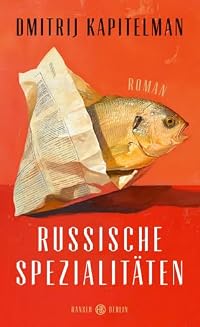 Russische Spezialitäten
I already enjoyed the book Eine Formalie in Kiew (A Formality in Kiev) immensely. It describes Dmitri's stay and experiences before the war in Ukraine.
This book tells the story of life in Leipzig and how he searches for clues in Kiev during the war.
The fact that we are living in times of crisis is evident from the fact that even the weather is political. When Russian television meteorologists stand in front of their maps, they show Ukrainian cities that Putin's troops have invaded since 2014 and continue to occupy today.
In Russian Donetsk, it is three degrees and sleeting, but the mother in Dmitry Kapitelman's new novel is still in good spirits. Every day, she sits in front of her ‘Fernsehrussland’ (Russian television) for hours, allowing the state broadcasters to feed her false information.
The old lady is a colourful character, and that accounts for a good part of the tragicomic punchlines in the book ‘Russian Specialities’. From her living room sofa, she wages a battle alongside the invaders and against her son's ignorance. This son, one can assume, is Dmitrij Kapitelman himself, and his novel is autobiographical.
The writer came to Germany with his parents at the age of eight. They were ‘quota refugees’ and, as citizens of a Soviet successor state, were able to settle without bureaucratic hurdles. The family started a new life in Leipzig. It is unclear whether events unfolded so dramatically that only a few strokes were needed to transform them into literature. For what one reads in Dmitrij Kapitelman's work is literature, both dark and comical at the same time.
‘Magasin’ is the name of the shop in Leipzig-Kleinzschocher where father and mother cater to the nostalgia of Russian migrants and East Germans who feel homeless. In the post-reunification period, business flourishes with Novosibirsk pelmeni, Soviet lemonades and red gold jewellery. It goes without saying that caviar and vodka are also on offer.
The motion detector at the shop door emits a piercing noise when homesick customers arrive. The first-person narrator looks in amazement at this world, where the women always wear slightly brighter make-up than is usual in south-western Leipzig. The father is a melancholic Jew who understands the language of the fish that eke out their existence in an aquarium before being sold. The rest of the staff go about their daily work with provocative slowness. They have acquired this slowness ‘as political self-protection in Soviet Zhytomyr’ or elsewhere. To wear down the ‘KGBschniks’.
From the present, Dmitrij Kapitelman flashes back to significant events in the history of the ‘Magasin,’ recounting more or less chronologically the ‘moneymaking Kleinzschocher’ and its later opposite. The area is changing; Leipzig has a dense network of Russian shops. In the past, people used to order eight truckloads of Monastirsky kvass, the bread drink from Kiev, at a time. Now, due to a lack of money, it is almost impossible to order goods. Ultimately, Corona means the death knell for the entrepreneurial adventure.
‘Russian Specialities’ is a highly subtle novel about home. One with paradoxical premises. It is not about the feel-good aroma that arises from people's connection to their origins, but about something very specific. About ruptures, about shifts. They are a consequence of historical events and Putin's invasion of Ukraine three years ago.
The ‘Russian television folk’ woman has been persuaded by TV stations and YouTube channels to believe in the myth of Putin's ‘special operation’ in Ukraine. As she drives her Volkswagen through Leipzig, far from the war, she explains to her son in the passenger seat that the story of the massacre in Bucha is also ‘fake’. Actors were hired to play the corpses in order to incite the world against Russia.
Putin's propaganda has migrated unfiltered into the shopkeeper and wreaked havoc there. The first-person narrator tries to defend himself against this havoc with a self-therapeutic programme. He is just thirty-six years old and resolves to read thirty-six pages of Russian literature every day, but his ‘mother tongue’ does not make it easy for him: there are over thirty synonyms in Russian for hard-heartedness, from “incorrigible” to ‘excessively cruel’.
In Kiev, a counterworld to the images of Russian propaganda is emerging. Danger and colourful defiance mingle in the lively city. Again and again, there are air raid sirens. When the bunker where Dmitry has to take refuge one day comes under fire, his mother sends him a text message. Her son need not worry, she says, because the Russians are only attacking military targets. She knows this from a reliable source.
Surrounded by Ukrainian reality, the son has to endure the delusions of a woman who has become incorrigible in her love for Russia. What home is, what a peaceful home could be in today's Europe, has turned into a truly monstrous nostalgia in her mind.
 Russische Spezialitäten
I already enjoyed the book Eine Formalie in Kiew (A Formality in Kiev) immensely. It describes Dmitri's stay and experiences before the war in Ukraine.
This book tells the story of life in Leipzig and how he searches for clues in Kiev during the war.
The fact that we are living in times of crisis is evident from the fact that even the weather is political. When Russian television meteorologists stand in front of their maps, they show Ukrainian cities that Putin's troops have invaded since 2014 and continue to occupy today.
In Russian Donetsk, it is three degrees and sleeting, but the mother in Dmitry Kapitelman's new novel is still in good spirits. Every day, she sits in front of her ‘Fernsehrussland’ (Russian television) for hours, allowing the state broadcasters to feed her false information.
The old lady is a colourful character, and that accounts for a good part of the tragicomic punchlines in the book ‘Russian Specialities’. From her living room sofa, she wages a battle alongside the invaders and against her son's ignorance. This son, one can assume, is Dmitrij Kapitelman himself, and his novel is autobiographical.
The writer came to Germany with his parents at the age of eight. They were ‘quota refugees’ and, as citizens of a Soviet successor state, were able to settle without bureaucratic hurdles. The family started a new life in Leipzig. It is unclear whether events unfolded so dramatically that only a few strokes were needed to transform them into literature. For what one reads in Dmitrij Kapitelman's work is literature, both dark and comical at the same time.
‘Magasin’ is the name of the shop in Leipzig-Kleinzschocher where father and mother cater to the nostalgia of Russian migrants and East Germans who feel homeless. In the post-reunification period, business flourishes with Novosibirsk pelmeni, Soviet lemonades and red gold jewellery. It goes without saying that caviar and vodka are also on offer.
The motion detector at the shop door emits a piercing noise when homesick customers arrive. The first-person narrator looks in amazement at this world, where the women always wear slightly brighter make-up than is usual in south-western Leipzig. The father is a melancholic Jew who understands the language of the fish that eke out their existence in an aquarium before being sold. The rest of the staff go about their daily work with provocative slowness. They have acquired this slowness ‘as political self-protection in Soviet Zhytomyr’ or elsewhere. To wear down the ‘KGBschniks’.
From the present, Dmitrij Kapitelman flashes back to significant events in the history of the ‘Magasin,’ recounting more or less chronologically the ‘moneymaking Kleinzschocher’ and its later opposite. The area is changing; Leipzig has a dense network of Russian shops. In the past, people used to order eight truckloads of Monastirsky kvass, the bread drink from Kiev, at a time. Now, due to a lack of money, it is almost impossible to order goods. Ultimately, Corona means the death knell for the entrepreneurial adventure.
‘Russian Specialities’ is a highly subtle novel about home. One with paradoxical premises. It is not about the feel-good aroma that arises from people's connection to their origins, but about something very specific. About ruptures, about shifts. They are a consequence of historical events and Putin's invasion of Ukraine three years ago.
The ‘Russian television folk’ woman has been persuaded by TV stations and YouTube channels to believe in the myth of Putin's ‘special operation’ in Ukraine. As she drives her Volkswagen through Leipzig, far from the war, she explains to her son in the passenger seat that the story of the massacre in Bucha is also ‘fake’. Actors were hired to play the corpses in order to incite the world against Russia.
Putin's propaganda has migrated unfiltered into the shopkeeper and wreaked havoc there. The first-person narrator tries to defend himself against this havoc with a self-therapeutic programme. He is just thirty-six years old and resolves to read thirty-six pages of Russian literature every day, but his ‘mother tongue’ does not make it easy for him: there are over thirty synonyms in Russian for hard-heartedness, from “incorrigible” to ‘excessively cruel’.
In Kiev, a counterworld to the images of Russian propaganda is emerging. Danger and colourful defiance mingle in the lively city. Again and again, there are air raid sirens. When the bunker where Dmitry has to take refuge one day comes under fire, his mother sends him a text message. Her son need not worry, she says, because the Russians are only attacking military targets. She knows this from a reliable source.
Surrounded by Ukrainian reality, the son has to endure the delusions of a woman who has become incorrigible in her love for Russia. What home is, what a peaceful home could be in today's Europe, has turned into a truly monstrous nostalgia in her mind.
156richardderus
>152 Ameise1: The author's prolific! Anglophone translations are coming out steadily but not this series just yet. She's on my radar, thank you!
>154 Ameise1: That sounds really interesting! Swiss history is not firmly on US mental maps, sad to say.
>154 Ameise1: That sounds really interesting! Swiss history is not firmly on US mental maps, sad to say.
158Ameise1
>156 richardderus: I hope this series will also be translated into English. I love it.
Oh Rdear, Switzerland is so small and is often mistaken for Sweden by US citizens, so how could the US possibly know anything about our diverse history? It's a shame, as we have a lot to offer.
>157 SirThomas: I hope you enjoy the BBs, Thomas.
Like you, I'm training hard, doing strength training twice a week and cardio once a week.
I wish you a great week. Fortunately, it's not so hot anymore.
Oh Rdear, Switzerland is so small and is often mistaken for Sweden by US citizens, so how could the US possibly know anything about our diverse history? It's a shame, as we have a lot to offer.
>157 SirThomas: I hope you enjoy the BBs, Thomas.
Like you, I'm training hard, doing strength training twice a week and cardio once a week.
I wish you a great week. Fortunately, it's not so hot anymore.
159Ameise1
book 63 Read in German
 Whisky From Small Glasses
This is the first volume in the DCI Jim Daley series. It really grabbed me, and I'm going to read the other volumes in the series too.
Rugged cliffs jut out into the surf, and a disfigured body lies twisted in the sand between them. This is the scene that greets DCI Jim Daley, who has been transferred from the rough streets of Glasgow to the otherwise tranquil beaches of the Kintyre Peninsula. He and his partner DC Scott are called to the fishing village of Kinloch because the local police are overwhelmed by the woman's body that washed up there. As they investigate within the close-knit village community, the two realise that someone is willing to kill to ensure that certain questions remain unasked.
The local police station is overwhelmed, so Daley, who is of equal rank to MacLeod, takes command, much to the latter's displeasure, and, on the instructions of his boss Donald, calls in additional units.
The investigation begins, the murder victim must be identified, and in the course of further questioning, which proves extremely difficult as the residents of the remote fishing village of Kinloch are very reticent towards strangers, two more murders occur: these present Daley and Scott with further puzzles, but seem to be connected to the first body.
Adding to all the investigative difficulties is the fact that Lizzy, Jim Daley's wife, wants to fly to Kinloch with his hated but very rich and handsome brother-in-law to escape the dreariness of being the bored wife of an investigating police officer. Jim and Lizzy's marriage is not going well; can their relationship be saved in Kinloch of all places and given a new chance?
The two grow closer again, while the sky above the fishing village darkens more and more due to various criminal activities such as drug trafficking, prostitution and money laundering.
 Whisky From Small Glasses
This is the first volume in the DCI Jim Daley series. It really grabbed me, and I'm going to read the other volumes in the series too.
Rugged cliffs jut out into the surf, and a disfigured body lies twisted in the sand between them. This is the scene that greets DCI Jim Daley, who has been transferred from the rough streets of Glasgow to the otherwise tranquil beaches of the Kintyre Peninsula. He and his partner DC Scott are called to the fishing village of Kinloch because the local police are overwhelmed by the woman's body that washed up there. As they investigate within the close-knit village community, the two realise that someone is willing to kill to ensure that certain questions remain unasked.
The local police station is overwhelmed, so Daley, who is of equal rank to MacLeod, takes command, much to the latter's displeasure, and, on the instructions of his boss Donald, calls in additional units.
The investigation begins, the murder victim must be identified, and in the course of further questioning, which proves extremely difficult as the residents of the remote fishing village of Kinloch are very reticent towards strangers, two more murders occur: these present Daley and Scott with further puzzles, but seem to be connected to the first body.
Adding to all the investigative difficulties is the fact that Lizzy, Jim Daley's wife, wants to fly to Kinloch with his hated but very rich and handsome brother-in-law to escape the dreariness of being the bored wife of an investigating police officer. Jim and Lizzy's marriage is not going well; can their relationship be saved in Kinloch of all places and given a new chance?
The two grow closer again, while the sky above the fishing village darkens more and more due to various criminal activities such as drug trafficking, prostitution and money laundering.
160richardderus
>159 Ameise1: Barbara! It is expressly Forbidden in The Contract℠ that book-bullets cross linguistic lines! Melpomene will be most annoyed with you.
Switzerland's Rhaetian past isn't widely known. Y'all's history is incredibly deep and fascinating!
Switzerland's Rhaetian past isn't widely known. Y'all's history is incredibly deep and fascinating!
161Ameise1
>160 richardderus: Ha, but this time it's a BB in English, so you definitely don't have to wait for a translation. 🤣😉
Yes, little Switzerland has never thought much of authorities and wannabes. Especially now, when your president has turned the customs hammer against us, we are taking the same approach as Asterix and Obelix. We are the little Gaulish village and your president is Caesar, who fails against the little Gaulish village 😃.
Yes, little Switzerland has never thought much of authorities and wannabes. Especially now, when your president has turned the customs hammer against us, we are taking the same approach as Asterix and Obelix. We are the little Gaulish village and your president is Caesar, who fails against the little Gaulish village 😃.
162richardderus
>161 Ameise1: I certainly hope that's how it turns out.
164vancouverdeb
Hi Barbara. The grand kids did have a great time in Europe as far as I know so far. I hope to get some more details out of them when we see them for a longer period of time. Yum, the Lindt Chocolate Museum! I am glad your reading is going well.
165Ameise1
>164 vancouverdeb: Hello Deborah, I am delighted to hear that your grandchildren had a wonderful trip to Europe. Yes, the chocolate museum is very tempting.
I am thoroughly enjoying my reading and am constantly discovering new series – more on that later.
I am thoroughly enjoying my reading and am constantly discovering new series – more on that later.
166Ameise1
book 64 Read in German
 Todesströmung
In no time at all, I discovered another new series that I will continue reading. It is a captivating, unusual island thriller with wonderful characters and a stormy atmosphere.
After messing up a really big job, three Glasgow hitmen have no choice but to flee to the barren and beautiful Hebridean island of Jura, disguised as outdoor tourists. Their cover is blown, but Jura's reclusive inhabitants are willing to talk; after all, they want to prevent a billionaire from turning the island into a golf club. Everything could be fine – if it weren't for an unscrupulous police chief and the criminal and corrupt politician the three were supposed to kill. An adventurous chase across the island begins – over mighty mountains, the three ‘Paps of Jura’, across high moors and cliffs to the ‘Corryvreckan’, the all-consuming, unnavigable sea vortex.
What I loved most was how these hitmen changed and protected the islanders, especially Grace and her friends. It was also interesting that Grace invented a technology that can be used to generate energy from ocean currents.
The author succeeds in conveying the atmosphere of the island so well that you feel as if you are standing in the middle of this rugged island, which nevertheless has an irresistible charm.
 Todesströmung
In no time at all, I discovered another new series that I will continue reading. It is a captivating, unusual island thriller with wonderful characters and a stormy atmosphere.
After messing up a really big job, three Glasgow hitmen have no choice but to flee to the barren and beautiful Hebridean island of Jura, disguised as outdoor tourists. Their cover is blown, but Jura's reclusive inhabitants are willing to talk; after all, they want to prevent a billionaire from turning the island into a golf club. Everything could be fine – if it weren't for an unscrupulous police chief and the criminal and corrupt politician the three were supposed to kill. An adventurous chase across the island begins – over mighty mountains, the three ‘Paps of Jura’, across high moors and cliffs to the ‘Corryvreckan’, the all-consuming, unnavigable sea vortex.
What I loved most was how these hitmen changed and protected the islanders, especially Grace and her friends. It was also interesting that Grace invented a technology that can be used to generate energy from ocean currents.
The author succeeds in conveying the atmosphere of the island so well that you feel as if you are standing in the middle of this rugged island, which nevertheless has an irresistible charm.
167richardderus
>166 Ameise1: Corryvreckan almost ate George Orwell and his kids...then came the utterly delicious scotch named after it and All was forgiven.
I really enjoy series where the "bad guys" are actually doing good things. Enjoy the slide into the weekend, my dear Barbara.
I really enjoy series where the "bad guys" are actually doing good things. Enjoy the slide into the weekend, my dear Barbara.
168Ameise1
>167 richardderus: Yes, there were repeated references to Orwell throughout the story. The author knows his craft 😉.
We're going to our second Theatre Spectacle event tonight. I'm really looking forward to it. It's a play by Ali Chahrour (Beirut) called 'When I Saw the Sea'. In the play, the choreographer meets three women who raise their voices for an almost invisible struggle: the struggle against a racist system of exploitation that drove them onto the streets of Beirut in times of great uncertainty.
We're going to our second Theatre Spectacle event tonight. I'm really looking forward to it. It's a play by Ali Chahrour (Beirut) called 'When I Saw the Sea'. In the play, the choreographer meets three women who raise their voices for an almost invisible struggle: the struggle against a racist system of exploitation that drove them onto the streets of Beirut in times of great uncertainty.
169richardderus
>168 Ameise1: "his craft" LOLOL!
It sounds like an interesting evening of theater, so I hope you enjoy the entire thing.
It sounds like an interesting evening of theater, so I hope you enjoy the entire thing.
171EllaTim
Enjoy your evening out, Barbara!
>154 Ameise1: A really interesting time period. I just finished a dutch book, written in 1782. More liberation for women? In the end the woman shouldn’t want for too much freedom was the lesson of my book. And then we live happily ever after. I would like to find your book, but Swiss history is not well known here.
>154 Ameise1: A really interesting time period. I just finished a dutch book, written in 1782. More liberation for women? In the end the woman shouldn’t want for too much freedom was the lesson of my book. And then we live happily ever after. I would like to find your book, but Swiss history is not well known here.
172Ameise1
>171 EllaTim: It was a fantastic evening, Ella. Tonight we will attend our third performance. We will see Wasted Land (Fast Fashion. Structural Racism.) by Ntando Cele (Bern).
Content:
In Wasted Land, Ntando Cele lets us feel her bitterly angry, clever humour right from the start. Between mountains of clothes and choral singing, Cele exposes the irony of neo-colonial, capitalist structures. Inspired by T. S. Eliot's The Waste Land, the performance links ecological and social crises to create a powerful reflection on fast fashion and global inequality.
Yes, I know that Swiss history is not well known abroad. Nevertheless, we are still fighting for equality here, even though it has been enshrined in law for decades, its full implementation is still lacking.
Content:
In Wasted Land, Ntando Cele lets us feel her bitterly angry, clever humour right from the start. Between mountains of clothes and choral singing, Cele exposes the irony of neo-colonial, capitalist structures. Inspired by T. S. Eliot's The Waste Land, the performance links ecological and social crises to create a powerful reflection on fast fashion and global inequality.
Yes, I know that Swiss history is not well known abroad. Nevertheless, we are still fighting for equality here, even though it has been enshrined in law for decades, its full implementation is still lacking.
173Ameise1
book 65 Read in German
 Das zweite Kind
Even as a child, author Marco De Franchi wanted to become either a writer or a detective. He is a chief inspector and worked for several years in the Italian police's special unit. He draws on this experience in his first thriller, Das zweite Kind (The Second Child). While reading, it is clear that he knows what he is writing about, and that is what makes this book so authentic.
In the middle of the night, a little boy is found in the Tuscan countryside, naked, hypothermic and completely terrified. The boy says that he was being held captive by a strange man but managed to escape. Shortly afterwards, another boy is kidnapped in Bologna. The two boys have nothing in common except for the fact that they look exactly alike. A coincidence seems unlikely, but why would someone kidnap children who look identical? Valentina Medici, a young, determined investigator with the Italian special forces, is sent from Rome to Bologna to investigate the case and stop the kidnapper. She comes across a series of cold cases and a gruesome connection.
This time, Tuscany is shown from a different angle, with the intrigues, bribery and cover-ups within the police force and the wealthy elite society also being exposed. Valentina fights a long battle almost alone against windmills, with only Costa at her side at times and a young police officer who is still new and inexperienced on the force. It is interesting to see how, despite the obstacles, she does not give up and grows beyond herself, daring to tackle controversial issues at the risk of her own life.
The crimes themselves, which are based on Caravaggio's ‘art’, are extremely cruel, unimaginable for the families involved and the bereaved, but also precise and well thought out and constructed, so in a sense they are also ‘works of art’.
 Das zweite Kind
Even as a child, author Marco De Franchi wanted to become either a writer or a detective. He is a chief inspector and worked for several years in the Italian police's special unit. He draws on this experience in his first thriller, Das zweite Kind (The Second Child). While reading, it is clear that he knows what he is writing about, and that is what makes this book so authentic.
In the middle of the night, a little boy is found in the Tuscan countryside, naked, hypothermic and completely terrified. The boy says that he was being held captive by a strange man but managed to escape. Shortly afterwards, another boy is kidnapped in Bologna. The two boys have nothing in common except for the fact that they look exactly alike. A coincidence seems unlikely, but why would someone kidnap children who look identical? Valentina Medici, a young, determined investigator with the Italian special forces, is sent from Rome to Bologna to investigate the case and stop the kidnapper. She comes across a series of cold cases and a gruesome connection.
This time, Tuscany is shown from a different angle, with the intrigues, bribery and cover-ups within the police force and the wealthy elite society also being exposed. Valentina fights a long battle almost alone against windmills, with only Costa at her side at times and a young police officer who is still new and inexperienced on the force. It is interesting to see how, despite the obstacles, she does not give up and grows beyond herself, daring to tackle controversial issues at the risk of her own life.
The crimes themselves, which are based on Caravaggio's ‘art’, are extremely cruel, unimaginable for the families involved and the bereaved, but also precise and well thought out and constructed, so in a sense they are also ‘works of art’.
174Ameise1
book 66 Read in German 🎧
 Provenzalischer Stolz
This is the seventh volume in the Pierre Durand series, and as always, I enjoyed it very much.
Lonely lagoons, old fishing villages and a sinister prophecy... This time, Pierre Durand investigates in the picturesque Camargue.
Fear is spreading in the Camargue. While Pierre Durand is travelling through the Rhône delta in a houseboat, thinking about his professional future, a chain letter is circulating with a prophecy announcing the death of three sinners. Shortly afterwards, a dead man with a blackened face is found. He is a detective who had been investigating undercover in the milieu of the ‘gens du voyage’. But there is a witness hiding on board Pierre's houseboat who claims to have lost his memory. The prefect asks the former village policeman for help. With the help of a ‘gitane,’ Pierre tries to get to the bottom of the mystery of the chain letters. Everything points to a conflict between cultures, but another murder sheds new light on the crimes. Pierre realises that he must trust his intuition to prevent the last part of the prophecy from coming true.
During his investigations, everyone at home realises that the mayor is playing a nasty game with him and the former mayor. Can this problem also be solved?
 Provenzalischer Stolz
This is the seventh volume in the Pierre Durand series, and as always, I enjoyed it very much.
Lonely lagoons, old fishing villages and a sinister prophecy... This time, Pierre Durand investigates in the picturesque Camargue.
Fear is spreading in the Camargue. While Pierre Durand is travelling through the Rhône delta in a houseboat, thinking about his professional future, a chain letter is circulating with a prophecy announcing the death of three sinners. Shortly afterwards, a dead man with a blackened face is found. He is a detective who had been investigating undercover in the milieu of the ‘gens du voyage’. But there is a witness hiding on board Pierre's houseboat who claims to have lost his memory. The prefect asks the former village policeman for help. With the help of a ‘gitane,’ Pierre tries to get to the bottom of the mystery of the chain letters. Everything points to a conflict between cultures, but another murder sheds new light on the crimes. Pierre realises that he must trust his intuition to prevent the last part of the prophecy from coming true.
During his investigations, everyone at home realises that the mayor is playing a nasty game with him and the former mayor. Can this problem also be solved?
175Ameise1
book 67 Read in German
 Der Holländer
This is the first volume of the De Hollander series, and I will definitely read the other books in this series as well.
It is supposed to be a quiet trip across the Wadden Sea for Geeske Dobbenga, her last before retiring from the Dutch border guard. But in the Ems estuary, her patrol boat comes across a dead body. Before the tide carries it away, Geeske and her crew take it to Delfzijl in the Netherlands. That's when the problems begin: the dead man was German, and he was found in a disputed border area. As the dispute over jurisdiction escalates on both sides of the border and questions about the dead mudflat hiker pile up, the German Federal Police in Cuxhaven secretly sends an investigator to Delfzijl: Liewe Cupido, a native German who grew up on the Dutch island of Texel. His German colleagues call this idiosyncratic, taciturn guy ‘the Dutchman’. Who else but him could solve the case?
What I particularly liked was Cupido's approach. He quickly realises that the two mudflat hikers have been manipulated, but the question is: by whom and how, and can it be proven?
@EllaTim Thank you for reminding me that I had this book on my library wish list for quite some time.
 Der Holländer
This is the first volume of the De Hollander series, and I will definitely read the other books in this series as well.
It is supposed to be a quiet trip across the Wadden Sea for Geeske Dobbenga, her last before retiring from the Dutch border guard. But in the Ems estuary, her patrol boat comes across a dead body. Before the tide carries it away, Geeske and her crew take it to Delfzijl in the Netherlands. That's when the problems begin: the dead man was German, and he was found in a disputed border area. As the dispute over jurisdiction escalates on both sides of the border and questions about the dead mudflat hiker pile up, the German Federal Police in Cuxhaven secretly sends an investigator to Delfzijl: Liewe Cupido, a native German who grew up on the Dutch island of Texel. His German colleagues call this idiosyncratic, taciturn guy ‘the Dutchman’. Who else but him could solve the case?
What I particularly liked was Cupido's approach. He quickly realises that the two mudflat hikers have been manipulated, but the question is: by whom and how, and can it be proven?
@EllaTim Thank you for reminding me that I had this book on my library wish list for quite some time.
176Deern
Happy Sunday, Barbara! I'm so impressed with all your reading. Saw your post about the training, and take it as a reminder to finally - now that summer's basically over - sign up for a trial period at a gym. Both for cardio and muscles, and they are connected to the Therme and open the doors 2-3 times daily for some "acqua relax" after the training.
177SirThomas
...and lots of BB again—your thread is getting dangerous...
Thank God I've already read >175 Ameise1:. Yesterday I started the second volume of the series.
Have a wonderful start to the week!
Thank God I've already read >175 Ameise1:. Yesterday I started the second volume of the series.
Have a wonderful start to the week!
178Trifolia
You've really gotten into detective stories this year, Barbara!
>175 Ameise1: How wonderful that you've discovered Mathijs Deen. I'm curious to hear what you think of the second book in this series. Have you ever been to these parts of Germany / The Netherlands?
>175 Ameise1: How wonderful that you've discovered Mathijs Deen. I'm curious to hear what you think of the second book in this series. Have you ever been to these parts of Germany / The Netherlands?
179Ameise1
>177 SirThomas: Ha, I feel the same way about your thread. I actually wanted to start the next book in the De Hollander series right away, but as life would have it, I discovered Jonas Lüscher's latest book, which I immediately borrowed from the library, and Thomas has finished reading the third volume by Miriam Veya, so now I'm reading that.
Since I'll be in Zurich's old town tomorrow, I've written down a whole page of books that I want to borrow from the old town library, which I can't get where I live. The page got suspiciously long, and Thomas jokingly said I should be nice and not take all the books from this library home with me.
>178 Trifolia: Nice to see you, Monica. Yes, I really like this series, but it will be a while before I get to the next volume (see above).
I have been to the Netherlands and Germany several times, but never to the Frisian part. I would definitely like to go there sometime.
Since I'll be in Zurich's old town tomorrow, I've written down a whole page of books that I want to borrow from the old town library, which I can't get where I live. The page got suspiciously long, and Thomas jokingly said I should be nice and not take all the books from this library home with me.
>178 Trifolia: Nice to see you, Monica. Yes, I really like this series, but it will be a while before I get to the next volume (see above).
I have been to the Netherlands and Germany several times, but never to the Frisian part. I would definitely like to go there sometime.
180Ameise1
book 68 Read in German
 Der goldene Tod
A dead journalist in the rubbish, the bloody luxury of high society and the smouldering conflicts of a big city. In her second case, prosecutor Vogelsang not only has to face her painful past, but also investigate her own people.
A cold autumn evening in Frankfurt. Greta Vogelsang has just made herself comfortable when the doorbell rings. It's Robert Altmann. He's panicking, believes he's being followed – and presses an envelope into her hand. But Vogelsang wants nothing more to do with her ex. The memory of what they experienced together weighs too heavily on her. She puts the envelope away and tries to forget the incident. In vain. Because a few days later, she unwittingly gets caught up in the eviction of a squatted house, where the body of an investigative journalist is found. It is Altmann. Everything points to murder.
Vogelsang immediately examines Altmann's envelope. And finds clues to a dubious luxury events agency that is allegedly involved in the illegal trade of valuable game meat. She quickly realises that Altmann's death and the wildlife trade are connected. And that there must be much more to it than that. Why else would there be such a brutal murder? When she then learns that the agency owner is in hospital with a rare form of anthrax and fighting for his life, the situation comes to a dramatic head.
On top of that, a small team led by Vogelsang suspects a public prosecutor of corruption and wants to report him. What does he have to do with all these events?
This volume was also very exciting to read. I hope Wacker continues with this series.
 Der goldene Tod
A dead journalist in the rubbish, the bloody luxury of high society and the smouldering conflicts of a big city. In her second case, prosecutor Vogelsang not only has to face her painful past, but also investigate her own people.
A cold autumn evening in Frankfurt. Greta Vogelsang has just made herself comfortable when the doorbell rings. It's Robert Altmann. He's panicking, believes he's being followed – and presses an envelope into her hand. But Vogelsang wants nothing more to do with her ex. The memory of what they experienced together weighs too heavily on her. She puts the envelope away and tries to forget the incident. In vain. Because a few days later, she unwittingly gets caught up in the eviction of a squatted house, where the body of an investigative journalist is found. It is Altmann. Everything points to murder.
Vogelsang immediately examines Altmann's envelope. And finds clues to a dubious luxury events agency that is allegedly involved in the illegal trade of valuable game meat. She quickly realises that Altmann's death and the wildlife trade are connected. And that there must be much more to it than that. Why else would there be such a brutal murder? When she then learns that the agency owner is in hospital with a rare form of anthrax and fighting for his life, the situation comes to a dramatic head.
On top of that, a small team led by Vogelsang suspects a public prosecutor of corruption and wants to report him. What does he have to do with all these events?
This volume was also very exciting to read. I hope Wacker continues with this series.
This topic was continued by Barbara's (Ameise1) world and adventures (3).

