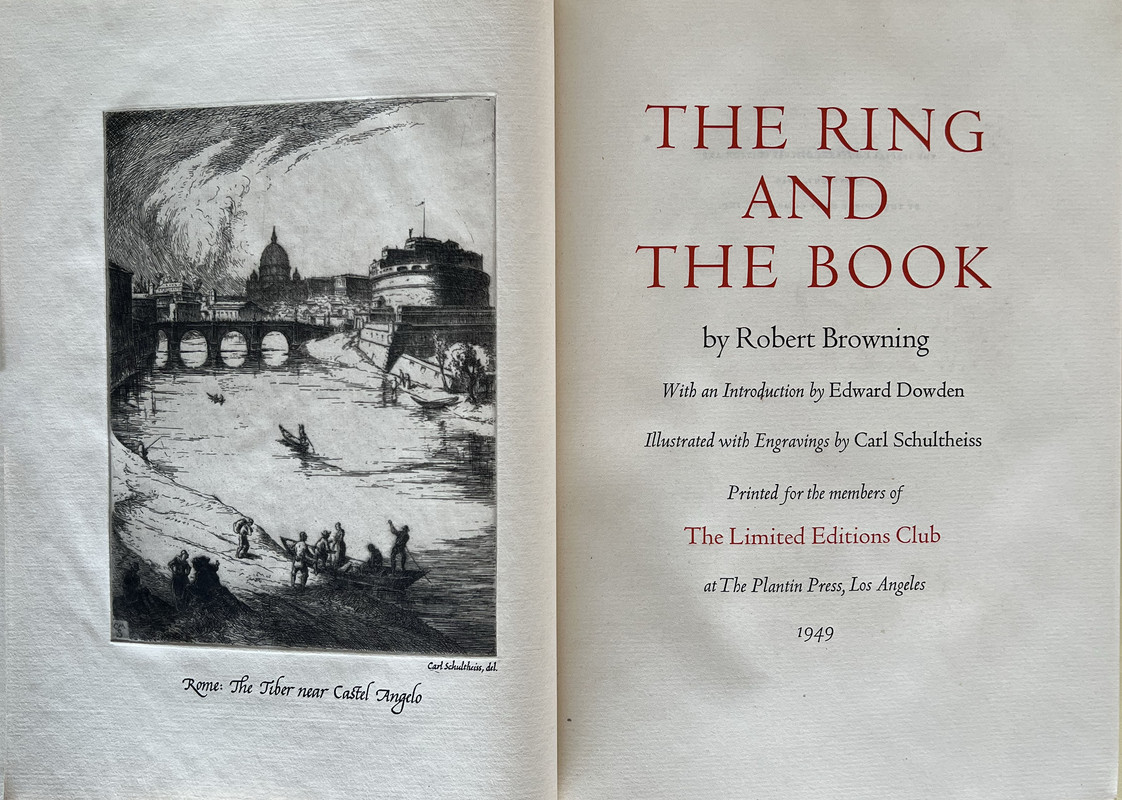
The Ring and the Book by Robert Browning – LIMITED EDITIONS CLUB 1949
Talk George Macy devotees
Join LibraryThing to post.
1wcarter
The Ring and the Book by Robert Browning – LIMITED EDITIONS CLUB 1949
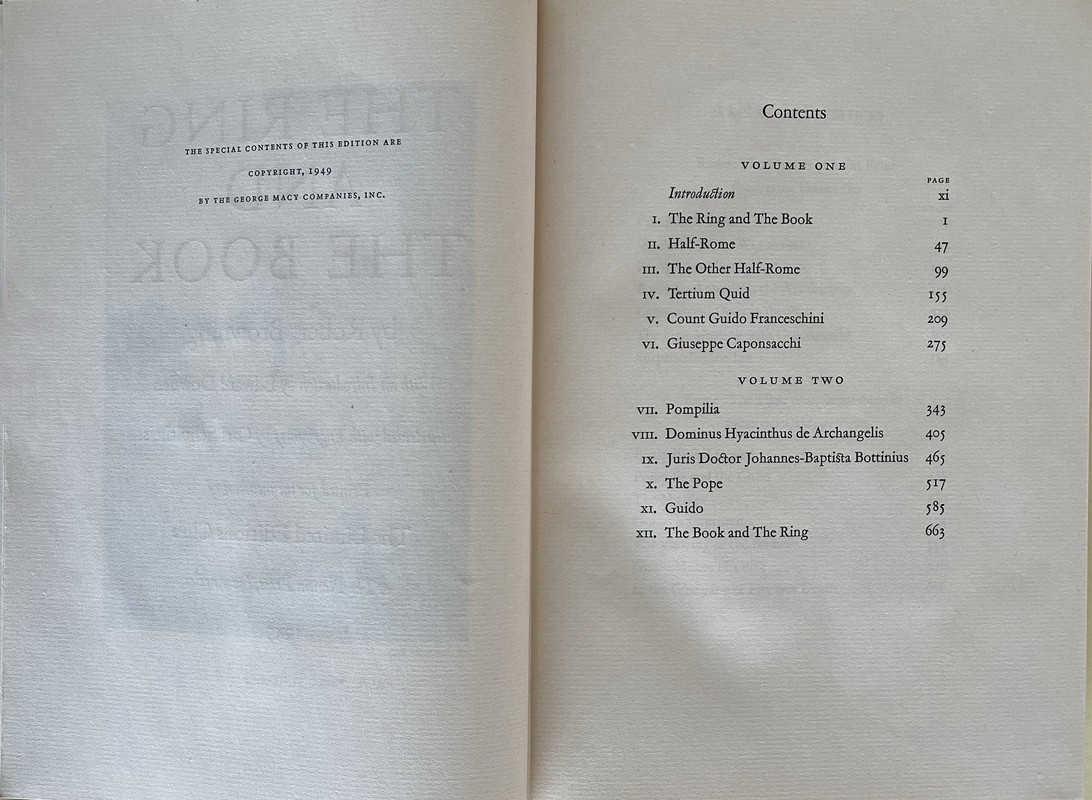
A PICTORIAL REVIEW
Two volumes.
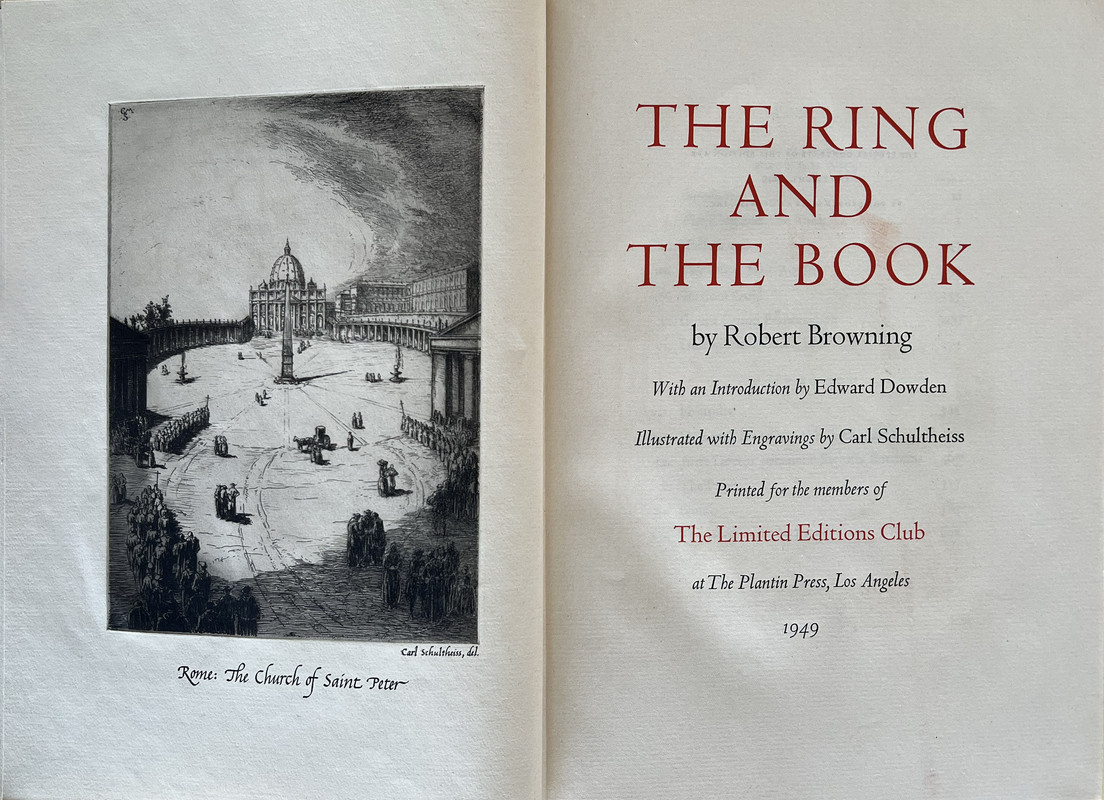
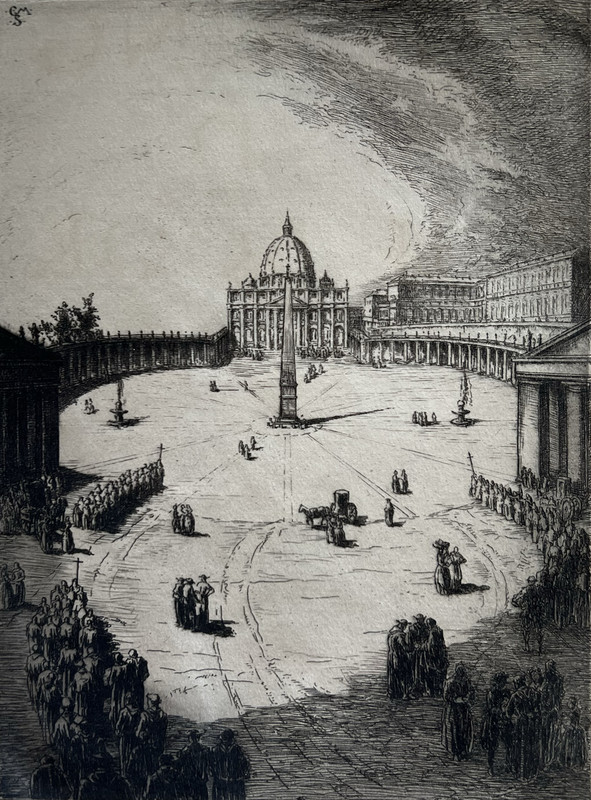
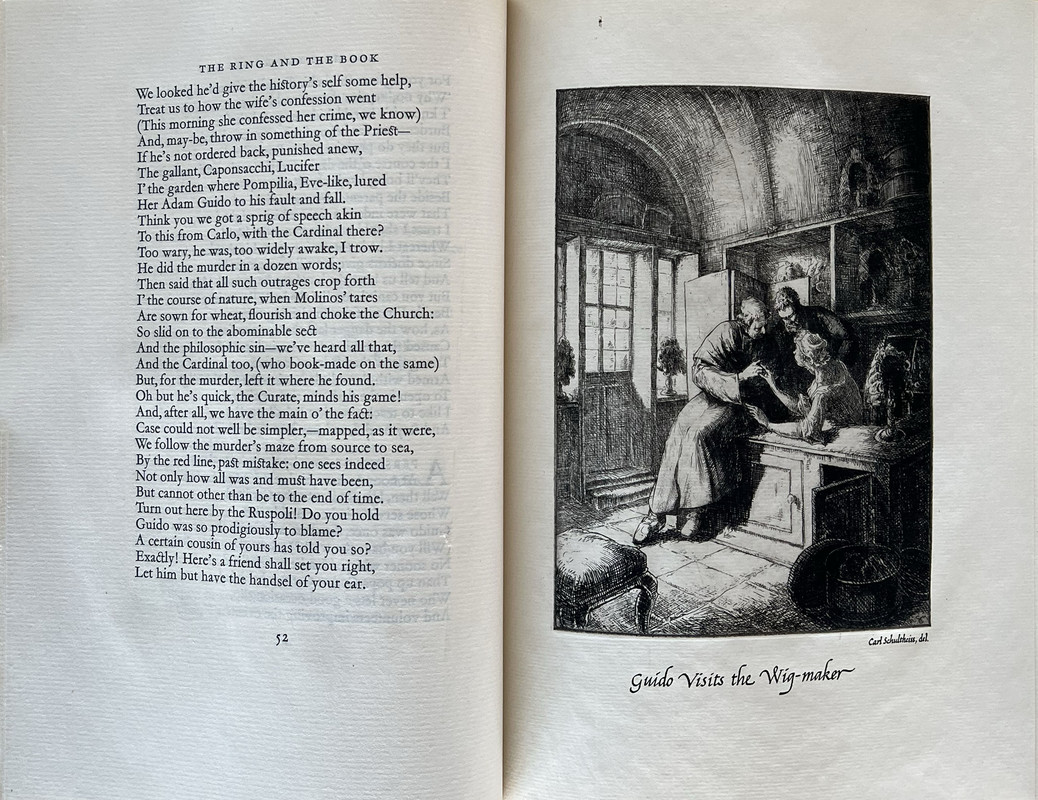
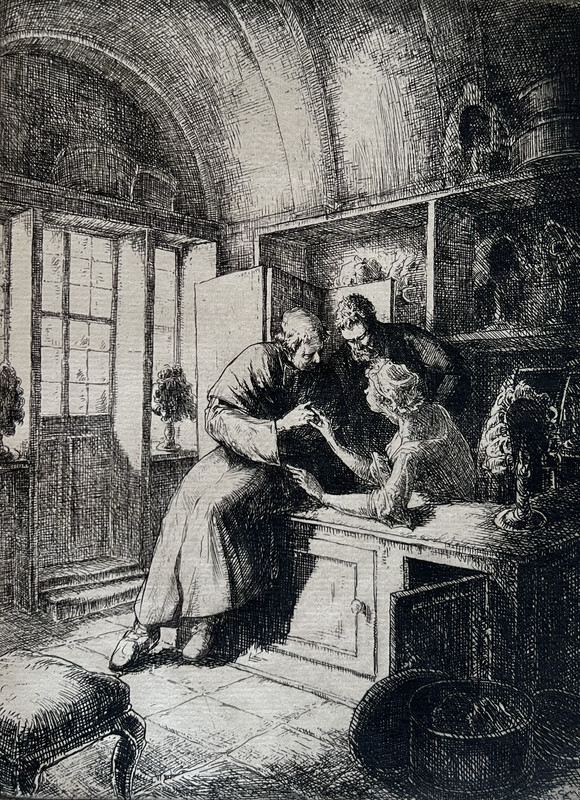
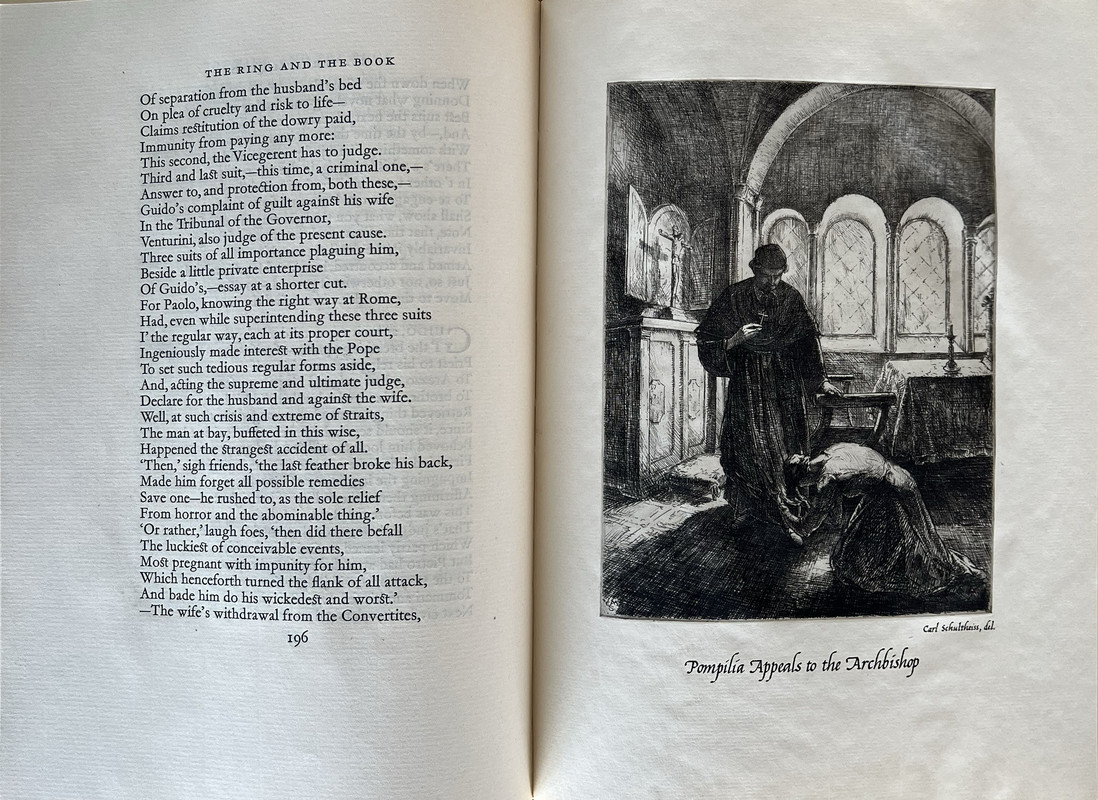
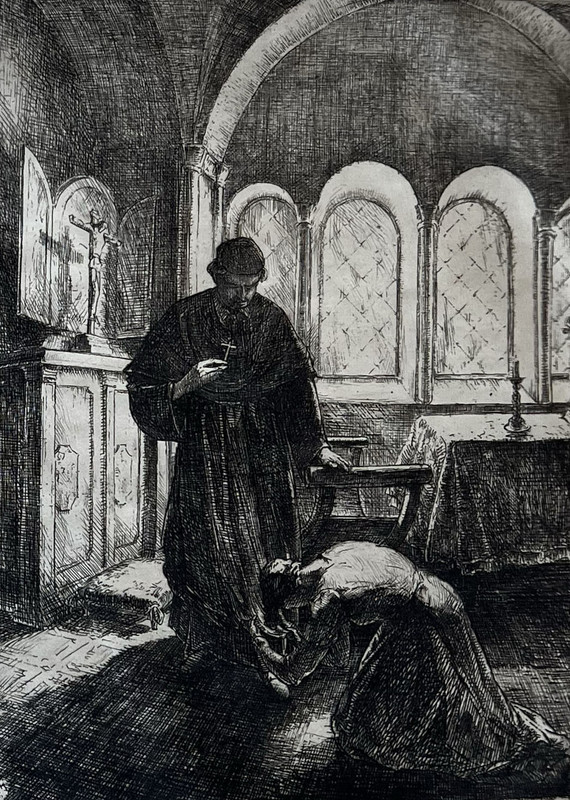
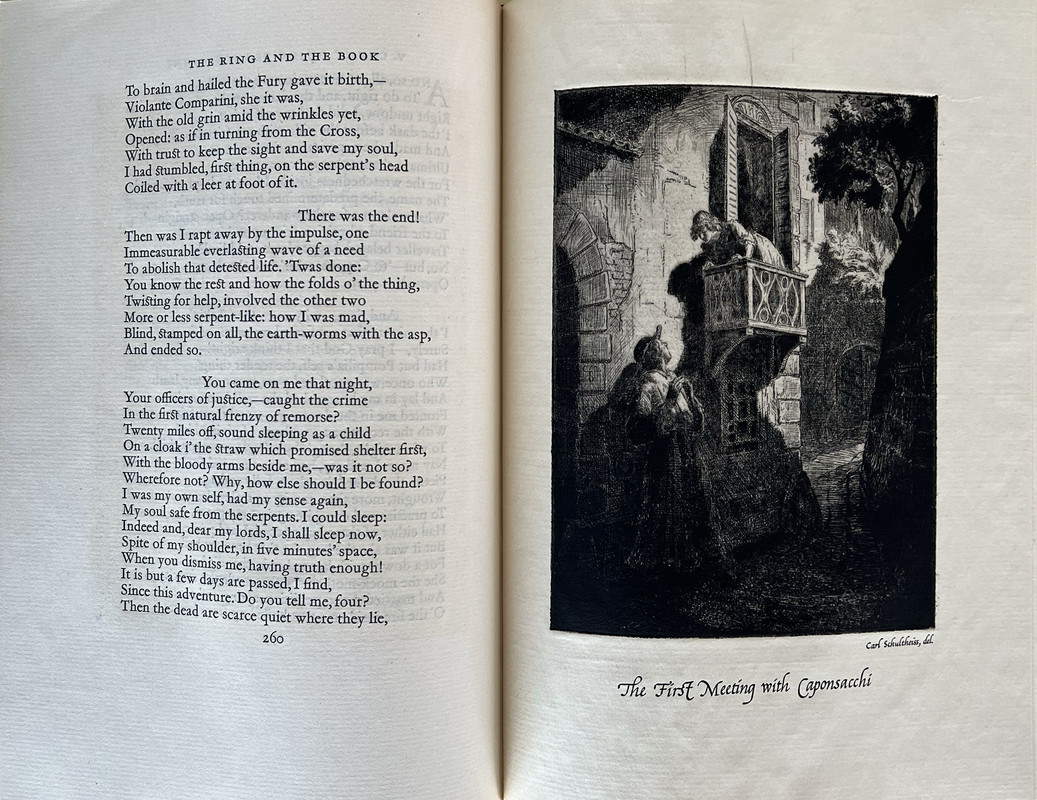
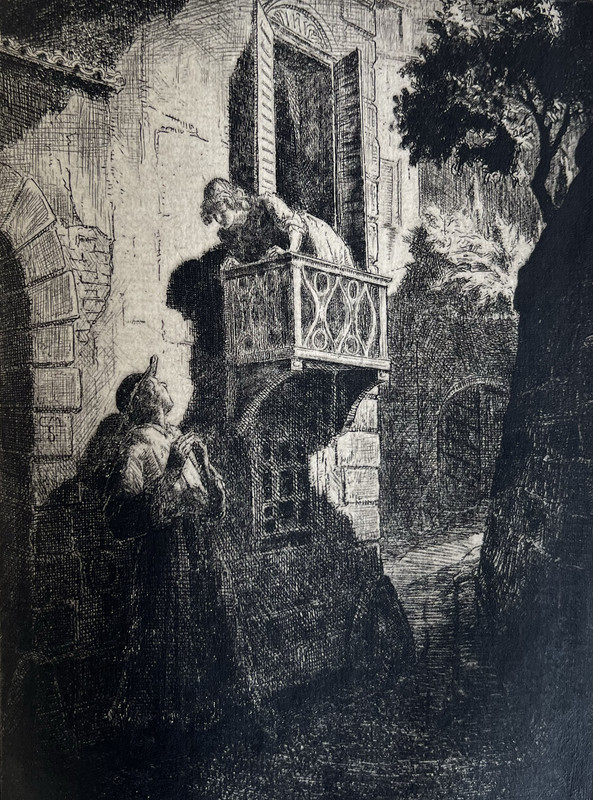
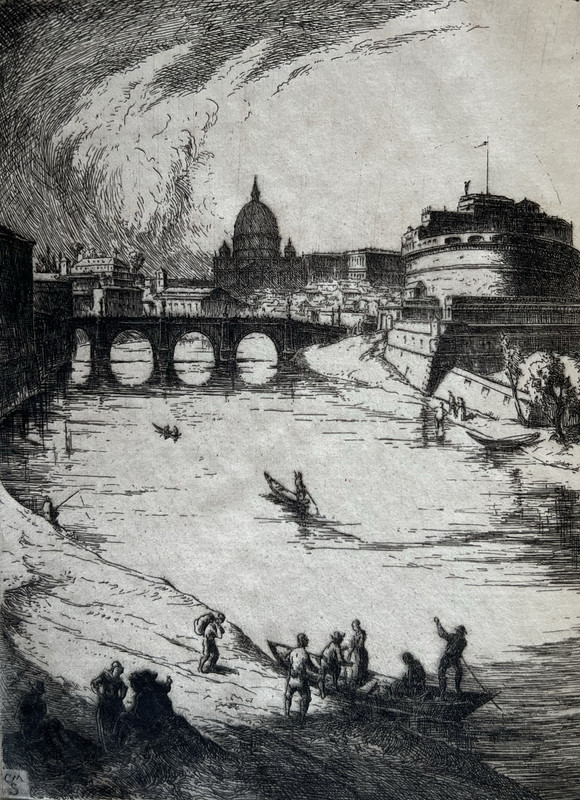
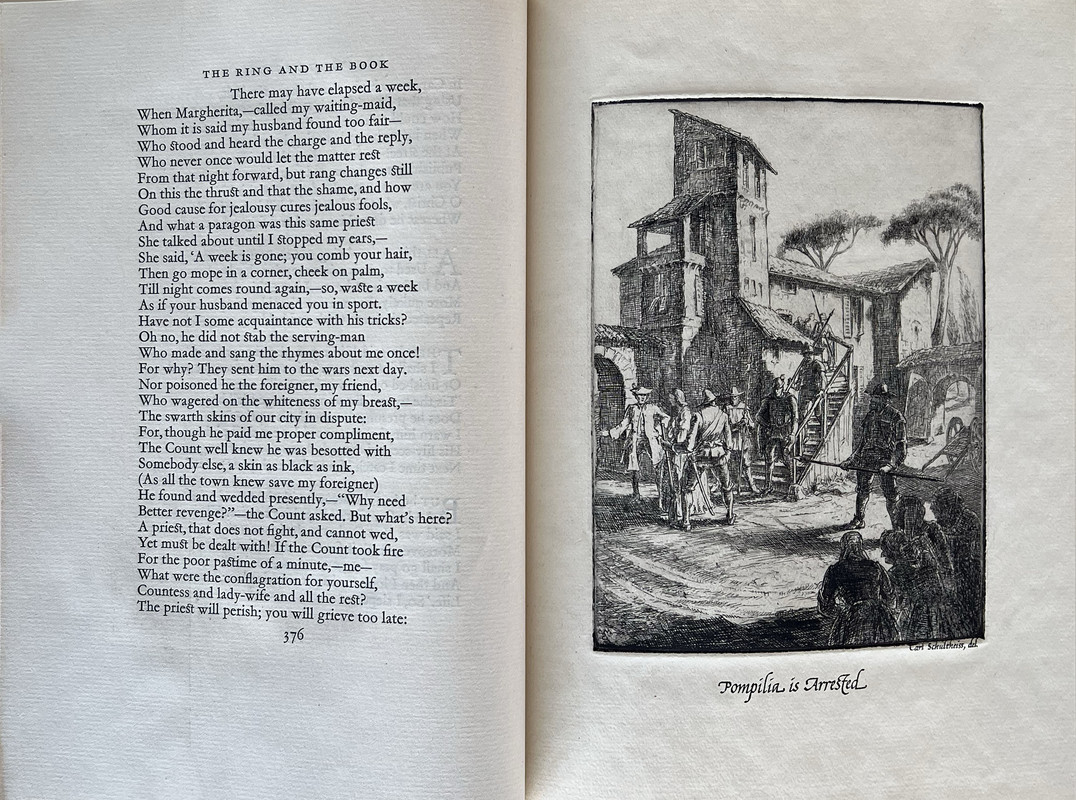
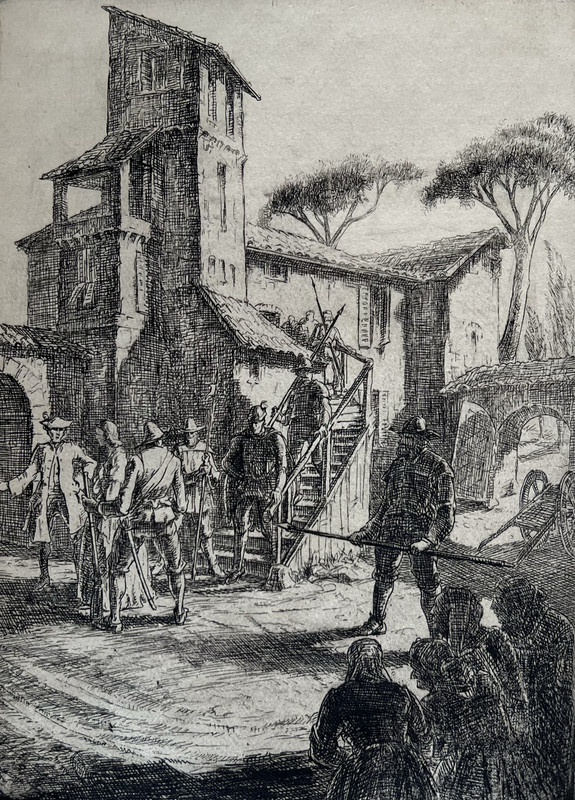
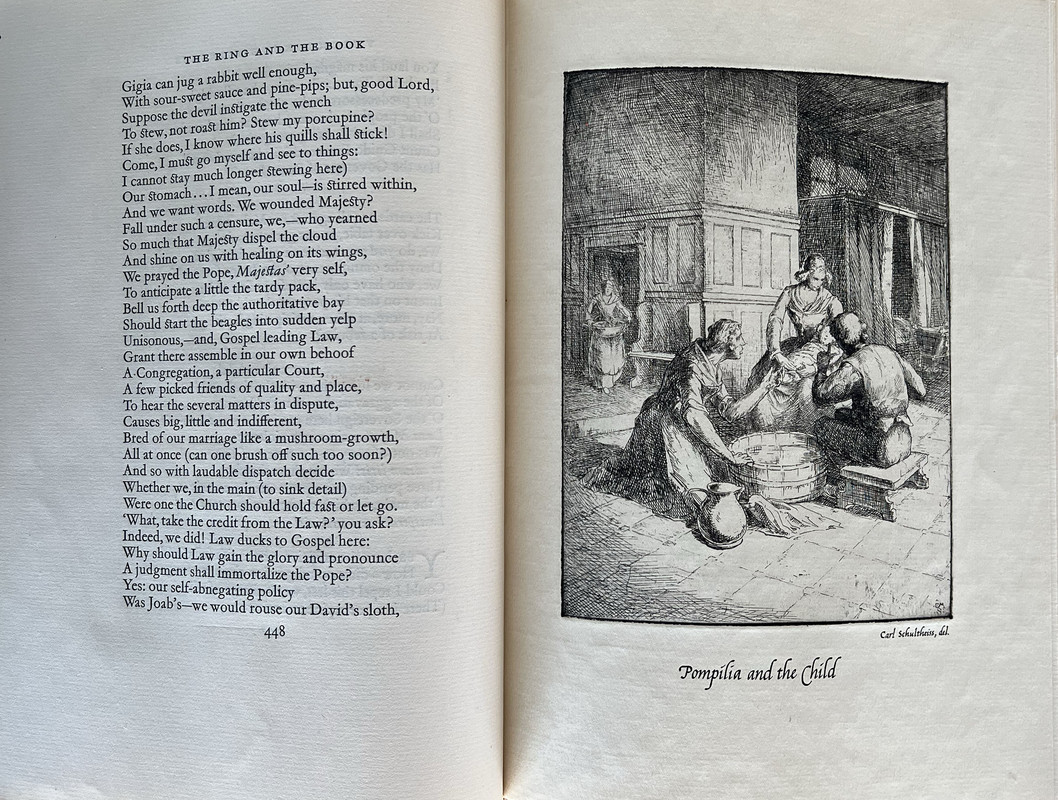
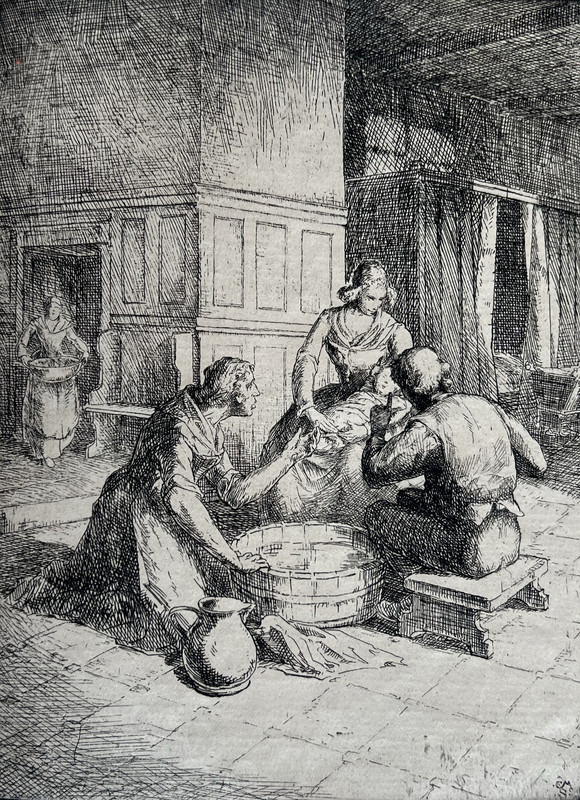
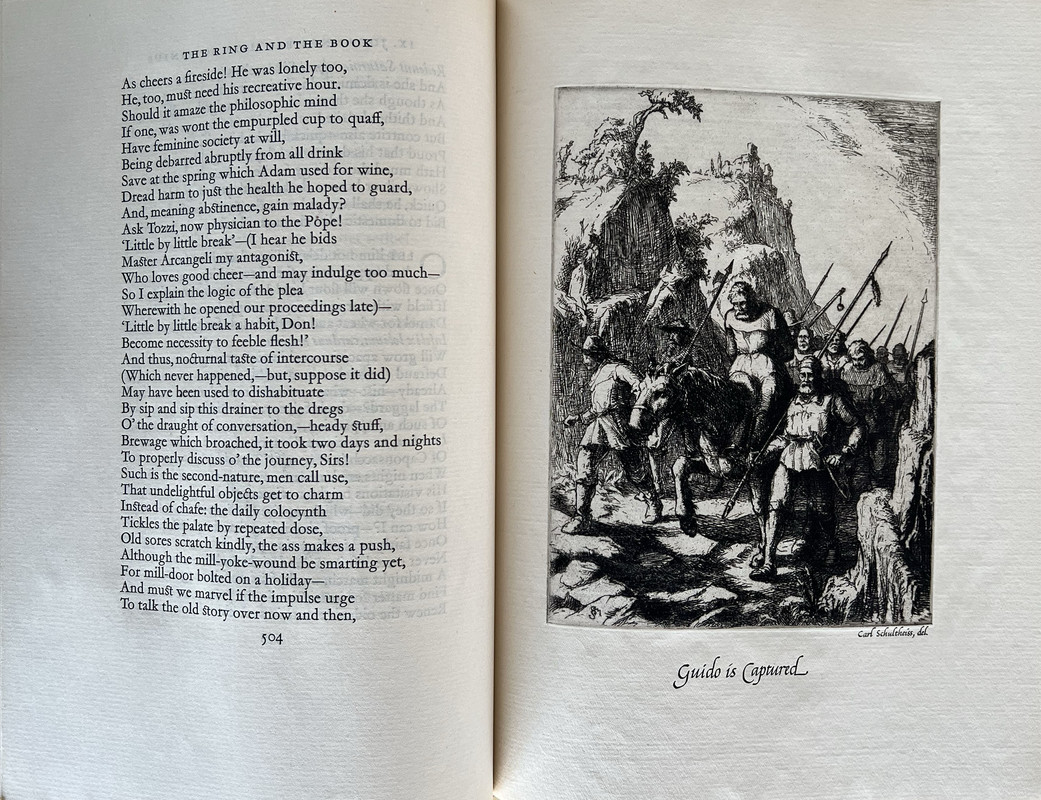
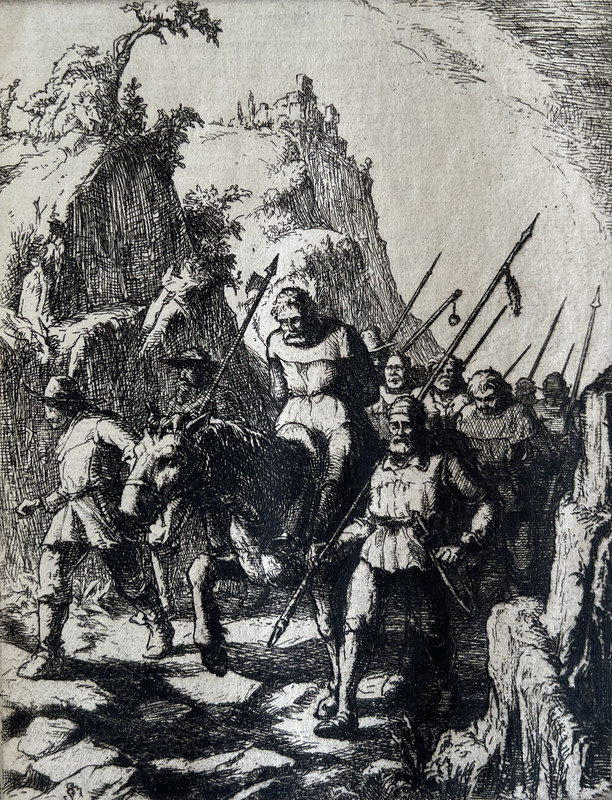
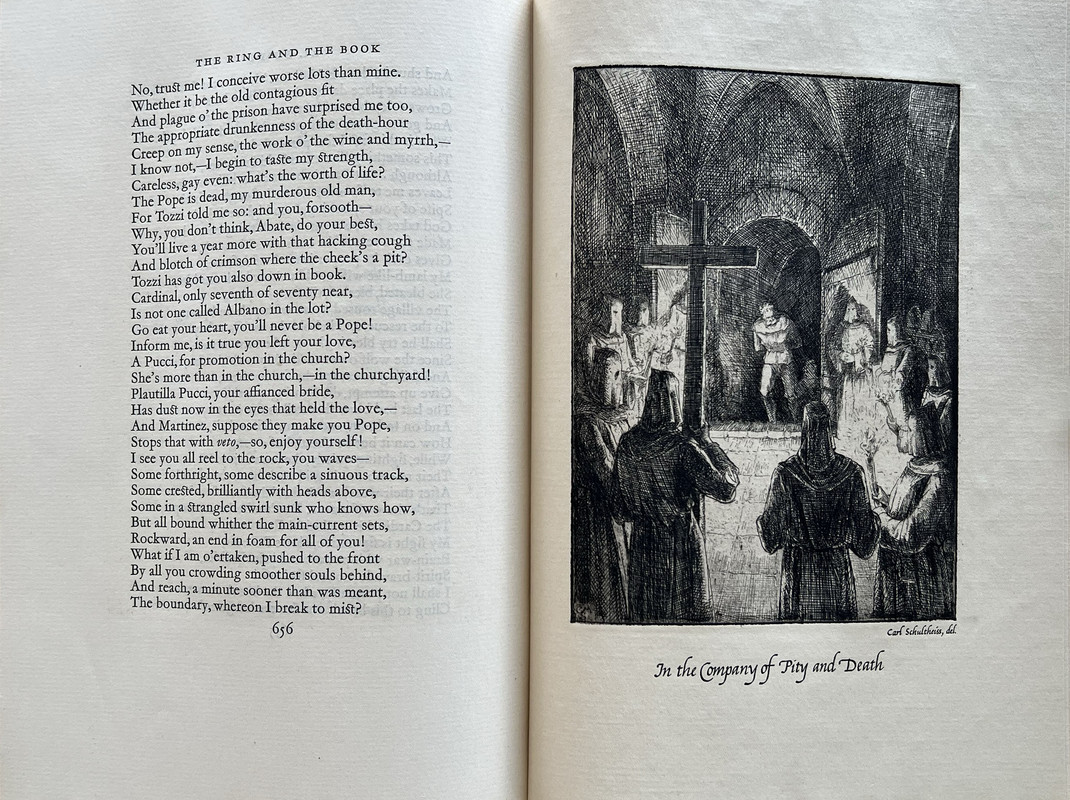
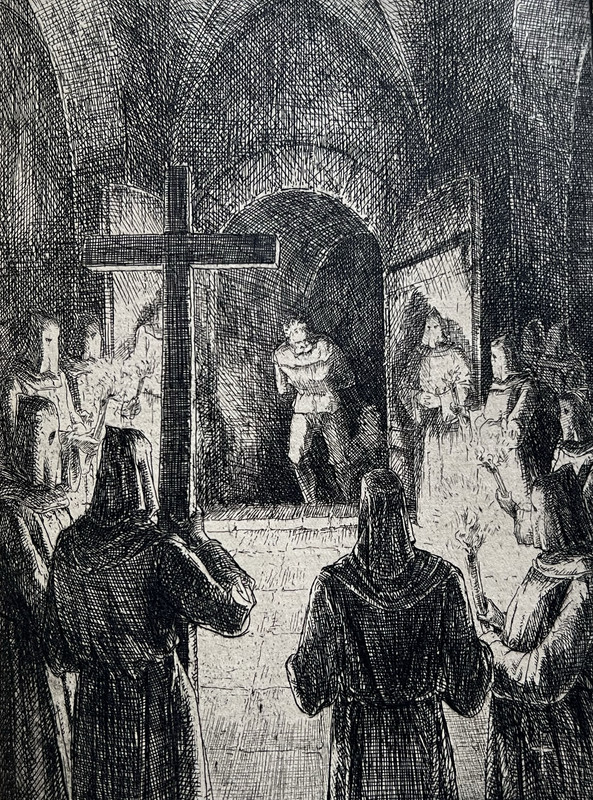
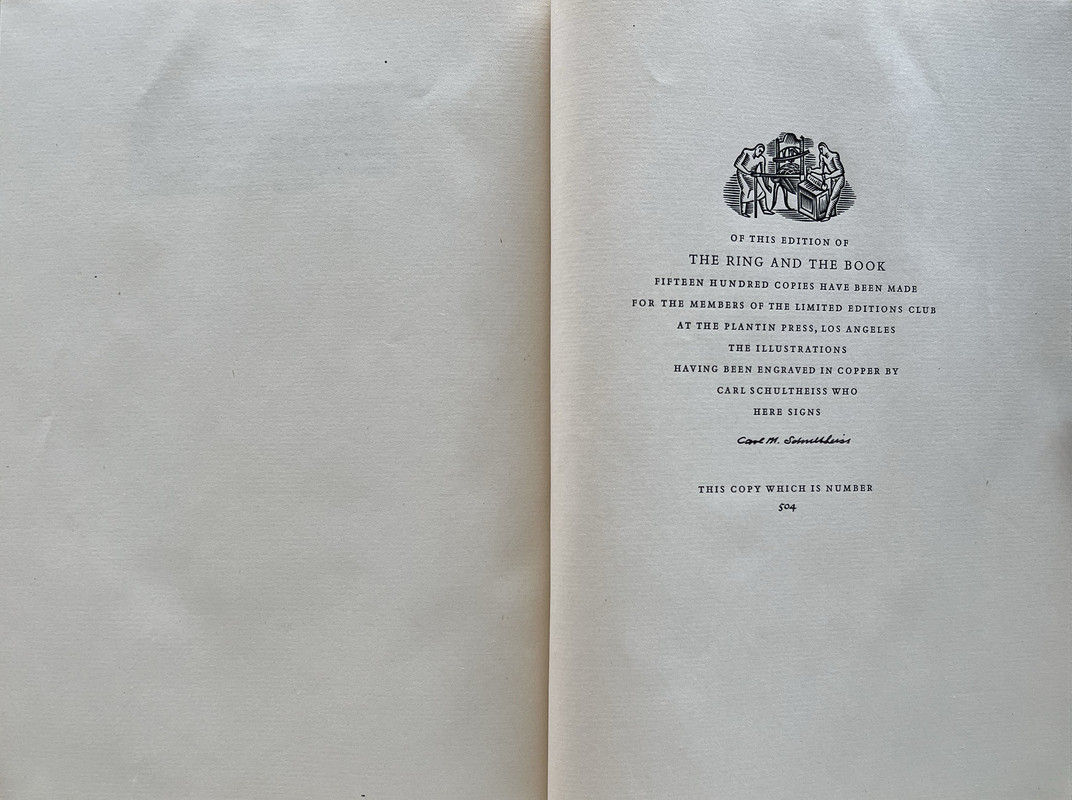
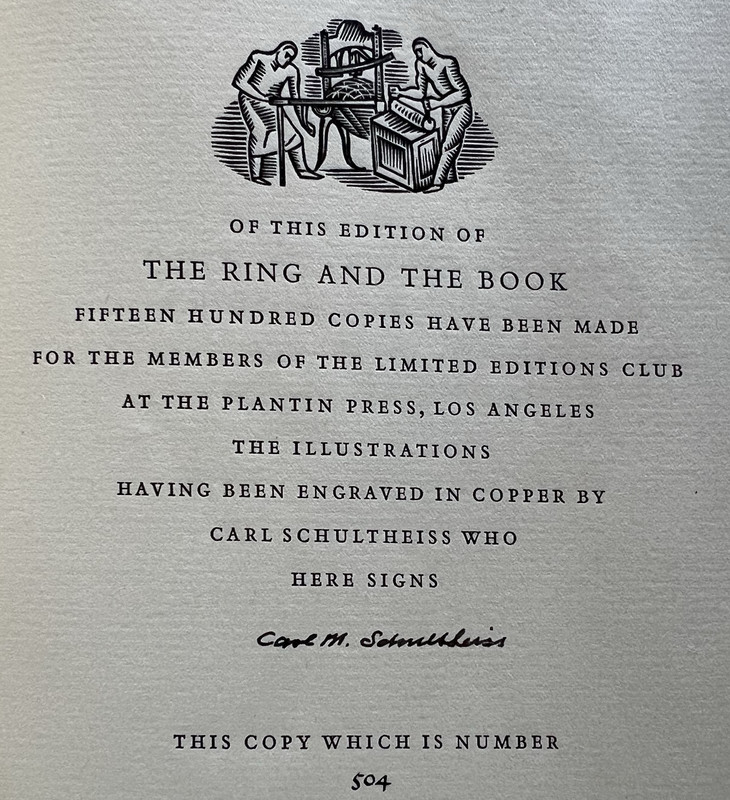
14 copper engravings by Carl Schultheiss who has signed the book.
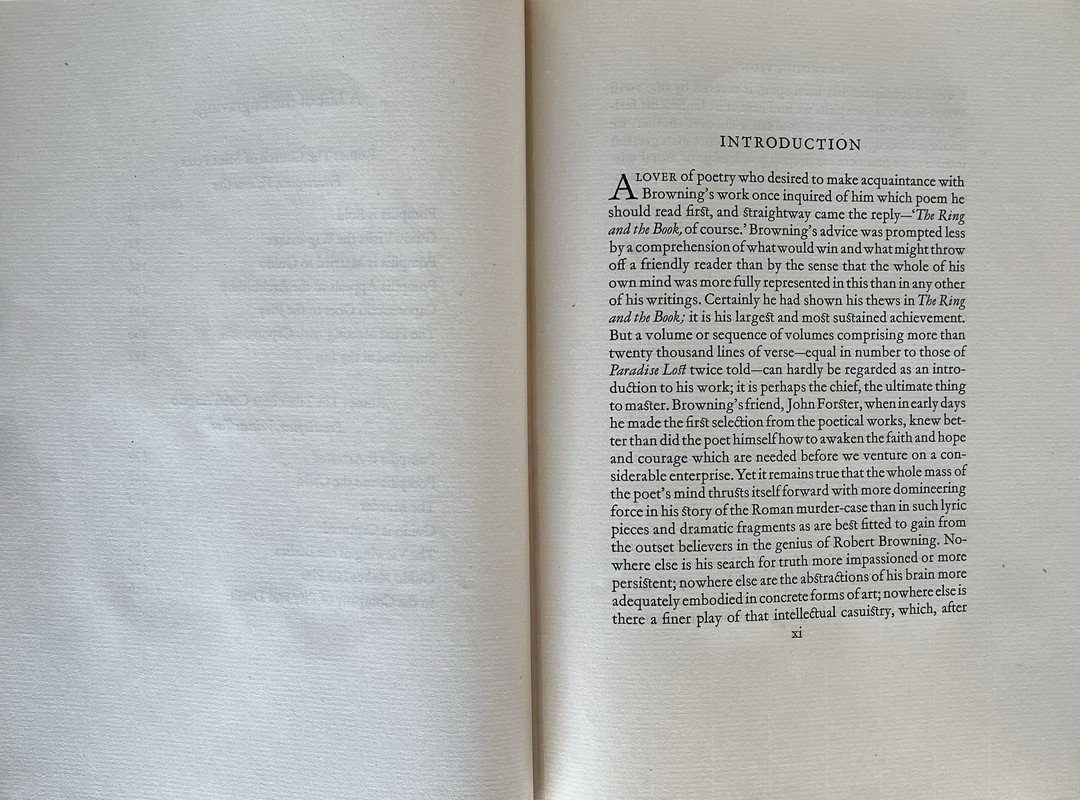
Introduced by Edward Dowden.
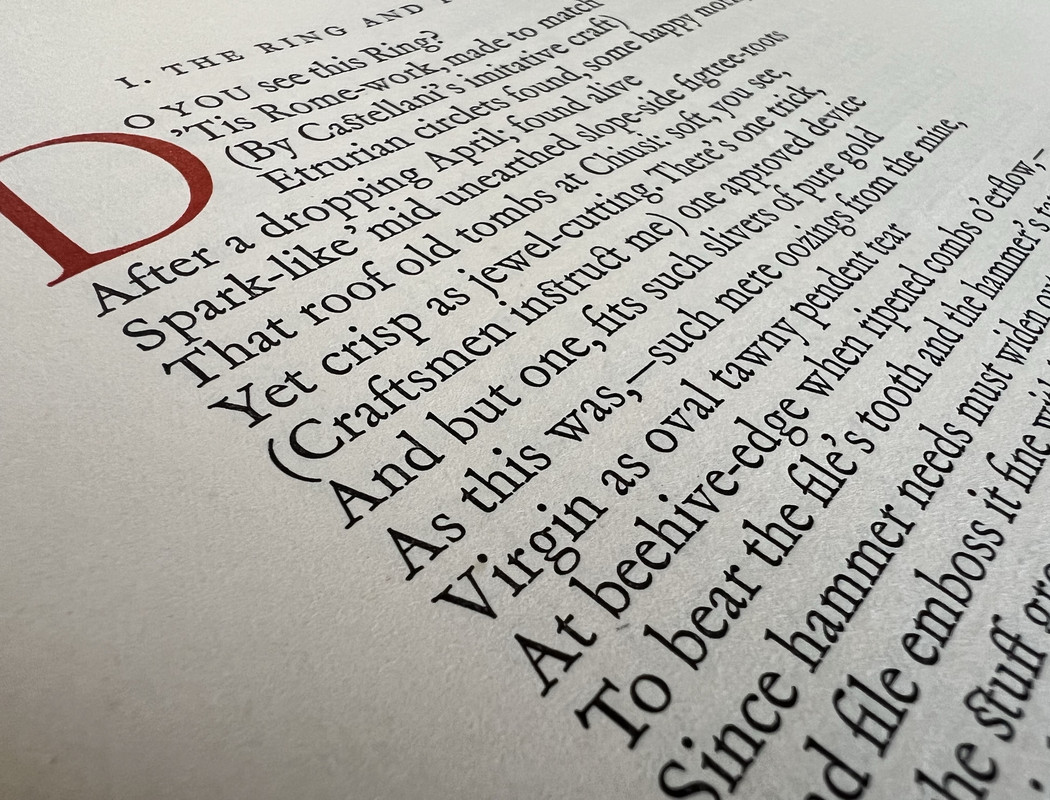
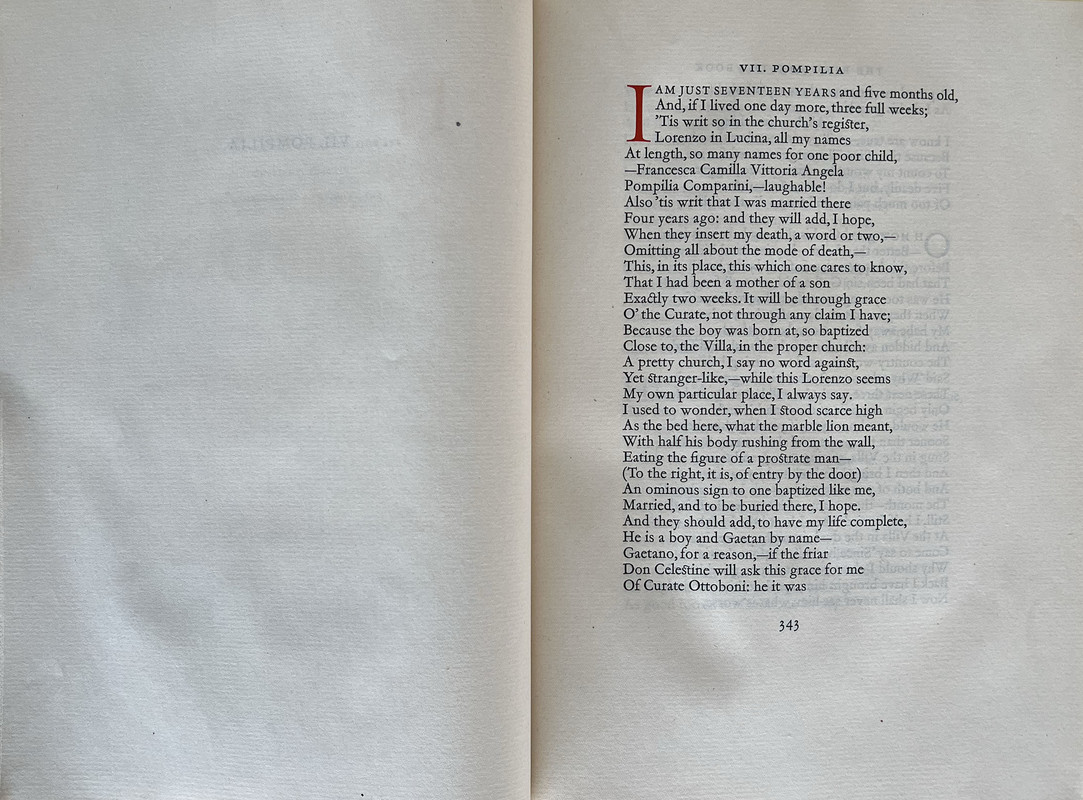
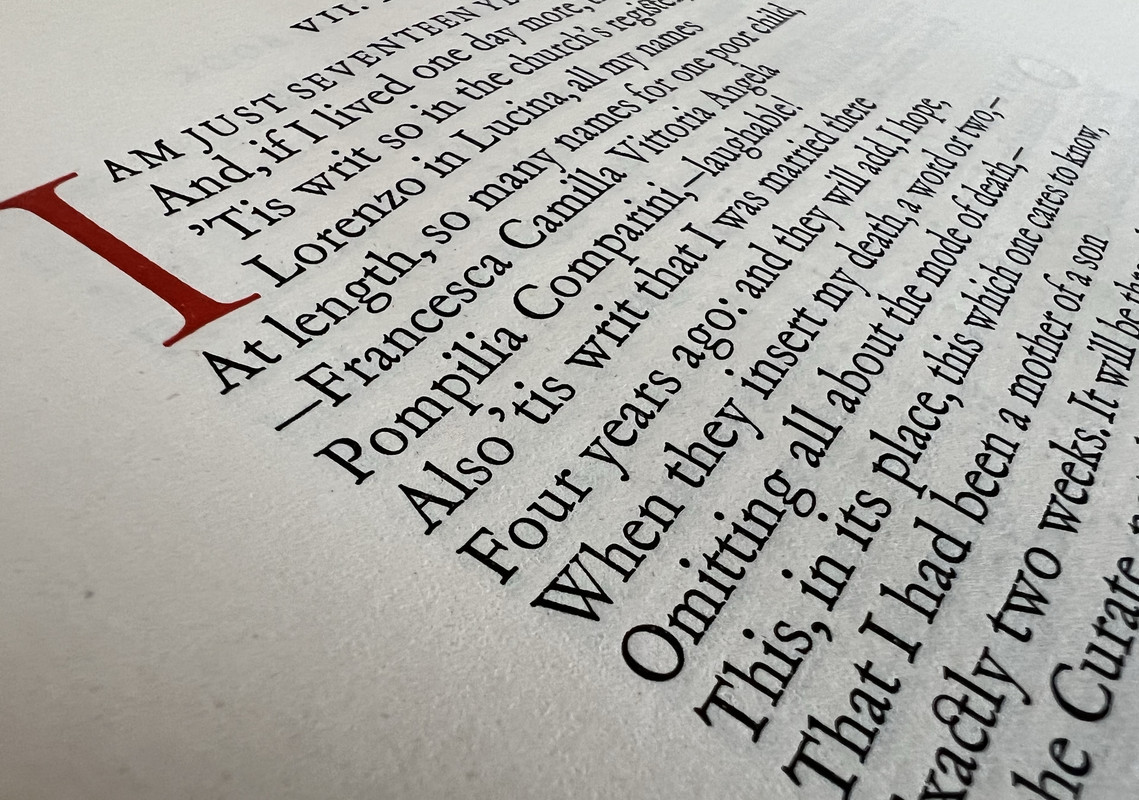
Designed by Saul Marks.
Printed at The Platin Press, Los Angeles.
Plain white endpapers.
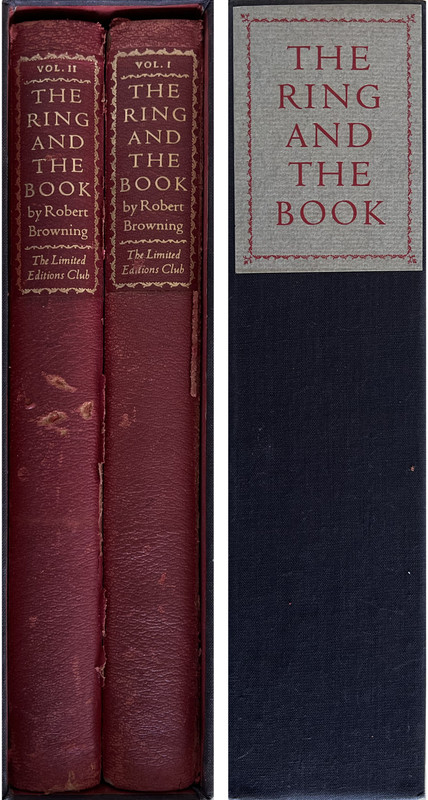
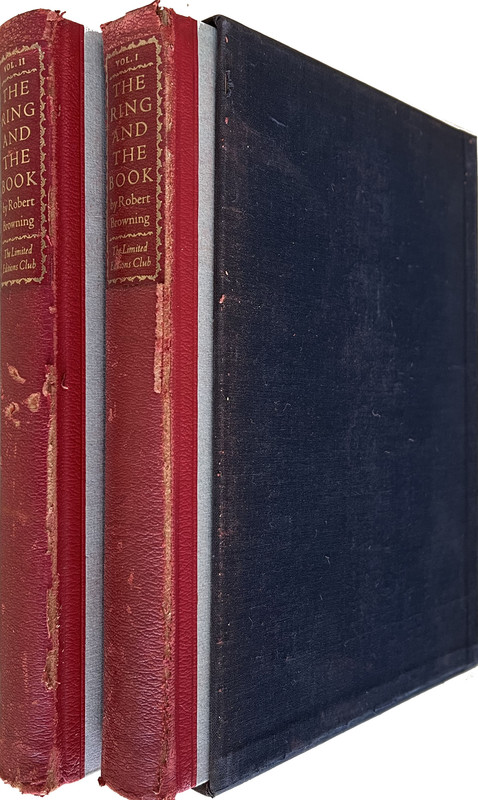
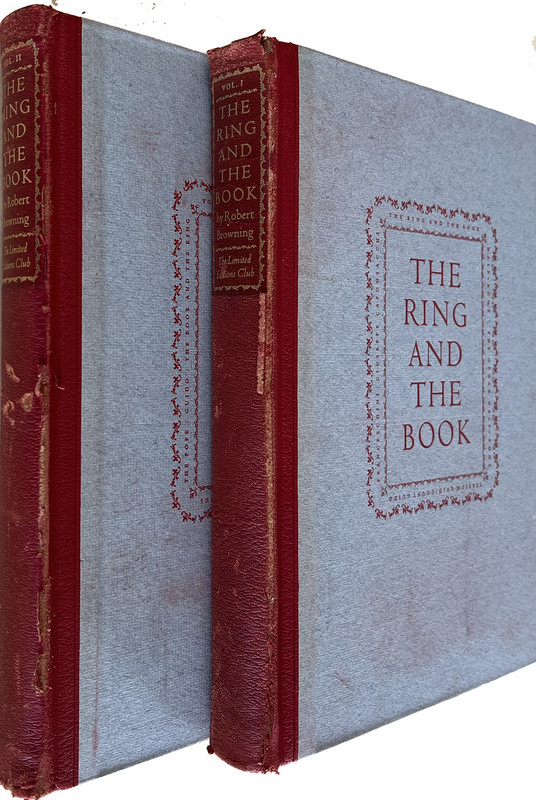
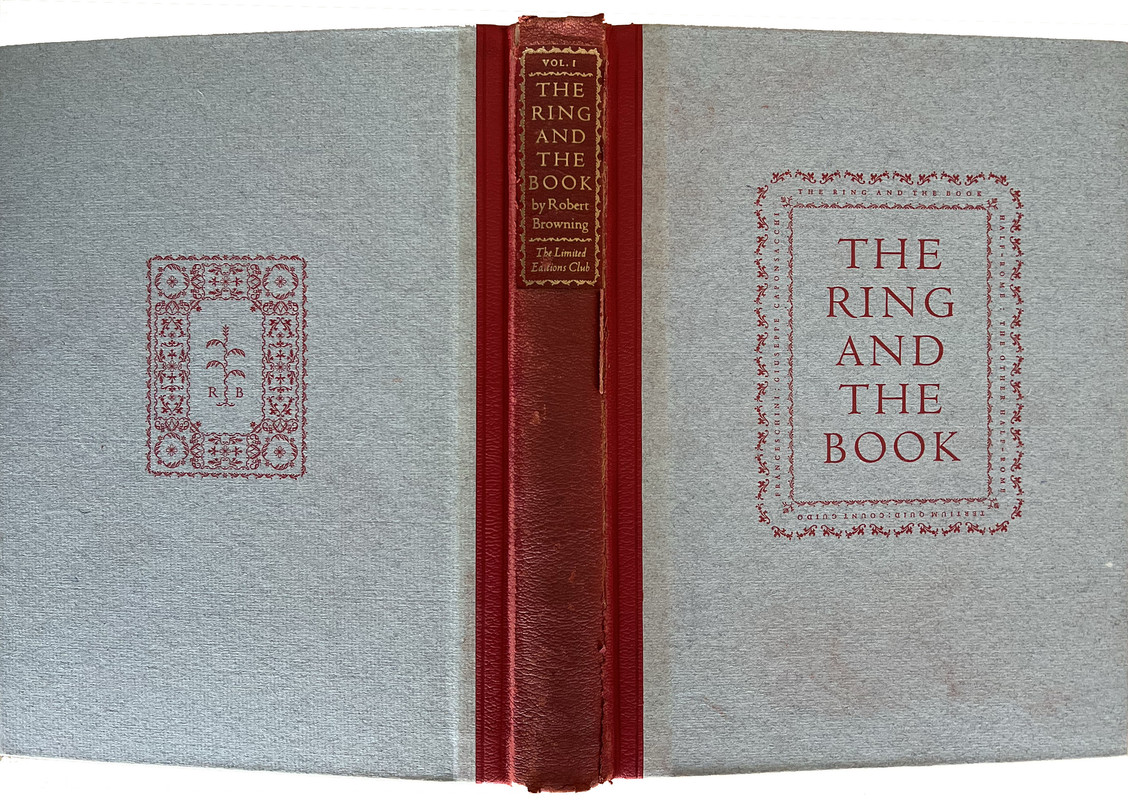
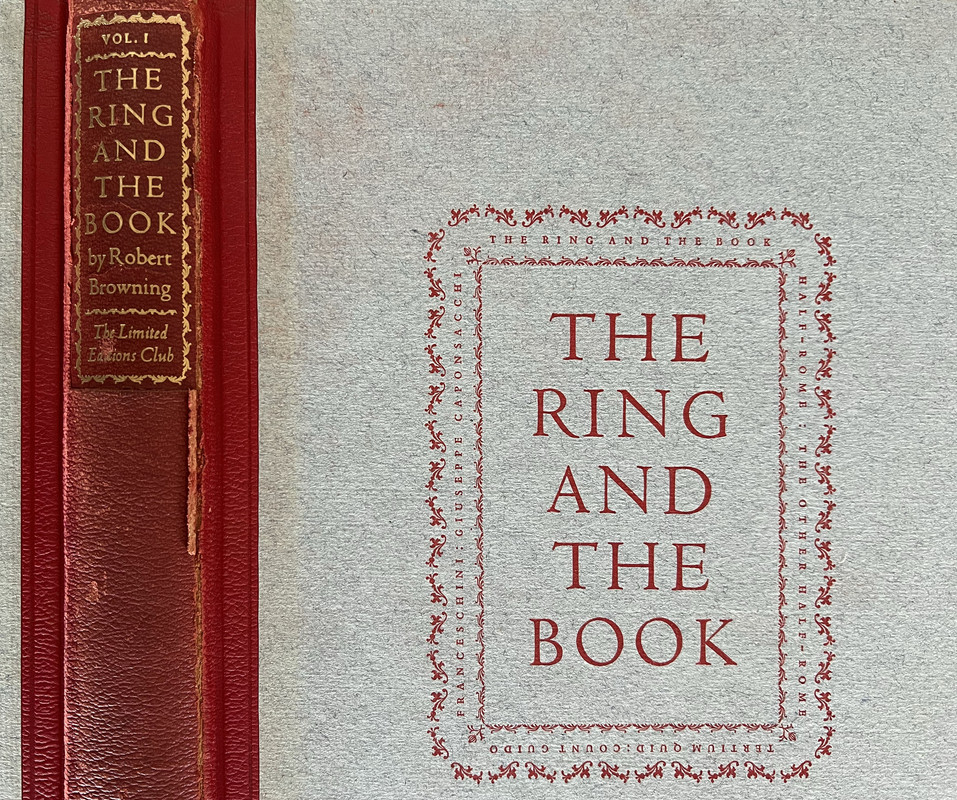
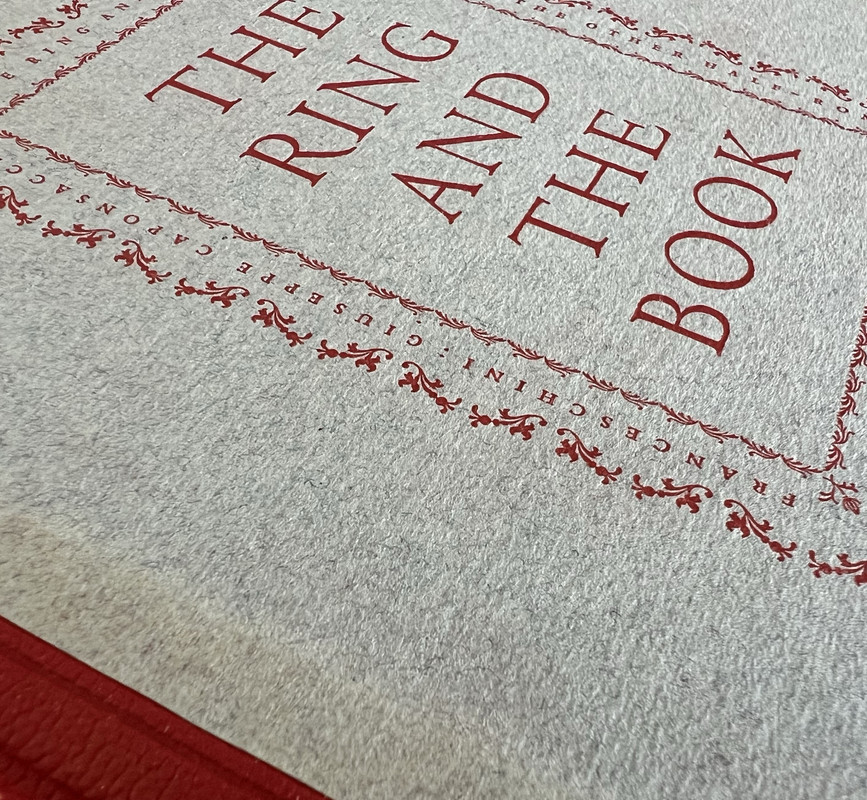
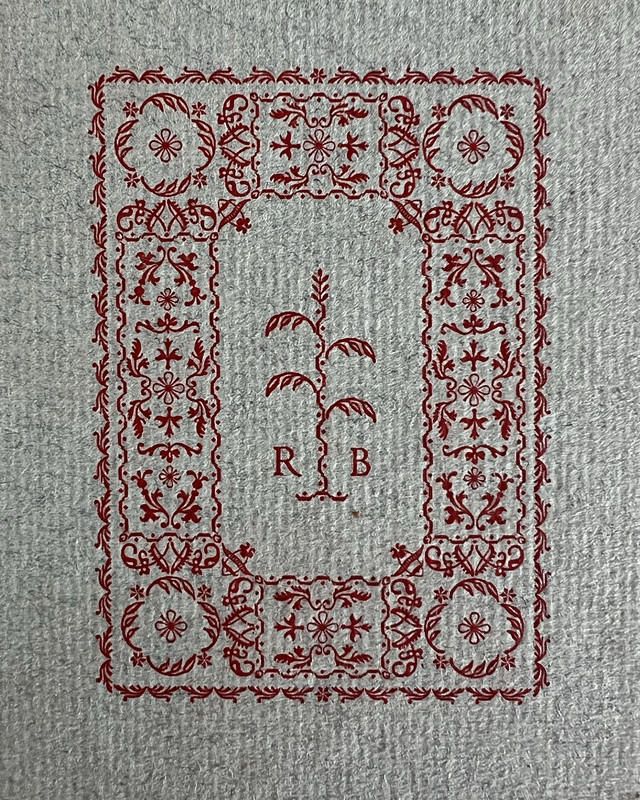
Quarter bound by Russell-Rutter Co., New York in red cloth with pale blue paper covers, the title printed in red on the front cover and a design with author’s initials on the back.
Dark blue slipcase with spine title label.
Black slipcase with cream paper title label on edge.
Total 690 pages.
26.9x19.6cm.
1500 copies.
Written in 1860, but set in the 1690s, this is a 21,000 line poem that is divided into twelve books. It concerns a true murder trial and is in the form of a series of monologues by different characters. The complexities of varying truths are explored with many classical, literary and biblical allusions.
The monthly letters for this book can be seen here and here.
An index of the other illustrated reviews in the this series can be viewed here.
A PICTORIAL REVIEW
Two volumes.
14 copper engravings by Carl Schultheiss who has signed the book.
Introduced by Edward Dowden.
Designed by Saul Marks.
Printed at The Platin Press, Los Angeles.
Plain white endpapers.
Quarter bound by Russell-Rutter Co., New York in red cloth with pale blue paper covers, the title printed in red on the front cover and a design with author’s initials on the back.
Dark blue slipcase with spine title label.
Black slipcase with cream paper title label on edge.
Total 690 pages.
26.9x19.6cm.
1500 copies.
Written in 1860, but set in the 1690s, this is a 21,000 line poem that is divided into twelve books. It concerns a true murder trial and is in the form of a series of monologues by different characters. The complexities of varying truths are explored with many classical, literary and biblical allusions.
The monthly letters for this book can be seen here and here.
An index of the other illustrated reviews in the this series can be viewed here.
2Django6924
Thank you for your typically superb review of a work which suffers the fate of being both widely admired and simultaneously unread by most collectors. Such is the fate, it seems, of extremely long works in verse, such as the HP exclusive of Byron's Don Juan. It's too bad as both deserve to be read, and The Ring and the Book, with its examination of a sensational murder trial in 17th century Rome could be the basis of a popular miniseries. Its technique of telling the story through the statements of different characters, each telling their own, and often very different, versions of the events, would become often used in 20th century literature and film.
3Eumnestes
Inspired by this thread, I just purchased a copy online. Looking forward to receiving it and reading it.
4Django6924
>3 Eumnestes:
If you give it the attention it deserves, I think you'll be well rewarded. When I read it, I must admit I wasn't too sure if I would enjoy it because the first chapter is Browning setting the stage: discovering the Yellow Book and explaining the bare bones of the murder and the legal case--exposition which, though necessary, seemed a bit tedious. But once it got into the individual dialogues with people commenting on what they thought, and the participants telling their versions, I was hooked. It wasn't until a year after I read it that I saw Kurosawa's "Rashomon" which uses the same technique, and then started seeing parallels to the technique in other works ("Citizen Kane," for example).
If you give it the attention it deserves, I think you'll be well rewarded. When I read it, I must admit I wasn't too sure if I would enjoy it because the first chapter is Browning setting the stage: discovering the Yellow Book and explaining the bare bones of the murder and the legal case--exposition which, though necessary, seemed a bit tedious. But once it got into the individual dialogues with people commenting on what they thought, and the participants telling their versions, I was hooked. It wasn't until a year after I read it that I saw Kurosawa's "Rashomon" which uses the same technique, and then started seeing parallels to the technique in other works ("Citizen Kane," for example).
5Sport1963
>4 Django6924: I wonder if William Faulkner was a Browning fan?
6Django6924
>5 Sport1963:
Difficult to say. Certainly both As I Lay Dying and The Sound and the Fury use the technique of telling the story from the perspectives of multiple characters. But Conrad also used the technique, to some extent in Lord Jim and to a greater extent in Under Western Eyes.
As the problem of knowing, as Pilate asks, "what is truth?" was realized to be more complex than a simple "true/not true" statement, authors sought ways of showing that complexity. Was Browning the first who used this technique? Again, not easy to say. I don't know of a work prior to The Ring and the Book which employed it so successfully, but perhaps others may have some suggestions.
(Of course we have to discount Shakespeare and most great dramatists as this kind of ambiguity is their stock in trade.)
Difficult to say. Certainly both As I Lay Dying and The Sound and the Fury use the technique of telling the story from the perspectives of multiple characters. But Conrad also used the technique, to some extent in Lord Jim and to a greater extent in Under Western Eyes.
As the problem of knowing, as Pilate asks, "what is truth?" was realized to be more complex than a simple "true/not true" statement, authors sought ways of showing that complexity. Was Browning the first who used this technique? Again, not easy to say. I don't know of a work prior to The Ring and the Book which employed it so successfully, but perhaps others may have some suggestions.
(Of course we have to discount Shakespeare and most great dramatists as this kind of ambiguity is their stock in trade.)
7A.Nobody
>6 Django6924: Willkie Collins used multiple narrative perspectives in The Woman in White (published several years before The Ring and the Book) and The Moonstone, though I won't speculate on if Browning was influenced at all.
8Django6924
>7 A.Nobody:
Absolutely right! Those had slipped my mind, but please refresh my memory since I no longer have the book, is the Count the only unreliable narrator in?
Of course if I had been thinking about other examples of a story told through multiple viewpoints, I should have realized most epistolary novels are told this way, from Clarissa in the 18th century through Dracula at the end of the 19th century through to the present day.
Absolutely right! Those had slipped my mind, but please refresh my memory since I no longer have the book, is the Count the only unreliable narrator in?
Of course if I had been thinking about other examples of a story told through multiple viewpoints, I should have realized most epistolary novels are told this way, from Clarissa in the 18th century through Dracula at the end of the 19th century through to the present day.
9Eumnestes
This discussion has definitely whetted my appetite for The Ring and the Book. It does not surprise me that the poet who wrote dramatic monologues such as "My Last Duchess" and "The Bishop Order his Tomb" would, when he came to write a long narrative poem, make use of intensely imagined, differing perspectives on events.
Yet I wonder if we might refine the typology of the multiple-points-of-view template? On the one hand, we have narratives such as Rashomon, where the literal details of an event are radically rearranged from telling to telling. On the other hand, we have narratives such as Lord Jim, the Odyssey, As I lay Dying, Clarissa, Mrs. Dalloway, Dracula, etc., where the literal details largely stay the same but the emotional or moral charge alters from telling to telling. I take it that The Ring and the Book hews closer to the former?
Yet I wonder if we might refine the typology of the multiple-points-of-view template? On the one hand, we have narratives such as Rashomon, where the literal details of an event are radically rearranged from telling to telling. On the other hand, we have narratives such as Lord Jim, the Odyssey, As I lay Dying, Clarissa, Mrs. Dalloway, Dracula, etc., where the literal details largely stay the same but the emotional or moral charge alters from telling to telling. I take it that The Ring and the Book hews closer to the former?
10Django6924
>9 Eumnestes:
I would say that the literal events are consistent within each narrative, excepting to some extent "Half-Rome" and "The Other Half-Rome" which are the unreliable voices of public opinion with no direct connection to the case. What changes is the interpretation placed on the events by those directly involved in the murder or case. It's seems obvious some of the characters color the events as it best suits their purpose--especially Guido, who gets 2 monologues--but others may be entirely truthful--or are they?
On the whole, I think Browning intended not to create ambiguity about the literal events, but about human motivations and how each individual sees things he sincerely believes to be true, but how others can see the same events and sincerely believes them to be false. This is a problem that shows up in much of literature after Browning. It reaches a sort of apotheosis in the dialogue between the priest and Joseph K. in The Trial, when after telling the parable of the man at the Gate of the Law, he warns K. about jumping to the wrong conclusion in interpreting the story: "The commentators say about this that, 'correct understanding of a matter and a misunderstanding of the same matter are not mutually exclusive.'"
I would say that the literal events are consistent within each narrative, excepting to some extent "Half-Rome" and "The Other Half-Rome" which are the unreliable voices of public opinion with no direct connection to the case. What changes is the interpretation placed on the events by those directly involved in the murder or case. It's seems obvious some of the characters color the events as it best suits their purpose--especially Guido, who gets 2 monologues--but others may be entirely truthful--or are they?
On the whole, I think Browning intended not to create ambiguity about the literal events, but about human motivations and how each individual sees things he sincerely believes to be true, but how others can see the same events and sincerely believes them to be false. This is a problem that shows up in much of literature after Browning. It reaches a sort of apotheosis in the dialogue between the priest and Joseph K. in The Trial, when after telling the parable of the man at the Gate of the Law, he warns K. about jumping to the wrong conclusion in interpreting the story: "The commentators say about this that, 'correct understanding of a matter and a misunderstanding of the same matter are not mutually exclusive.'"
Join to post

