The Story of an African Farm by Olive Schreiner - LIMITED EDITIONS CLUB 1961
Talk George Macy devotees
Join LibraryThing to post.
1wcarter
The Story of an African Farm by Olive Schreiner - LIMITED EDITIONS CLUB 1961
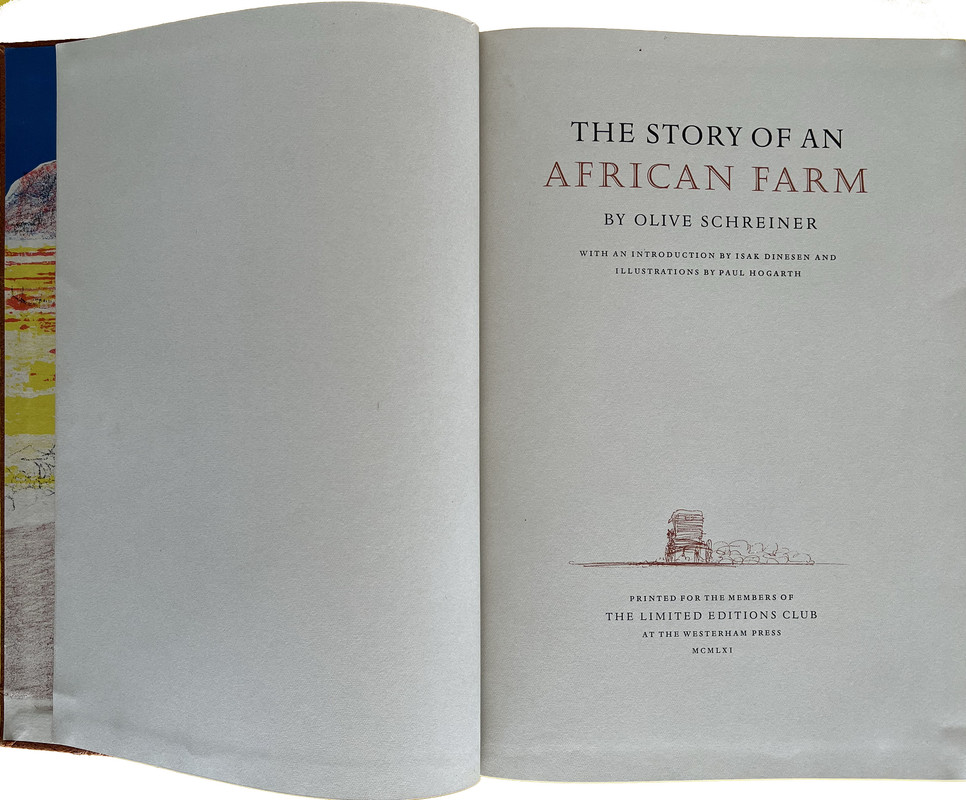
A PICTORIAL REVIEW
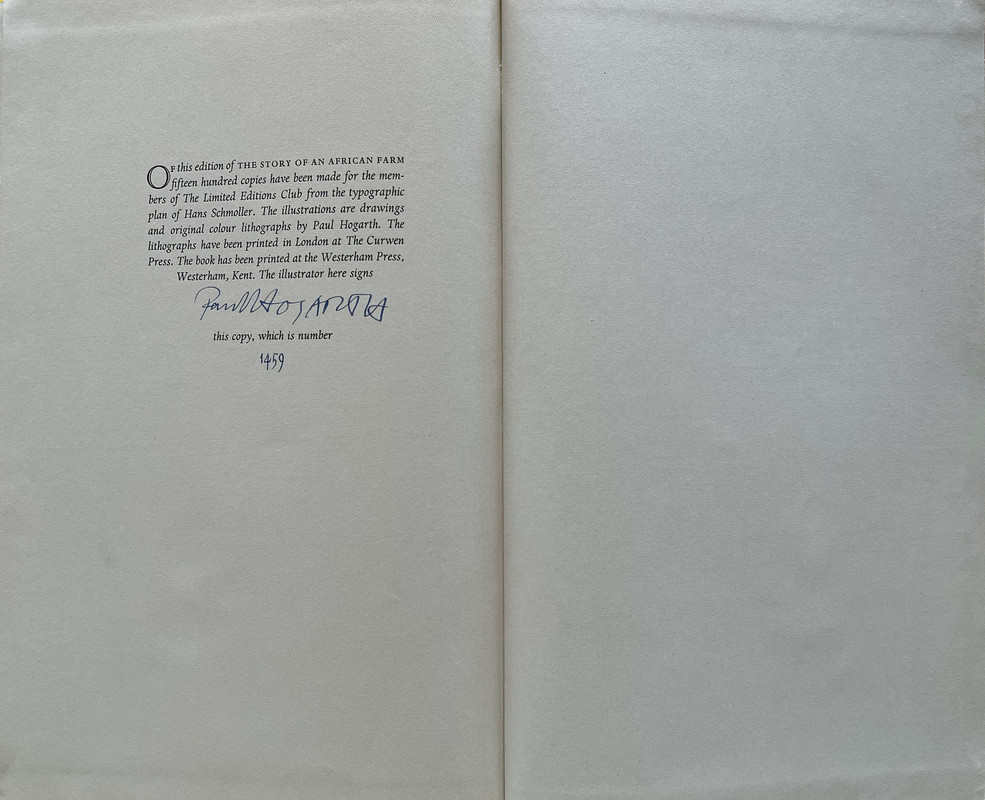
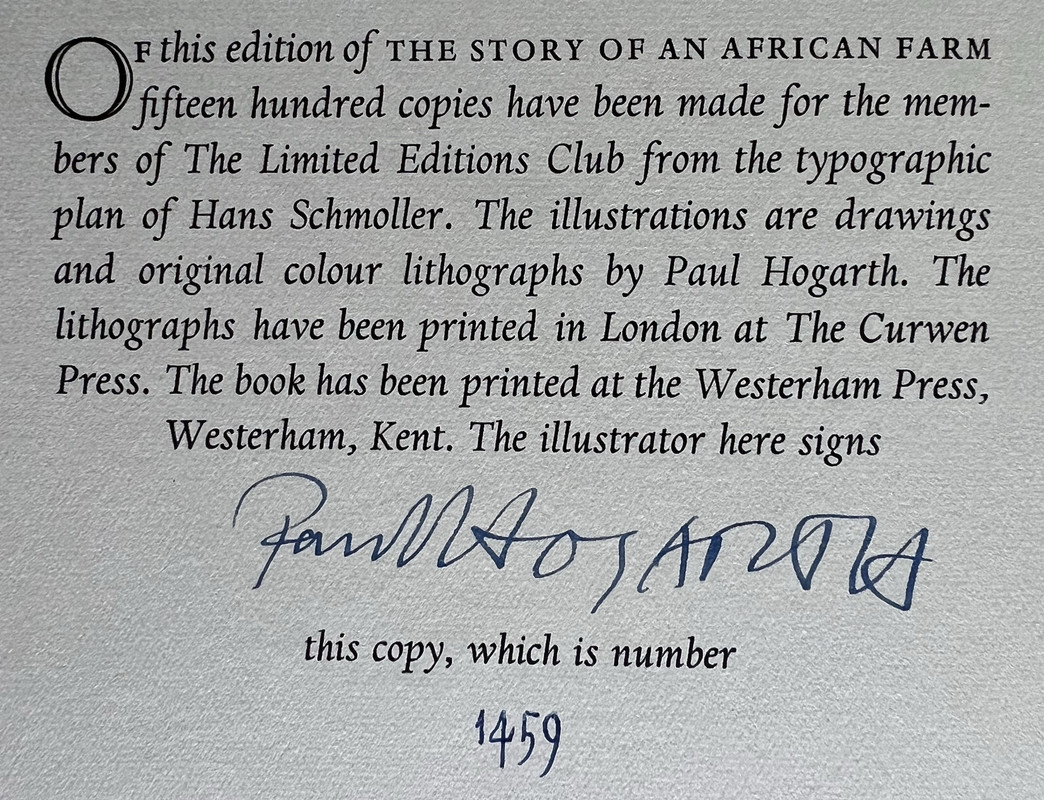
No. 1459 of 1500
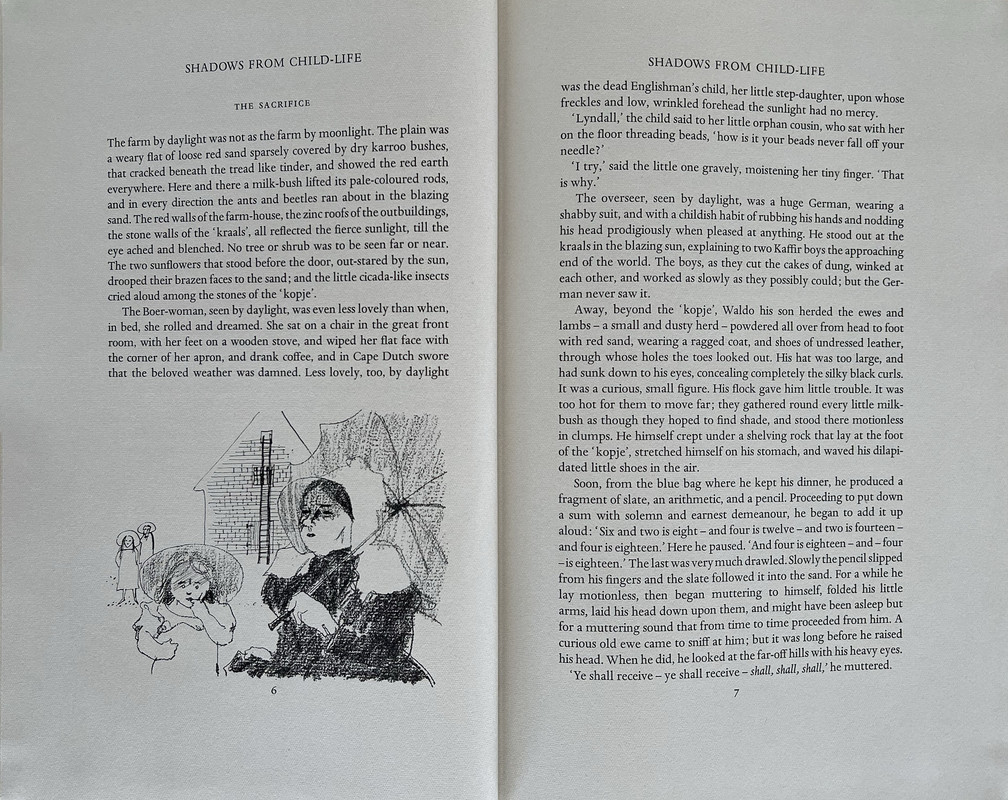
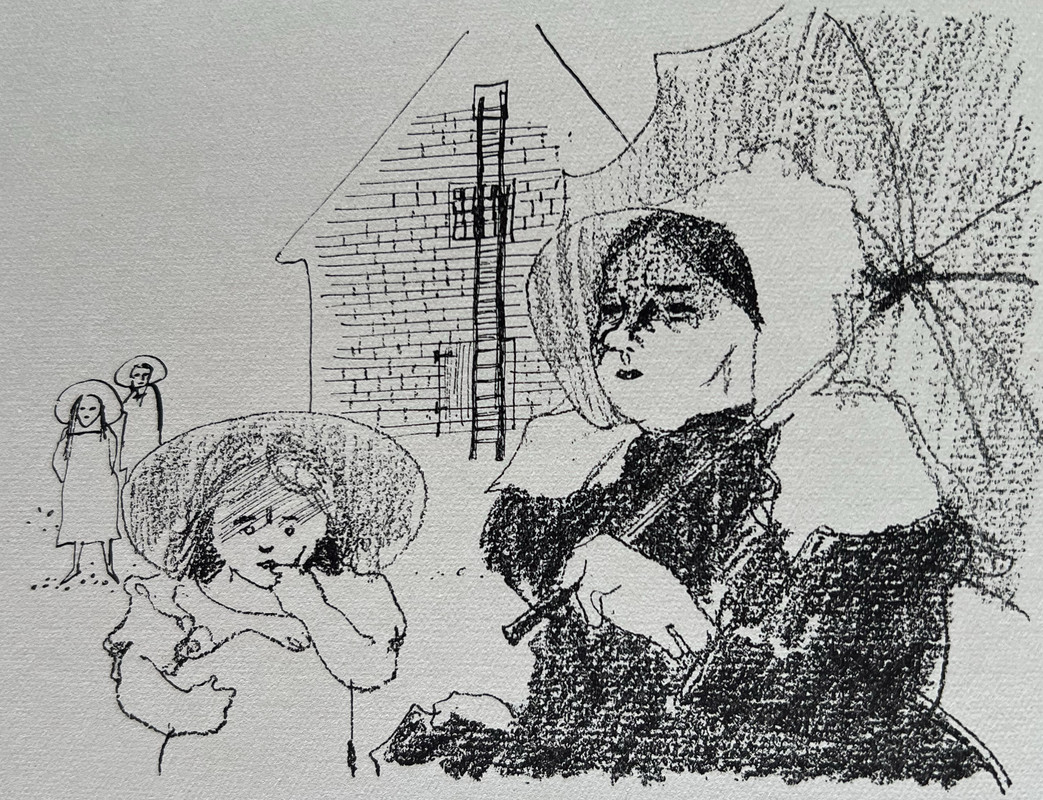
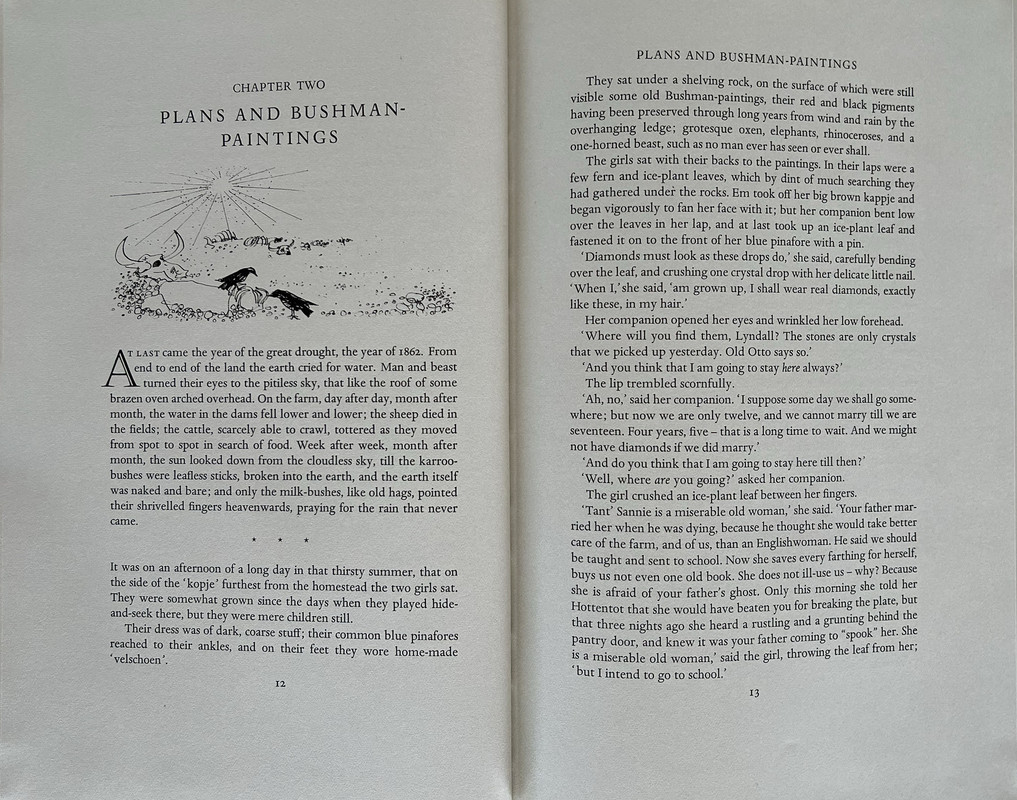
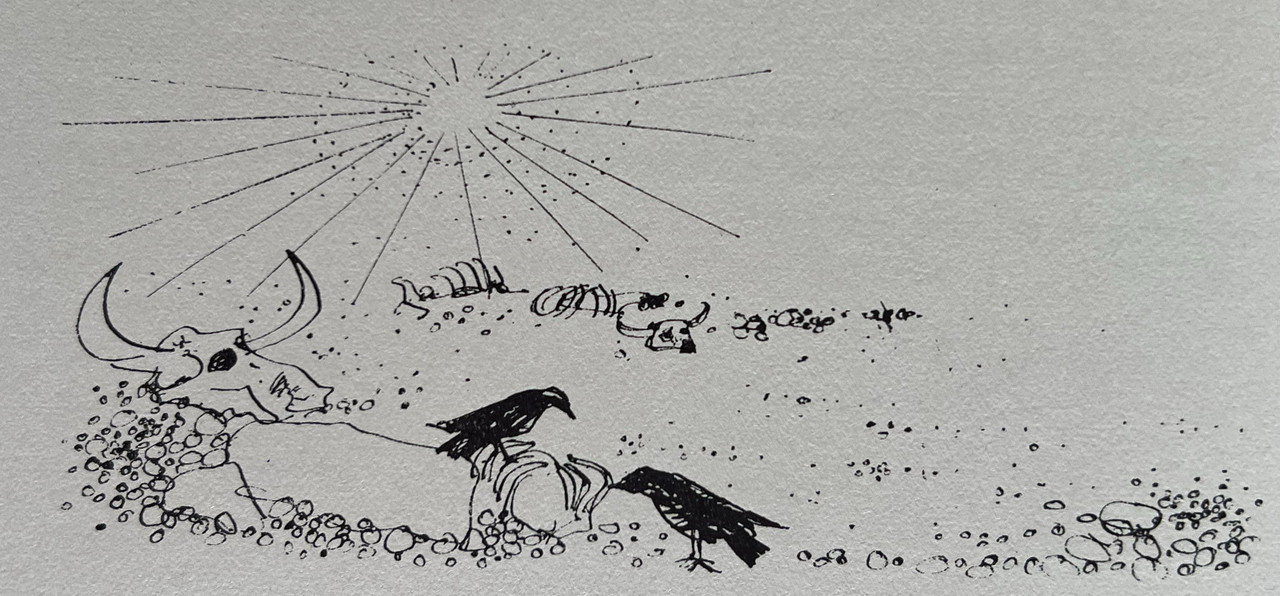
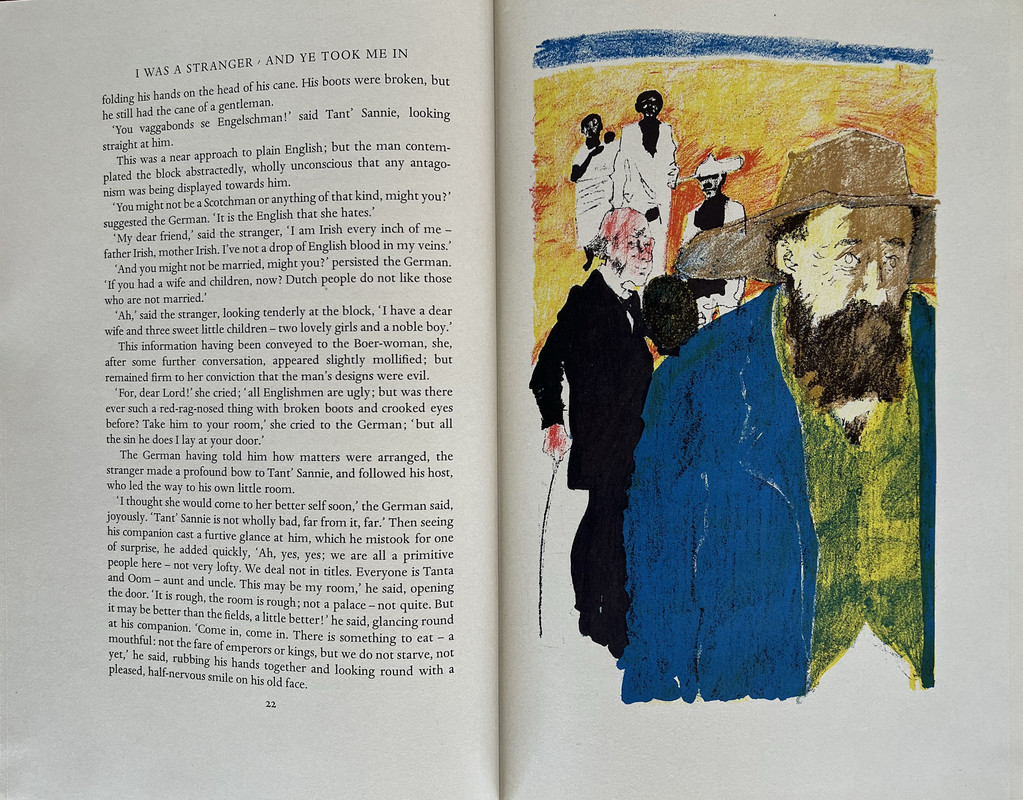
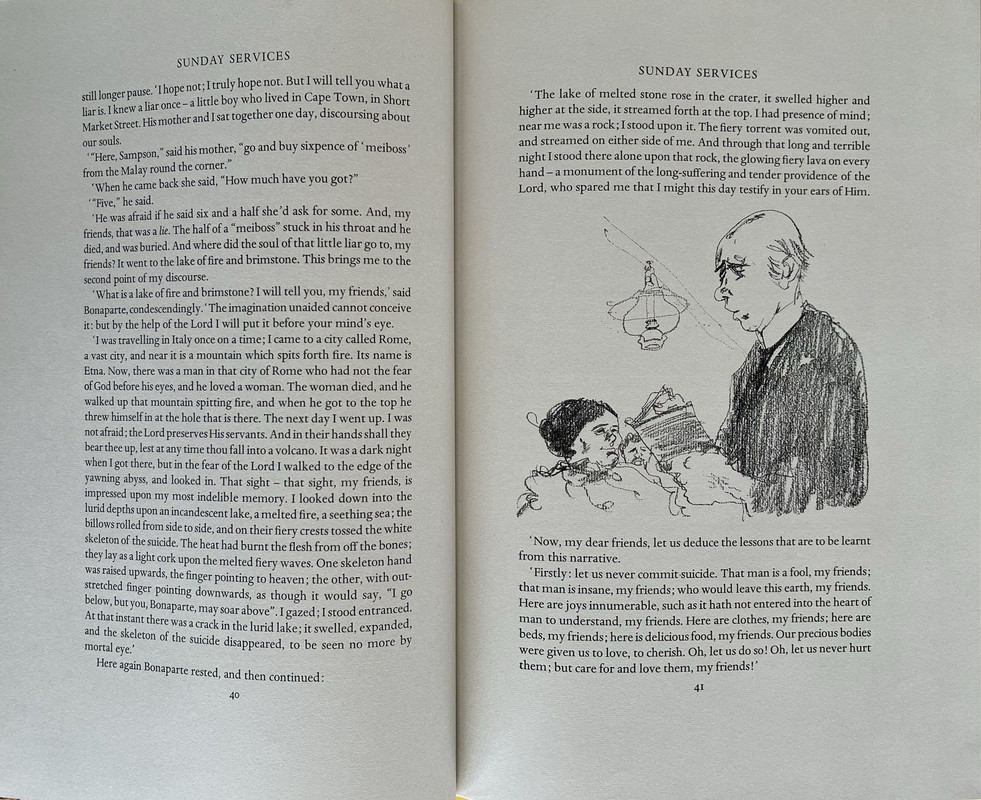
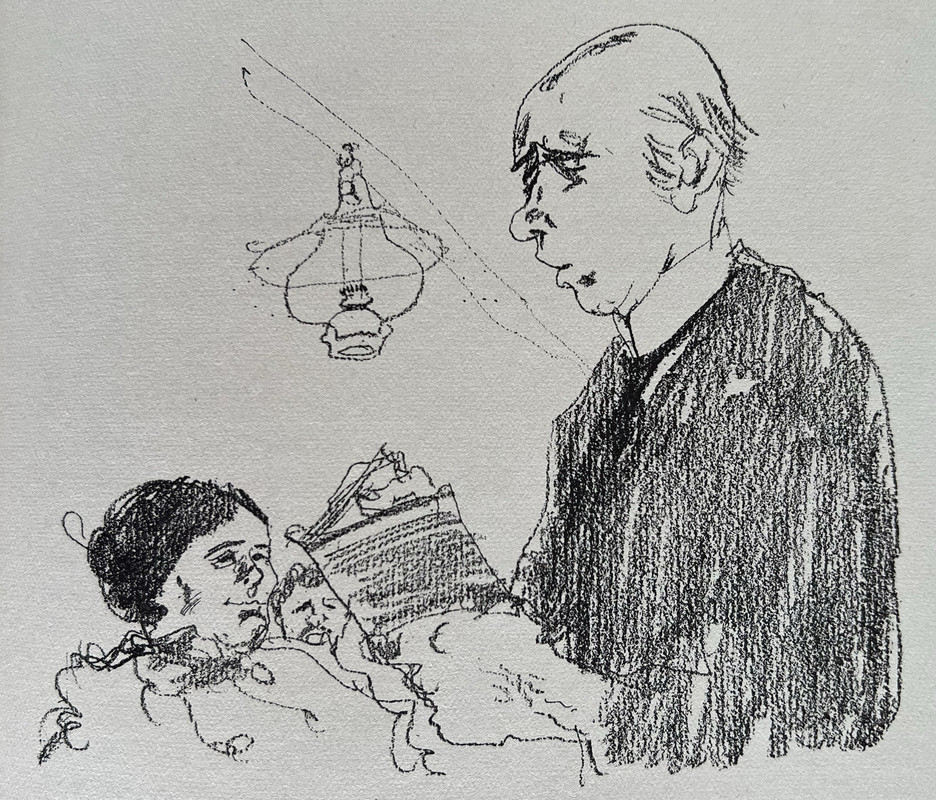
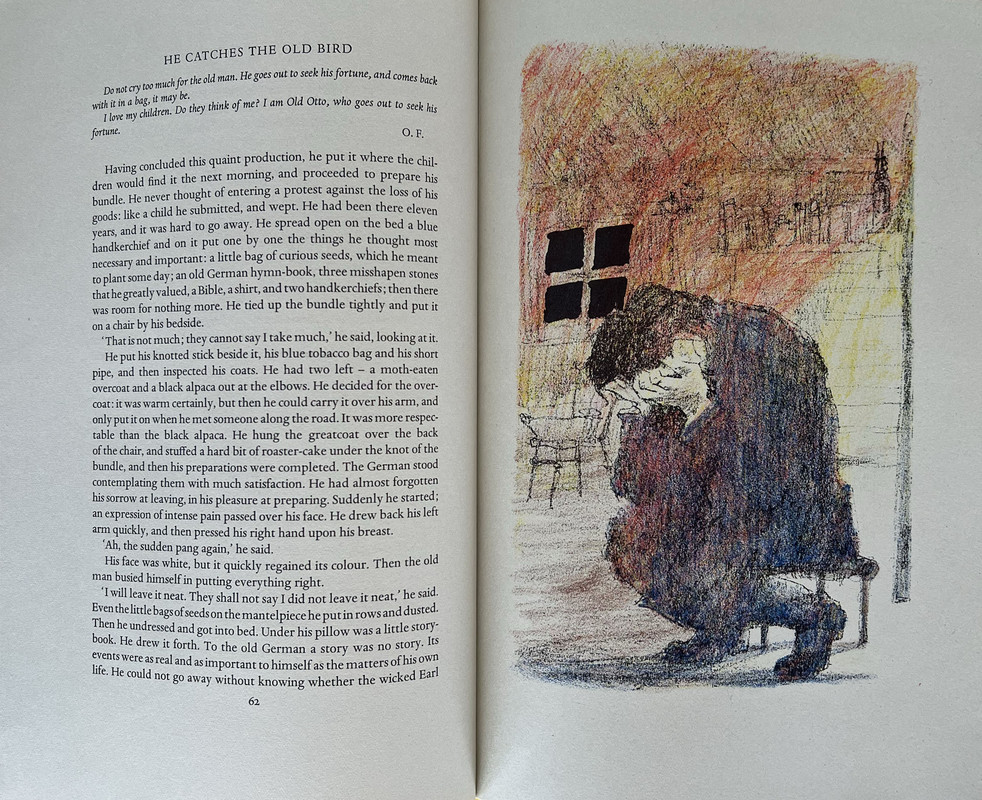
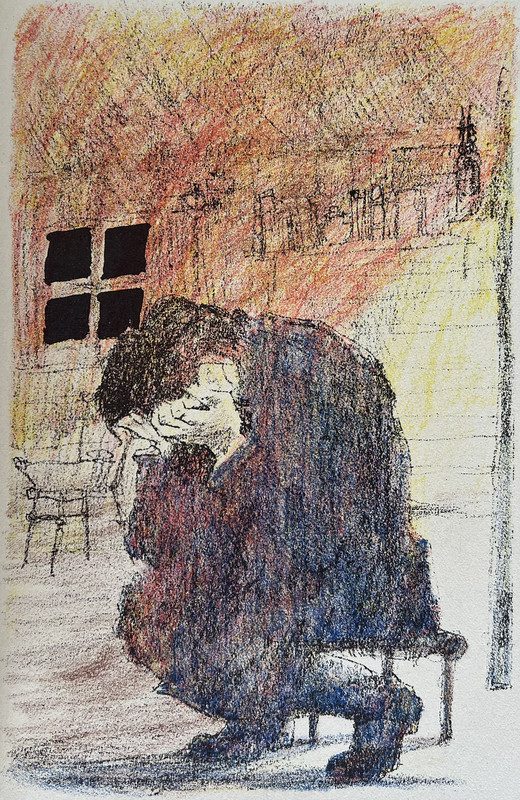
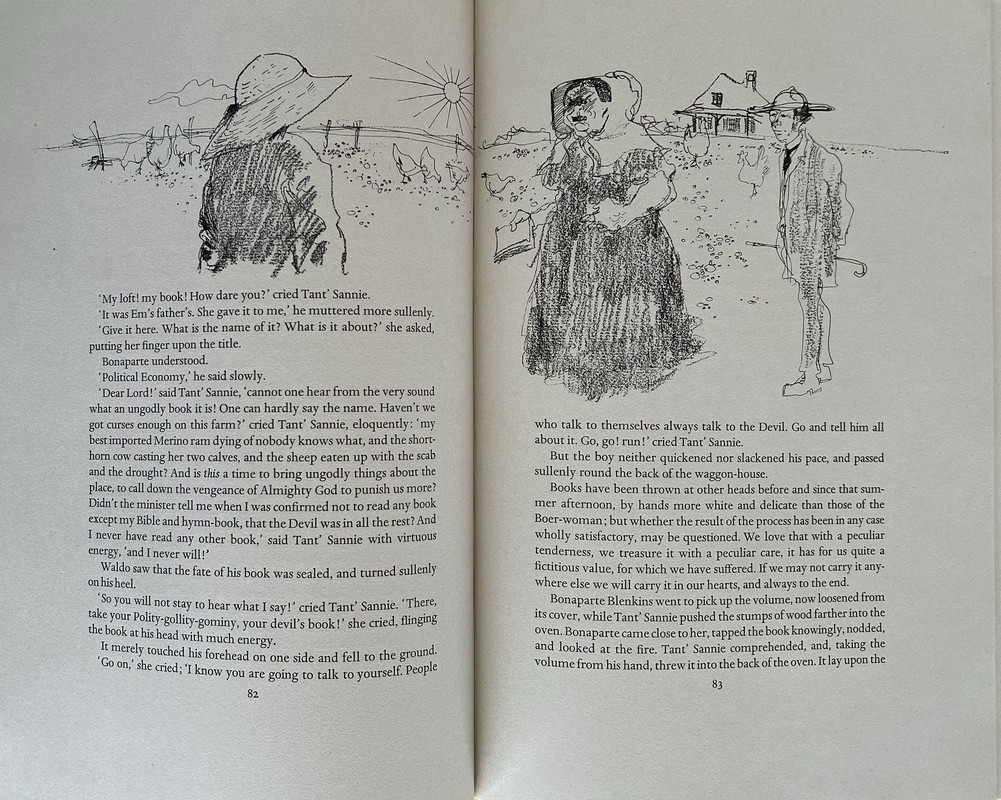
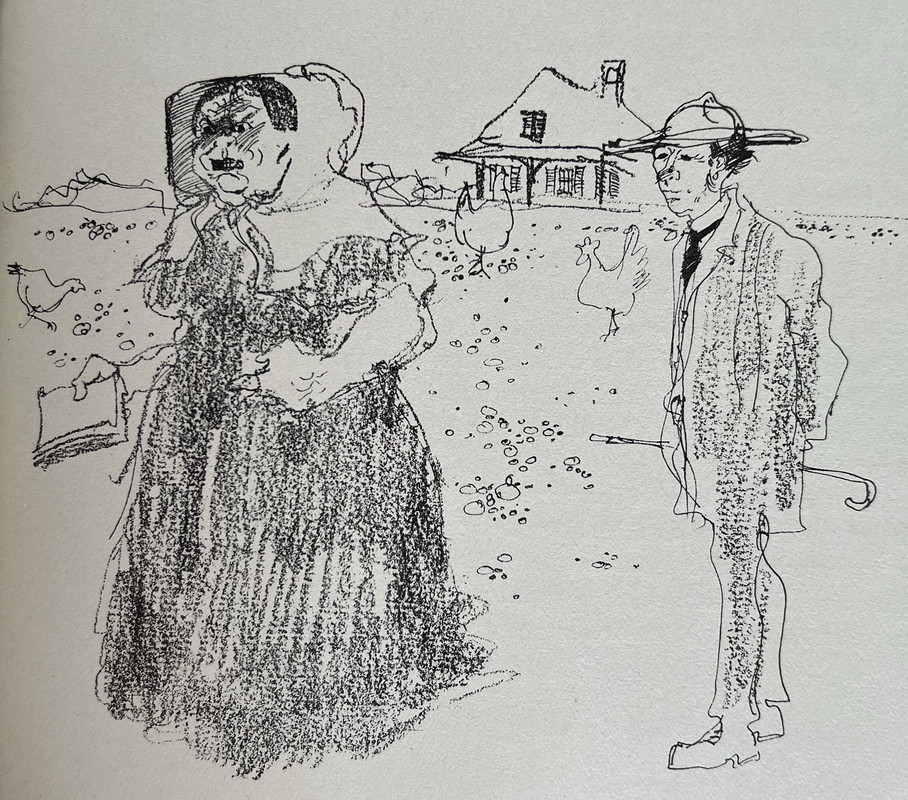
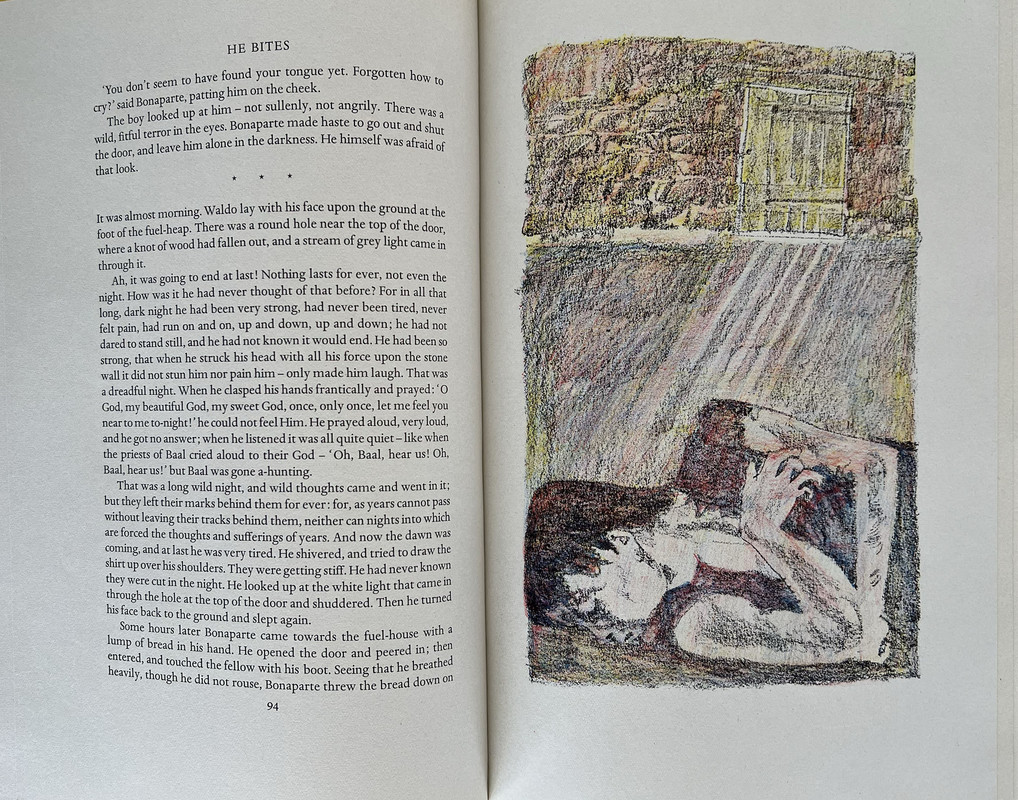
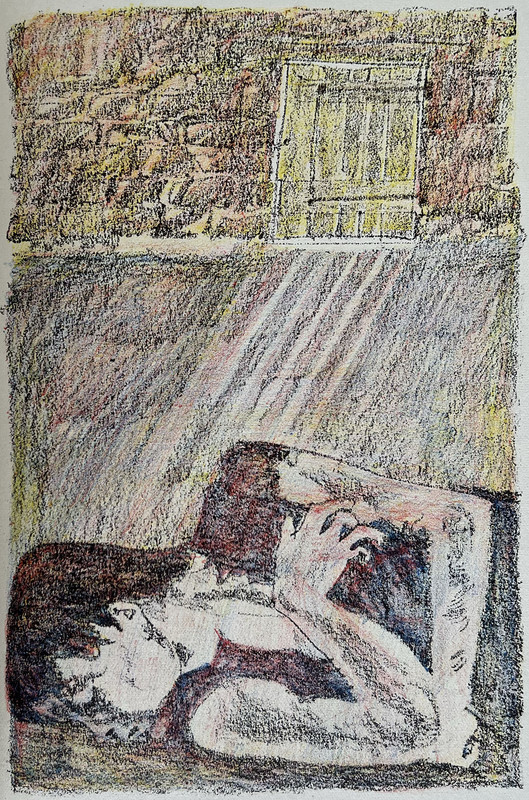
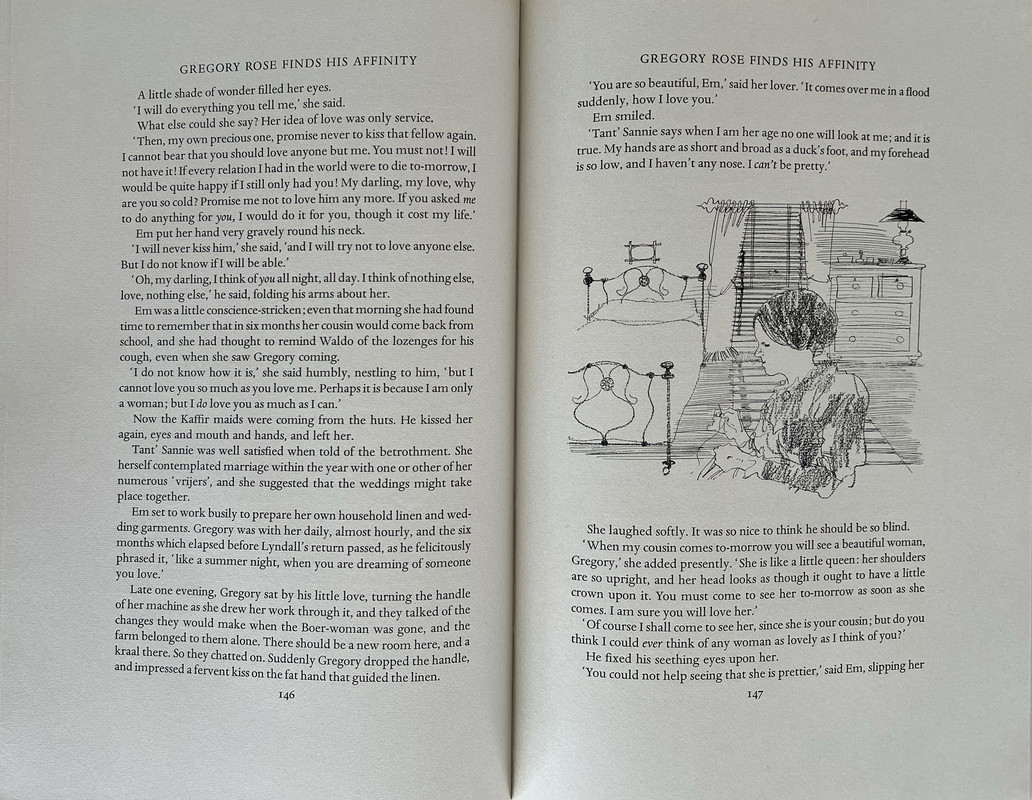
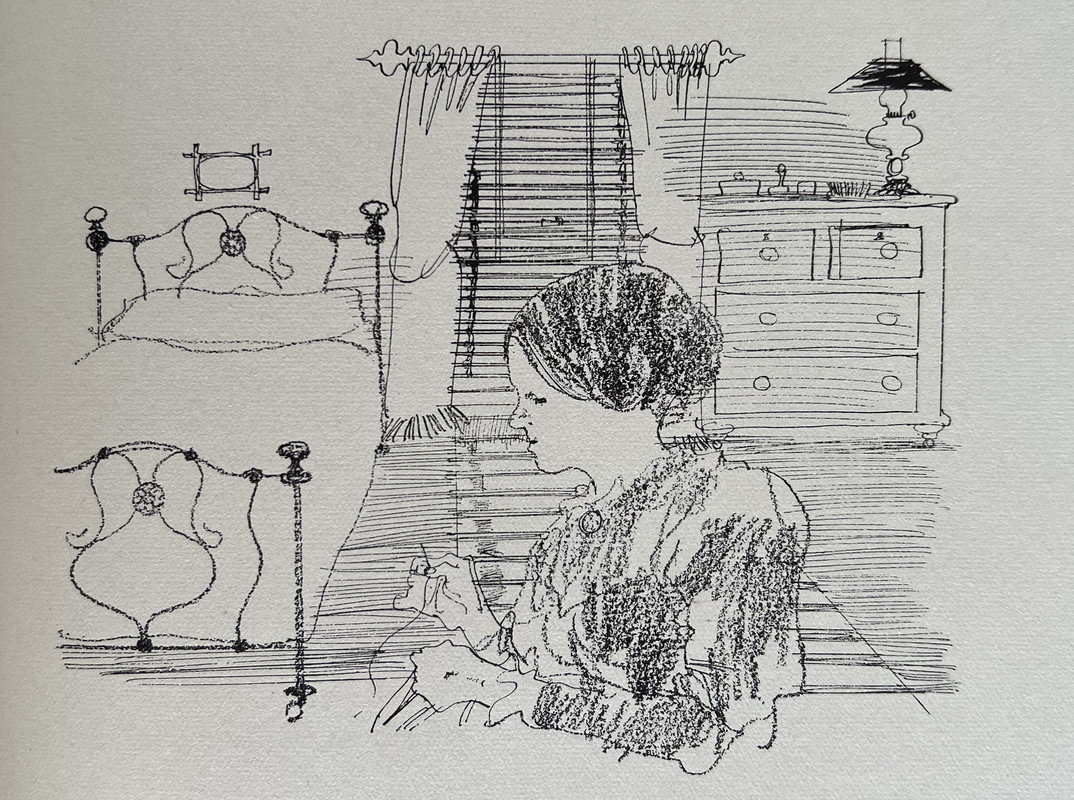
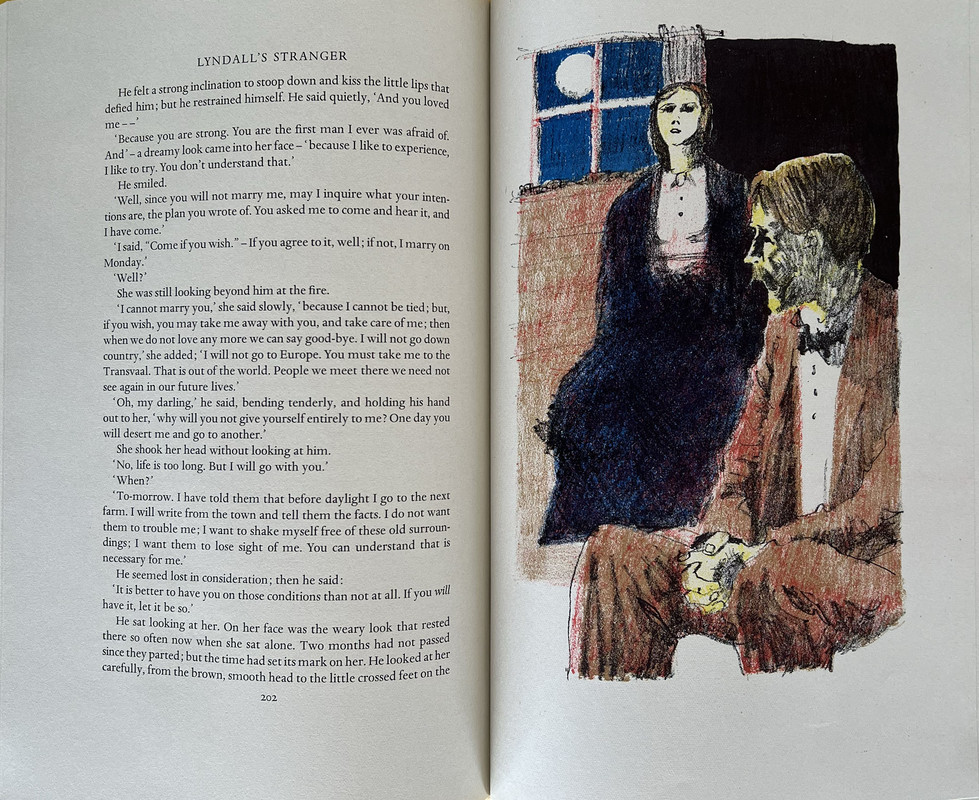
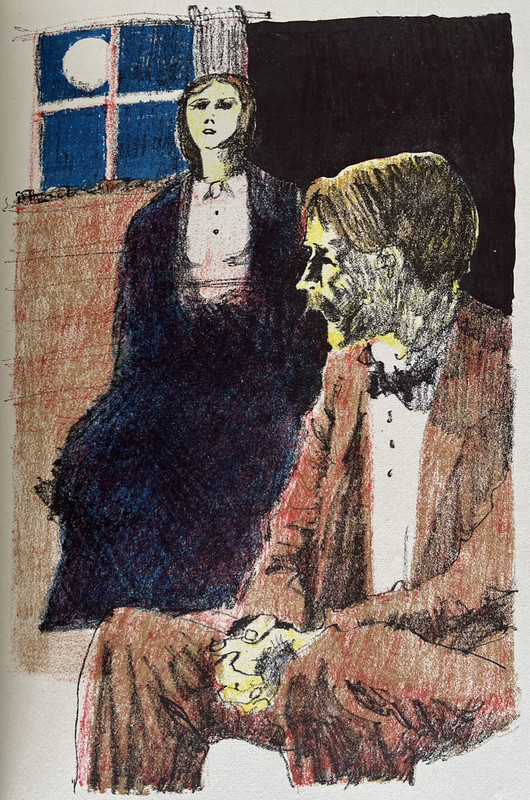
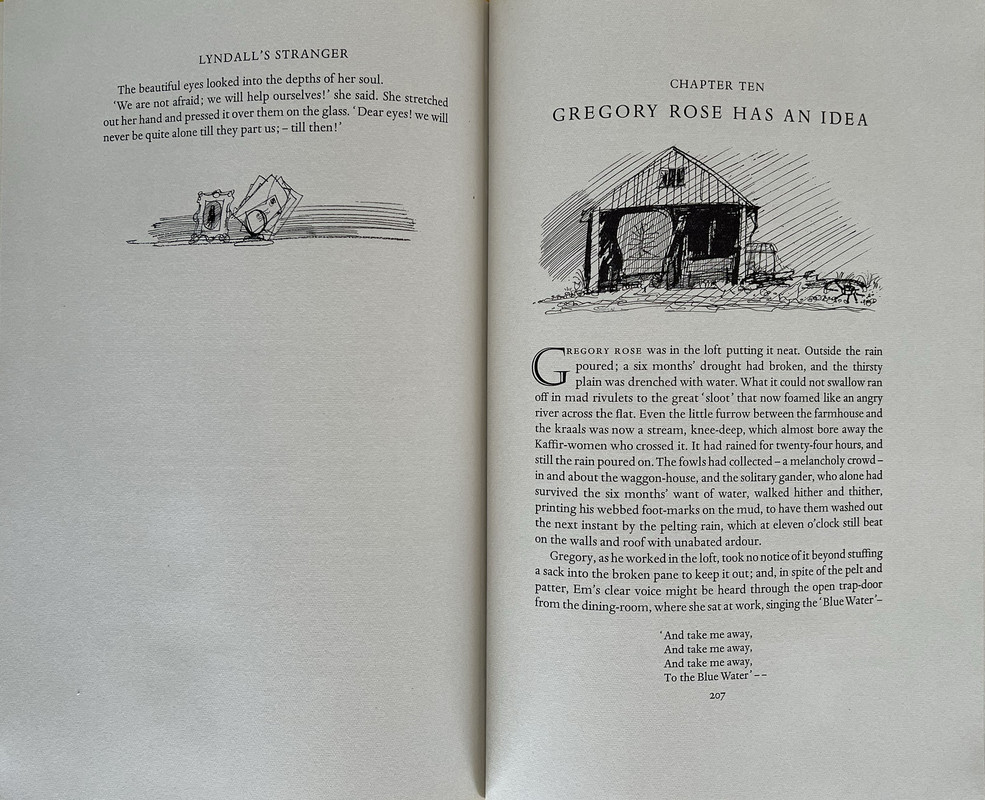
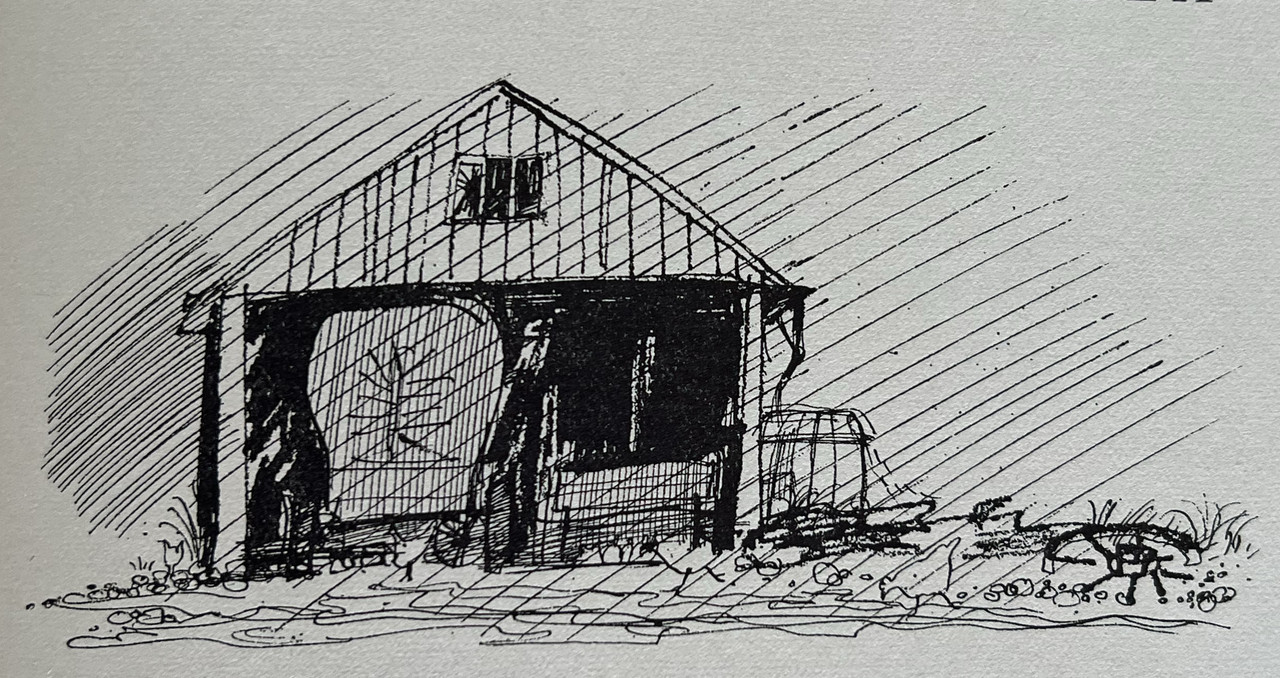
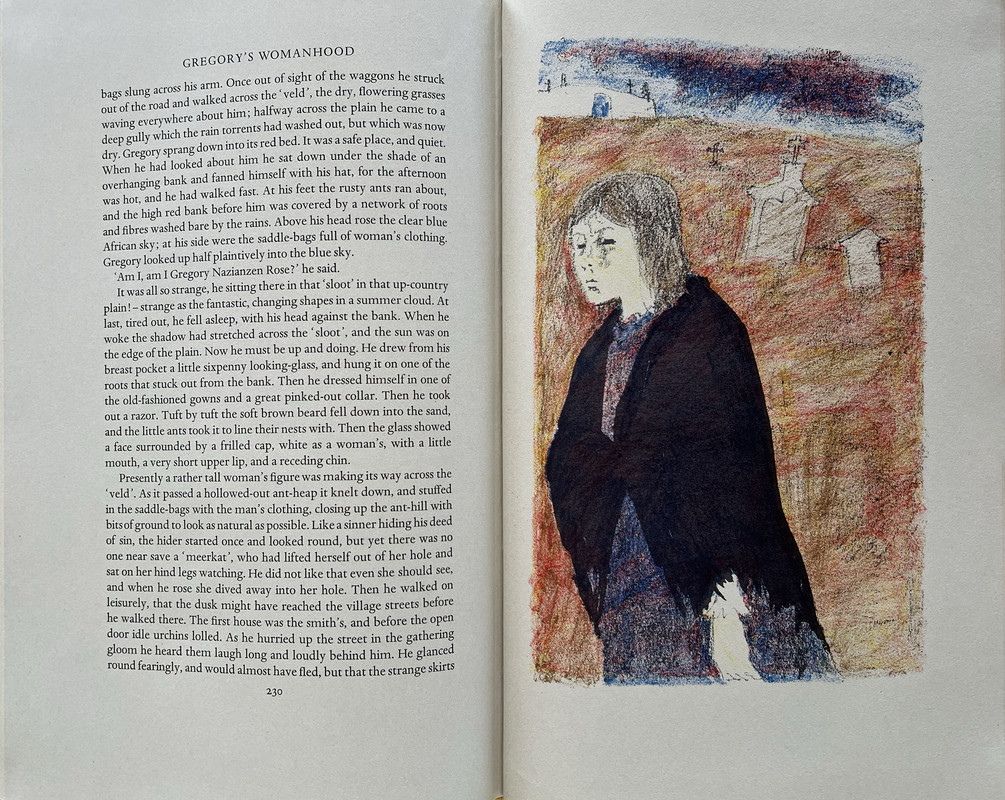
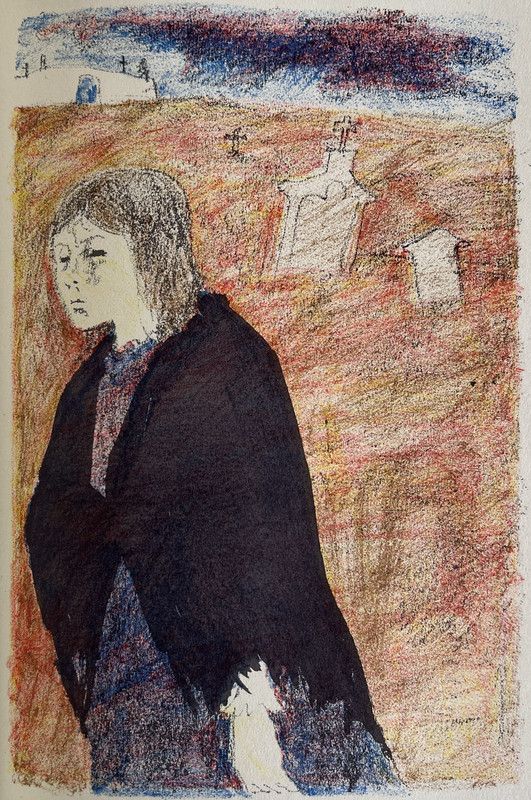
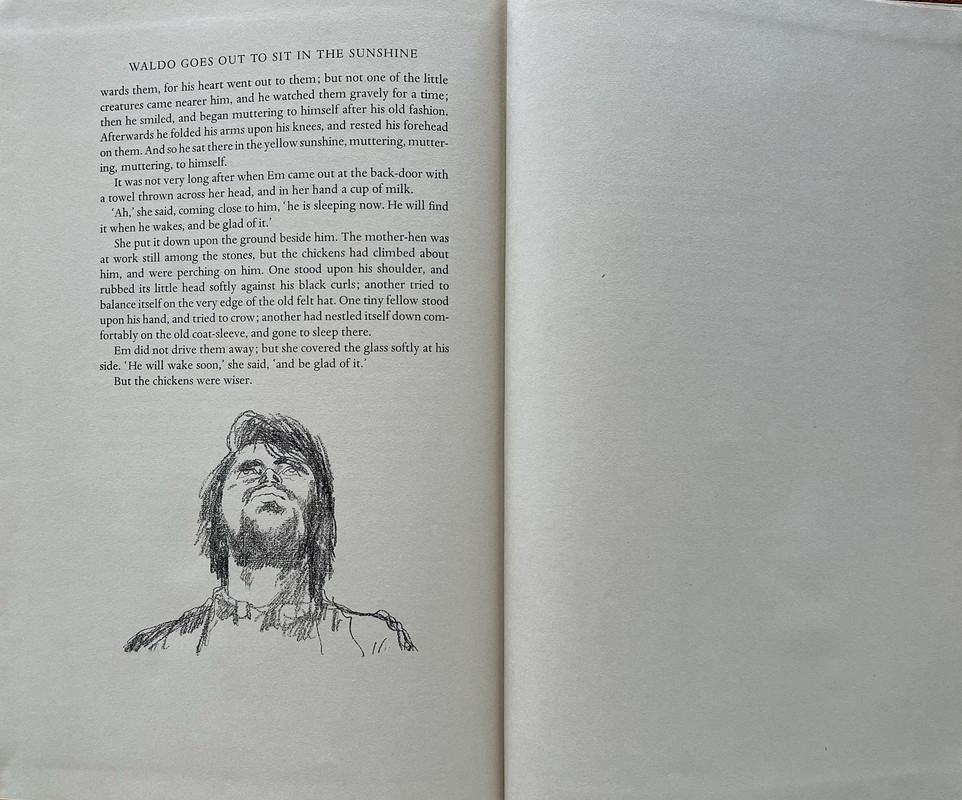
Illustrated by Paul Hogarth with nine full-page crayon colour lithographs and numerous integrated and chapter heading line drawings.
Signed by Paul Hogarth.
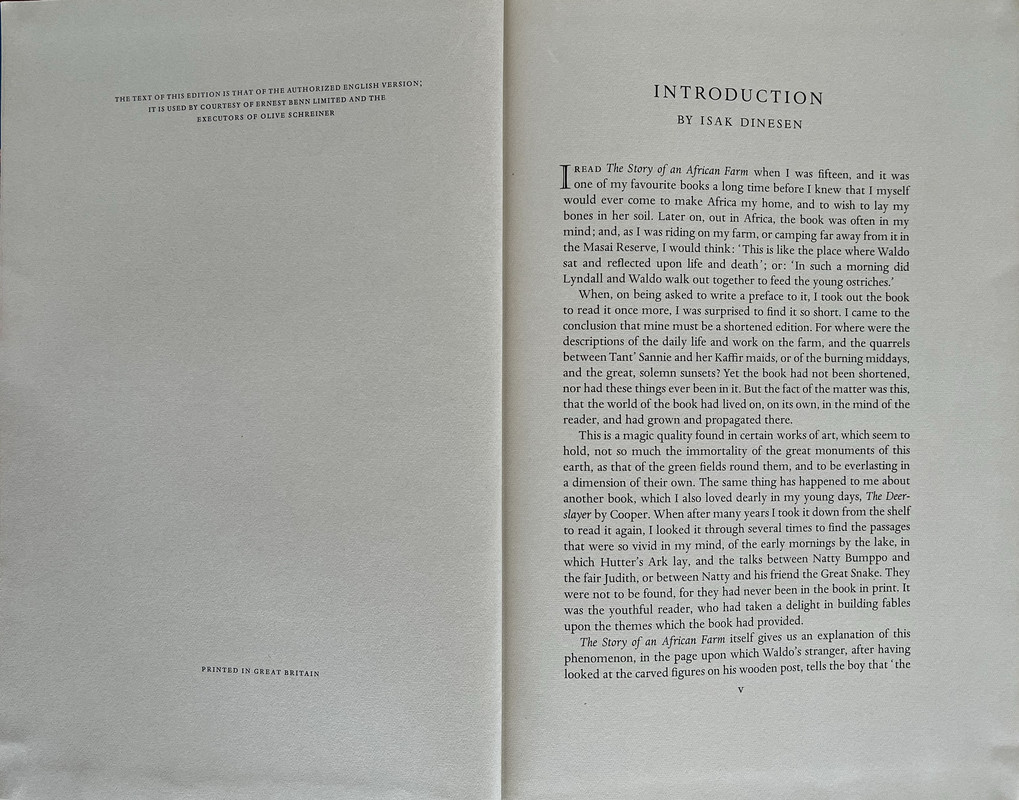
Eight-page introduction by Isak Dinesen.
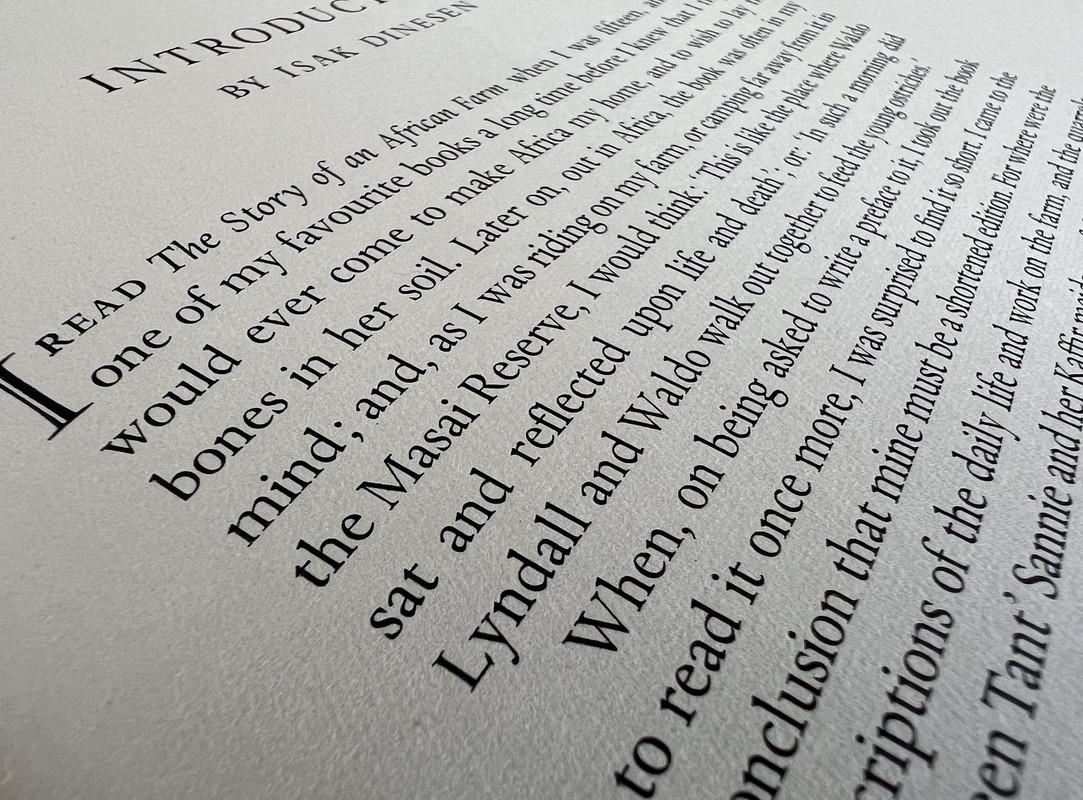
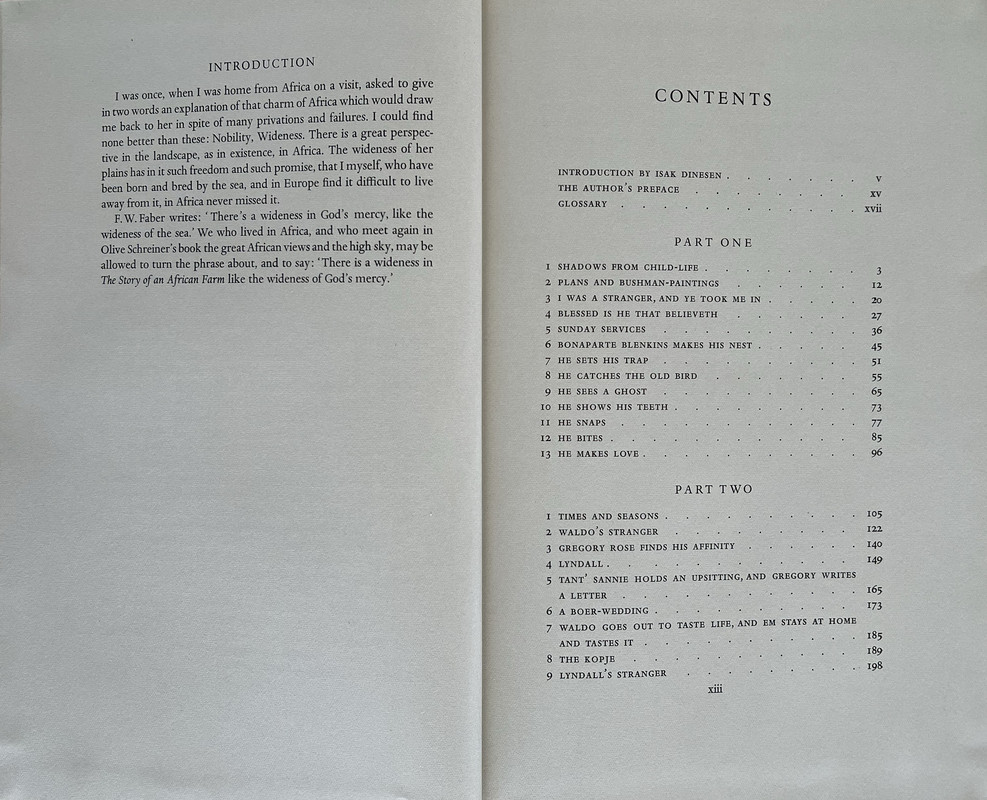
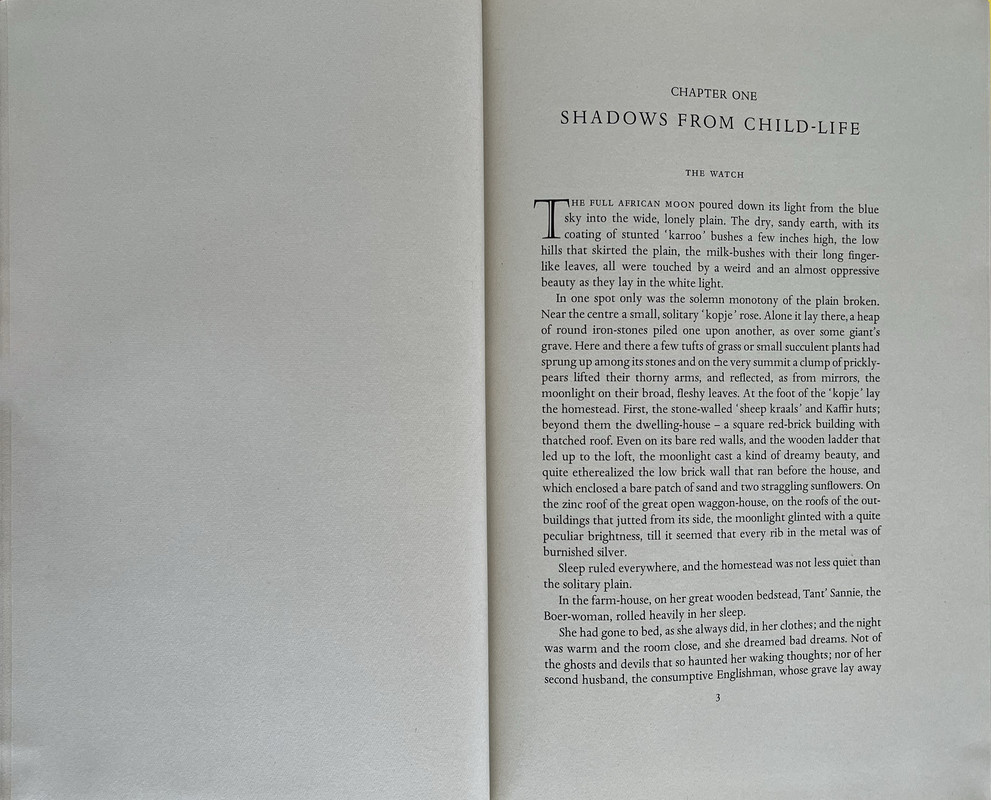
Printed on pale grey paper at The Westerham Press with typography by Hans Schmoller.
Lithography by The Curwen Press.
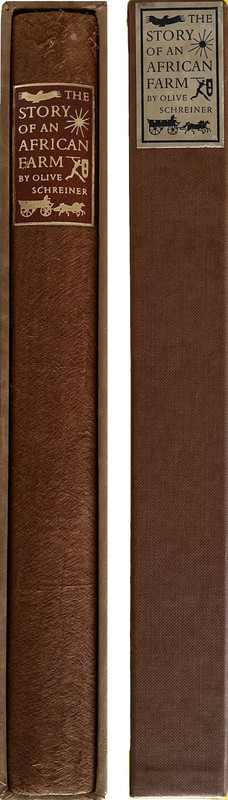
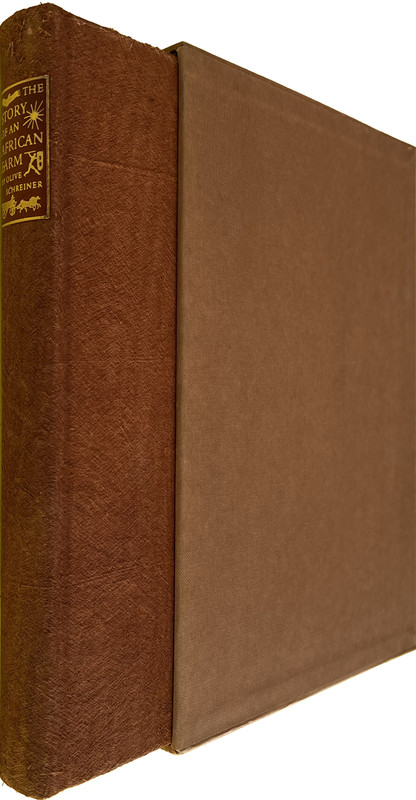
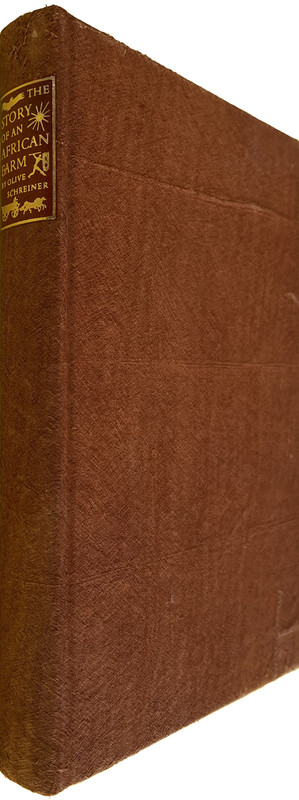
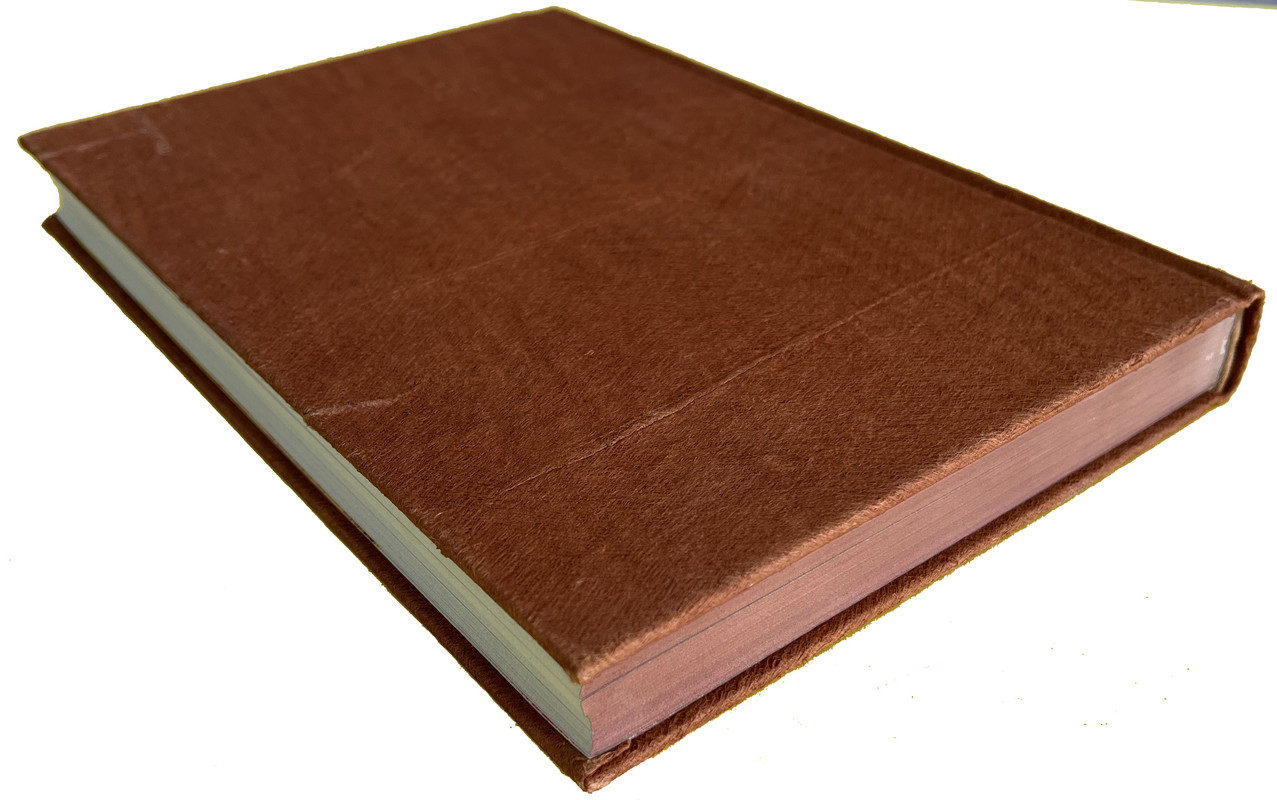
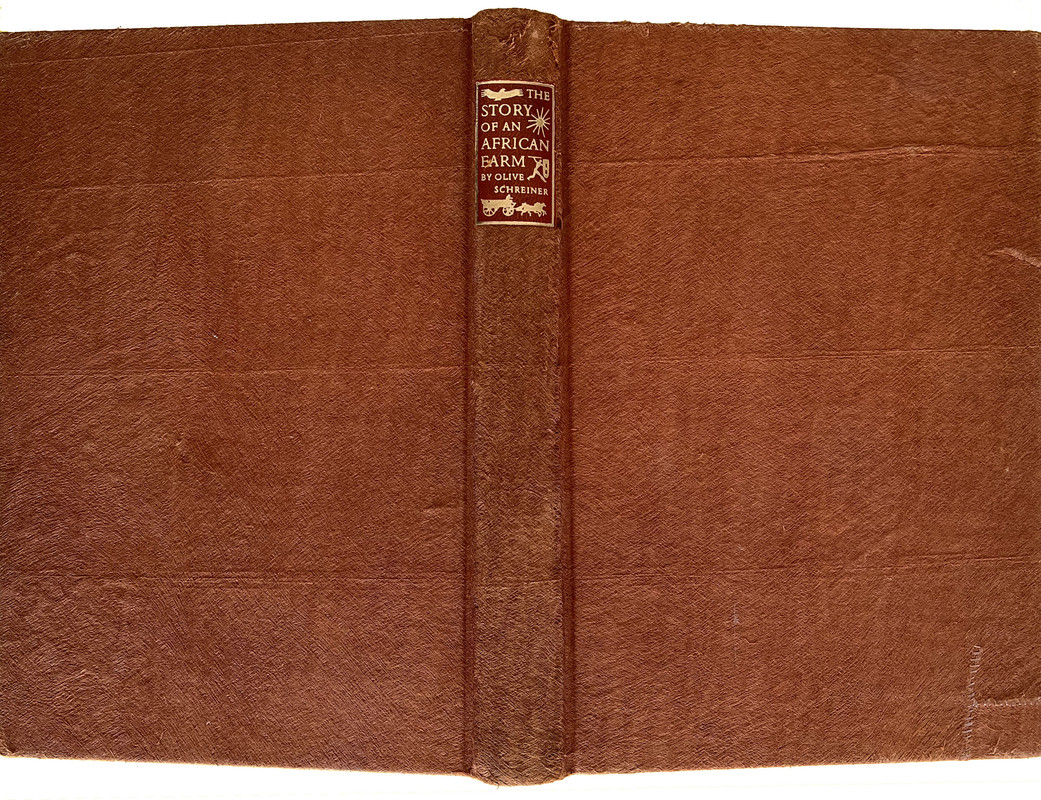
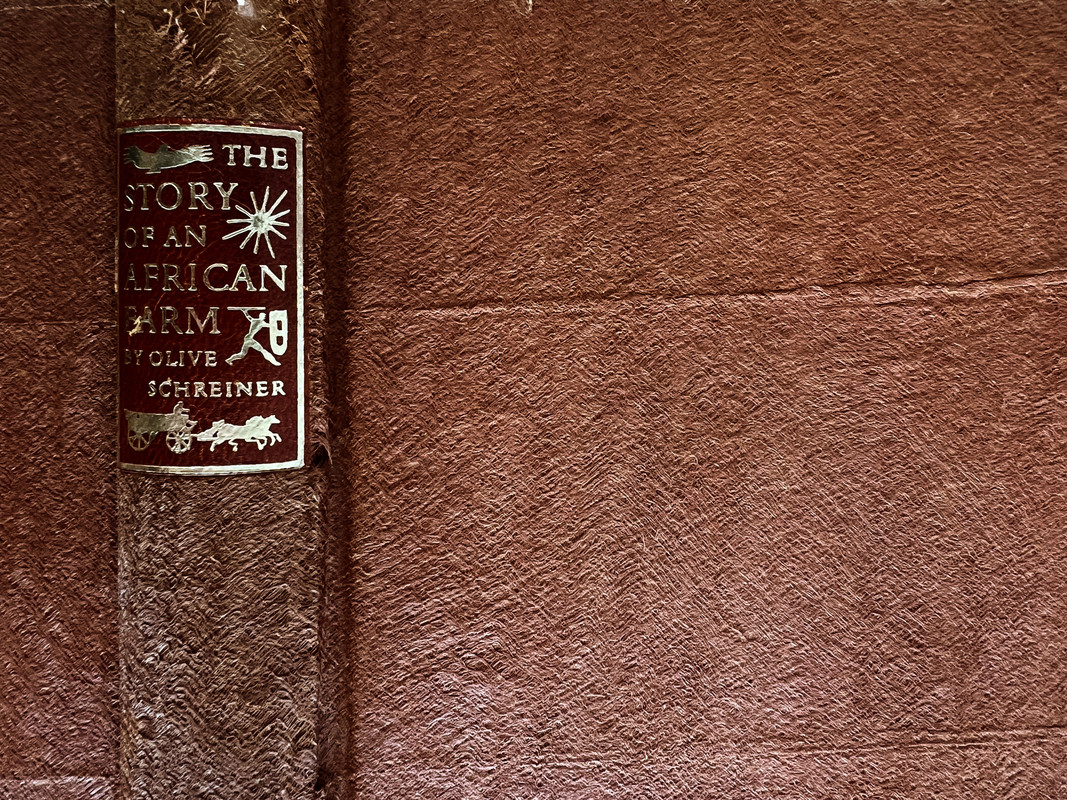
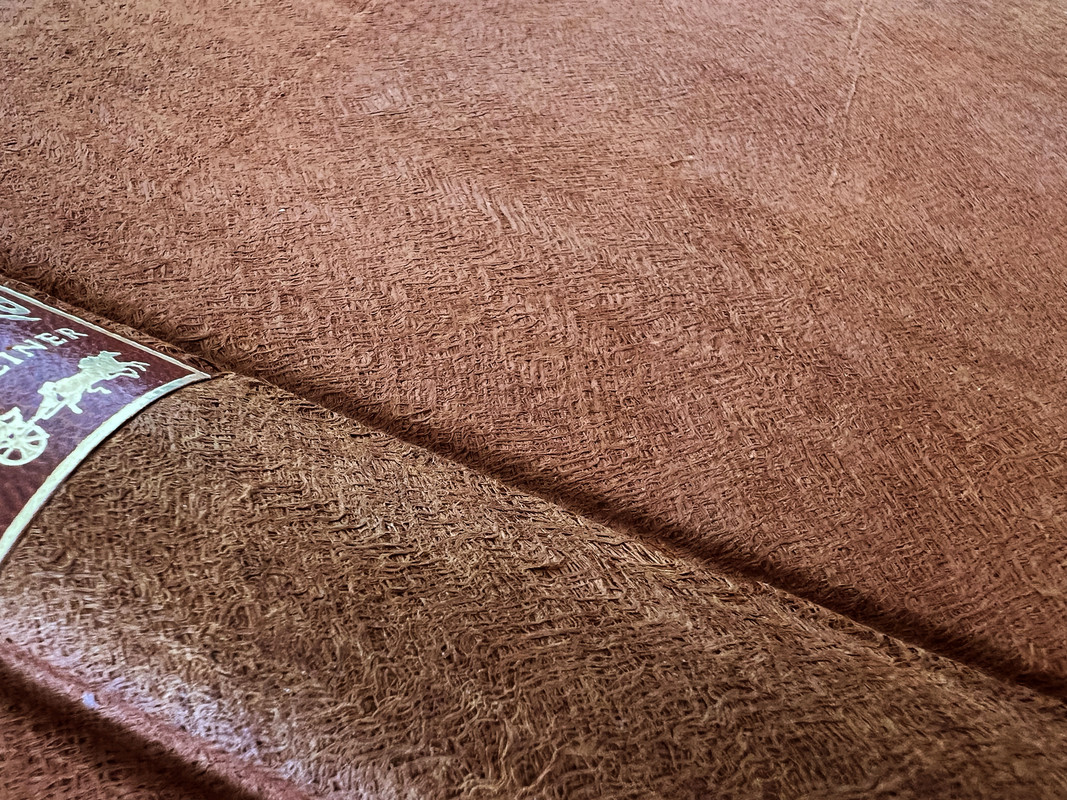
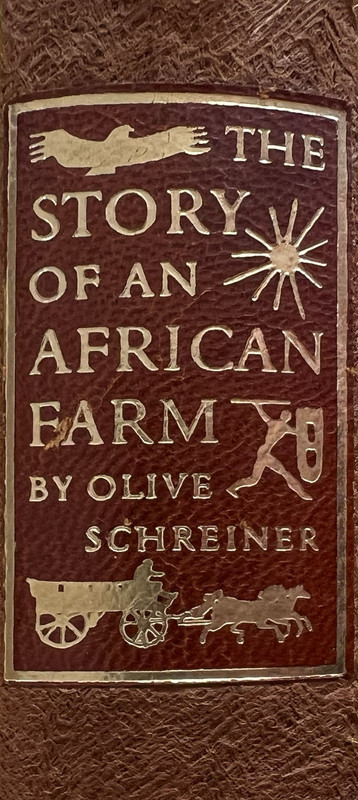
Bound by Russell-Rutter Company in chestnut-brown cloth from Uganda made of bark stripped from the Nutuba tree (Ficus natalensis) and pounded into a cloth traditionally used to make blankets, clothing and shrouds.
Dark red title label on spine stamped in gilt with a design from Schmoller
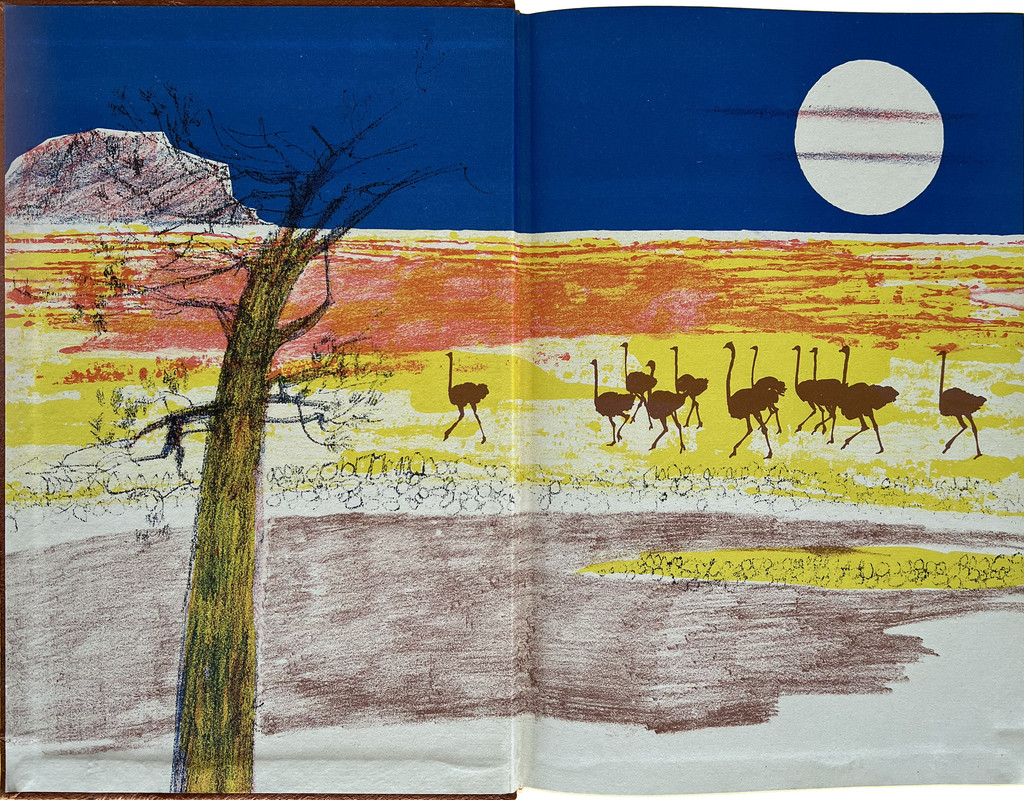
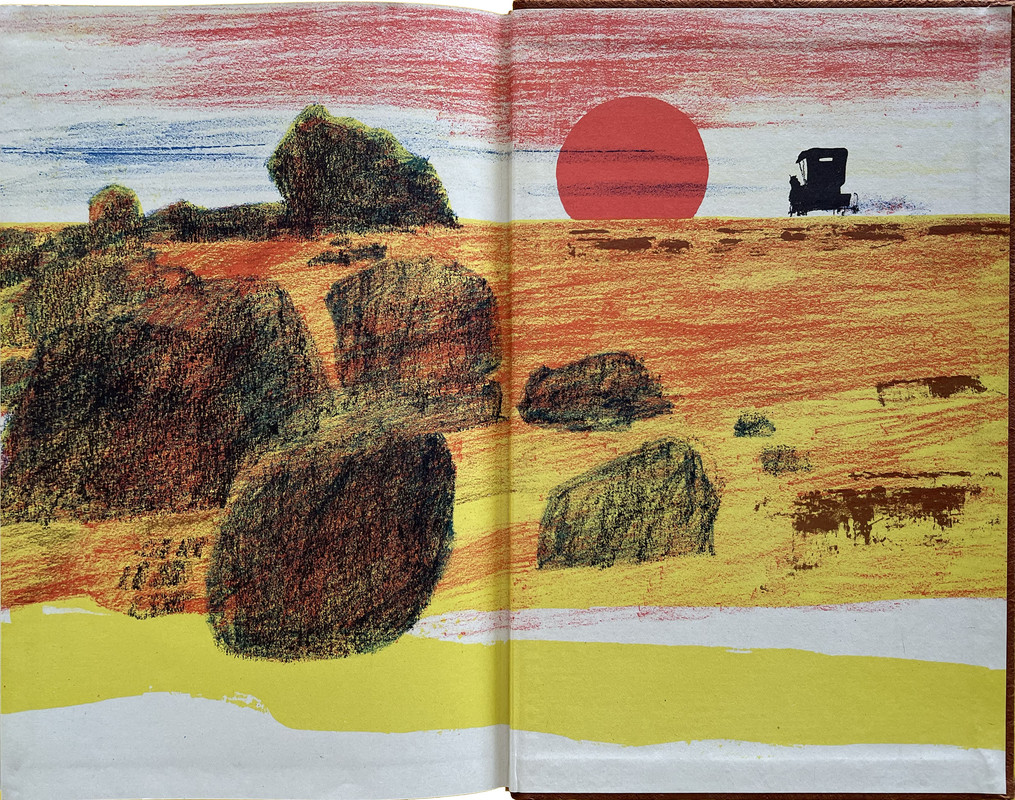
Colour pictorial endpapers, different front and back.
Page top stained brown.
Housed in orange-brown cloth slipcase with cream edge title label.
29.2x19.8 cm.
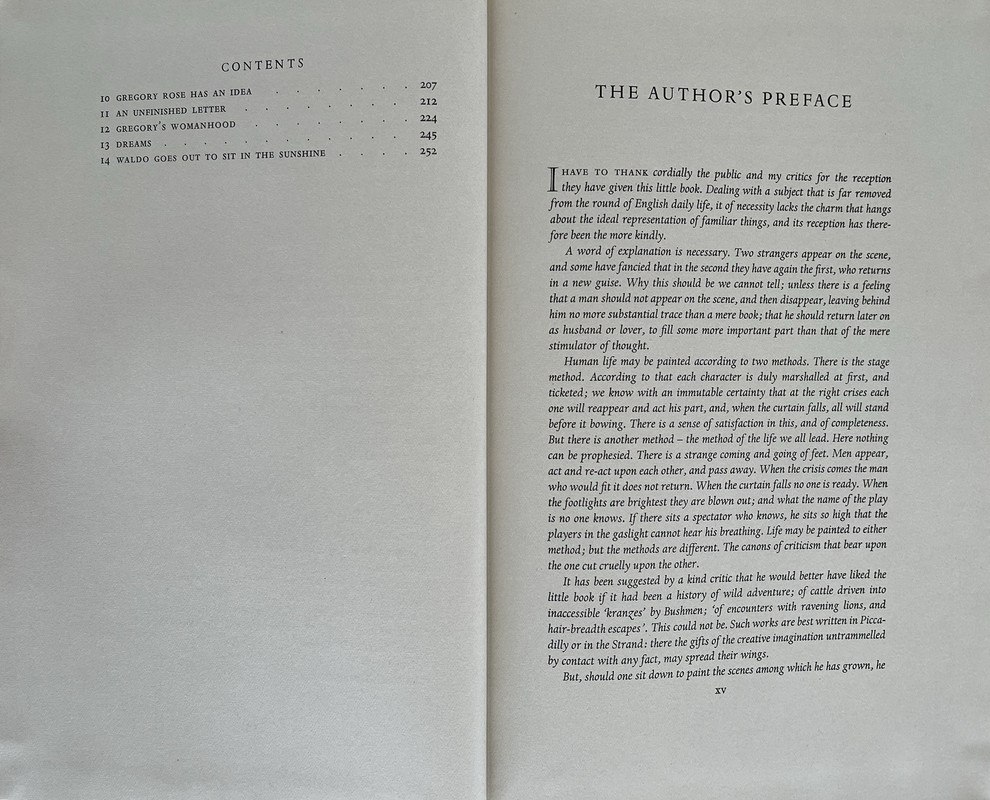
xvi (iv) + 260 pages
US$50
The Story of an African Farm (first published in 1883 under the pseudonym Ralph Iron) was South African author Olive Schreiner's (1855-1920) first published novel. It was an immediate success and has become recognized as one of the first feminist novels.
Paul Hogarth, OBE, RA (1917-2001) was an English artist and illustrator. He is best known for the cover drawings that he prepared in the 1980s for the Penguin edition of Graham Greene's books. He was a descendent of the great English painter, printmaker, pictorial satirist, social critic and editorial cartoonist, William Hogarth (1697-1764).
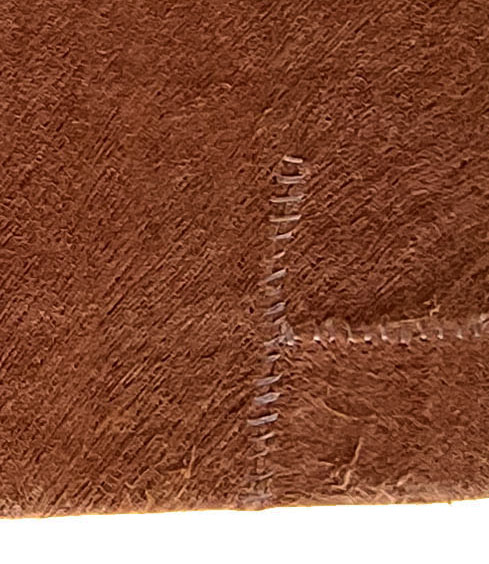
You can see a spot on the bottom right corner of the book cover where the cloth has been finely stitched and repaired before binding.
The Monthly Letter for this book can be downloaded here.
An index of the other illustrated reviews in the this series can be viewed here.
A PICTORIAL REVIEW
No. 1459 of 1500
Illustrated by Paul Hogarth with nine full-page crayon colour lithographs and numerous integrated and chapter heading line drawings.
Signed by Paul Hogarth.
Eight-page introduction by Isak Dinesen.
Printed on pale grey paper at The Westerham Press with typography by Hans Schmoller.
Lithography by The Curwen Press.
Bound by Russell-Rutter Company in chestnut-brown cloth from Uganda made of bark stripped from the Nutuba tree (Ficus natalensis) and pounded into a cloth traditionally used to make blankets, clothing and shrouds.
Dark red title label on spine stamped in gilt with a design from Schmoller
Colour pictorial endpapers, different front and back.
Page top stained brown.
Housed in orange-brown cloth slipcase with cream edge title label.
29.2x19.8 cm.
xvi (iv) + 260 pages
US$50
The Story of an African Farm (first published in 1883 under the pseudonym Ralph Iron) was South African author Olive Schreiner's (1855-1920) first published novel. It was an immediate success and has become recognized as one of the first feminist novels.
Paul Hogarth, OBE, RA (1917-2001) was an English artist and illustrator. He is best known for the cover drawings that he prepared in the 1980s for the Penguin edition of Graham Greene's books. He was a descendent of the great English painter, printmaker, pictorial satirist, social critic and editorial cartoonist, William Hogarth (1697-1764).
You can see a spot on the bottom right corner of the book cover where the cloth has been finely stitched and repaired before binding.
The Monthly Letter for this book can be downloaded here.
An index of the other illustrated reviews in the this series can be viewed here.
2Django6924
Thanks, Warwick for this great review. I have always thought was was one of the neglected masterpieces from the Club.
3Bibliophile-I
I now have another LEC title to hunt down.
4Lukas1990
Wow! Never paid attention to this one but it looks like a wonderful volume. Those lithographs printed by Curwen press are quality stuff.
5Glacierman
It would appear that the image hosting server is having issues as all I see are big blue squares, no images.
6Django6924
>5 Glacierman:
Everything is displaying fine on my computer; perhaps quitting and reopening your browser? Perhaps a security setting is blocking it?
If you go to the other reviews found here:
https://www.librarything.com/topic/362578%20
Are the images on the other reviews having the same issues?
Everything is displaying fine on my computer; perhaps quitting and reopening your browser? Perhaps a security setting is blocking it?
If you go to the other reviews found here:
https://www.librarything.com/topic/362578%20
Are the images on the other reviews having the same issues?
7Glacierman
Ah! There they are!
Well, all but one.....
Well, all but one.....
8klamerin
I love the sawn up spot on the cover, looks like somebody did it with a lot of care, or it might have been done by the binder looking at how well the stitches match the colour of the cover. Mine does not have it, but it's very charming!
9GusLogan
>8 klamerin:
True to style George Macy pitched it as a rare and interesting feature rather than a flaw.
True to style George Macy pitched it as a rare and interesting feature rather than a flaw.
10Django6924
>9 GusLogan:
It is definitely true to George's style, but the man himself had passed away years before this LEC was issued. I'm not sure who was writing the Letters then, although I have heard John Winterich was responsible for many.
My copy has a much smaller wound on the edge of the front cover, requiring only 2 visible stiches.
It is definitely true to George's style, but the man himself had passed away years before this LEC was issued. I'm not sure who was writing the Letters then, although I have heard John Winterich was responsible for many.
My copy has a much smaller wound on the edge of the front cover, requiring only 2 visible stiches.
11GusLogan
>10 Django6924:
I stand corrected, thank you.
I stand corrected, thank you.
12PBB
>10 Django6924: David Glixon wrote many of the letters from the 50s onward, as late as the mid 90s and perhaps later.
https://www.legacy.com/us/obituaries/kentucky/name/david-glixon-obituary?id=1496...
https://www.legacy.com/us/obituaries/kentucky/name/david-glixon-obituary?id=1496...
13Django6924
>11 GusLogan:
Thanks for bringing this up, as it prompted PBB's interesting post. I had never encountered David Glixon's name before, and am impressed with PBB's scholarship. What led you to this discovery?
Thanks for bringing this up, as it prompted PBB's interesting post. I had never encountered David Glixon's name before, and am impressed with PBB's scholarship. What led you to this discovery?
14PBB
>13 Django6924: No scholarship on my end. When I bought The Man Who Planted Trees from the LEC I asked if they knew the translator. They told me they didn't know, and that Glixon was the author of the ML and he only listed the translator as anonymous.
Glixon seems like an interesting man and worked with other presses/printers too:
https://www.ardsleyhistoricalsociety.org/the-timepiece/david-m-glixon-ardsleys-m...
Quoted in this article about his time working for Macy:
https://limitededitionsclub.com/wp-content/uploads/2012/06/Biblio99.pdf
Glixon seems like an interesting man and worked with other presses/printers too:
https://www.ardsleyhistoricalsociety.org/the-timepiece/david-m-glixon-ardsleys-m...
Quoted in this article about his time working for Macy:
https://limitededitionsclub.com/wp-content/uploads/2012/06/Biblio99.pdf
Join to post

