Anna Karenina by Leo Tolstoy - LIMITED EDITIONS CLUB 1951
Talk George Macy devotees
Join LibraryThing to post.
1wcarter
Anna Karenina by Leo Tolstoy - LIMITED EDITIONS CLUB 1951
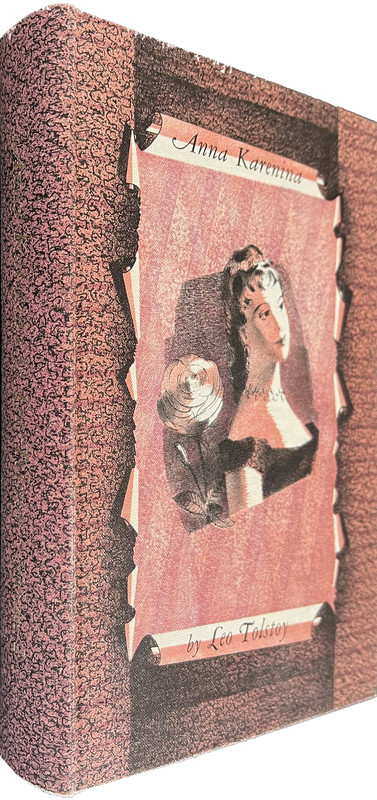
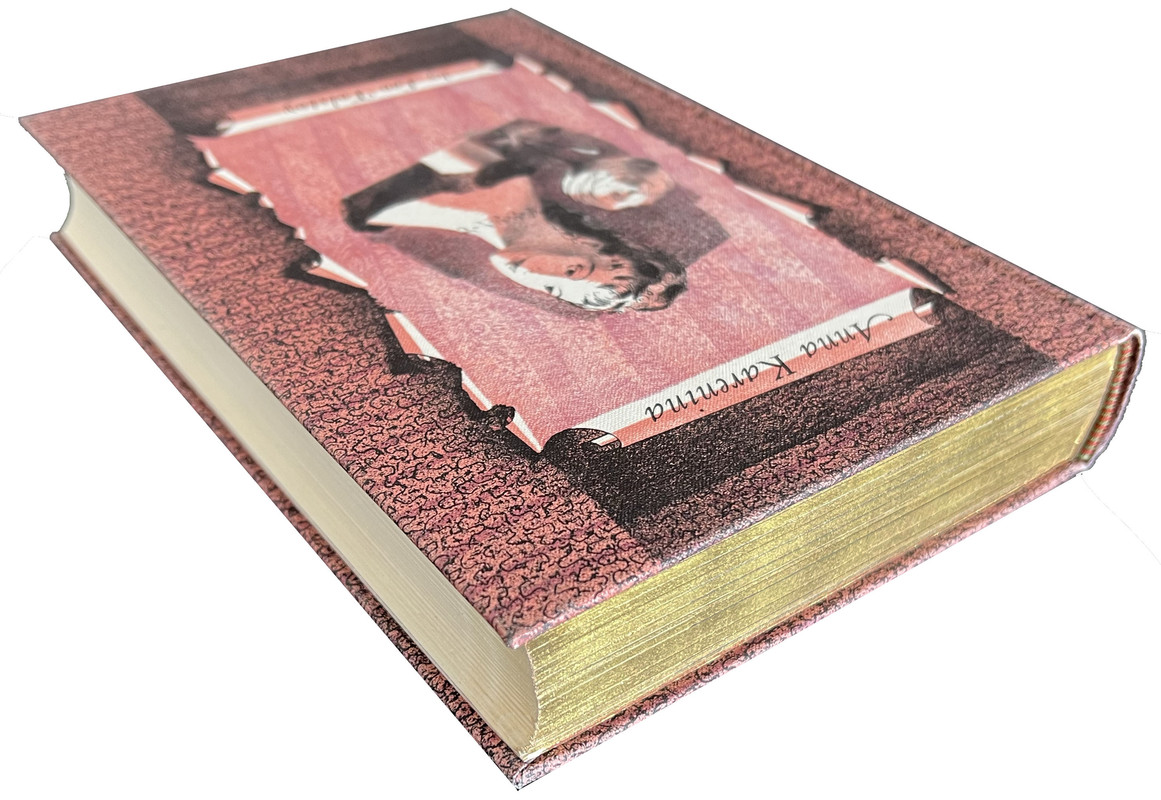
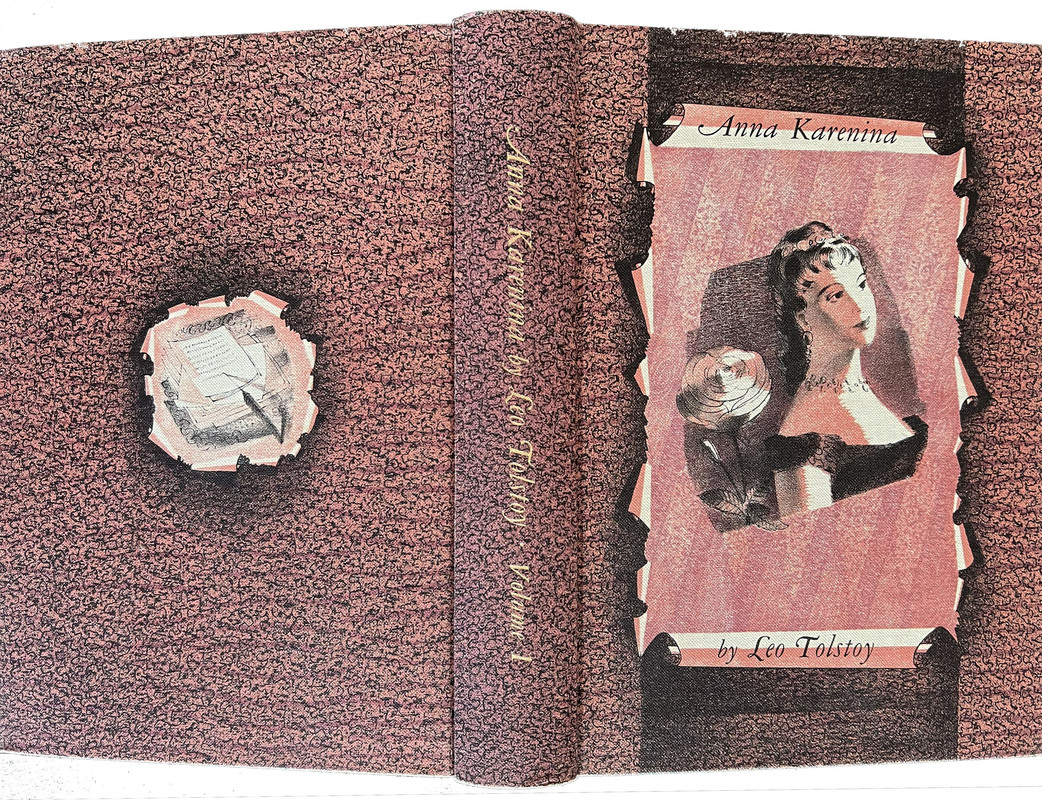
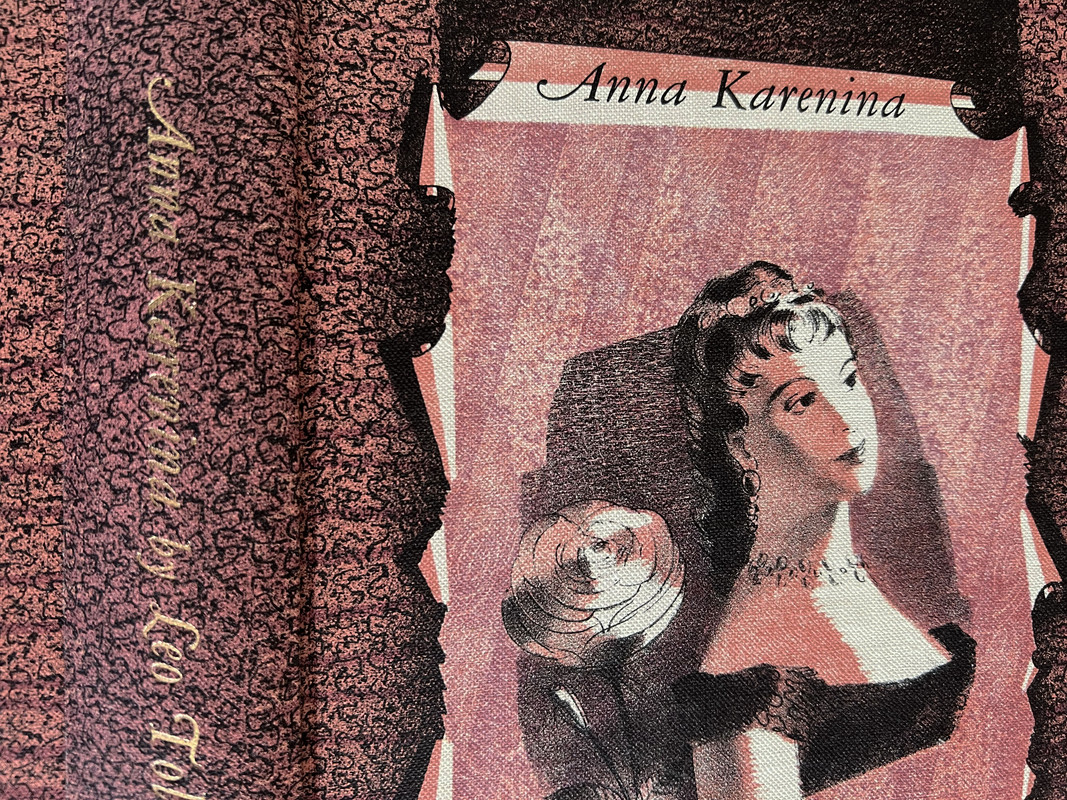
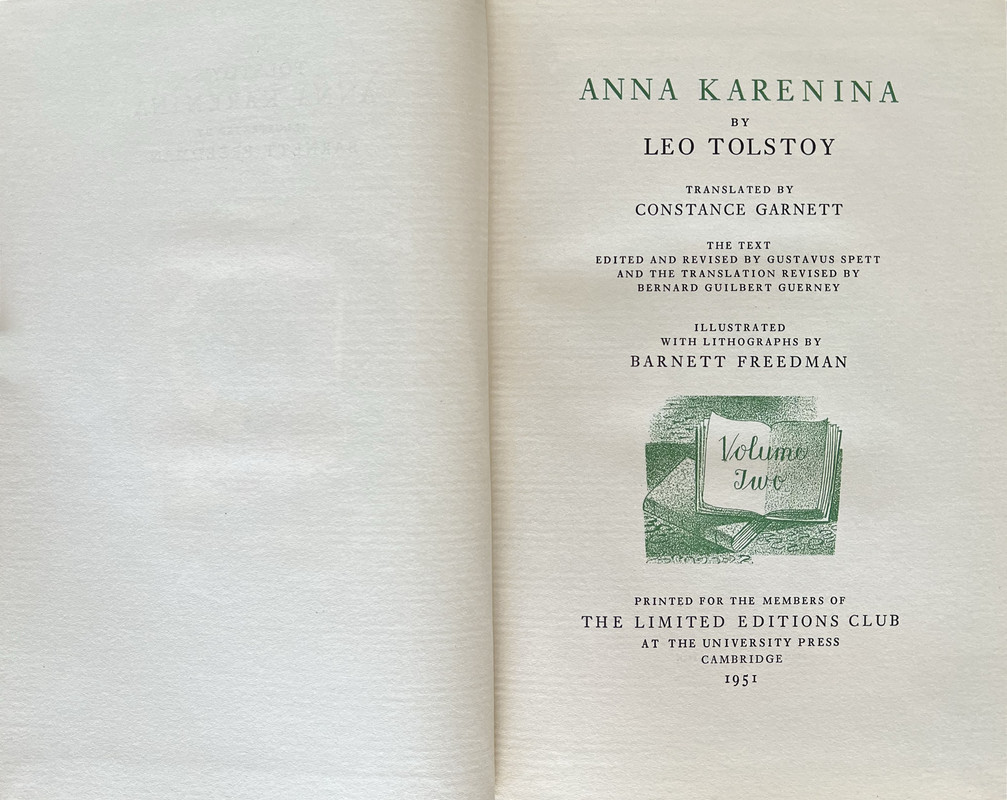
A PICTORIAL REVIEW
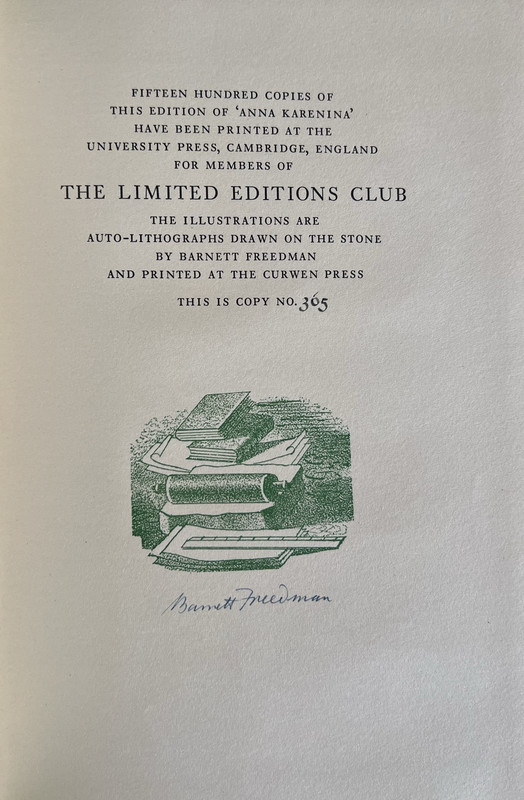
No. 365 of 1500 copies
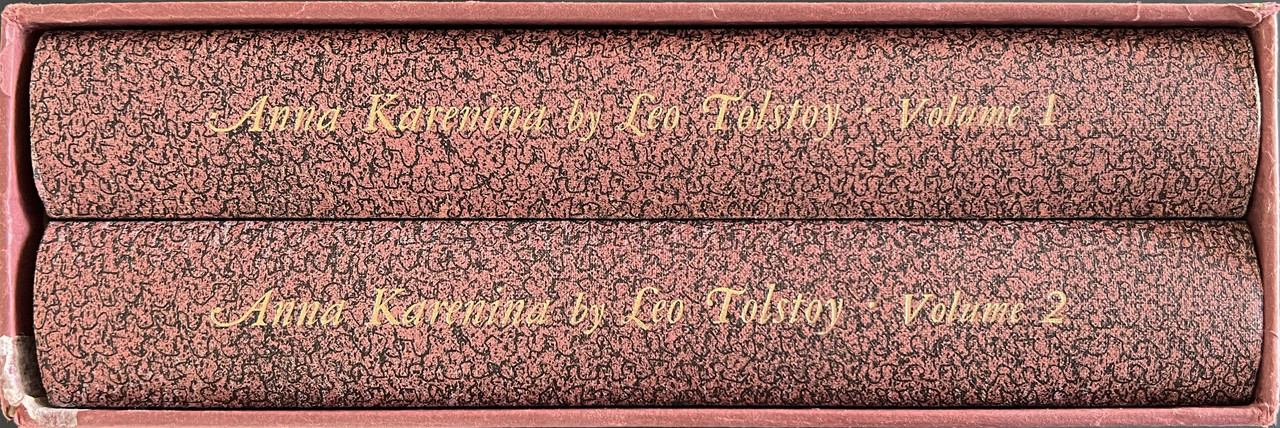
Two volumes.
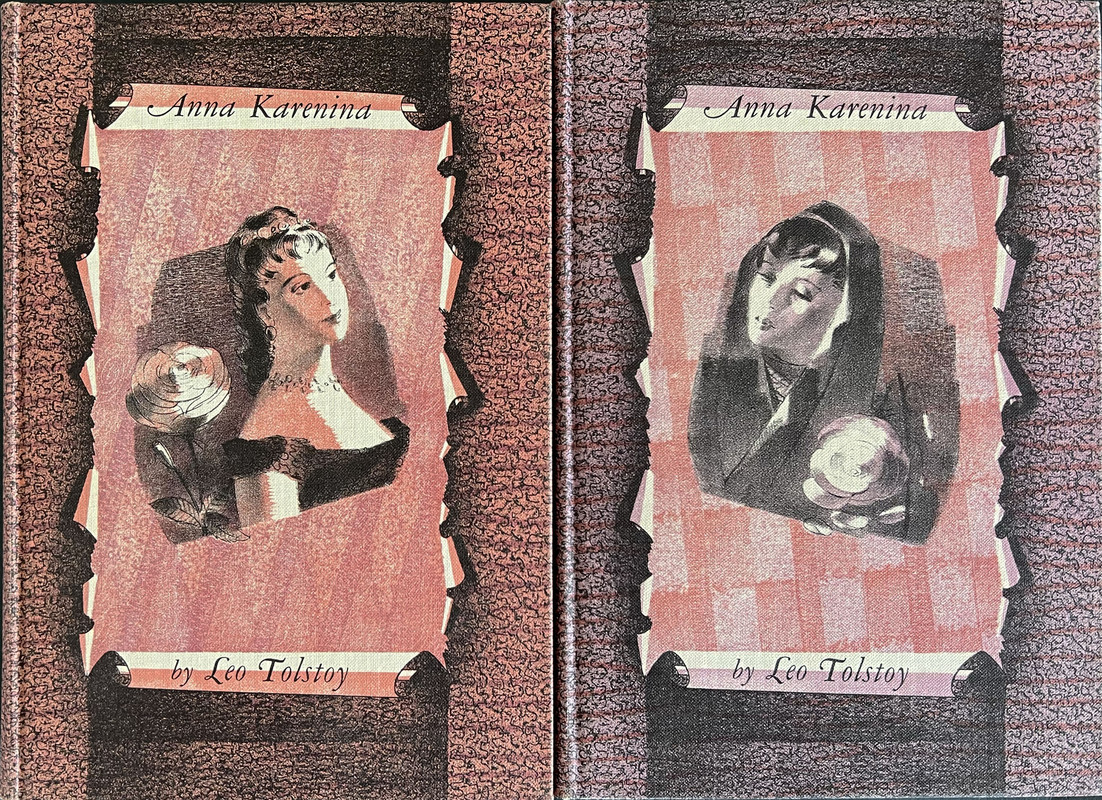
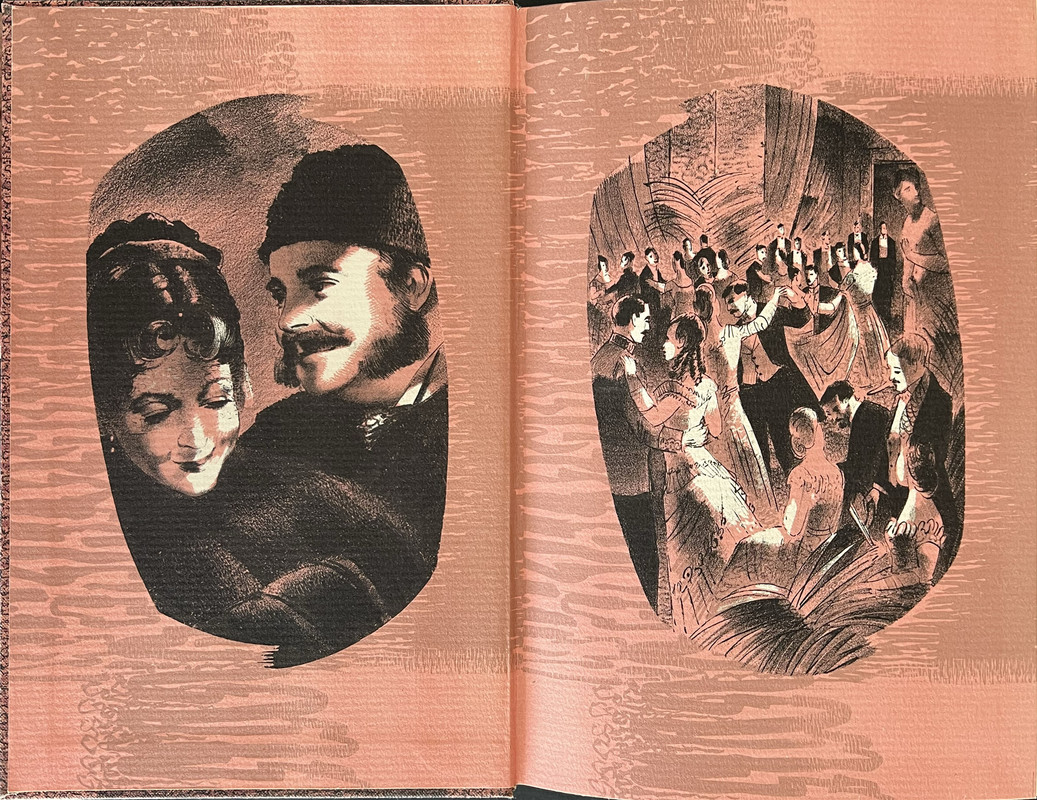
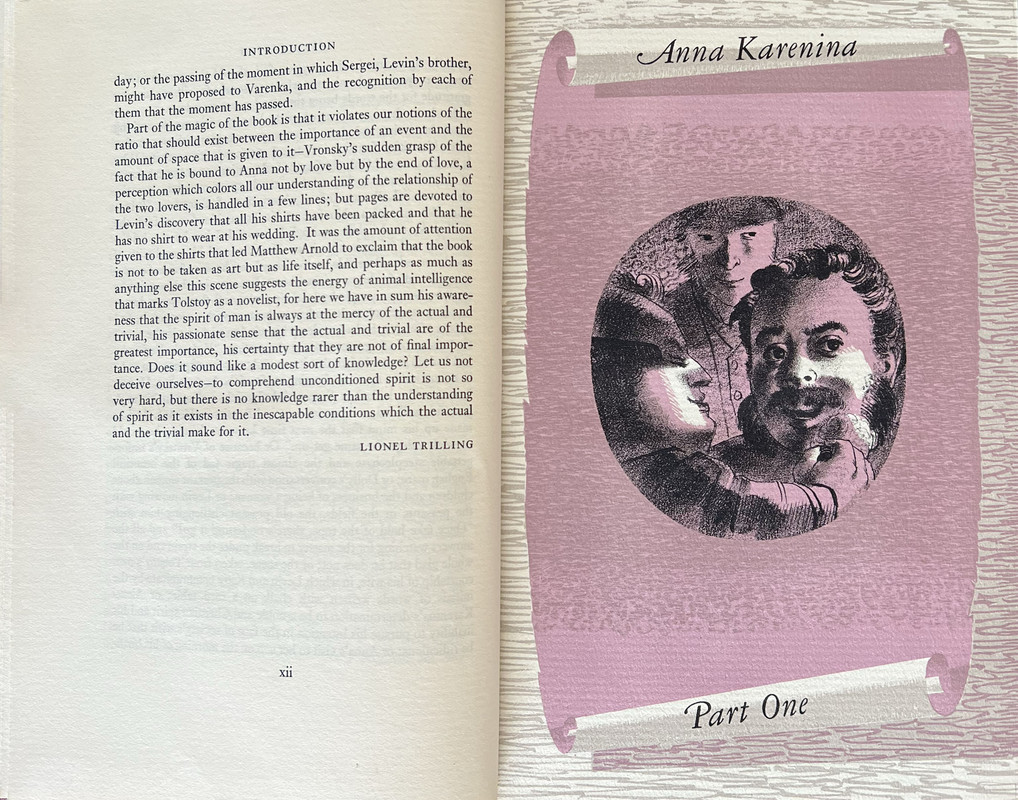
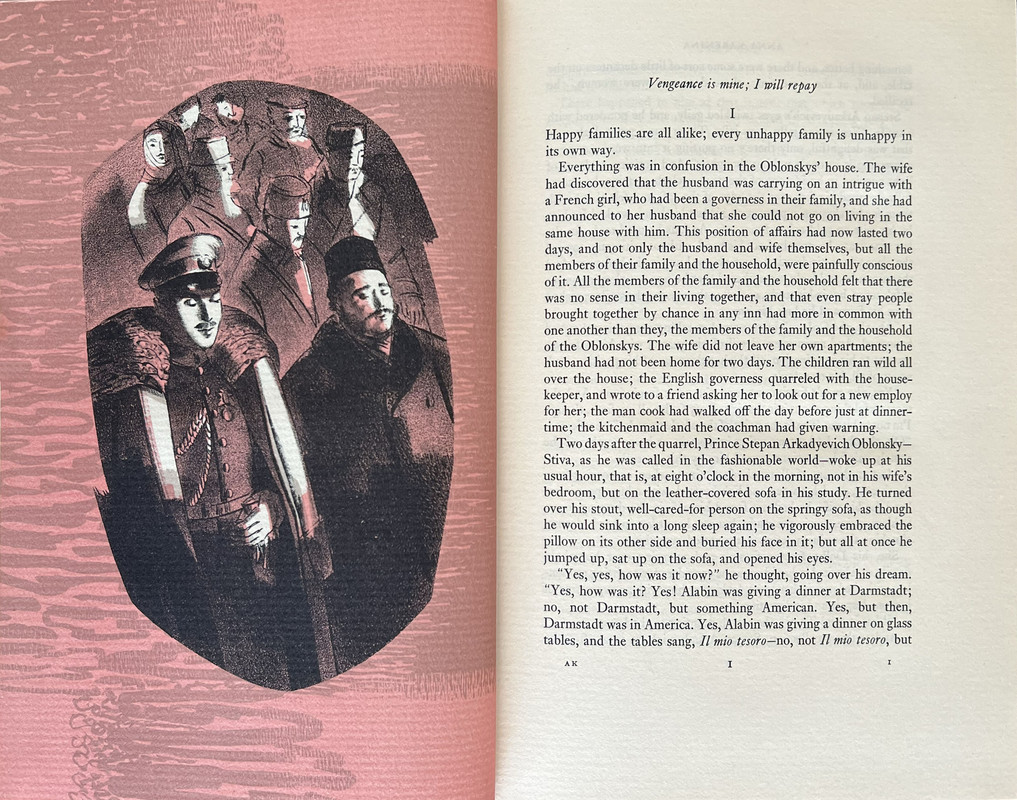
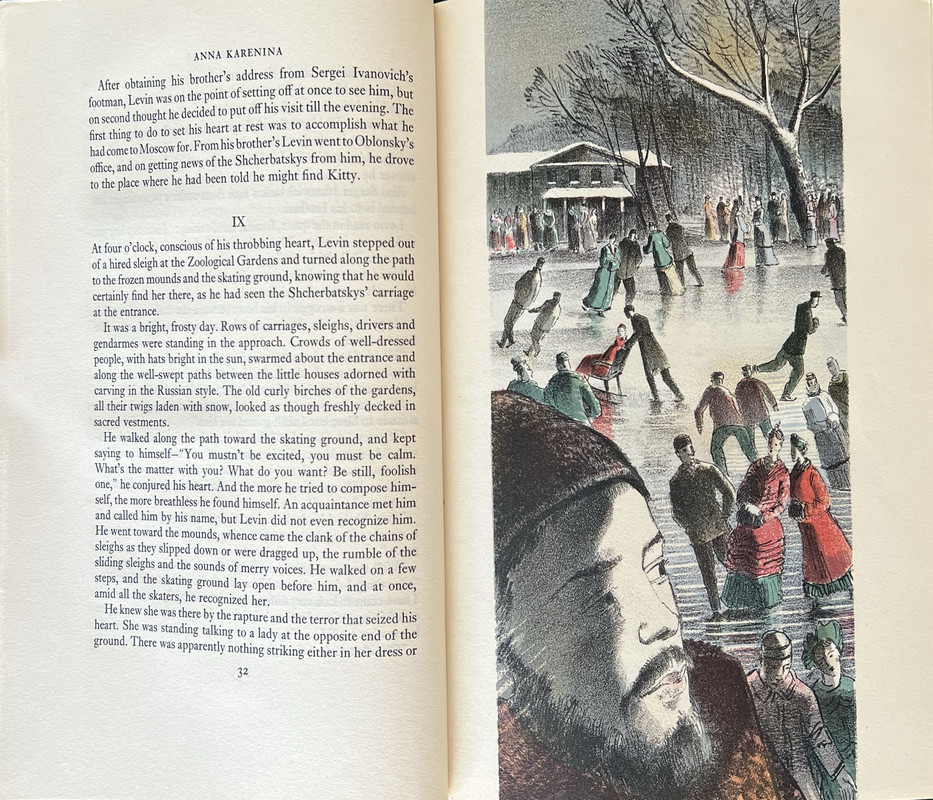
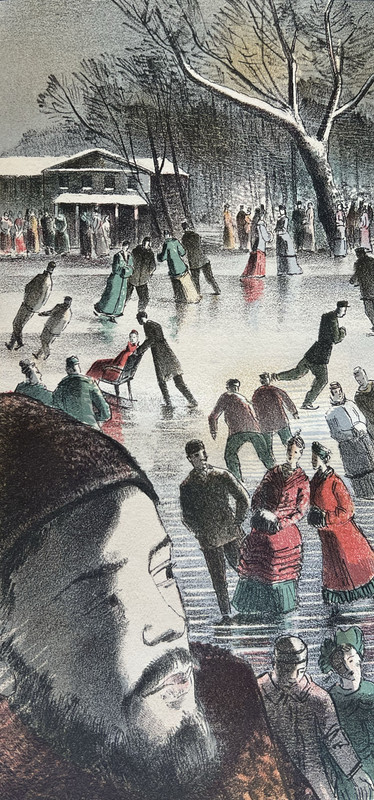
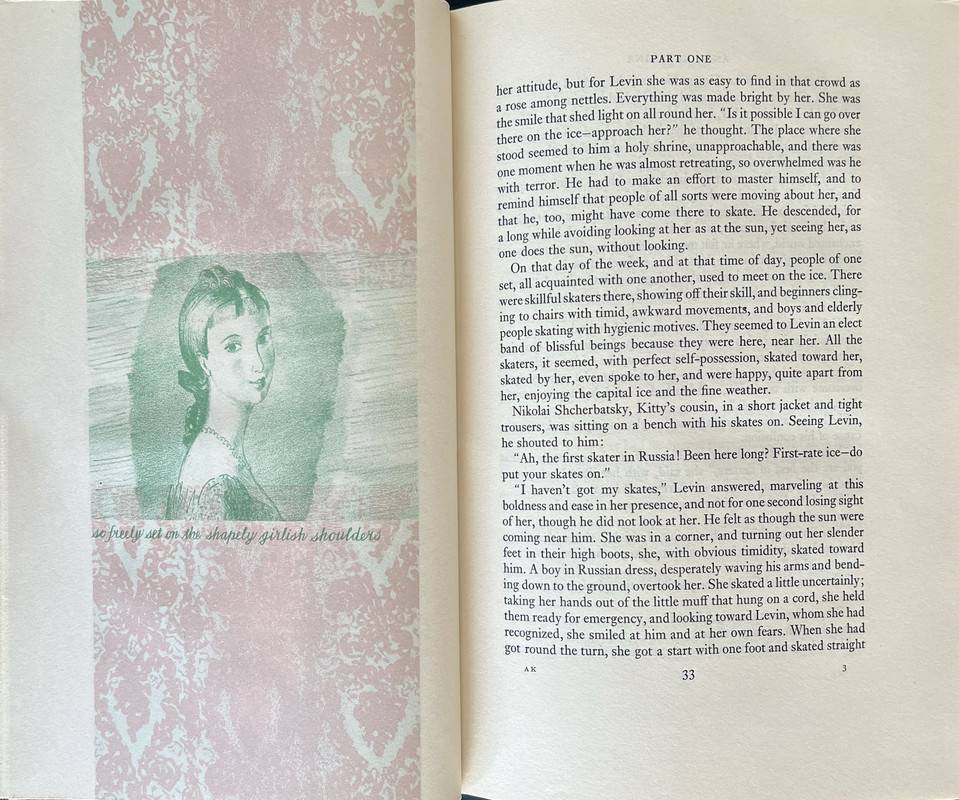
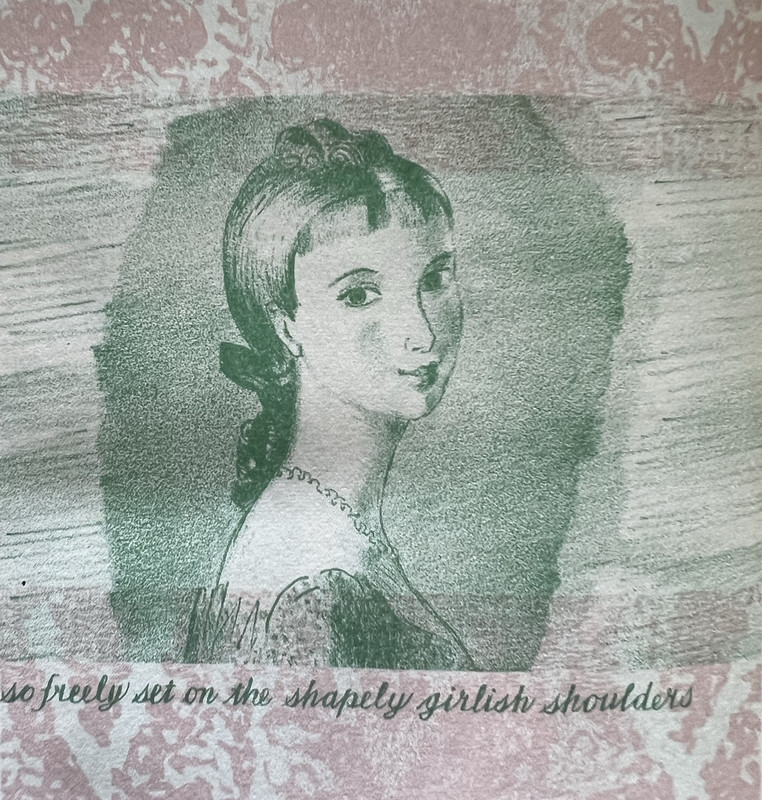
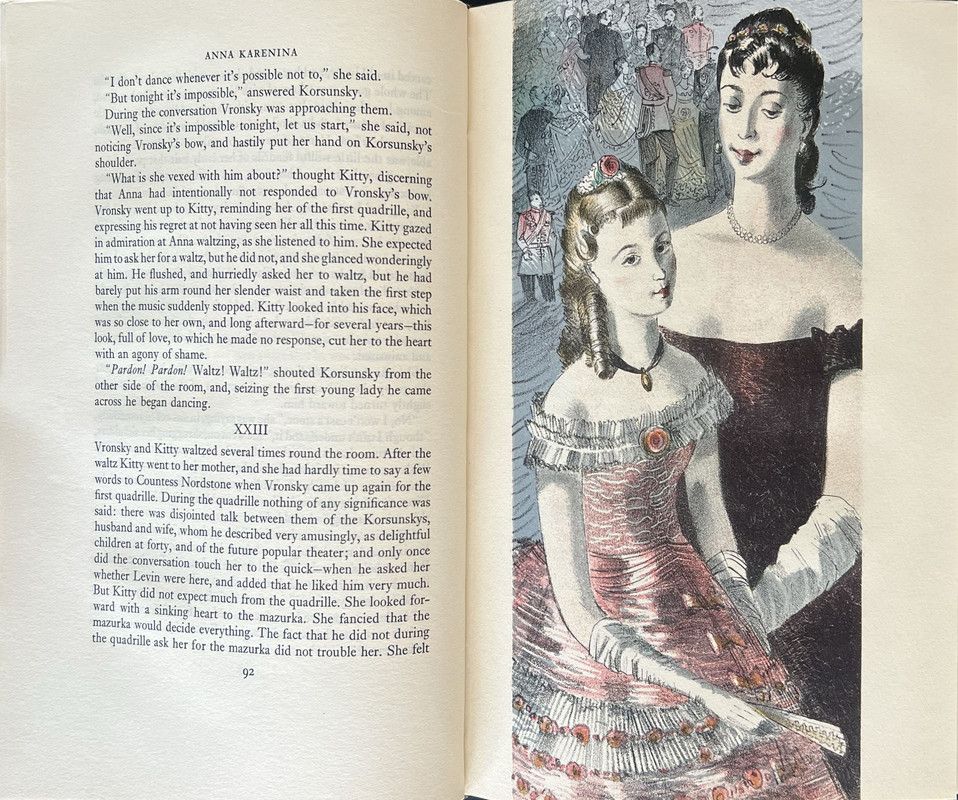
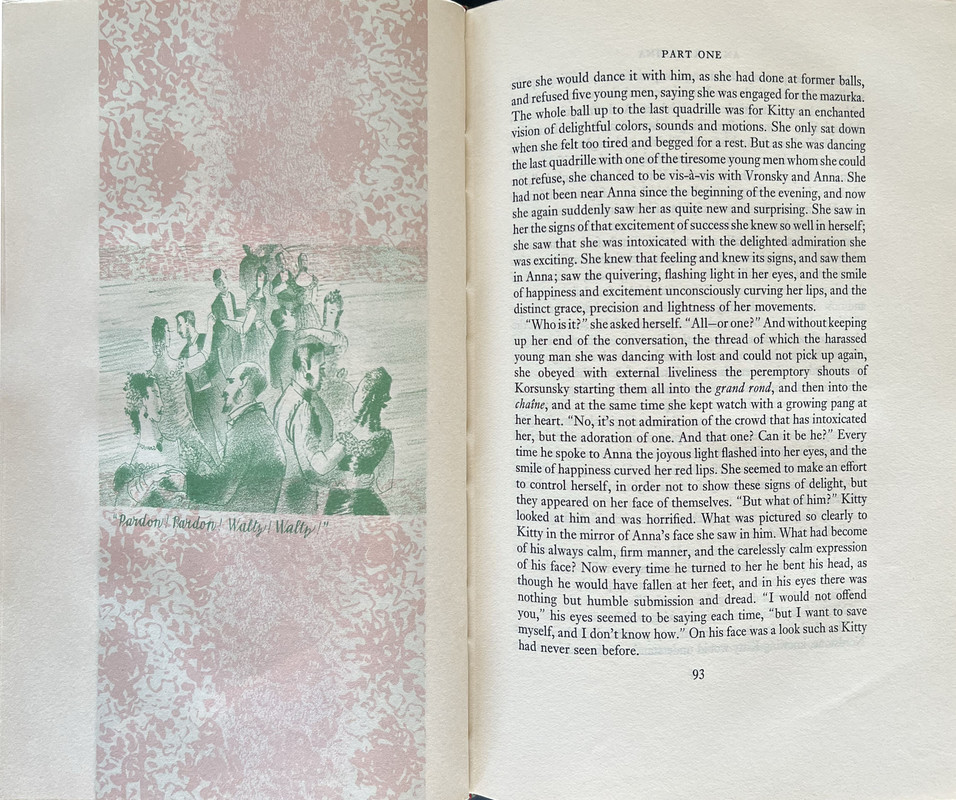
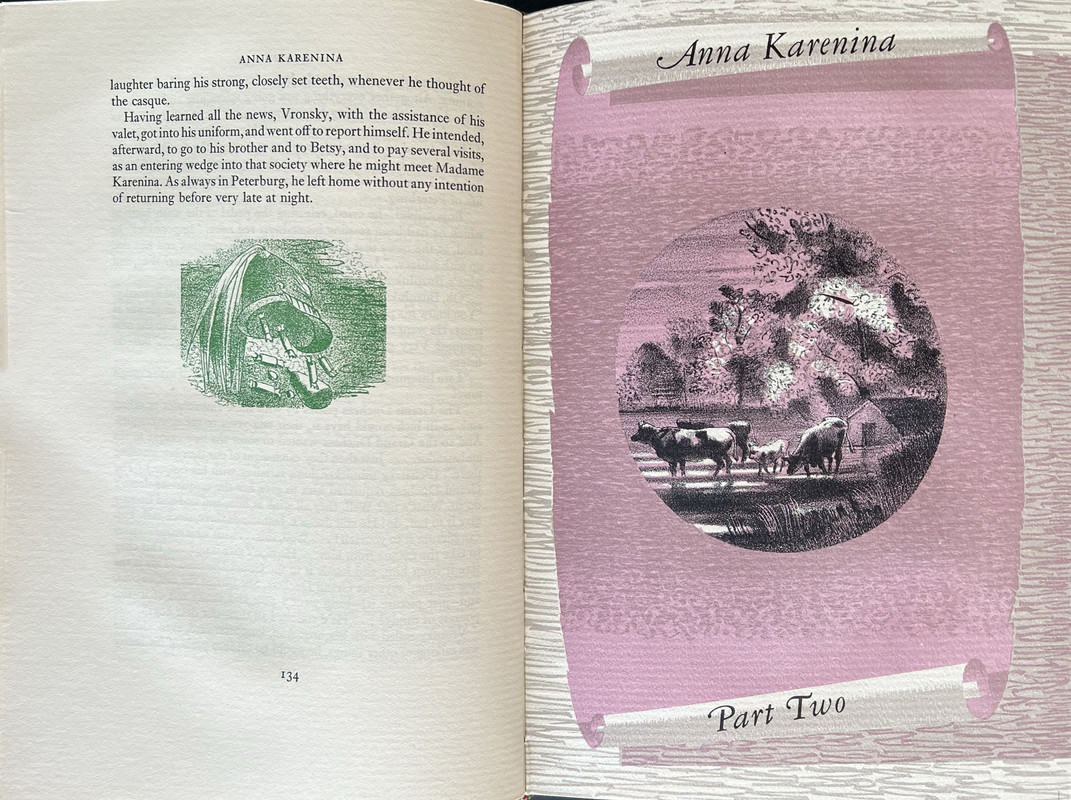
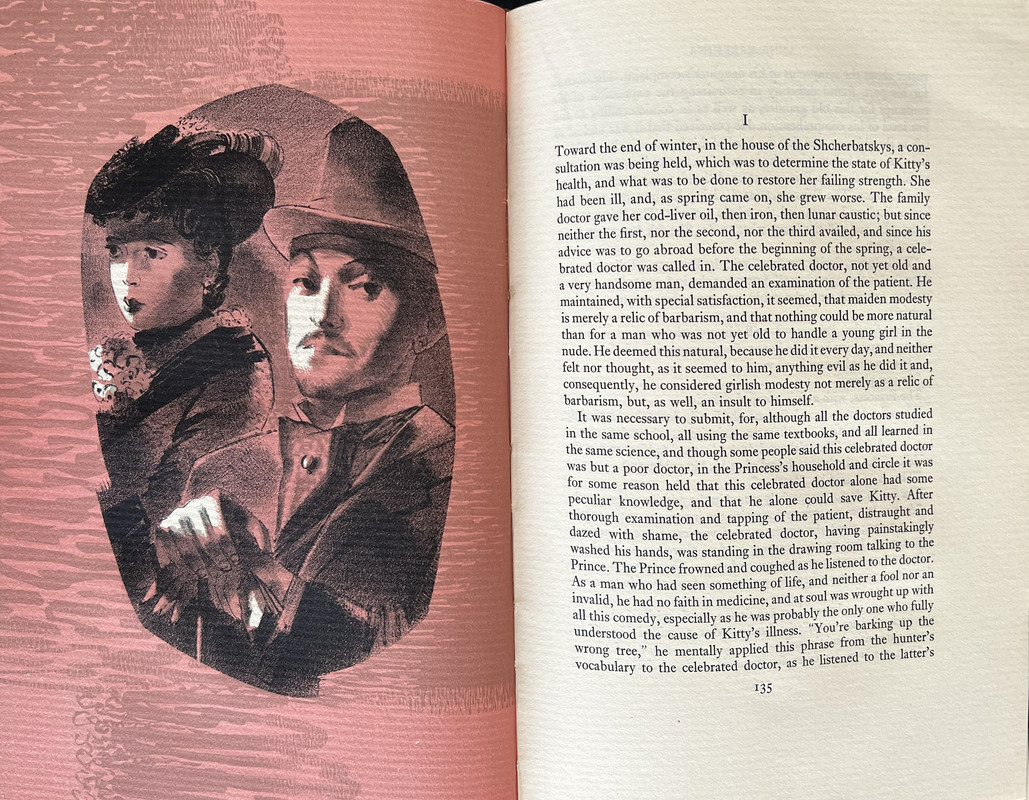
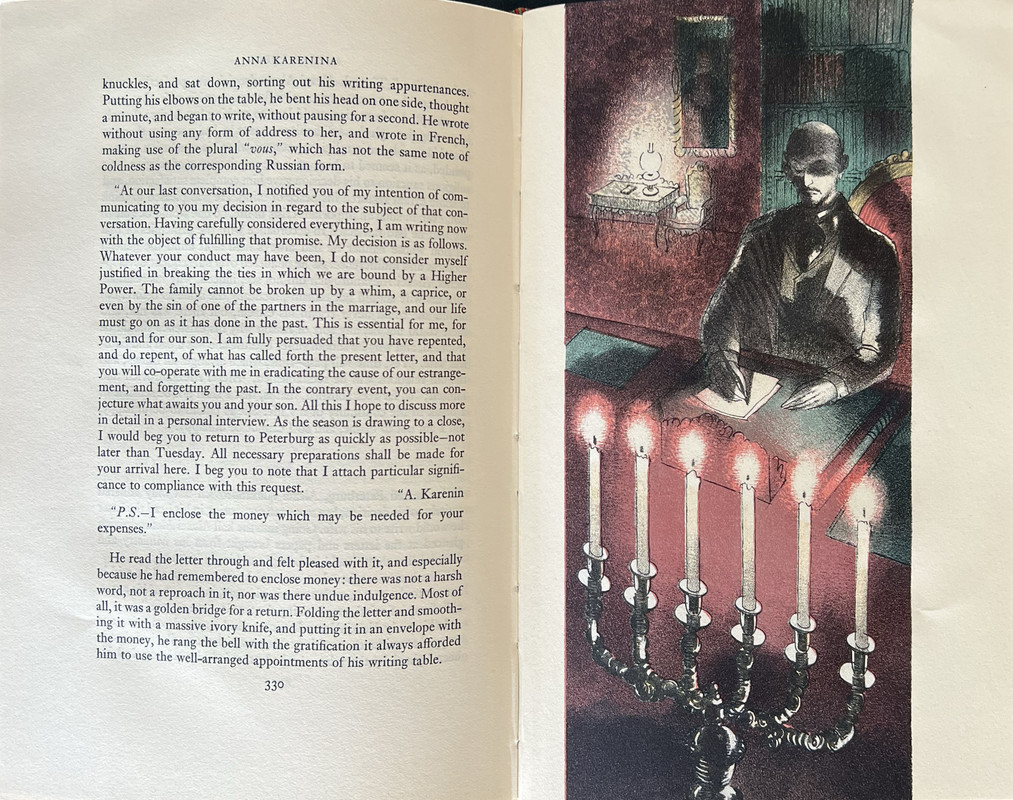
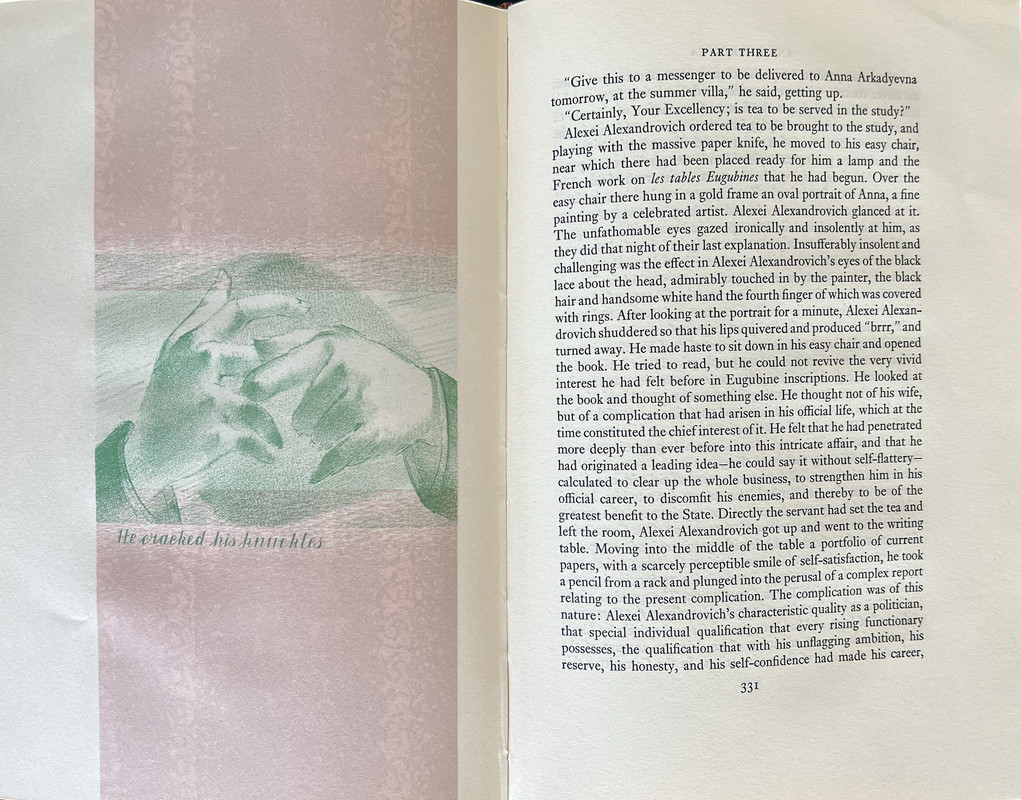
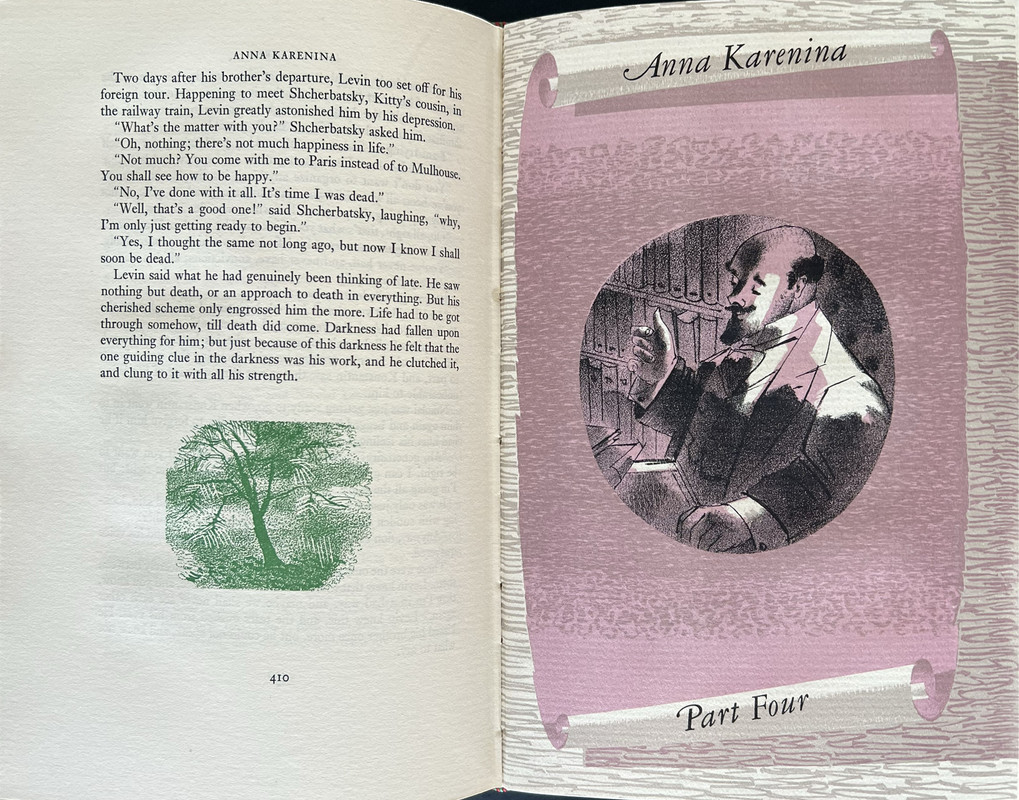
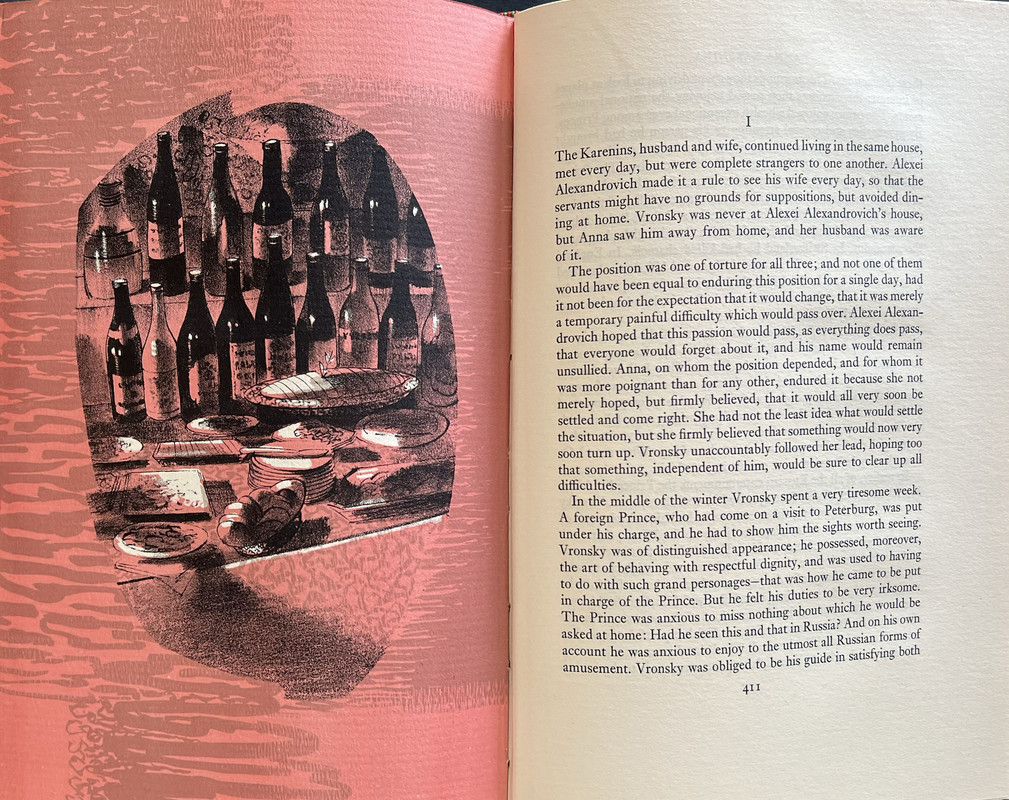
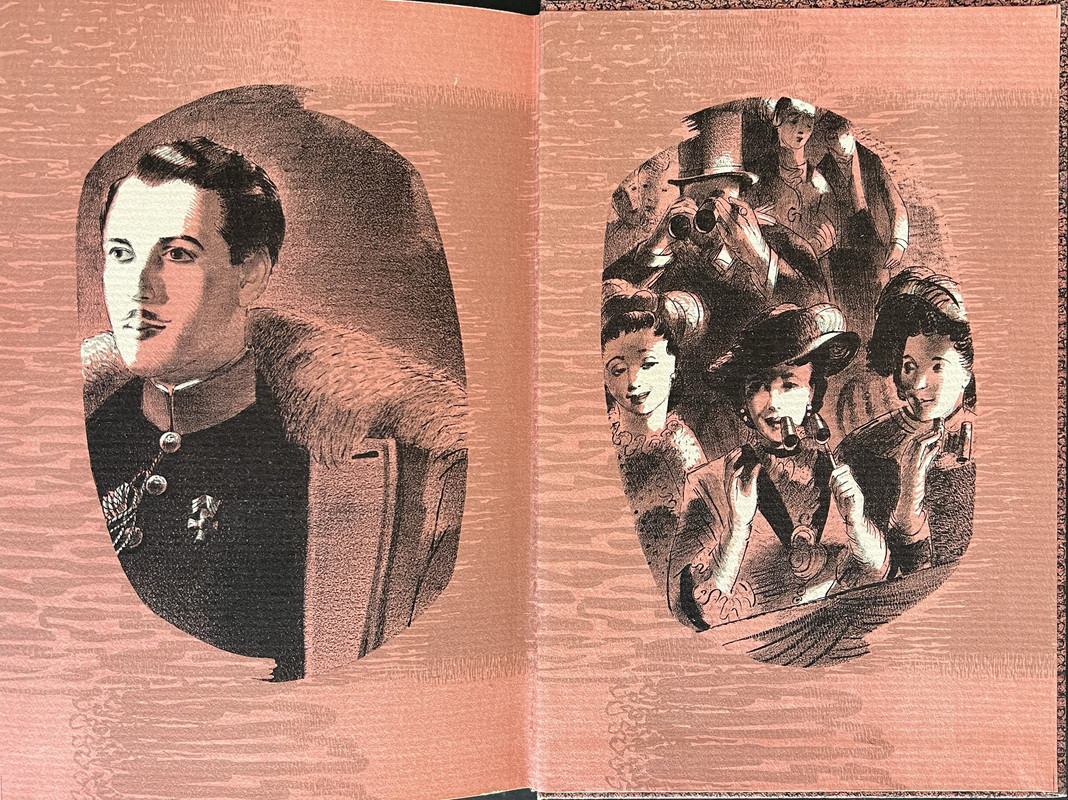
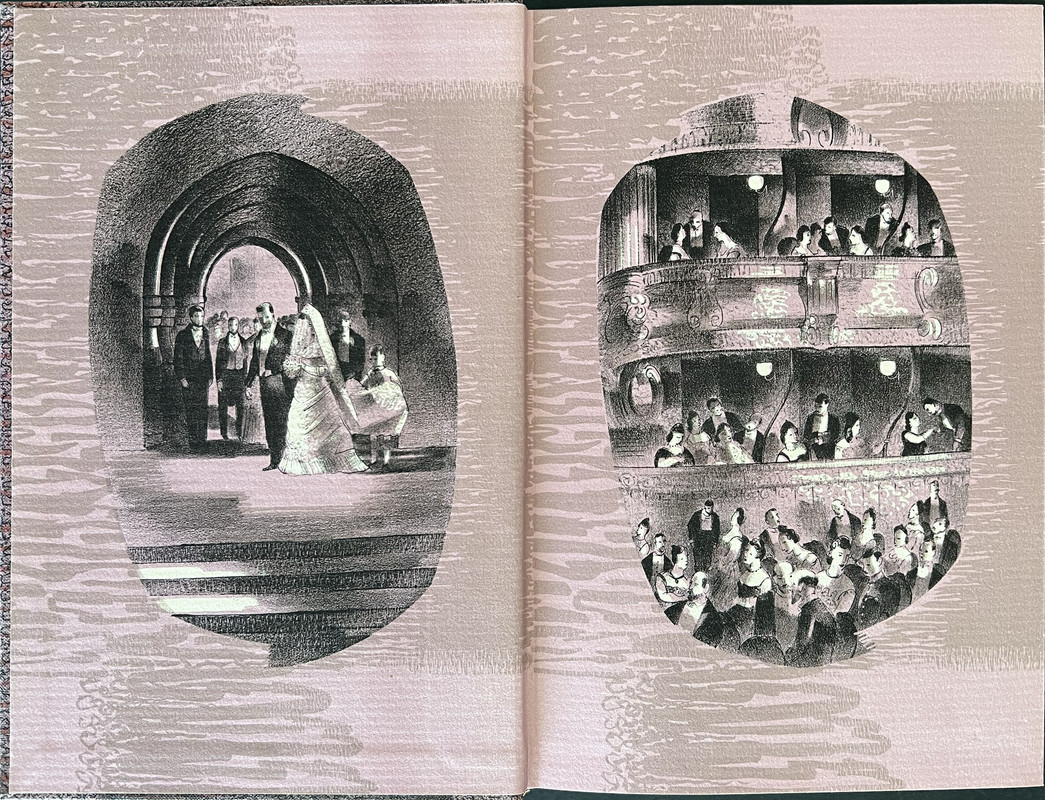
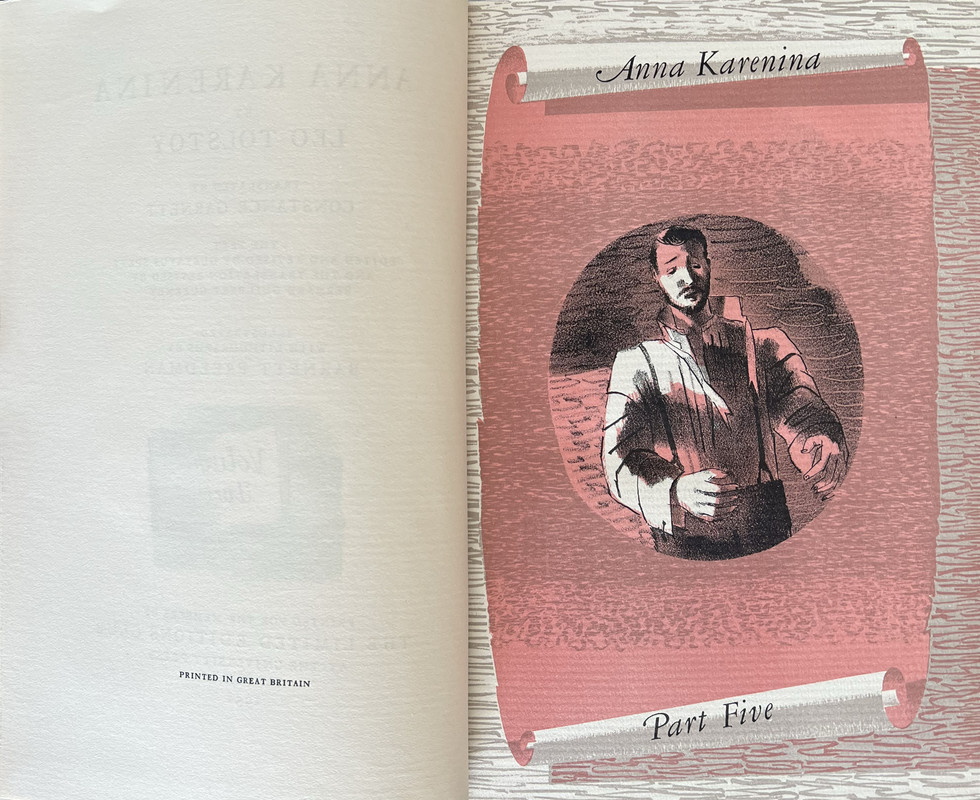
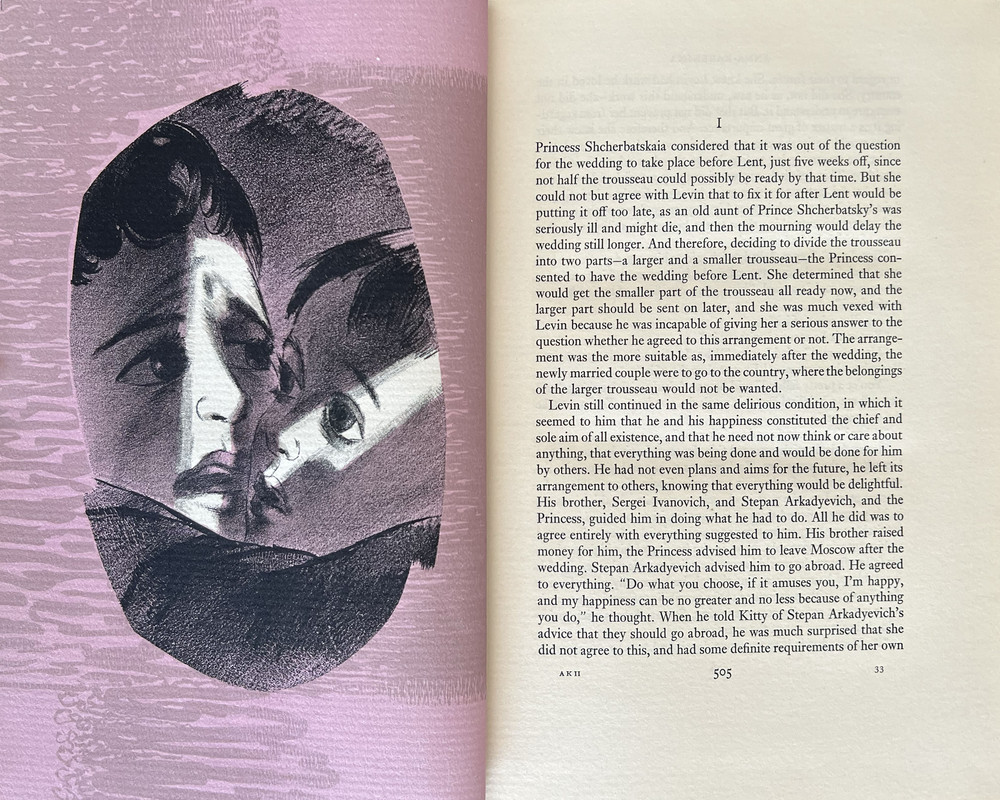
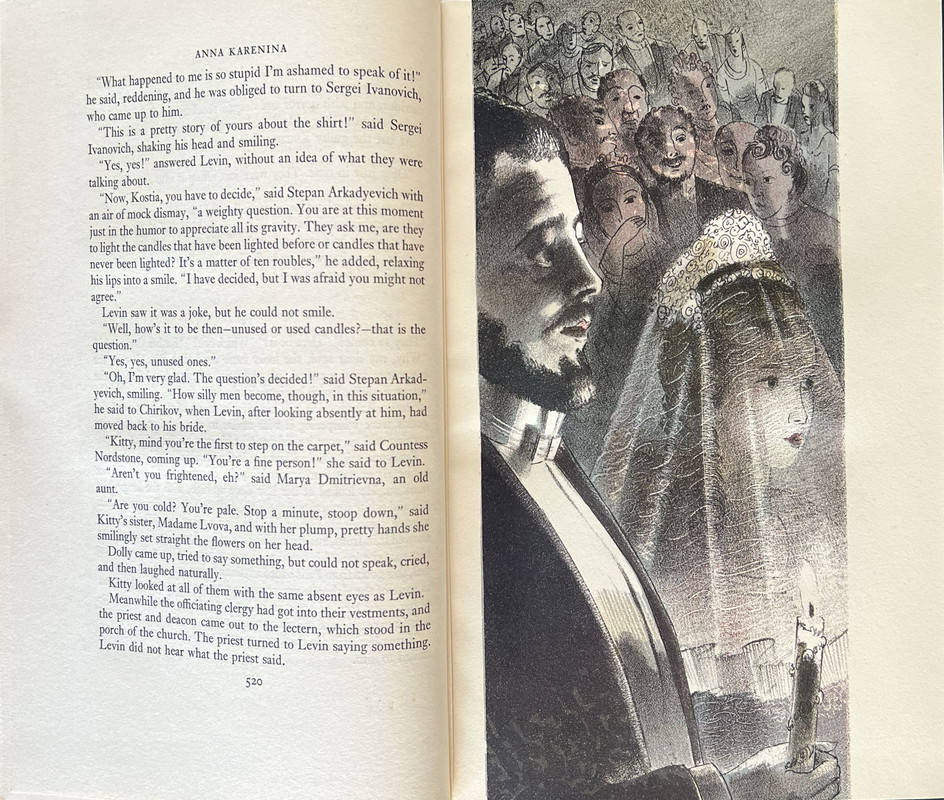
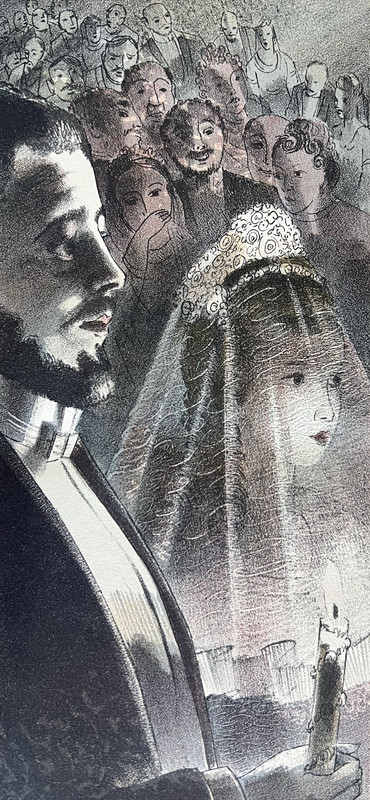
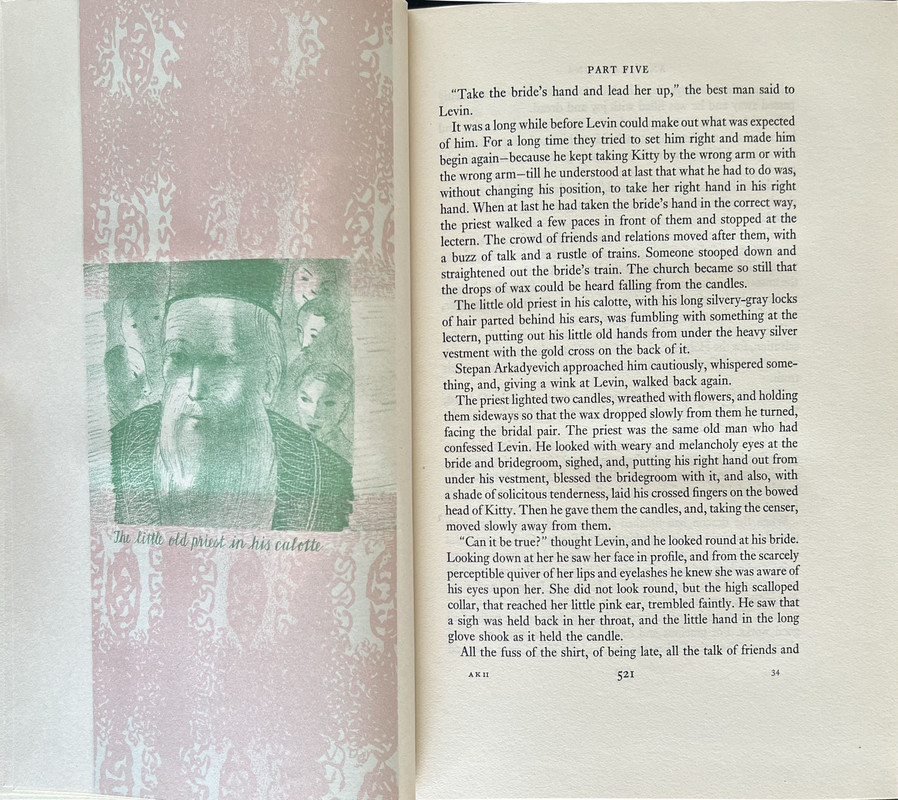
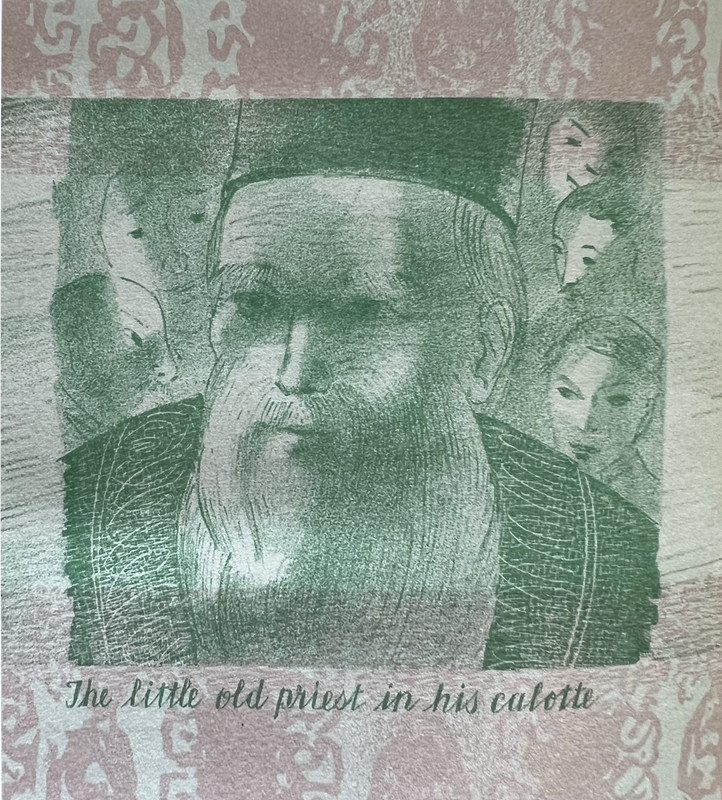
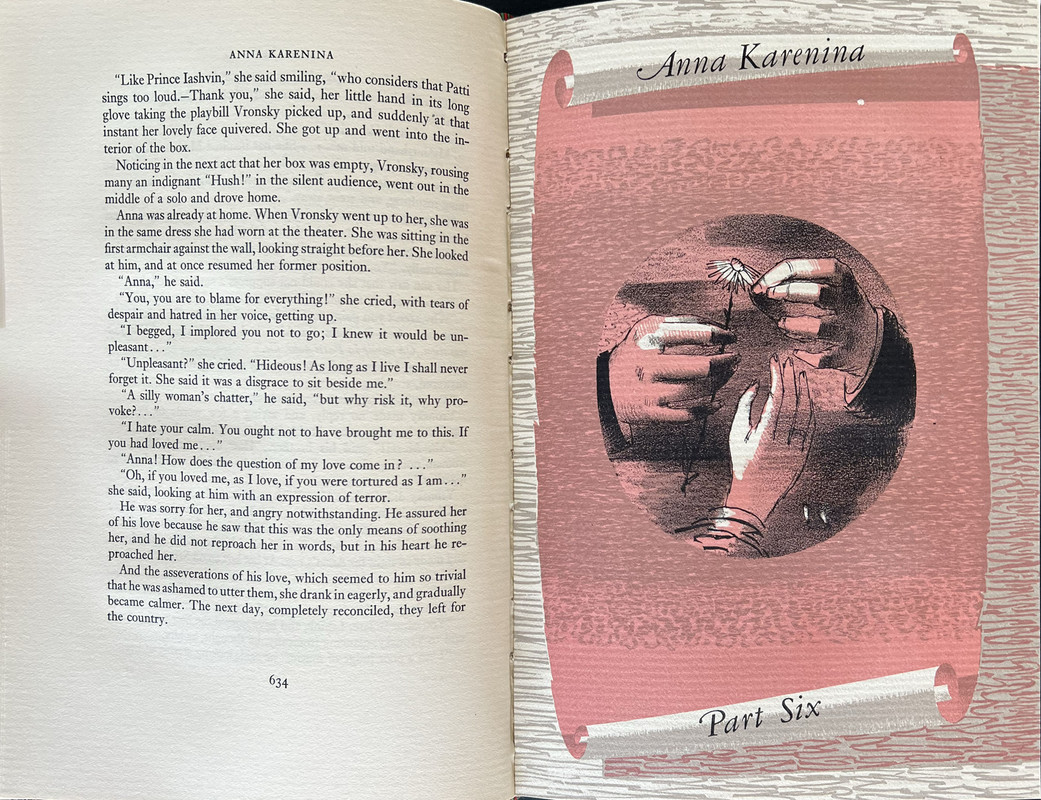
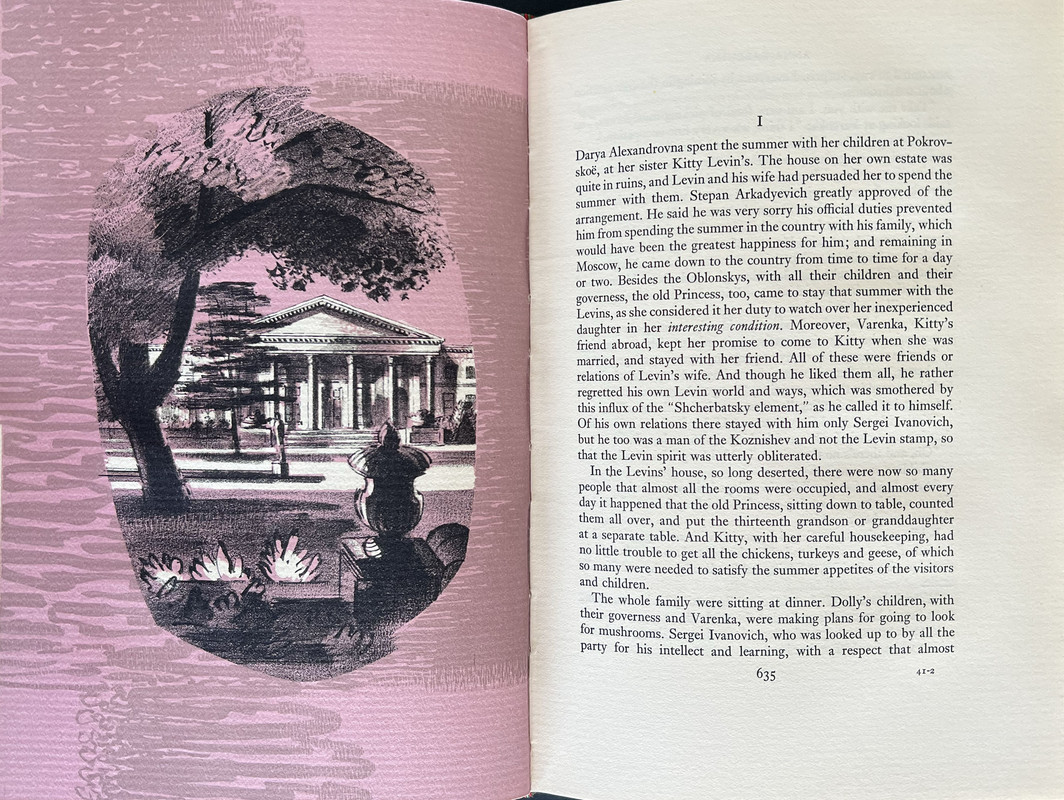
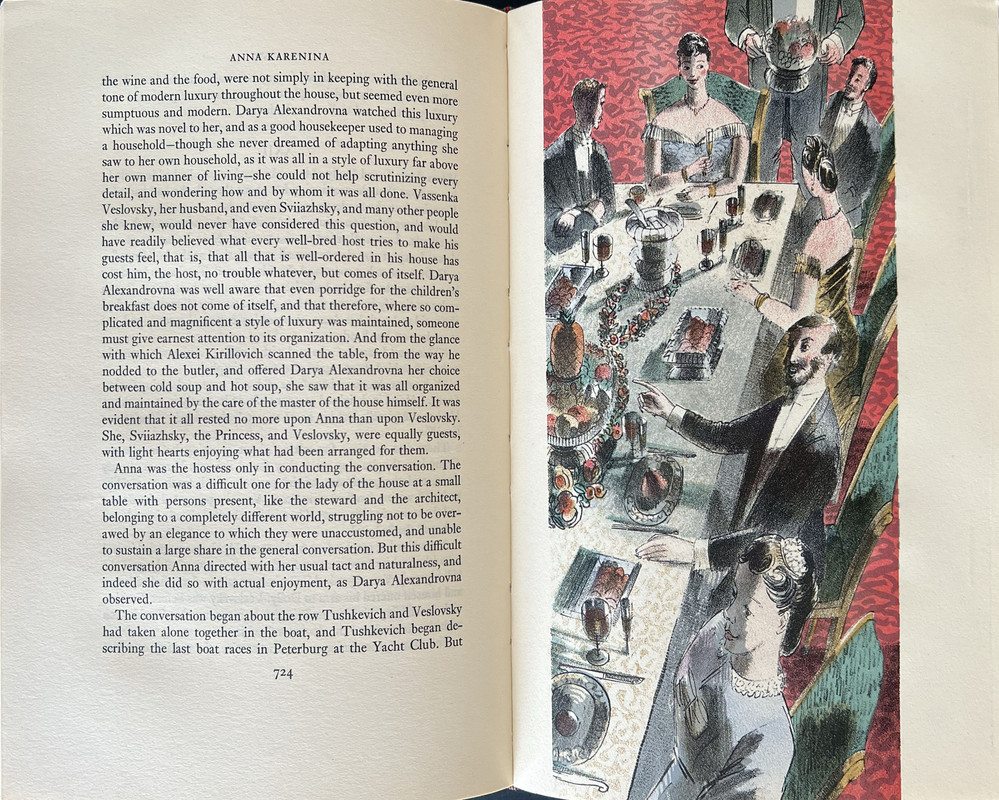
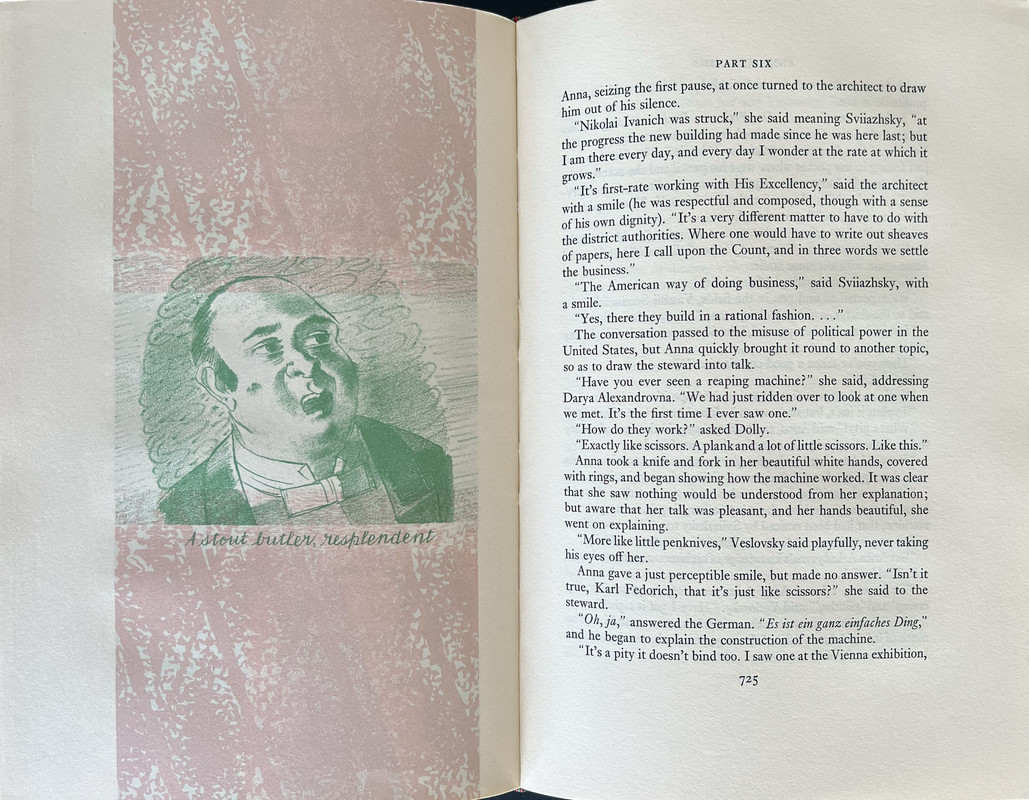
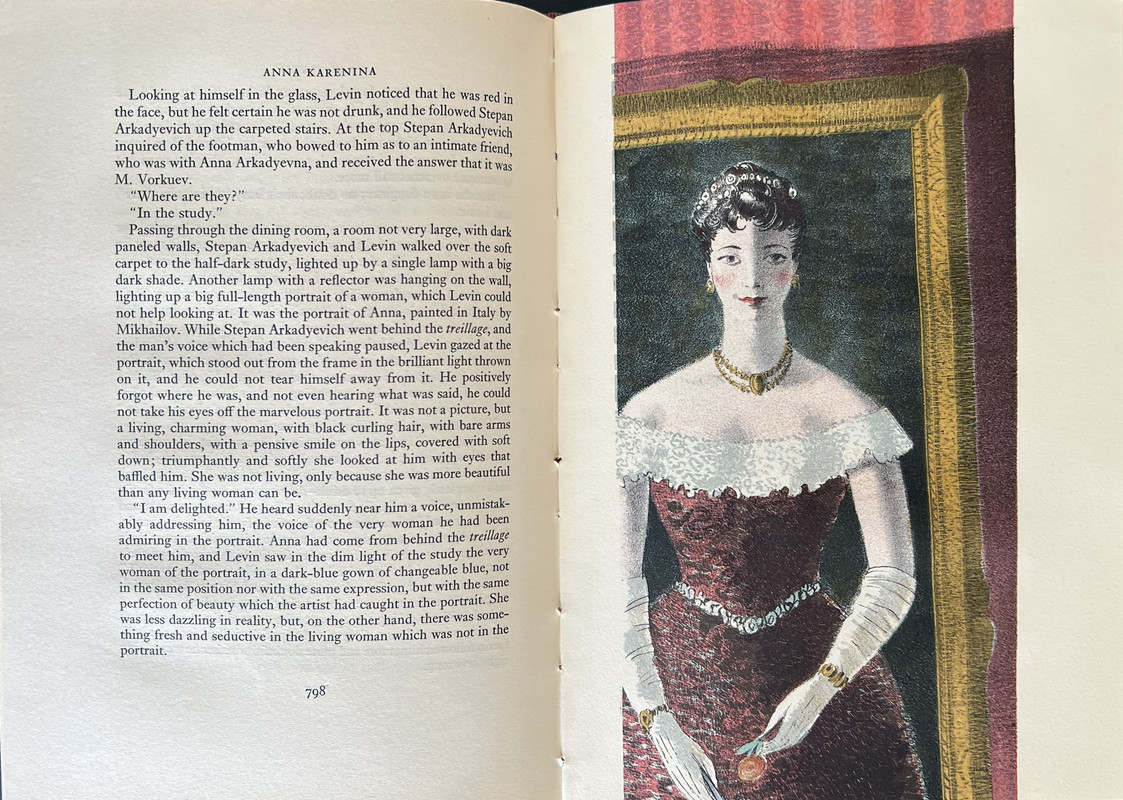
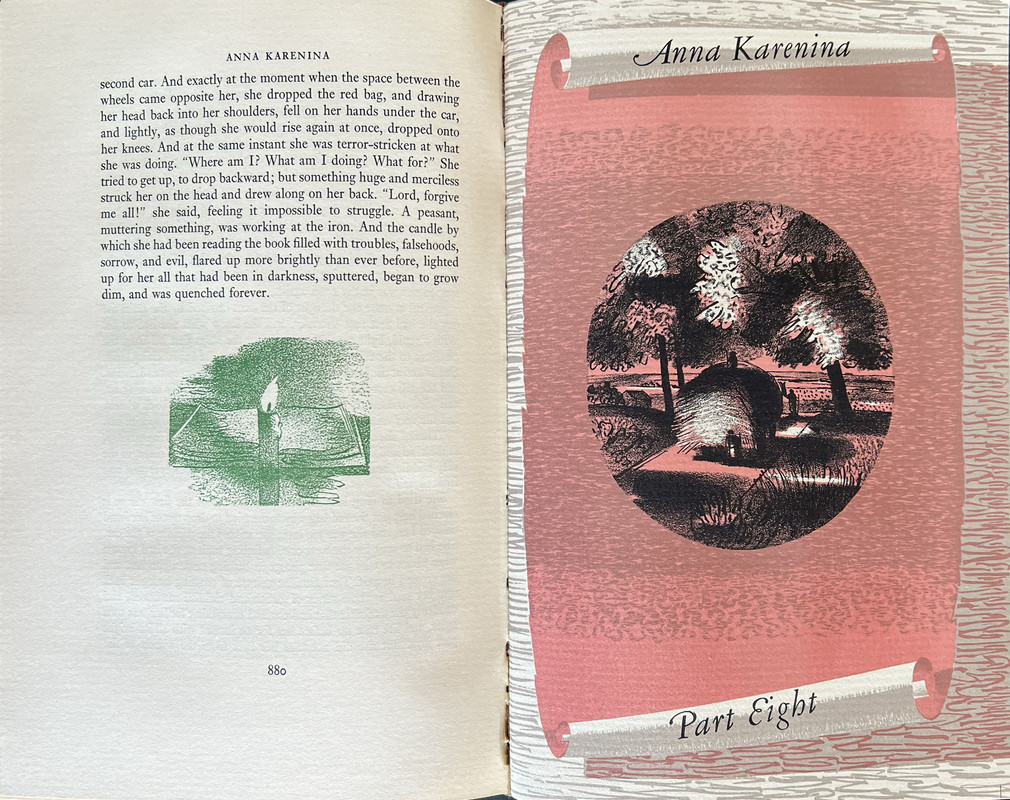
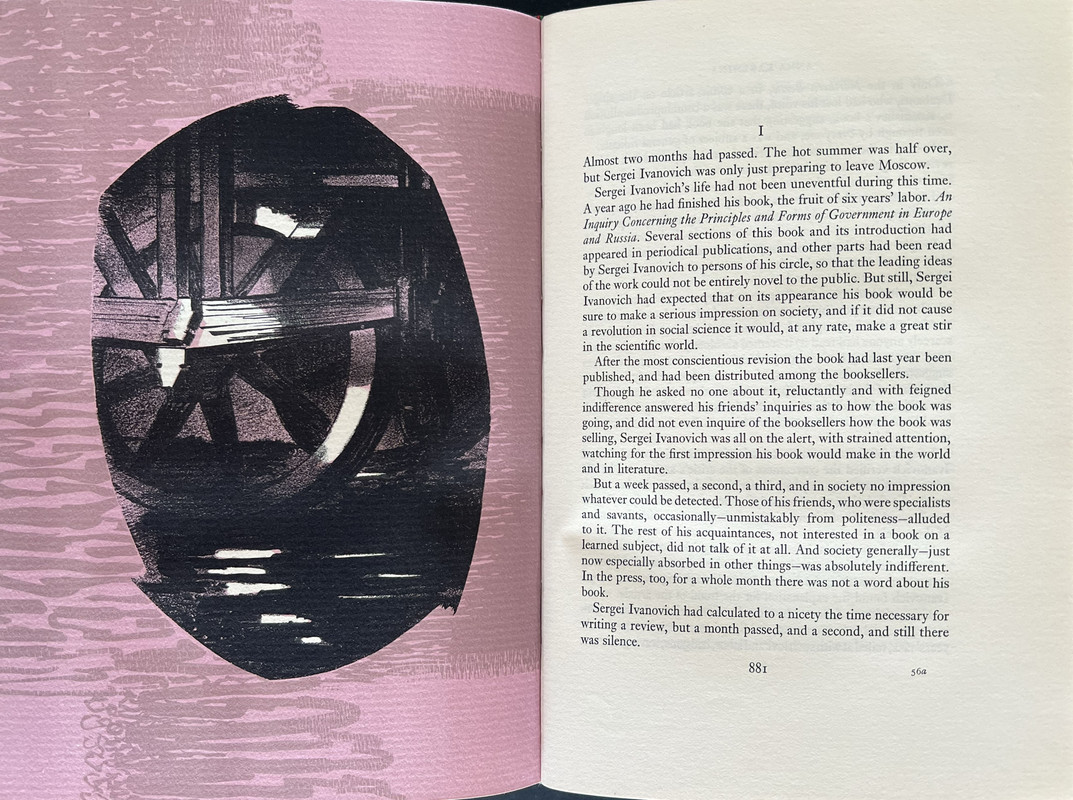
Bound-in colour auto-lithographs drawn on the stone by Barnett Freedman who signed the book.
All illustration pages are double-sided, with very different style of illustration on recto and verso of page.
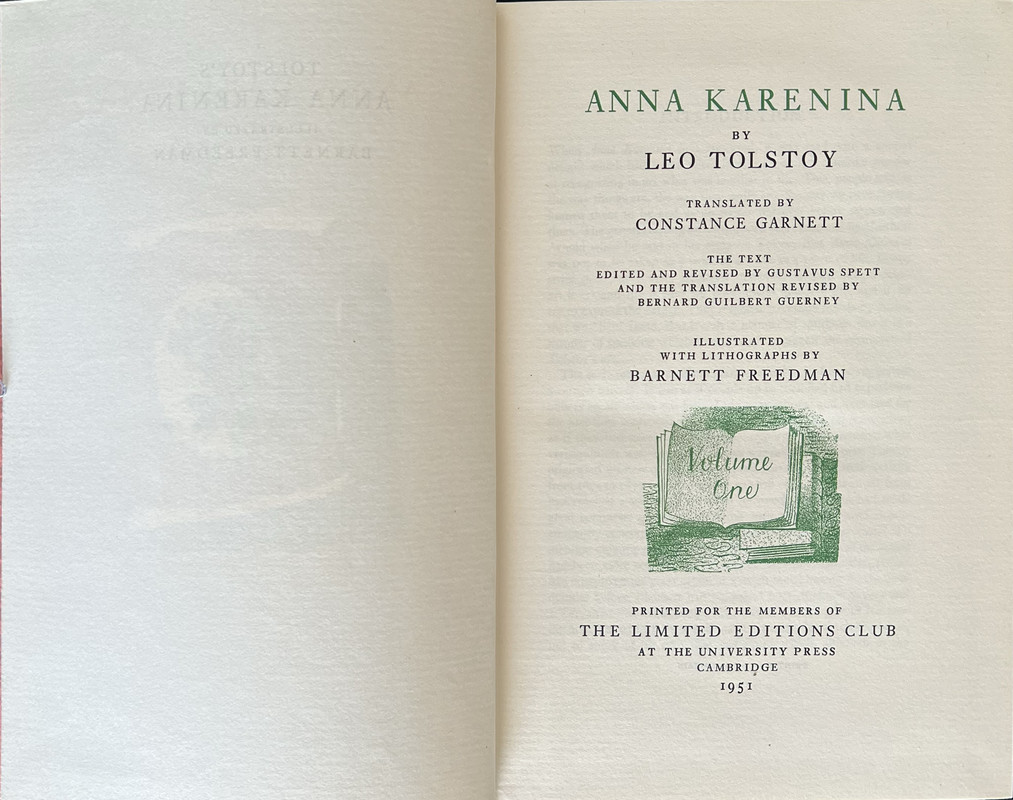
Translated by Constance Garnett, revised by Bernard Guilbert Guerney.
Edited by Gustavus Spett.
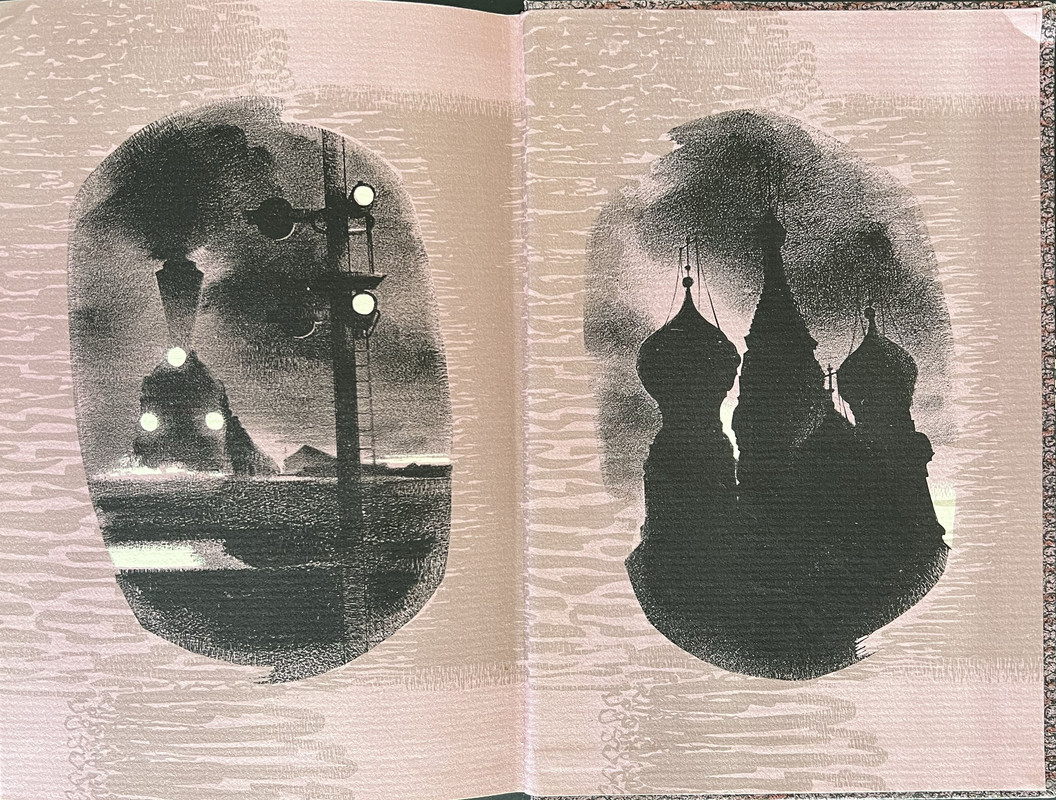
Mauve endpapers printed with wo colour illustrations, all different.
Page tops gilded.
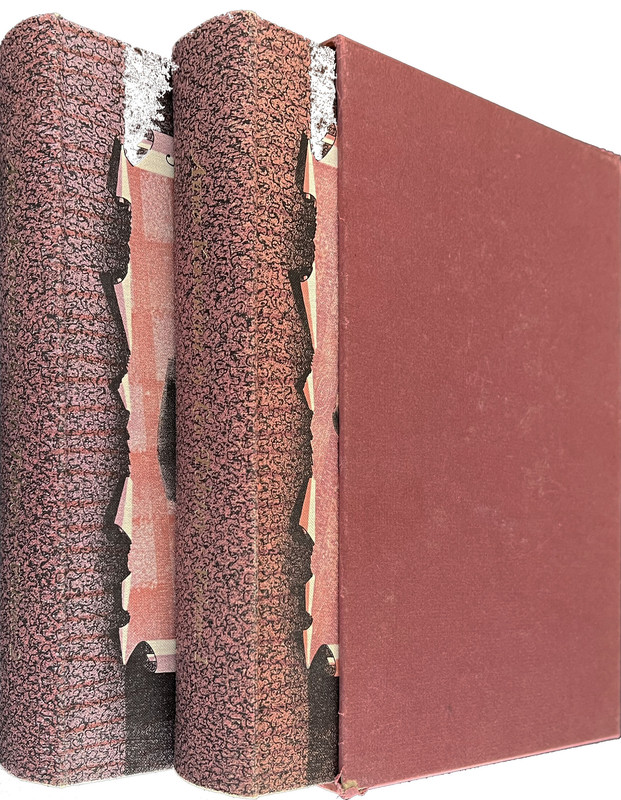
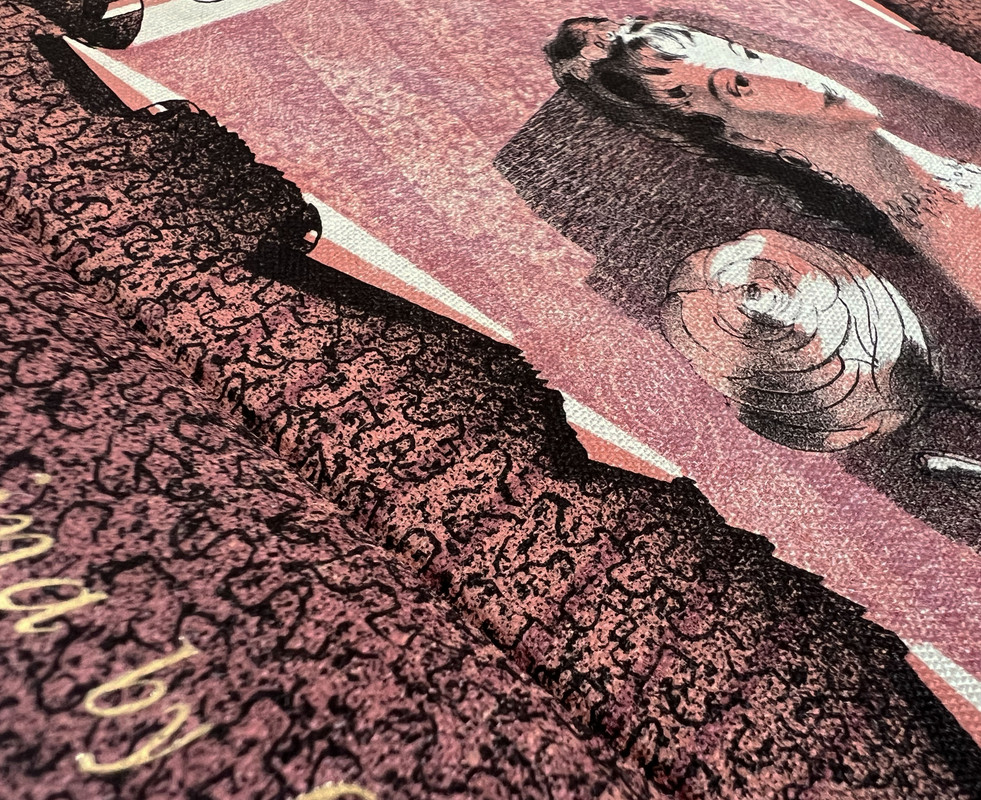
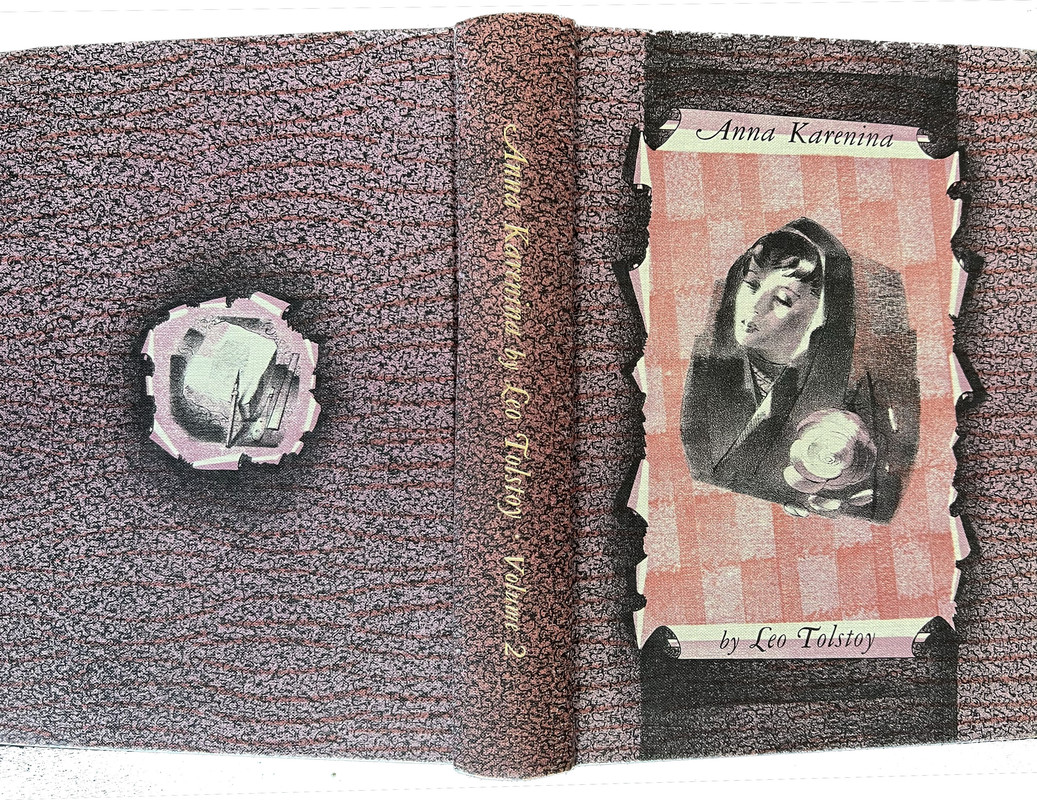
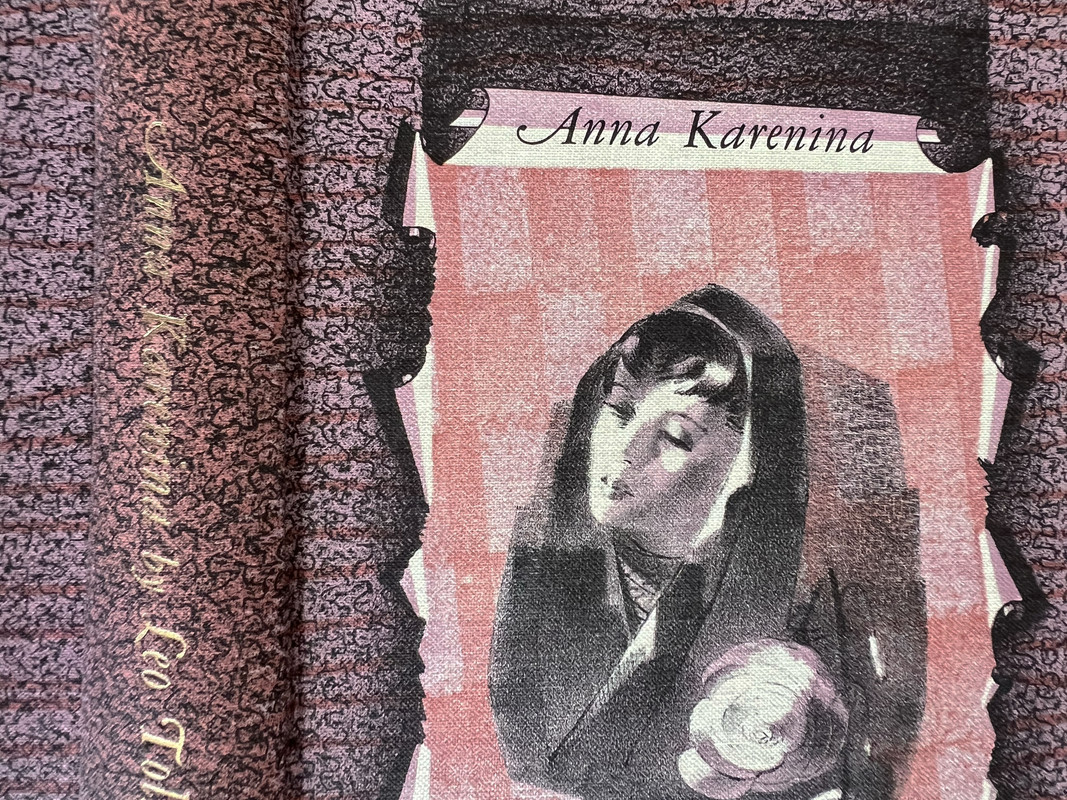
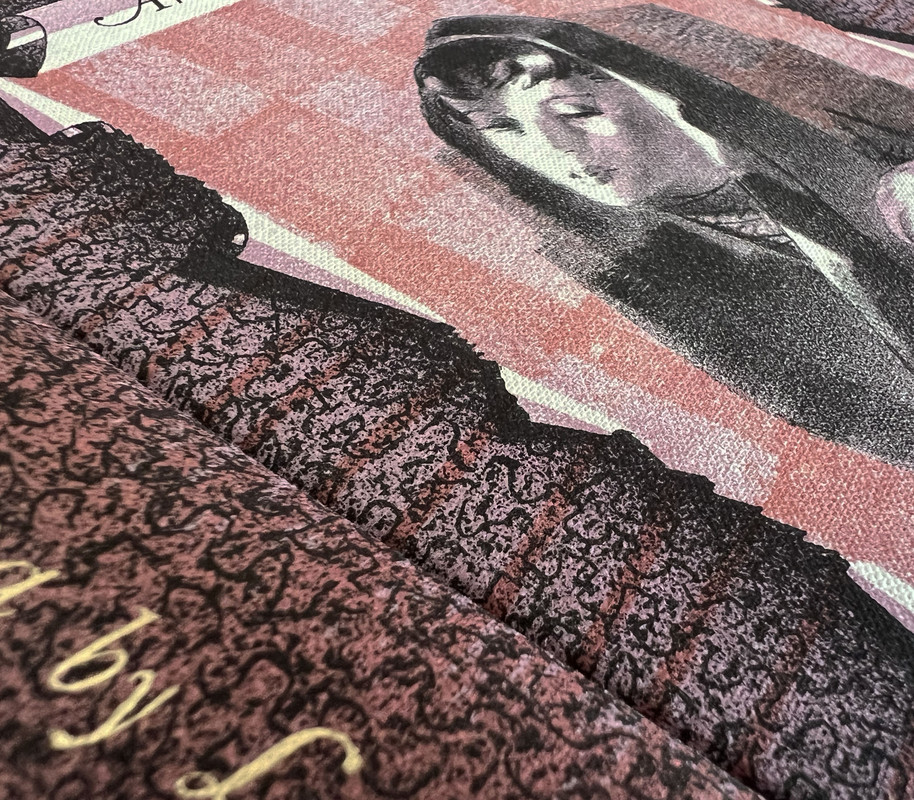
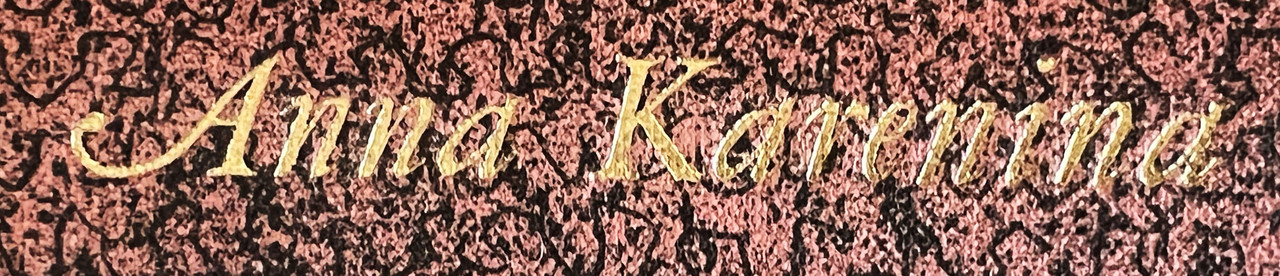
Bound in pink cloth, each volume a slightly different tone, printed on covers with illustrations in red, black and white.
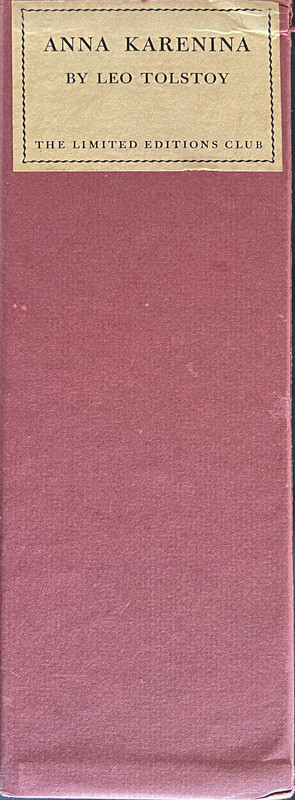
Dark red two-volume slipcase with cream title label on edge.
23.7x16.4x7.8cm.
935 pages.
US$300
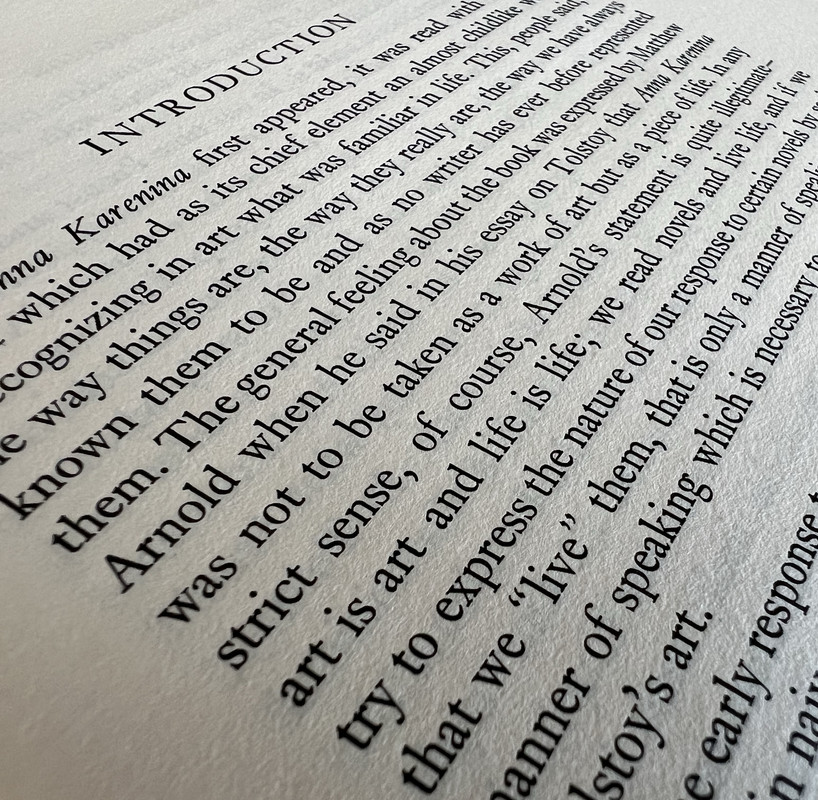
Freedman's lithography work on Anna Karenina (Limited Editions Club 1951) is recognised as one of the finest examples of twentieth century book design and have ensured him an honoured place in the history of book production.
An index of the other illustrated reviews in the this series can be viewed here.
A PICTORIAL REVIEW
No. 365 of 1500 copies
Two volumes.
Bound-in colour auto-lithographs drawn on the stone by Barnett Freedman who signed the book.
All illustration pages are double-sided, with very different style of illustration on recto and verso of page.
Translated by Constance Garnett, revised by Bernard Guilbert Guerney.
Edited by Gustavus Spett.
Mauve endpapers printed with wo colour illustrations, all different.
Page tops gilded.
Bound in pink cloth, each volume a slightly different tone, printed on covers with illustrations in red, black and white.
Dark red two-volume slipcase with cream title label on edge.
23.7x16.4x7.8cm.
935 pages.
US$300
Freedman's lithography work on Anna Karenina (Limited Editions Club 1951) is recognised as one of the finest examples of twentieth century book design and have ensured him an honoured place in the history of book production.
An index of the other illustrated reviews in the this series can be viewed here.
2PBB
Great review of one of the best LECs! I paid $250 a couple years ago and while not a cheap set still feels like such a great deal. I bid on a set of proofs (among other items) in 2024 but was unsuccessful. There was a set of the proofs on Abebooks at one point too but it must have sold as I cannot find it now.
https://www.liveauctioneers.com/item/180018975_freedman-barnett-set-of-proofs-of...
https://www.liveauctioneers.com/item/180018975_freedman-barnett-set-of-proofs-of...
3cottonoverwood
>2 PBB: I was fortunate to acquire a set last December for $125 having kept an eye out for at least two years prior. It is lovely and a good size to read, aided by being split. I’m still very interest in Folio’s upcoming LE.
4Zoopa
It is such a beautiful set in every way. It is so unfortunate that it has the Constance Garnett translation, otherwise it would be going right on my wish list.
5Django6924
It is important to qualify the appellation "Constance Garnett translation." Ms. Garnett's translation has always been recognized as a very readable one, although it was made from an outdated Russian text which in addition to containing some errors, was originally missing three chapters the Czarist government objected to. So for the Limited Editions Club, Bernard Guerney edited the text and Anatol Lunacharsky and Gustavus Spett translated the previously suppressed chapters.
I found the Garnett translation as revised to be enjoyable, and when I compared sections to the highly-marketed Pevear and Volokhonsky translation, could not fault it for faithfulness as it essentially got the meaning across in, for me, anyway, a more congenial style. Here's a sample of each:
Garnett: “Oh, it’s awful! oh dear, oh dear! awful!” Stepan Arkadyevitch kept repeating to himself, and he could think of nothing to be done. “And how well things were going up till now! how well we got on! She was contented and happy in her children; I never interfered with her in anything; I let her manage the children and the house just as she liked. It’s true it’s bad her having been a governess in our house. That’s bad! There’s something common, vulgar, in flirting with one’s governess. But what a governess!”
Pevear and Volokhonsky: ‘Ah, terrible! Ay, ay, ay! terrible!’ Stepan Arkadyich repeated to himself and could come up with nothing. ‘And how nice it all was before that, what a nice life we had! She was content, happy with the children, I didn’t hinder her in anything, left her to fuss over them and the household however she liked. True, it’s not nice that she used to be a governess in our house. Not nice! There’s something trivial, banal, in courting one’s own governess. But what a governess!’
There can be no perfect translation in my opinion, and the translations that I prefer are the ones which preserve the meaning of the original into English which finds an equivalent of the original's style.
I found the Garnett translation as revised to be enjoyable, and when I compared sections to the highly-marketed Pevear and Volokhonsky translation, could not fault it for faithfulness as it essentially got the meaning across in, for me, anyway, a more congenial style. Here's a sample of each:
Garnett: “Oh, it’s awful! oh dear, oh dear! awful!” Stepan Arkadyevitch kept repeating to himself, and he could think of nothing to be done. “And how well things were going up till now! how well we got on! She was contented and happy in her children; I never interfered with her in anything; I let her manage the children and the house just as she liked. It’s true it’s bad her having been a governess in our house. That’s bad! There’s something common, vulgar, in flirting with one’s governess. But what a governess!”
Pevear and Volokhonsky: ‘Ah, terrible! Ay, ay, ay! terrible!’ Stepan Arkadyich repeated to himself and could come up with nothing. ‘And how nice it all was before that, what a nice life we had! She was content, happy with the children, I didn’t hinder her in anything, left her to fuss over them and the household however she liked. True, it’s not nice that she used to be a governess in our house. Not nice! There’s something trivial, banal, in courting one’s own governess. But what a governess!’
There can be no perfect translation in my opinion, and the translations that I prefer are the ones which preserve the meaning of the original into English which finds an equivalent of the original's style.
6Glacierman
I've always found the Garnett translations to be quite satisfactory. Perfect? No, but no translation is.
Once (for a college lit research paper), I read four different translations of Gogol's Dead Souls. One was execrable, more of a poor paraphrase than a translation, but the other three (one was Garnett's) were all acceptable. All told the story albeit in slightly different ways, and I found I preferred Garnett's version.
Once (for a college lit research paper), I read four different translations of Gogol's Dead Souls. One was execrable, more of a poor paraphrase than a translation, but the other three (one was Garnett's) were all acceptable. All told the story albeit in slightly different ways, and I found I preferred Garnett's version.
7rogerthat2
Apparently Garnett is being thrown under the bus these days, but in all the passages I've compared I prefer her over the P+V translations.
How does the 1951 edition here compare with the 1933(?) edition?
How does the 1951 edition here compare with the 1933(?) edition?
8Django6924
>7 rogerthat2:
I've owned both editions, and for me the 1951 edition is much the preferred one. One reason for this is subjective: Freedman's lithographs appeal to me more than Piskariov's line drawings, though others may find the Victorian quality of the latter appropriate.
The second reason is that the quality of the Russian bookmaking pales in comparison to the Cambridge University Press. The cloth bindings on my 1933 edition didn't match, with one volume being darker (and this wasn't just that the spines were different; the front and rear covers exhibited the same difference). The size of volume 1 was larger than volume 2--a difference that may not bother many, but it annoyed me as that difference seemed to magnify the color mismatch.
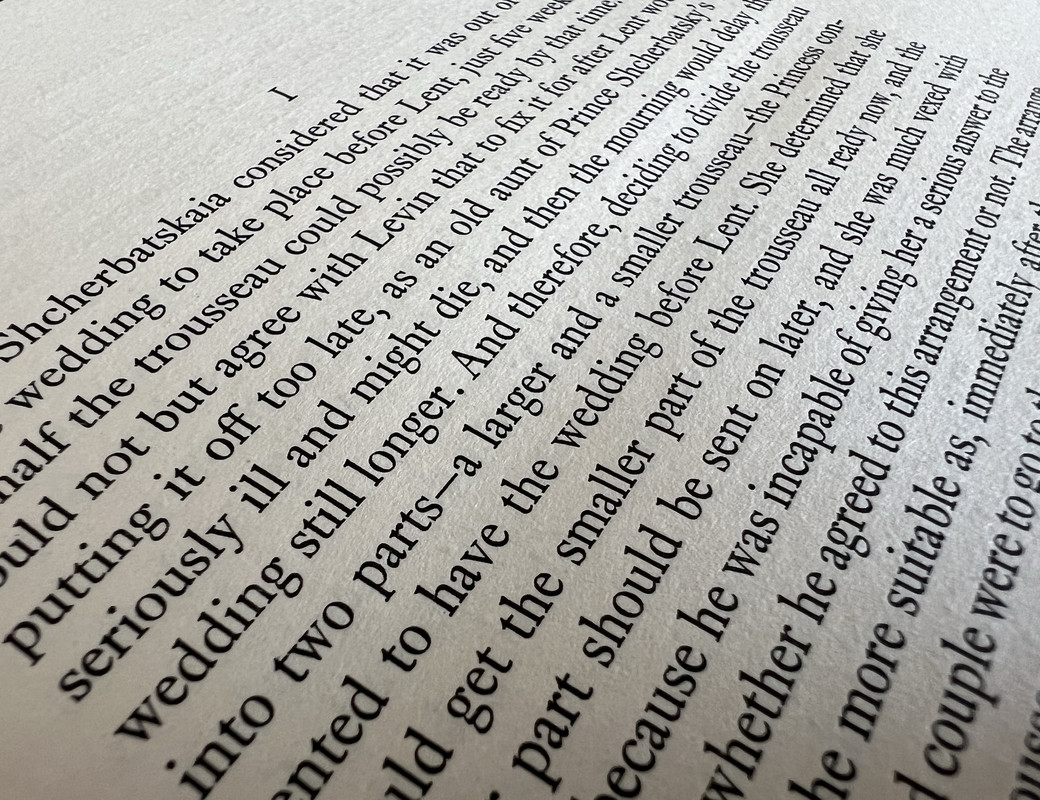
The worst quality lapse was in the typography. Among early Limited Editions Club releases, Anna Karenina had the most ragged typesetting of the lot (I understand the early Notre Dame de Paris was also bad, but I never owned a copy of that). I'm not sure whether the typesetters didn't know about proper kerning, or whether they just didn't bother to produce a well-set page for the American capitalist. (The travails Macy went through in even getting this book produced are quite interesting.)
One last word about Garnett: in the passage quoted above, consider which phrase sounds most likely to be used by an aristocrat in describing his affair with his governess: Garnett's "something common, vulgar, in flirting with one’s governess" or P-V's "something trivial, banal, in courting one’s own governess." Not knowing Russian, I can't determine whether "common, vulgar" have the same shades of meaning as the words in the original, but to me they seem more appropriate than "trivial" (of little importance), "banal" (obvious and therefore boring). Likewise, "flirting" with its connotations of casual, not to be taken seriously, dalliance seems to be preferable to "courting" which implies a more formal type of romancing with serious intention. Again, I don't know if these subtleties are present in the original, but for me they are a reason to prefer Garnett.
I've owned both editions, and for me the 1951 edition is much the preferred one. One reason for this is subjective: Freedman's lithographs appeal to me more than Piskariov's line drawings, though others may find the Victorian quality of the latter appropriate.
The second reason is that the quality of the Russian bookmaking pales in comparison to the Cambridge University Press. The cloth bindings on my 1933 edition didn't match, with one volume being darker (and this wasn't just that the spines were different; the front and rear covers exhibited the same difference). The size of volume 1 was larger than volume 2--a difference that may not bother many, but it annoyed me as that difference seemed to magnify the color mismatch.
The worst quality lapse was in the typography. Among early Limited Editions Club releases, Anna Karenina had the most ragged typesetting of the lot (I understand the early Notre Dame de Paris was also bad, but I never owned a copy of that). I'm not sure whether the typesetters didn't know about proper kerning, or whether they just didn't bother to produce a well-set page for the American capitalist. (The travails Macy went through in even getting this book produced are quite interesting.)
One last word about Garnett: in the passage quoted above, consider which phrase sounds most likely to be used by an aristocrat in describing his affair with his governess: Garnett's "something common, vulgar, in flirting with one’s governess" or P-V's "something trivial, banal, in courting one’s own governess." Not knowing Russian, I can't determine whether "common, vulgar" have the same shades of meaning as the words in the original, but to me they seem more appropriate than "trivial" (of little importance), "banal" (obvious and therefore boring). Likewise, "flirting" with its connotations of casual, not to be taken seriously, dalliance seems to be preferable to "courting" which implies a more formal type of romancing with serious intention. Again, I don't know if these subtleties are present in the original, but for me they are a reason to prefer Garnett.
9BuzzBuzzard
I found Garnett's translation of Anna Karenina, The Brothers Karamazov, The House of the Dead, Crime and Punishment, The Possessed, and The Idiot very satisfactory.
>1 wcarter: An edition worth owning. I believe the original set was issued with plain white dust jackets.
>1 wcarter: An edition worth owning. I believe the original set was issued with plain white dust jackets.
10PBB
>8 Django6924: The 1933 AK is one of the clearly flawed LECs that I'm still really happy to own. Like the Grabhorn printed Robinson Crusoe. Good stories behind the production of both and both have some design merit despite flaws.
11Django6924
>10 PBB:
Agreed! Despite the flaws, both books are guided by the principle that a book's design should complement its contents in a meaningful way.
Agreed! Despite the flaws, both books are guided by the principle that a book's design should complement its contents in a meaningful way.
Join to post

