
Stretch's 2026 read archive
Original topic subject: Stretch's 2027 read archive
Talk Club Read 2026
Join LibraryThing to post.
1stretch
Here's to whatever random thing comes down the pike!

- Ivan Ayvazovsky, 1849
Things read:
Fiction:
Seventeen by Hideo Yokoyama ★★★½
Infested by Carol Gore ★★★★
Adrift in Currents Clean and Clear ★★★
Murder Bimbo by Rebecca Novack ★★★½
Out of Time by David Klass ★★★
Hard Rain Falling by Don Carpenter ★★★★½
The Ballad of Black Tom by Victor Lavalle ★★★½
Days of the Morikai Bookshop by Satoshi Yagisawa ★★★
The Disaster Tourist by Yun Ko-Eun ★★½
Strange Stones by Edward Lee and Mia SanGiovanni ★★★
Seeing Things by Sonora Taylor ★★★
Horsefly by Mirelle Gagne ★★★★
Non-Fiction:
A Short Account of the Destruction of the Indies by Bartolomé Casas ★★★★
Geology: A Very Short Introduction by Jan Zalasiewicz ★★★★
Minerals: A Very Short Introduction by David J. Vaughan ★★★½
The Devil’s Dictionary by Ambrose Bierce ★★★
Volcanoes: A Very Short Introduction Micheal J. Branney ★★★½
Are Prisons Obsolete? by Angela Y. Davis ★★★★
Shady Characters by Kieth Houston ★★★
Geophysics: A Very Short Introduction by William Lowrie ★★★
Others:
In Mercy Rain by Seanan McGurie ★★★
Seen and Unseen by Elizabeth Partridge and Lauren Tamaki ★★★½
Chinese History in R.F. Kuang’s The Poppy War Triology by Noa Verboom ★★★
The Ones Who Walk Away from Omelas by Ursula K. Le Guin ★★★½
Oak Flat by Laura Redniss ★★★★
An Invitation from a Crab by Panpanya ★★★★½
Blacksad by Juan Diaz Canales ★★★★
Locke & Key: Heaven and Earth by Joe Hill and Gabrielle Rodriguez ★★★

- Ivan Ayvazovsky, 1849
Things read:
Fiction:
Seventeen by Hideo Yokoyama ★★★½
Infested by Carol Gore ★★★★
Adrift in Currents Clean and Clear ★★★
Murder Bimbo by Rebecca Novack ★★★½
Out of Time by David Klass ★★★
Hard Rain Falling by Don Carpenter ★★★★½
The Ballad of Black Tom by Victor Lavalle ★★★½
Days of the Morikai Bookshop by Satoshi Yagisawa ★★★
The Disaster Tourist by Yun Ko-Eun ★★½
Strange Stones by Edward Lee and Mia SanGiovanni ★★★
Seeing Things by Sonora Taylor ★★★
Horsefly by Mirelle Gagne ★★★★
Non-Fiction:
A Short Account of the Destruction of the Indies by Bartolomé Casas ★★★★
Geology: A Very Short Introduction by Jan Zalasiewicz ★★★★
Minerals: A Very Short Introduction by David J. Vaughan ★★★½
The Devil’s Dictionary by Ambrose Bierce ★★★
Volcanoes: A Very Short Introduction Micheal J. Branney ★★★½
Are Prisons Obsolete? by Angela Y. Davis ★★★★
Shady Characters by Kieth Houston ★★★
Geophysics: A Very Short Introduction by William Lowrie ★★★
Others:
In Mercy Rain by Seanan McGurie ★★★
Seen and Unseen by Elizabeth Partridge and Lauren Tamaki ★★★½
Chinese History in R.F. Kuang’s The Poppy War Triology by Noa Verboom ★★★
The Ones Who Walk Away from Omelas by Ursula K. Le Guin ★★★½
Oak Flat by Laura Redniss ★★★★
An Invitation from a Crab by Panpanya ★★★★½
Blacksad by Juan Diaz Canales ★★★★
Locke & Key: Heaven and Earth by Joe Hill and Gabrielle Rodriguez ★★★
2stretch
Seventeen by Hideo Yokoyama
Translated by Louise Heal Kawai
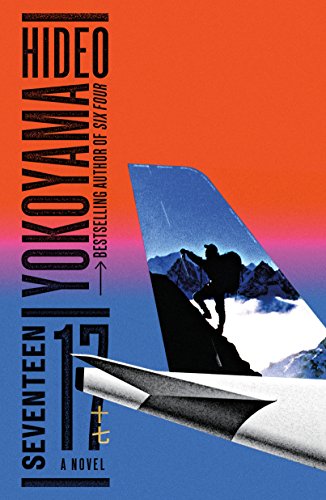
Hideo Yokoyama’s Seventeen is a methodical read that focuses more on the internal mechanics of a regional newsroom than the actual tragedy of the 1985 Japan Airlines Flight 123 crash. While the crash serves as the catalyst for the story, the book is primarily interested in the logistical and ethical hurdles faced by the staff at the North Kanto Times. Yokoyama uses his own experience as a reporter to ground the story, showing the friction between different departments and the way corporate hierarchy often complicates the pursuit of a lead.
The narrative also functions as a study of the protagonist, Kazumasa Yuuki, and the distance that grows between him and his family due to his career. By moving between the week of the accident and a timeline set seventeen years later, the book explores how professional pressure and specific choices made during a crisis can leave a long-term mark on a person's private life.
Because of this heavy focus on office politics and newspaper bureaucracy, the pacing can feel quite slow. The level of detail regarding editorial decisions and newsroom infighting might feel dry. Ultimately, it is a solid procedural that captures the grit of the industry well.
★★★½
Connective Tissue: Prefecture D, Airframe, The Summit of the Gods
Translated by Louise Heal Kawai
Hideo Yokoyama’s Seventeen is a methodical read that focuses more on the internal mechanics of a regional newsroom than the actual tragedy of the 1985 Japan Airlines Flight 123 crash. While the crash serves as the catalyst for the story, the book is primarily interested in the logistical and ethical hurdles faced by the staff at the North Kanto Times. Yokoyama uses his own experience as a reporter to ground the story, showing the friction between different departments and the way corporate hierarchy often complicates the pursuit of a lead.
The narrative also functions as a study of the protagonist, Kazumasa Yuuki, and the distance that grows between him and his family due to his career. By moving between the week of the accident and a timeline set seventeen years later, the book explores how professional pressure and specific choices made during a crisis can leave a long-term mark on a person's private life.
Because of this heavy focus on office politics and newspaper bureaucracy, the pacing can feel quite slow. The level of detail regarding editorial decisions and newsroom infighting might feel dry. Ultimately, it is a solid procedural that captures the grit of the industry well.
★★★½
Connective Tissue: Prefecture D, Airframe, The Summit of the Gods
3dchaikin
>1 stretch: precarious but optimistic? I mean, the ship has a good chance, you know, for the moment.
>2 stretch: Very interesting look into Japanese literature. The perspective certainly sounds fascinating.
Happy New Year, Kevin.
>2 stretch: Very interesting look into Japanese literature. The perspective certainly sounds fascinating.
Happy New Year, Kevin.
4AnnieMod
Dan can fix the title if you want it fixed. :)
>2 stretch: I have this one on my shelves somewhere - I really liked Six Four and Prefecture D a few years ago and I really need to get back to him as an author. Nice review.
>2 stretch: I have this one on my shelves somewhere - I really liked Six Four and Prefecture D a few years ago and I really need to get back to him as an author. Nice review.
5dchaikin
>4 AnnieMod: i can. I didn’t notice. 🙂 @stretch - just me know
6stretch
>3 dchaikin: I don't know the correct interpertation but I'd like to think of it as the storm clearing and the ship coming out of it. I really don't know what it says about me, but I find stormy seas calming.
Yokoyama peels back the layers of Japanese culture to reveal truths that are authentic.
Happy New year to you, Dan.
>4 AnnieMod: I like Yokoyama, but when I read him I know it's going to be slow going. Still need to read Six Four, perhaps with a little space between before I tackle that one.
>4 AnnieMod: and >5 dchaikin: It wouldn't be my thread without an error. @dchaikin when you get a chance would be apperciated if you could change it 2026. I am not in a hurry but reading 2027 later in the year might strike some as odd.
Yokoyama peels back the layers of Japanese culture to reveal truths that are authentic.
Happy New year to you, Dan.
>4 AnnieMod: I like Yokoyama, but when I read him I know it's going to be slow going. Still need to read Six Four, perhaps with a little space between before I tackle that one.
>4 AnnieMod: and >5 dchaikin: It wouldn't be my thread without an error. @dchaikin when you get a chance would be apperciated if you could change it 2026. I am not in a hurry but reading 2027 later in the year might strike some as odd.
7dchaikin
>6 stretch: done. You’re back in our regular world timeline
8dchaikin
>6 stretch: nice, about Yokoyama
9stretch
>7 dchaikin: Than you! Usually stuck in the past, being in the future was a little disconcerting
10AnnieMod
>6 stretch: Six Four is slow and brilliant (a lot slower than the stories in Prefecture D). I like the style - it reminds me of the Victorians in a good way. Plus the Japan he describes feels very Japanese (not sure of that even makes sense :) )
11RidgewayGirl
>2 stretch: Yeah, to appreciate Yokoyama, you've got to enjoy the process as much as the story.
>10 AnnieMod: Comparing Yokoyama to the Victorians is a wonderful insight. Yes.
>10 AnnieMod: Comparing Yokoyama to the Victorians is a wonderful insight. Yes.
12stretch
>10 AnnieMod: I like that analogy, it is "Victorian" in style, never thought of it like that. And your right Yokoyama's Japan feels like Japan, never quite sure how to put that either.
>11 RidgewayGirl: You really do have to enjoy how he puts it together, it is never going to riptide thriller in pacing and I can see a lot of people becoming frustrated with his pacing, but for me its worth seeing how it gets to where he is going in the end.
>11 RidgewayGirl: You really do have to enjoy how he puts it together, it is never going to riptide thriller in pacing and I can see a lot of people becoming frustrated with his pacing, but for me its worth seeing how it gets to where he is going in the end.

14japaul22
>13 stretch: that was quite a win! I went to Illinois in the 90s and it's wild to me to see Indiana doing so well in football (not that the Illini have been anything to brag about).
15stretch
>14 japaul22: It was a great way to finally find a way to win one tonight! Still in disbelief as Hoosier...
17dchaikin
>13 stretch: 🙂 congrats. Fun team. Demolishing second half. (I’m really happy the Canes won yesterday. ☺️)
18stretch
>16 kidzdoc: “Indiana has beaten Oregon, Penn State, Ohio State, and plummled Alabama in the same season; in football.”
This sentence feels like it should cause a singularity.
This sentence feels like it should cause a singularity.
19stretch
>17 dchaikin: As a member of the B10 we thank Miami for its service for handlly beating the most annoying team possibly in the nation.
21kidzdoc
>18 stretch: Right?!
>19 stretch: 😂 I suspect that much of the country that doesn't have skin in the game, such as alumni or fans of THE Ohio State University 🙄 are full fledged Hoosier fans this season. And, as an alumnus of an athletically (but not academically) lackluster B1G school (Rutgers) Indiana's successful season gives me reason to hope that the Scarlet Knights could do the same thing in my lifetime.
>19 stretch: 😂 I suspect that much of the country that doesn't have skin in the game, such as alumni or fans of THE Ohio State University 🙄 are full fledged Hoosier fans this season. And, as an alumnus of an athletically (but not academically) lackluster B1G school (Rutgers) Indiana's successful season gives me reason to hope that the Scarlet Knights could do the same thing in my lifetime.
22stretch
>21 kidzdoc: I'd love to see Rutgers, or any of our less athethic schools in the conference rise up and be competitive. It's a lot of unexpected fun, but proud our conference can say that besides the OSU (only in jest) we are strong academically even if we lose quite a lot.
23kidzdoc
>22 stretch: Right, Kevin. All of the 18 B1G Conference schools, save Nebraska, are members of the Association of American Universities, a group of the top 69 American and two Canadian colleges and universities that are the leading research institutions of both countries. All of the Ivy League schools are AAU members, to my knowledge, but the B1G Conference has the most members, at 17...or is it 15?! I'm sorry, but B1G Conference schools should not extend from a few miles from the Atlantic Ocean (Maryland) to the edge of the Pacific Ocean (Washington), and having Atlantic Coast Conference schools within a short drive of the Pacific Ocean (California and Stanford, despite their superior academic credentials) is utterly bizarre.
I would hope that actual and proposed changes to Division 1-A college sports would lead to a leveling of the playing fields, without compromising the schools' academic integrities. Most Rutgers students welcomed the move to the B1G Conference but alumni were and remain largely mixed on that decision, including myself, as I was a student there in the late 1980s when were a member of the Atlantic 10 and Big East basketball conferences, with far more interesting games against local powers such as UConn, Villanova, Georgetown and Seton Hall, amongst others.
I would hope that actual and proposed changes to Division 1-A college sports would lead to a leveling of the playing fields, without compromising the schools' academic integrities. Most Rutgers students welcomed the move to the B1G Conference but alumni were and remain largely mixed on that decision, including myself, as I was a student there in the late 1980s when were a member of the Atlantic 10 and Big East basketball conferences, with far more interesting games against local powers such as UConn, Villanova, Georgetown and Seton Hall, amongst others.
24stretch
>23 kidzdoc: I am with you on how uttlery bizarre it is that these conferences have become coast to coast in recent years. I remember when Rutgers and Maryland joined the B1G conference, we couldn't figure out what was in it for them other then the money of course. Losing those regional ties and meaningful games sucks. I think we have it lucky the B1G is still at its core a midwestern confernece and the coastal teams just feel like out of conference games for us that don't really matter all that much as rivals. They feel artifical if that makes sense. I mean I hate Prudue, but I really can't muster up any real felling for UCLA or Oregon other than it being just another game. Also, the number of schools has hust gotten out of hand in all this shuffling. i won't go as far to say it has ruined college atheltics, but it has come with significant scarfices that haven't been equally benfical.
25kidzdoc
>24 stretch: Although Rutgers received more money as a result of joining the B1G Conference its expenditures have remained even greater; thus the other departments of the university have had to subsidize the athletics department, and, according to an article last year in NJ.com, Rutgers has the largest annual athletics department deficit at roughly $70M.
26LolaWalser
Happy new year, Kevin, always curious about what bizarre book pops up here next (and whether pencil reviews come back).
27labfs39
I did a double take when I saw IU and sports. I was there in the 90s when Bob Knight was still ruling the court, so for me, IU + sports = basketball. They have a football team, lol?
28dchaikin
>27 labfs39: after a couple generations of bad teams, they have had two or three years of really good teams. This year’s team team is really special
29stretch
>26 LolaWalser: Happy New Year! I’m glad you’re enjoying the eclectic book choices. I l never knowing what might surface next, either. You're right that I need to get back to the pencil reviews, I've been leaning on my old stock for far too long and it’s time for a fresh point.
>27 labfs39: It is of recent development. Being an adoptive Hooiser after the turmul of Knight's departure success in athletics has not been something I am accustom to, outside of soccer of course. But this has been a fun ride for the best tailgating school in the conference.
>28 dchaikin: Dan, you really underselling how bad IU is at football for the last 137 years everyother game is either our top 5 best game ever or breaks a record. This season has literally been insane in the achievement deprartment:
>27 labfs39: It is of recent development. Being an adoptive Hooiser after the turmul of Knight's departure success in athletics has not been something I am accustom to, outside of soccer of course. But this has been a fun ride for the best tailgating school in the conference.
>28 dchaikin: Dan, you really underselling how bad IU is at football for the last 137 years everyother game is either our top 5 best game ever or breaks a record. This season has literally been insane in the achievement deprartment:
- Beating Ohio State for the first time in 35 years.
- Winning the conference outright for the first time in 80 years.
- Winning a top-5 matchup for the first time ever.
- Winning a top-2 matchup for the first time ever.
- Being ranked #1 for the first time ever.
- Having a Heisman winner for the first time ever.
- Winning the Rose Bowl for the first time ever.
- Winning their first bowl game in 35 years. (3-10 all time)
- Until this season, IU held the most losses for a team in NCAA history, now we are the second worst team in Division 1.
- We also beat Purdue, it's not an achievement really, but has to be said.
30dchaikin
>29 stretch: you’re totally right. And the second to last bullet is really entertaining. Who took the loss lead?
31kidzdoc
>29 stretch: Until this season, IU held the most losses for a team in NCAA history, now we are the second worst team in Division 1.
Hoping beyond reasonable hope that Rutgers hasn't claimed that ignominious honor...
Hoping beyond reasonable hope that Rutgers hasn't claimed that ignominious honor...
32stretch
>30 dchaikin: Northwestern. The BIG has a lock on the most losses for a while yet all the bottom 3 are in the conference. Northwestern, IU, Rutgers, followed by Wake Forest and Kansas
33dchaikin
Said better above >32 stretch:
34stretch
>31 kidzdoc: Rutgers still has 10 games in hand on Northwestern and still 7 on IU. Safe for a season or two I would think.
35dchaikin
>32 stretch: Kansas, my grad school. It’s about the 🏀
36kidzdoc
>32 stretch:, >34 stretch: Whew! At least we're good in...um...
37rocketjk
As a Jersey boy I was bemused when Rutgers joined the Big Bad Conference, or whatever it's called. I had a lot of friends who went to Rutgers, but before they joined the big time. I went to Boston University which, I think, had a football team that nobody cared about. We were all hockey, all the time. As for Jersey schools, I grew up down the road from Seton Hall, so that was my only real local college affiliation. I think they had a football team, too. Maybe. That is/was a basketball school. I am old enough to recall going to Seton Hall basketball games when they still played in their gym on campus, before they joined the Big East and became an arena team. Ah, the memories.
38rasdhar
>1 stretch: That's a fabulous painting, what wonderful use of light. Happy New Year!
>2 stretch: I read Seventeen a long while back, and think your assessment of it is spot on.
>2 stretch: I read Seventeen a long while back, and think your assessment of it is spot on.
39SassyLassy
>1 stretch: What a wonderful painting. As someone who has an "Ahoy" tag in my library, I'm always drawn to sailing ships.
>6 stretch: >38 rasdhar: Agree. The ship sailing toward the light gives hope.
>2 stretch: Interesting.
>13 stretch: Living outside the US, I have to confess I didn't know what this signified. I will always recognise it now, after reading the comments!
>6 stretch: >38 rasdhar: Agree. The ship sailing toward the light gives hope.
>2 stretch: Interesting.
>13 stretch: Living outside the US, I have to confess I didn't know what this signified. I will always recognise it now, after reading the comments!
41stretch
>40 dchaikin: Thanks, that was a nerve racking game. Going in I didn't care if we won or lost, but by the 4th quarter I would have been gravily disappointed if we lost. Long and fun night.
42dchaikin
>41 stretch: i was up, pacing around in a fit. Of course, i was hoping Miami could pull it out. But they couldn’t have lost to a more likable team.
43stretch
Ok a pencil review I have neglected for far to long.
Tombow 2558

The Tombow 2558 represents a traditional Japanese approach to the general‑purpose wooden pencil: conservative design, consistent materials, and a clear emphasis on performance. Unlike Tombow’s higher‑end offerings, the 2558 does not attempt to present itself as a premium or specialty pencil. Instead, it occupies the space of a reliable, everyday writing tool, executed with a higher level of precision than is typically found in mass‑market pencils.
Visually, the pencil adheres to a familiar and functional design. The yellow lacquer is evenly applied and moderately glossy, providing good visibility on a desk without feeling slippery in use. The finish is durable and resistant to chipping. There are no decorative elements beyond the stamped markings, which are clean, well-aligned, and legible without being intrusive. The “High Quality” designation may sound generic, but it accurately reflects the pencil’s overall fit and finish.

The hexagonal body is well-proportioned, with edges that are slightly eased to improve comfort. It sits securely in the hand and resists rolling on flat surfaces. The incense‑cedar casing sharpens cleanly, producing minimal splintering and allowing for consistent point formation across a variety of sharpeners. Grain alignment is uniform, contributing to predictable sharpening behavior. The aluminum ferrule is properly crimped and fitted, with no noticeable looseness or deformation. The included pink eraser is serviceable and performs better than many modern equivalents. It removes HB graphite effectively with moderate pressure and minimal smearing, though it does produce minimal crumb residue, as expected.
Performance is where the 2558 distinguishes itself from lower‑cost general writing pencils. The HB core trends slightly firm, favoring point retention and strength, while still trending on the darker side of HB. The resulting mark is clean and controlled, making the pencil particularly suitable for note‑taking, technical writing, and forms. The graphite deposits evenly, with no noticeable grittiness or inconsistency, and maintains a stable line width as the point wears. Once sharpened, the pencil maintains a usable point for extended writing sessions. This makes it well suited for sustained writing tasks where consistency and minimal interruption are priorities.
In practical terms, the Tombow 2558 succeeds by being predictable. It sharpens cleanly, writes consistently, erases effectively, and holds up to daily handling. It does not aim to compete with premium Japanese pencils in terms of refinement or expressiveness, but it exceeds expectations for a standard office and school pencil. The Tombow 2558 is best characterized as a high-quality baseline pencil, a reference point for what a traditional general writing pencil should be. Its materials, construction, and performance reflect careful manufacturing and sensible design choices. While it may not stand out in a collection, it earns its place through reliability and repeatable performance, and as a tool is on the top of my list.
Tombow 2558

Wood: Incense-cedar
Core: HB graphite
Shape: Hexagonal
Finish: Gloss yellow lacquer
Ferrule: Crimped aluminum, with deep brass color
Eraser: Soft pink, non-smudge
Markings: “High Quality” ✶ Tombow – 2558 HB in dark foil
Origin: Japan
The Tombow 2558 represents a traditional Japanese approach to the general‑purpose wooden pencil: conservative design, consistent materials, and a clear emphasis on performance. Unlike Tombow’s higher‑end offerings, the 2558 does not attempt to present itself as a premium or specialty pencil. Instead, it occupies the space of a reliable, everyday writing tool, executed with a higher level of precision than is typically found in mass‑market pencils.
Visually, the pencil adheres to a familiar and functional design. The yellow lacquer is evenly applied and moderately glossy, providing good visibility on a desk without feeling slippery in use. The finish is durable and resistant to chipping. There are no decorative elements beyond the stamped markings, which are clean, well-aligned, and legible without being intrusive. The “High Quality” designation may sound generic, but it accurately reflects the pencil’s overall fit and finish.

The hexagonal body is well-proportioned, with edges that are slightly eased to improve comfort. It sits securely in the hand and resists rolling on flat surfaces. The incense‑cedar casing sharpens cleanly, producing minimal splintering and allowing for consistent point formation across a variety of sharpeners. Grain alignment is uniform, contributing to predictable sharpening behavior. The aluminum ferrule is properly crimped and fitted, with no noticeable looseness or deformation. The included pink eraser is serviceable and performs better than many modern equivalents. It removes HB graphite effectively with moderate pressure and minimal smearing, though it does produce minimal crumb residue, as expected.
Performance is where the 2558 distinguishes itself from lower‑cost general writing pencils. The HB core trends slightly firm, favoring point retention and strength, while still trending on the darker side of HB. The resulting mark is clean and controlled, making the pencil particularly suitable for note‑taking, technical writing, and forms. The graphite deposits evenly, with no noticeable grittiness or inconsistency, and maintains a stable line width as the point wears. Once sharpened, the pencil maintains a usable point for extended writing sessions. This makes it well suited for sustained writing tasks where consistency and minimal interruption are priorities.
In practical terms, the Tombow 2558 succeeds by being predictable. It sharpens cleanly, writes consistently, erases effectively, and holds up to daily handling. It does not aim to compete with premium Japanese pencils in terms of refinement or expressiveness, but it exceeds expectations for a standard office and school pencil. The Tombow 2558 is best characterized as a high-quality baseline pencil, a reference point for what a traditional general writing pencil should be. Its materials, construction, and performance reflect careful manufacturing and sensible design choices. While it may not stand out in a collection, it earns its place through reliability and repeatable performance, and as a tool is on the top of my list.
44stretch
A few quick hits.
History & Culture:
A Short Account of the Destruction of the Indies by Bartolomé de las Casas - A brutal, visceral account of colonial atrocities that is essential yet harrowing. It is definitely not for the faint of heart given its graphic honesty.
Seen and Unseen by Elizabeth Partridge and Lauren Tamaki - A compelling blend of narrative and photography regarding Japanese American incarceration. The historical context is fascinating, even if the photos occasionally outshine the graphic novel format.
Chinese History in R.F. Kuang’s The Poppy War Trilogy by Noa Verboom - An interesting academic tie-in for fans of the series. It provides a solid, if brief, exploration of the real-world inspirations behind the trilogy's darker themes.
The "Very Short Introduction" Series:
Geology: A Very Short Introduction by Jan Zalasiewicz - A surprisingly engaging overview of Earth’s foundations. It manages to make deep time and plate tectonics feel both accessible.
Minerals: A Very Short Introduction by David J. Vaughan - A functional, informative guide to the building blocks of our planet. It leans into the technical side, making it a reliable reference for the scientifically curious.
Volcanoes: A Very Short Introduction by Michael J. Branney - A clear, factual breakdown of how magma moves and eruptions occur. It covers the essential mechanics of volcanic activity without unnecessary fluff.
Humor & Satire:
The Devil’s Dictionary by Ambrose Bierce - A collection of biting, cynical wit that remains a staple of satire. While many definitions are brilliantly sharp, the humor can occasionally feel repetitive or dated.
History & Culture:
A Short Account of the Destruction of the Indies by Bartolomé de las Casas - A brutal, visceral account of colonial atrocities that is essential yet harrowing. It is definitely not for the faint of heart given its graphic honesty.
Seen and Unseen by Elizabeth Partridge and Lauren Tamaki - A compelling blend of narrative and photography regarding Japanese American incarceration. The historical context is fascinating, even if the photos occasionally outshine the graphic novel format.
Chinese History in R.F. Kuang’s The Poppy War Trilogy by Noa Verboom - An interesting academic tie-in for fans of the series. It provides a solid, if brief, exploration of the real-world inspirations behind the trilogy's darker themes.
The "Very Short Introduction" Series:
Geology: A Very Short Introduction by Jan Zalasiewicz - A surprisingly engaging overview of Earth’s foundations. It manages to make deep time and plate tectonics feel both accessible.
Minerals: A Very Short Introduction by David J. Vaughan - A functional, informative guide to the building blocks of our planet. It leans into the technical side, making it a reliable reference for the scientifically curious.
Volcanoes: A Very Short Introduction by Michael J. Branney - A clear, factual breakdown of how magma moves and eruptions occur. It covers the essential mechanics of volcanic activity without unnecessary fluff.
Humor & Satire:
The Devil’s Dictionary by Ambrose Bierce - A collection of biting, cynical wit that remains a staple of satire. While many definitions are brilliantly sharp, the humor can occasionally feel repetitive or dated.
45labfs39
>44 stretch: I read the Verboom paper as well, or at least the part dealing with the first book, which is all I've read so far.
46lilisin
>43 stretch:
Missed your pencil reviews! I just bought a long rectangular eraser with a Shinkansen illustrated cardboard case around it. As you erase you form the sharp nose of a Shinkansen train. I’m so excited to use it!
Missed your pencil reviews! I just bought a long rectangular eraser with a Shinkansen illustrated cardboard case around it. As you erase you form the sharp nose of a Shinkansen train. I’m so excited to use it!
47stretch
>46 lilisin: Japanese stationary is super practical with a bit of whimsy that makes it so fun.
49stretch
Are Prisons Obsolete? by Angela Y. Davis
Angela Davis’s Are Prisons Obsolete? presents a concise argument that the modern prison system is historically constructed, racially biased, and functionally ineffective. Davis traces the evolution of punishment from slavery and Jim Crow to the modern prison‑industrial complex, showing how prisons absorb social failures such as poverty, inadequate education, mental illness, and gendered violence. She highlights the experiences of women in prison, especially the ways sexual abuse, trauma, and untreated health needs are exacerbated behind bars. Davis critiques how corporations, political incentives, and fear-driven rhetoric make prisons seem “common sense,” even though many societies have used (and later abolished) other punishment systems once seen as necessary. Rather than piecemeal reform, Davis argues for abolition: the long process of replacing punitive institutions with community‑based solutions, social investment, and restorative or transformative justice practices. Davis excels at critiquing prisons but offers fewer concrete, step‑by‑step strategies for transitioning large communities toward abolition.
Restorative and transformative justice frameworks depend heavily on the willing participation of victims, the ability of offenders to meaningfully acknowledge harm, and the presence of skilled facilitators and community structures. A fundamental hurdle in my reluctance is the complexity of victim needs that are not addressed in these frameworks. Many survivors of violence prefer distance rather than engagement, avoiding retraumatization from facing the offender and the pressure to participate in reconciliation processes they don’t want. Additionally, restorative frameworks require strong community structures and skilled facilitators, resources that are unevenly distributed and often weakest in communities most affected by violence. Davis’s broader critique of prisons remains compelling, but the abolition movement could benefit from deeper engagement with the reality of violent crime.
★★★★
Angela Davis’s Are Prisons Obsolete? presents a concise argument that the modern prison system is historically constructed, racially biased, and functionally ineffective. Davis traces the evolution of punishment from slavery and Jim Crow to the modern prison‑industrial complex, showing how prisons absorb social failures such as poverty, inadequate education, mental illness, and gendered violence. She highlights the experiences of women in prison, especially the ways sexual abuse, trauma, and untreated health needs are exacerbated behind bars. Davis critiques how corporations, political incentives, and fear-driven rhetoric make prisons seem “common sense,” even though many societies have used (and later abolished) other punishment systems once seen as necessary. Rather than piecemeal reform, Davis argues for abolition: the long process of replacing punitive institutions with community‑based solutions, social investment, and restorative or transformative justice practices. Davis excels at critiquing prisons but offers fewer concrete, step‑by‑step strategies for transitioning large communities toward abolition.
Restorative and transformative justice frameworks depend heavily on the willing participation of victims, the ability of offenders to meaningfully acknowledge harm, and the presence of skilled facilitators and community structures. A fundamental hurdle in my reluctance is the complexity of victim needs that are not addressed in these frameworks. Many survivors of violence prefer distance rather than engagement, avoiding retraumatization from facing the offender and the pressure to participate in reconciliation processes they don’t want. Additionally, restorative frameworks require strong community structures and skilled facilitators, resources that are unevenly distributed and often weakest in communities most affected by violence. Davis’s broader critique of prisons remains compelling, but the abolition movement could benefit from deeper engagement with the reality of violent crime.
★★★★
50stretch
Oak Flat by Lauren Redniss
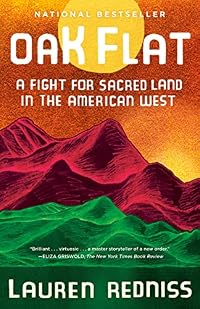
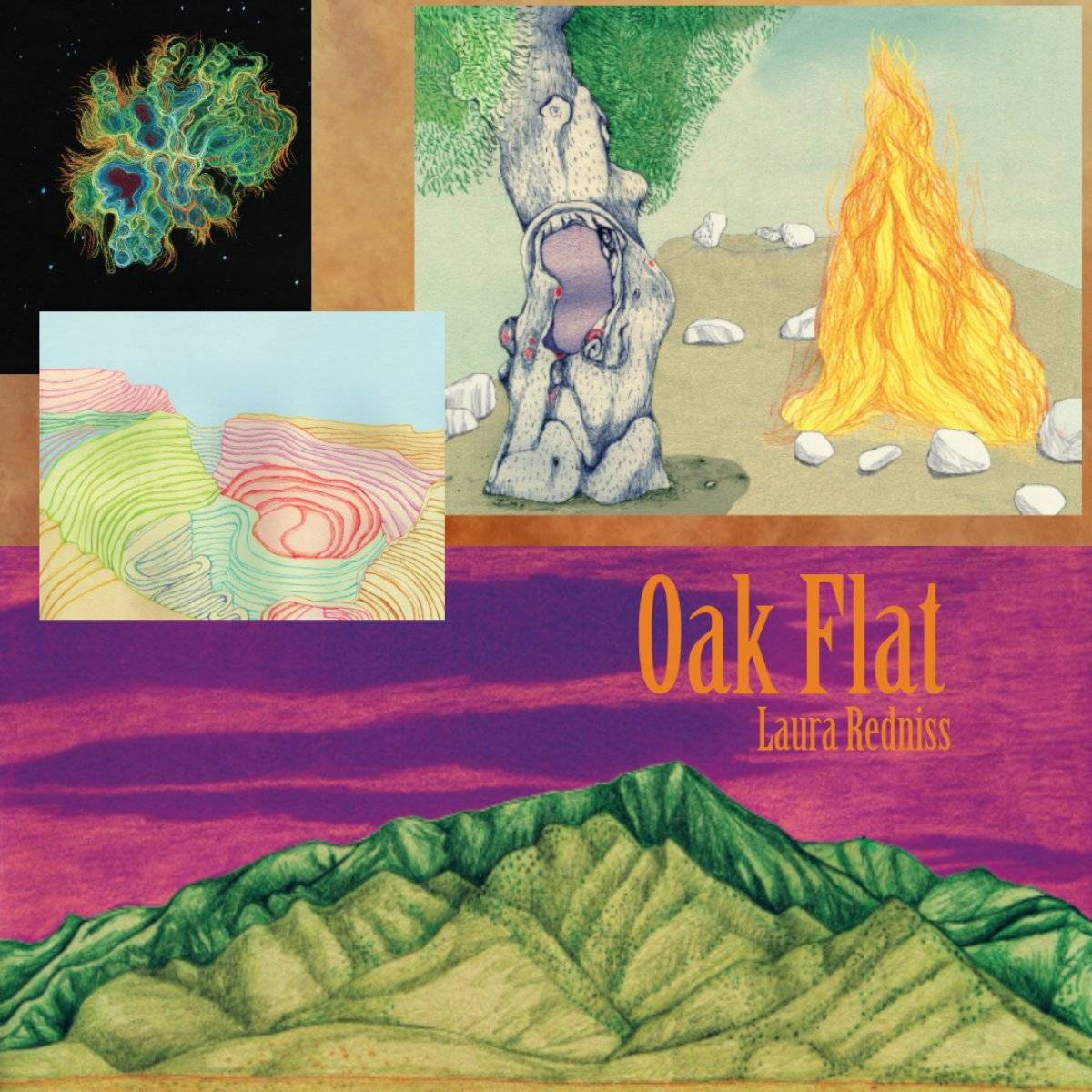
A noticeable shift from her earlier, more visually driven works, leaning far more heavily into biographical and narrative detail. While her artwork remains characteristically beautiful and atmospheric, here it serves more as a complement than the centerpiece. Redniss devotes most of the book to richly reported, empathetic storytelling about the families and histories entwined with Oak Flat.
★★★★
Connective Tissue: Radioactive: Marie & Pierre Curie: A Tale of Love and Fallout, Thunder & Lightning: Weather Past, Present, Future, Maus
A noticeable shift from her earlier, more visually driven works, leaning far more heavily into biographical and narrative detail. While her artwork remains characteristically beautiful and atmospheric, here it serves more as a complement than the centerpiece. Redniss devotes most of the book to richly reported, empathetic storytelling about the families and histories entwined with Oak Flat.
★★★★
Connective Tissue: Radioactive: Marie & Pierre Curie: A Tale of Love and Fallout, Thunder & Lightning: Weather Past, Present, Future, Maus
51labfs39
>49 stretch: Two very interesting (and very different) reads. Are Prisons Obsolete? is an interesting question, and while I can see why she asks the question, I like that you raise the question of what moral obligation the victims have in rehabilitating the perpetrator. Also what do you do with those who have no interest in or capacity for change? I am intrigued by some of the justice systems created in Scandinavia as a more achievable model.
I liked Radioactive quite a bit, but have not read any of her other works.
I liked Radioactive quite a bit, but have not read any of her other works.
52stretch
Adrift in Currents Clean and Clear by Seanan McGuire
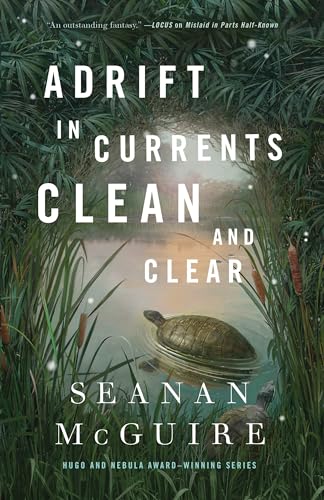
This installment serves as the origin story of Nadya, a girl born in Russia with a limb difference. After being adopted by an American missionary couple who view her as a "project" to be fixed—forcing her into a painful and unwanted prosthetic, Nadya finds a Door through a turtle pond. She emerges in Belyyreka, the Land Beneath the Lake, a breathtaking aquatic realm where she finally feels whole. There, she builds a life among giant turtles and Drowned citizens, finding the family and acceptance that eluded her in the real world.
Despite the imaginative potential of a sub-aquatic civilization, this stands as one of the more lackluster entries in the series. The foreign orphan background is a heavy, complex starting point, yet once Nadya passes through the Door, her cultural displacement is largely sidelined in favor of a standard misfit finds a home arc. While the themes of bodily autonomy and the critique of the savior complex in adoption are poignant if underdveloped, the world of Belyyreka feels less dynamic than previous realms like the Moors or the Confectionery.
★★★
Connective Tissue: Wayward Children, The Book of Lost Things: A Novel
This installment serves as the origin story of Nadya, a girl born in Russia with a limb difference. After being adopted by an American missionary couple who view her as a "project" to be fixed—forcing her into a painful and unwanted prosthetic, Nadya finds a Door through a turtle pond. She emerges in Belyyreka, the Land Beneath the Lake, a breathtaking aquatic realm where she finally feels whole. There, she builds a life among giant turtles and Drowned citizens, finding the family and acceptance that eluded her in the real world.
Despite the imaginative potential of a sub-aquatic civilization, this stands as one of the more lackluster entries in the series. The foreign orphan background is a heavy, complex starting point, yet once Nadya passes through the Door, her cultural displacement is largely sidelined in favor of a standard misfit finds a home arc. While the themes of bodily autonomy and the critique of the savior complex in adoption are poignant if underdveloped, the world of Belyyreka feels less dynamic than previous realms like the Moors or the Confectionery.
★★★
Connective Tissue: Wayward Children, The Book of Lost Things: A Novel
53stretch
An Invitation from a Crab by Panpanya
Translated by Jocelyne Allen
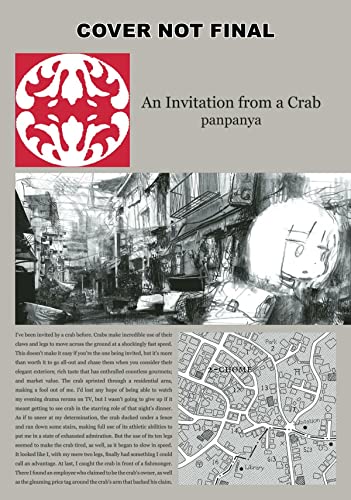
This collection of short stories follows an unnamed protagonist through a series of grounded yet impossible urban landscapes. From a quest to find the perfect grilled fish to a strange encounter with a sentient crab, the narrative drifts between the mundane details of coastal Japanese towns and sudden, quiet descents into the supernatural. Each chapter acts as a standalone vignette, capturing fleeting moments of curiosity in a world where the laws of reality are slightly skewed.
The jarring, beautiful contrast in the illustration style; hyper-detailed, cross-hatched backgrounds that look like charcoal sketches are populated by "doodle-like," simplistic characters lets each story shine its surreal juxtapostion. This visual tension mirrors the storytelling, which treats the bizarre with a nonchalant, everyday attitude. However, while the art is undeniably compelling and meticulously crafted, the stories themselves are often so ephemeral that they lack a strong emotional or narrative anchor. They function more like beautiful, atmospheric postcards than lasting stories, delightful in the moment but not long lasting.
★★★★½
Connective Tissue: Strange Houses
Translated by Jocelyne Allen
This collection of short stories follows an unnamed protagonist through a series of grounded yet impossible urban landscapes. From a quest to find the perfect grilled fish to a strange encounter with a sentient crab, the narrative drifts between the mundane details of coastal Japanese towns and sudden, quiet descents into the supernatural. Each chapter acts as a standalone vignette, capturing fleeting moments of curiosity in a world where the laws of reality are slightly skewed.
The jarring, beautiful contrast in the illustration style; hyper-detailed, cross-hatched backgrounds that look like charcoal sketches are populated by "doodle-like," simplistic characters lets each story shine its surreal juxtapostion. This visual tension mirrors the storytelling, which treats the bizarre with a nonchalant, everyday attitude. However, while the art is undeniably compelling and meticulously crafted, the stories themselves are often so ephemeral that they lack a strong emotional or narrative anchor. They function more like beautiful, atmospheric postcards than lasting stories, delightful in the moment but not long lasting.
★★★★½
Connective Tissue: Strange Houses
54stretch
Blacksad by Juan Díaz Canales & Juanjo Guarnido
Translated by Diana Schutz & Brandon Kander
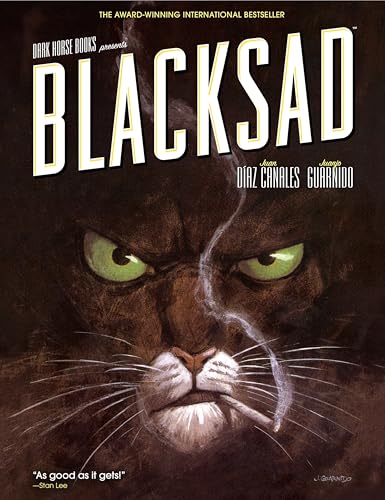
Set in a gritty, anthropomorphic version of mid-century America, the series follows John Blacksad, a cynical black cat working as a private investigator. Each volume plunges him into a different layer of societal decay, from the high-stakes corruption of the film industry to the literal "white supremacy" of a neighborhood ruled by arctic animals. As a WWII veteran and former history student, Blacksad navigates a landscape filled with Cold War paranoia, racial segregation, and the "Red Scare," often finding that the line between the law and true justice is blurry and subjective.
The series is a visual masterpiece, using watercolor art to elevate the stroies into a sophisticated, socially conscious noir. However, the reliance on animal types to signal personality often feels like a narrative shortcut that doesn't always pay off. While specific traitslike the predatory sleekness of a panther or the pack mentality of canine police, work initially, the internal character arcs struggle to maintain momentum against the breakneck speed of the individual mysteries. The result is a protagonist whose past is hinted at through evocative flashbacks but whose emotional development feels fragmented, making it difficult to fully nail down his motivations before the story rushes to its next cinematic confrontation.
★★★★
Connective Tissue: Incognito
Translated by Diana Schutz & Brandon Kander
Set in a gritty, anthropomorphic version of mid-century America, the series follows John Blacksad, a cynical black cat working as a private investigator. Each volume plunges him into a different layer of societal decay, from the high-stakes corruption of the film industry to the literal "white supremacy" of a neighborhood ruled by arctic animals. As a WWII veteran and former history student, Blacksad navigates a landscape filled with Cold War paranoia, racial segregation, and the "Red Scare," often finding that the line between the law and true justice is blurry and subjective.
The series is a visual masterpiece, using watercolor art to elevate the stroies into a sophisticated, socially conscious noir. However, the reliance on animal types to signal personality often feels like a narrative shortcut that doesn't always pay off. While specific traitslike the predatory sleekness of a panther or the pack mentality of canine police, work initially, the internal character arcs struggle to maintain momentum against the breakneck speed of the individual mysteries. The result is a protagonist whose past is hinted at through evocative flashbacks but whose emotional development feels fragmented, making it difficult to fully nail down his motivations before the story rushes to its next cinematic confrontation.
★★★★
Connective Tissue: Incognito
55stretch
Hard Rain Falling by Don Carpenter
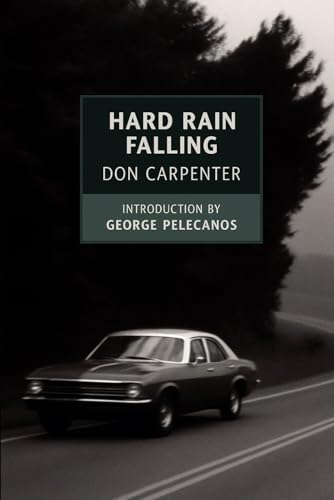
The novel follows a sprawling cast of characters whose lives intersect across the gritty streets of Portland, San Francisco, and the stark confines of a prison cell set in the late 1960s. The narrative centers of an orphan, a career criminal, and various drifters caught in a cycle of desperation and violence, these individuals are drawn into a series of interconnected crimes that expose the hollow core of the American dream.
Carpenter’s prose is lean and unsentimental. The novel excels as a gritty crime story because it prioritizes atmosphere and character over traditional genre tropes; it is less about the heist and more about the crushing weight of systemic failure and personal regret. While the shifting perspectives effectively creates a mosaic of a society in transition. It is a compelling, if bleak, exploration of people who are not just living on the fringes of society, but are being actively consumed by them.
★★★★½
Connective Tissue: The Big Sleep
The novel follows a sprawling cast of characters whose lives intersect across the gritty streets of Portland, San Francisco, and the stark confines of a prison cell set in the late 1960s. The narrative centers of an orphan, a career criminal, and various drifters caught in a cycle of desperation and violence, these individuals are drawn into a series of interconnected crimes that expose the hollow core of the American dream.
Carpenter’s prose is lean and unsentimental. The novel excels as a gritty crime story because it prioritizes atmosphere and character over traditional genre tropes; it is less about the heist and more about the crushing weight of systemic failure and personal regret. While the shifting perspectives effectively creates a mosaic of a society in transition. It is a compelling, if bleak, exploration of people who are not just living on the fringes of society, but are being actively consumed by them.
★★★★½
Connective Tissue: The Big Sleep
56stretch
Days at the Morisaki Bookshop by Satoshi Yagisawa
Translated by Eric Ozawa
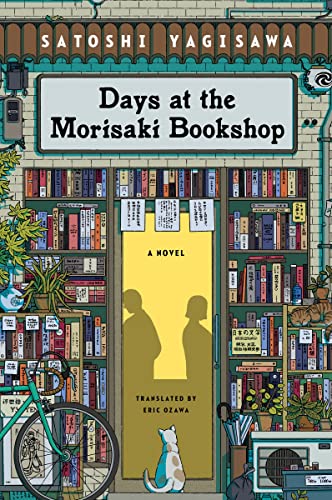
After a devastating heartbreak and the loss of her job, Tatako accepts an offer from her eccentric Uncle Satoru to live in the tiny room above his second-hand bookshop in Jimbocho, Tokyo’s famous book district. Initially disinterested in reading, Tatako gradually finds solace and a new sense of purpose among the stacks of literature and the quirky community of book lovers that frequent the shop. The narrative shifts focus in its later act when Satoru's estranged wife suddenly reappearing, forcing Tatako to step into the role of a mediator and observer as her uncle attempts to reconcile with his past and repair his fractured relationship.
The first half of the novel is a compelling, quiet exploration of healing, using the sensory details of the bookshop to ground Tatako’s emotional recovery. There is a genuine weight to her initial aimlessness, making her transition into a woman who finds meaning in her surroundings feel earned and atmospheric. Unfortunately, the introduction of the aunt in the second half causes the story to lose significant steam. the focus drifts away from Tatako’s internal growth and into a more generic, cozy Japanese domestic drama. This pivot feels largely unnecessary, as it replaces the unique, meditative energy of the bookshop with a sentimental subplot that lacks the narrative tension.
★★★
Connective Tissue: There is No Such Thing as an Easy Job, The Great Passage
Translated by Eric Ozawa
After a devastating heartbreak and the loss of her job, Tatako accepts an offer from her eccentric Uncle Satoru to live in the tiny room above his second-hand bookshop in Jimbocho, Tokyo’s famous book district. Initially disinterested in reading, Tatako gradually finds solace and a new sense of purpose among the stacks of literature and the quirky community of book lovers that frequent the shop. The narrative shifts focus in its later act when Satoru's estranged wife suddenly reappearing, forcing Tatako to step into the role of a mediator and observer as her uncle attempts to reconcile with his past and repair his fractured relationship.
The first half of the novel is a compelling, quiet exploration of healing, using the sensory details of the bookshop to ground Tatako’s emotional recovery. There is a genuine weight to her initial aimlessness, making her transition into a woman who finds meaning in her surroundings feel earned and atmospheric. Unfortunately, the introduction of the aunt in the second half causes the story to lose significant steam. the focus drifts away from Tatako’s internal growth and into a more generic, cozy Japanese domestic drama. This pivot feels largely unnecessary, as it replaces the unique, meditative energy of the bookshop with a sentimental subplot that lacks the narrative tension.
★★★
Connective Tissue: There is No Such Thing as an Easy Job, The Great Passage
57stretch
The Ballad of Black Tom by Victor LaValle
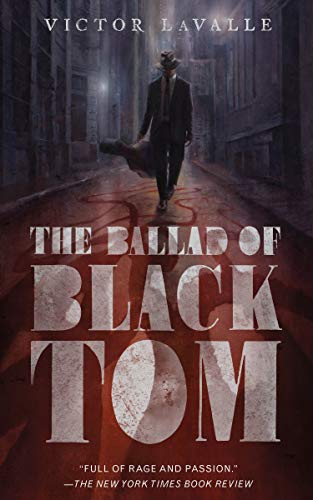
In 1924 Harlem, Charles Thomas Tester is a hustler and medicore musician doing what he must to keep a roof over his father’s head. When he delivers an occult book to a wealthy, eccentric man in Queens, he is drawn into a world of cosmic horror and ancient sorcery that threatens to tear the fabric of reality. The story follows Tom as he navigates the police brutality and systemic racism of Jazz Age New York, eventually crossing paths with a private detective investigating a series of disappearances in the Brooklyn neighborhood of Red Hook. Faced with a world that treats him as a monster, Tom eventually decides to embrace a power far older and more indifferent than human prejudice.
This novella functions as an intentional subversion of a famously bigoted Lovecraft story, but it relies far too heavily on that original framework. Because it clings so tightly to the 1927 source material, the plot can be disjointed and difficult to follow if you aren't already familiar with the specific plot points of "The Horror at Red Hook." The transition from a gritty, street-level narrative about racial injustice to a world-ending occult showdown feels rushed and under-explained, leaving the Cthulhu Mythos elements feeling like thin window dressing. Without more thorough fleshing out of the supernatural mechanics or a more dynamic integration of the cosmic threats, the story remains a reactive critique rather than a compelling, standalone work of horror.
★★★½
Connective Tissue: The Horror at Red Hook
In 1924 Harlem, Charles Thomas Tester is a hustler and medicore musician doing what he must to keep a roof over his father’s head. When he delivers an occult book to a wealthy, eccentric man in Queens, he is drawn into a world of cosmic horror and ancient sorcery that threatens to tear the fabric of reality. The story follows Tom as he navigates the police brutality and systemic racism of Jazz Age New York, eventually crossing paths with a private detective investigating a series of disappearances in the Brooklyn neighborhood of Red Hook. Faced with a world that treats him as a monster, Tom eventually decides to embrace a power far older and more indifferent than human prejudice.
This novella functions as an intentional subversion of a famously bigoted Lovecraft story, but it relies far too heavily on that original framework. Because it clings so tightly to the 1927 source material, the plot can be disjointed and difficult to follow if you aren't already familiar with the specific plot points of "The Horror at Red Hook." The transition from a gritty, street-level narrative about racial injustice to a world-ending occult showdown feels rushed and under-explained, leaving the Cthulhu Mythos elements feeling like thin window dressing. Without more thorough fleshing out of the supernatural mechanics or a more dynamic integration of the cosmic threats, the story remains a reactive critique rather than a compelling, standalone work of horror.
★★★½
Connective Tissue: The Horror at Red Hook
58stretch
Horsefly by Mireille Gagne
Translated by Pablo Strauss
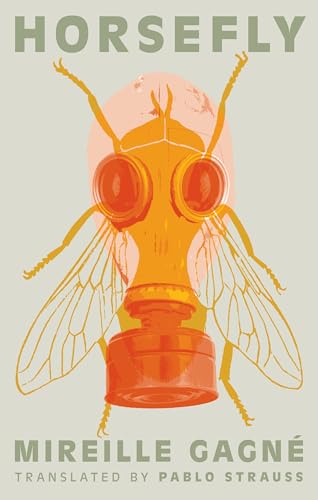
The story alternates between 1942 and 2024 in a remote region of Quebec. In the past, a young entomologist named Thomas is stationed on an island to develop biological weapons, searching for the perfect insect carrier for anthrax. In the present day, a record-breaking heatwave triggers a massive swarm of aggressive horseflies that begin biting the local population. Theodore, a man struggling with apathy and a lacking direction, is bitten and finds himself stirred into a strange, impulsive rage. He soon finds himself on a desperate journey to rescue his grandfather from a nursing home, only to discover that the old man’s dementia is inextricably linked to the dark experiments that occurred on that same island decades ago.
The transition from a local horror story into a full-blown dystopia where humanity is falling prey to strange flights of rage is well-paced, effectively linking military hubris of the past with the environmental consequences of the present. The chilling interlude chapters told from the perspective of a fly. These segments move the book beyond a monster story, honing in on a sense of nature’s vengeance that feels both ancient and inevitable. While the human characters can occasionally feel like mere vessels for the plot, the fly-perspective sections provide a necessary, cold-blooded weight to mild local horror of an insect attack to a global dystopia.
★★★★
Connective Tissue: The Bees
Translated by Pablo Strauss
The story alternates between 1942 and 2024 in a remote region of Quebec. In the past, a young entomologist named Thomas is stationed on an island to develop biological weapons, searching for the perfect insect carrier for anthrax. In the present day, a record-breaking heatwave triggers a massive swarm of aggressive horseflies that begin biting the local population. Theodore, a man struggling with apathy and a lacking direction, is bitten and finds himself stirred into a strange, impulsive rage. He soon finds himself on a desperate journey to rescue his grandfather from a nursing home, only to discover that the old man’s dementia is inextricably linked to the dark experiments that occurred on that same island decades ago.
The transition from a local horror story into a full-blown dystopia where humanity is falling prey to strange flights of rage is well-paced, effectively linking military hubris of the past with the environmental consequences of the present. The chilling interlude chapters told from the perspective of a fly. These segments move the book beyond a monster story, honing in on a sense of nature’s vengeance that feels both ancient and inevitable. While the human characters can occasionally feel like mere vessels for the plot, the fly-perspective sections provide a necessary, cold-blooded weight to mild local horror of an insect attack to a global dystopia.
★★★★
Connective Tissue: The Bees
59stretch
Another dash of quick hits to pretend like I am caught up.
Horror & The Weird:
Infested by Carol Gore – A fun, cathartic creature feature that leans into the "mad scientist" trope with a wink. It isn't trying to be high literature, but it packs enough layers into its novella length to stay engaging until the final sting.
Strange Stones by Edward Lee & Mia SanGiovanni – A raunchy witch story that successfully grafts Lovecraftian cosmic horror onto a much more grounded narrative of a horror convention. It’s a cool, transgressive concept, even if the execution has some very rough, unpolished edges.
Seeing Things by Sonora Taylor – A well-written Young Adult story about a girl seeing the dead. While the prose is strong, the narrative suffers from a significant pacing issue, dragging out the central mystery until the very final pages.
Dystopia & Thrillers:
The Disaster Tourist by Yun Ko-eun – A satirical look at dark tourism that unfortunately lacks the momentum to match its premise. Despite a sharp conceptual hook about a company that sells trips to catastrophe zones, the execution is slow and largely forgettable.
Murder Bimbo by Rebecca Novack – A three-act story with terrible timing. What begins as an interesting political thriller quickly devolves into the worst kind of MFA-style navel-gazing, it flirts with darkness but ultimately lacks the teeth to follow through.
Out of Time by David Klass – An eco-thriller that is fast-paced and occasionally fun, but ultimately buckles under its own weight. It swings for an emotionally manipulative ending it hasn't earned, largely because the story lacks the runway needed to support its grand ambitions.
Graphic Novel:
Locke & Key: Heaven and Earth by Joe Hill and Gabriel Rodríguez – As always, the artwork is stellar and evocative, maintaining the high visual standard of the series. However, as a collection of side stories, it feels non-essential and somewhat forgettable compared to the main arc.
Horror & The Weird:
Infested by Carol Gore – A fun, cathartic creature feature that leans into the "mad scientist" trope with a wink. It isn't trying to be high literature, but it packs enough layers into its novella length to stay engaging until the final sting.
Strange Stones by Edward Lee & Mia SanGiovanni – A raunchy witch story that successfully grafts Lovecraftian cosmic horror onto a much more grounded narrative of a horror convention. It’s a cool, transgressive concept, even if the execution has some very rough, unpolished edges.
Seeing Things by Sonora Taylor – A well-written Young Adult story about a girl seeing the dead. While the prose is strong, the narrative suffers from a significant pacing issue, dragging out the central mystery until the very final pages.
Dystopia & Thrillers:
The Disaster Tourist by Yun Ko-eun – A satirical look at dark tourism that unfortunately lacks the momentum to match its premise. Despite a sharp conceptual hook about a company that sells trips to catastrophe zones, the execution is slow and largely forgettable.
Murder Bimbo by Rebecca Novack – A three-act story with terrible timing. What begins as an interesting political thriller quickly devolves into the worst kind of MFA-style navel-gazing, it flirts with darkness but ultimately lacks the teeth to follow through.
Out of Time by David Klass – An eco-thriller that is fast-paced and occasionally fun, but ultimately buckles under its own weight. It swings for an emotionally manipulative ending it hasn't earned, largely because the story lacks the runway needed to support its grand ambitions.
Graphic Novel:
Locke & Key: Heaven and Earth by Joe Hill and Gabriel Rodríguez – As always, the artwork is stellar and evocative, maintaining the high visual standard of the series. However, as a collection of side stories, it feels non-essential and somewhat forgettable compared to the main arc.
60Dilara86
>58 stretch: I don't know if I want to read this book or hide from it! (By the way, your touchstone leads to the wrong work: Horsefly)
61lilisin
>53 stretch:
I'm glad you enjoyed this. You're so quick about immediately reading recommendations, I'm impressed!
Atmospheric postcards is a great description but I don't think that's a minus point as it leads to great re-readability. Like a piece of candy that leaves no aftertaste but as soon as you have another piece the rush of excitement is practically guaranteed.
I'm glad you enjoyed this. You're so quick about immediately reading recommendations, I'm impressed!
Atmospheric postcards is a great description but I don't think that's a minus point as it leads to great re-readability. Like a piece of candy that leaves no aftertaste but as soon as you have another piece the rush of excitement is practically guaranteed.
62stretch
>60 Dilara86: Thanks the trouble with putting these up all at the same time get lost in the touchstones. Horsefly it is a strange one and defientely not for someone creeped out about the intimate details of insects. It's pretty tame on my scale of horrorific reading but may actually be way worst for those not as broken.
>61 lilisin: Turns out Hoopla has so much Manga on it is a quick turn for something interesting. And An Invitation from a Crab is such a strange and delightful gem. You're right it's not minus point, I keep looking back at some of the screenshots I took and they are just as fun to look at as the first time. Panpanya really nailed the joyful frivilousness of it all (in a good way).
>61 lilisin: Turns out Hoopla has so much Manga on it is a quick turn for something interesting. And An Invitation from a Crab is such a strange and delightful gem. You're right it's not minus point, I keep looking back at some of the screenshots I took and they are just as fun to look at as the first time. Panpanya really nailed the joyful frivilousness of it all (in a good way).
63LolaWalser
>43 stretch:
Nice. Years ago I bought a box of black Tombows for my niece after seeing them in your thread (I believe...); they were much appreciated.
Nice. Years ago I bought a box of black Tombows for my niece after seeing them in your thread (I believe...); they were much appreciated.
64RidgewayGirl
>55 stretch: Isn't A Hard Rain Falling great in a kick in the teeth kind of way? I sold this one without reading it first to my book club and the ones who finished it and showed up loved it and counted it as the best book of the year. But a lot of people didn't show up because they couldn't stomach it, which is fair. It's not a warm-hearted book.
66stretch
>63 LolaWalser: The Tombow Mono and Mono 100s are awesome, I like them quite a bit even better than Hi-Uni legends, glad they are liked.
>64 RidgewayGirl: Yeah A hard Rain Falling went somewhere I was not expecting, I didn't have much info going in so the second and third parts are exactly a like you said a great kick in the teeth. This will definitely end on the best list of the year and one I don't think I will ever forget.
>65 dchaikin: Everything is good, just one of those years where the job consumes months at a time and I get to play catch up on everything else, which just means I am behind always.
>64 RidgewayGirl: Yeah A hard Rain Falling went somewhere I was not expecting, I didn't have much info going in so the second and third parts are exactly a like you said a great kick in the teeth. This will definitely end on the best list of the year and one I don't think I will ever forget.
>65 dchaikin: Everything is good, just one of those years where the job consumes months at a time and I get to play catch up on everything else, which just means I am behind always.
67FlorenceArt
>53 stretch: This sounds very interesting ! Pity it doesn’t seem to be translated to French (yet?).
68stretch
Mongol* 2

The Mongol 2 is a modern reinterpretation of a classic yellow pencil design, produced using contemporary materials and manufacturing methods while retaining a somewhat familiar visual profile. Its manufacture has become something of a curiosity in the pencil community, with recurring rumors of a CalCedar–Musgrave collaboration behind the scenes. In reality, evidence points to it being a CalCedar‑produced pencil built as a standalone effort
The pencil features a softened hexagonal incense‑cedar body with a durable yellow lacquer finish. The coating is applied more thickly than on earlier generations, resulting in a smooth surface that resists wear during everyday use. The graphite core performs in the HB–B range. Line weight is darker than standard #2 pencils, making it suitable for writing, sketching, and general drafting. While not as smooth as premium pencils, the core has a stronger point retention. Sharpening is clean and efficient. The cedar casing cuts evenly without splintering, producing a stable point with minimal breakage. The brass ferrule, finished with black paint at both ends, is securely crimped and well aligned. The attached pink rubber eraser removes graphite effectively and cleanly. As with many rubber erasers, minor crumbling may occur during extended use, but smudging is minimal. Branding is applied in black gloss print and the Mongol 2 badging logo with incensed cedar inscribed on the reverse. The cedar smell is instense with this one.
Overall, the Mongol 2 is a functional, medium‑dark writing pencil with a recognizable design, solid materials, and consistent performance. It is well suited for users who prefer a darker line than a standard #2 and appreciate manufacturing to modern production standards. While it is a great modern pencil for the Mongol name, it is not quite the nostalgia‑filled equivalent of the original 482—especially without the iconic Mongol typeface and the “482” designation that defined the classic. Still, it is an enjoyable pencil to use, and it is encouraging to see the Mongol name alive and evolving. With continued refinement, there is hope that the spirit of the 482 will never be lost again.
*As a fun aside from the packaging, I learned that the Mongol name comes from John Eberhard Faber, who served as head of sales at the Eberhard Faber Pencil Company in the early 1900s and personally named the pencil. In later interviews, Eberhard Faber IV (his relative) explained that the name Mongol came from Purée Mongole, a thick, yellow soup popular in fine European dining at the time.
Wood: Incense cedar
Core: HB–B equivalent
Shape: Hexagonal
Finish: Yellow lacquer
Ferrule: Brass with black painted top and bottom
Eraser: Soft pink rubber
Markings: Black gloss branding with a new simpler Mongol font and 2 shield logo
Origin: Japan

The Mongol 2 is a modern reinterpretation of a classic yellow pencil design, produced using contemporary materials and manufacturing methods while retaining a somewhat familiar visual profile. Its manufacture has become something of a curiosity in the pencil community, with recurring rumors of a CalCedar–Musgrave collaboration behind the scenes. In reality, evidence points to it being a CalCedar‑produced pencil built as a standalone effort
The pencil features a softened hexagonal incense‑cedar body with a durable yellow lacquer finish. The coating is applied more thickly than on earlier generations, resulting in a smooth surface that resists wear during everyday use. The graphite core performs in the HB–B range. Line weight is darker than standard #2 pencils, making it suitable for writing, sketching, and general drafting. While not as smooth as premium pencils, the core has a stronger point retention. Sharpening is clean and efficient. The cedar casing cuts evenly without splintering, producing a stable point with minimal breakage. The brass ferrule, finished with black paint at both ends, is securely crimped and well aligned. The attached pink rubber eraser removes graphite effectively and cleanly. As with many rubber erasers, minor crumbling may occur during extended use, but smudging is minimal. Branding is applied in black gloss print and the Mongol 2 badging logo with incensed cedar inscribed on the reverse. The cedar smell is instense with this one.
Overall, the Mongol 2 is a functional, medium‑dark writing pencil with a recognizable design, solid materials, and consistent performance. It is well suited for users who prefer a darker line than a standard #2 and appreciate manufacturing to modern production standards. While it is a great modern pencil for the Mongol name, it is not quite the nostalgia‑filled equivalent of the original 482—especially without the iconic Mongol typeface and the “482” designation that defined the classic. Still, it is an enjoyable pencil to use, and it is encouraging to see the Mongol name alive and evolving. With continued refinement, there is hope that the spirit of the 482 will never be lost again.
*As a fun aside from the packaging, I learned that the Mongol name comes from John Eberhard Faber, who served as head of sales at the Eberhard Faber Pencil Company in the early 1900s and personally named the pencil. In later interviews, Eberhard Faber IV (his relative) explained that the name Mongol came from Purée Mongole, a thick, yellow soup popular in fine European dining at the time.
69kidzdoc
I particularly enjoyed your review of the Mongol 2 pencil, Kevin, as I recently purchased a box of 12 of them; I use pencils on a nearly daily basis. It's a great and very affordable instrument, especially in comparison to the Blackwing Matte, the one I had been using the most beforehand. I don't like the Mongol 2's eraser as much, though, but I do keep a Pentel Hi-Polymer Eraser at hand.
70stretch
>69 kidzdoc: Thanks. Yeah the eraser is not the best, pink rubber erasers live on a spectrum of absolute garabge to meh not bad, the Pentel Hi-Polymer is great as far as erasers, a can't really go wrong. It wouldn't be the Mongol without a pink eraser though.
These are a much more afforadable alternative to Blackwings, they remind me a lot of the blue and orange Palominos that CalCedar discontinued., although those had a polymer eraser.
These are a much more afforadable alternative to Blackwings, they remind me a lot of the blue and orange Palominos that CalCedar discontinued., although those had a polymer eraser.
71kidzdoc
>70 stretch: The Markon 2s are a significant upgrade to the generic yellow pencils I was most familiar with, and I'll probably purchase them from now on. I did accidentally buy two 12 count boxes of Blackwings Matte pencils earlier, so those combined with my 12 Markon 2 pencils means that it will be quite some time before I need any new ones!
72stretch
Angel Down by Daniel Kraus
Angel Down is a brutal read. The violence of the war is stark, unrelenting, and deeply uncomfortable. Kraus does no flinch from the physical devastation of war, rendering it in all is vivid, suffocating detail. But what lingers after all the bloodshed is something more punishing about humanity, the unblinking insistence on the futility of it all.
Operating as both a visceral horror story and a bleak meditation on human flaws set in the chaos of the War to End all Wars, as a group of 5 lackluster soldiers are assigned a task 'taking care of' a problem in no man's land. Kraus leans hard into the genre elements of body horror, surreal imagery, and creeping sense of dread, but the core of the story remains very human, very grounded in the reality of choice. The soliders at the center of the story are not heroes, they're exhausted, disoriented, haunted, and morally compromised; their struggle feels less like a mission and more like an inevitable slide toward collapse. Kraus paints war not as a proving ground or even a tragedy with meaning, but as a grinding, indifferent force that strips away identity, purpose, and hope. There’s no catharsis here, no clean resolution, everything the characters endure is swallowed by something larger and utterly uncaring.
What’s striking is how comfortably Angel Down straddles the line between literary fiction and genre fiction. It leans into its genre roots with Kraus is in complete control. His prose is sharp and deliberate, often bordering on hallucinatory. Pacing the story that keeps the tension coiled tight, even in quieter moments. The dialogue feels raw and authentic, and the internal monologues carry a weight that reinforces the book’s themes.
This will easily be one of my favorite reads of the year. It’s not an easy book, and it’s certainly not a comforting one. It’s still a little astonishing to see a book like this recognized at such a high level. That a novel so unapologetically steeped in genre conventions could win a Pulitzer Prize feels, in its own way, as disruptive as the book itself.
★★★★★
Connective Tissue: All Quiet of the Western Front, Whalefall
Angel Down is a brutal read. The violence of the war is stark, unrelenting, and deeply uncomfortable. Kraus does no flinch from the physical devastation of war, rendering it in all is vivid, suffocating detail. But what lingers after all the bloodshed is something more punishing about humanity, the unblinking insistence on the futility of it all.
Operating as both a visceral horror story and a bleak meditation on human flaws set in the chaos of the War to End all Wars, as a group of 5 lackluster soldiers are assigned a task 'taking care of' a problem in no man's land. Kraus leans hard into the genre elements of body horror, surreal imagery, and creeping sense of dread, but the core of the story remains very human, very grounded in the reality of choice. The soliders at the center of the story are not heroes, they're exhausted, disoriented, haunted, and morally compromised; their struggle feels less like a mission and more like an inevitable slide toward collapse. Kraus paints war not as a proving ground or even a tragedy with meaning, but as a grinding, indifferent force that strips away identity, purpose, and hope. There’s no catharsis here, no clean resolution, everything the characters endure is swallowed by something larger and utterly uncaring.
What’s striking is how comfortably Angel Down straddles the line between literary fiction and genre fiction. It leans into its genre roots with Kraus is in complete control. His prose is sharp and deliberate, often bordering on hallucinatory. Pacing the story that keeps the tension coiled tight, even in quieter moments. The dialogue feels raw and authentic, and the internal monologues carry a weight that reinforces the book’s themes.
This will easily be one of my favorite reads of the year. It’s not an easy book, and it’s certainly not a comforting one. It’s still a little astonishing to see a book like this recognized at such a high level. That a novel so unapologetically steeped in genre conventions could win a Pulitzer Prize feels, in its own way, as disruptive as the book itself.
★★★★★
Connective Tissue: All Quiet of the Western Front, Whalefall
73labfs39
>72 stretch: I knew nothing about this book, not sure I want to tackle it at the moment, but one for the list. BTW, your touchstone goes to "Interactive Computer Graphics: A Top-Down Approach with OpenGL".
74stretch
>73 labfs39: Thanks, I am bad at checking those after I add them in the text.
75stretch
Now You’re One of Us by Asa Nonami
Translated by Michael Volek and Mitsuko Volek
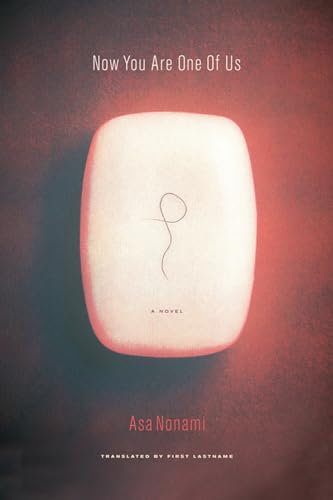
Now You’re One of Us by Asa Nonami is a genuinely suffocating read. If you’re looking for a domestic horror story that trades jump scares for a quiet, unrelenting psychological rot, this is exactly it.
The story follows Noriko as she marries into the Shiga clan, moving into a massive family estate that feels like a gilded cage from day one. What makes it so deeply uncomfortable is that the family isn’t composed of obvious villains. They are cheerful, welcoming, and seemingly perfect. Their uniformity is a weapon. he book explores the nature of belonging as a form of total absorption, where the individual is systematically erased to serve the collective. The pacing is masterfully tight, turning mundane household rituals into a series of psychological traps. You watch the slow erosion of Noriko’s autonomy as she’s forced into an inevitable slide toward assimilation. It’s a brilliant look at societal conformity and the weight of isolation within a crowded house.
The "drugging" aspect of the narrative is where the horror becomes physical and fits perfectly with the themes found in Jordan Peele’s Get Out. Much like the "Sunken Place," the use of substances in the Shiga household isn’t just about control; it’s about the forced suppression of the self to ensure the "vessel" (the family unit) remains undisturbed. The gaslighting and the medicinal care Noriko receives are designed to break her will, the theft of her agency. It transforms a marriage into a hostile takeover, making the act of "becoming one of us" feel like a death sentence for the soul. And lays the trap for the next victims.
★★★★
Connective Tissue: We have Always Lived in a Castle
Translated by Michael Volek and Mitsuko Volek
Now You’re One of Us by Asa Nonami is a genuinely suffocating read. If you’re looking for a domestic horror story that trades jump scares for a quiet, unrelenting psychological rot, this is exactly it.
The story follows Noriko as she marries into the Shiga clan, moving into a massive family estate that feels like a gilded cage from day one. What makes it so deeply uncomfortable is that the family isn’t composed of obvious villains. They are cheerful, welcoming, and seemingly perfect. Their uniformity is a weapon. he book explores the nature of belonging as a form of total absorption, where the individual is systematically erased to serve the collective. The pacing is masterfully tight, turning mundane household rituals into a series of psychological traps. You watch the slow erosion of Noriko’s autonomy as she’s forced into an inevitable slide toward assimilation. It’s a brilliant look at societal conformity and the weight of isolation within a crowded house.
★★★★
Connective Tissue: We have Always Lived in a Castle
76stretch
USMNT 2026 World Cup Roster
Role | Name | POS | Age | Value(m) | League
--------------------------------------------------------------------
Goal Keepers

 Brady, Chris | GK | 22 | 2.50 | MLS
 Freese, Matt | GK | 27 | 2.00 | MLS
 Turner, Matt | GK | 31 | 2.50 | MLS

Defenders

 Arfsten, Max | LW | 25 | 4.50 | MLS
 Dest, Sergino | RB | 25 | 18.00 | Eredivisie
 Freeman, Alex | RB | 21 | 3.50 | La Liga
 McKenzie, Mark | CB | 27 | 6.00 | Ligue 1
 Ream, Tim | CB | 38 | 0.20 | MLS
 Richards, Chris | CB | 26 | 25.00 | EPL
 Robinson, Antonee | LB | 28 | 25.00 | EPL
 Robinson, Miles | CB | 29 | 3.50 | MLS
 Scally, Joe | RB | 23 | 7.00 | Bundesliga
 Trusty, Auston | CB | 27 | 6.00 | Scottish Prem

Midfielders

 Adams, Tyler DM | 27 | 25.00 | EPL
 Berhalter, Sebastian CM | 25 | 5.00 | MLS
 McKennie, Weston CM | 27 | 30.00 | Serie A
 Roldan, Cristian CM | 30 | 3.50 | MLS

Attacking Midfielders

 Aaronson, Brenden | AM | 25 | 18.00 | Championship
 Pulisic, Christian | RW | 27 | 50.00 | Serie A
 Reyna, Gio | AM | 23 | 4.00 | Bundesliga
 Tillman, Malik | AM | 23 | 30.00 | Bundesliga
 Weah, Tim | RM | 26 | 20.00 | Ligue 1
 Zendejas, Alejandro | RW | 28 | 10.00 | Liga MX

Strikers

 Balogun, Folarin | CF | 24 | 30.00 | Ligue 1
 Pepi, Ricardo | CF | 23 | 25.00 | Eredivisie
 Wright, Haji | CF | 28 | 14.00 | Championship
Stats

MLS | 8
La Liga | 1
Scottish Premiership | 1
Liga MX | 1
Erdivise | 2
Serie A | 2
Championship | 2
Ligue 1 | 3
EPL | 3
Bundesliga | 3
--------------------
Domestic = 8
International = 12

Postional Count:

GK	3

RB	3
CB	5
LB	1

DM	1
CM	3
AM	4
RM	1

LW	1
RW	2

CF	3
---------------------------------
Average Age = 26.3
Avg Market Value (m) = 14.2
77stretch
My Proably Wrong Predicted Starting Lineup: 4-2-3-1
In Goal --> Matt Turner/Matt Freese (Doesn't Matter the Matts are esstenitally the Same)
LB/RB --> Antonee Robinson (left); Sergino Dest (right)
CB --> Chris Richards; Auston Trusty (Not a popular paring)
Midfield --> Tyler Adams; Weston McKennie
Attack --> Tim Weah (left); Malik Tillman (center); Christan Pulisic (right)
Forward --> Folarin Balogun
I actually a 3 at the back the Dest and playing up the field, but it doesn't look like we are going to do that.
In Goal --> Matt Turner/Matt Freese (Doesn't Matter the Matts are esstenitally the Same)
LB/RB --> Antonee Robinson (left); Sergino Dest (right)
CB --> Chris Richards; Auston Trusty (Not a popular paring)
Midfield --> Tyler Adams; Weston McKennie
Attack --> Tim Weah (left); Malik Tillman (center); Christan Pulisic (right)
Forward --> Folarin Balogun
I actually a 3 at the back the Dest and playing up the field, but it doesn't look like we are going to do that.
78stretch
2026 World Cup:
Host Nations: USA, Canada, Mexico
Group Stage:
Plus and minus numbers are the goal differential, best third place teams advance to the elimination games, this format sucks but it is what it is.
Group A:
Group B:
Group C:
Group D:
Group E:
Group F:
Group G:
Group H:
Group I:
Group J:
Group K:
Group L:
Best 3rd Placed Teams:
Group Stage thoughts: Through the 1st round, like the aspects of the expanded tournament, the increase has great stories and outcomes are fun when bigger teams underestimate little countries, even if blowouts increase as a possibility. The number of third place teams going through doesn't feel great, but we'll see how it shakes out.
Knockout:
Round of 32:
Round of 16:
Quarter Finals:
Semi-Finals:
Final:
Rooting Interests
Host Nations: USA, Canada, Mexico
Group Stage:
Plus and minus numbers are the goal differential, best third place teams advance to the elimination games, this format sucks but it is what it is.
Group A:
- Mexico | 3-0-0 | +6
South Africa | 1-1-1 | -1
Korea Republic | 1-0-1 | -1
Czechia | 0-1-2 | -4
Group B:
- Switzerland | 2-1-0 | +4
Canada | 1-1-1 | +5
Bosnia and Herzegovina | 1-1-1 | -1
Qatar | 0-1-2 | -8
Group C:
- Brazil | 2-1-0 | +6
Morocco | 2-1-0 | +3
Scotland | 1-0-2 | -3
Haiti | 0-0-3 | -6
Group D:
- USA | 2-0-1 | +4
Australia | 1-1-1 | 0
Paraguay | 1-1-1 | -2
Turkiye | 1-0-2 | -2
Group E:
- Germany | 2-0-1 | +6
Cote d'Ivoire | 2-0-1 | +2
Ecuador | 1-1-1 | 0
Curacao | 0-1-2 | -8
Group F:
- Netherlands | 2-1-0 | +6
Japan | 1-2-0 | +4
Sweden | 1-1-1 | 0
Tunisia | 0-0-3 | -10
Group G:
- Belgium | 0-2-0 | 0
Egypt | 0-1-0 | 0
IR Iran | 0-2-0 | 0
New Zealand | 0-1-0 | 0
Group H:
- Spain | 1-1-0 | +4
Cabo Verde| 0-2-0 | 0
Uruguay | 0-2-0 | 0
Saudi Arabia | 0-1-1 | -4
Group I:
- Norway | 1-0-0 | +3
France | 0-0-0 | +2
Senegal | 0-0-0 | -2
Iraq | 0-0-0 | -3
Group J:
- Argentina | 1-0-0 | +3
Austria | 1-0-0 | +2
Jordan | 0-0-1 | -2
Algeria| 0-0-1 | -3
Group K:
- Colombia | 1-0-0 | +2
Portugal | 0-1-0 | 0
Congo DR | 0-1-0 | 0
Uzbekistan | 0-0-1 | -2
Group L:
- England | 1-0-0 | +2
Ghana | 1-0-0 | +1
Panama | 0-0-1 | -1
Croatia | 0-0-1 | -2
Best 3rd Placed Teams:
-
1. Sweden
2. Scotland
3. Paraguay
4. Belgium
5. Portugal
6. Spain
7. Czechia
8. Ecuador
9. Bosnia and Herzegovina
10. Panama
11. Jordan
12. Senegal
Group Stage thoughts: Through the 1st round, like the aspects of the expanded tournament, the increase has great stories and outcomes are fun when bigger teams underestimate little countries, even if blowouts increase as a possibility. The number of third place teams going through doesn't feel great, but we'll see how it shakes out.
Knockout:
Round of 32:
Round of 16:
Quarter Finals:
Semi-Finals:
Final:
Rooting Interests
- Heart = USA
Head = France
Secondary Head but really doesn't have a chance = Spain
Fun but dumb pick: Norway
Golden Boot
Golden Ball
Silver Ball
79SassyLassy
>77 stretch: Very brave - are you going to any games?
80stretch
>79 SassyLassy: I do have a ticket to Match 87, which is a knockout game between Group J winners v Group H runners-up, I think? in Miami. The math is hard to figure out with the Thrid place teams moving to the knockout stages.
81stretch
About a Place in the Kinki Region by Sesuji
Translated by Michael Blaskowsky
If you’re looking for a found-footage horror story that trades cheap paranormal jumps for a quiet, unrelenting psychological rot, this is it.
The narrative follows a writer analyzing a collection of seemingly unrelated articles, interviews, and forum posts about an urban legend in Japan's Kinki region, only to watch a massive, terrifying web form out of the static. It is built out of mundane conversations, eerie internet threads, and forgotten folklore.
The book explores the nature of curiosity as a form of total entrapment, turning ordinary journalistic research into a series of psychological traps. You watch the slow erosion of the investigator's safety as they face an inevitable slide toward madness. The transcripts and the breadcrumbs the author follows are designed to break your skepticism. It transforms an urban legend into a trap for the next victims.
★★★★
Connective Tissue: rekt, The Historian
Translated by Michael Blaskowsky
If you’re looking for a found-footage horror story that trades cheap paranormal jumps for a quiet, unrelenting psychological rot, this is it.
The narrative follows a writer analyzing a collection of seemingly unrelated articles, interviews, and forum posts about an urban legend in Japan's Kinki region, only to watch a massive, terrifying web form out of the static. It is built out of mundane conversations, eerie internet threads, and forgotten folklore.
The book explores the nature of curiosity as a form of total entrapment, turning ordinary journalistic research into a series of psychological traps. You watch the slow erosion of the investigator's safety as they face an inevitable slide toward madness. The transcripts and the breadcrumbs the author follows are designed to break your skepticism. It transforms an urban legend into a trap for the next victims.
★★★★
Connective Tissue: rekt, The Historian

