Folio Archives 461: In Parenthesis by David Jones 2014
Talk Folio Society Devotees
Join LibraryThing to post.
1wcarter
In Parenthesis (seinnyessit e gledyf ym penn mameu) by David Jones 2014
This is quite simply a very different book about the First World War that was first published in 1937.
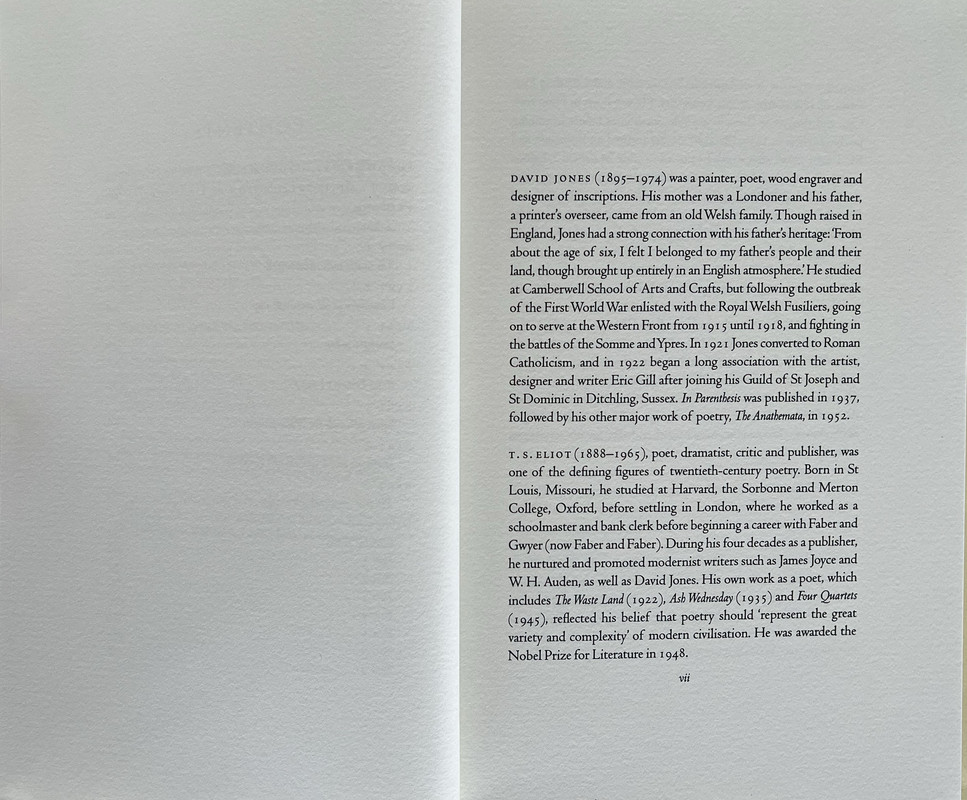
David Jones (1895-1974) was a painter, poet, designer and wood engraver. His father was Welsh and he was strongly influenced by the Welsh literary tradition.
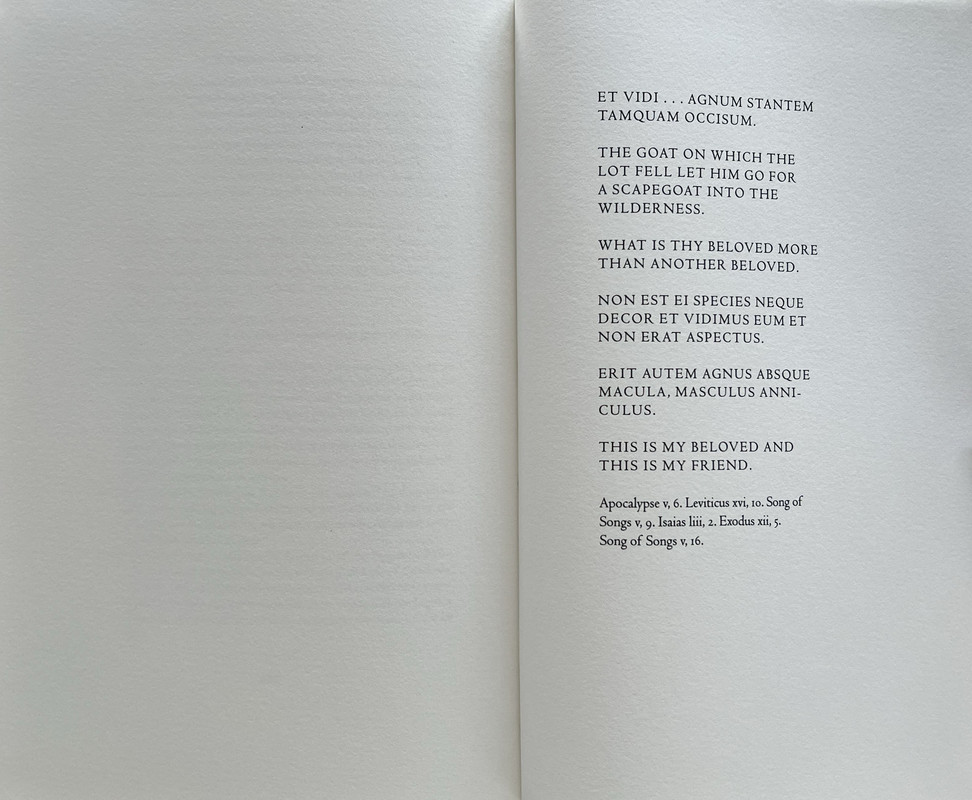
Drawing on his own experiences, Jones’ novel follows an English private and his comrades as they travel from England to partake in the 1916 Battle of the Somme. Mixed in with the recent history are references to ancient history, English and Welsh heritage, myths, the legends of King Arthur, Lewis Carroll and even extracts from Shakespeare.
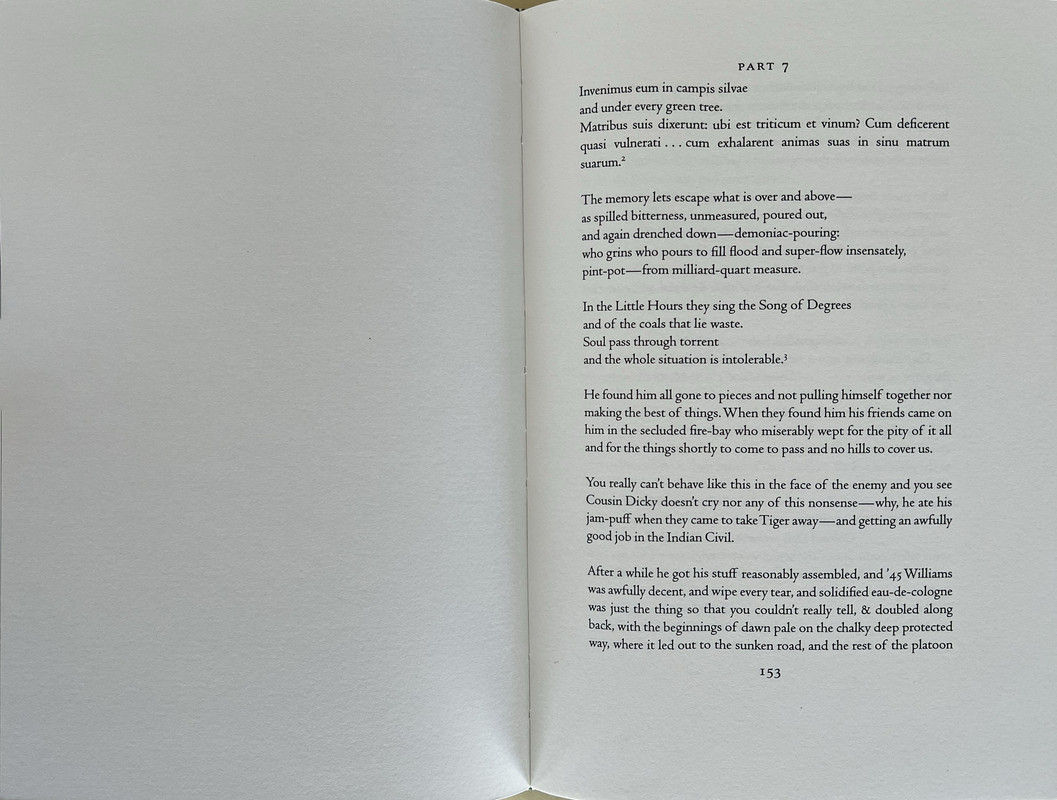
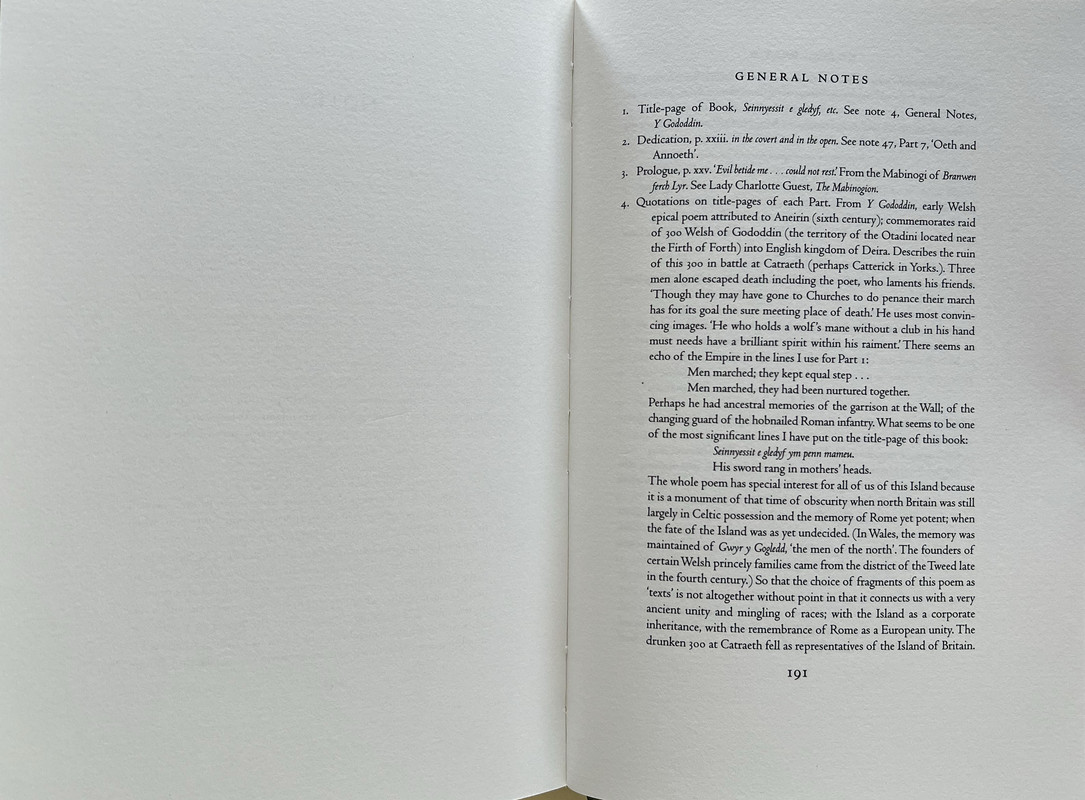
The book is effectively a long prose poem, and there are copious notes to link the reader to the innumerable references to other works.
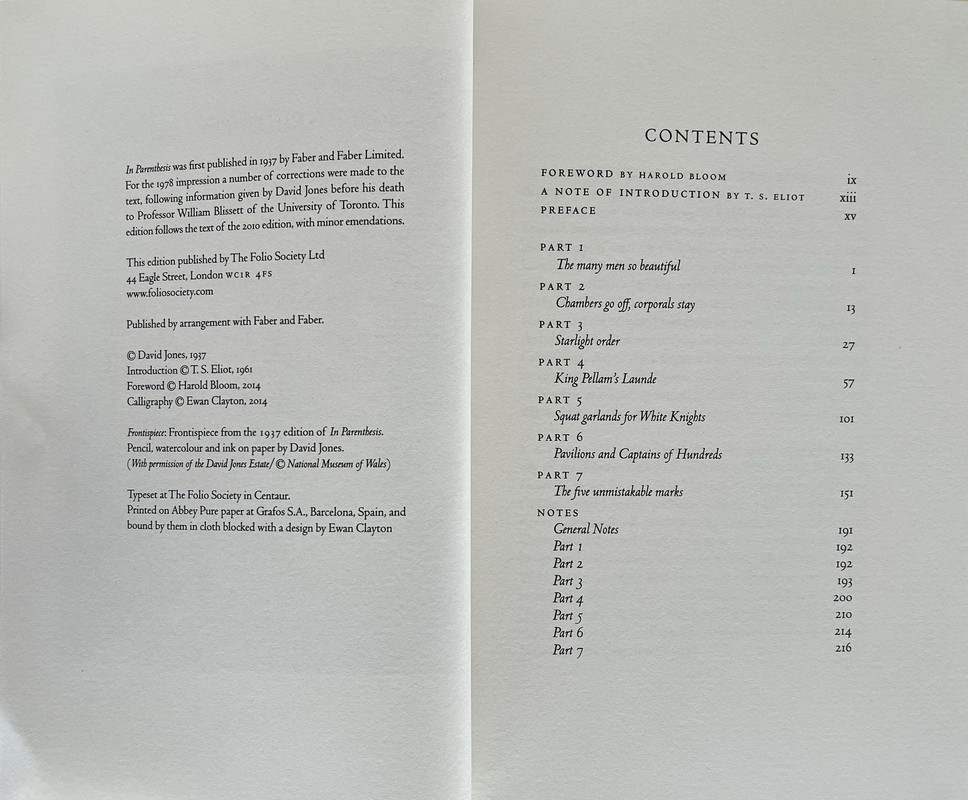
The book is divided into seven parts that cover in order the march to Southampton and the crossing of the English Channel; training in France and the movement to the front where they experience shelling; the life in the trenches at the front; life in the front line as typified by an archetypical Welsh soldier; life behind the lines; movements between different fronts; and finally partaking in a frontal assault. All these sections are interspersed and integrated with the references mentioned above.
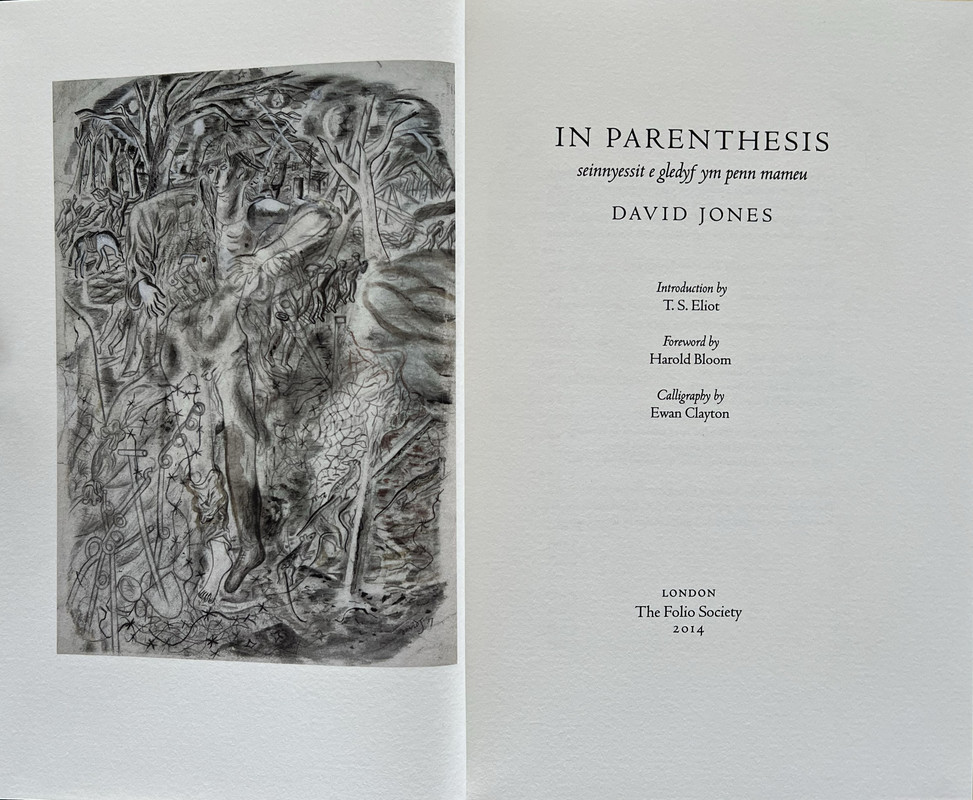
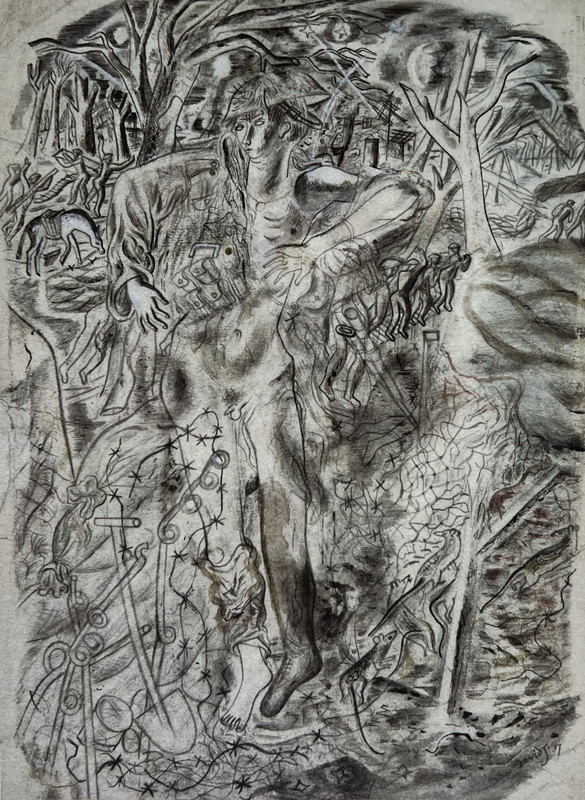
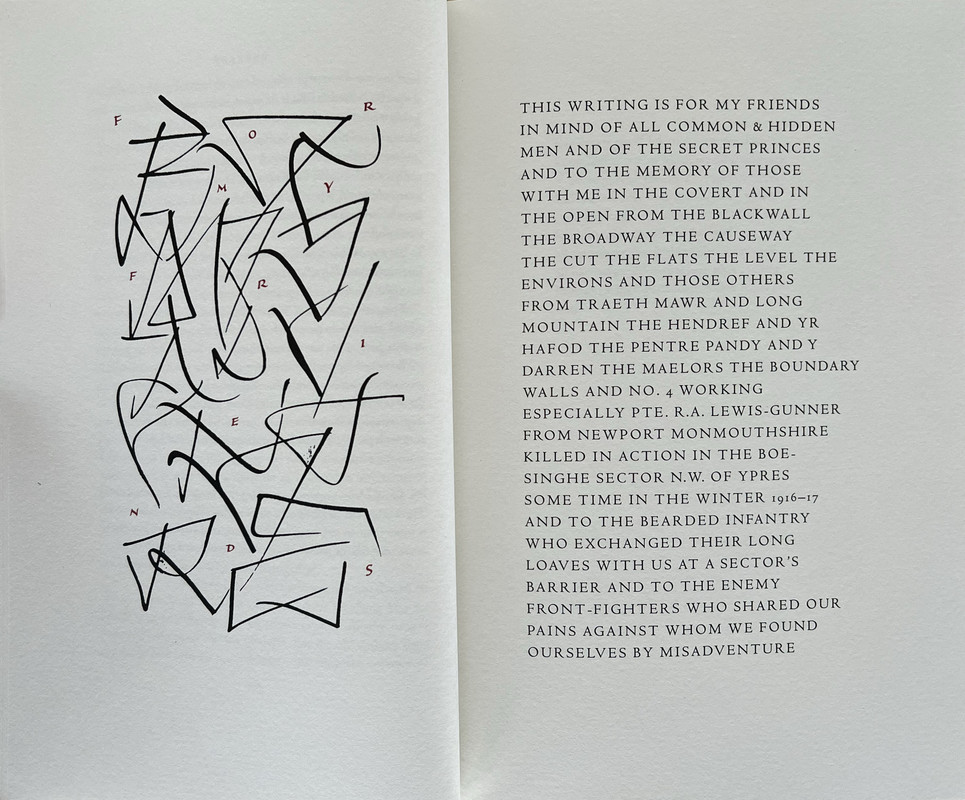
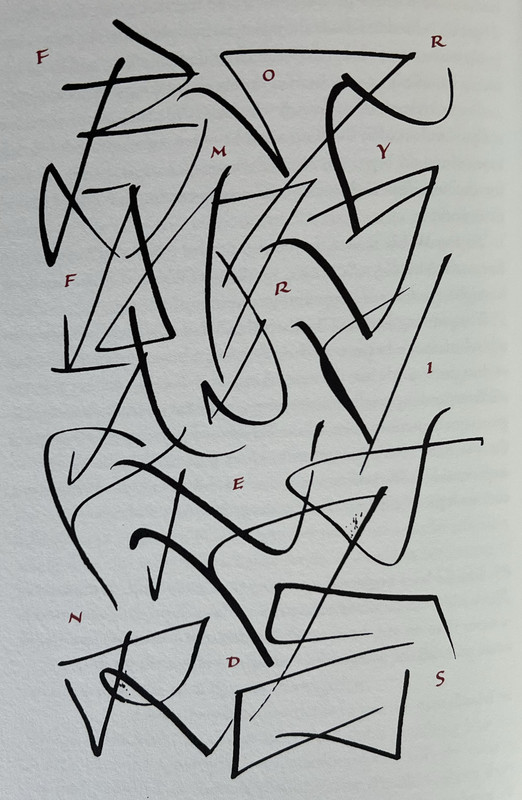
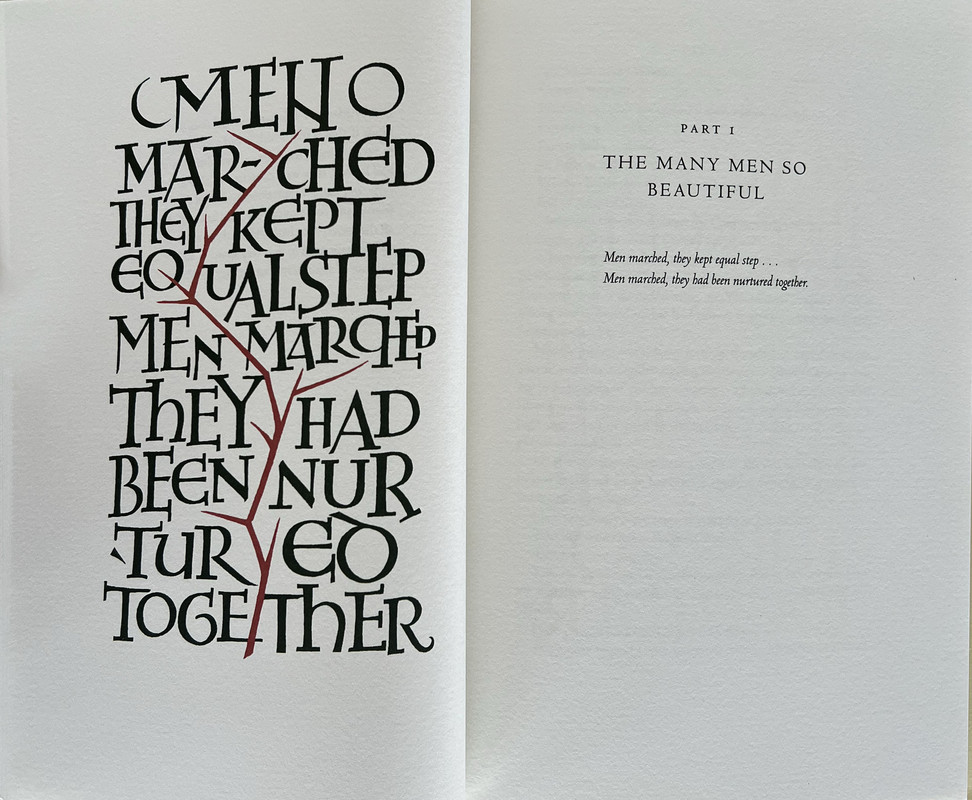
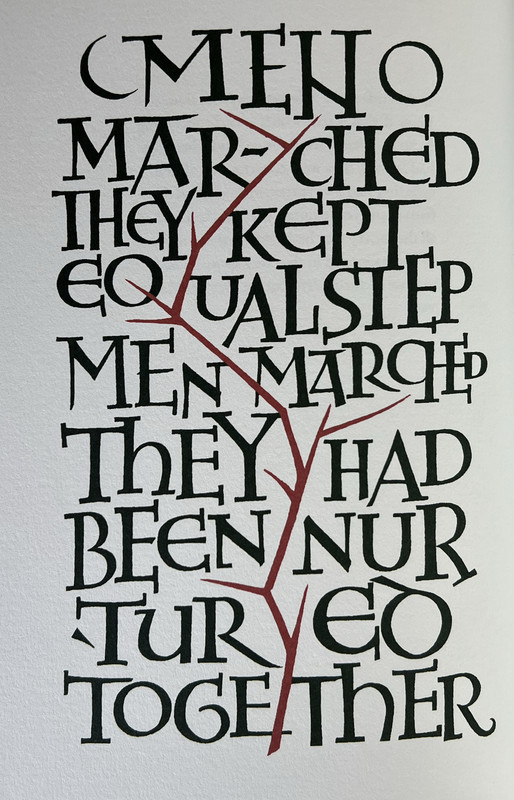
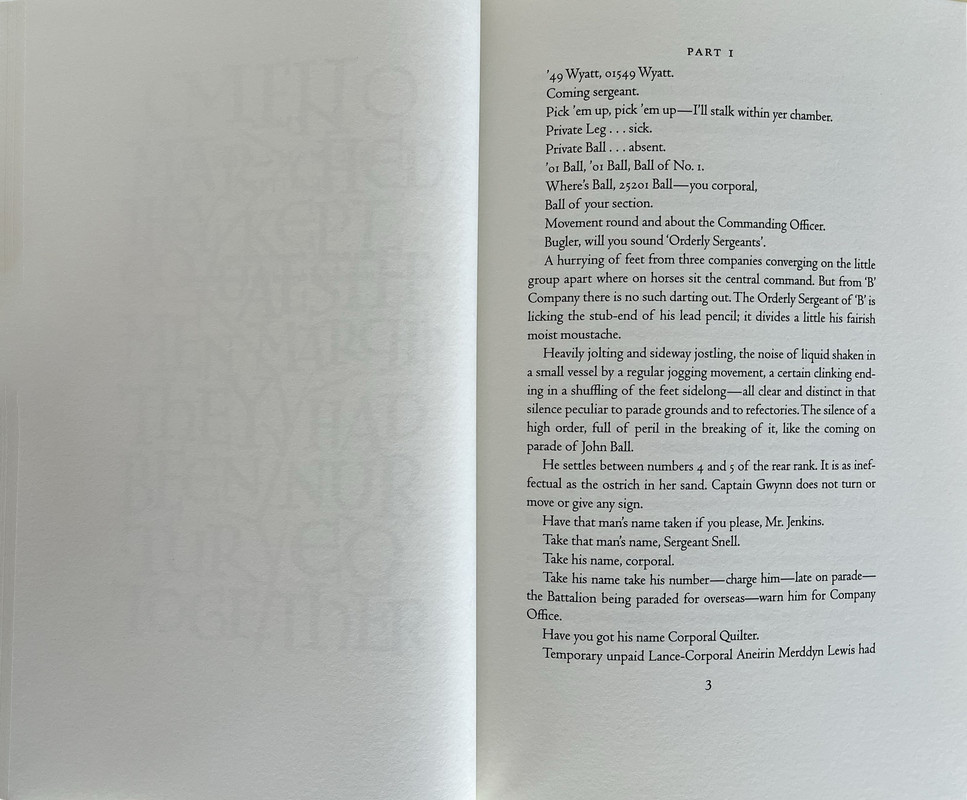
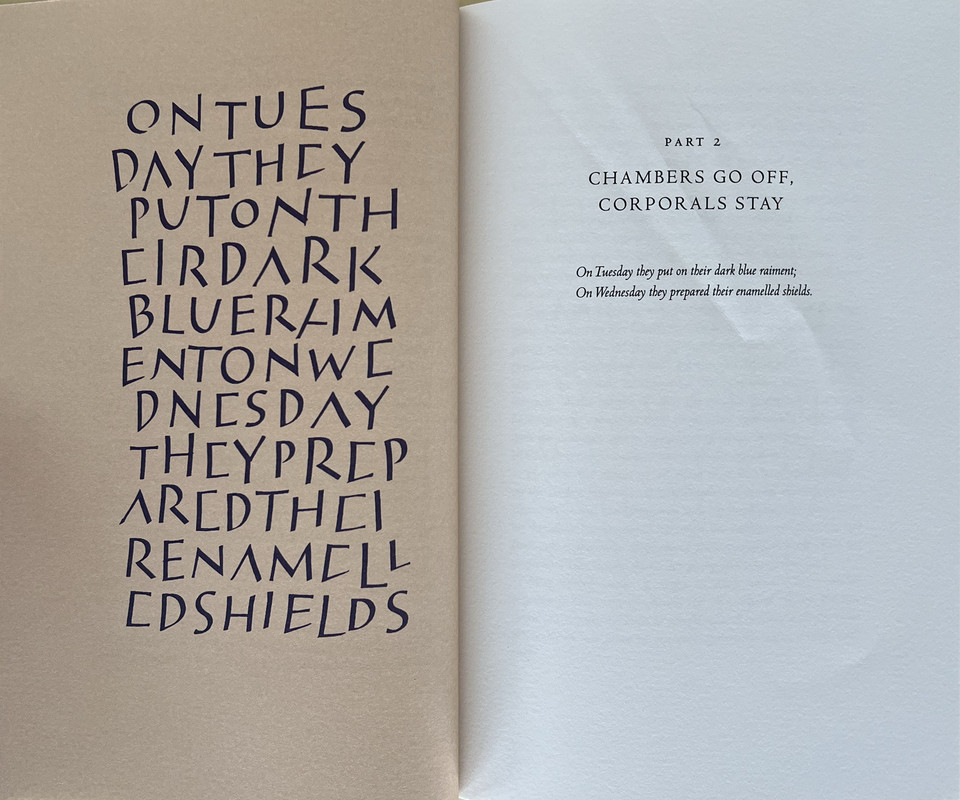
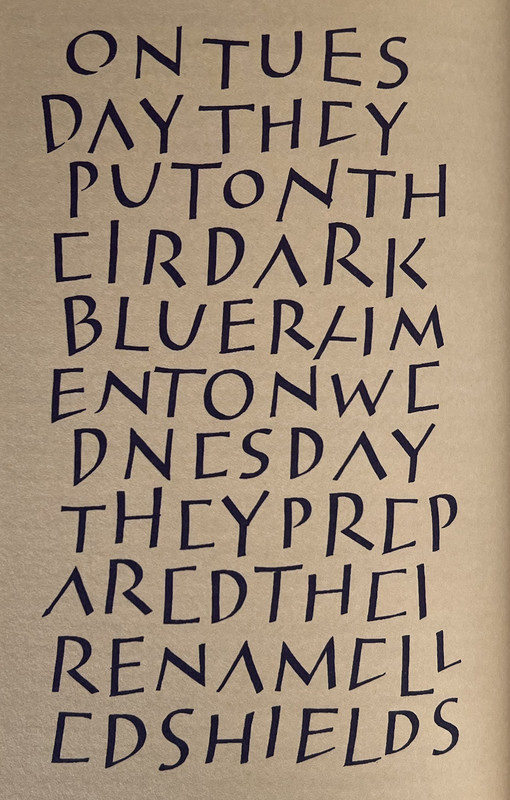
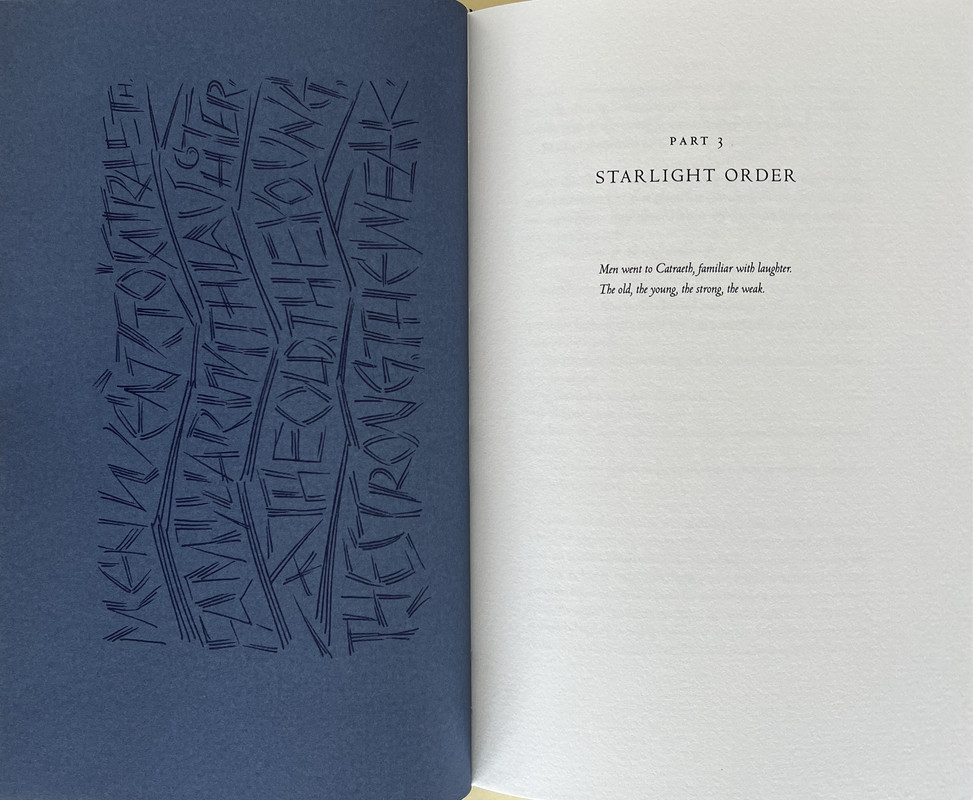
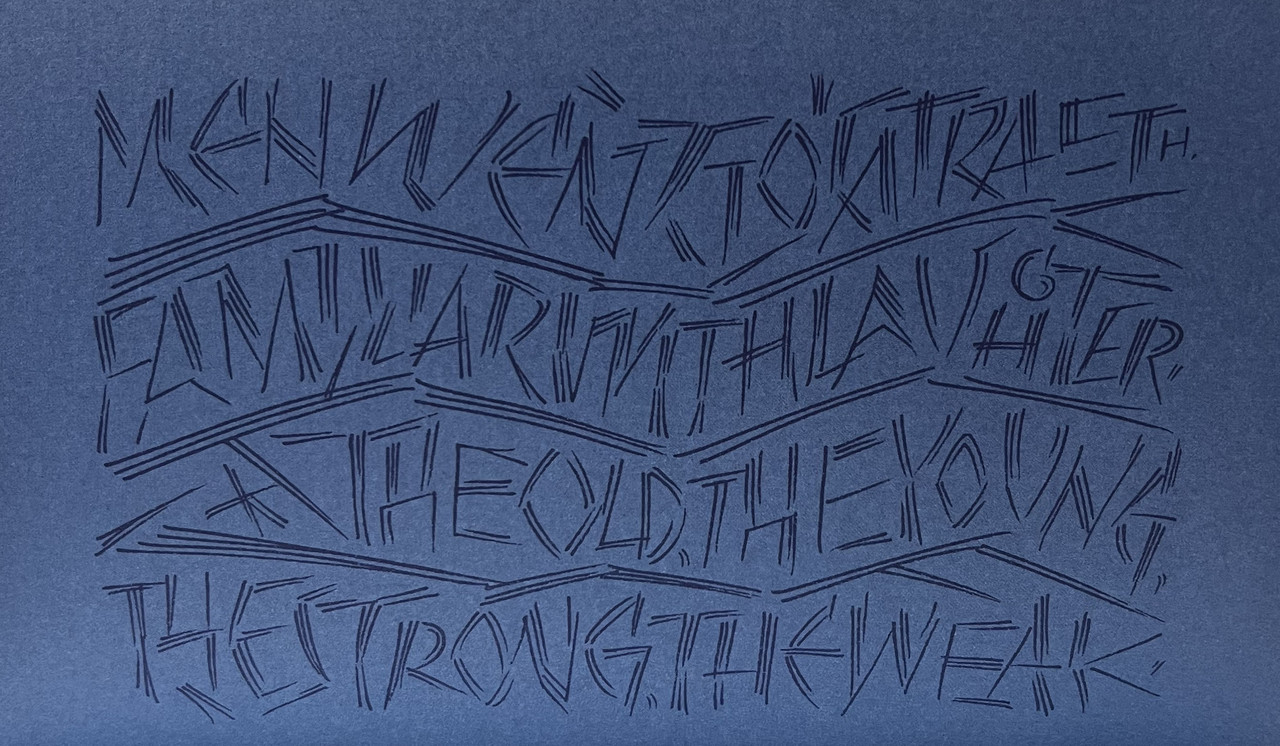
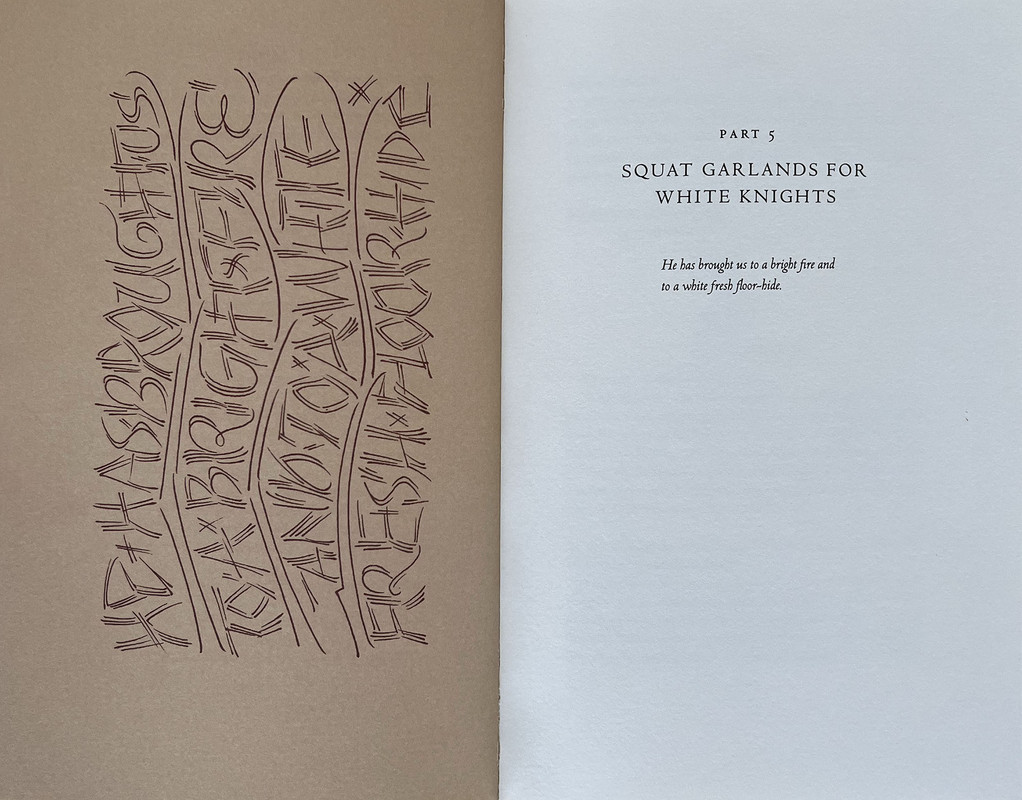
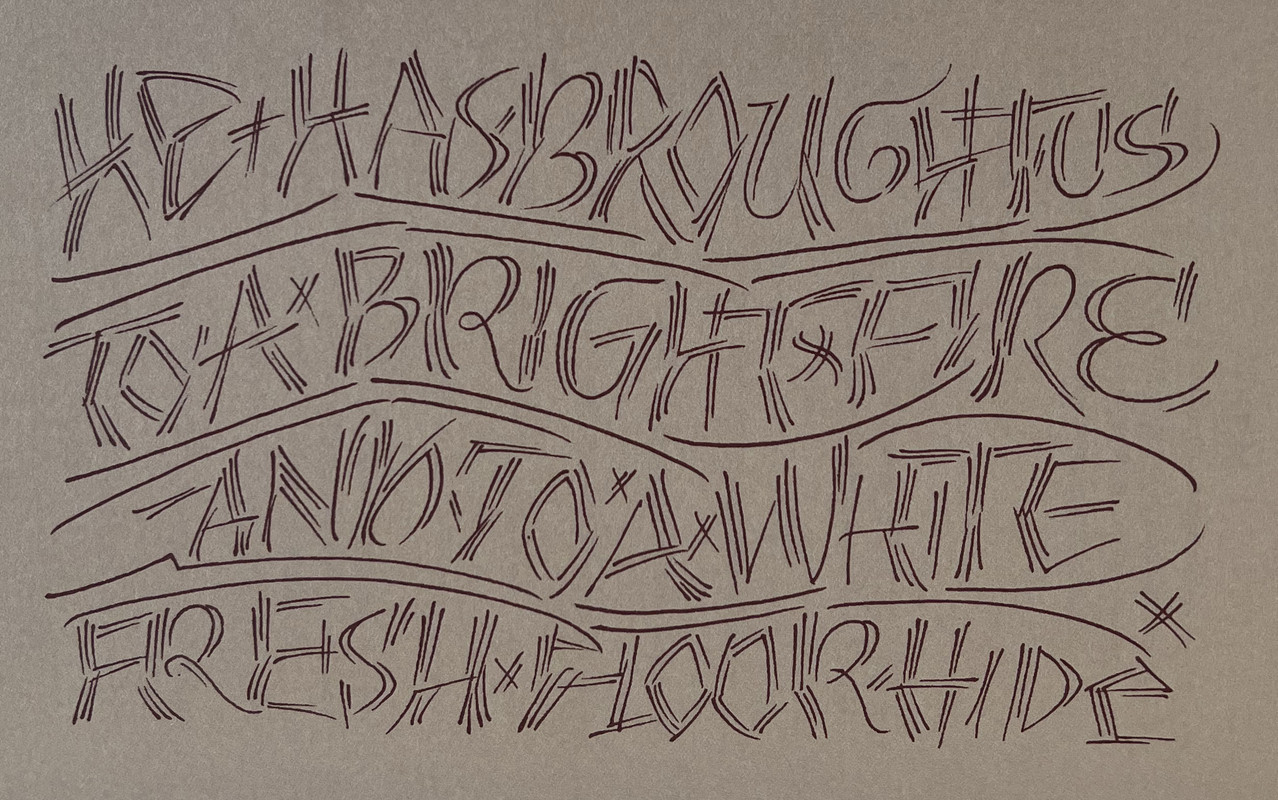
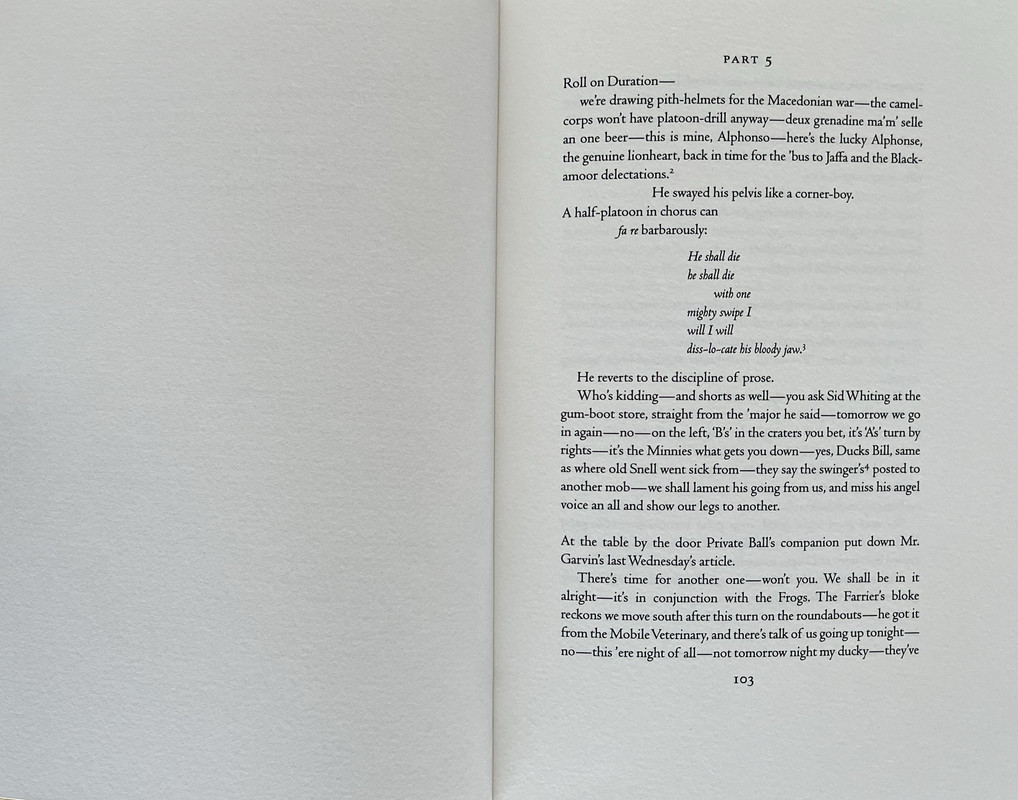
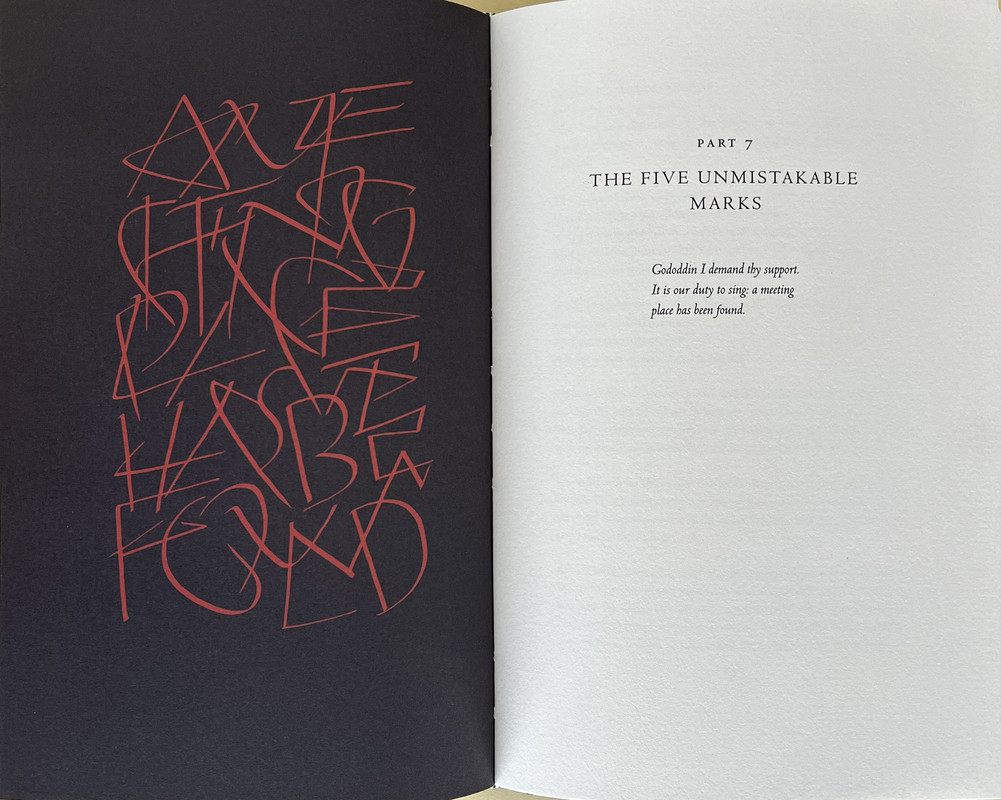
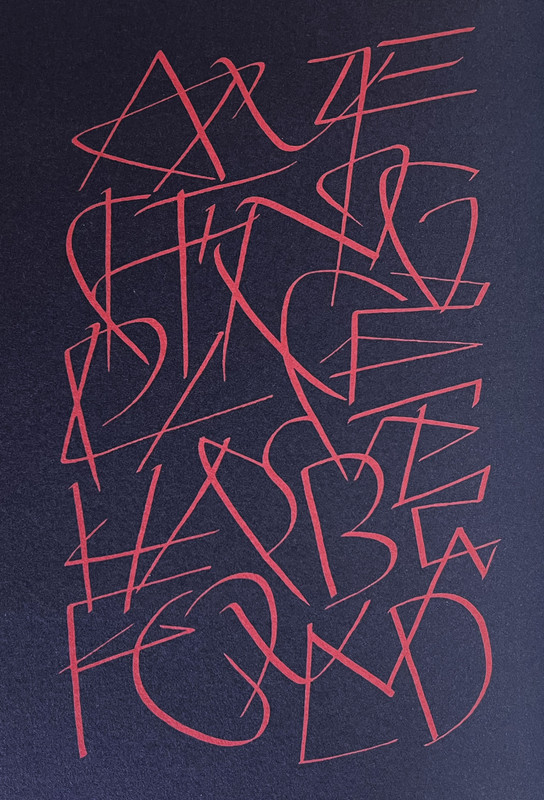
There is frontispiece-drawing by Jones of a soldier standing in waste land. Otherwise the illustrations are nine full-page hand-lettered inscriptions by Ewan Clayton, each in different contrasting colours.
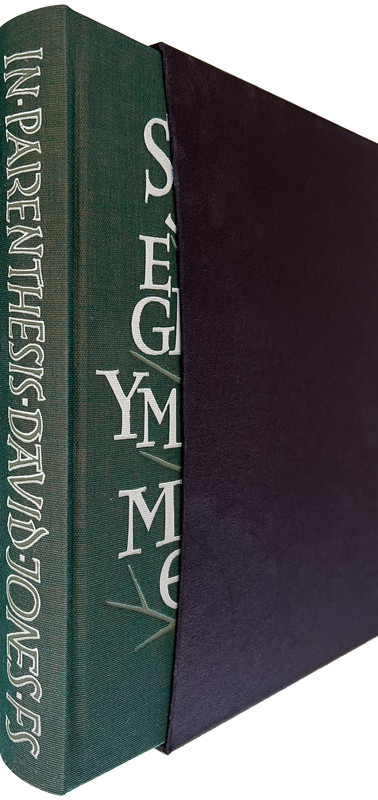
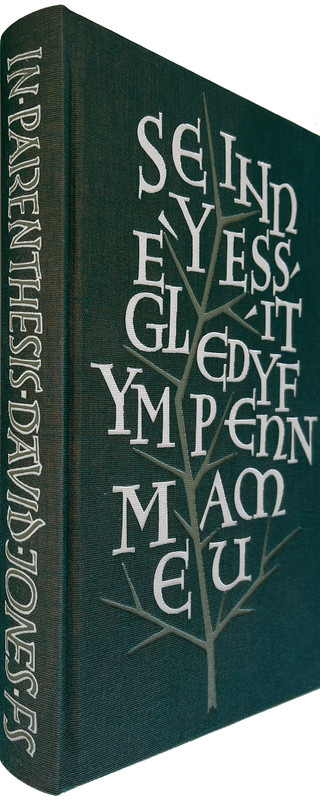
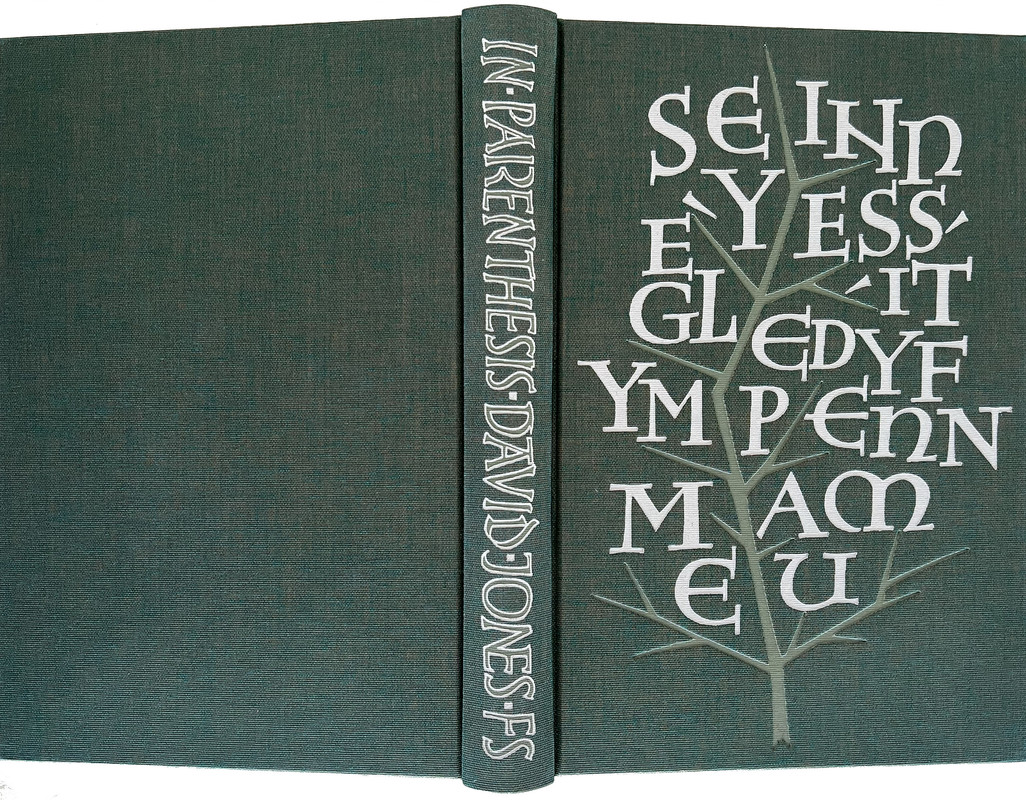
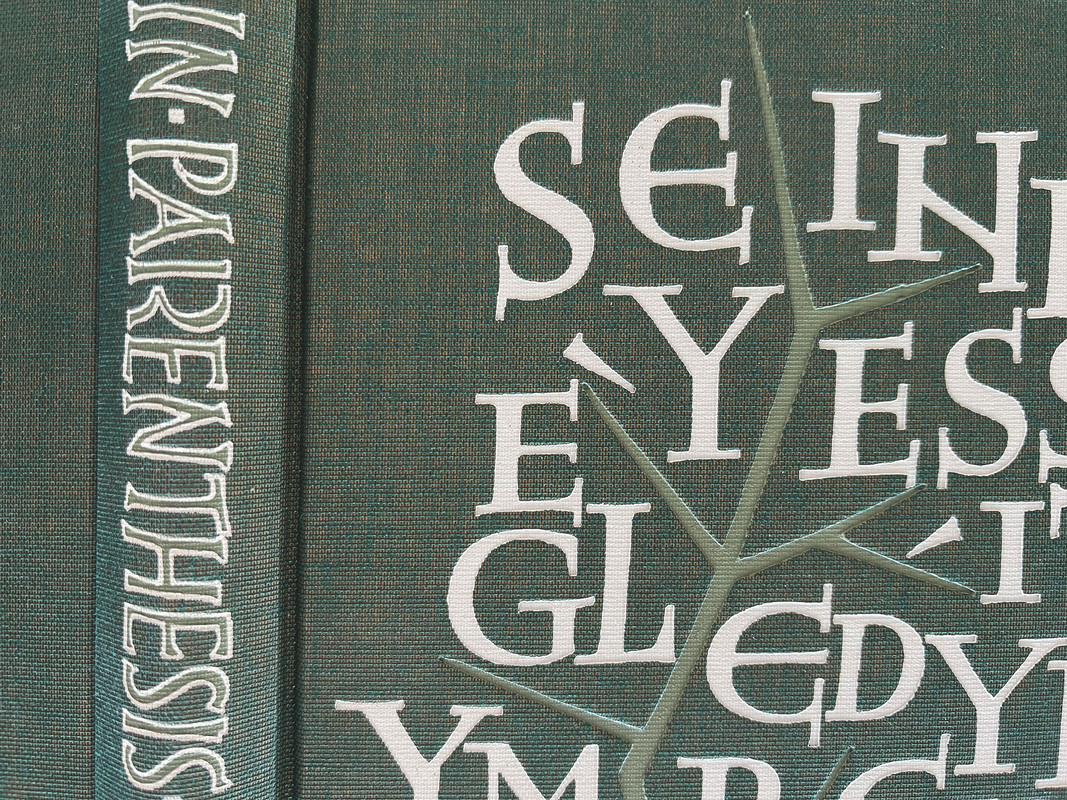
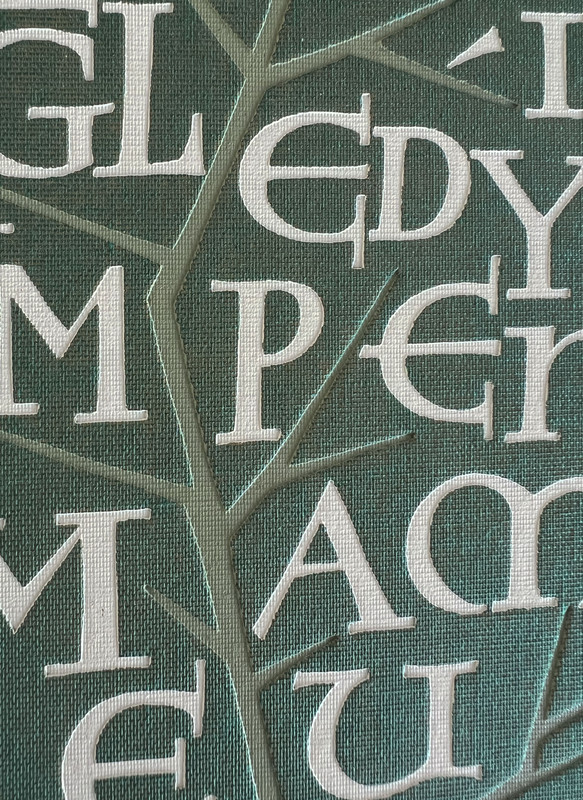
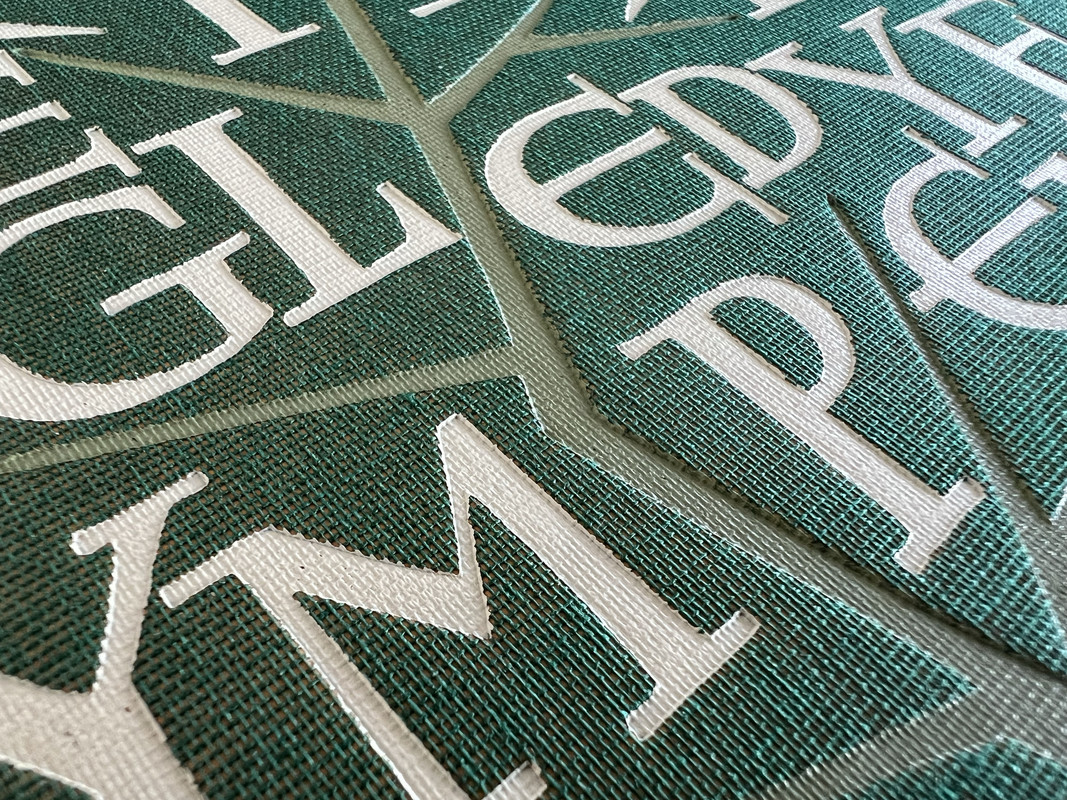
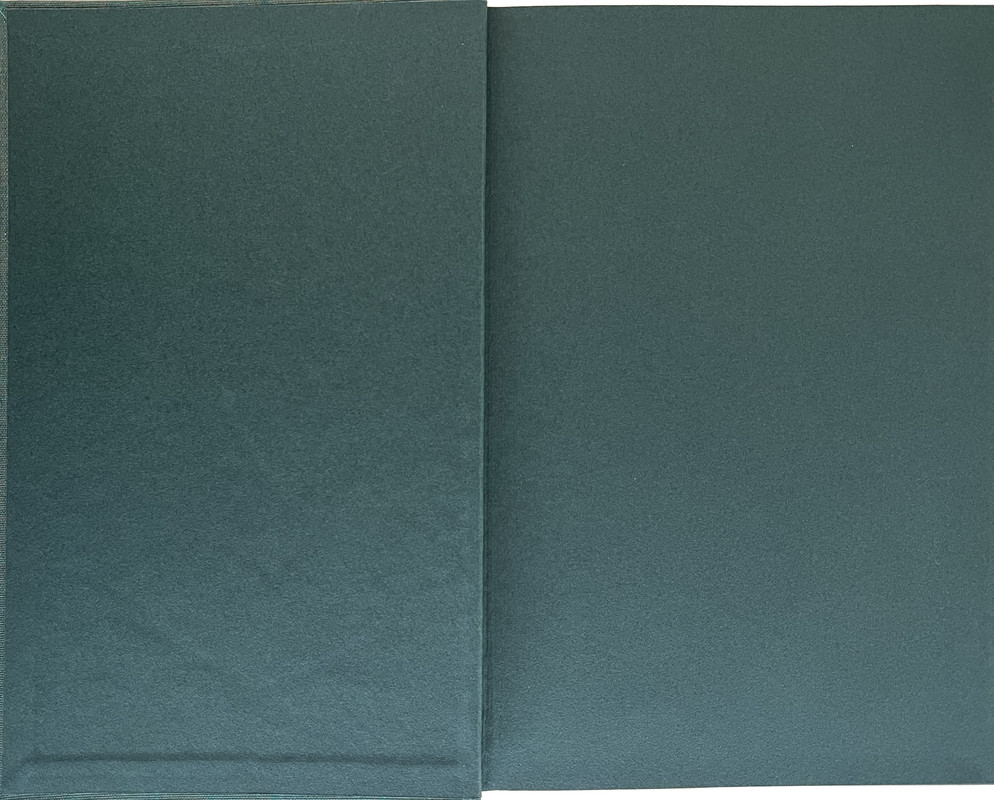
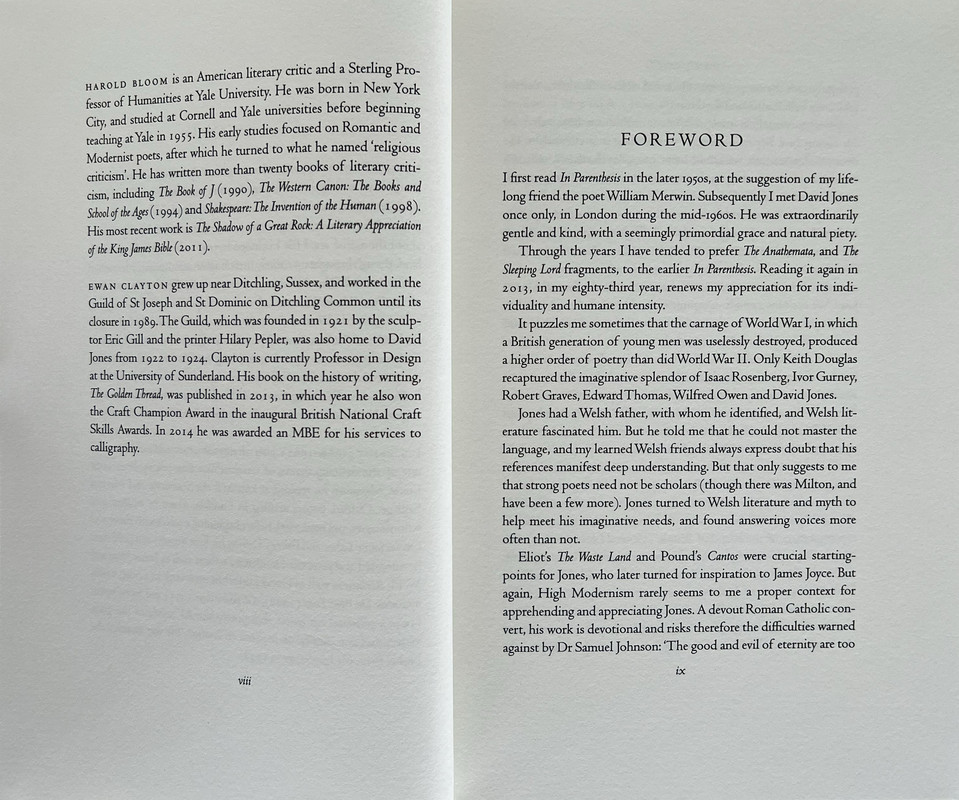
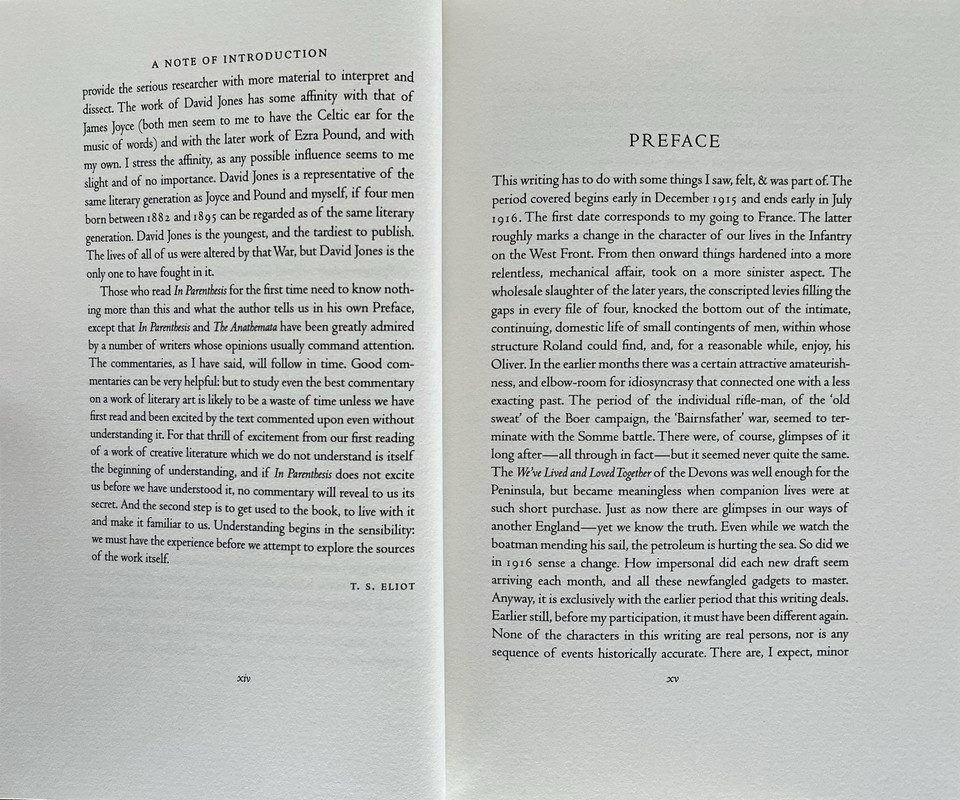
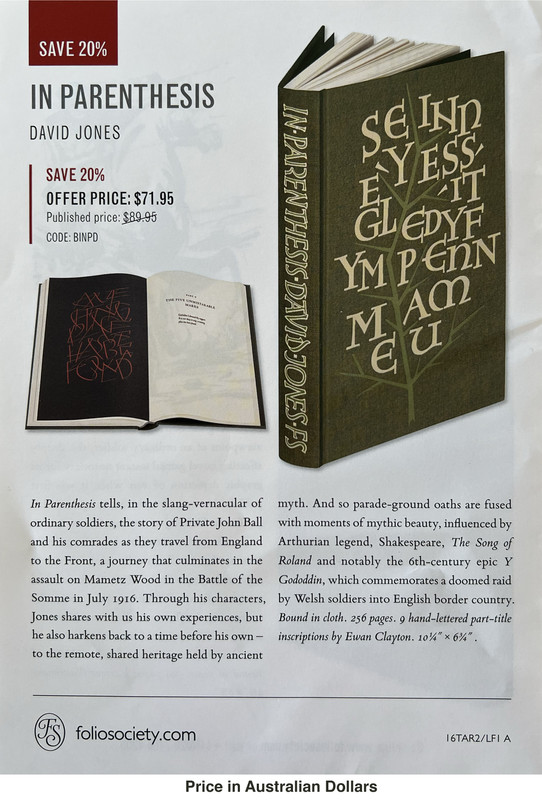
The xxi + 223 page book is introduced by T. S. Eliot and has a foreword by Harold Bloom. It is bound in mid-green cloth blocked and debossed on the cover with a lettered design in cream and green by Ewan Clayton. The endpapers are dark green. The plain dark brown slipcase measures 27.1x18.4cm.

An index of the other illustrated reviews in the "Folio Archives" series can be viewed here.
This is quite simply a very different book about the First World War that was first published in 1937.
David Jones (1895-1974) was a painter, poet, designer and wood engraver. His father was Welsh and he was strongly influenced by the Welsh literary tradition.
Drawing on his own experiences, Jones’ novel follows an English private and his comrades as they travel from England to partake in the 1916 Battle of the Somme. Mixed in with the recent history are references to ancient history, English and Welsh heritage, myths, the legends of King Arthur, Lewis Carroll and even extracts from Shakespeare.
The book is effectively a long prose poem, and there are copious notes to link the reader to the innumerable references to other works.
The book is divided into seven parts that cover in order the march to Southampton and the crossing of the English Channel; training in France and the movement to the front where they experience shelling; the life in the trenches at the front; life in the front line as typified by an archetypical Welsh soldier; life behind the lines; movements between different fronts; and finally partaking in a frontal assault. All these sections are interspersed and integrated with the references mentioned above.
There is frontispiece-drawing by Jones of a soldier standing in waste land. Otherwise the illustrations are nine full-page hand-lettered inscriptions by Ewan Clayton, each in different contrasting colours.
The xxi + 223 page book is introduced by T. S. Eliot and has a foreword by Harold Bloom. It is bound in mid-green cloth blocked and debossed on the cover with a lettered design in cream and green by Ewan Clayton. The endpapers are dark green. The plain dark brown slipcase measures 27.1x18.4cm.
An index of the other illustrated reviews in the "Folio Archives" series can be viewed here.
3NLNils
>2 GusLogan: You will not be disappointed! A stellar effort by Folio in SE format.
4RavenSeeker
Thanks Warwick. I've also just bought a secondary market copy - this looks great
5ian_curtin
One of my most wished-for Folios before they published it, and the edition does not disappoint. Absolutely superb in every respect - design, materials, quality. A benchmark of what FS can achieve. That they hit the heights for this particular book (one of the greatest about WW1 - arguably of the 20th century full stop) is an added bonus.

