1Ameise1
A new year and hopefully lots of great, exciting books.
January
# 1 Daddy's Gone A Hunting by Mary Higgins Clark (4 stars) 🎧
# 2 ë: Roman by Jehona Kicaj (5 stars)
# 3 The Hour of the Predator by Giuliano da Empoli (4 stars)
# 4 Murdering Whores by Roberto Bolaño (3½ stars)
# 5 It Would Be Night in Caracas by Karina Sainz Borgo (4 stars)
# 6 In The Country of Others by Leïla Slimani (4 stars)
# 7 Cursed by Thomas Enger (4 stars)
February
# 8 Old seems to be other people by Lily Brett (3½ stars)
March
April
January
# 1 Daddy's Gone A Hunting by Mary Higgins Clark (4 stars) 🎧
# 2 ë: Roman by Jehona Kicaj (5 stars)
# 3 The Hour of the Predator by Giuliano da Empoli (4 stars)
# 4 Murdering Whores by Roberto Bolaño (3½ stars)
# 5 It Would Be Night in Caracas by Karina Sainz Borgo (4 stars)
# 6 In The Country of Others by Leïla Slimani (4 stars)
# 7 Cursed by Thomas Enger (4 stars)
February
# 8 Old seems to be other people by Lily Brett (3½ stars)
March
April
4Ameise1
book 1 Read in German 🎧
 Daddy's Gone A Hunting
A night-time explosion at the Connelly family's furniture factory has caused millions in damage. Is this a case of notorious insurance fraud? The owner's daughter, Kate Connelly, is rescued from the rubble with serious injuries, but is unable to make a statement. As the company has a proven history of losses, Kate's sister Hannah must do everything she can to save the family's reputation. Then, in the ruins of the factory, the body of a young woman who disappeared without trace over twenty years ago is recovered. And when another dead body turns up, it becomes clear that the furniture factory is at the centre of a monstrous crime. But there is only one person who could uncover the terrible secret behind all these crimes: the seriously injured Kate. She is fighting for her life. And there is someone who will do everything in their power to ensure that she loses this battle.
As always, M. H. Clark impressed me. It was an ideal audiobook for the turn of the year, which didn't require much thought but was still exciting.

 Daddy's Gone A Hunting
A night-time explosion at the Connelly family's furniture factory has caused millions in damage. Is this a case of notorious insurance fraud? The owner's daughter, Kate Connelly, is rescued from the rubble with serious injuries, but is unable to make a statement. As the company has a proven history of losses, Kate's sister Hannah must do everything she can to save the family's reputation. Then, in the ruins of the factory, the body of a young woman who disappeared without trace over twenty years ago is recovered. And when another dead body turns up, it becomes clear that the furniture factory is at the centre of a monstrous crime. But there is only one person who could uncover the terrible secret behind all these crimes: the seriously injured Kate. She is fighting for her life. And there is someone who will do everything in their power to ensure that she loses this battle.
As always, M. H. Clark impressed me. It was an ideal audiobook for the turn of the year, which didn't require much thought but was still exciting.
5Ameise1
book 2 Read in German
 ë: Roman
I read this book as part of my book club and was deeply impressed. It is an autobiography about a young woman who fled to Germany with her parents in the early 1990s, but has almost no memories of her early childhood in Kosovo and now, as an adult, is trying to understand what happened to her relatives and in her hometown during the Yugoslav War with the help of relatives, the internet and lectures.
It all begins with a piece of tooth that broke off during the night. The dentist determines that her jaw is very tense and prescribes her a dental splint. In addition, she is advised to seek psychological help, as this tension needs to be addressed. The dentist visits and jaw tension are recurring themes in the book. Even a visit to an osteopath brings no relief, but shows her that what she has long assumed – not being able to speak spontaneously and therefore keeping everything to herself – could be the cause.
Speaking: When she came to Germany, it was shortly before she started kindergarten. She taught herself German by sitting very close to the television, watching the mouth of the person speaking and trying to repeat it as correctly as possible. From an early age, she has had enormously high expectations of herself and therefore only speaks when she can be absolutely sure that it is error-free. A friend of hers always tells her that she speaks like an “audiobook narrator”, both in terms of her tone of voice and her overly clear pronunciation.
In her search for clues about what happened to her family and relatives in Kosovo at that time, I learned a few things that I didn't know before. I worked with many children from Kosovo during the 1990s, and the new insights from this book help me to understand them even better. She does not learn much from her immediate family, as many things are still hushed up, but through her cousins and aunts she learns part of her past. The “ghost” of her grandfather, who suddenly disappeared and whose remains have never been found, hangs over everything.
I hope for the author that writing this book has helped her come to terms with part of her past and that the physical effects of her jaw tension will subside.
The author is certainly a perfectionist and sets high standards for herself, as she also has university degrees in philosophy, German studies and modern German literature.

 ë: Roman
I read this book as part of my book club and was deeply impressed. It is an autobiography about a young woman who fled to Germany with her parents in the early 1990s, but has almost no memories of her early childhood in Kosovo and now, as an adult, is trying to understand what happened to her relatives and in her hometown during the Yugoslav War with the help of relatives, the internet and lectures.
It all begins with a piece of tooth that broke off during the night. The dentist determines that her jaw is very tense and prescribes her a dental splint. In addition, she is advised to seek psychological help, as this tension needs to be addressed. The dentist visits and jaw tension are recurring themes in the book. Even a visit to an osteopath brings no relief, but shows her that what she has long assumed – not being able to speak spontaneously and therefore keeping everything to herself – could be the cause.
Speaking: When she came to Germany, it was shortly before she started kindergarten. She taught herself German by sitting very close to the television, watching the mouth of the person speaking and trying to repeat it as correctly as possible. From an early age, she has had enormously high expectations of herself and therefore only speaks when she can be absolutely sure that it is error-free. A friend of hers always tells her that she speaks like an “audiobook narrator”, both in terms of her tone of voice and her overly clear pronunciation.
In her search for clues about what happened to her family and relatives in Kosovo at that time, I learned a few things that I didn't know before. I worked with many children from Kosovo during the 1990s, and the new insights from this book help me to understand them even better. She does not learn much from her immediate family, as many things are still hushed up, but through her cousins and aunts she learns part of her past. The “ghost” of her grandfather, who suddenly disappeared and whose remains have never been found, hangs over everything.
I hope for the author that writing this book has helped her come to terms with part of her past and that the physical effects of her jaw tension will subside.
The author is certainly a perfectionist and sets high standards for herself, as she also has university degrees in philosophy, German studies and modern German literature.
6Ameise1
book 3 Read in German
 The Hour of the Predator
If it were a historical novel, some would say it is captivating and exciting, thinking, “That was once upon a time.”
Unfortunately, this book reflects the stark realities of today. Even though certain statements may make you laugh, it is very frightening and deeply saddening. Current events even surpass the content of this book or have already accelerated enormously.
The author jumps around between different eras to show that we have already experienced all this before, in line with my motto: Humanity learns nothing from history.
The author writes about his book:
It attempts to capture the breath of a world at the moment it plunges into the abyss – and the ice-cold seizure of power by another that takes its place.
He describes the power play of today's most important despots as the Borgia effect. That is, at the very beginning of the 16th century, Cesare Borgia invited his enemies to a peaceful celebration and then captured and tortured them, thus cementing his world order as sole ruler.
This is still happening today. With “false” promises, states are forced to bow down. Takeovers occur and no one intervenes. The ruler (president) appears as a “wolf in sheep's clothing” and feels justified in his actions. Thinking advisors are dismissed and replaced with puppets. A president no longer listens to his staff, because he and he alone is right about everything. Laws and treaties, whether national or international, do not apply to him in his eyes. We see this every day today; the whole world is in a kind of shock-induced paralysis and no one dares to stand in the way of such individuals.
Various examples of this are presented in this book.
In the last part, the author writes about the development of AI. He compares its introduction and beginnings with Kafka's “The Trial”, in which no one understands what is going on, neither the defendant nor the judges who are prosecuting him, and yet events take their inexorable course. The same thing happens with leading politicians: no one understands AI, but they are afraid to admit it, so they prefer to remain silent and let it flourish instead of enacting laws that could curb it.
Welcome to the brave new world, one that is frightening.
 The Hour of the Predator
If it were a historical novel, some would say it is captivating and exciting, thinking, “That was once upon a time.”
Unfortunately, this book reflects the stark realities of today. Even though certain statements may make you laugh, it is very frightening and deeply saddening. Current events even surpass the content of this book or have already accelerated enormously.
The author jumps around between different eras to show that we have already experienced all this before, in line with my motto: Humanity learns nothing from history.
The author writes about his book:
It attempts to capture the breath of a world at the moment it plunges into the abyss – and the ice-cold seizure of power by another that takes its place.
He describes the power play of today's most important despots as the Borgia effect. That is, at the very beginning of the 16th century, Cesare Borgia invited his enemies to a peaceful celebration and then captured and tortured them, thus cementing his world order as sole ruler.
This is still happening today. With “false” promises, states are forced to bow down. Takeovers occur and no one intervenes. The ruler (president) appears as a “wolf in sheep's clothing” and feels justified in his actions. Thinking advisors are dismissed and replaced with puppets. A president no longer listens to his staff, because he and he alone is right about everything. Laws and treaties, whether national or international, do not apply to him in his eyes. We see this every day today; the whole world is in a kind of shock-induced paralysis and no one dares to stand in the way of such individuals.
Various examples of this are presented in this book.
In the last part, the author writes about the development of AI. He compares its introduction and beginnings with Kafka's “The Trial”, in which no one understands what is going on, neither the defendant nor the judges who are prosecuting him, and yet events take their inexorable course. The same thing happens with leading politicians: no one understands AI, but they are afraid to admit it, so they prefer to remain silent and let it flourish instead of enacting laws that could curb it.
Welcome to the brave new world, one that is frightening.
7Ameise1
book 4 Read in German
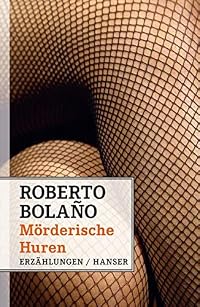 Murdering Whores
This book contains thirteen short stories. Whether all of them are based on the author's own experiences or are snapshots of a specific period in his life is beyond my knowledge. Since I borrowed this book from the library, I read it in one sitting. Perhaps it would be better to take a break after each story to let it “sink in” and only then read the next story.
I really liked some of the stories, which made me smile even though the content was rather sad. Other stories show what Chilean immigrants went through, so they are more like contemporary testimonies that make you think. I was on the verge of skipping two short stories. They were very brutal and hurt my feelings.
All in all, this is a book with a variety of short stories that you should definitely, or perhaps nevertheless, not read in one go.

 Murdering Whores
This book contains thirteen short stories. Whether all of them are based on the author's own experiences or are snapshots of a specific period in his life is beyond my knowledge. Since I borrowed this book from the library, I read it in one sitting. Perhaps it would be better to take a break after each story to let it “sink in” and only then read the next story.
I really liked some of the stories, which made me smile even though the content was rather sad. Other stories show what Chilean immigrants went through, so they are more like contemporary testimonies that make you think. I was on the verge of skipping two short stories. They were very brutal and hurt my feelings.
All in all, this is a book with a variety of short stories that you should definitely, or perhaps nevertheless, not read in one go.
8Ameise1
book 5 Read in German
 It Would Be Night in Caracas
The author writes about this book:
I had to take some time to read this book because, even though it is fictional, the content is not easy to digest.
The story begins with the funeral of Adelaida's mother. Even in these first few pages, you can see how dire the situation is for the population. There is no money for medical needs, and food is also hard to come by. Corruption in the country is not only found among those in political power, but gangs have also formed that rob and harass their own countrymen. The most cunning even supply the political elite and are allowed to do whatever they want in return.
Her friend Ana's brother is abused by the Hijos de la Revolución for their own benefit. However, he is willing to help Adelaida when she finds herself in a precarious situation.
An almost comforting sequence in this novel is when she describes the lives of her aunts. It seems almost idyllic, even though many memories recall a time before the great chaos. She also describes how they made preserved products from fruit. Again and again in this book, one notices how inventive Venezuelans are in hoarding food, even though it is becoming increasingly scarce.
The ending moved me deeply. Adelaida is probably not the only person in the country who assumes the identity of a dead person with a Spanish passport in order to leave the country. It seems that this is the only viable way forward.
All in all, it is a moving book that gets under your skin and shows the brutal conditions under which ordinary people in Venezuela have to live.
 It Would Be Night in Caracas
The author writes about this book:
This is a fictional story. Some episodes and characters in the novel are based on real events, but do not claim to be factual. They are detached from reality; their purpose is literary, not documentary.
I had to take some time to read this book because, even though it is fictional, the content is not easy to digest.
The story begins with the funeral of Adelaida's mother. Even in these first few pages, you can see how dire the situation is for the population. There is no money for medical needs, and food is also hard to come by. Corruption in the country is not only found among those in political power, but gangs have also formed that rob and harass their own countrymen. The most cunning even supply the political elite and are allowed to do whatever they want in return.
Her friend Ana's brother is abused by the Hijos de la Revolución for their own benefit. However, he is willing to help Adelaida when she finds herself in a precarious situation.
An almost comforting sequence in this novel is when she describes the lives of her aunts. It seems almost idyllic, even though many memories recall a time before the great chaos. She also describes how they made preserved products from fruit. Again and again in this book, one notices how inventive Venezuelans are in hoarding food, even though it is becoming increasingly scarce.
The ending moved me deeply. Adelaida is probably not the only person in the country who assumes the identity of a dead person with a Spanish passport in order to leave the country. It seems that this is the only viable way forward.
All in all, it is a moving book that gets under your skin and shows the brutal conditions under which ordinary people in Venezuela have to live.
9Ameise1
book 6 Read in German
 In the Country of Others
Many contemporary novels deal with experiences in and with other cultures, but what is unusual about Leila Slimani's novel is, among other things, the direction of the emigration movement: her novel is set in the 1940s and is the first volume of a trilogy. In this book, she describes the life of her grandparents. Her young, vivacious grandmother Mathilde, newly married, moves with her husband, a Moroccan officer, to the so-called French ‘protectorate’. She quickly realises that even here she will not be freed from the ‘domestic duties’ she fled from. What's more, her husband soon turns out to be a real patriarch, and life in the Moroccan countryside is harder than she thought. Amine takes over the remote farm at the foot of the Atlas Mountains. He has precise ideas about how he wants to run it, but he lacks the financial means and the patience. Mathilde raises their two children and insists that their daughter Aïcha be educated at the French convent school. Aïcha is a highly intelligent girl, but she is unable to fit into the French “society” of her place of residence. She is also very sensitive. The family receives support only from a Hungarian Jewish gynaecologist who fled to Morocco with his young wife during the Second World War.
Furthermore, Mathilde and Amine have to contend with increasing racist discrimination both in France and in their new home – all the more so as the conflicts with the occupiers intensify due to the independence efforts.
Slimani tells the story simply, discreetly and with all the necessary nuance. She skilfully and deftly weaves social issues with personal ones. A novel that is ‘brilliant’ precisely because of its sobriety.
She describes everyday life during the 1940s and 1950s from the Moroccan perspective and that of the French community living there. The divide between the two societies could not be greater.
I am already very excited about the second volume.
 In the Country of Others
Many contemporary novels deal with experiences in and with other cultures, but what is unusual about Leila Slimani's novel is, among other things, the direction of the emigration movement: her novel is set in the 1940s and is the first volume of a trilogy. In this book, she describes the life of her grandparents. Her young, vivacious grandmother Mathilde, newly married, moves with her husband, a Moroccan officer, to the so-called French ‘protectorate’. She quickly realises that even here she will not be freed from the ‘domestic duties’ she fled from. What's more, her husband soon turns out to be a real patriarch, and life in the Moroccan countryside is harder than she thought. Amine takes over the remote farm at the foot of the Atlas Mountains. He has precise ideas about how he wants to run it, but he lacks the financial means and the patience. Mathilde raises their two children and insists that their daughter Aïcha be educated at the French convent school. Aïcha is a highly intelligent girl, but she is unable to fit into the French “society” of her place of residence. She is also very sensitive. The family receives support only from a Hungarian Jewish gynaecologist who fled to Morocco with his young wife during the Second World War.
Furthermore, Mathilde and Amine have to contend with increasing racist discrimination both in France and in their new home – all the more so as the conflicts with the occupiers intensify due to the independence efforts.
Slimani tells the story simply, discreetly and with all the necessary nuance. She skilfully and deftly weaves social issues with personal ones. A novel that is ‘brilliant’ precisely because of its sobriety.
She describes everyday life during the 1940s and 1950s from the Moroccan perspective and that of the French community living there. The divide between the two societies could not be greater.
I am already very excited about the second volume.
10Ameise1
book 7 Read in German
 Cursed
There is blood on Blix's hands. But where does justice begin – and where does it end? This is the third novel in the Blix & Ramm series from Norway!
After Sofia Kovic has been investigating a mysterious series of murders and wants to confide in investigator Alexander Blix, she herself becomes the victim of an assassination attempt. She is executed in cold blood in her flat. Did she get too close to someone with her investigations? Just four days later, Alexander Blix and crime reporter Emma Ramm find themselves at the centre of the Oslo police investigation. Blix has shot a man and Emma was there. Could he have shot the wrong man?
The book's structure is very complex, with jumps in time, flashbacks, interrogations in the present and memories. But the structure fits together surprisingly clearly, and the connections are easy to understand. This makes it all the more astonishing that the author has managed to maintain the suspense until the end and only resolve the story with a bang at the very end. Certainly, some things can be anticipated, but the essentials remain hidden for a long time. It's nice that the characters once again come across as authentic and approachable, so that you quickly feel connected to them again.
 Cursed
There is blood on Blix's hands. But where does justice begin – and where does it end? This is the third novel in the Blix & Ramm series from Norway!
After Sofia Kovic has been investigating a mysterious series of murders and wants to confide in investigator Alexander Blix, she herself becomes the victim of an assassination attempt. She is executed in cold blood in her flat. Did she get too close to someone with her investigations? Just four days later, Alexander Blix and crime reporter Emma Ramm find themselves at the centre of the Oslo police investigation. Blix has shot a man and Emma was there. Could he have shot the wrong man?
The book's structure is very complex, with jumps in time, flashbacks, interrogations in the present and memories. But the structure fits together surprisingly clearly, and the connections are easy to understand. This makes it all the more astonishing that the author has managed to maintain the suspense until the end and only resolve the story with a bang at the very end. Certainly, some things can be anticipated, but the essentials remain hidden for a long time. It's nice that the characters once again come across as authentic and approachable, so that you quickly feel connected to them again.
11Ameise1
book 8 Read in German
 Old seems to be other people
There are 24 columns that the author wrote in a German glossy magazine entitled “Lily's Loopings” about ageing and her adopted home of New York.
What I found very positive was her writing style and how she writes about ageing with self-deprecating humour and wit. There were situations where I could relate to her very well. What I couldn't relate to so much was, on the one hand, that I had never been to New York and therefore couldn't relate to many of the things she referred to, e.g. “that's how New Yorkers are”, which came up several times in each story. Furthermore, I think she belongs to a privileged class, because I can well imagine that her views and concerns about ageing are more relevant to a smaller section of the population. Many people are more likely to be struggling to put a roof over their heads and enough food on the table.
Nevertheless, I think that people who are familiar with the New York lifestyle will enjoy this book more than I did.
 Old seems to be other people
There are 24 columns that the author wrote in a German glossy magazine entitled “Lily's Loopings” about ageing and her adopted home of New York.
What I found very positive was her writing style and how she writes about ageing with self-deprecating humour and wit. There were situations where I could relate to her very well. What I couldn't relate to so much was, on the one hand, that I had never been to New York and therefore couldn't relate to many of the things she referred to, e.g. “that's how New Yorkers are”, which came up several times in each story. Furthermore, I think she belongs to a privileged class, because I can well imagine that her views and concerns about ageing are more relevant to a smaller section of the population. Many people are more likely to be struggling to put a roof over their heads and enough food on the table.
Nevertheless, I think that people who are familiar with the New York lifestyle will enjoy this book more than I did.

