1NielsenGW
Howdy all! I'm back for another go here in 2026.
I read mainly non-fiction, and some obscure stuff at that, as I'm trying to complete the Dewey Decimal Challenge (at some point).
If you need a quiet oasis, then stop on by.
I read mainly non-fiction, and some obscure stuff at that, as I'm trying to complete the Dewey Decimal Challenge (at some point).
If you need a quiet oasis, then stop on by.
2NielsenGW
Book 1: 1500 Literary References Everyone Should Know by Lloyd T. Gross and Alan F. Lyster. New York: Arco Publishing, Inc., 1983. 280pp.

This one is pretty straightforward. It's a book-length catalogue of literary references with small explanatory blurbs to help the reader. Most of the examples are from Greek works, the Bible, or Shakespeare, but there are a few that creep from random sources. The few that have stayed in my mind since reading are "spitting image" (which is a corruption of "spit and image", conveying that Man is of the substance and image of God) and Lady Godiva (whose original tale I had confused with another, so now I'm straightened out). All in all, it's a reference book like any other. No more, no less.

This one is pretty straightforward. It's a book-length catalogue of literary references with small explanatory blurbs to help the reader. Most of the examples are from Greek works, the Bible, or Shakespeare, but there are a few that creep from random sources. The few that have stayed in my mind since reading are "spitting image" (which is a corruption of "spit and image", conveying that Man is of the substance and image of God) and Lady Godiva (whose original tale I had confused with another, so now I'm straightened out). All in all, it's a reference book like any other. No more, no less.
4NielsenGW
Book 2: 1001 Pitfalls in French by Annie Heminway, James H. Grew, and Daniel D. Olivier. Hauppauge, NY: Barron's Educational Series, Inc., 1986. 202pp.
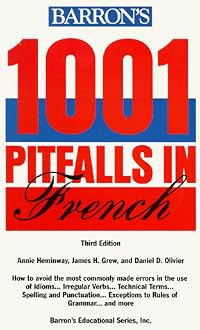
The Barron’s language “Pitfall” series helps beginners work through the more difficult parts of a foreign language. Heminway, Grew & Olivier’s 1001 Pitfalls in French includes the basics, like how to conjugate verbs properly, but then moves into specialized problems, including how to deal with adverb-gender agreement and when to leave words out of colloquial phrases. There are traditional mistakes that English speakers make when trying a new language, and this book does a very good job of illuminating the idiosyncrasies of the French language. Of great value is the section on words that sound like they should mean one thing when really they mean something else entirely. Be warned, though: many of the grammar lessons are written in French, so a passing understanding is required. Also, the authors embed many funny asides in French as a way to ease the scholastic feel of the book. Needless to say, I would recommend it to an intermediate speaker of French who needs to interact with native speakers on a regular basis.
The Barron’s language “Pitfall” series helps beginners work through the more difficult parts of a foreign language. Heminway, Grew & Olivier’s 1001 Pitfalls in French includes the basics, like how to conjugate verbs properly, but then moves into specialized problems, including how to deal with adverb-gender agreement and when to leave words out of colloquial phrases. There are traditional mistakes that English speakers make when trying a new language, and this book does a very good job of illuminating the idiosyncrasies of the French language. Of great value is the section on words that sound like they should mean one thing when really they mean something else entirely. Be warned, though: many of the grammar lessons are written in French, so a passing understanding is required. Also, the authors embed many funny asides in French as a way to ease the scholastic feel of the book. Needless to say, I would recommend it to an intermediate speaker of French who needs to interact with native speakers on a regular basis.
5alcottacre
Glad to see you back for 2026, Gerard!
6NielsenGW
Book 3: The Gum Bichromate Book by David Scopick. Boston, MA: Focal Press, 1994. 128pp.
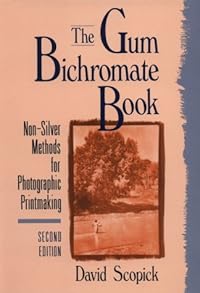
David Scopick's Gum Bichromate Book is a medium-strength technical volume on exactly how to develop photographs using the gum bichromate method. I understood about 50% of it, but it was still mildly fascinating. Much like lithography, this method uses a gum solution to act as the base onto which a negative is exposed using ultraviolet light. Then the gum is washed away, revealing an image. More layers of different gums can be applied depending on the color blend you want. That all sounds easy, but it takes Scopick 80 pages just to get the general technique down. There are all sorts of chemical, environmental, and physical factors that can affect the print. There is a moderate amount of toxicity involved, so there were many warnings by the author to make sure you are working in a well-ventilated space. These days, there are far less toxic solutions available if health is your concern. Overall, this one was adequately informative.
David Scopick's Gum Bichromate Book is a medium-strength technical volume on exactly how to develop photographs using the gum bichromate method. I understood about 50% of it, but it was still mildly fascinating. Much like lithography, this method uses a gum solution to act as the base onto which a negative is exposed using ultraviolet light. Then the gum is washed away, revealing an image. More layers of different gums can be applied depending on the color blend you want. That all sounds easy, but it takes Scopick 80 pages just to get the general technique down. There are all sorts of chemical, environmental, and physical factors that can affect the print. There is a moderate amount of toxicity involved, so there were many warnings by the author to make sure you are working in a well-ventilated space. These days, there are far less toxic solutions available if health is your concern. Overall, this one was adequately informative.
7PaulCranswick
Happy new thread and welcome back, Gerard.
Interesting factional start to the year!
Interesting factional start to the year!
8NielsenGW
Book 4: Mary I and the Art of Book Dedications: Royal Women, Power, and Persuasion by Valerie Schutte. New York: Palgrave Macmillan, 2015. 147pp.

Valerie Schutte's Mary I and the Art of Book Dedications is a rather niche volume. Printers and writers in the early days of printing in England would add small passage dedicating the book to various people in order to gain patronage or permission to print. The English Crown held a lot of sway over who could print books and what could be printed, so a proper dedication could sometimes secure those rights. Mary I (1516-1558) of England comes to power in a tumultous time. Her father had spent his reign churning through wives and churches. Then, her younger brother held the throne for a while. Then, it was Mary's turn. Schutte goes through great pain to catalogue all the extant books and manuscripts with dedications to Mary, some while she was a princess, then others before marrying Philip, and others still as a married woman. These dedications sought to influence both Mary and her court, and Schutte does a good job of parsing those threads. If you're into either bibliography or hyper-focused history, this one isn't half-bad.
Valerie Schutte's Mary I and the Art of Book Dedications is a rather niche volume. Printers and writers in the early days of printing in England would add small passage dedicating the book to various people in order to gain patronage or permission to print. The English Crown held a lot of sway over who could print books and what could be printed, so a proper dedication could sometimes secure those rights. Mary I (1516-1558) of England comes to power in a tumultous time. Her father had spent his reign churning through wives and churches. Then, her younger brother held the throne for a while. Then, it was Mary's turn. Schutte goes through great pain to catalogue all the extant books and manuscripts with dedications to Mary, some while she was a princess, then others before marrying Philip, and others still as a married woman. These dedications sought to influence both Mary and her court, and Schutte does a good job of parsing those threads. If you're into either bibliography or hyper-focused history, this one isn't half-bad.
9PaulCranswick
Wishing you a great weekend, Gerard.
10NielsenGW
>9 PaulCranswick: Thanks Paul! We survived the snow-pocalypse just fine and made a tasty Chicken and Mushroom Boursin soup to keep us cozy.
11NielsenGW
Book 5: Laughter Unlimited: Essays on Humor, Satire, and the Comic, edited by Reinhold Grimm and Jost Hermand. Madison, WI: University of Wisconsin Press, 1991. 135pp.

Grimm and Hermand's Laughter Unlimited is a collection of scholarly and philosophical essays about various pieces of German humor and satire. It is about humor, but not very humorous on its own. It helps if you already have a basic background in the texts being discussed, but that is not mandatory. The only one I found particularly chuckle-worthy was the essay on Yiddish humor. Other than that, it's your basic literary analysis. It does, however, function as a reading list if you're looking to broaden your horizons on the matter. Overall, don't approach this one if you don't have to.

Grimm and Hermand's Laughter Unlimited is a collection of scholarly and philosophical essays about various pieces of German humor and satire. It is about humor, but not very humorous on its own. It helps if you already have a basic background in the texts being discussed, but that is not mandatory. The only one I found particularly chuckle-worthy was the essay on Yiddish humor. Other than that, it's your basic literary analysis. It does, however, function as a reading list if you're looking to broaden your horizons on the matter. Overall, don't approach this one if you don't have to.
12NielsenGW
Book 6: Roadside Use of Native Plants, edited by Bonnie Harper-Lore and Maggie Wilson. Washington, DC: Island Press, 2000. 528pp.

This book is way more utilitarian than narrative. It starts with a collection of 18 or so short essays that outline why roadside vegetation management is important, how one should go about, and the reasoning for various choices of plantings versus others. Truth be told, I rarely think about the wildlife off the side of the road (with the exception of possible deer), so this was a decent eye-opener. The rest of the book is a giant list of plants to use in your local area broken down by state and vegetation zone (apparently, I live in a Oak-Hickory zone). This will be especially useful when we put in a garden in a few years, so many thanks to the editors. All in all, a pretty good reference book.
This book is way more utilitarian than narrative. It starts with a collection of 18 or so short essays that outline why roadside vegetation management is important, how one should go about, and the reasoning for various choices of plantings versus others. Truth be told, I rarely think about the wildlife off the side of the road (with the exception of possible deer), so this was a decent eye-opener. The rest of the book is a giant list of plants to use in your local area broken down by state and vegetation zone (apparently, I live in a Oak-Hickory zone). This will be especially useful when we put in a garden in a few years, so many thanks to the editors. All in all, a pretty good reference book.
13NielsenGW
Book 7: Portuguese Syntax: New Comparative Studies, edited by Joao Costa. Oxford, UK: Oxford University Press, 2000. 298pp.
Joao Costa's curated book of essays on Portuguese syntax is thick: thick with jargon, thick with history, and thick with thought. It is an intense and brutal slog through syntactical notation, theory, and hypotheses. If you think you know something about languages or linguistics, no you don't. These are master theoreticians in their field just absolutely going to town. I thought reading an entire book on the Italian clitic 'si' was intense, but there are at least 5 essays in this collection with competing theories on Portuguese clitics, each one just as plausible as the next. Do not approach this one if you are not 100% sure about getting into the tall weeds.
Joao Costa's curated book of essays on Portuguese syntax is thick: thick with jargon, thick with history, and thick with thought. It is an intense and brutal slog through syntactical notation, theory, and hypotheses. If you think you know something about languages or linguistics, no you don't. These are master theoreticians in their field just absolutely going to town. I thought reading an entire book on the Italian clitic 'si' was intense, but there are at least 5 essays in this collection with competing theories on Portuguese clitics, each one just as plausible as the next. Do not approach this one if you are not 100% sure about getting into the tall weeds.
14NielsenGW
Book 8: The Logic of Scientific Inference: An Introduction by Jennifer Trusted. London, UK: Macmillan Press, 1979. 135pp.
Jennifer Trusted's Logic of Scientific Inference starts with a fairly understandable reasoning of how we start to understand how we know things about the natural world. Then, things take a turn. After the lull into a false sense of security, we are met with various philosophical models of truth-seeking and the history of the philosophy of reason. From Hume to Kant to Popper, we get a whirlwind of differing arguments and terminology, ultimately leading to how we should interpret phenomena so as to not misinform ourselves. Luckily, it's a short book so you can get through it in a weekend, but I think a few diagrams would have been very helpful, especially when we get to part on statistics.
Jennifer Trusted's Logic of Scientific Inference starts with a fairly understandable reasoning of how we start to understand how we know things about the natural world. Then, things take a turn. After the lull into a false sense of security, we are met with various philosophical models of truth-seeking and the history of the philosophy of reason. From Hume to Kant to Popper, we get a whirlwind of differing arguments and terminology, ultimately leading to how we should interpret phenomena so as to not misinform ourselves. Luckily, it's a short book so you can get through it in a weekend, but I think a few diagrams would have been very helpful, especially when we get to part on statistics.
15NielsenGW
Book 9: When Trees Testify: Science, Wisdom, History, and America’s Black Botanical Legacy by Beronda L. Montgomery. New York: Henry Holt, 2026. 298pp.

Beronda Montgomery's When Trees Testify is sad, beautiful, brutal, and elegant. Her family's history is deeply entrenched with the surrounding wildlife, and that history along with her own curiosity has led her into a life of talking to the trees. Each tree gets its own chapter--from the pecan to the oak to the sycamore and others--to show where it resides at the intersection of Black history, Beronda's history, and botanical history. Much of what we know about the social uses of American trees comes from early enslaved people. They used the fruits, the bark, and the leaves to assuage the pain of their lives in some small way. The trees that Montgomery encounters on a daily basis echo a past laden with grief and wonder. I wholeheartedly enjoyed this book.
Beronda Montgomery's When Trees Testify is sad, beautiful, brutal, and elegant. Her family's history is deeply entrenched with the surrounding wildlife, and that history along with her own curiosity has led her into a life of talking to the trees. Each tree gets its own chapter--from the pecan to the oak to the sycamore and others--to show where it resides at the intersection of Black history, Beronda's history, and botanical history. Much of what we know about the social uses of American trees comes from early enslaved people. They used the fruits, the bark, and the leaves to assuage the pain of their lives in some small way. The trees that Montgomery encounters on a daily basis echo a past laden with grief and wonder. I wholeheartedly enjoyed this book.
16NielsenGW
Book 10: The Influence of the Arthurian Romances on the Five Books of Rabelais by Nemours Honore Clement. New York: Phaeton Press, 1970. 105pp.

This one is a 1970 reprint of a 1926 philological essay. Nemours Clement's thesis is that Rabelais gleaned at lot of material for his 16th-century publications from Arthurian Romance poetry. He makes the case fairly well, showing parallels between Rabelais and the legends, although some of them are just generic story-telling devices. The analysis is definitely dated, so I'm sure there are more erudite modern analyses out there, but I liked the simplicity of the arguments here. Clement does not get bogged by post-modern jargon or the need for a controversial take, just a bog-standard work of comparative literature.

This one is a 1970 reprint of a 1926 philological essay. Nemours Clement's thesis is that Rabelais gleaned at lot of material for his 16th-century publications from Arthurian Romance poetry. He makes the case fairly well, showing parallels between Rabelais and the legends, although some of them are just generic story-telling devices. The analysis is definitely dated, so I'm sure there are more erudite modern analyses out there, but I liked the simplicity of the arguments here. Clement does not get bogged by post-modern jargon or the need for a controversial take, just a bog-standard work of comparative literature.
17NielsenGW
Book 11: Power, Politics and Print: Publication of the British Museum Catalogue, 1881-1900 by Barbara McCrimmon. Hamden, CT: Linnet Book, 1981. 152 pp.

There was a great and almost impractical idea: Publish a list of all of the bibliographic holdings of the British Museum so that libraries and private citizens could know what was in the great collection. There had been catalogs printed earlier in the 18th century, but now the Museum's holdings were vast and constantly growing. Barbara McCrimmon's Power, Politics, and Print looks into the series of men who worked to get the catalogue from idea to print. Starting in the 1830s, when accession records were hand-written and collated into large volumes, and ending in 1900, when the last volume of the catalog left the printer, McCrimmon's history of the politics, technology, and sheer manpower behind what became known as GK1 is as interesting as it could possibly be.

There was a great and almost impractical idea: Publish a list of all of the bibliographic holdings of the British Museum so that libraries and private citizens could know what was in the great collection. There had been catalogs printed earlier in the 18th century, but now the Museum's holdings were vast and constantly growing. Barbara McCrimmon's Power, Politics, and Print looks into the series of men who worked to get the catalogue from idea to print. Starting in the 1830s, when accession records were hand-written and collated into large volumes, and ending in 1900, when the last volume of the catalog left the printer, McCrimmon's history of the politics, technology, and sheer manpower behind what became known as GK1 is as interesting as it could possibly be.
18NielsenGW
Book 12: They Kill People: Bonnie and Clyde, a Hollywood Revolution, and America's Obsession with Guns and Outlaws by Kirk Ellis. Albuquerque, NM: High Road Books, 2026. 298 pp.

Kirk Ellis's They Kill People is a parallel look at the making of the 1967 film Bonnie and Clyde starring Warren Beatty and Faye Dunaway alongside the actual documented history of Bonnie Parker and The Barrow Gang. While the story is generally the same (and definitely ends in the same way), the places where they differ is certainly telling of where the country was in the 1930s versus the 1960s. The script writers take liberty with some historical figures and infer motivations when necessary, but this is no different than contemporaneous newspaper reporters. Each wants a compelling story to tell. Ellis's histories are well-researched and lurid, making for an interesting volume. A very good read.
Kirk Ellis's They Kill People is a parallel look at the making of the 1967 film Bonnie and Clyde starring Warren Beatty and Faye Dunaway alongside the actual documented history of Bonnie Parker and The Barrow Gang. While the story is generally the same (and definitely ends in the same way), the places where they differ is certainly telling of where the country was in the 1930s versus the 1960s. The script writers take liberty with some historical figures and infer motivations when necessary, but this is no different than contemporaneous newspaper reporters. Each wants a compelling story to tell. Ellis's histories are well-researched and lurid, making for an interesting volume. A very good read.
19NielsenGW
Book 13: These Days of Living Small by Tina Hudak. Takoma Park, MD: Not-To-Be-Eaten Editions, 2026. 42 pp.
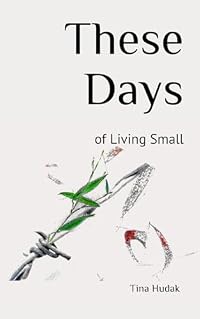
This book feels a lot like "poetry by numbers": here's a sad part, here's a quiet part, here's an angry part. It's all there, but none of it coheres in a way that I want to poetry to. It's short and sweet, but I doubt I'll remember any of it tomorrow.
This book feels a lot like "poetry by numbers": here's a sad part, here's a quiet part, here's an angry part. It's all there, but none of it coheres in a way that I want to poetry to. It's short and sweet, but I doubt I'll remember any of it tomorrow.
20NielsenGW
Book 14: The Seventy Wonders of the Ancient World: The Great Monuments and How They Were Built by Chris Scarre. London: Thames & Hudson, 1999. 306 pp.

Chris Scarre took a subject so inherently full of awe and wonder and drained it of both. Monuments, buildings, and structures meant to inspire just fall flat in this compendium. You get semi-decent histories of each place, some facts and figures, and that's it. Of the 70 wonders in the book, there are only 13 in-book plates. Woeful. There are better coffee table books out there on this topic -- go get one of those.
Chris Scarre took a subject so inherently full of awe and wonder and drained it of both. Monuments, buildings, and structures meant to inspire just fall flat in this compendium. You get semi-decent histories of each place, some facts and figures, and that's it. Of the 70 wonders in the book, there are only 13 in-book plates. Woeful. There are better coffee table books out there on this topic -- go get one of those.
21PaulCranswick
>20 NielsenGW: I saw that in the bookstore on Friday last and wavered, Gerard.
Wavering no more! I won't be adding it.
Wavering no more! I won't be adding it.
22NielsenGW
>21 PaulCranswick: If I can save just one person from this book, I'll feel like I did some good in this world. :)
23NielsenGW
Book 15: Dames, Dishes, and Degrees: Faculty Wives in America by Amy Mittelman. Chester Co., PA: Cynren Press, 2026. 195 pp.
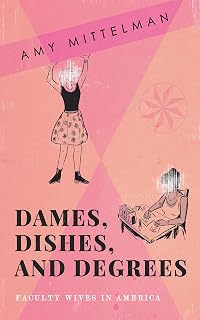
Amy Mittelman's Dames, Dishes, and Degrees is a fairly informative and gracious look into the lives of faculty wives. In the not-too-distant past, women with college degrees could theoretically get hired by a university, but once they were married, those chances almost went to zero. These faculty wives were expected to support their husbands by taking care of the household. Naturally, looking for some form of outlet, they soon formed Wives Clubs at the various institutions and helped to shape the educational and social landscape from there. Mittelman's research starts to get a little repetitive after a while, but that's only because almost every college put up the same barriers. This book is a decent niche social history -- give it a read.
Amy Mittelman's Dames, Dishes, and Degrees is a fairly informative and gracious look into the lives of faculty wives. In the not-too-distant past, women with college degrees could theoretically get hired by a university, but once they were married, those chances almost went to zero. These faculty wives were expected to support their husbands by taking care of the household. Naturally, looking for some form of outlet, they soon formed Wives Clubs at the various institutions and helped to shape the educational and social landscape from there. Mittelman's research starts to get a little repetitive after a while, but that's only because almost every college put up the same barriers. This book is a decent niche social history -- give it a read.
24NielsenGW
Book 16: A Look into Mirrors: Their Making and Use Throughout History by Iver P. Cooper. Jefferson, NC: McFarland & Company, 2026. 212 pp.
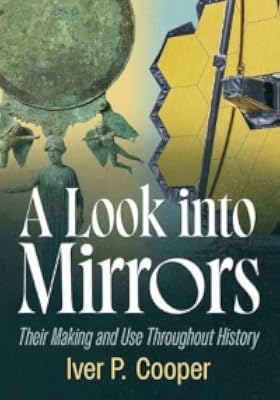
I really wanted to like this book, I really did, but there's too much knowledge and not enough wisdom. Cooper must have gone through the entirety of archive.org, found every mention of mirrors and optics, and slammed them into this catalogue of information. I wish he had taken some time to go to primary sources or even weed out the genuinely superfluous mentions of mirrors in history. I guess I wanted more humanity and less technology here.
I really wanted to like this book, I really did, but there's too much knowledge and not enough wisdom. Cooper must have gone through the entirety of archive.org, found every mention of mirrors and optics, and slammed them into this catalogue of information. I wish he had taken some time to go to primary sources or even weed out the genuinely superfluous mentions of mirrors in history. I guess I wanted more humanity and less technology here.
