1wcarter
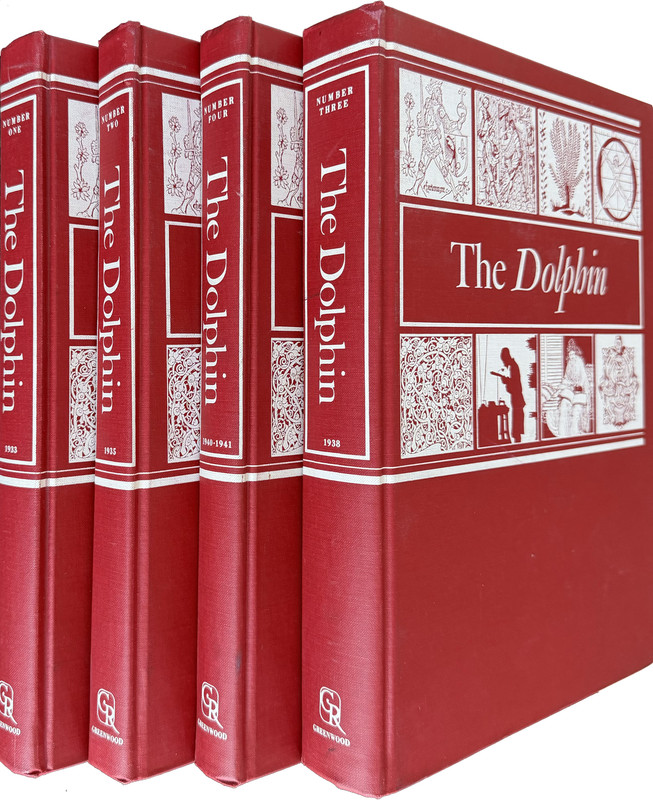
The Dolphin, A Periodical for All People Who Find Pleasure in Fine Books – LIMITED EDITIONS CLUB 1933-1941 : GREENWOOD REPRINT CORPORATION Facsimile 1971
A PICTORIAL REVIEW
Between 1933 and 1941 the LEC published four books on the Art of the Book under the title The Dolphin. These were not part of a subscriber’s package and were available only for an extra fee. They were issued without a slipcase and as a result copies now available tend to be significantly less than perfect.
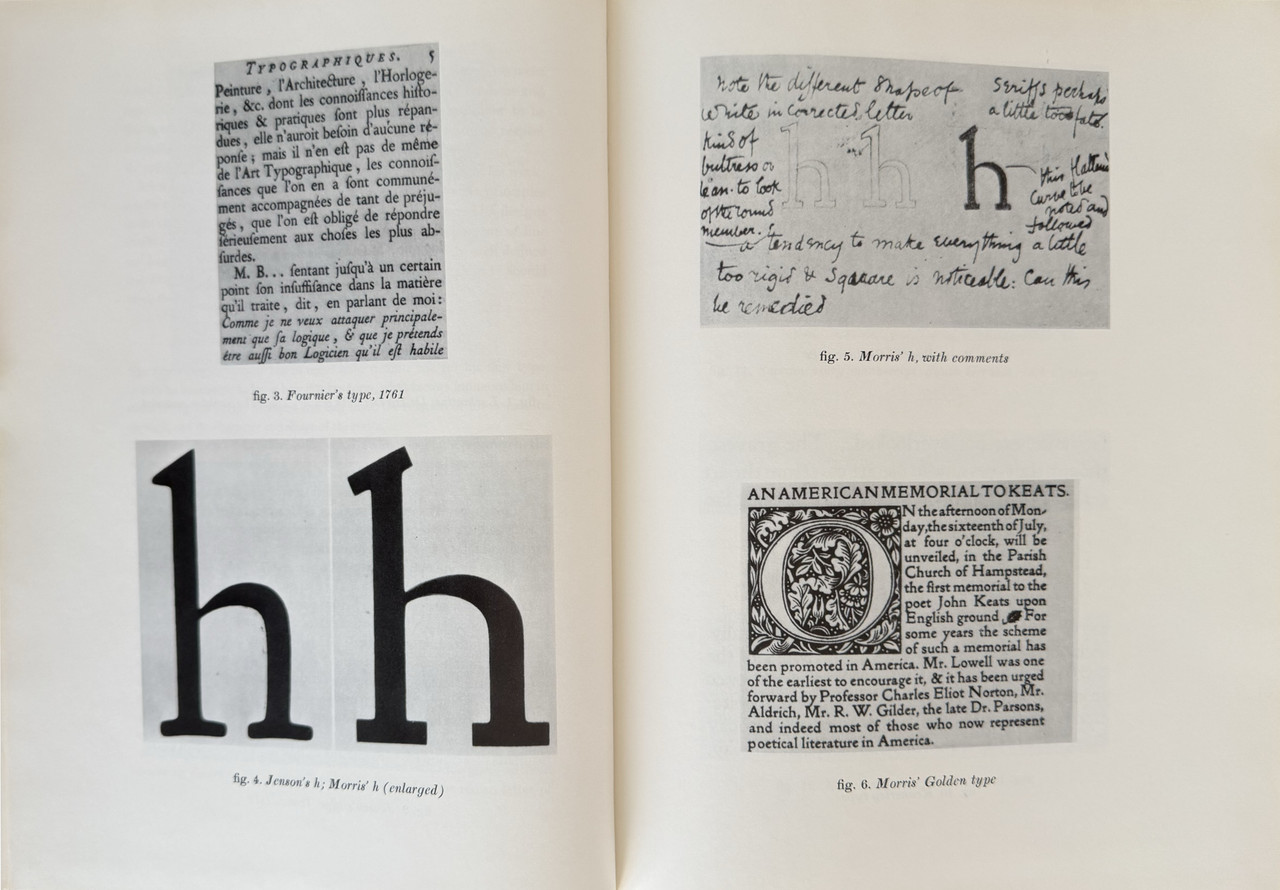
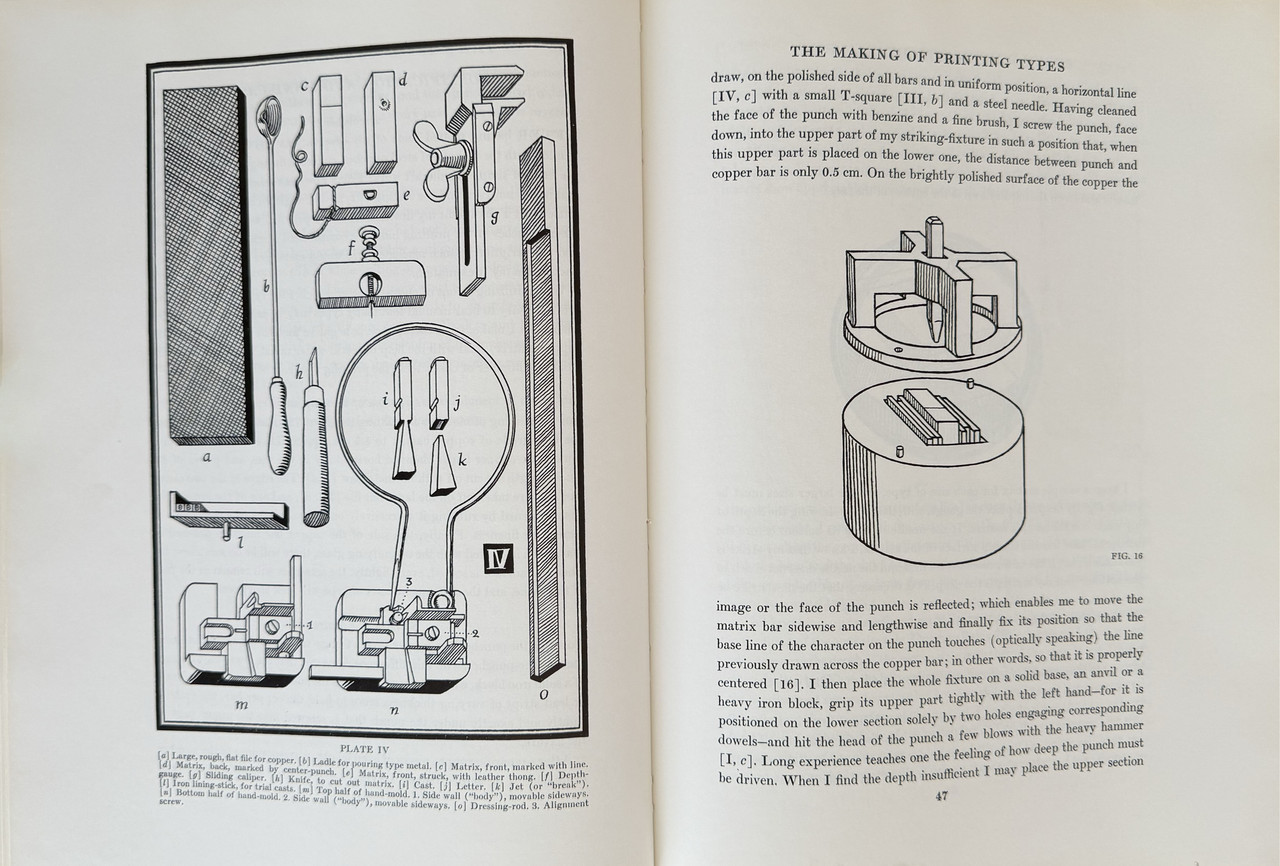
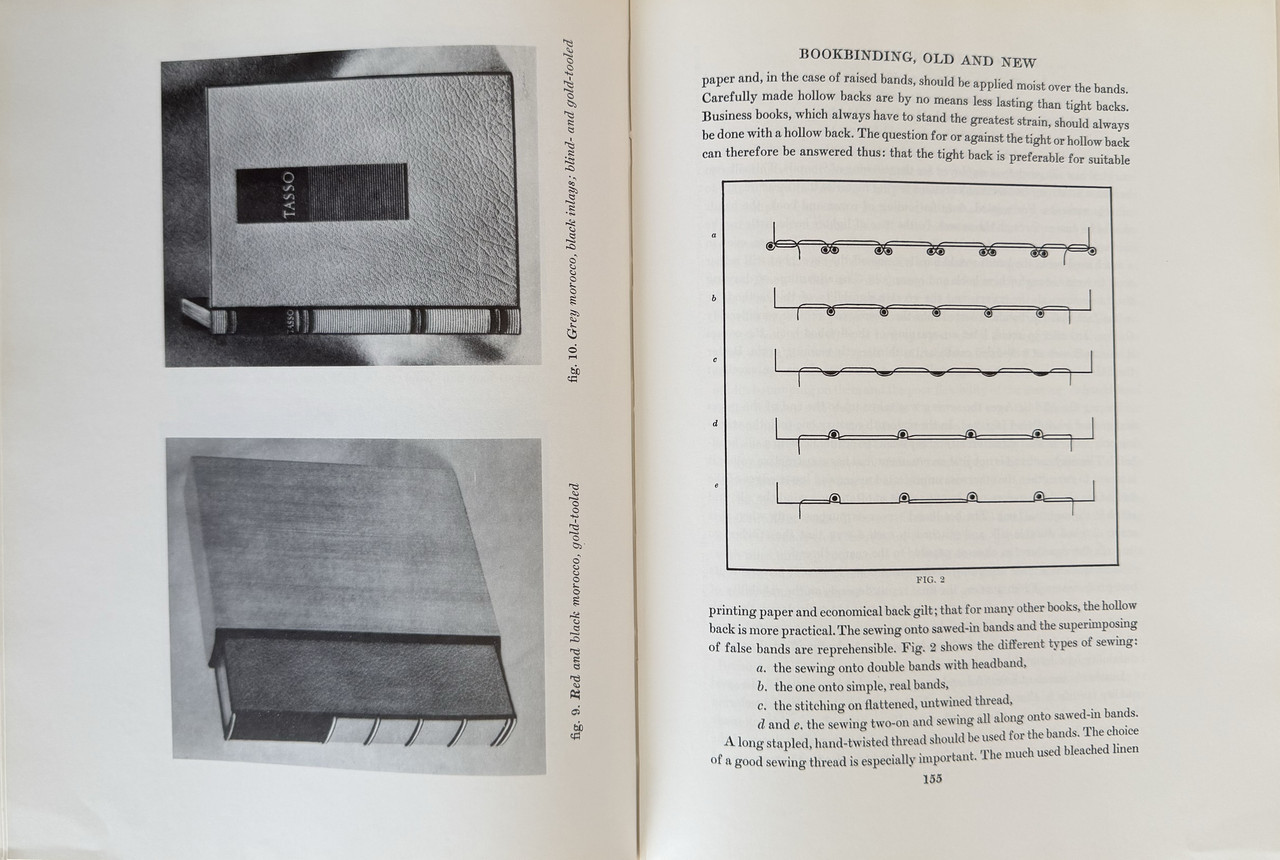
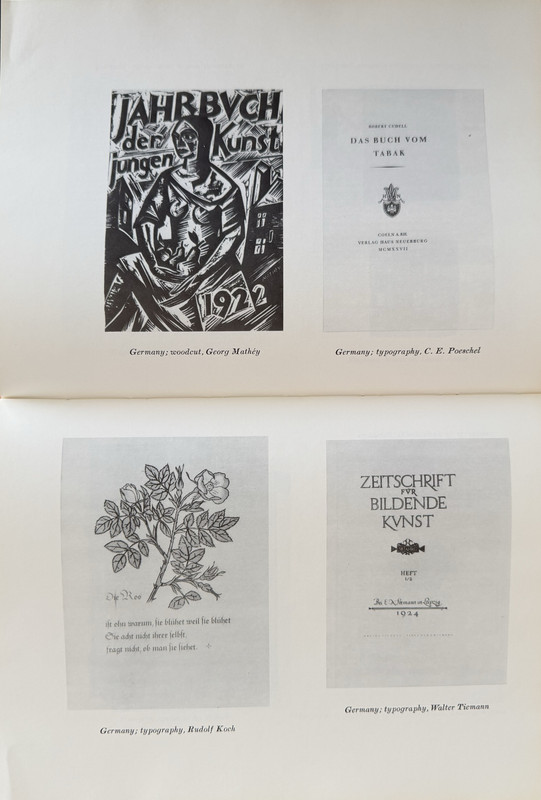
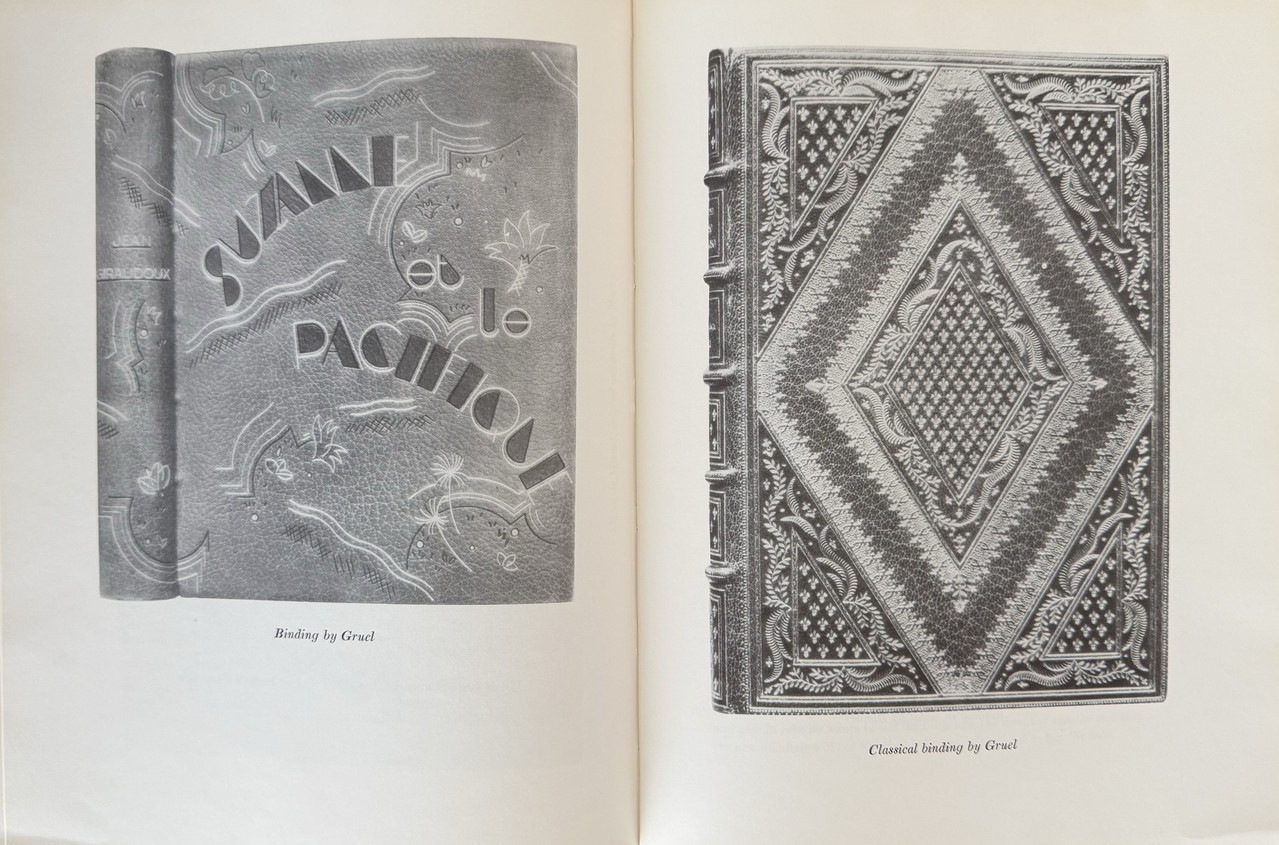
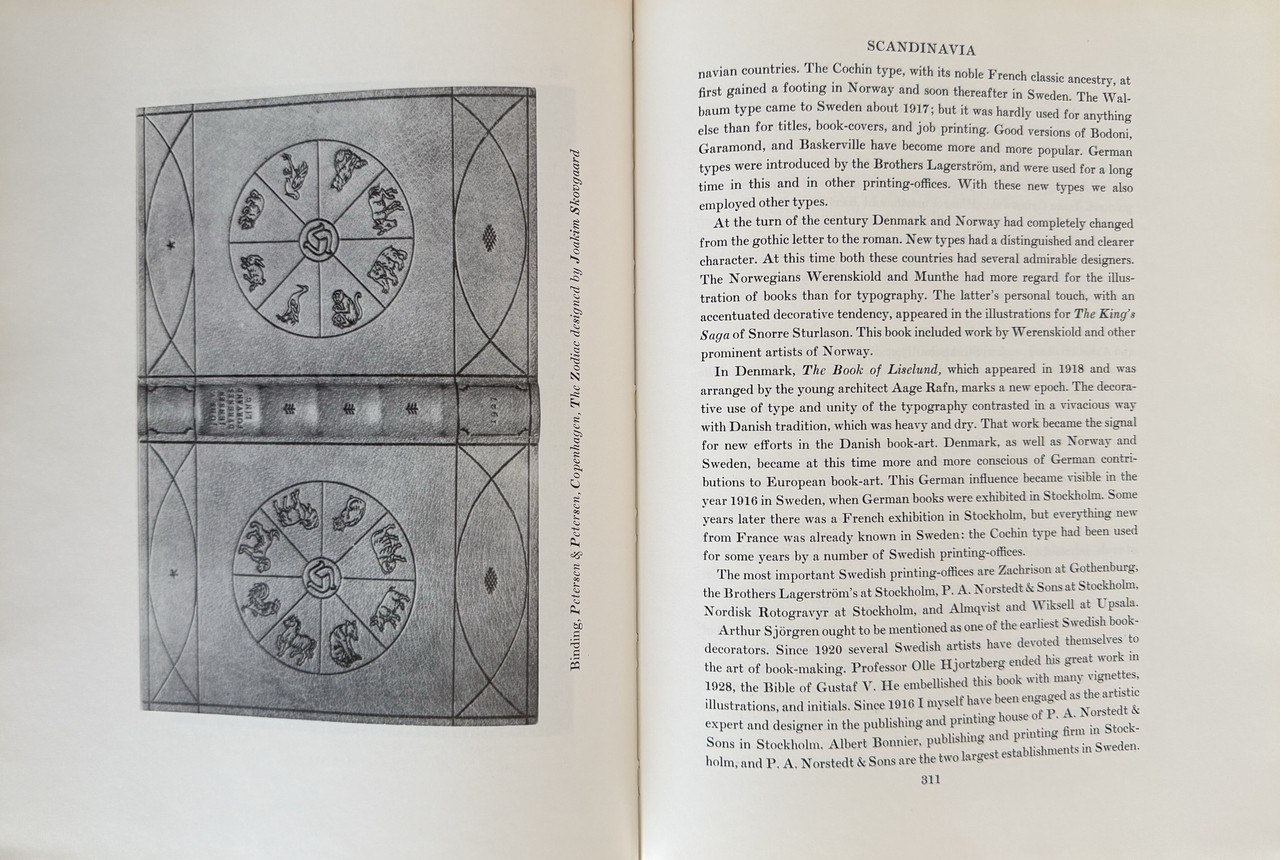
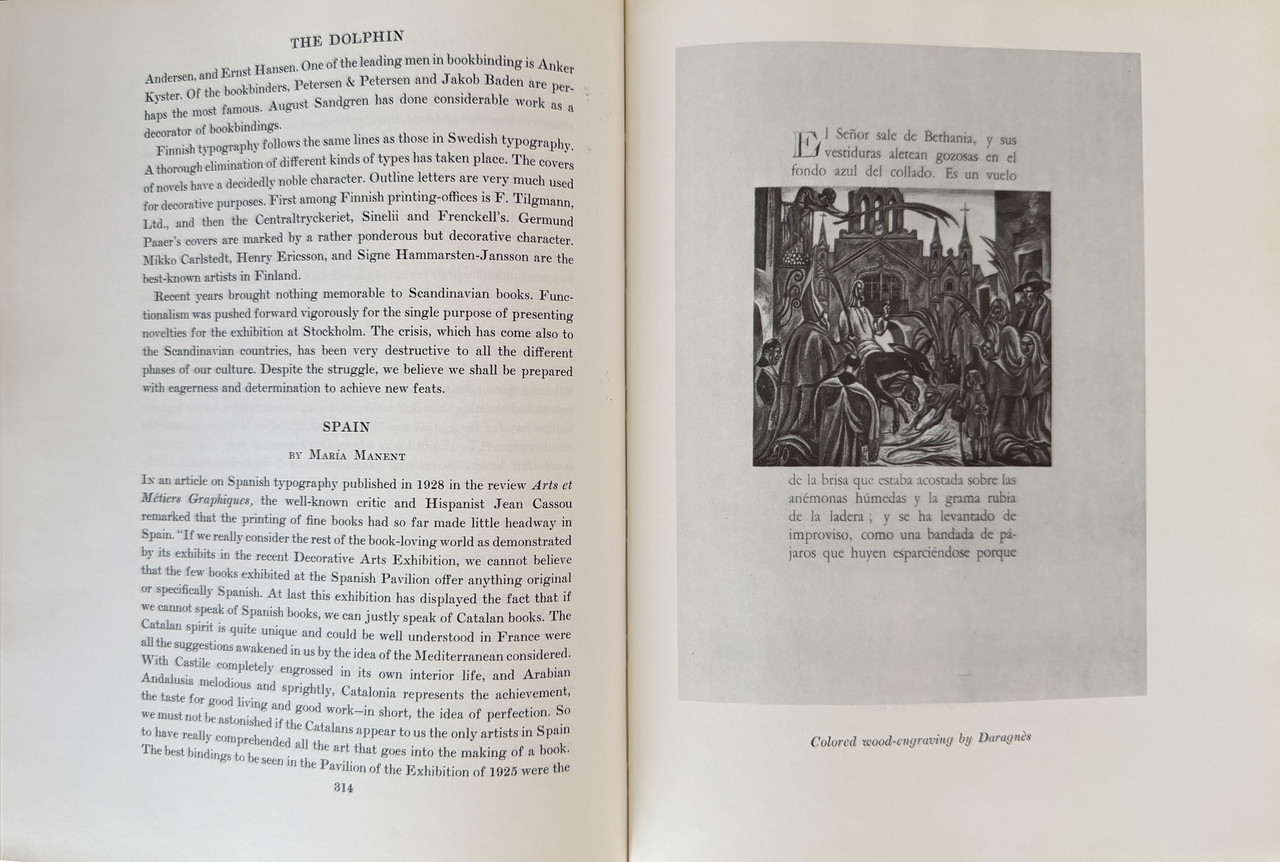
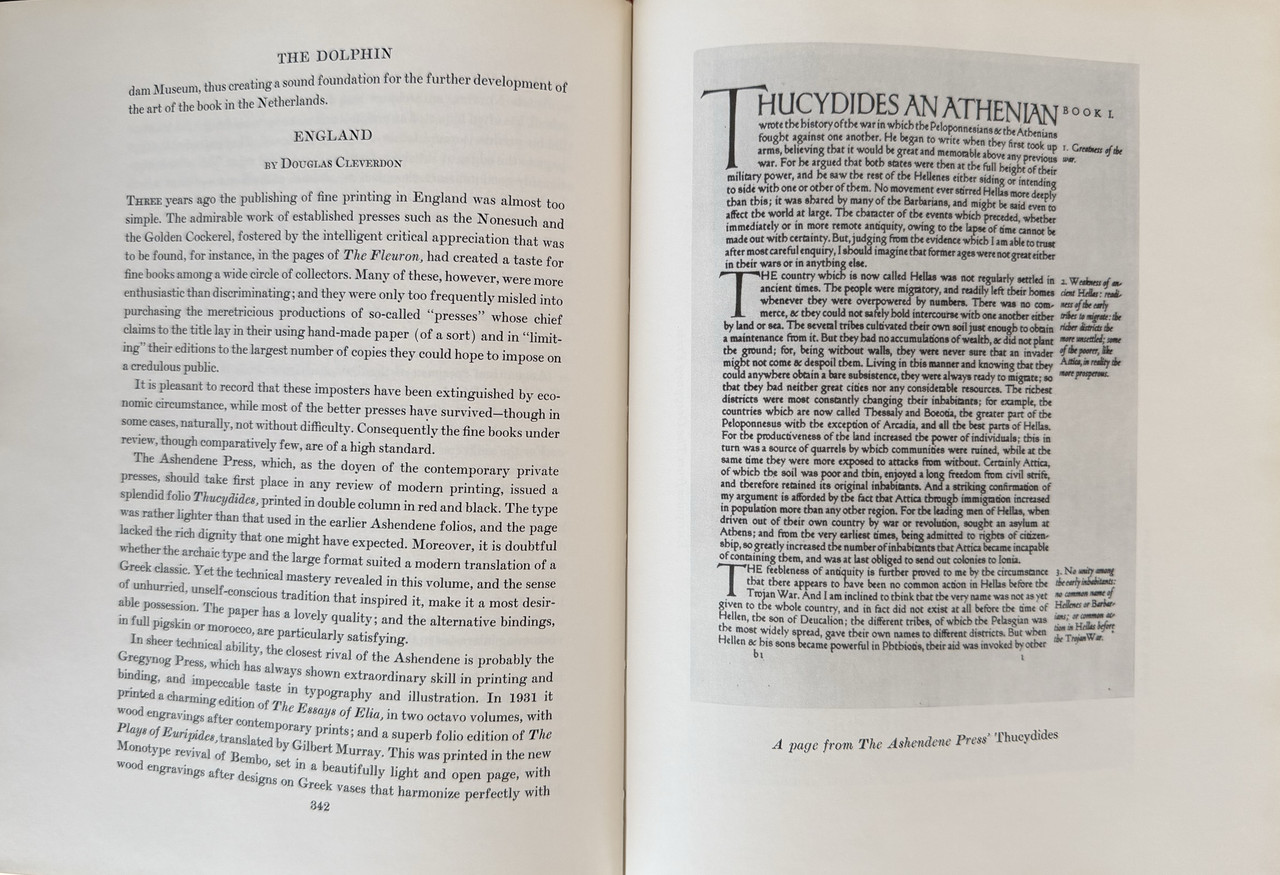
These books went into great detail about every aspect of book making, from manufacturing type and paper, to binding, embossing. And the history of book-making in different countries. They were illustrated with examples of the tools of the trade as well as typography, engravings and finished books.
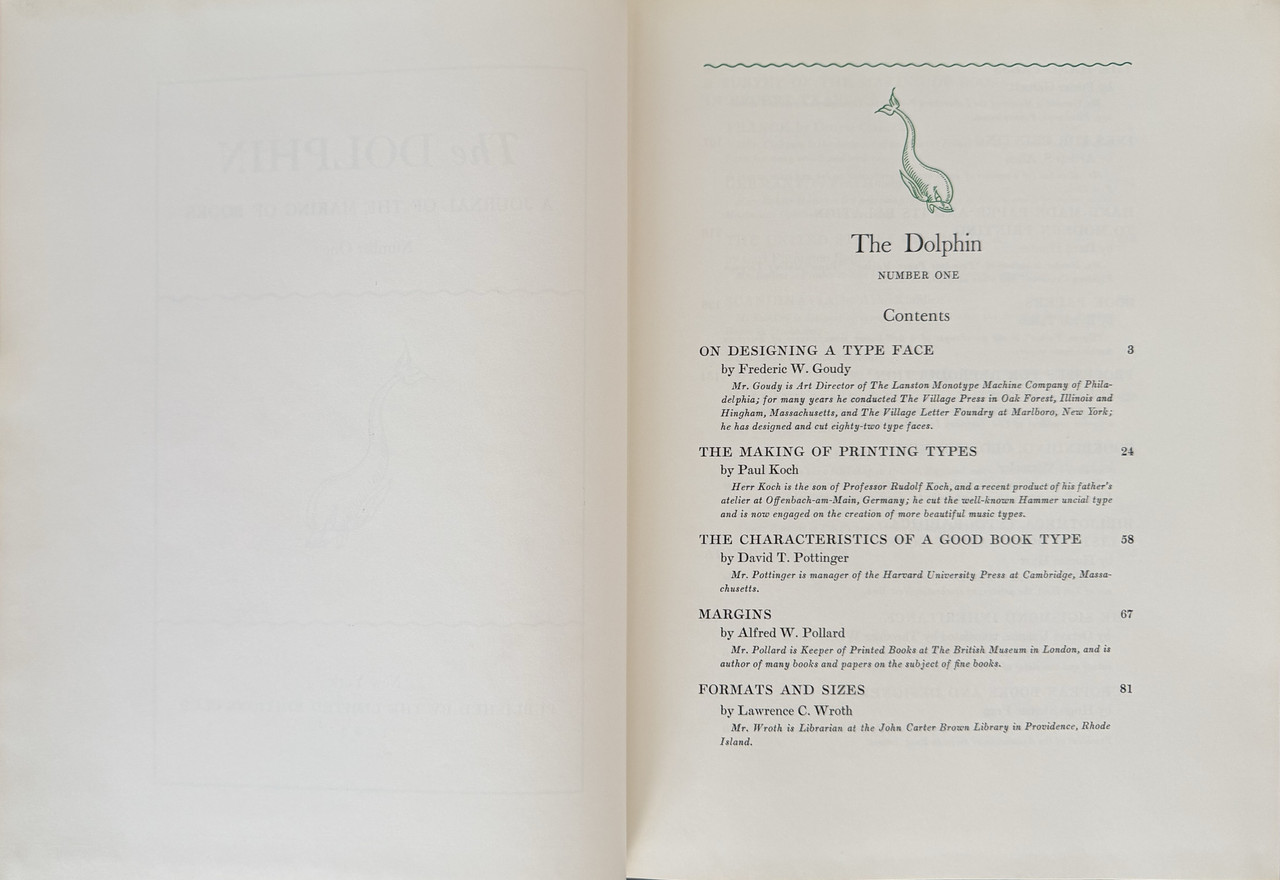
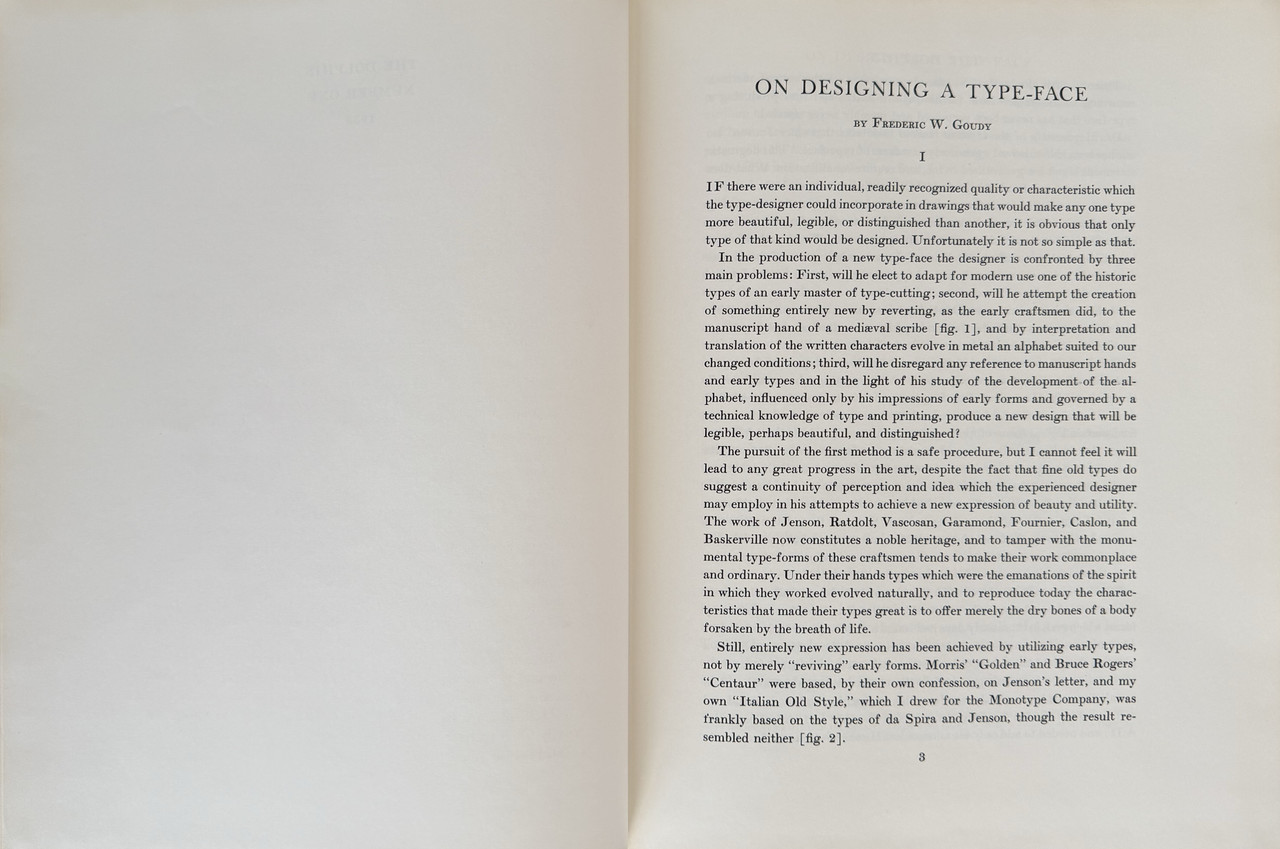
The contents consist of essays by multiple experts in the relevant fields.
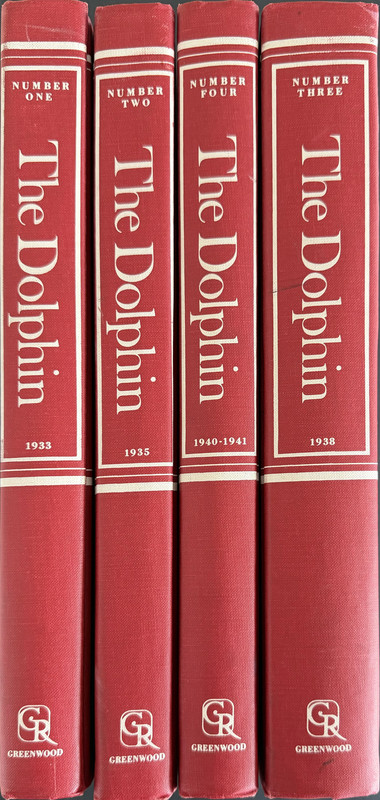
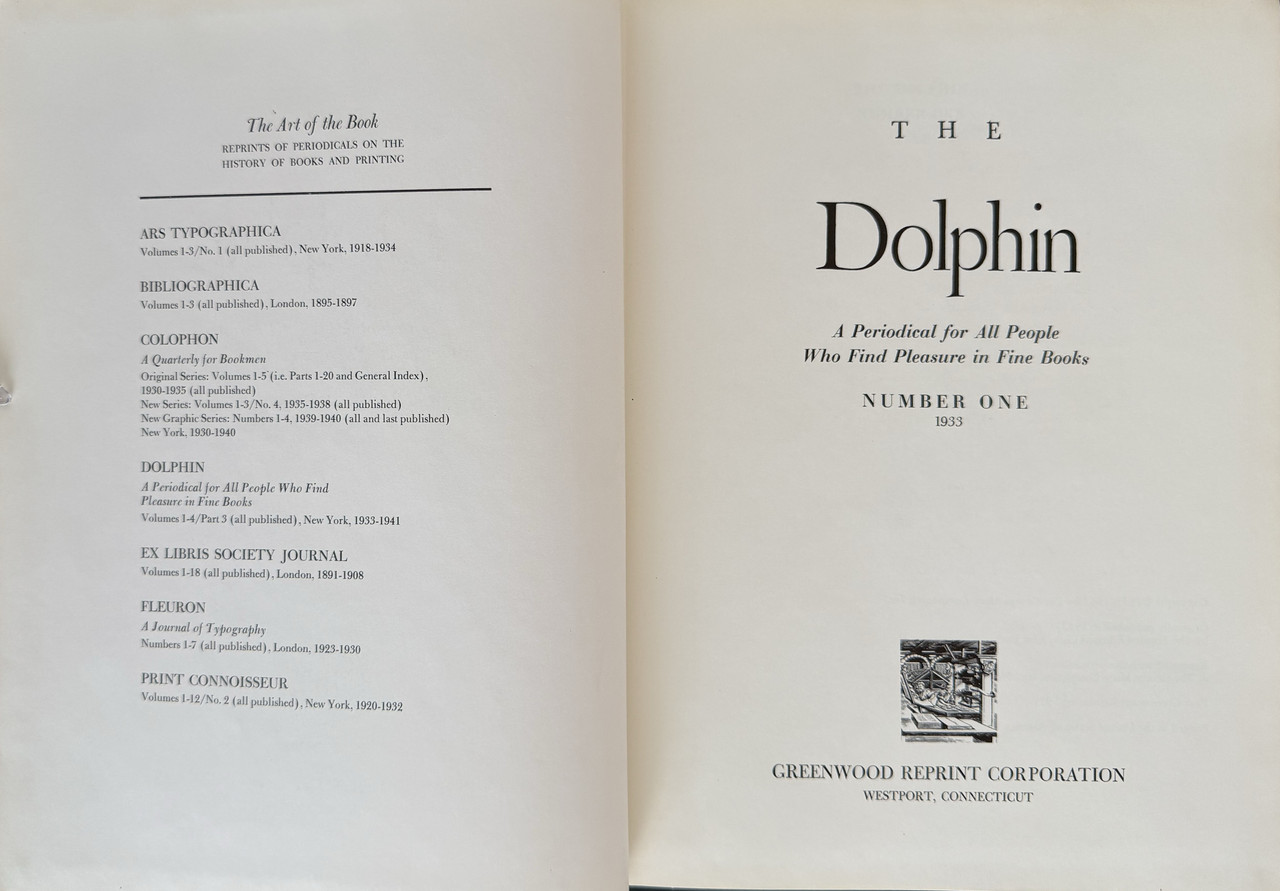
Forty years later there was apparently a demand for these books that exceeded supply and The Greenwood Reprint Company produced very nicely bound facsimile reprints of the four original volumes. The contents are identical in every way to the originals, including the advertisements at the back of each book.
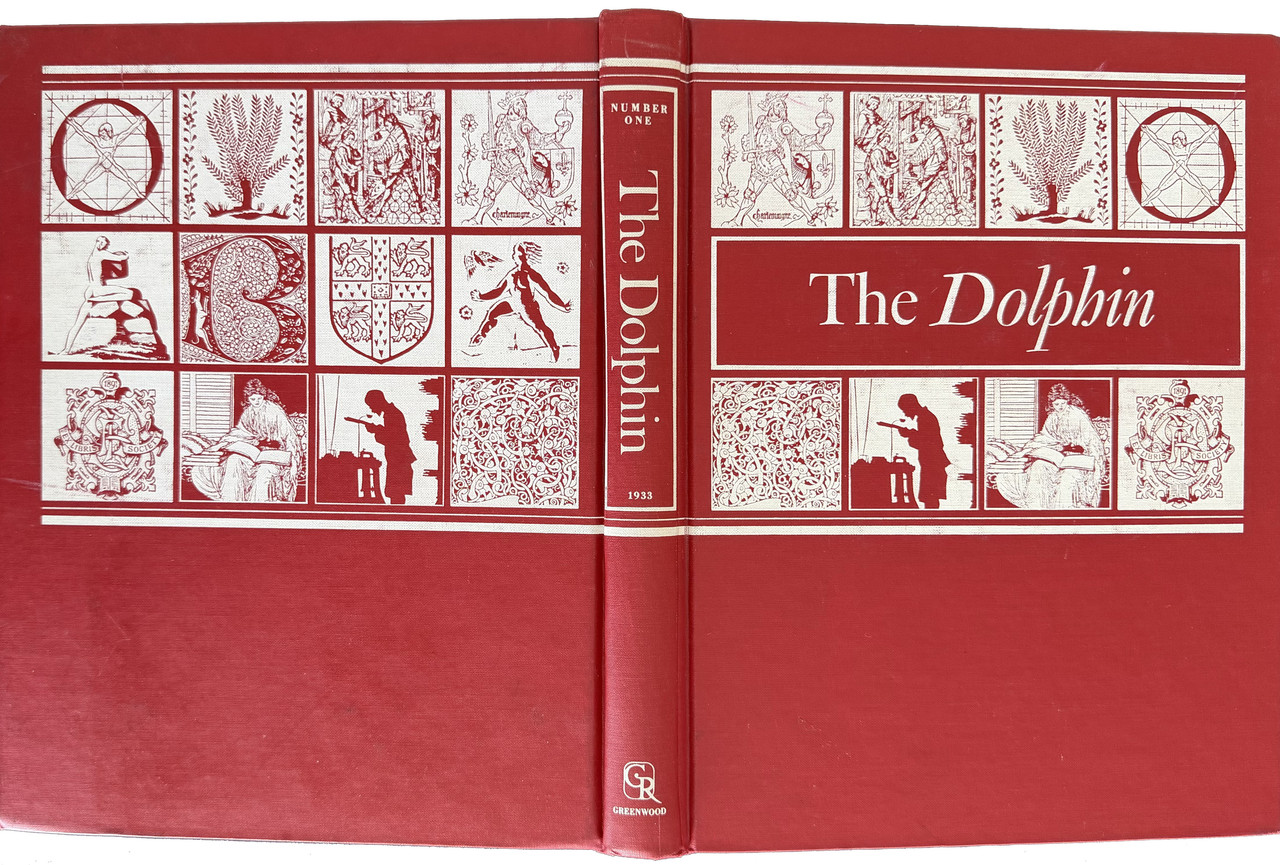
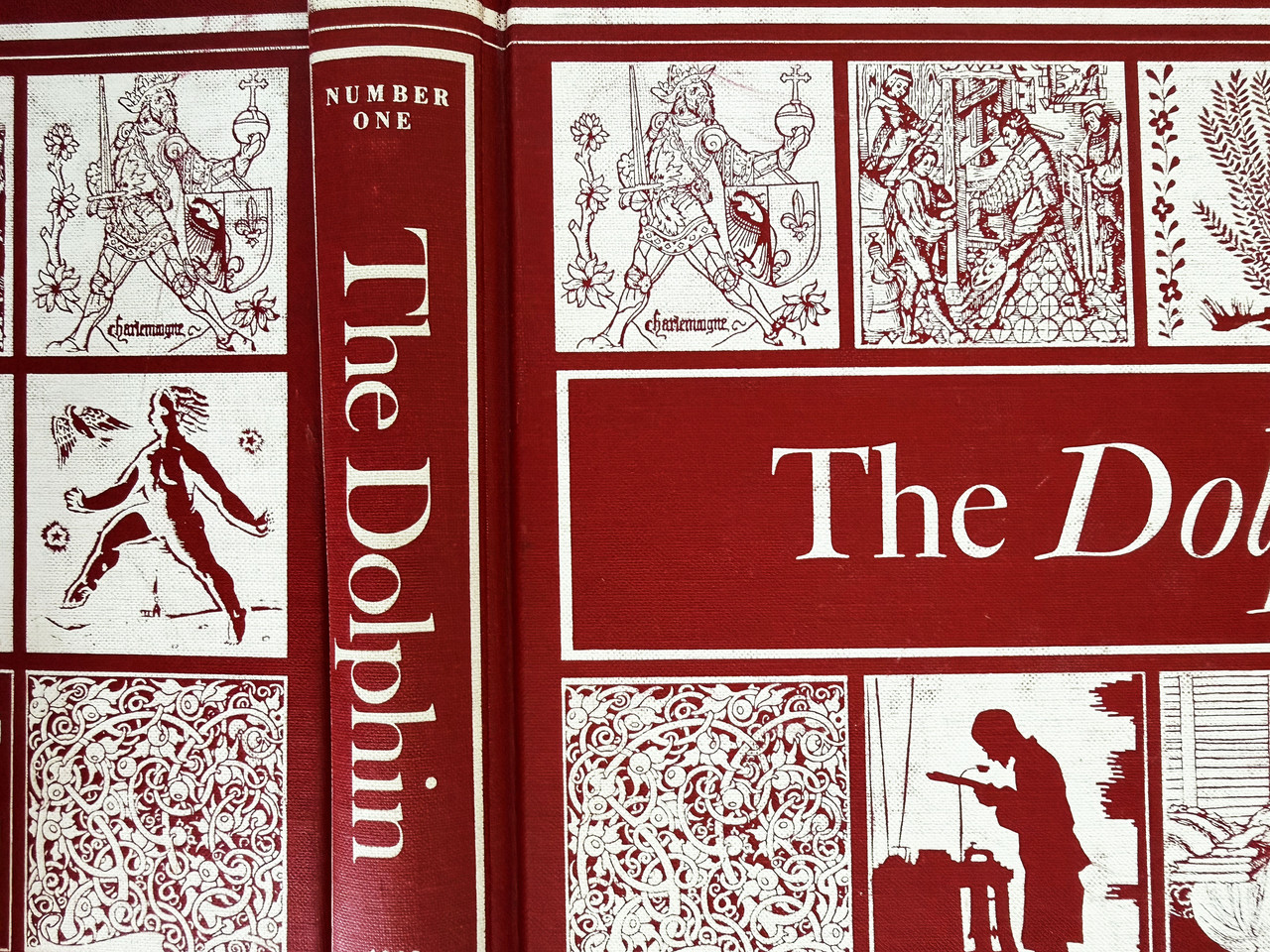
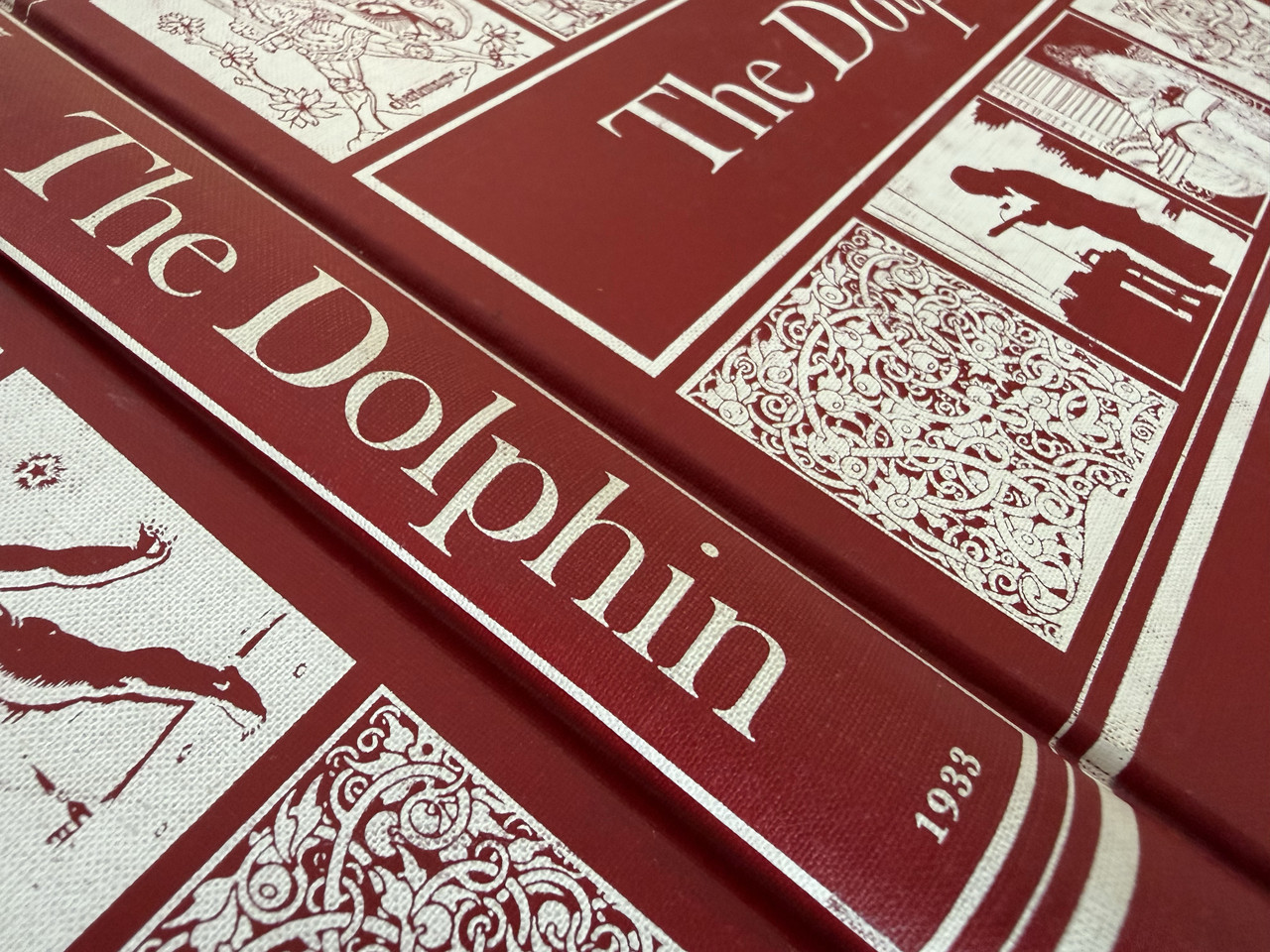
Each of the four volumes contain numerous illustrations, many being full page. The bindings of these facsimile volumes are identical except for the date and numbering on the spine. They have red endpapers and are bound in dark red cloth printed in white on covers and spine with title and illustrations. There are approximately 1700 pages in total and each volume measures 28.6x22.3cm.
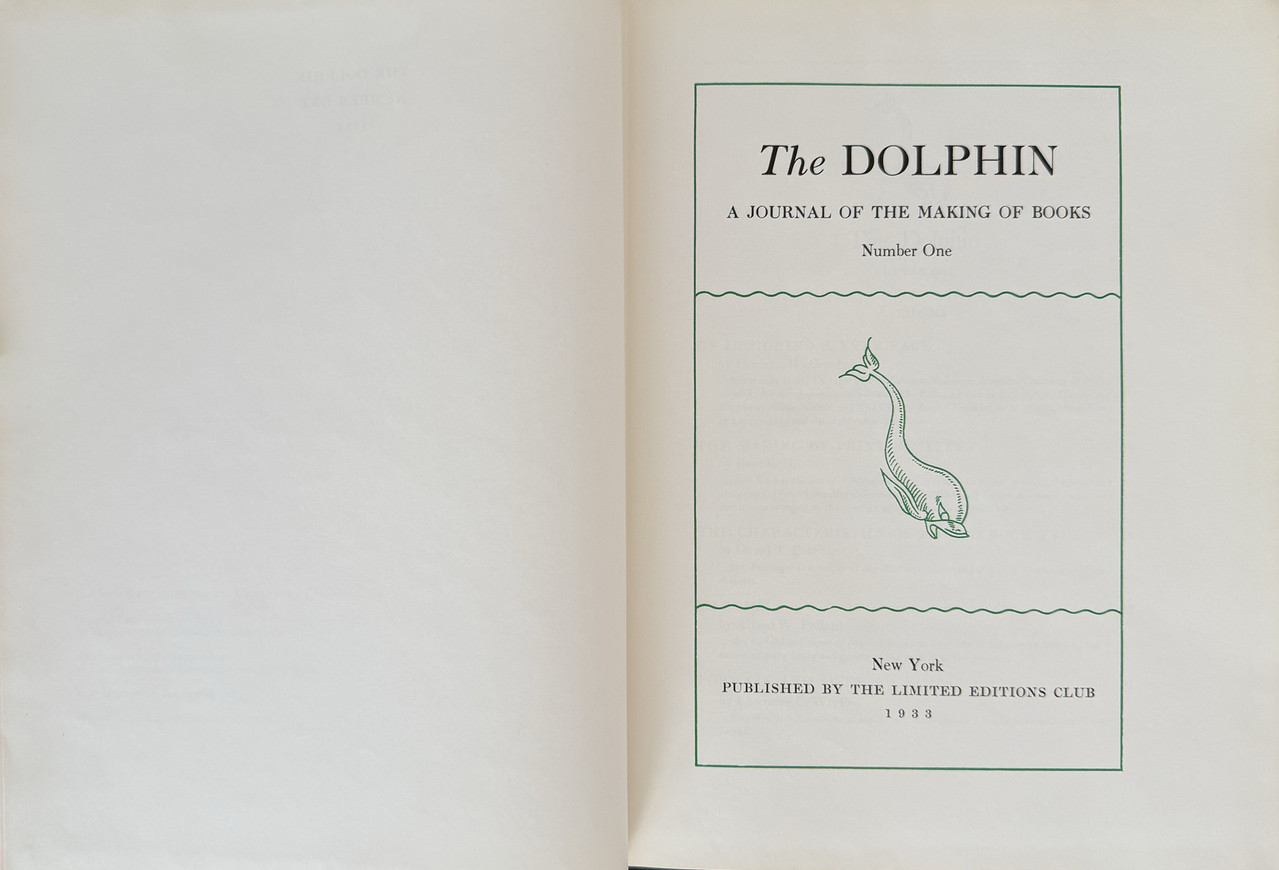
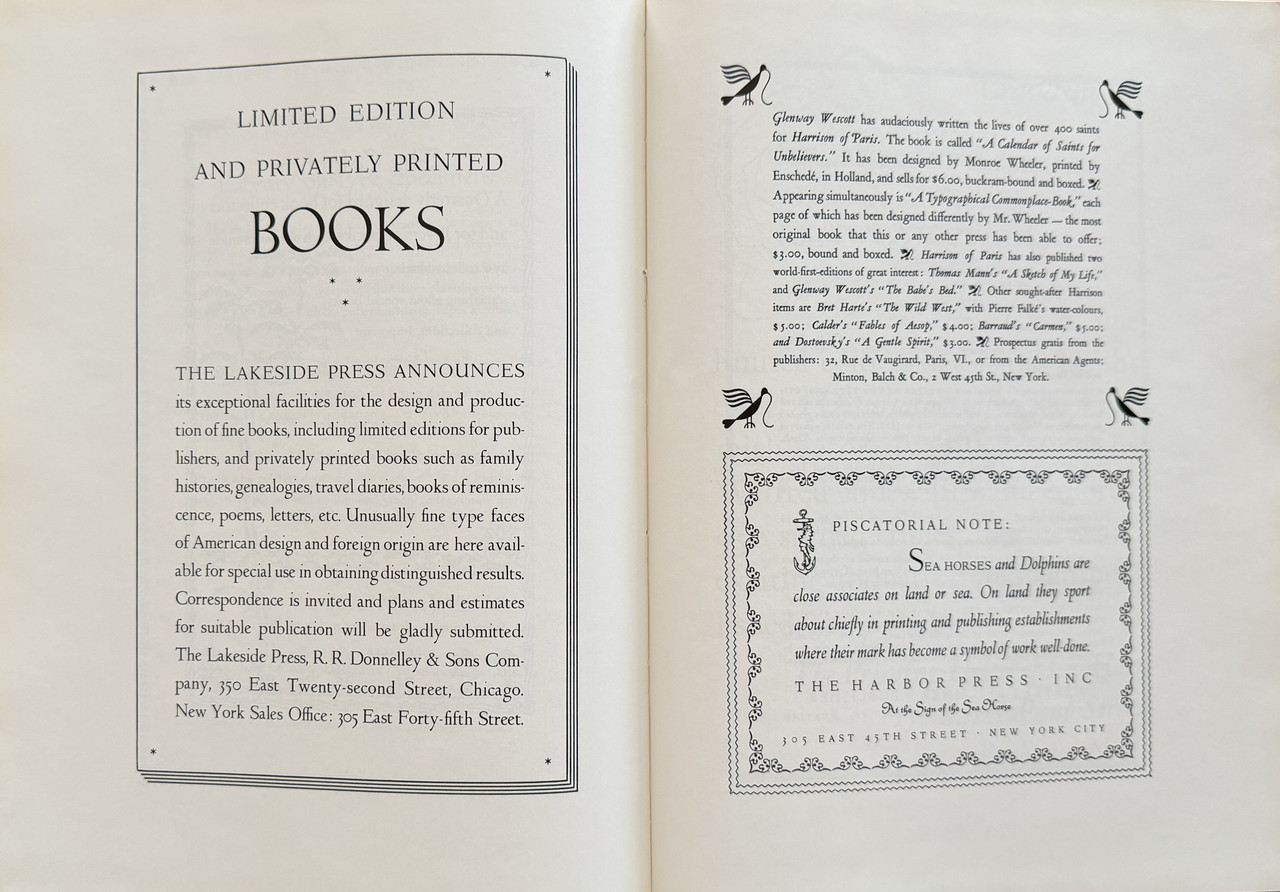
For simplicity the contents of volume one only has been photographed below but it is representative of the other three.
DETAILS OF THE ORIGINAL LEC DOLHIN SERIES
1933 The Dolphin No.1, A Journal of the Making of Books. Illustrated with vintage monochrome photographs, drawings and reproductions. Designed by W.A.Dwiggins and Frederick Warde. Bound in green cloth with titling and images on spine in silver and blue. 390 pages 1200 copies.

1935 The Dolphin No.2, A Journal of the Making of Books. Illustrated in colour & black & white, with W.A. Dwiggins printed insert. Articles by Paul A.Bennett (type faces); Beatrice Warde (cutting types for machines); Joseph Blumenthal (fitting type); Christopher Sandford (illustrated book); Robert Josephy (illustrated book); Warren Chappell (illustrations with a tool); Thomas Nast Fairbanks (manufacture of paper); Edith Diehl (kinds of binding); Elmer Adler (making a book); Lawrence C.Wroth (printer's manuals); Kathi Meyer & Eva Judd O'Meara (printing music); D.B. Updike (liturgical printing); Philip Hofer (W.A. Dwiggins); W.A. Dwiggins (Drums of Kalkapan); C.P. Rollins (survey of bookmaking in the USA), and for other countries Douglas Cleverdon, Denyse Clairouin, Charles Nypels, Anders Billow, A.A. Sidorov and Y.Nakatsuchi. Bound in black cloth with design and titling in silver and gold on the spine. Glassine wrapper. 345 pages. 2000 copies. Issued with a promotional letter, a copy of which can be downloaded HERE.

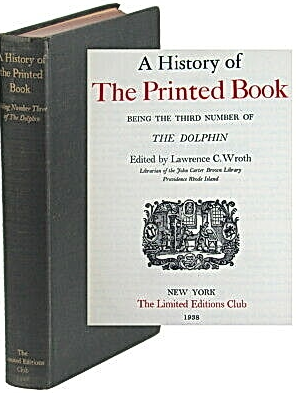
1938 The Dolphin No.3, A History of the Printed Book. Edited by Lawrence Wroth. Articles by Joseph Blumenthal, Warren Chappell, Thomas Nast Fairbanks et al. Monochrome and colour illustrations. Printed by George T. Bailey at the Yale University Press. Bound in black cloth with gilt title on spine. 507 pages. 1800 copies.
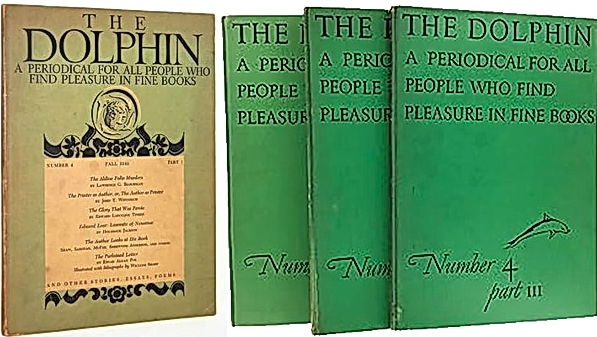
1940 The Dolphin No.4, A Periodical for All People who Find pleasure in Fine Books. Issued in 3 parts in 1940 & 1941. Specially printed and illustrated insert bound into each part. Edited by George Macy, Peter Beilenson, Paul A.Bennett, Carl Purington Rollins and John T.Winterich. Designed by W.A.Dwiggins. Printed by American Book-Stratford Press, New York. Bound by Russell-Rutter Co., New York. Total 312+48 pages.
PART 1 - Illustrations by Fritz Kredel, W.A.Dwiggins, Valenti Angelo, William Sharp & Ervine Metzl. 500 copies bound in green buckram cloth stamped with title on spine and cover in dark green; saple bound and in glued-on paper cover. 108+16 pages 12,000 copies.
PART 2 - Illustrations by Hans Alexander Mueller, Fritz Kredel, E.McKnight Kauffer, Ivan Opfer John O'Hara Cosgrave II & Suzanne Suba. Bound in green buckram cloth stamped with title on spine and cover in dark green. 124+16 pages. 3000 copies.
PART 3 - Illustrations by Donald McKay, Carlotta Petrina and wood engravings by LeRoy H.Appleton. Bound in green buckram cloth stamped with title on spine and cover in dark green. 508 pages. 3000 copies.
GREENWOOD FACSIMILE EDITION

An index of the other illustrated reviews in the this series can be viewed here.
A PICTORIAL REVIEW
Between 1933 and 1941 the LEC published four books on the Art of the Book under the title The Dolphin. These were not part of a subscriber’s package and were available only for an extra fee. They were issued without a slipcase and as a result copies now available tend to be significantly less than perfect.
These books went into great detail about every aspect of book making, from manufacturing type and paper, to binding, embossing. And the history of book-making in different countries. They were illustrated with examples of the tools of the trade as well as typography, engravings and finished books.
The contents consist of essays by multiple experts in the relevant fields.
Forty years later there was apparently a demand for these books that exceeded supply and The Greenwood Reprint Company produced very nicely bound facsimile reprints of the four original volumes. The contents are identical in every way to the originals, including the advertisements at the back of each book.
Each of the four volumes contain numerous illustrations, many being full page. The bindings of these facsimile volumes are identical except for the date and numbering on the spine. They have red endpapers and are bound in dark red cloth printed in white on covers and spine with title and illustrations. There are approximately 1700 pages in total and each volume measures 28.6x22.3cm.
For simplicity the contents of volume one only has been photographed below but it is representative of the other three.
DETAILS OF THE ORIGINAL LEC DOLHIN SERIES
1933 The Dolphin No.1, A Journal of the Making of Books. Illustrated with vintage monochrome photographs, drawings and reproductions. Designed by W.A.Dwiggins and Frederick Warde. Bound in green cloth with titling and images on spine in silver and blue. 390 pages 1200 copies.
1935 The Dolphin No.2, A Journal of the Making of Books. Illustrated in colour & black & white, with W.A. Dwiggins printed insert. Articles by Paul A.Bennett (type faces); Beatrice Warde (cutting types for machines); Joseph Blumenthal (fitting type); Christopher Sandford (illustrated book); Robert Josephy (illustrated book); Warren Chappell (illustrations with a tool); Thomas Nast Fairbanks (manufacture of paper); Edith Diehl (kinds of binding); Elmer Adler (making a book); Lawrence C.Wroth (printer's manuals); Kathi Meyer & Eva Judd O'Meara (printing music); D.B. Updike (liturgical printing); Philip Hofer (W.A. Dwiggins); W.A. Dwiggins (Drums of Kalkapan); C.P. Rollins (survey of bookmaking in the USA), and for other countries Douglas Cleverdon, Denyse Clairouin, Charles Nypels, Anders Billow, A.A. Sidorov and Y.Nakatsuchi. Bound in black cloth with design and titling in silver and gold on the spine. Glassine wrapper. 345 pages. 2000 copies. Issued with a promotional letter, a copy of which can be downloaded HERE.
1938 The Dolphin No.3, A History of the Printed Book. Edited by Lawrence Wroth. Articles by Joseph Blumenthal, Warren Chappell, Thomas Nast Fairbanks et al. Monochrome and colour illustrations. Printed by George T. Bailey at the Yale University Press. Bound in black cloth with gilt title on spine. 507 pages. 1800 copies.
1940 The Dolphin No.4, A Periodical for All People who Find pleasure in Fine Books. Issued in 3 parts in 1940 & 1941. Specially printed and illustrated insert bound into each part. Edited by George Macy, Peter Beilenson, Paul A.Bennett, Carl Purington Rollins and John T.Winterich. Designed by W.A.Dwiggins. Printed by American Book-Stratford Press, New York. Bound by Russell-Rutter Co., New York. Total 312+48 pages.
PART 1 - Illustrations by Fritz Kredel, W.A.Dwiggins, Valenti Angelo, William Sharp & Ervine Metzl. 500 copies bound in green buckram cloth stamped with title on spine and cover in dark green; saple bound and in glued-on paper cover. 108+16 pages 12,000 copies.
PART 2 - Illustrations by Hans Alexander Mueller, Fritz Kredel, E.McKnight Kauffer, Ivan Opfer John O'Hara Cosgrave II & Suzanne Suba. Bound in green buckram cloth stamped with title on spine and cover in dark green. 124+16 pages. 3000 copies.
PART 3 - Illustrations by Donald McKay, Carlotta Petrina and wood engravings by LeRoy H.Appleton. Bound in green buckram cloth stamped with title on spine and cover in dark green. 508 pages. 3000 copies.
GREENWOOD FACSIMILE EDITION
An index of the other illustrated reviews in the this series can be viewed here.
2UK_History_Fan
Great review! I own rather tattered copies of each of the originals but had no idea about these reprints. They look rather nice.
3Django6924
Thank you so much for posting this; I have never had any copies of The Dolphin, and now I see how much I missed!
4kdweber
That’s a much nicer set than my originals though I made matching slipcases for them. It’s particularly nice to have the four parts of the last Dolphin bound into one nice hardback.
5wcarter
I was curious about the connection between fine press and the Dolphin title of these books. AI came to the rescue with the following :-
The connection between a dolphin and printing is rooted in Aldus Manutius, a pioneering Italian Renaissance printer who founded the Aldine Press in 1494. His famous logo, featuring a dolphin wrapped around an anchor, became one of the most recognized emblems in the history of publishing.
The Dolphin and Anchor EmblemOrigin: Manutius adopted the emblem in 1502 after his friend, the scholar Pietro Bembo, gifted him an ancient Roman silver coin (dating to the Emperor Vespasian's reign) that bore this exact image.Meaning: The visual represents the classical motto Festina Lente, which translates to "make haste slowly".
Connection to Printing: In this allegory, the anchor symbolizes stability, deliberation, and careful editing, while the dolphin represents speed, agility, and a strong work ethic. Together, they highlighted the Aldine Press's commitment to producing accurate, high-quality texts quickly without sacrificing precision.
Aldus Manutius's Impact on PrintingManutius didn't just have a memorable logo; he revolutionized how books were produced and read:Portable Books: Before his time, books were massive, heavy volumes chained to desks. He created the first pocket-sized books (known as octavos or enchiridia), making literature much more accessible.
The connection between a dolphin and printing is rooted in Aldus Manutius, a pioneering Italian Renaissance printer who founded the Aldine Press in 1494. His famous logo, featuring a dolphin wrapped around an anchor, became one of the most recognized emblems in the history of publishing.
The Dolphin and Anchor EmblemOrigin: Manutius adopted the emblem in 1502 after his friend, the scholar Pietro Bembo, gifted him an ancient Roman silver coin (dating to the Emperor Vespasian's reign) that bore this exact image.Meaning: The visual represents the classical motto Festina Lente, which translates to "make haste slowly".
Connection to Printing: In this allegory, the anchor symbolizes stability, deliberation, and careful editing, while the dolphin represents speed, agility, and a strong work ethic. Together, they highlighted the Aldine Press's commitment to producing accurate, high-quality texts quickly without sacrificing precision.
Aldus Manutius's Impact on PrintingManutius didn't just have a memorable logo; he revolutionized how books were produced and read:Portable Books: Before his time, books were massive, heavy volumes chained to desks. He created the first pocket-sized books (known as octavos or enchiridia), making literature much more accessible.
Join to post

