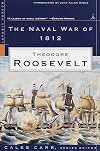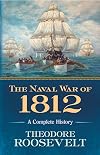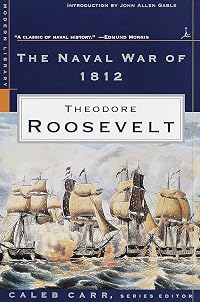
The Naval War of 1812
by Theodore Roosevelt
On This Page
Description
Published when Theodore Roosevelt was only twenty-three years old, The Naval War of 1812 was immediately hailed as a literary and scholarly triumph, and it is still considered the definitive book on the subject. It caused considerable controversy for its bold refutation of earlier accounts of the war, but its brilliant analysis and balanced tone left critics floundering, changed the course of U.S. military history by renewing interest in our obsolete forces, and set the young author and show more political hopeful on a path to greatness. Roosevelt's inimitable style and robust narrative make The Naval War of 1812 enthralling, illuminating, and utterly essential to every armchair historian. show lessTags
Recommendations


















Member Reviews
A disappointing offering from the larger-than-life Teddy Roosevelt who is normally an excellent writer.
In this book, Roosevelt writes the history indicated in his wordy title (hard even to fit on a decent cover), but writes it as a recorder of operational reports and captains journals. Most of the book is detailed and plodding recounts of the numbers of sailors, tonnage of ships and guns arrayed on each side of a particular naval engagement, then a minute-by-minute recounting of the engagement. It makes for very plodding reading. Had I wanted to read this detail, I’d have been a naval historian and read the ops reports myself.
The typical Teddy Roosevelt does shine through on occasion. Speaking of one fort on the edge of Lake Ontario, show more Roosevelt recounts, “General Drummond, in his official letter, reports that ‘the fort being everywhere almost open, the whole of the garrison effected their escape, except about 60 men, half of them wounded.’ No doubt the fort’s being ‘everywhere almost open’ afforded excellent opportunities for retreat; but it was not much of a recommendation of it as a structure intended for defence.” But those occasions are far too infrequent to rescue the work.
In the last chapter, apparently relieved of a self-imposed target of gruesome detail about naval engagements, Roosevelt tells the story of The Battle of New Orleans. Here he is more the witty and creative Roosevelt of his other works. An long introductory paragraph is brutal—but at the same time almost humorous—in his criticism of the “House of Virginia” (Jefferson, Madison, Monroe), their conception and management of the nation’s army. He ends the paragraph this way: “Until near the end, the generals were as bad as the armies they commanded, and the administration of the War Department continued to be a triumph of imbecility to the very last.”
Perhaps it was at this point Roosevelt created his famous quote, “It is not the critic who counts…”
But the last chapter was far too little and too late to save the book. It was a tedious read. show less
In this book, Roosevelt writes the history indicated in his wordy title (hard even to fit on a decent cover), but writes it as a recorder of operational reports and captains journals. Most of the book is detailed and plodding recounts of the numbers of sailors, tonnage of ships and guns arrayed on each side of a particular naval engagement, then a minute-by-minute recounting of the engagement. It makes for very plodding reading. Had I wanted to read this detail, I’d have been a naval historian and read the ops reports myself.
The typical Teddy Roosevelt does shine through on occasion. Speaking of one fort on the edge of Lake Ontario, show more Roosevelt recounts, “General Drummond, in his official letter, reports that ‘the fort being everywhere almost open, the whole of the garrison effected their escape, except about 60 men, half of them wounded.’ No doubt the fort’s being ‘everywhere almost open’ afforded excellent opportunities for retreat; but it was not much of a recommendation of it as a structure intended for defence.” But those occasions are far too infrequent to rescue the work.
In the last chapter, apparently relieved of a self-imposed target of gruesome detail about naval engagements, Roosevelt tells the story of The Battle of New Orleans. Here he is more the witty and creative Roosevelt of his other works. An long introductory paragraph is brutal—but at the same time almost humorous—in his criticism of the “House of Virginia” (Jefferson, Madison, Monroe), their conception and management of the nation’s army. He ends the paragraph this way: “Until near the end, the generals were as bad as the armies they commanded, and the administration of the War Department continued to be a triumph of imbecility to the very last.”
Perhaps it was at this point Roosevelt created his famous quote, “It is not the critic who counts…”
But the last chapter was far too little and too late to save the book. It was a tedious read. show less
The Naval War of 1812: A Complete History by Theodore Roosevelt is a history of the US naval battles in the War of 1812. Roosevelt was the twenty-sixth President of the United States, and a leader of the Republican Party and of the Progressive Movement. He became the youngest President in United States history at the age of 42. He served in many roles including Governor of New York, historian, naturalist, explorer, author, and soldier (posthumously awarded the Medal of Honor in 2001 for his role at the Battle of San Juan Hill in the Spanish-American War).
A few things I remember about the battles of War of 1812. From school: The Battle of Lake Erie, the burning of the White House, impressment, and the Treaty of Ghent. From Johnny Horton, show more I learned of The Battle of New Orleans. Mostly, I learned it was the final test of American independence. America earned its place at the table of nations and like many wars, it one that diplomacy could have handled better.
Roosevelt presents a dissertation on the naval war written at the age of 23. This book was carried on naval ships and used as a text book at the naval academy. Roosevelt chooses to concentrate on the naval warfare as the land war was pretty disastrous. Although there was a national army most of the forces remained in states as militias. The navy had a more centralized command and with privateers was far more successful although woefully unprepared for war.
Roosevelt provides more of a study of the naval battles than a history. Histories are readable in almost a story form. Here the information is more a debriefing or after action review. Ship tonnage, guns, crew and officers, and battle drawings are given. It is more of a study of tactics and how numerical superiority, strategy, and training play a role in victory and defeat. This was the height of British sea power, yet the unprepared United States had plenty of fight.
Primary source material from both sides is used and text is heavily cited showing the depth of the work. Roosevelt had a great interest in the navy and its role in US power projection and defense. He served as Assistant Secretary of the Navy from 1897 -1898. He resigned to fight in the Spanish-American War. In his short service, he was responsible reading the navy for war and as president responsible for the "Great White Fleet" tour of the world. Perhaps, one of America's first role in power projection. A well-written research project by a man responsible for the modernization of the US Navy and full-time Amerian naval power. An excellent reference. show less
A few things I remember about the battles of War of 1812. From school: The Battle of Lake Erie, the burning of the White House, impressment, and the Treaty of Ghent. From Johnny Horton, show more I learned of The Battle of New Orleans. Mostly, I learned it was the final test of American independence. America earned its place at the table of nations and like many wars, it one that diplomacy could have handled better.
Roosevelt presents a dissertation on the naval war written at the age of 23. This book was carried on naval ships and used as a text book at the naval academy. Roosevelt chooses to concentrate on the naval warfare as the land war was pretty disastrous. Although there was a national army most of the forces remained in states as militias. The navy had a more centralized command and with privateers was far more successful although woefully unprepared for war.
Roosevelt provides more of a study of the naval battles than a history. Histories are readable in almost a story form. Here the information is more a debriefing or after action review. Ship tonnage, guns, crew and officers, and battle drawings are given. It is more of a study of tactics and how numerical superiority, strategy, and training play a role in victory and defeat. This was the height of British sea power, yet the unprepared United States had plenty of fight.
Primary source material from both sides is used and text is heavily cited showing the depth of the work. Roosevelt had a great interest in the navy and its role in US power projection and defense. He served as Assistant Secretary of the Navy from 1897 -1898. He resigned to fight in the Spanish-American War. In his short service, he was responsible reading the navy for war and as president responsible for the "Great White Fleet" tour of the world. Perhaps, one of America's first role in power projection. A well-written research project by a man responsible for the modernization of the US Navy and full-time Amerian naval power. An excellent reference. show less
Impressive in its subtlety and balanced reflection on competing accounts T.R. is nonetheless positively giddy in his muscular and heroic narrative of American naval success in the war.
Cf. The Influence of Sea Power Upon History, 1660-1783 by A. T. Mahan (otherwise under Alfred Thayer Mahan).
Cf. The Influence of Sea Power Upon History, 1660-1783 by A. T. Mahan (otherwise under Alfred Thayer Mahan).
This rating has more to do with the version of the book that I read (Kindle) than the book itself. The Kindle edition had no readable charts (all lumped together & hard to read) or diagrams, which made understanding what was going on more difficult.
It seems that the issue of the book was the historical accounts which had been written up til this book was written. There is constant commentary throughout the book on previous authors & their accuracy, based on government records. The British historian James was constantly rebuked! Just because an historian is closer in time to the occurrence doesn't mean he has all his facts straight! This took me too long to read, maybe because I don't understand nautical terminology all that well & have show more to keep looking things up...like I said, the diagrams would have been a great help! show less
It seems that the issue of the book was the historical accounts which had been written up til this book was written. There is constant commentary throughout the book on previous authors & their accuracy, based on government records. The British historian James was constantly rebuked! Just because an historian is closer in time to the occurrence doesn't mean he has all his facts straight! This took me too long to read, maybe because I don't understand nautical terminology all that well & have show more to keep looking things up...like I said, the diagrams would have been a great help! show less
Ratings
Members
- Recently Added By
Lists

Best U.S. History Books (1754-1828)
363 works; 18 members

Book Titles Mentioned In Newberry Medal And Honor Books
884 works; 3 members

Works Cited in The History of White People by Nell Irvin Painter
321 works; 2 members
Author Information

226+ Works 6,392 Members
Periodically throughout his extraordinary career, Theodore Roosevelt turned to the writing of history. Energetic about everything he did, he imbued his writing with verve and a strong sense of drama that continues to attract readers today. Born in New York City and educated at Harvard University, he immersed himself in public affairs long before show more he became President of the United States. A man of many talents, he was, among other things, police commissioner, mayoral candidate, rancher, hunter, explorer, soldier, and governor. His strong sense of history probably influenced his actions more times than not, and certainly he brought to the White House in 1901 an awareness of how much the past conditions the present and informs the future. Roosevelt made history, influenced history, and wrote history. (Bowker Author Biography) show less
Some Editions
Series
Belongs to Publisher Series
Work Relationships
Common Knowledge
- Canonical title
- The Naval War of 1812
- Original title
- The Naval War of 1812, or, The history of the United States Navy during the last war with Great Britain : to which is appended an account of the Battle of New Orleans
- Original publication date
- 1882
- People/Characters
- Lieut. W.H. Allen; William Bainbridge (Commodore); R.H. Barclay (Captain, RN); Joshua Barney (Commodore); Johnston Blakely (Captain, USN); S. Blyth (Captain, RN) (show all 17); Isaac Chauncy (Commodore); P. V. Broke (Captain, RN); James Fenimore Cooper; J.R. Dacres (Captain, RN); Stephen Decatur (Commodore); Lord H. Douglass; G. Downie (Captain, RN); David Glasgow Farragut (Admiral, U.S. Navy); Isaac Hull (Captain, USN); James Lawrence (Captain, USN); Thomas Macdonough, jr. (Captain, USN)
- Important places
- Lake Erie, North America; Lake Ontario, North America
- Important events
- Age of Sail; War of 1812 (1812 | 1815)
- Dedication
- For their amiable and expert assistance in the selection of the illustrations in this volume, thanks are due to Mr. James W. Cheevers, curator of the U.S. Naval Academy Museum: Ms. Sigrid Trumpy, curator of the museum's Bever... (show all)ly R. Robinson Collection of naval prints: and Mrs. Patty Maddocks, director of the Naval Institude Library and Photographic Service. JS
- First words
- The history of the naval events of the War of 1812 has been repeatedly presented both to the American and English reader.
- Last words
- (Click to show. Warning: May contain spoilers.)As a whole, it must be said that both sides showed equal courage and resolution; that the Americans usually possessed the advantage in material force, and that they also showed a decided superiority in fighting skill, notably in marksmanship.
Classifications
- Genres
- History, Nonfiction, General Nonfiction
- DDC/MDS
- 973.5 — History & geography History of North America United States Jacksonian Era (1809-1837)
- LCC
- E360 .R86 — History of the United States United States Revolution to the Civil War, 1775/1783-1861 By period Early nineteenth century, 1801/1809-1845 Madison's administrations, 1809-1817 War of 1812
- BISAC
Statistics
- Members
- 378
- Popularity
- 83,058
- Reviews
- 5
- Rating
- (3.34)
- Languages
- Czech, English
- Media
- Paper, Audiobook, Ebook
- ISBNs
- 32
- UPCs
- 1
- ASINs
- 21